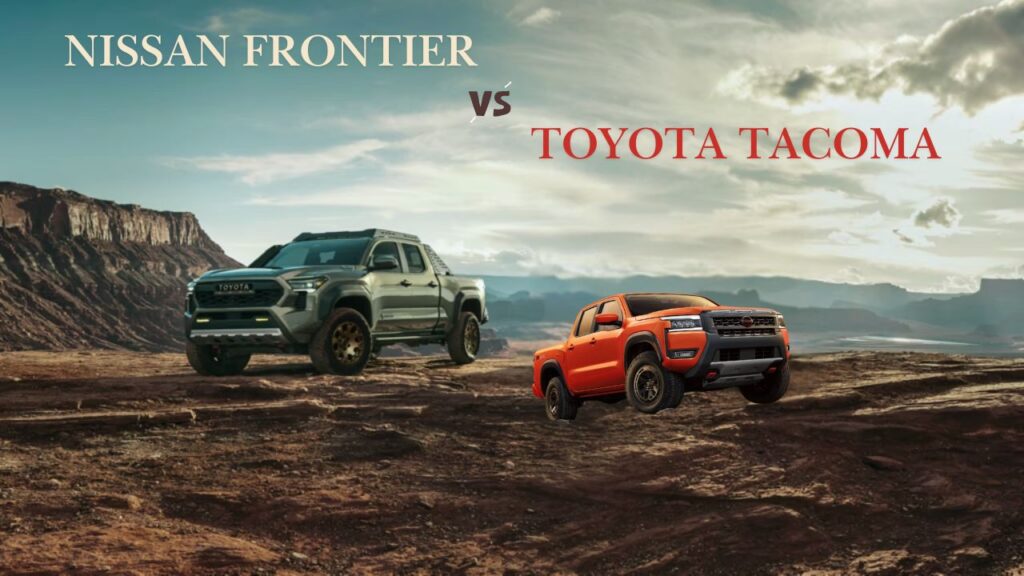
0

Nissan Frontier vs Toyota Tacoma: Which Truck Should You Choose in 2025?

2025 Nissan Frontier and Toyota Tacoma trucks compared for performance, towing, technology, and value

In 2025, it is getting more difficult to make a choice between these updated Nissan Frontier vs Toyota Tacoma. It is not just about the best truck but rather a choice between two distinct engineering philosophies tailored to different buyer profiles. The Nissan Frontier is a solid upgraded and value-driven truck. The Toyota Tacoma is an all new futuristic, multi-powertrain truck which prioritizes advanced technology. 

We are going to look at their performances, ability, tech and costs that helps you to decide what you should choose in 2025.

Car lovers who have spent years with tech-featured engines can look for Toyota Tacoma. It offers modern engines like a solid hybrid. Its more advanced tech suite offers impressive features, making it a forward looking investment and it will be beneficial over time. 

A simple and valuable Nissan Frontier is the best option for straightforward buyers who want to pick strong contenders. It offers a V6 engine with good towing at an affordable price, making it a more reliable truck. Good rating and positive results of Frontier machine providing a sense of security that is valuable for a buyer.

Market Context and Platform Philosophy

Nissan’s Frontier is simple but offers a strong V6 engine that produces enough power to run smoothly. This deliberate choice provides a simple and robust product while relying on a single naturally aspirated engine is the top choice for buyers who are interested in low budget quality products.
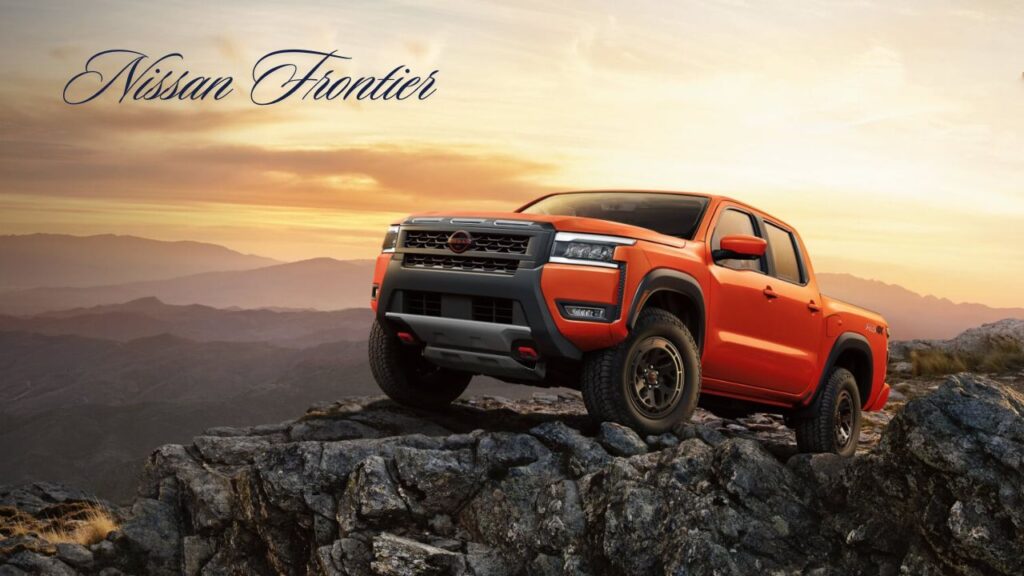
Nissan Frontier 2025 mid-size truck with strong V6 engine and simple design

Image credit: Nissan

The new Tacoma uses TNGA-F platform for delivering reinvention of Toyota including turbocharged and hybrid powertrain options. This evolution is emerging the market of mid-sized trucks into more choices, Toyota aims for capturing a wider market and saving fuel.

Powertrain and On-Road Performance Analysis

The 2025 Nissan Frontier is an incredible machine beast which offers a naturally aspirated 3.8L V6 powerful engine that generates 310 horsepower to run with 9-speed automatic transmission. It reaches from 0 to 60 mph in 7.3 seconds with its PRO-4X model and smooth gear shifts. 

However, The 2025 Toyota Tacoma builds on a multi-powertrain strategy. It offers a turbocharged 2.4L four-cylinder which delivers 278 hp to run faster with 317 of torque. Its other variant i-FORCE MAX hybrid powertrain offers 326 horsepower and a class-leading 465 lb-ft of torque. 
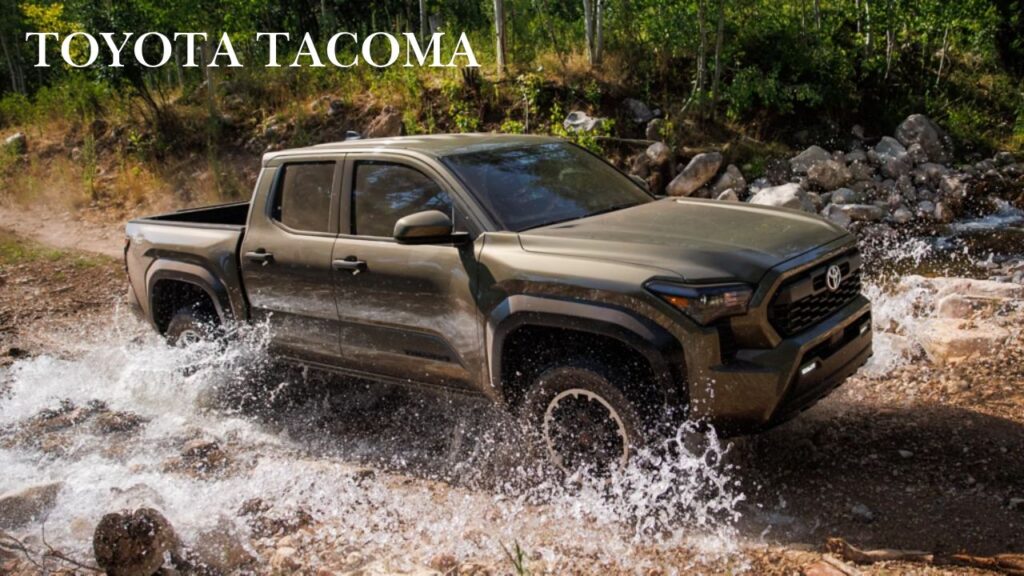
Toyota Tacoma 2025 with turbocharged and hybrid powertrain options

Image credit: Toyota

The crucial difference they have is their torque, the Tacoma’s engine offers a turbocharged and hybrid powertrain which delivers maximum torque at low speed. Its i-Force max hybrid delivers 465 lb-ft of torque at just 1700 RPM. The Frontier also provides a strong engine but it requires more pulling strength to achieve the same power. A Tacoma TRD off-road test proved to run from 0 to 60 mph in 6.8 seconds more than Frontier PRO-4X.

Quick Comparison Table for Nissan Frontier vs Toyota Tacoma

Feature 2025 Nissan Frontier 2025 Toyota Tacoma (i-FORCE) 2025 Toyota Tacoma (i-FORCE MAX Hybrid)
Engine 3.8L DOHC V6 2.4L Turbo I4 2.4L Turbo I4 with Hybrid
Horsepower 310 hp 228–278 hp 326 hp
Torque 281 lb-ft 243–317 lb-ft 465 lb-ft
Max Towing Capacity Up to 7,150 lbs Up to 6,500 lbs Up to 6,000 lbs
Max Payload Capacity Up to 1,620 lbs Up to 1,705 lbs Up to 1,680 lbs
Max EPA Estimated MPG (City/Hwy) 19/24 21/26 23/24

Capability: A Deep Dive into Utility

The 2025 Nissan Frontier is offering more towing capacity up to 7,150 pounds for specifically RWD configuration. Its maximum towing capacity is up to 1,620 pounds.
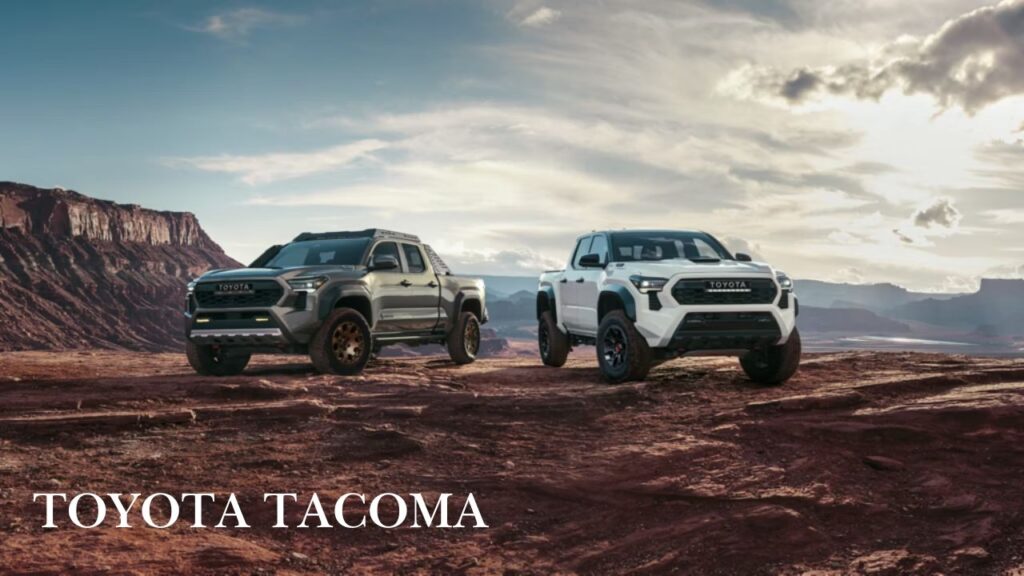
Nissan Frontier 2025 towing 7,150 lbs vs Toyota Tacoma 2025 towing 6,500 lbs

Image credit: Toyota

The 2025 Toyota Tacoma maximum capacity for towing up to 6,500 pounds. This limit is applied to different trims but its common maximum payload capacity is up to 1,705 pounds, making it useful for different works.

Read More :-  New GST Pricing For Popular Cars in India: September Updates on Latest Car Price Drop 

Technology and Interior: The Modern Truck Experience

The Tacoma offers more defining technology and interior than Frontier. Every Tacoma trims come with advanced tech features like display, connectivity, and audio system. But some advanced technology isn’t available in Frontier, only higher trims offer wireless connectivity. 

In safety features, Nissan topped the list with Nissan Safety Shield 360 which included an automatic braking system to prevent crashes. The Tacoma comes with safety sense 3.0 that includes a crash alert system and cruise control for making a distance to avoid accidents.

Off-Road Prowess: A Battle of the Specialists

These two trucks stand a chance to tackle tough trails, becoming a first choice for off-road fans. The Frontier PRO-4X has Bilstein, locking rear end and skid plates for safety, making a pro choice for off-roads. The Tacoma hybrid engine offers massive power to tackle rough terrain with its special FOX shocks and big 33-inch tires. It provides 11.5 inches ground clearance smoothly which is a good option for driving on rocky roads.

The True Cost of Ownership

It is important that your vehicle should be fuel efficient because resale value and fuel use is shaping the true cost of these trucks. The 2025 Toyota Tacoma starts at $31,590 less than the Frontier’s $32,050. The Tacoma is consumed more fuel, gas engine EPA-estimated 21 miles in city and 26 miles on the highway. The Frontier tops out at an EPA-estimated 19 MPG city and 24 MPG highway. This fuel economy is drowning ownership towards Tacoma.

Conclusion

When it comes to buying a powerful truck which gives you long-term benefit and better performance then Nissan Frontier vs Toyota Tacoma is fighting at the top of the list. Choosing the right one for you totally depends on your budget and requirements. The Frontier is ideal for those who want proven design, simple, and reliable trucks. The Tacoma is featuring bold, new technology, and powertrains to provide high-value performance. But both have specialized experience in their field.


Bipin Sharma

Bipin Sharma is a seasoned automotive content writer with over 10 years of hands-on experience in the world of cars. From the latest car news and reviews to in-depth maintenance tips and expert buying guides, Bipin covers everything that drives the automotive world. Writing about cars isn’t just his profession — it’s his passion. His deep industry knowledge and love for automobiles fuel every blog he creates, helping readers make informed decisions and stay updated on the fast-evolving auto landscape.

Leave a Reply

Your email address will not be published. Required fields are marked *

Best Family SUVs in the USA: Ultimate Guide to Safety, Space & Style

Best Family SUVs USA 2025 – Top Safe and Spacious Picks for Families

Most of the families refer to the “Best Family SUVs in the USA” when they want a vehicle which can be well-suited to the needs of their family. A top-rated family SUV offers huge space for kids, car seats, and luggage with spacious interior, modern models come with more safety features like automatic emergency braking, blind-spot response, lane-keeping assist which makes them less worried about their trips to long routes.

As well as prioritizing family protection, people love to experience modern tech like Apple CarPlay, Android Auto, Wi-Fi connectivity to enjoy the ride with family. Families mostly prefer an SUV that will fulfill their specific needs and purpose to buy a vehicle.

If you are thinking about buying an SUV then check out the details of each one to select that suited to your lifestyle.

Read More :-  Subaru Forester vs Honda CR-V 2025: Which SUV Is the Real Champion?

Best Family SUVs in the USA

The table represents the Family SUVs price, seating, and rating which is based on all the specs of the particular vehicle.

SUVs Starting Price Hybrid Drive Feel Seating
Kia Telluride $37,390 – $42,090 No Hybrid Balanced/Luxury Max 8 passengers
Honda CR-V $30,100 – $41,100 Yes (efficient hybrid) Smooth. Efficient 5 passengers
Toyota Grand Highlander $40,860 – $55,540 Yes  Plush & Powerful Max up to 8 passengers 
Subaru Forester $32,995 – $41,415 Yes Confident/AWD 5 passengers
Mazda CX-5 $27,770 – $39,800 No Hybrid Sporty/Refined 5 passengers
Ford Explorer $41,350 – $54,045 Yes Powerful/Versatile Max 8 passengers
Toyota RAV4 $29,850 – $40,305 Yes Comfortable/Easy 5 passengers

Kia Telluride

Kia Telluride is one of the top rated SUVs in 2025 that will pass all the valuable key points such as Space, Reliability, Technology, and Safety. It offers a 3.8-litre engine that delivers 291 bhp horsepower.

Kia Telluride 2025 – Spacious 3-Row SUV for Families


The Kia Telluride, especially made with a three to eight seater SUV, is a family oriented vehicle that gives you a premium cabin feel. The high power V6 engine with balanced comfort and tech offers you amazing long tours with luxury experience.

Honda CR-V

It offers a hybrid variant with All-Wheel Drive to ride freely on the off-road. It offers a 1.5-litre engine that delivers 204 hp. The cargo space is 76.5 cubic feet which is great for the families to go on trips with tons of things.

Honda CR-V Hybrid SUV

If you want a smaller and easier to park kinda SUV then CR-V with a two row compact SUV might be the best option. The well-featured safety makes you less worried on long trips. The Cruise Control and Lane Keeping Assist are advanced tech features in the SUV which keep monitoring the driving to instant Braking response & Road Departure. 

Toyota Grand Highlander

Toyota Grand Highlander comes in three powertrains — Gas, Hybrid, & Hybrid MAX. All-Wheel drive available in all the powertrains, engine almost the same 2.4L–2.5L with 265 hp362 hp for amazing performance.

Toyota Grand Highlander 2025 – 3-Row SUV with Hybrid Power

It offers a huge cargo space up to 95.5 cubic feet with seats folded. It offers three row seating without folding which can be the best choice if you prefer an SUV with dynamic purpose. The amazing interior will take your eyes out, flexible seating makes this model ideal for families.

Subaru Forester

The new Subaru Forester stands a chance in the list of legendary luxury vehicles of 2025 because it delivers the features which ensure the key factors like reliability, safety, and all-wheel drive mode. The 2025 Subaru Forester has a redesigned exterior for an ultra modern look.

Subaru Forester 2025 – Safe and Reliable AWD SUV

This SUV is updated with tech features & safety including emergency stop assist and hybrid powertrain. This SUV is ideal for families because it ranked high after crash tests with a full airbag suite. 

Mazda CX-5

The fastest speed engine of Mazda CX-5 delivers 0–60 mph/8.9 seconds. This is the sign of a powerful SUV which is compatible for families, it offers advanced safety features such as emergency braking, Lane Keeping assist, Cruise Control, and sensor with 360 degree angle camera.

Mazda CX-5 – Sporty Family SUV with Premium Interior

Premium quality interior will satisfy the need of comfortable seats, wider opening door, heated front & rear seats, rain-sensing wipers.

Ford Explorer

It offers 3.3L in hybrid V6 engine for powerful performance, fuel efficient Ford Explorer delivers 23 mpg combined 4-cylinder. Ideal for families with 85.5 cubic feet cargo space to store multiple items.

Ford Explorer – Powerful Hybrid SUV for Family Adventures

Safety sensors will be guarded in all types of unpredicted situations including Ford Co-Pilot 360 Suite to control and adapt the nature of driving by automatic features. 

Toyota RAV4

The Toyota RAV4 8-speed automatic highest ranking SUV delivers a 2.5L engine with 184 lb-ft torque providing excellent experience on ride. The interior has large space for front and rear legroom, roomy class 5 passengers seats with 69.8 cubic feet cargo space gives you the best experience during the long trips.

Toyota RAV4 – High-Ranked Compact SUV for Families

Dynamic Cruise Control and Steering Assist on full speed is an excellence tech feature, Cross-Traffic Alert & Automatic High Beams for monitoring the Lane, traffic, and available to handle every situation. These are the factors that got strong NHTSA scores.

Read More :- Jeep Wrangler vs Ford Bronco 2025: Full Comparison of Specs, Style & Performance

Conclusion

Top charted SUVs like Kia Telluride and Toyota Grand Highlander are ideal means of transportation for people needing maximum passenger capacity and cargo space. These SUVs come with wonderful interior blends with functionality and proved in the crash tests. Additionally, the Ford Explorer offers multiple powertrains and supports robust towing for adventurous trips with family.

Honda CR-V, Toyota RAV4, Mazda CX-5 and Forester are the compact SUVs preferable for smaller families and city dwellers. The excellent features and well-designed cabins are providing an outstanding experience. These are budget-friendly vehicles which give you full safety support with their strong safety features. 

The Mazda CX-5 and Subaru Forester deliver unique blends of interior beauty with different motives to buy an SUV. The CX-5 offers a more sportier experience in driving and style which is chosen by those who are passionate about sporty style. However, Forester is more focused on safety and supports in all types of weather conditions. 

Each of Best Family SUVs in the USA offers unique style and features that will be perfect for the families to travel in the SUV. Whether you are looking for city rush or off-road trips, these SUVs will match with every family needs and lifestyle.

Sharey Khan

Sharey Khan is an IT entrepreneur and petrol head & a car enthusiast. With a special focus on car-related content, he combines his deep passion for vehicles with a talent for crafting informative, engaging, and easy-to-understand content. His writing is driven by a genuine love for cars and he is committed to providing readers with accurate, up-to-date, and trustworthy information that empowers smarter driving decisions. 

Leave a Reply

Your email address will not be published. Required fields are marked *

What’s The Safest Family Car You Should Buy

Safest Family Car

Safety isn’t a feature—it’s a priority when buying a family car. Whether you’re running the kids to school, taking weekend road trips or just driving through city traffic, a vehicle that puts passenger protection first really makes a difference. The 2025 model year pleeeenty of three-row SUVs to choose from, but the latest ones raise the bar for crash protection, driver-assistance tech, and kid-friendly features. Utilizing scores from the IIHS and NHTSA, here are the safest family SUVs of 2025 that also perform well on our road tests. 

Top Rated Three-Row SUVs

Kia Telluride

The Kia Telluride remains the standard by which all other three-row SUVs for family safety are judged, now receiving both the coveted IIHS TOP SAFETY PICK+ award and an overall 5-star rating from the NHTSA. This indicates that it performed very well in the most stringent crash tests of 2025, which includes the difficult revised moderate overlap front test that focuses on rear-passenger protection—important to families with kids. 

Kia Telluride

All Tellurides are equipped with full safety suite, including automatic emergency braking, blind-spot monitoring, lane departure warning, and rear cross-traffic alert. Now available for 2025: Highway Driving Assist 2 for even safer long distance driving. With its ability to seat eight people, its 87 cubic feet of cargo room, and a starting price slightly north of $37,805, the Telluride is just about a no-brainer when it comes to value. 

Safety Ratings NHTSA 5-Star
Engine 3.8L V6
Horsepower 291 hp
Seating Capacity 8 passengers
Cargo Space 87 cubic ft.
Starting Price $37,805 

Hyundai Palisade

Bring along the Hyundai Palisade, an outfit-style Telluride cousin that still keeps safety front and center. It received a 5-star overall rating from the NHTSA and the 2025 IIHS TOP SAFETY PICK+ award. And underneath the Telluride’s hood is that same proven 3.8L V6 engine, delivering plenty of 291 horsepower power. It is space and comfort, inside and out, seating up to eight passengers and offering you as much as 86.4 cubic feet of cargo space when you need it. Whether you’re toting the kids or headed out on an adventure, the Palisade takes care of you with style and substance. 

Hyundai Palisade

The Palisade begins around the $38,215 mark. It provides a little more front legroom — 44.1 inches — compared with the Telluride. Those two have the same platform and safety equipment. So choosing one is down to appearance and little extras.  

Safety Ratings NHTSA 5-Star
Engine 3.8L V6
Horsepower 291 hp
Seating Capacity 8 passengers
Cargo Space 86.4 cubic ft.
Starting Price $38,215 

Genesis GV80

For your rude health comfort needs without compromising safety for the little darlings, the Genesis GV80 delivers on both. It received a 5-star NHTSA overall rating and was named a 2025 IIHS TOP SAFETY PICK+.Genesis also offers a complex array of standard safety aids, including forward-collision avoidance, lane-keeping assist and Highway Driving Assist, a system that blends adaptive cruise control with lane-centering technology. 

Genesis GV80

There is an optional third row, allowing for seven passengers, and the GV80 has a maximum cargo capacity of 84 cubic feet. The GV80 starts at about $58,200.While it is pricier in the premium segment, it is a beacon of luxury family motoring with best-in-class safety engineering. 

Safety Ratings NHTSA 5-Star
Engine 2.5L Turbo
Horsepower 375 hp
Seating Capacity 7 passengers
Cargo Space 84 cubic ft.
Starting Price $58,200 

Mazda CX-90

The 2025 Mazda CX-90 is the mind blowing model which got 5-star overall rating from NHTSA. It received IIHS Safety Pick “Good,” score in its all six crash tests. The CX-90 did great in the new back-seat passenger crash check – its belts held the dummy’s head well away from the front seats.  

Mazda CX-90

The Mazda CX-90 and its plug-in hybrid variant (model CX-90 PHEV) boast an impressive list of safety features under the i-Activsense umbrella. There’s forward collision warning with automatic emergency braking to help prevent crashes, plus blind-spot monitoring and rear cross-traffic alert for those hectic road moments. Lane departure warning with lane keep assist keeps you on track, and adaptive cruise control makes long drives so much more relaxing. Both cars earned top scores, so you can rest easy as you cruise in comfort and safety. 

Safety Ratings 5-Star rating from NHTSA 
Engine Inline-6 Turbo
Horsepower 280–323 hp
Seating Capacity 8 passengers
Cargo Space 84 cubic ft.
Starting Price $40,445 

Read More:-  Maruti e-Vitara: Launch expected in December 2025

Conclusion

In 2025, families can choose best styled and high-end cars without thinking about safety because these top rated SUVs serve comfort, safety, and technology in the automotive market. Choose the one right for you among value-packed Kia Telluride, the elegant Hyundai Palisade, the luxurious Genesis GV80, or the fun Mazda CX-90, but each of these SUVs is a leader in modern safety technology.

If you are looking for a SUV to keep your family safe but don’t want to sacrifice amazing features then these four SUVs represent your best bet for safety on the road today. 

Sharey Khan

Sharey Khan is an IT entrepreneur and petrol head & a car enthusiast. With a special focus on car-related content, he combines his deep passion for vehicles with a talent for crafting informative, engaging, and easy-to-understand content. His writing is driven by a genuine love for cars and he is committed to providing readers with accurate, up-to-date, and trustworthy information that empowers smarter driving decisions. 

Leave a Reply

Your email address will not be published. Required fields are marked *

Toyota LC FJ vs Toyota Fortuner: The Shared DNA That Makes Them Siblings

Toyota LC FJ vs Toyota Fortuner

The automotive world was recently electrified when Toyota brought back the Land Cruiser FJ, fondly known as the “Baby Land Cruiser.” What is so interesting about this announcement is that the LC FJ is built on the same basic engine and platform as the popular Toyota Fortuner – essentially making them automotive siblings with a different attitude. But there are some features that are different from each other that make them stand in a different perspective. Buyers can check every detail through this article before buying it.

The Common Foundation: More Than Just Shared Parts

The Toyota LC FJ and Fortuner connection is far deeper than just a parts-bin-sharing exercise. Both are based on Toyota’s tried and tested IMV (Innovative International Multipurpose Vehicle) platform, a hardy ladder-frame chassis that has underpinned Toyota’s global pickup and SUV strategy since 2004. This platform has already been proven with more than 5 million vehicles worldwide with not only the Fortuner, but also the Hilux pickup and Innova minivan. 

The LC FJ employs in particular a modified version of the IMV platform, known as IMV 0, that Toyota designed to produce cheaper but just as capable vehicles for developing markets. Preserving the shape and off-road capabilities of the original IMV platform, the IMV 0 version utilizes cost-effective materials and production techniques. 

The Heart of the Matter: The 2TR-FE Engine

Perhaps the biggest similarity between these two SUVs lies under the bonnet. The Toyota LC FJ and Fortuner petrol variant comes with the same 2TR-FE 2.7 litre four-cylinder naturally aspirated petrol engine. This is not just similar spec – it’s the same engine code, same displacement and same core architecture. 

The Heart of the Matter The 2TR-FE Engine

The 2TR-FE produces 163 PS (160 hp) at 5,200 rpm and 246 Nm of torque in the LC FJ while the Fortuner petrol version produces almost the same numbers: 163 PS at 5,220 rpm and 245 N⋅m at 4,020 rpm. This is the first Toyota engine to employ its Dual VVT-i (Variable Valve Timing with intelligence) technology on the intake and exhaust camshafts which enables the engine to achieve maximum performance at any engine speed. 

The 2TR-FE is based on a cast-iron block with an aluminum cylinder head and features double overhead camshafts (DOHC) with 16 valves. The engine uses a timing chain instead of a belt, which has added to its reputation for reliability and low maintenance. 

Platform Similarities

Both vehicles are built on the IMV platform with a ladder frame chassis, which ensures high levels of structural rigidity and makes them exceptionally capable off road. This body-on-frame construction has several advantages. 

Shared Structural Elements:

  • Two wishbone front suspension for handling and off-road articulation superiority with an articulating rear suspension
  • Multi-link rear suspension engineered to deliver the right balance of comfort and capability
  • Engines mounted in-line for best weight distribution
  • 4WD power, with part-time systems available on the two vehicles. 

The LC FJ can provide a wheelbase of 2,580 mm as against 2,745 mm for the Fortuner, but both the vehicles boast nearly identical ride qualities and off-road capabilities. 

Read More :- What’s The Safest Family Car You Should Buy

Where They Diverge: Different Missions, Different Personalities

Yet, there are two entirely different markets and purposes for the LC FJ versus the Fortuner. 

Where They Diverge Different Missions, Different Personalities

Size and Dimension

The first big gap is the size difference. The Toyota LC FJ is 4,575 mm long, which is 220 mm less than the length of the Fortuner of 4,795 mm. The Fortuner and LC FJ have the same width of 1,855 mm, but the LC FJ is taller at 1,960 mm compared to the Fortuner’s 1,835 mm height. 

Seating and Practicality

The LC FJ is available with five seats and two rows which makes it a more intimate, adventure-oriented vehicle. By comparison, the Fortuner has three rows and seven seats, making it the family-friendly option for those requiring the most passenger space. 

Engine Options: Choice vs. Simplicity

Both cars are available with the 2TR-FE petrol engine, but the Fortuner has more options with the 2.8-liter 1GD-FTV turbocharged diesel engine. The diesel version is every bit more powerful and torquey: 201 PS and 500 N⋅m , and it is the performance option for those who care most about towing pack and mileage. 

Contrarily, the LC FJ is all about simplicity, being petrol-only, which I suspect points to a Toyota strategy to keep the price down and the reliability up in those markets where the quality of diesel fuel can be suspect. 

Transmission and Drivetrain: Refined vs. Flexible

Both cars use 6-speed automatics, but different philosophies. The LC FJ uses Toyota’s 6-speed Super ECT automatic transmission in conjunction with part-time 4WD. It’s a simple system that focuses on ease of use and reliability for those who want to keep things basic. 

Transmission and Drivetrain Refined vs. Flexible

The Fortuner has more flexibility with manual and automatic transmission options across the engine range as well as 2WD and 4WD variants to suit the pockets and requirements of different customers. This flexibility allows the Fortuner to attract both city commuters and hardcore off-roaders. 

Design Philosophy: Heritage vs. Contemporary

The styling treatments illustrate different positioning of the brands. The LC FJ is inspired by Land Cruiser heritage, especially the legendary FJ40, with its boxy shape, round headlights and utilitarian look.This aesthetic resonates with enthusiasts that appreciate the Land Cruiser’s famous off-road heritage. 

The Fortuner gets a more contemporary SUV look, which is a perfect blend of ruggedness and modern sophistication.Its styling is aimed at buyers who want utility, but who don’t want their utility vehicle to look out of place on city streets. 

Market Positioning: Specialized vs. Mainstream

The LC FJ is aimed at adventure seekers and Land Cruiser fans who crave real off-road ability in a package that is more attainable and affordable. With its streamlined spec sheet and retro styling, it appeals to buyers for whom substance matters more than features. 

Market Positioning Specialized vs. Mainstream

Apart from the of Fortuner caters to the mass premium SUV segment with the comfort of choice across multiple engine options, seating configurations, and trim levels. It strikes the perfect balance between off-road prowess and refined on-road performance to make it your daily driver or weekend adventurer for the off-road trails. 

The Reliability Factor of The Proven Technology

Arguably the most exciting part about both products is that they are based on thoroughly proven designs. Since 2004, the 2TR-FE engine has covered millions of miles in various global markets and has a great reliability record. The IMV platform also has proven itself with over 5 million units produced with no major structural faults.This common technical baseline gives both vehicles the Toyota’s renowned durability and low cost of maintenance. 

Conclusion

The Toyota LC FJ and Fortuner are excellent examples of platform engineering – where common platform underpinnings are used to create completely different vehicles that cater to individual market needs. They have the same heart and bones, but different souls, and those different souls give each one a reason to exist in Toyota’s ever-growing SUV family. 

Be it the LC FJ’s genuine roots and stripped-back purpose, or the Fortuner’s flexible family-friendly angle, both promise the same dependable and capable ethos that has made Toyota’s IMV platform one of the most successful automotive architectures ever. 

Sharey Khan

Sharey Khan is an IT entrepreneur and petrol head & a car enthusiast. With a special focus on car-related content, he combines his deep passion for vehicles with a talent for crafting informative, engaging, and easy-to-understand content. His writing is driven by a genuine love for cars and he is committed to providing readers with accurate, up-to-date, and trustworthy information that empowers smarter driving decisions. 

Leave a Reply

Your email address will not be published. Required fields are marked *

Maruti e-Vitara: Launch expected in December 2025

Maruti e-Vitara

India’s EV revolution is about to be pushed into high gear with the launch of Maruti Suzuki’s first electric SUV — the Maruti e-Vitara, anticipated to arrive by December 2025. The e-Vitara will bring Maruti’s legendary reliability and next-generation electric technology as the country’s most trusted carmaker makes its EV debut. Built on the all-new Heartect-e platform developed jointly with Toyota, this SUV delivers the perfect balance of performance, efficiency, and safety — tailor-made for Indian roads and global aspirations. 

With a distinctly futuristic appearance and strong dual battery options promising a range of up to 500 km, the e-Vitara is intended to offer everything Indian buyers have been asking for from an electric SUV — long range, fast charging, advanced features, and Maruti’s reassurance. With aggressive styling, luxurious interiors and industry-first Level 2 ADAS safety technology, this SUV may transform the mid-size EV market. 

Built on a New Platform for Excellence

The e-Vitara is also based on the new Heartect-e platform by Maruti. This setup is ideal for electric cars. Toyota was one of the creators. The design enhances performance, reduces energy consumption and places the batteries just right. More than half of the body is made from high-strength high-tensile steel for enhanced rigidity and safety. 

Battery Options and Impressive Range

Maruti offers the e-Vitara with two battery options to cater to different needs of the buyers. 

The 49 kWh is the basic pack. It has an electric motor at the front axle. That engine produces 142 bhp and 192.5 Nm of torque. The car goes from 0 to 100 kmph in around 9.6 seconds. 

Maruti e-Vitara Battery Options and Impressive Range

The 61 kWh pack produces 172 bhp. It retains the same 192.5 Nm of torque. This iteration does 0-100 kmph in 8.7 seconds. Most importantly, it gives you a range of over 500 km on a single charge, as per MIDC tests. 

Both battery packs use advanced Lithium Iron-Phosphate (LFP) blade cell technology supplied by BYD.

Charging Convenience

The e-Vitara supports AC and DC fast charge modes. A 61 kWh battery is recharged from 10 to 80 percent in just 45 minutes by a DC fast charger. A 7 kW AC charger takes around 9 hours for a full top up at home (10-100%). An 11 kW reduces that to about 5.5 hours. 

Maruti has launched an end-to-end charging ecosystem – ‘e for me’ – that comprises smart home chargers with remote access and plug-and-play DC fast chargers at NEXA outlets across India. 

Bold and Futuristic Design

The e-Vitara reflects Maruti’s “Crafted Futurism” stance in its bold design and seamless airflow characteristics. It measures 4,275 mm in length, 1,800 mm in width, and 1,640 mm in height, and is equipped with a 2,700 mm wheelbase, making it one of the maximum in the mid-size electric SUV category. 

Maruti e-Vitara Bold and Futuristic Design

Outside there are 18-inch air-flow formed alloy wheels, cool tri-slash LED daytime running light, sharp LED projector headlights, and a sleek front end with shutters that open or close depending on how you are driving. The charging port is located on the front left fender for easy access. 

Premium Interior and Advanced Features

Just step inside and you’ll be greeted by a neat dual-screen setup at the front. It sports a 10.1-inch touchscreen for infotainment along with a 10.25-inch digital dash cluster. The infotainment is connected wirelessly with Apple CarPlay and Android Auto. Music enthusiasts will appreciate the premium Infinity by Harman sound system. 

On the inside, the cabin shakes a chic black-and-tan color scheme. It has a stacked floating console and lights that change colors. You get cool air on front seats. Ten-way power-adjustable driver’s seat with memory function. Rear seats slide, tilt back and fold 60:40. Flat floors give you more room. A large sunroof allows fresh air in. 

Next-Generation Connectivity

The e-Vitara comes equipped with Next-Gen Suzuki Connect with 60+ smart features.Remote vehicle controls, live vehicle information, e‑Call with an SOS button, and full car monitoring via an easy-to-use mobile application.

Multiple Drive Modes for Every Situation

The e-Vitara provides the three drive modes: Eco, Normal and Sport. Choose one to suit your vibe behind the wheel. There’s a Snow mode, too for enhanced traction in inclement weather. Plus, the smart regen brakes mean you can drive one pedal. That extends your range and conserves energy. 

Read More:- Ford Capri II vs Toyota Celica vs Vauxhall HP Firenza: The Global Decade of Style

Industry-Leading Safety Features

The e-Vitara prioritises safety as Maruti’s first car to come with Level 2 ADAS technology. Its ADAS suite features over 15 functions including Adaptive Cruise Control, Lane Keep Assist, Lane Departure Warning, Adaptive High Beam System, Automatic Emergency Braking, Blind Spot Monitoring, Active Cornering Control, Multi-Collision Braking and Rear Cross-Traffic Alert. 

There are seven airbags in all versions of the e-Vitara as standard from the word go. That has a knee airbag for the driver. There’s also Electronic Stability Program, or ESP. Ventilated disc brakes at front and rear. There is an electronic parking brake (EPB) which also applies the brakes automatically. A Tyre Pressure Monitoring System monitors your tyres. The 360-degree camera works with parking sensors. And there is an Acoustic Vehicle Alerting System that warns pedestrians when you are travelling slowly. 

Variants and Expected Pricing

The e-Vitara is available in three variants: Delta, Zeta and Alpha. They all remain front-wheel drive. The Indian model doesn’t have the all-wheel-drive option you get overseas. Expected Pricing is between ₹17 lakh and ₹22.50 lakh ex-showroom, making it a rival of Tata Curvv EV, Hyundai Creta Electric, MG ZS EV, Mahindra BE 6, and VinFast VF 7. 

Made in India for the World

On 26 August 2025, Prime Minister Narendra Modi inaugurated the first e-Vitara unit from Maruti’s Hansalpur plant. It’s the first step towards production at its new home. Maruti had invested ₹21,000 crore in the facility. It can produce 7,50,000 units per annum.

Why the e-Vitara Stands Out

The Maruti e-Vitara has some real advantages. It begins with the rock-solid Maruti Suzuki brand, known for reliable cars, massive after-sales network and great value for money. Not to mention, it offers a real 500+ km range, which mitigates the top concern for people looking at EVs in India. And its reasonable price makes it accessible to more buyers than those flashy electric SUVs. 

With Level 2 ADAS and 7 airbags, the full safety package makes it one of the safest cars in its class. Premium features, roomy cab and cutting-edge technology mean it doesn’t skimp on comfort or convenience. 

Conclusion

The Maruti e-Vitara signifies a quantum leap for electric vehicles in India. This is the top automaker’s first EV. It combines leading EV technology a strong driving range with a comprehensive set of safety tools and the trusted build quality of Maruti. The release is December 2025. This vehicle will simplify EV ownership for the Indian people. It also shows India’s world-class car making capability. 

Families seeking greener travel options without compromising on space, useful tech, and worry-free driving will also find the Maruti e-Vitara a compelling choice. It combines a good driving range, fast charging, the best safety equipment, premium features and probably low running costs. This makes it a crucial electric car launch in India’s car industry. 

Sharey Khan

Sharey Khan is an IT entrepreneur and petrol head & a car enthusiast. With a special focus on car-related content, he combines his deep passion for vehicles with a talent for crafting informative, engaging, and easy-to-understand content. His writing is driven by a genuine love for cars and he is committed to providing readers with accurate, up-to-date, and trustworthy information that empowers smarter driving decisions. 

Leave a Reply

Your email address will not be published. Required fields are marked *

Ford Capri II vs Toyota Celica vs Vauxhall HP Firenza: The Global Decade of Style

Ford Capri II vs Toyota Celica vs Vauxhall HP Firenza

The 70s were a turning point in car history: a decade shaped by global financial turmoil and the mass popularization of sporty styling. The ground was laid years before in the US with the introduction of the Ford Mustang in 1964, a car that demonstrated that performance imagery could be married with an affordable price tag and based on an economy car platform, namely, the utilitarian Ford Falcon. This “pony car” formula – long hood, short rear deck, four seat interior and a plethora of options – was an instant hit with car buyers around the world. 

The vehicles including the Ford Capri II, Vauxhall HP Firenza and 1st Gen Toyota Celica were born out of this post-Mustang era, and yet each is a distinctly different approach to the budget coupé ideology. 

Ford Capri II

Ford Capri II

The Capri II was a natural progression for Ford’s European pony car. Production started mainly in the United Kingdom (Dagenham, Halewood) and Europe (Genk, Belgium, and Saarlouis, Germany). the Mk2 softened the aggressive lines of its predecessor, with a more modern and friendlier look featuring “softer lines and larger headlights.” 

Engineering and Accessibility

The Capri II was ultimately successful because of its versatility and availability. Ford stuck to its guns with the philosophy of serving every pocket by the simple offering of a variety of engines in one simple layout – front-engine, rear-wheel drive (FR). For the budget-conscious buyer, the car had the I-4 1.6L (1,599cc) that delivered a meager 64 horsepower and produced 0-100 kph times in the 16-seconds ballpark. A somewhat more balanced choice was the 2.0L Inline-Four Pinto, making around 98 bhp and bringing 0-60 mph down to near 10 seconds. Up top, there was the potent V6 3.0L engine. 

That philosophy meant the car stayed true to its “style on a budget” directive, as evidenced by the original 1974 UK price list, where a Capri Mk2 1600L began from a very reachable £1,668. 

Read More:- Range Rover Reaches New Heights with the Astronaut Edition

Driving Experience and Legacy

Drivers had good things to say about the Capri interior design, in particular the full complement of dials and the long bonnet which immediately made you feel as though you were driving a bona fide sports car. Controls were said to be both light and direct. 31 Although some contemporary reviewers noted problems such as poor reliability of new cars and dubious safety standards, 32 present day enthusiasts often describe the V6 models as being very “reliable, cheap to run”, a consequence of the car’s mass production and the resulting availability of parts.

The straight-six engine, especially in the later 2.8i injection versions, had a “great sound from the engine and exhaust”. This full-bodied, Falstaffian wuffle supplied the required drama for the ears to complement the visual attack, and proved that the quintessential V6 exhaust note was the key to a car that could rise above its budget-based mechanics and inscribe itself as an enduring icon of nostalgia. 

The Contradiction in Current Value

Ford Capri II Current Value

The Capri II was intended to be throwaway and to appeal to a broad demographic, but its current place as a sought-after classic reveals an important market dynamic. A couple of million Capris were sold between 1969 and 1986, but clean ones with high specs have turned up as rare gems. Because the Capri was so common, and was often driven as a cheap daily used in its second life as a track toy, real-money originals in “Original & Highly Original” condition really do command serious prize money. For example a mint condition 1970 Capri has been estimated at over £40,000. 

Vauxhall HP Firenza ‘Droopsnoot’

Vauxhall HP Firenza 'Droopsnoot'

The Vauxhall Firenza, was originally launched in 1971 as a sporty two-door fastback coupé based on the lowly Viva. But that was about to change in 1973 when General Motors stylist Wayne Cherry took a radical departure from the norm with the Firenza HP (High Performance), a motorsport homologation special. 

Radical Styling and Advanced Engineering

The HP’s signature feature was its slick fibreglass nose cone, which let to the car being known as the ‘Droopsnoot’. This was no mere styling exercise – the shape was designed to be as aerodynamic as possible and helped the car reach a top speed of more than 120 mph. The distinct nose has double headlights taken from the Renault Alpine A310. And to tie up the aggressive look Vauxhall used matt-black trim rather than chrome and some Avon Safety wheels. Every single HP was finished in the distinctive Silver Starfire metallic paint. 

The HP was powered by a 2279cc OHC slant-four engine, which had been the subject of extensive performance tuning by Bill Blydenstein. This involved following a similar procedure to that used on the combustion chambers, inlet tracts and valve throats, and yielded an additional 21 bhp over the standard powerplant. The result was 131 bhp , and a broad torque band so the car was easy to drive. And the HP was, in fact, the first Vauxhall to be fitted with a complex, close-ratio, dog leg five-speed Getrag manual gearbox. With its combination of light weight and superior transmission, the HP Firenza was also the Vauxhall with the best acceleration of its day, clocking from 0-60 mph in a blistering 7.6 seconds. 

Market Paradox

Vauxhall HP Firenza Market Paradox

This severe scarcity is what governs its place in the classic market.Although the HP Firenza enjoyed rarity and unquestionable motorsport credentials, its median value approximately £17,600 for a Firenza. Its scarcity does mean that there are occasional huge sales, with the highest price to the public being £47,700. 

Toyota Celica (1st Generation)

Toyota Celica

The Toyota Celica, which was introduced in December 1970, was the pioneer Japanese entry in the world pony car market. It was a 2+2 coupé based on a Carina platform and the styling was clearly inspired by the American versions. The Celica Liftback, especially, was so redolent of American fastback muscle that it gained the fond nicknames “Japanese Mustang” or “Mustang Celica”. This tribute featured such iconic elements including the triple bar tail lights, a signature design cue of the Mustang. 

Technological Sophistication and Dynamic Appeal

Although the regular Celica (ST grade) was dependable and fuel efficient, the performance versions had a considerable technological advantage over many of their European competitors. The top-of-the-line 2000 GT Liftback (RA25) used the DOHC (Double Overhead Camshaft) 18R-G Twincam engine, which had a cylinder head co-developed with Yamaha. This sophisticated engine was rated at 134 hp/145 bhp maximum power. 

The Reliability Paradox 

The Reliability Paradox

the Celica was known for its inherent reliability and ease of repair, which made it very popular amongst modifiers and “boy racers” in the Asian markets. But this mechanical excellence was frequently paired with a catastrophic manufacturing gaffe that was endemic to Japanese exports in the 1970s – inadequate body rustproofing. 

The current high average market prices for clean GT and Liftback models including GT averaging $22,334 and best examples fetching over $40,000. 

Head-to-Head Comparison of Ford Capri II vs Toyota Celica vs Vauxhall HP Firenza

Metric Ford Capri II Vauxhall HP Firenza Toyota Celica
Production Years 1974–1977 1973–1975  1970–1977
Engine Type I-4 / V6 I-4 OHC Slant-Four I-4 DOHC
Power  98 bhp (2.0L) – 158 hp (3.0L)  131 bhp 134–145 hp 
0-60 mph 10.0 s 7.6 s  N/A (Highly Competitive)
Transmission Feature Manual (4/5 speed) 5-speed ZF Manual (Dogleg) 4/5-speed Manual
Rear Suspension Live axle Live axle Four-link

The Price Valuation and Market Dynamics

Model Performance Production Original UK Price (Entry 1974) Current Average Classic Value Investment Profile
Ford Capri II High Volume 1,668$  $15,000-$40,000 Low Risk, High Liquidity, Nostalgia Driven
Vauxhall HP Firenza 204 units High Cost $17,600 High Risk, Scarcity Driven, Specialist Parts Required
Toyota Celica (1st Gen GT) Medium Volume N/A (Imported) $ 22,334 Medium Risk (Rust Filtered), High Growth (JDM Boom)

Who is The Winner?

Winner for Everyday Practicality and Accessibility: The Ford Capri II. Ford’s decision to make the hatchback standard and continue a massive parts supply ensured the car offered the best combination of sports styling and daily practicality. Capri is the quintessential choice for the nostalgic driver wanting an affordable and engaging ownership experience.

Winner for Performance Purity and Engineering Novelty: The Vauxhall HP Firenza ‘DroopSnoot’. Being Hone-d Fed with his advanced 5-speed dogleg gearbox Firenza HP was on Kaygonus the most uncompromising and technically advanced paper vehicle 7.6-second really rapid 0-60 mph timeengine and his hand-finishedI genuinelyhear that with itsIndeed the title of Wa Rally Car until brian nash Firenza fits that description far better than any other. Its defeat was solely in the market place and not product quality.

Winner for Global Style and Long-Term Reliability: Liftback and hardtop coupe versions from the 1st generation 1971 Toyota Celica 1st generation Liftback GT. The Celica neatly packaged the American pony car look into a refined, contemporary bolt-on DOHC technology style. Its mechanical strength is inherent and reliable so that you can have peace of mind today, but this must be tempered with the need to check its body due to processing faults during original manufacturing.  

Conclusion

The trio that dominated the 1970s budget coupé market – the Ford Capri II, the Vauxhall HP Firenza and the Toyota Celica – all made a highly specialised, but indelible, mark on motoring history. Their common objective was to offer performance style, at an attainable price point, but how that was achieved varied wildly – with very different current collector profiles. 

Sharey Khan

Sharey Khan is an IT entrepreneur and petrol head & a car enthusiast. With a special focus on car-related content, he combines his deep passion for vehicles with a talent for crafting informative, engaging, and easy-to-understand content. His writing is driven by a genuine love for cars and he is committed to providing readers with accurate, up-to-date, and trustworthy information that empowers smarter driving decisions. 

Leave a Reply

Your email address will not be published. Required fields are marked *