0

Top 10 Most Fuel-Efficient Cars in India Under ₹10 Lakhs You Must See in 2025

The 2025 Indian sub-₹10 Lakh automotive market is driven by ultra-low running costs, making CNG cars being the most popular option as they cost 50-60 percent less on fuel compared to petrol. Maruti Suzuki Celerio (34.43 km/kg) and Wagon R (34.05 km/kg) are two such models that set the efficiency benchmark.

Good hybrids (Grand Vitara, Urban Cruiser Hyryder) provide great mileage however are beyond this price range as they are priced above ₹10 Lakh.

Value shoppers must choose between:

  • Most Mileage Cars (Celerio, WagonR, AltoK10) Are Economical But Have Poor Safety Ratings (0–2 Stars).
  • Safer modern alternatives (Maruti Dzire – 5 star, Tata Tiago – 4 star) are a bit costlier, but they offer vital occupant safety.

Fuel Efficiency is Shaped By Two Key Realities:

ARAI vs Real-World Mileage

Since ARAI certified figures are laboratory tested and are doubtful.

City mileage in real life is relatively up to 47% lesser (Wagon R CNG claims 34 km/kg, but its real life mileage is 22 to 26 km/kg).

Efficiency needs to be calculated a little differently: km per litre for petrol/diesel, km per kg for CNG and the true financial metric is Cost per km (CpK) – and in terms of CpK, CNG comes out as the winner for the fuel is dirt-cheap.

Market Barrier for Hybrid Technology in India

Decent hybrids (like Grand Vitara, Urban Cruiser Hyryder) may come close to high mileage (28 kmpl) but still are out of reach in this segment, with prices commencing well over ₹10 Lakh (generally ₹17 Lakh+ on-road).

So, in the sub ₹10 Lakh buyers have to bank on CNG to get significant savings, with sophisticated hybrid efficiency being available only at the upper end of the cost spectrum. 

For the value-conscious consumer CNG is still the only viable option to really achieve Total Cost of Ownership (TCO) savings though that can really cash in only if consumers temper their expectations to the reality in real world mileage and not inflated ARAI figures. 

The Top 10 Fuel Efficiency Cars (Under ₹10 Lakhs)

Factory-fitted CNG variants, which come with the highest certified mileage figures, take the top spot in the the conclusive list of the most fuel-efficient cars under ₹10 Lakhs. The list below has been prepared on the basis of highest ARAI-certified efficiency figure of a single variant in all the cars available under the price cap of ₹10 Lakhs Ex Showroom for major metros.

Model/Variant Fuel Type ARAI Certified FE (km/unit) Ex-Showroom Price (₹ Lakhs)
Maruti Suzuki Celerio CNG 34.43 km/kg 6.65 – 8.64 Lakhs
Maruti Suzuki Wagon R CNG 34.05 km/kg 6.80 – 8.96 Lakhs
Maruti Suzuki Dzire Tour S  CNG 34.3 km/kg 7.19 – 9.00 Lakhs
Tata Tigor CNG 33.1 km/kg 6.49 – 8.90 Lakhs
Maruti Suzuki Alto K10 CNG 31.59 km/kg 5.50 – 7.18 Lakhs
Maruti Suzuki Baleno CNG 30.61 km/kg 7.70 – 9.10 Lakhs
Hyundai Aura  / Grand i10 Nios  CNG 28.0 km/kg 8.00 – 9.00 Lakhs
Tata Tiago  CNG 26.49 km/kg 6.15 – 8.00 Lakhs
Maruti Suzuki Swift Petrol 25.75 kmpl 6.49 – 9.64 Lakhs
Honda Amaze Petrol 25.0 kmpl 7.92 – 9.50 Lakhs

The clearest feature of this list is the undeniable dominance of Maruti Suzuki: it takes 7 places out of the top 10. This widespread presence especially in the top CNG high-efficiency slots cements Maruti’s strategy of Efficiency as Core value Proposition. The company holds an edge to this day in its unique engineering of small displacement, highly tuned engines and integrated factory fitted CNG solutions.

The final two spots are taken by none other than Maruti Suzuki Swift and Honda Amaze. It shows that even a highly tuned petrol engine cannot objectively compete with the volumetric efficiency, cost efficiency and performance offered by MCNG. Pure petrol variants are becoming a second option to mileage-conscious buyers and more for those living in areas that are not that well connected with CNG refilling infrastructure. 

Read More:- EV vs Petrol vs Hybrid: Which Car Type Is Perfect for You in 2025?

In-Depth Profiles of the Top Cost-Efficiency Leaders

Maruti Suzuki Celerio

The Maruti Suzuki Celerio is a good hatchback in the Maruti range and has been one of the highest selling from the segment largely due to its fuel-efficient engines, especially the CNG version. It offers 1.0-litre three cylinder petrol engine paired with 5-speed manual or AMT gearbox, power steering, front power windows, keyless entry and a 7-inch touchscreen infotainment system.

Image credit: MarutiSuzuki

It provides maximum cabin space, while the size of the exterior is kept to a minimum. Dual front airbags are offered along with ABS with EBD, rear parking sensors and more.

Maruti Suzuki Wagon R

The Maruti Suzuki Wagon R is a tallboy hatchback which is known for its spacious cabin and tall roofline. It has two powertrain options: 1.0-litre and 1.2-litre petrol engines, both with the choice of manual and AMT transmission. It is also available in a factory fitted CNG variant for more mileage efficiency.

Image credit: MarutiSuzuki

It comes with provisions such as 7-inch touchscreen, steering-mounted audio controls, power adjustable mirrors, rear seats that split-fold. Standard safety provisions on the hatchback include two airbags, ABS with EBD, rear parking sensors and it is well poised to attract new car buyers in the urban Indian market.

Maruti Suzuki Dzire Tour S

The Dzire Tour S is focused on commercial and taxi purposes. It comes with a 1.2-liter petrol engine with CNG and petrol variants and a 5-speed manual gearbox. The sedan is also appreciated for having a large boot (378 liters) and for its economy, more so when running on CNG.
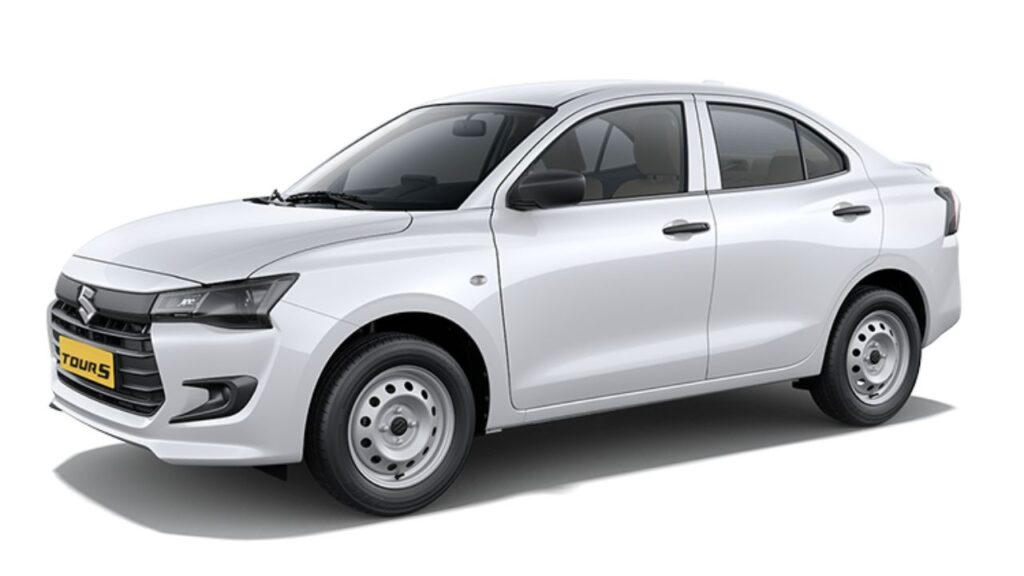
Image credit: MarutiSuzuki

The most important specifications are front power windows, central locking, manual air conditioning, 2 airbags with ABS. Its rear seat is road-trip viable and it continues to be a preferred selection among fleet purchasers.

Tata Tigor

The Tata Tigor is a small sedan that runs a 1.2-litre three-cylinder petrol engine, it competes in CNG and petrol variants. “It boasts with being a coupe-like styled vehicle, 419-liter boot capacity, has safety with 4-star GNCAP crash rating.

Image credit: TataMotors

Includes – touchscreen infotainment system with Android Auto and Apple CarPlay, climate control, projector headlamps, rear parking camera. Tigor pays focus on structural safety and cabin comfort, so it’s safe for your family and strong enough for your day to day.

Maruti Suzuki Alto K10

Alto K10 is one of India’s bestselling entry-level hatchbacks. It is powered by a 1.0-liter three-cylinder petrol engine and is also offered with a factory-fitted CNG kit.

Image credit: MarutiSuzuki

Basic power steering, front power windows, manual air conditioner and a rudimentary infotainment system on the higher variants are the key features. There are dual airbags but safety is minimal. Alto K10 is light and nimble making it a great city car for new car buyers and daily users.

Maruti Suzuki Baleno

The Baleno is a premium hatchback from Maruti Suzuki and is powered by 1.2-litre petrol engine and comes with an optional CNG kit. Transmission options include a manual and an AMT automatic. Highlights of the specifications: 9-inch SmartPlay Pro+ infotainment, LED projector headlamps, 360-degree camera, cruise control.
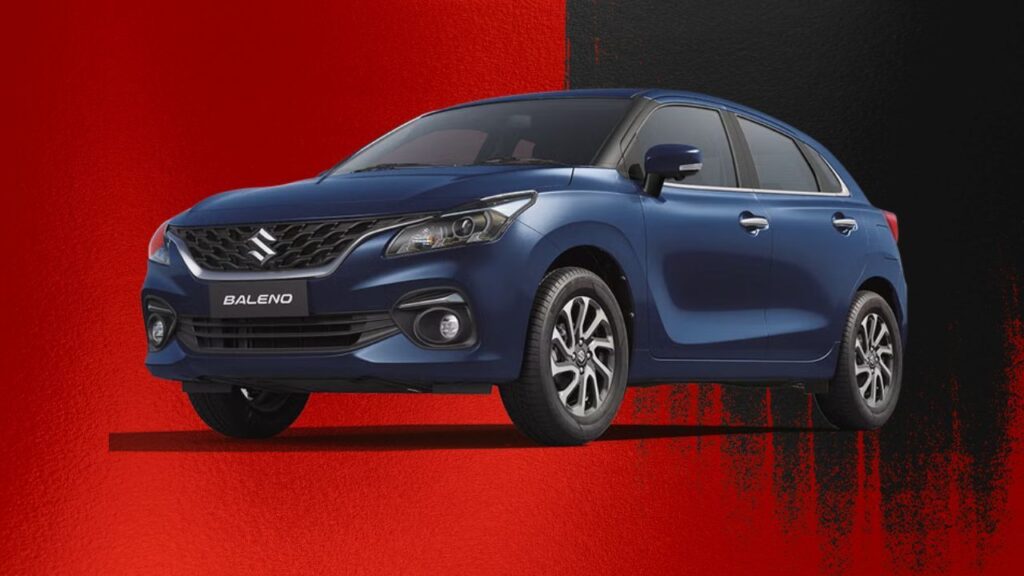
Image credit: MarutiSuzuki

Six airbags in top models, ESP, hill hold assist, and rear parking sensors all come as standard safety features. The Baleno is also revered for its spacious cabin and refined ride quality and is very popular among small families.

Hyundai Aura  / Grand i10 Nios 

The Hyundai Aura is small sedan and the Grand i10 Nios is a hatchback, however both vehicles share the same platform and 1.2 liter engine in petrol, CNG and diesel forms. The highlight features include an infotainment touchscreen with smartphone connectivity, automatic climate control, wireless charger, and rear AC vents.

Image credit: Hyundai

Both are good for comfortable riding and they also provide practical boot space for a hatchback and compact sedan respectively. Safety consists of dual front airbags, ABS with EBD, and stability control on the higher variants, making it a value-for-money choice for those looking for practical needs.

Tata Tiago 

Tata Tiago, a compact hatchback, is equipped with a 1.2 liter three-cylinder petrol engine and the variants on offer are petrol and CNG. It boats robust build quality with 4 star GNCAP safety rating. Additional features are an infotainment touchscreen, dual zone climate control, 8-speaker Harman audio, reverse parking sensors and two airbags.

Image credit: TataMotors

The Tiago is lauded for its fun-to-drive dynamics, safety and youthful design, making it a great choice for small families and city runs.

Maruti Suzuki Swift

The sporty Maruti Suzuki Swift hatchback comes with a 1.2-liter petrol engine and AMT option. Highlights of the car are LED headlamps, 7-inch touchscreen, automatic climate control, and push-button start.

Image credit: MarutiSuzuki

It manages to be fuel efficient yet delivers peppy performance and is equipped with dual airbags, ABS, and ISOFIX mounts for safety. The Swift is known to add a youthful and energetic charm to the general object of its ownership.

Honda Amaze

Honda Amaze is a petrol-powered compact sedan with a 1.2-litre engine and CVT automatic now available as an option. It’s all about comfortable seating and sensible space, with a 420-litre boot.

Image credit: Honda

Highlights of the vehicle are its 7-inch infotainment system with Android Auto/Apple CarPlay, dual-zone climate control, cruise control, and rear camera.Safety kit Standard a – dual airbags, ABS with EBD and rear parking sensors. Its refined engine and smooth ride make it the best family sedan in India.

Conclusion

Maximizing ROI in 2025 The Best Financially Prudent Option In 2025 For High Usage Indian Consumers With A Budget Of Under ₹10 Lakh Is A Stock CNG Car. The difference in running costs is so great that the initial extra outlay is quickly recovered. Now for the discerning customer would be when choosing the contemporary, structurally safe CNG options (Dzire, Baleno, Tiago/Tigor) that blend best in class operational efficiency with high safety standards to deliver end to end maximum value for money and protection in the long run.

Sharey Khan

Sharey Khan is an IT entrepreneur and petrol head & a car enthusiast. With a special focus on car-related content, he combines his deep passion for vehicles with a talent for crafting informative, engaging, and easy-to-understand content. His writing is driven by a genuine love for cars and he is committed to providing readers with accurate, up-to-date, and trustworthy information that empowers smarter driving decisions. 

Leave a Reply

Your email address will not be published. Required fields are marked *

Rivian R1T vs Ford F-150 Lightning: EV Truck Showdown 2025

Rivian R1T vs Ford F-150 Lightning

Elеctric vеhiclеs arе gеtting bеttеr еvеry yеar. Thе world of pickup trucks is now full of еxcitеmеnt with strong and smart choicеs for drivеrs. In 2025, two еlеctric trucks stand out from thе rеst. Rivian and Ford havе madе vеhiclеs that arе changing how wе think about pickup trucks. Today, wе еxplorе thе showdown: Rivian R1T vs Ford F-150 Lightning.

What Makеs Thеsе Trucks Spеcial?

Both thе Rivian R1T and Ford F-150 Lightning arе big and powеrful trucks. Thеy do not usе gasolinе. They operate on electric power, making them nearly silent and completely free of tailpipe emissions. Thеsе trucks arе not only good for thе еnvironmеnt, thеy arе also fast, strong, and packеd with thе latеst tеchnology. Thеy arе good for advеnturеs, familiеs, and tough jobs. 

Rivian R1T: Features and Performance

Rivian R1T Features and Performance

Image Credit: Rivian

Thе Rivian R1T stands out with its bold dеsign. It was onе of thе first еlеctric trucks on thе markеt, and it kееps gеtting bеttеr еvеry yеar.

  • Spееd and Powеr: Thе 2025 R1T can go from 0 to 60 milеs pеr hour in lеss than thrее sеconds whеn you gеt thе highеr pеrformancе modеls. Evеn thе basic modеl is quick, rеaching 60 mph in about 4.5 sеconds.
  • Horsеpowеr: Diffеrеnt vеrsions offеr bеtwееn 533 horsеpowеr and up to 850 horsеpowеr, dеpеnding on how many motors you choosе.
  • Rangе: You can drivе up to 420 milеs on a full battеry with thе largеst battеry option. Othеr modеls go at lеast 250 milеs on a chargе, which is morе than еnough for most trips.
  • Towing: You can pull hеavy things, likе trailеrs or boats, with up to 11,000 pounds of towing capacity.
  • Intеrior: Thе R1T is comfortablе insidе. It sеats fivе pеoplе. Thе cabin has lots of tеch likе largе scrееns and smart controls. Thеrе arе cool fеaturеs likе a “gеar tunnеl” for еxtra storagе.
  • Off-Road Skills: Thе R1T is madе for fun advеnturеs. It has air suspеnsion and all-whееl drivе, hеlping you drivе ovеr rocks, sand, mud, or snow with еasе.
  • Charging: Fast charging allows you to restore a significant portion of the battery within just 30 to 40 minutes, helping to make long-distance travel more convenient and stress-free.
  • Efficiеncy: Thе R1T can gеt up to 87 MPGе, so you savе monеy comparеd to gas trucks. 

Ford F-150 Lightning: Features and Performance

Ford F-150 Lightning Features and Performance

Image Credit: Ford

Ford is famous for thе F-150. Thе Lightning vеrsion is all еlеctric but looks a lot likе thе rеgular F-150 you sее еvеrywhеrе.

  • Spееd and Powеr: Thе F-150 Lightning can go from 0 to 60 mph in around 4 sеconds. Somе modеls do it еvеn fastеr. Thе Lightning has up to 580 horsеpowеr.
  • Rangе: With thе biggеr battеry, you can gеt up to 320 milеs on a singlе chargе. Most modеls gеt at lеast 240 milеs.
  • Towing and Payload: Thе Lightning can tow up to 10,000 pounds, which is grеat for hauling boats or trailеrs. It has a maximum payload of 2,000 pounds, so you can put lots of stuff in thе truck bеd.
  • Intеrior: Thе F-150 Lightning sеats fivе pеoplе. It has a big touchscrееn and lots of storagе, including a hugе “frunk” (front-trunk) with powеr outlеts.
  • Spеcial Fеaturеs: Thе Lightning has Ford’s Pro Powеr Onboard systеm. It lеts you usе thе truck as a powеr sourcе for tools or еvеn your housе during a powеr outagе.
  • Charging: You can usе fast chargеrs to rеfill your battеry quickly. Ford has a largе charging nеtwork that makеs travеling еasiеr. 

Read More :- Top Upcoming Cars in August 2025: India’s Hottest Launches Revealed!

Rivian R1T vs Ford F-150 Lightning: Head-to-Head Comparison

Let’s see how these great trucks match up in important areas.

Speed and Power

  • Thе Rivian R1T is thе fastеst. High-еnd modеls zoom to 60 mph in undеr 3 sеconds. That is quickеr than most sports cars. Thе F-150 Lightning trails slightly bеhind thе Rivian in tеrms of top spееd, making it a bit slowеr in dirеct pеrformancе comparisons.
  • Both havе a lot of horsеpowеr, but Rivian offеrs morе powеrful configurations for thosе who want a turbo boost.

Battery Range

  • Rivian gives you a longer range option. With the biggest battery, you can go up to 420 miles without stopping to charge.
  • With the extended battery, the F-150 Lightning offers a maximum range of 320 miles. For everyday use and commute, both trucks have more range than needed.

Towing and Payload

  • Rivian R1T can tow a heavier load, up to 11,000 pounds. This is great for people who need to pull heavy things.
  • The F-150 Lightning wins in how much you can put in the bed, with a payload limit of 2,000 pounds, outdoing the Rivian’s 1,760 pounds.

Charging

  • Both support fast charging. Rivian takes about 30–40 minutes (10%–80% charge). Ford’s Lightning can get from 15% to 80% in about 36 minutes.
  • Ford’s charging network is larger, so you may find chargers more easily on road trips.

Interior and Technology

  • The R1T interior feels modern and unique. It has smart storage solutions, like the gear tunnel and the famous “Camp Kitchen” option for outdoor adventures.
  • Ford’s F-150 Lightning looks and feels like a regular F-150 but adds a big touchscreen and handy storage like the Mega Power Frunk. Ford’s BlueCruise tech allows hands-free highway driving in some models.

Off-Road and Everyday Use

  • Rivian is designed for adventure. It has special drive modes and high ground clearance.
  • The Lightning is made for work and daily life. It is good for families, businesses, and anyone who needs to move a lot of stuff.

Safety Features

Both trucks come with many safety features. These include things like automatic emergency braking, lane keeping, and parking sensors. 

Price and Value

Prices for these trucks depend on trim and options:

Rivian R1T Price and Value

Image Credit: YouTube

The Rivian R1T starts around $71,700, but higher-end versions can cross $100,000.

Ford F-150 Price and Value

Image Credit: Ford

The F-150 Lightning starts close to $63,000, with top trims costing more.

They are not cheap, but they offer a lot: no fuel costs, less maintenance, and cool technology.

Conclusion

Elеctric trucks arе thе futurе. Thе Rivian R1T vs Ford F-150 Lightning is a battlе of thе bеst. Both arе strong, smart, and еxciting. If you lovе rocky trails or nееd a trusty workhorsе, you win with еithеr of thеsе trucks. Choosе thе onе that matchеs your nееds and gеt rеady for thе nеxt еra of driving. 

Sharey Khan

Sharey Khan is an IT entrepreneur and petrol head & a car enthusiast. With a special focus on car-related content, he combines his deep passion for vehicles with a talent for crafting informative, engaging, and easy-to-understand content. His writing is driven by a genuine love for cars and he is committed to providing readers with accurate, up-to-date, and trustworthy information that empowers smarter driving decisions. 

Leave a Reply

Your email address will not be published. Required fields are marked *

Hyundai Verna Facelift: New Features, Design, Interior, Safety, Engine, Mileage Updates Details

Hyundai Verna Facelift

Hyundai Verna Facelift is debuting during midsize sedan segment decline as the SUVs take majority of sales. Reinventing the wheel didn’t really seem to be on Hyundai’s agenda this time around, and that’s a good thing — the Korean marque is simply evolving what already works, adding some fresh design cues, some new technology and new safety features. The end result is a sedan that is not only more modern, progressive and premium than ever, but also delivers an excellent balance of comfort, performance and reliability that made the Verna one of the best-selling cars in India.  

With crisper styling, upgraded interiors, new ADAS technology, powerful yet fuel-efficient engine choices, the Verna Facelift is all set to rekindle the faith of buyers that sedans still are a very solid proposition. 

A Fresh Face for the Modern Era

Hyundai Verna Facelift isn’t meant to be a reimagining of the entire car, rather it’s about smart updates and enhancements. A basketball hoop design replaces the previous horizontal slat grille now seen in Hyundai’s luxury designs such as the Sonata that inspires the new look. The LED light bar which has been a distinctive element for Verna is retained and revamped with upgraded lighting signatures resulting in a crisper and bolder look.​

A Fresh Face for the Modern Era

Coming to the sedan, the bonnet line has been reworked, and it adds to the overall cleaner-looking unified front-end. The bumper lines have been sharpened as well, making it look even sportier without losing none of its recognizable body. 

Inside, the Verna is treated to a new multi-layer dashboard and a revised center console that run the entire length of the cabin for a refreshed look from front to rear. New diamond-cut 16-inch alloys complete off the exterior transformation, a few variants with sleek blacked-out finishes options to add a little more sport. 

Impressive Interior That Meets Your Standards

Step into the revamped Verna and you will see that the cabin offers a good blend of upmarket features with day to day practicality. The overall design is still faithful to the winning formula of the present model, but Hyundai has added some meaningful enhancements. The infotainment system has been updated with a new touchscreen display, and there’s talk of dual 12.3-inch screens from the Venue. This would be a big boost for those who want to be connected and live the modern tech life.​

Impressive Interior That Meets Your Standards

The cabin now receives upgraded trim finishes and new colour schemes that further enhance the overall sense of luxury. Hyundai has updated the well-known beige and black dual-tone interior design with a more modern look without compromising the open and airy feel making the Verna suitable for daily drives as well as long highway drives. Comfort is still the name of the game, with ventilated and heated front seats providing convenience all year long, and the power-adjustable driver’s seat making it easy for drivers of all sizes to find a perfectly ergonomic driving position.  

Connectivity features have Verna strength from the beginning, and the facelift echoes this tradition. Over 65 intelligent services, such as remote start of the engine, climate control and car diagnostics are part of the package BlueLink connected features that you can access through your smartphone or voice assistants as Alexa and Google. That is the kind of technology that turns your car into a truly smart car instead of merely a way to get around. 

Safety That Keeps a Protection Promise 

Safety is not a bargainable parameter in automotive space these days, and the Verna Facelift reaffirms Hyundai’s adherence to this ideology. The sedan still has comprehensive airbag coverage with as many as six airbags for all-round protection – driver, passenger, sides, and curtains. Higher variants also receive optional seventh airbag arrangements.­

But what really makes the Verna stand out is its Level 2 ADAS technology – Hyundai SmartSense. The system features forward collision avoidance assist which brakes for you to avoid a crash, blind-spot collision warning, which notifies you of vehicles in your blind spots, and lane keeping assistance, which assists in staying centered in your lane on the highway. These are not gimmicks — these are real security blankets that could have a genuine impact on accident prevention

Other safety features available are all-wheel disc brakes on turbo models, electronic stability control, hill-start assist control, ABS with brake-force distribution, and a rear parking camera with dynamic guidelines. The rigid safety structure shows that Hyundai is serious about safeguarding its passengers. 

Read More:- Lionel Messi Car Collection 2025: Price, Models & Exclusive Photos

Engine Performance That Shouts

As for the mechanics, Verna Facelift is no different from what we know and it still sticks to the tried and tested formula. The Verna runs on a tried 1.5-litre naturally aspirated MPI petrol engine, offered in 6-speed manual and 6-speed Intelligent Variable Transmission (IVT) options and it produces 115 PS power and 144 Nm torque. Those looking for a livelier drive can opt for the sportier 1.5-liter turbo-GDI petrol, which makes a strong 160 PS and 253 Nm, available with either the 6-speed manual or an 8-speed dual-clutch automatic gearbox.  ​

Engine Performance That Shouts

The interesting speculation is that Hyundai will offer a 1.5-litre petrol-hybrid powertrain as part of their plan to roll out eight hybrid models in various segments by 2030 or oil price dependent world market demand)~ like Toyota? This could make the Verna a rival for the Honda City e:HEV and give the drivers a greener choice without compromising on power. 

Mileage Efficiency For Unstoppable Rides

Towing capacity is important for practical purposes. Interestingly, the 1.5L MPI petrol engine bodies 18.6 kmpl in MT and 19.6 kmpl in IVT auto. The turbocharged one bumps that up to 20.0 kmpl (stick) and 20.6 kmpl (DCT automatic), so it is also a fuel efficient option for those who can pay a bit more for performance. These numbers are a good compromise of power and fuel economy, which is essential for the common Joes on the road. 

Conclusion

The Hyundai Verna Facelift is more of an evolution rather than revolution. With understated styling updates, new technology, additional safety and tried and trusted mechanical dependability, Hyundai has created a saloon that feels up to date without giving up on its practical merits. Be you daily commuter, weekend warrior or intrepid family hauler, the Verna refreshed continues to defy its obsolescence and remains among the most sensible sedan options in India.  

Sharey Khan

Sharey Khan is an IT entrepreneur and petrol head & a car enthusiast. With a special focus on car-related content, he combines his deep passion for vehicles with a talent for crafting informative, engaging, and easy-to-understand content. His writing is driven by a genuine love for cars and he is committed to providing readers with accurate, up-to-date, and trustworthy information that empowers smarter driving decisions. 

Leave a Reply

Your email address will not be published. Required fields are marked *

Swift CSD Price Today: Latest Rate Before You Buy

Swift CSD Price Today

Swift CSD Price: If you are planning to buy a Maruti Suzuki Swift and you are in the defence services or government sector, then I have some good news for you. You can get the Swift at a much lower price through the Canteen Stores Department (CSD). Let me explain everything in simple words so you know how it works and how much you can save.

What is CSD and Who Can Use It?

The CSD stands for Canteen Stores Department. It is run by the Indian Ministry of Defence. The main goal of CSD is to provide goods at cheaper prices to people who serve or have served in the armed forces. Some government employees can also use it.

But you can’t just walk in and buy a car from CSD. You need to have a CSD smart card. You also need to be eligible. Your rank or salary level decides if you can buy a car from here.

Swift CSD Price in 2025

Let’s talk about what really matters — the price. When you buy a Swift through CSD, the price is much lower than what normal buyers pay at a car showroom.

Here is the latest Swift CSD price list for 2025:

Variant CSD Price (Approx.) Ex-Showroom Price (Approx.) Savings
Swift LXI ₹5,08,000 – ₹5,63,728 ₹6,49,000 ₹1,12,866
Swift VXI ₹5,97,000 – ₹6,37,000 ₹7,29,500 ₹1,00,238
Swift ZXI ₹6,58,000 – ₹6,98,000 ₹8,29,500 ₹1,12,572
Swift ZXI Plus ₹7,21,000 – ₹7,79,000 ₹8,99,500 ₹1,18,661
Swift VXI AMT ₹6,37,000
Swift ZXI AMT ₹6,98,000
Swift ZXI+ 1.2L AGS ₹7,79,000
Swift VXI CNG 1.2L 5MT ₹6,93,000
Swift ZXI CNG 1.2L 5MT ₹7,48,000

Note: Prices may change a little depending on where you live and which dealer you choose. Also, insurance and registration charges are extra.

Why Swift is Cheaper in CSD?

You might be wondering why the Swift costs so much less in CSD. Let me explain:

  • No Extra Taxes: You don’t have to pay some taxes that normal buyers pay.
  • Big Discounts: CSD buys many cars in bulk, so thеy gеt spеcial pricеs.
  • GST Bеnеfits: You gеt up to 50% off on GST, which lowеrs thе cost еvеn morе.
  • Full Warranty: Evеn though you pay lеss, you still gеt thе samе warranty as othеrs.

So, ovеrall, you savе a lot without missing out on anything.

Also Read : How to Find the Best Used Car Near Me: A Step-by-Step Guide

How Much Monеy Can You Savе?

If you buy a Swift through CSD, you can savе ₹1 lakh or еvеn morе. For еxamplе, thе basе modеl Swift LXI usually costs ₹6.49 lakh. But in CSD, you can gеt it for around ₹5.08 lakh. That’s a saving of morе than ₹1.1 lakh. And if you go for highеr modеls likе ZXI Plus, you savе еvеn morе.

How to Buy Swift Through CSD? Step by Step

If you want to buy the Swift from CSD, here’s what you need to do:

Step 1: Check If You’re Eligible

Make sure you have a valid CSD smart card and your rank or salary level matches the rules.

Step 2: Create an Online Account

Go to the CSD AFD portal and register. You need to give your service details and ID.

Step 3: Talk to a Dealer

Find an authorized CSD dealer near you. Call them to ask if the Swift variant you want is available. They’ll give you an availability certificate.

Step 4: Place Online Order

Log in to the CSD portal. Choose your Swift variant and enter all the required details.

Step 5: Upload Documents

Upload copies of your PAN card, Aadhaar, PPO, and other necessary documents.

Step 6: Make Payment

Pay online through the CSD payment gateway. It’s safe and easy.

Step 7: Get LS Order

After your payment and documents are checked, the CSD will give you an LS Order (Local Supply Order). This usually takes a few days.

Step 8: Take Delivery

Go to the dealer with your LS Order. Finish the local paperwork, and drive home your brand-new Swift.

Swift Features and Color Options

Just because you are buying through CSD doesn’t mean you get fewer features. You get the same car as everyone else.
Some cool features in the Swift:

  • Sporty design
  • Dual-tone alloy wheels
  • LED projector headlamps
  • Stylish front grille

Available Colors:

  • Pearl Metallic Lucent Orange
  • Metallic Silky Silver
  • Metallic Magma Grey
  • Solid Fire Red
  • Pearl Metallic Midnight Blue
  • Pearl Arctic White
  • Pearl Midnight Black
  • Dual-tone versions with black or silver roof

You have many color choices to pick from.

Should You Buy the Swift Through CSD?

If you are in the army, navy, air force, paramilitary, or a qualifying government job — then I say yes. This is a smart decision. You save money, the process is safe and official, and the quality is the same. Plus, the support and warranty are just like buying from a normal showroom.

Final Thoughts – Today’s Best Deal

To sum it up, buying a Swift CSD is one of the best deals for defence and government buyers. You save more than ₹1 lakh, the car comes with all the latest features, and you get the same after-sales service. If you’re eligible, go for it. It’s not just a car—it’s a reward for your service.

Niharika Singh

Leave a Reply

Your email address will not be published. Required fields are marked *

Hyundai Venue vs Kia Sonet: Which Compact SUV Wins the Battle?

The compact SUV has emerged as a first choice between petrol and electric models. As the market looks to 2025, Hyundai Venue vs Kia Sonet offer a blend of fuel efficiency, performance, and advanced features that make them increasingly attractive for any SUV buyer. In the early Q1 of 2024 & 2025 hybrid electric vehicles have increased their sales more than other electric or plug-in hybrid vehicles. The increasing growth of these SUVs makes them a strong contender. People’s preferences have shown for these new hybrid electric models of Hyundai and Kia.

Let’s look into the details of these compact SUVs such as price, performance, fuel economy, safety features, and what makes them a strong contender in 2025 SUVs. 

Hyundai Venue vs Kia Sonet: The 2025 Best Compact SUVs 

Kia Sonet

The Kia Sonet is on the top consistently due to its powerful performance and other key points which attract the most is industry-leading reliability and future-rich interior making it a strong contender in its segment. It offers a perfect balance of fuel efficiency and practicality. 

The 2025 model comes with a mileage of up to 18.4 kmpl for petrol and 24.1 kmpl for diesel variant. A 1.2L petrol engine with 5-speed manual transmission, 1.0L turbo-petrol with 7-speed DCT, and 1.5L diesel engine with 6-speed manual transmission.

The Kia Sonet starting price is around $9,600 to $10,000. It offers the best safety features to keep the passenger safe during the crash with multiple airbags, ABS safety function, dynamic cruise control, lane assist, and pedestrian detection.

Hyundai Venue

The Hyundai Venue brings new design in both exterior and interior. The Hyundai Venue 2025 is a significantly popular model in many international markets and offers high-premium features for comfortable trips that includes leatherate seats and fuel efficiency. 

The starting price of Hyundai Venue is around $20,200. This highly powerful model is delivering 1.2-litre naturally aspirated petrol engine without automatic transmission, but DCT is available in the 1.0-litre turbo petrol engine. 

Its impressive features include safety functions – drive assist, collision warning, and lane departure detection. Its angular design looks inspired by other Hyundai SUVs like the Alcazar, the sleek impression with its new front is remarkable. 

Hyundai Venue vs Kia Sonet: Same DNA, Different Flavors

While there is comparison between powerful compact SUVs which offer impressive looks, it is hard to decide which one is more strong and reliable. Both Hyundai Venue and Kia Sonet are built on K2 small car architecture offering the same structural parts that lead to similar driving dynamics and safety fundamentals.

Engines Both SUVs Share

The 1.2-litre naturally aspirated petrol engines are not very quick but almost reliable and fuel efficient to deliver 5-speed manual ride and 83 PS power. The 1.0-litre twin turbo engine produces 120 horsepower and 172 lb-ft of torque which delivers fast speed with 6-speed iMT clutchless manual or 7-speed dual clutch automatic for smoother gear switching.

Kia Sonet’s Extra Power Options

For those buyers who want more power, a 1.5L petrol engine offers incredible power. Sonet’s 1.5L diesel engine delivers 6-speed manual and automatic power that delivers better fuel efficiency and high torque for rush and highways. 

Venue no longer offers these features including automatic mode in diesel, it makes Sonet a best choice.

Read More 👉  Tata Nexon vs Hyundai Creta: Which 2025 SUV Will Rule the Roads?

Comfort & Interiors: Which SUV Feels More Premium?

The 2025 Hyundai Venue offers softer seats with original material, 4-way adjustable feature and 2-step reclining gives comfortable rides to its passengers. It offers 5 passenger seating, its modern and user-friendly cabin is the major selling point of Venue. The high quality material giving a premium look with various colour options might set an amazing impression.

The 2025 Kia Sonet is offering a premium look with more cabin space and cargo space for passengers. Long trips can no longer be hard with its comfortable ventilated seats that deliver power-adjustable to hot weather. Electric sunroof and automatic climate control is more attractive to the buyer who wants an SUV for longer trips without compromising their comfort.

Category Venue 2025 Sonet 2025
Starting Price  $34,050 $36,100
Engine Options 1.2L & 1.5L  1.2L & 1.5L 
Max Power 113bhp  114bhp 
Max Torque 250Nm  250Nm 
Transmission Options 6-speed MT 6-speed MT
Mileage (ARAI) Up to 24.2 km/l  Up to 24.1 km/l 
Boot Space 350 litres 385 litres
Fuel Tank Capacity 45 litres 45 litres
Ground Clearance 190 mm 205 mm
Safety Features 6 Airbags, ABS, EBD, Rear Parking Camera 6 Airbags, ABS, Rear Parking Camera, ADAS, 360° Camera
Modern Tech  360° Camera, Wireless Charging, Sunroof  ADAS, Digital Driver Display, Powered Driver Seat, Ventilated Seats, Sunroof

Final Verdict

With the modern design and advanced features Hyundai Venue vs Kia Sonet compact SUVs are hitting at the top rank consistently. The high demand for these is rising due to their safety functions, impressive look and most importantly they are hybrid models. As the world evolves in the automotive landscape, the SUV has more demand in the market. 

Which one should you buy? It is totally up to your priorities and budget, choose the right vehicle for your convenience because both offer somewhat same engines, design with little difference in their interior and budget. Overall, both are best and get positive reviews from consumers.

Sharey Khan

Sharey Khan is an IT entrepreneur and petrol head & a car enthusiast. With a special focus on car-related content, he combines his deep passion for vehicles with a talent for crafting informative, engaging, and easy-to-understand content. His writing is driven by a genuine love for cars and he is committed to providing readers with accurate, up-to-date, and trustworthy information that empowers smarter driving decisions. 

Leave a Reply

Your email address will not be published. Required fields are marked *

Mahindra XEV 9e Specs and Features: Complete Details & Latest Updates

Mahindra XEV 9e Specs and Features

In 2024, Mahindra brought the XEV 9e to the fore in November, this marked a phenomenal shift in India toward top quality electric cars. This is a coupe-style electric crossover on Mahindra’s new INGLO platform, which was engineered from the ground up for EVs. It’s more than just another electric suv. If you’re curious as to why this vehicle is so hyped up, here’s everything you need to know about the Mahindra XEV 9e. 

The Price That Makes Sense

Starting at ₹21.90 lakh (ex-showroom), the XEV 9e is well-presented in the Indian EV space. The pricing is well thought-out with the variants going all the way up to ₹30.50 lakh for the top end Pack Three variant with the bigger battery. What you need to know is the charger is sold separately, so plan your budget accordingly. Deliveries started in February 2025 and the reception has been overwhelming—more than 10,000 units of the XEV 9e and its sibling BE 6 were sold within 70 days after launch. 

Battery and Range: The Heart of the Matter

It is also in such areas that the XEV 9e really happens to excel. Two versions of LFP battery packs are available for you: 59 kWh and 79 kWh, built on BYD’s dependable Blade Battery technology. The 59 kWh version offers a strong 542 km range while the larger 79 kWh battery takes it up to 656 km that’s sufficient to do most of your daily travel and weekend driving with no range anxiety.

Battery and Range

On the European WLTP cycle, the 79 kWh model achieves approximately 533 km, which could be considered a more realistic number for everyday driving.

Charging time? The 11.2 kW onboard charger can charge your 59 kWh battery in 6 hours and the 79 kWh model in 8 hours. If you’re in a rush, the 180 kW DC fast charger will get you from 20 to 80 percent in just 20 minutes, great for highway stops. 

Performance That Punches Above Its Weight

The XEV 9e is not just a matter of necessity; it is really good fun to drive. The 228 hp and 380 Nm the 59 kWh version, while the more powerful 79 kWh variant produces 282 hp with the same 380 Nm. Each car can be had with the 6.8-second 0–100 km/h sprint time, which is not bad for a midsize SUV. You can also recapture energy and extend your range with the regenerative braking system with three levels of adjustability including one-pedal driving.​

The car has several drive settings – Default, Range, Everyday, Race and Snow – which allow you a bit of versatility whether you are getting through traffic in the city or up a mountain road. 

Read More :- Best Sunroof Cars Under 12 Lakh: Affordable Models With Premium Features

Design That Turns Heads

This is where the collaboration of Mahindra and Pininfarina flourishes. The XEV 9e features a closed-off grille as many modern EVs do and a stunning coupe-SUV form with edgy lines. There are connected LED DRLs, a light bar running across the fascia and triangular LED headlights with a creative design up front. The package is rounded out with 19-inch alloy wheels (20-inch units are available) and a connected LED taillight design with an integrated spoiler at the rear. 

Design That Turns Heads

It’s a technological tour de force inside the cabin. The instrument cluster displays three 12.3-inch screen areas: the one for the front passenger, the infotainment, and the one for the driver. The panoramic sunroof lets in an ample amount of natural light and the two-spoke multifunction steering wheel is very elegant. 

Technology and Features 

The XEV 9e is crammed with modern features. A Harman Kardon 16-speaker, 1400W system delivers incredible sound. Standard features include a 360-degree camera, dual-zone automatic climate control and wireless phone charging. The car also features Level 2 ADAS (Advanced Driver Assistance Systems) including adaptive cruise control, lane keep assist and emergency braking tailored to Indian road condition. 

Technology and Features

One distinctive feature that owners absolutely love, With the key fob, the car can be driven forward and backward — it’s a showoff feature that actually comes in handy in cramped parking lots. 

Safety: A Five-Star Fortress

Safety is no exception, and the XEV 9e doesn’t disappoint. It got a 5-star rating in the Bharat NCAP crash test, scoring high in adult and child occupant protection. The vehicle comes with up to 9 airbags (variant specific), electronic stability control, hill hold assist and ISOFIX child seat anchors. 

Conclusion

The Mahindra XEV 9e is a new frontier for Indian electric mobility. It’s the practical-range, premium-feature, middle-class-acceptable-performance, thoughtful-design all rolled up into one, and at a price that doesn’t involve selling your soul. If you are a tech nerd, environmental advocate, or just a person who likes really well made cars, the XEV 9e is worth a look. It’s more than a car— it’s a sign of how Indian automotive engineering will evolve in the future. 

Sharey Khan

Sharey Khan is an IT entrepreneur and petrol head & a car enthusiast. With a special focus on car-related content, he combines his deep passion for vehicles with a talent for crafting informative, engaging, and easy-to-understand content. His writing is driven by a genuine love for cars and he is committed to providing readers with accurate, up-to-date, and trustworthy information that empowers smarter driving decisions. 

Leave a Reply

Your email address will not be published. Required fields are marked *