
0

EV vs Petrol vs Hybrid: Which Car Type Is Perfect for You in 2025?

The 2025 car market is unrecognizable compared to just a few years ago. Between that and gas prices rising and EV charging networks growing and brands doubling down on hybrids, there’s now an embarrassment of options for buyers. But more options can make things confusing— EV vs Petrol vs Hybrid, do you go with a petrol car you know and trust, get a full electric vehicle, or take the middle ground in a hybrid? They all have their strengths, costs and suitability to one’s lifestyle. In this guide we’ve distilled the key differences — in running costs, convenience and the newest models — to help you decide which type of car really fits your life in 2025. 

Comparison At A Glance

Choose an EV if most of your daily driving is city/commute (≤100–200 km/day), you can charge at home/work, and you want the lowest running costs and least hassle. Opt for a Petrol car if you frequently do high mileage where chargers are sparse, need quickest refuel and lowest initial outlay, or biggest model/network. Get a Hybrid if you desire much more fuel economy than petrol, far less range-anxiety than a full EV, and you travel a lot on combined city/highways runs. 

Factors That Define Which Car Type is Perfect For You in 2025

Upfront price Value for EVs, Petrol, & Hybrid Cars

  • Mainstream EVs in India in 2025 start at around mid-₹7–12 lakh for city-centric models and extend to ₹20 lakh+ for full-sized SUVs and premium cars. (dealer listings reveal plenty of choice throughout the price spectrum).
  • Petrol cars are the cheapest to begin with – good small hatchbacks are available for much less than ₹7 lakh.
  • Hybrids (mild/strong/plug-in forms) are priced between petrol and EVs; popular models (Maruti, Toyota, MG) tend to start ₹8–12 lakh. 

Running Cost for EVs, Petrol, & Hybrid Cars

EV home charging is usually in the range of ₹6–₹10 per kWh, which in the case of regular hatchbacks or small SUVs works out to about ₹0.8–₹1.5/km – still a lot less than what petrol costs. 

Cost of petrol per litre for running cost. For city driving (15–18 km/L) that works out to around ₹5–8 per km per km – but it depends on the model and the city. 

EVs are miles ahead on running costs per km if you have dependable home charging or cheap, electric-friendly, off-peak tariffs.

Convenience & everyday life: charging refuelling

Refuelling petrol: 3-5 min at any petrol station. They are all spaced evenly everywhere. 

Charging EVs: home charging overnight is most convenient (adds minimal friction). While public fast chargers are becoming more numerous and reliable, they remain patchy; national and private initiatives are working to expand the networks. The IEA expects a significant rise in public chargers in the next few years.

EV convenience recedes significantly if you live in a flat with no assured parking/charger access and no workplace charging. 

Range for practical everyday use & long haul trips

Budget EV hatchbacks tend to have 200-450 km of usable range depending on the variant. For a few long journeys you can plan for charging breaks – slower than filling up on petrol, but it can be done.

Hybrids and petrol vehicles offer seamless, rapid long-distance travel without the need to stop and recharge — which is a significant advantage for highway users.

Government assistance & incentives (important if you are buying now)

Various central and state subsidies (through portals such as e-AMRIT, the FAME scheme details) exist albeit till date non-uniformed, the state EV policies — these can significantly reduce the cost of the EV or of the charging infrastructure. FAME II and related demand incentives have informed subsidies and procurement schemes. Refer to e-AMRIT/FAME pages and your state policy before purchasing.

(Practical advice: incentives are frequently models- and region-specific. All EVs don’t get the same perks, check with dealer + State EV policy). 

Read More:-  Hyundai Elantra 2025 Review: Price, Trims, Hybrid & N Line Features Revealed!

Maintenance, Resale and Dependability

EVs: Less moving parts → less scheduled maintenance (no oil changes, fewer brake jobs because of regen braking). The health of the battery is the biggest long-term concern; warranties on batteries are provided by manufacturers (usually for 8 years/1.6 lakh km or so on a number of models).

Petrol: Well established service network and cheap spare parts in India, high predictability.

Hybrid:The addition of a hybrid system (engine + electric components) brings complexity, but manufacturers like Toyota have decades of proven hybrid tech and solid service networks in India.

The resale value for EVs is stabilising, but it still depends on the model – stick to well-known, popular brands for reduced risk. 

Environment & Social Aspects

Lifecycle vehicle emissions of EVs are a function of the electricity mix, as they have no tailpipe emissions. India’s grid is greening and policy pushes gradually lower lifecycle emissions for EVs. Hybrids reduce emissions versus petrol, particularly in urban driving. 

Simple decision checklist: who should choose which option

Pick EV if:

You drive less than 300 km a day and most of your trips are within the city. If you can charge at home (private parking) or your office provides charging and desire to have the lowest running cost and lesser maintenance hassles. It’s best if you care about low tailpipe emissions and technology-enhanced features.

Pick Petrol if:

You do at least some long highway cruising, you travel out into the country, or you just live where EV chargers are hard to find. You want the lowest initial cost and refuel fastest and have access to the widest network.

Pick Hybrid if:

You’d like to get vastly superior fuel economy to petrol without having to depend on charging stations. You do both city and highway driving and want to move seamlessly through both without the need to plan your route around charging stops. You also like tried and tested reliable (Toyota/Maruti strong hybrids have a good track record in India).

Some Latest Models of EV / Hybrid / Petrol Cars

Type Model Key Specs
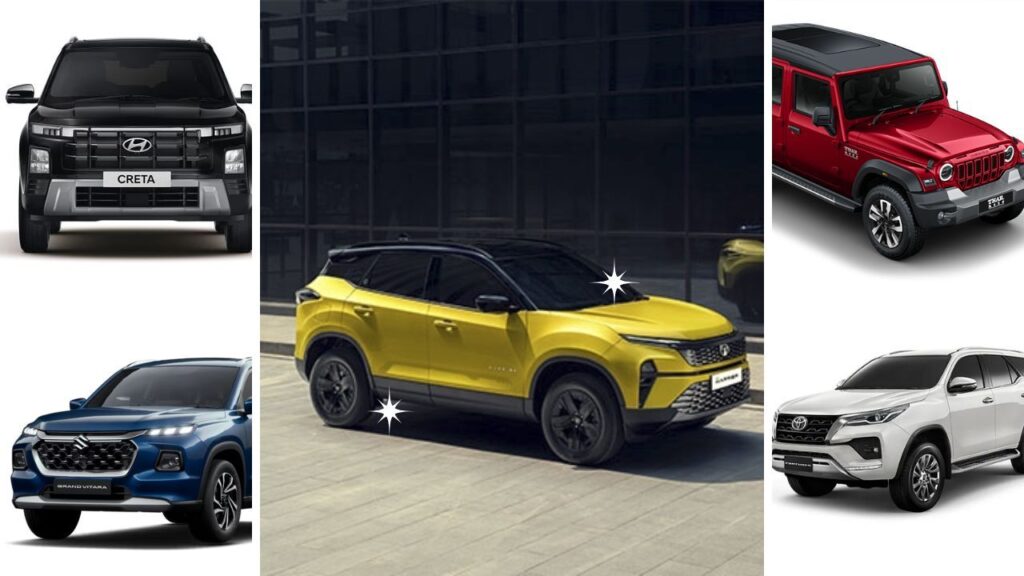
Electric Vehicles  Tata Harrier EV Launched mid-2025. Comes with AWD dual-motor option, very impressive real-range (up to ~627 km MIDC in best variant). Strong contender in the mid-size SUV EV space.
Hyundai Creta EV Scheduled early-2025. Multiple battery pack options. Expected range ~390-470 km depending on battery size. Features like DC fast charging, interior tech upgrades.
Maruti Suzuki e-Vitara To launch in mid/late 2025. Two battery options (≈49 kWh and ≈61 kWh), claimed range up to ~500 km in some trims. Will compete with Creta EV etc. 
Hybrids Toyota / Maruti / Suzuki strong or mild hybrids (Grand Vitara strong hybrid) Coming in H2 2025. Third-row / 7-seater version too. Strong hybrid (self-charging) gives the benefit of much better mileage than petrol alone. 
Toyota Fortuner Mild-Hybrid Neo Drive Already launched in 2025. Adds mild-hybrid tech to the Fortuner to improve stop-start behaviour, small torque assist etc. Good for those who drive big SUVs but want improved efficiency.
Hyundai Creta Hybrid Already launched in 2025. Adds mild-hybrid tech to the Fortuner to improve stop-start behaviour, small torque assist etc. Good for those who drive big SUVs but want improved efficiency.
Petrol Mahindra Thar / Bolero Updated models set to launch in Oct-2025. These are mature, rugged, proven petrol SUVs with facelifted features. Good for off-road / rural tasks or for those who like strong looks + robust service
Skoda Octavia RS For those looking for a more premium sedan with petrol performance and features. The RS version adds sportiness. May have higher maintenance costs but strong appeal if you want power + brand.

Conclusion

There’s no such thing as the “best” car for everyone, because EV vs Petrol vs Hybrid is a confusing debate but what works for one person depends on how they drive, where they live, and what kind of vehicle they find most useful. If you mostly drive in a city, and have reliable access to an outlet, an EV provides unparalleled running costs and a green driving experience. If highway and long road trips are the staple of your life and you want to fill up as quickly as possible—and as cheaply as possible up front—gas cars are still the prudent choice. And if you want to save fuel but don’t want to plug in, hybrids give us the best of both worlds. In the end, the ideal car for you in 2025 isn’t what’s the biggest hit of the day — it’s the vehicle that fits your everyday life and your plans for the future. 

Sharey Khan

Sharey Khan is an IT entrepreneur and petrol head & a car enthusiast. With a special focus on car-related content, he combines his deep passion for vehicles with a talent for crafting informative, engaging, and easy-to-understand content. His writing is driven by a genuine love for cars and he is committed to providing readers with accurate, up-to-date, and trustworthy information that empowers smarter driving decisions. 

Leave a Reply

Your email address will not be published. Required fields are marked *

Affordable CNG Cars Under 20 Lakhs in India

CNG Cars Under 20 Lakhs

Finding the right CNG car that balances your needs can be worth your money. With the plethora of choices available in the Indian car market, the affordable CNG cars under 20 lakhs which offer fuel efficiency and good performance are hard to find. CNG cars offer good value whether you are a family looking for reliable transport or a daily commuter eager to cut fuel costs. All the CNG cars under 20 lakh are included in this article with detailed specs and analysis to help you choose the best. 

Why Choose a CNG Car?

It is important to understand the reasons for the popularity of CNG among automobile buyers in India before we discuss individual models. With an average mileage of 17.44km/kg to 35.6 km/kg (based on the model), CNG vehicles consume less fuel compared to petrol vehicles. Besides, CNG is also cheaper than petrol, which makes it a great option for the family or business owner on a budget. The engines are dual-fuel flexible (CNG and gasoline) which allow you to switch according to your availability and preference. 

Tata Nexon

The car offers 5-star safety rating by both global NCAP and Bharat NCAP ensuring passengers are provided with best possible protection. Its stylish 16-inch dimple Dual-tone alloy wheels along with its sleek LED lights are inspired enough to attract young hearts. With three powered options – a 1.2L turbo-petrol, a 1.2L turbo-petrol CNG, and a 1.5L diesel, and multiple transmission options – manual (5/6-speed), AMT, and a 7-speed DCT for petrol variants, and manual and AMT variants for diesel. 

Tata Nexon

The infotainment system is easily synced to the driver with a 10.25-inch touch screen and an accompanying driver’s display. It comes with a panoramic sunroof, front seats which are ventilated, a high-end JBL audio system and an air purifier. Advanced technology contributes to convenience and safety, including a wireless charger, around view monitor, cruise control, dual zone climate control, rear air ventilation, and advanced internet features. Also, the blind spot camera adds to the driver’s peace of mind. 

The Tata Nexon comes in a range of Rs. 8.4 lakh to Rs. 16.58 lakh. Buyer can get this feature packed compact SUV in 2025.

Maruti Grand Vitara

There are powertrain options in a Maruti Grand Vitara, it comes with a 1.5-litre mild-hybrid petrol engine, a 1.5-litre strong-hybrid petrol engine paired with an electric motor and dedicated CNG variants. You can get CVT and automatic transmissions, both with AWD. The cabin is spacious five-seater with premium materials used and thoughtful design.  

Maruti Grand Vitara

Occupant protection is better with now six standard airbags across all versions of the car. Panoramic sunroof (only on high spec variants) adds to the open and airy feel of the cabin. More comfort and convenience are added with 9-inch touchscreen, ventilated seats, head-up display, 360-degree camera, air purifier, and wireless charging. Front-wheel drive (FWD) and all-wheel drive (AWD) are offered, with the addition of a new AWD automatic version. 

With a 5-speed manual gearbox and a fuel efficiency of 21.11 kmpl, the Base Sigma Petrol variant is priced at ₹10.77 lakh. The cost of the Delta CNG variant is ₹13 lakh. The cost of the high-end Alpha Plus Opt Hybrid CVT DT variant is ₹19.72 lakh. 

Maruti Ertiga 

There are two engines options available for the car, a 1.5L petrol engine offers 102 horsepower and 136.8 Nm of torque and a 1.5L CNG engine delivers 87 horsepower and 121.5 Nm of torque. The gasoline version is available with a 5-speed manual and a 6-speed torque converter automatic transmission, while the CNG version is only a manual. The fuel consumption figures are fact – the CNG variant delivers 22.75 km/kg while the petrol variant delivers 20.3 – 20.51 kmpl as per ARAI. 

A 7-inch touchscreen infotainment system with Android Auto and Apple CarPlay, automatic climate control, paddle shifters (AT), cruise control, 40+ linked car features, rear AC vents, tumble fold seats, rear parking sensors and cameras, and ventilated seats in upper trims are just some of the highlights. Safety also benefits from dual airbags, ABS with EBD, rear sensors and a 3-star Global NCAP rating. The 209-liter boot is handy for all sorts of storage and can be extended by folding down the third-row seats. 

For 2025, the Ertiga gets a reduction in its GST price, making it more affordable, with prices beginning at ₹8.80 lakh (ex-showroom), while the top variants touch around ₹12.94 lakh

Toyota Rumion

A 1.5-litre naturally aspirated petrol engine gives 103 PS of horsepower with 137 Nm of torque which is ready to hit the road at a speed. The CNG version comes with a 1.5L engine to generate 88 PS and 121.5 Nm which is ready to give 26.11 km/kg impressive mileage. The petrol version is available with two transmission options, a 5-speed manual and a 6-speed torque converter automatic.  

Toyota Rumion

The 2025 Toyota Rumion is starting at ₹10,44,000 but choosing more options in the car will cost you around ₹13,62,000. The S variant is the lowest-priced option, while the automatic one tops the list of the non-CNG models. With recent GST price cut, the CNG variant is priced at ₹11.39 lakh (ex-showroom). 

Maruti XL6

The vehicle is offered with two engine options that comply with BS6 Phase II standards – a 1.5L mild-hybrid petrol engine producing 102hp and 137Nm of torque, and a 1.5L CNG engine producing 87hp and 121.5Nm of torque. A 5-speed manual transmission would be available for both variants and the petrol variant would get a 6-speed automatic (torque converter) only. That’s good fuel economy, too, with the petrol versions delivering 20.27–20.97 kmpl and CNG model delivering 26.32 km/kg. The infotainment system includes a 7-inch touchscreen (with wireless charging), a 360° camera, Apple CarPlay, Android Auto, and Suzuki Connect. 

Nexa is the exclusive channel for buying Maruti Suzuki’s premium, 6-seater, MUV the XL6. The 2025 prices of the top Alpha Plus AT Dual Tone trim and Zeta petrol variant of the car are ₹14.48 lakh and ₹11.52 lakh, respectively. 

Read More:-  The Best Skoda Cars Under 10 lakh In India – Stylish, Reliable And Budget-Friendly Options

Toyota Urban Cruiser Hyryder

Engine options for the car include a 1.5L mild-hybrid petrol, a 1.5L strong hybrid petrol with a CVT, and a 1.5L CNG variant. Transmission options include 5-speed manual, 6-speed automatic torque converter (for petrol and CNG variants) and CVT (gasoline-only for the high-output hybrid model). Be it for fuel economy of 21.11 kmpl, petrol-manual and 20.58 kmpl, automatic, an incredible 27.97 kmpl in hybrid mode as per ARAI certification and 26.6 kg per km with CNG variant, this automobile draws all eyes. 

Toyota Urban Cruiser Hyryder

Toyota Urban Cruiser Hyryder technically comes with FWD but some of the high-end trims provide All-wheel drive (AWD). The modern built cabin ensures passengers comfort and convenience. 

In 2025, the price of the V Hybrid Dual Tone top variant (automatic, strong hybrid) ex-showroom is ₹19.76 lakh and the E base variant (manual, mild hybrid petrol) begins at ₹10.95 lakh.  

Hyundai Alcazar CNG

The 1.5L petrol engine of the upcoming model that has been adapted for compressed natural gas generates 130–135 hp and 170 Nm of torque. This is a 15% drop from its petrol counterpart. It is expected to come with a 6-speed manual transmission as standard; an automatic variant could be in the offing. With awesome mileage of over 25 km/kg, the CNG variant is a pocket friendly option for long distance travellers. 

Its 6 and 7 seater configurations are on offer, same as petrol and diesel trims. We expect premium features such as ADAS, wireless charging, air purifier, powered driver seat, third row a/c, ABS with EBD, hill assist, TPMS, and ISOFIX. The expected price range is between Rs 15 and 20 lakh (ex-showroom), depending on the variant and features you select. 

Conclusion

In India, CNG cars under ₹20 lakh are now redefining efficient driving without compromising on features and comfort. The CNG models available today are practical, safe and affordable, from premium MPVs like the Toyota Rumion and Maruti XL6 to compact SUVs such as the Tata Nexon CNG. For 2025, these affordable CNG cars under 20 lakhs will be a good option to buy but take a test drive for a vehicle you are going to buy because each model brings something unique that should match with your vibe.

Sharey Khan

Sharey Khan is an IT entrepreneur and petrol head & a car enthusiast. With a special focus on car-related content, he combines his deep passion for vehicles with a talent for crafting informative, engaging, and easy-to-understand content. His writing is driven by a genuine love for cars and he is committed to providing readers with accurate, up-to-date, and trustworthy information that empowers smarter driving decisions. 

Leave a Reply

Your email address will not be published. Required fields are marked *

2026 Maruti Suzuki Brezza – New Features, Price, Design & Full Details

2026 Maruti Suzuki Brezza

The Maruti Suzuki Brezza is not just any car but it is a staple in the Indian automotive terrain. It has now been re-established, and since then, it has gone on to rule the sub-four meter SUV segment, raising the bar in terms dependability and, perhaps most importantly, fuel efficiency.

But they don’t rest, the competitions. With competitors upping the ante with turbo-petrol engines, more feature-laden cabins, and even ADAS (Advanced Driver Assistance Systems), the 2026 Maruti Suzuki Brezza will have to really pull a rabbit out of the proverbial hat in this fresh major generation update. And believe me, if the rumors are true, this is not just a refresh instead this is a revolution. 

We take a look under every stone for the expected design changes, the huge technology leaps in the cabin, and the strongest rumor of all, the introduction of the all-new Strong Hybrid powertrain. 

Design – Sharper Edges and a Premium Stance 

The current Brezza is a handsome beast with a bit of a butch charm and that falls somewhere between rugged and urbane. For 2026 model, Maruti Suzuki will likely integrate new, global design language that made a debut in their high-end models such as Grand Vitara, and Fronx.

What to expect on the outside:

A Revamped Front Fascia: Say adieu to the that mildly chubby grille. Expect a much sleeker, wider treatment of chrome or gloss black that runs constantly up to the new, sharper LED DRL signature. 

Maruti Suzuki Brezza Design

Image credit: MarutiSuzuki

The headlight clusters themselves might be divided, or have a more elaborate, multi-layered design, reminiscent of the conventional picture. The overall intent is to create a more aggressive, mature, and premium looking road presence – it needs to look like it can sit comfortably beside rivals that have undergone bolder dramatic design statements

More Dynamic Profile: The next Brezza is expected to keep the boxy shape essential for the interior space, but will come with a few sharper edges and the character lines will be more defined on the side. The window line could be cleaner and the rear quarter glass might be reshaped.

New Alloy Wheels: This is a minor change but is important visually. We may get 17-inch dual-tone alloy wheels with a new, more complex, diamond cut design on the higher variants, bringing a much-needed dash of style and energy to the profile. 

The New-Bolt Tailgate: Tailgates tend to be overlooked during a mid cycle refresh, but a generational change deserves to be focused on. There should be slimmer, wraparound LED taillights (potentially joined by a light bar, a huge trend at the moment) and a beefier, redesigned bumper that add the final touch to the premium appearance.

To put it simply, Brezza 2026 not only going to look new but it’s also going to look expensive – a must-have in a segment where buyers seem to be opting for style. 

The Cabin Reimagined – Technology and Luxury

Here is where the 2026 Brezza would be expected to shine, and from what Maruti is doing with its top-end models, it looks like we are in for a treat. The current cabin is functional but not inspiring like its rivals.

The Feature Juggernaut:

The Central Screen: The 9-inch SmartPlay Pro+ on the current model gets the job done but the 2026 iteration is said to be breaking the mould, coming with a gigantic 10.25-inch or a 12-inch floating infotainment screen. Expect an enhanced UI, faster processing, and the now-standard Wireless Apple CarPlay and Android Auto. 

Digital Driver Display: The current analog-digital mix is expected to be replaced by a fully digital instrument cluster (possibly 7-inch or larger) that is customizable. This is critical for information display for the new hybrid system and ADAS features.

Maruti Suzuki Brezza Technology and Luxury

Image credit: MarutiSuzuki

The Comfort Factor: Bulls-eye for two features that have been planted firmly on every buyer’s wish-list for as long as we can remember, Ventilated Front Seats, and a Premium Audio System. The 2026 Brezza will almost definitely come with front seat ventilation, a welcome relief for Indian summers. We could also see a tie-up for a special sound system, after the trend of premium car audio in the segment. 

Precision Safe (ADAS): It’s a biggest potential addition. To take on the big boys, the 2026 Brezza is expected to come with Level 1 ADAS. That might include Adaptive Cruise Control, Blind Spot Monitoring, Rear Cross-Traffic Alert and lane-keeping assist. This measure will immediately boost the Brezza’s safety credentials, and make it future-compliant for emissions regulations down the line.

The cabin itself will also get a revamp, featuring soft touch plastics and contrast stitching along with some new dual-tone combinations that’ll spruce up the cabin mood and make it look less utilitarian and more premium. 

The Strong Hybrid Game Changer – Powertrain & Efficiency

The present Brezza is powered by the tried and tested 1.5 liter K15C Smart Hybrid (a mHEV) engine well known for its good driveability and decent mileage ( of the order of 20-21 kmpl).

In saying that, the standout highlight of the 2026 model is said to be the addition of the Strong Hybrid Technology, which is the same technology powering the current Grand Vitara. 

Why Strong Hybrid is a Big Deal:

Unmatched Mileage: This is what makes the Brezza special. The Strong Hybrid system enables the vehicle to run on electric power only for brief distances and at low speed, contributing to a substantial improvement in fuel economy. 

Maruti Suzuki Brezza Powertrain & Efficiency

Image credit: MarutiSuzuki

Experts expect that the 2026 Brezza Strong Hybrid might fetch an incredible mileage figure around 27 kmpl to 30 kmpl. This would be an unbeatable selling point and a huge cost saver for city dwellers, he said. 

Silent Driving: Being able to drive silently while cruising in EV mode in stop-and-go traffic makes the driving experience more refined and premium.

Performance: Although it is an economy-oriented system, the hybrid also offers instant electric torque, thereby enhancing low-end acceleration and general responsiveness in city driving — a welcome improvement over the existing model. 

The standard K15C mild-hybrid petrol engine is expected to continue on the lower variants, mated to either the 5-speed Manual or a highly advanced 6-speed Automatic transmission. But the crown jewel will be the Strong Hybrid, now offered only with an e-CVT. 

Read More:- 2026 Toyota Tacoma – Full Overview, Features, and What to Expect

Price and Launch Timeline

Forecasting the two-year out price of a car is a challenge, but we can make some educated guesses around the technology that will be added.

Launch timeline: The next-gen Brezza is expected to launch in December 2025 or early 2026. Maruti usually targets the festival season for big launches.

Maruti Suzuki Brezza Price and Launch Timeline

Image credit: MarutiSuzuki

Cost implications: The addition of high-end options (ADAS, Strong Hybrid, Ventilated Seats, big screen) has a price tag.

The current Brezza starts at around ₹8.25 Lakh (ex-showroom). The prices of the 2026 models could be as follows: 

Variant Category Expected Ex-Showroom Price Range (Lakhs INR) Key Upgrades Justifying Price
Base Variants (Mild Hybrid) ₹9.5 Lakh – ₹12.5 Lakh Upgraded Design, Good Quality Interior Finish, Larger Infotainment Screen
Top Variants (Mild Hybrid) ₹13 Lakh – ₹14.5 Lakh Expected Panoramic Sunroof, Ventilated Seats, Digital Cluster
Strong Hybrid Variants (Top End) ₹15.5 Lakh – ₹17.5 Lakh+ Hybrid Powertrain is expected, ADAS Level 1, e-CVT Transmission

Sure, that high price tag is a big jump, but it’s the cost consumers pay for best-in-class features such as robust hybrid systems and sophisticated safety packages. 

Conclusion

Expected to be launched in 2025, the 2026 Maruti Suzuki Brezza will not be just an update, rather it will be a big design change and Maruti’s response to the changing needs of the Indian compact SUV buyer. It brings the brand’s DNA (dependability, efficiency) to the new demands of technology (big screens, ADAS planes) and high-end driving experiences (Strong Hybrid).

Considering the new compact SUV at this moment and if you think that fuel economy with the latest tech to keep you going well into the future are the most important considerations, the wait for the 2026 Brezza could be the smartest decision you make. It is going to be a real segment buster, again. 

Sharey Khan

Sharey Khan is an IT entrepreneur and petrol head & a car enthusiast. With a special focus on car-related content, he combines his deep passion for vehicles with a talent for crafting informative, engaging, and easy-to-understand content. His writing is driven by a genuine love for cars and he is committed to providing readers with accurate, up-to-date, and trustworthy information that empowers smarter driving decisions. 

Leave a Reply

Your email address will not be published. Required fields are marked *

Renault Duster Specs and Features: Complete Guide to Design, Performance and Features

Renault Duster

Renault Duster would probably be the right pick for you if you plan to buy a budget compact suv or you are just hunting for a new car to keep in your garage. It delivers a strong performance and styling that carry you ahead of the curve. The Renault Duster Specs and Features is promising and gives an amazing experience without making the driver worry about safety and comfort. Whether you’re a weekend warrior or spend the majority of your time stuck in city traffic, your pick will never let you down. So, let’s find out in depth what makes the Duster such a tempting proposition in the current market. 

The Design That Encourages You To Show Off

The Renault Duster is the first you come across when you think of a rugged and bold-looking SUV. Developed on the all-new CMF-B platform, this SUV is a perfect fusion of contemporary aesthetics and timeless design principles. The vehicle is 4,341mm long, 1,804mm wide and 1,660mm high, making it small enough to fit into the tight city spaces and large enough to give you that commanding view from an SUV. 

The Design That Encourages You To Show Off

What really stands out are the LED headlights, which lend the front end a crisp, contemporary look. The design is clean and purposeful - there are no unnecessary frills, just pure functionalist wrapped in an attractive outfit. With a ground clearance of 200-210mm, the Duster sits tall and proud on the road for city road drives or light off-road adventures. 

Interior That Wins Your Heart

The inside ideas stays the no-nonsense approach. There is a spacious cabin for five occupants and the 475-litre boot means you won’t be battling for room when packing for holidays or running daily errands. Everything is intuitive, there is decent visibility due to the large window area, and an optional 360-degree camera system, which really takes the stress out of parking. 

Incredible Performance of New Renault Duster

As for the engine, the Renault Duster provides flexibility for various driving requirements and driving style. There are more than a few engine options available for this the vehicle – if your priorities lie in a certain direction, there will be something for you.

The 1.3-litre turbocharged petrol engine here is the star and the performance king, producing 156 PS and 254 Nm of torque. Whether banging down the highway or fighting bumper-to-bumper traffic in a city, this engine feels lively and eager. With 6-speed manual transmission and CVTautomatic transmission option, select your favorite driving experience that best suits your lifestyle. 

Incredible Performance of New Renault Duster

For the naturally aspirated fans, there is a 1.5 litre petrol unit which churns out 106 PS and 142 Nm of torque that comes mated to a 5-speed manual gearbox. While it’s nowhere near as powerful as its turbo sibling, it still offers decent performance for daily driving and gets good gas mileage. ​

As for consumptions, the Duster promises realistic mileage of between 13.9 to 15.8 km/l, depending on engine variant and road conditions. The 50-liter fuel tank means fewer stops for refueling, and that makes for more comfortable long drives. 

Ride comfort is ensured by the suspension set-up that consists of McPherson struts with coil springs at the front and a torsion beam with coil springs at the rear. The steering is accurate and quick acting, with the electrically assisted rack-and-pinion unit. Tight maneuvering gets a lot easier with a small turning circle of 5.4m. 

When Technology Meets With Inside Beauty of Renault Duster

Just step inside and you’ll see a thoughtfully laid out cabin that makes the right compromises for comfort without being over the top. The all-new generation Duster has a fully digital driver’s display replacing conventional analog dials, which provides at-a-glance information in a contemporary, easy-to-understand layout.​

When Technology Meets With Inside Beauty of Renault Duster

The highlight is the 10.1-inch touchscreen infotainment system with Apple CarPlay and Android Auto. Your smartphone experience is now enhanced, as it links smoothly enabling you to navigate through your favorite maps app, make hands-free phone calls and listen to your favorite music – without taking your eyes off the road. Automatic climate control maintains the cabin at the set temperature, and ventilated front seats keep you cool on those hot summer drives. 

Engine start-stop button, keyless entry and cruise control are some of the other modern amenities that make daily drive convenient. The tyre pressure monitoring system also gives an alert on likely problems before they become problems, showing a commitment to driver-awareness and safety from Renault. 

Safety That Build to Protect Your Loved Ones on Journey

In the world today, safety is not optional — it’s a must-have. The Renault Duster means it seriously with a full range of safety features and advanced driver assistance systems.

It has dual front airbags, ABS with EBD, electronic stability program (ESP), and hill-hold assist. These are not just cute acronyms to geek out over, they are technologies that genuinely help protect you and your passengers in the event of unexpected situations. 

For parking and driving in tight spaces, the optional 360º multi-view camera system is actually useful, allowing you to see live images from multiple angles on your infotainment screen. Rear and front parking sensors give beeps and also visual warnings for obstacles in the front and back of the car, so those tight parking spots aren’t as terrifying.​

Additionally, the Duster comes with up to 17 high-level driver-assistance features in higher trims, such as adaptive cruise control with stop-and-go, high/low beam headlights which are automatically adjusted when detecting oncoming vehicles, and traffic sign recognition. These two items combine to offer all the “comfort and safety” one could ever want or need while on the road. 

Read More:- Best Hybrid Cars Under 20 Lakhs: Stylish, Efficient & Affordable

Conclusion

The Renault Duster is a great pick if you want to grab a practical, good looking and well-equipped compact SUV. Fun to drive, well-equipped, easy to live with and safe, it’s also a very affordable package. So whether this is your first SUV, or you’re an experienced enthusiast, Duster’s unique combination of style and substance means it’s definitely worth a closer look and serious consideration. 

The Duster is all set to bow out in early 2026 with a new generation and an expected price of around ₹10 lakh, which could also make for a significant impact on the Rs 10-20 lakh compact SUV market in India. 

Sharey Khan

Sharey Khan is an IT entrepreneur and petrol head & a car enthusiast. With a special focus on car-related content, he combines his deep passion for vehicles with a talent for crafting informative, engaging, and easy-to-understand content. His writing is driven by a genuine love for cars and he is committed to providing readers with accurate, up-to-date, and trustworthy information that empowers smarter driving decisions. 

Leave a Reply

Your email address will not be published. Required fields are marked *

Tata Harrier & Safari Petrol Launched In India at Rs. 12.89 Lakh

Tata Harrier & Safari Petrol

Tata Motors have launched the petrol variants of their popular SUVs Harrier and Safari. Tata Motors has introduced petrol variants for two popular SUVs, about time too. With a starting price of Rs 12.89 lakh, the Harrier petrol is one of the cheapest seven-seater SUVs available in India, while the petrol option of the Safari has a price tag of Rs 13.29 lakh.  

Let me take you through all the reasons why these launches will be nothing short of a revolution for the Indian SUV market.  

The Engine That Brought Dreams to Life

For years, Tata lovers had to make do with a rock and a hard place: love the styling, hate the diesel-only offers. That is all about to change with the new 1.5-litre TGDi turbocharged petrol engine introduced – a powerhouse, demonstrated by Tata first at Auto Expo 2023 but seemingly moving at a glacial pace while bringing it to the Harrier and Safari. It’s not just an ordinary petrol engine, it’s been specifically tuned for these SUVs, outputting 170 PS and 280 NM.

Sure, you lose 70 Nm over the diesel’s 350 Nm, but here’s the punchline: in the real world, very few will feel a thing. The petrol engine is responsive, quite refined and most importantly fuel efficient for driving in the city. You can choose from a 6-speed manual or a 6-speed torque converter automatic that is buttery smooth, so take your pick depending on your driving style. 

Features That’ll Make Your Heart Skip a Beat

This is where the petrol launch becomes a lot more interesting. Tata didn’t just slot in an engine in these SUVs—these are loaded with premium features that were not available before. A huge 14.5-inch Samsung Neo QLED touchscreen infotainment system, same as the one used in the Harrier EV. 

This is no ordinary glossy screen, it’s crisp, it’s responsive, and you can even see it in direct sunlight. It’s packed with wireless Apple CarPlay, Android Auto, built-in navigation, voice assistant, Alexa integration, and even arcade games to pass the time.

The sound experience is also enhanced, with a 10-speaker JBL system with Dolby Atmos delivering concert-hall-quality sound that turns your daily drive into an immersive journey. 

Safety Gets Smart with ADAS

Among the biggest highlights is the Level 2 ADAS (Advanced Driver Assistance System) pack comprising of a mass 22 features which will be available on the top variants. That includes adaptive cruise control, lane-keeping assistance, collision warnings and more — technology that used to be available only in luxury cars.

Safari petrol

The digital interior rear-view mirror (VisionEX) with integrated dual dashcams brings an additional level of safety as you get HD videos from front and rear at the same time. 

Interior Comfort

Step inside the petrol variant of the Harrier and you’ll experience an all-new interior theme. The Fearless Ultra has an Oyster White and Titan Brown colour theme that is premium and airy, a stark contrast to the dark interiors of the past models. A new sliding armrest offers practical convenience, and the panoramic sunroof with ambient mood lighting enhances the premium ambience. 

Tata has offered new captain seats with ventilation for the Safari petrol in the 6-seater configuration—ideal for those hot summer drives across India. The second row is fitted with window sun blinds and winged headrests, letting your passengers travel in real comfort. If you want the roominess of a seven-seater, that choice is there as well, but the captain seats? That’s where the luxury happens. 

Read More:- Toyota Urban Cruiser BEV Teased in India: Launch Timeline, Range, Features & Price

Variants for Every Budget

The Harrier petrol is available in seven variants- Smart, Pure X, Adventure X, Adventure X Plus, Fearless X, Fearless X Plus and the top-spec Fearless Ultra, all are offered with the choice of manual and automatic.

Variants for Every Budget Tata Harrier

The Safari petrol gets six variants as well with the same two transmission options. This sort of tiered system means you’re not obligated to buy features you don’t need – you end up with whatever suits your lifestyle and your budget. 

Conclusion

Tata spent almost seven long years to bring petrol options to these two outstanding SUVs, but the wait could have actually worked in their favor. The petrol engine isn’t a rushed afterthought but rather a well thought out upgrade with a raft of premium features that actually make these SUVs competitive in 2026. 

Be it the Harrier’s tempting 5-seater practical layout or the Safari’s 3-row flexible seating, Tata has at long last given what loyal customers have been crying for – a petrol option, without having to compromise in terms of the legendary design and build quality these SUVs have come to be known for. 

Sharey Khan

Sharey Khan is an IT entrepreneur and petrol head & a car enthusiast. With a special focus on car-related content, he combines his deep passion for vehicles with a talent for crafting informative, engaging, and easy-to-understand content. His writing is driven by a genuine love for cars and he is committed to providing readers with accurate, up-to-date, and trustworthy information that empowers smarter driving decisions. 

Leave a Reply

Your email address will not be published. Required fields are marked *

Rinku Singh Car Collection: From Maruti Swift to Fortuner Legender

Rinku Singh Car Collection

Rinku Singh car collection is not about the cars, but a reflection of his journey, who he is as a person and where he comes from. Riding a bicycle on the roads of Aligarh city, peddling cooking gas cylinders, to emerging as one of his country’s most dependable and thrilling finishers, his journey has been one of sweat and humility. That same grounded mentality is evident in the cars he owns. Rather than flashy supercars, Rinku has opted for sensible, reliable vehicles – vehicles that align with his values and priorities in life.  

Rinku Singh Car Collection at a Glance

Car Model Approx Price (₹) Segment What It Reflects
Maruti Suzuki Swift 7–8 lakh Hatchback Simplicity and first success
Maruti Suzuki Brezza 12–14 lakh Compact SUV Practical daily usability
Mahindra Scorpio-N ~15 lakh SUV Power and toughness
Toyota Innova Crysta ~25 lakh MPV Family-first mindset
Ford Endeavour ~40 lakh Premium SUV Strength and adventure
Toyota Fortuner Legender ~60 lakh Luxury SUV Career peak and confidence

The Maruti Swift: His First Four Wheels

Fast forward to a few more years of unrelenting toil and sacrifice.. After playing his first game in the Ranji Trophy and confirming his place among India’s best cricketers, Rinku at last made the jump into four wheels. His very first car was a Maruti Suzuki Swift—practical, affordable, and insanely popular among young professionals in India.

The Maruti Swift

It’s somehow beautifully poetic to make this choice. While other cricketers might have jumped to luxury imports, Rinku went for a car that mirrored what he values in life – dependable, efficient, and understated elegance. 

The IPL Boom: When the Garage Expanded

His power-hitting late in the innings and that unforgettable 2023 game where he hit back-to-back sixes to snatch victory from the jaws of defeat made him a household name. Suddenly, the sponsorships started flowing, the match fees increased and KKR went all out to value his services at ₹13 crore for the ipl 2026. Now with their new found financial freedom, Rinku’s garage expanded its horizons.

​He also added the Maruti Suzuki Brezza, a compact SUV that has emerged the most popular Indian brand in the budget SUV space. Closely followed was the Toyota Fortuner Legender, a performer that outshines the ordinary with its 2.8-litre diesel engine producing 201 horses. The Fortuner was more than just an upgrade, it was proof that Rinku was a force to be reckoned with! At a price of around ₹60 lakh, this SUV plays the holder of his garage as the crown jewel—competent, powerful, and tellingly premium.​ 

A Collection That Reflects Character

What makes Rinku’s car collection interesting is not the price tags but the personality that emerges from the collection. His garage is a lesson in how a grounded man views success — pragmatism and purpose.

Ford Endeavour

Among his vehicles is the Ford Endeavour that costs around ₹40 lakh, which also happens to be his priciest car. A tough, adventure-ready SUV, dependable and unafraid of the outdoors, the Endeavour is much like Rinku – rugged, dependable and made for the challenges of the world outside.

​The Toyota Innova Crysta, priced at around ₹25 lakh is a reflection of his family-centric values. This is someone who wants to be comfortable and have space — maybe parents, to whom he dedicates his journey, maybe teammates and friends who accompanied him on his cricket journey. 

Mahindra Scorpio-N

At around the ₹15 lakh mark, the Mahindra Scorpio-N is the final piece in his SUV puzzle. Like the man himself, it’s built for brute power, off-road ability and no-nonsense motoring. 

More Than Metal and Horsepower

This is what really differentiates Rinku Singh’s collection: it’s not for showing off. A multi-crore cricketer could easily own a Ferrari or a Lamborghini. Rather, Rinku selected cars that addressed actual needs: safe family transportation, comfortable long-distance travel, and dependable daily commuting. His priciest vehicle, the Ford Endeavour at ₹40 lakh, would not even dent the paint of what some Bollywood stars shell out on single cars. 

Read More:-  Nissan Cars Launching Two Titans Together in India: Nissan Gravity MPV and Tekton SUV

Conclusion

Rinku Singh car collection sends a message: success doesn’t always need to shout. Though he earns multi-crore contracts, he has deliberately refrained from ultra-luxury show-stone vehicles that are unpredictable, but.vignal vehicles that was aregeatt n.r families needs—comfort, long-distance reliability, and everyday practicality. SUVs like the Ford Endeavour and Toyota Fortuner have become a sign of how far he has moved on, while cars such as the Swift and Innova Crysta keep him anchored to his roots. Much like his batting technique, Rinku’s garage is simple, efficient, and ruthlessly effective when he needs it to be. 

Bipin Sharma

Bipin Sharma is a seasoned automotive content writer with over 10 years of hands-on experience in the world of cars. From the latest car news and reviews to in-depth maintenance tips and expert buying guides, Bipin covers everything that drives the automotive world. Writing about cars isn’t just his profession — it’s his passion. His deep industry knowledge and love for automobiles fuel every blog he creates, helping readers make informed decisions and stay updated on the fast-evolving auto landscape.

Leave a Reply

Your email address will not be published. Required fields are marked *