
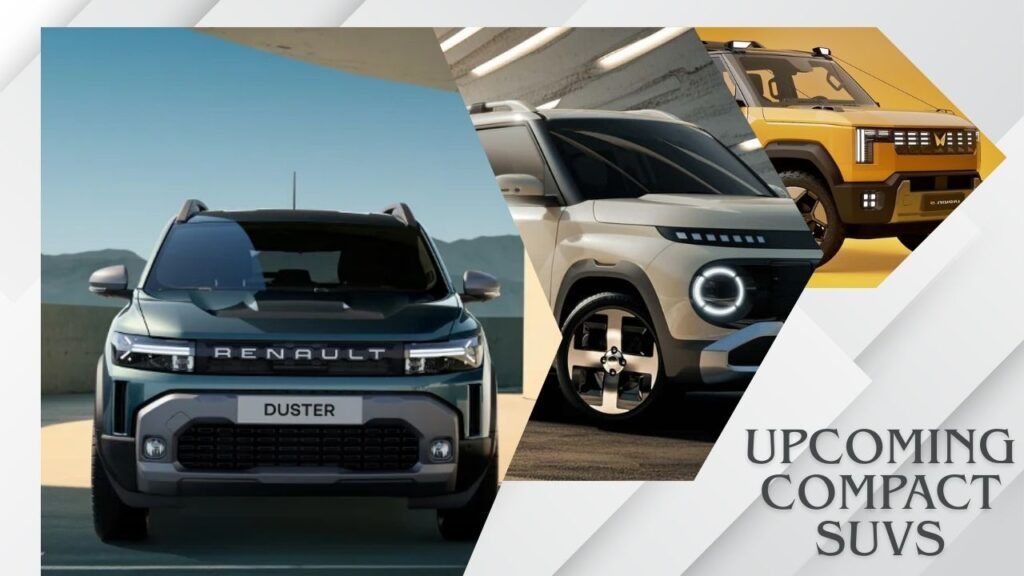
Upcoming compact SUVs in India in 2026, the Indian auto industry is not just evolving but having a “glow-up”. The sub-4-metre tax regulation, which let automakers play Tetris with their car designs, had us pinned down for ages. That is if you craved an SUV, you usually had to settle for a “raised hatchback” that seemed like a compromise.
But that era of compromise will now be over with the 2026 and 2027 models up for inspection. “Compact SUV” is now a graduate. They’ve traded nostalgia, not to mention the “cheap” option, for high-tech, luxury powerhouse. If you’re an early electric vehicle adopter, a tech-obsessed city dweller or a weekend thrill-seeker, the next year and a half has something in store for you.
The Return of the King: Renault Duster (Gen 3)
Release schedule: March 2026 for ICE | Late 2026 for strong hybrid
If any car has attained “cult status” in India, it is the Duster. It’s the Upcoming compact SUVs in India that first told us a compact car could drive like a tank but ride like a stock luxury sedan. After a hiatus, it’s back and Renault aren’t messing around.
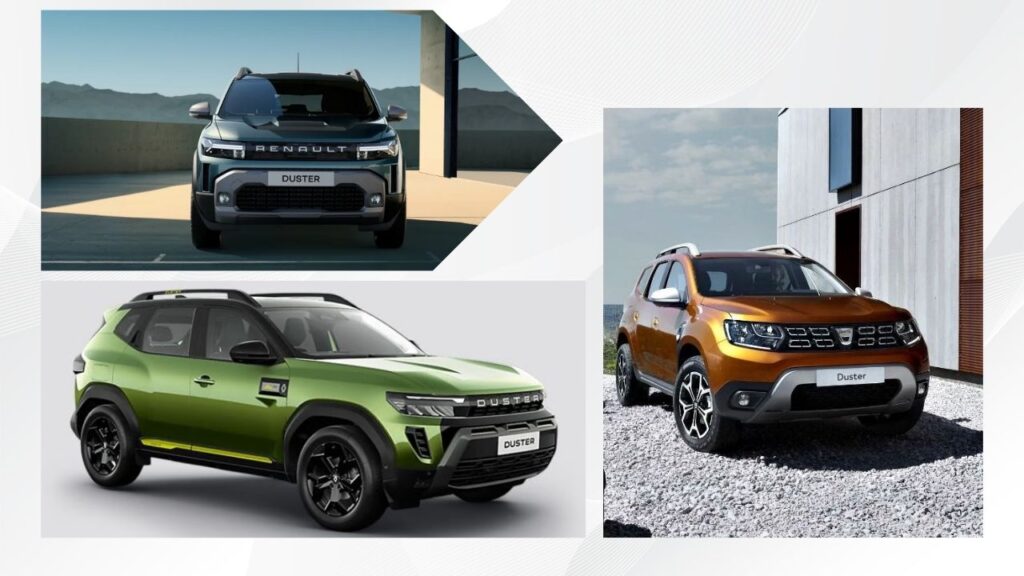
The new Duster will be based on the latest CMF-B platform, shedding its old dated bones. It is rugged looking—complete with Y-shaped LEDs and recycled „Starkle“ plastic cladding that taunts scratches—yet the magic is really under the hood. Renault is going all in on a 1.8L Strong Hybrid system. It is built to take 80% of your daily urban runs in seam electric mode, offering you diesel-like fuel efficiency without the “dirty” vibrations. For long-distance touring, it’s the ultimate ‘no regrets’ SUV.
The Brute Baby: Mahindra Vision S
To Release: Early 2027
Mahindra has spent the past few years trying to be the “cool parents” of the SUV world. The Vision S (murmured around the clock as the “Baby Scorpio”) is their latest masterstroke. It’s for the person who craves the “get out of my way” road presence of a Scorpio-N but must tuck into a narrow mall parking space.
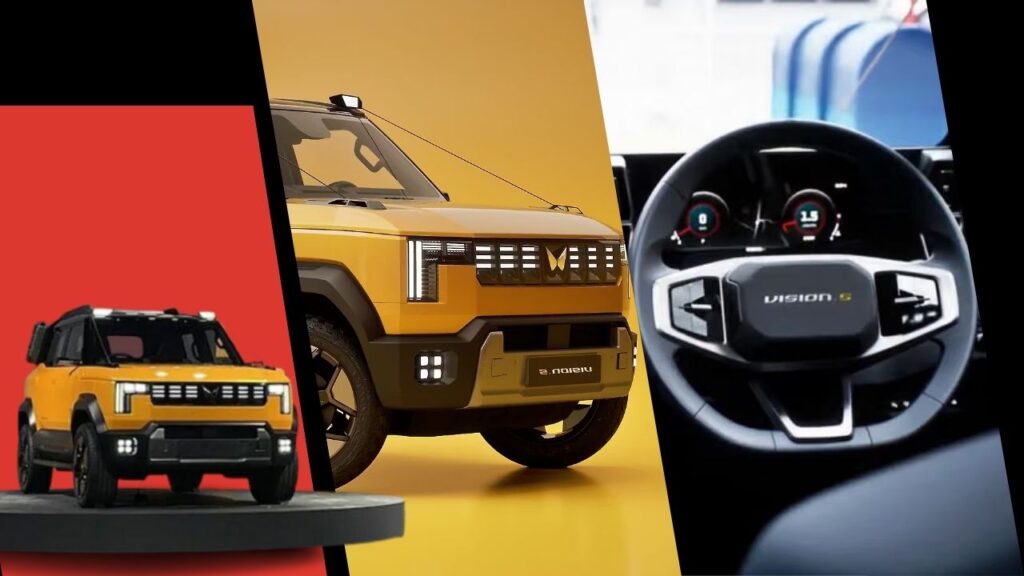
Going against the grain of many rivals who are adapting more rounded, “urban chic” looks, Mahindra is holding fast with a very boxy, upright shape and a tailgate-mounted spare wheel. The one thing traditionalists want: Diesel is not dead here. While the rest are ditching the oil burner, Mahindra is carrying forward the 1.5L mHawk engine for the new Vision S, making it the choice for high-mileage commuters in Tier-2 and Tier-3 towns.
A Legend Reborn: Tata Sierra EV
Launch Date: March 2026
If you grew up in the 90s, then the word “Sierra” must bring back some lovely memories. It changed the landscape in the SUV segment being India’s first real lifestyle offering. Tata is bringing back the glory days for that legend, this time, it’s powered by lightning.
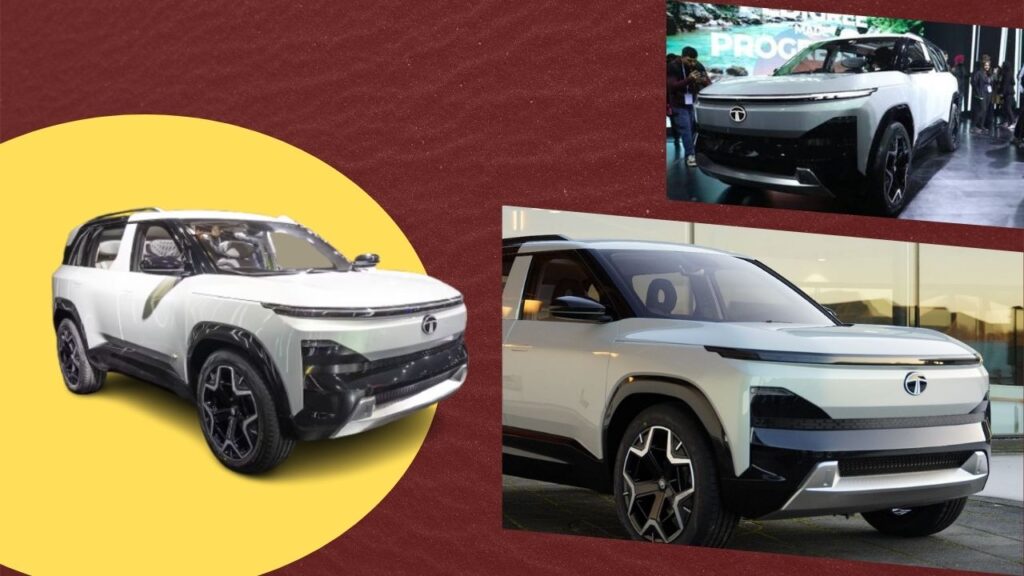
The Sierra EV isn’t simply a Nexon in a new body, it is based on the Acti.ev (Active Intelligent Electric Vehicle) “skateboard” platform. The floor is completely flat, the cabin is massive, and there’s even a “frunk” for charging cables. Tata is marketing this as a “Lounge On Wheels” with the iconic wrap-around “Alpine Windows” and reclining rear seats. With a claimed range of over 400 km and All-Wheel Drive (AWD) as an option, this luxury cruiser doesn’t mind getting a little dirty.
Functional Masterpiece: Kia Syros
Scheduled Release Date: Mid- 2026
Kia is instead “zigging” where everyone else seems intent on “zagging,” making their Upcoming compact SUVs in India look like sporty coupes with sloping roofs. The Syros (internally referred to as the Clavis) is a futuristic box you can be proud of.

Why a box? Because practicality applies to boxes. The Syros prioritizes vertical space, so even six-foot-tall riders get plenty of headroom in the rear cabin. Inside, Kia is introducing its “Trinity” cockpit – a giant, seamless glass console that integrates three different displays. It’s the “gadget on wheels” for Gen Z buyers, who prioritize interior space and high-speed connectivity over sleek profiles, he said. It is scheduled to go on sale as an EV first, with petrol variants to follow soon thereafter.
The Bengal-barren EV: Hyundai Inster
Schedule Release: Q4 2026
Hyundai’s have a straight aim to make electric cars affordable. The Inster is an ingenious version of the global Casper EV, but Hyundai has extended it by 230mm just for India. Why? Because we want our legroom.
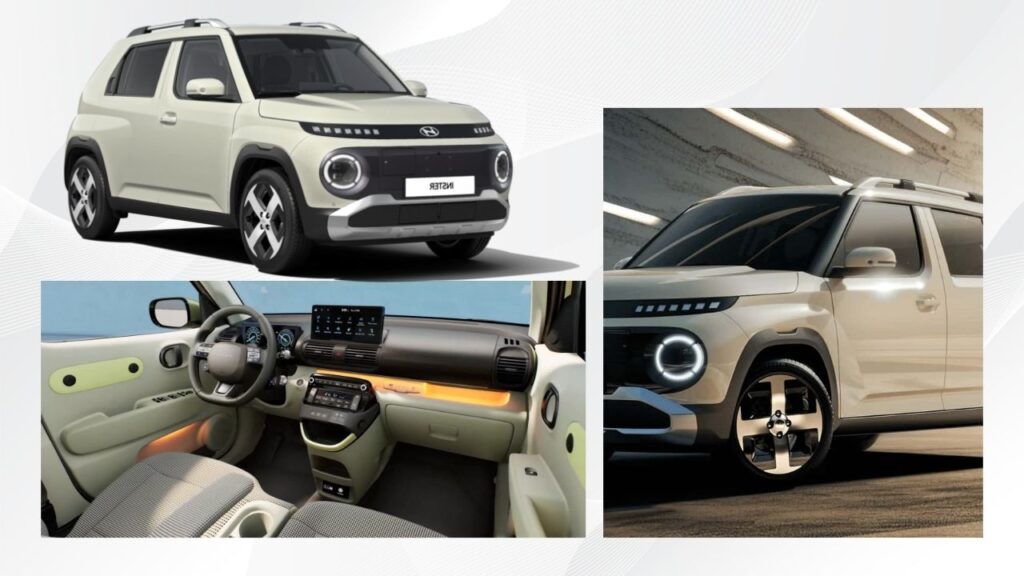
The Inster is the ideal city “pod.” It’s tiny enough to plunge into holes in traffic yet techie enough to seem upscale. It has a “Pixel” design (inspired by its larger sibling, the Ioniq 5) and modular seats that can be folded completely flat — ideal for a quick car-camping trip or a nap between appointments. With a price target below ₹10 lakh, this is the vehicle that may finally turn EVs into a household staple in India.
Read More:- Saurabh Ahuja Luxury Car Collection: Prices, Models and Features
Conclusion:- Upcoming compact SUVs in India
Upcoming compact SUVs in India: What the next two years really turn on is so-called hyper-segmentation, as the auto market moves beyond the era when cars were “one-size-fits-all.” Now, each is a lifestyle choice:
- Duster is comfort and ability to cover 500 km without getting tired
- Vision S is a rugged, reliable workhorse
- Sierra EV is for design-conscious professionals who want their car to say something
- Syros is the ultimate family-and-tech hub, while Inster is the clean, concise future of city commuting.
It’s not a decision about what you can afford anymore — it’s a decision about who you want to be on the road.
