
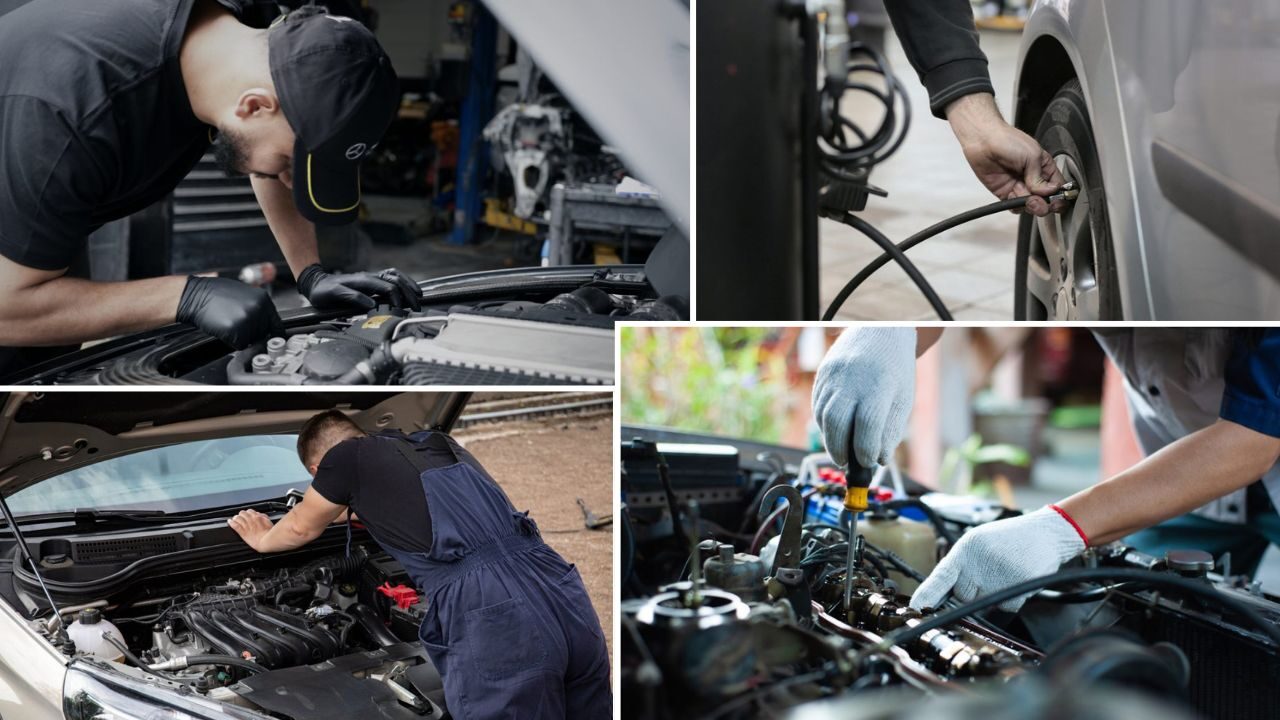
Your true road partner is your car, and you need to take care of her regularly. Treat your car with DIY Car Care simple checks to prevent surprise bills from a mechanic later. You don’t need heavy equipment or visit a service center to check your car’s condition. Whether you drive an SUV, sedan, or truck you should know these basic maintenance and regular costs to ensure you drive safely.
Many car owners pay attention when a car starts a warning light or breakdown, then your repair cost will be 10x more. Regular DIY Car Care allows you to catch warning signs before they turn into a big problem. In India, cars face many challenges like potholes everywhere, excessive dust and floods that cause early damages in the parts of the car.
Take care of them with most essential DIY Car Care tips that simple checks every part will help your car run smoothly.
Why DIY Car Care is Non-Negotiable in India
Indian roads are brutal and exhaust your car earlier than its time. Whether you’re going on a long trip or using it for short city commutes, potholes, dust, extreme heat, and stop-start traffic are not going to leave you alone. There are reasons why you cannot afford to ignore simple checks:
Road Conditions
Potholes, bad roads, and speed breakers stress your suspension, tyres, and underbody far more than in developed countries. Regular checks catch damage early.
Extreme Climate
45°C summers degrade coolant, tyres, and batteries fast. Monsoons cause rust, electrical shorts, and brake fade. Each season needs specific attention.
Traffic & Stop-Go
Heavy city traffic means your engine idles for hours, overheating coolant and clogging air filters far faster than highway driving.
Fuel Adulteration Risk
Adulterated or low-quality fuel damages injectors and carburettors. Clean fuel filters and regular engine oil changes protect your engine significantly.
Read More:- Car Maintenance Tips That Save Money And Valuable Time
Essential DIY Checks Every Indian Car Owner Must Know
You need to visit a mechanic for simple car checks. Most require zero tools or a simple ₹50 torch. Let’s go one by one.
1. Engine Oil Level Check
You must check your car’s engine oil level at every 1000 km or monthly. Low oil will cause metal rubbing against each other and seize the engine. Open the bonnet, pull the dipstick, wipe it clean, re-insert, pull again. Now check the level of oil, it must sit between min and max points. After checking its level, check its color, it must be golden or amber. If the oil color is black or brown then it needs to change.
Due to dust and traffic heat, engines consume oil faster. Maruti and Hyundai petrol cars typically need 5W-30 grade oil. Diesel cars like Innova prefer 15W-40. Always buy branded oil — Castrol, Shell, Motul are trusted names.
Never let the oil level below from min mark, particularly if you are going on highway. Spending around Rs. 600 is better than Rs 60,000 engine replacement.
2. Coolant / Radiator Water Level
Check coolant level every 2 weeks in summer because the car’s engine runs at 90–100°C so it could overheat. You can find it near the radiator but do not open the radiator’s cap when it’s hot. The level of coolant must sit between LOW and FULL marks.
Car owners can make a 50-50 mixer of coolant and distilled water to remove the heat from the engine. But do not use tap or RO water, it will block your radiator. Replace coolant every 2 years or 40,000 km.
3. Tyre Pressure & Condition
Check the car’s type before taking it out from the garage by using a pressure gauge every month. Most hatchbacks need 30–33 PSI. Check the sticker inside your driver’s door or owner’s manual. Because Under-inflated tyres can cause fuel waste.
Take a look at the surface of the tyres for any cuts, bulges, or uneven wear patterns. Uneven wear signals misalignment or shock absorber problems. Don’t forget the spare tyre — you will regret it on longer trips.
4. Battery Health Check
Car batteries do not survive long in India. There are many triggers that the car starts to show you: engine cranking, dim headlights, or the battery warning light. Check the electrolyte level in each cell to keep it at top.
Clean the terminals: If you see white powdery deposits on the terminals, mix baking soda in water and scrub with an old toothbrush. Corroded terminals are responsible for 40% of “my car won’t start” calls that mechanic gets.
5. Brake Fluid & Brake Pad Inspection
Brakes are not negotiable. If your brakes stop working, it can cause a serious incident on the road. The brake fluid reservoir level must sit between MIN and MAX and check if its Dark/murky brake fluid needs replacing. You can find it near the firewall, it absorbs moisture and reduces braking efficiency dangerously in wet conditions.
Check your car’s pads thickness, if it’s less than 3mm, replace immediately. A worn pad will cause noise while braking. Grinding metal sound will later cost you highly. In India’s traffic, brakes wear 30–40% faster than manufacturer estimates.
Read More:- Kendrick Lamar Car Collection is Classic Garage With Old & New Luxury Cars
6. Air Filter Inspection
India’s dusty roads — especially in UP, Rajasthan, and industrial areas — clog air filters 3x faster than European conditions. A clogged air filter starves your engine of oxygen, causing rough idling, poor pickup, and 5–10% higher fuel consumption.
Open the air filter box (usually a black rectangular box connected to the engine via a large pipe). Remove the filter. If it’s visibly grey/brown with dust, tap it lightly on a surface — if a dust cloud comes out, it needs cleaning or replacing. Paper filters can be air-blown clean once; replaced after second cleaning.
7. Windshield Washer & Wiper Blades
In monsoon, visibility is mandatory while driving. Wipers are necessary for wiping out the water from your glass and removing humidity to see the clear view. Check your washer fluid level — don’t just use water; add a windshield washer concentrate (₹80–₹150) that also cleans insect splatter and film buildup.
Wiper blades are necessary particularly in the monsoon season. If they are broken or don’t work then change it. Worn wipers are a serious safety risk in heavy rain. Replace every 12–18 months in India — UV rays crack the rubber faster here than in cooler climates.
8. All Lights Check
Check every light in a car both outside and inside. Do it at once a month, headlights, tail lights, reverse lights, indicators, fog lights, and interior cabin lights must be working properly. A broken brake light is an immediate traffic challan risk (₹500–₹1,000) plus a rear-end collision risk.
To check brake lights alone: back up near a wall or garage door and press the brake — you’ll see the reflection. Or ask someone to stand behind. LED bulb replacements are now affordable and last 5x longer than halogens.
9. Belt & Hose Visual Inspection
If the timing belt gets damaged, repair cost will be expensive from ₹30,000 to ₹1.5 lakh. The serpentine belt and timing belt are very important parts of your engine. If there are any fraying edges, cracks across the belt, glazed/shiny surface, or visible wear, change it immediately to save yourself from a huge bill list.
Hoses: Remember that engine must be cool before you touch hoses. They should feel firm but slightly flexible. If they feel tight, hard or too soft then change it. Leaking hoses leave a puddle under your car — never ignore a puddle.
10. Underbody & Fluid Leak Check
After parking overnight, check the ground under your car. Any puddles? Clear water from AC drain = normal. Oily dark patch = engine oil or gearbox leak. Reddish fluid = power steering or automatic transmission fluid. Yellowish-green = coolant leak. Each means something specific is failing.
Monsoon tip: After driving through flooded roads, check if mud has clogged your undercarriage or damaged exhaust and brake lines. Get a pressure wash done if you drive through deep water.
Read More:- How to Maintain Your Car Engine Properly
Cost Comparison: DIY vs Garage in India
| Maintenance Task | Frequency | DIY Cost (₹) | Local Garage (₹) | Authorized Service (₹) | Verdict |
| Engine Oil Change | 5,000–7,500 km | 600–1,800 | 1,200–2,500 | 2,500–5,000 | DIY saves 60% |
| Air Filter Cleaning | 15,000 km | 0–50 | 100–200 | 300–500 | Pure DIY win |
| Tyre Pressure Check | Monthly | 10–20 | 10–20 | Free with service | Do it yourself |
| Battery Terminal Clean | 3 months | 0–30 | 100–200 | 200–400 | Pure DIY win |
| Wiper Blade Replacement | 12–18 months | 300–700 | 500–1,000 | 800–1,800 | DIY saves 40% |
| Brake Pad Replacement | 30,000–40,000 km | 800–1,500 | 1,500–3,000 | 3,000–6,000 | DIY saves 50–70% |
| Coolant Top-Up | 6 months | 200–400 | 300–600 | 500–1,000 | DIY saves 40% |
India-Specific Seasonal DIY Car Care Calendar
| Season (Months) | Checklist Items |
| Summer (Mar–Jun) | Check coolant weekly; Test battery health; Inflate tyres to correct PSI; Check AC gas & filter; Inspect rubber seals |
| Monsoon (Jul–Sep) | Replace wiper blades; Check brakes thoroughly; Waterproof electrical joints; Post-flood undercarriage wash; Inspect for rust |
| Winter (Nov–Feb) | Check battery cranking; Inspect fog lights; Warm up engine 1–2 min; Check wiper fluid freeze point; Tyre pressure (cold-check) |
| Year-Round | Monthly oil level check; Light inspection; Tyre tread depth; Fluid leak check; Air filter condition |
Conclusion
DIY Car Care is absolutely worth it in India. Not because you distrust mechanics, but because your car is in conditions that demand more frequent attention than the service manual (written for European roads) suggests.
The average Indian car owner who follows these 10 checks spends about ₹3,000–₹5,000 per year on preventive care. Those who ignore it? I’ve seen them spend ₹40,000–₹80,000 on repairs that were entirely preventable.
- Save ₹20,000–₹40,000 per year on repairs
- Extend vehicle life by 3–5 years
- Better fuel efficiency = lower running costs
- Prevent breakdowns on highways/monsoons
- Maintain resale value significantly higher
- Build confidence as a car owner
