
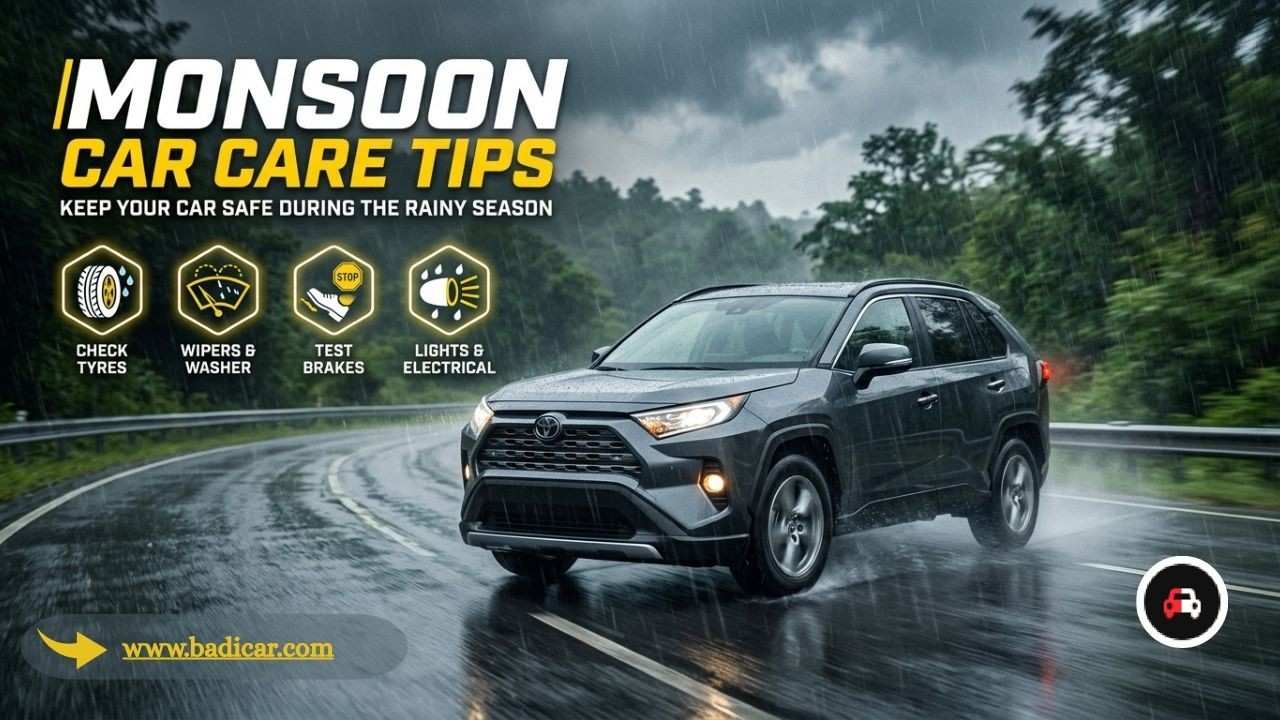
Monsoon can give a hard time to your car while you’re sitting inside and taking short trips. Your car is dealing with water, mud, and humidity altogether but with right Monsoon Car Care Tips before the season starts can save unexpected breakdowns of a car, rusted parts, and also save your money which can cost you dearly.
Monsoon isn’t just rainy weather for your car. It’s a stress test on the engine, electricals, brakes, tyres, and body — all at once, every single day for weeks.
Why Monsoon Car Care Actually Matters
Monsoon brings not just water but that rain carries road grime, salt, and pollutants that speed up corrosion. Indian roads also have poor drainage systems that cause heavy flow and slippery surfaces and if you neglect Monsoon Car Care Tips that turn into major failures fast.
A car that runs fine in the summer can start misbehaving during the monsoon if you don’t get basics like wipers, battery terminals, and tyre tread checked up on. Some preventive maintenance before the rainy season can really save money on unexpected breakdowns or costly repairs down the road.
Read Also: Which Engine Oil is best for your Car?
The Real Damage Rain Can Cause
Before getting into tips, it’s helpful to know what your car is actually being protected from:
Indian roads become a pool in the rainy season and that causes rust and corrosion in metal parts of the car. Wiring malfunctioned due to moisture which made it difficult to generate spark.
The most risky part is the engine if water flows into the air intake when driving through flooded areas, be ready for engine damage. Moisture negatively affects the brake performance by reducing friction between the brake pads and the disc. Old cars with manual gear can suffer from clutch slipping if the clutch plate area becomes wet from water ingress, leading to loss of control over the car.
Early Maintenance: What to Check Before the Rains Start
It makes all the difference to do this a few weeks before monsoon hits, and not when the first floodwaters arrive.
Tyres:
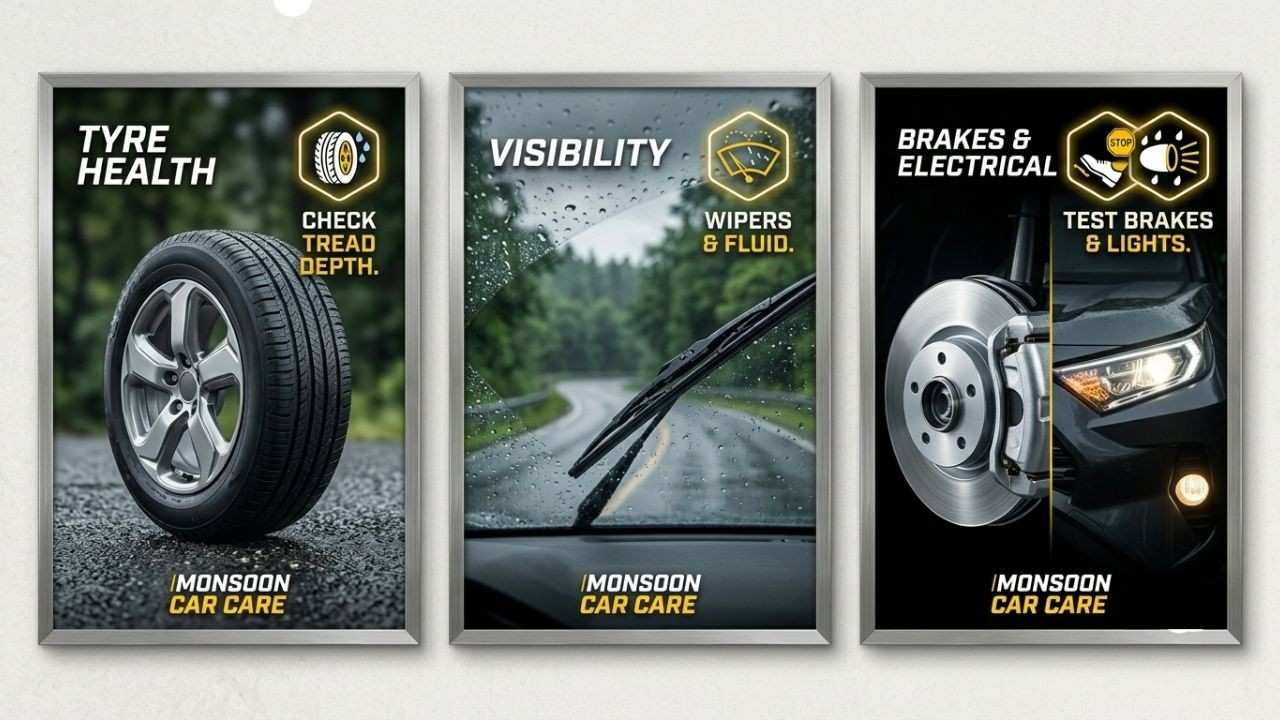
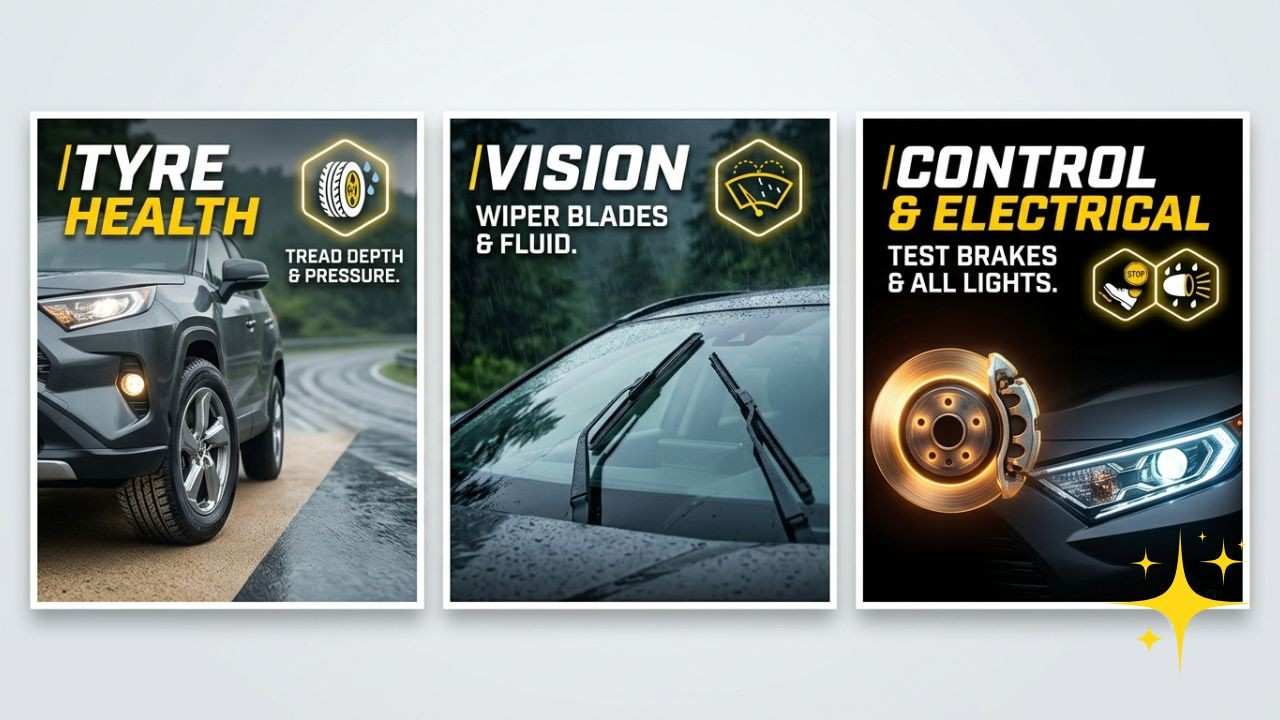
You should be very diligent about checking tread depth. Bald or worn tyres lose grip virtually immediately on rain-slicked roads. Keep tyres at the right pressure – underinflated ones are more likely to go into a spin.
Brakes:
Have the brake pads and discs checked along with the brake fluid level. Wet roads require brakes that deliver the right response immediately, not brakes that have already given their all.
Wipers: Replace the wiper blades if they streak or make noise (such as squeaking). This is the cheapest upgrade that does the most to visibility in a rainstorm.
Battery and electricals: Clean your battery terminals and look for signs of buildup. Have exposed wires inspected, that is if your car is not brand new.
Underbody coating: A rust-proof underbody salt-spray or wax treatment before the monsoon protects from continuous splattering of dirty water.
Door and window seals: Worn rubber seals allow water to enter into the cabin resulting in musty odors, electrical shorts and mold. Replace them if they have hardened or split.
Air filter and engine air intake: Ensure the air intake is not too low as to draw in water when waterlogging. If you’re in a flood-prone area, this is one to talk over with your mechanic.
Monsoon Car Care Tips By Car Type
Hatchbacks and Small Cars
They’re also lower to the ground, so a flooded road is more hazardous. Don’t drive through water above the lower door sill. Maintain your tyre pressure a little higher than normal for extra grip and have your underbody checked for rust a little more often with reduced ground clearance.
Sedans
Sedans typically have acceptable clearance but they also have a longer body, which exposes more surface area to splashing and rusting. Have a close look at the boot and rear wheel arches where moisture lingers. Wax the exterior before the season to shield the paint.
SUVs
SUVs benefit from greater ground clearance when in flooded conditions, but don’t get too big for your britches — even SUVs can stall if water gets into the air intake. Inspect for rust on four-wheel-drive components and undercarriage, as SUVs tend to be driven on rougher, muddier ground in the monsoon.
Electric Vehicles
EVs are typically well sealed from water with IP rated battery packs, but charging ports and connectors still need to be kept dry. Don’t charge in the open in heavy rain, have the battery compartment seals checked. Never take for granted that “electric” means “waterproof all the time.”
Driving Tips That Matter As Much As Maintenance
- Slow down in plenty of time before you drive into standing water, since you can hydroplane at relatively low speeds.
- Allow more space between your car and the car in front as wet roads can add up to 15 percent to stopping distances.
- Turn on your headlights while driving in heavy rain so that you can see and be seen by other drivers. Don’t just use the tail or parking lights.
- Never drive on flooded roads unless you’re certain of the water depth. A puddle that looks shallow could hide a deep hole, an open sewer or other dangers.
- If your vehicle dies after you drive it into water, do not try to restart it. Trying that can squeeze water further into the engine and cause expensive repairs.
After the Rain: Don’t Skip This Step
After driving in a heavy rain you should probably clean your car or mud, dirt and road grime will get stuck inside the parts of your car if you just parked it. Dry the cabin quickly if you get any water inside as it generates foul smell and damages the fabrics. Check features if they are working properly like turning on your AC.
If you schedule a professional inspection and cleaning once a month during the rainy season, you can catch problems early and avoid having to make expensive repairs later on.
One Thing Most People Forget: The Emergency Kit
A monsoon emergency kit doesn’t need to be fancy — a flashlight, an extra wiper blade, jumper cables, a tow rope and a rain poncho can cover it. If you ever find yourself stranded in flooded traffic or your car breaks down, this kit makes an overwhelming situation a controllable one.
Conclusion
Monsoon does not destroy cars in a single day, it deteriorates them with small exposure after multiple exposures. A little pre-monsoon prep, a bit of driving caution and a post-rain cleaning is honestly all you need to get through the season without any unplanned garage visits. View these Monsoon Car Care Tips as a checklist instead of once-off information and your car will take care of the rains just fine.
