
Car enthusiasts love to upgrade their cars frequently just like people upgrade their iPhone every year. The real difference is the money. EMI vs Lease are two very different versions of car loan, which one is better for you to take a car loan for actually buying a car is hard to understand. That’s why many people get confused and make the wrong decision.
So if you want to make the right choice for your car loan then read the full article to understand where each one fits.
When you buy a car by taking a car loan, you have to pay the fixed amount monthly (principal + interest) over a tenure which is usually 3-7 years. When it’s fully repaid, you own the car outright. Until the loan closes, the bank holds a hypothecation on the vehicle but legally the car is yours from day one. This is Equated Monthly Installment (EMI). Higher monthly outgo because you’re paying off 100% of the car’s value plus interest.
In Lease, however, you never own the car. You pay a rent to use it for a set amount of time then give it back, pay a residual value to buy it, or get into a new lease. The difference is the monthly fixed amount is lower than EMI because you don’t own it, you are just paying for depreciation for a period + interest + fees. There’s one catch – overage charges hit hard and sometimes bundle maintenance. So you have to be careful with mileage and maintenance.
Which Is Better in EMI vs Lease If You Plan to Upgrade Your Car Every 3 Year
In the EMI vs Lease option for buying a car, there’s no single answer yet. As it depends on your choice and income, here’s the thing to consider before making any decision.
Car Loan’s Core Problem With EMI on a 3-Year Cycle
Most car loans are structured for 5 to 7 years. The calculation behind them assumes you’ll hold onto the car long enough for the interest-heavy early payments to even out, and long enough for depreciation to slow down.
When you sell or trade in at year 3, you’re stepping out mid-loan. That means:
- You’re still carrying a decent chunk of outstanding principal
- You’ve paid a disproportionate amount of interest relative to how much of the car you actually “own”
- The car’s resale value has already taken its steepest depreciation hit (new cars lose the most value in the first 2-3 years)
Put these together and you often end up underwater — owing more than the car is worth, or barely breaking even after resale. You then roll whatever gap exists into your next purchase, and the cycle repeats, sometimes getting worse each time.
Leasing Is a Good Option If You Upgrade Car in 3 Year
Leasing was built for exactly this kind of usage pattern. You’re not paying for the whole car — you’re paying for the depreciation that happens during the years you use it, plus interest on that portion, plus fees.
For someone upgrading every 3 years, this lines up almost perfectly with typical lease terms (24-36 months). A few real advantages:
Lower monthly payments than an EMI on the same car, since you’re not financing the full price. For example, if the car is worth ₹12 lakh today and is expected to be worth ₹7 lakh after 3 years, the lease payment is broadly based on the ₹5 lakh depreciation over those three years.
When three years are completed, you can return the car to the leasing company and they’ll check mileage, damage and condition according to the contract. You don’t have to worry about negotiating a resale price. But if there’s any damage and higher mileage then you have to compensate for it. If you are eligible, the lease company can offer you a replacement/new-lease program. You still need to sign a new lease and meet the new contract’s approval and payment requirements.
Lease is a good option if you are confused about EMI vs Lease if you are buying a new car. Many leases cover a new car while it’s still under the manufacturer’s warranty, which can reduce your exposure to unexpected repair bills for covered defects.
The car resale value gets down right after it leaves the showroom. In one year, the retention by 60% is going to hit so if you don’t want to worry about car worth in three years, that risk is not on you anymore, its leasing company.
Probable Risk That You Must Know Before Considering Lease
There are some conditions that are set on the contract on lease while taking a car. Always remember that you never own a car. For example, you rent an apartment and the owner takes a security deposit. If you damage it, they won’t return it. Same happens with leasing, if mileage limits hit, damage that can cost much, you have to pay extra for it and in the end return it back.
If you drive over your allotted kilometers, you’ll pay a penalty per extra km so this adds up fast if you drive a lot. If you are buying it to travel out of the city then there’s no benefit in it.
Wear-and-tear charges always happen when you drive in rush areas or in traffic. Scratches, interior damage, anything beyond “normal use” can cost you at lease-end.
You build zero equity. As you give a rent every month. At the end of three years, you own nothing — not even a trade-in value to offset your next vehicle.
Long-term cost. If you ever decide to stop upgrading and just keep a car for 6-7 years, leasing back-to-back will almost always cost more than one EMI held to term.
Which One Saves Money If You Swap Cars in Few Years
Don’t just start comparing EMI vs Leasing on monthly payments. That’s a trap, use calculation and figure out the total cost for a confirmed set of periods. Let’s say you are buying a car for 3 years and then want to change it, total payment made over these years, lease end-fees if any, regular maintenance cost, driving habits are the effective majors that hit your total cost.
Whichever number is lower for your driving habits and your market’s resale trends is your answer — not a generic rule of thumb.
Here’s a Maruti Suzuki Victoris LXI petrol example to calculate the total cost of your car by taking both EMI and Lease. Its current ex-showroom price is ₹15.13 lakh, while the estimated on-road price is around ₹17,50,000 (assume).
| EMI (5-year loan, 20% down, 9.5% interest) | Lease (3-year operating lease, bundled) | |
| Down payment | ₹3,50,000 | No large down payment, security deposit which often refundable |
| Tenure | 5 years = 60 months | 60 months |
| Monthly Pay | ₹29,500 | ₹32,700 |
| Total Cost | ₹21.2L (include downpayment) | ₹19,62L |
| Ownership | Yes, you own the car after 5 years | No, unless you pay a separate buyout near residual value. |
If you want to buy Maruti Suzuki Victoris LXI petrol car on lease and later buyout then:
| Option | Monthly outflow | Total paid (5 yrs) | Ownership at end |
| EMI (loan) | ~₹29,500 EMI + ₹3.5L down | ~₹21.2L (down + EMI) | Yes (you own; can resell) |
| Lease (no buyout) | ~₹32,700 rental | ~₹19.62L (rentals only) | No (car returned) |
| Lease + buyout | ~₹32,700 rental + buyout | ~₹27.49L (rentals + buyout) | Yes (after paying residual) |
Buying An EV On Lease Is More Profitable Than EMI
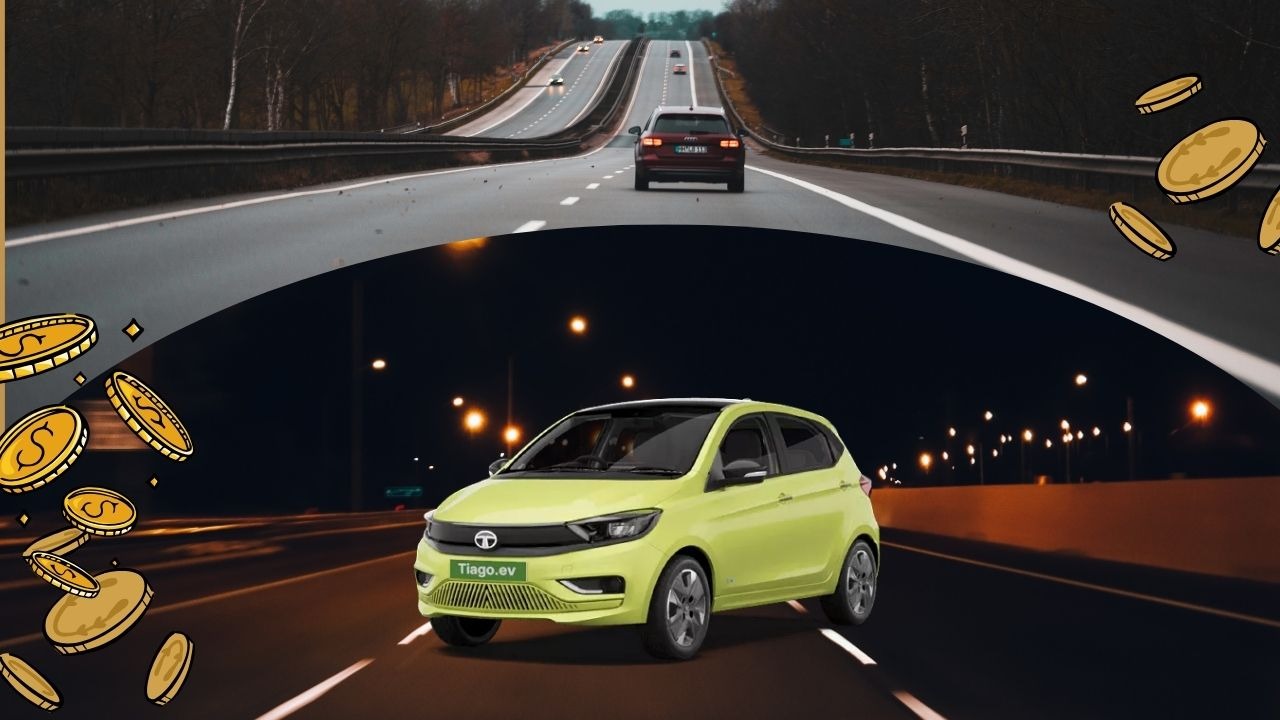
A 3‑year total cost comparison for a Tata Tiago EV using loan as EMI vs Lease. Let’s look into quick comparison on assuming numbers but you can swap this with your exact dealer quote and calculate the actual total cost using EMI calculator:
| Tata Tiago EV | EMI (loan, 3 yrs) | Lease (operating, 3 yrs) |
| On-road price used | ₹8,90,000 | ₹8,90,000 |
| Down payment / initial | ₹1,78,000 | ~₹0 (small fee possible) |
| Monthly payment | ~₹22,800 EMI | ~₹20,000 rental |
| Total paid over 3 yrs (cash out) | ₹9,98,800 (down + EMI) | ₹7,20,000 (rentals) |
| Ownership at end | Yes (you own) | No (car returned) |
| Approx. 3‑yr resale / residual | ~₹4,89,500 (you keep) | ~₹4,89,500 (goes to lessor) |
| Net 3‑yr cost (cash out − asset value) | ~₹5,09,300 | ~₹7,20,000 |
| Typical inclusions | Loan only; insurance & maintenance separate | Often includes insurance + maintenance (check contract) |
Note: any price and figures mentioned above is assumed by the current price provided, you must check the actual amount by calculating it with your own variant, tenure, mileage and other terms.
Read More:- What Your Car Loan Covers Beyond the Ex-Showroom Price
Conclusion
When it comes to EMI vs Lease, leasing can be worth considering when predictable monthly costs and, depending on the lease, maintenance and other expenses may be bundled in. No ownership equity can make it expensive if your driving habits don’t match the contract. An EMI makes more sense if you want to own the car, drive it for 5–7 years or longer.
Before signing either agreement, calculate the total price you pay and compare the complete three-year cost of both options including interest, insurance, maintenance, taxes, lease fees, penalties and the car’s expected resale.
You can choose a lease for flexibility and frequent upgrades; choose an EMI when long-term ownership and building resale value matter more.

One Comment