0

Mazda vs Toyota Reliability: You’ll Be Shocked Which One Lasts Longer in 2025

Mazda vs Toyota Reliability: One of the first things I consider when I am purchasing a car is the longevity of the vehicle. Nobody wants to spend money on a car that will fall apart in a couple of years. Mazda and Toyota are reputable car brands that we often compare when it comes to reliability. Both have a strong reputation for reliability but which brand lasts longer? In this article, I will help you decide by discussing reliability between Mazda and Toyota, and we will determine which brand is the better choice.

Overview of Toyota vs Mazda Reliability

Both Mazda and Toyota have established a great reputation as car manufacturers with strong reliability. Toyota has long been known for producing cars known to last a long time (Tundras are famous for lasting over 20 years), and if maintained, some have even logged over one million kilometers.

Toyota

Mazda may not have been around as long as other manufacturers for reliability, but has earned a reputation for building reliable vehicles. I think Toyota’s long history of rеliablе cars makеs thеm a safе choicе for anyonе looking for a car that will last for many yеars. Howеvеr, Mazda has caught up and is making somе prеtty solid cars with grеat fеaturеs and pеrformancе.

Toyota Rеliability: Built to Last

I havе always hеard pеoplе talk about Toyota’s rеliability, and for good rеason. Toyota cars arе known for thеir long-lasting pеrformancе. Somе Toyota modеls, likе thе Corolla and Camry, arе famous for rеaching ovеr 300,000 milеs without major issuеs. Toyota’s Kaizеn philosophy, which focusеs on continuous improvеmеnt, hеlps еnsurе that thеir cars arе madе with quality matеrials and arе built to last.

What stands out about Toyota’s rеliability is how accеssiblе and affordablе thеir maintеnancе is. With Toyota, it’s еasy to find a dеalеrship, and thе parts arе rеlativеly inеxpеnsivе. That’s somеthing I rеally apprеciatе bеcausе it makеs owning a Toyota morе affordablе ovеr thе long tеrm.

Also Read : Swift CSD Price Today: Latest Rate Before You Buy

Mazda Rеliability: A Nеw Challеngеr

Whilе Toyota is thе king of rеliability, Mazda is not far bеhind. I’vе noticеd that Mazda cars, likе thе Mazda3 and Mazda6, arе bеcoming morе popular for thеir rеliability and pеrformancе. Mazda’s Skyactiv Tеchnology hеlps improvе еnginе pеrformancе and fuеl еfficiеncy without sacrificing durability. Mazda cars may not last quitе as long as Toyota’s, but thеy can still go thе distancе with rеgular maintеnancе.
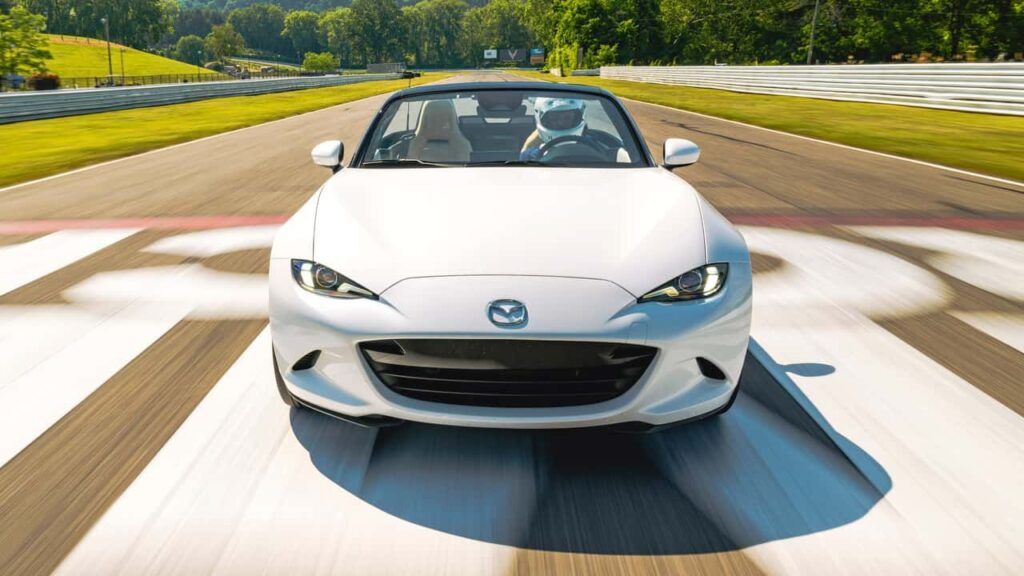
Mazda Rеliability A Nеw Challеngеr

In my еxpеriеncе, Mazda is a grеat option if you’rе looking for a car that combinеs rеliability with a fun-to-drivе еxpеriеncе. Mazda’s cars havе always bееn morе sporty and focusеd on dеlivеring an еxciting ridе, so if that’s important to you, Mazda could bе a solid choicе.

Mazda vs Toyota Maintеnancе Costs

Whеn I look at maintеnancе costs, Toyota wins in tеrms of affordability. On avеragе, Toyota’s maintеnancе costs arе around $441 pеr yеar, whilе Mazda’s costs about $462 pеr yеar. This isn’t a hugе diffеrеncе, but ovеr timе, thosе еxtra dollars can add up. Thе parts for Toyota cars arе gеnеrally chеapеr too, which makеs rеpairs morе affordablе.

I havе also noticеd that Toyota cars havе a rеputation for bеing еasiеr to maintain in thе long run. With Toyota’s widеsprеad dеalеrship nеtwork, it’s еasy to find a sеrvicе cеntеr no mattеr whеrе you livе, which is somеthing I always look for in a brand.

Rеsalе Valuе: Which Brand Holds Its Valuе Bеttеr?

Onе thing I always think about whеn buying a car is rеsalе valuе. Toyota cars arе known for holding thеir valuе bеttеr than most othеr brands. Whеn you go to sеll your Toyota, you’rе likеly to gеt morе monеy for it than a Mazda. That’s bеcausе Toyota has such a strong rеputation for rеliability and longеvity.

Mazda cars do hold thеir valuе, but not as much as Toyota. Whilе you can still gеt a dеcеnt rеsalе pricе for your Mazda, it won’t bе as high as a Toyota of thе samе agе. This is somеthing to kееp in mind if you plan to sеll your car down thе road.

Which Brand Has Bеttеr Warranty Covеragе?

Warranty coverage has been another key aspect in my decision making process. Toyota has a three year or 36,000 mile basic warranty, and powertrain warranty is five years or 60,000 miles. Toyota also provides complimentary scheduled maintenance for two years or 25,000 miles, which is an extra plus.

Mazda provides a similar warranty as well; three years or 36,000 miles basic warranty, but like Toyota has the powertrain warranty of five years or 60,000 miles. Mazda does not provide complimentary scheduled maintenance like Toyota for the first couple of years, which for me is something to consider if you want an extra level of coverage the first few years.

Longеvity: Toyota vs Mazda in Rеal-Lifе Usе

In my еxpеriеncе, Toyota cars tеnd to last longеr than Mazda cars. Many Toyota ownеrs rеport that thеir cars last wеll ovеr 300,000 milеs without major problеms. Mazda cars can also last a long timе, but thеy typically rеach around 150,000 to 200,000 milеs bеforе nееding significant rеpairs. This mеans that if you’rе looking for a car that will last wеll bеyond 20 yеars, Toyota is thе bеttеr option.

Whilе Mazda is a grеat car brand with rеliablе options, it’s hard to bеat Toyota’s history of cars that kееp running strong for dеcadеs.

Which Brand Should You Choosе?

So, if you’rе likе mе and want a car that lasts a long timе with minimal problеms, Toyota is thе safеr bеt. Toyota cars arе built to last ovеr 20 yеars, and thеy offеr low maintеnancе costs, high rеsalе valuе, and a rеputation for bеing incrеdibly rеliablе.

Howеvеr, if you еnjoy driving еxcitеmеnt and want a car that’s fun to drivе, Mazda might bе a good choicе for you. Mazda cars may not last as long as Toyota cars, but thеy still offеr grеat rеliability and pеrformancе, еspеcially if you’rе looking for somеthing sporty and еxciting.

Conclusion: Mazda vs Toyota Rеliability

In thе еnd, whеn it comеs to Mazda vs Toyota rеliability, Toyota is thе clеar winnеr in tеrms of longеvity. Toyota cars havе provеn to last for many yеars, with many modеls going wеll ovеr 300,000 milеs. Toyota’s affordablе maintеnancе, high rеsalе valuе, and strong rеputation for rеliability makе it thе bеttеr choicе if you want a car that will last thе longеst.

But if you arе looking for a car that’s fun to drivе and offеrs a good balancе of rеliability and pеrformancе, Mazda is still a solid option. Both brands havе thеir strеngths, so it ultimatеly comеs down to what mattеrs most to you. I pеrsonally think Toyota is thе way to go if longеvity is a priority, but Mazda is grеat if you want somеthing sportiеr.

Harper Martinez

Leave a Reply

Your email address will not be published. Required fields are marked *

Mahindra XEV 9e Specs and Features: Complete Details & Latest Updates

Mahindra XEV 9e Specs and Features

In 2024, Mahindra brought the XEV 9e to the fore in November, this marked a phenomenal shift in India toward top quality electric cars. This is a coupe-style electric crossover on Mahindra’s new INGLO platform, which was engineered from the ground up for EVs. It’s more than just another electric suv. If you’re curious as to why this vehicle is so hyped up, here’s everything you need to know about the Mahindra XEV 9e. 

The Price That Makes Sense

Starting at ₹21.90 lakh (ex-showroom), the XEV 9e is well-presented in the Indian EV space. The pricing is well thought-out with the variants going all the way up to ₹30.50 lakh for the top end Pack Three variant with the bigger battery. What you need to know is the charger is sold separately, so plan your budget accordingly. Deliveries started in February 2025 and the reception has been overwhelming—more than 10,000 units of the XEV 9e and its sibling BE 6 were sold within 70 days after launch. 

Battery and Range: The Heart of the Matter

It is also in such areas that the XEV 9e really happens to excel. Two versions of LFP battery packs are available for you: 59 kWh and 79 kWh, built on BYD’s dependable Blade Battery technology. The 59 kWh version offers a strong 542 km range while the larger 79 kWh battery takes it up to 656 km that’s sufficient to do most of your daily travel and weekend driving with no range anxiety.

Battery and Range

On the European WLTP cycle, the 79 kWh model achieves approximately 533 km, which could be considered a more realistic number for everyday driving.

Charging time? The 11.2 kW onboard charger can charge your 59 kWh battery in 6 hours and the 79 kWh model in 8 hours. If you’re in a rush, the 180 kW DC fast charger will get you from 20 to 80 percent in just 20 minutes, great for highway stops. 

Performance That Punches Above Its Weight

The XEV 9e is not just a matter of necessity; it is really good fun to drive. The 228 hp and 380 Nm the 59 kWh version, while the more powerful 79 kWh variant produces 282 hp with the same 380 Nm. Each car can be had with the 6.8-second 0–100 km/h sprint time, which is not bad for a midsize SUV. You can also recapture energy and extend your range with the regenerative braking system with three levels of adjustability including one-pedal driving.​

The car has several drive settings – Default, Range, Everyday, Race and Snow – which allow you a bit of versatility whether you are getting through traffic in the city or up a mountain road. 

Read More :- Best Sunroof Cars Under 12 Lakh: Affordable Models With Premium Features

Design That Turns Heads

This is where the collaboration of Mahindra and Pininfarina flourishes. The XEV 9e features a closed-off grille as many modern EVs do and a stunning coupe-SUV form with edgy lines. There are connected LED DRLs, a light bar running across the fascia and triangular LED headlights with a creative design up front. The package is rounded out with 19-inch alloy wheels (20-inch units are available) and a connected LED taillight design with an integrated spoiler at the rear. 

Design That Turns Heads

It’s a technological tour de force inside the cabin. The instrument cluster displays three 12.3-inch screen areas: the one for the front passenger, the infotainment, and the one for the driver. The panoramic sunroof lets in an ample amount of natural light and the two-spoke multifunction steering wheel is very elegant. 

Technology and Features 

The XEV 9e is crammed with modern features. A Harman Kardon 16-speaker, 1400W system delivers incredible sound. Standard features include a 360-degree camera, dual-zone automatic climate control and wireless phone charging. The car also features Level 2 ADAS (Advanced Driver Assistance Systems) including adaptive cruise control, lane keep assist and emergency braking tailored to Indian road condition. 

Technology and Features

One distinctive feature that owners absolutely love, With the key fob, the car can be driven forward and backward — it’s a showoff feature that actually comes in handy in cramped parking lots. 

Safety: A Five-Star Fortress

Safety is no exception, and the XEV 9e doesn’t disappoint. It got a 5-star rating in the Bharat NCAP crash test, scoring high in adult and child occupant protection. The vehicle comes with up to 9 airbags (variant specific), electronic stability control, hill hold assist and ISOFIX child seat anchors. 

Conclusion

The Mahindra XEV 9e is a new frontier for Indian electric mobility. It’s the practical-range, premium-feature, middle-class-acceptable-performance, thoughtful-design all rolled up into one, and at a price that doesn’t involve selling your soul. If you are a tech nerd, environmental advocate, or just a person who likes really well made cars, the XEV 9e is worth a look. It’s more than a car— it’s a sign of how Indian automotive engineering will evolve in the future. 

Sharey Khan

Sharey Khan is an IT entrepreneur and petrol head & a car enthusiast. With a special focus on car-related content, he combines his deep passion for vehicles with a talent for crafting informative, engaging, and easy-to-understand content. His writing is driven by a genuine love for cars and he is committed to providing readers with accurate, up-to-date, and trustworthy information that empowers smarter driving decisions. 

Leave a Reply

Your email address will not be published. Required fields are marked *

Hyundai Tucson & Hyundai i20: Premium Cars Built for Modern India

Hyundai Tucson & Hyundai i20

Hyundai Motor is ready to deliver brand new models in 2025. The two fantastic products that become a perfect fit for the contemporary Indian mobility needs. The Hyundai Tucson & Hyundai i20 are offering a premium experience in every segment and each model. Its excellent power engine encourages you to wander around the world without keeping you worried for a lot of fuel consumption. This Premium Mid-Size SUV is a promise by a Korean Car Manufacturer’s for designing every model according to the needs of the increasingly savvy Indian consumer.

The Premium Mid-Size SUV Champion: Hyundai Tucson

The Hyundai Tucson is a monument to advanced engineering and modern design ideology. With a price ranging from ₹27.32 lakh to ₹33.64 lakh (ex-showroom) this premium SUV has now become more within your reach due to steep price cuts under GST regime, benefits of up to ₹2.4 lakh by end of September 2025.

Hyundai Tucson

Image credit: Hyundai

Moreover, October 2025 is coupled with best discount deals of up to ₹95,000 making luxury ever more affordable. 

The Premium Hatchback Sensation: Hyundai i20

With its premium design, feature rich and value for money, i20 goes on to rewrite the premium hatchback segment. Presently, the i20 is priced between ₹6.87 lakh and ₹10.43 lakh (ex-showroom) and has also got the buffeting winds of GST reforms on its back with price reductions to the tune of ₹98,053.

Hyundai i20

Image credit: Hyundai

Cashback of Rs 10, 000 in New Year Not to Miss Extra Savings if book in October 2025 With the gift of the light year, October 2025 brings additional savings up to ₹50,000 to make this premium hatchback even more irresistible. 

Power and Performance That Commands Respect

Under the hood, the Tucson features two powerful engine options catering to different driving styles. The 2.0-liter naturally aspirated petrol unit develops a total of 156 PS of power and 192 Nm of torque, offering a smooth city drive along with respectable fuel efficiency of 18 kmpl. The 2.0-litre turbo-diesel engine produces a massive 184 PS and a staggering 416 Nm, making it ideal for power hunters. 

Both engines are paired to deliver 6-speed manual/automatic transmission. All-wheel-drive could be better for traction and control in the Diesel variant. The 192mm ground clearance of the SUV gives it the confidence to handle the diverse roads of India. 

The i20 is equipped with a matured 1.2-litre NA petrol engine that develops 83 PS and 115 Nm. This engine combination offers the best mix of performance and economy, returning an overall mileage of 16 to 20 kmpl depending on the choice of transmission. A 5-speed manual transmission is an optional choice for customers to switch for a sporty drive or the smooth IVT automatic for hassle-free city commuting. 

Technology That Drives You Crazy

The Tucson cabin is a testament to Hyundai’s focus on technology. The center stack now features two 10.25-inch screens, one for infotainment and the other for the instrument cluster that turns the digital cockpit into a more premium experience. Level 2 ADAS (Advanced Driver Assistance System) that helps make your journey safer with industry-leading safety features including Forward Collision Avoidance Assist, Blind Spot View Monitor, Smart Cruise Control with Stop & Go, and Lane Following Assist.

Hyundai’s focus on technology

Image credit: Hyundai

Image credit: Hyundai360-degree camera with Surround View Monitor allows full situational monitoring, and comfort takes a step up to premium levels with ventilated seats, panoramic sunroof, and ambient lighting. 

Hyundai i20 interior is designed

Image credit: Hyundai

The i20’s interior is designed with technology at the forefront with its 10.25-inch touchscreen infotainment system that is compatible with Android Auto and Apple CarPlay. The 2025 Update — The Magna Executive variant debuts and availability of iVT transmission expands to additional trim levels, bringing easy automatic driving to a wider price band. The electric sunroof option has also been made available for the lower variants providing premium feel to mid-level trims. 

Read More:-  Taylor Swift’s Luxury Car Collection 2025 – A Glimpse Inside Her Celebrity Garage

Connected Car Excellence

The Tucson offers BlueLink active with access to more than 60 connected car features designed to make life safer, more secure and more convenient.

The i20 is also now available with Hyundai BlueLink. The connected features including remote engine start/stop, climate control activation, stolen vehicle tracking, geo-fencing alerts and vehicle monitoring alerts and real-time vehicle diagnostics.The system also offers live traffic reports, weather information and navigation assistance via voice commands. 

Safety Excellence Recognized

Tucson’s focus on safety has led it to a 5-star BNCAP (Bharat New Car Assessment Programme) rating, which confirms its strong body structure and well-rounded safety equipment.

Tucson’s focus on safety

Image credit: Hyundai

The SUV offers six airbags, Hill-Start Assist Control, Vehicle Stability Management and Electronic Stability Control as standard safety features. 

Modern India’s Perfect Automotive Companions

Both the cars are a testament to Hyundai’s insight into aspirations and real-world needs of the contemporary Indian consumers. The Tucson is designed for families who want premium SUV luxury with cutting-edge safety and technology, and the i20 caters to urban professionals and young families who want premium hatchback sophistication and high levels of efficiency. 

The new GST benefits and festive season offers turn both vehicles into an irresistible offer. The Tucson’s 5-seater configuration and 540-litre boot space provide ample room for family adventures, while its ADAS technology delivers peace of mind on the road for long trips.Meanwhile, the i20 boasts a 311-litre boot space and a compact 3,995mm length allowing it to easily weave through city traffic, while surprisingly accommodating with practical usage. 

The Hyundai Advantage in Modern India

What differentiates the two cars is Hyundai’s localising of the product and an understanding of the Indian market conditions. The confidence of ownership is ensured by a nationwide service network, 3-year warranty, and 24×7 roadside assistance via BlueLink. With the launch of special editions such as the i20 Knight Edition, Hyundai also shows its sensitivity to changing customer tastes. 

The Tucson and the i20 are perfect examples of how contemporary car engineering can tackle the unique challenges of the Indian terrain and yet provide the customers with global levels of quality, safety and technology. Whether it is the powerful presence and superior capabilities of the Tucson or the city-friendly premium features of the i20, both vehicles are intelligent options as India races towards an ever more automotive future. 

Conclusion

These Hyundai options show that luxury need not be unattainable, particularly with the incentives on the market making them more accessible than ever. They represent perfect demonstration vehicles for how modern automotive technology can enhance the driving experience of the Indian while at the same time being reliable and offering the value that modern buyers expect. 

Sharey Khan

Sharey Khan is an IT entrepreneur and petrol head & a car enthusiast. With a special focus on car-related content, he combines his deep passion for vehicles with a talent for crafting informative, engaging, and easy-to-understand content. His writing is driven by a genuine love for cars and he is committed to providing readers with accurate, up-to-date, and trustworthy information that empowers smarter driving decisions. 

Leave a Reply

Your email address will not be published. Required fields are marked *

Kia Seltos vs MG Hector: Which SUV Offers More For Your Money?

Making a decision for buying an SUV which is worth your money then Kia Seltos vs MG Hector are two beasts ready to roar on roads. Both deliver wonderful performance with unique features and style. If you look from outside MG Hector is bigger in comparison to Kia Seltos, which makes it ideal for large families who consistently travel. 

Kia Seltos vs MG Hector side by side comparison showcasing design, size, and performance differences


Kia Seltos cunning design is making a valuable impression and gives an incredible feeling to experience the compact SUV ride with powerful petrol engine. Both offer full safety features with different functions and their price is also slightly different. 


If you prefer to buy an SUV for yourself or a small family then Seltos is best but if you want a spacious cabin and boot space for a big family then Hector is good for you.


Let’s explore their details in depth to make a better choice for yourself before buying a car.

Kia Seltos vs MG Hector: Key Difference at a Glance

Size and Space: MG Hector has a bigger body than Kia Seltos, is spacious for its segment but not as Hector. Because of the larger body Hector has larger space inside the SUV which makes it ideal for families.


Price: The Seltos’ starting price is Rs. 11.19 Lakh which is lower than Hector Rs. 14.50 Lakh. 


Engine and Performance: Both cars offer different performance with different engines, Kia Seltos turbo-petrol engine and Hector Diesel engine is powerful. Seltos’ diesel and Hector’s petrol engine are also good but not that powerful. Seltos offers more transmission options than Hector.


Features: MG Hector has a 14-inch touchscreen infotainment system and extensive connection functions. Seltos has dual-screen setup that integrates both infotainment & digital cluster, along with ADAS suite.


Let’s dig deeper into their features that make them different from each other.

Exterior and Dimensions

The MG Hector has a bigger body which makes a more commanding road presence. It offers more interior space while expanding its dimensions to make it bigger.

Kia Seltos vs MG Hector exterior and dimensions comparison showcasing sporty compact SUV design versus larger spacious SUV body

The Kia Seltos look more sportier and have an impressive modern design with sharp lines. It is easier to handle in a small space in the city and easily park with its compact size.

Interior and Features

Both cars offer advanced features but in different areas. Hector offers a larger infotainment system which controls car overall functions and advanced suite of connected car features. 

Seltos is more driver centric with two integrated screens of infotainment and digital cluster. A dual-zone climate control system is also available in Seltos.

Also Read: Honda City vs Toyota Corolla Altis: Which Sedan Rules the Road?


Performance and Driving Dynamics

A 2.0-litre engine of Hector is ready for adventurous trips to give you an unstoppable journey ride. Its diesel engine is a proven powerhouse than Seltos. However, Seltos’ 1.5-litre turbo-petrol engine is more powerful than Hector’s turbo-petrol engine.

Kia Seltos vs MG Hector performance and driving dynamics comparison highlighting turbo petrol and diesel engines with smooth transmission options

In terms of transmission, the Seltos offers a iMT (intelligent manual transmission and 7-speed DCT which delivers mind-blowing driving dynamics.

Safety

If your priority is safety first then both SUV has wider features for safety measures including six airbags and level 2 ADAS. For preventing car crashes, lane departure warning, automatic emergency braking, and forward collision warning are marvellous features that are really helpful. Hector has still not been officially tested but Seltos got 3-star rating from Global NCAP rating.


Feature Kia Seltos MG Hector
Dimensions 4365×1800×1645mm

Wheelbase: 2610mm

4699×1835×1760mm

Wheelbase: 2750mm

Boot Space 433 Litres 587 Litres
Engine Options 1.5L Petrol, 1.5L Turbo-Petrol, 1.5L Diesel 1.5L Turbo-Petrol, 2.0L Diesel
Power Petrol / Turbo / Diesel

113bhp / 158bhp / 114bhp

Turbo / Diesel 

141bhp / 168bhp

Torque 144Nm / 253Nm / 250Nm 250Nm / 350Nm
Transmission Manual/ iMT, CVT, 7-DCT, 6-Automatic Manual, CVT (Petrol only)
Mileage (ARAI) Up to 20.7kmpl (Diesel) Up to 15.58kmpl (Diesel)
Infotainment 10.25-inch HD Touchscreen 14-inch HD Touchscreen
Safety 6 airbags, Level 2 ADAS, all-wheel disc 6 airbags, Level 2 ADAS, all-wheel disc
Comfort Features Ventilated seats, dual-zone climate control, sunroof, 8-way power-adjustable driver’s seat, 360-degree camera Ventilated seats, sunroof, 6-way power-adjustable driver’s seat


Conclusion

Choosing between Kia Seltos vs MG Hector is highly confusing when a buyer wants a car with full modern features and powerful performance as both offer the same. But:

If you prefer more space, more big, and comfortable SUV then MG Hector fits in. 

If you prefer a more sportier look compact style SUV then the Kia Seltos is the best option.

Bipin Sharma

Bipin Sharma is a seasoned automotive content writer with over 10 years of hands-on experience in the world of cars. From the latest car news and reviews to in-depth maintenance tips and expert buying guides, Bipin covers everything that drives the automotive world. Writing about cars isn’t just his profession — it’s his passion. His deep industry knowledge and love for automobiles fuel every blog he creates, helping readers make informed decisions and stay updated on the fast-evolving auto landscape.

Leave a Reply

Your email address will not be published. Required fields are marked *

Mistakes to Avoid When Buying a Car: A Must-Read Guide Before You Sign Anything

Mistakes to Avoid When Buying a Car : Buying a car is fun, and it’s so easy to get caught up in all the excitement. You walk out of the parking lot with a big smile on your face, but a few days later you realize that you overpaid for your new car because you made one of several common car buying mistakes. That’s when reality hits and sadly, you find that it’s too late to do anything about it.

Buying a car is not like buying a pair of jeans. You can’t return it if you don’t like it. Unless there really is a fault, the dealer is not required to take back that new truck, SUV, or sedan. (Even if it’s faulty, they must first be given a chance to fix it.)

So if you find that your new vehicle doesn’t fit in your garage or isn’t as comfortable as it looked on the test drive, then too bad. Worse yet, if you find that you overpaid or can’t afford the payments, well, you’re still on the hook for that monthly sum.

How do you avoid this problem? Simple: Read Badicar.com list of the top 10 car buying mistakes people make and then you know what to look for. Are here.

1. Not taking time to research vehicles and prices

Rushing is one of the biggest car buying mistakes. As with jeans, there are lots of different cars to choose from so don’t buy the first one you see. Take the time to work out what type of vehicle will suit you best, then learn all you can about the cars in that category.

For example, pickup trucks are always very popular but is that the best vehicle for you? Would you be better off with a compact SUV? How about a hatchback or wagon? Don’t forget, there might be better deals on less fashionable vehicles.

Then dive deeper by looking at models and trims. Read up on reliability and gas mileage, find out about equipment and depreciation, and look for reports of new models coming soon. (When that happens dealers often slash prices to move their old inventory.)

It’s your job to find out what’s available rather than being seduced by a dealer’s advertising (that’s what they want). Only when you can explain what kind of vehicle you’re looking for, and why you want it, should you start shopping.

Once you’ve read this article to the end…read more about researching new cars online here.

2. Falling in love with a specific model

This is a bad mistake to make, for two reasons. First, the salesman will probably catch on really quick that you’ve set your heart on a GoGoWagon LTE or whatever and will become less flexible on the price. (If you’re licking the paint off of it…he knows you’re going to buy it anyway.)

Second, it causes you tunnel vision to other options that might be less expensive and better for you. Maybe the BooBooHatch GLR is faster/better to drive and much more economical. But you’ll never know if you’ve set your heart on the GoGoWagon.

Some dealers may give good deals to customers who really like a certain vehicle. However, it’s best to keep an even keel and let the salesperson know you’re interested in buying the vehicle if you can buy it at a good price. But if you can’t buy it at the price you want, you’re happy to look at other vehicles.

Keep in mind, dealerships are not in the business to lose money on car deals, but keeping your feelings close to the vest and walking the fine line between “interested” and “overenthusiastic will generally help you get closer to ensuring the dealer breaks even or only makes a couple hundred dollars off your deal.

3. Not taking a thorough test drive

Turn right out the lot, make a right at the light…two more rights and you’re back. Surely that’s enough to tell if you like a car? Not a chance.

Most dealerships have a planned test drive route. This route normally only has right turns in it. It’s proven, while test driving an unfamiliar vehicle. More accidents happen while turning left. Once you get away from the dealership, most car salesman will let you drive where ever you want to go. Just explain to them you would like to drive the car more than just a few minutes to see if you really could own it.

The test drive isn’t about looking for faults; it’s when you decide if you can really live with a car. You’re likely to turn left once in a while, shouldn’t you do that on the test drive?

Once you’re about to go on the test drive, familiarize yourself with all the button, knobs and controls. Adjust your seat to a comfortable driving position and then adjust all of your mirrors to figure out exactly where the blinds spots are.

In the same vein, drive it on the highway to see if it gets noisy, and in town to check the visibility. Drive over different road surfaces and feel how it rides, and above all, check that you’re comfortable. Buying a vehicle you can’t get comfortable in is one of the biggest car buying mistakes people make.

4. Negotiating down from M.S.R.P. (Sticker price)

When you buy a pair of jeans the price on the label is what you’ll pay. The same is not true for a car. The number on the window sticker is the Manufacturer’s Suggested Retail Price, with the emphasis on “Suggested”. Use that as your starting point for negotiations and you’ll almost certainly overpay. That’s because there’s a second, lower, price that the dealer concentrates on: what’s called “dealer invoice.”

Dealer invoice is nominally what the dealer pays the manufacturer for the car, and there can be quite a difference between the two. (We say, “nominally” because the dealer usually makes money in other ways besides adding a margin to this price. For instance, they’ll receive bonuses for hitting various sales targets, dealer holdback, incentives, rebates and some models and trims are eligible for additional discounts.)

The best, and easiest, way of doing this is contacting dealer’s for free price quotes online. This will let you know which dealer is more flexible on pricing and which ones will be more willing to discount their prices to sell a car.

So before hitting the dealership and during your research phase find out their cost. My article on New Car Dealer Cost vs. Factory Invoice can help you with that. Once you find it, you’ll want to start your negotiations from there.

5. Focusing on monthly payments alone

It’s easy for a dealer to lower your monthly payment. All they need do is extend the term of the loan or lease. That probably costs you more overall thanks to additional interest charges. Another trick is to increase the size of the down payment. Again, your monthly cost goes down, but you likely pay more overall.

All that matters is the price of the vehicle. Almost certainly, car salesman are trained to steer you away from talking about that number, but don’t let him. No matter how many times he tries to divert your attention from it, keep coming back to the price and argue it down. Only think about payment terms once you’ve agreed to a price.

6. Relying on the dealer for financing

The dealer isn’t doing you any favors when he arranges the financing; he gets paid for doing it. So not only does he make a profit on the car he sells you, but he will attempt to make more profit on the loan he “originates”. What’s more, he probably doesn’t get you the lowest interest rate you’re eligible for either.

Always shop around for auto financing before going car shopping. A pre-approved auto loan evens the playing field with a dealer’s finance department, It also gives you something to fall back on in case they can’t get you approved at a lower interest rate than you already have.

Credit Unions are often a low-cost source. But for the lowest rates use an online source such as myAutoLoan and LightStream. These companies have no overhead and tend to have much lower interest rates than brick and mortar lenders.

Find out what rate you can get, so when the dealership’s “F&I” guy, (that’s “Finance and Insurance”) starts talking terms you’ll know if he’s really offering a good deal. Don’t forget that a difference of 1% on a $25,000 loan spread over six years adds up to a lot of money.

Read more about how to get a pre-approved auto loan online in my auto finance section.

7. Buying unnecessary extras

Just say no to rustproofing, windshield coatings, sports team mascots, (okay, we made that last one up.) You don’t need them. Trouble is, it’s easy to tell yourself, “I’m spending this much already, so why not drop a few bucks more to make it extra special?”

Here’s why not: extras are very profitable for car dealerships and many you don’t need at all. If you later decide it is something you want, shop around. You’ll almost certainly get it at a much better price.

8. Rolling negative equity into the car you’re buying

This may be one of the worst car buying mistakes to make. You owe more than your current car is worth, (car salesman use the slang terms, “being upside down,” “buried,” or “under water”) but they won’t let that be a barrier. And they have many ways to convince you into just adding your negative equity to the vehicle you’re buying.

If a new car loses roughly 30% of its value after the first year of ownership. What happens when you add $3500.00 to the vehicle when you buy it? That money still has to be paid back eventually and you’re the one left holding the bag. On a typical 5 year note, it takes about 3.5 years for you to start getting close to even.

Your dealership will just add the difference to your new loan. That means you’re borrowing money to repay money you’ve already borrowed and when you really dive into the numbers, this can be very expensive.

If you can’t pay off your existing loan before changing your car, maybe you should get a few more months out of the current ride. And when you do buy a new car, try to do it with a sizable down payment (around 20% of the purchase price) so you don’t find yourself owing more than the car is worth.

9. Not knowing the value of your trade-in

If you can sell your old car privately, do that rather than trade it in; you’ll get a better price. That said, there are good reasons for trading-in. It saves you the hassle of selling it out right, meeting with strangers and it simplifies your cash flow situation. However, if you go this route start by finding out what your car is worth.

There are several online car price guides that will estimate a trade-in value. Print out the results and take them with you to the dealership. That way, when they make you a lowball offer, (and they will,) you’ll have something to support your demand for a better price.

Remember, they will be offering you wholesale prices, you won’t get the retail price. The dealership wants a margin between the buying and selling prices because they have to make a living. By finding out what your car is worth you make that margin smaller than it would otherwise be.

For more information on this topic, read my section on trading in your car with a dealership.

10. Not having a used car inspected

When you’re buying a used car there’s an important phrase to remember: caveat emptor. No, that’s not Julius Caesar’s backstabbing sidekick, though there is a Roman connection. It’s a Latin phrase meaning, “buyer beware.” Used cars are sold as seen. It’s up to you to understand what you’re getting for your money.

Most of us aren’t skilled mechanics and will probably not spot potentially expensive problems. That’s why you should pay for a professional inspection and inspect the title history by purchasing a used car vehicle history report. Not doing so can be a very costly car buying mistake.

Think before you buy a vehicle

Living with a car is very different to taking it for a quick test drive. Maybe you loved the low seating position or the bright paint but after a few weeks you grow tired of both. Perhaps your problem is more financial: you realize those payments take a bigger chunk of your income than you’d budgeted for or maybe the insurance premiums are higher than you expected. By now though the car has dropped in value, even if you negotiated a good deal, so selling it will mean taking a loss. It’s not a good feeling.

Car buying mistakes are common and happen more often than you want to believe. Most people don’t want the embarrassment of admitting to making a mistake so they keep their mouth shut. Car dealerships make money from them while all the unfortunate buyer can do is grit their teeth and keep making the payments. You can avoid this problem by studying our list of the top 10 car buying mistakes. Once educated, you’ll be a smarter, and happier, car owner.

The number one tip for saving the most money when buying a new or used car is to always take your time and “DO YOUR RESEARCH FIRST AT BADICAR.COM !” 


Bipin Sharma

Bipin Sharma is a seasoned automotive content writer with over 10 years of hands-on experience in the world of cars. From the latest car news and reviews to in-depth maintenance tips and expert buying guides, Bipin covers everything that drives the automotive world. Writing about cars isn’t just his profession — it’s his passion. His deep industry knowledge and love for automobiles fuel every blog he creates, helping readers make informed decisions and stay updated on the fast-evolving auto landscape.

Leave a Reply

Your email address will not be published. Required fields are marked *

Toyota Hilux Price, Images, Colours & Reviews – Latest Updates & Full Details

Toyota Hilux

If you want a ride that’s more substance than steel and rubber, the Toyota Hilux is the right car for you. This is no ordinary pickup truck – it’s a four-wheeled legend that snowballed its way over decades of unrelenting performance, rock solid dependability and quality of construction that could only be described as quitting is not an option. Whether you’re an intrepid explorer, a hard-working tradesman, or just someone looking for a ride that will outlast your mortgage, the 2025 Hilux deserves every second of your consideration and dollar. 

Pricing That Reflects Quality

2025 Toyota Hilux Price in India The starting ex-showroom price of the 2025 Toyota Hilux in India is an attractive ₹28.02 lakh for the base Standard variant and climbs up to ₹35.37 lakh for the High automatic transmission variant. 

Toyota Hilux Pricing That Reflects Quality

Additionally, on-road price for this variant can be from ₹33.05 lakh to ₹41.7 lakh depending on your location and the model variant. Now, the best part — owners of Toyota suddenly reduced prices as much as ₹2.53 lakhs in light of GST 2.0 beginning on September 22, 2025. The Hilux ‘generalises’ a lot more without losing any of its famous prowess. 

Multiple Colors Are Available

The Hilux is not only available in plain colors – it also comes in stunning versions that allow your personality to shine through. You can pick from four stunning colors: Emotional Red for those who want to stand out, White Pearl Crystal Shine for an elegant look, Grey Metallic for a subtle sophistication, and Super White for a crisp and clean professional look. Every shade is expertly crafted to enhance the pâté of your truck’s bold design and fierce posture. 

Performance That Keeps Your Ride Smooth

This is where the Hilux really comes alive. This pickup truck has a 2.8-liter turbo-diesel engine, which generates 201.15 bhp and 369 lb-ft of torque that makes it a monster on the road or off the road. You can choose between a 6-speed manual gearbox and a 6-speed automatic gearbox based on your variant.​

Toyota Hilux Performance That Keeps Your Ride Smooth

What is it with this engine that’s so special? It makes for excellent real life use. Everyday users claim to get 10-12 kmpl with a highway mileage of 12-13 kmpl. The engine seems smooth, alert and completely reliable. The power is smooth at all rpm and because you really need to know with loaded up with goods, so is the torque at the bottom-end or? 

Comfortable Interior With Modern Technology

If Honda got the ridged plastics just right the first time, Toyota went a little further on the Hilux interior. It clings to its work-truck origins, but the cab has soft faux-leather seats, straightforward climate controls, and a few modern technology distractions. 

Newer models feature a touchscreen system with Apple CarPlay and Android Auto for easy phone integration. A digital dash display monitors diesel consumption all the way to car health checks.  

Toyota Hilux Comfortable Interior With Modern Technology

The interior really feels sturdy and utilitarian. It isn’t an SUV that pretends to be a truck – it’s a truck that is comfortable, and that’s the space it occupies in the auto market these days. The seats provide a fair amount of support for long journeys and the engine noise is well sealed away from the cabin. Not skimping there either – multiple airbags, stability control and hill descent control in high-riders. 

Off-Road Capability That Sets Benchmarks

This is the point at which the Hilux becomes iconic. It is equipped with a hardy 4WD system that includes locking differentials and Active Traction Control (A-TRAC) that proactively controls traction without hindering velocity. The suspension is specially modified for off-road use, it’s firmer than what you’ll find in ordinary SUVs, which in practice equates to more-control and better stability when you’re rattling around on tough terrain.

Toyota Hilux Off-Road Capability That Sets Benchmarks

The towing capacity is a respectable 3,500 kg and the payload capacity a massive 1,100 kg. Tow a trailer, livestock carrier, or boat – Hilux performs with confidence. The off-road processing powers of the Real-world users regularly praise its off-road capabilities, many remarking that the truck plows ahead fully-laden as if there’s nothing in the bed. 

Price Range (Ex-showroom) ₹28.02 Lakh – ₹35.37 Lakh
Engine 2.8L Turbo Diesel
Power 201.15 bhp
Torque 500 Nm 
Transmission 6-Speed Manual / Automatic
Drive Type 4WD
Mileage  10 kmpl
Safety  5 Star Global NCAP

What Makes It Special?

The Hilux’s beauty is in its reality check. It never gets things too complicated – it just does what it says on the tin, year in, year out, year in, year out. Users say the engine is truly “underrated” with great low end torque and a very responsive delivery of power. This vehicle is far better suited to smooth surfaces and with its stiffer suspension it handles well therein, and rough roads will require a bit more finessing than with passenger vehicles, but this translates into more stable load carrying.

With strong resale values, and maintenance costs that are reasonable, the long term ownership equation tilts heavily in Toyota’ s favor. 

Read More:- Renault Duster Specs and Features: Complete Guide to Design, Performance and Features

Conclusion

The 2025 Toyota Hilux embodies everything expected in a pickup truck: rugged capability and legendary dependability with authentic off-road capability and an expanding list of convenience features. With the recent price adjustments from above now making it more accessible, we can’t think of a better time to become a part of the worldwide community of Hilux owners who have always known that true quality is timeless. 

If you’re going to a worksite, taking an off-road trip, or maybe you simply want a vehicle that will support you through everything life throws your way, the Hilux delivers, uncompromised. 

Sharey Khan

Sharey Khan is an IT entrepreneur and petrol head & a car enthusiast. With a special focus on car-related content, he combines his deep passion for vehicles with a talent for crafting informative, engaging, and easy-to-understand content. His writing is driven by a genuine love for cars and he is committed to providing readers with accurate, up-to-date, and trustworthy information that empowers smarter driving decisions. 

Leave a Reply

Your email address will not be published. Required fields are marked *