
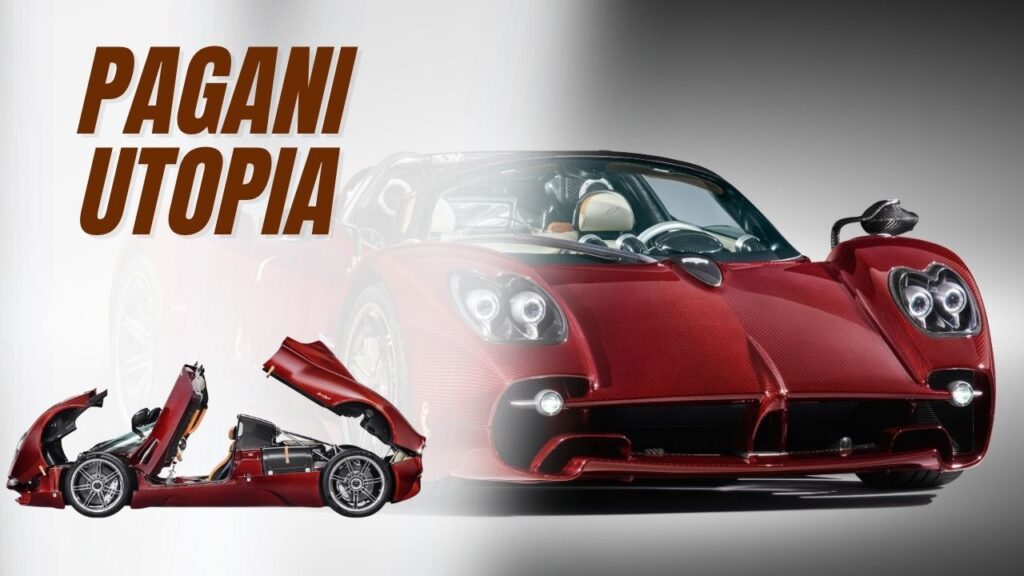
When you see the Pagani Utopia for the first time, something inside you clicks. It is recognition not just appreciation. You’re looking at an uncompromising machine that harks back to an era when engineering and art were soul mates, not just neighbors. The Utopia is a fiery expression of human handcrafting, the pure physical excitement of the driver, and classic dreams of the V12 engine in an era in which hypercars are more and more beginning to look like spaceships being steered by computers.
The Third Symphony
Horacio Pagani had three seemingly simple goals to give his team as he prepared to build his third work of art, after the legendary Zonda and the revolutionary Huayra: simplicity, lightness and driving enjoyment. That wasn’t a tagline, that was the attitude. In 2022, the result, the Utopia, was revealed and is slated for delivery in 2025. It has that race-bred thoroughbred spirit, even though it’s as heavy as a small hatchback, at just 1,280 kg dry.
Not a single option listed in this line-up will be suitable for the selector, for just 99 Coupes and 130 Roadsters will ever be produced. Each begins at approximately €3.1 million. Hopefully, you’re not reading this too late and they’re still available. But rarity doesn’t account for the Utopia’s allure. what it has in it and what it does to you.
The Heart That Refuses to Surrender
The Pagani M158, a 6.0-liter twin-turbo V12 engineered by Mercedes-AMG for Pagani, is visible under the rear clamshell that is secured by leather straps more appropriate for a horse’s gaiter than an automotive panel. Michael Kübler, one man in Affalterbach, Germany, who uses his hands to assemble every engine. This is mechanized high fashion, not industrial manufacturing.
It produces but a laughable 864 hp at 6,000 rpm with 1,100 Nm of torque between 2,800 and 5,900 rpm. It is, however, only part of the picture. What truly determines the character of the V12 – how it spins smoothly like a turbine at low revs and comes alive when you really focus on it – is the sense of what matters.
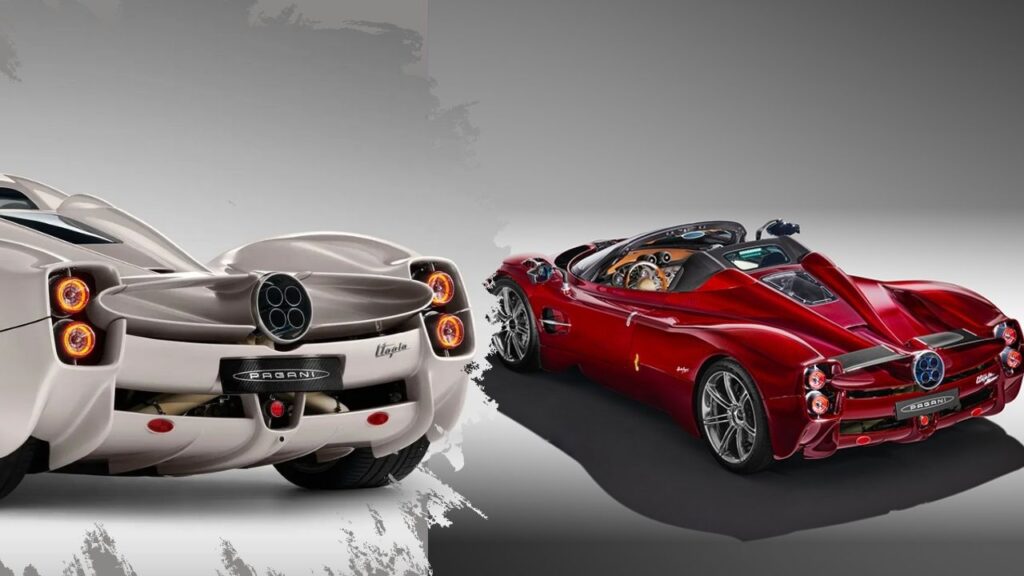
The turbos spool up super fast, delivering boost without the lag that plagued earlier models.In fact, the sound of four valves opening and closing at four times the engine speed is the distilled roar of a 12-cylinder engine breathing fire, not much different than the sound from the speakers.
That’s what sets the Utopia apart in 2025: Pagani sticks to pure combustion while the rest are scrambling for electrification by cramming batteries and engines into every nook and cranny. No help from a hybrid. Without regenerative braking. None of those aids.One of the last great V12 engines ever made, just you and a mechanical throttle cable.
The Sacred Ritual of Shifting
Pagani could have just gone with the flow and put in a dual-clutch transmission. They would have been faster, more efficient, more… modern. Instead they teamed up with British specialists Xtrac to create an increasingly rare thing: a real seven-speed manual gearbox.
It’s not like it was simple to engineer a manual transmission for 1,100 Nm of torque. The clutch is a light adjustable triple disc unit. The synchronizers had to be designed to handle forces that would destroy lesser transmissions.
But the payoff is worth every engineering hour – a shift feel that has been described as having “real lightness of touch,” a clutch pedal that doesn’t require leg-press strength, and a driver-machine connection that’s vanishing in the hypercar realm.
There is indeed an automated manual for those who want it. But Pagani expects 80 per cent of Utopia customers to go for the stick. These are people who understand that driving is more than just arriving — it is the trip, the ritual, the dance.
Sculpted by Wind, Finished by Hand
The Utopia’s outline is instantly that of a Pagani, but it’s softer and more mature than those that came before. Where the Huayra bore its aerodynamics like armor—active flaps opening and closing like fighter-jet wings—the Utopia makes downforce part of its DNA.Six years of wind tunnel testing fine-tuned every curve, every surface, until the vehicle was more aerodynamically efficient than the Huayra without one visible wing.
Worthy inspection brings about detailed rewards. The turbine shaped carbon fiber wheels are not only beautiful, they actively pull hot air away from the brakes while reducing turbulence. The headlights are inspired by 1950s Vespa scooters, and the ceramic-coatedtitanium exhausts that emerge from the rear like mechanical sculptures.Even the side mirrors, which rest on airfoil-shaped arms, help the car’s aerodynamic performance.
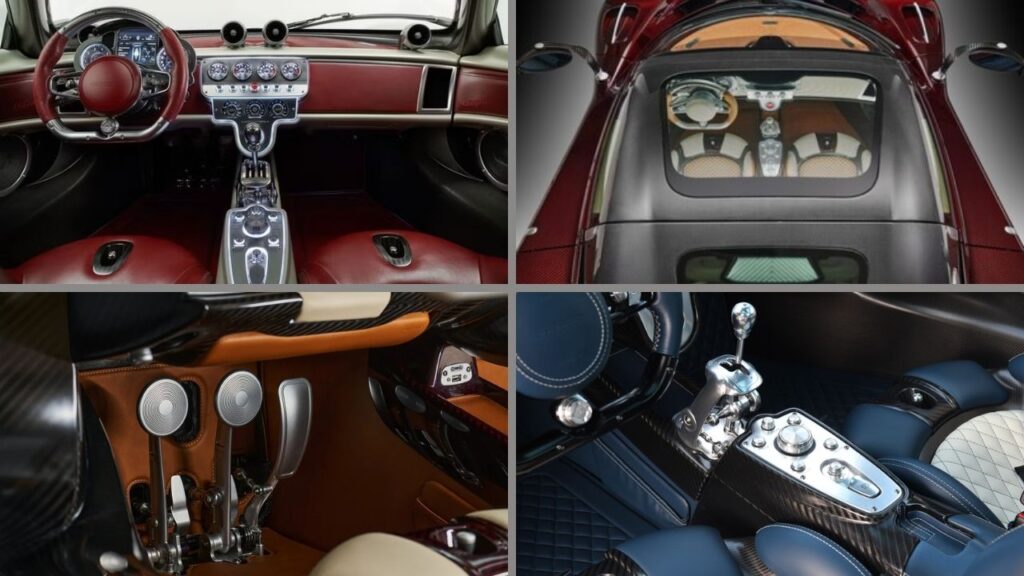
The sentiment of mechanical honesty is prevalent within. The digital screens so common in today’s supercars have been replaced by analog dials, with real needles that sweep. The wheel is billet aluminum shell which has been multi axis machined. Rather than hide behind plastic casings, the mechanisms of the pedals are on display and celebrated as they are made from solid metal and cut. Every toggle switch, vent and surface is vetted by human eyes and hands.
The Weight of Lightness
The monocoque of the Utopia, made from Pagani’s own Carbo-Titanium HP62 G2 and Carbo-Triax HP62 materials, is as robust as it is lightweight. Suspension triangles are forged from aerospace-grade aluminum alloy. The brakes are huge carbon-ceramic discs, 410mm up front and 390mm at the rear, squeezed by Brembo calipers with a seemingly never-ending bit that are also perfectly modulated in more relaxed driving.
This preoccupation with weight pays off in handling. Utopia doesn’t ram the road; it twirls with it. Steering is light and accurate. The chassis tells you every subtlety in the texture of the road below. You don’t lurch as you brake the car just responds.When you turn, you don’t undermine the car it goes where your mind and body tell it to too with near telepathic obedience.
A Utopia for the Senses
In driving this hypercar, you utilize all your senses. You can feel the weave of the road under the tires in the steering wheel as if you were running a hand over the pavement. Hear how the voice of the V12 varies with load and revs on this link. There’s the warm electronics and leather, and a faint whiff of high- performance lube. Through narrow A-pillars and a domed canopy you look out upon a world almost alien to the supercars of today.
The 2025 Pagani Utopia is far from perfect in the usual sense. It’s not the quickest hypercar in a straight line with a respectable but by no means record-breaking 0-60 mph time of around 3.1 seconds. Its electronically limited maximum speed of 217 mph is nothing compared to Bugatti’s chasing 300+ mph. A Porsche 911 GT3 RS will lace the ‘Ring faster than it.
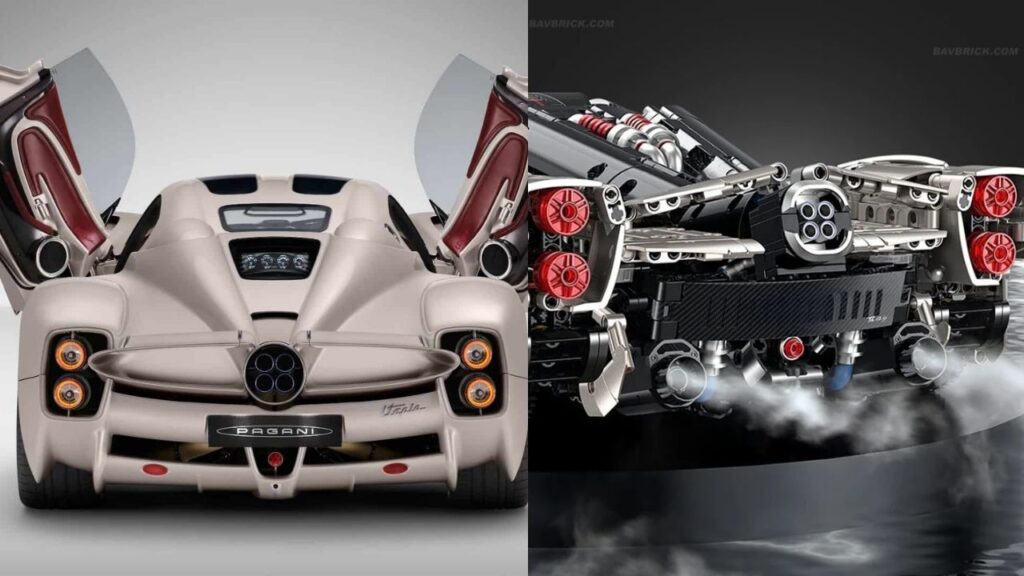
In the era of drone delivery and smart toasters, the Pagani Utopia is a glimpse of what we have lost and what we might lose. It’s a celebration of mechanical purity, human ingenuity and the simple yet irreplaceable connection between driver, car and open road. It’s more than just a hypercar, it’s a love letter to driving itself, penned in carbon fibre, titanium and the roaring song of a V12 engine.
And that is what will be handed down to the lucky, and for those lucky few who own one it means something much more rare: the knowledge that even in an imperfect world, moments of true utopia can be found. You just need the right key – and €3.1 million.
Read More:- The Garage of Dreams: Inside C.J. Roy’s Car Collection
Conclusion
The Pagani Utopia isn’t trying to set records or follow trends—it’s pursuing an emotion. In an era when speed is increasingly defined by software and electrification, this car is a testament to what driving used to be and, on occasion, still is. It sacrifices pure numbers to emotion and precision and to a profoundly human connection between machine and driver.
It probably won’t be the fastest or the most technologically advanced hypercar of 2025, but that’s precisely the point. The Utopia is craftsmanship over convenience, analog over artificial, passion over perfection. It’s not designed to own the lap time – it’s designed to be memorable.
And maybe that’s the reason why it is so important. Because cars like the Utopia, they don’t just move you physically — they move you mentally long after you’ve turned the engine off.
