
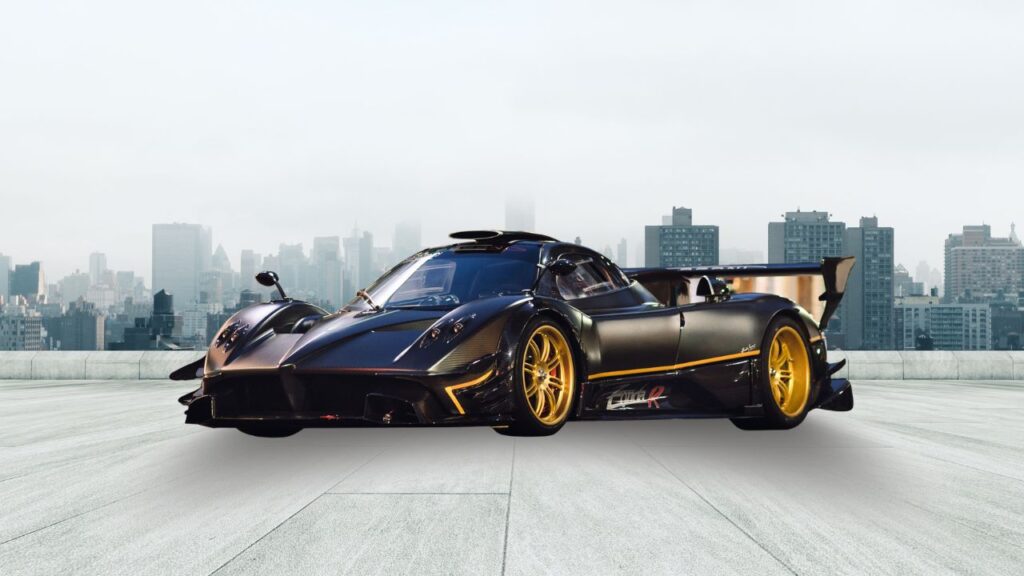
There is a sort of poetry in Zonda’s unwillingness to be forgotten. Most supercars of the late ’90s have been relegated to the pages of history and lore, but the Zonda has somehow managed to outrun the ticking of time. After a quarter of a century, the Pagani Zonda production has officially ended in 2024, but this Italian work of art still makes the news not for its retirement, but for the mindboggling prices these machines fetch in the open market.
The End of an Era
If you’ve been tracking Pagani’s progression, you know you’ve been told they were stopping production of the Zonda one last time more times than you can count. It was like the company had developed a pattern: say good-bye to their first born, then bring it back again in even crazier forms. The Zonda Cinque was to be the end in 2009. After that, the Tricolore. Then the Revolucion. Then the HP Barchetta. Every “final” edition seemed to open the door for another.
But in August 2024 at Monterey Car Week Horacio Pagani at last drew the line in the sand. The Zonda Arrivederci – chassis number 140 is the last definitive road going Zonda ever made. The name, which is Italian for “until we meet again,” has a bit of a wistful tone, but Pagani is clear that this time, they mean it. No more conversions. No more one-offs. The book is closed.
Price Evolution: From Half a Million to Eight Figures
From $500,000 in 2005, making it expensive so only the best collectors have first Zonda F. I mean, it was really expensive, but the best collectors could afford it. Jump to the present day, and the scenario is wildly different.
The Zonda HP Barchetta released in 2017 as Horacio Pagani’s 60th birthday gift to himself – cost €15 million at the time. Only three were built — one for Horacio himself and two for collectors brilliant (or rich) enough to reserve their places before the public was even aware the car existed.
As of 2022, when TopCar Design chief Oleg Egorov was delivered the fabled HP Barchetta, reports suggested values had gone even higher, some estimating the final sale value at more than $17 million.
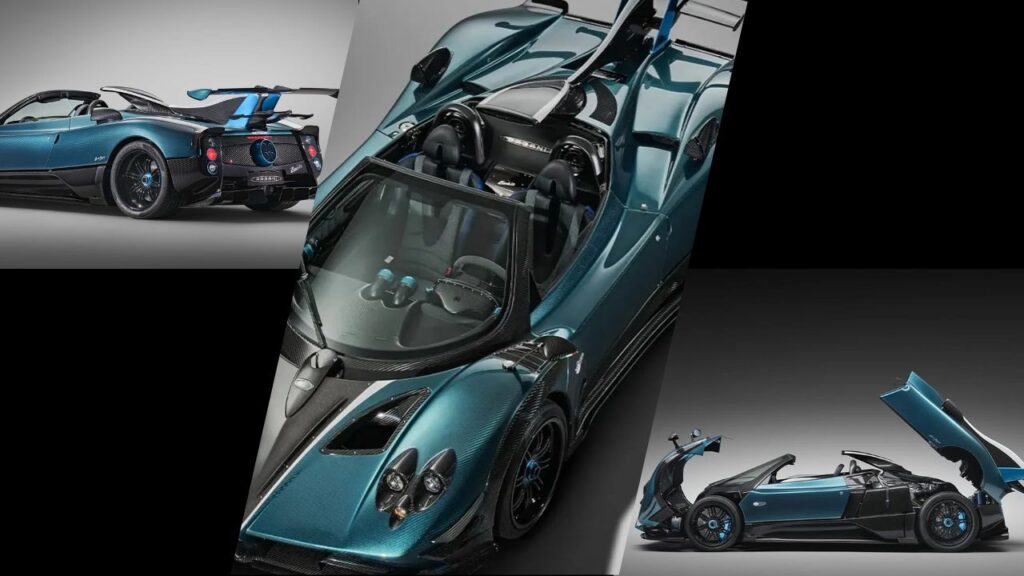
Nevertheless, the used-car market presents an even stronger case. Late 2024 saw the first lot in the so-called Zonda LM Roadster — a one-off track special hammered down at RM Sotheby’s Dubai sale, making $9.85 million (or $11,086,250 with fees). This is the first time a Pagani has officially surpassed the $10 million mark at auction, breaking new ground for the brand.
Now, the Zonda Riviera — the 140th and final Zonda ever built as of late 2025 is set to have its own auction moment. RM Sotheby’s has given this one-off creation an estimate of $9.5 million to $10.5 million. The Riviera started life as a 2006 Zonda F and was restyled by Pagani’s craftsmen in 2017 as a 760-series special, with unique carbon-fiber bodywork including a roof scoop, aggressive rear wing and that distinctive metallic white with royal blue highlights exterior.
What is especially eye-catching about these prices is the direction in which they are moving. Some Zonda variants have increased in value by 20 to 35 times their original prices in just two decades. Good luck getting that kind of return in the traditional investment markets.
What Makes These Cars Worth the Premium?
In order to understand the pricing, you have to understand the philosophy. Horacio Pagani wasn’t trying to make a fast car—he was trying to make a piece of four-wheeled art that just happened to be staggering quick. Each Zonda is effectively a one-off, with the Modena workshop manufacturing an average of just 5.6 units per year over the 25 years the model has been around.
Design
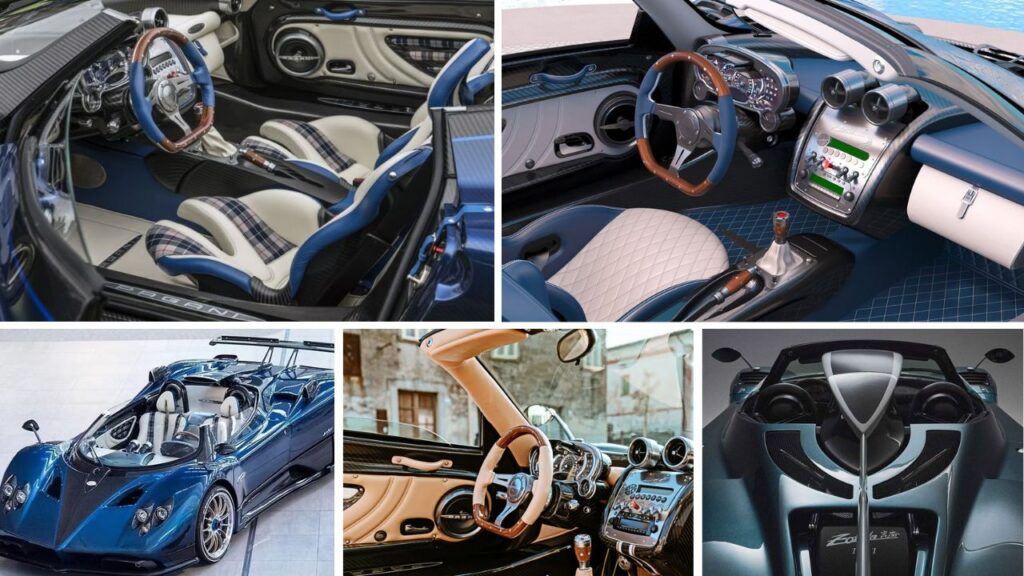
It has silver tinted carbon fiber bodywork, dark blue tinted carbon panels, and the usual exposed carbon in the lower areas. The rear wing is made believe—an enormous carbon fiber element behind a shark fin running on the spine of the rear deck.Inside, vibrant red leather (coordinated to the owner’s Huayra Monza Lisa) contrasts with carbon fiber and traditional wood inlays on the wheel.
Engine and Transmission
At its heart is the 7.3-litre naturally aspirated V12 sourced from Mercedes-AMG. For the Arrivederci, it’s now 750 bhp and 664 lb-ft of torque. Power is delivered to the rear wheels through a 6-speed manual transmission. Yes, a manual. Dual-clutch automatics lead now. Pagani maintains that unfiltered connection between driver and car.
Power and Premium
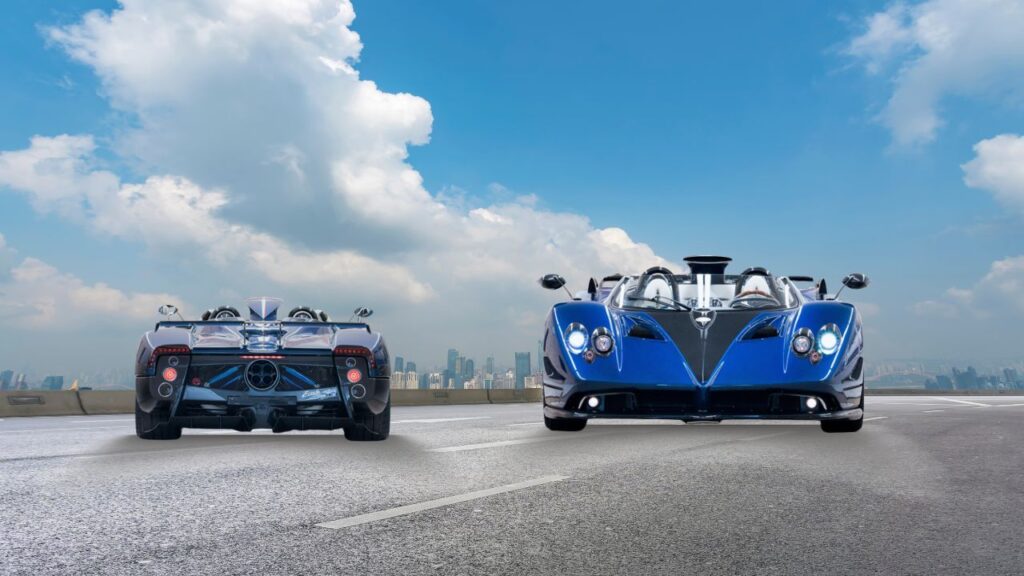
The HP Barchetta took this formula to the extreme. With 789 horsepower (the same as the twin-turbo Huayra BC, but here obtained without forced induction), it is the most powerful road Zonda ever made. The Barchetta is topless with rear wheel fairings reminiscent of Group C race cars, the asymmetrical wheel covers (gold to the left, blue to the right) and that signature roof scoop despite having no roof at all—it’s all to Pagani’s credit that they’re able to make the bizarre seem perfectly normal.
The Technical Marvels Beneath the Beauty
Beyond appearance, those final Zondas were the result of evolution in engineering. The 760-series cars (along with the Riviera) have a carbo-titanium chassis—a substance developed by Pagani that consists of weaving titanium within carbon fiber, which strengthens and stiffen traditional carbon fiber material, on its own.
Fastest Speed
The Zonda R (and with it the derivatives) brought Formula One technology to the series, with a six-speed sequential gearbox with shifts in only 20 milliseconds, a Bosch Motorsport traction control system adjustable in 12 way and a Drag Reduction System (DRS) on the rear wing. The Revolucion version, a track-only swan song for 2013, tipped the scales at only 1,070 kilograms and putting out 800 horsepower, knocking off 0-100 km/h in 2.7 seconds.
Even the smaller road cars such as the Riviera have 750 horsepower from that NA V12, combined with extreme weight-saving measures that are a hallmark of Pagani’s philosophy. The Riviera has been extensively altered, but it’s only got 564 miles under its belt — essentially a new car on an 18-year-old frame.
The Experience of Owning a Pagani Zonda
Owning a Zonda is more than a cost: it is an identity and that experience is what defines it. This is more than just a powerful 7.3-liter V12—it’s a nearly operatic engine performance. In the roadster versions like the Arrivederci or Barchetta there is almost nothing between the driver and this mechanical symphony.
Manual Ride
The manual gearbox further strengthens this connection – you have to actively make decisions rather than sit back as a passenger of dual-clutch automation. It’s relentless precision with each gear shift, while every heel-toe downshift is a joyful lesson in driver involvement.
The unassisted (early versions) and lightly assisted (later versions) steering allows for a great deal of feedback, conveying road texture with a level of clarity that many current electric powered systems simply cannot replicate.
Suspension and Luxury
The suspension, particularly on track-oriented models, is intentionally stiff—don’t expect to be coddled or pampered, but will be adored by enthusiasts who understand the Pagani engineering approach.
It’s not just a way to get around, it’s a show, almost theatrical. For collectors who were raised gawking at the Zonda who remember seeing the legendary orange C12 S and knowing it as a piece of automotive art – owning one is the fulfillment of a dream long held.
Read More:- Ralph Lauren Car Collection: Iconic Classics, Ferraris & Hypercars
Conclusion
If you’re looking to add a Pagani Zonda to your garage in 2023, well, brace yourself for a surprise. Desirable Zonda variants have become eight-figure affairs just to get into the Zonda club, and even “standard” models from the F and Cinque eras are exchanging hands for multiples of their original prices. The Zonda Riviera auction itself in December 2025 will for sure set new records, and there is no reason why the values should not keep rising so long as limited supply is meeting what can only be described as ever more eager demand from collectors who realise these machines as the defining supercars of their generation.
But to the rest of us, the Zonda is lost a dream – a moment, a reminder that in a world that is ever-more automated and electrified automotive landscape, there really were cars that cared about soul over statistics, artifice rather than algorithms, and the human driver/machine interface above all else.
It may be true that the Zonda has gone into retirement, but its tale is far from finished. In fact, it seems like the whole legend is only just starting to mature, judging by the auction predictions and the esteem these vehicles hold in.
