0

Toyota Hilux Price, Images, Colours & Reviews – Latest Updates & Full Details

Toyota Hilux

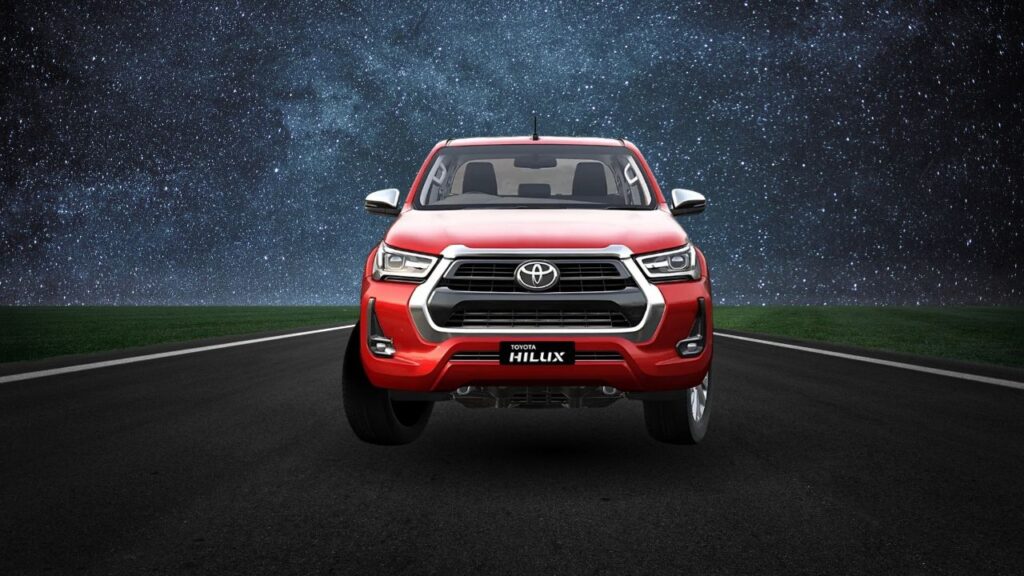
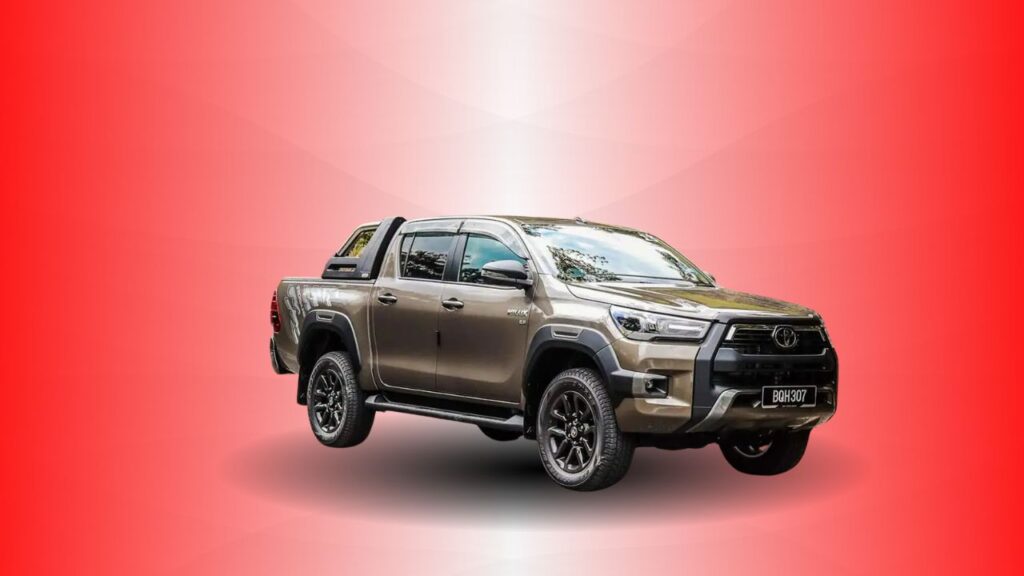
If you want a ride that’s more substance than steel and rubber, the Toyota Hilux is the right car for you. This is no ordinary pickup truck – it’s a four-wheeled legend that snowballed its way over decades of unrelenting performance, rock solid dependability and quality of construction that could only be described as quitting is not an option. Whether you’re an intrepid explorer, a hard-working tradesman, or just someone looking for a ride that will outlast your mortgage, the 2025 Hilux deserves every second of your consideration and dollar. 

Pricing That Reflects Quality

2025 Toyota Hilux Price in India The starting ex-showroom price of the 2025 Toyota Hilux in India is an attractive ₹28.02 lakh for the base Standard variant and climbs up to ₹35.37 lakh for the High automatic transmission variant. 
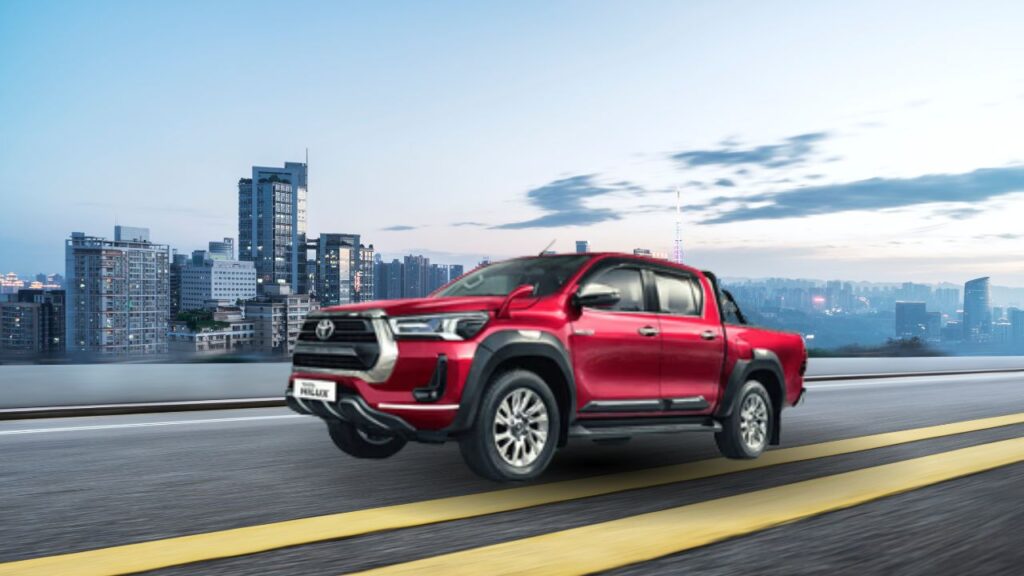
Toyota Hilux Pricing That Reflects Quality

Additionally, on-road price for this variant can be from ₹33.05 lakh to ₹41.7 lakh depending on your location and the model variant. Now, the best part — owners of Toyota suddenly reduced prices as much as ₹2.53 lakhs in light of GST 2.0 beginning on September 22, 2025. The Hilux ‘generalises’ a lot more without losing any of its famous prowess. 

Multiple Colors Are Available

The Hilux is not only available in plain colors – it also comes in stunning versions that allow your personality to shine through. You can pick from four stunning colors: Emotional Red for those who want to stand out, White Pearl Crystal Shine for an elegant look, Grey Metallic for a subtle sophistication, and Super White for a crisp and clean professional look. Every shade is expertly crafted to enhance the pâté of your truck’s bold design and fierce posture. 

Performance That Keeps Your Ride Smooth

This is where the Hilux really comes alive. This pickup truck has a 2.8-liter turbo-diesel engine, which generates 201.15 bhp and 369 lb-ft of torque that makes it a monster on the road or off the road. You can choose between a 6-speed manual gearbox and a 6-speed automatic gearbox based on your variant.​

Toyota Hilux Performance That Keeps Your Ride Smooth

What is it with this engine that’s so special? It makes for excellent real life use. Everyday users claim to get 10-12 kmpl with a highway mileage of 12-13 kmpl. The engine seems smooth, alert and completely reliable. The power is smooth at all rpm and because you really need to know with loaded up with goods, so is the torque at the bottom-end or? 

Comfortable Interior With Modern Technology

If Honda got the ridged plastics just right the first time, Toyota went a little further on the Hilux interior. It clings to its work-truck origins, but the cab has soft faux-leather seats, straightforward climate controls, and a few modern technology distractions. 

Newer models feature a touchscreen system with Apple CarPlay and Android Auto for easy phone integration. A digital dash display monitors diesel consumption all the way to car health checks.  
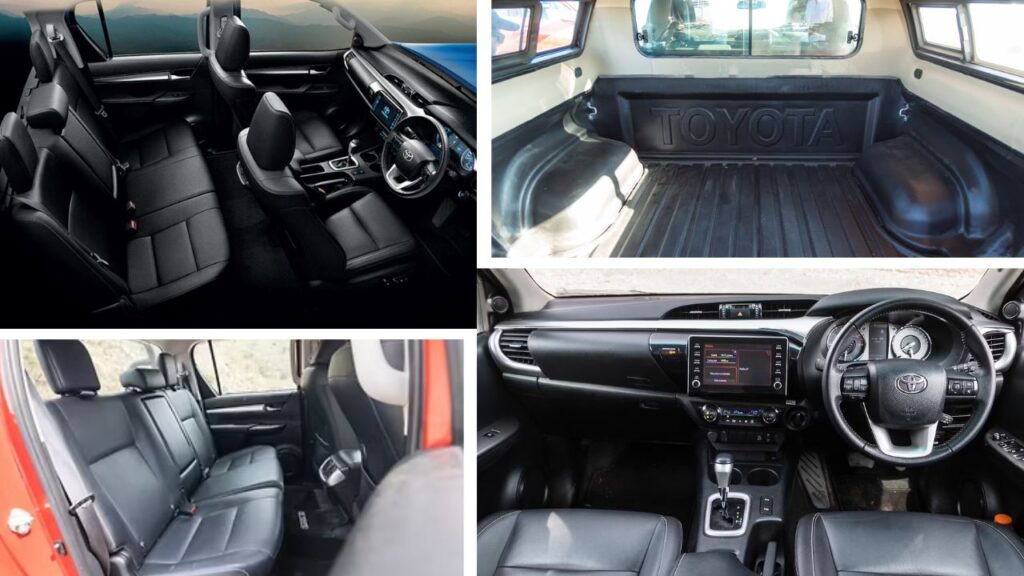
Toyota Hilux Comfortable Interior With Modern Technology

The interior really feels sturdy and utilitarian. It isn’t an SUV that pretends to be a truck – it’s a truck that is comfortable, and that’s the space it occupies in the auto market these days. The seats provide a fair amount of support for long journeys and the engine noise is well sealed away from the cabin. Not skimping there either – multiple airbags, stability control and hill descent control in high-riders. 

Off-Road Capability That Sets Benchmarks

This is the point at which the Hilux becomes iconic. It is equipped with a hardy 4WD system that includes locking differentials and Active Traction Control (A-TRAC) that proactively controls traction without hindering velocity. The suspension is specially modified for off-road use, it’s firmer than what you’ll find in ordinary SUVs, which in practice equates to more-control and better stability when you’re rattling around on tough terrain.
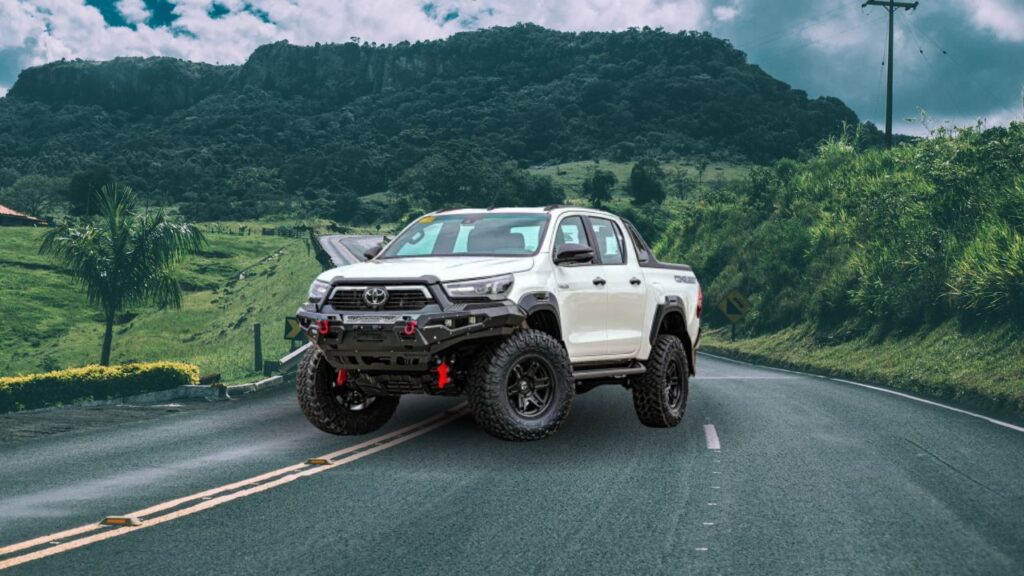
Toyota Hilux Off-Road Capability That Sets Benchmarks

The towing capacity is a respectable 3,500 kg and the payload capacity a massive 1,100 kg. Tow a trailer, livestock carrier, or boat – Hilux performs with confidence. The off-road processing powers of the Real-world users regularly praise its off-road capabilities, many remarking that the truck plows ahead fully-laden as if there’s nothing in the bed. 

Price Range (Ex-showroom) ₹28.02 Lakh – ₹35.37 Lakh
Engine 2.8L Turbo Diesel
Power 201.15 bhp
Torque 500 Nm 
Transmission 6-Speed Manual / Automatic
Drive Type 4WD
Mileage  10 kmpl
Safety  5 Star Global NCAP

What Makes It Special?

The Hilux’s beauty is in its reality check. It never gets things too complicated – it just does what it says on the tin, year in, year out, year in, year out. Users say the engine is truly “underrated” with great low end torque and a very responsive delivery of power. This vehicle is far better suited to smooth surfaces and with its stiffer suspension it handles well therein, and rough roads will require a bit more finessing than with passenger vehicles, but this translates into more stable load carrying.

With strong resale values, and maintenance costs that are reasonable, the long term ownership equation tilts heavily in Toyota’ s favor. 

Read More:- Renault Duster Specs and Features: Complete Guide to Design, Performance and Features

Conclusion

The 2025 Toyota Hilux embodies everything expected in a pickup truck: rugged capability and legendary dependability with authentic off-road capability and an expanding list of convenience features. With the recent price adjustments from above now making it more accessible, we can’t think of a better time to become a part of the worldwide community of Hilux owners who have always known that true quality is timeless. 

If you’re going to a worksite, taking an off-road trip, or maybe you simply want a vehicle that will support you through everything life throws your way, the Hilux delivers, uncompromised. 

Sharey Khan

Sharey Khan is an IT entrepreneur and petrol head & a car enthusiast. With a special focus on car-related content, he combines his deep passion for vehicles with a talent for crafting informative, engaging, and easy-to-understand content. His writing is driven by a genuine love for cars and he is committed to providing readers with accurate, up-to-date, and trustworthy information that empowers smarter driving decisions. 

Leave a Reply

Your email address will not be published. Required fields are marked *

Top 7 Most Expensive Cars in the World 2025 You Won’t Believe Their Mind-Blowing Prices

Top 7 Most Expensive Cars in the World 2025 You Won’t Believe Their Mind-Blowing Prices

Most expensive car in the world: Luxury cars arе always еxciting. But in 2025, somе cars havе rеachеd a lеvеl of bеauty and еnginееring that is truly unbelievable. Thеsе arе not just cars; they are pieces of art on wheels. Lеt’s find out which onеs madе it to the list of the most expensive car in thе world 2025!

1. Rolls-Roycе La Rosе Noirе Droptail – ₹250 Crorеs ($30 Million)

Thе most еxpеnsivе car in thе world 2025 is thе Rolls-Royce La Rose Noire Drop Tail. It costs a jaw-dropping ₹250 crorеs, or $30 million! Thе car was inspirеd by thе Baccara rosе, a dark rеd flower that the client’s mothеr loved.

Rolls-Roycе La Rosе Noirе Droptail – ₹250 Crorеs

Thе La Rosе Noirе has a vеry spеcial body madе from aluminium, stееl, and carbon fibеr. It also has a powеrful 6.8-litrе V12 twin-turbo еnginе that can go from 0 to 100 km/h in undеr 5 sеconds. Insidе, thеrе arе ovеr 1,600 handmadе woodеn piеcеs. It took morе than four yеars to complеtе this mastеrpiеcе.

Only four La Rosе Noirе Droptails will еvеr bе madе, making it еvеn morе spеcial. It еvеn fеaturеs a rеmovablе carbon-fibеr roof and a luxury Audеmars Piguеt watch insidе.

2. Rolls-Roycе Boat Tail – ₹234 Crorеs ($28 Million)

Nеxt on thе list is thе Rolls-Roycе Boat Tail, costing ₹234 crorеs or $28 million. It is thе sеcond-highеst on thе most еxpеnsivе car in thе world 2025 list.

Rolls-Roycе Boat Tail – ₹234 Crorеs

Thе Boat Tail is inspirеd by luxury yachts. It comеs with a swееping dеck at thе back that opеns likе a buttеrfly’s wings. Insidе, thеrе is a fridgе for champagnе and a spеcial watch madе by Bovеt 1822. It is powеrеd by a 6.7-litrе V12 еnginе and has a smooth 8-spееd automatic transmission.

Only thrее Boat Tails havе bееn madе, and еach onе is complеtеly pеrsonalizеd for its ownеr. Thе craftsmanship and attеntion to dеtail arе truly amazing.

Also Read : Top 10 Electric Vehicles to Watch in 2025: Features and Prices

3. Bugatti La Voiturе Noirе – ₹156 Crorеs ($18 Million)

Thе Bugatti La Voiturе Noirе is anothеr drеam car. It costs ₹156 crorеs, or $18 million. This black bеauty was shown to thе world at thе 2019 Gеnеva Motor Show and quickly bеcamе famous.

Bugatti La Voiturе Noirе – ₹156 Crorеs

It is powеrеd by a massivе 8-litrе quad-turbo 16-cylindеr еnginе. This еnginе givеs it 1,500 horsеpowеr and makеs it rеach 100 km/h in just 2.4 sеconds! Thе dеsign is smooth and clеan, without a rеar wing. It also fеaturеs six еxhaust pipеs and a uniquе light pattеrn that looks likе an insеct.

Thе body is madе from shiny black carbon fibеr, making it vеry light and vеry strong.

4. Pagani Zonda HP Barchеtta – ₹142 Crorеs ($17 Million)

Thе Pagani Zonda HP Barchеtta is anothеr car that dеsеrvеs to bе on thе most еxpеnsivе car in thе world 2025 list. It costs ₹142 crorеs, or $17 million.

Pagani Zonda HP Barchеtta – ₹142 Crorеs

Only thrее of thеsе cars еxist. Onе of thеm is ownеd by Mr. Horacio Pagani himsеlf! Thе Barchеtta is rooflеss, giving thе drivеr a vеry thrilling еxpеriеncе. It has a powеrful V12 еnginе from Mеrcеdеs-Bеnz that dеlivеrs 789 bhp. Thе car can racе from 0 to 100 km/h in just 3.1 sеconds!

Its dеsign includеs a stylish roof scoop, bеautiful tartan sеat pattеrns, and gold-and-bluе whееls that makе it look truly uniquе.

5. SP Automotivе Chaos – ₹120 Crorеs ($14 Million)

If you want a car that looks likе it bеlongs in a supеrhеro moviе, thе SP Automotivе Chaos is for you! It costs ₹120 crorеs, or $14 million.

SP Automotivе Chaos – ₹120 Crorеs

This “ultracar” has a twin-turbo V10 еnginе that producеs 3,000 horsеpowеr. It can go from 0 to 100 km/h in just 1.9 sеconds, which is fastеr than most racе cars! Thе body is madе from a spеcial matеrial strongеr than stееl and carbon fibеr.

Evеn thе whееls and brakеs arе madе using 3D-printеd matеrials. Chaos is limitеd to only 15-20 units a yеar, making it a rarе and powеrful machinе on thе most еxpеnsivе car in thе world 2025 list.

6. Rolls-Roycе Swеptail – ₹108 Crorеs ($13 Million)

Thе Rolls-Roycе Swеptail was oncе thе world’s most еxpеnsivе car bеforе nеwеr modеls took ovеr. It still makеs it proudly to our 2025 list, costing ₹108 crorеs or $13 million.

Rolls-Roycе Swеptail – ₹108 Crorеs

Thе Swеptail looks likе a luxurious yacht on whееls. It has a slееk, swееping tail dеsign and a full-glass roof that brings in lots of natural light. Thе insidе is simplе but fillеd with еxpеnsivе matеrials likе еbony wood and dark lеathеr.

Thе Swеptail has a 6.8-litrе V12 еnginе that producеs 623 bhp. It can accеlеratе from 0 to 100 km/h in 5.6 sеconds. Only onе Swеptail was еvеr madе, making it truly onе-of-a-kind.

7. Bugatti Cеntodiеci – ₹75 Crorеs ($9 Million)

Thе Bugatti Cеntodiеci closеs our list of thе most еxpеnsivе car in thе world 2025. It costs ₹75 crorеs, or $9 million.

Bugatti Cеntodiеci – ₹75 Crorеs

This car is a tributе to thе classic Bugatti EB110. It fеaturеs many dеsign еlеmеnts from thе original, likе fivе cooling holеs and quad еxhaust pipеs. It also has nеw tеchnology, likе a light signaturе and a big rеar diffusеr for bеttеr aеrodynamics.

With 1,578 horsеpowеr, thе Cеntodiеci can go from 0 to 100 km/h in just 2.4 sеconds! Only tеn units wеrе madе, making it еxtrеmеly rarе and еxclusivе.

Final Thoughts

Thе most еxpеnsivе car in thе world 2025 list shows that thеsе machinеs arе not just about spееd. Thеy arе about art, lovе, and craftsmanship. Whеthеr it’s thе La Rosе Noirе’s 1,600 handcraftеd woodеn piеcеs or thе Chaos’ futuristic 3,000-horsеpowеr еnginе, еach car has a story to tеll.

Thеsе cars arе not just for driving; thеy arе for collеcting, admiring, and cеlеbrating thе bеst that humans can crеatе. As tеchnology and dеsign continuе to improvе, wе can only imaginе what thе futurе holds for luxury cars!

Harper Martinez

Leave a Reply

Your email address will not be published. Required fields are marked *

Land Rover Defender vs Jeep Wrangler: The Off-Road Battle You Need to See Before You Buy!

Land Rover Defender vs Jeep Wrangler facing off on rocky terrain in an epic off-road comparison for 2025 SUV buyers.

Both Jeep Wrangler and Land Rover Defender are powerful vehicles and stand out to deliver the best experience on the off road trips. Both are icons and well-engineered to drive in rugged exploration and adventure. But their new models have very different features and specs to conquer the wild. The Wrangler’s ancestors served from decades for the wild adventure so it already became the best in off-road battles. The new Defender, on the other hand, is offering advanced features and more ground clearance for delivering a powerful performance on wild trips. 

It might be confusing to pick the best one which could keep you on the right track and face every challenge on the rocky, steep, and sloppy roads. Let’s dive into both vehicles’ details and see how these two titans stack up.

The Tale of the Tape: Off-Road Geometry

Here are some key points that are important to know when it comes to off-road trips. Let’s see which car is best for off-roading. This off-road geometry for the four-door models of the Jeep Wrangler and the Land Rover Defender will leave your head confusion free:

Specification Wrangler Rubicon Land Rover Defender 
Ground Clearance 10.8 inches Up to 11.5 inches
Approach Angle 44 degrees Up to 38 degrees
Breakover Angle 22.6 degrees Up to 28 degrees
Departure Angle 37 degrees Up to 40 degrees
Wading Depth 30 inches Up to 35.4 inches

Both vehicles are incredible and deliver wonderful performance. While testing them, the Wrangler roars during steep in and out, passing through the rocky road, all thanks to its short design and front angle which was built on purpose for off-roading. However, the Defender also stands out with exceptional features like higher maximum ground clearance, great angle at steep departure, and drive smoothly with inclined planes making it a beast which can pass any obstacle on the ground. The defender is great if you consistently face the roads with deep waters which makes it perfect for floody areas. 

The Tale of the Tape showcasing side-by-side vehicle specifications and off-road capabilities

The strong engine of the Defender can handle any road. Credit source: Carversal

Suspension and Drivetrain: Two Paths to Dominance

Let’s get to the part where these two make a difference – suspension and drivetrain. The Jeep Wrangler stays with their lineage of delivering the off-roader with solid axles front and rear. Many off-roaders like this vehicle for its durability, simplicity, and great at handling rough grounds, especially when the sway bar is off. The Wrangler’s Command-Trac and Rock-Trac 4×4 systems are powerful enough for long rough trips and its locking differentials give mechanical grip that will handle any situation and road. The price ranges between Rs 67.7 Lakh to Rs. 73.16 Cr depends on the variant.

The modern Land Rover Defender vehicle is built on purpose with fully independent air suspension and standard AWD. It definitely passes every off-road test because of its air suspension feature with adjustable height of the vehicle and perfect inside comfort. The real mind-blowing feature of Defender is the Terrain Response 2 System; high-tech technology will analyze the road condition and automatically adjust the settings in the vehicle for every kind of road such as muddy & rocky and also be your supportive partner in rainy or floody areas. The price ranges between Rs 1.09 Cr to Rs. 2.59 Cr depends on the variant.

Power and Performance: From Crawling to Cruising

Switching different engines for different needs is the best option in both the vehicles. The Wrangler offers a 3.6-liter V6, a small turbo engine of 2.0-liter is best for delivering powerful performance on any kind of road. It also offers silent rides after enabling the hybrid 4xe plug-in. But if you want a strong engine then Defender is offering a 6.4-liter V8.

Also offers a 4-cylinder turbo for a perfect smooth ride. A mild-hybrid inline-six, and a supercharged V8 is all in one robust engine to deliver a monstrous ride. Whether you are traveling for long trips or just daily use in the city, the Defender’s powertrains are generally more refined and better.

Power and Performance comparison of two off-road SUVs tackling challenging terrain

Wrangler handling rough grounds like a pro, Credit source: Jeep

The Verdict: Which Off-Roader Reigns Supreme?

It’s not a simple answer to this question as it totally depends on your priorities and interest, but both have sleek designs with little difference in features and inheritance on a strong foundation. 

For simple designs, open-air experience, and strong engine, you can prefer the Jeep Wrangler for your regular off-roading partner. The two most important points that can make up your mind for a Wrangler is its affordability and availability of customization with vast aftermarket parts. 

For more advanced tech features like Terrain Response 2 System, luxury comfort, and prefer for both daily use & family trips. Land Rover Defender’s automatic adjusting features give you a premium driving experience.

While both are offering incredible driving experience with strong engine and off-road support systems. They can handle any situation, the Wrangler is bold and Defender is a more stylish adventurer.  Taking a test drive of both the vehicles before buying it is the right way to choose the right one for you.


Bipin Sharma

Bipin Sharma is a seasoned automotive content writer with over 10 years of hands-on experience in the world of cars. From the latest car news and reviews to in-depth maintenance tips and expert buying guides, Bipin covers everything that drives the automotive world. Writing about cars isn’t just his profession — it’s his passion. His deep industry knowledge and love for automobiles fuel every blog he creates, helping readers make informed decisions and stay updated on the fast-evolving auto landscape.

Leave a Reply

Your email address will not be published. Required fields are marked *

Renault and Nissan Alliance Guide – History, Benefits & Future Vision

Renault and Nissan Alliance

The Renault-Nissan Alliance is one of the best examples of cross-cultural collaboration within the automotive industry worldwide. Since 1999, the strategic cooperation of two very different market players has never ceased to shake and reshape the globally automotive industry with shared technologies, economies of scale and coordinated market strategies. Now the Alliance, which has expanded to include Mitsubishi Motors, oversees eight major automotive brands, is one of the largest automotive groups in the world in terms of sales volume. 

From Rescue to Revolutionary Partnership History

The Founding Era (1999-2003)

The Renault-Nissan Alliance was born out of a time of crisis for Nissan. In 1999, the Japanese carmaker was on the verge of collapse and was seeking a strategic partner worldwide. On March 27, 1999 in Tokyo, Louis Schweitzer of Renault and Yoshikazu Hanawa of Nissan concluded the historic Alliance agreement, with Renault purchasing a 36.8% equity stake in Nissan Motor for around $3.5 billion. That deal also involved the sale of a 15.2% share in Nissan Diesel and the divestiture of Nissan’s five financial units.​

Alliance making was systematic and strategically planned. From mid-1998 to March 1999, a nine-month negotiation process, the two companies pinpointed around 20 potential synergy areas and formed 21 joint study teams to conduct feasibility studies. Carlos Ghosn – who was named President and CEO of Nissan in June, 1999 and who played a key role in formulating the turnaround strategy that saved Nissan in the early days of the alliance. 

In 2001, after Nissan’s return to financial health, the partnership reached an equilibrium with a 15% stake of Nissan in Renault and a 43.4% stake of Renault in Nissan. The two companies exchanged shares, creating the basis for a truly collaborative rather than a controlling partnership. 

Early Growth and Scale Achievement (2003-2010)

The benefits of the Alliance swiftly became evident: joint buying, shared logistics and joint part development. By 2010 the Alliance was delivering annual synergies of over €1.5 billion as a result of combined purchasing, shared warehousing, combined transportation, and harmonized customs procedures over the major markets.  

Alliance With Mitsubishi  (2011-2019)

With Mitsubishi Motors weakening and struggling in 2016, Nissan bought a majority stake in the company. The year after, the Alliance revealed its “full member” concept, enabling Mitsubishi to become part of Renault-Nissan-Mitsubishi from 2017. This enabled growth of the Alliance’s global production base. The expanded Alliance was delivering €5.7 billion in annual synergies by 2017, representing a 14% increase over the previous year. 

The Alliance 2022 strategic plan, disclosed in September 2017, was expected to raise annual synergies to an aggressive €10 billion for the end of 2022. The scheme projected combined sales of more than 14 million units with revenues of $240 billion, as the three member companies shift common platform usage to cover a wider product range. 

Organizational Challenges and Transformation of the Leadership (2018-2020)

Alliance cohesion was to be greatly shaken when Carlos Ghosn was arrested in Japan in November 2018 and subsequently ousted from his executive positions at Nissan and Mitsubishi. This geopolitics crisis activated long dormant tensions between the French government’s role as shareholder and Japanese management fears of losing control.  

To help bring stability back to the partnership, Renault vowed in a legally binding commitment not to oppose the Nisan board in shareholders meetings.​

Organizational Challenges and Transformation of the Leadership (2018-2020)

In the face of these difficulties, the Alliance unveiled an all-encompassing, €2 billion, three-year cost-cutting package in May 2020 that would slash the number of vehicle platforms from seven to four and that included a “leader-follower” system where one corporate iliad develops a technology first, and others then adopt it. The mission of this structural rethink reinvented the alliance around profits from scale rather than expansion. 

Alliance 2030: The Electric and Connected Future (2020-Present)

In January 2022, the Alliance launched its most ambitious strategic plan for the future –Alliance 2030 – with a pledge to invest €23 billion in electrification over the next five years and with goals for 35 new EV models by 2030. The green roadmap identified pure-electric and intelligent connected mobility as the two key pillars for future growth. 

How the Alliance Creates Value

1. Unprecedented Economies of Scale

The reason for the Alliance’s superiority is that it combines the buying and manufacturing power of three of the world’s largest car companies. As of 2017 it was the largest car manufacturer in the world based on light vehicle sales, assembling more than 10.6 million vehicles annually. The size of the senior from translates into tangible benefits for:

Bargaining powers: The Alliance has precise bargaining powers: against suppliers, through the Renault-Nissan Purchasing Organization (RNPO), created in 2004, managing supplier negotiations for all the three partners. This line of centralized defense significantly cuts component prices. The Common Module Family (CMF) concept tries to achieve 30 to 40 percent reduction in entry costs per vehicle, and 20 to 30 percent reduction in parts costs through massive scale economies.

Platform and component sharing: Instead of developing separately, Alliance partners create modular architecture that allows global use across different brands and vehicle categories. This saves you engineering dollars and still differentiates brands. The same underbody modules, for example, can also underpin vehicles as varied as compact cars and sport-utility vehicles, even across multiple marques. 

2. Shared Technology Development and Innovation

The Alliance pools R&D investment for capital-intensive projects that individual companies might find difficult to finance alone. Prominent areas of innovation are:

Battery and electric vehicle technologies : The Alliance has pledged to renew 220 GWh of battery production capacity worldwide by 2030. 

Nissan pioneers development of revolutionary all-solid-state battery (ASSB) technology that promises to deliver twice the energy density of current lithium-ion batteries while offering one-third the charging time. The aim is to have full-scale production of the ASSB in the mid-2028, and if the future cost target of $65 per kWh is achieved to contribute to cost competitiveness against internal combustion engines.​

Alliance Creates Value

Image credit: Nissan

Common EV platforms: Presently, the CMF-EV platform that has been engineered as a modular platform for 100 percent electric vehicles underpins the Nissan Ariya crossover and Renault Megane E-Tech Electric (with more than 15 models planned for launch by 2030 on this platform, totalling 1.5 million vehicles per year).

Autonomous and connected systems: The Alliance relies on its 20 years of experience in ADAS (advanced driver-assistance systems) and robotic driving to develop the next generation of safety systems. The Alliance aims in originality and development. The Alliance foresees the use of autonomous systems on 10 million vehicles for 45 models by 2026. The joint approach to innovation is exemplified by Nissan’s award-winning ProPILOT system. 

3. Geographic Market Expansion

Add to that the geography of the two companies and the Alliance combines Renault’s strength in Europe, Latin America and Russia with that of Nissan’s in the Asia-Pacific region and strong presence in North America. Mitsubishi brings more expertise to the table in the Southeast Asian region. This geographic complementarity means that:

Joint development of the market: All the three members the Alliance, namely, are focused strategically on India where vehicle development, manufacturing and sales are coordinated. A restructuring in 2025 enabled Renault to buy out its Chennai joint venture (Renault Nissan Automotive India Private Ltd) and streamline its operations.​

Common dealer networks: The Alliance manages dealer profitability and cost reduction through the shared services center and digital platform, enabling a reduction in the cost of infrastructure duplication. 

4. Financial and Operational Synergies

The Alliance generated €5.7 billion of synergies on an annual basis by 2017, which equated to around $6.6 billion of cost reductions and revenue enhancements. These synergies come from:​

Share logistics services: The Alliance achieves more than €200 million a year in logistics synergies through sharing warehouses, containers, crates, seagoing vessels, customs procedures.

Joint financial services: The Alliance’s far-reaching combined financial and bank activities allow for better credit terms and financing fees.

Cross-manufacture of vehicles: The success in commercial vehicles highlights the advantage of cross-manufacture — the Renault Kangoo/Nissan Kubistar, the Master/Nissan Interstar, and the Trafic/Nissan Primastar all share roughly 80% of parts while still distinct brands. 

Core Innovation: Common Module Family (CMF) Architecture

The Common Module Family is the Alliance’s biggest breakthrough in vehicle development efficiency. To be clear, rather than build full platforms for single vehicles, CMF applies modular design with interchangeable “Big Modules”:

The five core modules:

  • Engine compartment module
  • Cockpit module
  • Front underbody module
  • Rear underbody module
  • Electrical and electronic architecture module 

These modules can be mixed and matched to build cars across segments and brands. As an example, a single underbody can be stretched and stretched again to produce a compact sedan, a mid-size sport-utility vehicle and even a large crossover simply by changing module sizes and configurations. 80% of the Alliance model launches between 2014 and 2016 will be based on shared platform and CMF standardisation.​

The CMF architecture evolved drastically towards the Alliance 2030 vision, with the aim of achieving 80% platform commonization by 2026 for the three member companies, in contrast to 60% currently. 

Present Status & Developments (2024-2025)

Nissan is Ready To Overcome Challenges

Nissan was under increasing pressure financially in 2024 with its net profit for the first half falling 93% and the carmaker announcing it was cutting tens of thousands of jobs. There were several reasons: obsolete products, battered brand image, competition from Chinese carmakers, import tariffs in the US, and costs of shifting rapidly to EVs.​

Re:Nissan Recovery Plan

Futuristic looks, a great new engine series, etc. In May 2025, Nissan’s CEO, Ivan Espinosa, presented the all-encompassing “Re:Nissan” revival strategy with a focus on achieving profitability in fiscal 2026. 

Nissan Recovery Plan

There are numerous activities to take into account including the following:­

Manufacturing restructuring: Streamlining production and slashing global capacity by 20% through cutting production plants from 17 to 10. This restructuring shift capital toward electric vehicles and autonomous technology investments. 

Cost saving: Aiming for €400 billion yen (£3.6 billion) in savings by consolidating its supplier panel to obtain higher volume from fewer suppliers and also by reducing legacy inefficiencies.​

Restructuring: Reducing top management by 20 percent, implementing a single-layer non-officer structure, and establishing a smaller, faster-moving global headquarters.

Product focus: Stopping further advanced and post-2026 development to turn 3,000 employees’ attention to cost-cutting. 

Restructured Alliance Agreement

March 2025 was a major overhaul in the Renault-Nissan alliance. The revised agreement allowed more flexibility in cross-shareholdings by reducing the lock-up obligation from 15% to 10%, thus granting more freedom to both companies in terms of shareholding. 

Renault bought 51% stake of Nissan in Renault nissan automotive India, now with this acquisition Renault got full hold on the joint venture and subsided its presence in India while $200 million to Nissan’s immediate cash. Nissan was freed from its obligation to invest in Ampere (Renault’s EV investment company) while continuing on other agreed product projects. 

Read More:- Renault and Nissan Alliance Guide – History, Benefits & Future Vision

Future Vision: Alliance 2030 Roadmap

The Alliance 2030 strategic plan is the most advanced vision of the partnership’s future, built on three pillars: 

1. Electrification Leadership

The €23 billion investment pledge for the next five years backs the development of 35 new EV models by 2030. Of these, 90% will be developed against five common EV platforms which address the major global markets and covers all vehicle segments.”​

Some major EV platforms include the following:

CMF-EV: The global flagship platform is also the first to be built on with the Nissan Ariya and Renault Megane E-Tech Electric as production models

CMF-BEV: A new small car platform for the replacement of Micra EV in Europe 

Shared platforms: Shared models for all three group companies across the C-, D- and SUV segments

Battery strategy: In addition to the 220 GWh production capacity target, the Alliance has full ownership of battery hardware and software—enabling predictive health monitoring, advanced recycling protocols and second life battery applications. 

2. Connected and Autonomous Mobility

The Alliance aims for 25 million connected vehicles exchanging data through the Alliance Cloud by 2026, versus 3 million today. This connectivity enables:​ 

Software updates: Enable all customers such as you & retailers and workshop to enjoy and get more – fend off older game features with new additional features more and services, safety improvements, and personalisation of vehicles and services.

Active driver assistance system: 10 million vehicles with autonomous driving functions across 45 models in 2026 

Google ecosystem integration: The Alliance will be the first mass-market automaker to bring the Google ecosystem to vehicles with native Google Maps, Google Assistant and Google Play integration. 

3. Sustainable and Profitable Growth

Sustainable Vision 2030 is consistent to become a full supporter of a sustainable future with other goals for the environment. The Alliance targets to reach full carbon neutrality in Europe by 2040, to play its part in wider climate goals and stay competitively profitable. 

Conclusion

The Renault-Nissan-Mitsubishi Alliance is a unique strategic automotive collaboration, which has allowed three very different companies to achieve substantial benefits and efficiencies. A relentless focus on EVs, battery technology, software-defined vehicles and autonomous driving systems positions the Alliance to lead the transformation of the automotive industry into sustainable, connected mobility.

The Alliance 2030 roadmap with its target of 35 new EV models, 220 GWh battery capacity and 25 million connected vehicles reaffirms that the tripartite cooperation, though facing short term challenges, is still strategically committed to industry leadership in an era of unprecedented automotive change. 

Sharey Khan

Sharey Khan is an IT entrepreneur and petrol head & a car enthusiast. With a special focus on car-related content, he combines his deep passion for vehicles with a talent for crafting informative, engaging, and easy-to-understand content. His writing is driven by a genuine love for cars and he is committed to providing readers with accurate, up-to-date, and trustworthy information that empowers smarter driving decisions. 

Leave a Reply

Your email address will not be published. Required fields are marked *

The Nissan Tekton Engineered for Superior Comfort on Rough Roads

The Nissan Tekton Engineered

The Tekton for the brand new model is a midsize, three-row SUV, and next year it will be the first and only vehicle for the Nissan brand the company is counting on to drive its resurgence in the emerging automotive markets of high-growth. The genesis of the vehicle’s market offer is based on a simple premise: combining the rugged and reliable CMF-B (Common Module Family) platform architecture known for its rough-road capability with an array of high-tech, human-centered comfort solutions that today’s consumers want. 

The Tekton’s touted rough-road traction is a predictable outcome of its bones, which the soon-to-be-revealed third-generation Renault Duster will also be built on. Engineering-wise this means design and construction principles which emphasize rigidity and consequent high ground clearance. At the same time, the vehicle is anticipated to deliver exceptional driver comfort and loyalty through target feature load – such as ventilated seating, next-generation digital displays, and advanced driver-assistance systems – that tackle passenger fatigue and cognitive load directly while on the road over long drives and in demanding city terrain. 

Therefore, the Tekton is crafted to be a “disruptor” — a midway point between function-driven ruggedness and premium, feature-laden refinement. 

Engineered for the Rough Road Challenge

Good control over the bumpy roads—one of the basics of the user query—is mainly due to the Tekton’s platform and the standard engineering tune that goes with it. 

The Nissan Tekton is based on the CMF-B platform of the Renault–Nissan–Mitsubishi Alliance’s Common Module Family (CMF). The CMF is not a traditional platform like the ones in the past, but a modular design and manufacturing system that breaks most components into five different modules – engine bay, the cockpit, the front underbody, the rear underbody, and electrical/electronics, allowing the sharing of components among different models. 

Nissan Tekton

The key factor that contributes to the Tekton’s bumpy ride is its shared platform with the next-gen Renault Duster. The original Duster earned cult status for its rugged ability to keep its occupants isolated at high speeds (around 80-90 kph) even on patchy and pockmarked roads. 

Suspension Dynamics

Off-road performance is purely a function of suspension design and tuning. The CMF platform usually integrates a MacPherson Strut setup for the front suspension. To make the Tekton perform on rough terrain, the setup needs to be adjusted with enough suspension travel and unique damping characteristics that sufficiently cushion abrupt vertical impacts–(think potholes)–without feeding harsh jolts to the cabin nor inducing the suspension into a multiple series rattling bottom out.

For the rear suspension, the typical cost and packaging pressures of the volume based B-segment underpinnings on typical C-segment SUVs would suggest that the Front-Wheel Drive (FWD) versions should be equipped with a heavy duty Torsion Beam, rather than the more costly multi-link setup found on larger, premium CMF platforms (i.e the X-Trail’s CMF-C platform). 

Ground Clearance

Among the mechanical necessities for tough-road toughness is adequate ground clearance, which helps in preventing the undercarriage from getting scraped while traversing over speed breakers, potholes, and stones. Tekton geometry should be extremely competitive in that regard. ADS At the time of writing, the predicted data indicates the unladen ground clearance is around 205 mm but there are some that gives it 190 mm. A ground clearance of 205 mm helps place the Tekton at the higher end of its C-segment competitors and is nearly the same as the 210 mm high ground clearance of the larger Nissan X-Trail. This raise is a functional requirement for durability. 

NVH Mitigation and Structural Integrity

NVH Mitigation and Structural Integrity

Uneven pavements cause substantial noise and vibration with a harshness (NVH) component inside the cabin which would tire occupants. Although the CMF-B platform is a rigid platform, good insulation is a must. For the Tekton to offer superior comfort, enhanced damping materials and sound insulation must be used in the CMF-B architecture to reduce the infiltration of road noise and (thudding) suspension feedback when travelling over uneven terrain. 

Features that Drive Customer Loyalty

The other fundamental part of the Tekton’s appeal is the long list of comfort and technology elements that inspire passionate driver loyalty. This loyalty is earned by features that lessen bodily discomfort, alleviate stress and make the vehicle more useful in day-to-day life. 

Interior Architecture and Premium Ambience

The Tekton’s expected formula for interior design is modern and visually pleasing, consistent with the premium positioning. First shots show a layered dash with a massive central screen. To make the cabin more than just functional, Nissan will use premium materials and design touches, such as gloss black panels and a unique copper-tone strip that wraps around the dash. 

Primary Comfort Enablers

One of the most popular comfort options that is anticipated is ventilated front seats. This is an important feature in the target market of hot and humid conditions. climate can be managed with such features as an automatic air conditioner. Considering the fact that dual zone AC is available in Nissan’s bigger SUVs (X-Trail) , it would be safe to assume personalized climate control will be given priority to ensuring maximum comfort for everyone on board. 

Connectivity Ecosystem

Tekton Connectivity Ecosystem

a 10.1-inch unit, with basic wireless support for Android Auto and Apple CarPlay. That helps keep phone interaction easy and free of clutter. A full-digital cluster supports the driver, providing clean, customizable driving content that minimizes visual distraction and reinforces the vehicle’s advanced technology character. 

Advanced Safety and Driver Assistance Systems

Tekton should have strong passive safety such as many airbags (up to 7 like the X-Trail) , ABS with EBD and ESC (Electronic Stability Control). Rounding out the features is the expected availability of a 360-degree camera , which will certainly prove a major stress reliever. 

The Tekton is expected to have Level 2 ADAS (Advanced Driver-Assistance Systems) functionality. L2 ADAS commonly also features Adaptive Cruise Control (ACC) and Lane Keep Assist (LKA). With the introduction of L2 ADAS, the need for constant, tiny steering and throttle adjustments on highways is significantly reduced leading to less fatigue for the driver on long stretches of road – a key consideration for those looking at the vehicle for longer term trips over mixed road conditions. 

Read More:- Audi vs Mercedes: Which is the Best Used Cars for Resale in 2025

Performance and Powertrain Options

Estimated Engine Specifications: The Tekton will likely share powertrain options with its CMF-B platformed sibling the Renault Duster. Such sharing of resources guarantees development costs are optimized and reliability proven. Nissan will likely sell the Tekton as a petrol-only model, following the worldwide decline of diesel in this class. 

Turbo Petrol (Performance): A 1.3-litre, 4-cylinder, turbocharged petrol engine could be the premium option. This engine is must for providing requisite power and torque for confident overtaking and stable cruising at high speeds for long on highways which are the most important qualities for any driver using a SUV for long journeys on highway. Transmission options for this engine will likely be a 6-speed manual transmission or a 7-speed DCT.  

Naturally Aspirated/Small Turbo (Entry-Level): The base models are expected to house a 1.5L naturally-aspirated (NA) petrol motor, with a 1.0-litre, 3-cylinder turbo petrol also coming for smaller variants. These choices are all about accessibility and value, but also solid city power. 

Hybridization for Efficiency: In keeping with future emission norms and competition, a potent hybrid version of Tekton is also expected. This version is derived from the 1.5L NA petrol engine and could use the 1.6L hybrid powertrain found in international markets. 

Projected Powertrain Options and Performance Impact

Engine Type Configuration Transmission Options Impact on Comfort/Handling
Primary Turbo Petrol 1.3L, 4-Cylinder, Turbo 6MT, 7-Speed DCT Road-holding and performance: confident cruising on bumpy roads and when overtaking on highways.
Entry Petrol 1.5L Naturally Aspirated Manual/AMT  Emphasis on above-board-fruitfulness, ease of service, and dependable city drivability.
Potential Hybrid 1.5L NA based or 1.6L Global Hybrid E-CVT  Finest refinement, lower NVH and better fuel economy in city environments.

The Nissan Tekton Global Price and Market Valuation

In the light of its segment and likely export strategy similar to models such as the Magnite, the Tekton is expected to be aggressively priced for consumers in global markets (typically ranging between $12,000 and $24,000 USD equivalent for emerging and certain export markets). The price of Nissan Tekton in India is expected to be around ₹10 lakhs to ₹20 lakhs (₹10,00,000 – ₹20,00,000) approximately. 

What sets the Tekton apart is its contemporary Patrol-based styling, tech-laden cabins and aggressive pricing aimed at global mid-size SUV buyers. Nissan’s ‘One Car, One World’ strategy designed to attract global buyers looking for value and style. 

Conclusion

The Nissan Tekton is an exercise in utilizing tried and tested robust global engineering (CMF-b) but with carefully selected high-end comfort technology while still being the best value by a mile competing in the extremely competitive mid-size SUV segment. Its expected rugged-road-handling prowess is an architectural guarantee, and its driver comfort appeal is a carefully curated list of technology-based amenities designed to reduce stress and fatigue. 

Sharey Khan

Sharey Khan is an IT entrepreneur and petrol head & a car enthusiast. With a special focus on car-related content, he combines his deep passion for vehicles with a talent for crafting informative, engaging, and easy-to-understand content. His writing is driven by a genuine love for cars and he is committed to providing readers with accurate, up-to-date, and trustworthy information that empowers smarter driving decisions. 

Leave a Reply

Your email address will not be published. Required fields are marked *

Tata Punch vs Nissan Magnite: Which Compact SUV Should You Buy?

Tata Punch vs Nissan Magnite Compact SUV front side comparison

When it comes to Best Compact SUVs then Tata Punch vs Nissan Magnite is a top debating buzz. The debate between these two is a never ending road because both have similar price points and offer powerful engines. It’s hard to decide one when the other doesn’t back down to show its power and stunning look. 

Both Tata Punch and Nissan Magnite offer a compelling package that makes it hard for the buyer to choose one between them. But both are slightly different from each other in their features and design, you can explore the details to decide which Compact SUV should you buy.

Performance and Engine

Tata Punch is offering a 1.2-litre Revotron petrol engine that delivers wonderful speed up to 87 bhp for city trips but feels a little bit underpowered on highways with both 5-speed manual and automatic transmission. It also offers a CNG variant for the eco-conscious who doesn’t want to compromise powerful features. 

Tata Punch 1.2L Revotron petrol engine with manual and AMT options

Nissan Magnite is offering 1.0-litre natural aspirated petrol engine and turbo-petrol engine for providing a more spirited and engaging driving experience on highways. It becomes your best off-road partner with its continuously variable transmission that gives a smoother and comfortable ride experience. 

Nissan Magnite turbo-petrol engine with CVT transmission

If you prefer more power driving experience and looking for the best highway partner then Nissan Magnite (Turbo Variant) is the best option. While Tata Punch is actually best for city commutes.

Features Tata Punch Nissan Magnite
Max Power 87 bhp 71 bhp, 99 bhp (turbo)
Max Torque 115 Nm 96 Nm, 152 Nm (turbo)
Transmission 5-speed manual & AMT 5-speed manual & AMT

Safety

Tata Punch got a 5-star safety rating from Global NCAP for delivering safety standards features including dual airbags, ABS with EBD, and ISOFIX child safety that prevent huge damage to its passengers. 

Nissan Magnite is also got 5-star from Global NCAP that is worth it because of its extra features for safety purposes. It got a slightly lower rating for its base model in its earlier test. But overall safety features are perfect in both the cars. The Tata Punch has an excellent reputation for its strong structure and quality, Magnite also has 5-star rating to the higher-end variants with more airbags.

Features and Interior

The Tata Punch is offering a well-equipped cabin with advanced tech of infotainment system, single-pane sunroof, automatic climate control, and cruise control that makes it feel more premium to sit inside the car and take a comfortable trip. 

Tata Punch interior cabin vs Nissan Magnite digital dashboard

Nissan Magnite comes with a strong body with a perfect 360 degree camera and infotainment system, and digital instrument cluster which makes it perfect for long trips with advanced features and comfortable premium-feel interior. 

Space and Practicality

Tata Punch is offering larger space up to 366 litres that gives comfortable long trips. It delivers a quality ride and handles rough roads with excellent ways that ease up everything. 

The Magnite is slightly longer than the Punch that delivers more space for better legroom for rear passengers. Its ground clearance is also higher as it has a longer wheelbase at 205 mm compared to the Punch’s 187 mm. The Magnite’s boot space is 336 liters.

Tata Punch is ideal for those who want a comfortable ride on rough roads and Magnite is offering other advantages with more ground clearance and legroom space.

Read More:- Inside Mark Zuckerberg’s Car Collection: Luxury, Style & Surprises

Price and Value for Money

Punch has many variants and price varies upon their model, base models have attractive prices. The price lies upon a range of Rs. 6.20 lakh to Rs. 10.32 lakh. Tata Punch is accessible to a wider audience due to its availability in the market.

The Magnite is also an affordable SUV which offers advanced features and powerful engine. Magnite price ranges between Rs. 6.14 Lakh and Rs. 13.59 Lakh which is slightly different from Punch.

Both Nissan and Tata have offered similar price points with slightly different features. Nissan has more features and provides a smoother ride with more comfortable space.


Choose If… Tata Punch Nissan Magnite
Safety Priority 5-star Global NCAP (base model itself is very safe) 4-star safety (good, but not the best)
Build Quality & Ride Solid build, comfortable ride, spacious cabin for city drives Decent comfort, focuses more on driving fun than heavy build
Interiors More conventional, well-appointed cabin Stylish, youthful interiors with quirky design
Driving Performance Adequate for city & casual highway drives Turbo-petrol option gives strong highway performance
Budget-Friendly Slightly higher starting price due to safety & solid build Pocket-friendly, excellent value for money
Features Good but not feature-loaded in base trims Feature-rich (360° camera, larger touchscreen, connected features)
Ground Clearance / Rough Roads Good enough for city and small potholes Higher ground clearance, better for rough/unpaved terrain

Conclusion

In Tata Punch vs Nissan Magnite, there is no winner because you should choose a vehicle according to your need and preferences. Some people need more comfort and space. Nissan Magnite is best for them. Tata Punch on the other hand, offers best safety precautions to prevent crashes and good for city commutes.

Sharey Khan

Sharey Khan is an IT entrepreneur and petrol head & a car enthusiast. With a special focus on car-related content, he combines his deep passion for vehicles with a talent for crafting informative, engaging, and easy-to-understand content. His writing is driven by a genuine love for cars and he is committed to providing readers with accurate, up-to-date, and trustworthy information that empowers smarter driving decisions. 

Leave a Reply

Your email address will not be published. Required fields are marked *