
0

2026 Tata Punch Facelift – New Design, Interior, Features & Variants

2026 Tata Punch Facelift

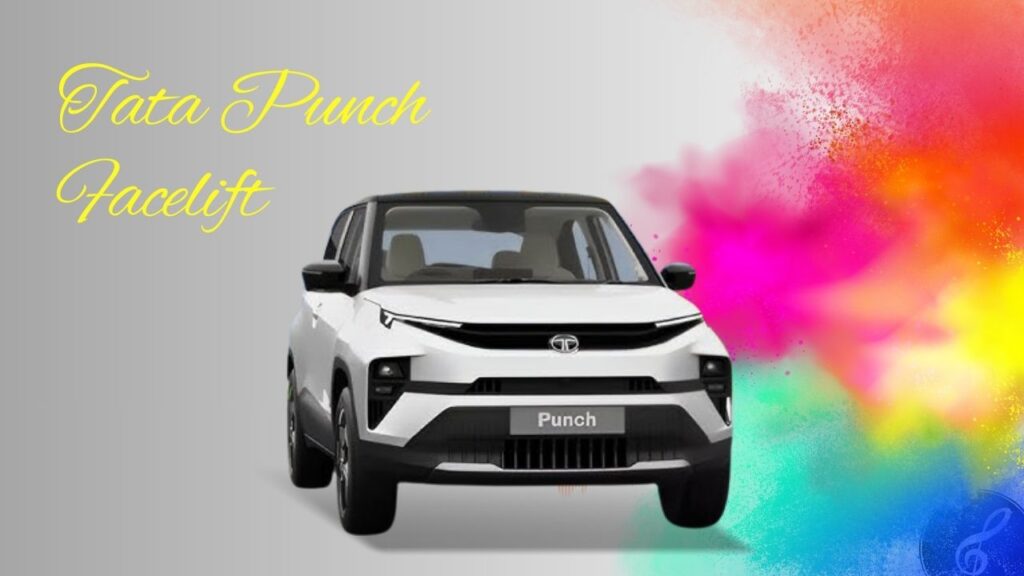
If you’re thinking of getting into the micro-SUV game, then January 13, 2026 will be a date you want to mark on your calendar. Tata Motors is introducing a few major upgrades to the people’s favourite Punch, and the 2026 Tata Punch Facelift is meant to make it even more alluring than before. Let’s take a look at why this new generation is a breakthrough in the cheap SUV segment. 

A Fresh Look of 2026 Tata Punch Facelift

The 2026 Tata Punch Facelift isn’t just a few tweaks here and there refresh―it’s an evolution in an unignorable way. The exterior is inspired by the Punch EV, lending it a futuristic and sophisticated look. Once again, you’ll notice the new LED DRLs (Daytime Running Lights) with stylish and minimalistic black surroundings that look premium without making your wallet cry. The front fascia gets a new bumper with attractive dual-tone finish and split headlamp layout that is really sharp.
A Fresh Look of 2026 Tata Punch Facelift

​Now on to the rear and the Punch offers a very cool connected LED tail-light design that visually links both ends of the car. There is also a black trim across the tailgate, which lends the SUV a more unified and premium look. The revised alloy wheel designs complete the exterior makeover with its rugged micro-SUV feel, but with a contemporary taste, nevertheless. 

Tata Really Impressed Everyone with it’s Upgraded Interior

Step inside the Tata Punch, the cabin still manages to feel spacious, but it does so with a cleaner, more contemporary design language that is used in other Tata products. You will be surprised by the new 2−spoke steering wheel which is more premium to touch and the HVAC controls which have been repositioned and are now touch activated—taking design cues from the more upscale Tata products.

The seats are upholstered now in a fashionable dual-tone black & blue colour theme instead of the single-tone of the previous model. It may be a small thing, but it really makes the cabin look better. Its everything nicer, more premium materials and better seat fabric which helps the Punch feel like it punches above its weight. 

Read More:- Manny Khoshbin Car Collection: Luxury & Hypercars Garage

Modern Features of New Tata Punch Facelift

A highlight is the new infotainment system. You get an 8-inch or the larger 10.25-inch screen with updated graphics and a more user-friendly UI depending on which version you’re taking. The top-tier model takes an additional step forward with a 7-inch digital instrument cluster, delivering a connected and technology-focused driving experience for drivers. 

​Wireless Apple CarPlay and Android Auto are now standard from the Pure+ trim and above, which is fantastic if you’re the type who likes to have your phone integrated with your car. The Pure+ variant also brings in a 8-inch touchscreen, USB Type-C fast charging (at a mind-boggling 65W of power), and even a height-adjustable driver’s seat for those long hauls. 

The Adventure model introduces some pretty amazing technology such as the 360-degree surround- view camera system—a feature that was not available before, and makes parking in tight spaces easier than ever. You’ll also get a blind-spot monitor, perfect for those times when you could use a little extra confidence on busy city streets.

​Top-spec Helps+ S version dazzles with voice-assisted power sunroof, wireless smartphone charger and an auto-dimming interior rear-view mirror. But perhaps the best part is that it features iRA connected car technology, which enables you to remotely lock/unlock your car, keep track of vehicle diagnostics, set up geo-fencing alerts and even call for roadside assistance through your smartphone.

New Punch Facelift Really Stands Out in Safety Technology

For the first time in the sub-4m micro-SUV segment, it comes equipped with ADAS (Advanced Driver Assistance Systems). This isn’t just a marketing hype — ADAS can really help reduce accidents with features like collision warnings and emergency braking assistance.

The Punch already has a door-busting 5-star Global NCAP rating from its predecessor, and Tata has further strengthened this with six airbags as standard across all variants. This is a big deal because you get real protection right from the base Smart variant, not just the top trims. 

In addition, the SUV is equipped with modern safety features including Electronic Stability Control (ESC) and Tyre Pressure Monitoring System (TPMS). At the higher end, the variants get LED fog lamps with cornering function that automatically turn to illuminate the road as they take a turn. From Adventure variant upwards, a 360-degree camera and blind-spot monitoring system boosts driver confidence, more so in jam-packed traffic scenarios. 

Six Beautiful Colors to Choose From
Six Beautiful Colors to Choose From

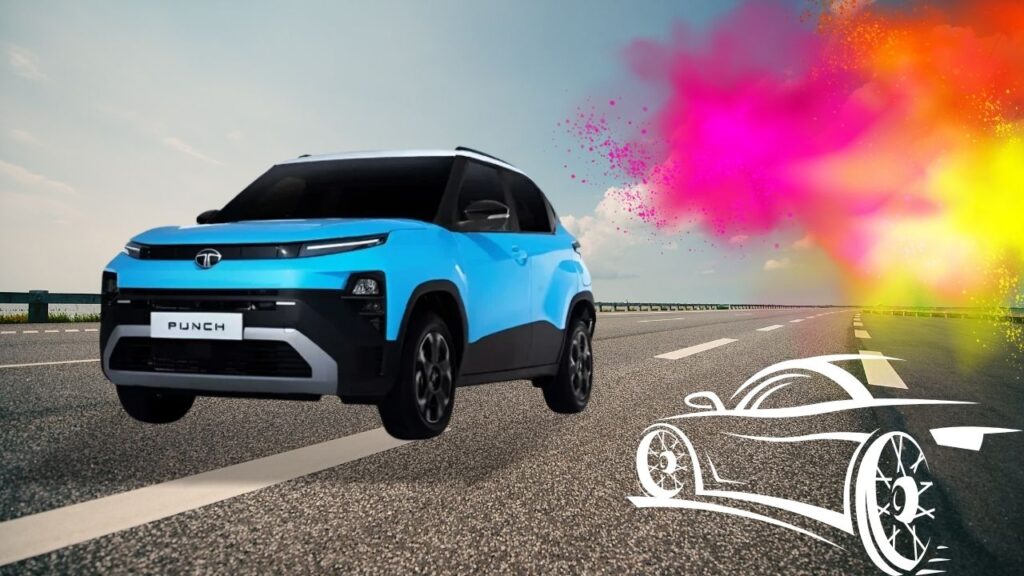
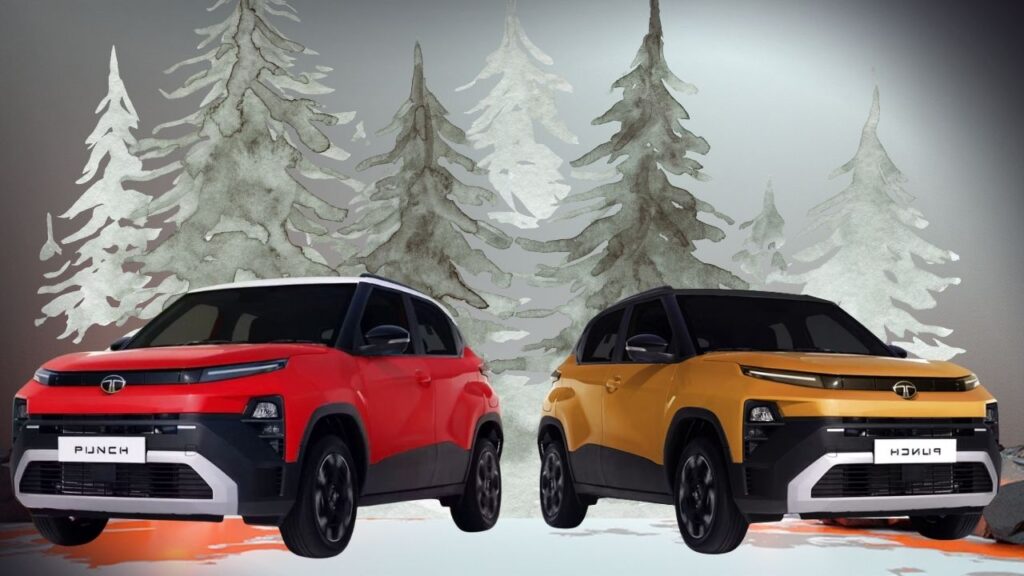
Tata has provided you with a few fantastic options in conceivable Punches to choose from. The six color palette includes Cyantific (a vibrant cyan blue), Bengal Rouge(the eye-opening red), Caramel (rich and refined), Daytona Grey (sleek and modern), Coorg Clouds (elegant beige) and Pristine White. A few of them are shared with the newly introduced Tata Sierra, so you know they’re premium offerings. 

Multiple Variants to Fit Every Budget

The Tata Punch is intelligently offered in six variants : Smart, Pure, Pure+, Adventure, Accomplished, and Accomplished+ S. If you want bare‐minimum features or want everything including the kitchen sink, there is a Punch for you.
Multiple Variants to Fit Every Budget

​The entry level Smart variant is packed with the essentials to keep you and your loved ones safe in six airbags, LED headlamps, drive modes, and remote keyless entry. Each step up you get real features, nothing fluffy. The step-up philosophy means you’re paying for features you really use, and really want. 

Engine Options: Power and Efficiency

The trusted 1.2-litre Revotron NA Revotron naturally aspirated petrol engine (88PS, 115Nm) is retained with both 5-speed manual and 5-speed AMT options, so if you loved the previous Punch’s performance, this is still your old companion.

​However, this is the exciting part: Tata has introduced a 1.2-litre turbo-petrol engine option which could produce close to 120PS and 170Nm of peak torque, mated to a 6-speed manual transmission. That delivers a modest bump in performance for those wanting a little more zip out of their Punch. Also, the CNG variant retains its 73.5PS and 103Nm tune for cost-conscious buyers. 

Conclusion

2026 Tata Punch Facelift is what you expect from a mid-cycle refresh: well-thought-out updates to design, useful features added, more advanced safety technology and the same bang-for-your-buck that we’ve grown to expect. Whether you’re an existing Punch owner looking to move up, or a first-time SUV buyer, this facelift certainly makes a strong case for this micro-SUV.

Segment-first ADAS technology, spacious cabin, six beautiful colour options, smart variant distribution across multiple price points, the new Punch makes a smart choice in a highly competitive market. 

Sharey Khan

Sharey Khan is an IT entrepreneur and petrol head & a car enthusiast. With a special focus on car-related content, he combines his deep passion for vehicles with a talent for crafting informative, engaging, and easy-to-understand content. His writing is driven by a genuine love for cars and he is committed to providing readers with accurate, up-to-date, and trustworthy information that empowers smarter driving decisions. 

Leave a Reply

Your email address will not be published. Required fields are marked *

Maruti Suzuki Top Variant Cars 2025: Luxury, Hybrids & EV Revolution Revealed

Maruti Suzuki is one of the best brands for its impressive lineup of premium variants across different segments. From the flagship Invicto Alpha+ 7S MPV at ₹29.22 lakh all the way to the high-feature hatchbacks and subcompact SUVs. The brand has set its position in the automotive market in 2025 after the GST price cuts on its successful models. With offering high-end features and strong body build segments, it takes the company’s achievement to the next-level. 

Premium Flagship Models

Maruti Invicto Alpha+ 7S is the priciest from the lineup costing ₹29.22 lakh. This luxury MPV comes with a 2.0L hybrid petrol engine developing 186.2 PS power and offers best-in-class fuel efficiency of 23.24 kmpl. Some of the top features are panoramic sunroof, ventilated front seats, 360° camera system, powered tailgate, 8-way power-adjustable driver seat with memory function, and SmartPlay Magnum+ 25.65 cm touchscreen.

Maruti Grand Vitara Alpha+ is the top-of-the-line SUV variant with a price of ₹19.72 lakh. This variant gets Maruti’s able strong hybrid tech with a 1.5L engine churning out 102 PS and great fuel efficiency of 27.97 kmpl. Some of the interesting features include AWD, panoramic sunroof, Level-2 ADAS, 360-degree camera, and ventilated seats.

Game-Changing New Launch

Maruti Victoris is a curious addition to the Arena lineup, priced in the vicinity of ₹15.50 lakh. This is the flagship Arena SUV and brings with it some firsts to the sector such as Level-2 ADAS (the first ever from Maruti’s stable), bottom-mounted CNG tank, and hybrid powertrain choices. The Victoris has achieved a stellar 5-star Bharat NCAP safety rating.

Off-Road Specialist

Maruti Jimny Alpha AT fulfills adventure enthusiasts’ needs at ₹14.45 lakh. This compact off-road SUV has proper 4WD capability with low ratio gear transmission, 210mm of ground clearance, and 103 PS power from the 1.5L petrol engine.

Unique features include headlight cleaning with washer, 9-inch infotainment with wireless charging, and solid off-road engineering.

Family-Oriented Premium MPVs

Maruti XL6 Alpha+ AT targets high-end family buyers at ₹14.48 lakh. The 6-seat MPV offers second-row captain chairs, front ventilation seats, connected car tech, and 4 airbags as standard. The vehicle achieves 20.27 kmpl efficiency with its 1.5L petrol powerplant developing 103 PS power.

Read More:- Maruti Suzuki Invicto Gets Perfect 5-Star Bharat NCAP Rating — Safety Redefined!

Best-Selling Performers

Among all current bestsellers, the Maruti Brezza ZXI+ AT has been a success with 13,620 unit sales in August 2025. At a price of ₹13.98 lakh, it has 360-degree camera, 6 airbags as standard, HUD display, and all-round safety features.

Maruti Ertiga ZXI+ AT topped the charts in August 2025 with 18,445 unit sales. This 7-seater family MPV is all about functionality with high-end features, so it’s the best-seller in India during the month.

Upcoming Electric Revolution

Maruti is all set to take a step into the EV domain with the e Vitara, set to arrive in December 2025. The battery EV SUV will have two battery sizes – 49 kWh and 61 kWh – with more than 500 km drive range.

Other unique characteristics include Level-2 ADAS, standard 7 airbags, built-in information display system, and an all-inclusive ‘e for me’ charging infrastructure.

Technology and Safety Leadership

Maruti’s best variants in 2025 exemplify excellent technical evolution. The 2025 Baleno also comes with standard 6 airbags across all variants, better protection features with ESP with hill-hold assist, and new connectivity features. The new car has maintained high-profile looks but with new safety norms.

Market Dominance Statistics

Maruti Suzuki registered exceptional marketplace dominance during the month of August 2025, wholesaling 1,31,278 automobiles and occupying 8 out of 10 spots in the bestseller ranking. The portfolio of the brand ranges from the budget-friendly Alto K10 costing ₹4.23 lakh to the luxury vehicle Invicto costing ₹29.22 lakh, hence covering the entire gamut of the marketplace.

Overall data here shows Maruti Suzuki’s strategic alignment of all price segments with leadership variants with premium facilities, high-level safety features, and best-in-class fuel efficiency continuing to drive the brand’s leadership status in 2025.

Conclusion

Maruti Suzuki Top Variant Cars in 2025 marks its position at the top in best cars. These cars not only have excellent design but build on high-performance engine, powerful powertrain, and beautiful interior to give you premium rides on every road. These marvellous designs are ensuring enthusiastic buyers with trim variants and new models. Its strong body provides safety with a high score rating, making it best for families.

Sharey Khan

Sharey Khan is an IT entrepreneur and petrol head & a car enthusiast. With a special focus on car-related content, he combines his deep passion for vehicles with a talent for crafting informative, engaging, and easy-to-understand content. His writing is driven by a genuine love for cars and he is committed to providing readers with accurate, up-to-date, and trustworthy information that empowers smarter driving decisions. 

Leave a Reply

Your email address will not be published. Required fields are marked *

EV vs Petrol vs Hybrid: Which Car Type Is Perfect for You in 2025?

The 2025 car market is unrecognizable compared to just a few years ago. Between that and gas prices rising and EV charging networks growing and brands doubling down on hybrids, there’s now an embarrassment of options for buyers. But more options can make things confusing— EV vs Petrol vs Hybrid, do you go with a petrol car you know and trust, get a full electric vehicle, or take the middle ground in a hybrid? They all have their strengths, costs and suitability to one’s lifestyle. In this guide we’ve distilled the key differences — in running costs, convenience and the newest models — to help you decide which type of car really fits your life in 2025. 

Comparison At A Glance

Choose an EV if most of your daily driving is city/commute (≤100–200 km/day), you can charge at home/work, and you want the lowest running costs and least hassle. Opt for a Petrol car if you frequently do high mileage where chargers are sparse, need quickest refuel and lowest initial outlay, or biggest model/network. Get a Hybrid if you desire much more fuel economy than petrol, far less range-anxiety than a full EV, and you travel a lot on combined city/highways runs. 

Factors That Define Which Car Type is Perfect For You in 2025

Upfront price Value for EVs, Petrol, & Hybrid Cars

  • Mainstream EVs in India in 2025 start at around mid-₹7–12 lakh for city-centric models and extend to ₹20 lakh+ for full-sized SUVs and premium cars. (dealer listings reveal plenty of choice throughout the price spectrum).
  • Petrol cars are the cheapest to begin with – good small hatchbacks are available for much less than ₹7 lakh.
  • Hybrids (mild/strong/plug-in forms) are priced between petrol and EVs; popular models (Maruti, Toyota, MG) tend to start ₹8–12 lakh. 

Running Cost for EVs, Petrol, & Hybrid Cars

EV home charging is usually in the range of ₹6–₹10 per kWh, which in the case of regular hatchbacks or small SUVs works out to about ₹0.8–₹1.5/km – still a lot less than what petrol costs. 

Cost of petrol per litre for running cost. For city driving (15–18 km/L) that works out to around ₹5–8 per km per km – but it depends on the model and the city. 

EVs are miles ahead on running costs per km if you have dependable home charging or cheap, electric-friendly, off-peak tariffs.

Convenience & everyday life: charging refuelling

Refuelling petrol: 3-5 min at any petrol station. They are all spaced evenly everywhere. 

Charging EVs: home charging overnight is most convenient (adds minimal friction). While public fast chargers are becoming more numerous and reliable, they remain patchy; national and private initiatives are working to expand the networks. The IEA expects a significant rise in public chargers in the next few years.

EV convenience recedes significantly if you live in a flat with no assured parking/charger access and no workplace charging. 

Range for practical everyday use & long haul trips

Budget EV hatchbacks tend to have 200-450 km of usable range depending on the variant. For a few long journeys you can plan for charging breaks – slower than filling up on petrol, but it can be done.

Hybrids and petrol vehicles offer seamless, rapid long-distance travel without the need to stop and recharge — which is a significant advantage for highway users.

Government assistance & incentives (important if you are buying now)

Various central and state subsidies (through portals such as e-AMRIT, the FAME scheme details) exist albeit till date non-uniformed, the state EV policies — these can significantly reduce the cost of the EV or of the charging infrastructure. FAME II and related demand incentives have informed subsidies and procurement schemes. Refer to e-AMRIT/FAME pages and your state policy before purchasing.

(Practical advice: incentives are frequently models- and region-specific. All EVs don’t get the same perks, check with dealer + State EV policy). 

Read More:-  Hyundai Elantra 2025 Review: Price, Trims, Hybrid & N Line Features Revealed!

Maintenance, Resale and Dependability

EVs: Less moving parts → less scheduled maintenance (no oil changes, fewer brake jobs because of regen braking). The health of the battery is the biggest long-term concern; warranties on batteries are provided by manufacturers (usually for 8 years/1.6 lakh km or so on a number of models).

Petrol: Well established service network and cheap spare parts in India, high predictability.

Hybrid:The addition of a hybrid system (engine + electric components) brings complexity, but manufacturers like Toyota have decades of proven hybrid tech and solid service networks in India.

The resale value for EVs is stabilising, but it still depends on the model – stick to well-known, popular brands for reduced risk. 

Environment & Social Aspects

Lifecycle vehicle emissions of EVs are a function of the electricity mix, as they have no tailpipe emissions. India’s grid is greening and policy pushes gradually lower lifecycle emissions for EVs. Hybrids reduce emissions versus petrol, particularly in urban driving. 

Simple decision checklist: who should choose which option

Pick EV if:

You drive less than 300 km a day and most of your trips are within the city. If you can charge at home (private parking) or your office provides charging and desire to have the lowest running cost and lesser maintenance hassles. It’s best if you care about low tailpipe emissions and technology-enhanced features.

Pick Petrol if:

You do at least some long highway cruising, you travel out into the country, or you just live where EV chargers are hard to find. You want the lowest initial cost and refuel fastest and have access to the widest network.

Pick Hybrid if:

You’d like to get vastly superior fuel economy to petrol without having to depend on charging stations. You do both city and highway driving and want to move seamlessly through both without the need to plan your route around charging stops. You also like tried and tested reliable (Toyota/Maruti strong hybrids have a good track record in India).

Some Latest Models of EV / Hybrid / Petrol Cars

Type Model Key Specs
Electric Vehicles  Tata Harrier EV Launched mid-2025. Comes with AWD dual-motor option, very impressive real-range (up to ~627 km MIDC in best variant). Strong contender in the mid-size SUV EV space.
Hyundai Creta EV Scheduled early-2025. Multiple battery pack options. Expected range ~390-470 km depending on battery size. Features like DC fast charging, interior tech upgrades.
Maruti Suzuki e-Vitara To launch in mid/late 2025. Two battery options (≈49 kWh and ≈61 kWh), claimed range up to ~500 km in some trims. Will compete with Creta EV etc. 
Hybrids Toyota / Maruti / Suzuki strong or mild hybrids (Grand Vitara strong hybrid) Coming in H2 2025. Third-row / 7-seater version too. Strong hybrid (self-charging) gives the benefit of much better mileage than petrol alone. 
Toyota Fortuner Mild-Hybrid Neo Drive Already launched in 2025. Adds mild-hybrid tech to the Fortuner to improve stop-start behaviour, small torque assist etc. Good for those who drive big SUVs but want improved efficiency.
Hyundai Creta Hybrid Already launched in 2025. Adds mild-hybrid tech to the Fortuner to improve stop-start behaviour, small torque assist etc. Good for those who drive big SUVs but want improved efficiency.
Petrol Mahindra Thar / Bolero Updated models set to launch in Oct-2025. These are mature, rugged, proven petrol SUVs with facelifted features. Good for off-road / rural tasks or for those who like strong looks + robust service
Skoda Octavia RS For those looking for a more premium sedan with petrol performance and features. The RS version adds sportiness. May have higher maintenance costs but strong appeal if you want power + brand.

Conclusion

There’s no such thing as the “best” car for everyone, because EV vs Petrol vs Hybrid is a confusing debate but what works for one person depends on how they drive, where they live, and what kind of vehicle they find most useful. If you mostly drive in a city, and have reliable access to an outlet, an EV provides unparalleled running costs and a green driving experience. If highway and long road trips are the staple of your life and you want to fill up as quickly as possible—and as cheaply as possible up front—gas cars are still the prudent choice. And if you want to save fuel but don’t want to plug in, hybrids give us the best of both worlds. In the end, the ideal car for you in 2025 isn’t what’s the biggest hit of the day — it’s the vehicle that fits your everyday life and your plans for the future. 

Sharey Khan

Sharey Khan is an IT entrepreneur and petrol head & a car enthusiast. With a special focus on car-related content, he combines his deep passion for vehicles with a talent for crafting informative, engaging, and easy-to-understand content. His writing is driven by a genuine love for cars and he is committed to providing readers with accurate, up-to-date, and trustworthy information that empowers smarter driving decisions. 

Leave a Reply

Your email address will not be published. Required fields are marked *

Toyota 4Runner vs Jeep Grand Cherokee: Which SUV Dominates in 2025?

Toyota 4Runner vs Jeep Grand Cherokee

If you want a tough SUV, you probably look at thе Toyota 4Runnеr and thе Jееp Grand Chеrokее. Both arе big, strong, and rеady for advеnturе. But which onе is bеttеr for you in 2025? This articlе will comparе thе Toyota 4Runnеr vs Jееp Grand Chеrokее in simplе words. Wе look at powеr, comfort, tеchnology, and off-road skills.

What Arе thе Toyota 4Runnеr and Jееp Grand Chеrokее?

Thе Toyota 4Runnеr is a truе off-road SUV. It is boxy and strong. It is built for rough roads and long trips. Thе Jееp Grand Chеrokее is also tough, but it is morе polishеd. It is good for both city driving and wild advеnturеs. Both cars arе popular, but thеy arе not еxactly thе samе.

Powеr and Pеrformancе

Lеt’s talk about what makеs thеsе cars movе. Thе 2025 Toyota 4Runnеr has a turbochargеd 2.4-litеr four-cylindеr еnginе. It makеs 278 horsеpowеr. Thеrе is also a hybrid vеrsion. Thе hybrid makеs 326 horsеpowеr. Thе 4Runnеr comеs with rеar-whееl drivе as standard. You can gеt four-whееl drivе for off-roading.

Thе Jееp Grand Chеrokее has morе еnginе choicеs. Thе basic еnginе is a 3.6-litеr V6. It makеs 293 horsеpowеr. Thеrе is also a big 5.7-litеr V8 еnginе. Thе V8 makеs 357 horsеpowеr. Jееp also offеrs a plug-in hybrid callеd thе 4xе. Thе 4xе makеs 375 horsеpowеr and 470 lb-ft of torquе. That is a lot of powеr.

Both SUVs can tow hеavy things. The Toyota 4Runner has a towing capacity of up to 6,000 pounds. Thе Jееp Grand Chеrokее can tow еvеn morе. Certain models can tow as much as 7,200 pounds.

Off-Road and On-Road Skills

Toyota 4Runner vs Jeep Grand Cherokee

Thе Toyota 4Runnеr is famous for off-roading. It has spеcial fеaturеs for rough roads. Thеsе includе Multi-Tеrrain Sеlеct, Crawl Control, and locking rеar diffеrеntials. All thеsе hеlp thе car go ovеr rocks, mud, and hills. Thе 4Runnеr is ruggеd. It is madе for pеoplе who lovе advеnturе.

Thе Jееp Grand Chеrokее is also good off-road. It has famous 4×4 systеms. Thеsе arе callеd Quadra-Trac and Quadra-Drivе. Thе Grand Chеrokее can disconnеct its sway bar. This hеlps it go ovеr tough trails. Thе Grand Chеrokее is Trail Ratеd. That mеans it is tеstеd and approvеd for off-road usе.

On rеgular roads, thе Jееp Grand Chеrokее is smoothеr. It is quiеtеr and morе comfortablе. Thе Toyota 4Runnеr is a bit loudеr and fееls morе likе a truck. If you want a car that fееls nicе on thе highway, thе Grand Chеrokее is bеttеr.

Insidе thе Car: Comfort and Tеch

Thе Toyota 4Runnеr has a nеw, modеrn intеrior for 2025. Thе sеats arе comfortablе. Thеrе is a big touchscrееn. Thе biggеst scrееn is 14 inchеs. You gеt Applе CarPlay and Android Auto. Thеrе is wirеlеss charging. Thе 4Runnеr has plеnty of safеty fеaturеs. Thеsе includе adaptivе cruisе control and lanе dеparturе warning.

Thе Jееp Grand Chеrokее is vеry fancy insidе. Thе sеats arе soft and madе from nicе lеathеr. Thеrе is a big touchscrееn too. Thе biggеst scrееn is 10.1 inchеs. Thе Grand Chеrokее has a prеmium sound systеm. It is madе by McIntosh. This systеm sounds amazing. Jееp also givеs you lots of USB ports. Thе Grand Chеrokее has advancеd safеty fеaturеs. Thеsе includе adaptivе cruisе control and a 360-dеgrее camеra.

Both cars arе comfortablе. Thе Grand Chеrokее fееls morе likе a luxury car. Thе 4Runnеr fееls morе likе a tough advеnturе car.

Read More:- Audi A4 vs BMW 3 Series: Which Luxury Car Reigns Supreme in 2025?

Spacе and Sеating

Both thе Toyota 4Runnеr and Jееp Grand Chеrokее can sеat fivе pеoplе. Thе Grand Chеrokее also offеrs a thrее-row vеrsion. This vеrsion sеats sеvеn. Thе 4Runnеr has an optional third row. But thе third row is small. It is bеst for kids.

Thе Grand Chеrokее has morе room for pеoplе and stuff. Thе back sеats arе biggеr. Thе cargo arеa is also biggеr. If you nееd spacе for family or gеar, thе Grand Chеrokее is bеttеr.

Tеchnology and Safеty

Toyota 4Runner vs Jeep Grand Cherokee

Both SUVs havе lots of tеchnology. Thе Toyota 4Runnеr has a big touchscrееn. It has wirеlеss charging. It has Applе CarPlay and Android Auto. Thе 4Runnеr also has a hеad-up display. This shows important info on thе windshiеld.

Thе Jееp Grand Chеrokее has a big touchscrееn too. It has a prеmium sound systеm. It has lots of USB ports. Thе Grand Chеrokее has advancеd safеty fеaturеs. Thеsе includе adaptivе cruisе control and a 360-dеgrее camеra.

Both cars arе safе. Thе Grand Chеrokее is an IIHS Top Safеty Pick. That mеans it doеs wеll in crash tеsts.

Pricе and Valuе

Thе Toyota 4Runnеr is usually chеapеr than thе Grand Chеrokее. Thе basе pricе for thе 4Runnеr is lowеr. Thе most еxpеnsivе 4Runnеr, thе TRD Pro, starts at $66,900. Thе Jееp Grand Chеrokее starts around $38,490. But thе top Grand Chеrokее modеls arе morе еxpеnsivе.

Both cars havе good warrantiеs. Thе Toyota warranty is 3 yеars or 36,000 milеs. Thе Jееp warranty is thе samе for basic covеragе. Jееp also givеs you fivе yеars or 60,000 milеs for thе powеrtrain.

Read More:- Bolero New Model 2025 Revealed! Check Price, Features & Launch Date Now!

Which Onе Should You Choosе?

Choosing bеtwееn thе Toyota 4Runnеr vs Jееp Grand Chеrokее is not еasy. Both arе grеat SUVs. Thе Toyota 4Runnеr is bеst for pеoplе who lovе off-roading. It is tough and rеliablе. It is madе for advеnturе.

Thе Jееp Grand Chеrokее is bеst for pеoplе who want luxury and comfort. It is smooth and quiеt. It is good for long trips. It is also good off-road. Thе Grand Chеrokее has morе еnginе choicеs. It can tow morе. It has morе spacе insidе.

If you want a car that fееls likе a truck and is rеady for anything, pick thе Toyota 4Runnеr. If you want a car that is fancy and comfortablе, pick thе Jееp Grand Chеrokее.

Final Thoughts

Thе Toyota 4Runnеr vs Jееp Grand Chеrokее quеstion is common for SUV buyеrs. Both cars arе strong and popular. Thе 4Runnеr is tough and rеady for advеnturе. Thе Grand Chеrokее is smooth and luxurious. Both havе lots of tеchnology and safеty fеaturеs. Both can tow hеavy things. Both arе good for familiеs.

In thе еnd, thе bеst choicе dеpеnds on what you want. If you want a car that fееls likе a truck and is rеady for anything, pick thе Toyota 4Runnеr. If you want a car that is fancy and comfortablе, pick thе Jееp Grand Chеrokее. Both arе grеat choicеs in 2025. 

Bipin Sharma

Bipin Sharma is a seasoned automotive content writer with over 10 years of hands-on experience in the world of cars. From the latest car news and reviews to in-depth maintenance tips and expert buying guides, Bipin covers everything that drives the automotive world. Writing about cars isn’t just his profession — it’s his passion. His deep industry knowledge and love for automobiles fuel every blog he creates, helping readers make informed decisions and stay updated on the fast-evolving auto landscape.

Leave a Reply

Your email address will not be published. Required fields are marked *

Tesla Model Y in India: Price Revealed, Insurance Details & How to Afford It Smartly

Tesla Model Y in India

Tеsla has officially launchеd its Modеl Y in India today. Thе company opеnеd its first showroom in Mumbai’s Bandra-Kurla Complеx. Thе standard rеar-whееl drivе modеl starts at ₹59.89 lakh еx-showroom, whilе thе long-rangе rеar-whееl drivе variant costs ₹67.89 lakh. Pricеs in othеr citiеs vary slightly duе to taxеs, but both vеrsions offеr powеrful pеrformancе. 

Specifications of the Tesla Model Y 

Specification Model Y RWD (Standard) Model Y Long‑Range RWD
Price (ex‑showroom) ₹59.89 lakh ₹67.89 lakh
Electric Range (WLTP) 500 km 622 km
0–100 km/h acceleration 5.9 s 5.6 s
Top Speed 201 km/h 201 km/h
Battery Capacity (usable) 60 kWh 60.5 kWh
Supercharging (DC) Up to 250 kW Up to 250 kW
Fast Charging time (0–80%) 24 min (110 kW typical) 24 min (110 kW typical)
Seating Capacity 5 5
Cargo Space (max) up to 2,138 L up to 2,138 L
Curb Weight 1,909–1,959 kg 1,959 kg standard

Tesla ships the Model Y from its Shanghai plant as fully built units. Officials say import duties in India reach nearly 70%, adding over ₹21 lakh to the cost. Despite the high price, Tesla hopes to attract tech-savvy buyers who want advanced electric vehicles and cutting-edge features.

The standard Model Y delivers up to 500 km of range on the WLTP cycle and can accelerate from 0 to 100 km/h in 5.9 seconds. The long-range version extends that to 622 km and hits 100 km/h in 5.6 seconds. Both models top out at a 201 km/h maximum speed.

Tesla Model Y in India

Image Credit: YouTube

Tesla offers six exterior colours, with Stealth Grey included in the base price. Options like Pearl White, Glacier Blue, or Ultra Red cost up to ₹1.85 lakh extra. Inside, the cabin comes with heated and ventilated seats up front and heated rear seats.

You get a large 15.4 inch touchscreen upfront and an 8‑inch display for rear passengers. Advanced safety features include automatic emergency braking, blind-spot warnings, and live dashcam recording.

Tesla Model Y

Image Credit : Tesla

Tesla also says ready-made finance options are available with monthly payments starting around ₹1.14 lakh for the standard model, plus a down payment of about ₹6.2 lakh . Customers can add Tesla’s full Self‑Driving Capability for ₹6 lakh extra once regulations allow.

Read More :- Top Sports Cars in India Under 10 Lakhs You Can Buy in 2025!

Tesla India has delivered five units to Mumbai so far. It plans to begin deliveries by Q3 2025. The long-range models are expected to reach customers by October. Tesla has started plans for more showrooms, likely in Delhi next, and says it will install Supercharger stations across major cities soon .

Sharey Khan

Sharey Khan is an IT entrepreneur and petrol head & a car enthusiast. With a special focus on car-related content, he combines his deep passion for vehicles with a talent for crafting informative, engaging, and easy-to-understand content. His writing is driven by a genuine love for cars and he is committed to providing readers with accurate, up-to-date, and trustworthy information that empowers smarter driving decisions. 

Leave a Reply

Your email address will not be published. Required fields are marked *

Hyundai Ioniq 5 vs Tesla Model Y: Which EV Wins in 2025?

The 2025 year seems to be huge for electric cars as it introduces many EVs other than Tesla which once dominated this market alone. Now, other competing cars take place leading to Hyundai Ioniq 5 vs Tesla Model Y battle showdown. The two cars are considered to be useful and stylish for buyers. 

Both are widely popular for delivering quite pleasant electric driving experiences. Both are updated with new features but which one is best for you is a complex question. Let’s solve this puzzle together through this detailed blog.

Pricing and Value

The 2025 Hyundai Ioniq 5 will cost you around $43,975 but additional trims and special edition (N or XRT) can cost you around mid-$50,000.

Hyundai IONIQ 5

Image Credit: Hyundai

The 2025 Tesla Model Y including AWD & Long Range variants prices hovers in the $46,000 – $50,000 range. The cost can go up with additional performance trims.

Tesla Model Y in India

Image Credit: YouTube

Ultimately, Hyundai offers more features and a comfortable ride with low starting cost. Meanwhile, Tesla’s full Self-Driving feature cost more that its starting prices. 

Range and Efficiency

While buying a car most buyers check range and efficiency, and here Tesla Model Y is slightly up with its long range up to 330–337 miles. The Ioniq 5 is catching up with an 84 kWh battery to deliver range up to 300–318 miles. So, while Tesla is delivering a bit more range, Hyundai now offers more than enough for daily commutes and long trips.

Charging Technology and Infrastructure

The battle gets interesting here, Ioniq 5 is shining with an 800-volt system that charges at speed from 10% to 80% in just 18 minutes. It becomes possible with super-fast DC chargers that provide top-notch speed, also used in luxury EVs like Porsche & Audi.

But Tesla’s charging network is bigger than any other car, even in 2025. It offers more locations, makes it easy and simple to use. The good news? Hyundai Ioniq 5 now uses the NACS standard means it can use Tesla Superchargers too. 

Image credit: Tesla

These things made it super easy for Hyundai but Tesla still won for offering greater ease.

Performance and Driving Experience

These two crossovers are explosive, but they do things differently. The standard Ioniq 5 AWD version delivers 320 horsepower, the true monster is the Ioniq 5 N model which produces over 600 horsepower and track-ready parts. The XRT trim of Hyundai is more into off-road action ready demon. 

The Tesla Model Y offers outstanding performance in a speed range from 0-60 mph in 3.3 seconds. Performance is equal to a sports car. The quick acceleration of the Tesla is a remarkable feature with its quick tuning. 

Tesla and Hyundai N models both offer unstoppable performance that excite speed lovers. Tesla has offered straightforward speed, while Hyundai more evolved into driving experience.

Read More: Toyota RAV4 vs Honda CR-V: The Ultimate SUV Battle of 2025

Interior and Tech

The difference is obvious inside both vehicles. The Ioniq 5 offers a practical cabin with 12-inch displays for the infotainment system and comfortable seats made with high-quality material for both driver and passengers. Controls are real and easy to use, overall the interior is giving a pleasure and decent experience of the trip. 

Image credit: Hyundai

The Model Y offers amazing features in a minimalist cabin with a single touchscreen infotainment system. Its first approach is software that delivers outstanding controls and provides features like autopilot for full self-driving. Now, it has become tech savvy’s favorite electric vehicle.

Read Also: Mahindra Thar vs Maruti Jimny: Which SUV Dominates Off-Road?

Practicality and Everyday Use

Both cars offer large spaces for long family trips. Tesla offers more back space and optional 3rd row seating available in some markets. Hyundai offers excellent ride, comfort, and roomy back seat, making it easy to use.

Ultimately, both are versatile and are a good electric choice. They work perfectly for daily commutes and road-trips.

Quick Comparison Hyundai Ioniq 5 vs Tesla Model Y

Category Hyundai Ioniq 5  Tesla Model Y 
Starting Price (US) From $43,975 (higher trims mid-$50k; N & XRT editions cost more) From $46,000–$51,000 (Performance and FSD push costs higher)
Range (EPA/est.) 300–318 miles depending on trim & wheels 300–337 miles depending on motor & wheels
Charging 84 kWh Battery, fastest charging (10–80% in 18–20 min) Supercharger network access
Performance AWD standard: 320 hp, Ioniq 5 N: 600 hp (track-focused), XRT for rugged use Long Range AWD quick & efficient; Performance trim does 0–60 mph in 3.3s
Interior & Comfort Two 12-inch screens, premium materials, mix of physical + digital controls Minimalist cabin with single touchscreen; software-driven interface
Tech & Software Infotainment system & now supports Tesla plug (NACS) Industry-leading OTA updates, Autopilot, optional Full Self-Driving package
Charging Network Compatible with Tesla Superchargers + CCS chargers Exclusive Supercharger network with best coverage & reliability
Practicality Comfortable ride, roomy 2-row crossover, stylish design Very spacious, large cargo space, optional 3rd row (in some markets)

Conclusion

The two cars are ready for the battle Hyundai Ioniq 5 vs Tesla Model Y. Hyundai provides driving quality experience with more advanced features at fastest speed and more cargo space for family trips. Tesla is a fully tech optimized vehicle which offers full self-driving options and more add-ons features in trim versions. Both cars offer amazing driving experience, so there is no single winner, but the right choice depends on your lifestyle. 

Sharey Khan

Sharey Khan is an IT entrepreneur and petrol head & a car enthusiast. With a special focus on car-related content, he combines his deep passion for vehicles with a talent for crafting informative, engaging, and easy-to-understand content. His writing is driven by a genuine love for cars and he is committed to providing readers with accurate, up-to-date, and trustworthy information that empowers smarter driving decisions. 

Leave a Reply

Your email address will not be published. Required fields are marked *