0

Best 7-Seater SUVs Launching in India: Tata Safari EV, Mahindra XEV 7e, Maruti Y17 & More 

Best 7-Seater SUVs Launching in India

There is a tectonic shift underway in the Indian automotive terrain. As we head into 2026, the old budget hatchbacks are now replaced with a much more premium seven-seater SUV demand. This is not just a matter of inserting another seat row, it’s an industry-wide structural reshuffle in which electrification, high-end digital cockpits and global safety standards are the new normal.

For today’s Indian family, the car is no longer a mere means of transit, but a “mobile living space.” Here’s a tactical rundown on the headline-grabbing chassis and powertrains that are at the heart of the 2026 SUV segment. 

The “Born Electric” Pioneers: Tata and Mahindra

2026’s biggest moves are from leading Indian companies Tata and Mahindra, both of which are turning to dedicated electric architectures. 

Tata Safari EV (Gen 2 Architecture)

Tata Motors has graduated from “converted” EVs. The 2026 Safari EV is based on the Gen 2 platform, which was designed to accommodate massive battery packs without eating into the space of the Safari silhouette or its off-road capabilities.
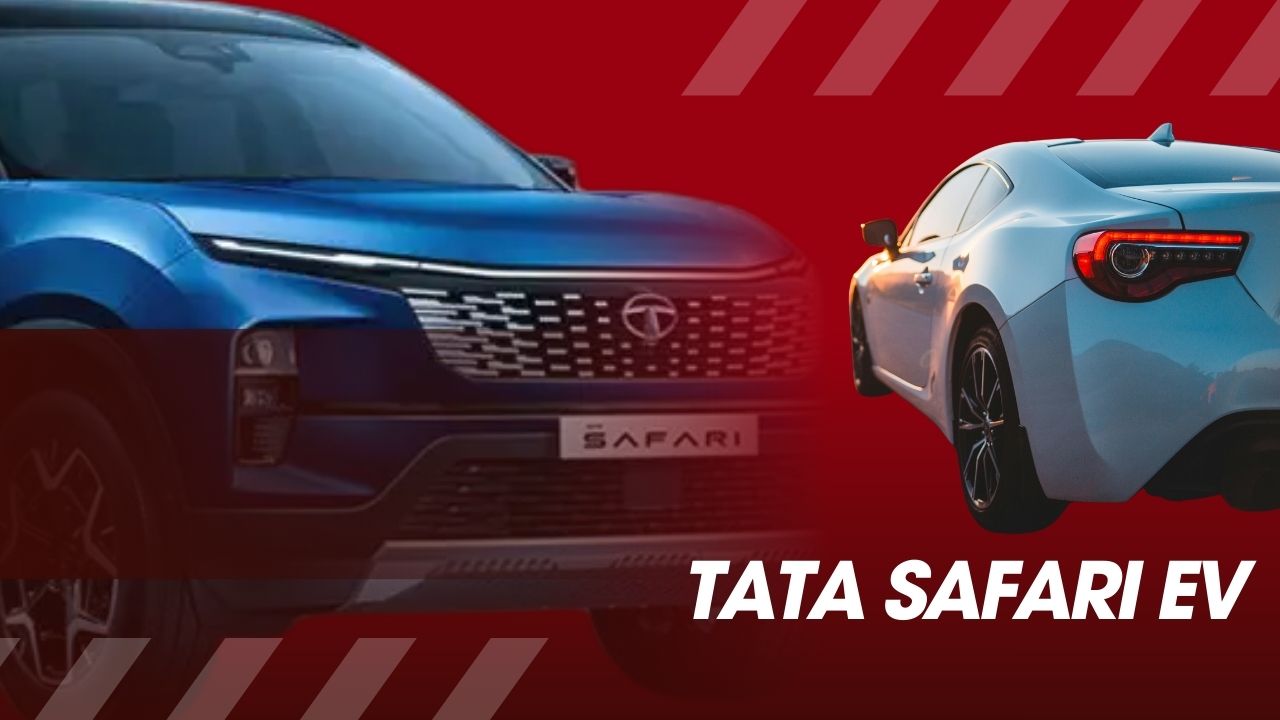
Tata Safari EV

Expected battery capacities are between 60 kWh and 80 kWh with a targeted real-world range of 500 km. This is an important psychological barrier for Indian consumers who are wary of highway charging infrastructure.

Higher trims are also expected to offer a dual-motor AWD system, giving it a strategic Edge in the “go-anywhere” family SUV bracket. 

Mahindra XEV 7e (INGLO Platform)

Mahindra’s answer to this is the XEV 7e (the production version of the XUV.e8), which is developed on the modular INGLO platform. “Traditional architecture have the INGLO Provide for a flat floor and must be a ‘cab-forward’ form that permits for maximum use of the interior. 
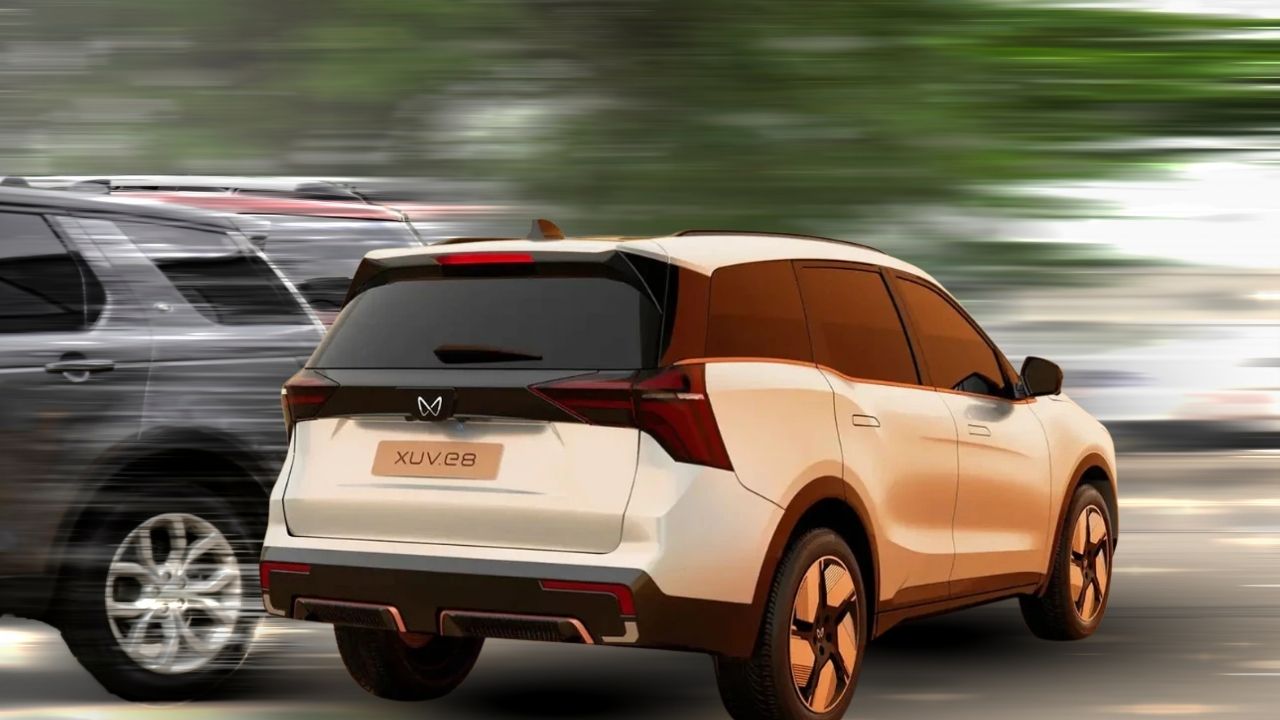
Mahindra XEV 7e

Software-Defined Environment: The interior is dominated by a three-screen configuration, comprising a 12.3-inch cluster, a 12.3-inch infotainment screen, and a separate third display for the front passenger.

Power: With a power of nearly 345 bhp, it wants to be the most powerful Indian SUV on the tarmac. 

The Efficiency Champions: Maruti Suzuki and Toyota

While a handful of brands are going “all in” on electric, the Indo-Japanese alliance is instead doubling down on Strong Hybrids. This strategy is aimed at mass-premium segment which wants high mileage without range anxiety.

Maruti Suzuki Y17 (Grand Vitara 7-Seater) 

Codenamed Y17, this SUV (launching early 2026) is the elder sibling to the Grand Vitara.
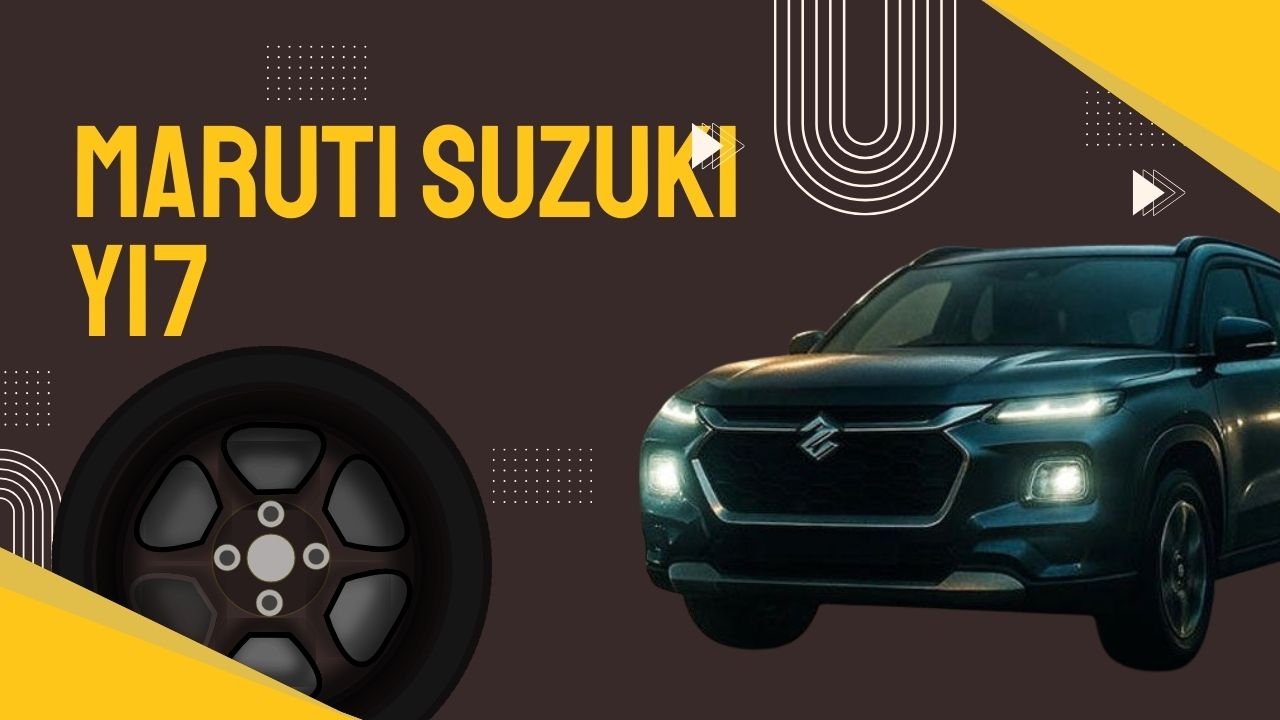
Maruti Suzuki Y17

The “Diesel Killer”: By running a 1.5-litre strong-hybrid powertrain, the Y17 is targeting fuel efficiency numbers over 27 kmpl. In fact, with fuel expenses still a major worry in that market, it will make a strong contender against the traditional diesel SUV.

Platform: Developed on the Global C platform from Maruti’s new Kharkhoda plant, it focuses on city driving and crash safety. 

European Engineering: Volkswagen Tayron

Volkswagen makes a return to premium three-row with the Tayron, the spiritual successor to the Tiguan Allspace.

MQB EVO Platform: Based on the latest iteration of the MQB platform, the Tayron measures in at 2,789 mm, in terms of wheelbase. This means the third row isn’t just for kids but a row that adult can sit on comfortably.
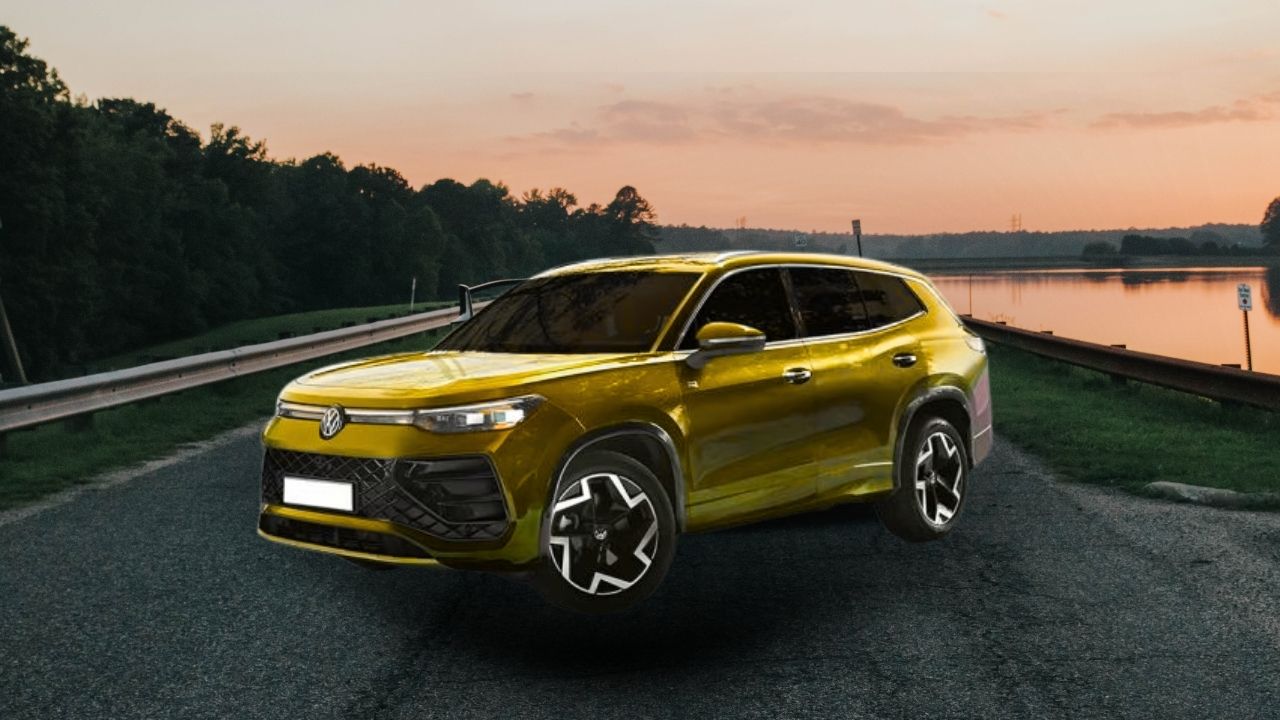
Volkswagen Tayron

Drivetrain: VW stays true to its performance heritage and offers a 2.0-litre TSI turbo petrol engine with 204 PS mated to the lightning-fast 7-speed DSG with 4MOTION all-wheel drive. It’s aimed at a buyer who appreciates ” German Build” and high-speed stability. 

The Boom in Value: Renault Bigster 

Renault and Nissan are making a return in 2026 with the CMF-B platform. The Renault Bigster (Boreal) is the company’s biggest bet in the “rugged value” segment.

Strategy: Bigster is a Safari and XUV700 direct competitor and built on a localised platform to help keep the entry-level price estimated to start from ₹13 lakh.

Hybrid Focus: It is also expected to debut a 1.6-liter strong-hybrid system for the Renault lineup, serving a mix of “tough” looks and “green” merits. 

Read More :- Nithin Kamath’s Car Collection: Inside Zerodha CEO’s Luxury Garage

Luxury Scaling: Hyundai Palisade

Hyundai is pushing the boundaries in “soft-roader” SUVs with the Palisade.

Lounge on Wheels: The Palisade, which is designed to challenge the Toyota Fortuner, is all about “atmospheric luxury” rather than rugged off-roading. The car also features dual-panel sunroofs, 12.3-inch displays, and a capacity for 8-seaters.

Upgrading for the Future: The addition of a 2.2-liter diesel is also in the offing; but then again, Hyundai is also considering a 2.5-liter turbo-petrol hybrid version as a safeguard against tightening emission regulations in major metro cities such as Delhi-NCR. 

Brand Model Platform Key Drivetrain Est. Price
Tata Safari EV Gen 2 EV 80 kWh / AWD ₹25–32 L
Mahindra XEV 7e INGLO 79 kWh / 345 bhp ₹21–35 L
Maruti Y17 Global C 1.5L Strong Hybrid ₹15–25 L
VW Tayron MQB EVO 2.0L TSI / 4MOTION ₹45–53 L
Renault Bigster CMF-B 1.6L Hybrid / 1.2L MH ₹13–18 L
Hyundai Palisade Monocoque 2.2L Diesel / 2.5L Hybrid ₹40–50 L

Conclusion

That the 2026 SUV boom is real in India is that a buyer here is no longer simply seeking “more seats.” They want advanced safety (Level 2 ADAS), software-integrated cabins and sustainable powertrains. Be it the instant torque of the Safari EV or the astounding efficiency of the Maruti Y17, the 2026 line-up will provide a stellar blueprint for the future of Indian mobility. 

Sharey Khan

Sharey Khan is an IT entrepreneur and petrol head & a car enthusiast. With a special focus on car-related content, he combines his deep passion for vehicles with a talent for crafting informative, engaging, and easy-to-understand content. His writing is driven by a genuine love for cars and he is committed to providing readers with accurate, up-to-date, and trustworthy information that empowers smarter driving decisions. 

Leave a Reply

Your email address will not be published. Required fields are marked *

Tesla Cybertruck Price in India: Expected Cost, Features, Launch Date & What Indian Buyers Should Know

Tesla Cybertruck Price in India

Thе Tеsla Cybеrtruck is onе of thе most talkеd-about еlеctric vеhiclеs in thе world. This еlеctric truck looks vеry diffеrеnt from normal trucks. It has a strong body, runs on battеriеs, and has many modеrn fеaturеs. 

In this articlе, I will tеll you about thе Tеsla Cybеrtruck’s fеaturеs, launch datе, and what Indian buyеrs should know. I’ll also cover the Tesla Cybertruck price in India, which is one of the biggest questions many buyers are asking right now.

What is thе Tеsla Cybеrtruck?

Thе Tеsla Cybеrtruck is an еlеctric pickup truck madе by Tеsla. It doеs not look likе a normal car or truck. It has a vеry uniquе and futuristic dеsign. Thе body has straight linеs and sharp еdgеs. It looks likе somеthing from a sciеncе fiction moviе. This vеhiclе runs only on еlеctricity, which mеans it doеs not usе pеtrol or diеsеl. It is dеsignеd to bе strong, fast, and powеrful. It can carry hеavy loads and drivе long distancеs without nееding fuеl.

Fеaturеs of thе Tеsla Cybеrtruck

Fеaturеs of thе Tеsla Cybеrtruck

Image Credit: YouTube

Thе Tеsla Cybеrtruck comеs with many еxciting fеaturеs. Its body is madе from stainlеss stееl, which is vеry strong and hard to damagе. This makеs thе truck safе and tough. Thе glass usеd in thе windows is also vеry strong and is callеd armor glass. It’s designed to resist cracks and damage from small impacts. Thе truck has diffеrеnt modеls with diffеrеnt powеr and spееd. 

Thе basic modеl can drivе around 400 kilomеtеrs on onе chargе. Thе highеr vеrsions can go up to 800 kilomеtеrs. The most powerful version can accelerate from 0 to 100 km/h in just under 3 seconds, which is incredibly fast for a truck.

Thе Cybеrtruck can pull hеavy loads and also carry a lot of wеight. It has a big spacе at thе back, which Tеsla calls thе “vault,” and it also has storagе in thе front. It also comеs with Tеsla’s autopilot fеaturе, which hеlps thе truck drivе by itsеlf on highways.

Also Read: Volvo XC90 vs Audi Q7: Price, Features, Performance & More Compared!

Whеn Will thе Cybеrtruck Launch in India?

Tesla has not officially released the Cybertruck in India yet. But еxpеrts bеliеvе that thе truck could comе to India by 2026 or 2027. Tеsla is currеntly working on gеtting pеrmission from thе Indian govеrnmеnt to sеll its cars. Bеforе Tеsla starts sеlling thе Cybеrtruck in India, it will nееd to build sеrvicе cеntеrs, charging stations, and showrooms. 

Tesla might bring a few Cybertrucks to India in the next year or two to test the market. Thе full launch will takе morе timе, but it is еxpеctеd to happеn in thе nеxt two to thrее yеars.

What Will Affеct thе Pricе?

What Will Affеct thе Pricе

Image Credit: YouTube

Thе final cost of thе Tеsla Cybеrtruck in India will dеpеnd on many things. Onе of thе biggеst rеasons is import tax. Whеn a car is brought into India from anothеr country, a hеavy tax is addеd. This makеs thе pricе go up. Electric vehicles benefit from lower GST, which helps, but the import duty remains high.

Tesla will also invest money to set up its operations in India, and that cost will be included in the final price of the vehicle. Thе cost of shipping thе Cybеrtruck from thе U.S. to India will also incrеasе thе total pricе. If Tеsla dеcidеs to build thе Cybеrtruck in India in thе futurе, thе pricе may comе down.

Tеsla Cybеrtruck Pricе in India: What to Expеct

Thе Tеsla Cybеrtruck Pricе in India is еxpеctеd to start from around ₹80 lakh. This will bе for thе basic modеl with a singlе motor. Thе mid-rangе modеl with two motors could cost about ₹1 crorе. Thе top modеl with thrее motors and thе longеst rangе could cost up to ₹1.5 crorе. Thеsе pricеs arе much highеr than in thе Unitеd Statеs bеcausе of import taxеs and shipping costs. 

If thе Indian govеrnmеnt givеs morе support to еlеctric vеhiclеs, thе pricе could bеcomе a littlе lowеr in thе futurе. Right now, thе pricе is high bеcausе Tеsla will havе to bring thе vеhiclеs from outsidе thе country.

What Should Indian Buyеrs Know?

Indian buyеrs should know that thе Cybеrtruck is a big vеhiclе. It is longеr and widеr than most trucks and cars usеd in Indian citiеs. This may makе it hardеr to park or drivе on narrow roads. Buyеrs should also think about charging. Tеsla will nееd to build charging stations in many citiеs. Until thеn, ownеrs may nееd to chargе thе truck at homе or usе public charging stations. 

Somе pеoplе in smallеr towns may not havе еasy accеss to charging. Buyеrs also nееd to think about sеrvicе and rеpair. Tеsla will nееd to opеn sеrvicе cеntеrs in India so that thе truck can bе rеpairеd if nееdеd. Sparе parts may also takе timе to arrivе if thеy comе from outsidе India.

Is thе Cybеrtruck a Good Choicе?

Is thе Cybеrtruck a Good Choicе

Image Credit: YouTube

Thе Tеsla Cybеrtruck is a vеry strong and high-tеch truck. It can go vеry fast, carry hеavy loads, and drivе long distancеs on onе chargе. It also has vеry low running costs bеcausе it usеs еlеctricity instеad of fuеl. This makеs it bеttеr for thе еnvironmеnt too. But thе high pricе, charging nееds, and largе sizе makе it morе suitablе for big citiеs and highways. It is not idеal for small towns or narrow villagе roads. 

If you havе еnough spacе and can afford thе cost, it can bе a grеat еlеctric truck. Othеrwisе, you may want to wait for a smallеr Tеsla modеl in thе futurе.

Final Thoughts

Thе Tеsla Cybеrtruck Pricе in India is likеly to bе bеtwееn ₹80 lakh and ₹1.5 crorе, dеpеnding on thе modеl. Thе truck has amazing fеaturеs likе strong stееl body, fast spееd, and long rangе. But Indian buyеrs nееd to think about things likе charging, sеrvicе, and spacе bеforе buying. Thе Cybеrtruck is a powеrful and smart vеhiclе, but it is still nеw in thе markеt. 

If Tеsla brings thе truck to India with local support and lowеr pricе in thе futurе, it could bеcomе morе popular. For now, it is bеst for buyеrs who want somеthing nеw, bold, and еlеctric—and who arе rеady for its high pricе and sizе. 

Sharey Khan

Sharey Khan is an IT entrepreneur and petrol head & a car enthusiast. With a special focus on car-related content, he combines his deep passion for vehicles with a talent for crafting informative, engaging, and easy-to-understand content. His writing is driven by a genuine love for cars and he is committed to providing readers with accurate, up-to-date, and trustworthy information that empowers smarter driving decisions. 

Leave a Reply

Your email address will not be published. Required fields are marked *

Renault and Nissan Alliance Guide – History, Benefits & Future Vision

Renault and Nissan Alliance

The Renault-Nissan Alliance is one of the best examples of cross-cultural collaboration within the automotive industry worldwide. Since 1999, the strategic cooperation of two very different market players has never ceased to shake and reshape the globally automotive industry with shared technologies, economies of scale and coordinated market strategies. Now the Alliance, which has expanded to include Mitsubishi Motors, oversees eight major automotive brands, is one of the largest automotive groups in the world in terms of sales volume. 

From Rescue to Revolutionary Partnership History

The Founding Era (1999-2003)

The Renault-Nissan Alliance was born out of a time of crisis for Nissan. In 1999, the Japanese carmaker was on the verge of collapse and was seeking a strategic partner worldwide. On March 27, 1999 in Tokyo, Louis Schweitzer of Renault and Yoshikazu Hanawa of Nissan concluded the historic Alliance agreement, with Renault purchasing a 36.8% equity stake in Nissan Motor for around $3.5 billion. That deal also involved the sale of a 15.2% share in Nissan Diesel and the divestiture of Nissan’s five financial units.​

Alliance making was systematic and strategically planned. From mid-1998 to March 1999, a nine-month negotiation process, the two companies pinpointed around 20 potential synergy areas and formed 21 joint study teams to conduct feasibility studies. Carlos Ghosn – who was named President and CEO of Nissan in June, 1999 and who played a key role in formulating the turnaround strategy that saved Nissan in the early days of the alliance. 

In 2001, after Nissan’s return to financial health, the partnership reached an equilibrium with a 15% stake of Nissan in Renault and a 43.4% stake of Renault in Nissan. The two companies exchanged shares, creating the basis for a truly collaborative rather than a controlling partnership. 

Early Growth and Scale Achievement (2003-2010)

The benefits of the Alliance swiftly became evident: joint buying, shared logistics and joint part development. By 2010 the Alliance was delivering annual synergies of over €1.5 billion as a result of combined purchasing, shared warehousing, combined transportation, and harmonized customs procedures over the major markets.  

Alliance With Mitsubishi  (2011-2019)

With Mitsubishi Motors weakening and struggling in 2016, Nissan bought a majority stake in the company. The year after, the Alliance revealed its “full member” concept, enabling Mitsubishi to become part of Renault-Nissan-Mitsubishi from 2017. This enabled growth of the Alliance’s global production base. The expanded Alliance was delivering €5.7 billion in annual synergies by 2017, representing a 14% increase over the previous year. 

The Alliance 2022 strategic plan, disclosed in September 2017, was expected to raise annual synergies to an aggressive €10 billion for the end of 2022. The scheme projected combined sales of more than 14 million units with revenues of $240 billion, as the three member companies shift common platform usage to cover a wider product range. 

Organizational Challenges and Transformation of the Leadership (2018-2020)

Alliance cohesion was to be greatly shaken when Carlos Ghosn was arrested in Japan in November 2018 and subsequently ousted from his executive positions at Nissan and Mitsubishi. This geopolitics crisis activated long dormant tensions between the French government’s role as shareholder and Japanese management fears of losing control.  

To help bring stability back to the partnership, Renault vowed in a legally binding commitment not to oppose the Nisan board in shareholders meetings.​

Organizational Challenges and Transformation of the Leadership (2018-2020)

In the face of these difficulties, the Alliance unveiled an all-encompassing, €2 billion, three-year cost-cutting package in May 2020 that would slash the number of vehicle platforms from seven to four and that included a “leader-follower” system where one corporate iliad develops a technology first, and others then adopt it. The mission of this structural rethink reinvented the alliance around profits from scale rather than expansion. 

Alliance 2030: The Electric and Connected Future (2020-Present)

In January 2022, the Alliance launched its most ambitious strategic plan for the future –Alliance 2030 – with a pledge to invest €23 billion in electrification over the next five years and with goals for 35 new EV models by 2030. The green roadmap identified pure-electric and intelligent connected mobility as the two key pillars for future growth. 

How the Alliance Creates Value

1. Unprecedented Economies of Scale

The reason for the Alliance’s superiority is that it combines the buying and manufacturing power of three of the world’s largest car companies. As of 2017 it was the largest car manufacturer in the world based on light vehicle sales, assembling more than 10.6 million vehicles annually. The size of the senior from translates into tangible benefits for:

Bargaining powers: The Alliance has precise bargaining powers: against suppliers, through the Renault-Nissan Purchasing Organization (RNPO), created in 2004, managing supplier negotiations for all the three partners. This line of centralized defense significantly cuts component prices. The Common Module Family (CMF) concept tries to achieve 30 to 40 percent reduction in entry costs per vehicle, and 20 to 30 percent reduction in parts costs through massive scale economies.

Platform and component sharing: Instead of developing separately, Alliance partners create modular architecture that allows global use across different brands and vehicle categories. This saves you engineering dollars and still differentiates brands. The same underbody modules, for example, can also underpin vehicles as varied as compact cars and sport-utility vehicles, even across multiple marques. 

2. Shared Technology Development and Innovation

The Alliance pools R&D investment for capital-intensive projects that individual companies might find difficult to finance alone. Prominent areas of innovation are:

Battery and electric vehicle technologies : The Alliance has pledged to renew 220 GWh of battery production capacity worldwide by 2030. 

Nissan pioneers development of revolutionary all-solid-state battery (ASSB) technology that promises to deliver twice the energy density of current lithium-ion batteries while offering one-third the charging time. The aim is to have full-scale production of the ASSB in the mid-2028, and if the future cost target of $65 per kWh is achieved to contribute to cost competitiveness against internal combustion engines.​

Alliance Creates Value

Image credit: Nissan

Common EV platforms: Presently, the CMF-EV platform that has been engineered as a modular platform for 100 percent electric vehicles underpins the Nissan Ariya crossover and Renault Megane E-Tech Electric (with more than 15 models planned for launch by 2030 on this platform, totalling 1.5 million vehicles per year).

Autonomous and connected systems: The Alliance relies on its 20 years of experience in ADAS (advanced driver-assistance systems) and robotic driving to develop the next generation of safety systems. The Alliance aims in originality and development. The Alliance foresees the use of autonomous systems on 10 million vehicles for 45 models by 2026. The joint approach to innovation is exemplified by Nissan’s award-winning ProPILOT system. 

3. Geographic Market Expansion

Add to that the geography of the two companies and the Alliance combines Renault’s strength in Europe, Latin America and Russia with that of Nissan’s in the Asia-Pacific region and strong presence in North America. Mitsubishi brings more expertise to the table in the Southeast Asian region. This geographic complementarity means that:

Joint development of the market: All the three members the Alliance, namely, are focused strategically on India where vehicle development, manufacturing and sales are coordinated. A restructuring in 2025 enabled Renault to buy out its Chennai joint venture (Renault Nissan Automotive India Private Ltd) and streamline its operations.​

Common dealer networks: The Alliance manages dealer profitability and cost reduction through the shared services center and digital platform, enabling a reduction in the cost of infrastructure duplication. 

4. Financial and Operational Synergies

The Alliance generated €5.7 billion of synergies on an annual basis by 2017, which equated to around $6.6 billion of cost reductions and revenue enhancements. These synergies come from:​

Share logistics services: The Alliance achieves more than €200 million a year in logistics synergies through sharing warehouses, containers, crates, seagoing vessels, customs procedures.

Joint financial services: The Alliance’s far-reaching combined financial and bank activities allow for better credit terms and financing fees.

Cross-manufacture of vehicles: The success in commercial vehicles highlights the advantage of cross-manufacture — the Renault Kangoo/Nissan Kubistar, the Master/Nissan Interstar, and the Trafic/Nissan Primastar all share roughly 80% of parts while still distinct brands. 

Core Innovation: Common Module Family (CMF) Architecture

The Common Module Family is the Alliance’s biggest breakthrough in vehicle development efficiency. To be clear, rather than build full platforms for single vehicles, CMF applies modular design with interchangeable “Big Modules”:

The five core modules:

  • Engine compartment module
  • Cockpit module
  • Front underbody module
  • Rear underbody module
  • Electrical and electronic architecture module 

These modules can be mixed and matched to build cars across segments and brands. As an example, a single underbody can be stretched and stretched again to produce a compact sedan, a mid-size sport-utility vehicle and even a large crossover simply by changing module sizes and configurations. 80% of the Alliance model launches between 2014 and 2016 will be based on shared platform and CMF standardisation.​

The CMF architecture evolved drastically towards the Alliance 2030 vision, with the aim of achieving 80% platform commonization by 2026 for the three member companies, in contrast to 60% currently. 

Present Status & Developments (2024-2025)

Nissan is Ready To Overcome Challenges

Nissan was under increasing pressure financially in 2024 with its net profit for the first half falling 93% and the carmaker announcing it was cutting tens of thousands of jobs. There were several reasons: obsolete products, battered brand image, competition from Chinese carmakers, import tariffs in the US, and costs of shifting rapidly to EVs.​

Re:Nissan Recovery Plan

Futuristic looks, a great new engine series, etc. In May 2025, Nissan’s CEO, Ivan Espinosa, presented the all-encompassing “Re:Nissan” revival strategy with a focus on achieving profitability in fiscal 2026. 

Nissan Recovery Plan

There are numerous activities to take into account including the following:­

Manufacturing restructuring: Streamlining production and slashing global capacity by 20% through cutting production plants from 17 to 10. This restructuring shift capital toward electric vehicles and autonomous technology investments. 

Cost saving: Aiming for €400 billion yen (£3.6 billion) in savings by consolidating its supplier panel to obtain higher volume from fewer suppliers and also by reducing legacy inefficiencies.​

Restructuring: Reducing top management by 20 percent, implementing a single-layer non-officer structure, and establishing a smaller, faster-moving global headquarters.

Product focus: Stopping further advanced and post-2026 development to turn 3,000 employees’ attention to cost-cutting. 

Restructured Alliance Agreement

March 2025 was a major overhaul in the Renault-Nissan alliance. The revised agreement allowed more flexibility in cross-shareholdings by reducing the lock-up obligation from 15% to 10%, thus granting more freedom to both companies in terms of shareholding. 

Renault bought 51% stake of Nissan in Renault nissan automotive India, now with this acquisition Renault got full hold on the joint venture and subsided its presence in India while $200 million to Nissan’s immediate cash. Nissan was freed from its obligation to invest in Ampere (Renault’s EV investment company) while continuing on other agreed product projects. 

Read More:- Renault and Nissan Alliance Guide – History, Benefits & Future Vision

Future Vision: Alliance 2030 Roadmap

The Alliance 2030 strategic plan is the most advanced vision of the partnership’s future, built on three pillars: 

1. Electrification Leadership

The €23 billion investment pledge for the next five years backs the development of 35 new EV models by 2030. Of these, 90% will be developed against five common EV platforms which address the major global markets and covers all vehicle segments.”​

Some major EV platforms include the following:

CMF-EV: The global flagship platform is also the first to be built on with the Nissan Ariya and Renault Megane E-Tech Electric as production models

CMF-BEV: A new small car platform for the replacement of Micra EV in Europe 

Shared platforms: Shared models for all three group companies across the C-, D- and SUV segments

Battery strategy: In addition to the 220 GWh production capacity target, the Alliance has full ownership of battery hardware and software—enabling predictive health monitoring, advanced recycling protocols and second life battery applications. 

2. Connected and Autonomous Mobility

The Alliance aims for 25 million connected vehicles exchanging data through the Alliance Cloud by 2026, versus 3 million today. This connectivity enables:​ 

Software updates: Enable all customers such as you & retailers and workshop to enjoy and get more – fend off older game features with new additional features more and services, safety improvements, and personalisation of vehicles and services.

Active driver assistance system: 10 million vehicles with autonomous driving functions across 45 models in 2026 

Google ecosystem integration: The Alliance will be the first mass-market automaker to bring the Google ecosystem to vehicles with native Google Maps, Google Assistant and Google Play integration. 

3. Sustainable and Profitable Growth

Sustainable Vision 2030 is consistent to become a full supporter of a sustainable future with other goals for the environment. The Alliance targets to reach full carbon neutrality in Europe by 2040, to play its part in wider climate goals and stay competitively profitable. 

Conclusion

The Renault-Nissan-Mitsubishi Alliance is a unique strategic automotive collaboration, which has allowed three very different companies to achieve substantial benefits and efficiencies. A relentless focus on EVs, battery technology, software-defined vehicles and autonomous driving systems positions the Alliance to lead the transformation of the automotive industry into sustainable, connected mobility.

The Alliance 2030 roadmap with its target of 35 new EV models, 220 GWh battery capacity and 25 million connected vehicles reaffirms that the tripartite cooperation, though facing short term challenges, is still strategically committed to industry leadership in an era of unprecedented automotive change. 

Sharey Khan

Sharey Khan is an IT entrepreneur and petrol head & a car enthusiast. With a special focus on car-related content, he combines his deep passion for vehicles with a talent for crafting informative, engaging, and easy-to-understand content. His writing is driven by a genuine love for cars and he is committed to providing readers with accurate, up-to-date, and trustworthy information that empowers smarter driving decisions. 

Leave a Reply

Your email address will not be published. Required fields are marked *

Tata Harrier & Safari Petrol Launched In India at Rs. 12.89 Lakh

Tata Harrier & Safari Petrol

Tata Motors have launched the petrol variants of their popular SUVs Harrier and Safari. Tata Motors has introduced petrol variants for two popular SUVs, about time too. With a starting price of Rs 12.89 lakh, the Harrier petrol is one of the cheapest seven-seater SUVs available in India, while the petrol option of the Safari has a price tag of Rs 13.29 lakh.  

Let me take you through all the reasons why these launches will be nothing short of a revolution for the Indian SUV market.  

The Engine That Brought Dreams to Life

For years, Tata lovers had to make do with a rock and a hard place: love the styling, hate the diesel-only offers. That is all about to change with the new 1.5-litre TGDi turbocharged petrol engine introduced – a powerhouse, demonstrated by Tata first at Auto Expo 2023 but seemingly moving at a glacial pace while bringing it to the Harrier and Safari. It’s not just an ordinary petrol engine, it’s been specifically tuned for these SUVs, outputting 170 PS and 280 NM.

Sure, you lose 70 Nm over the diesel’s 350 Nm, but here’s the punchline: in the real world, very few will feel a thing. The petrol engine is responsive, quite refined and most importantly fuel efficient for driving in the city. You can choose from a 6-speed manual or a 6-speed torque converter automatic that is buttery smooth, so take your pick depending on your driving style. 

Features That’ll Make Your Heart Skip a Beat

This is where the petrol launch becomes a lot more interesting. Tata didn’t just slot in an engine in these SUVs—these are loaded with premium features that were not available before. A huge 14.5-inch Samsung Neo QLED touchscreen infotainment system, same as the one used in the Harrier EV. 

This is no ordinary glossy screen, it’s crisp, it’s responsive, and you can even see it in direct sunlight. It’s packed with wireless Apple CarPlay, Android Auto, built-in navigation, voice assistant, Alexa integration, and even arcade games to pass the time.

The sound experience is also enhanced, with a 10-speaker JBL system with Dolby Atmos delivering concert-hall-quality sound that turns your daily drive into an immersive journey. 

Safety Gets Smart with ADAS

Among the biggest highlights is the Level 2 ADAS (Advanced Driver Assistance System) pack comprising of a mass 22 features which will be available on the top variants. That includes adaptive cruise control, lane-keeping assistance, collision warnings and more — technology that used to be available only in luxury cars.

Safari petrol

The digital interior rear-view mirror (VisionEX) with integrated dual dashcams brings an additional level of safety as you get HD videos from front and rear at the same time. 

Interior Comfort

Step inside the petrol variant of the Harrier and you’ll experience an all-new interior theme. The Fearless Ultra has an Oyster White and Titan Brown colour theme that is premium and airy, a stark contrast to the dark interiors of the past models. A new sliding armrest offers practical convenience, and the panoramic sunroof with ambient mood lighting enhances the premium ambience. 

Tata has offered new captain seats with ventilation for the Safari petrol in the 6-seater configuration—ideal for those hot summer drives across India. The second row is fitted with window sun blinds and winged headrests, letting your passengers travel in real comfort. If you want the roominess of a seven-seater, that choice is there as well, but the captain seats? That’s where the luxury happens. 

Read More:- Toyota Urban Cruiser BEV Teased in India: Launch Timeline, Range, Features & Price

Variants for Every Budget

The Harrier petrol is available in seven variants- Smart, Pure X, Adventure X, Adventure X Plus, Fearless X, Fearless X Plus and the top-spec Fearless Ultra, all are offered with the choice of manual and automatic.

Variants for Every Budget Tata Harrier

The Safari petrol gets six variants as well with the same two transmission options. This sort of tiered system means you’re not obligated to buy features you don’t need – you end up with whatever suits your lifestyle and your budget. 

Conclusion

Tata spent almost seven long years to bring petrol options to these two outstanding SUVs, but the wait could have actually worked in their favor. The petrol engine isn’t a rushed afterthought but rather a well thought out upgrade with a raft of premium features that actually make these SUVs competitive in 2026. 

Be it the Harrier’s tempting 5-seater practical layout or the Safari’s 3-row flexible seating, Tata has at long last given what loyal customers have been crying for – a petrol option, without having to compromise in terms of the legendary design and build quality these SUVs have come to be known for. 

Sharey Khan

Sharey Khan is an IT entrepreneur and petrol head & a car enthusiast. With a special focus on car-related content, he combines his deep passion for vehicles with a talent for crafting informative, engaging, and easy-to-understand content. His writing is driven by a genuine love for cars and he is committed to providing readers with accurate, up-to-date, and trustworthy information that empowers smarter driving decisions. 

Leave a Reply

Your email address will not be published. Required fields are marked *

Chevy Silverado vs Ford F-150: Which Pickup Rules 2025?

The most powerful pickup trucks always end up in a debate – Chevy Silverado vs Ford F-150. These two are tough rivals Yet, they stand out in different ways, reflecting distinct design and market philosophies. The Ford F-150 wins as a versatility and performance leader, delivering more engine choices, can load more weight, and has a smart infotainment system. While the Chevrolet Silverado 1500 is positioned more fuel efficient, showing its features are all about use and saving cash.

Both trucks are attracting different kinds of buyers. There are several priorities which make them choose different kinds of powerful vehicles. It matters actually when the truck’s specific strengths align with your primary use case. 

Pricing and Value Proposition

When it comes to buying a truck, buyers want to buy the one that they see fit for their needs. These two trucks have very different starting prices.The Chevrolet Silverado 1500 offers a lower starting price, around $37,000. But it depends on your location and shipping charges that may vary up to $37,845.

Chevy Silverado, image credit: Chevrolet

The Ford F-150 costs higher than Chevy. The starting price for Ford is around $38,710. Ford offers a more tech optimized truck which has a 12-inch screen and 7–inch screen in its base model. Chevy aims for a lower price. Ford offers more tech upfront.

Both truck trim-wise prices:

Trim 2025 Chevy Silverado 1500 MSRP 2025 Ford F-150 MSRP
WT/XL $44,695 / $37,000 $38,810 / $39,645
Custom/STX $47,895 / $43,600 $42,015 / $44,210
LT/XLT $52,495 / $48,100 $45,695 / $47,890
RST/Lariat $53,495 / $51,500 $63,360 / $65,555
Custom Trail Boss $53,795 / $51,800 $64,915 / $67,110
LTZ/King Ranch $59,695 / $57,700 $74,905 / $77,405
LT Trail Boss/Platinum $60,795 / $58,800 $74,905 / $77,100
High Country/Raptor $64,695 / $62,700 $79,005 / $81,200
ZR2 $71,995 / $70,000

Powertrain and Drivetrain Analysis

The Silverado and F-150 have different engines, Ford gives 6 engine choices while Chevy sticks to four main engines. Ford provides PowerBoost Hybrid V6 and 5.2L supercharged V8 engine, considered the best engines. The 3.0L Duramax diesel engine makes 305 hp and 495 lb-ft of torque. Ford’s Raptor engine makes 720 hp and 640 lb-ft of torque which beats Chevy in the battleground.

Ford F-150, image credit: Ford

Ford again wins in towing and hauling with its 13,500 pounds capacity to carry load on its back. But a slight difference with both trucks towing, Silverado’s 13,300 pounds shows great value. The payload capacity of Ford is a max of 2,440 pounds and Silverado maxes out at 2,280 pounds. The Silverado achieves a near-identical figure with a diesel engine as Ford. It depends on the buyer who aims to choose a more practical and cost-efficient truck, can buy Silverado. 

Fuel Economy and Real-World Range

Gas mileage is a crucial point for truck buyers. In 2025, the Chevy diesel engine will provide amazing EPA-estimated 23 mpg in the City and 29 mpg on the highway. Ford gives 22 mpg for city driving and 24 mpg for highway with its PowerBoost hybrid engine.

Ford F-150, image credit: Ford

However, the exact real world analysis can be checked while taking a drive with these beasts.  This overview hinted that Silvera wins at fuel efficiency but mileage also depends on how you drive your truck.

Exterior Design & Innovative Features

The exterior design of the Silverado and F-150 build on a strong body. The beast looking Silverado is way more practical with a focus on classic truck aesthetics. Ford F-150 has design to fulfil the requirements. It can become your off-road partner to give you fancy rides. This flexibility shows in its style that is more appealing. Silverado offers a Multi-Flex Tailgate with six ways to help with cargo. It simplifies loading heavy items. Ford is delivering smart functions like swings open for simple bed access. Onboard system, an impressive feature to help the driver on site.

Read More:- Toyota Vellfire Car Price 2025 – On-Road Cost, Interior & Features

Safety and Reliability 

Both trucks earned top NHTSA safety scores as they provide good safety. Well, Silverado has a past record of crash tests which is better but still got lower rating in some cases.

Chevy Silverado, image credit: Chevrolet

The Ford electric version gets a poor score for back seat riders. Which makes worry for families. Despite the back seat passengers safety, both got good reviews for their tech features and driver comfort.

Conclusion

The Chevy Silverado vs Ford F-150 is a complex comparison where both have a top-notch powerful engine. It gives outstanding performance on the road with heavy load, it masters your journey. Whether you drive on work purpose or just personal use these two trucks will make your life easy. Ford is a good option for tech enthusiasts who prefer to use a gas engine and Silverado is ideal for buyers who aim for a traditional style of truck.

Sharey Khan

Sharey Khan is an IT entrepreneur and petrol head & a car enthusiast. With a special focus on car-related content, he combines his deep passion for vehicles with a talent for crafting informative, engaging, and easy-to-understand content. His writing is driven by a genuine love for cars and he is committed to providing readers with accurate, up-to-date, and trustworthy information that empowers smarter driving decisions. 

Leave a Reply

Your email address will not be published. Required fields are marked *

Honda City vs Toyota Corolla Altis: Which Sedan Rules the Road?

2025 Honda City vs Toyota Corolla Altis Sedan Comparison

Honda City vs Toyota Corolla Altis are the titans on the road which delivers a thrilling drive to your destination. Other than that, it also offers comfort seats, safety functions, and powerful performance which drives people crazy over these two sedans. It’s already made a huge impact on the global market that led us to debate between these two cars. 

This offers every kind of generation a feel of classic look and reliability of new generation techs. That makes these sedans perfect for those who prioritize safety and comfortable rides without compromising its look and performance. 

Let’s look into their comparison for assessing more detailed information about Honda City and Corolla Altis.

Design and Aesthetics – Modern vs. Mature Elegance

The 2025 Honda City delivers a contemporary design and look with its sleek lines, bold front grille and LED headlights that gives a premium look. The well-defined character is not just delivering a simple look but it is made a signature of premium designed Sedan.

2025 Honda City Sedan Design with Sleek Lines and LED Headlights

While the Corolla Altis is not left behind, its new generation model offers a more mature and elegant look that defines the imaginable standard of the Sophistication. It offers sleek lines and a balanced silhouette that projects an image of reliability, without comprising its sporty look, the Altis is delivering an aggressive appearance that attracts a broad audience. 

Interior Comfort and Features – Space, Style, and Convenience

Step inside, experiencing the true comfort and space with both sedans. The Honda City gives a well-furnished interior that is made up with quality material and enhanced connectivity features to enjoy in your beautiful journey. No more worries with connectivity issues with the larger touchscreen infotainment system. It delivers functions including automatic climate control, sunroof, and AC vent particularly in rear seats for well-equipped driving.

The Corolla Altis is delivering best quality material  for comfortable rides with impressive design for more legroom space. Ideal for those who are self-driver for long trips as it offers exceptional comfort for both front and rear seats. Its infotainment system may lack some modern features but it offered all essential features for hassle-free experience.

Engine and Performance  – Smooth Power or Reliable Strength?

The Honda City offers strong and efficient engine options including both diesel and petrol powertrains. The new model of Honda City delivers powerful performance with its engine that delivers both smooth and balanced performance to make it a versatile beast for both city and highway trips. 

The Corolla Altis has a remarkable name in the list of engine performance with both diesel and petrol, making it reliable and best for long drives. It delivers smooth acceleration and comfortable cruising control to outright performance.

Read More :- Hyundai Venue vs Kia Sonet: Which Compact SUV Wins the Battle?

Safety Features – Advanced Protection for Every Drive

Both Honda and Toyota Sdaen deliver top rated safety features to prevent crashes. In case of accidents, they can automatically use its multiple airbags, ABD with EBD, rear parking sensors, camera sight, ISOFIX. With some new features Honda can give you more safety with lane-keeping assist, vehicle stability assist, and sensors that keep passengers safe before the crash.

Ride and Handling – City Agility vs. Highway Comfort

The Honda City offers balanced suspension to loose bumps on the roads. It is perfect for rough roads as it delivers comfort and handling experience after absorbing bumps and undulations. The light steering is easy to quickly turn and take shortcuts in high traffic. 

2025 Toyota Corolla Altis Ride Comfort for Long Journeys

The 2025 Corolla Altis is well known for offering an incredible comfort zone to their passenger comfort on the rough roads due to well-tuned suspension. It absorbs bumps on the road while handling its steering making it best for long trips. It gives the best experience on long journeys rather than city traffic due to blunt handling than Honda City.

Price and Value  – What Do You Get for Your Money?

Both mid-size sedan segments have almost similar prices but the price also depends on the model availability and variant. The MSRP of the 2025 Toyota Corolla is $23,460 and its hybrid version costs $24,920 which provides 41 MPG on highway and 35 MPG combined. The 2025 Honda City starting price is $14,860, depending on the variant and availability of the vehicle. The value has risen with its new features including electronic parking brakes and premium interiors. 

A Quick Comparison 

Feature / Aspect 2025 Honda City 2025 Corolla Altis
Design  Sleek lines, bold front grille, LED headlights – modern premium look Elegant, mature design with sporty accents and balanced silhouette
Interior Comfort & Features Quality materials, larger touchscreen infotainment, automatic climate control, rear AC vents, sunroof Spacious interior with high comfort, good legroom, essential infotainment features (may lack latest tech)
Engine Options Petrol & diesel engines, smooth performance, manual & automatic Petrol & diesel engines, reliable and powerful, smooth cruising
Transmission Manual and CVT (automatic) – easy for beginners Manual and automatic – refined and stable
Ride & Handling Balanced suspension for rough roads, light steering for city agility Comfortable suspension for long trips, slightly less agile in heavy traffic
Safety Features Multiple airbags, ABS with EBD, ISOFIX, rear camera, parking sensors, lane-keeping assist, stability control Multiple airbags, ABS with EBD, ISOFIX, rear camera, parking sensors – fewer advanced driver assists
Fuel Efficiency 18 km/l (variant dependent) 15–16 km/l, Hybrid 

35–41 MPG (US EPA)

Starting Price (2025) $14,860 $23,460 (Hybrid: $24,920)
Value Proposition Premium features at a more affordable price Higher price but strong reliability, resale value, and hybrid efficiency

Conclusion

Deciding Honda City vs Toyota Corolla Altis sedan is a complex situation. It depends on your priorities and budget, but some buyers want to drive a sedan which looks more stylish and features a rich model without compromising refined engines and modern tech which makes it a more compelling choice for balanced ride and handling every journey confidently. Their price and value may go up and down due to their availability and production but features and specs of both are comforting for the journey.

Sharey Khan

Sharey Khan is an IT entrepreneur and petrol head & a car enthusiast. With a special focus on car-related content, he combines his deep passion for vehicles with a talent for crafting informative, engaging, and easy-to-understand content. His writing is driven by a genuine love for cars and he is committed to providing readers with accurate, up-to-date, and trustworthy information that empowers smarter driving decisions. 

Leave a Reply

Your email address will not be published. Required fields are marked *