0

Tata Nexon EV vs MG ZS EV: Choose the Electric SUV That Fits Your Lifestyle

Published Feb 26, 2026, 11:47 AM
Last Updated Feb 26, 2026, 11:49 AM

Tata Nexon EV vs MG ZS EV

If you’re considering an electric SUV this decision can be hard to make and exciting at the time. Do you opt for maximum value and ease on the budget, or do you splurge a little for a modicum of premium comfort, tech and punch? That’s where this comparison Tata Nexon EV vs MG ZS EV has a clear interesting factor.

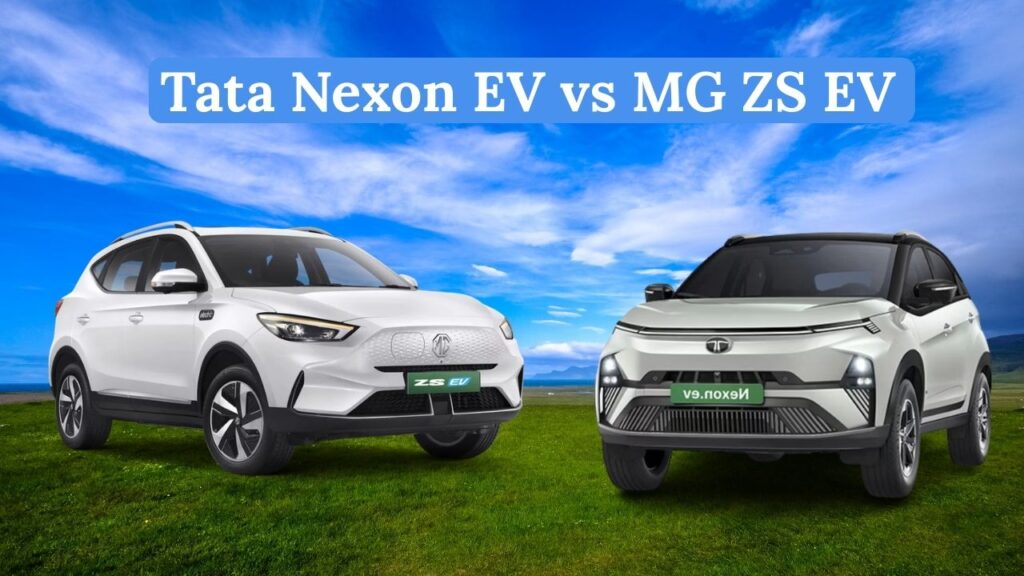
Tata Nexon EV vs MG ZS EV are two of India’s best electric vehicle contenders, however, they are dual solutions for very different kinds of buyers. One is about intelligent functionality and mass market access, the other is about refinement, power and high-end aspirations. Let’s take a real, no BS look at them and help you decide which one really fits your life. 

Pricing: The Accessibility Factor

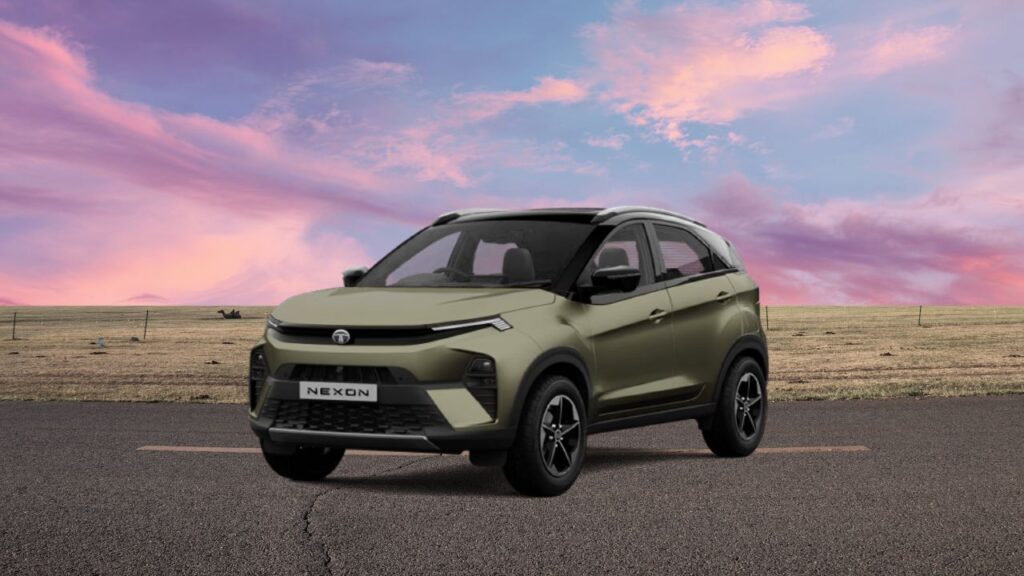
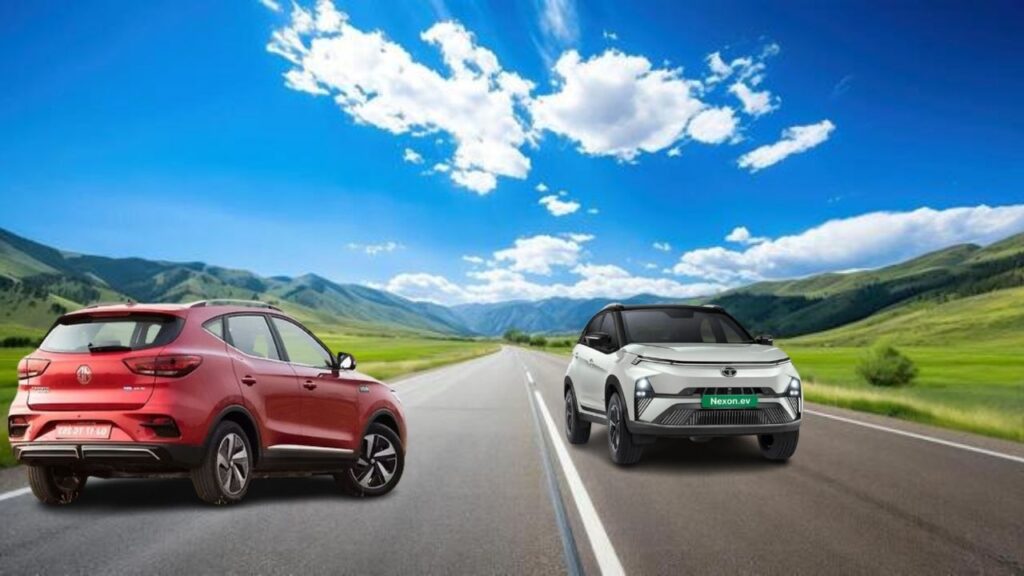
This is where the entire equation changes. The Tata Nexon EV starts at a very affordable ₹12.49 lakh (ex-showroom) for the Creative Plus Medium Range variant, making it one of the cheapest premium electric SUVs in the country. Even the fully loaded Empowered Plus A 45 Dark Edition tops out at ₹17.49 lakh, and for what it is, that doesn’t seem too bad at all.
The Accessibility Factor

In contrast, the MG ZS EV is more of a premium offering. Prices begin from ₹17.99 lakh for the Executive variant and go up as high as ₹20.50 lakh for the Essence variant. That’s a big jump, roughly a difference of ₹5.5 lakh already at the base level. And honestly, that difference in price could be all it takes to sway thrifty customers who want to squeeze the most value for their money, but aren’t looking to go too far.  

Battery & Range: Two Different Philosophies

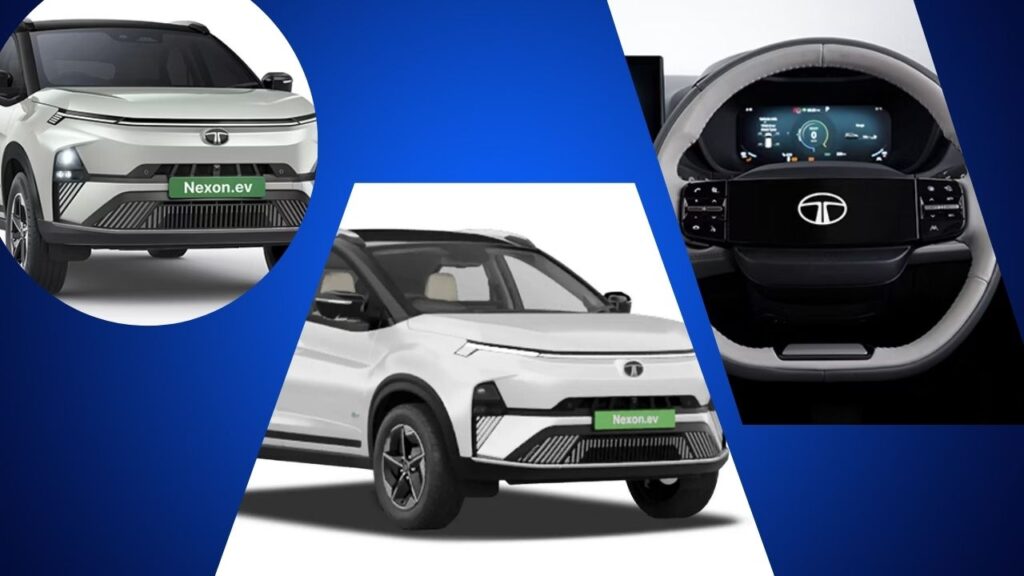
Tata provides a pair of battery choices for its cars: a 30 kWh Medium Range (MR) pack, whose range has been certified by ARAI as 325 km and a 45 kWh Long Range (LR) variant that offers a range of 489 km. The MR models pack a 127 bhp motor while the LR versions offer more power with a 143 bhp motor. 
Two Different Philosophies

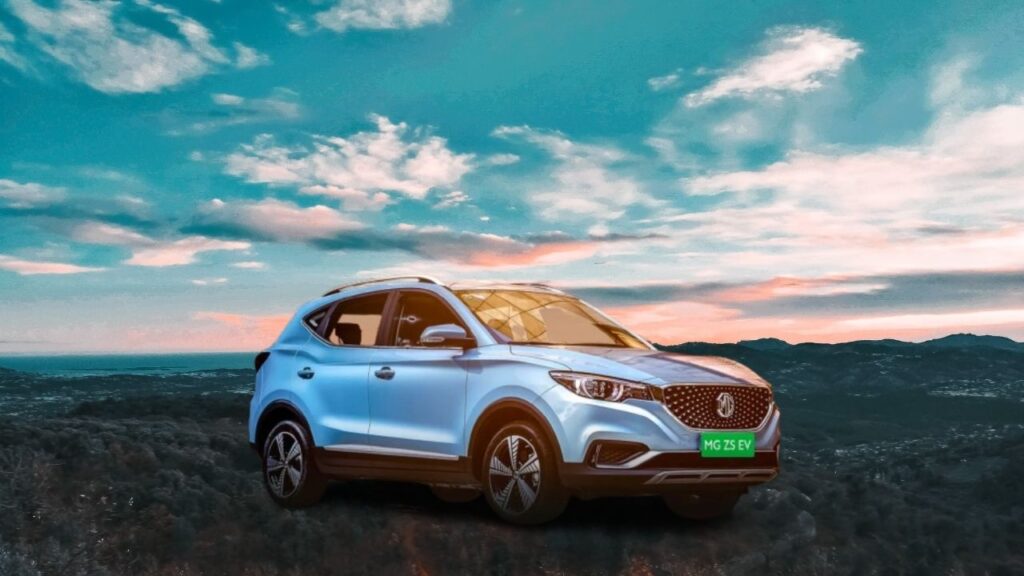
MG adopts a one-size-fits-all solution, with a 50.3 kWh prismatic cell battery offering 461 km of range and 174.33 bhp that way more power than even the Nexon EV’s top trim. For the highway buffs, the ZS EV’s extra grunt and uniform range across all variants is an eye catcher. 

Variant Breakdown: Choices vs. Simplicity

Brand Trim/Variant Price (₹ Lakh, ex-showroom) Key Features
Tata Curvv EV Creative Plus MR 12.49 Smart digital DRLs, LED headlamps, 6 airbags, 17.78 cm touchscreen
Fearless (range) 13.29 – 14.99 26.03 cm cinematic display, wireless Android Auto/Apple CarPlay, 16-inch alloys
Empowered (range) 14.79 – 17.49 360° camera, panoramic sunroof, ventilated seats, JBL sound, ADAS Level 2 (on Empowered Plus A)
MG Executive 17.99 50.3 kWh battery, Smart featuring technology with good interior
Excite Pro 18.50 (Builds on Executive; specifics not detailed)
100 Year Edition 19.50 (Special edition; builds on lower trims)
Exclusive Plus 19.50 360° cameras, leather seats, 6-way power driver seat, wireless charging
Essence 20.50 Everything for safety in ADAS 2

Connecting Experience with Great Features

Tata Nexon EV vs MG ZS EV have tech to talk up. Tata Arcade.ev suite of applications delivers OTT streaming, games and navigation to the 31.24 cm touchscreen on higher variants. Special features include Vehicle-to-Load (V2L) and Vehicle-to-Vehicle (V2V) charging – run your home appliances or aid another EV owner. The Red Dark Edition also features exclusive carbon black exteriors with red-themed interiors for ₹17.19L–₹17.49L.
Connecting Experience with Great Features

MG follows up with i-SMART 2.0 with 75+ connected features. The dual paned panoramic sky roof, JBL audio(DLR fitment) and digital Bluetooth key are the noticeable additions. What differentiates MG is the uniformity across the board — the 50.3 kWh battery and 461 km range are standard on all variants, while Tata’s lowest rung buyers must make do with 325 km. 

Top Safety

Tata Nexon EV vs MG ZS EV makers focus on safety. The Nexon EV also has 5-star Bharat NCAP ratings, 6 airbags as standard across variants, ESP with i-VBAC, and ADAS in the top trims .MG matches with 6 airbags, ABS+EBD and a suite of advanced MG Pilot driver aids even includes lane departure warning and blind-spot detection on higher variants. 

Read More:-  2026 Isuzu V-Cross Launched at ₹25.50 Lakh, 4×2 Trims Discontinued

Conclusion

Go for the Tata Nexon EV if content with the best electric mobility bang for your buck. At ₹12.49L, it’s almost ₹5.5L cheaper than MG’s threshold, and the variety of variants means you can purchase just what you need. The 45 kWh Long Range variant at ₹13.99L (Creative 45) has a range of 489 km — a clear winner against MG’s 461 km — for ₹4L lesser than the ZS EV Executive.

Choose the MG ZS EV if the performance and premium feel matter to you. The 174 bhp power output smashes Tata’s 143 bhp, and the uniform 50.3 kWh battery means you now have range anxiety irrespective of variant. ADAS Level 2 suite on Essence variants is said to be more feature-rich than Tata’s variant.

Nexon EV makes electric mobility a mass market product; the ZS EV pleasures those with more money to spend on continuous refinement. Tata Nexon EV vs MG ZS EV are the face of India’s EV revolution – just at different price-points. 

Sharey Khan

Sharey Khan is an IT entrepreneur and petrol head & a car enthusiast. With a special focus on car-related content, he combines his deep passion for vehicles with a talent for crafting informative, engaging, and easy-to-understand content. His writing is driven by a genuine love for cars and he is committed to providing readers with accurate, up-to-date, and trustworthy information that empowers smarter driving decisions. 

Leave a Reply

Your email address will not be published. Required fields are marked *

0

What Your Car Loan Covers Beyond the Ex-Showroom Price 

Published Aug 31, 2026, 7:05 AM
Last Updated Sep 26, 2026, 8:44 AM

What Your Car Loan Covers

You’ve picked the car, negotiated the discount, and the dealer has quoted you an on-road price. The loan gets approved. Then, a day before delivery, the finance desk asks you to arrange another ₹80,000 to ₹1.5 lakh in cash because Your Car Loan Covers only ex-showroom price. Nobody lied to you, technically, but nobody told you that “Car Loan approved” and “on-road price covered” are two different sentences.

This is where most first-time car buyers in India get caught out, and it comes down to one thing: banks don’t lend against the same number you think they do.

Why Your On-Road Price Is Higher Than the Ex-Showroom Price 

The ex-showroom price is a manufacturing rate which the dealer has to pay to bring the car in. The on-road price involves RTO registration charges, road tax (depends on the city), insurance package, and handling fees.

In some cities, this extra cost can be up to 12-20% over the ex-showroom figure, so it depends on the state tax which is different everywhere in India. Check your state rates with your dealer. A car with ₹8 lakh on the ex-showroom price can easily cost you up to ₹9.2-9.5 lakh on-road commitment once you’re standing at the RTO counter.

The loan amount vs on-road price gap starts right here, because most buyers budget against the smaller number.

Car Loan Rate Depends on Your Ex-Showroom Price Mostly

Every lender will offer you different benefits and discounts so it’s worth checking specifically that your lender gives cash on what price before signing the deal.

Do not flatter the lender’s ad of 100% financing, can be calculated against the ex-showroom price. Federal Bank and ICICI Bank both structure their Car Loan schemes this way. And you have to pay RTO-and-insurance from your pocket.

Your On-Road Price

Other lenders finance against the on-road price directly, but cap the loan-to-value ratio below 100%. Union Bank of India, for instance, requires a minimum 10% margin against the vehicle’s on-road price — meaning you’re arranging that 10% yourself regardless of how the rest is structured.

Neither approach is wrong. But “up to 100% financing” and “90% of on-road price” can produce a down payment difference of tens of thousands of rupees on the same car, and dealership finance desks rarely spell out which formula applies until you ask.

Read More :-  Pre-Approved Car Loan Gains Dealership Discounts on Launch Day

Does Your Car Loan Covers RTO and Insurance? 

Registration and insurance don’t get uniform treatment across lenders. Several NBFCs and banks fold both into an on-road-price loan by default. Others exclude them entirely and finance only the ex-showroom component, treating RTO and insurance as the buyer’s responsibility from day one.

There’s a cost hiding inside the version where insurance does get bundled in: your loan principal goes up by the premium amount, and you pay interest on that premium for the entire loan tenure. 

On a five-year loan at 9-10% interest, financing a ₹35,000 insurance premium instead of paying it upfront can add a few thousand rupees in extra interest by the time you’re done — not a lot on its own, but it’s a cost nobody puts in the brochure.

Accessories Are Almost Never Part of the Loan

If you’re adding a sunroof kit, seat covers, or an infotainment upgrade at the dealership, don’t expect the loan to stretch to cover it. Most financiers, including Mahindra Finance, explicitly exclude aftermarket accessories from the loan amount and will only fund fittings that come standard from the factory, like built-in air conditioning. 

Financing Difference Changes

A handful of lenders will finance higher-value factory-approved add-ons on a case-by-case basis, but that’s the exception, not the rule. Budget for accessories the same way you’d budget for fuel — outside the loan, in cash or on a card.

How the Financing Difference Changes Your Down Payment 

Take a car with an ex-showroom price of ₹8,00,000. Add RTO, insurance, and handling, and the on-road price lands around ₹9,20,000 — again, this varies by state, so treat it as illustrative rather than a fixed rule.

  • If the lender finances 100% of ex-showroom: you get ₹8,00,000, and you’re arranging the remaining ₹1,20,000 yourself.
  • If the lender finances 90% of on-road price: you get ₹8,28,000, and you’re arranging ₹92,000.

Same car, same “high financing” pitch from two different lenders, and a ₹28,000 difference in what lands in your pocket versus what you pay upfront. That gap is the entire reason this question is worth asking before you’re standing at the delivery counter with a shortfall.

What to Ask Your Lender Before Taking a Car Loan 

Before you commit, get three answers from the lender in writing, not verbally from the dealership’s finance desk:

  1. Is the sanctioned loan amount calculated against the ex-showroom price or the on-road price? 
  2. Does that on-road figure, if used, already include RTO and insurance, or are those excluded? 
  3. And if insurance is being financed as part of the loan, what does that add to your total interest outgo over the full tenure?

None of this changes whether you should buy the car. Your Car Loan Covers changes whether the down payment you’ve budgeted for is the one you’ll actually be asked for. Ask the question at the sanction stage, not the delivery stage — that’s the only point where it’s still free to find out.

Read More :-  Best Car Accessories for Thar Roxx You Should Buy in 2026

Conclusion

Your Car Loan Covers more than just the ex-showroom price, but you should never assume that the entire on-road cost is financed. RTO charges, insurance, accessories, and the lender’s margin requirements can significantly change the amount you need to pay upfront.

Before signing the loan agreement, confirm exactly what Your Car Loan Covers, how much you need to contribute, and what the total interest will be. The loan with the highest financing percentage isn’t always the cheapest or most convenient option. What matters is the actual amount you receive, the cash you need on delivery day, and the total cost of borrowing.

0

Affordable CNG Cars Under 20 Lakhs in India

CNG Cars Under 20 Lakhs

Finding the right CNG car that balances your needs can be worth your money. With the plethora of choices available in the Indian car market, the affordable CNG cars under 20 lakhs which offer fuel efficiency and good performance are hard to find. CNG cars offer good value whether you are a family looking for reliable transport or a daily commuter eager to cut fuel costs. All the CNG cars under 20 lakh are included in this article with detailed specs and analysis to help you choose the best. 

Why Choose a CNG Car?

It is important to understand the reasons for the popularity of CNG among automobile buyers in India before we discuss individual models. With an average mileage of 17.44km/kg to 35.6 km/kg (based on the model), CNG vehicles consume less fuel compared to petrol vehicles. Besides, CNG is also cheaper than petrol, which makes it a great option for the family or business owner on a budget. The engines are dual-fuel flexible (CNG and gasoline) which allow you to switch according to your availability and preference. 

Tata Nexon

The car offers 5-star safety rating by both global NCAP and Bharat NCAP ensuring passengers are provided with best possible protection. Its stylish 16-inch dimple Dual-tone alloy wheels along with its sleek LED lights are inspired enough to attract young hearts. With three powered options – a 1.2L turbo-petrol, a 1.2L turbo-petrol CNG, and a 1.5L diesel, and multiple transmission options – manual (5/6-speed), AMT, and a 7-speed DCT for petrol variants, and manual and AMT variants for diesel. 

Tata Nexon

The infotainment system is easily synced to the driver with a 10.25-inch touch screen and an accompanying driver’s display. It comes with a panoramic sunroof, front seats which are ventilated, a high-end JBL audio system and an air purifier. Advanced technology contributes to convenience and safety, including a wireless charger, around view monitor, cruise control, dual zone climate control, rear air ventilation, and advanced internet features. Also, the blind spot camera adds to the driver’s peace of mind. 

The Tata Nexon comes in a range of Rs. 8.4 lakh to Rs. 16.58 lakh. Buyer can get this feature packed compact SUV in 2025.

Maruti Grand Vitara

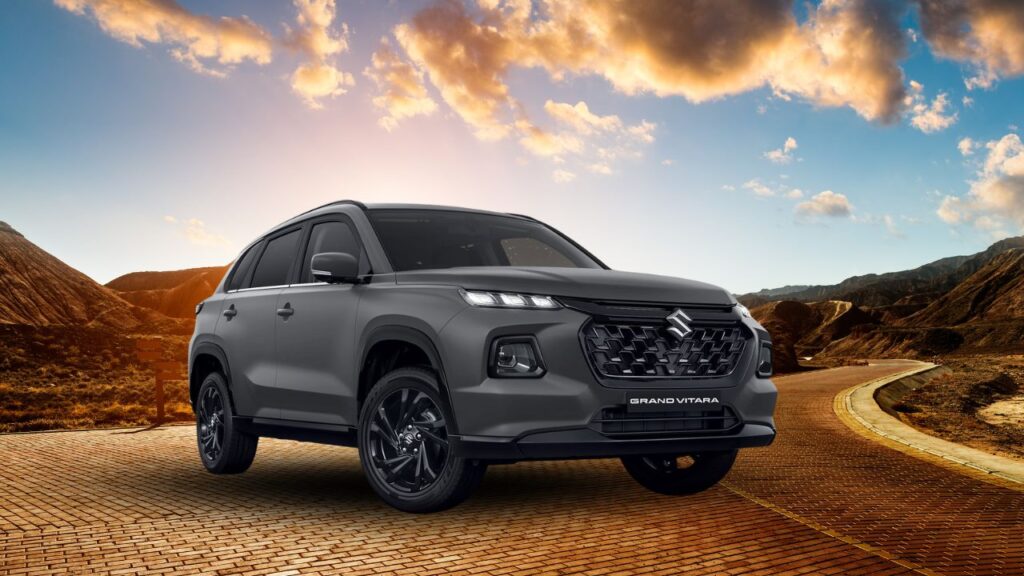
There are powertrain options in a Maruti Grand Vitara, it comes with a 1.5-litre mild-hybrid petrol engine, a 1.5-litre strong-hybrid petrol engine paired with an electric motor and dedicated CNG variants. You can get CVT and automatic transmissions, both with AWD. The cabin is spacious five-seater with premium materials used and thoughtful design.  

Maruti Grand Vitara

Occupant protection is better with now six standard airbags across all versions of the car. Panoramic sunroof (only on high spec variants) adds to the open and airy feel of the cabin. More comfort and convenience are added with 9-inch touchscreen, ventilated seats, head-up display, 360-degree camera, air purifier, and wireless charging. Front-wheel drive (FWD) and all-wheel drive (AWD) are offered, with the addition of a new AWD automatic version. 

With a 5-speed manual gearbox and a fuel efficiency of 21.11 kmpl, the Base Sigma Petrol variant is priced at ₹10.77 lakh. The cost of the Delta CNG variant is ₹13 lakh. The cost of the high-end Alpha Plus Opt Hybrid CVT DT variant is ₹19.72 lakh. 

Maruti Ertiga 

There are two engines options available for the car, a 1.5L petrol engine offers 102 horsepower and 136.8 Nm of torque and a 1.5L CNG engine delivers 87 horsepower and 121.5 Nm of torque. The gasoline version is available with a 5-speed manual and a 6-speed torque converter automatic transmission, while the CNG version is only a manual. The fuel consumption figures are fact – the CNG variant delivers 22.75 km/kg while the petrol variant delivers 20.3 – 20.51 kmpl as per ARAI. 

A 7-inch touchscreen infotainment system with Android Auto and Apple CarPlay, automatic climate control, paddle shifters (AT), cruise control, 40+ linked car features, rear AC vents, tumble fold seats, rear parking sensors and cameras, and ventilated seats in upper trims are just some of the highlights. Safety also benefits from dual airbags, ABS with EBD, rear sensors and a 3-star Global NCAP rating. The 209-liter boot is handy for all sorts of storage and can be extended by folding down the third-row seats. 

For 2025, the Ertiga gets a reduction in its GST price, making it more affordable, with prices beginning at ₹8.80 lakh (ex-showroom), while the top variants touch around ₹12.94 lakh. 

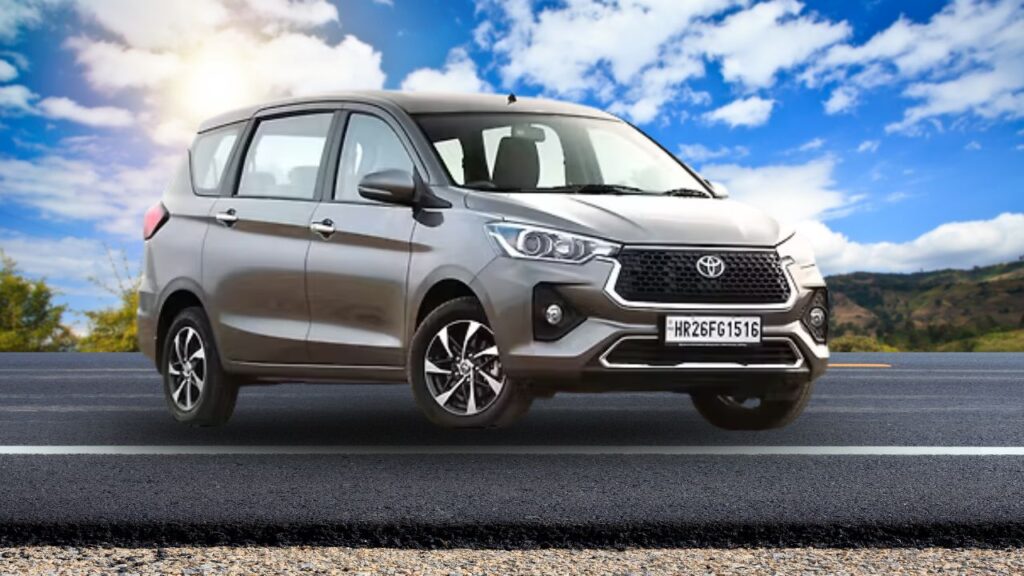
Toyota Rumion

A 1.5-litre naturally aspirated petrol engine gives 103 PS of horsepower with 137 Nm of torque which is ready to hit the road at a speed. The CNG version comes with a 1.5L engine to generate 88 PS and 121.5 Nm which is ready to give 26.11 km/kg impressive mileage. The petrol version is available with two transmission options, a 5-speed manual and a 6-speed torque converter automatic.  

Toyota Rumion

The 2025 Toyota Rumion is starting at ₹10,44,000 but choosing more options in the car will cost you around ₹13,62,000. The S variant is the lowest-priced option, while the automatic one tops the list of the non-CNG models. With recent GST price cut, the CNG variant is priced at ₹11.39 lakh (ex-showroom). 

Maruti XL6

The vehicle is offered with two engine options that comply with BS6 Phase II standards – a 1.5L mild-hybrid petrol engine producing 102hp and 137Nm of torque, and a 1.5L CNG engine producing 87hp and 121.5Nm of torque. A 5-speed manual transmission would be available for both variants and the petrol variant would get a 6-speed automatic (torque converter) only. That’s good fuel economy, too, with the petrol versions delivering 20.27–20.97 kmpl and CNG model delivering 26.32 km/kg. The infotainment system includes a 7-inch touchscreen (with wireless charging), a 360° camera, Apple CarPlay, Android Auto, and Suzuki Connect. 

Nexa is the exclusive channel for buying Maruti Suzuki’s premium, 6-seater, MUV the XL6. The 2025 prices of the top Alpha Plus AT Dual Tone trim and Zeta petrol variant of the car are ₹14.48 lakh and ₹11.52 lakh, respectively. 

Read More:-  The Best Skoda Cars Under 10 lakh In India – Stylish, Reliable And Budget-Friendly Options

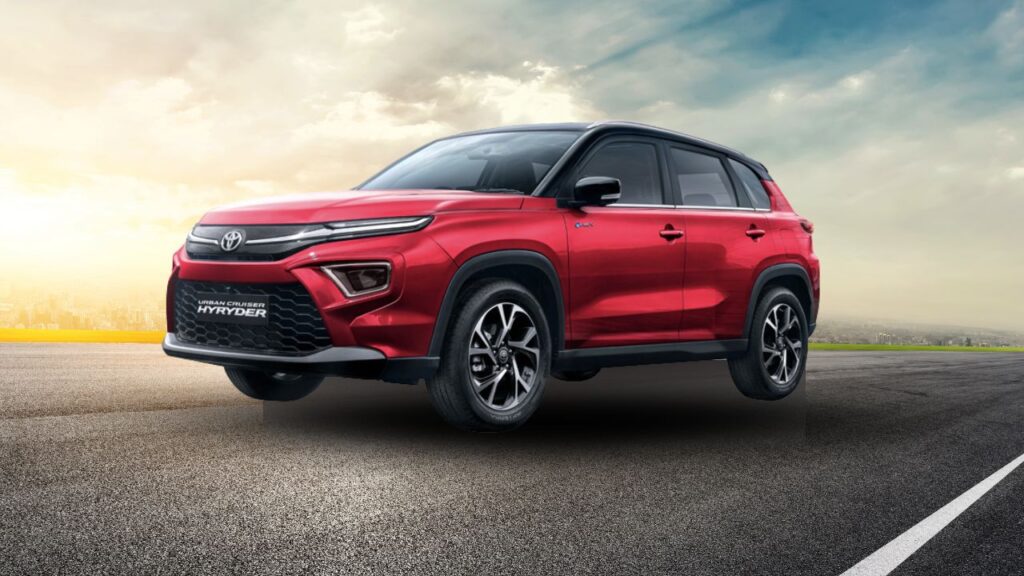
Toyota Urban Cruiser Hyryder

Engine options for the car include a 1.5L mild-hybrid petrol, a 1.5L strong hybrid petrol with a CVT, and a 1.5L CNG variant. Transmission options include 5-speed manual, 6-speed automatic torque converter (for petrol and CNG variants) and CVT (gasoline-only for the high-output hybrid model). Be it for fuel economy of 21.11 kmpl, petrol-manual and 20.58 kmpl, automatic, an incredible 27.97 kmpl in hybrid mode as per ARAI certification and 26.6 kg per km with CNG variant, this automobile draws all eyes. 

Toyota Urban Cruiser Hyryder

Toyota Urban Cruiser Hyryder technically comes with FWD but some of the high-end trims provide All-wheel drive (AWD). The modern built cabin ensures passengers comfort and convenience. 

In 2025, the price of the V Hybrid Dual Tone top variant (automatic, strong hybrid) ex-showroom is ₹19.76 lakh and the E base variant (manual, mild hybrid petrol) begins at ₹10.95 lakh.  

Hyundai Alcazar CNG

The 1.5L petrol engine of the upcoming model that has been adapted for compressed natural gas generates 130–135 hp and 170 Nm of torque. This is a 15% drop from its petrol counterpart. It is expected to come with a 6-speed manual transmission as standard; an automatic variant could be in the offing. With awesome mileage of over 25 km/kg, the CNG variant is a pocket friendly option for long distance travellers. 

Its 6 and 7 seater configurations are on offer, same as petrol and diesel trims. We expect premium features such as ADAS, wireless charging, air purifier, powered driver seat, third row a/c, ABS with EBD, hill assist, TPMS, and ISOFIX. The expected price range is between Rs 15 and 20 lakh (ex-showroom), depending on the variant and features you select. 

Conclusion

In India, CNG cars under ₹20 lakh are now redefining efficient driving without compromising on features and comfort. The CNG models available today are practical, safe and affordable, from premium MPVs like the Toyota Rumion and Maruti XL6 to compact SUVs such as the Tata Nexon CNG. For 2025, these affordable CNG cars under 20 lakhs will be a good option to buy but take a test drive for a vehicle you are going to buy because each model brings something unique that should match with your vibe.

0

2026 Toyota Tacoma – Full Overview, Features, and What to Expect

2026 Toyota Tacoma

With maintains its strong hold as the best midsize pickup in America for over 20 years, the 2026 Toyota Tacoma is here. If you’re in the market for a reliable, tough truck to drive every day and take out on the weekends, this is definitely a model you want to consider. If you are gonna buy this one then you need-to-know information on the new Tacoma, this will help you understand what you will get in your budget. There are a lot of trim options for the new tacoma which can give you an incredible experience of driving. 

What’s New for 2026 in Tacoma?

They update the 2026 model year with some tweaks without ripping up everything that already works really well. Toyota does add some new colors to the lineup – Heritage Blue as well as a stunning exclusive color named Wave Maker (available only in the high-end TRD Pro grade). 

If you’re after the TRD Off-Road, TRD Sport, and TRD PreRunner models you’ll notice they now feature a trendy black front logo. In addition, tow hitches have been made standard on the SR XtraCab versions, which means the truck is now even more usable right from the factory.

New for 2026 in Tacoma

Image credit: Toyota

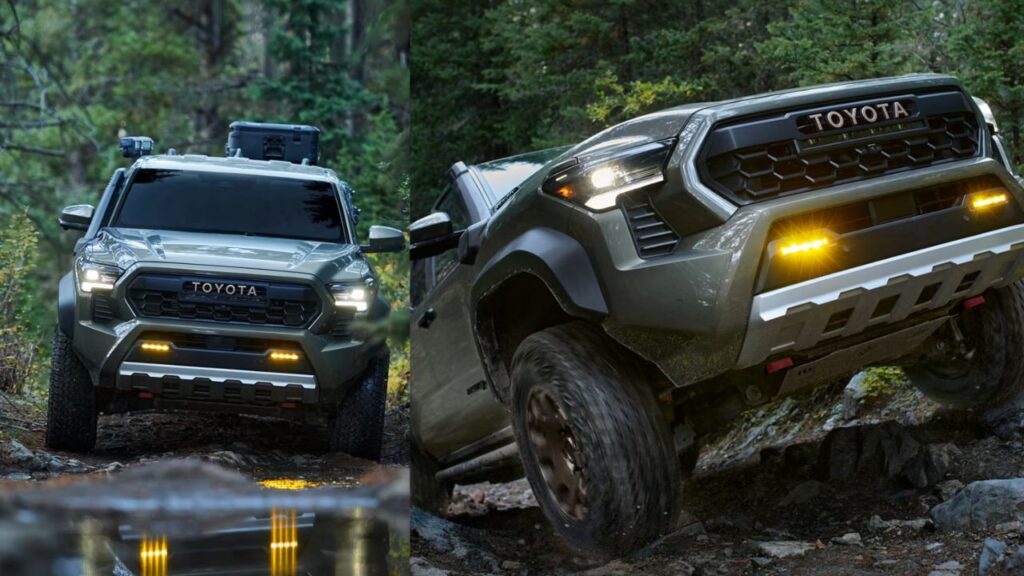
The Tacoma is more off-road capable and loaded with more modern tech and still has everything that made it so legendary that includes durability, reliability and mind-blowing capability. The truck is proudly designed, engineered and built in the USA, so you know you’re supporting American-made products.  

Engine Choices – Power Meets Efficiency

This is when things begin to get interesting. The 2026 Tacoma offers two engine options as per your need, you can grab the one. 

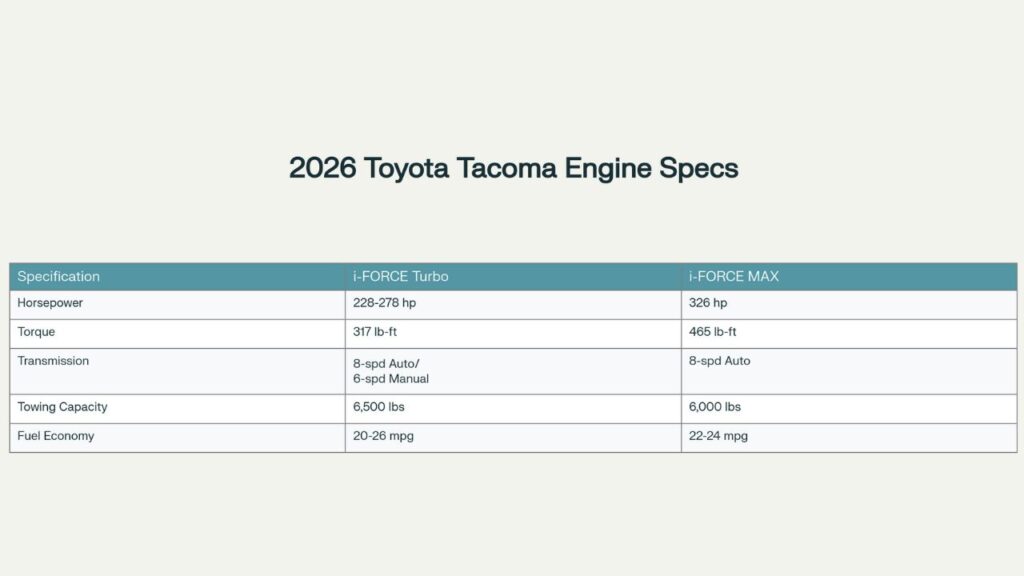
2026 Toyota Tacoma Engine and Performance Specifications

2026 Toyota Tacoma Engine and Performance Specifications

The Standard i-FORCE turbo engine is available in two power levels. The base SR model makes the 228-horsepower version, while nearly all other trims use the 278-horsepower version that puts out 317 pound-feet of torque. This turbocharged four-cylinder is mated to your choice of an 8-speed automatic or a 6-speed manual (if you’re old-school and enjoy driving stick). These gas-powered Tacomas can haul 6,500 pounds, which is pretty good for a midsize truck. 

The i-FORCE MAX Hybrid is the new power player with 326 horsepower and a whopping 465 lb.-ft. of torque. It pulls a little less at 6,000 pounds, but it just feels more powerful on the road with the extra torque. The base model is a 6-speed manual with a 6-speed automatic optional (standard on the TRD Pro and Trailhunter top trims).

Toyota Tacoma Engine and Performance Specifications

Image credit: Toyota

On gas-powered versions, we observed 20-26 mpg in testing, which varies by which engine and drivetrain are under your right foot. And the hybrid gets 22-24, which is pretty darn good for a truck this big. 

Pricing That Fits Different Budgets

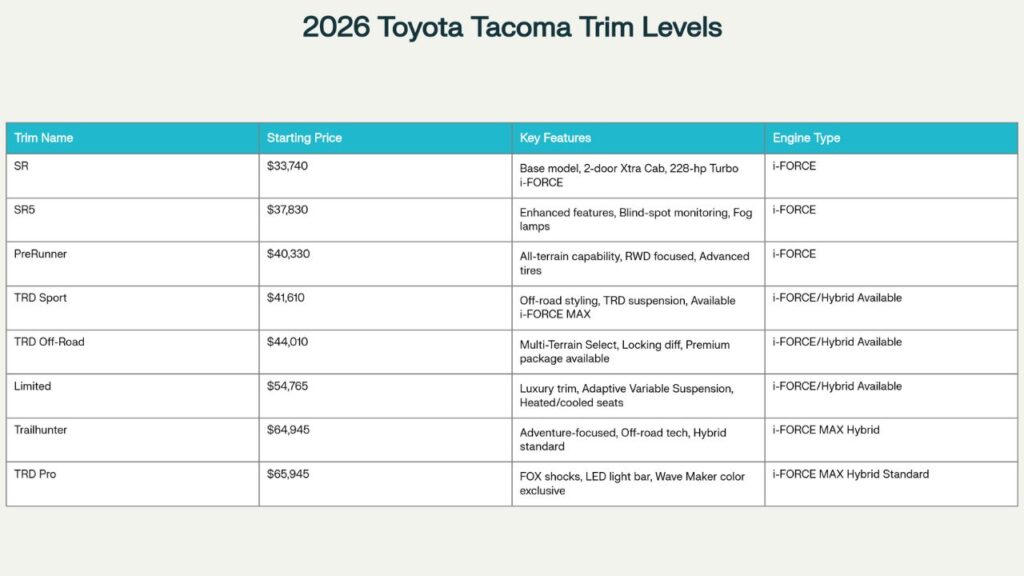
It is safe to say that there are Tacomas available for every budget. Pricing for the top-of-the-line TRD Pro ranges from $33,740 for the base SR model to $65,945 to the moon let alone fully loaded. Here’s the deal with what you get at different price points: 

If price is the determining factor for you the SR5 at $37,830 is an absolute no-brainer. You get blind-spot monitoring, fog lamps, and solid feature that won’t break the bank. TRD Off-Road ($44,010) 

2026 Toyota Tacoma Trim Levels and Pricing

2026 Toyota Tacoma Trim Levels and Pricing

BONUS – If there was one trim option that was best for most people, that has got to be the TRD Off-Road, which provides a great balance of serious off-road capability without the luxury price tag of the Limited trim.

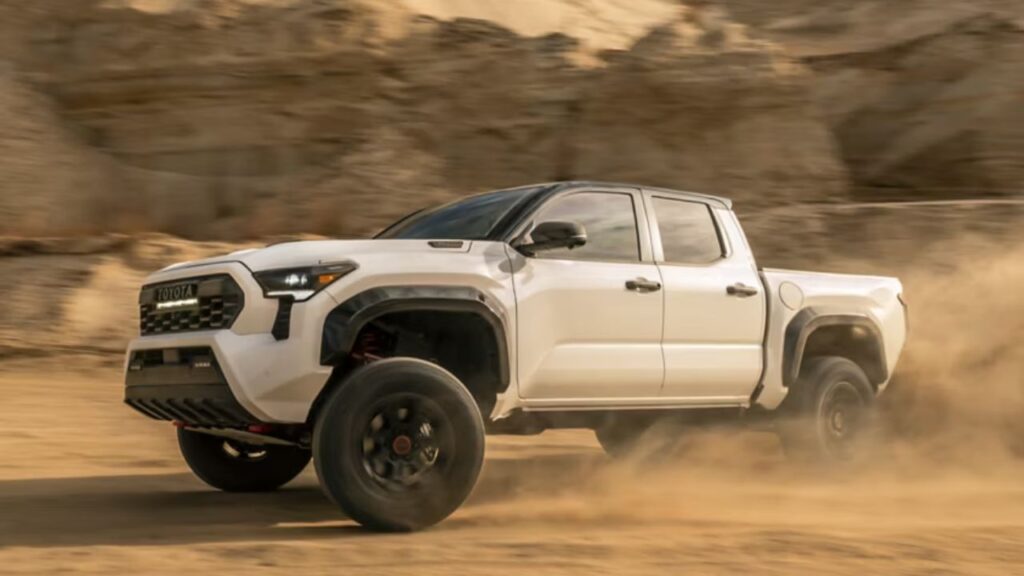
For the more deep-pocketed adventurer, the TRD Pro ($65,945) is basically a race truck for the road. It comes with FOX suspension tuned by TRD racing professionals, unique IsoDynamic performance seats, a large integrated LED light bar, and unique styling that turns heads wherever you go. 

Inside the Cabin – Comfort Meets Technology

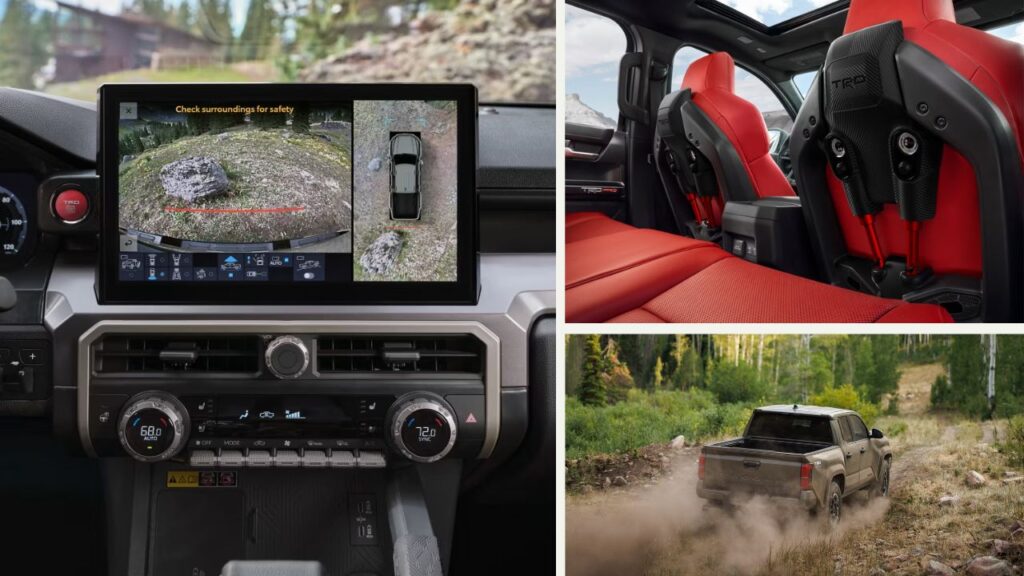
The 2024 Tacoma sees a complete redesign of the interior, and the 2026 bolsters that improvement. The dashboard is modern, with soft-touch materials and a choice of 7- or 12.3-inch digital gauge cluster based on your trim.

Now, the tech features are mind-blowing. Certain models offer a 14-inch touchscreen display with support for Apple CarPlay and Android Auto. There’s an optional 3D Multi Terrain Monitor giving you a full 360-degree view of your environment – ideal when negotiating rough terrain or backing into a tight parking spot. 

Inside the Cabin – Comfort Meets Technology

Image credit: Toyota

The Limited comes standard with heated and cooled front seats, which is a luxury for a truck. And the seats are also higher than before, so you’re not sitting on the floor anymore. Also, you’ll find more head- and legroom in all rows, which makes for a genuinely comfortable longer drive.

All Tacoma models come with Toyota Safety Sense 3.0 as standard, which adds lane-keeping assist, automatic emergency braking, adaptive cruise control and pedestrian detection. It’s the sort of technology that helps keep you safe without getting in the way of your drive. 

Off-Road Capability – The Tacoma’s Real Strength

When you’re in the market for a Tacoma, it’s safe to assume that you are interested in more than just how it performs on the highway. Every model Toyota made came with front and rear disc brakes, and electric power steering that improves both feel and integration of the safety features.

Serious off-road tech comes with the TRD models like Multi-Terrain Select and Crawl Control – these automatically tune your truck’s performance for rocks, sand, or mud. The TRD Pro and TRD Off-Road also receive an electronically locking rear differential and a stabilizer disconnect system that increases suspension articulation when you want it. 

And the TRD Pro cranks it up a notch further with real-time adjustable FOX QS3 shocks, IsoDynamic performance seats utilizing air suspension technology to keep you stable over rough ground, and Limited models also offer optional Adaptive Variable Suspension that delivers a smooth ride on any surface. 

Conclusion

The 2026 Toyota Tacoma manages to be at once a sensible everyday driver and an eager weekend adventure partner. Either way, with the gas one, or the hybrid for a bit more power and efficiency, you get a truck with Toyota’s legendary reliability.

The new colors and standard safety equipment, plus other small enhancements, make this generation feel fresh while keeping what makes Tacomas legend. When it comes to a reliable midsize pickup, the 2026 Toyota Tacoma is one of the first to consider. Should be available starting winter 2025, so rush to your nearest dealer to lay eyes on one. 

0

Best Second Hand Cars to Buy in India – Used Car Buying Guide

Published Jun 22, 2026, 10:37 AM
Last Updated Jun 22, 2026, 11:04 AM

Best Second Hand Cars

Car pricing is rising constantly in India and right now, cars are becoming an essential part of everyone’s life. Buying a Second Hand Cars is becoming a smart option because every new model of car value depreciates after two or three years, so most people secure themselves by spending over on a new one when they can get that model at half of price. Used cars are also a great option for first time buyers.

But it’s not that simple, you must know that the used cars market is in large numbers and choosing the right one is difficult. Every seller wants to pass off the car by saying “fully maintained”, “good condition”, and present it in an excellent condition without telling you the truth. They won’t tell you if there’s any flood-damaged or accident-repaired. That’s why buying a used car requires more than just finding a good deal. 

Let’s look into this guide to understand how you can buy a Second Hand Cars and which models can be good to pick in 2026. 

Why Second Hand Cars Are a Smart Choice in 2026

There is a financial reason for buying Second Hand Cars. A new car loses its value around 15–20% in the first year after it leaves the showroom. So buying a two or three-year-old car instead, you avoid that major depreciation which was faced by first hand car owners. While you get a well-maintained vehicle at a much lower price. 

A few other reasons second hand cars are gaining popularity in India:

  • Lower upfront cost means smaller loan amounts and lower EMIs.
  • Better insurance premiums since the insured declared value (IDV) is lower than a new car.
  • Access to higher segments – don’t pick five/six years old models to buy, choose a used premium sedan or SUV for the price of a brand-new entry-level hatchback.
  • Certified used car programs like Maruti True Value, Mahindra First Choice, clear your mind and help you to choose the right car. There are other brands that offer such programs like Hyundai Promise, and Toyota U Trust, these have made the process far more trustworthy than it used to be.
  • Online platforms also provide inspection reports, warranties, and even doorstep delivery for second hand cars. You can check OLX autos and CarDekho to find out. 

Those days were long gone when buying a second hand cars was a mistake because the market has now matured enough to make it a sensible financial decision rather than a compromise.

Best Second Hand Cars to Buy in India by Category

Not every used car is a good used car. There are few models that offer reliability, better value and easier to maintain over time. So let’s check out which second hand cars are best to buy.

Best Second Hand Hatchbacks

Hatchbacks are usually the easiest entry point into car ownership, and they remain extremely popular in the used car segment because of low maintenance costs and great fuel efficiency.

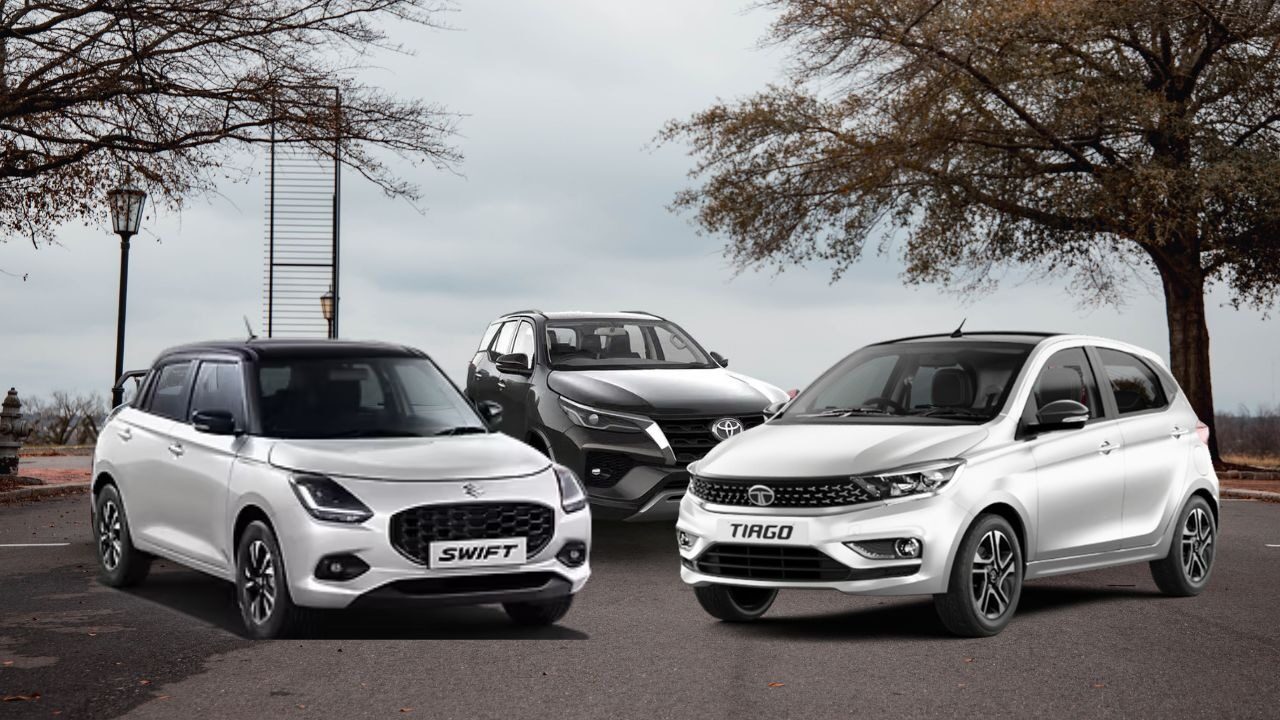
  • Maruti Suzuki Swift – Arguably India’s most popular used car. Strong resale value, easy availability of spare parts, and a massive service network make it a safe choice.
  • Hyundai i20 – It offers more premium features that let you feel excellent drive, a good pick if you want something a notch above the basics.
  • Maruti Suzuki Baleno – Ideal for those who are looking for a hatchback that offers good fuel economy, and decent resale value.
  • Tata Tiago – Tata is number one in safety rating, proved in many real accidents. Some variants build on solid structure, appealing to safety-conscious buyers.

Best Second Hand Sedans

If you want more comfort on long drives and a bit more road presence, a used sedan is worth considering.

  • Honda City – Known for being a driver’s car with smooth performance and excellent reliability. A used City is almost always a safe bet.
  • Maruti Suzuki Ciaz – Best to buy if you want a spacious cabin, low maintenance costs, and reasonable fuel economy.
  • Hyundai Verna – Offer best features and comfort drive that let you have a premium experience.
  • Skoda Rapid / Volkswagen Vento – Great for those who want a more “European” driving feel, though maintenance costs can be a bit higher.

Best Second Hand SUVs and Compact SUVs

New SUVs and compact SUVs attract everyone these days with their comfort and reliable nature. The Second Hand SUV market has grown rapidly as a result. 

  • Maruti Suzuki Brezza – Brezza is easy to maintain so it’s the top pick in the used compact SUV list. It offers good fuel efficiency that also makes it the best choice.
  • Hyundai Creta – Most buyers wanted a powerful SUV with advanced features and safety suite and Creta is the best option in used SUV.
  • Kia Seltos – If you want to buy a stylish second hand SUV loaded with tech then Seltos is the best option.
  • Mahindra XUV300 – Good safety ratings and a punchy engine, a strong contender if you want something rugged.
  • Tata Nexon – Excellent safety scores and solid built quality, often available at attractive used prices.

Best Second Hand Premium Cars

If your budget allows and you’re chasing a more luxurious driving experience, certain premium used cars offer incredible value because of how steeply they depreciate.

  • Toyota Fortuner – Holds resale value better than most SUVs in its class, but always gets a thorough inspection given its heavy usage profile in many cases.
  • Honda Civic / Honda Accord (older generations) – Solid build Honda Civic offer smooth and excellent ride but maintenance is costly. 
  • Mercedes-Benz C-Class / BMW 3 Series (5+ years old) – Before buying these cars, check their maintenance history. The value of these cars depreciates massively, so a 5-6 year old model can be available at a fraction of the original price. 

Read More :- How to Increase Your Car Resale Value Without Overspending on Maintenance

What to Check Before Buying a Used Car

Don’t rush here because regretting later can give you nothing but a headache. Because these parts are essential to consider while buying a Second Hand Cars. 

1. Verify the Paperwork First

Before you even look at the car, check the documents. check the registration certificate and match the used car engine number. If the car is registered in a different state, ask for a No Objection Certificate (NOC). There are also insurance documents and PUC certificates along with these documents. Also, check that the loan is cleared if the previous car owner made a purchase on loan.

2. Check the Service History

If the previous car owner follows regular service then it becomes trustworthy because gaps in service cause problems in engine parts quickly. Ask them to show records or documents of previous servicing of a car from authorized centers.

3. Inspect for Accident or Flood Damage

Look closely at the car exterior, if you see mismatched paint or even panel gaps that may indicate a car was involved in an accident. If you wanna check flood damage, take a look under the carpets for rust. If there is a smell when you open the doors that suggest a water exposure. then check the tyres for uneven wear which could point to alignment or suspension issues from an accident.

If you’re not confident inspecting this yourself, it’s worth paying for a professional pre-purchase inspection. Several services now do this for a few hundred rupees and can save you from a very expensive mistake.

4. Take It for a Proper Test Drive

Take a test drive on different routes at different speeds to test its engine and transmission. It also lets you know how smoothly it runs. Check AC cooling capacity, and other features while driving. Any sound from a car, loose brake, or suspension must be checked carefully. Steering must turn right and left smoothly.

5. Compare the Asking Price With Market Value

Visit offline used car markets or visit online platforms like Cars24, or OLX Autos to check and compare the specific model price. If the kilometers are exceeded, you can negotiate with the sellers to lower the price. Do not trust on anyone’s word, use your inspection process to negotiate if the car is lacking something but check the least compared value of the second hand car to negotiate logically.

Read More:-  Car Maintenance Tips That Save Money And Valuable Time

Buying Used Cars Through Dealers vs Buying Privately

Both routes have their pros and cons, and the right choice depends on how much risk you’re comfortable with.

Buying from a certified dealer  Buying from a private seller
Comes with a warranty and inspection report. No inspection report or guarantee
Price is higher Lower price from dealers
Documents and transfer process is easy Paperwork and transfer handled by yourself
No hidden issues Buy with experienced car owners or check by yourself for hidden issues

Beginners must consider buying from a certified dealer or platform rather than directly as this is generally the safer choice, even if it costs a little more.

Financing a Used Car in India

Most banks give used car loans but with higher interest rates. That typically ranges between 9% and 14% depending on the lender, the car’s age, and your credit profile. You can compare those rates with other lenders and try to give higher down payment for less EMI burden. The older the car, the higher the interest rates. Always compare the price before finalizing it.

Common Mistakes to Avoid When Buying Second Hand Cars

  • Looks, avoid making choices based on shiny exterior but buy based on working of the car under the hood. 
  • Test drive is non-negotiable for buying any car
  • Car papers are more important than anything as multiple ownership in a short span indicates a red flag.
  • Kilometers matters for every used cars so check the odometer
  • Do not rush, take your time and check everything carefully.

Read More :- Manual vs Automatic Cars — Which One Should You Buy?

Conclusion

Buying Second Hand Cars in India was not that easy a few years ago but because of certified dealers it has become possible to buy used cars that don’t give you a headache later. It is a more smart and practical choice these days as the car market is massively growing but still checking carefully every corner of the car is your duty. Spend time checking the paperwork, get the car inspected, compare prices across used cars in the same segment, and don’t let urgency cloud your judgement.

Whether you’re eyeing a budget-friendly hatchback like the Swift, a feature-loaded SUV like the Creta, or a luxury sedan that’s depreciated nicely, the right used car is out there — you just need to buy smart, not fast.

0

Jay Leno’s Car Collection: A Passion That Goes Beyond the Garage

Published Dec 15, 2025, 12:08 PM
Last Updated Apr 8, 2026, 7:28 AM

Jay Leno's Car Collection

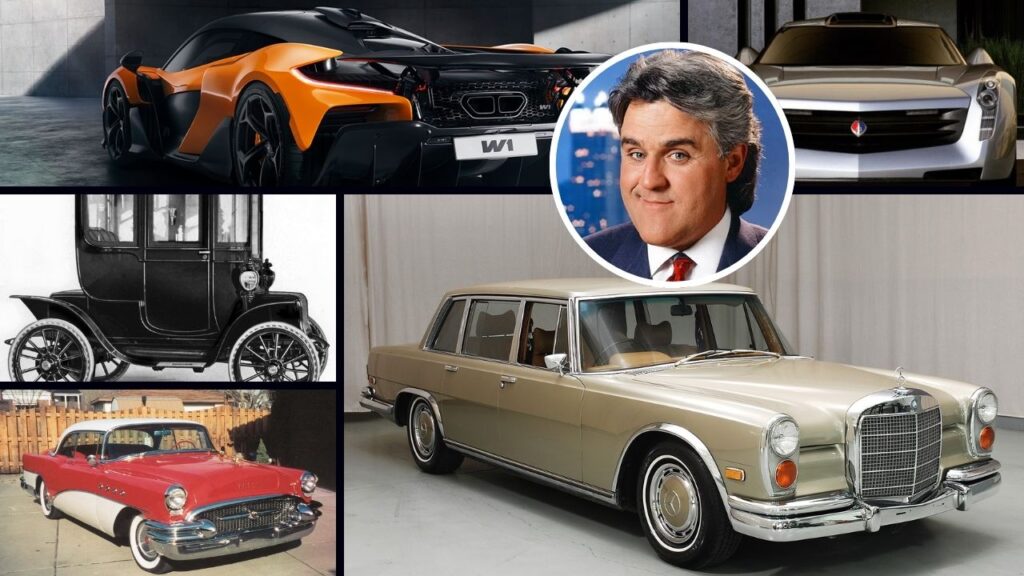
When you think of Jay Leno, most of which are his notoriously large smile and decades of being one of the world’s best late-night comedians on The Tonight Show. But to gear-heads across the globe, Jay is something else entirely – a man who has made his childhood dreams come true by building one of the most spectacular automotive collections the world has ever seen. Before you dismiss, let’s check out Jay Leno’s Car Collection in a massive 122,000-square-foot garage near Burbank Airport. 

The Story Behind the Collection

What sets Jay Leno’s collection apart is not only its size or its estimated value of 52 to 100 million dollars. It’s the philosophy behind why he collects them. Unlike many rich collectors who lock up their treasures and let them gather dust, Jay is different. He drives them on a regular basis, takes adventures in them, and even makes a wildly popular YouTube show, “Jay Leno’s Garage,” where he lets his passion for cars take center stage. His mantra: “These cars are made to be driven.” 

1955 Buick Roadmaster 

Jay at sixteen had bought a 1934 Ford pickup truck. It was his first car ever. He swapped it for a Datsun 1600 by the time he was done with his first couple of gigs. The big shift hit when he moved to California There in the early ’70s he picked up a 1955 Buick Roadmaster for a mere $350. Jay happily named it “Rosebud.” It’s one of his top treasures. He spent time and money to make it run like a modern beast. All while maintaining it classic, old-school style. 

1955 Buick Roadmaster

That one purchase sent him on a path that would see him become the third most-googled car collector in the world, behind only Cristiano Ronaldo and Bill Gates. 

1909 Baker Electric That Predates The Titanic Itself

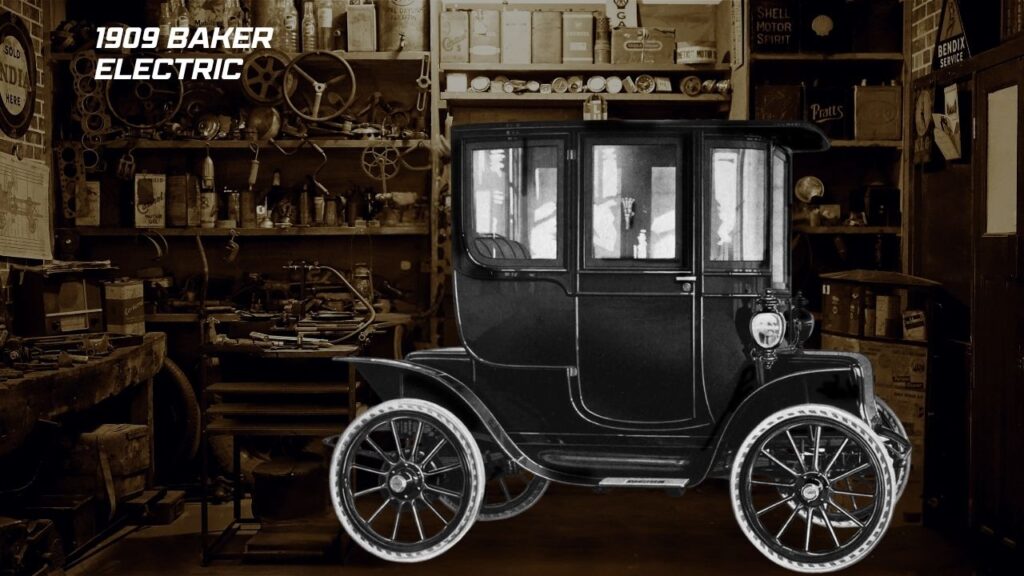
Baker Electrics of 1909 boasted thick lead-zinc or nickel-iron batteries, series-wound motors that could withstand great overloads, and top speeds of 14-25 mph with ranges up to records such as 201 miles on a charge by 1910.

1909 Baker Electric

Controls included a rudder-style tiller for steering, and throttle was controlled by a twist lever, eliminating the hazards of hand-cranking gasoline engines then in vogue. 

Jay Leno’s Favorite Car: 1972 Mercedes-Benz 600 Kompressor

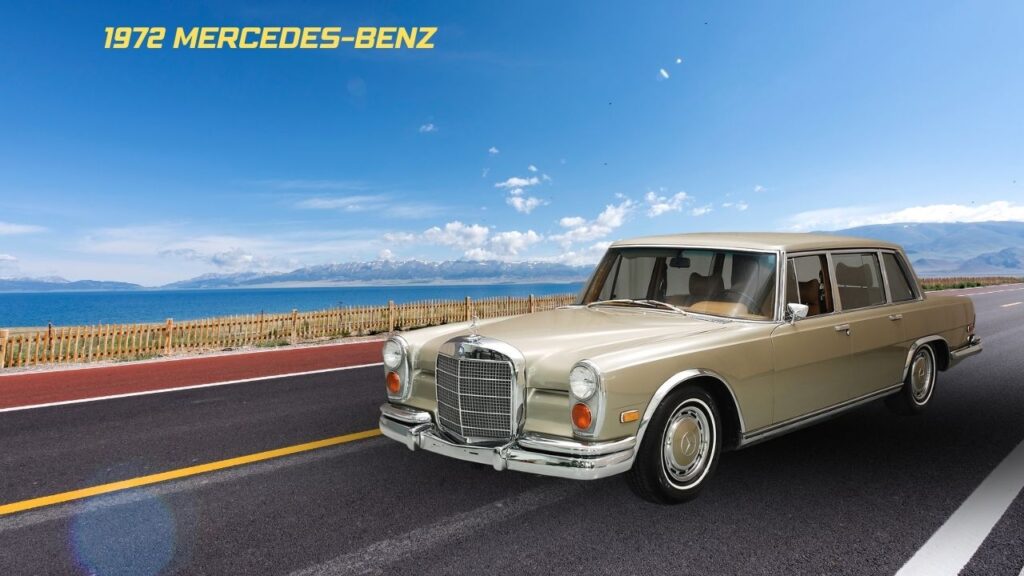
The 1972 Mercedes-Benz 600 Kompressor is a unique, one-off W100 “Grosser” limousine owned by Jay Leno with a non-factory supercharger on the standard 6.3-litre V8 engine. This upgrade takes the power from the OEM 250 hp and 369 lb-ft to well in excess of 525 hp, and that power will get you to well in excess of 130 mph in a vehicle that weighs over 6,000 pounds with a load. 

1972 Mercedes-Benz 600 Kompressor

Built between 1963 and 1981 with approximately 2,677 units made, the base 600 was the quintessential luxury treat for dignitaries with hydraulic everything – from doors to windows.  

2026 McLaren W1 Hypercar

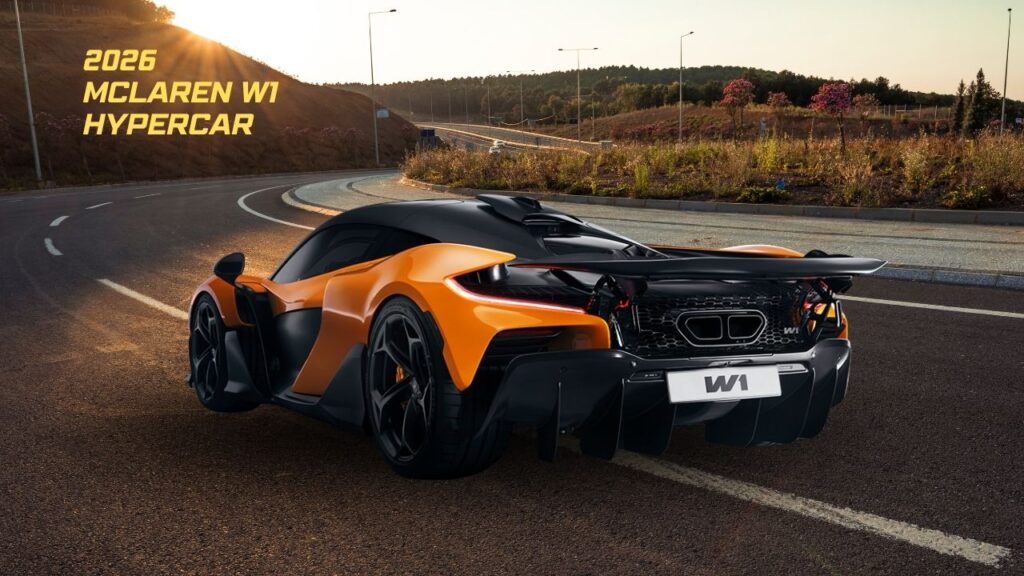
A 4.0-liter twin-turbo V8 is mated to a 342-hp electric motor. They produce a combined 1,258 horsepower and 988 lb-ft of torque. This arrangement allows the car to achieve 217 mph with a 0-60 mph time of 2.7 seconds. The dry weight is 3,084 pounds giving a power-to-weight ratio of about 2.5 pounds per hp. It is a real engineering tour de force.

2026 McLaren W1 Hypercar

The 1.38kWh high-performance hybrid battery of McLaren’s High-Performance Hybrid Powertrain is both 88 lbs lighter than that of the P1’s hybrid system and twice as powerful. 


Another Remarkable Piece is The 2006 GM EcoJet 

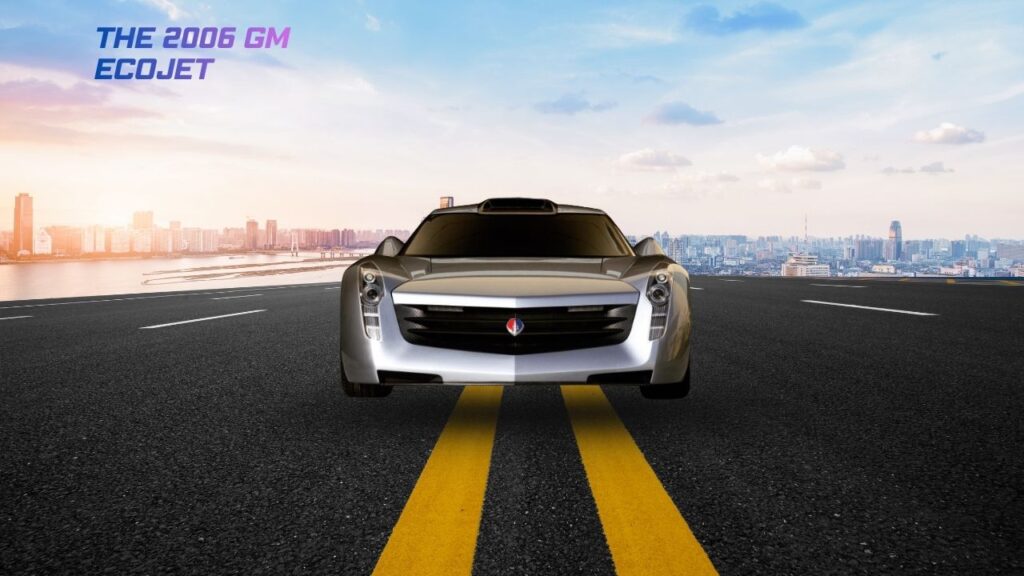
A Honeywell LT101 gas turbine, commonly found in helicopters, is mid-mounted, producing 650 horsepower and around 400-583 lb-ft of torque, with a few tuned variants making 750 hp. The 2006 GM EcoJet then powers the rear wheels through a four-speed automatic transaxle borrowed from a C5 Corvette, which is required since the turbine needs to be under constant load and without a manual clutch. 

The 2006 GM EcoJet 

The engine rides the high r.p.m.s (something near to 48,000), and that produces so much baseline power it makes braking a challenge. Jay Leno is the owner and driver of the prototype and demonstrates its road-worthiness, ignoring jet quirks such as scant engine braking. 

Jay Also Owns Incredibly Rare Machines: The 1992 Lotus Carlton 

The 1992 Lotus Carlton (or Lotus Omega in continental Europe) is a sports saloon produced by Lotus Engineering based on the Vauxhall Carlton/Opel Omega with a twin-turbo 3.6 litre inline-6 engine. Manufactured between 1990 and 1992 in limited quantities (roughly 950 units due to homologation requirements), it gave supercar speed in an everyday four-door package, and earned a reputation as one of the quickest saloons of its time. 

Read More:-  Erica Kirk Luxury Car Collection Featuring Rare Supercars and Premium Models

What Sets Jay apart From Other Collectors

Jay is picky about some brands. Notably, he has no Ferraris in his garage, just because he didn’t like “having to jump through all these VIP hoops” to become a Ferrari owner. He’d just as soon spend his money on cars that really excite him or that have significant chapters in the history of the automobile. 

What really pushes Jay Leno’s collection over the edge from just stuff to real collection is his dedication to preservation and education. He doesn’t just drive his cars, but also films them for his show, where millions learn about automotive history, engineering and the stories behind these machines. 

Conclusion

Jay Leno’s Car Collection is not just a testament to his wealth — it’s a living testament to car culture and automotive enthusiasm. In an age when technology is advancing at the speed of light and miracles from yesterday are taken for granted today, Jay’s garage is a place that celebrates mechanical art. His collection spans the story of human ingenuity from the earliest cars to the hypercars of the future – and it is all owned by one man who actually loves every single vehicle in his care.