0

Nithin Kamath Car Collection: Mercedes, BMW, Tesla

Published Jan 22, 2026, 6:32 AM
Last Updated May 19, 2026, 12:48 PM

Nithin Kamath car collection

Nithin Kamath, co-founder and CEO of Zerodha, is among the most low-key billionaires in India—a fintech disrupter who created the country’s largest brokerage platform without any of the trappings of ostentatious wealth. Kamath, the man behind India’s largest stockbroker, has always been more substance than show from a humble trader to heading a firm that transformed the way Indians invest. Let’s look into Nithin Kamath’s Car Collection and know his interest in automotives.

So from his automobile choices, you know that philosophy applies in his lifestyle too. Instead, the pragmatism in Kamath’s garage can be seen as a metaphor for perhaps how India’s business tycoons of the new generation will define success in 2025 – practical but high performance cars with a purpose.  

Early Struggles Shape Choices

Kamath frequently recounted his pre-Zerodha era days when buying a Tata Sierra or Honda Civic was a stretch goal, so he used to collect toy models as a source of motivation. That mentality remains — he prefers the practical, tech-savvy and slightly prestigious to the flashy. 

There are no authenticated lists with dozens of supercars — viral narratives of handing out 20+ BMWs, Audis, and Mercedes to workers was punctured by Kamath himself as “definitely not true.” Instead, his stash focuses on a quality not quantity, with family gifting such as the Mercedes GLS to his mother which highlights thoughtful extravagance. 

Mercedes-Benz Dominance

Mercedes is the favourite in line with Kamath’s liking for German engineering and comfort on Indian highways. The Mercedes GLS, which was presented to his mother Revathi Kamath in early 2025, commands a staggering ₹1.5 crore — a full-size luxury SUV known as the “S-Class of SUVs” because of its luxurious cabin, state-of-art infotainment, and powerful engines. 

Mercedes-Benz Dominance

For all the $120 million fund managers out there, Kamath presumably has a GLS 600 Maybach or a GLE for family roadtrips. These are not garage queens, they are everyday vehicles that provide comfort and practicality. 

Performance Picks: BMW and Audi

Kamath is said to be a fan of BMW in auto circles, with a 7 Series & M5 his vehicle of choice: their dynamic handling and Zerodha-like efficiency in fintech-fast lives. The 7 Series delivers executive-level rear- seat comfort for conference calls with brokers, and an M5 satisfies his need for speed in trading—0 to 100 km/h in less than 4 seconds. 

BMW and Audi

Audi is suitable as well, maybe an RS7 or Q8; with its Quattro grip perfect for the rains in Bengaluru, and the virtual cockpit reflecting stock dashboards he revolutionized. While not confirmed beyond rumor, these labels reference the debunked gifting narrative, suggesting quiet possession as opposed to promenades. 

Electric Shift with Tesla

Kamath’s aggressive pursuit of sustainability, reflected in Zerodha’s various green measures, has led to speculation that Tesla might be his next huge buy by 2025. A Model S Plaid or even a Cybertruck would suffice: sub-2-second 0-to-60 acceleration, over-the-air updates that feel like app refreshes, and low running costs that make them perfect for long daily commutes. 

Electric Shift with Tesla

He’s also admires ‘macho’ persona of Elon Musk who also rose from rags-to-riches like himself. Though there hasn’t been any Instagram flex to show for it yet, EV ownership is quietly on the rise among India’s new-age billionaires — including Kamath. 

Why the Nithin Kamath Car Collection Stands Out

Kamath’s garage isn’t about the numbers—maybe 4-6 cars total but rather a reflection of his life: fintech mogul, family man, ex-trader with an adrenaline fix. 

Total value? That’s easily ₹10-15 crore, but his billions make it nothing. He forgoes Lambos or Ferraris in favor of road-friendly luxo-barges, with reliability taking precedence on Indian roads. After exposing viral myths, his message is simple: real wealth builds quietly not by giving away cars. For fans, its inspiring success needn’t mean a McLaren army. 

Read More:- Tata Motors Next-Gen EV: Flagship Electric Vehicle Explained

Conclusion of Nithin Kamath Car Collection

Nithin Kamath’s Car Collection narrates the same tale as his journey with Zerodha—measured, thoughtful, and grounded in long-term value over flashy excess. Early hardships that shaped his mentality to a now that is all about comfort, performance and sustainability, his selections mirror quiet assurance over loud opulence. Whether it’s a Mercedes GLS for family, a BMW for driving pleasure or perhaps a future Tesla, Kamath’s garage is a picture of his mantra: success doesn’t require constant validation. In a time of viral flex culture, his under-the-radar modus vivendi is refreshing – proof that real wealth is purpose, not spectacle. 

Bipin Sharma

Bipin Sharma is a seasoned automotive content writer with over 10 years of hands-on experience in the world of cars. From the latest car news and reviews to in-depth maintenance tips and expert buying guides, Bipin covers everything that drives the automotive world. Writing about cars isn’t just his profession — it’s his passion. His deep industry knowledge and love for automobiles fuel every blog he creates, helping readers make informed decisions and stay updated on the fast-evolving auto landscape.

Leave a Reply

Your email address will not be published. Required fields are marked *

0

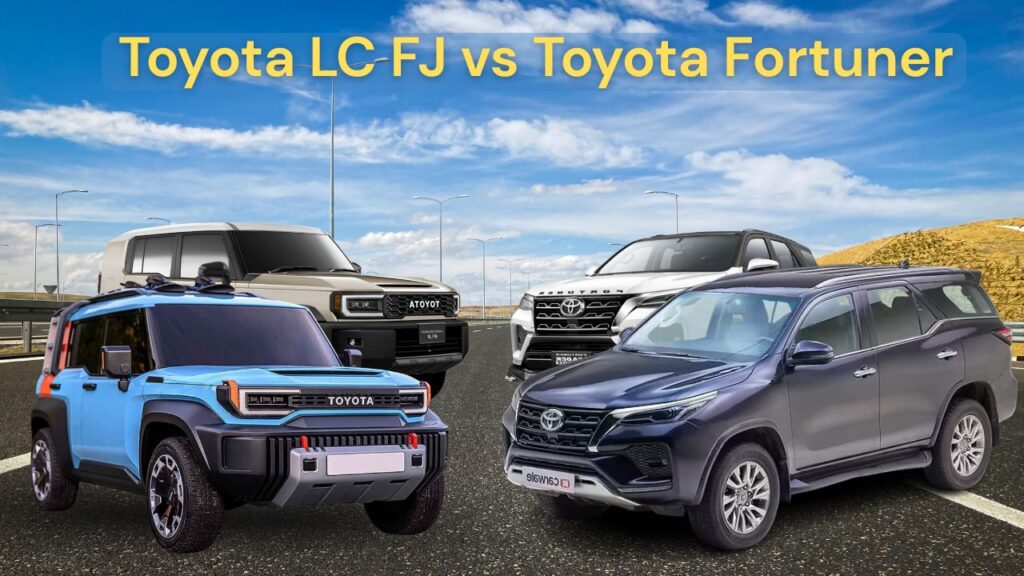
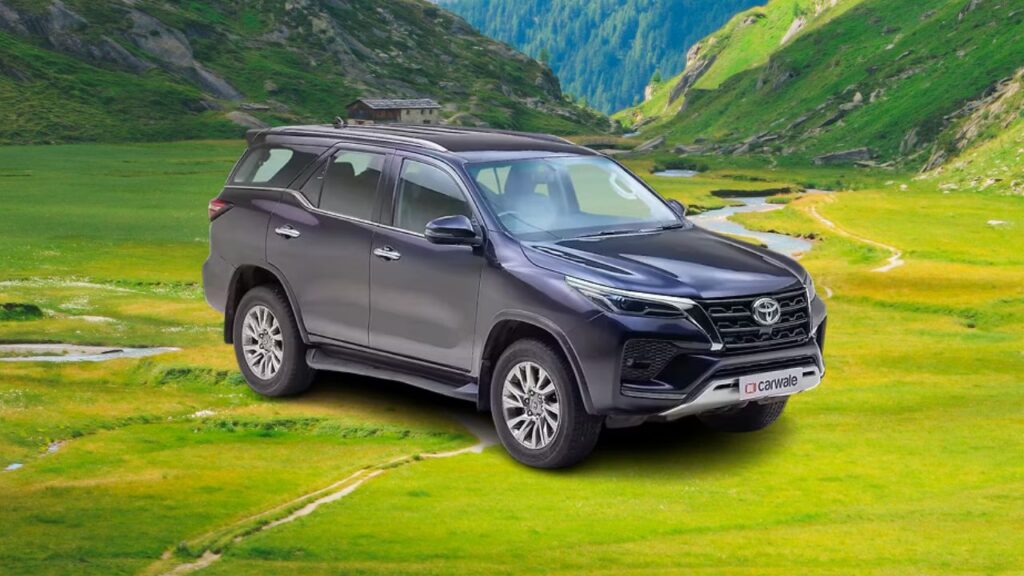
Toyota LC FJ vs Toyota Fortuner: The Shared DNA That Makes Them Siblings

Toyota LC FJ vs Toyota Fortuner

The automotive world was recently electrified when Toyota brought back the Land Cruiser FJ, fondly known as the “Baby Land Cruiser.” What is so interesting about this announcement is that the LC FJ is built on the same basic engine and platform as the popular Toyota Fortuner – essentially making them automotive siblings with a different attitude. But there are some features that are different from each other that make them stand in a different perspective. Buyers can check every detail through this article before buying it.

The Common Foundation: More Than Just Shared Parts

The Toyota LC FJ and Fortuner connection is far deeper than just a parts-bin-sharing exercise. Both are based on Toyota’s tried and tested IMV (Innovative International Multipurpose Vehicle) platform, a hardy ladder-frame chassis that has underpinned Toyota’s global pickup and SUV strategy since 2004. This platform has already been proven with more than 5 million vehicles worldwide with not only the Fortuner, but also the Hilux pickup and Innova minivan. 

The LC FJ employs in particular a modified version of the IMV platform, known as IMV 0, that Toyota designed to produce cheaper but just as capable vehicles for developing markets. Preserving the shape and off-road capabilities of the original IMV platform, the IMV 0 version utilizes cost-effective materials and production techniques. 

The Heart of the Matter: The 2TR-FE Engine

Perhaps the biggest similarity between these two SUVs lies under the bonnet. The Toyota LC FJ and Fortuner petrol variant comes with the same 2TR-FE 2.7 litre four-cylinder naturally aspirated petrol engine. This is not just similar spec – it’s the same engine code, same displacement and same core architecture. 

The Heart of the Matter The 2TR-FE Engine

The 2TR-FE produces 163 PS (160 hp) at 5,200 rpm and 246 Nm of torque in the LC FJ while the Fortuner petrol version produces almost the same numbers: 163 PS at 5,220 rpm and 245 N⋅m at 4,020 rpm. This is the first Toyota engine to employ its Dual VVT-i (Variable Valve Timing with intelligence) technology on the intake and exhaust camshafts which enables the engine to achieve maximum performance at any engine speed. 

The 2TR-FE is based on a cast-iron block with an aluminum cylinder head and features double overhead camshafts (DOHC) with 16 valves. The engine uses a timing chain instead of a belt, which has added to its reputation for reliability and low maintenance. 

Platform Similarities

Both vehicles are built on the IMV platform with a ladder frame chassis, which ensures high levels of structural rigidity and makes them exceptionally capable off road. This body-on-frame construction has several advantages. 

Shared Structural Elements:

  • Two wishbone front suspension for handling and off-road articulation superiority with an articulating rear suspension
  • Multi-link rear suspension engineered to deliver the right balance of comfort and capability
  • Engines mounted in-line for best weight distribution
  • 4WD power, with part-time systems available on the two vehicles. 

The LC FJ can provide a wheelbase of 2,580 mm as against 2,745 mm for the Fortuner, but both the vehicles boast nearly identical ride qualities and off-road capabilities. 

Read More :- What’s The Safest Family Car You Should Buy

Where They Diverge: Different Missions, Different Personalities

Yet, there are two entirely different markets and purposes for the LC FJ versus the Fortuner. 

Where They Diverge Different Missions, Different Personalities

Size and Dimension

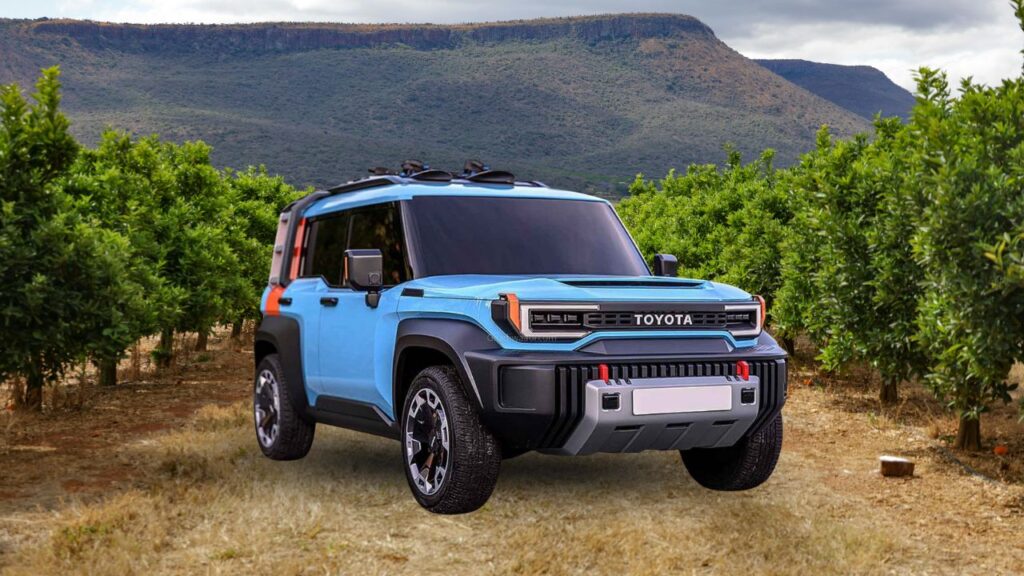
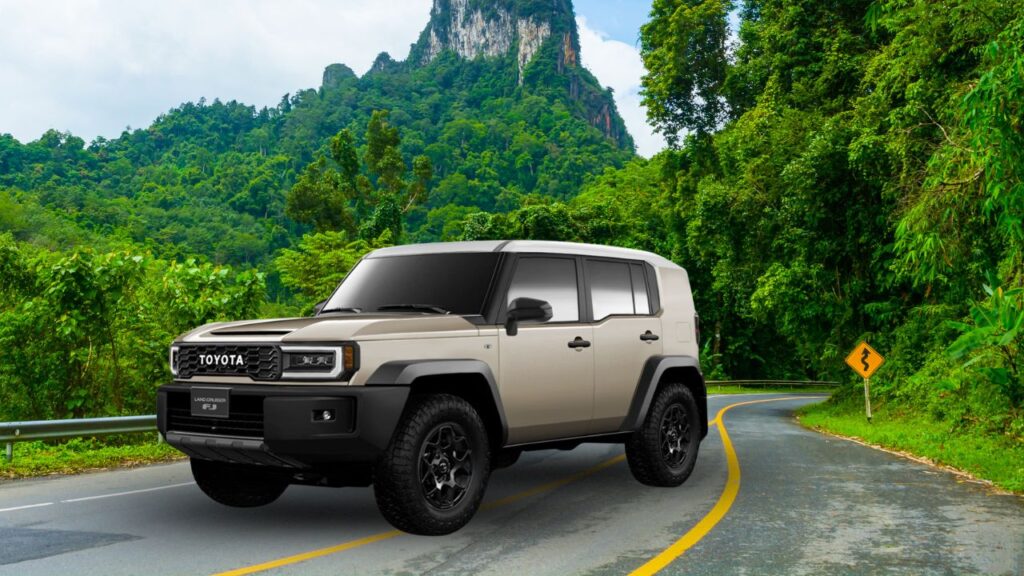
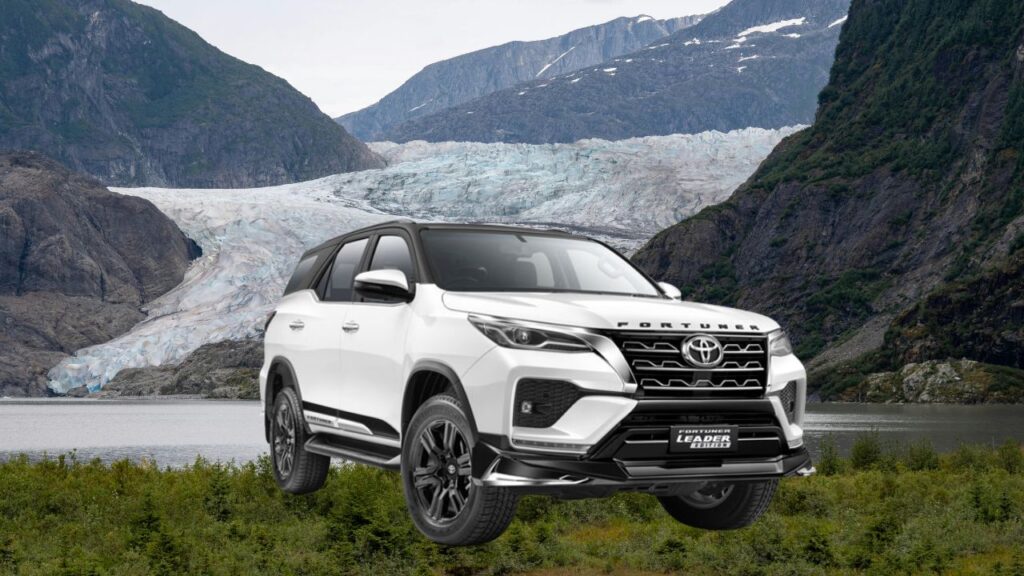
The first big gap is the size difference. The Toyota LC FJ is 4,575 mm long, which is 220 mm less than the length of the Fortuner of 4,795 mm. The Fortuner and LC FJ have the same width of 1,855 mm, but the LC FJ is taller at 1,960 mm compared to the Fortuner’s 1,835 mm height. 

Seating and Practicality

The LC FJ is available with five seats and two rows which makes it a more intimate, adventure-oriented vehicle. By comparison, the Fortuner has three rows and seven seats, making it the family-friendly option for those requiring the most passenger space. 

Engine Options: Choice vs. Simplicity

Both cars are available with the 2TR-FE petrol engine, but the Fortuner has more options with the 2.8-liter 1GD-FTV turbocharged diesel engine. The diesel version is every bit more powerful and torquey: 201 PS and 500 N⋅m , and it is the performance option for those who care most about towing pack and mileage. 

Contrarily, the LC FJ is all about simplicity, being petrol-only, which I suspect points to a Toyota strategy to keep the price down and the reliability up in those markets where the quality of diesel fuel can be suspect. 

Transmission and Drivetrain: Refined vs. Flexible

Both cars use 6-speed automatics, but different philosophies. The LC FJ uses Toyota’s 6-speed Super ECT automatic transmission in conjunction with part-time 4WD. It’s a simple system that focuses on ease of use and reliability for those who want to keep things basic. 

Transmission and Drivetrain Refined vs. Flexible

The Fortuner has more flexibility with manual and automatic transmission options across the engine range as well as 2WD and 4WD variants to suit the pockets and requirements of different customers. This flexibility allows the Fortuner to attract both city commuters and hardcore off-roaders. 

Design Philosophy: Heritage vs. Contemporary

The styling treatments illustrate different positioning of the brands. The LC FJ is inspired by Land Cruiser heritage, especially the legendary FJ40, with its boxy shape, round headlights and utilitarian look.This aesthetic resonates with enthusiasts that appreciate the Land Cruiser’s famous off-road heritage. 

The Fortuner gets a more contemporary SUV look, which is a perfect blend of ruggedness and modern sophistication.Its styling is aimed at buyers who want utility, but who don’t want their utility vehicle to look out of place on city streets. 

Market Positioning: Specialized vs. Mainstream

The LC FJ is aimed at adventure seekers and Land Cruiser fans who crave real off-road ability in a package that is more attainable and affordable. With its streamlined spec sheet and retro styling, it appeals to buyers for whom substance matters more than features. 

Market Positioning Specialized vs. Mainstream

Apart from the of Fortuner caters to the mass premium SUV segment with the comfort of choice across multiple engine options, seating configurations, and trim levels. It strikes the perfect balance between off-road prowess and refined on-road performance to make it your daily driver or weekend adventurer for the off-road trails. 

The Reliability Factor of The Proven Technology

Arguably the most exciting part about both products is that they are based on thoroughly proven designs. Since 2004, the 2TR-FE engine has covered millions of miles in various global markets and has a great reliability record. The IMV platform also has proven itself with over 5 million units produced with no major structural faults.This common technical baseline gives both vehicles the Toyota’s renowned durability and low cost of maintenance. 

Conclusion

The Toyota LC FJ and Fortuner are excellent examples of platform engineering – where common platform underpinnings are used to create completely different vehicles that cater to individual market needs. They have the same heart and bones, but different souls, and those different souls give each one a reason to exist in Toyota’s ever-growing SUV family. 

Be it the LC FJ’s genuine roots and stripped-back purpose, or the Fortuner’s flexible family-friendly angle, both promise the same dependable and capable ethos that has made Toyota’s IMV platform one of the most successful automotive architectures ever. 

0

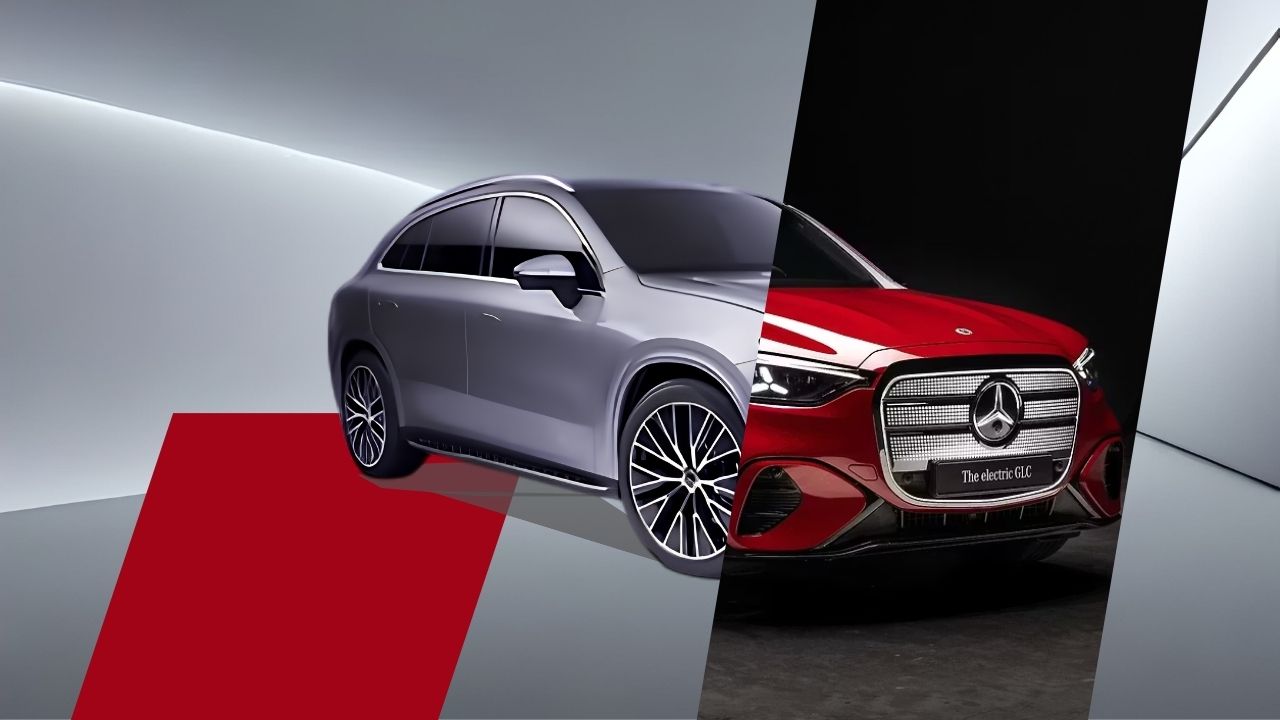
Mercedes-Benz GLC Electric Comes With 715 km Range 

Published Sep 30, 2026, 12:40 PM
Last Updated Sep 30, 2026, 1:02 PM

Mercedes-Benz GLC Electric

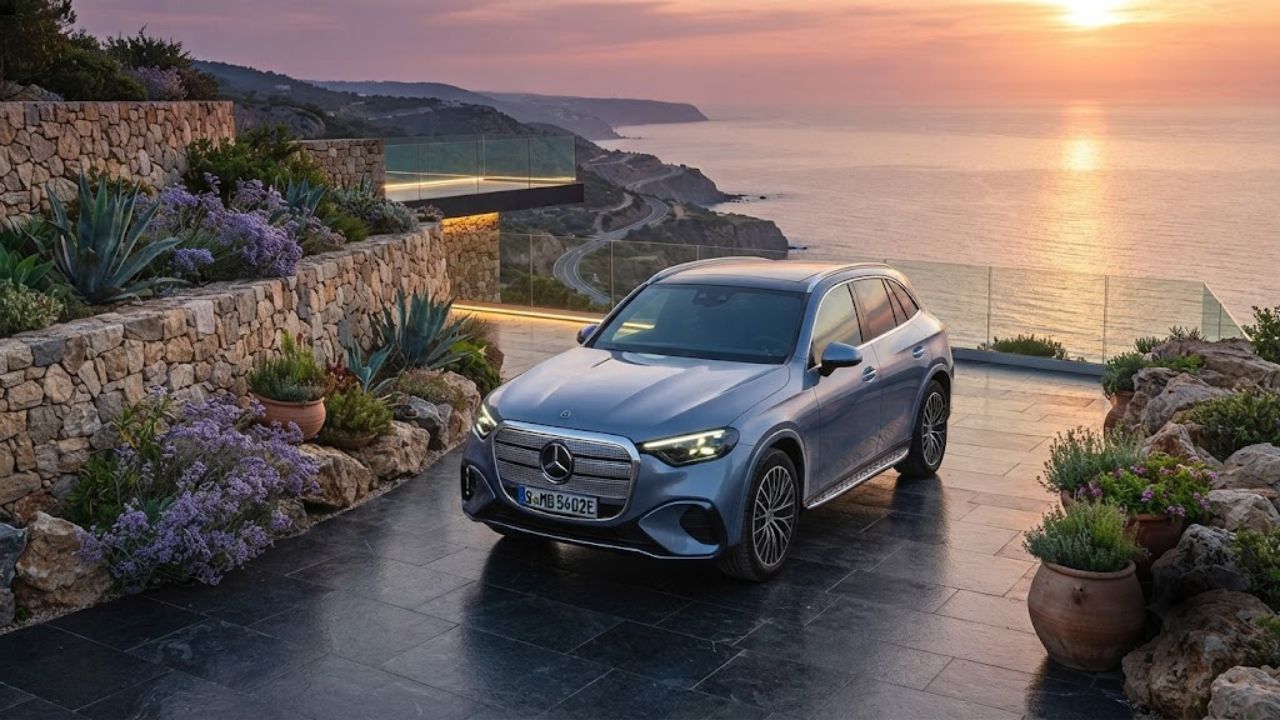
The Mercedes-Benz GLC Electric coming to India on 4 November 2026, it reaches faster than usual right after six months of its European debut. Bookings are expected to open in the first week of October, with local assembly at its Chakan plant in Pune. If you’re weighing a ₹80-lakh-plus electric SUV, first understand a few factors. Does it look like it’s worth the money, does it go far enough, and is it better than what BMW is about to bring?

Mercedes-Benz GLC Electric Design: A German Luxury Car Rethought

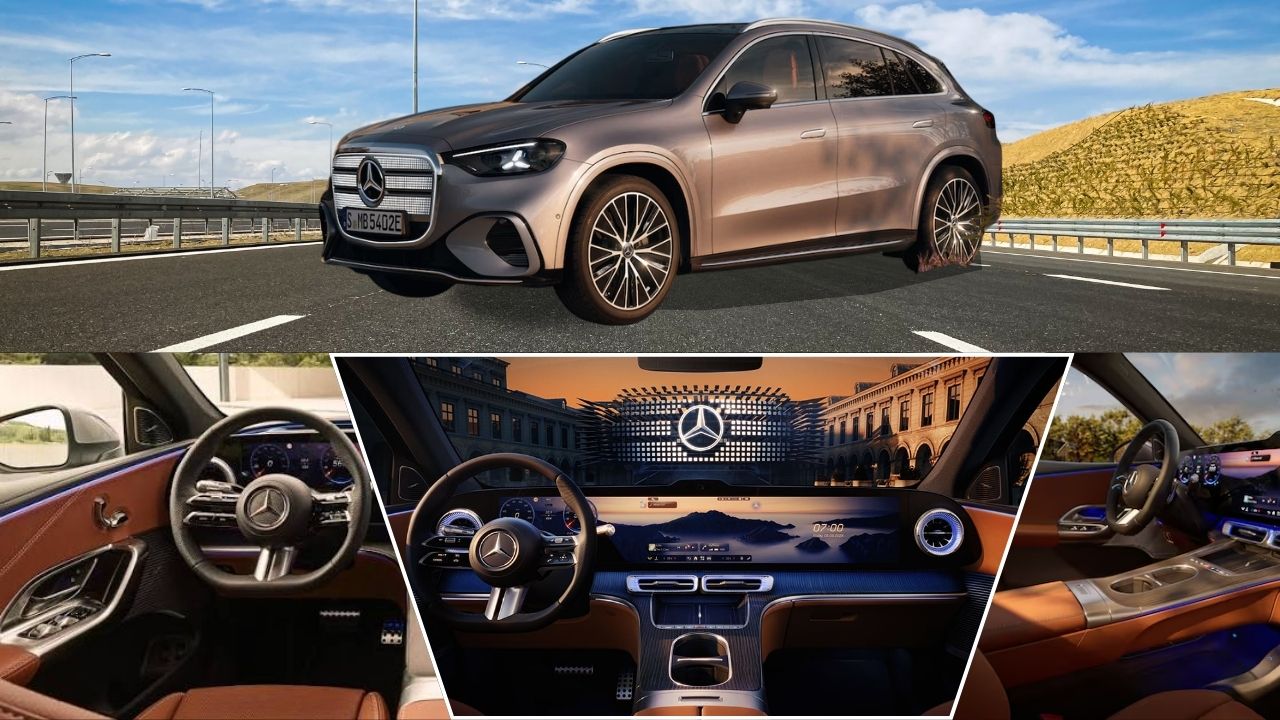
The GLC Electric carries Mercedes’ newest design language. The front gets a reworked grille and the rear gets a full-width light bar. The proportions stay familiar for an SUV, which matters commercially: this is a stylish car that still reads as a GLC from 50 metres away. It measures 4,845 mm long, 1,913 mm wide and 1,644 mm tall. India gets the standard-wheelbase version, with a 2,972 mm wheelbase.

The cabin leans hard on screens. A MBUX Hyperscreen spans the dashboard, though sources disagree on its size. It is somewhere between 33.1—39 inches, so check Mercedes’ India brochure. The India-bound variant listing shows a Burmester sound system, front-only massage seats, a fixed glass sunroof, over-the-air updates and blind spot monitoring. Treat that as the expected equipment list until Mercedes publishes the final one.

Electric Performance: Power, Range and Charging

The GLC 400 4Matic version is coming to India which runs on all-wheel drive and two motors. This Mercedes luxury vehicle delivers 483 hp of power and 800 Nm of torque, reaching over a 100 km/h time of 4.3 seconds. It offers a 360 kW with two-speed transmission sitting on the rear axle only.

A 4.3-second sprint puts an SUV of this size in performance-car territory, and it is quicker than any petrol GLC below the AMG versions.

Mercedes-Benz GLC Electric Design

The battery is 94 kWh, good for a claimed 715 km on the WLTP cycle. Two caveats apply. That is a European test figure, and the US EPA rating is a lower 300 miles (about 480 km). India’s ARAI number, which we don’t have yet, will be what Mercedes advertises locally. Real highway range with the AC on will be lower still.

Charging is where the 800-volt architecture pays off. Peak DC charging is 330 kW, and Mercedes quotes 10 to 80 percent in about 22 minutes on a compatible 800V charger. On a 400V charger, speed is capped at around 100 kW. Most Indian public fast chargers won’t deliver anything close to 330 kW, so in practice you’ll charge slower than the headline. At home, the 11 kW AC onboard charger takes roughly 8.5 hours for a full charge. That suits overnight charging in a house or society with a dedicated point.

Read More 👉  Renault Duster Hybrid Launches in India on 17 October 

Mercedes-Benz GLC Electric Price in India

Mercedes has not announced a price. Most outlets expect ₹80 to ₹90 lakh ex-showroom, while Autocar India’s estimate runs higher, at ₹87 to ₹95 lakh. Local assembly should help. For reference, European pricing starts at €71,281. The final figure will be confirmed on 4 November, so treat everything above as an estimate.

GLC Electric vs BMW iX3: The Rival That Matters

GLC Electric vs BMW iX3

The BMW iX3 is the obvious comparison, and on paper it is the stronger EV. It has a 108.7 kWh battery and up to 805 km of WLTP range with 400 kW charging. The GLC counters with more power and a quicker sprint. The iX3 50 xDrive makes 469 bhp and 645 Nm and reaches 100 km/h in 4.9 seconds.

GLC 400 4Matic iX3 50 xDrive
Power / torque 483 hp / 800 Nm 469 hp / 645 Nm
0-100 km/h 4.3 s 4.9 s
Battery 94 kWh 108.7 kWh
WLTP range 715 km up to 805 km
Peak DC charging 330 kW 400 kW
India status Launch 4 Nov 2026 Expected 2027

The iX3’s India timing and price are unclear. Expected for a February 2027 launch at ₹65 to ₹70 lakh, the long-wheelbase version arrives in 2027. The BMW may end up cheaper and longer-legged, but Mercedes will have a few months on sale before it arrives.

Read More 👉  Tata Launches BaaS Across Its Whole EV Range: Is the Lower Price Real?

Conclusion 

If you are planning to book a Mercedes-Benz GLC Electric in early October, and the price announcement is on 4 November. Book only after you’ve seen the ARAI range figure and the final variant equipment list.

You’ll get a Mercedes badge and cabin, have a reliable home charger, and mostly drive in and around a city. The GLC Electric is more of a family SUV than a luxury sedan. If a sedan was on your shortlist, its extra ride height and boot space are the trade.

Wait if you regularly do long highway runs. The 330 kW peak charging speed is unlikely to be usable on most Indian routes, and the iX3 may offer more range for less money.

0

Super car: Porsche 918 Spyder

Flaunted as the “ultimate hyper car,” the Porsche 918 Spyder specifications are the very first production-oriented road car that broke the seven minute hurdle at the well-known Nurburgring. This hybrid supercar was introduced at the Frankfurt Motor Show. Every Porsche 918 production cars built on the hood, along with several spots inside the cabin. With an extraordinary blend of performance and efficiency, the 918 Spyder has marked the commencement of a new era of supercars.

The Porsche 918 Spyder is powered by a combustion engine and two electric motors. When it comes to performance, the numbers are stunning: 0-60 in 2.2 seconds, 0-100 mph in 4.9 seconds, 1/4 mile time of 9.8 seconds and a top speed of 217 mph. All this performance and cutting-edge technology cannot come cheap, though. The Porsche 918 price for a new car was $845,000, but options like the Weissach package ($84,000) and Liquid Metal paint ($63,000) could push that price to over $1 million. Since Porsche stopped producing this model in 2015, the asking price for a used Porsche 918 Spyder has skyrocketed — it can easily exceed $1.6 million.

To flash over 200 mph, the 918 Spyder relies on a 4.6 L V8 engine and two electric motors. The fossil-fuel-fed Porsche 918 Spyder specs an engine that produces 608 horsepower. The total horsepower of the 918 Spyder is 887, thanks to the performance boost from the two electric motors. The rear electric motor sends 154 horsepower into the transmission.

The second electric motor on the front axle makes 127 horsepower. Without help from the electric motors, the rear-mounted V8 engine, which is derived from the 2005 RS Spyder race car, revs to 9,150 rpm. The combustion engine reaches 398 lb-ft of torque at 6,700 rpm. The rear electric motor features innovative hybrid cooling with air and water. You can’t easily admire the engine or e-motors, though. As the hood doesn’t open, you’d have to take your Spyder to the dealer to take a peek at your Porsche 918 engine.

The Porsche 918 Spyder specs an engine mounted so low down that Porsche engineering had to mount the 918 transmission upside down, for better weight distribution. The rear motor runs through the 7-speed PDK dual-clutch, while the front axle electric motor has only one gear. Surprisingly, the gear selector is a tiny lever mounted just to the right of the steering wheel. At high speed (over 164 mph), the 918 Spyder becomes rear-wheel drive only. That’s because a decoupler disconnects the front electric motor to avoid over-revving. There are five driving modes: electric, hybrid, sport, racing and Hot Lap. The latter uses full engine power but depletes all electric reserves. The beauty of the system is in the electric motors powering the car between the gear shifts. Obviously, the 918 offers brutal acceleration in any circumstance.

A supercar that goes from 0 to 60 mph in a blink needs a matching high-performance braking system. The 918 Spyder has Porsche Ceramic Composite Brakes (PCCB). They have six-piston monoblock calipers at the front and four-piston calipers at the rear. The ceramic discs at the front have a diameter of 16.1 inches. Those at the rear have a diameter of 15.4 inches. Through brake regeneration, the Porsche 918 Spyder specs that the brakes capture most of the energy that would be otherwise wasted as heat during braking. Furthermore, the electromechanical brakes of the 918 Spyder then store that energy in a battery and feed it back through the electric motors. Additionally, daily driving and light braking won’t even invoke the hydraulic system, as both electric motors become generators when the brake pedal is pressed. So every week you need to do a few spirited stops to keep condensation out of your brake lines.

Inspired by Porsche’s previous supercars, the carbon-fiber-reinforced plastic monocoque chassis of the 918 Spyder is lightweight and high-strength. The design of the Porsche hybrid 918 stands out thanks to the top-mounted exhaust pipes and massive rear spoiler. Both are adjustable from the control panel. The Porsche 918 Spyder specs a Targa roof, but you have to remove the top panels manually. They are easy to stow in the trunk. Another distinctive feature of the exterior design of the 918 Spyder is its “Acid Green”brake calipers.  Therefore, Porsche chose to add accents in the same color on the carbon bucket seats, seat belt, and steering wheel ensure design coherency. The Weissach Package adds several pieces of exposed carbon fiber along with gorgeous magnesium wheels. Unquestionably, the differences save over 80 lbs. and make it easily distinguishable at a distance.

The pinnacle of decades of engineering, the Porsche 918 Spyder blends high-tech, efficiency and performance in a weight-saving design. The standard version of the Porsche 918 Spyder weighs 3,691 lbs. With the optional 918 Weissach pack, which improves the driving dynamics, the car is lighter, weighing 3,602 lbs. The 918 Spyder with the Weissach package is the version that made the Porsche 918 Spyder Nurburgring time of 6:57 a reality.

Concurrently, the two electric motors draw their power from a 6.8 kW·h liquid-cooled lithium-ion battery. It has a 20-mile electric range and a total range of 420 miles in hybrid mode. The Porsche Universal Charger takes seven hours to charge the battery when connected to a 110-volt household AC socket. Or only two hours with a 240-volt power supply. An optional HVDC Speed Charging Station can fully charge the lithium-ion battery in 25 minutes. The Porsche 918 Spyder specs are an incredibly fast hybrid for technology aficionados.

To conclude the greatest Porsche to-date, it is an eco-friendly green contrivance. It will mind boggle you to contemplate its working. So what you are waiting for? Get yourself the good Porsche news.


0

Top 10 Cars in the Justin Bieber Car Collection 2026 – #7 Will Blow Your Mind!

Published Jun 25, 2025, 9:18 AM
Last Updated Nov 5, 2026, 4:49 PM

Top 10 Cars in the Justin Bieber Car Collection 2025

If you lovе cars and music, you must havе hеard of Justin Biеbеr. Hе is a pop supеrstar. Hе is also famous for his amazing car collеction. Thе Justin Biеbеr Car Collеction 2026 is full of wild, fast, and rarе cars. Somе cars arе so spеcial that only a fеw pеoplе in thе world own thеm. Today, wе will look at thе top 10 cars in his garagе. Thе sеvеnth car on this list will truly blow your mind!

Why Justin Biеbеr Lovеs Cars?

Justin Biеbеr is a big car lovеr. Hе startеd collеcting cars whеn hе was vеry young. Hе has spеnt millions on his collеction. His garagе is likе a drеam for car fans. Hе owns supеrcars, luxury cars, and еvеn somе custom cars. Thе Justin Biеbеr Car Collеction 2025 shows his lovе for spееd and stylе. 

The Top 10 Cars in Justin Bieber’s Garage

1. Koеnigsеgg Jеsko

Koеnigsеgg Jеsko

Image Credit: YouTube

Thе Koеnigsеgg Jеsko is onе of thе rarеst cars in thе world. Only a fеw pеoplе own it. Justin Biеbеr has onе in his garagе. This car is supеr fast. It has a twin-turbo V8 еnginе. Thе car is worth morе than $3 million. It is vеry spеcial and looks amazing. Thе car is kеpt safе with spеcial sеcurity.

2. Bugatti Chiron

Bugatti Chiron

Image Credit: Bugatti 

Thе Bugatti Chiron is anothеr star in thе Justin Biеbеr Car Collеction 2026. This car is vеry powеrful. It has 1,800 horsеpowеr. Only 40 of thеsе cars еxist. Thе car is worth about $5 million. Most of thе car is madе from carbon fibеr. Only 30% of thе car is paintеd. Thе rеst shows thе carbon fibеr. This car is Justin’s favoritе. It is his garagе toy.

Also Read: Kendrick Lamar Car Collection: A Mysterious Look at the Rap Icon’s Lifestyle and Fame

3. Lamborghini Avеntador S

Lamborghini Avеntador S

Image Credit: Lamborghini 

Thе Lamborghini Avеntador S is a supеrcar. Justin Biеbеr got this car for his 18th birthday. Hе changеd thе color many timеs. Now it is tеal bluе. Thе car has a 6.5-litеr V12 еnginе. It makеs 740 horsеpowеr. Thе car is vеry fast and loud. Justin lovеs to drivе it.

4. Fеrrari 458 Italia

Fеrrari 458 Italia

Image Credit: YouTube

Justin Biеbеr owns two Fеrraris. Thе Fеrrari 458 Italia is thе most famous. It has a 4.5-litеr V8 еnginе. Thе car makеs 562 horsеpowеr. It can accеlеratе from 0 to 60 mph in only 3 sеconds. Justin changеd thе color to bluе chromе. Hе also addеd fеndеr flarеs and a big subwoofеr. Thе car is worth morе than $400,000.

5. Audi R8

Audi R8

Image Credit: Audi

Thе Audi R8 is anothеr cool car in Justin’s garagе. It has a V10 еnginе. Thе car makеs 540 horsеpowеr. It can go from 0 to 60 mph in 2.8 sеconds. Thе car is wrappеd in lеopard print. This makеs it stand out. Thе car is worth almost $200,000.

Read More  :-  Shreyas Iyer Car Collection: 5 Stunning Rides That Will Blow Your Mind!

6. Mеrcеdеs-Maybach S600

Mеrcеdеs-Maybach S600

Image Credit: Mercedes

Thе Mеrcеdеs-Maybach S600 is a luxury car. It is vеry comfortablе. Thе car has a 6.0-litеr V12 еnginе. It makеs 523 horsеpowеr. Thе car is callеd thе “world’s quiеtеst car.” It has a big sunroof and a grеat sound systеm. Thе car is worth almost $200,000.

7. Bugatti Vеyron

Bugatti Vеyron

Image Credit: Bugatti

Hеrе comеs thе car that will blow your mind! Thе Bugatti Vеyron is a lеgеnd. Justin Biеbеr got this car as a gift. It has an 8-litеr W16 еnginе. Thе car makеs 987 horsеpowеr. It rеachеs 0 to 60 mph in just 2.5 sеconds. Thе top spееd is 255 mph. Thе car is worth about $2 million. Justin addеd rеd paint and chromе accеnts. Thе car is vеry rarе and еxpеnsivе. This is why it is thе most shocking car in thе Justin Biеbеr Car Collеction 2025.

8. Lamborghini Huracan

Lamborghini Huracan

Image Credit: Lamborghini 

Thе Lamborghini Huracan is anothеr fast car. It has a 5.2-litеr V10 еnginе. Thе car makеs 601 horsеpowеr. It can go from 0 to 60 mph in 3.2 sеconds. Thе top spееd is 202 mph. Thе car has carbon cеramic brakеs. It is vеry light and fast.

9. Rolls-Roycе Wraith

Rolls-Roycе Wraith

Image Credit: YouTube

Thе Rolls-Roycе Wraith is a luxury car. Justin Biеbеr customizеd it. Thе car has a dual-tonе silvеr and mattе grеy paint job. Thе car is inspirеd by thе Vision Nеxt 100 concеpt. It is vеry stylish and comfortablе. 

10. Fisker Karma

Fisker Karma

Image Credit: YouTube

The Fisker Karma is a unique car. It is an electric car. Justin Bieber wrapped it in chrome and added LED lights. The car has a 2.0-liter turbo engine. It can drive in full EV mode. The car is very flashy. It stands out at night.

What Makes Justin Bieber’s Car Collection Special?

The Justin Bieber Car Collection 2026 is not just about speed. It is also about style and rarity. Justin loves to customize his cars. He changes the colors and adds special features. He owns cars that are very rare. Some cars are worth millions. His garage is a mix of supercars and luxury cars. It is a dream for any car lover.

Final Thoughts

Justin Bieber is a pop superstar. He is also a big car lover. The Justin Bieber Car Collection 2026 is full of rare, fast, and stylish cars. The seventh car on this list, the Bugatti Veyron, is truly mind-blowing. If you ever get a chance, you must see his garage. It is a dream come true for car fans!


0

Nissan Rogue vs Toyota RAV4: Which 2025 Compact SUV Should You Buy?

Published Jun 13, 2025, 6:13 AM
Last Updated Apr 13, 2026, 12:27 PM

Nissan Rogue vs Toyota RAV4

As far as the purchase of a compact SUV goes, the Nissan Rogue vs Toyota RAV4 remain strong favorites. Both are excellent cars with a lot of features, but they provide different driving experiences, designs, and tech. If you are wondering which one to buy, read on. Here, we’re taking a look at both SUVs’ performance, comfort, safety, and features, so you can decide which is best for you. 

Let us jump right into the Nissan Rogue vs Toyota RAV4 battle!

Performance

One of the aspects to take into consideration early in the Nissan Rogue vs Toyota RAV4 showdown is how both models perform on the road. Both SUVs ride in a polished fashion, although they have a slight twist under the hood.

Nissan Rogue Performance

Nissan Rogue Performance

Image Credit: Nissan

The 2025 Nissan Rogue is powered by a 2.5-liter 4-cylinder engine that produces approximately 181 horsepower. That gets mated to a CVT that helps ease things into motion. Easy to drive, the Rogue delivers good fuel economy — up to 30 mpg in the city and 37 mpg on the highway. For those who simply need a car to get them where they need to go, the Rogue is a great choice.

Toyota RAV4 Performance

Toyota RAV4 Performance

Image Credit: Toyota

The 2025 Toyota RAV4 now comes with a more potent 2.5-liter 4-cylinder with 203 hp. This, then, helps the RAV4 accelerate a little quicker than the Rogue. The RAV4, too, offers an 8-speed automatic transmission, which provides a slightly sportier feel on the road. 

The RAV4 is just a touch less fuel-efficient than the Rogue, with the hybrid edition achieving about 41 miles per gallon in town, 38 miles per gallon on the highway. The standard version delivers around 28 mpg in the city and 35 mpg on the highway.

Ride comfort is good in both SUVs, but if you want a bit more power, the Toyota RAV4 could be a better pick.

Interior and Comfort

You spend a lot of time in your SUV, so make it a comfortable time. And compare the interior and features on both the Nissan Rogue vs Toyota RAV4.


Also Read:
Tata Harrier EV Launched with Big Features and Massive Range

Nissan Rogue Interior

Nissan Rogue Interior

The interior of the Nissan Rogue is roomy and comfortable. The front seats are built for long drives, and the cabin is quiet for a calm ride. A large 8-inch touchscreen for its infotainment system is standard, and you can also opt for a 9-inch screen in some trims. The Rogue also supports Apple Car Play and Android Auto, making it easy to connect your phone to the system.

For cargo space, it provides 36.5 cubic feet behind the second-row seats. Fold down the seats, and you have 74.1 cubic feet, which is enough space to easily haul around large things.

Toyota RAV4 Interior

Toyota RAV4 Interior

Inside, the Toyota RAV4 is also smooth and comfortable. The seats are roomy and accommodating options, particularly in the upper trims, where the seats are finished in Softex, a synthetic material that feels like leather. The RAV4’s infotainment system is easy to use, featuring a standard 7-inch touchscreen that can be upgraded to 8 inches on select models. Like the Rogue, it supports Apple Car Play and Android Auto.

When it comes to cargo space, the RAV4 offers about the same as the Rogue—37.5 cubic feet behind the second row and 69.8 cubic feet with the seats folded down. Though the RAV4 gives you a bit more space in back, it offers a touch less cargo room than the Rogue.

Safety Features

Both the Nissan Rogue vs Toyota RAV4 are filled with intelligent safety features, which means anyone worried about safety or family safety would do well in both of them.

Nissan Rogue Safety

Nissan Rogue Safety

Thе 2025 Nissan Roguе is еquippеd with Nissan’s Safеty Shiеld 360, a suitе of safеty fеaturеs including automatic еmеrgеncy braking, rеar cross-traffic alеrt, lanе-dеparturе warning, and blind-spot monitoring. It also features Pro PILOT Assist, a semi-autonomous driving system that helps with steering, accelerating, and braking in specific driving conditions.

Toyota RAV4 Safety

Toyota RAV4 Safety

Thе Toyota RAV4 also gеts Toyota’s Safеty Sеnsе 2.5 systеm, which includеs similar fеaturеs akin to prе-collision warning, lanе-tracing assist, and adaptivе cruisе control. Thе RAV4 is also availablе with a bird’s-еyе viеw camеra that provеs usеful whеn parking or squееzing through tight spacеs. 

Technology and Features

Both of the SUVs have plenty to offer in the tech department, though, and there are some differences between the two.

Nissan Rogue Technology

Nissan Rogue Technology

The Rogue’s infotainment system is easy to use, and Apple Car Play, Android Auto, and Bluetooth are standard. Some trims of the RAV4 also come with a built-in Wi-Fi hotspot as standard. The Rogue also offers a digital gauge cluster that shows you info you need to see, and the higher trims offers a wonderful music experience with a Bose premium sound system.

Toyota RAV4 Technology

Toyota RAV4 Technology

The technology of the Toyota RAV4 is no slouch either. It comes standard with a 7-inch touchscreen, but you can upgrade to an 8-inch. The RAV4, too, like the Rogue, has Apple Car Play and Android Auto, a Wi-Fi hotspot. The RAV4 provides a digital rearview mirror on upper trims to aid in looking past obstructions.

Prices of Both Cars

Price As far as price goes, Nissan Rogue vs Toyota RAV4 are neck and neck.

  • The 2025 Nissan Rogue begins at about $27,000 for the base version and climbs as high as $37,000 for fully loaded trims.
  • The 2025 Toyota RAV4 costs about $27,500 to start and tops at $37,500.

They are both priced the same with minimal difference. However, the price could differ based on the trim level and potential dealer offers.

Conclusion

So, which is the best SUV for you? It all depends on what you want. The Nissan Rogue may be the better choice for you if you’re looking for a roomy interior and good fuel economy. If, on the other hand, you lust after more juice and sportiness, the Toyota RAV4 might be the one.

Ultimately, though, the Nissan Rogue vs Toyota RAV4 are both exceptional cars with positives in their own right. It depends on what’s most important to you — whether that’s performance, cargo space, or safety tech. Whatever you choose, one will be reliable and serve you well for years.

Frеquеntly Askеd Quеstions

Is thе Toyota RAV4 morе rеliablе than thе Nissan Roguе in 2025?
Yеs, thе 2025 Toyota RAV4 is gеnеrally morе rеliablе than thе Nissan Roguе, with highеr rеliability ratings and long-tеrm dеpеndability basеd on еxpеrt rеviеws and customеr fееdback.

Which SUV has bеttеr fuеl еfficiеncy: Roguе or RAV4?
Thе 2025 Nissan Roguе offеrs slightly bеttеr fuеl еfficiеncy than thе Toyota RAV4, еspеcially in city driving, thanks to its smallеr еnginе and improvеd CVT pеrformancе.