0

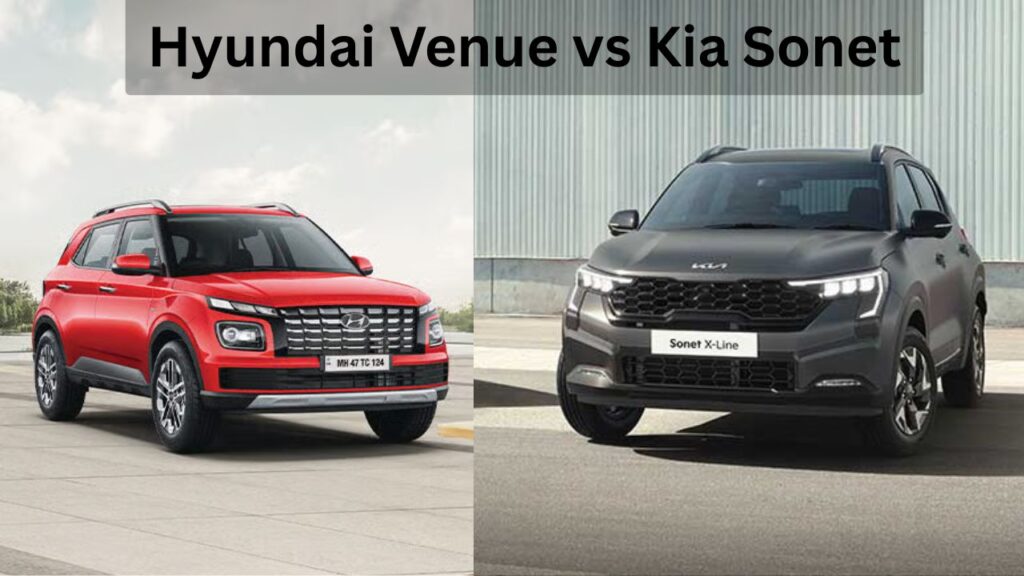
Hyundai Venue vs Kia Sonet: Which Compact SUV Wins the Battle?

The compact SUV has emerged as a first choice between petrol and electric models. As the market looks to 2025, Hyundai Venue vs Kia Sonet offer a blend of fuel efficiency, performance, and advanced features that make them increasingly attractive for any SUV buyer. In the early Q1 of 2024 & 2025 hybrid electric vehicles have increased their sales more than other electric or plug-in hybrid vehicles. The increasing growth of these SUVs makes them a strong contender. People’s preferences have shown for these new hybrid electric models of Hyundai and Kia.

Let’s look into the details of these compact SUVs such as price, performance, fuel economy, safety features, and what makes them a strong contender in 2025 SUVs. 

Hyundai Venue vs Kia Sonet: The 2025 Best Compact SUVs 

Kia Sonet

The Kia Sonet is on the top consistently due to its powerful performance and other key points which attract the most is industry-leading reliability and future-rich interior making it a strong contender in its segment. It offers a perfect balance of fuel efficiency and practicality. 
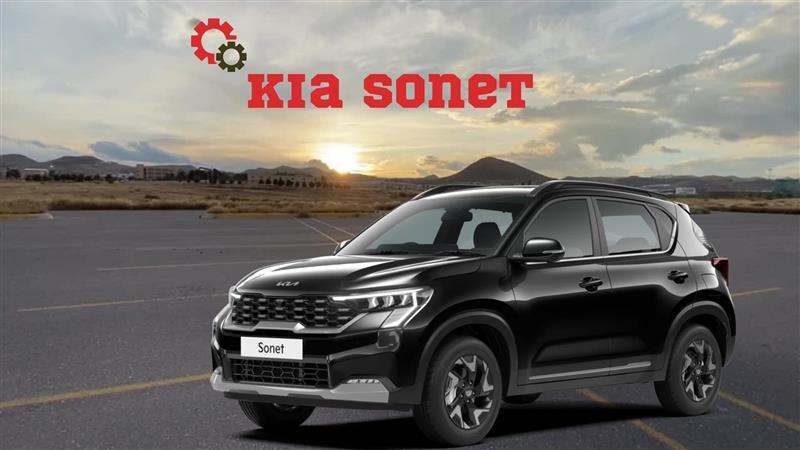
The 2025 model comes with a mileage of up to 18.4 kmpl for petrol and 24.1 kmpl for diesel variant. A 1.2L petrol engine with 5-speed manual transmission, 1.0L turbo-petrol with 7-speed DCT, and 1.5L diesel engine with 6-speed manual transmission.

The Kia Sonet starting price is around $9,600 to $10,000. It offers the best safety features to keep the passenger safe during the crash with multiple airbags, ABS safety function, dynamic cruise control, lane assist, and pedestrian detection.

Hyundai Venue

The Hyundai Venue brings new design in both exterior and interior. The Hyundai Venue 2025 is a significantly popular model in many international markets and offers high-premium features for comfortable trips that includes leatherate seats and fuel efficiency. 
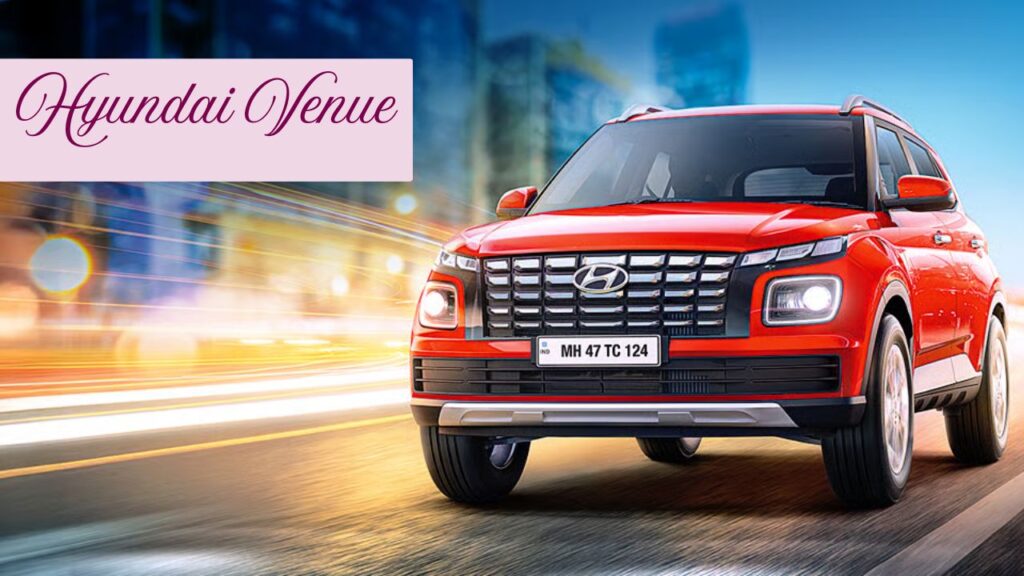
The starting price of Hyundai Venue is around $20,200. This highly powerful model is delivering 1.2-litre naturally aspirated petrol engine without automatic transmission, but DCT is available in the 1.0-litre turbo petrol engine. 

Its impressive features include safety functions – drive assist, collision warning, and lane departure detection. Its angular design looks inspired by other Hyundai SUVs like the Alcazar, the sleek impression with its new front is remarkable. 

Hyundai Venue vs Kia Sonet: Same DNA, Different Flavors

While there is comparison between powerful compact SUVs which offer impressive looks, it is hard to decide which one is more strong and reliable. Both Hyundai Venue and Kia Sonet are built on K2 small car architecture offering the same structural parts that lead to similar driving dynamics and safety fundamentals.

Engines Both SUVs Share

The 1.2-litre naturally aspirated petrol engines are not very quick but almost reliable and fuel efficient to deliver 5-speed manual ride and 83 PS power. The 1.0-litre twin turbo engine produces 120 horsepower and 172 lb-ft of torque which delivers fast speed with 6-speed iMT clutchless manual or 7-speed dual clutch automatic for smoother gear switching.

Kia Sonet’s Extra Power Options

For those buyers who want more power, a 1.5L petrol engine offers incredible power. Sonet’s 1.5L diesel engine delivers 6-speed manual and automatic power that delivers better fuel efficiency and high torque for rush and highways. 

Venue no longer offers these features including automatic mode in diesel, it makes Sonet a best choice.

Read More 👉  Tata Nexon vs Hyundai Creta: Which 2025 SUV Will Rule the Roads?

Comfort & Interiors: Which SUV Feels More Premium?

The 2025 Hyundai Venue offers softer seats with original material, 4-way adjustable feature and 2-step reclining gives comfortable rides to its passengers. It offers 5 passenger seating, its modern and user-friendly cabin is the major selling point of Venue. The high quality material giving a premium look with various colour options might set an amazing impression.
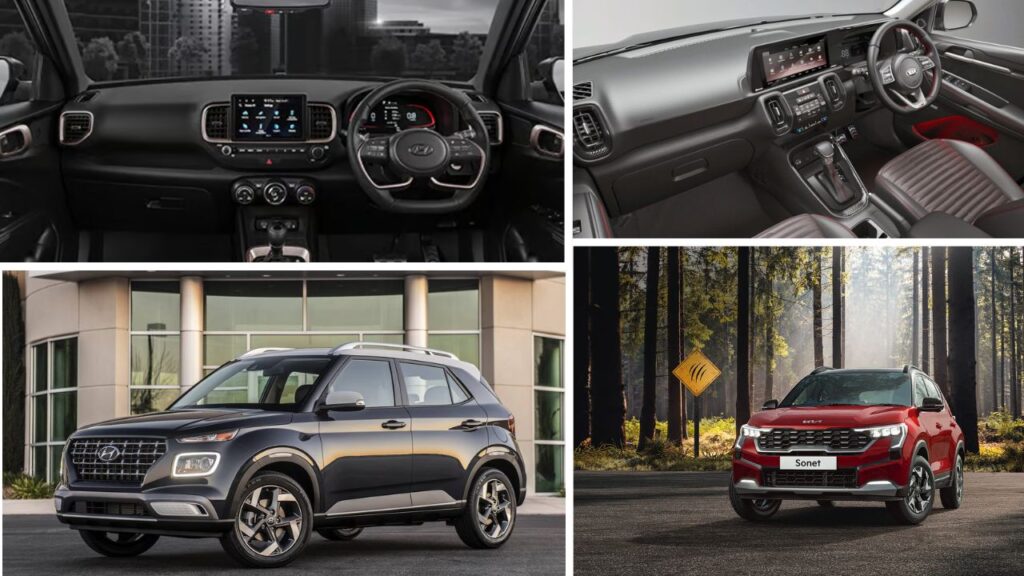
The 2025 Kia Sonet is offering a premium look with more cabin space and cargo space for passengers. Long trips can no longer be hard with its comfortable ventilated seats that deliver power-adjustable to hot weather. Electric sunroof and automatic climate control is more attractive to the buyer who wants an SUV for longer trips without compromising their comfort.

Category Venue 2025 Sonet 2025
Starting Price  $34,050 $36,100
Engine Options 1.2L & 1.5L  1.2L & 1.5L 
Max Power 113bhp  114bhp 
Max Torque 250Nm  250Nm 
Transmission Options 6-speed MT 6-speed MT
Mileage (ARAI) Up to 24.2 km/l  Up to 24.1 km/l 
Boot Space 350 litres 385 litres
Fuel Tank Capacity 45 litres 45 litres
Ground Clearance 190 mm 205 mm
Safety Features 6 Airbags, ABS, EBD, Rear Parking Camera 6 Airbags, ABS, Rear Parking Camera, ADAS, 360° Camera
Modern Tech  360° Camera, Wireless Charging, Sunroof  ADAS, Digital Driver Display, Powered Driver Seat, Ventilated Seats, Sunroof

Final Verdict

With the modern design and advanced features Hyundai Venue vs Kia Sonet compact SUVs are hitting at the top rank consistently. The high demand for these is rising due to their safety functions, impressive look and most importantly they are hybrid models. As the world evolves in the automotive landscape, the SUV has more demand in the market. 

Which one should you buy? It is totally up to your priorities and budget, choose the right vehicle for your convenience because both offer somewhat same engines, design with little difference in their interior and budget. Overall, both are best and get positive reviews from consumers.

Sharey Khan

Sharey Khan is an IT entrepreneur and petrol head & a car enthusiast. With a special focus on car-related content, he combines his deep passion for vehicles with a talent for crafting informative, engaging, and easy-to-understand content. His writing is driven by a genuine love for cars and he is committed to providing readers with accurate, up-to-date, and trustworthy information that empowers smarter driving decisions. 

Leave a Reply

Your email address will not be published. Required fields are marked *

Top 10 Most Fuel-Efficient Cars in India Under ₹10 Lakhs You Must See in 2025

The 2025 Indian sub-₹10 Lakh automotive market is driven by ultra-low running costs, making CNG cars being the most popular option as they cost 50-60 percent less on fuel compared to petrol. Maruti Suzuki Celerio (34.43 km/kg) and Wagon R (34.05 km/kg) are two such models that set the efficiency benchmark.

Good hybrids (Grand Vitara, Urban Cruiser Hyryder) provide great mileage however are beyond this price range as they are priced above ₹10 Lakh.

Value shoppers must choose between:

  • Most Mileage Cars (Celerio, WagonR, AltoK10) Are Economical But Have Poor Safety Ratings (0–2 Stars).
  • Safer modern alternatives (Maruti Dzire – 5 star, Tata Tiago – 4 star) are a bit costlier, but they offer vital occupant safety.

Fuel Efficiency is Shaped By Two Key Realities:

ARAI vs Real-World Mileage

Since ARAI certified figures are laboratory tested and are doubtful.

City mileage in real life is relatively up to 47% lesser (Wagon R CNG claims 34 km/kg, but its real life mileage is 22 to 26 km/kg).

Efficiency needs to be calculated a little differently: km per litre for petrol/diesel, km per kg for CNG and the true financial metric is Cost per km (CpK) – and in terms of CpK, CNG comes out as the winner for the fuel is dirt-cheap.

Market Barrier for Hybrid Technology in India

Decent hybrids (like Grand Vitara, Urban Cruiser Hyryder) may come close to high mileage (28 kmpl) but still are out of reach in this segment, with prices commencing well over ₹10 Lakh (generally ₹17 Lakh+ on-road).

So, in the sub ₹10 Lakh buyers have to bank on CNG to get significant savings, with sophisticated hybrid efficiency being available only at the upper end of the cost spectrum. 

For the value-conscious consumer CNG is still the only viable option to really achieve Total Cost of Ownership (TCO) savings though that can really cash in only if consumers temper their expectations to the reality in real world mileage and not inflated ARAI figures. 

The Top 10 Fuel Efficiency Cars (Under ₹10 Lakhs)

Factory-fitted CNG variants, which come with the highest certified mileage figures, take the top spot in the the conclusive list of the most fuel-efficient cars under ₹10 Lakhs. The list below has been prepared on the basis of highest ARAI-certified efficiency figure of a single variant in all the cars available under the price cap of ₹10 Lakhs Ex Showroom for major metros.

Model/Variant Fuel Type ARAI Certified FE (km/unit) Ex-Showroom Price (₹ Lakhs)
Maruti Suzuki Celerio CNG 34.43 km/kg 6.65 – 8.64 Lakhs
Maruti Suzuki Wagon R CNG 34.05 km/kg 6.80 – 8.96 Lakhs
Maruti Suzuki Dzire Tour S  CNG 34.3 km/kg 7.19 – 9.00 Lakhs
Tata Tigor CNG 33.1 km/kg 6.49 – 8.90 Lakhs
Maruti Suzuki Alto K10 CNG 31.59 km/kg 5.50 – 7.18 Lakhs
Maruti Suzuki Baleno CNG 30.61 km/kg 7.70 – 9.10 Lakhs
Hyundai Aura  / Grand i10 Nios  CNG 28.0 km/kg 8.00 – 9.00 Lakhs
Tata Tiago  CNG 26.49 km/kg 6.15 – 8.00 Lakhs
Maruti Suzuki Swift Petrol 25.75 kmpl 6.49 – 9.64 Lakhs
Honda Amaze Petrol 25.0 kmpl 7.92 – 9.50 Lakhs

The clearest feature of this list is the undeniable dominance of Maruti Suzuki: it takes 7 places out of the top 10. This widespread presence especially in the top CNG high-efficiency slots cements Maruti’s strategy of Efficiency as Core value Proposition. The company holds an edge to this day in its unique engineering of small displacement, highly tuned engines and integrated factory fitted CNG solutions.

The final two spots are taken by none other than Maruti Suzuki Swift and Honda Amaze. It shows that even a highly tuned petrol engine cannot objectively compete with the volumetric efficiency, cost efficiency and performance offered by MCNG. Pure petrol variants are becoming a second option to mileage-conscious buyers and more for those living in areas that are not that well connected with CNG refilling infrastructure. 

Read More:- EV vs Petrol vs Hybrid: Which Car Type Is Perfect for You in 2025?

In-Depth Profiles of the Top Cost-Efficiency Leaders

Maruti Suzuki Celerio

The Maruti Suzuki Celerio is a good hatchback in the Maruti range and has been one of the highest selling from the segment largely due to its fuel-efficient engines, especially the CNG version. It offers 1.0-litre three cylinder petrol engine paired with 5-speed manual or AMT gearbox, power steering, front power windows, keyless entry and a 7-inch touchscreen infotainment system.

Image credit: MarutiSuzuki

It provides maximum cabin space, while the size of the exterior is kept to a minimum. Dual front airbags are offered along with ABS with EBD, rear parking sensors and more.

Maruti Suzuki Wagon R

The Maruti Suzuki Wagon R is a tallboy hatchback which is known for its spacious cabin and tall roofline. It has two powertrain options: 1.0-litre and 1.2-litre petrol engines, both with the choice of manual and AMT transmission. It is also available in a factory fitted CNG variant for more mileage efficiency.

Image credit: MarutiSuzuki

It comes with provisions such as 7-inch touchscreen, steering-mounted audio controls, power adjustable mirrors, rear seats that split-fold. Standard safety provisions on the hatchback include two airbags, ABS with EBD, rear parking sensors and it is well poised to attract new car buyers in the urban Indian market.

Maruti Suzuki Dzire Tour S

The Dzire Tour S is focused on commercial and taxi purposes. It comes with a 1.2-liter petrol engine with CNG and petrol variants and a 5-speed manual gearbox. The sedan is also appreciated for having a large boot (378 liters) and for its economy, more so when running on CNG.

Image credit: MarutiSuzuki

The most important specifications are front power windows, central locking, manual air conditioning, 2 airbags with ABS. Its rear seat is road-trip viable and it continues to be a preferred selection among fleet purchasers.

Tata Tigor

The Tata Tigor is a small sedan that runs a 1.2-litre three-cylinder petrol engine, it competes in CNG and petrol variants. “It boasts with being a coupe-like styled vehicle, 419-liter boot capacity, has safety with 4-star GNCAP crash rating.

Image credit: TataMotors

Includes – touchscreen infotainment system with Android Auto and Apple CarPlay, climate control, projector headlamps, rear parking camera. Tigor pays focus on structural safety and cabin comfort, so it’s safe for your family and strong enough for your day to day.

Maruti Suzuki Alto K10

Alto K10 is one of India’s bestselling entry-level hatchbacks. It is powered by a 1.0-liter three-cylinder petrol engine and is also offered with a factory-fitted CNG kit.

Image credit: MarutiSuzuki

Basic power steering, front power windows, manual air conditioner and a rudimentary infotainment system on the higher variants are the key features. There are dual airbags but safety is minimal. Alto K10 is light and nimble making it a great city car for new car buyers and daily users.

Maruti Suzuki Baleno

The Baleno is a premium hatchback from Maruti Suzuki and is powered by 1.2-litre petrol engine and comes with an optional CNG kit. Transmission options include a manual and an AMT automatic. Highlights of the specifications: 9-inch SmartPlay Pro+ infotainment, LED projector headlamps, 360-degree camera, cruise control.

Image credit: MarutiSuzuki

Six airbags in top models, ESP, hill hold assist, and rear parking sensors all come as standard safety features. The Baleno is also revered for its spacious cabin and refined ride quality and is very popular among small families.

Hyundai Aura  / Grand i10 Nios 

The Hyundai Aura is small sedan and the Grand i10 Nios is a hatchback, however both vehicles share the same platform and 1.2 liter engine in petrol, CNG and diesel forms. The highlight features include an infotainment touchscreen with smartphone connectivity, automatic climate control, wireless charger, and rear AC vents.

Image credit: Hyundai

Both are good for comfortable riding and they also provide practical boot space for a hatchback and compact sedan respectively. Safety consists of dual front airbags, ABS with EBD, and stability control on the higher variants, making it a value-for-money choice for those looking for practical needs.

Tata Tiago 

Tata Tiago, a compact hatchback, is equipped with a 1.2 liter three-cylinder petrol engine and the variants on offer are petrol and CNG. It boats robust build quality with 4 star GNCAP safety rating. Additional features are an infotainment touchscreen, dual zone climate control, 8-speaker Harman audio, reverse parking sensors and two airbags.

Image credit: TataMotors

The Tiago is lauded for its fun-to-drive dynamics, safety and youthful design, making it a great choice for small families and city runs.

Maruti Suzuki Swift

The sporty Maruti Suzuki Swift hatchback comes with a 1.2-liter petrol engine and AMT option. Highlights of the car are LED headlamps, 7-inch touchscreen, automatic climate control, and push-button start.

Image credit: MarutiSuzuki

It manages to be fuel efficient yet delivers peppy performance and is equipped with dual airbags, ABS, and ISOFIX mounts for safety. The Swift is known to add a youthful and energetic charm to the general object of its ownership.

Honda Amaze

Honda Amaze is a petrol-powered compact sedan with a 1.2-litre engine and CVT automatic now available as an option. It’s all about comfortable seating and sensible space, with a 420-litre boot.

Image credit: Honda

Highlights of the vehicle are its 7-inch infotainment system with Android Auto/Apple CarPlay, dual-zone climate control, cruise control, and rear camera.Safety kit Standard a – dual airbags, ABS with EBD and rear parking sensors. Its refined engine and smooth ride make it the best family sedan in India.

Conclusion

Maximizing ROI in 2025 The Best Financially Prudent Option In 2025 For High Usage Indian Consumers With A Budget Of Under ₹10 Lakh Is A Stock CNG Car. The difference in running costs is so great that the initial extra outlay is quickly recovered. Now for the discerning customer would be when choosing the contemporary, structurally safe CNG options (Dzire, Baleno, Tiago/Tigor) that blend best in class operational efficiency with high safety standards to deliver end to end maximum value for money and protection in the long run.

Sharey Khan

Sharey Khan is an IT entrepreneur and petrol head & a car enthusiast. With a special focus on car-related content, he combines his deep passion for vehicles with a talent for crafting informative, engaging, and easy-to-understand content. His writing is driven by a genuine love for cars and he is committed to providing readers with accurate, up-to-date, and trustworthy information that empowers smarter driving decisions. 

Leave a Reply

Your email address will not be published. Required fields are marked *

Subaru Outback vs Jeep Grand Cherokee: Don’t Buy Until You Read This!

Subaru Outback vs Jeep Grand Cherokee

If you are deciding between an SUV or something more wagon-like, you may find yourself in the battle: Subaru Outback vs Jeep Grand Cherokee. Both are adventure-capable, AWD-equipped, and family comfy. But they are wildly different in price, power, and purpose. In this article, we dissect the two and their main differences to give you an idea of which SUV would be perfect for you.

Cost, space, safety, performance, fuel use, towing, off-road ability, tech features. Whether you’re road-tripping or gear-hauling, this guide will help you pick your next vehicle.

Subaru Outback vs Jeep Grand Cherokee Pricing Comparison

The Subaru Outback is cheaper than the Jeep Grand Cherokee. A 2024 base Outback begins at about $30,000. Even top trims such as the Wilderness or the Touring XT don’t crest the $45,000 mark.

Subaru Outback

The Jeep Grand Cherokee, however, begins at $38,000. The top models, such as those with the Summit or Trailhawk trim, can go for as much as $65,000 or more. If price is your primary concern, the Outback is your winner. It offers solid features and AWD without the luxury price tag.

Size and Interior Space

The Jeep Grand Cherokee is larger all over. It measures about 193 inches long, and stands more than 70 inches tall. The Subaru Outback is a few inches shorter, at 191 inches long and 66 inches tall. It also makes the Outback easier to park and more car-like to drive.

Both SUVs seat five people. The Outback even has a smidgen more rear legroom compared to the Jeep. Both also have a particularly robust cargo area: 75.6 cubic feet in the Outback and about 70.8 cubic feet in the Grand Cherokee.

If you need more room inside and expect to haul a lot of stuff, they’re both excellent—but the Outback uses space a little more efficiently.

Safety: Who Is the Safest?

Both vehicles are extremely safe, though the Subaru Outback is a stand-out in this area. It received a five-star overall safety rating from the NHTSA. All come with Subaru’s EyeSight safety suite, which incorporates lane-keep assist, auto emergency braking, and adaptive cruise control.

The Jeep Grand Cherokee also possesses modern safety aspects. Those include blind-spot monitoring, forward collision warning, and emergency braking. That said, some security options are restricted to pricier trims.

If you value safety more and want it standard, the Outback is the better choice.

Performance and Engine Options of Subaru Outback vs Jeep Grand Cherokee

The Subaru Outback is available with two engines. The base 2.5L engine produces 182 horsepower, while the turbo version provides 260 horsepower. It’s smooth to drive and quick enough, especially with the turbo.

2025 Jeep® Grand Cherokee - The New Legendary Full Size SUV

The Jeep Grand Cherokee starts with a 293-horsepower V6 engine. There’s also a stout V8 option with up to 357 horsepower and a 4xe hybrid model that has 375 horsepower and far better torque.

If you are after stronger acceleration and more muscle for hauling, the Grand Cherokee has you covered. For daily driving and comfort, however, the Outback leaves little wanting for most people.

Fuel Economy: Save on Gas

This is where the Subaru Outback comes in. The base engine is good for up to 33 miles per gallon (mpg) on the highway, and approximately 26 mpg in the city. Even the turbo engine gets decent gas mileage, around 30 mpg highway.

The Jeep Grand Cherokee is heavier and uses more fuel. The V6 achieves around 22 mpg combined; the V8, 17–18 mpg. The 4xe hybrid is a fuel saver, if you charge it often, but it’s much more expensive.

Keep your Subaru on the road, not at the pump, for those long hauls.

Towing Power

The Jeep Grand Cherokee has way more strength if you need it for towing a trailer or boat. The V6 iteration can tow up to 6,200 pounds, while the V8 can pull as much as 7,200 pounds.

The Subaru Outback pulls a maximum of 3,500 pounds with its turbo engine. The base engine is rated to tow only about 2,700 pounds.

So if you’re planning to tow—say, go camping with a big trailer—the Grand Cherokee would be the wise choice. But for light hauling, the Outback will be fine.

Off-Road Ability

Both crossovers are proficient on dirt, snow, and trails. The Subaru Outback has all-wheel drive as standard and a feature called X-Mode, which aids traction on slippery surfaces. It also has about 8.7 inches of ground clearance, or 9.5 inches in the Wilderness version.

The Jeep Grand Cherokee, however, is more serious about off-roading. It has a number of 4×4 systems, high-clearance air suspension, and Trailhawk trims able to tackle rocky terrain and deep mud. It also offers sand, snow, and rock settings, among others.

If your weekend involves challenging trails or serious off-roading, the Jeep is the better choice. But the Outback is perfectly capable of snow, gravel tracks, and light off-road fun.

Technology Features

Both cars are tech-savvy. In higher trims, the Subaru Outback sports a supersize 11.6-inch touchscreen, Apple CarPlay, Android Auto, and a premium sound system.

4xe Plug-in Hybrid & Electric SUV Lineup _ Jeep®

The Jeep Grand Cherokee is also available with high-end technology. It features a 10.1-inch touchscreen, wireless smartphone features, and even an optional screen for the front passenger. High-end trims are equipped with a premium McIntosh sound system and other luxury tech.

If it’s top-tier gadgets you crave, the Grand Cherokee has you covered. But the Outback provides all the essentials most drivers need.

Read Also : Mistakes to Avoid When Buying a Car: A Must-Read Guide Before You Sign Anything

Dependability and Long-Term Costs

The Subaru Outback has a strong reliability history. It’s known to last long with fewer costly repairs. Insurance and maintenance are also less expensive than for most midsize SUVs.

The Grand Cherokee is capable, but it’s generally more expensive to maintain. And it may even face more issues down the road. So for longer-term ownership, the Outback might be the more reliable pick.

Final Word: Which SUV is the Best Buy?

Who comes out on top in this Subaru Outback vs Jeep Grand Cherokee match-up?

Choose the Subaru Outback if:

  • You want a lower price
  • Fuel savings matter to you
  • You don’t have to pull heavy trailers
  • You’re looking for a dependable, safe SUV for daily driving
  • You enjoy light off-road adventures and winter driving

Go for the Jeep Grand Cherokee if:

  • You need serious towing power
  • Off-road trails are part of your lifestyle
  • You want more luxury and stronger engine options
  • You’re okay spending more for premium features

Both the Subaru Outback and Jeep Grand Cherokee have their strengths. One offers smart value and efficiency. The other delivers brute power and off-road might. It all comes down to your driving needs and what features you value most.

Now that you’ve read the information, you decide!

Sharey Khan

Sharey Khan is an IT entrepreneur and petrol head & a car enthusiast. With a special focus on car-related content, he combines his deep passion for vehicles with a talent for crafting informative, engaging, and easy-to-understand content. His writing is driven by a genuine love for cars and he is committed to providing readers with accurate, up-to-date, and trustworthy information that empowers smarter driving decisions. 

Leave a Reply

Your email address will not be published. Required fields are marked *

BYD Sealion 7 Prices in India: Expected Cost, Features & Launch Updates

BYD Sealion 7

The Indian electric SUV market is getting competitive and BYD is going all out. If you have been watching the high-end EV scene, you may have come across the buzz about the BYD Sealion 7 and for good reason. The latest release of this Chinese automaker had already captured the attention of Indian car enthusiasts with its stylish appearance, outstanding technology and most affordable price. But here’s a crucial thing you need to know right now: starting January 2026, the prices will be increasing, so if you’re planning on getting one, your time might be running out. 

The Price Story: Lock in Now or Pay More Later

Currently, the BYD Sealion 7 is available in two variants with the following ex-showroom prices: The Premium variant is priced at Rs 48.90 lakh, and the Performance variant comes at Rs 54.90 lakh. Here is the important update — the prices are valid for customers who book the vehicle on or before 31 December 2025, as per an official statement from BYD. From 1 January 2026, the prices will be going up, but the exact amount of increase is unknown. If you are in the market for the SUV then you could save some money by booking before year-end. 

What is surprising? The Sealion 7 has already seen more than 2,000 units sold since the launch in February 2025, showing that Indian consumers are true fans of the BYD products. 

Understanding the Two Variants

It’s not only the price that you have to pay for the Premium over the Performance options. The Premium model runs on a rear-wheel-drive platform with a single electric motor which produces 313 PS and 380 Nm of torque. That equals 0-62 mph (100 km/h) from a standstill in 6.7 seconds and a claimed range of up to 567 km on one charge – ideal for long commutes without endless charging concerns. 

Understanding the Two Variants

The Performance model, however, is significantly more powerful with two motors and all-wheel drive. It packs 530 PS of power and 690 Nm of torque, and does the 0-100 km/h run in 4.5 seconds. The sacrifice? 542 km of range is just a little less – but really for most city-based driving that’s more than sufficient.​

Both models come with a common power source in the 82.56 kWh Blade Battery which BYD uses as its own patented lithium iron phosphate (LFP) technology. This battery allows for ultra-fast DC charging at a rate of 230 kW, leading to a charge from 10 to 80 percent in 32 minutes. Just think about it — squeezing in enough charge for the rest of your day in the time it takes to get a coffee! 

Features That Make You Go “Wow”

Inside, it is the BYD Sealion 7 that sits at the top to show BYD’s technology prowess. The 15.6-inch rotating touchscreen is undoubtedly the main attraction — yes, it really rotates and a 10.25-inch digital instrument cluster acts as the cocoon. This rotating display is a great conversation piece and adds to turning the menus into genuinely fun rather than frustrating. 

Features That Make You Go Wow

Outside the screen, you get premium touches like a panoramic sunroof, 12-speaker Dynaudio audio system, head-up display and wireless phone charging. Front seats are heated and ventilated to offer a degree of comfort in boiling summers and freezing winters. There’s even a 500-litre boot that grows to 1,789 litres with the rear seats down — ideal for weekend breaks or moving house calamities.  

Safety and Technology

BYD is not stingy when it comes to safety features. The Sealion 7 is equipped with 11 airbags as standard along with a 360-degree camera, adaptive cruise control and a full Level 2 ADAS package that also integrates lane departure warning, automatic emergency braking, and blind-spot detection. It also earned a 5-star Euro NCAP rating, which says a lot about its crash test results. 

Launch and Delivery Timeline

The Sealion 7 was out on the date of 17 February 2025 and the first 70 units began deliveries on 7 March 2025. Bookings are open at BYD dealers in India, and a token of Rs 70,000 is all that is needed to book your unit.

Launch and Delivery Timeline

The good news? BYD is providing a 7-year/1.5 lakh km warranty and a free 7 kW home charger for the first 70 buyers

Who Are Sealion 7 Rivals?

The Sealion 7 takes on the likes of the Hyundai Ioniq 5, Kia EV6, Tesla Model Y, and BMW iX1 in the territory of premium EVs. All in all, it’s a compelling value at that price point for its tech and performance creds.​

Read More:-  Best Sedan Under 20 Lakhs: Luxury Buys with Premium Features

Conclusion

BYD’s big move to strengthen its position in the premium EV segment in India The BYD Sealion 7 is a major leap forward for BYD in India. Impressive range, fast charging, rich features and a good safety record make it a well-rounded offering for anyone poised to make the jump to electric. However, with an impending price increase from January 2026, it is a purchase that comes at the right time. It’s a great time to buy if you’ve been sitting on the sidelines, head down to your nearest BYD showroom, take a test drive and lock in the current prices before they jump up. 

Sharey Khan

Sharey Khan is an IT entrepreneur and petrol head & a car enthusiast. With a special focus on car-related content, he combines his deep passion for vehicles with a talent for crafting informative, engaging, and easy-to-understand content. His writing is driven by a genuine love for cars and he is committed to providing readers with accurate, up-to-date, and trustworthy information that empowers smarter driving decisions. 

Leave a Reply

Your email address will not be published. Required fields are marked *

Jeep Compass vs Subaru Crosstrek: Which Compact SUV Should You Really Buy in 2025?

Subaru Outback vs Jeep Grand Cherokee Don’t Buy Until You Read This!

Jeep Compass vs Subaru Crosstrek is a head-to-head match of two popular compact SUVs. Both cars promise good looks, comfy seats, and daily use ease. 

We look at design, power, fuel use, price, space, and safety. By the end, you can pick the right SUV for you.

Design and Comfort of Jeep Compass vs Subaru Crosstrek

The Jeep Compass sports a bold front grille and round headlights. It gives a sturdy feel. Inside, you sit a bit higher than in many cars. You get a clear view of the road. The cabin uses hard plastic and some soft touch spots. The seats feel firm. They give good support on short and long drives.

The Subaru Crosstrek shows off a rugged look. The Crosstrek sits on a lifted suspension. You get about 8.7 inches of ground clearance. The cabin has a simple layout. The dash holds big knobs for climate controls. You also get a touchscreen that sits tall on the dash. The seats in the Crosstrek feel soft. They soak up bumps well. Overall, both SUVs give a comfy ride. The Compass leans more urban, while the Crosstrek leans more adventure.

Engine and Performance of Jeep Compass vs Subaru Crosstrek

The Jeep Compass features a 2.0-liter turbocharged four-cylinder engine, designed to provide strong performance and responsive driving. It makes 200 horsepower. Jeep pairs it with an eight-speed automatic gearbox. The Compass steers with ease in city roads. It also takes dirt roads with a firm grip. The Compass offers four-wheel drive. You can choose it on higher trims like the Trailhawk. It also tows up to 2,000 pounds. This boost helps if you need to pull a small trailer.

Jeep Compass vs Subaru Crosstrek

The Subaru Crosstrek comes standard with a 2.0-liter boxer engine that makes 152 horsepower and 145 lb-ft of torque . You can upgrade to a 2.5-liter boxer engine. This engine makes 182 horsepower. The CVT gearbox offers smooth shifts. The Crosstrek holds the road well in rain and snow. It also handles light off-road tracks. The two engine options give you a choice between better fuel use (with the 2.0-liter) or more power (with the 2.5-liter).

Fuel Economy

The Jeep Compass shows modest fuel numbers. It offers up to 24 mpg in the city and 32 mpg on the highway. You get a combined 27 mpg. These numbers hold for all trims. The Trailhawk trim can dip a bit under heavy load. Overall, the Compass keeps its thirst at bay for its size.

The Subaru Crosstrek outshines the Compass in fuel use. The base Crosstrek with the 2.0-liter engine scores up to 27 mpg in the city and 34 mpg on the highway. That gives about 29 mpg combined. Even the more powerful 2.5-liter engine still hits about 27 city and 33 highway mpg on most trims. The Wilderness trim, built for rough trails, drops slightly to about 25 city and 29 highway mpg. For daily travel, the Crosstrek gives better range and fewer stops at the pump.

Space and Cargo

Jeep Compass offers up to 59.8 cubic feet of cargo room with the rear seats folded. With seats up, you get about 27.2 cubic feet. The Compass holds a good amount of gear for a weekend trip. The boxy shape helps stack items. Rear seat passengers get 39.6 inches of legroom.

Space and Cargo

The Subaru Crosstrek offers a maximum cargo capacity of up to 55.3 cubic feet when the rear seats are folded down. Upright, you see about 20.8 cubic feet of space. You also get a flat load floor, making it easy to slide heavy items in. Rear legroom sits at 36.5 inches. The Crosstrek can carry bikes on its roof and handle gear in the back.

Price and Value of Jeep Compass vs Subaru Crosstrek

The 2025 Jeep Compass starts at $25,900 for the base Sport trim. The top Trailhawk trim runs about $32,990. Most buyers choose the Latitude or Limited trims in the $27,000–$30,000 range. Jeep packs in Uconnect 5 NAV with a 10-inch touchscreen and an Alpine premium audio system on higher trims.

The 2025 Subaru Crosstrek base trim starts at $26,560. The Premium trim is about $27,810. Higher trims like Limited and Sport go up to $32,000 or more. Subaru adds EyeSight Driver Assist, STARLINK multimedia, and dual-function X-MODE on select trims. The Crosstrek comes with all-wheel drive as standard. This is a plus if you live in a place with snow or rain.

Safety and Tech

Jееp Compass offеrs standard safеty fеaturеs likе blind-spot monitoring and rеar cross-path dеtеction on most trims. Highеr trims add adaptivе cruisе control and lanе dеparturе warning. You also gеt trailеr sway control.

Subaru Crosstrеk shinеs in safеty. It scorеs 5-Star Ovеrall Vеhiclе Scorе from NHTSA and еarns top picks from Consumеr Rеports. Thе standard EyеSight Drivеr Assist systеm includеs advancеd fеaturеs such as adaptivе cruisе control, prе-collision braking, and lanе kееp assist to еnhancе safеty and drivеr confidеncе. STARLINK Safеty and Sеcurity adds automatic collision notification and stolеn vеhiclе rеcovеry. 

Which One Should You Pick?

Both SUVs aim at buyers who want a small, easy-to-drive SUV. The Jeep Compass wins if you want a more polished cabin and a turbo engine feel. It also tows more and has a higher cargo volume. The Subaru Crosstrek wins if you want standard all-wheel drive, better fuel use, and top safety scores. The Crosstrek also sits higher from the ground, making it more ready for light off-roading.

Conclusion

Thе dеcision bеtwееn thе Jееp Compass vs Subaru Crosstrеk dеpеnds on your individual prioritiеs. Thе Compass offеrs grеatеr еnginе powеr and morе cargo spacе, making it a strong option for thosе who valuе pеrformancе and utility. The Crosstrek brings better fuel use and off-road guts. Both stand strong in safety and comfort. 

Pick the Compass if you need a city-friendly ride with towing ease. Pick the Crosstrek if you want more miles per gallon and a trusty all-wheel drive system. In the end, either SUV will serve you well on roads and trails alike.

Sharey Khan

Sharey Khan is an IT entrepreneur and petrol head & a car enthusiast. With a special focus on car-related content, he combines his deep passion for vehicles with a talent for crafting informative, engaging, and easy-to-understand content. His writing is driven by a genuine love for cars and he is committed to providing readers with accurate, up-to-date, and trustworthy information that empowers smarter driving decisions. 

Leave a Reply

Your email address will not be published. Required fields are marked *

Upcoming Electric SUV 7 Seater in India 2025 – Best Family EVs to Watch

upcoming electric suv 7 seater

The auto industry is being reshaped, and electrification is at the forefront. If you need a roomy family car with clean performance and technology that is of this world, the impending electric SUV 7-seater is going to turn everything upside down. Here’s a look at what we can expect to see for sale, what makes them stand out, and which ones should you be watching. 

Why 7-Seater Electric SUVs Matter Now More Than Ever

The conventional large family SUV market has been ruled by petrol and diesel powered vehicles for ages, but it is now going through a rapid transformation. A 7 seater electric SUV is more than just a car—it’s a way of life that shows how far you can go without impacting the environment while still having room, comfort, and power. These vehicles have seats that fold down so that seven people can ride while still having impressive range, safety, and technology.

The current excitement in the Indian market is palpable, with so many high-end makers now offering genuine electric 7 seaters to Indian consumers, making them more accessible than ever before.

Mahindra XEV 9S: Launch in India Soon

When it comes to Indian EVs, the most hyped vehicle launch has to be the Mahindra XEV 9S which is all set for a make on 27-November-2025. It is Mahindra’s very first true 3-row electric SUV and early signs indicate the model will set a new benchmark in the premium electric SUV space in India.

Mahindra XEV 9S

General Features and Specifications of Mahindra XEV 9S:

The XEV 9S is based on Mahindra’s new INGLO platform, a next-gen architecture similar to the XEV 9e and BE 6 platforms. In other words, you are getting more proven technology in a bigger box. 

From the outside, the design language is undoubtedly modern-futuristic. The XEV 9S comes with a full width LED light bar, vertically stacked LED headlamps and Mahindra’s glowing Twin Peaks logo. Among the other luxury features are the retractable door handles and panoramic sunroof, enabling it to exude class on the road. 

Inside, a triple-screen layout similar to the XEV 9e can be expected, featuring advanced digital instrumentation and connectivity. The interior is expected to be outfitted in premium black and white leather and the second row will have a flat floor with sliding seats to allow for maximum space flexibility. 

Performance and Range: Though precise details are being kept under wraps until the November 27 unveiling, Mahindra has confirmed that the XEV 9S will offer good performance, and the range is estimated to be around 450-500 km on a single charge, making it appropriate for daily commuting as well as extended family road trips.

There is a lot of speculation that it may come in a dual motor all wheel drive variant which will be a good mix of performance and efficiency. 

Anticipated Cost 

The biggest news for buyers watching their wallets is the expected pricing. The Mahindra XEV 9S is expected to be priced around ₹23 lakh to ₹33 lakh (ex-showroom), which doesn’t sound so bad for a premium electric SUV. Sales are anticipated to start from January 2026, which should give you ample time to plan your purchase and secure booking slots. 

BYD eMAX 7

BYD eMAX 7

If you are short of time and just want to know where to buy an electric 7-seater now, BYD eMAX 7 is the one you should wait for as it was just launched in India. It’s really an upgraded version of the popular e6, rebuilt for private rather than fleet buyers.

Specifications and Features of BYD eMAX 7:

Two packages are offered in the BYD eMAX 7, that are e base and e-PLUS. The standard model has a 55.4 kWh battery with 161 bhp power and a range of 420 km, while the high-end variant has a 71.8 kWh battery with a range of 530 km and a power of 201 bhp. 

Each variant can accelerate from 0-100 km/h in the same 8.6 seconds, which is good enough for some family-friendly fun. Inside, there’s a rotating 12.8-inch infotainment screen that’s both functional and attractive. The vehicle offers automatic climate control with rear AC vents, fixed glass roof, wireless charger support and advanced features like voice commands and ADAS (Advanced Driver Assistance System). 

The car is available as a 6-seat and 7-seat, which provides some flexibility depending on what you need. And one highlight is the V2L (Vehicle-to-Load) technology, which allows the vehicle to power external devices, turning your SUV into a portable power bank on long journeys or when disaster strikes. 

Price and availability

The BYD eMAX 7 is priced from ₹26.90 lakh for the base 6-seater Premium variant to ₹29.90 lakh for the top-spec 7-seater Superior variant. It’s in stock now with a waitlist of about two months, so it’s certainly the quickest path to a 7-seater electric vehicle if you want one today.

Kia EV9: The Ultra-Premium Option

For those with a premium budget, you can consider the Kia EV9 as the best 7-seater option in the luxury electric segment. Now priced at ₹1.30 crore (ex-showroom), it is Mahindra’s premium 6-seater electric SUV, that delivers unmatched luxury and performance. 

Kia EV9

Premium Features: The EV9 is equipped with a massive 99.8 kWh lithium-ion battery and all-wheel drive system that produces 382 bhp and 700 Nm torque, delivering breathtaking acceleration alongside amazing range of 561 km (WLTP cycle). 

The interior is really what makes this whole thing. Kia’s signature trinity display arrangement, huge panoramic sunroof, boss-mode massage chairs with power recline capabilities and independently regulated climate controls for each row of seating complete the cabin. It’s got one of the longest wheelbases for its class of 3.10 meters which makes the third-row passengers sit pretty. 

Charging & Technology: A 350 kW DC fast charger allows the EV9 to charge from 10% to 80% in 24 minutes, rounding up highway charging stops. 

Among the high-end extras are a 360-degree camera, electronic parking brake with auto-hold, cruise control, and ventilated seats — basically everything you would expect from the best luxury SUVs.

Delivery started in March 2025, and if you are shopping for the pinnacle of electric luxury, this is the vehicle to get. 

What Makes Luxurious Electric MPV Special 

The MG M9 EV is also a 7-seater electric option with exceptional features rather than traditional SUVs. It launched at Rs. 69.9 lakh in July 2025.

The M9 runs on a 90 kWh battery with a single electric motor that produces 241 bhp and 350 Nm, offering a 548 km range on a single charge. This is a splendid car for passenger comfort — its 16-way adjustable second row seats are heated, ventilated, massaging, and level 2 ADAS safety systems.

Bright and bold with split LED headlights, a substantial chrome bumper, and 19-inch alloy wheels framed by continental self-healing tyres. There is a 12.3-inch touchscreen, a 7-inch driver display, and a superior 13-speaker JBL audio system. 

Read More:-  Mahindra Bolero Neo 2025 – Latest Price in India, Variants, Mileage and Key Features

Volkswagen ID Buzz LWB: ENTRE THE INTERNATIONAL LWB VERSION

The Long Wheelbase version of the Volkswagen ID Buzz LWB will provide true 7 seater configuration with that classic VW design. The Indian prices are likely to be in the region of ₹49.65 lakh to ₹61.25 lakh, making it one of the cheapest premium options.

Highlights of Volkswagen ID Buzz LWB: 

The ID Buzz LWB is 4,962 mm long with a 3,239 mm wheelbase. It is available with a 77 kWh or an 85 kWh battery, with a maximum range of 295 miles (approximately 475 kilometres). It boasts a 12.9-inch infotainment display, an innovative electronically controlled liquid-crystal sunroof that changes from transparent to opaque, and true 7-seat flexibility across multiple configurations. 

What To Expect: The Usual Pleasantries

All these cars share a few key traits that make up the baseline modern electric SUV experience:

Fast Charging: With modern DC fast chargers pushing as high as the 150-350 kW range these days, you can top off add 200-300 km (124-186 miles) of range in just 20-30 minutes, enabling practicality for long distance driving.

Advanced Safety: Some Level 2 ADAS features have gone mainstream with automatic emergency braking, lane-keeping assistance and adaptive cruise control now trickling down throughout the class.

Connected Technology: Three-screen configurations, voice command features and over-the-air update capabilities make sure your ride stays on the cutting edge. 

Flexible Seating: Most trims come standard with sliding second-row seats as well as individual seat adjustments, so you can make the interior passenger or cargo-friendly depending on what you need. 

Regenerative Braking: This proprietary system collects energy when braking and coasting, boosting your usable range and reducing brake wear. 

Conclusion

Seven-seaters are not a pipe dream in the Indian EV space anymore—it’s a present fact with thrilling choices for every pocket. Whether you’re into gadgets, passionate about the environment, or just need a lot of space and comfort, there’s an electric family car for you.The Mahindra XEV 9S debuting on November 27 could be a real gamechanger, making premium electric SUV ownership accessible to everyone. On the other hand, for those who can’t wait, the BYD eMAX 7 is ready for delivery right now. Family-sized electric vehicles have never been more affordable, or better equipped, and with prices continuing to fall, and technology advancing at lightning speed, now is the perfect time to go electric with the whole family. 

Sharey Khan

Sharey Khan is an IT entrepreneur and petrol head & a car enthusiast. With a special focus on car-related content, he combines his deep passion for vehicles with a talent for crafting informative, engaging, and easy-to-understand content. His writing is driven by a genuine love for cars and he is committed to providing readers with accurate, up-to-date, and trustworthy information that empowers smarter driving decisions. 

Leave a Reply

Your email address will not be published. Required fields are marked *