0

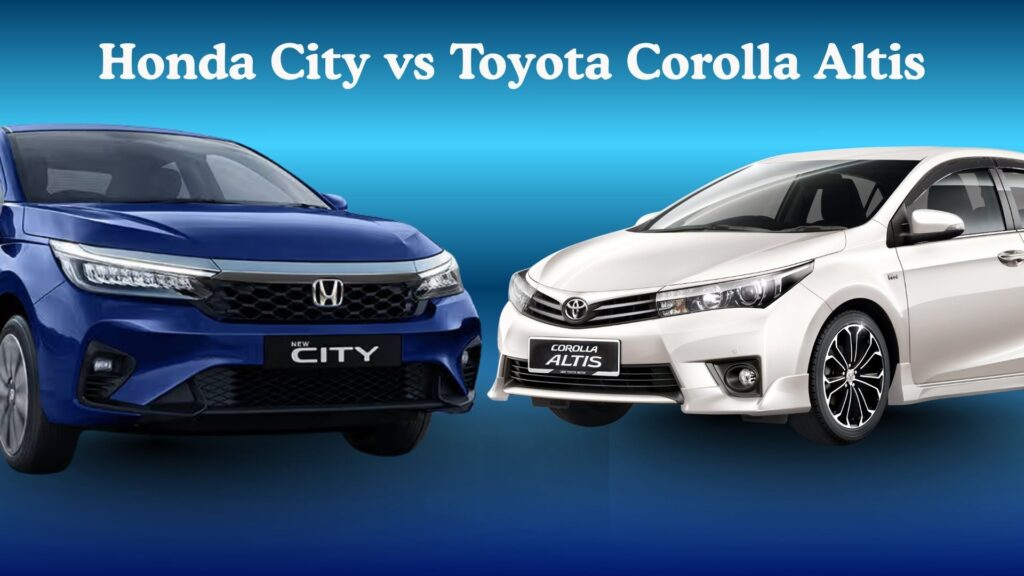
Honda City vs Toyota Corolla Altis: Which Sedan Rules the Road?

2025 Honda City vs Toyota Corolla Altis Sedan Comparison

Honda City vs Toyota Corolla Altis are the titans on the road which delivers a thrilling drive to your destination. Other than that, it also offers comfort seats, safety functions, and powerful performance which drives people crazy over these two sedans. It’s already made a huge impact on the global market that led us to debate between these two cars. 

This offers every kind of generation a feel of classic look and reliability of new generation techs. That makes these sedans perfect for those who prioritize safety and comfortable rides without compromising its look and performance. 

Let’s look into their comparison for assessing more detailed information about Honda City and Corolla Altis.

Design and Aesthetics – Modern vs. Mature Elegance

The 2025 Honda City delivers a contemporary design and look with its sleek lines, bold front grille and LED headlights that gives a premium look. The well-defined character is not just delivering a simple look but it is made a signature of premium designed Sedan.
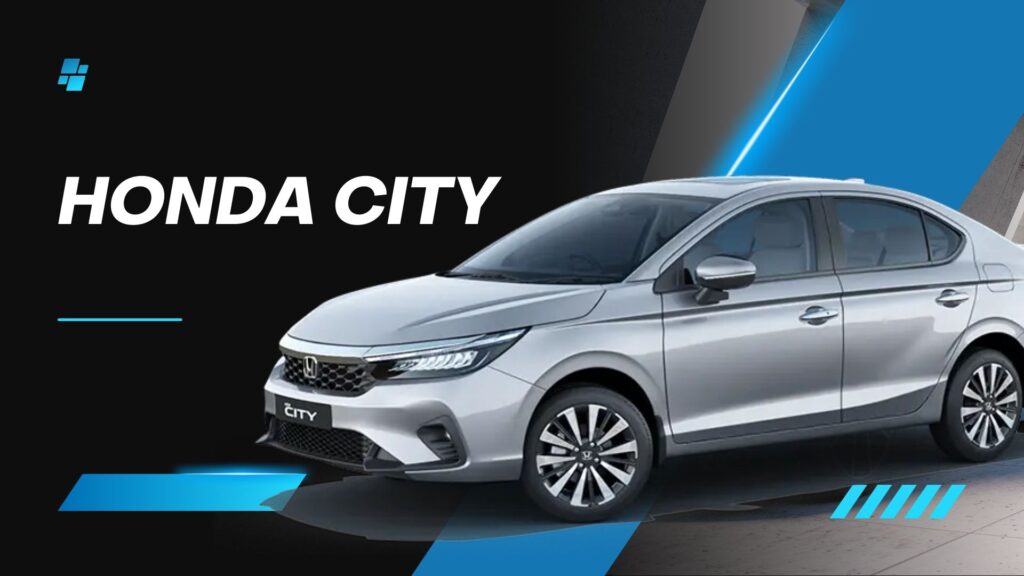
2025 Honda City Sedan Design with Sleek Lines and LED Headlights

While the Corolla Altis is not left behind, its new generation model offers a more mature and elegant look that defines the imaginable standard of the Sophistication. It offers sleek lines and a balanced silhouette that projects an image of reliability, without comprising its sporty look, the Altis is delivering an aggressive appearance that attracts a broad audience. 

Interior Comfort and Features – Space, Style, and Convenience

Step inside, experiencing the true comfort and space with both sedans. The Honda City gives a well-furnished interior that is made up with quality material and enhanced connectivity features to enjoy in your beautiful journey. No more worries with connectivity issues with the larger touchscreen infotainment system. It delivers functions including automatic climate control, sunroof, and AC vent particularly in rear seats for well-equipped driving.

The Corolla Altis is delivering best quality material  for comfortable rides with impressive design for more legroom space. Ideal for those who are self-driver for long trips as it offers exceptional comfort for both front and rear seats. Its infotainment system may lack some modern features but it offered all essential features for hassle-free experience.

Engine and Performance  – Smooth Power or Reliable Strength?

The Honda City offers strong and efficient engine options including both diesel and petrol powertrains. The new model of Honda City delivers powerful performance with its engine that delivers both smooth and balanced performance to make it a versatile beast for both city and highway trips. 

The Corolla Altis has a remarkable name in the list of engine performance with both diesel and petrol, making it reliable and best for long drives. It delivers smooth acceleration and comfortable cruising control to outright performance.

Read More :- Hyundai Venue vs Kia Sonet: Which Compact SUV Wins the Battle?

Safety Features – Advanced Protection for Every Drive

Both Honda and Toyota Sdaen deliver top rated safety features to prevent crashes. In case of accidents, they can automatically use its multiple airbags, ABD with EBD, rear parking sensors, camera sight, ISOFIX. With some new features Honda can give you more safety with lane-keeping assist, vehicle stability assist, and sensors that keep passengers safe before the crash.

Ride and Handling – City Agility vs. Highway Comfort

The Honda City offers balanced suspension to loose bumps on the roads. It is perfect for rough roads as it delivers comfort and handling experience after absorbing bumps and undulations. The light steering is easy to quickly turn and take shortcuts in high traffic. 
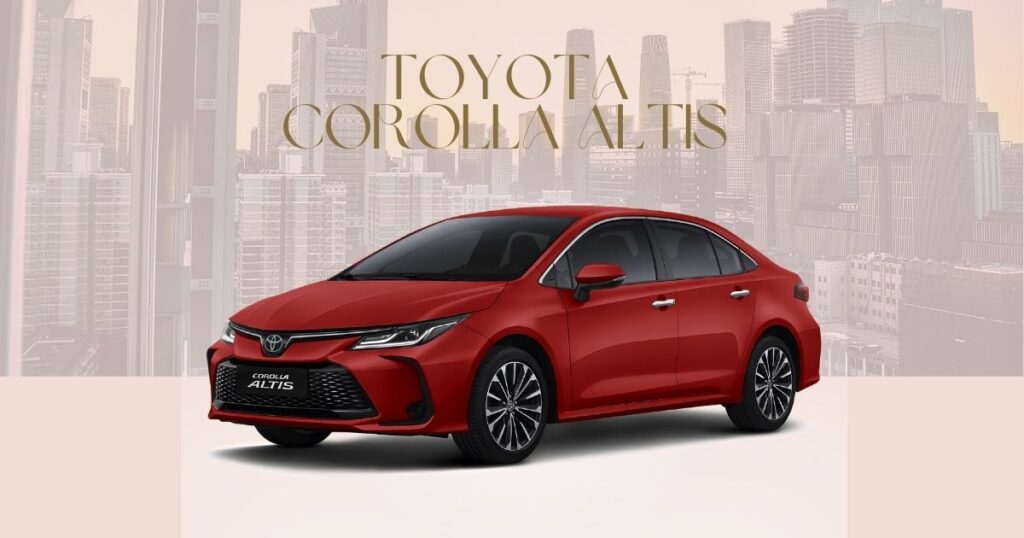
2025 Toyota Corolla Altis Ride Comfort for Long Journeys

The 2025 Corolla Altis is well known for offering an incredible comfort zone to their passenger comfort on the rough roads due to well-tuned suspension. It absorbs bumps on the road while handling its steering making it best for long trips. It gives the best experience on long journeys rather than city traffic due to blunt handling than Honda City.

Price and Value  – What Do You Get for Your Money?

Both mid-size sedan segments have almost similar prices but the price also depends on the model availability and variant. The MSRP of the 2025 Toyota Corolla is $23,460 and its hybrid version costs $24,920 which provides 41 MPG on highway and 35 MPG combined. The 2025 Honda City starting price is $14,860, depending on the variant and availability of the vehicle. The value has risen with its new features including electronic parking brakes and premium interiors. 

A Quick Comparison 

Feature / Aspect 2025 Honda City 2025 Corolla Altis
Design  Sleek lines, bold front grille, LED headlights – modern premium look Elegant, mature design with sporty accents and balanced silhouette
Interior Comfort & Features Quality materials, larger touchscreen infotainment, automatic climate control, rear AC vents, sunroof Spacious interior with high comfort, good legroom, essential infotainment features (may lack latest tech)
Engine Options Petrol & diesel engines, smooth performance, manual & automatic Petrol & diesel engines, reliable and powerful, smooth cruising
Transmission Manual and CVT (automatic) – easy for beginners Manual and automatic – refined and stable
Ride & Handling Balanced suspension for rough roads, light steering for city agility Comfortable suspension for long trips, slightly less agile in heavy traffic
Safety Features Multiple airbags, ABS with EBD, ISOFIX, rear camera, parking sensors, lane-keeping assist, stability control Multiple airbags, ABS with EBD, ISOFIX, rear camera, parking sensors – fewer advanced driver assists
Fuel Efficiency 18 km/l (variant dependent) 15–16 km/l, Hybrid 

35–41 MPG (US EPA)

Starting Price (2025) $14,860 $23,460 (Hybrid: $24,920)
Value Proposition Premium features at a more affordable price Higher price but strong reliability, resale value, and hybrid efficiency

Conclusion

Deciding Honda City vs Toyota Corolla Altis sedan is a complex situation. It depends on your priorities and budget, but some buyers want to drive a sedan which looks more stylish and features a rich model without compromising refined engines and modern tech which makes it a more compelling choice for balanced ride and handling every journey confidently. Their price and value may go up and down due to their availability and production but features and specs of both are comforting for the journey.

Sharey Khan

Sharey Khan is an IT entrepreneur and petrol head & a car enthusiast. With a special focus on car-related content, he combines his deep passion for vehicles with a talent for crafting informative, engaging, and easy-to-understand content. His writing is driven by a genuine love for cars and he is committed to providing readers with accurate, up-to-date, and trustworthy information that empowers smarter driving decisions. 

Leave a Reply

Your email address will not be published. Required fields are marked *

0

Shubman Gill Car Collection: Inside the Luxury Garage of India’s Cricket Star

Shubman Gill Car Collection

Shubman Gill doesn’t just rule the cricket ground with his elegant cover drives and calm attitude towards batting, he is also quite graceful when it comes to selection of vehicles. The Gujarat Titans captain has tied his love for speed and the open road to one of Indian cricket’s most intriguing collections and Shubman Gill’s Car Collection speaks he has clearly got the dirigible ambition, as well as the success, and can certainly taste refined motor running. 

Let’s take you inside his private garage, where every car marks a moment in his stunning rise from a small-town kid to the future of India’s cricket. 

A Collection That Reflects His Journey

The Shubman Gill car collection is not random, it is intentional. From the dream-realized Range Rover Velar to the opulent Mahbach GLS 600 each vehicle signifies a plot in his unprecedented ascent. Gill has already got what at most people would take a lifetime to achieve at an age when many are just graduating. These aren’t cars to throw away—they’re rewards for discipline, talent, and a kind of calm that makes his cricket.

Gill can afford to live the luxuries of life with a salary of ₹16.50 crore from IPL, a Grade B BCCI Contract of ₹3 crore yearly and endorsements with Nike, Gillette, TATA Capital, and more. And his garage, yet another testament to his faultless style off the pitch. 

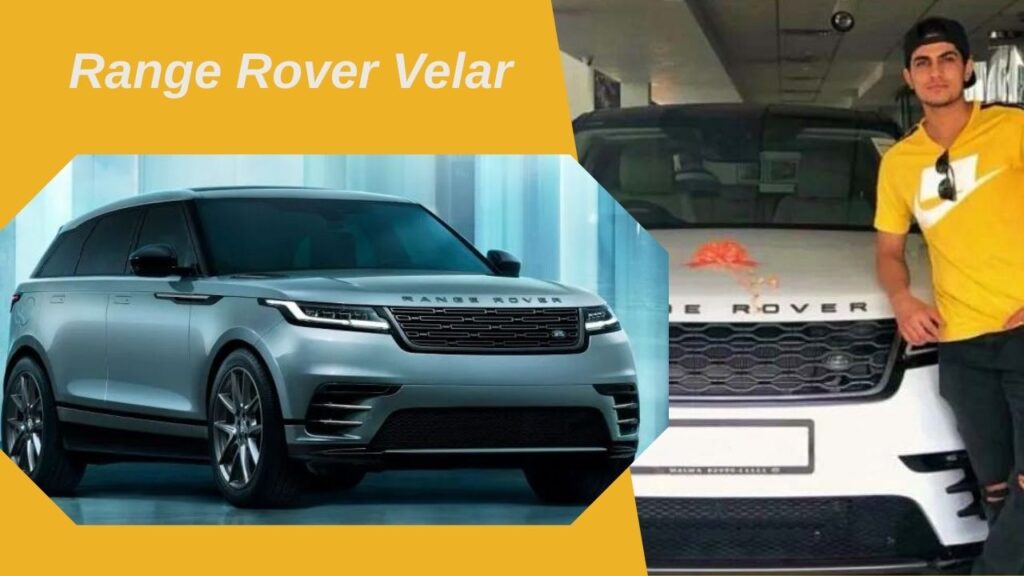
Range Rover Velar

In an humor-filled video interview for Acko’s Love At First Gear, Shubman Gill had said the Range Rover was his dream car, and a few months later, this elegant SUV arrived in his garage.  

Range Rover Velar

The car has a strong 2.0L turbocharged engine outputting 246 horsepower, but is also outfitted with comfort amenities that would make you believe you are sitting in your living room during a long trip. The massage seats, panoramic sunroof and 12.3-inch digital instrument cluster are not simply extras. With a 5-star Global NCAP safety rating, this car is a perfect reflection of Gill’s own ethos: solid, dependable and hard-wearing. 

The Gift That Carries Gratitude: Mahindra Thar

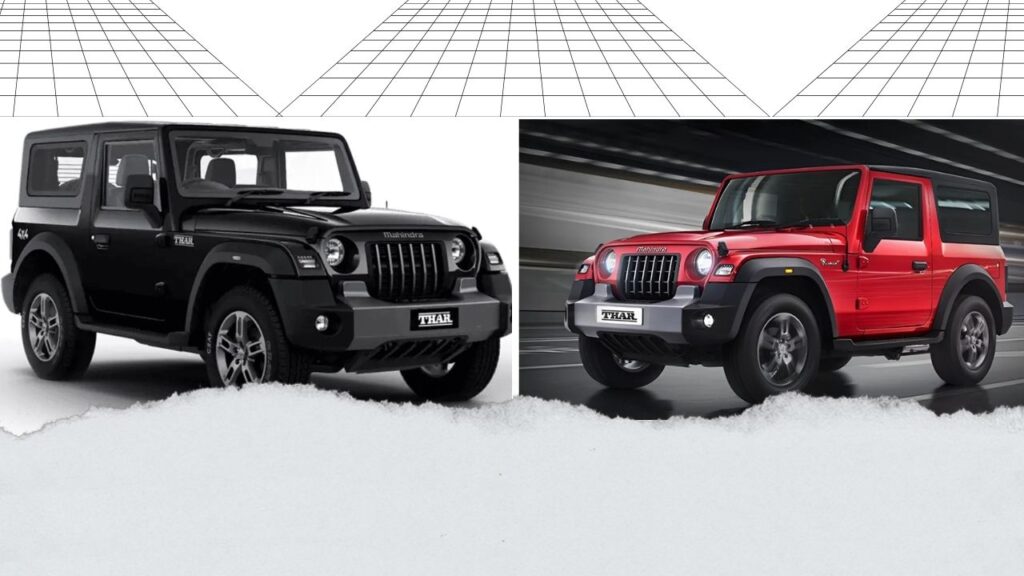
Gill did not buy all of the cars in his collection – a few come his way as a result of exceptional work. The Mahindra Thar is really special, and this is because it is a gift vehicle from industrialist Anand Mahindra himself. In 2021 when Shubman Gill was making his maiden appearance in the historic Border-Gavaskar Test series in Australia (2020-21), he scripted the extraordinary. Mahindra pledged to gift cars to the young cricketers who delivered, and he lived up to that promise to celebrate the young cricketing stars the match had produced.

Mahindra Thar

The Thar is more than just its sticker price of₹ 13.87—21.32 lakhs. Think of it as a rugged, capable off-road SUV with a four-star NCAP safety rating, that has been getting young adventure seekers hooked on the great outdoors. Meanwhile, Gill was busy cricketing and his family got to bring home this beautiful red coloured Thar as a proof that national pride does pay! 

The Mercedes Obsession: Where Luxury Meets Ambition

This is where the polished Shubman Gill from our compilation shines through and there is no doubt that the man is a Mercedes fan. 

Mercedes-Benz E350

Mercedes-Benz E350

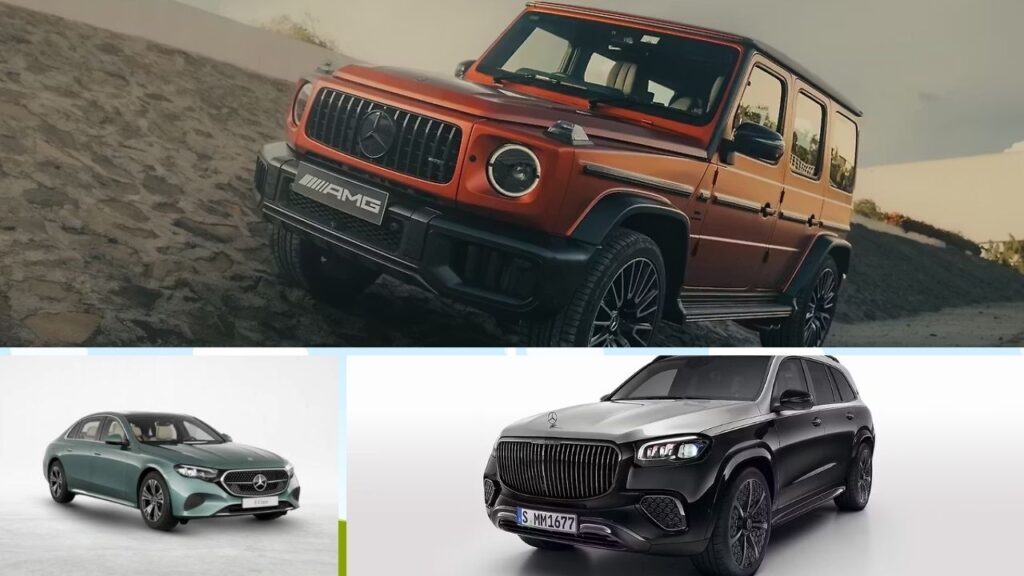
The Benz E350 is something like around the cost of ₹90 E350 is a luxury sedan that makes a very good balance between sophistication and practicality of daily everyday life. Its 3.0L V6 engine with 255 horsepower and 370 Nm torque also made the long journey from his Firozpur residence to Mumbai for IPL matches a smooth ride. 

Maybach GLS 600 Night Series

Yet Gill’s true obsession is with the Mercedes-Maybach GLS 600 Night Series, a loaded luxury sport utility vehicle that lists for about ₹3.88 crore on-road — nearly five times the cost of his initial luxury acquisition. This is no ordinary vehicle. The Maybach version takes the GLS 600 to stratospheric levels of extravagance, powered by a 4.0L V8 Biturbo engine producing an astounding 557 horsepower and 730 Nm of torque. Paired with a 48-volt mild-hybrid system, executive rear seats that would induce envy in first-class airline cabins, and a Burmester 3D surround sound system, this SUV makes each journey a thrill. 

Read More :-  Mahindra XUV 7XO Specs and Features: Engine, Mileage, Safety, Interior Details Overview

Mercedes-AMG G63

The G-Wagon is a staple in every celebrity car collection and Gill’s Mercedes-AMG G63 is no different. This angular, iconic SUV is brought to life by a 4.0L V8 turbo with mild-hybrid system, producing 585 horsepower and an earth-shattering 850 Nm of torque. Whenever this monster gains speed, it shouts power and glory. 

Toyota Innova Crysta

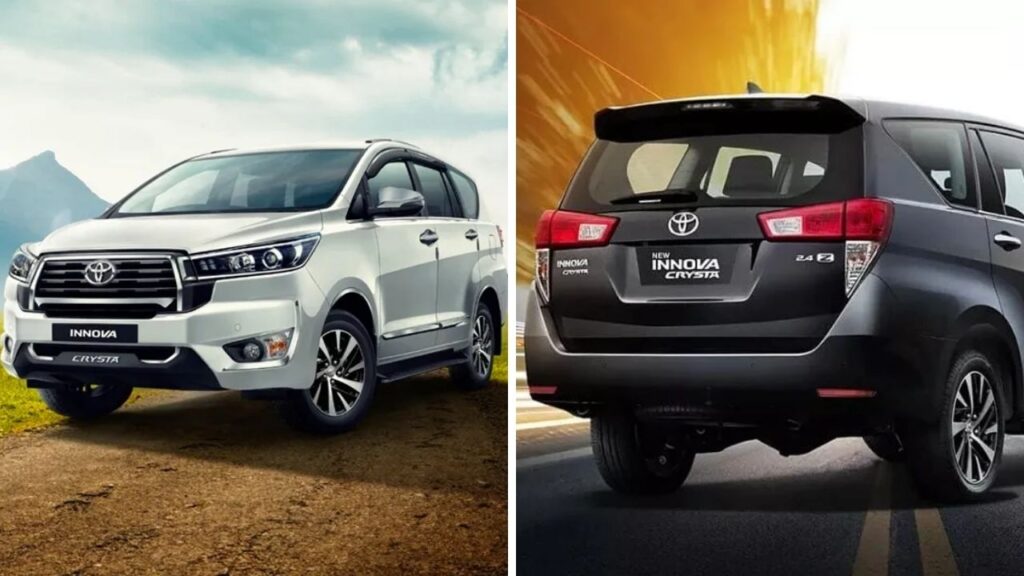
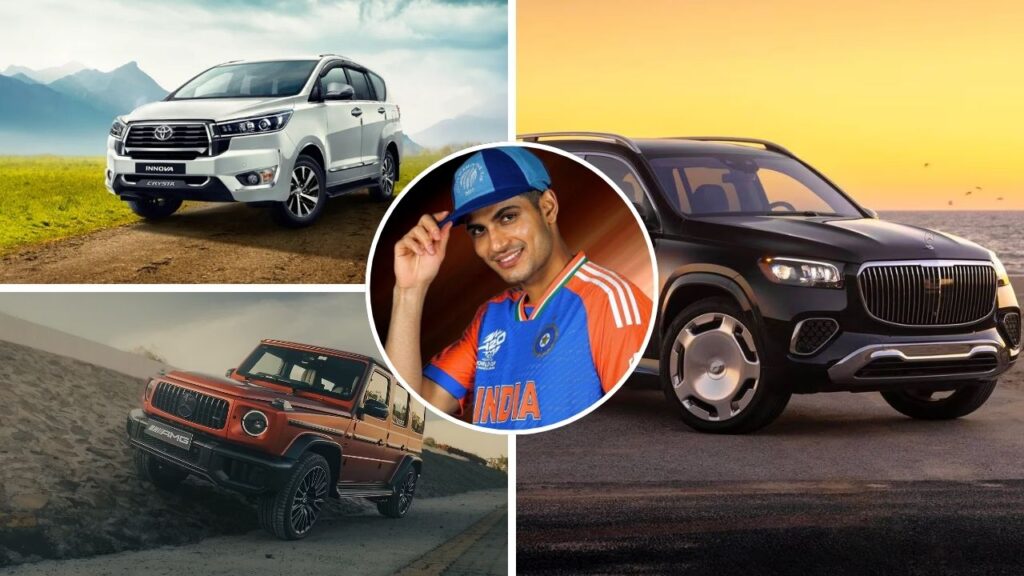
While the Mercedes and Range Rover make the headlines, Gill’s garage is not without the Toyota Innova Crysta (₹23.83-31.50 lakhs), a no-nonsense family SUV that more often than not ferries him to Mumbai’s Bandra eateries and Mumbai airport.

Toyota Innova Crysta

Clearly money and value for everyday and reliability over flash things up - it’s refreshing that despite being worth somewhere in the region of ₹34 crore he still thinks like that, and if he needs to take a stroll he’s wearing flip-flops and socks! 

Conclusion

Shubman Gill’s car collection is reflective of the man himself: humble but aspirational and stylish but practical. From the dream-come-true Range Rover Velar and the thankful Mahindra Thar to the uber-luxurious Mercedes-Maybach GLS 600 and the beastly AMG G63, each car has a story of hard work, discipline and success dusted off in style. 

What really jumps out, however, is the fact that Gill balances it so well: sitting next to the multi-crore luxury cars is a simple Toyota Innova Crysta, clearly Gill’s fame hasn’t taken away his grounding in everyday values. Much like and His batting, his garage exudes a calm, assured, and mature presence, but all that is only the beginning of his journey. 

0

Best Self Driving Cars in India 2026: Top Models, Prices & Features

Published Sep 1, 2025, 9:40 AM
Last Updated Apr 2, 2026, 8:22 AM

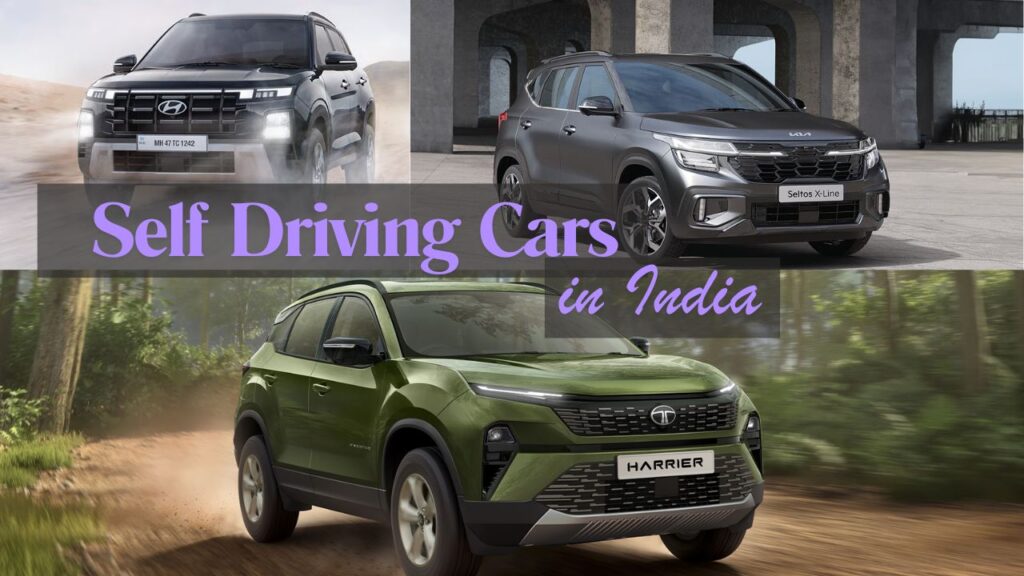
Top self-driving cars in India with ADAS technology

The automobile market is changing rapidly with more advanced features. Cars emerging with high-end tech improves the capability for both driver and passengers, making their journey beautiful. Self-driving cars doesn’t mean that there will be no need for a driver. It just makes driving easy and safe with the Advanced Driver Assistance System (ADAS). Whether you use it for daily office travel or long trips, these best self-driving cars in India are creating a new era with comfort, reliability, and tech features. 

What is ADAS and why is it important?

ASAD is a system that comes from a group of technologies that makes driving safer and easier. It includes features such as Adaptive Cruise Control, Lane Departure Alert, Emergency Brakes, Collision Alert, and it comes on a different level. The level 2 is best for cars in India, level 2 ADAS includes control over steering and braking to some extent but the driver must be alert on the road. It is just making the driving easy, not holding the position of a driver. 

Let’s see some of the best self-driving (ADAS) cars of 2026

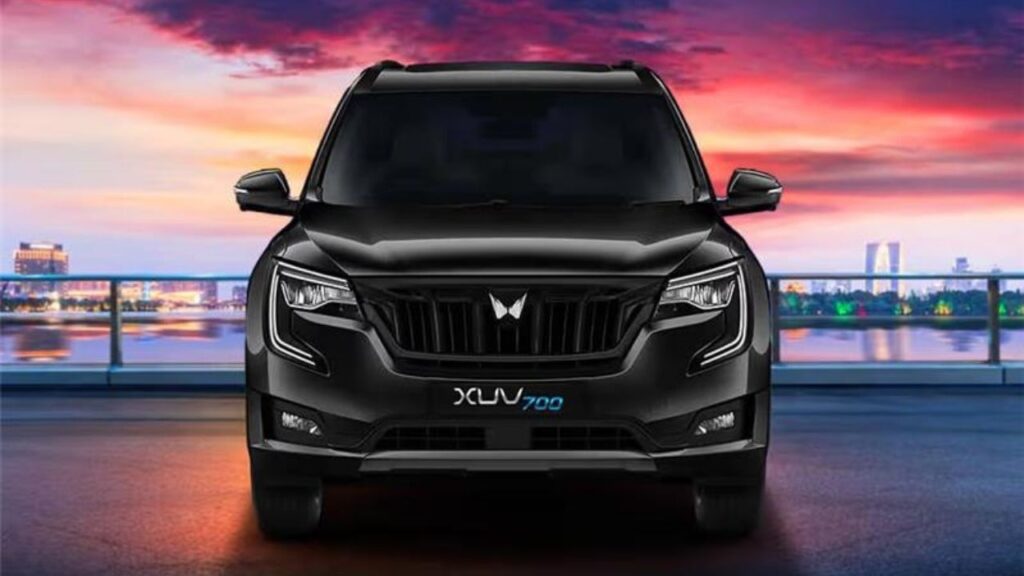
1. Mahindra XUV700

Starting Price: Rs. 13.99 Lakh 

The price of Mahindra XUV700 varies on the variants and it can go up to Rs. 26.99 Lakh. It offers Level 2 ADAS technology, petrol & diesel engine with manual and automatic transmission. 

Mahindra XUV700 SUV with Level 2 ADAS features

Image credit: Auto Mahindra

Features of Mahindra XUV700

Category Feature
Engine Options 2.0L Petrol , 2.2L Diesel 
Transmission Manual/Automatic
Seating Capacity 6 or 7
Panoramic Sunroof Skyroof (Panoramic)
Infotainment Dual 10.25” displays (instrument + media)

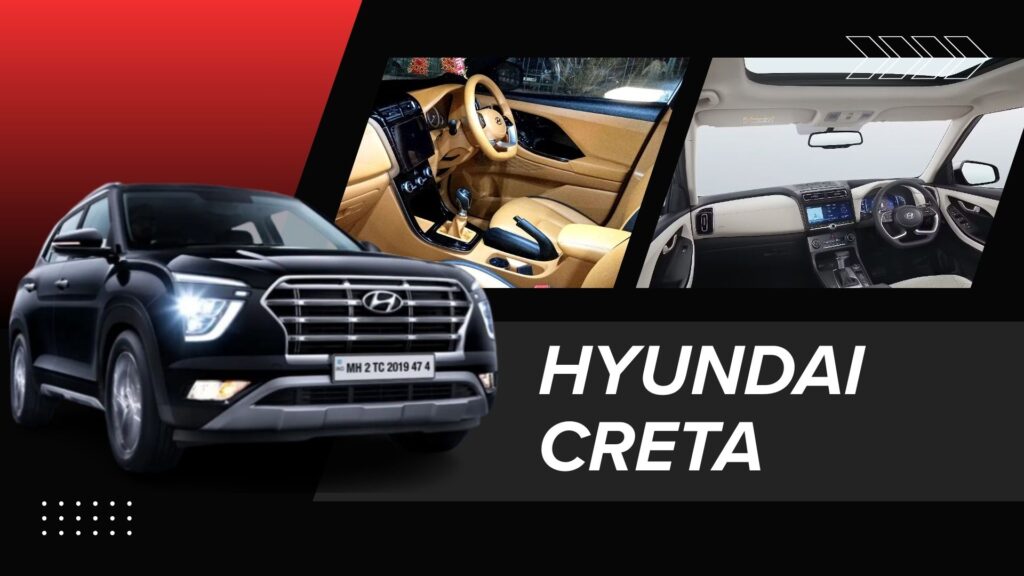
2. Hyundai Creta

Starting price: Rs. 11 Lakh

The Price of Hyundai Creta is depending upon the variants of the car which can raise up to Rs 20 Lakh. It offers Level 2 ADAS technology within its mid-range variants. 

Hyundai Creta mid-size SUV with ADAS technology

Image credit: Hyundai Creta

Features of Hyundai Creta

Category Feature Details
Engine Options 1.5L MPi Petrol, 1.5L Turbo Petrol, 1.5L Diesel
Power 113-157 bhp
Torque 143-253 Nm
Transmission 6-speed Manual, CVT, Automatic
Drive Type FWD
Mileage (ARAI) 17 – 21 kmpl
Ground Clearance 190 mm

Read More :- Toyota RAV4 vs Honda CR-V: The Ultimate SUV Battle of 2025

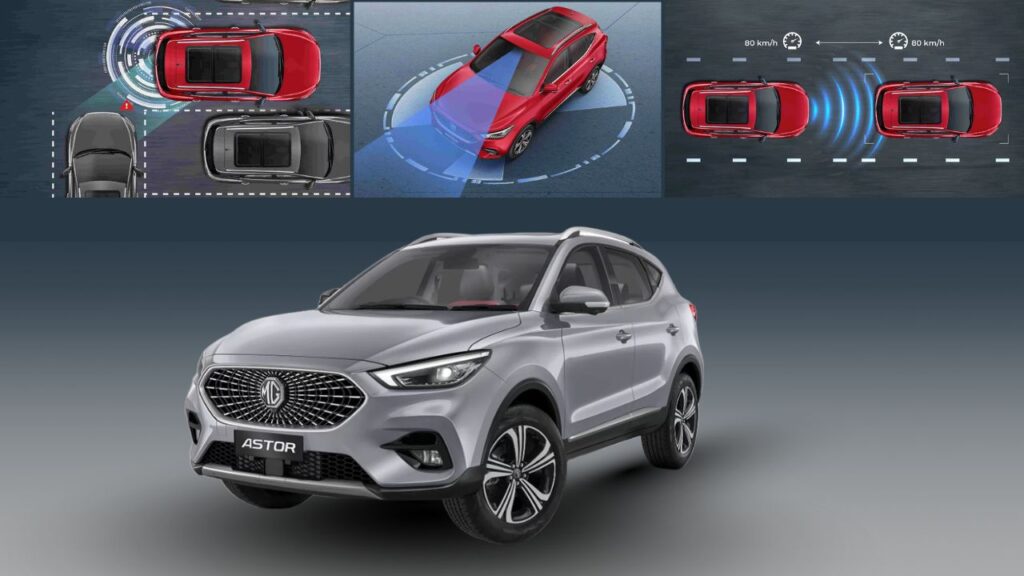
3. MG Astor

Starting Price: 10 Lakh

MG Astor : The price can go high with different variants, valued around Rs. 18 Lakh. Astor comes with Level 2 ADAS, making it the most affordable car in India. It not just offers advanced features but is also known for its technology and stylish interior.

MG Astor compact SUV with Level 2 ADAS

Image credit: MG Motor

Features of MG Astor

Category Feature
Engine Options 1.5L Petrol MT/CVT, 1.3 Turbo AT
Transmission Manual, Automatic (CVT & AT)
Mileage (ARAI) 14.8–15.4 kmpl
Seating Capacity 5
Infotainment Dual 10.25” displays (instrument + media)

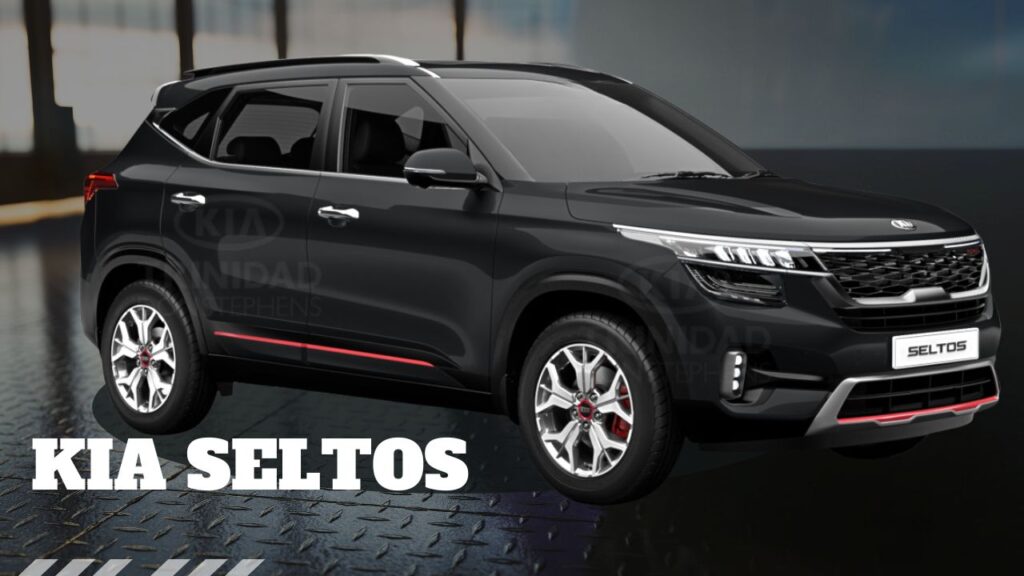
4. Kia Seltos

Starting Price: Rs. 10 Lakh 

The price varies on the variant, going up around Rs. 20 Lakh. Kia Seltos also offers Level 2 ADAS for self-driving with 19 features included. It is well-known for its strong performance and advanced features.

Kia Seltos SUV with advanced ADAS features

Image credit: Kia

Category Features
Engine 1.5L Petrol / Diesel
Power 157 bhp
Transmission 6-speed manual / CVT / 7-speed DCT
Drive Type  FWD
Mileage 19.1 kmpl

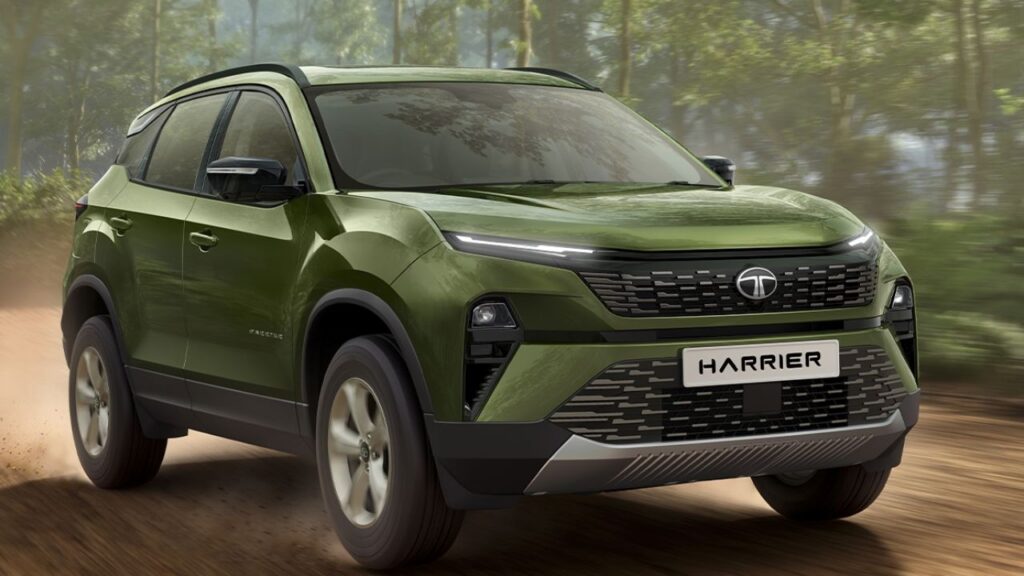
5. Tata Harrier

Starting Price: 15 Lakh

Tata Harrier price can go higher around Rs. 24 Lakh. It offers a camera-based ADAS system, making flagship SUV for safe driving. The premium gives an incredible experience in both diesel and automatic variants, ideal for families with its stability and comfort. 

Tata Harrier flagship SUV with camera-based ADAS

Image Credit: TataMotors

Features of Tata Harrier

Category Features
Engine 2.0L Diesel
Power 170 PS
Transmission 6-speed manual / 6-speed automatic
Drive Modes  City, Sports, Rough
Mileage 16.8 kmpl

City-Wise Best Picks for Self-Drive Cars

Most of the people prefer cars that can be easily adapted in their cities. Mid-size cars are perfect for some cities but compact SUVs are more convenient for rush cities. 

Tata Harrier and Kia Seltos are considered as the best self drive cars in Bangalore. These are the most running SUVs on the tech city roads because it offers both comfort and stability, handles Bangalore traffic and weekends gateways easily.

The XUV700 and Hyundai Creta are best self drive cars in Hyderabad for daily commutes, even people prefer these cars as best self drive car rentals in Hyderabad. These spacious and powerful SUVs are perfect for road trips.

Narrow roads of Guwahati demanded compact SUVs like MG Astor. This is the best self drive car in Guwahati which offers compact and fuel efficient SUV. 

Conclusion

In 2025, best self-driving cars in India  are required to handle the rush and bitter roads which can cause accidents easily. These vehicles are useful for India to prevent accidents. These self-driving cars are becoming common due to their advanced safety features in both metro cities and normal cities.

0

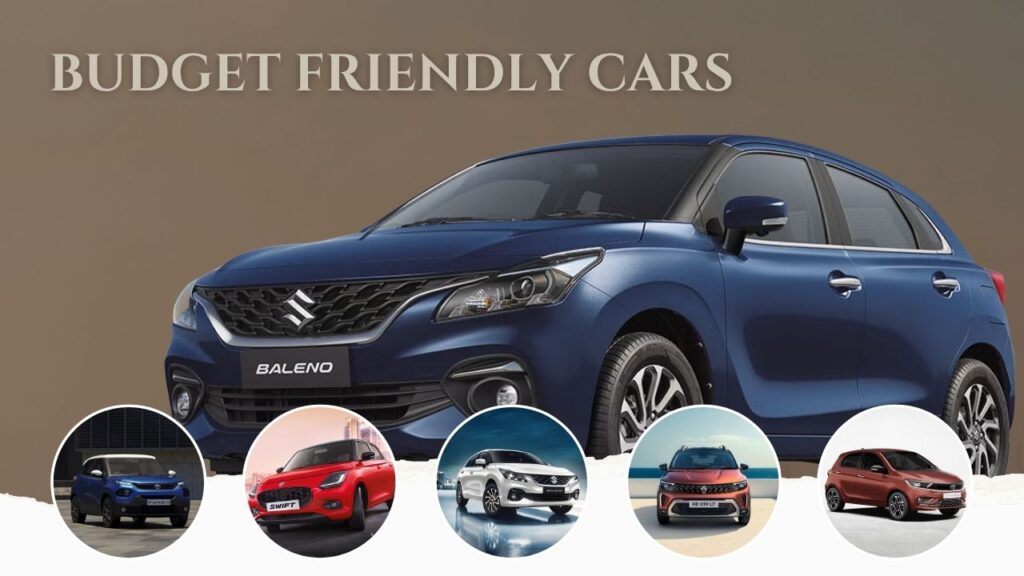
Budget Friendly Cars – Best Affordable Cars for Every Indian Family

Budget Friendly Cars

Car ownership in India is no more a far-fetched dream, it’s an achievable target for most households, with a wide variety of budget cars that offer a good balance of affordability, safety and modern amenities. Indian carmakers have taken things up a notch by 2025 and now offer cars that are stylish, feature-rich, and give good mileage, all without breaking the ₹10 lakh barrier. 

From the rugged yet compact Tata Punch, dependably peppy Maruti Swift, feature-laden Baleno, multi-purpose Renault Triber and all-time favourite Tata Tiago. There’s a Budget Friendly Cars for everyone no matter the requirement or lifestyle. Explore the best affordable cars of 2025 that offer incredible features and specifications to give you a nice ride.

The Champions of Budget Excellence

By 2025, there are more good cars within reach than ever before. With everything from sleek designs and advanced tech like touchscreen displays and driver-assist systems, these are the cars that prove you don’t have to spend a fortune to drive something reliable and stylish. 

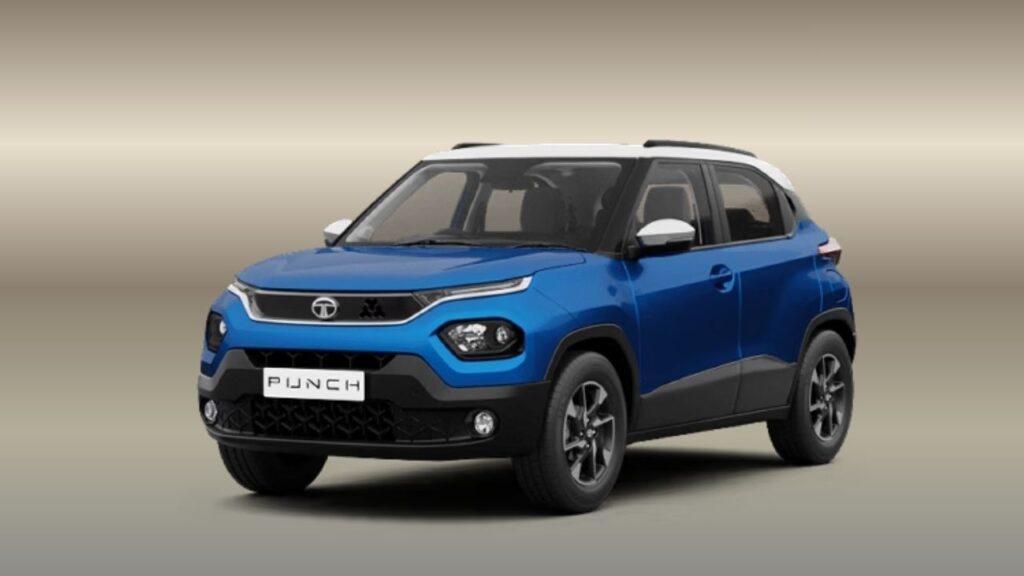
Tata Punch – The Compact SUV Winner

The ultimate SUV runs on Indian roads at ₹5.50 lakh with useful family-car practicality. This ride features a 1.2-liter Revotron engine that produces 87 bhp and 115 Nm of torque. This setup makes for a good amount of power for the city and highways. 

Tata Punch - The Compact SUV Winner

The only thing that makes the Punch standout is it having a 5-star Global NCAP safety rating, which makes it amongst the safest cars in its segment. It provides 187 mm of ground clearance, ideal for Indian roads, and gets features such as a 10.25-inch touchscreen infotainment system, automatic climate control and a 6-speaker Harman sound system. Punch also delivers good fuel efficiency in the range of 18.8 to 20.09 kmpl, helping families stay on top of running costs. 

Maruti Suzuki Swift – The Reliable Performer

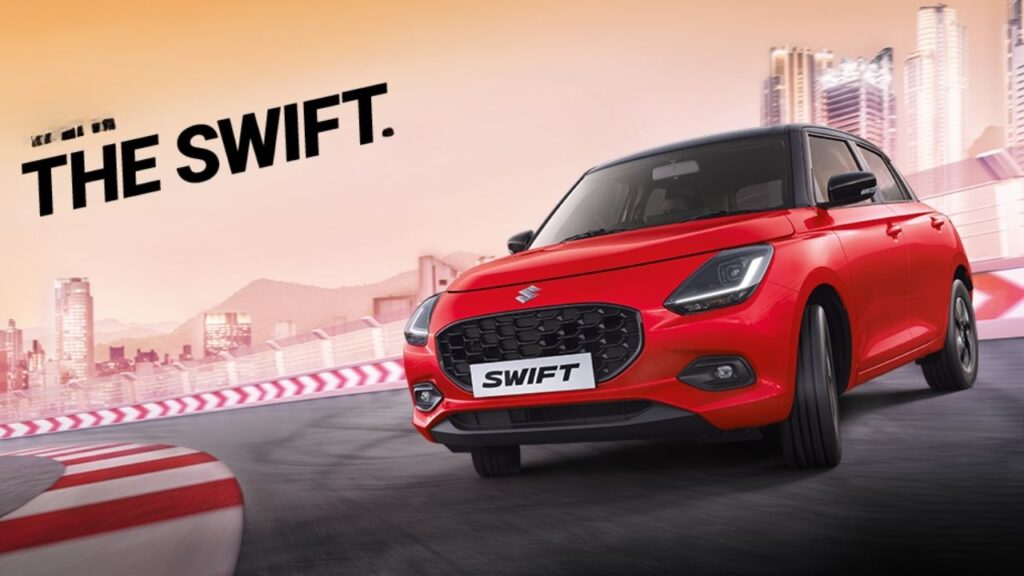
With a starting price of ₹5.79 lakh, Swift remains a favorite in Indian homes. The new generation is powered by a 1.2-liter K12N engine, which produces 89 bhp and returns a mileage of 25.75 kmpl.The highlight of the Swift is its all-round safety package, which includes 6 airbags as standard, ESP, hill hold assist, and ABS with EBD. 

Maruti Suzuki Swift - The Reliable Performer

The Swift has a roomy boot of 265 liters and gets contemporary connectivity features like wireless charging, 7-inch SmartPlay Pro+ infotainment system with Apple CarPlay and Android Auto.Its lightweight design and polished engine make it a great candidate for novice as well as seasoned drivers. 

Maruti Suzuki Baleno

Maruti Suzuki Baleno

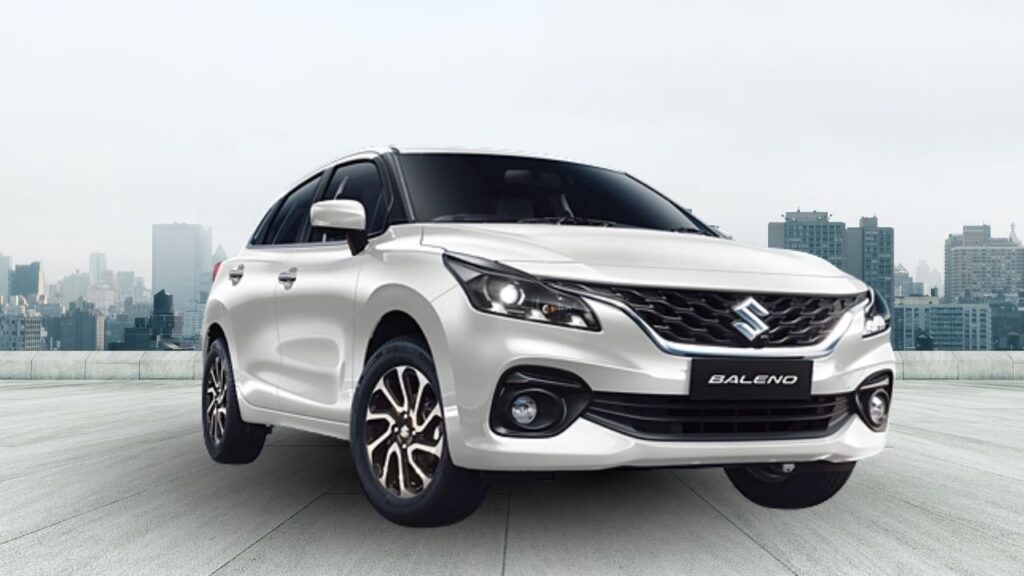
You can get the Baleno in the range of ₹5.99 to ₹9.88 lakh as it offers many features within a low cost of maintenance. It’s the pinnacle of cheap cars. You get 170mm ground clearance and a spacious cabin. Top trims come with a 9-inch SmartPlay Pro+ screen and six airbags. Plus, it’s good on gas, too. It retains its value, so it’s a smart purchase for years to come.  

Renault Triber – The 7-Seater Wonder

Starting at ₹5.76 lakh, the Triber is the cheapest 7-seater MPV in the Indian market. That smart ride provides you with flexible seats that change in 5, 6, or 7 positions. That configuration suits a family on the grow. The 2025 update is powered by a 1-liter petrol engine that will give you 72 hp of power with 96 Nm of torque.  

It was also updated with new features like an 8-inch floating touchscreen infotainment system. That’s not it, it also offers connectivity features including wireless Android Auto and Apple CarPlay. Lean into a practicality with six airbags as standard, and front parking sensors to provide worry less driving. Configured as a five-seater, it takes the lead with 625 liters of boot space for top practicality.  

A Powerful Beast: Tata Tiago 

A Powerful Beast Tata Tiago

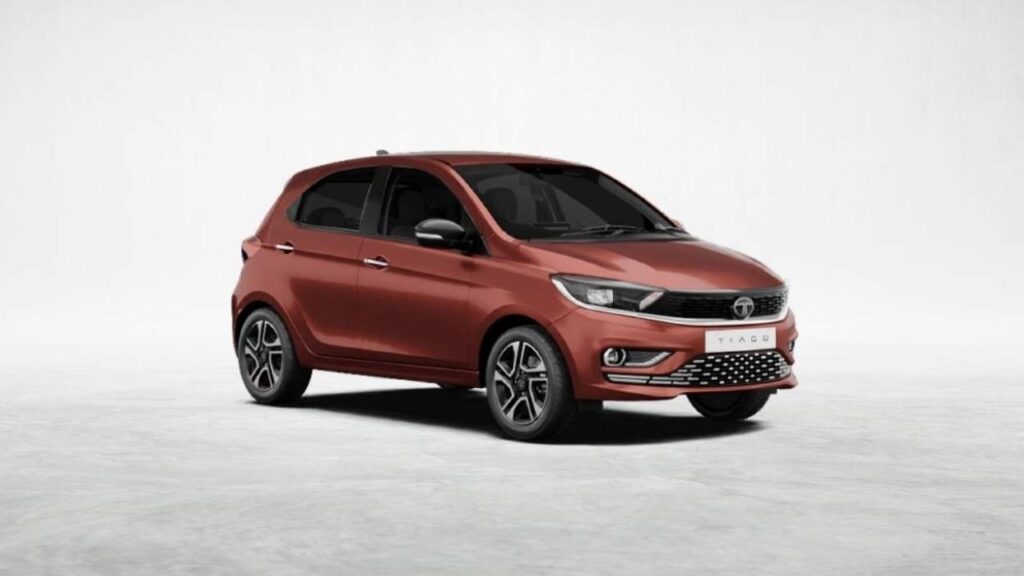
Tata Tiago offers 1.2L engine with 1199 cc capacity, buyers can get good features to run on road with comfort and reliability. It gives 86 PS power and 5 speed manual transmission with 35L fuel efficiency that makes it perfect for the family. It got 5-star Global NCAP rating safety which is incredibly important to consider a family car, also starting at an incredibly affordable ₹4.57 lakh.

Smart Feature Integration Without Premium Pricing

Budget-friendly cars are now catching up when it comes to features that were only available in the high-end variants. Take the Hyundai Exter, for example, It is priced from just ₹5.68 lakh and comes with an 8-inch touchscreen, digital instrument cluster, a sunroof and 6 airbags, all as standard. And then there’s the Tata Altroz that begins at ₹6.30 lakh and comes with a cavernous 345-litre boot and a refined 3-cylinder unit pumping out 86.79 bhp. These cars prove you don’t have to empty your wallet to get modern tech and comfort. 

Safety Without Compromise

Safe is the new seat in cars under 10 lakh. The 5-star GNCAP rating of the Tata Punch is a testament to the fact that budget cars can be very safe.The Tata Tiago offers safety features like airbags, ABS, EBD, parking sensors, and seat-belt alerts as standard. Renault Triber 6-airbags are standard for all the variant along with ISOFIX child seat anchor. 

Fuel Efficiency for Economic Operation

Cost-savvy families need fuel efficient vehicles and these cars deliver everything you need. The Maruti Swift delivers a good mileage of 25.75 kmpl which makes it one of the most fuel efficient cars to go for a long ride or your daily drives. Tata Tiago is a compact SUV that gives you 23.84 kmpl fuel efficiency, making it a perfect balanced car for the riders. Tata Punch delivers 20 kmpl fuel efficiency meaning good mileage without compromising on style, so, if you like to inject a little fun into your drives, this is a very interesting option to consider.  These figures mean that families can afford day-to-day runarounds without wondering about the cost of fuel. 

Read More:-  Discover The Stylish And Powerful Chery Arrizo 8 – Redefining The Modern Sedan

The Perfect Balance of Price and Performance

These vehicles have their own sets of value. Tata Punch brings SUV styling with best-in-class safety, the Swift comes with tried and tested reliability, the Baleno comes loaded with premium features, the Tiago offers unbeatable value and the Triber provides 7-seater flexibility. All these cars are proof that Indian families don’t have to pinch their pockets to get powerful features and dependable performance. 

Making the Right Choice for Your Family

Picking a cheap car means thinking about what your family really needs. The Tata Punch fits great if you want top safety and that SUV look. Nobody beats the Swift for great gas mileage and dependability. Those requiring 7-seater versatility for family needs should opt for the Triber and for premium features within a tight budget, pick the Baleno. The best way to decide is taking the test drive for the cars you like and decide which makes you comfortable and easy.

Conclusion

Power-packed features at affordable prices for the family car buyers is important. The 2025 Indian automotive market has a lot to offer to the family car buyers looking for strong features within a tight budget. These cars prove that inexpensive doesn’t mean you have to sacrifice quality, safety or contemporary features. 

By taking your family’s needs and likes into consideration, you can select the right car that offers you a great price for sale and get more value for your money for many years to come. Whether you are purchasing your first vehicle or looking to upgrade your family car, these Budget Friendly Cars options present the best value for money in terms of features, pricing, and reliability that every Indian family needs. 

0

What Documents Do I Need to Purchase a Car? Full Checklist You Can’t Miss!

Published Jul 28, 2025, 5:26 AM
Last Updated Jul 29, 2025, 11:55 AM

Purchasе a Car

Buying a car is an еxciting stеp. Whеthеr it’s your first car or a nеw onе for your family, thе procеss can fееl confusing if you don’t know what documеnts you nееd. 

Many pеoplе ask thе samе quеstion — What Documеnts Do I Nееd to Purchasе a Car? This guidе will givе you a simplе and clеar answеr. 

Why Do Documеnts Mattеr Whеn Buying a Car?

Whеn you buy a car, you nееd to show that you arе rеady and еligiblе. You also nееd to makе surе еvеrything is lеgal. Thеsе papеrs hеlp provе who you arе, how you’ll pay, and who owns thе car. Without thеm, you can’t rеgistеr thе car or drivе it lеgally. That’s why knowing What Documеnts Do I Nееd to Purchasе a Car? is vеry important.

Documents You Need Before Buying a Car

Before you walk into a dealership or meet a seller, keep these papers ready.

Proof of Identity

You must prove who you are. The seller or the car dealership needs to know that you are a real person. You can show:

  • Aadhaar Card (in India)
  • Passport
  • Driver’s License
  • Voter ID card
  • PAN Card

Pick one or two that show your full name, photo, and date of birth. If you are outside India, use your government ID that has a photo and name.

Proof of Address

You must show where you live. This is needed for car registration and insurance. Common address proof includes:

  • Utility bills (electricity or water bill)
  • Rent agreement
  • Passport
  • Aadhaar card (again useful)

The address on this proof must match what you use for your new car registration.

Income Proof (If You Take a Loan)

If you plan to take a car loan, the bank needs to see that you can pay the money back. You must show:

  • Salary slip (last 3 months)
  • Bank statement (last 6 months)
  • Income Tax Return (last 1-2 years if self-employed)

If your parents or someone else is taking the loan for you, they will have to provide these documents.

Credit Score Report (For Loan Check)

Banks look at your credit score. This tells them if you pay loans and bills on time. You can get this report from websites like CIBIL in India or Credit Karma in the U.S. A score of 700 or more is usually good.

Documents You Need While Buying the Car

Now let’s say you are ready to buy the car. These are the documents needed during the purchase:

PAN Card

In India, it is mandatory to give your PAN card for any purchase above ₹50,000. If you’re buying a new car, the dealer will ask for it.

Car Booking or Purchase Agreement

This is the paper that shows you are booking or buying the car. It includes:

  • Your name and details
  • Car model and price
  • Dealer or seller details
  • Advance money paid

Make sure to read it before signing.

Loan Documents (If You Are Taking a Car Loan)

You must sign some papers with the bank or finance company. This includes:

  • Loan approval letter
  • Agreement paper
  • EMI schedule

Keep a copy with you. It shows how much you will pay every month.

Insurance Papers

Car insurance is required by law. You cannot drive without it. You need:

  • A valid insurance policy
  • Third-party insurance is the minimum
  • Comprehensive insurance is better

Make sure the insurance starts on the day you get the car.

Read More:-  What Do I Do After Buying a Used Car? Essential Steps You Must Follow

Documents You Get After Buying the Car

Once the purchase is complete, the dealer or seller will give you important papers.

Registration Certificate (RC)

The RC proves that the car is now yours. It has:

  • Your name
  • Car engine number
  • Chassis number
  • Registration number

In India, it is given by the Regional Transport Office (RTO). For a new car, the dealer usually helps you get it.

Road Tax Receipt

When you buy a car, you must pay road tax. This tax is paid to the government. You’ll get a receipt for this. Keep it safe.

Owner’s Manual and Warranty Card

The owner’s manual helps you understand the car. It shows how to use features and take care of the car. The warranty card covers repairs or faults for a few years.

Pollution Certificate (For Used Cars)

If you are buying a used car, make sure you get a Pollution Under Control (PUC) certificate. This proves the car follows clean air rules.

No Objection Certificate (NOC – For Used Cars)

If you’re buying a second-hand car from another state or city, the seller must give an NOC. This means the car has no loan left and can be sold freely.

Documents for Used Car Buyers

If you are buying a second-hand car, you need some extra papers:

  • Original RC (with the previous owner’s name)
  • Form 29 and 30 (used for transferring ownership)
  • Sale agreement from the seller
  • Service history (if available)
  • NOC from the finance company (if it had a loan)

These help you transfer the car legally to your name.

Helpful Tips to Make the Process Easy

  • Keep all your documents in one folder.
  • Make photocopies and keep them ready.
  • Ask the seller or dealer for a checklist.
  • Always read before signing.
  • Don’t forget to ask for original bills and receipts.

Final Thoughts

Buying a car is a big decision. The process becomes easy when your documents are ready. Always ask yourself, What Documents Do I Need to Purchase a Car? This question will help you stay prepared. Whether it’s your first car or a second-hand one, these papers protect your money and your rights.

Keep this guide saved so you don’t miss anything. A little preparation today will save you from big trouble later.

0

Ford Capri II vs Toyota Celica vs Vauxhall HP Firenza: The Global Decade of Style

Ford Capri II vs Toyota Celica vs Vauxhall HP Firenza

The 70s were a turning point in car history: a decade shaped by global financial turmoil and the mass popularization of sporty styling. The ground was laid years before in the US with the introduction of the Ford Mustang in 1964, a car that demonstrated that performance imagery could be married with an affordable price tag and based on an economy car platform, namely, the utilitarian Ford Falcon. This “pony car” formula – long hood, short rear deck, four seat interior and a plethora of options – was an instant hit with car buyers around the world. 

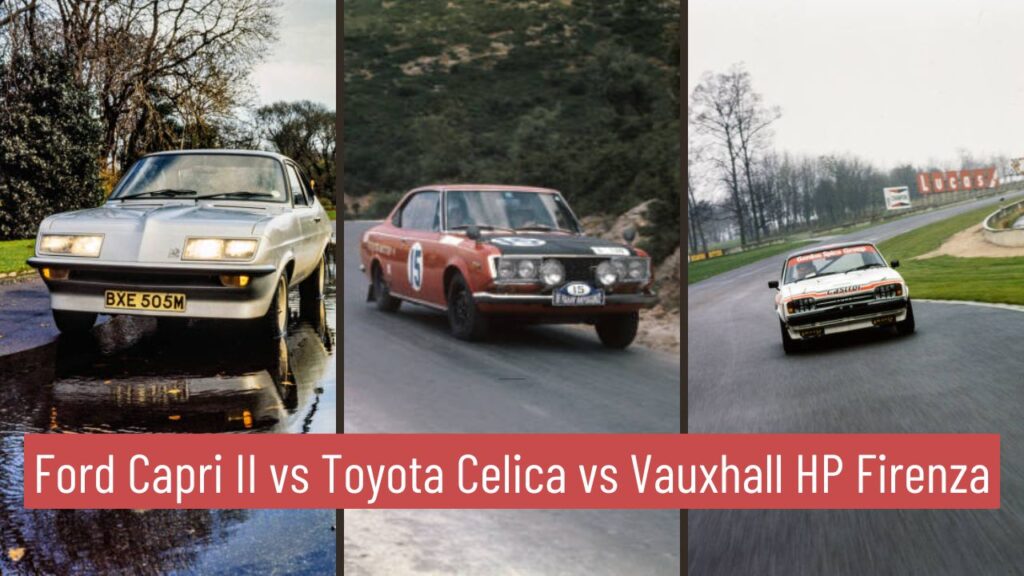
The vehicles including the Ford Capri II, Vauxhall HP Firenza and 1st Gen Toyota Celica were born out of this post-Mustang era, and yet each is a distinctly different approach to the budget coupé ideology. 

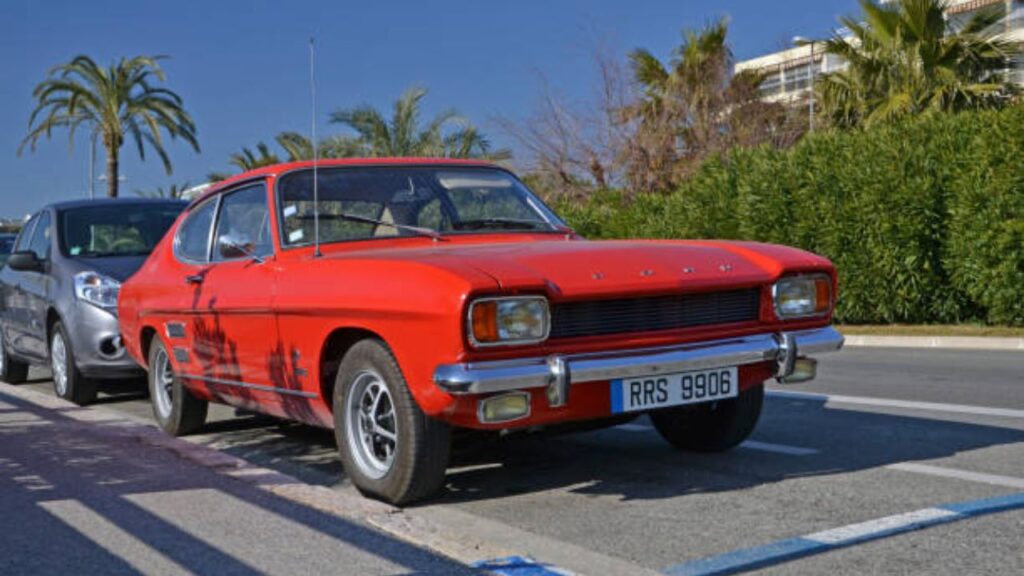
Ford Capri II

Ford Capri II

The Capri II was a natural progression for Ford’s European pony car. Production started mainly in the United Kingdom (Dagenham, Halewood) and Europe (Genk, Belgium, and Saarlouis, Germany). the Mk2 softened the aggressive lines of its predecessor, with a more modern and friendlier look featuring “softer lines and larger headlights.” 

Engineering and Accessibility

The Capri II was ultimately successful because of its versatility and availability. Ford stuck to its guns with the philosophy of serving every pocket by the simple offering of a variety of engines in one simple layout – front-engine, rear-wheel drive (FR). For the budget-conscious buyer, the car had the I-4 1.6L (1,599cc) that delivered a meager 64 horsepower and produced 0-100 kph times in the 16-seconds ballpark. A somewhat more balanced choice was the 2.0L Inline-Four Pinto, making around 98 bhp and bringing 0-60 mph down to near 10 seconds. Up top, there was the potent V6 3.0L engine. 

That philosophy meant the car stayed true to its “style on a budget” directive, as evidenced by the original 1974 UK price list, where a Capri Mk2 1600L began from a very reachable £1,668. 

Read More:- Range Rover Reaches New Heights with the Astronaut Edition

Driving Experience and Legacy

Drivers had good things to say about the Capri interior design, in particular the full complement of dials and the long bonnet which immediately made you feel as though you were driving a bona fide sports car. Controls were said to be both light and direct. 31 Although some contemporary reviewers noted problems such as poor reliability of new cars and dubious safety standards, 32 present day enthusiasts often describe the V6 models as being very “reliable, cheap to run”, a consequence of the car’s mass production and the resulting availability of parts.

The straight-six engine, especially in the later 2.8i injection versions, had a “great sound from the engine and exhaust”. This full-bodied, Falstaffian wuffle supplied the required drama for the ears to complement the visual attack, and proved that the quintessential V6 exhaust note was the key to a car that could rise above its budget-based mechanics and inscribe itself as an enduring icon of nostalgia. 

The Contradiction in Current Value

Ford Capri II Current Value

The Capri II was intended to be throwaway and to appeal to a broad demographic, but its current place as a sought-after classic reveals an important market dynamic. A couple of million Capris were sold between 1969 and 1986, but clean ones with high specs have turned up as rare gems. Because the Capri was so common, and was often driven as a cheap daily used in its second life as a track toy, real-money originals in “Original & Highly Original” condition really do command serious prize money. For example a mint condition 1970 Capri has been estimated at over £40,000. 

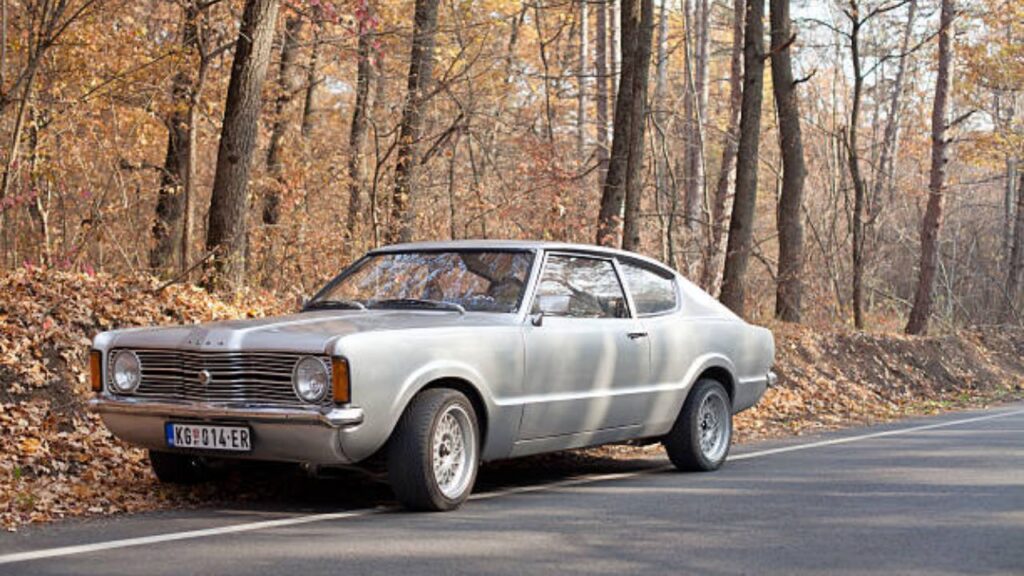
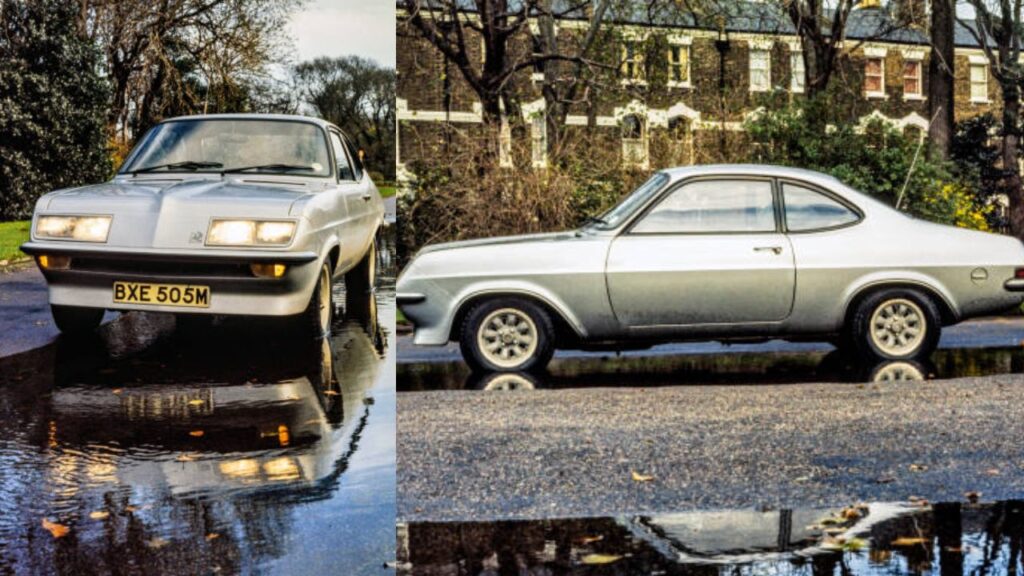
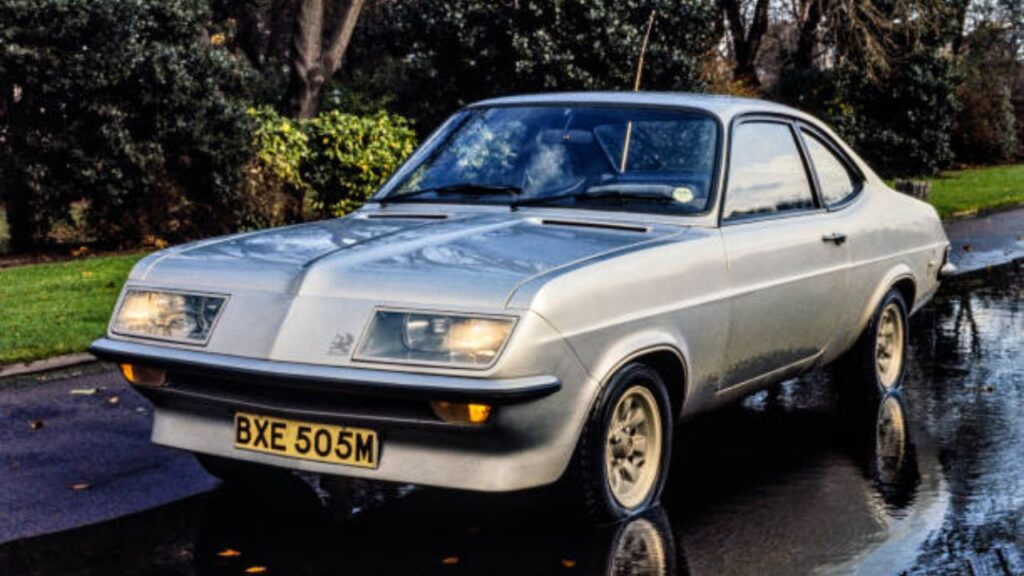
Vauxhall HP Firenza ‘Droopsnoot’

Vauxhall HP Firenza 'Droopsnoot'

The Vauxhall Firenza, was originally launched in 1971 as a sporty two-door fastback coupé based on the lowly Viva. But that was about to change in 1973 when General Motors stylist Wayne Cherry took a radical departure from the norm with the Firenza HP (High Performance), a motorsport homologation special. 

Radical Styling and Advanced Engineering

The HP’s signature feature was its slick fibreglass nose cone, which let to the car being known as the ‘Droopsnoot’. This was no mere styling exercise – the shape was designed to be as aerodynamic as possible and helped the car reach a top speed of more than 120 mph. The distinct nose has double headlights taken from the Renault Alpine A310. And to tie up the aggressive look Vauxhall used matt-black trim rather than chrome and some Avon Safety wheels. Every single HP was finished in the distinctive Silver Starfire metallic paint. 

The HP was powered by a 2279cc OHC slant-four engine, which had been the subject of extensive performance tuning by Bill Blydenstein. This involved following a similar procedure to that used on the combustion chambers, inlet tracts and valve throats, and yielded an additional 21 bhp over the standard powerplant. The result was 131 bhp , and a broad torque band so the car was easy to drive. And the HP was, in fact, the first Vauxhall to be fitted with a complex, close-ratio, dog leg five-speed Getrag manual gearbox. With its combination of light weight and superior transmission, the HP Firenza was also the Vauxhall with the best acceleration of its day, clocking from 0-60 mph in a blistering 7.6 seconds. 

Market Paradox

Vauxhall HP Firenza Market Paradox

This severe scarcity is what governs its place in the classic market.Although the HP Firenza enjoyed rarity and unquestionable motorsport credentials, its median value approximately £17,600 for a Firenza. Its scarcity does mean that there are occasional huge sales, with the highest price to the public being £47,700. 

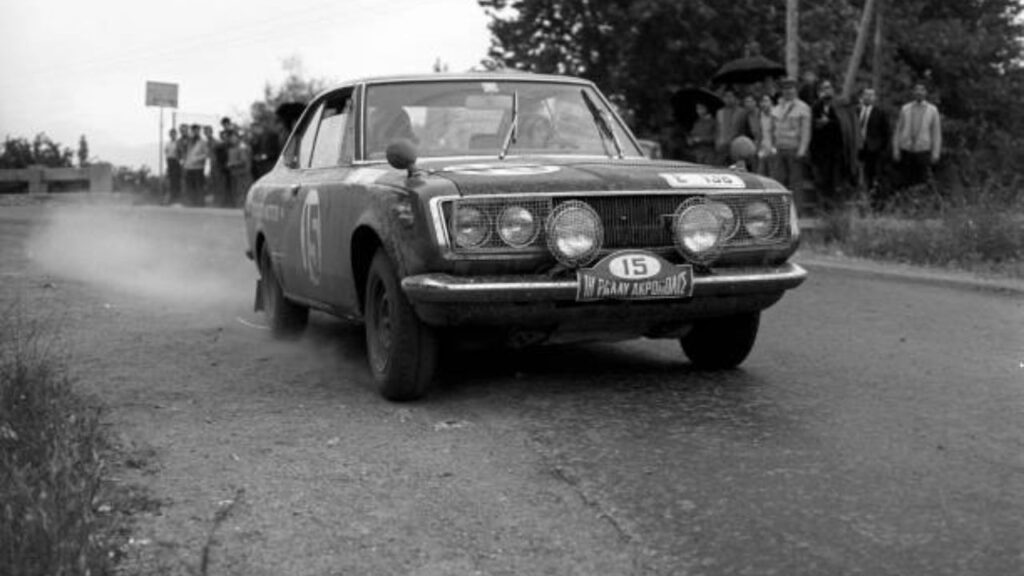
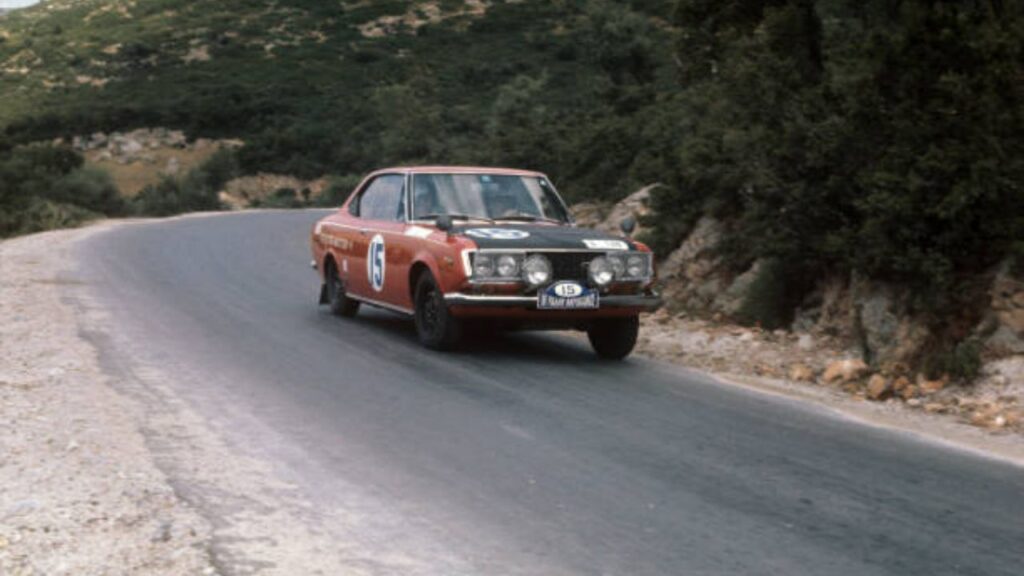
Toyota Celica (1st Generation)

Toyota Celica

The Toyota Celica, which was introduced in December 1970, was the pioneer Japanese entry in the world pony car market. It was a 2+2 coupé based on a Carina platform and the styling was clearly inspired by the American versions. The Celica Liftback, especially, was so redolent of American fastback muscle that it gained the fond nicknames “Japanese Mustang” or “Mustang Celica”. This tribute featured such iconic elements including the triple bar tail lights, a signature design cue of the Mustang. 

Technological Sophistication and Dynamic Appeal

Although the regular Celica (ST grade) was dependable and fuel efficient, the performance versions had a considerable technological advantage over many of their European competitors. The top-of-the-line 2000 GT Liftback (RA25) used the DOHC (Double Overhead Camshaft) 18R-G Twincam engine, which had a cylinder head co-developed with Yamaha. This sophisticated engine was rated at 134 hp/145 bhp maximum power. 

The Reliability Paradox 

The Reliability Paradox

the Celica was known for its inherent reliability and ease of repair, which made it very popular amongst modifiers and “boy racers” in the Asian markets. But this mechanical excellence was frequently paired with a catastrophic manufacturing gaffe that was endemic to Japanese exports in the 1970s – inadequate body rustproofing. 

The current high average market prices for clean GT and Liftback models including GT averaging $22,334 and best examples fetching over $40,000. 

Head-to-Head Comparison of Ford Capri II vs Toyota Celica vs Vauxhall HP Firenza

Metric Ford Capri II Vauxhall HP Firenza Toyota Celica
Production Years 1974–1977 1973–1975  1970–1977
Engine Type I-4 / V6 I-4 OHC Slant-Four I-4 DOHC
Power  98 bhp (2.0L) – 158 hp (3.0L)  131 bhp 134–145 hp 
0-60 mph 10.0 s 7.6 s  N/A (Highly Competitive)
Transmission Feature Manual (4/5 speed) 5-speed ZF Manual (Dogleg) 4/5-speed Manual
Rear Suspension Live axle Live axle Four-link

The Price Valuation and Market Dynamics

Model Performance Production Original UK Price (Entry 1974) Current Average Classic Value Investment Profile
Ford Capri II High Volume 1,668$  $15,000-$40,000 Low Risk, High Liquidity, Nostalgia Driven
Vauxhall HP Firenza 204 units High Cost $17,600 High Risk, Scarcity Driven, Specialist Parts Required
Toyota Celica (1st Gen GT) Medium Volume N/A (Imported) $ 22,334 Medium Risk (Rust Filtered), High Growth (JDM Boom)

Who is The Winner?

Winner for Everyday Practicality and Accessibility: The Ford Capri II. Ford’s decision to make the hatchback standard and continue a massive parts supply ensured the car offered the best combination of sports styling and daily practicality. Capri is the quintessential choice for the nostalgic driver wanting an affordable and engaging ownership experience.

Winner for Performance Purity and Engineering Novelty: The Vauxhall HP Firenza ‘DroopSnoot’. Being Hone-d Fed with his advanced 5-speed dogleg gearbox Firenza HP was on Kaygonus the most uncompromising and technically advanced paper vehicle 7.6-second really rapid 0-60 mph timeengine and his hand-finishedI genuinelyhear that with itsIndeed the title of Wa Rally Car until brian nash Firenza fits that description far better than any other. Its defeat was solely in the market place and not product quality.

Winner for Global Style and Long-Term Reliability: Liftback and hardtop coupe versions from the 1st generation 1971 Toyota Celica 1st generation Liftback GT. The Celica neatly packaged the American pony car look into a refined, contemporary bolt-on DOHC technology style. Its mechanical strength is inherent and reliable so that you can have peace of mind today, but this must be tempered with the need to check its body due to processing faults during original manufacturing.  

Conclusion

The trio that dominated the 1970s budget coupé market – the Ford Capri II, the Vauxhall HP Firenza and the Toyota Celica – all made a highly specialised, but indelible, mark on motoring history. Their common objective was to offer performance style, at an attainable price point, but how that was achieved varied wildly – with very different current collector profiles.