0

Maruti Dzire ZXI+ Specs Overview with Features, Performance, Safety and Design

Maruti Dzire ZXI+ Specs

If you thought compact sedans were being pushed out by SUVs, the all-new 4th Gen Maruti Dzire will make you think again. For years the Dzire has been the go-to option for Indian families – dependable, economical and practical. But with the new 2025 Maruti Dzire ZXI+ model specifically, the company has transformed from simply being “practical” to genuinely “desirable.”

Securing a 5-star safety rating, coming equipped with a sunroof (finally!) and a tech-packed cabin, the all-new Dzire ZXI+ isn’t just a commuter; it’s a statement. Let’s take a closer look at what makes this the talk of the town. 

Design: Sophistication Meets Sportiness

The first thing you will realize is that the “swift-with-a-boot” is no more. The new Dzire has its own unique character. The front end features a huge aggressive grille with what Maruti terms LED Crystal Vision Headlamps on either side. They’re not just bright – they make the car look like it’s standing tall with a premium wide stance that simply grabs attention.
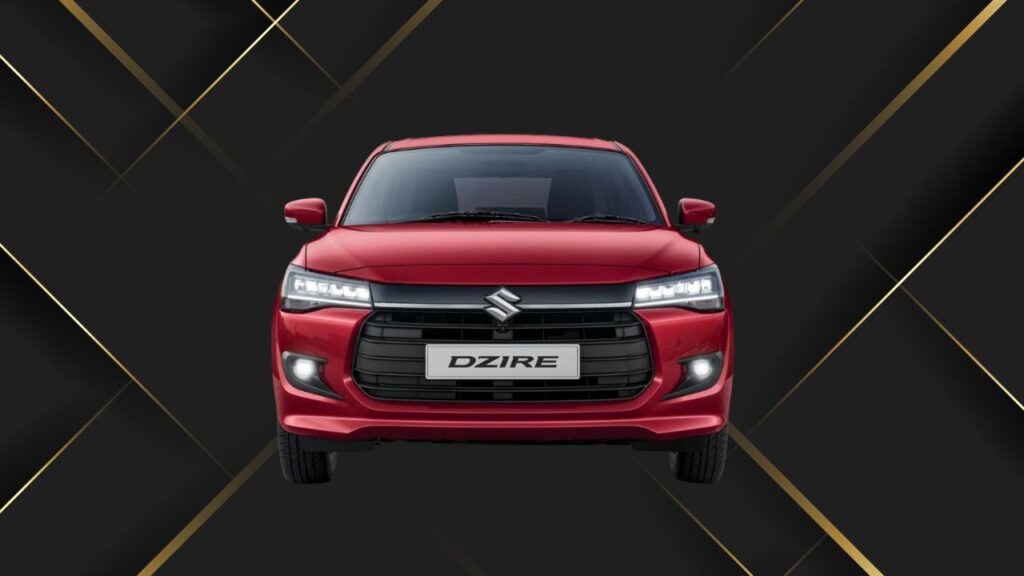
Maruti Dzire ZXI+ Specs Design

Now turn to the side and the two-tone, precision machined aluminum wheels bring a bit of flair. But where the real drama is at the back. 3D Trinity Rear Lamps. These lamps are a crucial design detail and appear contemporary & crisp particularly at night. And yes, there’s a shark-fin antenna on the roof to round out that sleek, sedan profile.  

Color Options:

Maruti hasn’t cut corners with the palette. Whether you are after the classy Splendid Silver, the striking Gallant Red or even the dark Bluish Black, there is a color for every character. Nutmeg Brown is my personal favorite – it screams luxury. 

Interior & Features: A Tech-Lover’s Paradise

Step inside the ZXI+ variant and you are greeted by a cabin that feels light years above its price point. The beige and black, dual tone dashboard, with silver accents and a wood-finish insert, looks spacious and premium.

The Electric Sunroof is a segment-first for Dzire and truly revolutionizes the cabin experience, illuminating it with the sun.
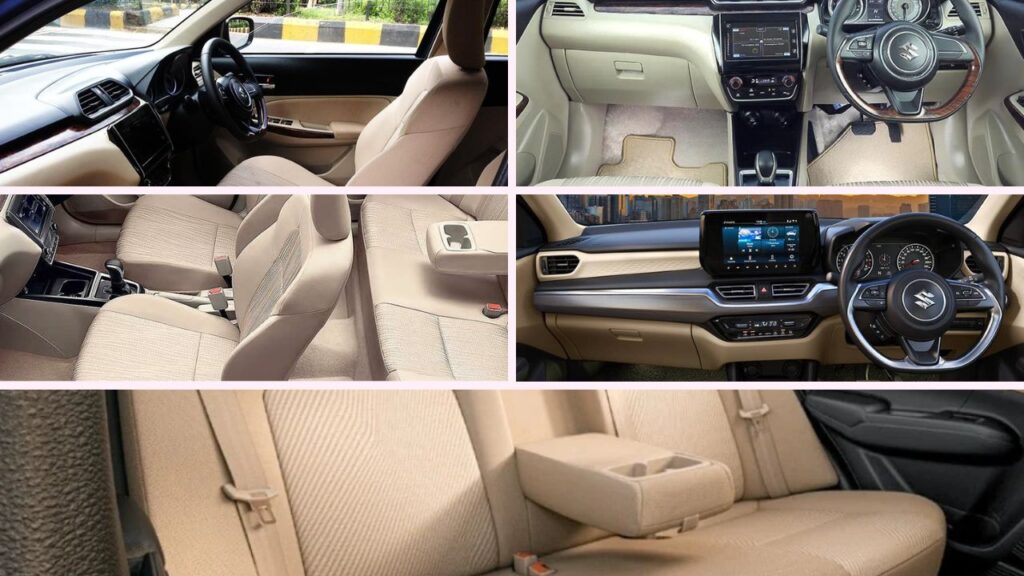
Maruti Dzire ZXI+ Specs Interior & Features

The highlight is the floating 9-inch SmartPlay Pro+ Infotainment System. It’s buttery smooth and supports wireless Apple CarPlay and Android Auto. Coupled with the Arkamys Surround Sense sound system, your daily commute playlist just got a massive upgrade. 

Comfort highlights for the ZXI+ owner:

The convenience and usability of the Suzuki is modern. With the wireless charger you don’t need to deal with tangled cables and parking in tight spots is easier thanks to the 360-degree camera. The cruise control makes long highway drives comfortable. Moreover, Suzuki Connect puts you in the driver’s seat by enabling you to keep an eye on the fuel level, location and more from your smartphone.

Performance: The Efficiency Champion

Under the bodywork is what the car is really about the all new 1.2L Z-Series (Z12E) Petrol Engine. While it now has three cylinders, that shouldn’t scare you away. Maruti has tuned this engine for better low-end torque and driveability in city conditions.

Power: ~82 bhp

Torque: 112 Nm

The fuel economy is where the real magic lies. The AGS (Automatic) variant claims an impressive 24.79 kmpl which is further pushed to 25.71 kmpl by the AGS (Automatic). In an era of ever increasing fuel prices, these figures really are miraculous. The idle start-stop system engages effortlessly to preserve fuel at stoplights.
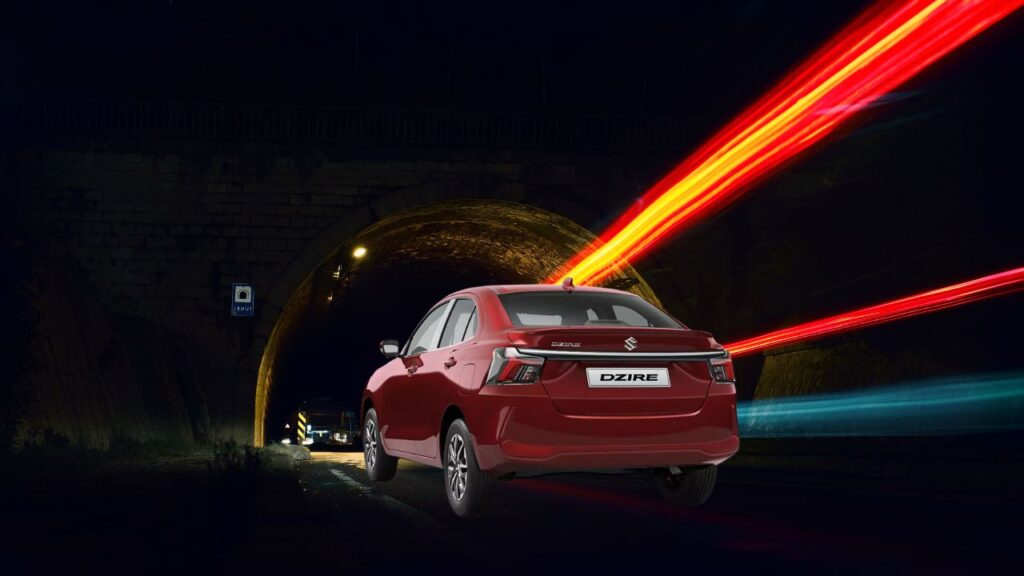
Maruti Dzire ZXI+ Performance

For city people, the AGS (Auto Gear Shift) in the ZXI+ is crisp and perfectly geared for stop-and-go traffic, so you don’t have to worry about clutch work sans the heavy fuel penalty of traditional automatics. 

Safety Features of Dzire ZXI+

The new Maruti Dzire is a 5-Star Global NCAP Safety Rating holder for adult occupants making it a strong safety contender. The remarkable feat dispels earlier worries about its body strength and makes it one of the toughest in its class.

The ZXI+ variant further adds to safety with the following features:

  • 6 Airbags: All variants of Kia Seltos come with 6 airbags as standard.
  • ESP (Electronic Stability Program) & Hill Hold Assist: Improves traction on slippery surfaces and stops you from rolling backward while moving up hill.
  • ISOFIX Child Seat Anchors: A safe way to securely attach child seats.
  • TPMS (Tyre Pressure Monitoring System): It alerts you in advance for any issues related to tyre pressure to help you prevent inconvenient interruptions.

Maruti Dzire is here with new features to provide you the most hassle-free driving. 

Dzire ZXI+ Specs Overview Table

Feature Specification
Engine 1.2L Z-Series 3-Cylinder Petrol
Transmission 5-Speed MT / 5-Speed AGS
Mileage (Claimed) 24.79 kmpl (MT) / 25.71 kmpl (AGS)
Boot Space 382 Liters
Ground Clearance 163 mm
Infotainment 9-inch SmartPlay Pro+
Airbags 6 (Standard)
Safety Rating 5-Star (Global NCAP)
Key Features Sunroof, 360° Cam, Wireless Charger

Read More:- Maruti Suzuki e-Vitara to Feature Advanced Safety and Premium Equipment

Conclusion

The Maruti Dzire ZXI+ is not just a “safe bet” and a “cab favourite” anymore. It is a refined, loaded family sedan which nowadays doesn’t even need compromising on safety or style. With the ZXI+, the best of both worlds are yours: the dependability of the Maruti efficiency and service network, in a package that looks premium and makes you feel secure.

So, if you intend to buy a sedan which checks all your boxes – mileage, features, safety and looks, the new Dzire ZXI+ is definitely the one to beat in 2025. It’s not just a want anymore; it’s a smart choice. 

Sharey Khan

Sharey Khan is an IT entrepreneur and petrol head & a car enthusiast. With a special focus on car-related content, he combines his deep passion for vehicles with a talent for crafting informative, engaging, and easy-to-understand content. His writing is driven by a genuine love for cars and he is committed to providing readers with accurate, up-to-date, and trustworthy information that empowers smarter driving decisions. 

Leave a Reply

Your email address will not be published. Required fields are marked *

Subaru Outback vs Jeep Grand Cherokee: Don’t Buy Until You Read This!

Subaru Outback vs Jeep Grand Cherokee

If you are deciding between an SUV or something more wagon-like, you may find yourself in the battle: Subaru Outback vs Jeep Grand Cherokee. Both are adventure-capable, AWD-equipped, and family comfy. But they are wildly different in price, power, and purpose. In this article, we dissect the two and their main differences to give you an idea of which SUV would be perfect for you.

Cost, space, safety, performance, fuel use, towing, off-road ability, tech features. Whether you’re road-tripping or gear-hauling, this guide will help you pick your next vehicle.

Subaru Outback vs Jeep Grand Cherokee Pricing Comparison

The Subaru Outback is cheaper than the Jeep Grand Cherokee. A 2024 base Outback begins at about $30,000. Even top trims such as the Wilderness or the Touring XT don’t crest the $45,000 mark.

Subaru Outback

The Jeep Grand Cherokee, however, begins at $38,000. The top models, such as those with the Summit or Trailhawk trim, can go for as much as $65,000 or more. If price is your primary concern, the Outback is your winner. It offers solid features and AWD without the luxury price tag.

Size and Interior Space

The Jeep Grand Cherokee is larger all over. It measures about 193 inches long, and stands more than 70 inches tall. The Subaru Outback is a few inches shorter, at 191 inches long and 66 inches tall. It also makes the Outback easier to park and more car-like to drive.

Both SUVs seat five people. The Outback even has a smidgen more rear legroom compared to the Jeep. Both also have a particularly robust cargo area: 75.6 cubic feet in the Outback and about 70.8 cubic feet in the Grand Cherokee.

If you need more room inside and expect to haul a lot of stuff, they’re both excellent—but the Outback uses space a little more efficiently.

Safety: Who Is the Safest?

Both vehicles are extremely safe, though the Subaru Outback is a stand-out in this area. It received a five-star overall safety rating from the NHTSA. All come with Subaru’s EyeSight safety suite, which incorporates lane-keep assist, auto emergency braking, and adaptive cruise control.

The Jeep Grand Cherokee also possesses modern safety aspects. Those include blind-spot monitoring, forward collision warning, and emergency braking. That said, some security options are restricted to pricier trims.

If you value safety more and want it standard, the Outback is the better choice.

Performance and Engine Options of Subaru Outback vs Jeep Grand Cherokee

The Subaru Outback is available with two engines. The base 2.5L engine produces 182 horsepower, while the turbo version provides 260 horsepower. It’s smooth to drive and quick enough, especially with the turbo.

2025 Jeep® Grand Cherokee - The New Legendary Full Size SUV

The Jeep Grand Cherokee starts with a 293-horsepower V6 engine. There’s also a stout V8 option with up to 357 horsepower and a 4xe hybrid model that has 375 horsepower and far better torque.

If you are after stronger acceleration and more muscle for hauling, the Grand Cherokee has you covered. For daily driving and comfort, however, the Outback leaves little wanting for most people.

Fuel Economy: Save on Gas

This is where the Subaru Outback comes in. The base engine is good for up to 33 miles per gallon (mpg) on the highway, and approximately 26 mpg in the city. Even the turbo engine gets decent gas mileage, around 30 mpg highway.

The Jeep Grand Cherokee is heavier and uses more fuel. The V6 achieves around 22 mpg combined; the V8, 17–18 mpg. The 4xe hybrid is a fuel saver, if you charge it often, but it’s much more expensive.

Keep your Subaru on the road, not at the pump, for those long hauls.

Towing Power

The Jeep Grand Cherokee has way more strength if you need it for towing a trailer or boat. The V6 iteration can tow up to 6,200 pounds, while the V8 can pull as much as 7,200 pounds.

The Subaru Outback pulls a maximum of 3,500 pounds with its turbo engine. The base engine is rated to tow only about 2,700 pounds.

So if you’re planning to tow—say, go camping with a big trailer—the Grand Cherokee would be the wise choice. But for light hauling, the Outback will be fine.

Off-Road Ability

Both crossovers are proficient on dirt, snow, and trails. The Subaru Outback has all-wheel drive as standard and a feature called X-Mode, which aids traction on slippery surfaces. It also has about 8.7 inches of ground clearance, or 9.5 inches in the Wilderness version.

The Jeep Grand Cherokee, however, is more serious about off-roading. It has a number of 4×4 systems, high-clearance air suspension, and Trailhawk trims able to tackle rocky terrain and deep mud. It also offers sand, snow, and rock settings, among others.

If your weekend involves challenging trails or serious off-roading, the Jeep is the better choice. But the Outback is perfectly capable of snow, gravel tracks, and light off-road fun.

Technology Features

Both cars are tech-savvy. In higher trims, the Subaru Outback sports a supersize 11.6-inch touchscreen, Apple CarPlay, Android Auto, and a premium sound system.

4xe Plug-in Hybrid & Electric SUV Lineup _ Jeep®

The Jeep Grand Cherokee is also available with high-end technology. It features a 10.1-inch touchscreen, wireless smartphone features, and even an optional screen for the front passenger. High-end trims are equipped with a premium McIntosh sound system and other luxury tech.

If it’s top-tier gadgets you crave, the Grand Cherokee has you covered. But the Outback provides all the essentials most drivers need.

Read Also : Mistakes to Avoid When Buying a Car: A Must-Read Guide Before You Sign Anything

Dependability and Long-Term Costs

The Subaru Outback has a strong reliability history. It’s known to last long with fewer costly repairs. Insurance and maintenance are also less expensive than for most midsize SUVs.

The Grand Cherokee is capable, but it’s generally more expensive to maintain. And it may even face more issues down the road. So for longer-term ownership, the Outback might be the more reliable pick.

Final Word: Which SUV is the Best Buy?

Who comes out on top in this Subaru Outback vs Jeep Grand Cherokee match-up?

Choose the Subaru Outback if:

  • You want a lower price
  • Fuel savings matter to you
  • You don’t have to pull heavy trailers
  • You’re looking for a dependable, safe SUV for daily driving
  • You enjoy light off-road adventures and winter driving

Go for the Jeep Grand Cherokee if:

  • You need serious towing power
  • Off-road trails are part of your lifestyle
  • You want more luxury and stronger engine options
  • You’re okay spending more for premium features

Both the Subaru Outback and Jeep Grand Cherokee have their strengths. One offers smart value and efficiency. The other delivers brute power and off-road might. It all comes down to your driving needs and what features you value most.

Now that you’ve read the information, you decide!

Sharey Khan

Sharey Khan is an IT entrepreneur and petrol head & a car enthusiast. With a special focus on car-related content, he combines his deep passion for vehicles with a talent for crafting informative, engaging, and easy-to-understand content. His writing is driven by a genuine love for cars and he is committed to providing readers with accurate, up-to-date, and trustworthy information that empowers smarter driving decisions. 

Leave a Reply

Your email address will not be published. Required fields are marked *

Maruti Suzuki Invicto Gets Perfect 5-Star Bharat NCAP Rating — Safety Redefined!

Maruti Suzuki Invicto Scores 5 Stars in Bharat NCAP Crash Test. Maruti Suzuki Invicto body is built from “robust structural stability” which is intended to protect occupants in front, side and pedestrian crashes. During testing it recorded 30.43/32 points for adult occupant protection and 45/49 for child occupant. 

This shining success evidenced an all-inclusive protection package. It offers six airbags (front, side and curtain), ABS with EBD, Electronic Stability Program (ESP) with hill-hold assist, an electronic parking brake (with auto-hold), tyre-pressure monitoring, ISOFIX child‐seat anchors and a 360° surround-view camera with dynamic guidelines. 

These technologies – as Maruti’s NEXA Safety Shield, helping the Invicto to score high in crash tests and keep all occupants safe.

Ready-to-Road Engineers: Clearances and Handling

The chassis of the Invicto is appropriate for India’s varying roads. It’s placed on a platform of Toyota (similar to the Innova Hycross) with an extended wheelbase (2850 mm) and 185 mm high ground clearance, broad enough to easily tackle speed breakers and potholed country roads. Front suspension is through MacPherson struts and a torsion-beam rear arrangement.

Its outstanding tune makes the ride smooth and stable, the cabin comes to rest swiftly even at moderate speeds and bumps are absorbed elegantly

While big, the Invicto does not ride anxiously; it steers lightly enough to accommodate urban use and “high-speed stability is tremendous”, providing a boost of confidence on highways.

In short, the chassis and brakes are capable of handling India’s uneven roads with the necessary comfort and strength demanded of a big MPV.

Family-Friendly Space and Comfort

From the inside, the Invicto is certainly spacious. Maruti offers it in Zeta+ (base) and top versions of Alpha+. There is a 7- or 8-seat version of the Zeta+, with textile upholstery, while the Alpha+ has a 6-seat version with leatherette finish.

Second-row captains (Alpha+) recline and move without restriction – many former buyers praise the abundant second-row legroom and headroom

Even the third row has space for adults, there are accommodations here for two passengers to seat abreast comfortably thanks to wide shoulder spacing, a relatively upright backrest and under-thigh support like large MPVs

All seats upright, luggage capacity is around 289 litres, enough for several weekend cases. Folding the third row away opens up 690 litres for enormous loads. Comfort and convenience amenities are plentiful, particularly in the high end Alpha+trim.


It comes with a panoramic sunroof, a three-zone automatic climate system with individual vents for peaceful ride. Maruti Suzuki Invicto delivers a comfortable ride for the drivers too with a power-adjustable driver’s seat, a power tailgate, and second-row sunshades. It also equipped with advanced tech like Infotainment with a 10.1‑inch touchscreen (with wireless Apple CarPlay/Android Auto)

There isn’t an elaborate JBL sound setup (Maruti has gone in for a 6-speaker setup, instead), but basics – like USB-C charging points and good storage – are covered. Child protection receives due attention: in addition to the full 5-star child occupant crash test score, the Invicto comes standard with ISOFIX anchor points and a 360° camera to aid parking with children safely on board.

Performance, Powertrain and Variants

Under the bonnet, the Invicto inherits Toyota’s 2.0‑litre petrol strong-hybrid powerplant. There’s a 4‑cylinder petrol engine with an electric motor and battery together to provide an approximate combined output of 184 bhp. All of this power is transmitted to the front wheels through a smooth e-CVT automatic transmission. 

There’s no diesel variant from Maruti in this trim – efficiency is what’s focused here. The setup has an estimated efficiency of approximately 23.2 km/l (ARAI), but in actual use the hybrid setup excels in city roads while providing stable, instantaneous power during high-speed acceleration on the highway.

Read More:- Lexus RX vs BMW X5: Which Luxury SUV Dominates 2025?

Maruti provides the Invicto in two main versions: Zeta+ and Alpha+

Base trim is the Zeta+. It gets 17-inch alloy wheels with LED headlight clusters and exterior chrome trim. It gets cloth upholstery (with center fold-down armrest), an 8-inch touchscreen (with wire-connected smartphone mirroring), a 7-inch digital driver’s instrument cluster, cruise control, and safety features like 6 airbags, 360° camera and all-disc brakes. 

The Alpha+ is the flagship: it receives leatherette trim (6-seat format with fold-down middle seat), ventilated front chairs, dual-zone air conditioning, panoramic roof, power tailgate, and tire-pressure monitoring and 360° camera too.

Such high-level placement is justified through pricing. After the September 2025 GST cut, the ex-showroom Delhi price of the Invicto starts from about ₹24.97 lakh with the 7-seater Zeta+, and goes all the way to about ₹28.61 lakh with the Alpha+ all-loaded. (An 8-seater version of the Zeta+ is only marginally more expensive.) 

These rates put the Invicto Maruti’s most expensive model ever on the table but competitively positioned alongside its Innova Hycross sibling via Maruti’s value propositions. For the money, patrons take home an Innova-sized MPV with a good safety history, hybrid fuel economy and an assortment of modern amenities.

Conclusion

The Maruti Suzuki Invicto delivers on the promise of a safe and convenient family hauler. It comes with a 5‑star Bharat NCAP rating and six-airbag safety package offers assurance for all rides. Riding is stable and smooth over rough roads, and high ground clearance and strong suspensions also suit Indian roads perfectly. Inside, the interior is roomy and well-equipped – from sliding captain chairs and big sunroof to tri-zone AC and big infotainment screen.

With a hybrid powertrain providing great mileage and ~184 bhp available, efficiency and outright performance are both better than adequate for this sector. 

In short, the Invicto is “a very well-rounded MPV, delivering a big punch on space, practicality, features, comfort and fuel-economy”. For Indian customers who want an Innova-like utility with the latest safety and comfort features, there’s a compelling proposition in the Invicto but be prepared to pay a sub-₹30 lakh price tag to get the full-safety peace of mind.


Sharey Khan

Sharey Khan is an IT entrepreneur and petrol head & a car enthusiast. With a special focus on car-related content, he combines his deep passion for vehicles with a talent for crafting informative, engaging, and easy-to-understand content. His writing is driven by a genuine love for cars and he is committed to providing readers with accurate, up-to-date, and trustworthy information that empowers smarter driving decisions. 

Leave a Reply

Your email address will not be published. Required fields are marked *

Toyota Urban Cruiser BEV Teased in India: Launch Timeline, Range, Features & Price

Toyota Urban Cruiser BEV

If you are among those waiting for a right-sized, family-friendly electric SUV from Toyota for India — now the wait just got a whole lot more exciting. Toyota has now officially teased the Toyota Urban Cruiser BEV (Battery Electric Vehicle) for India for the very first time, hinting that the launch is just around the corner. This is not just some other concept or a long-term promise- this is a near-production electric SUV ready for India and it will hit showrooms soon.

​In this blog, let’s check predicted features, design, battery choices, and what makes the Urban Cruiser BEV very likely to be one of the most buzz-worthy EVs in the Indian market. 

First Clear Glimpse Of Toyota’s India-Spec EV

New teaser unveiling Urban Cruiser BEV front and side views provides a solid glimpse at Toyota’s design language for its first electric SUV in India.

  • The SUV features slim LED headlamps with eyebrow-style DRLs and are connected by a light strip, lending it a contemporary look. 
  • As one would expect on an EV, the grille is closed and rendered in body colour or piano black, hiding the front behind clean, futuristic-looking material. 
  • The bonnet is sculpted and the aggressive bumper stance is tough enough for an SUV.
  • On the side, you also see the ‘BEV’ badge right behind the charging port, confirming this is a full electric vehicle. 

The overall India-spec Urban Cruiser BEV appears very near to the concept. It’s production-ready and stylish but not particularly flashy or experimental. 

Shared DNA With Maruti e Vitara – But With Toyota Flavour

Toyota Urban Cruiser BEV is based on the Maruti Suzuki e Vitara platform. Both electric SUVs will be produced at Maruti Suzuki’s Gujarat plant and are built on the same EV underpinnings.

Toyota Urban Cruiser BEV

In other words, it’s Toyota’s take on Maruti’s first electric SUV – same base, different design. They are expected to be close in size, measuring about 4.2-4.3 meters long with a 2,700 mm wheelbase, which would position them in the midsize SUV category. You’ll also find the same EV platform, flat floor, battery configuration, and similar powertrain and range options.

The difference is in the design and branding behind which Toyota is well known. The Urban Cruiser BEV has Toyota-specific design features and details of lighting, alloy wheels and trims and includes Toyota’s global design language and brand reliability. 

Toyota Urban Cruiser BEV Expected Features & Interior

Although Toyota has not shown the inside of the India-spec Urban Cruiser BEV as of yet, thanks to the global car and e Vitara, we know what will be on offer:  ​  

Two-spoke steering wheel with a chunky, modern design – similar to recent Maruti/Toyota models. A 10.25-inch touchscreen infotainment system with connected car technology, navigation, smartphone connectivity, and may be some built-in apps. A 10.1-inch fully digital instrument cluster that displays EV-related details such as range, battery status, energy flow, drive modes and regen levels.  

Premium options are expected to be: 

  • Heated Auto climate control
  • Electronic Park Brake with Auto Hold
  • Wireless charging
  • JBL sound system (high spec models)
  • Panoramic or single-pane sunroof (variant dependent).

Speaking of practicality, the overseas Urban Cruiser EV and e Vitara feature sliding rear seats that slide forwards and backwards to offer flexibility between rear legroom and boot space.This is a very user-friendly feature for Indian families who often juggle airport runs, city commutes, and highway trips in one car»rdquo; 

Safety Kit will also likely be robust:

  • 6 airbags as standard
  • Level 2 ADAS suite including adaptive cruise control, lane-keep assist, lane departure warning, pre-collision warning.
  • ​A 360-degree camera, TPMS, ESC, front and rear parking sensors.

All in all, the Urban Cruiser BEV appears to be a comfortable, technology-laden, and safety-centric EV SUV — not just a “born-electric experiment.” 

Urban Cruiser BEV Battery Options and Range

There will be two battery options for the Urban Cruiser BEV and range is left to be one of its biggest “excitement” factors.

Urban Cruiser BEV battery options & range

Battery: Toyota will probably provide a 49 kWh battery and a bigger 61 kWh battery. The smaller pack is estimated to output around 143–144 PS, while the bigger one could pump out about 173–174 PS. 

Powertrain: Both are likely to be front wheel drive secures. A global version with AWD is available, but whether it will be released in India is still unknown.

Range: The 61 kWh battery claims to give more than 500 km ARAI cycle range which is similar to that of the Maruti eVitara with a claim of 543 km. On a practical standpoint, the range is probably good for 350–400 km, which is plenty for daily commuting in addition to weekend jaunts.

Charging information has yet to be announced, but DC fast charging and a home AC wall charger should be available. 

Launch Timeline & Expected Price In India

The Toyota Urban Cruiser BEV is anticipated to bring its India debut in the coming days. After its full disclosure, some reports suggest that 19 January may be the date of the launch.

Launch Timeline & Expected Price In India

As for the price, it is likely to be priced in the range of ₹16 lakh to ₹22 lakh (ex-showroom) approximately depending upon the variant and battery pack. 

Conclusion

The Toyota Urban Cruiser BEV is poised to be a very good and value-for-money guess of this new segment in India’s electric SUV market. It is a familiar, family-based SUV model, but with contemporary EV technology, long-range claims, and Toyota reliability. sharing underpinnings with the Maruti e Vitara, buyers get a proven platform, while Toyota adds its own styling, tuning, and brand value.

If priced right, the Toyota Urban Cruiser BEV will be a fine compromise of pragmatism, performance, features, and safety. Indian families who want to move away from petrol or diesel SUVs but don’t want to take that dangerous jump to going electric, this is quite possibly one of the most well-rounded, and confidence-inspiring, EV options you’ll find. 

Sharey Khan

Sharey Khan is an IT entrepreneur and petrol head & a car enthusiast. With a special focus on car-related content, he combines his deep passion for vehicles with a talent for crafting informative, engaging, and easy-to-understand content. His writing is driven by a genuine love for cars and he is committed to providing readers with accurate, up-to-date, and trustworthy information that empowers smarter driving decisions. 

Leave a Reply

Your email address will not be published. Required fields are marked *

Ford vs Chevrolet: The Ultimate 2025 Showdown You Can’t Ignore!

The Ford vs Chevrolet debate is an old one. Both brands make many cars, trucks, and SUVs. In 2025, each has new models and features. We compare them in six key ways below. This will help readers see how Ford and Chevy stack up in sales, electric vehicles, reliability, performance, price, and customer reviews.

Sales Numbers and Market Share

General Motors (Chevrolet’s parent) still sells more vehicles in the U.S. than Ford. In 2024, GM sold about 2.70 million cars and trucks. Ford sold about 2.08 million. That means GM had a larger share of the U.S. market (about 16.5%). Ford’s share was a bit lower.

Early in 2025, GM was doing better. In the first quarter of 2025, GM sold about 693,000 vehicles. That is 17% more than the same time last year. Ford sold about 501,000 cars and trucks in Q1 2025. This was 1.3% fewer than a year earlier. Ford’s best seller was its F-Series truck, with 190,389 sold (up 24.5%). GM noted that Chevy and GMC trucks were 40% of all U.S. truck sales in that quarter.

Overall, GM (with Chevy) has more sales and a bigger market share than Ford. Both brands do well, but recently GM has the edge in total sales.

Electric Vehicle (EV) Models and Popularity

Electric vehicles (EVs) are a big part of the 2025 car market. Ford and Chevrolet both offer electric models. Ford’s main EVs include the Mustang Mach-E SUV and the F-150 Lightning pickup truck. Chevrolet has the Bolt EV and EUV small cars, and it plans new EVs like the Equinox SUV and Silverado pickup.

Ford vs Chevy (2)

In 2025, GM’s EV sales jumped a lot. In Q1 2025, Chevy EV sales rose 119% over a year earlier. This was led by models like the Equinox EV and Blazer EV. Ford’s EV sales are growing too. The Mach-E sold 11,607 units in Q1 2025 (up 21% from a year before). Overall Ford sold 73,623 “electrified” vehicles (EVs + hybrids) in Q1, up 25.5%.

Both brands are putting more effort into EVs. In early 2025, Chevy saw its EV sales nearly double, while Ford’s EVs had steady growth. Popular EVs right now include the Mach-E and Lightning for Ford, and the Bolt plus upcoming Equinox/Blazer EVs for Chevy.

Reliability and Repair Costs

Reliability is how well cars avoid problems. It’s important to know if a car will last. RepairPal, a site that tracks repair data, gives both Ford and Chevrolet the same reliability rating: 3.5 out of 5.0. This means both brands are about average for reliability.

RepairPal also compares repair costs. On average, fixing a Ford costs about $775 per year. For a Chevrolet, the average cost is about $649 per year. So Ford repairs cost roughly 20% more than Chevy on average. This suggests that while reliability scores are the same, Ford owners pay a bit more in repairs.

In general, Ford and Chevy are similar in how often things break. Both have models that are praised for lasting a long time and models that get middling reviews. Consumer surveys (like those by J.D. Power or Consumer Reports) tend to rank them close to average. For example, both brands have some models ranked high for reliability and some that are just okay.

The data shows: Ford and Chevy both have a 3.5/5 reliability rating. Chevy’s average repair cost is about $649 a year; Ford’s is about $775. Both brands have many reports of minor issues, but no brand is clearly much more reliable. Overall, they tie on reliability, though Ford owners may pay slightly more for repairs.

Performance and Features

Both Ford and Chevrolet make powerful and feature-rich vehicles. A key comparison is their full-size pickup trucks, which many buyers use for work and play.

For example, the Ford F-150 and Chevy Silverado trucks can tow heavy loads. The 2025 F-150 can tow up to 13,500 pounds. The 2025 Silverado can tow about 13,300 pounds. This means each can haul big trailers, boats, or campers. Ford offers more engine choices (including hybrids and even a supercharged option). Chevy has fewer engine options but also a strong diesel version. The bottom line is that both brands have trucks with ample power, and Ford’s top engines can be even more powerful (up to 720 HP in special models, though Silverado’s biggest V8 is 420 HP.

Ford vs Chevy

Inside the vehicles, both brands have modern tech and comfort features. Ford’s trucks often have a larger touchscreen display – for example, the 2025 F-150 has a 12-inch screen. The photo below shows a Ford F-150 interior with that large screen. By comparison, a base Silverado has a 7-inch screen. Both systems work with Apple CarPlay and Android Auto to connect smartphones. Ford’s SYNC 4 system on the big screen and Chevrolet’s Infotainment 3 on its screen are both easy to use.

Ford’s trucks also offer unique options. For example, Ford has a “Pro Power Onboard” feature. This turns the truck into a generator so you can plug in tools or lights while you work. Chevy does not have this exact feature on Silverado (though they have other power accessories on some models). Both trucks have driver safety tech like lane-keeping assist, automatic emergency braking, and blind-spot monitors. In short, Ford and Chevy both pack their vehicles with advanced features and strong performance. Ford may have a slight edge with more engine and tech options, but Chevrolet offers competitive power and good features in its own right.

Ford vs Chevrolet Pricing and Value

The pricing of Ford and Chevrolet models is generally close. Both brands offer entry-level cars in the mid-$20,000 range. Their trucks and SUVs often start in the mid-to-high $30,000s for base models. For example, a base Ford F-150 and base Chevy Silverado each start around $36,000–$37,000 for 2024/25 models. Higher trims with more features can climb into the $50,000–$60,000 range. With options or luxury editions, prices can reach $70,000 or more.

Ford vs Chevrolet Pricing and Value

Image Credit: claycooleychevy

In terms of value, many reviewers find Ford and Chevy similar. Both brands often give good features for the price. For instance, even the base trucks come well-equipped. Ford’s trucks might have a bit more modern design and tech at a given price, while Chevy trucks might offer slightly more traditional styling or comfort. Deals can change value too: some months one brand may have incentives or lower prices.

Overall, neither brand is clearly cheaper. You can buy a basic Ford or a basic Chevy for about the same cost. At higher trim levels, costs are also similar. So the “value for money” fight is largely a tie. Buyers often look at specific features (like fuel economy or towing) rather than a big brand advantage. In 2025, both brands give buyers a lot of options in a similar price range.

Customer Satisfaction and Reviews

Customers generally like both Ford and Chevrolet. In surveys and studies, both brands score fairly well. For example, J.D. Power’s 2024 U.S. Sales Satisfaction study shows Chevrolet with an overall score of 812 out of 1000 and Ford with 805. That means customers reported slightly better buying experiences at Chevy dealers in that study. It does not mean the cars are rated; it means the sales process satisfaction. Still, it suggests buyers felt a bit more pleased on average with Chevrolet’s sales experience.

When looking at owner reviews of specific models, both brands have loyal fans. For instance, the Ford F-150 and Chevy Silverado each have thousands of online reviews, and both tend to average around 4 out of 5 stars on many websites. Owners praise Ford for its strong engines and innovative tech, and they praise Chevy for its comfort and smooth ride. Some buyers say Ford trucks feel tougher and offer more choices, while others say Chevy trucks feel roomy and easy to live with.

Brand loyalty is strong in the truck market. Around 2021–2022, roughly 58–59% of Ford truck owners returned to buy another Ford truck when they upgraded. For Chevrolet truck owners, it was about 54–56%. This shows both brands keep most of their customers. It also shows a lot of buyers pick based on familiarity.

In summary, reviews and satisfaction ratings do not give a runaway winner. Both brands get good marks for many models. Ford and Chevy each have passionate owners who mostly give positive feedback. Differences in satisfaction tend to be small and depend on the model and year. Right now, the customer scores are close enough that neither brand dominates on public opinion.

Conclusion

Both Ford and Chevrolet have strong points in 2025. Ford’s family of trucks and SUVs offers many high-tech features and strong performance. Chevrolet’s lineup shows big improvements in electric vehicles and a long record of reliable trucks. GM (Chevy) currently sells more vehicles overall, and its EV sales are growing faster. Ford’s gas-powered trucks are still best-sellers in the U.S., and Ford leads in pickup sales. Reliability ratings and repair costs end up about the same for each brand, with Chevy being a bit cheaper to fix.

There is no clear single winner. The choice often comes down to what a buyer needs. If you want the latest tech and a slightly larger truck cabin, you might lean toward Ford. If you want more electric model choices and a strong track record, you might lean toward Chevy. In surveys, both brands have many fans. In the Ford vs Chevrolet question, the answer is: it depends on the buyer’s priorities. Both brands win in different ways for different people.

Bipin Sharma

Bipin Sharma is a seasoned automotive content writer with over 10 years of hands-on experience in the world of cars. From the latest car news and reviews to in-depth maintenance tips and expert buying guides, Bipin covers everything that drives the automotive world. Writing about cars isn’t just his profession — it’s his passion. His deep industry knowledge and love for automobiles fuel every blog he creates, helping readers make informed decisions and stay updated on the fast-evolving auto landscape.

Leave a Reply

Your email address will not be published. Required fields are marked *

Toyota Car Prices After GST 2.0 – Full List of Revised Prices & Savings

Toyota Kirloskar Motor has announced big price reductions on all its cars after GST 2.0, which came into effect on September 22, 2025. The company is planning to deliver all the benefits with the customers with Toyota car prices GST 2.0, resulting in significant savings between ₹48,700 and ₹3.49 lakh. The price varies upon the variant and model of the car. This is the big opportunity for Indian buyers to buy Toyota’s favorite model at less price.

The Revised GST Structure Changes

The reform GST structure and reduced tax are changed accordingly across small and large vehicles.

Small Cars

Petrol engines up to 1200cc Reduced from 29% to 18%
Diesel engines up to 1500cc Reduced from 31% to 18%

Larger Cars

Mid-size cars with engines up to 1500cc Reduced from up to 45% to 40%
SUVs with engines exceeding 1500cc Reduced from up to 50% (28% GST + 22% cess) to 40%

Model-Wise Price Reductions

Entry-Level and Compact Cars

Toyota Glanza

Price reduction Up to ₹85,300
Tax rate change 29% to 18%
New price range ₹6.39 lakh to ₹9.14 lakh According to the ex-showroom price
Savings Good savings around 8.5% 

Toyota Taisor

Price reduction Up to ₹1.11 lakh
Tax rate change 29% to 18%
New price range ₹7.21 lakh to ₹11.91 lakh According to the ex-showroom price
Savings Maximum savings 

Toyota Rumion

Price reduction Up to ₹48,700
Tax rate change 45% to 40%
New price range ₹10.44 lakh to ₹13.61 lakh According to the ex-showroom price
Savings Maximum savings up to 3.45%

Big Toyota SUVs

Toyota Urban Cruiser Hyryder

Price reduction Up to ₹65,400
Tax rate change 45% to 40%
New price range ₹10.95 lakh to ₹20.19 lakh According to the ex-showroom price
Savings all petrol, CNG, and hybrid variants gives good saving

Fortuner the big SUV

Price reduction ₹3.49 lakh (highest among all Toyota models)
Tax rate change 50% to 40%
New price range ₹33.65 lakh 
Savings Maximum savings on GR-S 4×4 AT variant

Fortuner Legender

Price reduction Up to ₹3.34 lakh
Tax rate change 50% to 40%
New price range ₹41.54 lakh to ₹46.75 lakh According to the ex-showroom price 
Savings Maximum savings 

MPVs and Family Vehicles

Innova Crysta

Price reduction Up to ₹1.81 lakh
Tax rate change 50% to 40%
New price range ₹18.66 lakh 
Savings Around 6.66%

Innova Hycross

Price reduction Up to ₹1.16 lakh
Tax rate change 50% to 40%
New price range ₹19.20 lakh to ₹31.34 lakh According to the ex-showroom price
Price drop  from 2.09% to 5.41%

Luxury Vehicles Price Drop

Premium Hilux 

Price reduction Up to ₹2.53 lakh
Tax rate change 50%
New price range ₹28.02 lakh

Toyota Camry

Price reduction Up to ₹1.02 lakh
Tax rate change 40%
New price range ₹47.48 lakh for both Elegant and Sprint variants

Toyota Vellfire

Price reduction Up to ₹2.78 lakh
Tax rate change Up to 40%
New price range ₹1.19 lakh to ₹1.29 crore
Price drop 1.22 cr drop to 1.20 cr

Land Cruiser 300

Price reduction No changes
Price range ₹2.15 crore to ₹2.24 crore

Read More :-  Chevy Silverado vs Ford F-150: Which Pickup Rules 2025?

Impact and Benefits for Customers

The New GST tax changes are implemented across all the Toyota cars and create a big advantage for their customers.

Enhanced Affordability

Now, most of the customers are attracted towards Toyota vehicles due to heavy price reduction rather than other segments.

Simplified Tax Structure

By removing complex cess calculation make price structure more simple

Festive Season Timing

In India, festive seasons boost the demands on most of the large products including cars. GST revision coincides with Navratri celebrations.

Transparent Pricing

Toyota’s commitment to passing full benefits, making the brand’s approach customer-centric.

Market Positioning

The price reduction reflected Toyota’s market position, boosting it to the next-level.

Entry-level segment

Glanza and Taisor become more competitive against Maruti Suzuki and Hyundai offerings

The SUV segment has become accessible to most of the buyers while its position remained premium.

The MPV dominance and Luxury segment are premium segments that hold the special value and its excellent models make up Toyota’s leadership. 

Conclusion

The new price of Toyota cars are impressive and attract many buyers to its excellent models including Fortuner, Crysta, and Glanza. Whether you want to buy small cars or large cars, the price reduction under the GST 2.0 applies to all the Toyota’s except Toyota Land Cruiser 300. The changes of Cruiser are too minor and don’t affect its old cost. But other luxury cars like the Vellfire and Camry price are also reduced.

Sharey Khan

Sharey Khan is an IT entrepreneur and petrol head & a car enthusiast. With a special focus on car-related content, he combines his deep passion for vehicles with a talent for crafting informative, engaging, and easy-to-understand content. His writing is driven by a genuine love for cars and he is committed to providing readers with accurate, up-to-date, and trustworthy information that empowers smarter driving decisions. 

Leave a Reply

Your email address will not be published. Required fields are marked *