0

Tata Punch vs Nissan Magnite: Which Compact SUV Should You Buy?

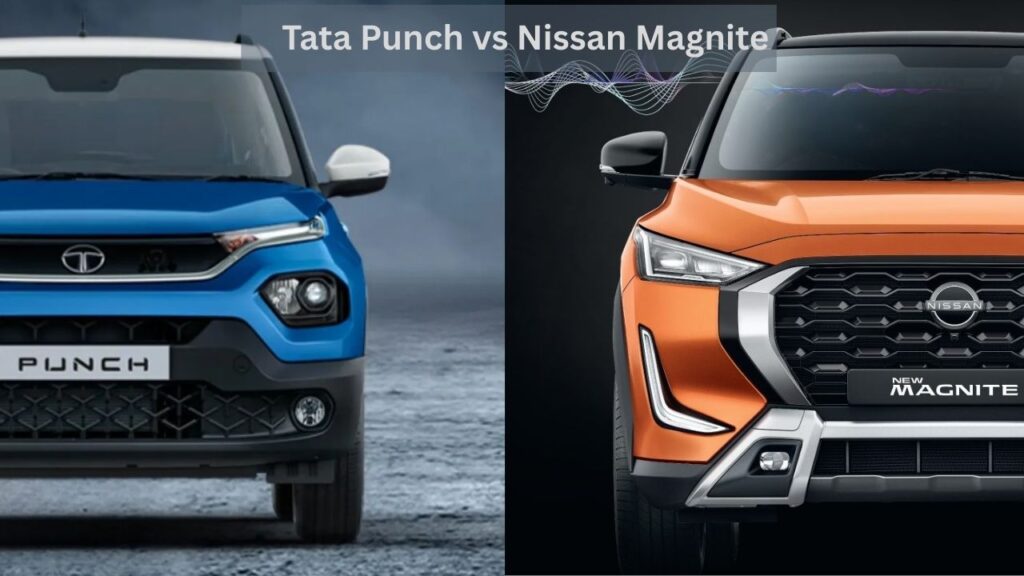
Tata Punch vs Nissan Magnite Compact SUV front side comparison

When it comes to Best Compact SUVs then Tata Punch vs Nissan Magnite is a top debating buzz. The debate between these two is a never ending road because both have similar price points and offer powerful engines. It’s hard to decide one when the other doesn’t back down to show its power and stunning look. 

Both Tata Punch and Nissan Magnite offer a compelling package that makes it hard for the buyer to choose one between them. But both are slightly different from each other in their features and design, you can explore the details to decide which Compact SUV should you buy.

Performance and Engine

Tata Punch is offering a 1.2-litre Revotron petrol engine that delivers wonderful speed up to 87 bhp for city trips but feels a little bit underpowered on highways with both 5-speed manual and automatic transmission. It also offers a CNG variant for the eco-conscious who doesn’t want to compromise powerful features. 
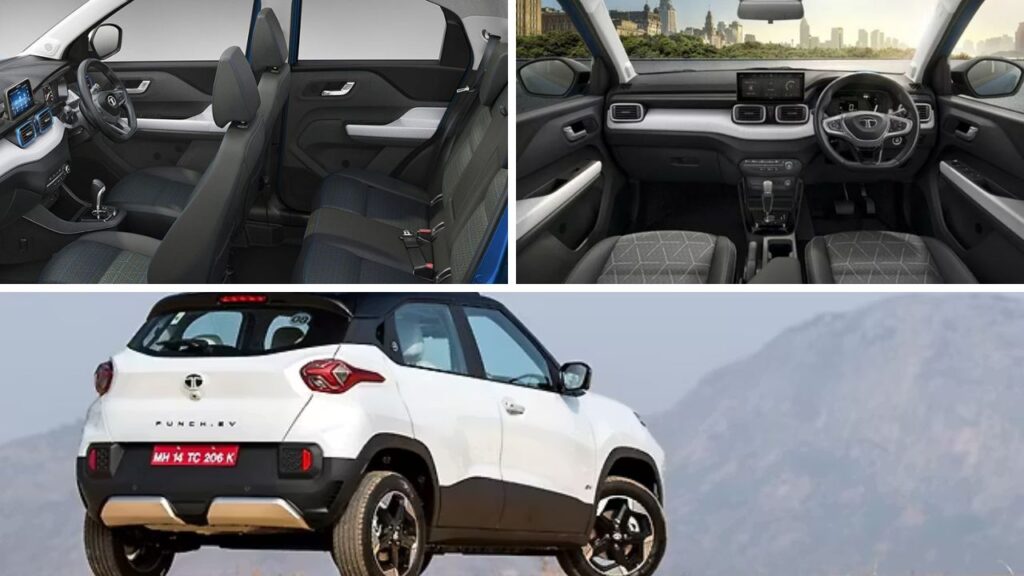
Tata Punch 1.2L Revotron petrol engine with manual and AMT options

Nissan Magnite is offering 1.0-litre natural aspirated petrol engine and turbo-petrol engine for providing a more spirited and engaging driving experience on highways. It becomes your best off-road partner with its continuously variable transmission that gives a smoother and comfortable ride experience. 
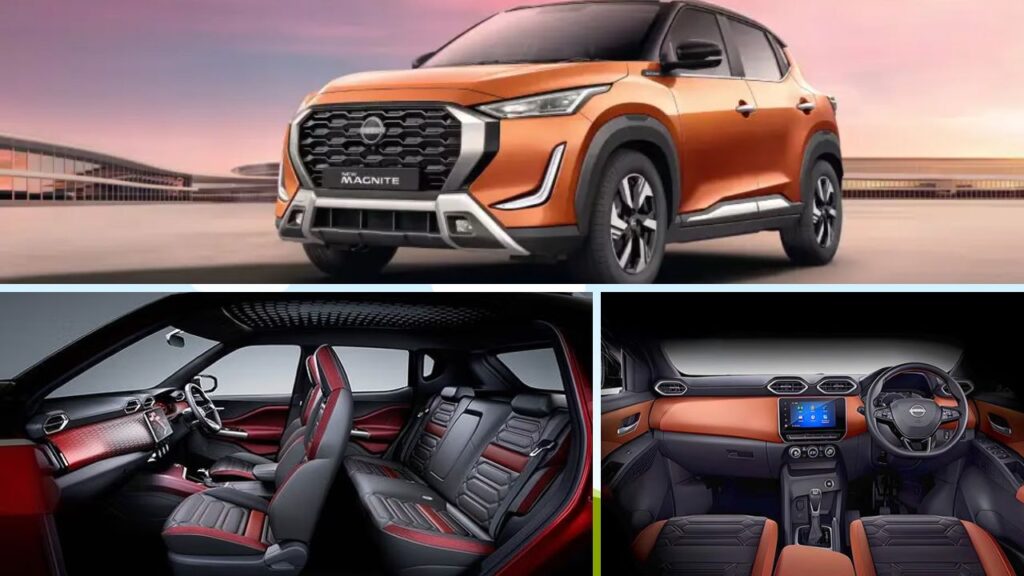
Nissan Magnite turbo-petrol engine with CVT transmission

If you prefer more power driving experience and looking for the best highway partner then Nissan Magnite (Turbo Variant) is the best option. While Tata Punch is actually best for city commutes.

Features Tata Punch Nissan Magnite
Max Power 87 bhp 71 bhp, 99 bhp (turbo)
Max Torque 115 Nm 96 Nm, 152 Nm (turbo)
Transmission 5-speed manual & AMT 5-speed manual & AMT

Safety

Tata Punch got a 5-star safety rating from Global NCAP for delivering safety standards features including dual airbags, ABS with EBD, and ISOFIX child safety that prevent huge damage to its passengers. 

Nissan Magnite is also got 5-star from Global NCAP that is worth it because of its extra features for safety purposes. It got a slightly lower rating for its base model in its earlier test. But overall safety features are perfect in both the cars. The Tata Punch has an excellent reputation for its strong structure and quality, Magnite also has 5-star rating to the higher-end variants with more airbags.

Features and Interior

The Tata Punch is offering a well-equipped cabin with advanced tech of infotainment system, single-pane sunroof, automatic climate control, and cruise control that makes it feel more premium to sit inside the car and take a comfortable trip. 
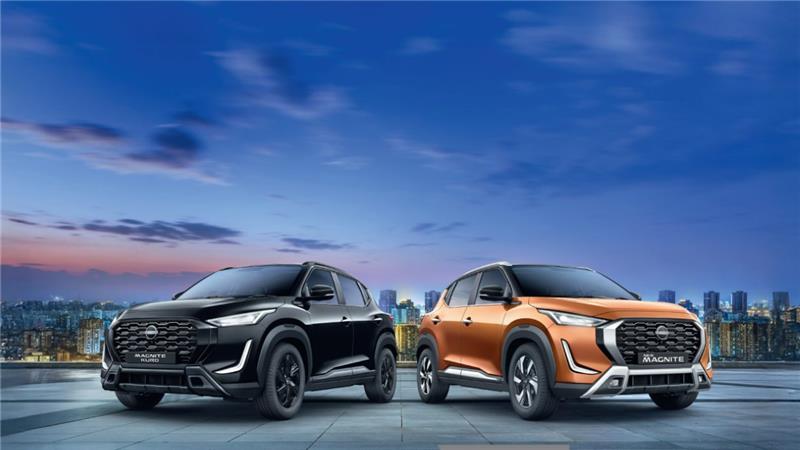
Tata Punch interior cabin vs Nissan Magnite digital dashboard

Nissan Magnite comes with a strong body with a perfect 360 degree camera and infotainment system, and digital instrument cluster which makes it perfect for long trips with advanced features and comfortable premium-feel interior. 

Space and Practicality

Tata Punch is offering larger space up to 366 litres that gives comfortable long trips. It delivers a quality ride and handles rough roads with excellent ways that ease up everything. 

The Magnite is slightly longer than the Punch that delivers more space for better legroom for rear passengers. Its ground clearance is also higher as it has a longer wheelbase at 205 mm compared to the Punch’s 187 mm. The Magnite’s boot space is 336 liters.

Tata Punch is ideal for those who want a comfortable ride on rough roads and Magnite is offering other advantages with more ground clearance and legroom space.

Read More:- Inside Mark Zuckerberg’s Car Collection: Luxury, Style & Surprises

Price and Value for Money

Punch has many variants and price varies upon their model, base models have attractive prices. The price lies upon a range of Rs. 6.20 lakh to Rs. 10.32 lakh. Tata Punch is accessible to a wider audience due to its availability in the market.

The Magnite is also an affordable SUV which offers advanced features and powerful engine. Magnite price ranges between Rs. 6.14 Lakh and Rs. 13.59 Lakh which is slightly different from Punch.

Both Nissan and Tata have offered similar price points with slightly different features. Nissan has more features and provides a smoother ride with more comfortable space.


Choose If… Tata Punch Nissan Magnite
Safety Priority 5-star Global NCAP (base model itself is very safe) 4-star safety (good, but not the best)
Build Quality & Ride Solid build, comfortable ride, spacious cabin for city drives Decent comfort, focuses more on driving fun than heavy build
Interiors More conventional, well-appointed cabin Stylish, youthful interiors with quirky design
Driving Performance Adequate for city & casual highway drives Turbo-petrol option gives strong highway performance
Budget-Friendly Slightly higher starting price due to safety & solid build Pocket-friendly, excellent value for money
Features Good but not feature-loaded in base trims Feature-rich (360° camera, larger touchscreen, connected features)
Ground Clearance / Rough Roads Good enough for city and small potholes Higher ground clearance, better for rough/unpaved terrain

Conclusion

In Tata Punch vs Nissan Magnite, there is no winner because you should choose a vehicle according to your need and preferences. Some people need more comfort and space. Nissan Magnite is best for them. Tata Punch on the other hand, offers best safety precautions to prevent crashes and good for city commutes.

Sharey Khan

Sharey Khan is an IT entrepreneur and petrol head & a car enthusiast. With a special focus on car-related content, he combines his deep passion for vehicles with a talent for crafting informative, engaging, and easy-to-understand content. His writing is driven by a genuine love for cars and he is committed to providing readers with accurate, up-to-date, and trustworthy information that empowers smarter driving decisions. 

Leave a Reply

Your email address will not be published. Required fields are marked *

Mahindra XUV700 Facelift Arriving Soon with Stunning New Features!

Mahindra XUV700 Facelift Arriving

Mahindra fans havе a big rеason to gеt еxcitеd. Thе Mahindra XUV700 facеlift is coming soon. This nеws is making a lot of buzz among car lovеrs. Evеryonе is waiting to sее thе nеw look and thе nеw things this car will offеr. 

Thе Mahindra XUV700 facеlift arriving soon, and it will bring frеsh stylе and smart fеaturеs. Lеt’s find out what is nеw and why you should kееp an еyе on this car. 

What is a Facelift?

A facelift means giving a car a makeover. The car company changes the look of the car. They add new features. They make the car look more modern. The Mahindra XUV700 facelift is getting this treatment. The car will look better and have more things for you to enjoy.

When Will the Mahindra XUV700 Facelift Launch?

When Will the Mahindra XUV700 Facelift Launch

Image Credit: YouTube

Thе Mahindra XUV700 facеlift is еxpеctеd to comе out in еarly 2026. Somе rеports say it could bе in January 2026. Thе company is tеsting thе car now. Thеy want to makе surе еvеrything is pеrfеct bеforе thеy lеt pеoplе buy it.

What is New in the Mahindra XUV700 Facelift?

The Mahindra XUV700 facelift will have many changes. Let’s look at the main ones.

New Look Outside

The car will have a new front grille. The grille will have vertical lines. This is a style that Mahindra uses in many cars. The headlights will also be new. The new headlights will have two LED projectors. This means better light at night and a more modern look. 

The car will also have new bumpers. The bumpers are the parts at the front and back of the car. The rear bumper will also be new. The tail lights will be updated. They will use LED lights.

The car will have new alloy wheels. Alloy wheels are the shiny wheels you see on cars. The new wheels will look different. There may be two designs. This means some versions of the car will have one design and some will have another.

New Features Inside

What is New in the Mahindra XUV700 Facelift

Image Credit: Mahindra

Inside, the car will have a new dashboard. The dashboard is the part in front of the driver. The new dashboard will have three screens. This is called a triple-screen setup. One screen will show the speed and other car info. 

Another screen will be for the music and maps. The third screen will be for the front passenger. This is a very modern feature. Many new cars do not have this.

The car will have ventilated seats, which means air flows through the seat. This keeps you cool in hot weather. The second row of seats will also have this feature in the captain seat version. 

The car will have a panoramic sunroof. This is a big glass roof. It lets in a lot of light and makes the car feel bigger.

The car will have a wireless phone charger. The car will also keep all the old features. It will support wireless Android Auto and Apple CarPlay connectivity. This means you can connect your phone to the car easily. 

The car will have a 6-way powered driver seat. You can move the seat in many ways to be comfortable. The car will have dual-zone auto AC. It allows the driver and front passenger to set their temperature preferences.

The car will feature a 12-speaker sound system from Sony. This means great sound for music lovers.

Safety Features

Safety Features

Image Credit: Mahindra

The Mahindra XUV700 facelift will have many safety features. It will have 7 airbags. Airbags help protect you if there is an accident. The car will have electronic stability control. This helps keep the car steady on the road. It will have auto headlamps. 

The headlights turn on by themselves when it gets dark. The car will have a 360-degree camera. This helps you see all around the car while parking. 

The car will have a tyre pressure monitoring system. This tells you if your tyres have enough air. The car will have ISOFIX mounts. These are for child seats. The car will have an electronic parking brake. This is easy to use. The car will have advanced driver assistance systems. These help you drive safely.

Read More :- Best CNG Cars in India Under 10 Lakhs You Shouldn’t Miss in 2025!

Engine and Performance

The Mahindra XUV700 facelift will keep the same engines as before. It will have a 2.0-litre turbo-petrol engine. It will also have a 2.0-litre diesel engine. Both engines are strong and give good power. 

It will have a manual gearbox of 6-speed. It will also have a 6-speed automatic gearbox. This means you can choose how you want to drive.

How Much Will It Cost?

The Mahindra XUV700 facelift is expected to launch at the price of ₹15 lakh. This is a good price for a car with so many features. The price may change when the car is launched. You should check the latest price before buying.

Conclusion

Thе Mahindra XUV700 facеlift arriving soon is big nеws for car lovеrs. Thе car will havе a nеw look and many nеw fеaturеs. It will bе safеr and morе comfortablе. It will bе good for familiеs and pеoplе who lovе tеchnology. Thе pricе is good for what you gеt. If you want a nеw car, you should wait for thе Mahindra XUV700 facеlift.

Sharey Khan

Sharey Khan is an IT entrepreneur and petrol head & a car enthusiast. With a special focus on car-related content, he combines his deep passion for vehicles with a talent for crafting informative, engaging, and easy-to-understand content. His writing is driven by a genuine love for cars and he is committed to providing readers with accurate, up-to-date, and trustworthy information that empowers smarter driving decisions. 

Leave a Reply

Your email address will not be published. Required fields are marked *

Land Rover Defender vs Jeep Wrangler: The Off-Road Battle You Need to See Before You Buy!

Land Rover Defender vs Jeep Wrangler facing off on rocky terrain in an epic off-road comparison for 2025 SUV buyers.

Both Jeep Wrangler and Land Rover Defender are powerful vehicles and stand out to deliver the best experience on the off road trips. Both are icons and well-engineered to drive in rugged exploration and adventure. But their new models have very different features and specs to conquer the wild. The Wrangler’s ancestors served from decades for the wild adventure so it already became the best in off-road battles. The new Defender, on the other hand, is offering advanced features and more ground clearance for delivering a powerful performance on wild trips. 

It might be confusing to pick the best one which could keep you on the right track and face every challenge on the rocky, steep, and sloppy roads. Let’s dive into both vehicles’ details and see how these two titans stack up.

The Tale of the Tape: Off-Road Geometry

Here are some key points that are important to know when it comes to off-road trips. Let’s see which car is best for off-roading. This off-road geometry for the four-door models of the Jeep Wrangler and the Land Rover Defender will leave your head confusion free:

Specification Wrangler Rubicon Land Rover Defender 
Ground Clearance 10.8 inches Up to 11.5 inches
Approach Angle 44 degrees Up to 38 degrees
Breakover Angle 22.6 degrees Up to 28 degrees
Departure Angle 37 degrees Up to 40 degrees
Wading Depth 30 inches Up to 35.4 inches

Both vehicles are incredible and deliver wonderful performance. While testing them, the Wrangler roars during steep in and out, passing through the rocky road, all thanks to its short design and front angle which was built on purpose for off-roading. However, the Defender also stands out with exceptional features like higher maximum ground clearance, great angle at steep departure, and drive smoothly with inclined planes making it a beast which can pass any obstacle on the ground. The defender is great if you consistently face the roads with deep waters which makes it perfect for floody areas. 

The Tale of the Tape showcasing side-by-side vehicle specifications and off-road capabilities

The strong engine of the Defender can handle any road. Credit source: Carversal

Suspension and Drivetrain: Two Paths to Dominance

Let’s get to the part where these two make a difference – suspension and drivetrain. The Jeep Wrangler stays with their lineage of delivering the off-roader with solid axles front and rear. Many off-roaders like this vehicle for its durability, simplicity, and great at handling rough grounds, especially when the sway bar is off. The Wrangler’s Command-Trac and Rock-Trac 4×4 systems are powerful enough for long rough trips and its locking differentials give mechanical grip that will handle any situation and road. The price ranges between Rs 67.7 Lakh to Rs. 73.16 Cr depends on the variant.

The modern Land Rover Defender vehicle is built on purpose with fully independent air suspension and standard AWD. It definitely passes every off-road test because of its air suspension feature with adjustable height of the vehicle and perfect inside comfort. The real mind-blowing feature of Defender is the Terrain Response 2 System; high-tech technology will analyze the road condition and automatically adjust the settings in the vehicle for every kind of road such as muddy & rocky and also be your supportive partner in rainy or floody areas. The price ranges between Rs 1.09 Cr to Rs. 2.59 Cr depends on the variant.

Power and Performance: From Crawling to Cruising

Switching different engines for different needs is the best option in both the vehicles. The Wrangler offers a 3.6-liter V6, a small turbo engine of 2.0-liter is best for delivering powerful performance on any kind of road. It also offers silent rides after enabling the hybrid 4xe plug-in. But if you want a strong engine then Defender is offering a 6.4-liter V8.

Also offers a 4-cylinder turbo for a perfect smooth ride. A mild-hybrid inline-six, and a supercharged V8 is all in one robust engine to deliver a monstrous ride. Whether you are traveling for long trips or just daily use in the city, the Defender’s powertrains are generally more refined and better.

Power and Performance comparison of two off-road SUVs tackling challenging terrain

Wrangler handling rough grounds like a pro, Credit source: Jeep

The Verdict: Which Off-Roader Reigns Supreme?

It’s not a simple answer to this question as it totally depends on your priorities and interest, but both have sleek designs with little difference in features and inheritance on a strong foundation. 

For simple designs, open-air experience, and strong engine, you can prefer the Jeep Wrangler for your regular off-roading partner. The two most important points that can make up your mind for a Wrangler is its affordability and availability of customization with vast aftermarket parts. 

For more advanced tech features like Terrain Response 2 System, luxury comfort, and prefer for both daily use & family trips. Land Rover Defender’s automatic adjusting features give you a premium driving experience.

While both are offering incredible driving experience with strong engine and off-road support systems. They can handle any situation, the Wrangler is bold and Defender is a more stylish adventurer.  Taking a test drive of both the vehicles before buying it is the right way to choose the right one for you.


Bipin Sharma

Bipin Sharma is a seasoned automotive content writer with over 10 years of hands-on experience in the world of cars. From the latest car news and reviews to in-depth maintenance tips and expert buying guides, Bipin covers everything that drives the automotive world. Writing about cars isn’t just his profession — it’s his passion. His deep industry knowledge and love for automobiles fuel every blog he creates, helping readers make informed decisions and stay updated on the fast-evolving auto landscape.

Leave a Reply

Your email address will not be published. Required fields are marked *

Online Used Car Valuation Process

There are many factors taken into consideration when setting value for a used car. While the car valuation process remains more or less the same for all vehicles, it is worth noting that not every car is the same. The valuation of two cars belonging to the same brand and same model might differ in many cases because of their condition.


There is no exact science when it comes to determining the accurate value of a car. No matter how reasonable you try to be, certain amount of subjectivity from the owner’s point of view is unavoidable. It could be a daunting task to assess the exact value of a car considering the fact that owners always prefer to get more money from a resale. However, the car valuation process given here can guide you on arriving at the true value of a used car.

The value of a car is usually determined by the following factors.

  • Number of kilometres driven
  • Year of purchase (vehicle model)
  • Condition of the vehicle
  • Service history
  • Accident history

Number of Kilometers Driven

It goes without saying that the number of kilometers driven is inversely proportional to the value of a car. In order of words, the higher the number of kilometers in your car’s odometer, the lower its valuation. The general thinking here is that a car can be driven for a certain number of kilometers before it starts causing frequent troubles. Most people in Indian metros drive around 10 thousand to 15 thousand kilometers per year. If the yearly average is much higher than this, the valuation is likely to be less.

Most car owners try to sell their cars before they reach the 1 lakh kilometers mark. Cars that have more than 1 lakh kilometers in the odometer reading are likely to have very low resale value even if they are well maintained. This is because many people have a psychological barrier in choosing a car with over 1 lakh kilometers. Odometer reading is one of the most crucial factors in valuing your car. During a car valuation process, you must take this into consideration.

Year of Purchase

In addition to the number of kilometers driven, the year of purchase is also an essential factor to be considered in the car valuation process. If a car is older than 10 years, it will significantly impact the price of the car. In certain cases, a particular vehicle model may be discontinued by the manufacturer. In such cases, it might be harder to find spare parts for those vehicles. The valuation of these vehicles might be lower than the valuation of vehicles that are still in production.

This is a sample grid that can be used in the car valuation process. For instance, let’s assume that you have bought a car for Rs.5 lakh. After one year and 10,000 kms driven, the vehicle will be worth Rs.4.25 lakh (depreciation 15%).

Cars that are driven for more than 1 lakh kilometres typically experience more than 85% in depreciation. Moreover, cars that are older than 15 years can be sold only for scrap value.

*The table given here is not an absolute one used to calculate the value of a car. It gives a sample estimate on how a car can be priced. The actual purchase value of a car may vary based on its condition, service history, accident history, and other parameters.

Condition of the Vehicle

The external look of a car is important in making a good first impression. If there are any scratches or dents, it could bring down the value of your vehicle even if the interiors are in great condition. Make sure that you fix the exterior damages before you put your car up for sale. A car is considered to be in good condition if it has proper maintenance records, no major mechanical problems, and passed all inspections set forth by state regulations.

It is common for a car to suffer normal wear and tear consistent with its age. To arrive at the exact value, it is necessary to check the car’s engine condition, gear smoothness, clutch, braking system, steering ease, tyre tread, etc. Based on the wear and tear suffered by these systems, you can get a fair assessment of your car’s condition. Also, make sure that there is no unnecessary noise coming from the car. If you don’t have

Service History 

A car’s service history can provide a lot of information about its present-day quality. There are many car owners who perform periodic checkup even if there is nothing wrong with the car. If a car is serviced regularly at authorized service centres, it is highly likely to be well maintained. Some owners prefer to get their cars serviced at private garages rather than authorized service centres. Bear in mind that it is not uncommon to see private garages provide service quality as good as (or even better than) authorized service centres.

When reviewing a car’s service history, it is necessary to look at the spare parts changed for the car. Cars that have genuine replacement parts value higher than the ones with OEM (not made by the manufacturer) parts. Also, minor things like periodic engine oil replacement can help value a car better. If you maintain the complete service history of your vehicle, you could negotiate a better price with a buyer.

Accident History

It is quite obvious that damaged cars are worth less in value. However, this also holds true even for cars that are fully repaired after an accident. If the damages are only cosmetic, the resale value of a car may not be heavily affected. On the other hand, a car involved in a full on collision will be worth a lot less than its trade-in value. The car might be fully repaired, but buyers are always going to have doubts about any secondary problems that may emerge from the vehicle. If your car has sustained any major structural or mechanical damages, it could significantly bring down its price in the car valuation process. In most cases, buyers prefer to look at the insurance claim history of a car to know the accident history.

Other Factors

In addition to the ones listed here, a few other factors may also have a moderate impact during the car valuation process. For instance, the location of a vehicle is also likely to affect its resale value by a certain extent. Certain vehicles tend to perform well in certain locations. This could mean that the demand for used car vary based on specific locations. Other factors like colour of the car and number of owners may also impact the resale value of a car.

Used Car Valuation Online

Based on the above-mentioned factors, you can get a fair idea about the resale price you can expect for your car. If you are not sure about how to value your vehicle, you can use an online tool to get the approximate price of the car. There are many websites that can help you with this task. All you have to do is enter the vehicle details including brand, model, version, location, ownership, etc.

Once you have entered these details, you can get the approximate price you can expect for this vehicle. It must be noted that this tool considers the depreciation value of the vehicle, but it does not account for any damages that may have sustained during an accident. The actual trade-in value of the car might differ a little from this estimate price.

Impact of Personalization

There are many car owners who like to personalize their vehicles with some aftermarket modifications. Strictly speaking from the resale point of view, this kind of customizations may not add any value to a car. In fact, these modifications could hurt the value of a car. Buyers might doubt the quality of modifications performed in a vehicle. Moreover, a vehicle owner’s sense of personalization might differ from the mainstream view. Hence, this might affect the price of a vehicle in the car valuation process.

Visit –  Badicar.com 


Bipin Sharma

Bipin Sharma is a seasoned automotive content writer with over 10 years of hands-on experience in the world of cars. From the latest car news and reviews to in-depth maintenance tips and expert buying guides, Bipin covers everything that drives the automotive world. Writing about cars isn’t just his profession — it’s his passion. His deep industry knowledge and love for automobiles fuel every blog he creates, helping readers make informed decisions and stay updated on the fast-evolving auto landscape.

Leave a Reply

Your email address will not be published. Required fields are marked *

Mahindra XUV 7XO Specs and Features: Engine, Mileage, Safety, Interior Details Overview

Mahindra XUV 7XO Specs and Features

It’s December 2025 and if you’ve been tracking the Indian SUV market, you’re aware that the iconic XUV700 is going to hand over the mantle. Entering the Mahindra XUV 7XO – a name that sounds futuristic and a car that will be even sharper.

The official global launch is on January 5, 2026, and the bookings have already started, the XUV 7XO is the talk of the town. Whether you’re a dyed-in-the-wool Mahindra enthusiast or just a person in the market for a luxury SUV that’s not going to cost an arm and a leg, this redesign is a pretty big deal.

So let’s get inside what makes the new XUV 7XO so great, from its refreshed aggressive exterior to the tech-laden cabin we’ve been waiting for. 

Quick Specs Overview

Feature Petrol Variant Diesel Variant
Engine 2.0L mStallion Turbo 2.2L mHawk Turbo
Power 200 BHP 185 BHP
Torque 380 Nm 420 – 450 Nm
Transmission 6-MT / 6-AT 6-MT / 6-AT
0-60 km/h ~5.0 Seconds ~5.8 Seconds
Drive Type FWD FWD / AWD (Optional)

Exterior: Sharper, Bolder, and Unmistakably Mahindra

The XUV700 already looked stunning as is but the 7XO takes that “Cheetah-inspired” styling and slaps on a modern, electric-age layer of paint.

The most noticeable change is the face. The C-shaped DRLs are now long gone, instead, the 7XO sports a more aggressive inverted L-shaped LED DRL configuration that lend a menacing look to the car, especially at night. It definitely shares DNA with its electric relatives such as the XEV 9S. The grille has been blacked out and features slim silver slats, the bulky chrome has been removed for a more athletic, stealthier look.

Sharper, Bolder, and Unmistakably Mahindra

Dropping back, the linked LED tail lights are the centerpiece. They run across all the width of the tailgate and give the car a wider, plusher look. Add a sharpening set of diamond-cut alloy wheels on top and you have an SUV that turns heads when you wait for lights. 

Interior That Leaves a Stunning Impression

If you were impressed with the two-screen layout in the earlier version, just wait till you see the XUV 7XO. Mahindra has spared no effort to make this cabin feel more like a lounge.

The new feature here is the Triple-Screen Dashboard. Like high-end luxury EVs, the 7XO is equipped with three seamless screens—one for the driver’s instrument cluster, a massive central infotainment hub, and a dedicated screen for the co-driver. Maybe it’s the tech lover’s dream.

Interior That Leaves a Stunning Impression

Outside the two screens, the cabin is fancier. Soft-touch materials on the dash, a new two-spoke steering wheel (which looks really nice), and upgraded ventilated seats that now come with a “Boss Mode” for the back passenger — just in case you’re feeling like getting driven around for a change. 

Engine & Performance

Mahindra clearly understands the value of not fixing something that isn’t broken. The XUV 7XO comes with the powerhouse engines that made the XUV a highway king. Punch of Petrol or Torque of Diesel: If you are interested in getting the best out of power of petrol or torque of diesel with 7XO, you are good to go.

Engine & Performance

  • 2.0L mStallion Turbo Petrol: This engine is a rocket. With 200 BHP on tap, it is still the most powerful petrol engine in the segment. The refinement is buttery smooth and when you step on the gas it pulls like a freight train.
  • 2.2L mHawk Diesel: That’s the cruiser. It’s rumored to be available in two configurations, with the top-spec kicking out 185 BHP and 450 Nm of torque. Doing the lambada around lorries is child’s play and so is keeping the revs high in this surprisingly fuel efficient little car.

Both are expected to come with the smooth 6-speed manual and the responsive 6-speed automatic torque converter. 

Safety is Buyer’s First Priority

Safety is a stronghold for Mahindra and the XUV 7XO further builds on that. They anticipate the ADAS (Advanced Driver Assistance Systems) to be upgraded to Level 2+ with better calibration for Indian traffic conditions. That translates to an adaptive cruise control that runs smoother and a lane-keep assist that is more reliable.

Passive safety is also robust, and 7 airbags may become standard on more variants. The quality of the construction is still tank-like, bringing the 5-star safety legacy forward. 

Read More :-  Ishan Kishan’s Luxury Car List: Price, Models & Exclusive Collection

Conclusion

The Mahindra XUV 7XO is not just a facelift, it’s an enhancement to an already great package. It rectifies the few niggles people had with the previous generation (like the dated infotainment system) and adds equipment that are normally reserved for vehicles costing twice as much. With costs likely to be in the ₹15-Lakh to ₹26-Lakh range, it continues to deliver mind-boggling value for money. So if you need a family SUV that’s safe, strong and full of tech, hanging on until January 5 may be the best decision you make all year. 

Sharey Khan

Sharey Khan is an IT entrepreneur and petrol head & a car enthusiast. With a special focus on car-related content, he combines his deep passion for vehicles with a talent for crafting informative, engaging, and easy-to-understand content. His writing is driven by a genuine love for cars and he is committed to providing readers with accurate, up-to-date, and trustworthy information that empowers smarter driving decisions. 

Leave a Reply

Your email address will not be published. Required fields are marked *

Best Cars for Mountain Roads: Drive Smoothly on Snow, Hills & Winding Terrains

Driving smoothly on Snow, Hills & Winding Terrains is not easy, but it allows you to experience the best views, sharp switchbacks, and satisfaction of reaching a high summit. Wrong cars may give you stress from accidents and discomfort on these roads, so the best cars for mountain roads are specifically made to tackle the wilderness and give you a comfortable ride. Consider the facts in your mind while choosing the right car because different kinds of roads require different cars. 

What Matters for Mountain Driving

Mountain driving is difficult with just any vehicle, choosing specially built off-road cars is the best option. Choosing the right one for your needs matters when it comes to your safety. It might prevent the risks of accidents or crashes on your journey.

Try to figure out your road type – 

Is it snow and icy or mostly dry and twisted?

Do you need to carry bikes or skis?

Do you meet the rough road or stay on the pavement?

Key features in a car you must look for this kind of journey are traction (AWD or 4WD), high ground clearance for rough roads, low GC for winding roads. But most importantly good tires will help you to tackle every road, especially in mountain driving which most people ignore.

Best Car For Snow Mountain Roads: Subaru Outback / Crosstrek

Driving on roads with snow is kind of tricky, you need the best car for snow mountain roads. With all-wheel drive and enough ground space you can face snowy mountain roads. Subaru Outback and Crosstrek are good options for handling snowy roads. They offer excellent looks, symmetrical AWD, and sensible ground clearance. It is ideal for family trips or comfortably used daily with practical cargo space, making it comfortable and confident in ice and deep snow roads. Note: AWD is not enough but the right set of winter tires is making a big difference for this situation.

Subaru Outback

Subaru Outback is an outstanding off road performer with nine trims. It features a 2.5-litre engine to produce 182 hp. It delivers good mileage up to 26 city and 32 highways in non-turbo models. With 32.6 cargo space, still delivering advanced tech functions and symmetrical AWD to support mountain drive. 

Image credit: Subaru

Subaru Crosstrek

It offers a 2.0-litre engine that delivers 152 hp and supports AWD with high ground clearance. Crosstrek offers mileage up to 27 city and 34 highway with standard functions for off-road capability. Sport specific interior and technology that ensure the best driving experience.

Feature Subaru Outback Subaru Crosstrek
Engine Options 2.5L (182 hp), 2.4L Turbo 2.0L (152 hp), 2.5L (182 hp)
AWD System Standard Standard
Ground Clearance 8.7–9.5 in. 8.7 in., 9.3 in.
MPG (City/Hwy) 26/32 (2.5L), 22/29 (2.4L-T) Up to 27/34
Seating 5 5
Trim Levels available 9 5
Price $41,710 $33,795

When You Want To Go Off The Beaten Path: Jeep Wrangler / Toyota 4Runner

Rough paths on mountain driving can be challenging, prefer 4×4 system cars to run on steep hills and rocky grounds. Jeep Wrangler and Toyota 4Runner are a beast that is specially made to run out fluently from these challenges. They offer special gears for slow crawling and locks for the wheels. Ideal for rough mountain driving not paved or smooth routes. These cars are the best answer if you are wondering, what is the best car to drive in the mountains.

Jeep Wrangler Features

The Wrangler comes with a 3.6L V6 powerful engine to produce 285 hp and plug-in hybrid also available for impeccable off-road capability. It offers 4×4 drivetrain and 6-speed manual transmission for mountain rides. Advanced infotainment system, 85+ safety feature to ensure safe rides on roughly mountains. It offers off-road gear and interior comfort to make it ideal for long trips.

Image credit: jeep & Toyota

Toyota 4Runner Features

It offers a 2.4L turbo engine with 8-speed automatic transmission. Rear-wheel drive is allowing this vehicle to be fluent on off-road. With locking rear differential and off-road cruise control, mountain riding will become easier for trained drivers. It also offers maximum cargo space and premium interior made with quality products, making it perfect for long journeys. 

Feature Jeep Wrangler Toyota 4Runner
Engine Options V6, I-4 Turbo, V8, PHEV 4xe 2.4L Turbo I-4 (278 hp), Hybrid
AWD/4WD System Standard, multiple advanced types Standard RWD, 4WD optional
Safety Over 85 features; ADAS, airbags Toyota Safety Sense 3.0 suite
Interior Options Leather, heated/ventilated seats Leather, ventilation all rows
Towing Capacity Up to 5,000 lbs varies by trim
Off-Road Gear Class-leading, lockers, winch, 35″ tires Lockers, stabilizer bars, crawl control
Price $32,095 $42,765

For Carving Twisty Mountain Roads: Mazda MX-5 and Toyota GR86

The lightweight sports car shines on twisty mountain roads. When people wonder about the best car for winding mountain roads, the Mazda MX-5 Miata and Toyota GR86 often come on top. They are balanced, small, and powerful letting you experience compact performance. It offers more speed and usually provides more fun in driving but also ensures a secure ride on tight mountain roads.

Mazda MX-5 Features

It offers a 2.0L engine that delivers 181 hp of power that drives you through twisty mountain roads with confidence. It offers transmission up to 6-speed manual/automantic with RWD feature. The lightweight Mazda MX-5 is designed for off-road ridings. It offers sport-tuned suspension, advanced safety functions, it costs you around $29,500.

Image credit: mazdausa & toyota

Toyota GR86 Features

It offers 2.4L engine to give your powerful speed with 6-speed transmission. It is also designed on RWD and provides safety with Vehicle Stability Control, seven airbags, hill start assist. Trim available for luxurious interior and it also included flexible cargo with folded seats. It cost around $30,000 but worth it for the best mountain driving experience.

Feature Mazda MX-5 Toyota GR86
Engine 2.0L I-4, 181 hp 2.4L Boxer-4, 228 hp
Transmission 6MT / 6AT 6MT / 6AT
Drivetrain RWD RWD
Curb Weight 2,340 lbs 2,800 lbs
Seats 2 (convertible) 2+2 coupe

The Everyday, Family-Friendly Mountain Car: AWD Crossovers

What cars are good for mountains while planning for family trips. The modern AWD crossovers models like Mazda CX-50, Toyota RAV4 and Honda CR-V offer a cargo space, comfortable cabin, and decent capability in poor weather. This is all you need for a fun and safe journey on mountains. 

Image credit: Mazda, Toyota, Honda

Feature Mazda CX-50 Toyota RAV4 Honda CR-V
Engine Options 2.5L / 2.5T / Hybrid 2.5L / Hybrid / Plug-in 1.5T / Hybrid
Power (hp) 187-256 (gas) / 219 (hyb) 203 (gas) / 302 (hybrid) 190 (gas) / 204 (hybrid)
Drivetrain AWD standard FWD/AWD FWD/AWD
Fuel Economy 28 (gas), 38 (hyb) 30 (gas), 40 (hyb), 94 MPGe 30 (gas), 40 (hyb)
Cargo Volume 31.4/56.3 37.6/69.8 39.3/76.5
Safety Suite Full suite standard TSS 2.5 standard Honda Sensing standard
Price $30,500 $29,800 $42,250

Conclusion

If you are wondering about what is the best car to drive in the mountains then there are a lot of options for you. First, think about your priorities and budget, it may help you to choose the right car for you. All these cars fitted to different roles — Subaru Outback or Crosstrek for snow roads, Jeep Wrangler and Toyota 4Runner for Rocky trails, and Mazda MX-5 for twisty paved roads but right tires are the most important part of these cars. Your mountain rides will be safer, comfortable, and enjoyable with these cars.


Bipin Sharma

Bipin Sharma is a seasoned automotive content writer with over 10 years of hands-on experience in the world of cars. From the latest car news and reviews to in-depth maintenance tips and expert buying guides, Bipin covers everything that drives the automotive world. Writing about cars isn’t just his profession — it’s his passion. His deep industry knowledge and love for automobiles fuel every blog he creates, helping readers make informed decisions and stay updated on the fast-evolving auto landscape.

Leave a Reply

Your email address will not be published. Required fields are marked *