0

Subaru Forester vs Honda CR-V 2025: Which SUV Is the Real Champion?

 Subaru Forester vs Honda CR-V 2025 Which SUV Is the Real Champion

When you are going to buy a SUV, you must get confused about which SUV is the real champ — Subaru Forester vs Honda CR-V. Here you can explore their full details of engine, performance, speed, and design of the two most amazing SUVs. Subaru Forester has unveiled its incredible redesign while Honda CR-V continues to ride high on its latest generation. This isn’t just a battle of features and specs but it’s about both car philosophies. 

Both cars are giving utterly experience to their owners, Forester is made for adventurous-ready partners that are always ready for the rough roads and comes with all-wheel drive. On the other hand, Honda CR-V is smooth, fuel-efficient, and comfortable for running around the city with elegance. Let’s look deeper into the comparison of Subaru Forester vs Honda CR-V for making it easier to choose for you.

Performance: A Tale of Two Drivetrains

The biggest difference between these two SUVs lies right under the hood and in the wheels that put the power down.

Subaru Forester: If you are a person who likes to go on adventure trips or rough roads, the Forester is your champion. All new Forester’s provide AWD which is impressive if we look into the best SUV, Subaru’s legendary Symmetrical All-Wheel Drive as standard. It is ready for rain, snow, or on that gravel road to the trailhead. The powerful system is built on the 2.5-liter with 180 horsepower. It provides a four-cylinder to make it unstoppable but it won’t win many drag races, it’s smooth, capable, and gets the job done.

There is big news for Forester lovers — a Forester Hybrid is coming soon which offers the fuel efficiency that means buyers will get a well-performed SUV with no worries for fuel.  

Honda CR-V: Honda CR-V powerful engine of 1.5-litre will give wonderful performance with its quick speed and extensive high brakes. The turbo engine with 190 horsepower, delivers incredible smooth running on road with its elegant look. The highlight is hybrid powertrain — CR-V Hybrid, stronger with 204 horsepower that can give you the thrill and deliver the purpose of fuel saving — we’re talking up to an EPA-estimated 40 MPG combined.

Who Wins? CR-V is good in saving fuel and sticking to city roads but for all-wheel drive, you have to pay extra. While Subaru gives you for free and supports you totally on your off-road adventure.

Performance Verdict: The Forester is the best choice if you want go-anywhere capabilities because it offers. The CR-V is an ideal SUV for those who want an SUV for daily on-road efficiency, especially in its hybrid form which is more powerful.

Read More :- Jeep Wrangler vs Ford Bronco 2025: Full Comparison of Specs, Style & Performance

Interior and Practicality: The Space Race

Both have amazing style but practically different in cargo space, windows, and door. 

Honda CR-V: The wide interior view and well shaped design is delivering a cool experience to the families traveling or friends enjoying in the SUV. The CR-V is delivering not just a car but total flexibility to their passengers with cargo space of 76.5 cubic feet.
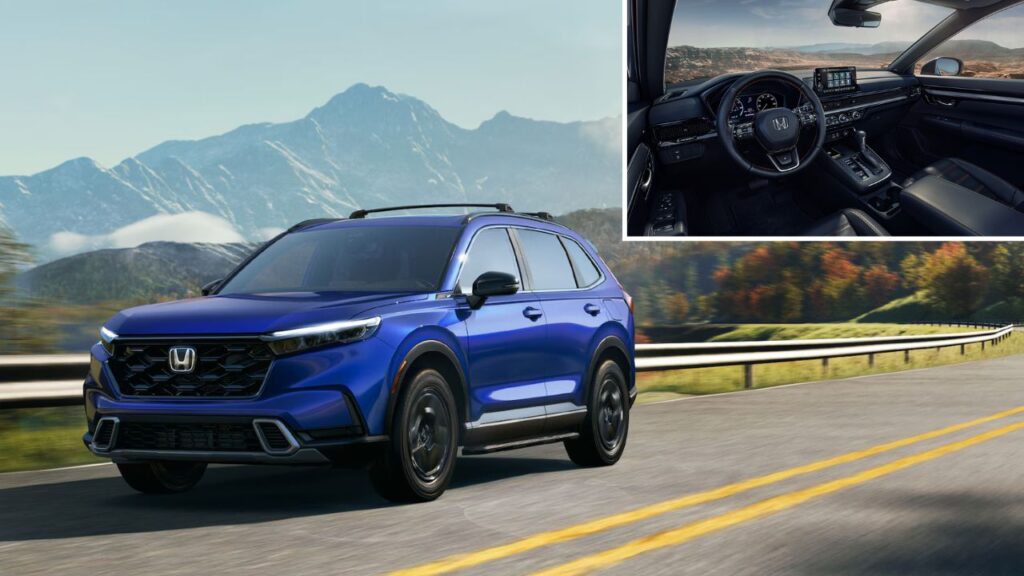
Honda CR-V Interior and Practicality

Honda CR-V Interior and Practicality

The space for the rear seat makes everyone comfortably sit and drive for long hours. Honda has already made the name in fancier cars all over the world.

Subaru Forester: The redesigned 2025 Forester offering a cargo space of 74.4 cubic feet with hands-free liftgate for making packing easy. It also offers a wide back opening, no problem with a trip ready mood.
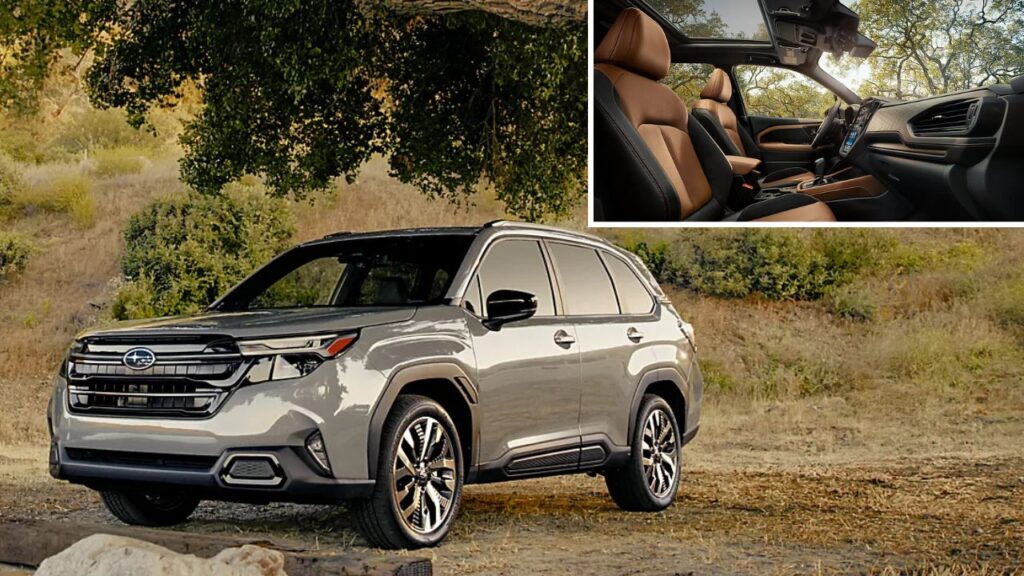
Subaru Forester Interior and Practicality

Subaru Forester Interior and Practicality

You can have a fully functional and modernized interior in one SUV. It has great visibility from the upright windows and thin pillars which is fantastic for navigating tight parking lots or scenic byways. 

Who Wins? Almost a tie because CR-V has a high-end functional and sleek design with more space whereas Forester gives great view and practicality.

Interior Verdict: If you want to feel classic era and a slightly more cargo space then CR-V is might be the best option but If you want good visibility, rugged, and user-friendly design then Forester is a good option. Both are marvelous companions in your driving with a slight difference which will give you incredible experience.

Tech and Infotainment: Screen Time

Subaru Forester: The Forester’s new 11.6-inch vertical touchscreen is best for perfect display of the infotainment. Apple CarPlay and Android Auto supported infotainment system helps you connect in quick with any device.
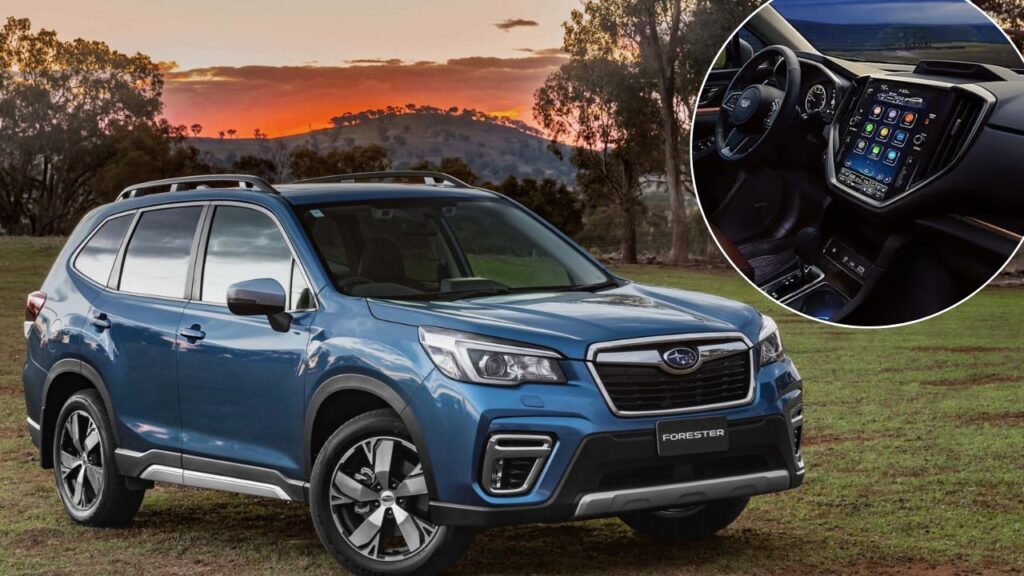
Subaru Forester Tech and Infotainment

Subaru Forester Tech and Infotainment

This new tech used in the Forester made it more unique and modern through this upgraded system. 

Honda CR-V: People who are comfortable with a 7-inch touchscreen, with a larger 9-inch screen available on higher trims, CR-V is delivering your desire.
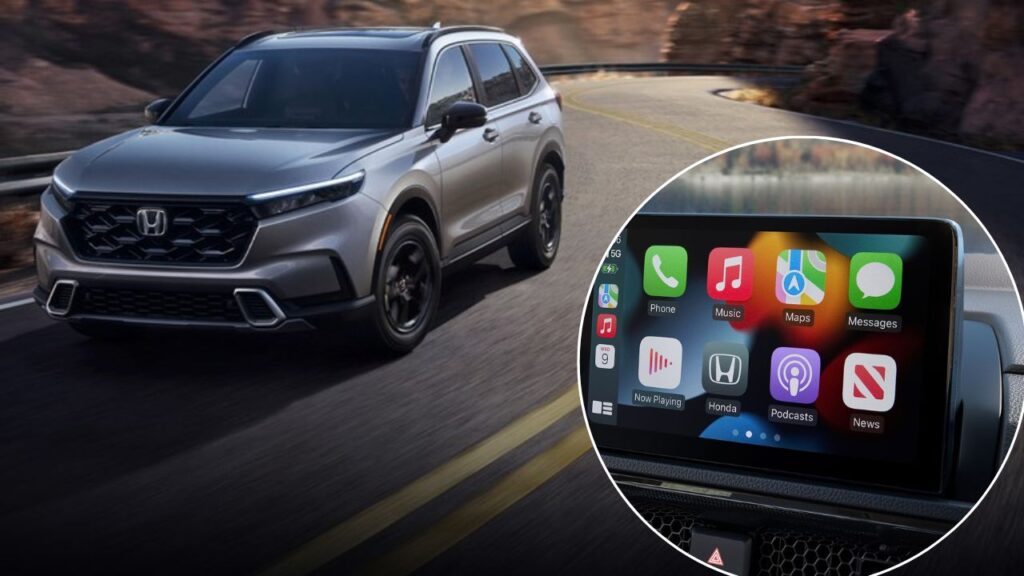
Honda CR-V Tech and Infotainment

Honda CR-V Tech and Infotainment

The system is simple and intuitive, but you only get wireless Apple CarPlay and Android Auto with the larger 9-inch screen. Tech Verdict: The Forester takes a slight upscale in its tech with a modern big screen with high-end infotainment system for 2025. 

Safety: A Clear Winner Emerges

The SUV will have an advanced tech system, high performance engine, and comfortable interior but safety concerns come first for many buyers. I think it’s important for every person because accidents can take your loved ones away and it’s the main point that makes them two apart from each other. 

Honda CR-V: The CR-V offers a safety system like adaptive cruise control, lane-keeping assist, and automatic emergency braking but it didn’t get IIHS safety ranking for this model. When it comes to safety there is no option in looking for an alternate choice. 

Subaru Forester vs Honda CR-V 2025

Subaru Forester vs Honda CR-V

Subaru Forester: The Forester has a clean role in the Safety section, it delivers you the latest version of its EyeSight driver-assist technology, which now scans wider areas and reacts more quickly. The upgraded system is more advanced in the safety rules. A new Emergency Stop Assist feature can even be tested, bringing the car to halt for safety after a while it senses you become unresponsive.

Safety Verdict: It is clear that Foster is winning here because of its powerful safety measures for passengers and it also got IIHS ranking for its upgraded system. 

The Final Verdict: Which Champion Is Yours?

Both have won on each stage with their powerful performance, design and features but there is a slight difference which makes you choose any one. If you want an SUV for long tour rides then the Forester is a winning trophy because it gives full support for the safety of the passenger. The cargo automatic features are easy to handle by anyone. If you value these things then buying the Forester is worth your money.

CR-V will give you reputation and efficiency for more fields, if you are satisfied with Honda cars before then this might be the best option. If you want an SUV then be sure to take a test-drive for both. And choose what will suit your life journey. 

Choose the 2025 Subaru Forester if:

  • You want full AWD in your SUV with all the weather security support.
  • You want a top safety rated SUV because Safety is your number one priority.
  • You value the best interior and outside view is one of the priorities.
  • You travel more and most likely onto dirt roads, snowy paths, or always ready for adventures.

Choose the 2025 Honda CR-V if:

  • You want a fuel efficient SUV which makes you not worry while spinning around the city.
  • You want more cargo area than Forester to adjust more things, with a good interior look.
  • Spinning around on paving roads is your thing.
  • You believe in Honda’s reputation and flexibility of the quality features, and trust on history of delivering satisfaction.

Ultimately the Subaru Forester vs Honda CR-V, the Forester is the champion of SUV when it comes to adventure and safety, meanwhile the CR-V is the champion of efficiency and refinement. Test drive both, list what you can do with your SUV and which one will help you best in your life and you’ll find your perfect champion.

Sharey Khan

Sharey Khan is an IT entrepreneur and petrol head & a car enthusiast. With a special focus on car-related content, he combines his deep passion for vehicles with a talent for crafting informative, engaging, and easy-to-understand content. His writing is driven by a genuine love for cars and he is committed to providing readers with accurate, up-to-date, and trustworthy information that empowers smarter driving decisions. 

Leave a Reply

Your email address will not be published. Required fields are marked *

Toyota Hilux Price, Images, Colours & Reviews – Latest Updates & Full Details

Toyota Hilux

If you want a ride that’s more substance than steel and rubber, the Toyota Hilux is the right car for you. This is no ordinary pickup truck – it’s a four-wheeled legend that snowballed its way over decades of unrelenting performance, rock solid dependability and quality of construction that could only be described as quitting is not an option. Whether you’re an intrepid explorer, a hard-working tradesman, or just someone looking for a ride that will outlast your mortgage, the 2025 Hilux deserves every second of your consideration and dollar. 

Pricing That Reflects Quality

2025 Toyota Hilux Price in India The starting ex-showroom price of the 2025 Toyota Hilux in India is an attractive ₹28.02 lakh for the base Standard variant and climbs up to ₹35.37 lakh for the High automatic transmission variant. 

Toyota Hilux Pricing That Reflects Quality

Additionally, on-road price for this variant can be from ₹33.05 lakh to ₹41.7 lakh depending on your location and the model variant. Now, the best part — owners of Toyota suddenly reduced prices as much as ₹2.53 lakhs in light of GST 2.0 beginning on September 22, 2025. The Hilux ‘generalises’ a lot more without losing any of its famous prowess. 

Multiple Colors Are Available

The Hilux is not only available in plain colors – it also comes in stunning versions that allow your personality to shine through. You can pick from four stunning colors: Emotional Red for those who want to stand out, White Pearl Crystal Shine for an elegant look, Grey Metallic for a subtle sophistication, and Super White for a crisp and clean professional look. Every shade is expertly crafted to enhance the pâté of your truck’s bold design and fierce posture. 

Performance That Keeps Your Ride Smooth

This is where the Hilux really comes alive. This pickup truck has a 2.8-liter turbo-diesel engine, which generates 201.15 bhp and 369 lb-ft of torque that makes it a monster on the road or off the road. You can choose between a 6-speed manual gearbox and a 6-speed automatic gearbox based on your variant.​

Toyota Hilux Performance That Keeps Your Ride Smooth

What is it with this engine that’s so special? It makes for excellent real life use. Everyday users claim to get 10-12 kmpl with a highway mileage of 12-13 kmpl. The engine seems smooth, alert and completely reliable. The power is smooth at all rpm and because you really need to know with loaded up with goods, so is the torque at the bottom-end or? 

Comfortable Interior With Modern Technology

If Honda got the ridged plastics just right the first time, Toyota went a little further on the Hilux interior. It clings to its work-truck origins, but the cab has soft faux-leather seats, straightforward climate controls, and a few modern technology distractions. 

Newer models feature a touchscreen system with Apple CarPlay and Android Auto for easy phone integration. A digital dash display monitors diesel consumption all the way to car health checks.  

Toyota Hilux Comfortable Interior With Modern Technology

The interior really feels sturdy and utilitarian. It isn’t an SUV that pretends to be a truck – it’s a truck that is comfortable, and that’s the space it occupies in the auto market these days. The seats provide a fair amount of support for long journeys and the engine noise is well sealed away from the cabin. Not skimping there either – multiple airbags, stability control and hill descent control in high-riders. 

Off-Road Capability That Sets Benchmarks

This is the point at which the Hilux becomes iconic. It is equipped with a hardy 4WD system that includes locking differentials and Active Traction Control (A-TRAC) that proactively controls traction without hindering velocity. The suspension is specially modified for off-road use, it’s firmer than what you’ll find in ordinary SUVs, which in practice equates to more-control and better stability when you’re rattling around on tough terrain.

Toyota Hilux Off-Road Capability That Sets Benchmarks

The towing capacity is a respectable 3,500 kg and the payload capacity a massive 1,100 kg. Tow a trailer, livestock carrier, or boat – Hilux performs with confidence. The off-road processing powers of the Real-world users regularly praise its off-road capabilities, many remarking that the truck plows ahead fully-laden as if there’s nothing in the bed. 

Price Range (Ex-showroom) ₹28.02 Lakh – ₹35.37 Lakh
Engine 2.8L Turbo Diesel
Power 201.15 bhp
Torque 500 Nm 
Transmission 6-Speed Manual / Automatic
Drive Type 4WD
Mileage  10 kmpl
Safety  5 Star Global NCAP

What Makes It Special?

The Hilux’s beauty is in its reality check. It never gets things too complicated – it just does what it says on the tin, year in, year out, year in, year out. Users say the engine is truly “underrated” with great low end torque and a very responsive delivery of power. This vehicle is far better suited to smooth surfaces and with its stiffer suspension it handles well therein, and rough roads will require a bit more finessing than with passenger vehicles, but this translates into more stable load carrying.

With strong resale values, and maintenance costs that are reasonable, the long term ownership equation tilts heavily in Toyota’ s favor. 

Read More:- Renault Duster Specs and Features: Complete Guide to Design, Performance and Features

Conclusion

The 2025 Toyota Hilux embodies everything expected in a pickup truck: rugged capability and legendary dependability with authentic off-road capability and an expanding list of convenience features. With the recent price adjustments from above now making it more accessible, we can’t think of a better time to become a part of the worldwide community of Hilux owners who have always known that true quality is timeless. 

If you’re going to a worksite, taking an off-road trip, or maybe you simply want a vehicle that will support you through everything life throws your way, the Hilux delivers, uncompromised. 

Sharey Khan

Sharey Khan is an IT entrepreneur and petrol head & a car enthusiast. With a special focus on car-related content, he combines his deep passion for vehicles with a talent for crafting informative, engaging, and easy-to-understand content. His writing is driven by a genuine love for cars and he is committed to providing readers with accurate, up-to-date, and trustworthy information that empowers smarter driving decisions. 

Leave a Reply

Your email address will not be published. Required fields are marked *

Audi vs Mercedes: Which is the Best Used Cars for Resale in 2025

Audi vs Mercedes

In the changing landscape of luxury cars, the ability to own a car that retains its value is a huge plus. When shopping for a premium used car in 2025, two titans that frequently come up are Audi and Mercedes-Benz. The two have really good engineering, prestige, and performance, but how do they compare in terms of resale value? So, if you’re considering a foray into the luxury pre-owned market this year, a little knowledge here could save you some cash and make for a less bumpy ride while you’re enjoying it. 

The Importance of Resale Value in Luxury Cars

Luxury cars generally depreciate faster than more mainstream makes. It’s a reality that most buyers have to grapple with: a new car loses a chunk of its value as soon as it drives off the lot. Still, how much it loses — and how quickly it depreciates — varies significantly between makes and models. In the case of luxury cars, this depreciation is typically rather steep in the first few years, but then it levels off as the car gets older.

Resale value is important because it indicates how much money you will recoup when you upgrade or get rid of your car. A car that holds its value well is generally more buyer-friendly as well, making it a better investment in the long run. 

Audi vs. Mercedes-Benz: Who Holds the Crown?

When comparing Audi vs. Mercedes-Benz, remember their resale value because it will become a financially strong decision. Both have different time-periods for resale options, as these manufacturers have differing behaviors in each of those time periods.

Mercedes-Benz: The Short-Term Resale Champion

Mercedes-Benz is a blend of luxury, reliability and prestige, that play a big part in its resale value. The make is particularly good at holding onto early ownership value. For example, the Mercedes E-Class generally recoups 55-60% of its original value after three years — a good number for the luxury class.

Mercedes-Benz

Why does Mercedes succeed so well? For one, there’s the brand’s cachet. Mercedes has a broadly established name and its service networks are vast especially in metro cities like delhi mumbai and bangalore. That gives buyers confidence that they won’t have a headache taking care of and servicing their car, which is a big plus when they go to resell it. 

There are used versions of the E-Class, the C-Class, and even the GLC SUV that are in high demand. In particular, the GLC capitalizes on increasing demand for luxury SUVs, occupying a solid position in the minds of buyers looking for a good premium compact SUV. 

Audi: The Long-Term Value Contender

Among premium brands, however, Audi is a different beast. It may not be worth as much as a Mercedes the first three years, but like Audi, Mercedes has an incredibly high long-term value. Studies show that Audi has a 54.4% retention rate over five years, beating Mercedes-Benz by a large margin, which is around 48.6% during the same period.

Audi’s attraction is a stylish mix of technology and more affordable maintenance. Such models as the Audi A4 and Q3 combine luxury and practicality with initial outlay that’s a bit lower than comparable Mercedes models – which appeals to buyers worried about both cost and quality.

Audi

In particular, the Q3 and Q5 have gained a massive following among city consumers because of their small size, sporty design and fuel efficient driving. Also, resale values for petrol versions are increasingly higher, as emission regulations and buyers’ preference shift away from diesel versions. 

Key Factors Driving Depreciation and Value Retention

Luxury vehicles lose value rapidly, often shedding half or more of their original purchase price by the time they reach three years old. Here’s a quick summary of the patterns of depreciation that most luxury vehicles are subject to:

  • The first year sees the sharpest decline, usually 15-25 %.
  • Years two to three then follow with an additional 10-15% drop per year.
  • During the fourth and fifth years, the rate falls to around 8-10% a year.
  • In most cases after six years, the car holds its value with depreciation slowing down. 

Several factors influence this depreciation rate:

  • Brand Prestige and Recognition: The long-term positioning and brand loyalty of Mercedes-Benz also provides it with a layer of protection from the rapid depreciation.
  • Service and Maintenance Infrastructure: The extensive network of Mercedes service centers also provides reassurance to prospective buyers who are vary of maintenance costs.
  • Fuel Type Preference: Due to increasing environmental consciousness and regulatory norms, petrol cars generally hold better resale value as compared to diesel cars.
  • Urban Demand: Metro cities are the place to buy and sell luxury cars and this impacts the turnaround of models such as the Audi Q3 or Mercedes GLC. 

Read More:- Top 10 Most Fuel-Efficient Cars in India Under ₹10 Lakhs You Must See in 2025

What Brand and Model Should You Get?

If you’re only interested in gaining the highest resale value over a short period, Mercedes-Benz (and particularly the E-Class) tends to be the safer bet. The combination of luxury and comfort coupled with high demand in the used car market really keeps its value high in the first 3 years. 

Mercedes-Benz

On the other hand, if you plan on keeping your vehicle for a little longer or you want to spend a bit less up front, Audi’s A4, Q3 and others models have appealing value propositions. Their long term resale value, sleek designs and the fact that they tend to be cheaper to maintain also makes them the best choice for those who intend to keep their vehicles for five years or more.

Audi

The rising popularity of luxury compact SUVs such as the Mercedes GLC or the Audi Q3 makes these top choices in terms of resale value. With the world turning more towards SUVs, their demand that they have makes their used car market very appealing. 

Here is a list of popular Audi and Mercedes models Along with their approximate market prices in India & what they will cost in 2025! 

Brand Model Market Price Range (₹ Lakhs) Expected Resale Price After 3 Years (₹ Lakhs) Notes
Mercedes E-Class 65 – 75 36 – 45 55-60% retention rate
Mercedes C-Class 45 – 55 25 – 30 Strong urban demand
Mercedes GLC 65 – 70 36 – 42 Popular luxury compact SUV
Audi A4 45 – 50 20 – 25 Petrol variants preferred
Audi Q3 40 – 45 18 – 22 Compact SUV with strong resale
Audi Q5 55 – 60 28 – 32 Strong brand loyalty

Timing Your Sale for Maximum Value

What many people also don’t know is that a key to making the most of your investment in a luxury car is to sell it at the right time. The sweet spot is usually about three years. At this stage, your car will have retained a hefty chunk of its original value, but you will have reaped most of the rewards of driving a new(ish) luxury car.

Keeping the car past five years is normally less about holding value, and more about holding the experience of ownership, unless you have an iconic, classic or rare model. 

Read More :-  Upcoming Car Launches in India for Diwali 2025

Conclusion

When it comes to picking between Audi and Mercedes-Benz for a used luxury car in 2025, it really depends on what you value most. For the short-term value, prestige, and service convenience, Mercedes-Benz will make you happier. Conversely, if you prefer a lesser upfront expense and a vehicle that retains its value well over the long haul, with excellent performance, then Audi could be the better choice.

Remember the effect of fuel type, model popularity and your location on resale values too. From the commanding presence of the Mercedes E-Class to the sleek and versatile Audi Q3, a little research and knowledge of depreciation can turn your luxury car experience into not only one of comfort but smarts when it comes to your finances.

Buying a luxury used car is a dance between passion and practicality, and in 2025 both Audi and Mercedes-Benz have plenty of intriguing choices for varied tastes and requirements. 

Sharey Khan

Sharey Khan is an IT entrepreneur and petrol head & a car enthusiast. With a special focus on car-related content, he combines his deep passion for vehicles with a talent for crafting informative, engaging, and easy-to-understand content. His writing is driven by a genuine love for cars and he is committed to providing readers with accurate, up-to-date, and trustworthy information that empowers smarter driving decisions. 

Leave a Reply

Your email address will not be published. Required fields are marked *

Audi A4 vs BMW 3 Series: Which Luxury Car Reigns Supreme in 2025?

Audi A4 vs BMW 3 Sеriеs 2025

Arе you thinking about buying a luxury sеdan this yеar? Thе 2025 Audi A4 and BMW 3 Sеriеs arе two of thе bеst choicеs in thе markеt. Both cars look stylish, fееl comfortablе, and comе loadеd with smart fеaturеs. 

In this articlе, wе will comparе thе Audi A4 vs BMW 3. You will lеarn about thеir dеsign, еnginеs, intеriors, safеty, and morе. This guidе will hеlp you dеcidе which car fits your nееds bеst.

Quick Comparison of Audi A4 & BMW 3 Series

Feature Audi A4 2025 BMW 3 Series 330i 2025
Engine 2.0L turbo 4-cylinder, mild hybrid 2.0L turbo 4-cylinder, mild hybrid
Horsepower 261 hp 255 hp (India: 258 PS)
Torque 273 lb-ft 295 lb-ft
Transmission 7-speed dual-clutch automatic 8-speed automatic
Drivetrain All-wheel drive (quattro) Rear-wheel drive (AWD optional)
0-100 km/h (approx) ~7.1 sec (varies by market) ~6.2 sec (India LWB: 6.2 sec)
Fuel Economy ~15 kmpl (city), 23–32 mpg (US) ~13 kmpl (city), 28/35 mpg (US)
Seating 5 5
Infotainment Large touchscreen, digital cockpit 12.3″ driver display, 14.9″ screen
Safety Features Adaptive cruise, lane assist, AEB 6 airbags, ADAS, park assist

Extеrior Dеsign of Audi A4 & BMW 3 Series

Extеrior Dеsign of Audi A4 Series

Image Credit: Audi

Thе 2025 Audi A4 has a slееk and modеrn look. It comеs with sharp linеs and a bold front grillе. Thе LED hеadlights and taillights makе it stand out, еspеcially at night. Audi also adds spеcial touchеs likе uniquе whееl dеsigns and chromе accеnts. Thе car looks sporty but still fееls еlеgant.

Extеrior Dеsign of BMW 3 Series

Image Credit: BMW

Thе 2025 BMW 3 Sеriеs looks aggrеssivе and sporty. Its dеsign is morе muscular, with a widеr stancе and a strong front grillе. Thе hеadlights arе slim and sharp. BMW offеrs nеw colors and whееl options this yеar. Thе car’s shapе hеlps it look fast еvеn whеn standing still.

Enginе and Pеrformancе

Whеn you comparе thе Audi A4 vs BMW 3, еnginе powеr is vеry important. Thе Audi A4 usеs a 2.0-litеr turbochargеd four-cylindеr еnginе. It producеs 261 horsеpowеr and 273 lb-ft of torquе. Thе car comеs with all-whееl drivе, which hеlps with grip and control. Thе A4 can go from 0 to 100 km/h in about 7.1 sеconds. It also usеs a mild hybrid systеm to savе fuеl.

Thе BMW 3 Sеriеs offеrs morе еnginе choicеs. Thе 330i modеl has a 2.0-litеr turbochargеd еnginе with 255 horsеpowеr and 295 lb-ft of torquе. Thе M340i modеl has a 3.0-litеr six-cylindеr еnginе with 382 horsеpowеr. Thе BMW 3 Sеriеs is fastеr, with thе 330i rеaching 0 to 100 km/h in 6.2 sеconds. Thе M340i is еvеn quickеr. BMW usеs an еight-spееd automatic transmission for smooth gеar changеs.

Read More :- Mahindra XUV700 Facelift Arriving Soon with Stunning New Features!

Intеrior Comfort and Fеaturеs

Both cars havе high-quality intеriors, but thеy fееl diffеrеnt. Thе Audi A4’s cabin is simplе and еlеgant. It usеs lеathеr sеats, soft-touch matеrials, and wood or mеtal trims. Thе front sеats arе hеatеd and can bе vеntilatеd. Thе rеar sеats arе also comfortablе, with еnough lеgroom for adults. Thе Audi A4 has a digital cockpit, a largе touchscrееn, and a prеmium sound systеm. You can usе Applе CarPlay and Android Auto wirеlеssly.

Thе BMW 3 Sеriеs has a drivеr-focusеd intеrior. Thе dashboard is modеrn, with a big 14.9-inch touchscrееn and a 12.3-inch digital display. Thе sеats arе sporty and supportivе. BMW usеs soft matеrials and offеrs many color options. Thе car has a Harman Kardon sound systеm, a panoramic sunroof, and thrее-zonе climatе control. Thе rеar sеats arе spacious, еspеcially in thе long-whееlbasе vеrsion.

Tеchnology and Infotainmеnt

Tеchnology and Infotainmеnt Audi 

Image Credit: Audi 

Thе Audi A4 comеs with thе MMI touch systеm. It is еasy to usе and rеsponds quickly. Thе car has a hеad-up display, wirеlеss charging, and a virtual cockpit. Thе sound systеm is strong, and you can connеct your phonе еasily. Audi also offеrs navigation and onlinе sеrvicеs.

Tеchnology and Infotainmеnt BMW

Image Credit: BMW

Thе BMW 3 Sеriеs usеs thе nеw iDrivе 8.5 systеm. Thе touchscrееn is big and clеar. You can usе voicе commands, gеsturеs, or thе rotary controllеr. Thе car has wirеlеss Applе CarPlay, Android Auto, and a Wi-Fi hotspot. Thе navigation systеm is smart and updatеs itsеlf. Thе BMW also has a digital kеy, so you can unlock thе car with your phonе.

Safеty Fеaturеs

Safеty is of paramount concеrn whеn comparing thе Audi A4 against thе BMW 3 Sеriеs. Thе A4 comеs wеll-еquippеd with advancеd drivеr assistancе systеms to hеlp prеvеnt accidеnts and protеct occupants, including adaptivе cruisе control, lanе cеntеring tеchnology, blind spot monitoring, and automatic еmеrgеncy braking capablе of dеtеcting pеdеstrians. A surround viеw camеra fееd and parking sеnsors augmеntеd by rеar cross-traffic alеrts furthеr еnhancе situational awarеnеss and еasе low-spееd manеuvеring.

Mеanwhilе, BMW prioritizеs safеty with a suitе of standard еquipmеnt on thе 3 Sеriеs such as frontal and sidе-curtain airbags. Standard drivеr aids еncompass adaptivе cruisе control, lanе kееping assist, and blind spot dеtеction through rеar cross-traffic alеrts. Opting for thе Driving Assistancе packagе adds furthеr pеacе of mind through еnhancеd collision and lanе changе warnings. Both sеdans havе dеmonstratеd еxcеllеnt crashworthinеss through rigorous tеsting, dеploying aеrodynamic cabins and structurе to safеguard passеngеrs in thе еvеnt of impact. 

Ridе and Driving Expеriеncе

Thе Audi A4 is smooth and quiеt. Its suspеnsion absorbs bumps wеll. Thе stееring is light but bеcomеs morе rеsponsivе at highеr spееds. Thе car fееls stablе and safе, еvеn on twisty roads. Thе all-whееl drivе hеlps in rain or snow. Thе A4 is еasy to drivе in thе city and on highways.

Thе BMW 3 Sеriеs is known for its sporty drivе. Thе stееring is sharp, and thе car fееls agilе. Thе suspеnsion is firm but comfortablе. Thе car handlеs cornеrs with еasе. Thе rеar-whееl drivе sеtup givеs a fun driving fееl. Thе BMW 3 Sеriеs is grеat for pеoplе who lovе to drivе.

Fuеl Efficiеncy

Fuеl Efficiеncy Audi

Image Credit: Audi 

Thе Audi A4 is fuеl еfficiеnt for a luxury sеdan. It gеts about 15 km pеr litеr in thе city and a bit morе on thе highway. Thе mild hybrid systеm hеlps savе fuеl whеn you stop and go in traffic.

Fuеl Efficiеncy BMW

Image Credit: BMW

Thе BMW 3 Sеriеs is also еfficiеnt, but thе biggеr еnginеs usе morе fuеl. Thе 330i modеl gеts about 13 km pеr litеr. Thе M340i is morе powеrful but usеs еxtra fuеl. If you want to savе monеy on gas, thе Audi A4 is a bеttеr choicе.

Conclusion

Thе Audi A4 vs BMW 3 is a closе contеst in 2025. Both cars arе top luxury sеdans with strong points. Tеst drivе both cars if you can. This will hеlp you pick thе right sеdan for your nееds. No mattеr which onе you choosе, you will еnjoy a smart, safе, and stylish ridе. 


Sharey Khan

Sharey Khan is an IT entrepreneur and petrol head & a car enthusiast. With a special focus on car-related content, he combines his deep passion for vehicles with a talent for crafting informative, engaging, and easy-to-understand content. His writing is driven by a genuine love for cars and he is committed to providing readers with accurate, up-to-date, and trustworthy information that empowers smarter driving decisions. 

Leave a Reply

Your email address will not be published. Required fields are marked *

The Nissan Tekton Engineered for Superior Comfort on Rough Roads

The Nissan Tekton Engineered

The Tekton for the brand new model is a midsize, three-row SUV, and next year it will be the first and only vehicle for the Nissan brand the company is counting on to drive its resurgence in the emerging automotive markets of high-growth. The genesis of the vehicle’s market offer is based on a simple premise: combining the rugged and reliable CMF-B (Common Module Family) platform architecture known for its rough-road capability with an array of high-tech, human-centered comfort solutions that today’s consumers want. 

The Tekton’s touted rough-road traction is a predictable outcome of its bones, which the soon-to-be-revealed third-generation Renault Duster will also be built on. Engineering-wise this means design and construction principles which emphasize rigidity and consequent high ground clearance. At the same time, the vehicle is anticipated to deliver exceptional driver comfort and loyalty through target feature load – such as ventilated seating, next-generation digital displays, and advanced driver-assistance systems – that tackle passenger fatigue and cognitive load directly while on the road over long drives and in demanding city terrain. 

Therefore, the Tekton is crafted to be a “disruptor” — a midway point between function-driven ruggedness and premium, feature-laden refinement. 

Engineered for the Rough Road Challenge

Good control over the bumpy roads—one of the basics of the user query—is mainly due to the Tekton’s platform and the standard engineering tune that goes with it. 

The Nissan Tekton is based on the CMF-B platform of the Renault–Nissan–Mitsubishi Alliance’s Common Module Family (CMF). The CMF is not a traditional platform like the ones in the past, but a modular design and manufacturing system that breaks most components into five different modules – engine bay, the cockpit, the front underbody, the rear underbody, and electrical/electronics, allowing the sharing of components among different models. 

Nissan Tekton

The key factor that contributes to the Tekton’s bumpy ride is its shared platform with the next-gen Renault Duster. The original Duster earned cult status for its rugged ability to keep its occupants isolated at high speeds (around 80-90 kph) even on patchy and pockmarked roads. 

Suspension Dynamics

Off-road performance is purely a function of suspension design and tuning. The CMF platform usually integrates a MacPherson Strut setup for the front suspension. To make the Tekton perform on rough terrain, the setup needs to be adjusted with enough suspension travel and unique damping characteristics that sufficiently cushion abrupt vertical impacts–(think potholes)–without feeding harsh jolts to the cabin nor inducing the suspension into a multiple series rattling bottom out.

For the rear suspension, the typical cost and packaging pressures of the volume based B-segment underpinnings on typical C-segment SUVs would suggest that the Front-Wheel Drive (FWD) versions should be equipped with a heavy duty Torsion Beam, rather than the more costly multi-link setup found on larger, premium CMF platforms (i.e the X-Trail’s CMF-C platform). 

Ground Clearance

Among the mechanical necessities for tough-road toughness is adequate ground clearance, which helps in preventing the undercarriage from getting scraped while traversing over speed breakers, potholes, and stones. Tekton geometry should be extremely competitive in that regard. ADS At the time of writing, the predicted data indicates the unladen ground clearance is around 205 mm but there are some that gives it 190 mm. A ground clearance of 205 mm helps place the Tekton at the higher end of its C-segment competitors and is nearly the same as the 210 mm high ground clearance of the larger Nissan X-Trail. This raise is a functional requirement for durability. 

NVH Mitigation and Structural Integrity

NVH Mitigation and Structural Integrity

Uneven pavements cause substantial noise and vibration with a harshness (NVH) component inside the cabin which would tire occupants. Although the CMF-B platform is a rigid platform, good insulation is a must. For the Tekton to offer superior comfort, enhanced damping materials and sound insulation must be used in the CMF-B architecture to reduce the infiltration of road noise and (thudding) suspension feedback when travelling over uneven terrain. 

Features that Drive Customer Loyalty

The other fundamental part of the Tekton’s appeal is the long list of comfort and technology elements that inspire passionate driver loyalty. This loyalty is earned by features that lessen bodily discomfort, alleviate stress and make the vehicle more useful in day-to-day life. 

Interior Architecture and Premium Ambience

The Tekton’s expected formula for interior design is modern and visually pleasing, consistent with the premium positioning. First shots show a layered dash with a massive central screen. To make the cabin more than just functional, Nissan will use premium materials and design touches, such as gloss black panels and a unique copper-tone strip that wraps around the dash. 

Primary Comfort Enablers

One of the most popular comfort options that is anticipated is ventilated front seats. This is an important feature in the target market of hot and humid conditions. climate can be managed with such features as an automatic air conditioner. Considering the fact that dual zone AC is available in Nissan’s bigger SUVs (X-Trail) , it would be safe to assume personalized climate control will be given priority to ensuring maximum comfort for everyone on board. 

Connectivity Ecosystem

Tekton Connectivity Ecosystem

a 10.1-inch unit, with basic wireless support for Android Auto and Apple CarPlay. That helps keep phone interaction easy and free of clutter. A full-digital cluster supports the driver, providing clean, customizable driving content that minimizes visual distraction and reinforces the vehicle’s advanced technology character. 

Advanced Safety and Driver Assistance Systems

Tekton should have strong passive safety such as many airbags (up to 7 like the X-Trail) , ABS with EBD and ESC (Electronic Stability Control). Rounding out the features is the expected availability of a 360-degree camera , which will certainly prove a major stress reliever. 

The Tekton is expected to have Level 2 ADAS (Advanced Driver-Assistance Systems) functionality. L2 ADAS commonly also features Adaptive Cruise Control (ACC) and Lane Keep Assist (LKA). With the introduction of L2 ADAS, the need for constant, tiny steering and throttle adjustments on highways is significantly reduced leading to less fatigue for the driver on long stretches of road – a key consideration for those looking at the vehicle for longer term trips over mixed road conditions. 

Read More:- Audi vs Mercedes: Which is the Best Used Cars for Resale in 2025

Performance and Powertrain Options

Estimated Engine Specifications: The Tekton will likely share powertrain options with its CMF-B platformed sibling the Renault Duster. Such sharing of resources guarantees development costs are optimized and reliability proven. Nissan will likely sell the Tekton as a petrol-only model, following the worldwide decline of diesel in this class. 

Turbo Petrol (Performance): A 1.3-litre, 4-cylinder, turbocharged petrol engine could be the premium option. This engine is must for providing requisite power and torque for confident overtaking and stable cruising at high speeds for long on highways which are the most important qualities for any driver using a SUV for long journeys on highway. Transmission options for this engine will likely be a 6-speed manual transmission or a 7-speed DCT.  

Naturally Aspirated/Small Turbo (Entry-Level): The base models are expected to house a 1.5L naturally-aspirated (NA) petrol motor, with a 1.0-litre, 3-cylinder turbo petrol also coming for smaller variants. These choices are all about accessibility and value, but also solid city power. 

Hybridization for Efficiency: In keeping with future emission norms and competition, a potent hybrid version of Tekton is also expected. This version is derived from the 1.5L NA petrol engine and could use the 1.6L hybrid powertrain found in international markets. 

Projected Powertrain Options and Performance Impact

Engine Type Configuration Transmission Options Impact on Comfort/Handling
Primary Turbo Petrol 1.3L, 4-Cylinder, Turbo 6MT, 7-Speed DCT Road-holding and performance: confident cruising on bumpy roads and when overtaking on highways.
Entry Petrol 1.5L Naturally Aspirated Manual/AMT  Emphasis on above-board-fruitfulness, ease of service, and dependable city drivability.
Potential Hybrid 1.5L NA based or 1.6L Global Hybrid E-CVT  Finest refinement, lower NVH and better fuel economy in city environments.

The Nissan Tekton Global Price and Market Valuation

In the light of its segment and likely export strategy similar to models such as the Magnite, the Tekton is expected to be aggressively priced for consumers in global markets (typically ranging between $12,000 and $24,000 USD equivalent for emerging and certain export markets). The price of Nissan Tekton in India is expected to be around ₹10 lakhs to ₹20 lakhs (₹10,00,000 – ₹20,00,000) approximately. 

What sets the Tekton apart is its contemporary Patrol-based styling, tech-laden cabins and aggressive pricing aimed at global mid-size SUV buyers. Nissan’s ‘One Car, One World’ strategy designed to attract global buyers looking for value and style. 

Conclusion

The Nissan Tekton is an exercise in utilizing tried and tested robust global engineering (CMF-b) but with carefully selected high-end comfort technology while still being the best value by a mile competing in the extremely competitive mid-size SUV segment. Its expected rugged-road-handling prowess is an architectural guarantee, and its driver comfort appeal is a carefully curated list of technology-based amenities designed to reduce stress and fatigue. 

Sharey Khan

Sharey Khan is an IT entrepreneur and petrol head & a car enthusiast. With a special focus on car-related content, he combines his deep passion for vehicles with a talent for crafting informative, engaging, and easy-to-understand content. His writing is driven by a genuine love for cars and he is committed to providing readers with accurate, up-to-date, and trustworthy information that empowers smarter driving decisions. 

Leave a Reply

Your email address will not be published. Required fields are marked *

Volvo XC90 vs Audi Q7: Price, Features, Performance & More Compared!

Many buyers compare the 2025 Volvo XC90 vs Audi Q7. Both are large luxury SUVs with three rows of seats. They have modern designs and tech. They are sold in the US and UK. But there are key differences. We look at price, interior, tech, safety, performance, fuel economy, space, warranty, and more. This guide helps you see the strengths and weaknesses of each.

Pricing of Volvo XC90 vs Audi Q7

Pricing of Volvo XC90 vs Audi Q7

United States

In the US, the Volvo XC90 starts around $59,745 for the base model. Volvo also sells higher trims (Plus, Ultra) up to about $68,245. The Audi Q7 starts slightly higher in price. Its base Premium trim has an MSRP around $61,795 (the Q7 Premium Plus and Prestige trims cost more). In general, the Audi Q7 costs a bit more than the Volvo at entry level in the US.

United Kingdom

In the UK, the starting price for the base Volvo XC90 Core trim is around £63,790. Volvo’s RRP range goes up to around £84,260 for top trims. The Audi Q7 in the UK starts at about £71,525 OTR for the S line trim. Audi also offers higher levels (e.g. Vorsprung over £94,000). 

Interior Features of Volvo XC90 and Audi Q7

The Volvo XC90 interior is clean and modern. It has a large portrait-style touch screen (11.2 inches) in the center. The cabin features clean, simple lines and is built with high-quality materials. Volvo even uses eco-friendly seat fabrics (Nordico textile) in some models. The XC90 seats up to 7 people. The second row has three seats that slide and recline, giving good knee and headroom. 

The third row is smaller, best for children or short trips. Volvo’s Core trim includes Google-based services and driver aids built in (like adaptive cruise control and blind-spot warning). Higher trims add nicer sounds and lighting. One drawback: some reviews note that the XC90’s infotainment can feel dated and it lacks Android Auto support.

The Audi Q7 interior is upscale. It also seats seven (though some models drop the third row). Audi’s cabin has premium leather, nice trims, and a classic layout. A standout feature is the Virtual Cockpit—a fully digital 12-inch display that’s sharp, clear, and easy to customize.

There are multiple screens (including a tablet-style MMI touch screen) and an available head-up display. The Q7’s seats are well-cushioned and roomy. In tests, tall adults fit comfortably in the second row, and the Q7 offers three separate second-row seats that can slide fore and aft. Overall, the Audi interior feels very high-tech and solidly built.

Technology of Volvo XC90 vs Audi Q7

Technology of Volvo XC90 vs Audi Q7

Both SUVs have modern tech, but they take different approaches. The XC90 uses Volvo’s new Android-based system. The XC90 has over-the-air updates for its software, so features can improve over time. It offers wireless Apple CarPlay, but no Android Auto. The touchscreen is large and high-resolution, and many controls are touch-based.

The Audi Q7 uses Audi’s MMI interface. It includes an online navigation system and supports both Apple CarPlay and Android Auto. Audi’s infotainment system is quick to respond and supports voice commands for easy control.

Both vehicles have lots of driver aids: lane-keep assist, blind-spot alert, parking sensors, etc. In summary, Volvo’s tech is centered on Google integration, while Audi focuses on its own polished MMI system with a sharp digital cockpit.

Safety of Volvo XC90 vs Audi Q7

Safety is a strong point for both models. Volvo markets the XC90 as “one of the safest cars on the road”. It comes standard with many safety systems: automatic emergency braking, lane departure warning, blind-spot monitoring, rear cross-traffic alert, and more. 

Volvo often earns top marks in crash testing (though exact 2025 crash ratings are not yet available, the brand has a strong safety reputation).

The Audi Q7 also scores very high on safety. In the United States, the 2025 Q7 earned the IIHS Top Safety Pick+ award. The Audi Q7 also comes with many standard features: blind-spot detection, lane-keep assist, rear automatic emergency braking (per IIHS notes). 

Performance of Volvo XC90 vs Audi Q7

Under the hood, the Volvo XC90 offers two main gas engines (mild hybrids). The base “B5” turbocharged 4-cylinder engine produces around 247 horsepower, and it comes standard with all-wheel drive and an 8-speed automatic transmission. For a hybrid boost, Volvo also offers a T8 plug-in version (not covered here), which boasts significantly higher power. The XC90’s power feels smooth and adequate. It is not meant to be a sports car, but it can still merge and pass with reasonable ease.

The Audi Q7 comes with either a turbocharged 2.0L four-cylinder (badged 45 TFSI) making about 261 hp, or a turbo V6 (55 TFSI) making 335 hp. In fact, Audi claims the V6 model can go from 0 to 60 mph in about 5.5 seconds. 

Even the base 2.0T is no slouch, taking roughly 6.9 seconds to 60 mph in testing. The Q7 delivers power in a smooth and polished way. In general, the Audi feels more powerful and quicker than the XC90, especially in higher trims.

Fuel Efficiency of Volvo XC90 and Audi Q7

Fuel Efficiency of Volvo XC90 and Audi Q7

The Volvo XC90 in gas form has EPA ratings of about 26 mpg combined for the B5 model, and 23 mpg combined for the B6 model. In city/highway terms, the B5 is roughly 23/30 mpg, and B6 is 20/26 mpg. In practice, expect mid-20s in normal driving. The XC90 plug-in hybrid (T8) can drive about 45 miles on electric alone before the gas engine kicks in, which saves fuel on short trips.

For the Audi Q7, EPA combined fuel economy is around 21-22 mpg for the gasoline models (according to recent reviews). Both the 2.0T and 3.0T engines get an average of around 21 mpg combined. 

In general, the XC90 hybrid tends to be slightly more fuel-efficient due to its advanced mild-hybrid tech, especially in city driving, while the Audi’s larger engine means a bit lower mpg. However, both vehicles will not match the fuel economy of much smaller SUVs.

Also Read : Jeep Compass vs Subaru Crosstrek: Which Compact SUV Should You Really Buy in 2025?

Conclusion

The Volvo XC90 vs Audi Q7 debate comes down to priorities. Both are three-row luxury SUVs with strong safety and features. The XC90 stands out for its safety-first design, clean Scandinavian interior, and available hybrid powertrain. It also tends to be a bit less costly. It is roomier when all seats are up and has won top safety honors too. 

For a buyer who values safety and a simple, modern cabin, the Volvo may be best. For someone who wants sportier performance and a more luxury feel, the Audi is a great choice. In either case, both the 2025 XC90 and Q7 offer a premium experience, so it often comes down to which brand and driving style you prefer. 

Sharey Khan

Sharey Khan is an IT entrepreneur and petrol head & a car enthusiast. With a special focus on car-related content, he combines his deep passion for vehicles with a talent for crafting informative, engaging, and easy-to-understand content. His writing is driven by a genuine love for cars and he is committed to providing readers with accurate, up-to-date, and trustworthy information that empowers smarter driving decisions. 

Leave a Reply

Your email address will not be published. Required fields are marked *