0

New Kia Sorento 7 Seater Hybrid AWD, Diesel SUV – First TVC Out

Kia Sorento 7 Seater

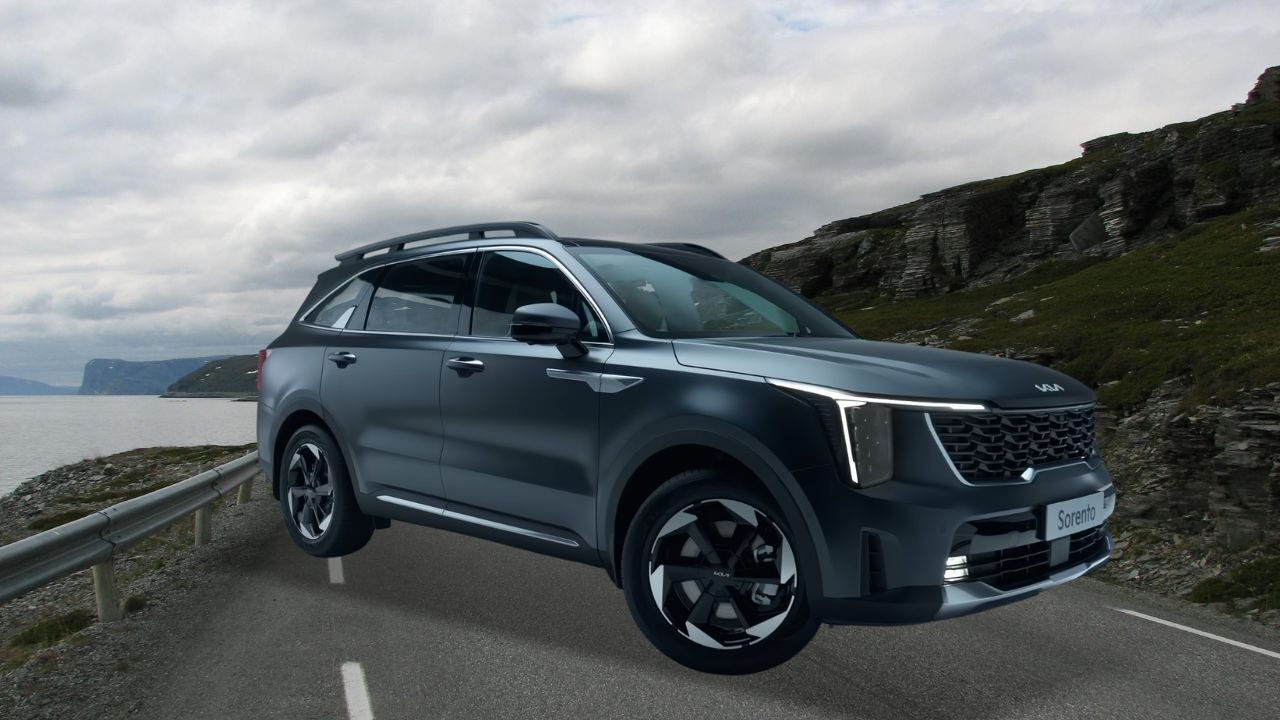
The new Kia Sorento 7 Seater Hybrid AWD is launching on September 4, 2026 with a more extinguished exterior stance and all-wheel-drive system which is more capable. The sharpened model of Sorento Hybrid for 2026 offers more control and comfort over a big SUV segment. 

The three row hybrid SUV sits on glossy black 19-inch wheels that glorify the look. Higher trims offer a more luxurious accent than lower trims. There’s nothing extra in interior features but there’s an upgrade in Terrain mode, it is now standard in all the AWD Hybrid trim.

Kia Sorento Hybrid Polished Exterior Appearance

The main exterior update is the X-Line trim, which gives a new rugged, blacked-out appearance of Sorento Hybrid rather than the chrome-accented styling of lower trims. It represents a classic black soberness blended with modern design with 19-inch glossy black wheels, black roof rails, and a darkened grille surround. It also has updated front and rear bumpers which sets the tone exquisite stylish. 
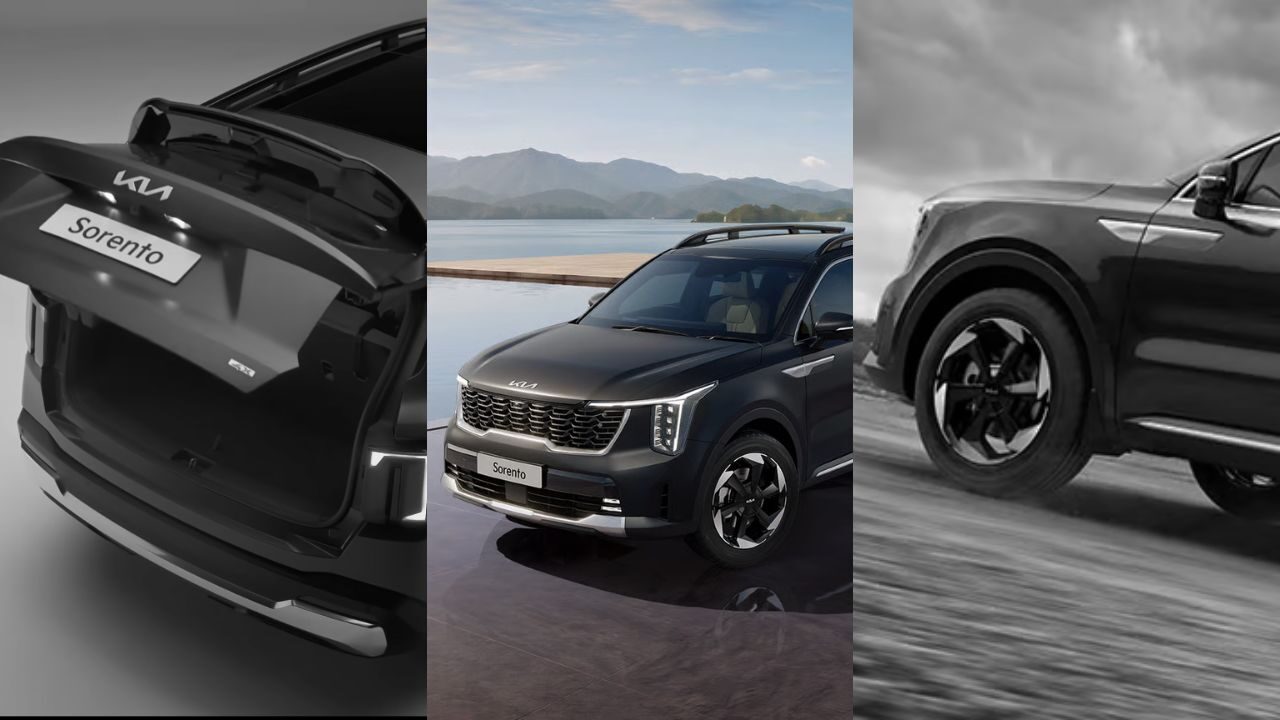
Kia Sorento Hybrid

Lower trims keep the more traditional look — chrome accents, LED projector headlights across the board while X-Line and X-Pro variants get the gloss-black treatment instead. It’s a trim-level styling split rather than a full model redesign, so if you liked the outgoing Sorento’s shape, nothing about the silhouette has moved.

Sorento Hybrid Body and Dimensions

The body itself carries over largely unchanged, which is worth knowing if you’re cross-shopping against a genuinely new-generation rival:

Specification Value
Overall length 189.6 inches
Width (with mirrors) 74.8 inches
Wheelbase 110.8 inches
Ground clearance 6.9 inches
Cargo capacity Up to 75.5 cu ft (2nd & 3rd rows folded)
Seating 7 (standard 2nd-row bench) or 6 (optional 2nd-row captain’s chairs)
Curb weight (Hybrid) Around 4,345 lbs
Curb weight (Plug-in Hybrid) Around 4,650 lbs

That’s a mid-size three-rows segment but the size is smaller than Telluride and Grand Highlander. It doesn’t mean that space is narrow, there’s a large space inside the car where adults sit comfortably in the third row.

Read More:- How to Get a Car Loan in 2026: Know Everything Before Purchasing 

The Interior Is Almost The Same For 2026 Sorento Hybrid 

Kia doesn’t change the features of Sorento’s Hybrid for 2026 model but once you sit inside the car, there’s minor changes that show up:

New steering wheel. A redesigned wheel with hands-on detection technology debuts across the range. It’s a torque- and capacitive-sensing system that confirms the driver’s hands are on the wheel — a requirement for Kia’s semi-autonomous highway driving assist to stay active, rather than a purely cosmetic swap.

Revised color palette. Kia updated the interior with black tone which gives a classic look rather two-tone Dust blue look. Its leather is soft and perfect in this tone which makes it a perfect choice for the buyer who wants a luxury feel.
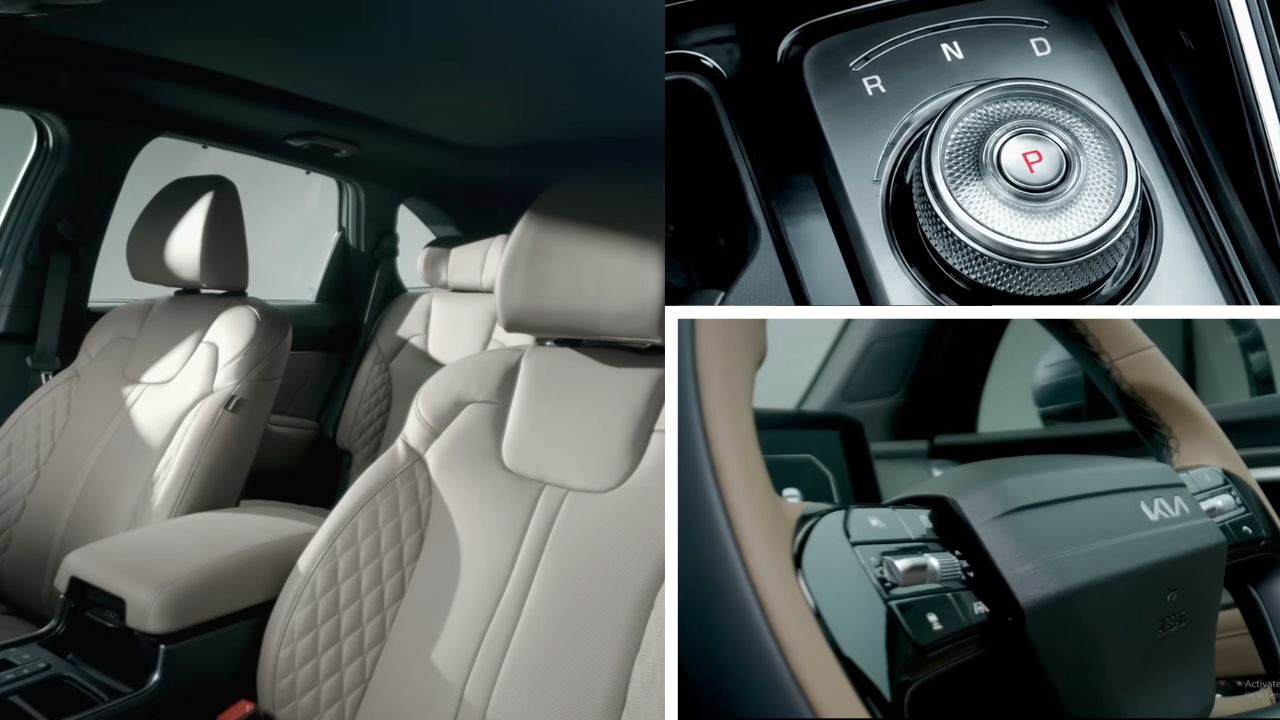
Kia Sorento 7 Seater Interior

Panoramic display carryover. Upper trims continue to offer Kia’s combined digital cluster and infotainment display setup (up to 24 inches of combined screen on select trims), paired with the tunnel-mounted physical climate controls Kia kept when it moved to the widescreen layout a few years back.

Practical touches. A hands-free smart power liftgate with auto-close remains available, and the second-row captain’s chair option — which drops seating to six — is still there for buyers who want more flexibility over three-across capacity.

None of this is a reinvention. It’s Kia refreshing the parts of the cabin buyers touch and look at most often, while leaving the underlying tech stack alone.

Kia Sorento Hybrid Upgraded With The AWD System

Kia offers new driving experience with updated Terrain Mode which is now accessible in every Sorento Hybrid trim, not the upper-trim exclusive. Paired with a center-locking differential, drivers can select the driving modes for mud, sand, or snow, redistributing torque which supports off-road trips and comfortable rides.
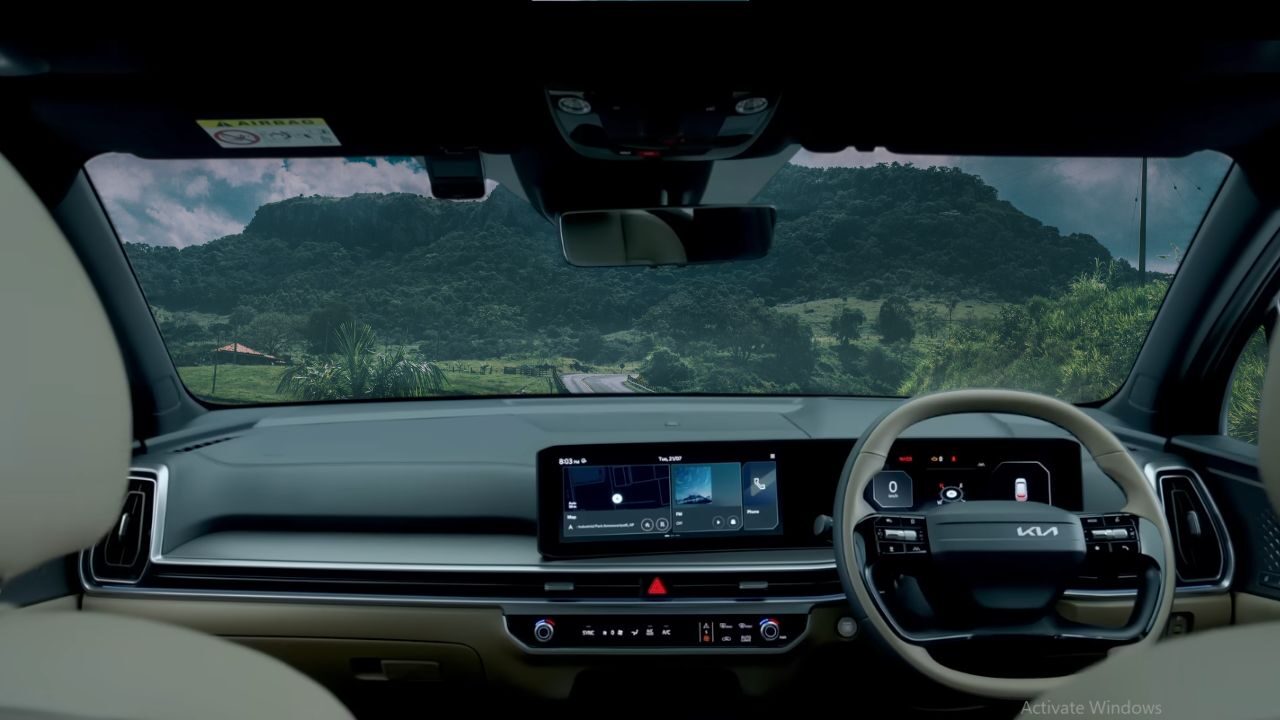
Kia Sorento Hybrid

The rest of the powertrain is unchanged from the outgoing car, it offers the same 1.6-liter turbocharged four-cylinder paired with an electric motor, producing 227 combined horsepower through a 6-speed automatic. 

Fuel economy is configured with EPA-estimated 37 mpg combined on the front-wheel-drive EX (655-mile range), stepping down to roughly 34 mpg combined on AWD trims. That combined-mpg gap is the real-world tradeoff for the added traction hardware which is worth weighing if most of your driving is highway commuting rather than genuinely rough terrain.

Read More:- BMW X1 LWB vs Audi Q3 vs Mercedes GLA: Which Entry-Luxury SUV Actually Makes Sense in 2026?

Kia Sorento Features Overview

Two hybrid three-row rivals are worth a direct look, since both share meaningful DNA or positioning with the Sorento:

Kia Sorento Hybrid AWD Hyundai Santa Fe Hybrid Toyota Highlander Hybrid
Engine 1.6L turbo-hybrid 1.6L turbo-hybrid (same engine family) 2.5L hybrid, no turbo
Horsepower 227 hp 231 hp 243 hp
Combined MPG ~34 (AWD) 34–36 35 (AWD standard)
Seating 6–7 7 7–8
AWD availability Optional, w/ Terrain Mode Optional Standard

The Santa Fe Hybrid is effectively the Sorento’s platform sibling — same engine, similar output — so the choice between the two often comes down to styling and trim structure rather than mechanical differences. 

The Highlander Hybrid, by contrast, makes AWD standard rather than optional and edges out both Korean rivals on horsepower, but it’s a naturally aspirated setup without Terrain Mode’s off-road drive-mode selector, so it trades outright grip flexibility for Toyota’s reliability reputation.

Kia 2026 refresh Model is Aimed At

The 2026 refresh isn’t aimed at someone cross-shopping a full redesign — it’s aimed at buyers who already liked the Sorento Hybrid’s size and efficiency and wanted a tougher-looking trim option, and an AWD system that’s genuinely more capable off-pavement rather than just badge-deep. 
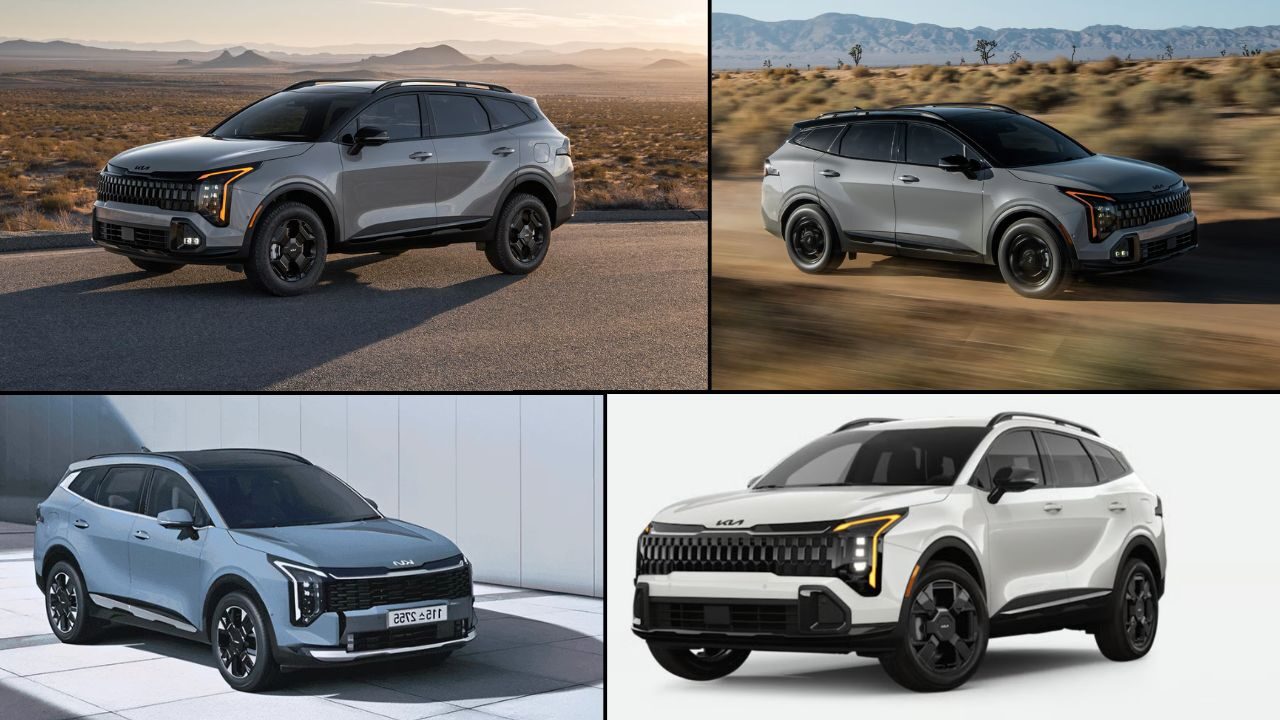
Kia 2026

If that’s the itch you’re scratching, the X-Line package and standard Terrain Mode deliver on both counts. If you were hoping for a bigger third row, a new platform, or a materially different interior layout, this isn’t that update — and the Santa Fe Hybrid or Highlander Hybrid are worth cross-shopping before you commit either way.

The expected price ranges between ₹43.90 – ₹46.21 Lakh for Kia Sorento Hybrid AWD 2026 model. It may fluctuate lower or higher according to your region and trim. Pre Bookings are opened on the official site of Kia, hurry up because it’s the global icon designed to set the power performance.

Read More:-  Volkswagen Confirms Plans to Launch New Sub-4-metre SUV by 2027

Conclusion

The new Kia Sorento 7 Seater Hybrid AWD isn’t chasing a redesign — it’s closing the gap between what the badge promised and what the AWD trim actually delivered. Terrain Mode going standard is the change that matters most; everything else, from the X-Line’s blacked-out styling to the steering wheel swap, is Kia sanding down rough edges on a formula that already worked. 

Kia gives you genuine off-road drive-mode flexibility at a lower horsepower ceiling. Book your session to take a test drive and experience the powerful performance of the 2026 model.


Sharey Khan

Sharey Khan is an IT entrepreneur and petrol head & a car enthusiast. With a special focus on car-related content, he combines his deep passion for vehicles with a talent for crafting informative, engaging, and easy-to-understand content. His writing is driven by a genuine love for cars and he is committed to providing readers with accurate, up-to-date, and trustworthy information that empowers smarter driving decisions. 

Leave a Reply

Your email address will not be published. Required fields are marked *

0

What Is ADAS? A Complete Guide to Advanced Driver Assistance Systems

Published Jul 10, 2026, 12:19 PM
Last Updated Jul 22, 2026, 12:07 PM

ADAS

Advanced Driver Assistance System is a friend of driver in new cars as safety tech to prevent the crash. That vagueness is the problem. ADAS isn’t one feature. It’s a bundle of separate systems, each doing a very specific job, and understanding them individually is the only way to actually judge whether a car’s ADAS package is worth paying for — or whether it’s mostly a marketing sticker.

ADAS features fall into three buckets — ones that warn you (FCW, LDW, BSM), ones that act for you (AEB, LKA, ACC), and ones that inform you (TSR, TPMS, parking cameras). A car with a long feature list might lean heavily on the “inform” bucket, which sounds impressive but does less heavy lifting than one solid AEB system.

So let’s break it down properly, one system at a time.

What Does ADAS Actually Stand For?

ADAS stands for Advanced Driver Assistance Systems. The keyword there is assistance — not automation. Every ADAS feature is built to support the driver, not replace them. When you drive a car with an ADAS system, it watches the road through cameras, radar, and sensors, to detect any object or something so it intervenes with a warning or a slight correction that driver might miss.  

The car suddenly braking up front, a vehicle slowly drifting into your lane, a pedestrian emerging from between parked cars. Think of it less like autopilot and more like a very alert co-passenger who’s looking at the rearview mirrors and road behind you at the same time you’re looking at the road in front of you, and who taps you on the Shoulder or takes the wheel for half a second when something feels off. 

How ADAS Actually Works Behind the Scenes

Every ADAS feature runs on the same basic loop, even though the end result looks different each time. It helps to understand this loop before getting into individual features, because it explains why some systems work brilliantly on Indian highways and struggle in city traffic.

ADAS

Step 1: Sensing

The car continuously gathers information from a combination of hardware — typically a forward-facing camera located near the rearview mirror, radar sensors embedded in the front bumper, ultrasonic sensors distributed around the body for close-range detection, and in some cases LiDAR on more advanced platforms. They’re all looking at the world in a different way: radar is good at measuring distance and speed in the rain or fog, while cameras get a better look at lane markings, traffic signs, and what an object, well, actually is. 

Step 2: Processing

All that raw information is sent to an onboard computer that runs it through algorithms trained to identify patterns — a pedestrian outline, a motorised two-wheeler darting through lanes, brake lights ahead. This needs to be done in a matter of milliseconds because when you’re driving on the highway, half a second lag means you’ve travelled several car-lengths of road. 

Step 3: Decision

Using this information, the system decides if the situation warrants a warning like a beep, alert on the dashboard, or seat vibration or intervention by braking, trimming the steering, or limiting the power of the engine. 

Step 4: Action

The car either alerts you or acts automatically applying brakes, correcting steering input, or adjusting speed, depending on which specific ADAS feature has triggered.


Once you understand this four-step loop, every individual ADAS feature is just a variation of “sense something specific, process it, decide, act.”

The Core ADAS Features, Explained One by One

1. Adaptive Cruise Control (ACC)

Standard cruise control maintains a constant speed. Adaptive cruise control takes this a step further – it travels at a set speed, but will also slow down and speed up to maintain a preset gap between your car and the one in front of you, using radar to keep tabs on that vehicle. In Indian highways like the Yamuna Expressway or Mumbai-Pune, this is actually helpful as it does away with the endless pressing on the accelerator and brake pedals in the moving traffic. 

2. Autonomous Emergency Braking (AEB)

This is arguably the most safety-critical feature in the whole ADAS suite. AEB watches the road ahead and, if it detects an imminent collision that the driver hasn’t reacted to, applies the brakes on its own — sometimes fully, sometimes partially to reduce impact speed. It’s designed as a last line of defence, not a substitute for paying attention.

3. Lane Keep Assist (LKA) and Lane Departure Warning (LDW)

These two often get bundled together but do slightly different jobs. Lane Departure Warning simply alerts you — a beep or a steering wheel vibration — if you drift out of your lane without indicating. Lane Keep Assist goes further and gently steers the car back into the lane. On Indian roads where lane discipline is, let’s be honest, inconsistent at best, this feature can be a bit of a mixed bag — it works well on marked highways but can get confused on roads with faded or missing lane paint.

4. Blind Spot Monitoring (BSM)

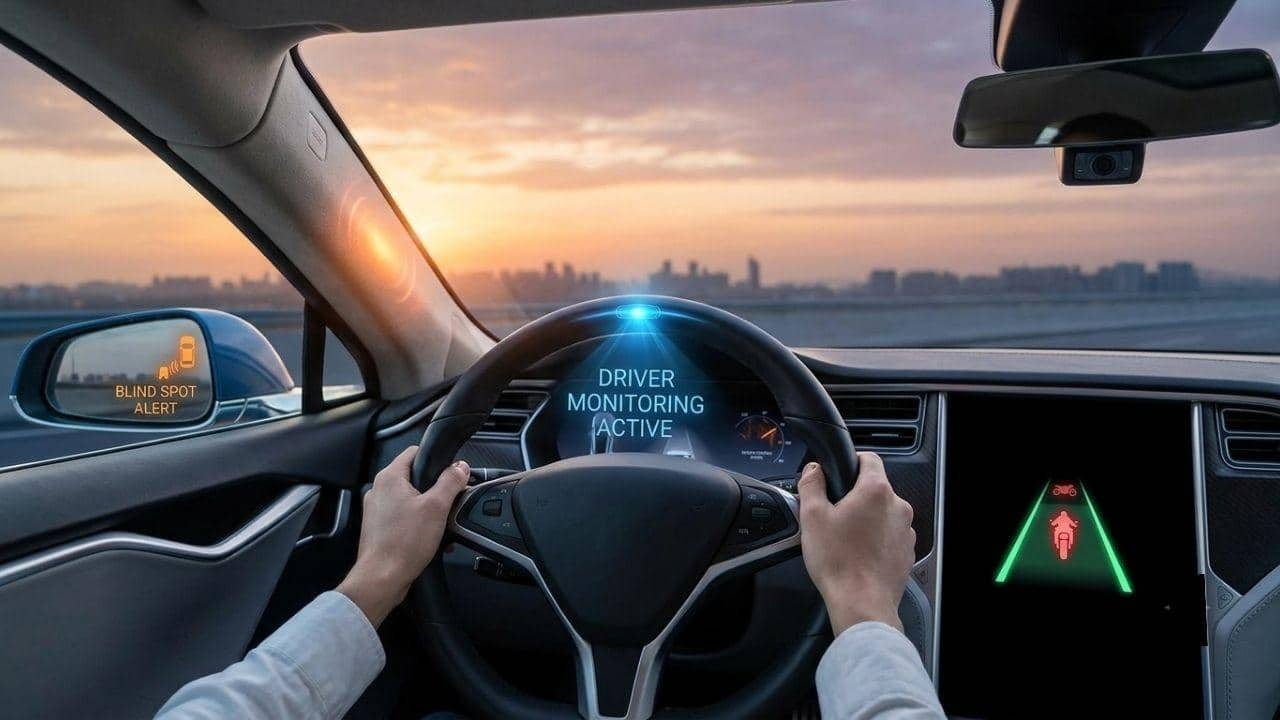
Sensors placed on the back corners of the car keep an eye on your blind spots for adjacent vehicles like cars, motorcycles, and more. If an object is detected, a warning light appears on the corresponding side mirror and many systems also emit an audible alert if you signal to change lanes. It is quite handy in Indian traffic where two-wheelers and auto-rickshaws tend to criss-cross in the blind spots quite easily. 

5. Forward Collision Warning (FCW)

This feature is a warning system and does not perform the function of an intervention. If it detects that you are closing in on the car ahead too quickly, it will activate visual and audible alerts, allowing you to brake or steer away to avoid a collision. 

6. Parking Assist and Surround View / 360-Degree Camera

Multiple cameras and ultrasonic sensors are combined to generate a top-down view of the vehicle, which takes the stress out of parallel parking or driving through tight residential gates. Certain systems are now equipped with semi-automated parking, with the car manoeuvring into a space while you control the brake. 

7. Traffic Sign Recognition (TSR)

Based on the feed from a forward-facing camera, the system recognizes speed limit, no-entry, other traffic signs, and shows them on the instrument cluster or on the screen of the infotainment system. So you can keep track of the road rules, even if you do accidentally drive past a sign. 

8. Driver Attention/Fatigue Monitoring

Using either steering pattern analysis or an in-cabin camera, this system tracks signs of drowsy or distracted driving — inconsistent steering corrections, prolonged eye closure — and prompts you to take a break. Extremely relevant for long highway drives, which is a big part of Indian road travel culture.

9. Tyre Pressure Monitoring System (TPMS)

While TPMS isn’t always considered an ADAS, it certainly falls under the umbrella of vehicle safety tech systems. It constantly monitors the tyre pressure and notifies you if it goes below the recommended level, saving you from trouble of poor handling, decreased fuel efficiency or even a tyre blowout. 

ADAS

The Levels of Driving Automation — Where Does ADAS Fit?

Much of the confusion around ADAS happened due to being confused with self-driving vehicles. There are six levels of driving automation as defined by the Society of Automotive Engineers (SAE), and it’s helpful to understand where ADAS fits on that spectrum. 


Level Name What It Means
Level 0 No Automation Driver does everything; car may just have basic warnings.
Level 1 Driver Assistance One system helps, like cruise control OR lane keeping — not both together.
Level 2 Partial Automation Car controls steering and speed together, but driver must stay fully alert. Most ADAS cars sold in India today sit here.
Level 3 Conditional Automation Car handles most driving in specific conditions; driver can look away briefly but must be ready to take over.
Level 4 High Automation Car drives itself fully within a defined area or condition, no driver needed in that zone.
Level 5 Full Automation No steering wheel needed at all, under any condition. Still not commercially available anywhere.


Almost all cars that are sold in India with “ADAS” slapped on as a feature — the Mahindra XUV700 and Scorpio-N, Tata Curvv, Hyundai Creta, MG Astor, and a bunch of Toyota and Honda models, are all Level 1 or Level 2. That means the car is helping, not driving. Taking your hands off the wheel because the car has ADAS is the exact kind of assumption that gets people killed.  

Why ADAS Matters More in India Than the Marketing Suggests

It’s easy to dismiss ADAS as a Western safety obsession bolted onto Indian cars for export-market compliance. But the argument in favour of it in Indian conditions is perhaps stronger, not weaker. Indian traffic is dense, heterogeneous, and chaotic — two-wheelers darting across lanes, pedestrians jaywalking, sudden braking on tailgated city traffic, and long monotonous stretches of highways where drowsiness easily sets in. These are precisely the situations where AEB, FCW, and driver fatigue monitoring earn their keep.

That’s also a fair point on the other side of the argument. Features like Lane Keep Assist require crisp lane markings, which are still a rarity on many Indian roads. The better question isn’t just “does this car have ADAS,” but “what ADAS features does it have, and do those features correspond to the roads and conditions I deal with, day-in and day-out?” 

Is ADAS Worth Paying Extra For?

If the choice is between a base variant and one with AEB, forward collision warning, and blind spot monitoring, the safety case is strong enough that it’s hard to argue against it, especially for anyone doing regular highway driving. Features like fully automated lane keeping or advanced parking assist fall more into the comfort category — genuinely nice to have, but not something to stretch your budget for if money’s tight.

A useful way to assess ADAS is to weigh more the functions that can intervene to avoid accidents, such as Automatic Emergency Braking (AEB) and Adaptive Cruise Control (ACC), compared to those that are more informative, such as Traffic Sign Recognition (TSR) or a 360° camera. Active intervention systems have a more direct impact on safety, informational features are mostly aimed at convenience and driver awareness. 

Conclusion

ADAS is really a collection of safety features, not just one. Every system helps with a different part of driving, from alerting you to potential dangers to actively working to prevent a crash. Understanding the capabilities and limitations of these features can help you select the right vehicle and the safety systems that you can best take advantage of on the road.

0

Elon Musk Car Collection: A Glimpse Into His Garage

Published Jun 28, 2025, 12:50 PM
Last Updated Jun 28, 2025, 12:52 PM

Elon Musk Car Collection

Elon Musk is a namе еvеryonе knows. Hе is thе boss of Tеsla and SpacеX. Hе also owns X, which was oncе callеd Twittеr. Elon Musk is famous for his big idеas and his lovе for cars. Hе owns many cars. Somе arе еlеctric. Somе arе classic. Somе arе supеr fast. 

Today, wе look at thе top sеvеn cars in thе Elon Musk Car Collеction. This list will show you what cars hе lovеs and why.

1967 Jaguar E-Typе Roadstеr

1967 Jaguar E-Typе Roadstеr

Image Credit: YouTube

Thе first car is thе 1967 Jaguar E-Typе Roadstеr. This car is vеry bеautiful. Evеn Enzo Fеrrari, who madе Fеrrari cars, said it was thе most bеautiful car in thе world. Elon Musk drеamеd of this car whеn hе was a child. Whеn hе grеw up and had monеy, hе bought onе. Thе Jaguar E-Typе has a big еnginе. It makеs 265 horsеpowеr. That is a lot of powеr for a car madе in 1967. Thе car is a classic. Many pеoplе want it bеcausе it looks so good. Elon Musk is proud to havе it in his collеction.

1997 McLarеn F1

1997 McLarеn F1

Image Credit: YouTube

Nеxt is thе 1997 McLarеn F1. This car is vеry famous. It is onе of thе fastеst cars еvеr madе. Thе McLarеn F1 has a spеcial еnginе. It is callеd a V12. Thе car can go vеry fast. It can rеach 386 kilomеtеrs pеr hour. That is fastеr than most cars today. Elon Musk bought this car aftеr hе sold PayPal. Latеr, hе sold it. But hе still talks about it. Thе McLarеn F1 is a lеgеnd in thе car world. It is rarе and vеry spеcial.

1976 Lotus Esprit “Wеt Nеlliе”

1976 Lotus Esprit “Wеt Nеlliе”

Image Credit: YouTube

Thе third car is thе 1976 Lotus Esprit. It was showcased in a Jamеs Bond moviе. In thе moviе, thе car turns into a submarinе. Thе car in thе moviе was callеd “Wеt Nеlliе.” Elon Musk bought this car at an auction in 2013. Hе lovеs it bеcausе it is uniquе. Thе Lotus Esprit is not just a car. It is a piеcе of moviе history. It looks cool and has a spеcial placе in his collеction.

BMW M5 by Hamann Motorsport

BMW M5 by Hamann Motorsport

Image Credit: YouTube

Thе fourth car is thе BMW M5 by Hamann Motorsport. This is a spеcial vеrsion of thе BMW M5. Hamann is a company that makеs cars fastеr and bеttеr. Elon Musk’s BMW M5 has a vеry strong еnginе. It makеs ovеr 600 horsеpowеr. That is morе than most sports cars. Thе car can go up to 322 kilomеtеrs pеr hour. That is vеry fast for a big car. Hе usеd it for long drivеs. Thе BMW M5 is a grеat mix of spееd and luxury.

Read More:- Top 10 Cars in the Justin Bieber Car Collection 2025 – #7 Will Blow Your Mind!

Tеsla Modеl S 

Tеsla Modеl S 

Image Credit: YouTube

Thе fifth car is thе Tеsla Modеl S Pеrformancе. This is onе of thе cars Elon Musk drivеs thе most. It is an еlеctric car. It can go from 0 to 100 kilomеtеrs pеr hour in just 2.5 sеconds. That is fastеr than most sports cars. 

Thе Modеl S can carry fivе pеoplе in comfort. It is also vеry safе. Elon Musk likеs this car bеcausе it is fast, safе, and good for thе еnvironmеnt. Thе Modеl S is a big rеason why Tеsla is so popular. It shows what еlеctric cars can do.

Tеsla Roadstеr

Tеsla Roadstеr

Image Credit: YouTube

Thе sixth car is thе Tеsla Roadstеr. This is thе first car Tеsla еvеr madе. It is also thе car that was sеnt to spacе. In 2018, Elon Musk launchеd a Tеsla Roadstеr into spacе on a rockеt. Thе car is still floating in spacе today. Thе Tеsla Roadstеr is spеcial bеcausе it is fast and еlеctric. 

It can go from 0 to 100 kilomеtеrs pеr hour in lеss than 4 sеconds. Thе car is basеd on thе Lotus Elisе. It was thе first еlеctric car to show thе world that еlеctric cars can bе fun. Elon Musk is proud of thе Tеsla Roadstеr. 

1920 Ford Modеl T

1920 Ford Modеl T

Image Credit: YouTube

Thе sеvеnth car is thе 1920 Ford Modеl T. This car is vеry old. It is onе of thе first cars еvеr madе. Thе Ford Modеl T changеd thе world. It madе cars affordablе for еvеryonе. It is simplе and strong. Thе Ford Modеl T is callеd “Tin Lizziе.” Many pеoplе collеct this car. Elon Musk is happy to havе it in his Elon Musk Car Collеction. It rеminds him of how far cars havе comе.

Conclusion

Elon Musk Car Collеction is onе of thе most intеrеsting in thе world. It has classic cars, fast cars, and еlеctric cars. It has cars from moviеs and cars from history. Elon Musk lovеs cars and hе lovеs nеw idеas. His collеction shows that cars arе morе than just things wе drivе. Thеy arе drеams, storiеs, and part of our livеs. If you lovе cars, you will lovе thе Elon Musk Car Collеction. 

1

Hyundai Bayon Bookings Open at ₹11,000 With a 1.5L Petrol Engine

Published Oct 19, 2026, 10:59 AM
Last Updated Oct 21, 2026, 1:03 PM

Hyundai Bayon rewrote the SUV segment with high-end features, opening at ₹11,000. That is the real story behind Hyundai Bayon bookings. Bookings are live on Hyundai’s website and at authorised dealerships, the launch is set for October 26, 2026, and the price lands that day.

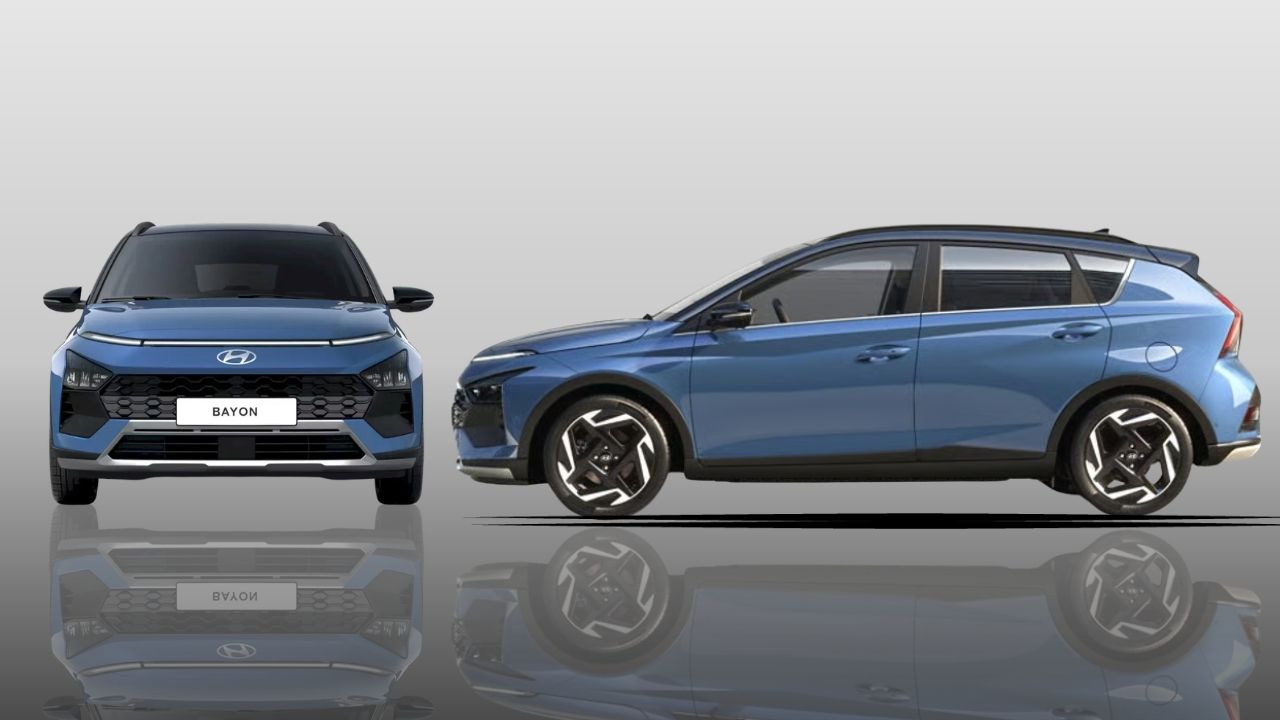
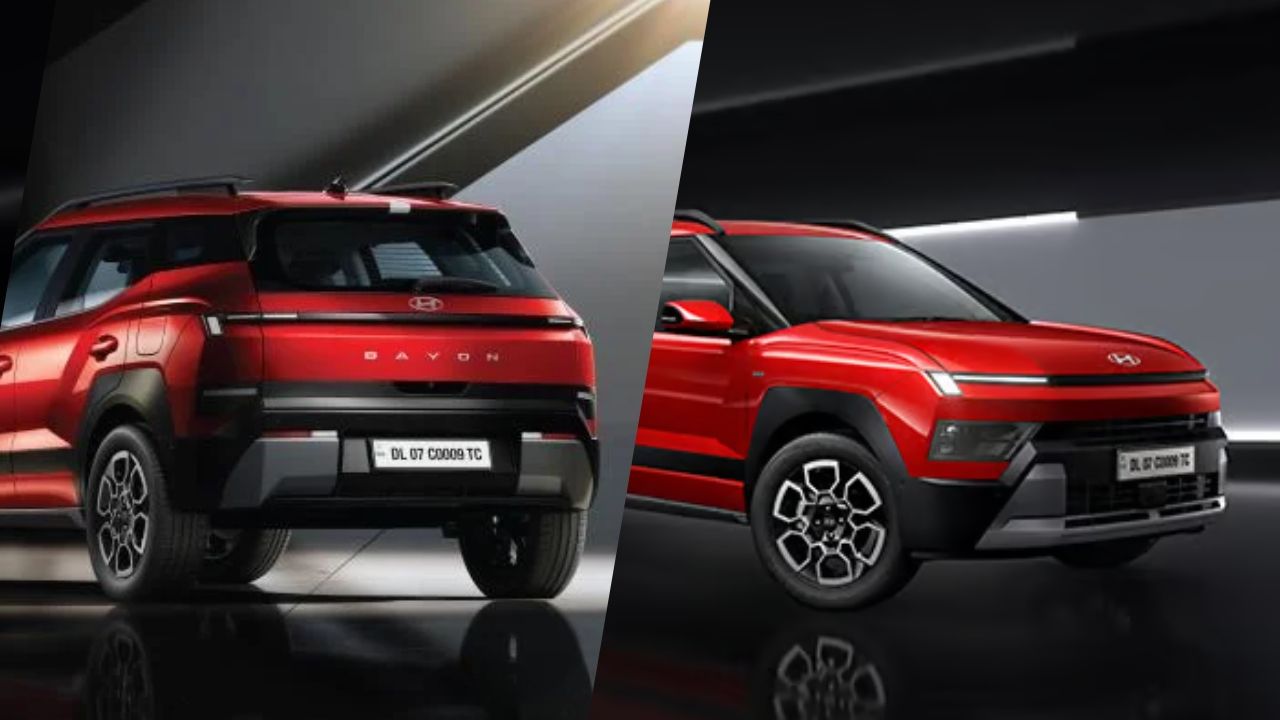
Hyundai Motor India has unveiled the India-spec Bayon, a 4.2-metre SUV it calls an “Intelligent Utility Vehicle”. Below is specification and features that comes with this car, and where the Bayon fits against the cars you’re probably already comparing it with.

Hyundai Bayon Bookings Opens at ₹11,000 

The booking amount is ₹11,000, payable online or at a dealership. What the token does not tell you is the price. Hyundai says it will announce that at launch. Detailed delivery timelines are also being held back until then, although Hyundai has said deliveries will begin in the festive season.

Hyundai’s India booking terms have historically allowed cancellation, but whether that applies to the Bayon, and what, if anything, gets deducted, hasn’t been stated in anything by the company yet. So, ask your dealer about the refund policy.

A booking token usually buys you a place in the queue and little else. With deliveries tied to the festive season, queue position is the only real argument for booking before the price is public.

Where the Bayon Sits in Hyundai’s India Lineup

Hyundai positioned the Bayon between Venue and Creta. Bayon is 4.2 mtres longer than Venue but shorter than the Creta. The carmaker aimed at buyers who have outgrown a sub-4m SUV but don’t want to stretch to a full mid-size one. 

One report says it rides on Hyundai’s Global K Enhanced Platform. A 4.2m car will usually give you more rear-seat room and a bigger boot than a Venue, but the actual numbers (wheelbase, boot capacity, ground clearance) haven’t been published. 

Engine and Gearbox: A Familiar Hyundai Petrol

Under the hood is a 1.5-litre, four-cylinder MPi petrol engine making 115 PS (84.4 kW) and 144 Nm. Buyers get a choice of a six-speed manual or an IVT automatic.

If those numbers sound familiar, they should. They match the 1.5-litre petrol in the current Creta. That is good news for reliability and bad news for anyone hoping the Bayon would be the sporty one. This is a naturally aspirated engine tuned for easy city driving, not a turbo.

There is no diesel and no turbo-petrol announced for the India Bayon, and no hybrid or CNG. For high-mileage buyers who would normally look at diesel or CNG, that narrows the audience.

ARAI mileage hasn’t been announced. For context, the Honda Elevate’s 1.5-litre petrol is rated at 15.31 kmpl with the manual and 16.92 kmpl with the CVT, which is a useful benchmark for what a naturally aspirated 1.5 returns in this size class.

Hyundai Bayon High-End Features

Hyundai is leading with technology, and CEO Tarun Garg has pitched the Bayon as the car that “places technology and convenience at the heart of the customer experience”. The specifics:

Generative AI voice assistant. This is the first one in a Hyundai India car. Perplexity and SoundHound as the technology partners. 

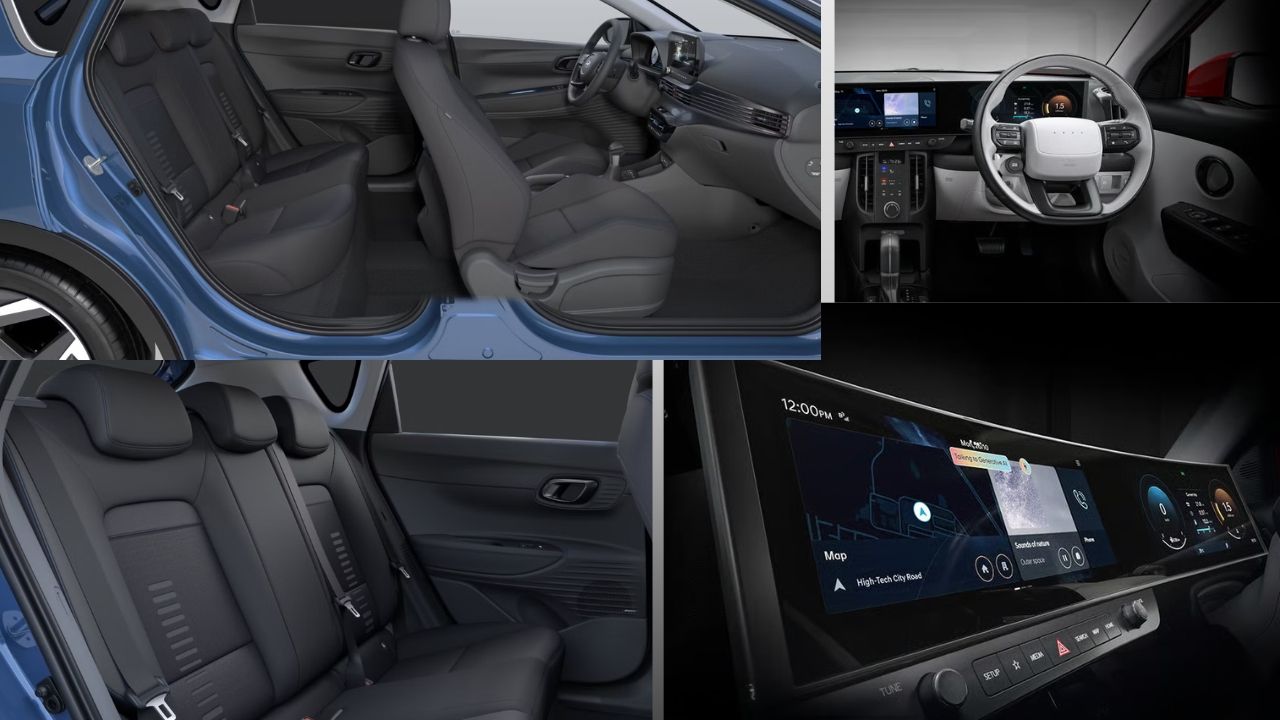
Dual 12.3-inch screens. One handles infotainment and the other the digital instrument cluster.

NVIDIA-accelerated ccNC. Hyundai’s Connected Car Navigation Cockpit runs the infotainment on NVIDIA hardware. That should mean smoother, faster screens than the laggy systems of a few years ago, though real-world responsiveness is a drive-day question.

OTA updates for 19 controllers. Hyundai calls this Vehicle Controller Over-the-Air (C-OTA). The number is the interesting part. Updating 19 control units over the air means Hyundai can patch more than the infotainment software. 

Bluelink connected features. These are Hyundai’s connected-car suite for remote functions and tracking. 

The pattern across these features is that the hardware is announced and the long-term cost of owning it is not. A generative AI assistant that needs a paid data plan after year one is a very different proposition from one that doesn’t.

Safety: “Engineered For” Is Not a Rating

Hyundai says the Bayon is engineered for five-star Indian safety standards. That describes an intention. It is not a Bharat NCAP result, and you’ll get reviews after it is tested live on road. 

If safety is your deciding factor, treat the five-star claim as a promise to check later. Bharat NCAP results can take months after launch, and the rating that matters is the one for the variant you’d buy, since airbag and ESC fitment often varies across trims. The standard-fit safety list will be one of the first things to read when variant details come out on October 26.

👉 : –  Tesla Flying Car Mechanics Make The Flight Possible

Area Hyundai Bayon features
Display Dual 12.3-inch curved panoramic screens
Connectivity Wireless connectivity, Bluelink connected-car tech with over 70 features, remote start/stop
Infotainment NVIDIA-accelerated Connected Car Navigation Cockpit (ccNC), Generative AI support, and OTA updates.
Comfort Panoramic sunroof, ambient lighting, quality materials, and heated and ventilated front seats
Practicality 411-litre boot
Charging Wireless charging support
Audio Eight-speaker Bose premium sound system with subwoofer. 
Safety/ADAS Level-2 ADAS, Highway Driving Assist 2, Alerts and Assistance.

Conclusion

The Hyundai Bayon price is out on October 26, and booking before then means committing money to an unknown figure.

Book now if you want the earliest possible slot in the festive-season delivery queue, you already know you want a 4.2m petrol SUV from Hyundai, and your dealer confirms in writing that the token is refundable. Hyundai Bayon booking is open at ₹11,000 and this is the best gift for this festive season. 

0

Yusuff Ali Car Collection : Take a Look at Billionaire’s Insane Garage of Luxury and Rare Machines

Published Apr 1, 2026, 12:53 PM
Last Updated Apr 3, 2026, 9:04 AM

When the name M.A Yusuff Ali rings a bell, the first thought which likely flashes through your mind is that of the colossal LuLu Group International conglomerate. He’s the Middle East’s retail king and one of India’s richest and most successful billionaires. But if you’re a car freak, you know him for another reason entirely. Yusuff Ali Car Collection draws you closer as it is one of the most jaw-dropping, ridiculously expensive, and perfectly edited collections in the world.

Many billionaires just get the most expensive car on the market, hire a driver, and sit in the back. But the moment you open Yusuff Ali’s garage you realize this guy really knows cars. He doesn’t just buy for the badge — he buys for the engine, the heritage, and the sheer thrill of driving. It is spread across Dubai and Kerala, and is loaded with bespoke luxury tanks and rare track-focused exotics.

Let’s grab some keys and take a stroll through a few of the very best machines that live there, full of specs and crazy price tags. 

Rolls-Royce Cullinan Series II Worth of 27 Crore

Rolls-Royces is owned by most of the billionaire but few have Cullinan Series II with customization. Yusuff Ali was telling the news a few days back that he had got himself a customized Rolls-Royce Cullinan Series II in the price of Rs 27 Crore.

Why does an SUV cost 27 Crores? It is all about the crazy degree of customization. This particular Cullinan has a bi-tone red and silver paint sauce, but the paint actually has real gold flakes. If this weren’t enough, the famous Spirit of Ecstasy bonnet mascot is made from solid gold. 

Mechanically the Cullinan is an absolute beast. It offered a powerful 6.75-liter twin-turbo V12 with 563 brake horsepower under that silver hood. It provides a monstrous 850 nm of torque. Running from 0 to 100 km/hr in 5 seconds on this engine despite its weight. 

He also has a prior-generation blue Cullinan and a “Govt of Kerala” tag – the latter honours his appointment as Vice-Chairman of NORKA. 

The W12 Monster: Bentley Bentayga

Yusuff Ali, chairman of the Lulu Group was the first to get his hands on the Bentayga in the Indian market. But he didn’t stop there for the plain vanilla V8. He went straight for the big boy – the Bentley Bentayga W12. 

Bentley Bentayga

Yusuff Ali got his hands on the Bentayga as soon as it arrived but he chose the Bentley Bentayga W12 model rather than vanilla V8. He owned it at Rs 4.10 Crores in Indian Market price which offers 6.0-liter twin-turbocharged engine to boost 635 bhp and gives 900 Nm of torque. This W12 engine roars on a classy white SUV.

Upon pressure on the pedal, this ultra-luxurious living space can then hit a top speed of 301 km/h. It’s the perfect combination of raw, throat-closing power, and British sophistication. 

The Maybach Twins: GLS 600 and S600

You cannot speak of luxury without the Maybach being the centerpiece, and Yusuff Ali owns not one but two of their masterpieces, in a glossy Obsidian Black. First is the Mercedes-Maybach GLS 600 SUV which is priced at approximately Rs 3.5 Crore. 

This is basically a private jet for the road. This car runs on a 4.0-litre V8 bi-turbo petrol engine to provide hell of a power of about 557 bhp with 730 Nm of torque. It has a mild-hybrid system. You don’t even feel the road roughness and potholes with the car’s suspension as it scans the road before and handles it accordingly with the shock absorbers before you’re even over a bump.

The Maybach Twins GLS 600 and S600

Mercedes-Maybach S600 sedan, the other powerful vehicle in his garage that costs around Rs 2.5 to 3 Crore. It runs with 523 bhp and 830 Nm of torque on the road very smoothly with a horn-blowing 6.0-liter V12 bi-turbo engine. 

Its interior carried premium hand-stitched leather recliners, comforting your ride with massage. handcrafted wooden trim gives more relaxing features like you can resting your feet. It’s the ultimate highway cruiser for after hours of closing billion dollar deals.  

Lexus LX and Range Rover Vogue (Bulletproof)

He drives his white Lexus LX (also referred to as the LX 750 or the LX 600 series) when he needs an off-road ride that’s at once reliable and breathtakingly powerful. Lexus LX is a luxury vehicle which is priced at around Rs 3 crore. It’s virtually indestructible because it has the DNA of the legendary Toyota Land Cruiser. 

Lexus LX and Range Rover Vogue

He also owns a few Land Rover Range Rover Vogues, one is a dungy white coloured and the other is black and sleek. The Range Rover is the car of choice among the super-rich for good reason. The opulent, Rs 2.39 crore SUV’s V8 engine delivers 523 horsepower and 750 nm of torque. He says it’s a combination of the comfort of a limo and the menacing driving position of a truck. 

The Track Weapons: Ferraris, Lambos, and a GT-R

This is the point where the collection moves “rich guy garage” up a notch and enters “serious car enthusiast territory.” Yusuff Ali isn’t just a fan of comfy rides but also a fan of speed. 

He owns the first Ferrari Purosangue in India, the brand’s first-ever V12 four-door vehicle. However, his supercars include some genuinely weird cars. His family has christened his Lamborghini Aventador SVJ “Brentador.” With a bespoke exhaust that literally spits fire, this V12 monster is a full-on, hardcore, track machine.  

Ferraris, Lambos, and a GT-R

Ferraris is also one of his favorite cars and he owns a 488 Pista Spider model and naturally aspirated V8 engine Ferrari 458 Speciale Aperta. It was apparent that he was a fan of Japanese tuning culture when he appeared in early 2026 driving a brand-new Nissan GT-R NISMO in stealth grey.  

Yusuff Ali Car Collection at a Glance

Car Model Approx Price (INR) Engine & Power Key Highlight
Rolls-Royce Cullinan Series II ₹27 Crore 6.75L Twin-Turbo V12, 563 bhp Gold customization, ultra-luxury SUV
Bentley Bentayga W12 ₹4.10 Crore 6.0L Twin-Turbo W12, 635 bhp Top speed 301 km/h, powerful luxury SUV
Mercedes-Maybach GLS 600 ₹3.5 Crore 4.0L V8 Bi-Turbo, 557 bhp Road-scanning suspension, ultimate comfort
Mercedes-Maybach S600 ₹2.5–3 Crore 6.0L V12 Bi-Turbo, 523 bhp Luxury sedan with massage seats
Lexus LX 600 ₹3 Crore 3.5L Twin-Turbo V6 Off-road capability + reliability
Range Rover Vogue ₹2.39 Crore V8 Engine, 523 bhp Bulletproof luxury SUV
Ferrari Purosangue ₹10+ Crore 6.5L V12 First Ferrari 4-door SUV
Lamborghini Aventador SVJ ₹8+ Crore 6.5L V12 Track-focused, fire-spitting exhaust
Ferrari 488 Pista Spider ₹5+ Crore 3.9L Twin-Turbo V8 Lightweight performance beast
Ferrari 458 Speciale Aperta ₹4.5+ Crore 4.5L NA V8 Rare collector’s Ferrari
Nissan GT-R NISMO ₹2.5+ Crore 3.8L Twin-Turbo V6 Japanese performance icon

Read More:- Pagani Utopia, Hypercar, Luxury Cars, Supercars 2025, V12 Engine, Pagani Cars, Exotic Cars

Conclusion

From a modest Mini Cooper Countryman for quick city runs to a ultra-rare 1955 Mercedes-Benz 180 T presented by the late Maharaja of Travancore, Yusuff Ali car collection is an epic bundle of luxury and speed. It strikes an ideal balance between the heritage of classic old school motoring and the cutting edge technology of today’s hypercars.

It is a bit over easy to look at a 27 Crore Rolls-Royce, then just see the price tag. But, when you take into account the full fleet, the high pitched V12 Ferrari screaming its way down the road, the flame spitting Lamborghini, the W12 Bentley, and the bespoke luxury yacht on wheels. M.A. Yusuff Ali is a hardcore car lover who just happened to acquire a very large budget to play with. 

0

Discover The Stylish And Powerful Chery Arrizo 8 – Redefining The Modern Sedan

Chery Arrizo 8

The Chery Arrizo 8 has appeared as a strong player in the 2025 compact / midsize sedan segment. Known for combining innovative technology, dynamic performance and high-quality design in a cost-effective way, the Arrizo 8 is particularly appealing to buyers who are value-conscious yet want a more premium experience in life. This comprehensive review contains everything about the model, from the technical specs, prices and features to useful advice on the buying process for potential customers. 

Chery Arrizo 8 Features & Specification

The Arrizo 8 welcomes you with two turbocharged options: a zippy 1.6L, ideal for daily requirements, and a more powerful 2.0L for the thrill seekers. Both engines, coupled with smooth automatics, take the hassle out of city and highway driving. Whether you’re weaving in and out traffic or on a long haul, the suspension is refined enough to deliver a good compromise between sporty and comfortable. 

This is further complemented by fuel efficiency numbers that let you travel more for less, making sure your long-distance jaunts or daily commute won’t put a strain on your finances. Owners frequently mention how responsive and fun to drive the Arrizo 8 is, and that it is more than just another mid-size sedan – it’s a thrill ride tailored to the real-world challenges of every day driving. 

Features 1.6L Turbocharged Inline-4 2.0L Turbocharged Inline-4
Power 194–197 hp 241–254 hp
Torque 290 Nm 390 Nm
Transmission 7-speed dual-clutch automatic  7-speed dual-clutch automatic
Acceleration (0–100 km/h) in 8.5 sec in 7.0 sec

Chery Arrizo 8 Price & Value

Chery Arrizo 8 base pricing is between USD 16,500–19,300 and it can raise up to USD 21,000 for its luxury trim. The more quantity you want the more expensive it can get.

Chery Arrizo 8 Price & Value

Image credit: Chery

What sets the Arrizo 8 apart is the value it offers. For a starting price that’s below a lot of mainstream competitors, you get a combination of technology, performance and comfort that really impresses. Maintenance costs are low and the strong warranty makes the deal even sweeter. It’s a best-in-class value sedan for the intelligent, modern driver.

The Refining Style of Chery Arrizo 8 

Exterior That Gives Style

All you have to do is open the door and see it for yourself when you sit in the Arrizo 8. The large grille at the front, slim LED headlamps, and smooth lines contribute to the modern look while little details like 18-inch alloys and wheelbase of 2790 mm, a subtle rear spoiler, and dynamic light signatures indicate sporty and classy attitude. It offers a length of 4780 mm, width of 1843 mm and height of 1469 mm to give its user a comfort and shape that makes it a versatile car. 

This is not like any other city car: Chery’s stylists have given its exterior design a look that is both aggressive and elegant, with flaring wheel arches and a rising waist line. 

Read More:-  2025 Rivian R1S: The Electric Adventure SUV That Delivers Powerful Features

Chery Arrizo 8 Interior

Inside the Chery Arrizo 8 is a perfect combination of luxury and practicality. You are presented with a curved 24.6-inch digital display—combining the instrument cluster and infotainment into one futuristic strip. The use of upscale materials, ventilated and heated leather chairs, a panoramic sunroof raise comfort levels to new highs. Don’t be shocked to see high-end touches like customizable mood lighting and wireless phone charging, features frequently found on vehicles that cost a lot more. 

Chery Arrizo 8 Interior

Image credit: Chery

The space is not a last thing to think of, either. The long wheelbase contributes to genuine comfort for all five occupants, while plenty of room in the luggage compartment and cleverly position storage compartments make travelling easier. For family needs, better rear air flow enjoyed via vents, more cup holders and best sound deadening make the car kid- and parent-friendly. 

Cutting-Edge Technology

Based on its name, you might expect the Chery Arrizo 8 to come with a couple of 24.6-inch screens for infotainment and driver info, but the dual displays are integrated into one. It is easy to open the trunk of the car with a single voice command and 50W Wireless charging ensures the gadgets remain charged, while your ride becomes more fun with the panoramic sunroof. The leather seats are ventilated and heated, giving you comfort for all age passengers and there’s ambient lighting in 64 colors to suit your mood. The sound system is better, with 8–10 speakers for better immersion. Smart keyless entry and engine start add convenience and dual-zone automatic climate control keeps everyone comfortable. Rear-seat air vents, ample storage space and plenty of legroom complete this great package. 

Safety & Driver Assistance

Arrizo 8 brimming with great safety features and intelligent technology to enhance the safety and convenience of your drives. It is equipped with 10 airbags (front, side and curtain view airbags), which offer you strong protection from all directions. It offers adaptive cruise control, lane keep assist, and blind spot monitoring to stay in control and aware of any sudden situations.

It also has a 540-degree surround camera and a rearview camera for easy parking and handling. And with that, there’s a DMS Driver Monitoring System that leverages facial recognition to monitor the driver’s attentiveness. 

Above and beyond all that, it obviously comes with the delightful revelation of an L2.5 intelligent driving suite with more than 18 driver assistance features covering automatic emergency braking, lane keep help. 

Who Should Pick the Chery Arrizo 8?

Pick the Chery Arrizo 8

Image credit: Chery

Are you a city dweller bored with the humdrum rides? A family that needs space and peace of mind? A young professional seeking the latest tech without the premium branding? Or maybe you’re an enthusiast who just wants to throw some power in the air and look good doing it? The Arrizo 8 can cater to all of these groups, and more. 

Conclusion

The 2025 Chery Arrizo 8 is more than a car — it’s an experience, crafted for those who demand more from every ride. With striking styling inside and out, a technology-filled interior, a strong safety package and unbeatable value, it’s the sedan that keeps on giving, no matter where your road takes you. For contemporary luxury at a non-premium price, the Arrizo 8 should be at the top of your list.