0

Personal Loan vs Car Loan: What is the Better Choice for Buying a Car? 

Published Aug 18, 2026, 11:48 AM
Last Updated Aug 31, 2026, 7:00 AM

Personal loan vs Car Loan

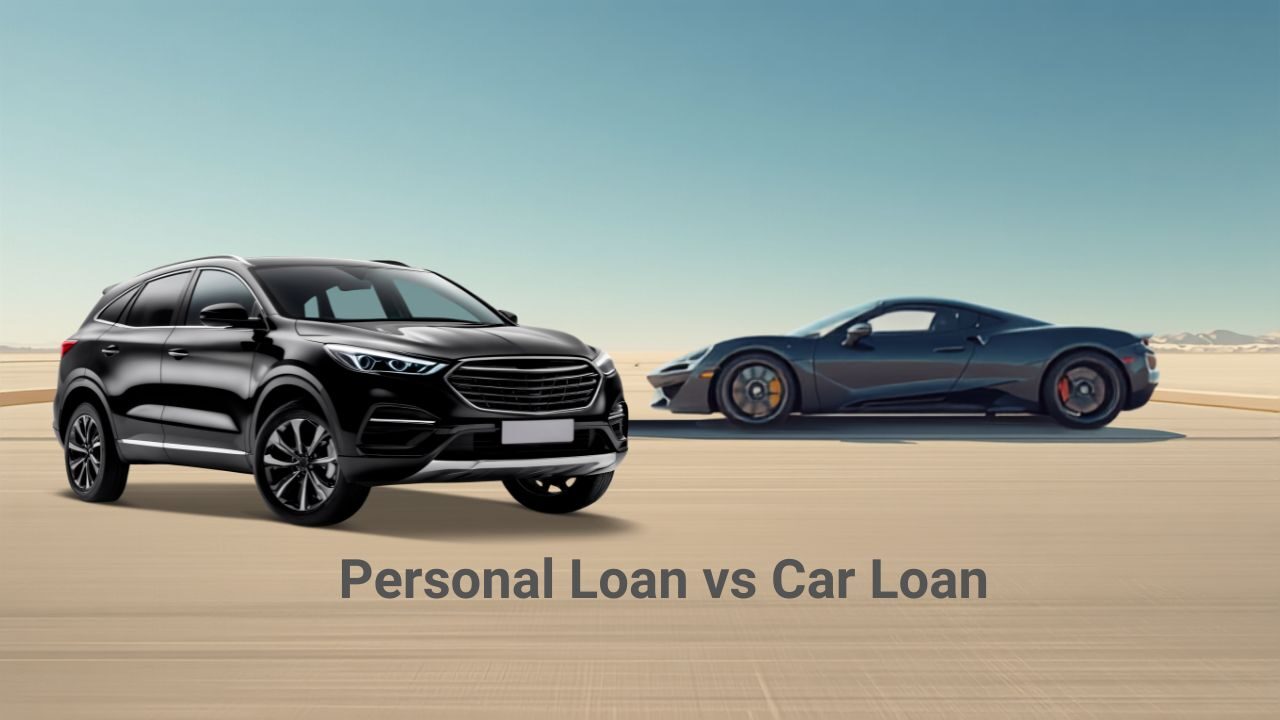
You decided the car model and color to buy, now negotiating its on-road price and decided to take a car loan. There’s two options for you — Personal Loan vs Car Loan, one from the dealership’s tie-up bank, another a pre-approved personal loan sitting in your net banking app. They just seem to be two versions of the same product until you see the fine print, and that is generally where people get it wrong. 

Car loans and personal loans are two very different types of products, structurally, and the distinction reflects in your EMI calculation, not just in the fine print. Your car serves as a collateral for the car loan – the bank holds hypothecation on the vehicle until you repay the loan, which is why the risk for the lender is lower and the interest rate is lower. A personal loan is unsecured. Nothing backs it except your income and credit score, so the bank prices that extra risk, and you pay for it every month.

Personal Loan vs Car Loan: The Interest Rate Gap Is Bigger Than Most People Assume

The new car loan rate for Indian banks as on August 2026 stands at 7.45 — 7.85% p.a. from the likes of UCO Bank, Canara Bank, and Punjab National Bank, with the majority of PSU banks bunching between 7.6% – 9.7% based on your CIBIL score. Private banks such as HDFC and ICICI charge marginally higher, usually 8.15 – 9.75% for new cars. Rates are reviewed monthly and are dependent on the loan scheme, so consider these as August 2026 rates and not a permanent rate. 

Personal loans start meaningfully higher. The bottom rates of top private banks — HDFC, ICICI, Axis, IndusInd hover around 9.99% p.a. for borrowers having outstanding credit (CIBIL 750+) and belonging to the preferred employer category. Most of the salaried individuals are approved around 11% to 16% and NBFCs that sanction loans more quickly and require lesser paperwork charge is 14% to 16% and at times it reaches up to 20% to 22% for weak credit files. 
Personal Loan vs Car Loan

That 2–3 percentage point gap sounds small until you run it through an EMI calculator. On a ₹5 lakh loan over 5 years, an 8% car loan works out to roughly ₹10,140 a month. The same amount as a personal loan at 12% comes to around ₹11,120 — nearly ₹1,000 more every month, and over ₹58,000 more in total interest by the time you’re done. Scale that to a ₹10 lakh loan and the interest gap widens to well over a lakh rupees. If the goal is purely to minimize what you pay for the car, the car loan usually wins on cost, and it’s not close.

Aspect Car Loan Personal Loan
Interest Rate Range 7.45% – 9.75% p.a. (PSU banks: 7.6%–9.7%; Private: 8.15%–9.75%) 9.99% – 22% p.a. (Top private banks: ~9.99% for CIBIL 750+; NBFCs: 14%–22%)
Typical Approved Rate (Salaried) ~8% – 9% ~11% – 16%
Rate Review Frequency Monthly Monthly
Dependency Loan scheme, CIBIL score, bank type CIBIL score, employer category, lender type
EMI on ₹5 Lakh (5 years) ~₹10,140 at 8% ~₹11,120 at 12%
Total Interest on ₹5 Lakh (5 years) ~₹1.08 lakh at 8% ~₹1.67 lakh at 12%
Total Interest on ₹10 Lakh (5 years) ~₹2.17 lakh at 8% ~₹3.35 lakh at 12%
Best For Minimizing cost when buying a car Flexibility (no end-use restriction), faster disbursal

Read More:-  How to Get a Car Loan in 2026: Know Everything Before Purchasing

Where a Personal Loan Makes Sense in Buying a Car

None of this means the car loan is automatically the right call. A personal loan earns its place in a few specific situations, and it’s worth being honest about them rather than defaulting to “cheaper interest rate always wins.”

Buying a used car older than what your lender’s car loan policy allows is one. Most banks cap car loans on vehicles that are 3–8 years old depending on the lender, and beyond that window, financing options dry up fast. A personal loan doesn’t care how old the car is.
Personal Loan

Buying from a private seller with incomplete paperwork is another. Car loans require the vehicle to be registered as collateral, which means clean ownership documents, a valuation, sometimes an RC transfer before disbursement. A personal loan skips all of that — the money lands in your account and what you do with it is your business.

There’s also the ownership angle. With a car loan, the bank’s name sits on the RC as a financier until the loan closes, and selling or modifying the car before that requires a No Objection Certificate. A personal loan gives you the car free and clear from day one, which matters if you plan to sell, swap, or modify it sooner than the loan term would normally allow.

And if you’re topping up a car loan that only covers 80–90% of the on-road price — many lenders cap the loan-to-value ratio, especially on used cars — a smaller personal loan to bridge the down payment can sometimes work out cheaper than stretching a used-car loan at 11–16% for the whole amount.

The Down Payment and Loan-to-Value Difference

Car loans can fund up to 100% of the on-road price for new vehicles from some lenders, though a 10–20% down payment usually gets you a better rate, since a lower loan-to-value ratio means less risk for the bank. Used car loans are stingier — most banks finance only 70–75% of the vehicle’s assessed valuation, not what you actually agreed to pay the seller, so budget for a bigger chunk from your own pocket if you’re buying second-hand.

Personal loans don’t tie themselves to the vehicle’s value at all. The amount you qualify for depends on your income and existing obligations, which gives you flexibility car loans don’t — useful if you’re also covering insurance, accessories, or extended warranty costs that a car loan wouldn’t typically finance.

Read More:- Best Car Air Filters for Better Engine Performance & Save Your Repair Cost

Conclusion

If you have good credit on Personal Loan vs Car Loan, the car is new or within your lender’s used-car age limit, and your only aim is to pay the least each month, the car loan is the best option for you  — the rate gap is too large to ignore for most buyers. Get a personal loan when the vehicle doesn’t fit a car loan’s criteria, when you want to be free and clear from day one, or when you need a little extra to fill a gap a car loan won’t fill by itself. 

Either way, get actual quotes from three or more lenders before you sign on anything. A 1.5% rate difference on two car loan offers can be just as important as the type of loan itself, and rates fluctuate frequently, so what was competitive last quarter may not be this one. 

Sharey Khan

Sharey Khan is an IT entrepreneur and petrol head & a car enthusiast. With a special focus on car-related content, he combines his deep passion for vehicles with a talent for crafting informative, engaging, and easy-to-understand content. His writing is driven by a genuine love for cars and he is committed to providing readers with accurate, up-to-date, and trustworthy information that empowers smarter driving decisions. 

Leave a Reply

Your email address will not be published. Required fields are marked *

0

Kia Seltos vs MG Hector: Which SUV Offers More For Your Money?

Published Aug 20, 2025, 9:25 AM
Last Updated Aug 21, 2025, 10:40 AM

Making a decision for buying an SUV which is worth your money then Kia Seltos vs MG Hector are two beasts ready to roar on roads. Both deliver wonderful performance with unique features and style. If you look from outside MG Hector is bigger in comparison to Kia Seltos, which makes it ideal for large families who consistently travel. 

Kia Seltos vs MG Hector side by side comparison showcasing design, size, and performance differences


Kia Seltos cunning design is making a valuable impression and gives an incredible feeling to experience the compact SUV ride with powerful petrol engine. Both offer full safety features with different functions and their price is also slightly different. 


If you prefer to buy an SUV for yourself or a small family then Seltos is best but if you want a spacious cabin and boot space for a big family then Hector is good for you.


Let’s explore their details in depth to make a better choice for yourself before buying a car.

Kia Seltos vs MG Hector: Key Difference at a Glance

Size and Space: MG Hector has a bigger body than Kia Seltos, is spacious for its segment but not as Hector. Because of the larger body Hector has larger space inside the SUV which makes it ideal for families.


Price: The Seltos’ starting price is Rs. 11.19 Lakh which is lower than Hector Rs. 14.50 Lakh. 


Engine and Performance: Both cars offer different performance with different engines, Kia Seltos turbo-petrol engine and Hector Diesel engine is powerful. Seltos’ diesel and Hector’s petrol engine are also good but not that powerful. Seltos offers more transmission options than Hector.


Features: MG Hector has a 14-inch touchscreen infotainment system and extensive connection functions. Seltos has dual-screen setup that integrates both infotainment & digital cluster, along with ADAS suite.


Let’s dig deeper into their features that make them different from each other.

Exterior and Dimensions

The MG Hector has a bigger body which makes a more commanding road presence. It offers more interior space while expanding its dimensions to make it bigger.

Kia Seltos vs MG Hector exterior and dimensions comparison showcasing sporty compact SUV design versus larger spacious SUV body

The Kia Seltos look more sportier and have an impressive modern design with sharp lines. It is easier to handle in a small space in the city and easily park with its compact size.

Interior and Features

Both cars offer advanced features but in different areas. Hector offers a larger infotainment system which controls car overall functions and advanced suite of connected car features. 

Seltos is more driver centric with two integrated screens of infotainment and digital cluster. A dual-zone climate control system is also available in Seltos.

Also Read: Honda City vs Toyota Corolla Altis: Which Sedan Rules the Road?


Performance and Driving Dynamics

A 2.0-litre engine of Hector is ready for adventurous trips to give you an unstoppable journey ride. Its diesel engine is a proven powerhouse than Seltos. However, Seltos’ 1.5-litre turbo-petrol engine is more powerful than Hector’s turbo-petrol engine.

Kia Seltos vs MG Hector performance and driving dynamics comparison highlighting turbo petrol and diesel engines with smooth transmission options

In terms of transmission, the Seltos offers a iMT (intelligent manual transmission and 7-speed DCT which delivers mind-blowing driving dynamics.

Safety

If your priority is safety first then both SUV has wider features for safety measures including six airbags and level 2 ADAS. For preventing car crashes, lane departure warning, automatic emergency braking, and forward collision warning are marvellous features that are really helpful. Hector has still not been officially tested but Seltos got 3-star rating from Global NCAP rating.


Feature Kia Seltos MG Hector
Dimensions 4365×1800×1645mm

Wheelbase: 2610mm

4699×1835×1760mm

Wheelbase: 2750mm

Boot Space 433 Litres 587 Litres
Engine Options 1.5L Petrol, 1.5L Turbo-Petrol, 1.5L Diesel 1.5L Turbo-Petrol, 2.0L Diesel
Power Petrol / Turbo / Diesel

113bhp / 158bhp / 114bhp

Turbo / Diesel 

141bhp / 168bhp

Torque 144Nm / 253Nm / 250Nm 250Nm / 350Nm
Transmission Manual/ iMT, CVT, 7-DCT, 6-Automatic Manual, CVT (Petrol only)
Mileage (ARAI) Up to 20.7kmpl (Diesel) Up to 15.58kmpl (Diesel)
Infotainment 10.25-inch HD Touchscreen 14-inch HD Touchscreen
Safety 6 airbags, Level 2 ADAS, all-wheel disc 6 airbags, Level 2 ADAS, all-wheel disc
Comfort Features Ventilated seats, dual-zone climate control, sunroof, 8-way power-adjustable driver’s seat, 360-degree camera Ventilated seats, sunroof, 6-way power-adjustable driver’s seat


Conclusion

Choosing between Kia Seltos vs MG Hector is highly confusing when a buyer wants a car with full modern features and powerful performance as both offer the same. But:

If you prefer more space, more big, and comfortable SUV then MG Hector fits in. 

If you prefer a more sportier look compact style SUV then the Kia Seltos is the best option.

0

Top Points to keep in mind while buying a used car online

Published Feb 16, 2021, 2:31 PM
Last Updated Feb 16, 2021, 2:38 PM

First Time Buyer’s Checklist

Before it comes to the process of buying a used car, the biggest challenge is selecting the car you need to buy.

When you are buying a used car, it is possible to get swayed very easily. For example, when you go to a dealership you might see a 7-year-old Hyundai Verna for 7 Lakhs and standing next to it you’ll see a 4-year-old Honda Accord (which is a far more premium car) for 9 lakhs. You might convince yourself to spend that extra 2 lakh and pick up an Accord but the cost of running and maintaining an Honda Accord is far higher than that of Hyundai Verna. In the long run, you’ll end up spending a lot more money on used car’s maintenance.

Check the used car’s condition

Despite being a used car, the vehicle you are considering should be in good running condition, and must be good value for money. Take the vehicle for a test drive and get all major systems such as engine, cooling, transmission, wheels, etc by an expert or checked by a trusted mechanic. These checks will help you ascertain whether the car is as well-maintained as the seller claims. Further, you can plan (10% of value of used car) for unavoidable repairs and maintenance and include the same in your budget.

Tip: Ensure that you carry out a thorough check when you go to take the delivery of your vehicle as well. This is important because a dealer might replace some of the components from your seeing of the vehicle to the delivery of the vehicle- for example – he might replace new brake pads with old ones.

Registration documents

Is the seller the real owner of the car? Is this the first or the second time it is being resold? The Owner Serial Number in the RC book or smart card indicates the number of times the car has been sold. Has the owner paid all dues, including road tax? Ensure the seller provides you with other papers that need to be verified, including the original invoice, NOC from the car loan provider, and road tax receipt.

The car’s transfer is effected when you and the seller sign on RTO Forms 29 and 30. Further, the seller must submit Form 28, which is the NOC for transfer of the car.

Car insurance

Tip 1: Check the car’s insured value in the policy, It will be a useful benchmark during price negotiations.

Tip 2: Track the No Claim Bonuses over the past 2-3 years. Frequent claims may imply frequent accidents requiring repair and maintenance to the vehicle.

Tip 3: Get the seller’s car insurance policy transferred in your name or buy a new policy within 2 weeks of the date of transfer of the car.

Not doing above may lead to your insurance claim being rejected in case of any accident or mishap. Only claims related to third parties will be approved under the deemed insurance policy transfer of the law.

Documents required

  • Proof of sale of the car
  • Proof of delivery of car to your possession
  • New RC book issued in your name
  • Request from the seller for cancellation of policy
  • Your application for transfer of the policy

Potential modifications

Can you convert the car into a dual-fuel automobile for example CNG? Can you opt for upgrades for greater comfort, safety, and value? Older vehicles may come cheap but may be impossible to upgrade. A relatively new model is preferable, especially if it comes at an affordable price as compared to the used one.

Get Your Deal Today – Click Here

0

Audi SQ8 Launched in India: New Engine, High Performance & Design

Audi SQ8

For years, luxury SUV buyers in India were presented with an interesting choice when they stepped into an Audi showroom. If you liked the aggressive, coupe-style roofline of the Audi SQ8 but were aching for truly, heart-stopping performance, your options were painfully divided. Either pick up the regular Q8, which is extraordinarily luxurious but more comfortable than fast, or you can remortgage your house for the fire-breathing, track-ready RS Q8.

The difference was a hefty Rs 1.2 Crore. Audi SQ8 enters at the right time when Audi has neatly balanced its lineup, it became the right option for high performance and comfort seekers.

Price of New Audi SQ8

Introduced with a starting price of Rs. 1.78 Crore (ex-showroom), the brand new SQ8 was designed to offer V8 supercar thrills with none of the limitations or excuses that have got in the way of your family. Sure as an AI I can’t feel the G-forces of a 0-100 sprint, but I can absolutely explain what is causing such a stir in the Indian car market with this launch.

Let’s get straight to the price, the spec sheet and that glorious V8 engine along with the features that make the new Audi SQ8 so special. 

Variant Ex-Showroom Price Engine / Power
Audi Q8 Rs 1.13 Crore 3.0L V6 / 340 hp
Audi SQ8 (New) Rs 1.78 Crore 4.0L V8 / 507 hp
Audi RS Q8 Performance Rs 2.34 Crore 4.0L V8 / 640 hp

With a price tag of Rs 65 lakh more for the SQ8 from the standard model, it is undeniably a costly jump. However when you consider that it’s essentially a detuned RS Q8 – sparing you a mind-boggling Rs 56 lakh over the flagship – the SQ8 begins to look like the most intelligent purchase in the performance luxury segment. 

Absolute Best Part of This Car

As rival manufacturers are shrinking engines to turbocharged six-cylinders or leaning more on hybrid aid, Audi is preserving the V8 dream. It offers a 4.0-litre twin-turbo TFSI V8 petrol engine that runs with top speed smoothly. 


Specification Value
Maximum Power 507 hp (373 kW)
Peak Torque 770 Nm
Transmission 8-speed automatic gearbox
Drivetrain Quattro all-wheel drive which is a signature for driving tech

Audi SQ8 Performance 

The moment you press the accelerator, this SUV shoots from 0 to 60 mph in 4.1 seconds. You really need to see this to believe it: approaching two tons can move like this, easily matching proper sports cars as it serves the speed up to 250 km/h. 

Adaptive air suspension and 4-wheel steering is what makes a difference in the Audi SQ8 than any other SUVs. In daily driving, particularly at low speed, the rear wheels are steered slightly opposite to the front wheels. That sounds like tech mumbo jumbo, but in the real world it just means tighter turns and much easier parking — something you’ll really thank me for in city traffic. 

SQ8’s sport exhaust system

Step on it more on the freeway and the system compensates. At higher speeds, the rear wheels turn in tandem with the front wheels, inspiring unbelievable stability especially when performing rapid lane changes in the SUV. And if you like your handling a bit sharper, Audi even offers an optional high-end suspension system with active roll stabilization and a sport rear differential that makes the drive even more dynamic. 

And then there’s the sound. Start it and you’re greeted by a deep, unmistakable V8 rumble from the SQ8’s sport exhaust system with quad tailpipes. Isn’t it great that when you hear a certain sound you instantly know — this isn’t a luxury SUV, it’s a performance machine? 

A Design That Commands Respect

The SQ8 hits the right balance between imposing and subtle. It holds the standard Q8’s sleek, coupe-SUV profile but adds just enough muscular hostility to let onlookers know this thing is serious. 

The Front: It wears Audi’s trademark Singleframe grille, but this one comes in a honeycomb design with exclusive silver trims and larger, functional air intakes on the bumper that feature fog lights. 

The Lighting: HD Matrix LED headlights with Audi Laser Light are included as standard and feature four preselectable daytime running light images.

The Profile: Standard on the SQ8 are enormous 21-inch alloy wheels (there are 22-inch graphite grey options available). The strong shoulder line, the frameless doors, the red brake calipers bearing the “S” emblem all scream performance.

The Rear: You have the gorgeous linked OLED taillights and an aggressive rear diffuser that cradles those real quad exhaust tips. 

Inside the Cabin

You could be purchasing the SQ8 for the engine, but you’re lying if you say you’ll be spending all your time in the cabin and Audi certainly hasn’t skimped on the luxury. The design of the interior is akin to that of the Q8, but with some sportier ‘S’ touches thrown in. 

Audi SQ8 Tech & Displays:

Audi’s slick dual-screen layout takes up much of the dashboard space. There’s a 10.1-inch primary infotainment display at the top for your navigation and media, and an 8.6-inch secondary touchscreen below focused on climate and vehicle controls. The 12.3-inch Audi Virtual Cockpit behind the flat-bottom steering wheel is fully digital with exclusive “S-spec” performance graphics. 

Audi SQ8 comfort

Comfort & Materials:

It’s the best of both worlds when it comes to the Audi SQ8 seats. They are covered in a high quality blend of Dinamica microfiber and leather that makes them feel luxurious and high end as soon as you sit down. 

But these aren’t bucket racing seats. They’re both just as comfortable for everyday use, says Audi. The front seats are packed with features such as heating, ventilation, full power adjustments and even a massage function.

Cabin features that gives immense look include:

  • A panoramic sunroof is provided in this car.
  • Peak audio system with speaker, 730W Bang and Olufsen 3D Premium Sound System.
  • Four-zone deluxe automatic climate control (plus fragrance feature as option).
  • Multi-color ambient light (30 colors in options).
  • Soft-close doors (automatic latching) and power tailgate.
  • A supremely practical 604-litre boot space.

Safety and Driver Assistance

What we’ve learned is that the need for safety tech scales with power. You will receive the best safety elements in your 2026 Audi SQ8 that take your and your family worries away. It includes:

  • The cabin has 8 Airbags to open in any crash.
  • Driving and Parking is becoming easier with a 360-degree camera system.
  • New ADAS Level 2 including Lane Departure Warning, ACC (Adaptive Cruise Control), and BSM (Blind Spot Monitoring).
  • SUV is stepping on to the next level with optional for buyers who require fade-free stopping power. 

Conclusion

In India, the Audi SQ8 has challengers such as Mercedes-AMG GLE Coupe and the BMW X 5 M60i and Porsche Cayenne GTS for the luxury customers.

But there’s really nothing like the Audi SQ8. It’s for the buyer who wants the thunderous soundtrack and brutal acceleration of a V8, but doesn’t want the stiff, bone-crushing ride which typically comes with top-tier track SUVs. 

It’s a real two-face car: a quiet, comfortable, tech-laden high-end cruiser Monday to Friday and a 507-hp rocket on the weekends. It certainly is a big ask at Rs 1.78 crore. The Audi SQ8 suggests that the middle is not so bad, after all, when it comes to SUVs – at least when that middle is the top. 

0

How to Improve Gas Mileage: 15 Proven Tips That Actually Save Fuel

Published Jul 30, 2026, 12:34 PM
Last Updated Jul 30, 2026, 12:47 PM

How to Improve Gas Mileage

Petrol in Delhi is holding at ₹105 a litre this week, and Mumbai drivers are paying past ₹111 — rates that haven’t moved much since the last OMC revision in May 2026. You are probably wondering about how to improve gas mileage of your car. Because it actually helps you save money. It’s the difference between a ₹2,000 tank lasting your commute eight days or eleven. 

Most of what kills mileage in Indian driving conditions has nothing to do with the engine under the hood and everything to do with habits you can fix by this weekend. Let’s understand the 15 proven tips that genuinely move the needle on gas mileage, ranked roughly by how much difference they make.

1. Ease Off the Gas Pedal

Road rage was one of quickest means to empty a gas tank without actually going any faster. Quick brakes and acceleration with tight force can actually let your engine work harder than it has to. That extra effort means more fuel consumption, more wear on your brakes and tires

Research shows that aggressive driving can lower your gas mileage by up to 30% on the highway and more than 30% in city traffic.

2. Keep Your Tires Properly Inflated

When tires are underinflated, if they don’t have enough air roll easily they require more push and for that engine has to burn more fuel to keep the same speed. Flat tires mostly cause lower fuel economy, uneven wear of tires and affect braking and handling.

It’s recommended to check your car’s tire pressure every month and before going on a long trip. The little maintenance habit can increase your mileage and tire life. 

3. Don’t Ignore Your Air Filter

Your engine requires a constant flow of clean air to burn fuel properly. The air filter restricts the flow of air to the engine as it gets clogged by dust, dirt, leaves and other debris, hence the engine has to work harder to make the same power. 

On a lot of cars, it’s a quick job that doesn’t require any special tools. Most manufacturers advise to check the air filter at every service and change it at the intervals. 

Read More:-  How to Transfer Car Ownership in India: A Step-by-Step RTO Guide (2026)

4. Lighten Your Load

When your trunk becomes just a holding space for stuff, your fuel economy could be suffering without you knowing it. If there are any heavy objects like games equipment, boxes, and tools that are unnecessary, remove them.

If weight increases more than standard capacity like 45 kg (100 lbs) can decrease fuel efficiency by about 1-2%, and it impacts mostly in city driving and stop-start traffic.

5. Use Cruise Control on the Highway

Cruise control can be used to increase the fuel efficiency while driving on open highways by avoiding speed fluctuations. Speed changes, small ones included consume extra fuel as the engine needs to accelerate and decelerate the vehicle repeatedly. 

Long drives go smoothly with the help of Cruise Control as it prevents needless changes. It may not be good for busy traffic roads but best for fairly flat interstates, where steady speeds can help squeeze the most from every liter of gas. 

6. Avoid Excessive Idling

Idling your car wastes gas, and it doesn’t even get you anywhere. Waiting to meet someone, waiting outside a store or driving with your engine running while you’re parked your wasting fuel for no distance covered. 

New cars already have automatic start-stop systems for this very reason. Quick start and stop can make everything so easy and saves fuel on idling. 

How to Improve Gas Mileage

7. Combine Your Errands

When you start your car, the engine will take time to warm up and it uses more fuel to make it completely warm. If your engine gets cold and you try to warm up 5 times a day then your fuel burns more than it burns at one go. 

So combine all your errands and try to complete it once you start your engine. Do not let yourself be drawn to a lot of shorter trips in a day. It can also help you avoid extra miles and time on the road.

8. Watch Your Speed

To reach faster at your destination will consume more fuel from the tank. So avoid leaving your home late and take a ride at steady speed so it saves your fuel as aerodynamics normally.

With most cars, fuel economy starts suffering fairly rapidly once you’re driving faster than about 90–100 km/h. Even dropping your cruising speed by 10–15 km/h on long road trips on the highway can help you save a little gas. 

Read More :- Zero Depreciation Car Insurance: Benefits, Coverage & Cost

9. Keep Your Windows Up at High Speeds

How you cool your vehicle can also impact gas mileage especially on the highway. On the highways, you probably drive fast and leaving your window open creates drag which forces the engine to work harder to move the vehicle through the air. 

You can open windows at short and slow speeds in a city. Turning on the AC is more fuel efficient on highways or running at high speed.

10. Get Regular Tune-Ups

If you want to drive a car which can be fuel efficient then take care of it regularly. Regular maintenance including checking engine oil, plugs, sparks, tires are required to increase fuel efficiency. When these are not fixed, your engine works harder and consumes more fuel and gives poor performance.

Read a manual to keep following the manufacturer’s recommended service which lets your car at its best condition, improves fuel economy and can save you from costly repairs. 

11. Use the Manufacturer-Recommended Motor Oil

Using the wrong grade of oil can actually reduce your fuel economy. Check your owner’s manual and stick to what’s recommended — it’s a small detail that makes a real difference.

12. Don’t Overuse the AC in Stop-and-Go Traffic

Air conditioning puts extra load on your engine. In heavy city traffic, cracking a window instead of blasting AC can help — though on the highway, the reverse is often true (see tip #9).

13. Plan Your Routes to Avoid Traffic

Sitting in traffic means idling, braking, and accelerating over and over — the worst combination for fuel economy. A slightly longer route with steady flow can actually save more fuel than the “shortest” route full of stop-and-go.

14. Check Your Wheel Alignment

If the car wheel is misaligned then your engine puts more force to move your car forward. It silently eats your mileage and if the car pulls to one side then get an alignment check quickly because your tires wear out. 

15. Consider Your Driving Environment

Temperature also affects your engine and batteries because cold weather can cause your engine to get cold easily and it sometimes hard to start the engine. So it takes time and more fuel to warm up the engine which is not good for short trips. This helps you set realistic expectations and adjust your habits rather than assuming something’s wrong with your car.

A Real Comparison: Habits vs Hardware

How to Improve Gas Mileage

Parameter Maruti Suzuki Swift Hyundai Grand i10 Nios
ARAI-rated mileage (petrol) ~22–24 kmpl (actual: 24.8 kmpl manual, 25.75 kmpl AMT)  ~20–22 kmpl (actual: 18 kmpl manual, 16 kmpl AMT) 
Real-world mileage (aggressive city driving, poor habits) 14–15 kmpl (as per your input) Not specified, but likely lower than ARAI if driven poorly
Real-world mileage (steady driving, good maintenance) Can approach ARAI figures with correct habits Can out-mileage a poorly driven Swift with steady acceleration, correct tyre pressure, minimal idling (as per your input)
Key takeaway ARAI figure is not a guarantee; aggressive driving can drop mileage to 14–15 kmpl A lower-rated car can deliver better real-world efficiency if driven and maintained well
Primary reason for gap Driver behaviour and maintenance (not just engine design) Same – driver and maintenance habits dominate real-world results

The gap between ARAI figures and real-world mileage is almost always driver-and-maintenance driven, not just engine architecture.

Should You Spend Money to Fix Mileage, or Just Change Habits?

If your mileage complaint is a gradual, creeping drop over months, the fix is almost always maintenance — tyre pressure, air filter, spark plugs, alignment and costs under ₹2,000 in most cases. If it’s a sudden, sharp drop, get the OBD scanned for fault codes before assuming anything about driving style. 

Only if you’re consistently doing long highway stints and your current car lacks cruise control or an eco mode should hardware or a car upgrade — even enter the conversation. For most Indian owners, the ₹0 fixes (driving style, tyre pressure, timely servicing) recover more mileage than any accessory or fuel additive on the market.

Read More :-  How to Renewal Car Insurance: Step-by-Step Guide (2026)

Conclusion

Once you understand all the points on how to improve gas mileage, there’s nothing hard to adapt to changes. Little habits can save your money and time, so proper tire pressure, regular maintenance, and a bit of trip planning can genuinely add up to real savings over a year. You don’t need an electric vehicle or a full engine rebuild to save at the gas pump. Sometimes it really is the simple stuff that works best. 

Try picking just three or four of these tips to start with. Once they become second nature, add a few more. Your fuel gauge and your wallet will notice the difference.

0

Elon Musk Car Collection 2026: Tesla, Rare Cars & Net Worth

Published Apr 3, 2026, 4:54 AM
Last Updated Apr 17, 2026, 4:58 AM
Elon Musk Car Collection

Elon Musk Car Collection

Have you ever asked the question, what does the World’s richest man drive every day or on a weekend trip? You can have any car you want when you have that kind of money. Elon Musk Car Collection is pretty different from what you’d expect. And rather than a massive collection of exotic cars like many billionaires, Musk keeps his automotive stable surprisingly modest, with car that reflect his own personality. 

In the year 2026, Elon Musk isn’t just a CEO, he’s a global phenomenon. From taking Tesla to the next generation of robotics, to combining space exploration and artificial intelligence with his giant SpaceX and Grok AI enterprises, he’s living life at the pace of light. Yet even the rocket-builder and Mars-mission planner needs a dependable ride on Earth.

If you ever searched “how many car collections of Elon Musk” on any search engine, he has you running for a while with a pretty interesting story. His garage is a strange fusion of futuristic electric cars, rare historic classics, and movie props. 

Let’s look into a detailed article. We will talk about his favorite daily drivers, vintage beauties, net worth shocker in 2026 and how much the Elon Musk Car Collection price exactly is. Let’s take a look at the incredible, fast paced world of Elon Musk vehicles! 

Net Worth of Elon Musk in 2026

Before enjoying the beautiful cars in his driveway, we must first examine the extraordinary bank account that buys them. As of early 2026, Elon Musk is the richest person ever in human history, with other billionaires way behind him.

Elon Musk’s net worth has shot up to an unbelievable $844 Billion as per latest financial reports and global billionaire indexes Yes, you read that correctly. He is racing toward the trillion-dollar mark, a point that many financial experts believe he’ll reach very soon if his companies maintain their momentum. 

But how did his fortune balloon so much by 2026? Among the largest is the historic $1.25 trillion mega merge between his space exploration company, SpaceX, and his artificial intelligence startup, x AI. This audacious deal combined the two companies to dominate both an outer space satellite net internet (Star link) and the AI business (Grok). 

On top of that, his flagship company Tesla, has managed to successfully evolve from mere electric car manufacturer to massive robotics and AI powerhouse. This new age for Tesla is set to be marked by mass production of Optimus Gen 3 humanoid robots and the long-awaited, fully autonomous Cyber cab. 

When your net worth is a cool $844 billion, purchasing a rare, multi-million-dollar vintage car is the equivalent of an ordinary person grabbing a quick cup of coffee. Musk is notorious for saying that he is “cash poor” as his vast wealth is tied up in company stock and investments. A couple of years back he sold virtually all of his physical real estate and homes to finance his mission to Mars. Even though he sold his homes, he did keep the cars he loved. 

The Daily Drivers in Elon Musk Car Collection

1. Tesla Model S Performance (Plaid)

For Elon Musk himself, when he needs to travel quickly and comfortably to a business meeting, it’s likely that he’ll choose his Tesla Model S. However this isn’t a normal Model S, it’s the high performance Plaid Model S. It can go from 0 to 60 miles per hour in less than two seconds.

Elon Musk loves this car, because it makes the point that electric wheels can trounce even the most expensive and loudest gas powered race car around a racetrack. It’s cool and very comfortable and it has the latest, greatest self-driving autopilot.  

2. Tesla Cyber truck

Elon Musk Car Collection is incomplete without the Tesla Cybertruck. It excites him most because of its on-road/off-road armored capability. He is driving Cyber truck himself for a long time despite the fact they are rare on the road until 2026. 

And now, proudly proclaiming his delight in having an everyday decision over what to drive: “Whether to drive the dual motor+ performance+ stainless+ Cybertruck or drive the elegant Model S.” The angular, geometric design and impenetrable body of the Cyber truck make it the ideal physical representation of Musk’s defiant, futuristic image. 

3. Tesla Model X

When you’re a busy “business dad” with a lot of kids, you need room. The Tesla Model X is Musk’s default family car. The signature Falcon-wing rear doors that open upwards aren’t just for show they were born out of Musk’s own frustrations with traditional family SUVs. 

Before the Model X existed, Musk drove an Audi Q7, and claimed it was tough to ‘get his kids comfortable in the third row of seats in tight parking spaces.’ He insisted that the Model X doors open upwards, thereby completely solving the everyday annoyance. 

The Rare and Vintage Classics (Elon Musk All Car Collection)

4. 1967 Jaguar E-Type Roadster

This classic British sports car was Musk’s first real love in the automotive world. When he was only seventeen, he looked at a magazine picture of a Jaguar E-Type and vowed to himself that when he made it, he would buy one. After getting a $40,000 bonus check from his first tech company, Zip2, he at last bought a 1967 Jaguar E-Type.

Old cars always seemed to be broken in some way or another. Elon Musk said his brand new Model S broke down on his first trip home from the dealer, Tesla CEO laughed. Jaguar E-Type The Jaguar E-Type is considered by many to the most beautiful car ever, none the less with all its imperfections and in vintage car racing he has a special, nostalgic place in his heart. 

5. 1976 Lotus Esprit “Wet Nellie” (The James Bond Car)

This is maybe the most awesome, fun and iconic car he owns. When you watch the classic 1977 James Bond action flick The Spy Who Loved Me, you’ll no doubt recall the incredible white sports car that makes a dramatic exit off a wooden pier, plunges into the ocean and immediately turns into a working submarine.

In 2013, this very movie prop was put to auction in London. Musk was the winning bidder, and purchased it for just under $1 million. The movie prop didn’t transform, and it couldn’t even be driven on real roads! It was just a wet submarine shell in the shape of a car. Musk was slightly underwhelmed by the Hollywood hocus-pocus, but has said he hopes to convert the classic car to a “real, functioning submarine” at some point, with a futuristic Tesla electric powertrain. 

6. The Legendary McLaren F1

Musk bought the ultimate dream supercar of the time: the McLaren F1 when he sold Zip2 in the late 90s and became a young tech multi-millionaire This was a genuine engineering marvel, with a maximum speed of more than 240 mph, doors that opened like a beetle’s wings, and a distinctive three-seat interior layout, with the driver in the middle.

The tale of this particular car is very well-known in Silicon Valley. Musk was bragging about the car’s blistering acceleration in 1999 to his business partner, Peter Thiel when. He punched it, lost control, spun into the air, and smashed the priceless car heavily into the road. To add insult to injury, Musk hadn’t even gotten insurance on the car! 

Musk repaired the damaged McLaren F1 – one of his most legendary and dangerous early career stories – and sold it years later for a tidy profit, but it still stands as a testament to the risks he’s taken throughout his career. 

7. 1920 Ford Model T

You are going to be very surprised when there is a 100-year-old, slow, awful car sitting in the high-tech garage of a man who builds spaceships. However, the historical automobile that changed the entire world was the Ford Model T. Not only was it the first inexpensive, mass-produced car that made it possible for an ordinary working-class family to travel by car. This 1920 Ford Model T is a best engineering model which makes Elon Musk get profound respect for his choices.

8. Porsche 911 Turbo

Porsche 911 Turbo is an excellent piece manufacturing model before and after Tesla. It stand forever on the road and ready to beat the race in its own ways. Musk took his Porsche 911 Turbo out for a spin. He also expressed his interest in speed and sports engineering. 

But he also realized how dirty fuel was. That is an experience he would never forget, he said. This masterpiece inspired Elon to build an electric car which gives same features and specification as Porsche 911.

9. 1978 BMW 320i

This was the first car Elon Musk ever had. He bought it used for a mere $1,400 back in 1994. He renovated the place himself, purchasing inexpensive replacement parts from junkyards, he replaced the broken glass, and the filthy work receded hands-on mechanical labor. It was his reliable ride in the days when he was a struggling college student. Sadly, the car’s life ended when one of his first company interns borrowed it to make a run to the store and crashed it. 

The 2008 Tesla Roadster (Star man) is Out of this World

The biggest invention, Tesla Roadster, the compact sports car which changes the world electric cars definition by sparking out with its unique abilities. It showed a skeptical public that EVs didn’t have to be slow, dumb golf carts. For many years, Elon parked his cherry-red 2008 Tesla Roadster but then sparked out with a creative idea which no one else’s ever done in history.

Tesla Roadster traveled through space under the Falcon Heavy mission that proved Elon’s passion for automotive engineering. That same car is now somewhere in orbit around out in space. Star man in a SpaceX spacesuit highlighting “Don’t Panic” showed it conveyed the message to anyone who might read it.

Read Also: Sundar Pichai Car Collection 

Conclusion

Elon Musk Car Collection is more than just a few rowdy space cars to flaunt in orbit. It’s a distilled expression of his brilliantly chaotic vision of the world.

His selections tell you the story of his life, if you pay attention. The Jaguar E-Type stands for his late teenage aspirations. The McLaren F1 is his first major success (and lesson in failure) in the financial world. The Lotus Esprit embodies his playful imagination and pop cultural adoration. And his relatively modern fleet of Tesla’s are a testament to his unrelenting, indefatigable, desire to change the future of our planet’s energy.

Audi SQ8 Launched in India: New Engine, High Performance & Design