0

Volkswagen Confirms Plans to Launch New Sub-4-metre SUV by 2027

Volkswagen

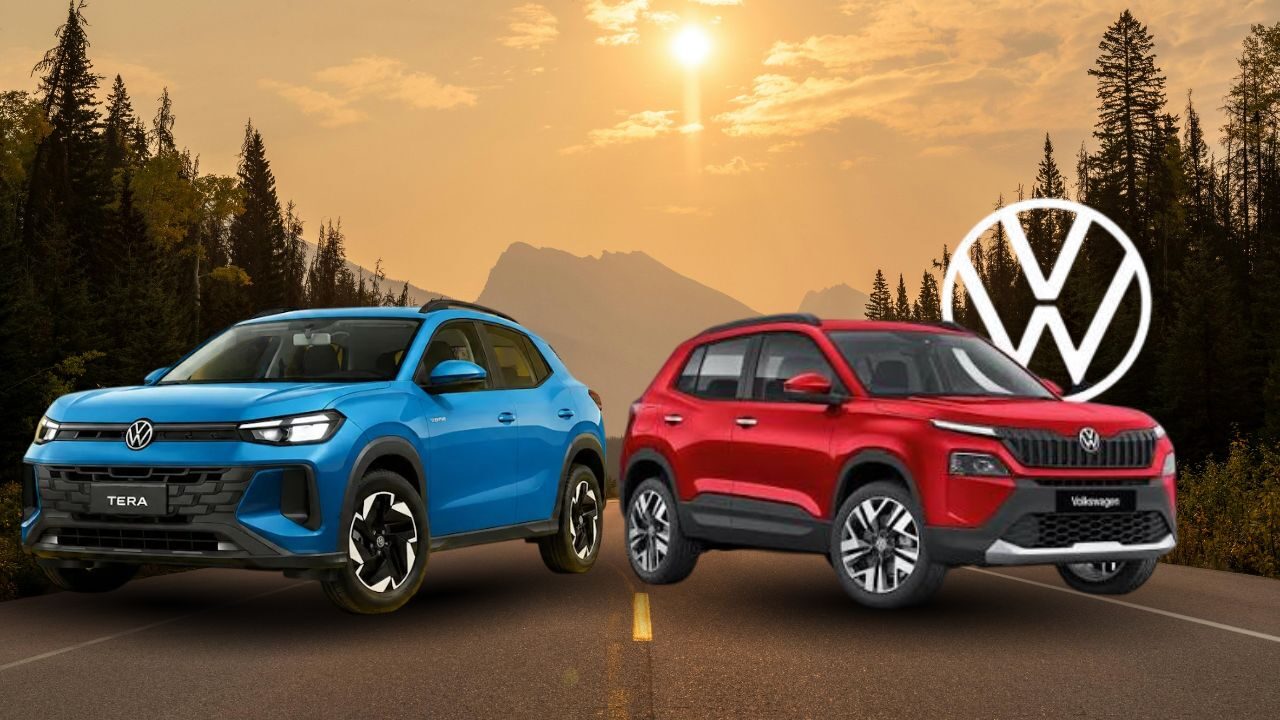
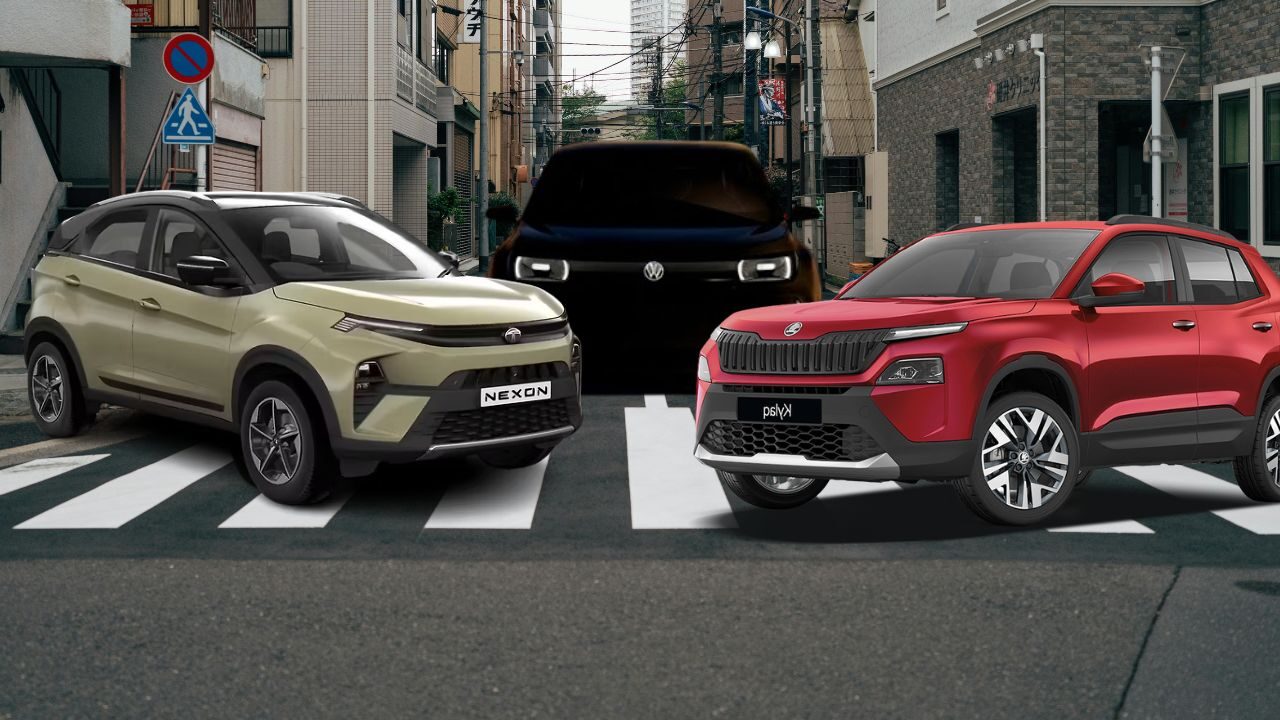
Volkswagen confirms plans to launch a new sub-4-metre SUV for India in 2027 and it is the first b-segment SUV of the brand. It will be placed below the Taigun, beginning at approximately ₹12 lakh. This new model of VW is a direct competitor of Tata Nexon, Maruti Brezza, Hyundai Venue and Kia Sonet, while avoiding a segment that ‘actually moves volume’. It will share most of its mechanical components with the Skoda Kyiaq, but Volkswagen might equip it with a different bodywork, interior and driving feel.  

Scheduled to be launched in November 2024 and opened for bookings that December, Skoda’s Kyla crossed 10,000 bookings within its first ten days on sale. That figure is a strong response that changed Volkswagen Group India’s approach. After discontinuation of Polo and Ameo, VW retreated from the sub-4-metre segment. 

This is what we currently know about the next compact VW SUV – powertrain, size, features and where it will fit within the VW lineup. 

Why Volkswagen Is Finally Entering the Sub-4-Metre Race

The sub-4-metre SUV segment is where the volume is in India. The tax regime keeps these compact SUVs more affordable than their larger counterparts, and vehicles such as Tata Nexon, Maruti Brezza, Hyundai Venue, Kia Sonet and Mahindra XUV 3O off these have been topping the monthly sales charts consistently.Volkswagen had this one idled for years, with the Taigun and Virtus serving as its points of entry instead and both clocking in way above what most first-time SUV buyers in India actually pay. 
Volkswagen Is Finally

That strategy capped how many people could realistically consider a Volkswagen. The new SUV changes that by sitting below the Taigun, giving VW its first genuine mass-market play in the country since the Polo era. It also allows the Skoda Auto Volkswagen India plant in Chakan to run at a higher capacity as the car will share tooling and components with the Kylacq and will not require a separate production line. 

Read More:-  Personal Loan vs Car Loan: What is the Better Choice for Buying a Car? 

Volkswagen Expected Engine, Dimensions and Performance 

Volkswagen has yet to announce a name, styling images or a final spec sheet, so consider some of this an educated guess as to what’s confirmed versus what’s probable. 

The SUV is based on the MQB-A0-IN platform, and will be produced in India. It targets its launch in 2027, with most reports indicating a mid-year launch rather than a January or Q1 date. It’s also confirmed to sit below the Taigun as VW’s new entry-level SUV in India. 

Power will come from the familiar 1.0-litre TSI turbo-petrol three-cylinder engine, producing 115 PS and 178 Nm of torque — the same unit working in the Kylaq, Kushaq, and Taigun today. A 6-speed manual gearbox is the expected base option. Volkswagen may fit an 8-speed torque converter automatic rather than carrying over the Kylaq’s 6-speed unit, which would be a genuine point of differentiation. 

Volkswagen Expected Engine

Dimensions should land close to the Kylaq’s 3,995mm length and 2,566mm wheelbase, since staying under 4 metres is the entire point of the tax bracket this car is built for. The design is rather than a straight Kylaq clone, Volkswagen is expected to give the car a distinct front and rear, inspired from the Volkswagen Tera, a related model already sold in Brazil. 

Expect a new grille, revised bumpers, and a different lighting signature, following the same playbook VW used to differentiate the Taigun from the Kushaq. 

Pricing is expected in the range between ₹9-16 lakh on-road Mumbai range, but that’s a media estimate, not a Volkswagen number, and on-road figures swing by state due to registration and road tax. Don’t plan a budget around it yet.

How It Stacks Up Against the Competition

Volkswagen SUV vs Skoda Kylaq 

Since both share the MQB-A0-IN platform and, in all likelihood, the same 1.0-litre TSI engine, the Kylaq is your clearest preview of what VW’s new SUV will feel like to drive. The Kylaq measures 3,995 mm in length with a 2,566 mm wheelbase, and its adult occupant safety score of 30.88 out of 32 in Bharat NCAP testing gives an early indication of the safety baseline the VW version should meet or beat. 

Where the two are expected to differ is transmission choice and cabin finish, with Volkswagen typically pitching its Group cars as the sportier-driving option compared to Skoda’s more feature-loaded value pitch.

Volkswagen SUV vs Tata Nexon 

The Nexon continues to be the benchmark in the segment, based on Tata’s tried and tested X1 platform powered by a 1.2-litre turbo petrol producing 120 PS and a 1.5-litre diesel variant that VW’s petrol-only line-up won’t get. Tata is also selling an electric Nexon, which Volkswagen’s ICE-centric entry couldn’t compete with directly.

What VW brings instead is badge value and a European driving character that Nexon buyers moving up from a hatchback often say they want but can’t get at this price point today. 

Read More:-  BMW X1 LWB vs Audi Q3 vs Mercedes GLA: Which Entry-Luxury SUV Actually Makes Sense in 2026?

Conclusion 

Volkswagen’s new sub-4-metre SUV might also enable the brand to tap into India’s largest SUV segment more effectively. With Kylaq already showcasing what the platform can offer, a Volkswagen variant with the familiar TSI engine, unique styling and competitive pricing could possibly pose a real threat to the Nexon, Brezza, Venue and Sonet. 

Let’s wait and see how aggressively will VW price and position it when the SUV hits the market in 2027. 

Sharey Khan

Sharey Khan is an IT entrepreneur and petrol head & a car enthusiast. With a special focus on car-related content, he combines his deep passion for vehicles with a talent for crafting informative, engaging, and easy-to-understand content. His writing is driven by a genuine love for cars and he is committed to providing readers with accurate, up-to-date, and trustworthy information that empowers smarter driving decisions. 

Leave a Reply

Your email address will not be published. Required fields are marked *

0

Tata Cars Discount 2026: Up to ₹1.55 Lakh Off on Tiago EV, Punch & Altroz

Tata Cars Discount 2026

If you have been thinking of buying a new Tata car, here is some good news for you. Tata Motors is offering huge discounts on a select few of its best-selling models — Tiago EV, Punch, and Altroz — bringing them to a new high of affordability. These deals are applicable on vehicles ranging from electric vehicles to compact SUVs to premium hatchbacks, and will likely accommodate a broad array of buyers. 

With perks up to ₹1.55 lakh on select variants, Tata is clearly targeting value-conscious buyers who aspire for modern specifications, solid safety, and long-term dependability but don’t want to overstretch their finances. 

Tata Cars Discount Tiago EV, Punch, Altroz

Tata Motors is now providing huge discounts on many of its car models, among them the Tiago EV, Punch, and Altroz, the demand for which is quite high among buyers. 

Tiago EV Offer

The Tiago EV is now available with discounts of Rs 1,50,000, rear- wheel drive Tata electric cars could prove to be the most value for money. These discounts on particular variants (XE, XT, XZ) is related to a Rs 70,000 green bonus, an exchange or scrappage benefit of Rs 30,000-35,000 and a loyalty bonus Up to Rs 50,000. Furthermore, Rs 65,000 off on MY2026 variants, which comprises of Rs 40,000 as green bonus and Rs 20,000-25,000 as exchange benefit. 

Tata Punch Discount

Tata is now offering benefits of up to Rs. 70,000 on some variants (Pure, Adventure, Creative, Creative iCNG, Adventure iCNG) of Punch. However, MY2026 Punch facelift doesn’t have any discount. Discounts for the Punch EV model differ by production year with the models corresponding to MY2025 and MY2024 receiving a discount of up to ₹1.65 lakh, and the model corresponding to MY2026 an up to ₹95,000 discount. 

Altroz Offer

Altroz has been a safety and design leader and is being offered with discounts of up to ₹85,000 for the outgoing model (Pure Diesel, Smart Diesel, Smart CNG, Pure Diesel AMT, Smart Diesel AMT, Smart CNG AMT). The brand new variants, pre-facelift MY24/MY25, which consists of Rs 60,000 cash + Rs 25,000 – Rs 35,000 exchange. This makes Altroz a value-for-money buy if you’re looking at the hatchback segment with premium features. 

Read More:-  Mahindra Car Discount Price February 2026: Up to ₹2 Lakh Off on Thar, Scorpio N & XUV 3XO

Offers Summary Table

Model MY2026 Max Benefit MY2025/MY24 Max Benefit Key Components
Tiago EV Rs 65,000 Rs 1.55 lakh Green bonus, exchange, loyalty 
Punch (ICE) None / Rs 40k (pre-facelift) Rs 60k (with loyalty) Cash, exchange, loyalty 
Altroz Rs 30k-35k Rs 85k-95k Cash discount, exchange 

Tiago EV, Punch, and Altroz features and specifications

Tiago EV

The Tiago EV is a hatchback, compact and nimble with the usual practicality-enhancing features and modern bits and bobs. 

  • It is available in deux battery options, the 19.2 kWh offering a range of around 250 km, and the 24 kWh offering a range of up to 315 km on a single charge. 

Tiago EV

  • The smaller battery variant has a power output of 61 bhp, while the larger one produces 74 bhp, enabling quick acceleration with the larger model achieving 0-60 km/h in just 5.7 seconds.
  • The Tiago EV features a touchscreen infotainment system, connected car technology, and intelligent regenerative braking. Also, you can choose from different driving modes, and the roomy space with high-end material make it a best place to spend your days on wheels. 

Punch: A Compact SUV

  • Those who like small and roomy cabin car, welcome here because The Punch is an incredible model that offers practicality with comfort.
  • With an automatic transmission option that makes it easy for new drivers to shift easily with the powerful latest motor (1.2-liter 3-cylinder) present in the system to give 84 bhp and 113 Nm.  

Punch

  • For added ease, an automatic transmission edition is also available, which is ideal for city driving.
  • For performance, the Punch has a good fuel economy of 18-20 km/l making it a good buy for everyday riding. 

It also has several other impressive features, such as a 7-inch touchscreen, semi-digital instrument cluster, multiple airbags, ABS with EBD, and a rear parking camera. Its tall ground clearance and SUV-like posture promise adventure on all terrains. 

Altroz: Premium Hatchback

The Altroz is a new strong option in the premium hatchback segment with the flexibility of three engine options. This comprises of a 1.2-litre naturally aspirated petrol engine producing 85bhp, a turbocharged 1.2-litre petrol engine outputting 110bhp and a 1.5-litre diesel engine with 90bhp to address different performance requirements. 

  • Its fuel economy is good enough as study shows a distance of 20-25 km/l, which provides the drivers with an economy drive.

Altroz

  • What really elevates the Altroz is its focus on safety, which wins it a 5-star Global NCAP rating. 
  • Features such as electronic stability control and a premium audio system coupled with a 7-inch touchscreen that allows smartphone connectivity, along with versatile rear split folding seats adds to the appeal. 

With its strong build quality, the Altroz is the ideal pick for drivers who seek safety and style in one practical package. 

Conclusion

Tata Motors has opened the door for buyers to make a smart upgrade in 2026 with such heavy discount offers on the Tiago EV, Punch and Altroz. Whether you’re after an affordable electric car, a city-friendly compact SUV, or a safe and stylish premium hatchback, these deals make each model an even better value proposition. Together with Tata’s safety, build quality, and after sales support reputation, these offers are not just discounts – they are buying opportunities where you can be sure you are making a wise investment. If you have been waiting for the right time to buy a new car, this sale season could be the one for you 

0

Scorpio-N vs XUV700 —- Battle of the Homegrown Mahindra Power SUVs

Scorpio-N vs XUV700

Scorpio-N vs XUV700 — if you’re looking for a strong and loaded SUV in the price bracket of ₹25 lakh, the names of the Mahindra Scorpio-N and Mahindra XUV700 keep recurring in every discussion. These two vehicles are built by the same company, but they might as well be different personalities on four wheels. Choosing between Scorpio-N vs XUV700 isn’t easy — it’s like choosing which of two gifted siblings gets to come along.

One is bare and aggressively macho, hungry for the road. The other is full of technology, smooth on the road, and styled like something from a sci-fi flick. So which one belongs in your garage? Let’s just dissect the details of these two titans. 

The Look and Feel

Seeing a Scorpio-N for the first time, you not only look at it, but you also feel it. The aggressive, powerful stance, the broad haunch and the vertical front grille – everything oozes self-confidence. This is the type of SUV that gets noticed on rural highways and byways, as well as in the metropolitan glare. It’s got the spirit of that quintessential tough guy but has been cleaned up for the modern age.  

The XUV700, in contrast, is a whole different ball game. It’s sleek, urban and nearly futuristic in its styling. The side-by-side twin 10.25-inch screens on the dashboard, panoramic sunroof, frameless auto-dimming IRVM — it seems less like an Indian SUV and more like something from a European luxury marque. This is clearly aimed at the man who likes polish rather than punch.

Both designs have strong followings. For climbing on the mountain with beasty look then the Scorpio-N 4×4 is best while The XUV700 is filled up with a mobile tech lounge for those who like trendy features.

Power That Matters

Scorpio-N top variants offer 2.2-litre mHawk diesel engine which generates power of 175 bhp. And mStallion 2.0 L turbo-petrol also available that produces 200 bhp. These engines give you a powerful ride on the road but the difference is in their features and capabilities.

Power That Matters

The XUV700 gets a strong 2.0-litre turbo petrol breathing out 200 hp, while the 2.2-litre diesel unit churns out 185 hp. However, with the improvements, the XUV is now silent, more refined, and better at masking the grunt. Scorpio-N, on the other hand, is all physical. It loves a twisting road through the mountains, and is tough and incorrigible. 

Both offer 4WD variants. While choosing the Scorpio 4×4 system means you prefer real off-road adventure. But for a fast lane cruiser, XUV700 gives an AWD system which feels more at home in spirited highway runs and light off-roading.  

Who Wins the Cabin Battle?

XUV700 is marginally superior in the quality of interior and ride comfort – there’s no contest there. With padded seats, infotainment technology and ADAS (adaptive cruise control, lane keep assist) make you feel like sitting in a premium cabin.

But do not count the Scorpio-N out. Its interior is cosy and comfortable thanks to firm seat cushions and three rows of seating with sufficient legroom. The Z8L version, in particular, comes fully equipped with ventilated seats, a Sony audio system and a sunroof. It doesn’t have that showroom “wow” factor, but on a long family road trip, you won’t miss the difference. Adults may also sit more comfortably in the third row of the XUV700 as against the rivals. Scorpio-N’s third row is recommended for kids or for short trips. Now, if you cram seven adults for long drives on a weekly basis, well that’s actually a point for the XUV.  

Value for Money

Mahindra offers both SUVs in almost the same range, starting at a price of ₹13.99 lakh. Scorpio-N goes up to ₹24.54 lakh ex-showroom and XUV700 goes up to ₹26.99 lakh for the top variant. On paper the prices look fairly similar, however the XUV700 generally gives more tech and modern niceties for similar price points. 

Value for Money

If all your metrics are pure technology and features-per-rupee, then the XUV700 is the best value in the market by far. But if you want an SUV which can take you off the beaten path, is less demanding in its maintenance, and truly treats you like you are its preferred driver — the Scorpio-N gives you a lot more soul for your money. 

Which One Fits For You?

Buy the Scorpio-N, if you want an SUV that feels alive that makes you hustle to drive it, leaps over broken roads with ease, and spices up every trip with a little adventure. It’s for people who don’t want their car to just feel like an appliance.

Get the XUV700 if your driving is mostly on highways and city roads, if you place more value on technology and comfort than anything else, and if you want a cabin that wows everyone who takes a seat. It’s for people who view their car as a lifestyle choice. Overall, Mahindra offers Power SUV Segments as both of these are incredible feats. 

Read More:- Punch vs Exter: Best Budget Micro-SUV for First-Time Car Buyers

Conclusion

I hope the confusion gets cleared out between the Mahindra Scorpio-N vs XUV700. The test drive for both of these cars will be better for you before making the final decision as experience makes the louder noise. It also depends on the capability, SUV that goes off-road with commanding presence or the technology built beast that runs on the road proudly.  

Whatever the case, both SUVs show that Mahindra & Mahindra have the muscle – literally, as well as metaphorically – to craft feature-packed SUVs that pack a strong punch in the ₹25 lakh segment. 

0

2026 Isuzu V-Cross Launched at ₹25.50 Lakh, 4×2 Trims Discontinued

Published Feb 25, 2026, 12:27 PM
Last Updated Apr 8, 2026, 7:22 AM

2026 Isuzu V-Cross

Isuzu eyes off-road supremacy with 2026 Isuzu V-Cross in India but offers it only in a four-wheel-drive avatar. Priced from ₹25.50 lakh (ex-showroom), the revised V-Cross is now available in 4×4 only, signifying Isuzu’s belief that customers in this segment prefer authentic off-road capabilities to superficial ruggedness. 

The Big Move: Standard 4×4 Across the Board

The 2026 change is a little more dramatic: no more two-wheel-drive options at all. Earlier, the 2026 Isuzu V-Cross range had 4×2 variants which catered to city dwellers enamoured by the road presence of the pickup, but had little need for mountain-conquering hardware. Isuzu has evidently decided that the V-Cross nameplate is too inextricably linked with adventure to bastardise it with front-wheel-drive models.

The Big Move: Standard 4×4 Across the Board

This shift-on-the-fly 4WD system is not an over-badged engineered gimmick. It comes with high-torque mode, hill descent control, and an auto-locking differential that is now standard fitment. For anyone who actually took a 2026 Isuzu V-Cross off the beaten path, this is not advertising fluff—it’s the difference between making it up a slippery incline and calling for a tow truck.

Features and Specification

Design & Exterior 

The 2026 brings major progress beyond just the powertrain switch, with far more meaningful changes and innovations on and off the road. The exterior gets a darker and bolder treatment with grey finishes on the grille, the fender lips, ORVMs and rear bumpers. The Z Prestige variants take it even further with very dark grey accents on the hood garnish and uniquely designed matt black alloy wheels.It’s a subtle evolution, but one that helps the V-Cross look more purposeful and brings less chrome in its rearview mirror. 

Isuzu V-Cross Features and Specification

Interior and Tech Build

Inside, the tech is the most significant upgrade in years. The old 9-inch touchscreen has been substituted with a bigger 10.3-inch unit and Isuzu is at last offering the D-Max with a 360-degree camera — a system that makes parking this 5.3-metre monster in tight city spaces just a little bit less soul-destroying. 

Wireless Android Auto and Apple CarPlay are now available for all models, as well as tire pressure monitoring, and six airbags on upper trims. 

Space and Comfort

The back seats have an improved recline angle too, which solves one of the very few real issues with cabin comfort on the 2026 Isuzu V-Cross. For a machine that is famously put through long highway jaunts to the middle of nowhere, this is more important than it sounds. 

Powerful Engine with AMT Transmission

The 2026 Isuzu V-Cross offers a 1.9L 4-cylinder diesel engine that generates 163 hp, with 360 Nm of torque. These figures are not really going to make people say ‘performance monster’ in this day and age of 200+ horsepower pickups stealing the limelight, but that’s really not the point here. The Isuzu engine is a reliable workhorse – and real buyers in the real world will take dependability over shiny spec sheet numbers anyday.

You’ll have a choice of a 6-speed manual or 6-speed automatic transmission, and power will be sent to all four wheels by default, ensuring that the V-Cross is a reliable travel mate whether it is highways, rugged terrain, or the mundane city roads. 

To the point of the flat torque characteristic, a peak torque is already on hand at 2000 rpm and it is sustained until 2500 rpm. What that means in the real world is effortless, no-hassle highway driving, and plenty of low-end grunt for crawling over rough off-road obstacles without needing to rev your heart out. 

Pricing and Variants

2026 V-Cross prices start from ₹25.50 lakh for the Z 4×4 Manual and go up to ₹30.96 lakh for the fully loaded Z Prestige automatic. This is a rise in price over the 4×2 base model of the outgoing model but Isuzu is making the case that four-wheel-drive is now standard and buyers are getting more for their money.

Isuzu V-Cross Pricing and Variants

The revised range now includes two models – Z and Z Prestige, each available in manual and automatic transmissions. The Z Prestige adds quite a few extra features, including some dark-inspired styling, leather trim, six airbags instead of the Z’s two, and a beefed-up, 8-speaker, roof-mounted sound system. 

Read More:-  Fortuner vs Gloster: Which Full-Size SUV is Much Better

Who Is This For?

The 2026 Isuzu V-Cross is unparalleled when it comes to the dual purpose vehicle in the Indian market. As opposed to the regular D-Max, which is more commercial vehicle or luxury SUV, the V-Cross is sort of utility and comfort. It is designed for people who need a pickup truck’s practicality to perform work-related tasks such as hauling equipment or outdoor gear, but end their days in a safe, comfortable place. 

Discontinuation of the 4×2 variants The changes point towards Isuzu having studied its customers and having found that the majority of V-Cross buyers were already asking for four-wheel-drive. With the option of 4×4 becoming standard, Isuzu not only simplifies production but it also positions the V-Cross more directly against its sole real rival, the Toyota Hilux, which also commands a premium cost for its 4×4 models albeit from a larger vehicle. 

Conclusion

The 2026 Isuzu V-Cross isn’t reinventing the wheel, but is confidently refining it. By going all-in on four-wheel-drive, Isuzu is betting it can make this pickup stand out for real off-road prowess in a package that’s comfortable enough for daily use. These new features tackle pain points experienced by owners, and the darker styling gives the vehicle a more modern attitude.

It is not cheap at ₹25.50 lakh, but then nothing is when you have this mix of versatility, off-road kit and cabin polish. For those few who know why a real 4×4 pickup matters, the 2026 V-Cross is not only the obvious choice – it is the only choice. 

0

How to Calculate Average of Car With Explained Methods and Formula

Published Jun 9, 2026, 1:14 PM
Last Updated Jun 10, 2026, 4:21 AM

Knowing How to Calculate Average of Car will help you figure out why your car seems to gulp fuel way too fast or just wanted to know if your car provides good value or not. You don’t need a special divide or tool to calculate that, just follow easy steps with patience to find the exact car average. 

What Does “Car Average” Actually Mean?

Car Average means fuel efficiency, how many kilometres your car travels on 1 litre of petrol or diesel. So, here is an example, if your car gives 15 km/l, it means 1 litre of fuel lets you drive 15 kilometres. 

If the number is getting higher then your car is giving you great mileage and saving your money on fuel. Every car brand shows an “official” mileage figure but real-world average can be different because of your driving style and road conditions. That’s why calculating the average of a car by yourself is a good idea.

See Also: How to Remove Scratches from Car

How to Calculate Average of Car — The Formula


Mileage (km/l) = Distance Travelled ÷ Fuel Used

Example: You drove 450 km and used 9 litres → Average = 450 ÷ 9 = 50 km/l


A simple How to Calculate Average of Car Formula is enough to find the right numbers your car makes using distance and fuel used.

Tank-to-Tank Method 

1.Fill Your Tank Completely

Fill the tank to the top when you go to the petrol pump. Don’t let them stop filling until the nozzle clicks and stops automatically. 

2.Note Your Odometer Reading

Check your dashboard, it shows the total distance, write it down somewhere. For example: 12,500 km.

3.Drive Normally

Use your car as you did before whether city driving, highway, office trips. Let the fuel drop to lower before you return to the pump.

4.Fill Up Again Completely

Again fill the tank to the top with fuel at the petrol pump and note exactly how many litres were put in. For example: 9.5 litres.

5.Note the New Odometer Reading

Check the total distance on the dashboard (odometer) again. If it shows 12,950 km. subtract the first reading to the current reading and you get the travel distance to put into the formula.

6.Apply the Formula

Mileage = 450 km ÷ 9.5 litres = 47.4 km/l — that’s your real-world car average!

Useful: DIY Car Care Tips

Other Ways to Calculate Car Average

Trip Meter Method

Reset the trip meter to zero after a full tank fill. After refueling next time, divide the trip meter reading by litres added. Same formula, less maths.

Mileage Tracking Apps

Apps like Fuelio, Drivvo, and Road Trip track every fill-up and calculate your rolling average automatically over weeks and months.

Car’s MID Display

Maruti, Hyundai, Tata cars have a Multi-Information Display (MID) that shows mileage of the car. But it’s not an exact average number. 

Pro tip: For finding the most reliable results of the car’s average, calculate over 2-3 full tanks. A single tank result can give you wrong numbers because of unusual driving. One long highway trip or a week of only short city rides will give you totally different numbers.

What Affects Your Car’s Average?

You might calculate 17 km/l one month and only 12 km/l the next — without changing anything obvious. Here are the main factors that affect how to calculate average of car in real conditions:

Factor What Happens Impact
City vs Highway Stop-and-go city traffic burns more fuel than smooth highway driving High
AC Usage Running AC constantly can reduce mileage by 10–20% High
Tyre Pressure Under-inflated tyres burn more fuel to move forward while creating high resistance. Medium
Driving Speed Best efficiency is usually between 60 ⁣− ⁣80 km/h. It drops the mileage point after surpassing the 100 km/h. High
Engine Health Dirty air filter, old spark plugs, or low engine oil all reduce mileage Medium
Car Load More passengers or heavy luggage means the engine works harder Low–Mid
Gear Usage Driving in the wrong gear wastes fuel Medium
Fuel Quality Low-quality fuel reduces efficiency and can damage the engine Medium

How to Improve Your Car’s Average

Once you understand How to Calculate Average of Car then the next obvious thing you do is improve it. And these tips will help you to do that.

  • Service on Time: You can follow the regular check ups tips by yourself to keep the engine running efficiently.
  • Check Tyre Pressure: Your tyre pressure must meet the mentioned manufacturer’s recommended level (usually printed on the door frame).
  • Avoid Sudden Braking: Rapid acceleration and brake will cause more fuel to burn while the machine works hard to give sudden output. So, slow down gradually.
  • Use AC Wisely: Turn off AC when parked. At speeds below 40 km/h, opening windows is more efficient than AC. 
  • Constant Speed on Roadway: If your car gives cruise control, use it or keep at 70-80 km/h of speed on roadways. 
  • Remove Extra Weight: Don’t put unused items in a boot because every extra 50 kg reduces mileage slightly.

The City Mileage vs Highway Mileage

When you calculate the mileage of a car, it makes a huge difference from where you’re driving. The most popular car averages be like: 

Standard cars like Maruti Swift or Hyundai Grand i10 should give a mileage of 16 km/l in city and 22 km/l on highway. However, real mileage varies with driving style and road conditions. 

If your numbers are lower than the ARAI figure advertised by the company then it’s not a big surprise because it was tested in lab conditions. Real world driving always provides 20–30% lower than the official figure due to roads, traffic, and AC usage.

Conclusion of How to Calculate Average of Car

Understanding How to Calculate Average of Car is one of the simplest and most useful things you can do as a car owner. It takes less than 5 minutes and tells you a lot about your car’s health, your driving habits, and how much money you’re spending on fuel every month. Try it on your next full tank and see how your car is really doing.

0

Yusuff Ali Car Collection : Take a Look at Billionaire’s Insane Garage of Luxury and Rare Machines

Published Apr 1, 2026, 12:53 PM
Last Updated Apr 3, 2026, 9:04 AM

When the name M.A Yusuff Ali rings a bell, the first thought which likely flashes through your mind is that of the colossal LuLu Group International conglomerate. He’s the Middle East’s retail king and one of India’s richest and most successful billionaires. But if you’re a car freak, you know him for another reason entirely. Yusuff Ali Car Collection draws you closer as it is one of the most jaw-dropping, ridiculously expensive, and perfectly edited collections in the world.

Many billionaires just get the most expensive car on the market, hire a driver, and sit in the back. But the moment you open Yusuff Ali’s garage you realize this guy really knows cars. He doesn’t just buy for the badge — he buys for the engine, the heritage, and the sheer thrill of driving. It is spread across Dubai and Kerala, and is loaded with bespoke luxury tanks and rare track-focused exotics.

Let’s grab some keys and take a stroll through a few of the very best machines that live there, full of specs and crazy price tags. 

Rolls-Royce Cullinan Series II Worth of 27 Crore

Rolls-Royces is owned by most of the billionaire but few have Cullinan Series II with customization. Yusuff Ali was telling the news a few days back that he had got himself a customized Rolls-Royce Cullinan Series II in the price of Rs 27 Crore.

Why does an SUV cost 27 Crores? It is all about the crazy degree of customization. This particular Cullinan has a bi-tone red and silver paint sauce, but the paint actually has real gold flakes. If this weren’t enough, the famous Spirit of Ecstasy bonnet mascot is made from solid gold. 

Mechanically the Cullinan is an absolute beast. It offered a powerful 6.75-liter twin-turbo V12 with 563 brake horsepower under that silver hood. It provides a monstrous 850 nm of torque. Running from 0 to 100 km/hr in 5 seconds on this engine despite its weight. 

He also has a prior-generation blue Cullinan and a “Govt of Kerala” tag – the latter honours his appointment as Vice-Chairman of NORKA. 

The W12 Monster: Bentley Bentayga

Yusuff Ali, chairman of the Lulu Group was the first to get his hands on the Bentayga in the Indian market. But he didn’t stop there for the plain vanilla V8. He went straight for the big boy – the Bentley Bentayga W12. 

Bentley Bentayga

Yusuff Ali got his hands on the Bentayga as soon as it arrived but he chose the Bentley Bentayga W12 model rather than vanilla V8. He owned it at Rs 4.10 Crores in Indian Market price which offers 6.0-liter twin-turbocharged engine to boost 635 bhp and gives 900 Nm of torque. This W12 engine roars on a classy white SUV.

Upon pressure on the pedal, this ultra-luxurious living space can then hit a top speed of 301 km/h. It’s the perfect combination of raw, throat-closing power, and British sophistication. 

The Maybach Twins: GLS 600 and S600

You cannot speak of luxury without the Maybach being the centerpiece, and Yusuff Ali owns not one but two of their masterpieces, in a glossy Obsidian Black. First is the Mercedes-Maybach GLS 600 SUV which is priced at approximately Rs 3.5 Crore. 

This is basically a private jet for the road. This car runs on a 4.0-litre V8 bi-turbo petrol engine to provide hell of a power of about 557 bhp with 730 Nm of torque. It has a mild-hybrid system. You don’t even feel the road roughness and potholes with the car’s suspension as it scans the road before and handles it accordingly with the shock absorbers before you’re even over a bump.

The Maybach Twins GLS 600 and S600

Mercedes-Maybach S600 sedan, the other powerful vehicle in his garage that costs around Rs 2.5 to 3 Crore. It runs with 523 bhp and 830 Nm of torque on the road very smoothly with a horn-blowing 6.0-liter V12 bi-turbo engine. 

Its interior carried premium hand-stitched leather recliners, comforting your ride with massage. handcrafted wooden trim gives more relaxing features like you can resting your feet. It’s the ultimate highway cruiser for after hours of closing billion dollar deals.  

Lexus LX and Range Rover Vogue (Bulletproof)

He drives his white Lexus LX (also referred to as the LX 750 or the LX 600 series) when he needs an off-road ride that’s at once reliable and breathtakingly powerful. Lexus LX is a luxury vehicle which is priced at around Rs 3 crore. It’s virtually indestructible because it has the DNA of the legendary Toyota Land Cruiser. 

Lexus LX and Range Rover Vogue

He also owns a few Land Rover Range Rover Vogues, one is a dungy white coloured and the other is black and sleek. The Range Rover is the car of choice among the super-rich for good reason. The opulent, Rs 2.39 crore SUV’s V8 engine delivers 523 horsepower and 750 nm of torque. He says it’s a combination of the comfort of a limo and the menacing driving position of a truck. 

The Track Weapons: Ferraris, Lambos, and a GT-R

This is the point where the collection moves “rich guy garage” up a notch and enters “serious car enthusiast territory.” Yusuff Ali isn’t just a fan of comfy rides but also a fan of speed. 

He owns the first Ferrari Purosangue in India, the brand’s first-ever V12 four-door vehicle. However, his supercars include some genuinely weird cars. His family has christened his Lamborghini Aventador SVJ “Brentador.” With a bespoke exhaust that literally spits fire, this V12 monster is a full-on, hardcore, track machine.  

Ferraris, Lambos, and a GT-R

Ferraris is also one of his favorite cars and he owns a 488 Pista Spider model and naturally aspirated V8 engine Ferrari 458 Speciale Aperta. It was apparent that he was a fan of Japanese tuning culture when he appeared in early 2026 driving a brand-new Nissan GT-R NISMO in stealth grey.  

Yusuff Ali Car Collection at a Glance

Car Model Approx Price (INR) Engine & Power Key Highlight
Rolls-Royce Cullinan Series II ₹27 Crore 6.75L Twin-Turbo V12, 563 bhp Gold customization, ultra-luxury SUV
Bentley Bentayga W12 ₹4.10 Crore 6.0L Twin-Turbo W12, 635 bhp Top speed 301 km/h, powerful luxury SUV
Mercedes-Maybach GLS 600 ₹3.5 Crore 4.0L V8 Bi-Turbo, 557 bhp Road-scanning suspension, ultimate comfort
Mercedes-Maybach S600 ₹2.5–3 Crore 6.0L V12 Bi-Turbo, 523 bhp Luxury sedan with massage seats
Lexus LX 600 ₹3 Crore 3.5L Twin-Turbo V6 Off-road capability + reliability
Range Rover Vogue ₹2.39 Crore V8 Engine, 523 bhp Bulletproof luxury SUV
Ferrari Purosangue ₹10+ Crore 6.5L V12 First Ferrari 4-door SUV
Lamborghini Aventador SVJ ₹8+ Crore 6.5L V12 Track-focused, fire-spitting exhaust
Ferrari 488 Pista Spider ₹5+ Crore 3.9L Twin-Turbo V8 Lightweight performance beast
Ferrari 458 Speciale Aperta ₹4.5+ Crore 4.5L NA V8 Rare collector’s Ferrari
Nissan GT-R NISMO ₹2.5+ Crore 3.8L Twin-Turbo V6 Japanese performance icon

Read More:- Pagani Utopia, Hypercar, Luxury Cars, Supercars 2025, V12 Engine, Pagani Cars, Exotic Cars

Conclusion

From a modest Mini Cooper Countryman for quick city runs to a ultra-rare 1955 Mercedes-Benz 180 T presented by the late Maharaja of Travancore, Yusuff Ali car collection is an epic bundle of luxury and speed. It strikes an ideal balance between the heritage of classic old school motoring and the cutting edge technology of today’s hypercars.

It is a bit over easy to look at a 27 Crore Rolls-Royce, then just see the price tag. But, when you take into account the full fleet, the high pitched V12 Ferrari screaming its way down the road, the flame spitting Lamborghini, the W12 Bentley, and the bespoke luxury yacht on wheels. M.A. Yusuff Ali is a hardcore car lover who just happened to acquire a very large budget to play with.