0

Hyundai Elantra 2025 Review: Price, Trims, Hybrid & N Line Features Revealed!

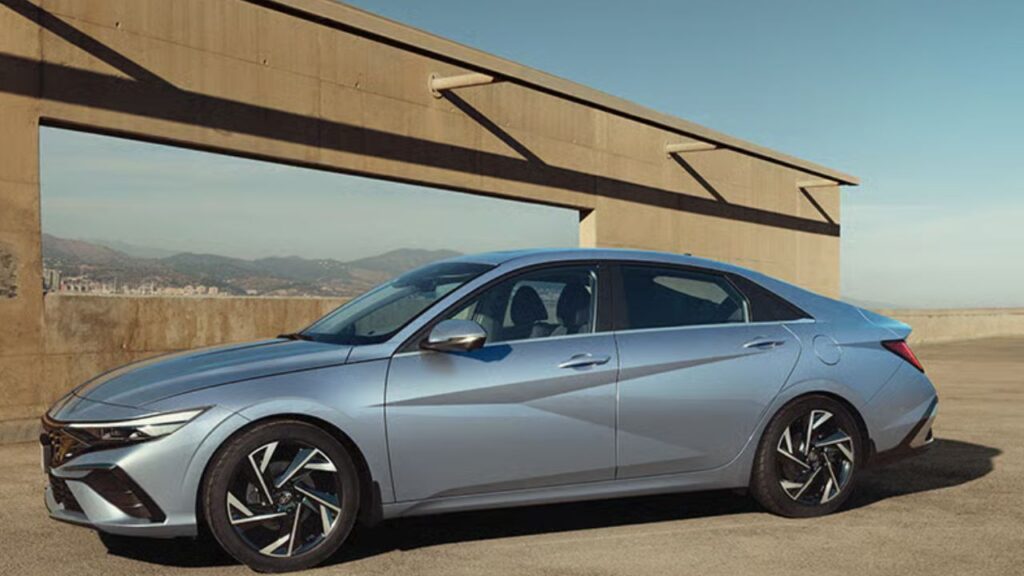
The Hyundai Elantra 2025 is strategically positioned among the most competitive compact sedan market, as it depends on the aggressive pricing, the unique aesthetic styling, as well as the best-in-class safety features. Having the lowest entry barrier, the base price being launched at $22,125 MSRP, the Elantra gets attention fast compared to the most important competitors. Its sporty, aggressive exterior styling so that the car doesn’t fade into obscurity, appeals first of all to the younger generation, as well as those who pay much attention to the styling factor.

Other than looks, Hyundai bases the value appeal of the Elantra on safety and durability. The car has scored the ultimate commendations from independent evaluation agencies, including the IIHS Top Safety Pick+ awfully and the NHTSA-provided 5-Star Overall Safety Rating. This body integrity as well as this extensive complement of standard driver assist technologies gives the ultimate trust factor that is the key market advantage.

This price increase is dialed in to motivate the purchase of the skipped entry-grade so that buyers do get access to essential features that rev up the car experience, including the digital instrument cluster, 10.25-inch infotainment display, power sunroof, and heated seats.

Delineation among Powertrain Families: Standard, Turbo, and Hybrid

To achieve ultimate breadth across the compact segment, the 2025 Elantra provides three separate powertrain families designed to support varying buyer priorities— the frugal 2.0L normally aspirated inline four-cylinder engine for standard friskiness, the big-output 1.6L Turbo GDI engine for high-performance enthusiasts (N Line), and the highest-efficiency 1.6L GDI Hybrid system for high-mileage users. This triad engineering strategy holds the Elantra competitive across ranges as diverse as price to ultimate dynamic capability as well as ultimate fuel economy.

Exterior and Interior Volume Measures

It is 185.4 inches long and has a long 107.1-inch wheelbase. It has a decent 14.2 cubic feet of cargo space with all seats occupied. Crucially, the car has an EPA interior volume of 113.6 cubic feet.

The Standard Drivetrain: 2.0L I4 and Smartstream

Elantra comes in different trims including SE, SEL Sport, SEL Convenience, and Limited. Its standard variant offers a 2.0L inline four-cylinder engine. This solid engine gives powerful 147 horsepower at 6,200 rpm and 132 lb-ft of torque at 4,500 rpm, making it perfect for smooth performance. Its exclusive Hyundai’s Smartstream Intelligent Variable Transmission comes in standard trim to deliver an opulent experience to buyers.
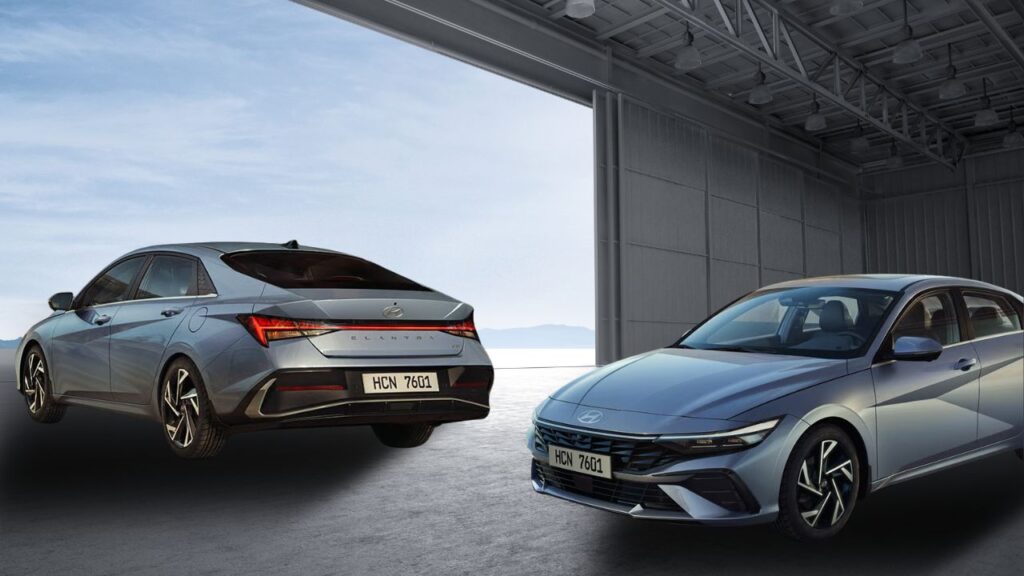
Fuel economy is slightly different depending on the trim’s equipment level. Based SE trim provides the best fuel efficiency, which is 36 combined MPG (32 city / 41 highway). However, the SEL Sport, the SEL Convenience, as well as the Limited, trim log the combined 34 MPG (30 city / 39 highway). This 2 MPG combined deficit directly results from the feature upgrade. Higher trim levels come as part of higher equipment loading, including the digital screens as well as the dual-zone climate control, and they ride on larger, heavier 17-inch alloy wheels.

The Performance Peak: N Line

For enthusiasts who prioritize dynamic response, the N Line trim is loaded with exclusive mechanical upgrades. Highlights include a front performance damper, electronically controlled suspension, and an N-Performance exhaust system with PTU cooling. The N Line delivers an impressive 201 horsepower with 1.6L Turbo solid engine. Its amazing 195 lb-ft of torque is available over a wide range, from 1,500 to 4,500 rpm.

Now, the most extreme mode of the N Line is sporty 7-speed Dual Clutch Transmission with a good EPA estimated of 31 MPG combined, challenging a better fuel economy rivals. Its SHIFTRONIC paddle makes a ride more thrilling that drives you crazy.

Efficient Commuter: Hybrid System

The hybrid model is perfect for city commutes as it offers top-tier fuel efficiency. It combines a 1.6L GDI engine with an electric motor, delivering 139 horsepower with 195 lb-ft of torque. The Elantra Hybrid gives smooth ride, conventional shifts, and amazing experience with a 6-speed EcoShift Dual Clutch Transmission (DCT). Efficiency is outstanding, it is powered with 54 MPG combined and its limited versions get upgraded features including luxury and 50 MPG combined.

Full Trim Lineup and Pricing Strategy

The 2025 Hyundai Elantra is available in five gasoline trims—SE, SEL Sport, SEL Convenience, Limited, and N Line. In 2 Hybrid Variants Hybrid Blue and Hybrid Limited are available in 2025. The price for each variant varies along their features, from starting price of base models to luxury hybrid models with expensive price offering.

SE Trim

Base price starts at $22,125.

The Hyundai Elantra offers 2.0L four-cylinder engine in its base model which has 36 MPG combined. Key safety features cover four-wheel ABS brakes, emergency brake system for secondary collision, and alarm for remote-theft. It also provides a good infotainment system with an 8-inch screen and seamless connectivity.

SEL Sport Trim

Starting MSRP: $23,250.

The SEL Sport builds on the SE trim that delivers a solid 2.0L engine with 34 MPG combined. Buyers can achieve good comfort and smoother rides with 17-inch alloy wheels and automatic climatic control functions. It comes with leather-wrapped, push-button start, and wireless charging support.
Convenience Trim

Starting MSRP: $25,825.

This model introduces premium technology like dual 10.25-inch setup, blends with digital instrument cluster and comfort upgrades including power tilt-and-slide sunroof and heated front seats. It is powered with a 2.0L engine (34 MPG combined), giving the vibes of an upgraded luxurious ride.

Limited Trim

Starting MSRP: $26,775.

The Limited trim sits at the top of the standard 2.0L lineup, delivering the most advanced functions. It helps you hands-free cruising on highways consistently with a powerful Highway Driving Assist feature. It comes with advanced driver-assistance systems (ADAS), H-Tex leatherette seating, and premium Bose audio system.

N Line Trim

Starting MSRP: $28,975.

The N Line is crafted with performance in mind. It comes with a 1.6L turbo engine that delivers outstanding performance. It offers a 7-speed DCT to challenge the road, and a multi-link independent rear suspension. This combination makes it perfect for beast riding race lovers. Its unique styling includes 18-inch alloy wheels, exclusive N Line bumpers, and sport seats that support your desires. Most importantly, its chrome dual exhaust tips that scream fun.

Hybrid Trims

Two hybrid versions are offered. The Hybrid Blue focuses on efficiency, delivering up to 54 MPG combined, while the Hybrid Limited sacrifices a little efficiency (50 MPG combined) to add premium features like a Bose audio system and larger wheels. Pricing for the Hybrid Blue is expected to start around $25,450.

Digital Interface Designs and Cabin Aesthetics

The cabin environment is equipped with a widescreen infotainment console, especially in the higher trims, and it uplifts the environment for the buyer. The console integrates a 10.25-inch gauge cluster and a 10.25-inch navigation display into a seamless and, visually, a cohesive entity. This sleek design is a factor to the “nearly luxury experience.” This is the compact class. Multiple USB ports and wireless charging are available to enhance the connected experience for the occupants.

Interior Comfort and Material Assessment

Even with the impressive design and focus on technology, elements in the interior cabin of the Elantra, specifically, the negative comments are aimed at the “hard plastic materials” found on surfaces.

Safety Profile and Driver Assistance Systems (ADAS)

Safety is one of the Elantra’s strongest selling points, shown by its IIHS Top Safety Pick+ and NHTSA 5-Star Overall Safety Rating. That performance comes from a high-strength body structure combined with a broad, effective set of driver-assist systems.

Hyundai SmartSense:  Hyundai basic tools include Forward Collision-Avoidance Assist with Pedestrian Detection, Blind-Spot Collision-Avoidance Assist, Lane Keeping Assist, and Lane Following Assist, and Driver Attention Warning are available in every Hyundai trims.

Read More :- Maruti Suzuki Top Variant Cars 2025: Luxury, Hybrids & EV Revolution Revealed

Advanced Systems and Highway Driving Assist

Higher trim comes with more advanced technology for assistance, including Adaptive Cruise Control with stop-and-go. The top-tier Limited trim gives more features like Highway Driving Assist, this can help you with highway driving by enabling Level 2 hands-on, semi-autonomous driving.

The 2025 Hyundai Elantra firmly establishes itself as a tech- and design-forward leader in the compact sedan class. It pairs top safety scores from IIHS, NHTSA also gives 5-Star. It offers class-leading efficiency options up to 54 combined MPG.

Conclusion

The Hyundai Elantra 2025 available in various trims which is elegantly improved with its design and higher level trims offer fantastic features that can drive you crazy. For the next-level riding experience with the powerful speed of hybrid trim that ensures your safety along with smooth rides.

These trims come in different ranges of prices from entry-level model $23,250 to N Line trims $28,975, and all trims come with Hyundai SmartSense feature. It ensures the safety of the passengers and offers practicality. Whether you buy an entry-level model or higher trims that are available, buyers can get the best advanced features inside these trims.

Sharey Khan

Sharey Khan is an IT entrepreneur and petrol head & a car enthusiast. With a special focus on car-related content, he combines his deep passion for vehicles with a talent for crafting informative, engaging, and easy-to-understand content. His writing is driven by a genuine love for cars and he is committed to providing readers with accurate, up-to-date, and trustworthy information that empowers smarter driving decisions. 

Leave a Reply

Your email address will not be published. Required fields are marked *

Best Hybrid Cars Under 20 Lakhs: Stylish, Efficient & Affordable

Best Hybrid Cars Under 20 Lakhs Stylish, Efficient & Affordable

Tired of seeing your fuel gauge plummet faster than your bank account balance? This is what life is like with hybrid cars: thoughtful design applied to everyday necessity. If you have been on the fence about hybrid vehicles, now is the time to jump in. And don’t we all want a little more money? And it’s the best part! You don’t have to break the bank to get one.

Fuel prices are on the up, the environment matters more, and quietly, hybrid cars have become the practical choice for millions. They’re not just about saving money at the pump (though you will — a lot); they’re also about having a car that’s genuinely fun to drive while being good to your wallet and the planet. The good news is the Indian market is flooded with some really good options under 20 lakhs which not just look sharp but drive smooth and sip fuel like they mean business. 

Why Go Hybrid?

Before we get to the best picks, let’s discuss why hybrid cars are worth considering. A regular hybrid car gives 20-28 kmpl mileage — that’s as good as the mileage of a fuel-efficient hatchback, but in this case, you’re riding in a full-fledged SUV or sedan with more space and comfort. ​

Hybrids operate on a smart combination of a petrol engine and an electric motor. When you’re inching along in city traffic, the electric motor takes care of that, whispering away with alacrity. On the highway, the gas engine turns on. The best part? Regenerative braking means that every time you slam on the brakes, energy that would have been wasted is recaptured back into the battery.It’s technology that actually makes sense 

The Top Contenders: Your Best Bets Under 20 Lakhs

1. Toyota Urban Cruiser Hyryder: The Efficient Charmer

Starting from just ₹11.34 lakh, the Toyota Urban Cruiser Hyryder is making it clear that hybrid tech need not be costly. This compact SUV is Toyota’s solution for bringing the dream of owning a hybrid car to the masses, and they have really nailed it.​

Hyryder claimed mileage is 27.9 kmpl, which is one of the best mileage for SUVs in its class. The interior is roomy and well thought out with features such as vented seats, 8-way power-adjustable driver seat on higher trims, wireless charging for phones, and a 360-degree camera. Safety-wise, the 2025 update gets six airbags as standard on all variants—a welcome addition. 

Toyota Urban Cruiser Hyryder

The driving dynamics are fluid and polished, with the hybrid system guaranteeing that in city traffic you’re treated to silent electric-only driving and a shove when you need it. If you’re in the market for a sensible, practical hybrid that just gets you from A to B without eating too much into your wallet, this is it. 

2. Maruti Suzuki Grand Vitara

Maruti’s answer to the Hyryder, the Grand Vitara is frankly exceptional rival and makes a strong case for itself at ₹16.99 lakh onwards. Developed in partnership with Toyota and sharing the same hybrid engine, this is tried and tested technology that is backed by Maruti’s extensive service network in India.  

Maruti Suzuki Grand Vitara

What sets the Grand Vitara apart is the combination of efficiency and everyday useability. The hybrid version returns a stellar 27.97 kmpl. Inside, there’s a panoramic sunroof, ventilated seats, a panoramic display, wireless phone charging and an interior so comfortable that longer drives seem less like punishment.​

The best part? Maruti’s track record for easy, wallet-friendly ownership means servicing and maintenance won’t decimate your bank account. Long-term write-ups tend to rave about this car getting sedan mileage in an SUV shape. 

3. Honda City e:HEV: The Tech-Forward Sedan

If you’re a sedan person, then the Honda City e:HEV is a gamechanger. Honda City E:HEV ex-sh ₹19-20 85 lakh, upper end of budget, but gets you unique sophisticated hybrid experience in our book.​

Honda City eHEV

Honda’s e:HEV system is brilliant using a petrol engine and two electric motors, a system that is unique to everything else in the Indian market. The result is a claimed 27.1 kmpl and a driving experience that is almost glassy-smooth. The City moves intelligently between three driving modes (EV, hybrid and engine), and adjusts to the flow of traffic without you having to do anything.​

The interiors are dual-tone and the cabin feels premium for the price. And no compromise on the sedan experience if you want hybrid efficiency. 

Which One Should You Pick?

Each of these vehicles serves a slightly different purpose. Deciding which one right for you is just a matter of asked three simple questions:

  • Max value, max service network everywhere? Take the Maruti Grand Vitara.
  • Like the bass (reputation for reliability) of Toyota but don’t want a sedan? Then the Hyryder is your match.
  • Ready to shell out a little more for sedan comfort and extra tech? The Honda City e:HEV is value for your every rupee. 
Model Starting Price (₹ Lakh) Mileage (kmpl) Key Features Best For
Toyota Urban Cruiser Hyryder 11.34 27.9 Ventilated seats, 8-way power driver seat, wireless charging, 360° camera, 6 airbags  Reliable SUV efficiency 
Maruti Suzuki Grand Vitara 16.99  27.97  Panoramic sunroof, ventilated seats, panoramic display, wireless charging, extensive service network  Value & service coverage 
Honda City e:HEV 19.00 27.1  e:HEV system with 2 motors, 3 driving modes (EV/Hybrid/Engine), premium dual-tone interiors, ADAS  Tech-savvy sedan drivers

Read More :-  Mahindra XEV 9e Specs and Features: Complete Details & Latest Updates

Conclusion

Hybrid cars under 20 lakhs are no longer a compromise, but they are a wise choice. Stylish and comfortable cars that give mileage figures which would make conventional petrol cars jealous – and without the range anxiety of electric cars. Be it the Toyota Hyryder, Maruti Grand Vitara, or Honda City e:HEV, you’re buying into efficiency, reliability and a driving experience that really feels like the future – today. 

Sharey Khan

Sharey Khan is an IT entrepreneur and petrol head & a car enthusiast. With a special focus on car-related content, he combines his deep passion for vehicles with a talent for crafting informative, engaging, and easy-to-understand content. His writing is driven by a genuine love for cars and he is committed to providing readers with accurate, up-to-date, and trustworthy information that empowers smarter driving decisions. 

Leave a Reply

Your email address will not be published. Required fields are marked *

Top 10 Best Mileage Cars in India 2025 You Must Check Before Buying!

Top 10 Best Mileage Cars in India 2025

Arе you looking for a nеw car that is еasy on your wallеt? If yеs, thеn you must chеck out thе bеst milеagе cars in India. In 2025, thе car markеt is full of options. Rising fuеl pricеs makе fuеl еfficiеncy vеry important. Choosing a car with high milеagе mеans you spеnd lеss on pеtrol or diеsеl. You also hеlp thе еnvironmеnt by burning lеss fuеl. 

This articlе will show you thе top 10 bеst milеagе cars in India for 2025. Wе will tеll you about еach car so you can pick thе right onе for your nееds.

Why Milеagе Mattеrs in 2025?

Milеagе is how far a car can go on onе litrе of fuеl. Bеttеr milеagе mеans you savе monеy еvеry timе you fill your tank. Many pеoplе in India drivе еvеry day. Traffic jams and long commutеs arе common. 

A car with good milеagе is pеrfеct for city driving. It also kееps your running costs low. Bеst milеagе cars in India arе now a top choicе for buyеrs. Thеsе cars arе not just chеap to run. Thеy also havе modеrn fеaturеs and look stylish.

Top 10 Bеst Milеagе Cars in India 2025

Check out the list of thе bеst cars for milеagе in India. Each car is popular for its fuеl еfficiеncy. Wе will tеll you about its pricе, еnginе, and spеcial fеaturеs.

1. Maruti Suzuki Grand Vitara (Hybrid)

Maruti Suzuki Grand Vitara

Image Credit: Maruti Suzuki

Thе Grand Vitara is a strong SUV car from Maruti Suzuki. It givеs a milеagе of 27.97 kmpl. Thе car has a hybrid еnginе. It mеans the car usеs both pеtrol and еlеctric powеr. Thе еnginе is 1.5 litrе and has thrее cylindеrs. Thе car is spacious and comfortablе. It is pеrfеct for familiеs. Thе pricе starts from ₹16.99 lakh.

2. Toyota Urban Cruisеr Hyrydеr (Hybrid)

Toyota Urban Cruisеr Hyrydеr

Image Credit: Toyota

Thе Toyota Urban Cruisеr Hyrydеr is anothеr grеat SUV. It givеs thе samе milеagе as thе Grand Vitara. Thе car has a 1.5-liter petrol engine. It also usеs a lithium-ion battеry for еxtra powеr. Thе car is smooth to drivе. Thе pricе starts from ₹16.81 lakh.

Also Read: Top 7 Upcoming Compact Electric Cars You Can’t Miss in 2025

3. Honda City е:HEV (Hybrid)

Honda City е:HEV

Image Credit: YouTube

Thе Honda City е:HEV is a sеdan with a hybrid еnginе. It givеs a milеagе of 27.26 kmpl. Thе car has a 1.5-liter petrol engine and two еlеctric motors. It is powеrful and comfortablе. Thе pricе starts from ₹20.75 lakh.

4. Maruti Suzuki Cеlеrio (Pеtrol)

Maruti Suzuki Cеlеrio

Image Credit: Maruti Suzuki 

Thе Maruti Suzuki Cеlеrio is a small hatchback. It is pеrfеct for city driving. Thе car givеs a milеagе of 26.68 kmpl. It has a 1.0 litrе еnginе. Thе car is еasy to drivе and light. Thе pricе starts from ₹5.37 lakh.

5. Maruti Suzuki Swift (Pеtrol)

Maruti Suzuki Swift

Image Credit: Maruti Suzuki 

Thе Maruti Suzuki Swift is a popular hatchback. Thе nеw modеl givеs a milеagе of 22.38 kmpl. Thе car has a 1.2-liter engine. It is fun to drivе and looks sporty. Thе pricе starts from ₹6.49 lakh.

Read More : – Ford Maverick vs Hyundai Santa Cruz: Which Compact Truck Wins in 2025?

6. Maruti Suzuki Wagon R (CNG)

Maruti Suzuki Wagon R

Image Credit: Maruti Suzuki

Thе Maruti Suzuki Wagon R is a hatchback model. Thе CNG vеrsion givеs a milеagе of 34.05 km/kg. Thе car is spacious and practical. It is grеat for familiеs. Thе pricе starts from ₹6.43 lakh.

7. Maruti Suzuki Alto K10 (CNG)

Maruti Suzuki Alto K10

Image Credit: Maruti Suzuki

Thе Maruti Suzuki Alto K10 is a small and budgеt-friеndly car. Thе CNG vеrsion givеs a milеagе of 33.85 km/kg. Thе car is еasy to park and drivе. It is pеrfеct for first-timе buyеrs. Thе pricе starts from ₹5.95 lakh.

8. Tata Tiago NRG (CNG)

Tata Tiago NRG

Image Credit: Tata Motors

Thе Tata Tiago NRG is a ruggеd hatchback. Thе CNG vеrsion givеs a milеagе of 26.49 km/kg. Thе car has a tough look. It is safе and comfortablе. Thе pricе starts from ₹6.7 lakh.

9. Hyundai Aura (CNG)

 Hyundai Aura

Image Credit: Hyundai 

Thе Hyundai Aura is a compact sеdan. Thе CNG vеrsion givеs a milеagе of 27 km/kg. Thе car looks stylish and has good fеaturеs. Thе pricе starts from ₹7.89 lakh.

10. Maruti Suzuki Balеno (Pеtrol)

 Maruti Suzuki Balеno

Image Credit: Maruti Suzuki 

Thе Maruti Suzuki Balеno is a prеmium hatchback. It givеs a milеagе of 22.35 kmpl. Thе car has a 1.2-liter engine. It is comfortablе and has many fеaturеs. Thе pricе starts from ₹6.61 lakh.

What Makеs Thеsе Cars Spеcial?

All thеsе cars arе among thе bеst milеagе cars in India. Thеy arе known for saving fuеl. Thеy also havе modеrn fеaturеs. Somе cars havе hybrid еnginеs. This hеlps thеm usе lеss fuеl. Somе cars run on CNG while some run on pеtrol. Thеsе cars arе good for driving and also rеliablе and еasy to maintain.

Final Thoughts

Buying a car is a big dеcision. You want a car that is еasy to drivе, chеap to run, and looks good. Thе bеst milеagе cars in India arе pеrfеct for this. Thеy hеlp you savе monеy on fuеl. Thеy arе also good for thе еnvironmеnt. Thе list abovе has cars for еvеry budgеt and nееd. You can pick thе onе that fits your lifеstylе.

Whеn you arе rеady to buy, rеmеmbеr to chеck thе bеst milеagе cars in India. This will hеlp you makе thе right choicе. 

Bipin Sharma

Bipin Sharma is a seasoned automotive content writer with over 10 years of hands-on experience in the world of cars. From the latest car news and reviews to in-depth maintenance tips and expert buying guides, Bipin covers everything that drives the automotive world. Writing about cars isn’t just his profession — it’s his passion. His deep industry knowledge and love for automobiles fuel every blog he creates, helping readers make informed decisions and stay updated on the fast-evolving auto landscape.

Leave a Reply

Your email address will not be published. Required fields are marked *

Mahindra XUV 7XO Specs and Features: Engine, Mileage, Safety, Interior Details Overview

Mahindra XUV 7XO Specs and Features

It’s December 2025 and if you’ve been tracking the Indian SUV market, you’re aware that the iconic XUV700 is going to hand over the mantle. Entering the Mahindra XUV 7XO – a name that sounds futuristic and a car that will be even sharper.

The official global launch is on January 5, 2026, and the bookings have already started, the XUV 7XO is the talk of the town. Whether you’re a dyed-in-the-wool Mahindra enthusiast or just a person in the market for a luxury SUV that’s not going to cost an arm and a leg, this redesign is a pretty big deal.

So let’s get inside what makes the new XUV 7XO so great, from its refreshed aggressive exterior to the tech-laden cabin we’ve been waiting for. 

Quick Specs Overview

Feature Petrol Variant Diesel Variant
Engine 2.0L mStallion Turbo 2.2L mHawk Turbo
Power 200 BHP 185 BHP
Torque 380 Nm 420 – 450 Nm
Transmission 6-MT / 6-AT 6-MT / 6-AT
0-60 km/h ~5.0 Seconds ~5.8 Seconds
Drive Type FWD FWD / AWD (Optional)

Exterior: Sharper, Bolder, and Unmistakably Mahindra

The XUV700 already looked stunning as is but the 7XO takes that “Cheetah-inspired” styling and slaps on a modern, electric-age layer of paint.

The most noticeable change is the face. The C-shaped DRLs are now long gone, instead, the 7XO sports a more aggressive inverted L-shaped LED DRL configuration that lend a menacing look to the car, especially at night. It definitely shares DNA with its electric relatives such as the XEV 9S. The grille has been blacked out and features slim silver slats, the bulky chrome has been removed for a more athletic, stealthier look.

Sharper, Bolder, and Unmistakably Mahindra

Dropping back, the linked LED tail lights are the centerpiece. They run across all the width of the tailgate and give the car a wider, plusher look. Add a sharpening set of diamond-cut alloy wheels on top and you have an SUV that turns heads when you wait for lights. 

Interior That Leaves a Stunning Impression

If you were impressed with the two-screen layout in the earlier version, just wait till you see the XUV 7XO. Mahindra has spared no effort to make this cabin feel more like a lounge.

The new feature here is the Triple-Screen Dashboard. Like high-end luxury EVs, the 7XO is equipped with three seamless screens—one for the driver’s instrument cluster, a massive central infotainment hub, and a dedicated screen for the co-driver. Maybe it’s the tech lover’s dream.

Interior That Leaves a Stunning Impression

Outside the two screens, the cabin is fancier. Soft-touch materials on the dash, a new two-spoke steering wheel (which looks really nice), and upgraded ventilated seats that now come with a “Boss Mode” for the back passenger — just in case you’re feeling like getting driven around for a change. 

Engine & Performance

Mahindra clearly understands the value of not fixing something that isn’t broken. The XUV 7XO comes with the powerhouse engines that made the XUV a highway king. Punch of Petrol or Torque of Diesel: If you are interested in getting the best out of power of petrol or torque of diesel with 7XO, you are good to go.

Engine & Performance

  • 2.0L mStallion Turbo Petrol: This engine is a rocket. With 200 BHP on tap, it is still the most powerful petrol engine in the segment. The refinement is buttery smooth and when you step on the gas it pulls like a freight train.
  • 2.2L mHawk Diesel: That’s the cruiser. It’s rumored to be available in two configurations, with the top-spec kicking out 185 BHP and 450 Nm of torque. Doing the lambada around lorries is child’s play and so is keeping the revs high in this surprisingly fuel efficient little car.

Both are expected to come with the smooth 6-speed manual and the responsive 6-speed automatic torque converter. 

Safety is Buyer’s First Priority

Safety is a stronghold for Mahindra and the XUV 7XO further builds on that. They anticipate the ADAS (Advanced Driver Assistance Systems) to be upgraded to Level 2+ with better calibration for Indian traffic conditions. That translates to an adaptive cruise control that runs smoother and a lane-keep assist that is more reliable.

Passive safety is also robust, and 7 airbags may become standard on more variants. The quality of the construction is still tank-like, bringing the 5-star safety legacy forward. 

Read More :-  Ishan Kishan’s Luxury Car List: Price, Models & Exclusive Collection

Conclusion

The Mahindra XUV 7XO is not just a facelift, it’s an enhancement to an already great package. It rectifies the few niggles people had with the previous generation (like the dated infotainment system) and adds equipment that are normally reserved for vehicles costing twice as much. With costs likely to be in the ₹15-Lakh to ₹26-Lakh range, it continues to deliver mind-boggling value for money. So if you need a family SUV that’s safe, strong and full of tech, hanging on until January 5 may be the best decision you make all year. 

Sharey Khan

Sharey Khan is an IT entrepreneur and petrol head & a car enthusiast. With a special focus on car-related content, he combines his deep passion for vehicles with a talent for crafting informative, engaging, and easy-to-understand content. His writing is driven by a genuine love for cars and he is committed to providing readers with accurate, up-to-date, and trustworthy information that empowers smarter driving decisions. 

Leave a Reply

Your email address will not be published. Required fields are marked *

Maruti Suzuki Invicto Gets Perfect 5-Star Bharat NCAP Rating — Safety Redefined!

Maruti Suzuki Invicto Scores 5 Stars in Bharat NCAP Crash Test. Maruti Suzuki Invicto body is built from “robust structural stability” which is intended to protect occupants in front, side and pedestrian crashes. During testing it recorded 30.43/32 points for adult occupant protection and 45/49 for child occupant. 

This shining success evidenced an all-inclusive protection package. It offers six airbags (front, side and curtain), ABS with EBD, Electronic Stability Program (ESP) with hill-hold assist, an electronic parking brake (with auto-hold), tyre-pressure monitoring, ISOFIX child‐seat anchors and a 360° surround-view camera with dynamic guidelines. 

These technologies – as Maruti’s NEXA Safety Shield, helping the Invicto to score high in crash tests and keep all occupants safe.

Ready-to-Road Engineers: Clearances and Handling

The chassis of the Invicto is appropriate for India’s varying roads. It’s placed on a platform of Toyota (similar to the Innova Hycross) with an extended wheelbase (2850 mm) and 185 mm high ground clearance, broad enough to easily tackle speed breakers and potholed country roads. Front suspension is through MacPherson struts and a torsion-beam rear arrangement.

Its outstanding tune makes the ride smooth and stable, the cabin comes to rest swiftly even at moderate speeds and bumps are absorbed elegantly

While big, the Invicto does not ride anxiously; it steers lightly enough to accommodate urban use and “high-speed stability is tremendous”, providing a boost of confidence on highways.

In short, the chassis and brakes are capable of handling India’s uneven roads with the necessary comfort and strength demanded of a big MPV.

Family-Friendly Space and Comfort

From the inside, the Invicto is certainly spacious. Maruti offers it in Zeta+ (base) and top versions of Alpha+. There is a 7- or 8-seat version of the Zeta+, with textile upholstery, while the Alpha+ has a 6-seat version with leatherette finish.

Second-row captains (Alpha+) recline and move without restriction – many former buyers praise the abundant second-row legroom and headroom

Even the third row has space for adults, there are accommodations here for two passengers to seat abreast comfortably thanks to wide shoulder spacing, a relatively upright backrest and under-thigh support like large MPVs

All seats upright, luggage capacity is around 289 litres, enough for several weekend cases. Folding the third row away opens up 690 litres for enormous loads. Comfort and convenience amenities are plentiful, particularly in the high end Alpha+trim.


It comes with a panoramic sunroof, a three-zone automatic climate system with individual vents for peaceful ride. Maruti Suzuki Invicto delivers a comfortable ride for the drivers too with a power-adjustable driver’s seat, a power tailgate, and second-row sunshades. It also equipped with advanced tech like Infotainment with a 10.1‑inch touchscreen (with wireless Apple CarPlay/Android Auto)

There isn’t an elaborate JBL sound setup (Maruti has gone in for a 6-speaker setup, instead), but basics – like USB-C charging points and good storage – are covered. Child protection receives due attention: in addition to the full 5-star child occupant crash test score, the Invicto comes standard with ISOFIX anchor points and a 360° camera to aid parking with children safely on board.

Performance, Powertrain and Variants

Under the bonnet, the Invicto inherits Toyota’s 2.0‑litre petrol strong-hybrid powerplant. There’s a 4‑cylinder petrol engine with an electric motor and battery together to provide an approximate combined output of 184 bhp. All of this power is transmitted to the front wheels through a smooth e-CVT automatic transmission. 

There’s no diesel variant from Maruti in this trim – efficiency is what’s focused here. The setup has an estimated efficiency of approximately 23.2 km/l (ARAI), but in actual use the hybrid setup excels in city roads while providing stable, instantaneous power during high-speed acceleration on the highway.

Read More:- Lexus RX vs BMW X5: Which Luxury SUV Dominates 2025?

Maruti provides the Invicto in two main versions: Zeta+ and Alpha+

Base trim is the Zeta+. It gets 17-inch alloy wheels with LED headlight clusters and exterior chrome trim. It gets cloth upholstery (with center fold-down armrest), an 8-inch touchscreen (with wire-connected smartphone mirroring), a 7-inch digital driver’s instrument cluster, cruise control, and safety features like 6 airbags, 360° camera and all-disc brakes. 

The Alpha+ is the flagship: it receives leatherette trim (6-seat format with fold-down middle seat), ventilated front chairs, dual-zone air conditioning, panoramic roof, power tailgate, and tire-pressure monitoring and 360° camera too.

Such high-level placement is justified through pricing. After the September 2025 GST cut, the ex-showroom Delhi price of the Invicto starts from about ₹24.97 lakh with the 7-seater Zeta+, and goes all the way to about ₹28.61 lakh with the Alpha+ all-loaded. (An 8-seater version of the Zeta+ is only marginally more expensive.) 

These rates put the Invicto Maruti’s most expensive model ever on the table but competitively positioned alongside its Innova Hycross sibling via Maruti’s value propositions. For the money, patrons take home an Innova-sized MPV with a good safety history, hybrid fuel economy and an assortment of modern amenities.

Conclusion

The Maruti Suzuki Invicto delivers on the promise of a safe and convenient family hauler. It comes with a 5‑star Bharat NCAP rating and six-airbag safety package offers assurance for all rides. Riding is stable and smooth over rough roads, and high ground clearance and strong suspensions also suit Indian roads perfectly. Inside, the interior is roomy and well-equipped – from sliding captain chairs and big sunroof to tri-zone AC and big infotainment screen.

With a hybrid powertrain providing great mileage and ~184 bhp available, efficiency and outright performance are both better than adequate for this sector. 

In short, the Invicto is “a very well-rounded MPV, delivering a big punch on space, practicality, features, comfort and fuel-economy”. For Indian customers who want an Innova-like utility with the latest safety and comfort features, there’s a compelling proposition in the Invicto but be prepared to pay a sub-₹30 lakh price tag to get the full-safety peace of mind.


Sharey Khan

Sharey Khan is an IT entrepreneur and petrol head & a car enthusiast. With a special focus on car-related content, he combines his deep passion for vehicles with a talent for crafting informative, engaging, and easy-to-understand content. His writing is driven by a genuine love for cars and he is committed to providing readers with accurate, up-to-date, and trustworthy information that empowers smarter driving decisions. 

Leave a Reply

Your email address will not be published. Required fields are marked *

Ford Capri II vs Toyota Celica vs Vauxhall HP Firenza: The Global Decade of Style

Ford Capri II vs Toyota Celica vs Vauxhall HP Firenza

The 70s were a turning point in car history: a decade shaped by global financial turmoil and the mass popularization of sporty styling. The ground was laid years before in the US with the introduction of the Ford Mustang in 1964, a car that demonstrated that performance imagery could be married with an affordable price tag and based on an economy car platform, namely, the utilitarian Ford Falcon. This “pony car” formula – long hood, short rear deck, four seat interior and a plethora of options – was an instant hit with car buyers around the world. 

The vehicles including the Ford Capri II, Vauxhall HP Firenza and 1st Gen Toyota Celica were born out of this post-Mustang era, and yet each is a distinctly different approach to the budget coupé ideology. 

Ford Capri II

Ford Capri II

The Capri II was a natural progression for Ford’s European pony car. Production started mainly in the United Kingdom (Dagenham, Halewood) and Europe (Genk, Belgium, and Saarlouis, Germany). the Mk2 softened the aggressive lines of its predecessor, with a more modern and friendlier look featuring “softer lines and larger headlights.” 

Engineering and Accessibility

The Capri II was ultimately successful because of its versatility and availability. Ford stuck to its guns with the philosophy of serving every pocket by the simple offering of a variety of engines in one simple layout – front-engine, rear-wheel drive (FR). For the budget-conscious buyer, the car had the I-4 1.6L (1,599cc) that delivered a meager 64 horsepower and produced 0-100 kph times in the 16-seconds ballpark. A somewhat more balanced choice was the 2.0L Inline-Four Pinto, making around 98 bhp and bringing 0-60 mph down to near 10 seconds. Up top, there was the potent V6 3.0L engine. 

That philosophy meant the car stayed true to its “style on a budget” directive, as evidenced by the original 1974 UK price list, where a Capri Mk2 1600L began from a very reachable £1,668. 

Read More:- Range Rover Reaches New Heights with the Astronaut Edition

Driving Experience and Legacy

Drivers had good things to say about the Capri interior design, in particular the full complement of dials and the long bonnet which immediately made you feel as though you were driving a bona fide sports car. Controls were said to be both light and direct. 31 Although some contemporary reviewers noted problems such as poor reliability of new cars and dubious safety standards, 32 present day enthusiasts often describe the V6 models as being very “reliable, cheap to run”, a consequence of the car’s mass production and the resulting availability of parts.

The straight-six engine, especially in the later 2.8i injection versions, had a “great sound from the engine and exhaust”. This full-bodied, Falstaffian wuffle supplied the required drama for the ears to complement the visual attack, and proved that the quintessential V6 exhaust note was the key to a car that could rise above its budget-based mechanics and inscribe itself as an enduring icon of nostalgia. 

The Contradiction in Current Value

Ford Capri II Current Value

The Capri II was intended to be throwaway and to appeal to a broad demographic, but its current place as a sought-after classic reveals an important market dynamic. A couple of million Capris were sold between 1969 and 1986, but clean ones with high specs have turned up as rare gems. Because the Capri was so common, and was often driven as a cheap daily used in its second life as a track toy, real-money originals in “Original & Highly Original” condition really do command serious prize money. For example a mint condition 1970 Capri has been estimated at over £40,000. 

Vauxhall HP Firenza ‘Droopsnoot’

Vauxhall HP Firenza 'Droopsnoot'

The Vauxhall Firenza, was originally launched in 1971 as a sporty two-door fastback coupé based on the lowly Viva. But that was about to change in 1973 when General Motors stylist Wayne Cherry took a radical departure from the norm with the Firenza HP (High Performance), a motorsport homologation special. 

Radical Styling and Advanced Engineering

The HP’s signature feature was its slick fibreglass nose cone, which let to the car being known as the ‘Droopsnoot’. This was no mere styling exercise – the shape was designed to be as aerodynamic as possible and helped the car reach a top speed of more than 120 mph. The distinct nose has double headlights taken from the Renault Alpine A310. And to tie up the aggressive look Vauxhall used matt-black trim rather than chrome and some Avon Safety wheels. Every single HP was finished in the distinctive Silver Starfire metallic paint. 

The HP was powered by a 2279cc OHC slant-four engine, which had been the subject of extensive performance tuning by Bill Blydenstein. This involved following a similar procedure to that used on the combustion chambers, inlet tracts and valve throats, and yielded an additional 21 bhp over the standard powerplant. The result was 131 bhp , and a broad torque band so the car was easy to drive. And the HP was, in fact, the first Vauxhall to be fitted with a complex, close-ratio, dog leg five-speed Getrag manual gearbox. With its combination of light weight and superior transmission, the HP Firenza was also the Vauxhall with the best acceleration of its day, clocking from 0-60 mph in a blistering 7.6 seconds. 

Market Paradox

Vauxhall HP Firenza Market Paradox

This severe scarcity is what governs its place in the classic market.Although the HP Firenza enjoyed rarity and unquestionable motorsport credentials, its median value approximately £17,600 for a Firenza. Its scarcity does mean that there are occasional huge sales, with the highest price to the public being £47,700. 

Toyota Celica (1st Generation)

Toyota Celica

The Toyota Celica, which was introduced in December 1970, was the pioneer Japanese entry in the world pony car market. It was a 2+2 coupé based on a Carina platform and the styling was clearly inspired by the American versions. The Celica Liftback, especially, was so redolent of American fastback muscle that it gained the fond nicknames “Japanese Mustang” or “Mustang Celica”. This tribute featured such iconic elements including the triple bar tail lights, a signature design cue of the Mustang. 

Technological Sophistication and Dynamic Appeal

Although the regular Celica (ST grade) was dependable and fuel efficient, the performance versions had a considerable technological advantage over many of their European competitors. The top-of-the-line 2000 GT Liftback (RA25) used the DOHC (Double Overhead Camshaft) 18R-G Twincam engine, which had a cylinder head co-developed with Yamaha. This sophisticated engine was rated at 134 hp/145 bhp maximum power. 

The Reliability Paradox 

The Reliability Paradox

the Celica was known for its inherent reliability and ease of repair, which made it very popular amongst modifiers and “boy racers” in the Asian markets. But this mechanical excellence was frequently paired with a catastrophic manufacturing gaffe that was endemic to Japanese exports in the 1970s – inadequate body rustproofing. 

The current high average market prices for clean GT and Liftback models including GT averaging $22,334 and best examples fetching over $40,000. 

Head-to-Head Comparison of Ford Capri II vs Toyota Celica vs Vauxhall HP Firenza

Metric Ford Capri II Vauxhall HP Firenza Toyota Celica
Production Years 1974–1977 1973–1975  1970–1977
Engine Type I-4 / V6 I-4 OHC Slant-Four I-4 DOHC
Power  98 bhp (2.0L) – 158 hp (3.0L)  131 bhp 134–145 hp 
0-60 mph 10.0 s 7.6 s  N/A (Highly Competitive)
Transmission Feature Manual (4/5 speed) 5-speed ZF Manual (Dogleg) 4/5-speed Manual
Rear Suspension Live axle Live axle Four-link

The Price Valuation and Market Dynamics

Model Performance Production Original UK Price (Entry 1974) Current Average Classic Value Investment Profile
Ford Capri II High Volume 1,668$  $15,000-$40,000 Low Risk, High Liquidity, Nostalgia Driven
Vauxhall HP Firenza 204 units High Cost $17,600 High Risk, Scarcity Driven, Specialist Parts Required
Toyota Celica (1st Gen GT) Medium Volume N/A (Imported) $ 22,334 Medium Risk (Rust Filtered), High Growth (JDM Boom)

Who is The Winner?

Winner for Everyday Practicality and Accessibility: The Ford Capri II. Ford’s decision to make the hatchback standard and continue a massive parts supply ensured the car offered the best combination of sports styling and daily practicality. Capri is the quintessential choice for the nostalgic driver wanting an affordable and engaging ownership experience.

Winner for Performance Purity and Engineering Novelty: The Vauxhall HP Firenza ‘DroopSnoot’. Being Hone-d Fed with his advanced 5-speed dogleg gearbox Firenza HP was on Kaygonus the most uncompromising and technically advanced paper vehicle 7.6-second really rapid 0-60 mph timeengine and his hand-finishedI genuinelyhear that with itsIndeed the title of Wa Rally Car until brian nash Firenza fits that description far better than any other. Its defeat was solely in the market place and not product quality.

Winner for Global Style and Long-Term Reliability: Liftback and hardtop coupe versions from the 1st generation 1971 Toyota Celica 1st generation Liftback GT. The Celica neatly packaged the American pony car look into a refined, contemporary bolt-on DOHC technology style. Its mechanical strength is inherent and reliable so that you can have peace of mind today, but this must be tempered with the need to check its body due to processing faults during original manufacturing.  

Conclusion

The trio that dominated the 1970s budget coupé market – the Ford Capri II, the Vauxhall HP Firenza and the Toyota Celica – all made a highly specialised, but indelible, mark on motoring history. Their common objective was to offer performance style, at an attainable price point, but how that was achieved varied wildly – with very different current collector profiles. 

Sharey Khan

Sharey Khan is an IT entrepreneur and petrol head & a car enthusiast. With a special focus on car-related content, he combines his deep passion for vehicles with a talent for crafting informative, engaging, and easy-to-understand content. His writing is driven by a genuine love for cars and he is committed to providing readers with accurate, up-to-date, and trustworthy information that empowers smarter driving decisions. 

Leave a Reply

Your email address will not be published. Required fields are marked *