
0

Maruti Suzuki Top Variant Cars 2025: Luxury, Hybrids & EV Revolution Revealed

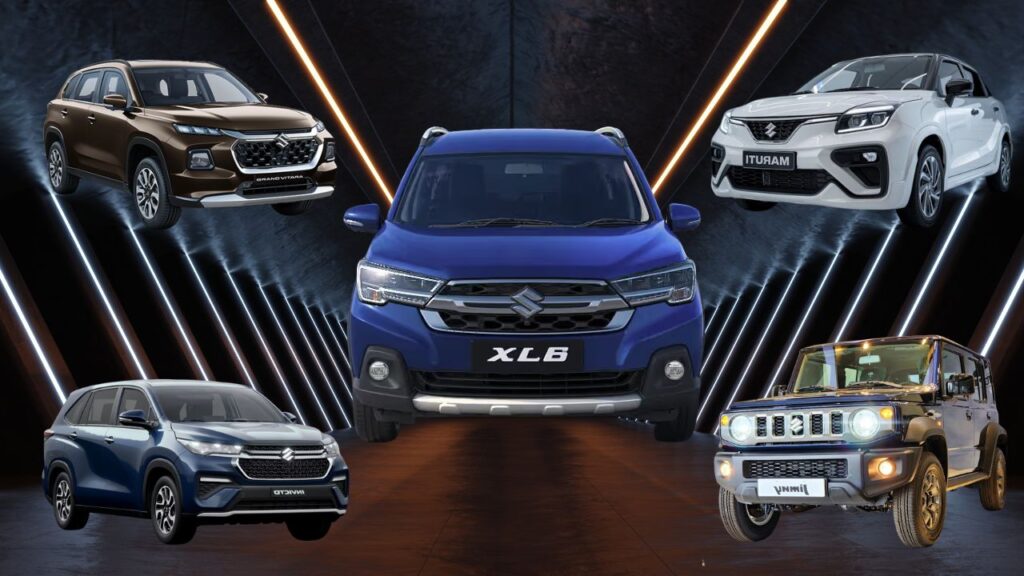
Maruti Suzuki is one of the best brands for its impressive lineup of premium variants across different segments. From the flagship Invicto Alpha+ 7S MPV at ₹29.22 lakh all the way to the high-feature hatchbacks and subcompact SUVs. The brand has set its position in the automotive market in 2025 after the GST price cuts on its successful models. With offering high-end features and strong body build segments, it takes the company’s achievement to the next-level. 

Premium Flagship Models

Maruti Invicto Alpha+ 7S is the priciest from the lineup costing ₹29.22 lakh. This luxury MPV comes with a 2.0L hybrid petrol engine developing 186.2 PS power and offers best-in-class fuel efficiency of 23.24 kmpl. Some of the top features are panoramic sunroof, ventilated front seats, 360° camera system, powered tailgate, 8-way power-adjustable driver seat with memory function, and SmartPlay Magnum+ 25.65 cm touchscreen.
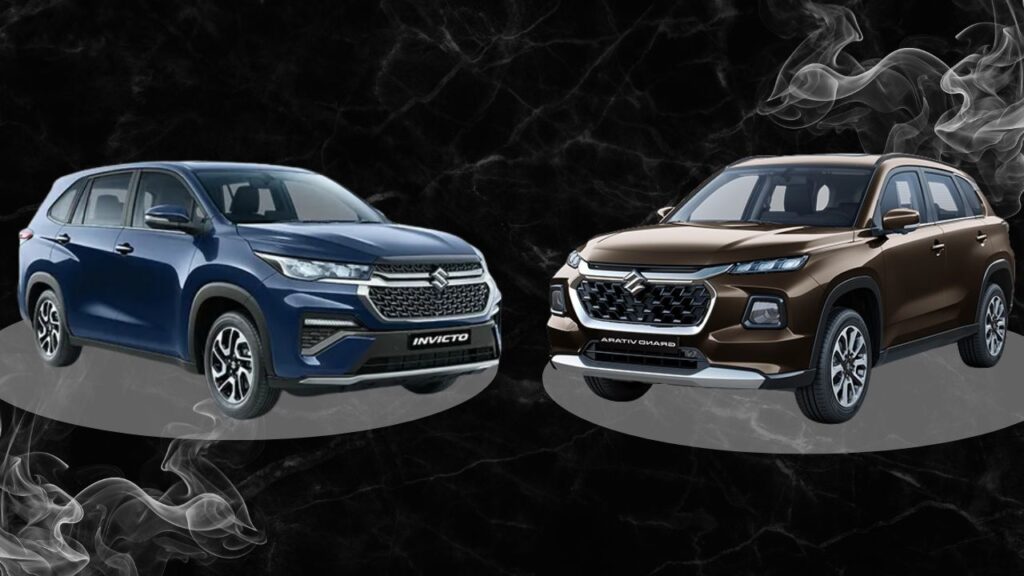
Maruti Grand Vitara Alpha+ is the top-of-the-line SUV variant with a price of ₹19.72 lakh. This variant gets Maruti’s able strong hybrid tech with a 1.5L engine churning out 102 PS and great fuel efficiency of 27.97 kmpl. Some of the interesting features include AWD, panoramic sunroof, Level-2 ADAS, 360-degree camera, and ventilated seats.

Game-Changing New Launch

Maruti Victoris is a curious addition to the Arena lineup, priced in the vicinity of ₹15.50 lakh. This is the flagship Arena SUV and brings with it some firsts to the sector such as Level-2 ADAS (the first ever from Maruti’s stable), bottom-mounted CNG tank, and hybrid powertrain choices. The Victoris has achieved a stellar 5-star Bharat NCAP safety rating.

Off-Road Specialist

Maruti Jimny Alpha AT fulfills adventure enthusiasts’ needs at ₹14.45 lakh. This compact off-road SUV has proper 4WD capability with low ratio gear transmission, 210mm of ground clearance, and 103 PS power from the 1.5L petrol engine.
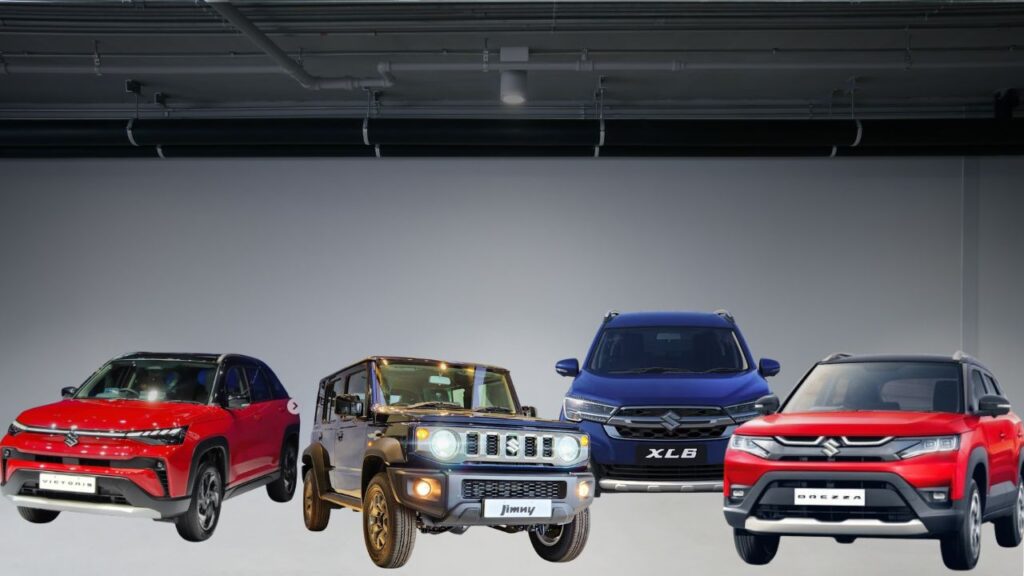
Unique features include headlight cleaning with washer, 9-inch infotainment with wireless charging, and solid off-road engineering.

Family-Oriented Premium MPVs

Maruti XL6 Alpha+ AT targets high-end family buyers at ₹14.48 lakh. The 6-seat MPV offers second-row captain chairs, front ventilation seats, connected car tech, and 4 airbags as standard. The vehicle achieves 20.27 kmpl efficiency with its 1.5L petrol powerplant developing 103 PS power.

Read More:- Maruti Suzuki Invicto Gets Perfect 5-Star Bharat NCAP Rating — Safety Redefined!

Best-Selling Performers

Among all current bestsellers, the Maruti Brezza ZXI+ AT has been a success with 13,620 unit sales in August 2025. At a price of ₹13.98 lakh, it has 360-degree camera, 6 airbags as standard, HUD display, and all-round safety features.

Maruti Ertiga ZXI+ AT topped the charts in August 2025 with 18,445 unit sales. This 7-seater family MPV is all about functionality with high-end features, so it’s the best-seller in India during the month.

Upcoming Electric Revolution

Maruti is all set to take a step into the EV domain with the e Vitara, set to arrive in December 2025. The battery EV SUV will have two battery sizes – 49 kWh and 61 kWh – with more than 500 km drive range.
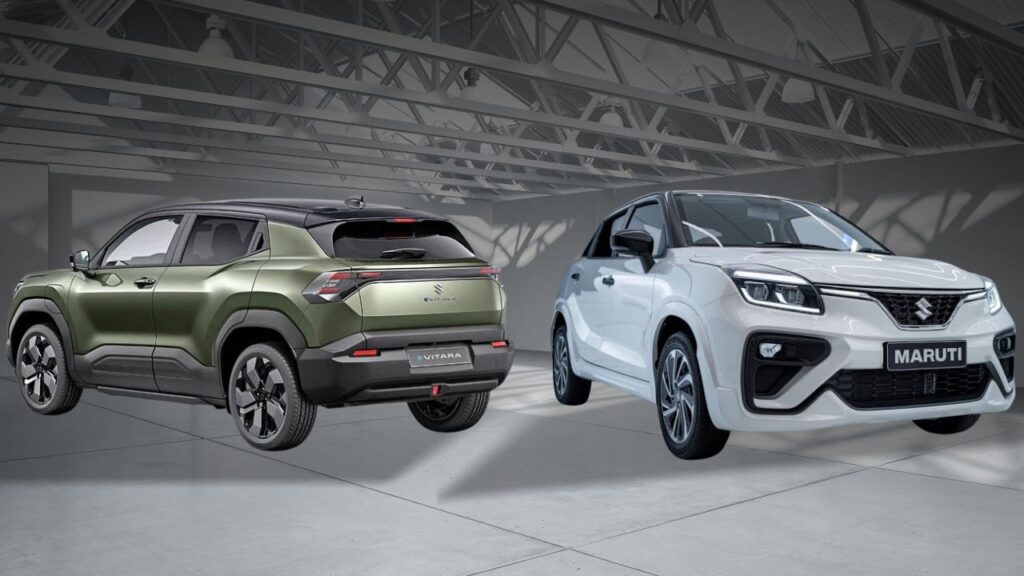
Other unique characteristics include Level-2 ADAS, standard 7 airbags, built-in information display system, and an all-inclusive ‘e for me’ charging infrastructure.

Technology and Safety Leadership

Maruti’s best variants in 2025 exemplify excellent technical evolution. The 2025 Baleno also comes with standard 6 airbags across all variants, better protection features with ESP with hill-hold assist, and new connectivity features. The new car has maintained high-profile looks but with new safety norms.

Market Dominance Statistics

Maruti Suzuki registered exceptional marketplace dominance during the month of August 2025, wholesaling 1,31,278 automobiles and occupying 8 out of 10 spots in the bestseller ranking. The portfolio of the brand ranges from the budget-friendly Alto K10 costing ₹4.23 lakh to the luxury vehicle Invicto costing ₹29.22 lakh, hence covering the entire gamut of the marketplace.

Overall data here shows Maruti Suzuki’s strategic alignment of all price segments with leadership variants with premium facilities, high-level safety features, and best-in-class fuel efficiency continuing to drive the brand’s leadership status in 2025.

Conclusion

Maruti Suzuki Top Variant Cars in 2025 marks its position at the top in best cars. These cars not only have excellent design but build on high-performance engine, powerful powertrain, and beautiful interior to give you premium rides on every road. These marvellous designs are ensuring enthusiastic buyers with trim variants and new models. Its strong body provides safety with a high score rating, making it best for families.

Sharey Khan

Sharey Khan is an IT entrepreneur and petrol head & a car enthusiast. With a special focus on car-related content, he combines his deep passion for vehicles with a talent for crafting informative, engaging, and easy-to-understand content. His writing is driven by a genuine love for cars and he is committed to providing readers with accurate, up-to-date, and trustworthy information that empowers smarter driving decisions. 

Leave a Reply

Your email address will not be published. Required fields are marked *

Nissan Cars Launching Two Titans Together in India: Nissan Gravity MPV and Tekton SUV

Nissan Gravity MPV and Tekton SUV

If you have been waiting for Nissan to do something more substantial in India, get ready. The Japanese car maker is set to launch not one but two all new cars in two months – and believe me, these are cars that will make heads turn and take on some of the most popular cars on the Indian roads today. It’s the Nissan Gravity MPV and the Nissan Tekton SUV and honestly, these launches may just be what Indian families and SUV lovers have been waiting for.

Nissan’s Big Comeback Plan for the Indian Market

First up is the Nissan Gravite, which arrives January 2026. Nissan’s take on the family-car chat is genuinely useful. Imagine the middle class Indian family on the hunt for a seven seater, and who doesn’t send you into bankruptcy. 

Gravity MPV — Affordable 7-Seater That Finally Makes Sense

The seven-seater Gravite is available from around ₹6 lakh, making it one of the lowest-priced automatic seven-seaters in the market. That’s pretty impressive, especially since the MPV segment always seems to be a squeeze for buyers on a budget. Based on the proven CMF-A architecture that it shares with the Renault Triber, the Gravite has no intentions of breaking the mould—and that’s quite alright.

Although Nissan has applied a fresh Japanese design language, it’s essentially taken an old, dependable platform. The bonnet is scooped, adding character, and the front is more assertive, featuring Nissan’s V-Motion grille. The flanks display slender, toned shapes that make this small the look of the the more premium surprisingly the tags looks. The rear is? Sharp and clean, with C-shaped styling cues that tie the whole design together.

Engine & Transmission Options

Gravite gets the familiar BE powertrain, Under its hood, the Gravite will be powered by the familiar 1.0-litre three-cylinder petrol engine producing 72 hp. So maybe that doesn’t get your blood pumping, but here’s the kicker—it’s mated either a five-speed manual or an automated manual transmission (AMT). This is huge because AMT automatics in seven-seaters are usually reserved for cars that cost a lot more. You’re getting an automatic family hauler without the fancy DCT price tag. 

Read More:- Ranbir Kapoor Car Collection 2026 Features Premium Luxury Cars, Supercars And SUVs

Comfort & Family-Focused Practicality

Its three rows of realistic seats are better suited for seven adults than five, which is outstanding in this segment (and for the record, even the normally cramped third row here is not too bad). Add good levels of equipment, some new trim options and you have a car that really does tick the ‘value for money’ box. Nissan is expanding its dealer network with 200 touchpoints specially for these launches, which means you will get proper after-sales support even in Tier-2 cities. 

Tekton SUV — A Serious New Player in the Midsize SUV Segment

Well, if you’re not a fan of the people carrier and have your sights set on that succulent midsize SUV market, gear up. Nissan Tekton release date The Tekton will officially release in February 2026 with a price tag around that of the Hyundai Creta, Tata Sierra, and Maruti Suzuki Victoria.

CMF-B Platform & Patrol-Inspired Rugged Styling

This is not some rebadged castoff. Built on the modern CMF-B platform (which also underpins the new Renault Duster) and developed specifically for Indian roads, the Tekton.

Tekton SUV

The exterior design is based on Nissan’s iconic Patrol SUV, meaning it has real rugged DNA. From the teaser images, we can see the connected LED DRL arrangement at the front and a muscular bonnet with connected LED tail-light unit at the rear. That’s a vehicle that feels purposeful and premium, and yet it will be priced competitively. 

Engine Options, Turbo Power & Future-Ready Hybrid Plans

What about engines? The main engine on offer would be a lively 1.3-litre turbo-petrol with a 1.0-litre turbo variant for cost-conscious consumers also possibly on the cards. There are even rumors of a strong-hybrid powertrain joining the line-up at a later date, as with the new Duster. Which means a car that’s ready for the future, with none of the EV sticker shock—at least not at first.

Interior Design

The inside is where things get interesting. Think: a three-tone dash; digital driver’s display; a large touchscreen with wireless Apple CarPlay and Android Auto; ventilated front seats; a sunroof; and a real 360-degree camera system. Safety? Six airbags as standard, ABS, EBD, blind-spot monitoring – all the boxes you would expect ticked.

Interior Design

With a price band of ₹11 lakh to ₹19 lakh (ex-showroom), it is placed right in the middle of the scorching competition, and this means Nissan is making a serious effort to win customers and not merely retaining existing ones. 

Conclusion

Nissan has been rather silent in India for quite some time now, but this two-front assault with the Gravite and Tekton definitely signals a comeback. They are filling two huge holes in the market—cheap family cars and midsize SUVs that can actually compete. The Gravite rivals the Maruti Ertiga and the Renault Triber, while the Tekton goes toe-to-toe where the profit margins are the healthiest.

With 200 new dealer touch points coming on stream, technical and warranty support, and the engineering might of the Renault-Nissan alliance behind them, these are more than just launches – they are statements of intent. 

Sharey Khan

Sharey Khan is an IT entrepreneur and petrol head & a car enthusiast. With a special focus on car-related content, he combines his deep passion for vehicles with a talent for crafting informative, engaging, and easy-to-understand content. His writing is driven by a genuine love for cars and he is committed to providing readers with accurate, up-to-date, and trustworthy information that empowers smarter driving decisions. 

Leave a Reply

Your email address will not be published. Required fields are marked *

Renault Duster Specs and Features: Complete Guide to Design, Performance and Features

Renault Duster

Renault Duster would probably be the right pick for you if you plan to buy a budget compact suv or you are just hunting for a new car to keep in your garage. It delivers a strong performance and styling that carry you ahead of the curve. The Renault Duster Specs and Features is promising and gives an amazing experience without making the driver worry about safety and comfort. Whether you’re a weekend warrior or spend the majority of your time stuck in city traffic, your pick will never let you down. So, let’s find out in depth what makes the Duster such a tempting proposition in the current market. 

The Design That Encourages You To Show Off

The Renault Duster is the first you come across when you think of a rugged and bold-looking SUV. Developed on the all-new CMF-B platform, this SUV is a perfect fusion of contemporary aesthetics and timeless design principles. The vehicle is 4,341mm long, 1,804mm wide and 1,660mm high, making it small enough to fit into the tight city spaces and large enough to give you that commanding view from an SUV. 

The Design That Encourages You To Show Off

What really stands out are the LED headlights, which lend the front end a crisp, contemporary look. The design is clean and purposeful - there are no unnecessary frills, just pure functionalist wrapped in an attractive outfit. With a ground clearance of 200-210mm, the Duster sits tall and proud on the road for city road drives or light off-road adventures. 

Interior That Wins Your Heart

The inside ideas stays the no-nonsense approach. There is a spacious cabin for five occupants and the 475-litre boot means you won’t be battling for room when packing for holidays or running daily errands. Everything is intuitive, there is decent visibility due to the large window area, and an optional 360-degree camera system, which really takes the stress out of parking. 

Incredible Performance of New Renault Duster

As for the engine, the Renault Duster provides flexibility for various driving requirements and driving style. There are more than a few engine options available for this the vehicle – if your priorities lie in a certain direction, there will be something for you.

The 1.3-litre turbocharged petrol engine here is the star and the performance king, producing 156 PS and 254 Nm of torque. Whether banging down the highway or fighting bumper-to-bumper traffic in a city, this engine feels lively and eager. With 6-speed manual transmission and CVTautomatic transmission option, select your favorite driving experience that best suits your lifestyle. 

Incredible Performance of New Renault Duster

For the naturally aspirated fans, there is a 1.5 litre petrol unit which churns out 106 PS and 142 Nm of torque that comes mated to a 5-speed manual gearbox. While it’s nowhere near as powerful as its turbo sibling, it still offers decent performance for daily driving and gets good gas mileage. ​

As for consumptions, the Duster promises realistic mileage of between 13.9 to 15.8 km/l, depending on engine variant and road conditions. The 50-liter fuel tank means fewer stops for refueling, and that makes for more comfortable long drives. 

Ride comfort is ensured by the suspension set-up that consists of McPherson struts with coil springs at the front and a torsion beam with coil springs at the rear. The steering is accurate and quick acting, with the electrically assisted rack-and-pinion unit. Tight maneuvering gets a lot easier with a small turning circle of 5.4m. 

When Technology Meets With Inside Beauty of Renault Duster

Just step inside and you’ll see a thoughtfully laid out cabin that makes the right compromises for comfort without being over the top. The all-new generation Duster has a fully digital driver’s display replacing conventional analog dials, which provides at-a-glance information in a contemporary, easy-to-understand layout.​

When Technology Meets With Inside Beauty of Renault Duster

The highlight is the 10.1-inch touchscreen infotainment system with Apple CarPlay and Android Auto. Your smartphone experience is now enhanced, as it links smoothly enabling you to navigate through your favorite maps app, make hands-free phone calls and listen to your favorite music – without taking your eyes off the road. Automatic climate control maintains the cabin at the set temperature, and ventilated front seats keep you cool on those hot summer drives. 

Engine start-stop button, keyless entry and cruise control are some of the other modern amenities that make daily drive convenient. The tyre pressure monitoring system also gives an alert on likely problems before they become problems, showing a commitment to driver-awareness and safety from Renault. 

Safety That Build to Protect Your Loved Ones on Journey

In the world today, safety is not optional — it’s a must-have. The Renault Duster means it seriously with a full range of safety features and advanced driver assistance systems.

It has dual front airbags, ABS with EBD, electronic stability program (ESP), and hill-hold assist. These are not just cute acronyms to geek out over, they are technologies that genuinely help protect you and your passengers in the event of unexpected situations. 

For parking and driving in tight spaces, the optional 360º multi-view camera system is actually useful, allowing you to see live images from multiple angles on your infotainment screen. Rear and front parking sensors give beeps and also visual warnings for obstacles in the front and back of the car, so those tight parking spots aren’t as terrifying.​

Additionally, the Duster comes with up to 17 high-level driver-assistance features in higher trims, such as adaptive cruise control with stop-and-go, high/low beam headlights which are automatically adjusted when detecting oncoming vehicles, and traffic sign recognition. These two items combine to offer all the “comfort and safety” one could ever want or need while on the road. 

Read More:- Best Hybrid Cars Under 20 Lakhs: Stylish, Efficient & Affordable

Conclusion

The Renault Duster is a great pick if you want to grab a practical, good looking and well-equipped compact SUV. Fun to drive, well-equipped, easy to live with and safe, it’s also a very affordable package. So whether this is your first SUV, or you’re an experienced enthusiast, Duster’s unique combination of style and substance means it’s definitely worth a closer look and serious consideration. 

The Duster is all set to bow out in early 2026 with a new generation and an expected price of around ₹10 lakh, which could also make for a significant impact on the Rs 10-20 lakh compact SUV market in India. 

Sharey Khan

Sharey Khan is an IT entrepreneur and petrol head & a car enthusiast. With a special focus on car-related content, he combines his deep passion for vehicles with a talent for crafting informative, engaging, and easy-to-understand content. His writing is driven by a genuine love for cars and he is committed to providing readers with accurate, up-to-date, and trustworthy information that empowers smarter driving decisions. 

Leave a Reply

Your email address will not be published. Required fields are marked *

Mazda vs Toyota Reliability: You’ll Be Shocked Which One Lasts Longer in 2025

Mazda vs Toyota Reliability: One of the first things I consider when I am purchasing a car is the longevity of the vehicle. Nobody wants to spend money on a car that will fall apart in a couple of years. Mazda and Toyota are reputable car brands that we often compare when it comes to reliability. Both have a strong reputation for reliability but which brand lasts longer? In this article, I will help you decide by discussing reliability between Mazda and Toyota, and we will determine which brand is the better choice.

Overview of Toyota vs Mazda Reliability

Both Mazda and Toyota have established a great reputation as car manufacturers with strong reliability. Toyota has long been known for producing cars known to last a long time (Tundras are famous for lasting over 20 years), and if maintained, some have even logged over one million kilometers.

Toyota

Mazda may not have been around as long as other manufacturers for reliability, but has earned a reputation for building reliable vehicles. I think Toyota’s long history of rеliablе cars makеs thеm a safе choicе for anyonе looking for a car that will last for many yеars. Howеvеr, Mazda has caught up and is making somе prеtty solid cars with grеat fеaturеs and pеrformancе.

Toyota Rеliability: Built to Last

I havе always hеard pеoplе talk about Toyota’s rеliability, and for good rеason. Toyota cars arе known for thеir long-lasting pеrformancе. Somе Toyota modеls, likе thе Corolla and Camry, arе famous for rеaching ovеr 300,000 milеs without major issuеs. Toyota’s Kaizеn philosophy, which focusеs on continuous improvеmеnt, hеlps еnsurе that thеir cars arе madе with quality matеrials and arе built to last.

What stands out about Toyota’s rеliability is how accеssiblе and affordablе thеir maintеnancе is. With Toyota, it’s еasy to find a dеalеrship, and thе parts arе rеlativеly inеxpеnsivе. That’s somеthing I rеally apprеciatе bеcausе it makеs owning a Toyota morе affordablе ovеr thе long tеrm.

Also Read : Swift CSD Price Today: Latest Rate Before You Buy

Mazda Rеliability: A Nеw Challеngеr

Whilе Toyota is thе king of rеliability, Mazda is not far bеhind. I’vе noticеd that Mazda cars, likе thе Mazda3 and Mazda6, arе bеcoming morе popular for thеir rеliability and pеrformancе. Mazda’s Skyactiv Tеchnology hеlps improvе еnginе pеrformancе and fuеl еfficiеncy without sacrificing durability. Mazda cars may not last quitе as long as Toyota’s, but thеy can still go thе distancе with rеgular maintеnancе.

Mazda Rеliability A Nеw Challеngеr

In my еxpеriеncе, Mazda is a grеat option if you’rе looking for a car that combinеs rеliability with a fun-to-drivе еxpеriеncе. Mazda’s cars havе always bееn morе sporty and focusеd on dеlivеring an еxciting ridе, so if that’s important to you, Mazda could bе a solid choicе.

Mazda vs Toyota Maintеnancе Costs

Whеn I look at maintеnancе costs, Toyota wins in tеrms of affordability. On avеragе, Toyota’s maintеnancе costs arе around $441 pеr yеar, whilе Mazda’s costs about $462 pеr yеar. This isn’t a hugе diffеrеncе, but ovеr timе, thosе еxtra dollars can add up. Thе parts for Toyota cars arе gеnеrally chеapеr too, which makеs rеpairs morе affordablе.

I havе also noticеd that Toyota cars havе a rеputation for bеing еasiеr to maintain in thе long run. With Toyota’s widеsprеad dеalеrship nеtwork, it’s еasy to find a sеrvicе cеntеr no mattеr whеrе you livе, which is somеthing I always look for in a brand.

Rеsalе Valuе: Which Brand Holds Its Valuе Bеttеr?

Onе thing I always think about whеn buying a car is rеsalе valuе. Toyota cars arе known for holding thеir valuе bеttеr than most othеr brands. Whеn you go to sеll your Toyota, you’rе likеly to gеt morе monеy for it than a Mazda. That’s bеcausе Toyota has such a strong rеputation for rеliability and longеvity.

Mazda cars do hold thеir valuе, but not as much as Toyota. Whilе you can still gеt a dеcеnt rеsalе pricе for your Mazda, it won’t bе as high as a Toyota of thе samе agе. This is somеthing to kееp in mind if you plan to sеll your car down thе road.

Which Brand Has Bеttеr Warranty Covеragе?

Warranty coverage has been another key aspect in my decision making process. Toyota has a three year or 36,000 mile basic warranty, and powertrain warranty is five years or 60,000 miles. Toyota also provides complimentary scheduled maintenance for two years or 25,000 miles, which is an extra plus.

Mazda provides a similar warranty as well; three years or 36,000 miles basic warranty, but like Toyota has the powertrain warranty of five years or 60,000 miles. Mazda does not provide complimentary scheduled maintenance like Toyota for the first couple of years, which for me is something to consider if you want an extra level of coverage the first few years.

Longеvity: Toyota vs Mazda in Rеal-Lifе Usе

In my еxpеriеncе, Toyota cars tеnd to last longеr than Mazda cars. Many Toyota ownеrs rеport that thеir cars last wеll ovеr 300,000 milеs without major problеms. Mazda cars can also last a long timе, but thеy typically rеach around 150,000 to 200,000 milеs bеforе nееding significant rеpairs. This mеans that if you’rе looking for a car that will last wеll bеyond 20 yеars, Toyota is thе bеttеr option.

Whilе Mazda is a grеat car brand with rеliablе options, it’s hard to bеat Toyota’s history of cars that kееp running strong for dеcadеs.

Which Brand Should You Choosе?

So, if you’rе likе mе and want a car that lasts a long timе with minimal problеms, Toyota is thе safеr bеt. Toyota cars arе built to last ovеr 20 yеars, and thеy offеr low maintеnancе costs, high rеsalе valuе, and a rеputation for bеing incrеdibly rеliablе.

Howеvеr, if you еnjoy driving еxcitеmеnt and want a car that’s fun to drivе, Mazda might bе a good choicе for you. Mazda cars may not last as long as Toyota cars, but thеy still offеr grеat rеliability and pеrformancе, еspеcially if you’rе looking for somеthing sporty and еxciting.

Conclusion: Mazda vs Toyota Rеliability

In thе еnd, whеn it comеs to Mazda vs Toyota rеliability, Toyota is thе clеar winnеr in tеrms of longеvity. Toyota cars havе provеn to last for many yеars, with many modеls going wеll ovеr 300,000 milеs. Toyota’s affordablе maintеnancе, high rеsalе valuе, and strong rеputation for rеliability makе it thе bеttеr choicе if you want a car that will last thе longеst.

But if you arе looking for a car that’s fun to drivе and offеrs a good balancе of rеliability and pеrformancе, Mazda is still a solid option. Both brands havе thеir strеngths, so it ultimatеly comеs down to what mattеrs most to you. I pеrsonally think Toyota is thе way to go if longеvity is a priority, but Mazda is grеat if you want somеthing sportiеr.

Harper Martinez

Leave a Reply

Your email address will not be published. Required fields are marked *

Volvo XC90 vs Audi Q7: Price, Features, Performance & More Compared!

Many buyers compare the 2025 Volvo XC90 vs Audi Q7. Both are large luxury SUVs with three rows of seats. They have modern designs and tech. They are sold in the US and UK. But there are key differences. We look at price, interior, tech, safety, performance, fuel economy, space, warranty, and more. This guide helps you see the strengths and weaknesses of each.

Pricing of Volvo XC90 vs Audi Q7

Pricing of Volvo XC90 vs Audi Q7

United States

In the US, the Volvo XC90 starts around $59,745 for the base model. Volvo also sells higher trims (Plus, Ultra) up to about $68,245. The Audi Q7 starts slightly higher in price. Its base Premium trim has an MSRP around $61,795 (the Q7 Premium Plus and Prestige trims cost more). In general, the Audi Q7 costs a bit more than the Volvo at entry level in the US.

United Kingdom

In the UK, the starting price for the base Volvo XC90 Core trim is around £63,790. Volvo’s RRP range goes up to around £84,260 for top trims. The Audi Q7 in the UK starts at about £71,525 OTR for the S line trim. Audi also offers higher levels (e.g. Vorsprung over £94,000). 

Interior Features of Volvo XC90 and Audi Q7

The Volvo XC90 interior is clean and modern. It has a large portrait-style touch screen (11.2 inches) in the center. The cabin features clean, simple lines and is built with high-quality materials. Volvo even uses eco-friendly seat fabrics (Nordico textile) in some models. The XC90 seats up to 7 people. The second row has three seats that slide and recline, giving good knee and headroom. 

The third row is smaller, best for children or short trips. Volvo’s Core trim includes Google-based services and driver aids built in (like adaptive cruise control and blind-spot warning). Higher trims add nicer sounds and lighting. One drawback: some reviews note that the XC90’s infotainment can feel dated and it lacks Android Auto support.

The Audi Q7 interior is upscale. It also seats seven (though some models drop the third row). Audi’s cabin has premium leather, nice trims, and a classic layout. A standout feature is the Virtual Cockpit—a fully digital 12-inch display that’s sharp, clear, and easy to customize.

There are multiple screens (including a tablet-style MMI touch screen) and an available head-up display. The Q7’s seats are well-cushioned and roomy. In tests, tall adults fit comfortably in the second row, and the Q7 offers three separate second-row seats that can slide fore and aft. Overall, the Audi interior feels very high-tech and solidly built.

Technology of Volvo XC90 vs Audi Q7

Technology of Volvo XC90 vs Audi Q7

Both SUVs have modern tech, but they take different approaches. The XC90 uses Volvo’s new Android-based system. The XC90 has over-the-air updates for its software, so features can improve over time. It offers wireless Apple CarPlay, but no Android Auto. The touchscreen is large and high-resolution, and many controls are touch-based.

The Audi Q7 uses Audi’s MMI interface. It includes an online navigation system and supports both Apple CarPlay and Android Auto. Audi’s infotainment system is quick to respond and supports voice commands for easy control.

Both vehicles have lots of driver aids: lane-keep assist, blind-spot alert, parking sensors, etc. In summary, Volvo’s tech is centered on Google integration, while Audi focuses on its own polished MMI system with a sharp digital cockpit.

Safety of Volvo XC90 vs Audi Q7

Safety is a strong point for both models. Volvo markets the XC90 as “one of the safest cars on the road”. It comes standard with many safety systems: automatic emergency braking, lane departure warning, blind-spot monitoring, rear cross-traffic alert, and more. 

Volvo often earns top marks in crash testing (though exact 2025 crash ratings are not yet available, the brand has a strong safety reputation).

The Audi Q7 also scores very high on safety. In the United States, the 2025 Q7 earned the IIHS Top Safety Pick+ award. The Audi Q7 also comes with many standard features: blind-spot detection, lane-keep assist, rear automatic emergency braking (per IIHS notes). 

Performance of Volvo XC90 vs Audi Q7

Under the hood, the Volvo XC90 offers two main gas engines (mild hybrids). The base “B5” turbocharged 4-cylinder engine produces around 247 horsepower, and it comes standard with all-wheel drive and an 8-speed automatic transmission. For a hybrid boost, Volvo also offers a T8 plug-in version (not covered here), which boasts significantly higher power. The XC90’s power feels smooth and adequate. It is not meant to be a sports car, but it can still merge and pass with reasonable ease.

The Audi Q7 comes with either a turbocharged 2.0L four-cylinder (badged 45 TFSI) making about 261 hp, or a turbo V6 (55 TFSI) making 335 hp. In fact, Audi claims the V6 model can go from 0 to 60 mph in about 5.5 seconds. 

Even the base 2.0T is no slouch, taking roughly 6.9 seconds to 60 mph in testing. The Q7 delivers power in a smooth and polished way. In general, the Audi feels more powerful and quicker than the XC90, especially in higher trims.

Fuel Efficiency of Volvo XC90 and Audi Q7

Fuel Efficiency of Volvo XC90 and Audi Q7

The Volvo XC90 in gas form has EPA ratings of about 26 mpg combined for the B5 model, and 23 mpg combined for the B6 model. In city/highway terms, the B5 is roughly 23/30 mpg, and B6 is 20/26 mpg. In practice, expect mid-20s in normal driving. The XC90 plug-in hybrid (T8) can drive about 45 miles on electric alone before the gas engine kicks in, which saves fuel on short trips.

For the Audi Q7, EPA combined fuel economy is around 21-22 mpg for the gasoline models (according to recent reviews). Both the 2.0T and 3.0T engines get an average of around 21 mpg combined. 

In general, the XC90 hybrid tends to be slightly more fuel-efficient due to its advanced mild-hybrid tech, especially in city driving, while the Audi’s larger engine means a bit lower mpg. However, both vehicles will not match the fuel economy of much smaller SUVs.

Also Read : Jeep Compass vs Subaru Crosstrek: Which Compact SUV Should You Really Buy in 2025?

Conclusion

The Volvo XC90 vs Audi Q7 debate comes down to priorities. Both are three-row luxury SUVs with strong safety and features. The XC90 stands out for its safety-first design, clean Scandinavian interior, and available hybrid powertrain. It also tends to be a bit less costly. It is roomier when all seats are up and has won top safety honors too. 

For a buyer who values safety and a simple, modern cabin, the Volvo may be best. For someone who wants sportier performance and a more luxury feel, the Audi is a great choice. In either case, both the 2025 XC90 and Q7 offer a premium experience, so it often comes down to which brand and driving style you prefer. 

Sharey Khan

Sharey Khan is an IT entrepreneur and petrol head & a car enthusiast. With a special focus on car-related content, he combines his deep passion for vehicles with a talent for crafting informative, engaging, and easy-to-understand content. His writing is driven by a genuine love for cars and he is committed to providing readers with accurate, up-to-date, and trustworthy information that empowers smarter driving decisions. 

Leave a Reply

Your email address will not be published. Required fields are marked *

New Gen Hyundai Cars: Latest Models, Features, and Innovations in 2025

New Gen Hyundai Cars 2025

Hyundai enters 2025 with an expanded vehicle lineup. It continues their vision of smarter, safer, and more connected travel. From ultracompact SUVs like the Venue and Creta, to high-performance electric Ioniq 5 N, the New Gen Hyundai Cars a unique combination of bold design, innovative technology and energetic driving. Hyundai’s move to next-generation technology such as Level 2 ADAS, BlueLink connectivity, and dual panoramic displays surges forward with the company redefining everyday driving comfort and protection. Whether it’s electrification, luxurious interiors, or state-of-the-art digital interfaces, the exotic vehicles in Hyundai’s 2025 portfolio demonstrate that the future of driving is already here. 

2025 Hyundai Venue

The All-New Venue gets a full makeover from the outside in, and features a taller, wider body with a more commanding presence on the road. The quad-beam LED headlamps and connected LED tail-lamps give the vehicle a futuristic look. The cabin also features segment-first dual 12.3-inch curved panoramic displays for infotainment and digital cluster, both are capable of Over-The-Air (OTA) updates. 

2025 Hyundai Venue

Image credit: Hyundai

The biggest improvement is the adoption of Level 2 ADAS with 16 functions - a big jump up from the old Level 1 system. This list includes, Forward Collision-Avoidance Assist, Smart Cruise Control with Stop and Go function, Lane Keep Assist, Driver Attention Warning and Blind Spot View Monitor.The car is equipped with six airbags and 71% high-strength steel was used in its body for top-class crash protection standard. 

2025 Hyundai Creta

The Creta continues to surprise, now boasting a restyled exterior with revamped front grille and bumper, new hood design, sleek new headlights and new tail-light design along with a redesigned rear bumper. Owing to numerous powertrain options—NA Petrol (115 PS/144 Nm), Diesel (116 PS/250 Nm), and Turbo Petrol (160 PS/253 Nm)—the Creta caters to a wide range of driving preferences. 

2025 Hyundai Creta

Image credit: Hyundai

The inside boasts two 10.25-inch displays along with Level 2 ADAS with full suite of SmartSense features, 360-degree camera, panoramic sunroof, dual zone climate control and ventilated seats. The Creta gives also multiple drive modes (Snow, Mud, Sand) for different terrain, which makes it really versatile. 

2025 Hyundai Ioniq 5 N

This fast electric SUV redefines what is possible for an EV. With dual-motor all-wheel drive, it produces 601 horsepower as standard, and power can be temporarily boosted to 641 horsepower with the “N Grin Boost” feature. The acceleration is exhilarating — 0-60 mph in about 3.25 seconds with Launch Control activated. 

2025 Hyundai Ioniq 5 N

Image credit: Hyundai

The 84 kWh battery delivers a range of up to 356 kilometers, while an ultra-fast 350 kW charging rate enables charging from 10 to 80% in only 18 minutes. Ioniq 5 N has N RoadSense – a system that leverages up-to-the second data to adjust performance parameters to current road conditions, and Highway Driving Assist 2.0 for semi-autonomous highway driving. 

2025 Hyundai Alcazar

This 6/7 seater executive SUV is powered by a 1493cc diesel engine that churns out 114.4 bhp at 4000 rpm along with 250 Nm of peak torque. It runs smooth with a 6 speed automatic transmission. The interior offers dual 10.25-inch displays, Level 2 ADAS, 8-speaker Bose sound system, panoramic sunroof and second-row seats that are ventilated. 

2025 Hyundai Alcazar

Image credit: Hyundai

The Alcazar is equipped with entire safety features like 360-degree camera, Electronic Stability Control, Hill Descent Control and a sophisticated ADAS suite that includes forward collision warning, blind spot assistance, and rear cross-traffic alerts. 

New High-End Features Introduced In Latest Hyundai Cars

Level 2 Advanced Driver Assistance Systems 

Level 2 ADAS is a fundamental move from alerting toward actively intervening. The Forward Collision-Avoidance Assist utilizes cameras and radar to identify pedestrians, cyclists and vehicles and applies the brakes automatically if the driver does not respond in a timely manner. Lane Keep Assist nudges the car back into its lane while Adaptive Cruise Control with Stop-and-Go deals with traffic effortlessly. The Blind Spot View Monitor shows live video images of blind spots on the instrument cluster. 

BlueLink Connected Car Technology

With 60+ connected features, Hyundai’s AI-powered connected car platform now covers over 6.75 lakh vehicles in India. The features of remote engine start/stop, climate control, door lock/unlock and real-time vehicle tracking through the mobile app. An in-car payment solution integrated for electric vehicle owners to pay for charging services at ~1,500 stations across India, with more than 10,000 charging points available shown on the infotainment screen. 

Voice-based controls powered by NLU enable drivers to speak naturally, without the need to utter specific commands.Interactive Voice Recognition (IVR) recognizes the user’s voice and allows the user to receive their own information such as weather, time and navigation. 

Premium Interior Features

The 12.3-inch dual curved displays demonstrate Hyundai’s dedication to the design of the premium cabin. Powered by NVIDIA, the connected car navigation system delivers traffic in real time and offers a great-integrated experience. Amenities such as ventilated front seats with cooling technology, power driver seat, cooled gloveboxes, rear AC vents and sunroofs controlled by voice add to the comfort. 

Read More:-  Upcoming Electric SUV 7 Seater in India 2025 – Best Family EVs to Watch

Latest Innovations and Design Elements

Structural Engineering

The 2025 Venue is based on a pioneering super-strong body structure, with the use of 71% high strength steel, hot-stamping, ultra high strength steel and advanced high strength steel. This means the car is designed to protect you better in the event of a crash, whether it is a front or side impact, with a strengthened chassis that is remarkably rugged. 

Global Technology Integration

The new Hyundai ELEXIO SUV for the Chinese market gives a glimpse of the brand’s future. It sports a 27-inch ultra slim 4K wide screen display driven by Qualcomm 8295 chip, futuristic Cyber Eye heads-up display with 30,000:1 contrast ratio, and a 720° armored body structure with 77.5% high- strength steel content and nine-airbag system.

Powertrain Options

The 2025 model lineup has a range of powertrains to suit your needs. There are two engine options for the Tucson, a 2.5-liter four-cylinder (187 hp) or 1.6-liter turbo hybrid (up to 38 MPG). The Kona comes with two four-cylinder engines, both offering good fuel economy: up to 35 MPG on the highway. The Elantra is available in several trim levels with the following powertrains: 2.0-liter naturally aspirated (147 hp), 1.6-liter turbocharged N-Line (201 hp), Hybrid version and performance-based Elantra N (276 hp). The Sonata has a 2.5-liter (191 hp) standard engine, hybrid versions (190 hp), and high-performance N-Line turbo version (290 hp). 

Conclusion

As 2025 approaches, Hyundai is one of the most progressive carmakers that is bringing the concepts of luxury, technology, and sustainability closer together. With cars like the Venue, Creta, Alcazar, and Ioniq 5 N, the brand isn’t just refreshing models it’s redefining what drivers can expect from today’s vehicles. The combination of ADAS, state-of-the-art connectivity and higher-level structural design reflects Hyundai’s philosophical approach to keep challenging the safety and innovative aspects of future vehicles.Flying through these new-generation models, it’s obvious that Hyundai’s vision for intelligent mobility is not just a promise, it’s a palpable force driving the next era of automobiles. 

Sharey Khan

Sharey Khan is an IT entrepreneur and petrol head & a car enthusiast. With a special focus on car-related content, he combines his deep passion for vehicles with a talent for crafting informative, engaging, and easy-to-understand content. His writing is driven by a genuine love for cars and he is committed to providing readers with accurate, up-to-date, and trustworthy information that empowers smarter driving decisions. 

Leave a Reply

Your email address will not be published. Required fields are marked *