0

New Tata Sierra 2025 – Price, Features, Launch Date, and Electric SUV Details

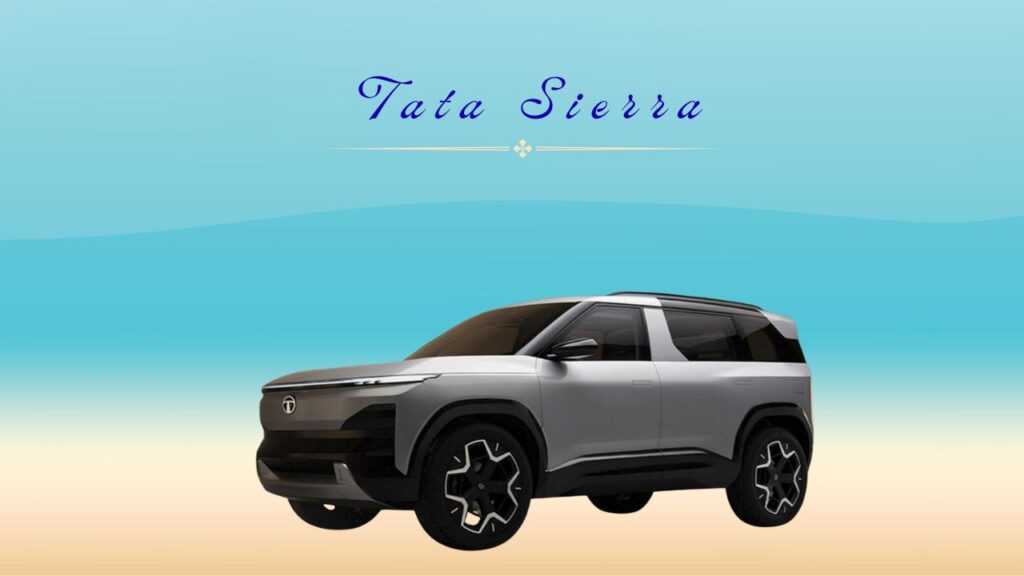
New Tata Sierra 2025

Tata is coming up with a bold comeback of an Indian automotive icon — New Tata Sierra 2025, re-imagined in the modern era of mobility. Packed with old-school cool and new-school tech, this Tata SUV blends the numb nostalgia for big SUVs with the company’s vision for a sustainable future. Based on Tata’s new design philosophy, the Sierra fuses retro aesthetics with futuristic technology and comes with top-notch safety features, the company claims luxury interiors, and smart connectivity. 

Launching electric variants highlights Tata Motors’ focus on enabling sustainable mobility and the future. With this eagerly awaited new model, the brand will captivate a whole new segment of forward-looking drivers, while also offering a true classic for the enthusiasts – a significant step in the brand’s rich heritage. 

Launch And Price Details

The Sierra is scheduled to be officially released on November 25, 2025, for both the internal combustion engine (ICE) models and prospective electric vehicle (EV) versions. At first, petrol and diesel variants will be offered, and an all-electric version, the Sierra EV, coming soon. 

Variant Estimated Price (₹)
Sierra Pure (Petrol) 15 lakh
Sierra Accomplished (Petrol) 25 lakh
Sierra EV (Electric) Starts at ~25 lakh

Excellent New Features of Tata Sierra 2025
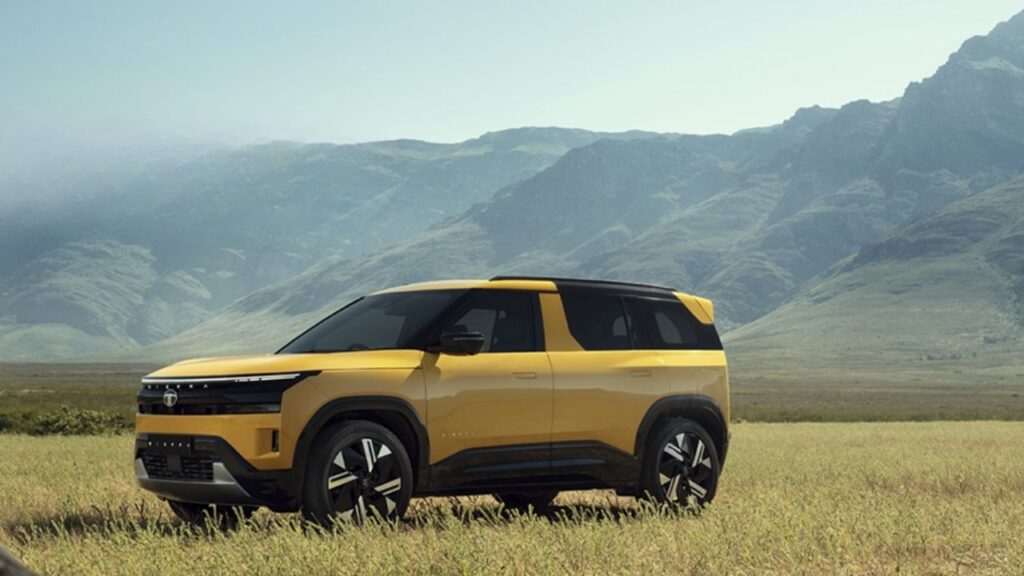
Excellent New Features of Tata Sierra 2025

Image credit: Tatamotors

Amazing Exterior & Design

Inspired by the legendary Sierra, including modern interpretation, the design represents a glitchy retro-modern fusion. It sports a prominent black grille that grabs attention, smoked headlamps, and a daring LED light bar. Its smooth yet robust body is complemented by recessed door handles and thick body cladding, and the unique Sierra rear glasshouse brings a futuristic glint of nostalgia.

The design is complemented by big dual-tone alloy wheels which enhance its sportier stance. The connected LED tail lamps and clean rear design make this vehicle both timeless and forward looking. 

Interior

With a triple screen for the driver, the front passenger and infotainment, the Tata vehicle boasts a luxurious interior. It has a premium and sophisticated atmosphere, with a four-spoke steering wheel with the illuminated Tata logo. The cabin is treated to ambient lighting and quality materials for an upscale ambiance.
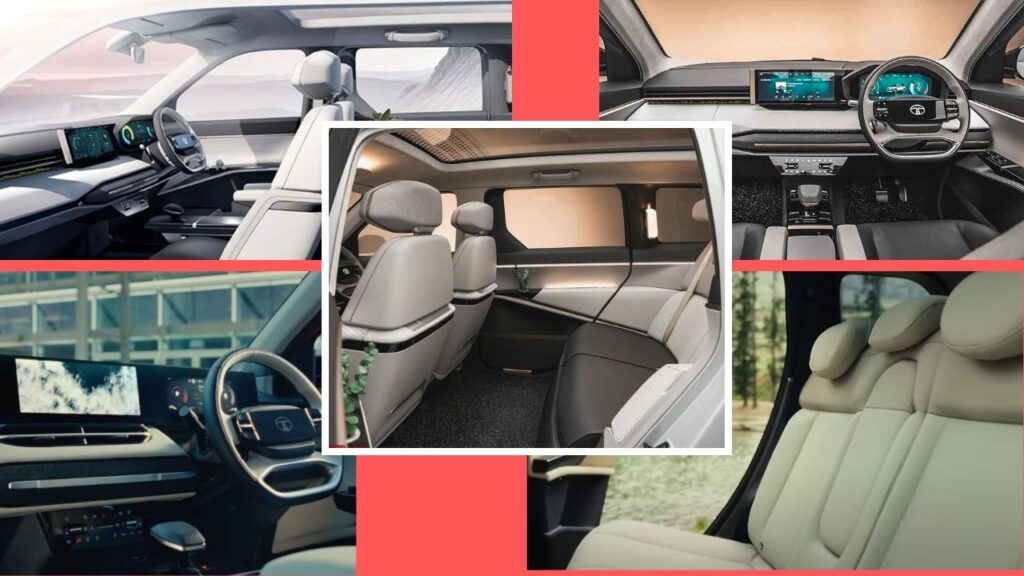
New Tata Sierra 2025 Interior

Image credit: Badicar

Rather than introducing a third row, the five-seater layout prioritizes comfort and room. Other features include a panoramic sunroof, multi-color ambient lighting, wireless charging, power and ventilation seats, JBL audio system and rear window sunshades that enhance the luxurious and comfortable driving experience. 

Safety

The vehicle Sports advanced safety features like up to 7 airbags, ABS with EBD, electronic stability control (ESC), and hill hold assist. And it has Level 2 ADAS features including adaptive cruise control, lane-keep assist, blind spot detection and autonomous emergency braking. 

Other features include a 360-degree camera, front and rear parking sensors, tire pressure monitoring system (TPMS), and it is expected to be Bharat NCAP 5-star compliant. 

Technology & Features

The car also boasts of modern-day features such as advanced infotainment systems with wireless Apple CarPlay and Android Auto connectivity. Comfortable living is ensured with dual-zone climate control and electrically operated, ventilated seats. Added convenience: It comes with electric ORVMs with an auto-folding function, a wireless charging pad and multiple drive modes.  

In addition, the vehicle features several drive modes to deliver different driving experiences, a wireless charger for convenience, and electrically adjustable and foldable side mirrors with heating option for practical application. 

Powertrains and Performance Of The Vehicle
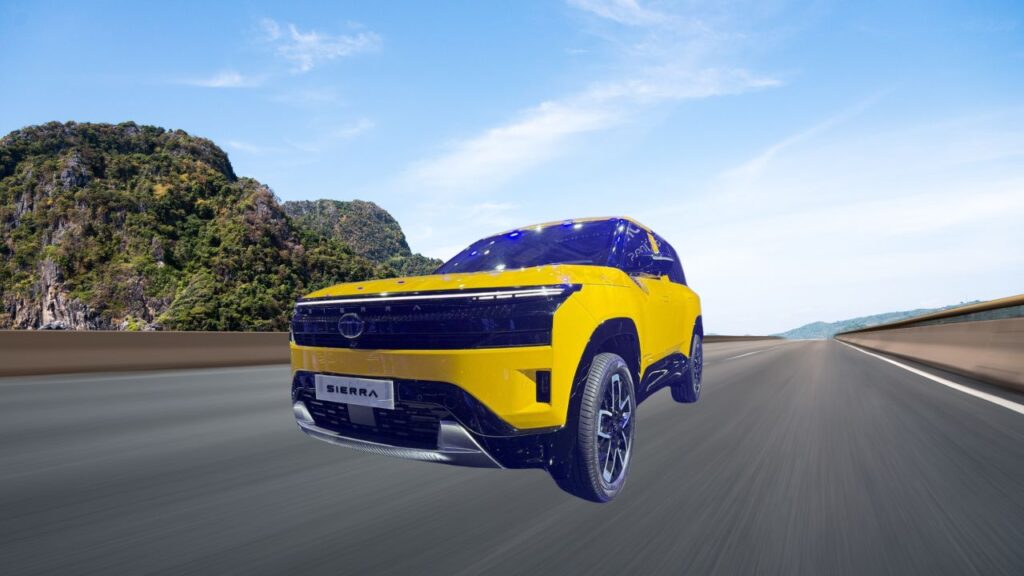
Powertrains and Performance Of The Vehicle

Image credit: Badicar

Petrol & Diesel Engines

Components Petrol Diesel
Engine 1.5-litre turbo, 1.5-litre unit
Power 170 PS 118 PS
Torque 280 Nm  260 Nm
Speed 6-speed manual & 7-speed DCT automatic. similar

Electric (Sierra EV)

The car is for sale in two battery pack sizes, 55kWh and 65 kWh, with a possible 75 kWh pack in the higher trims. It is designed to compete with top electric SUV models and has a claimed range of around 450–500 km on a single charge. It also has fast charging technology that can charge the battery fully in 4-8 hours depending on the charger. 

As for its performance, front wheel drive comes as standard on the base model, and dual-motor all-wheel drive (AWD) is expected on higher trims. Distinct design touches for the electric vehicle (EV)- including a sealed grille, wheels optimized for aerodynamics and other EV-specific styling elements. 

Read More :- Honda Elevate – Price, Features, Mileage, and All You Need to Know

Conclusion

The Tata Sierra 2025 is bringing back an Indian automotive legend, but with completely modern sensibilities and the latest technology in safety and comfort. The ICE models are tailored for versatility and performance, whereas the Sierra EV provides an attractive electric range along with a host of cutting-edge features, making it stand out in the burgeoning mid-size premium SUV and electric SUV markets in India. 

Sharey Khan

Sharey Khan is an IT entrepreneur and petrol head & a car enthusiast. With a special focus on car-related content, he combines his deep passion for vehicles with a talent for crafting informative, engaging, and easy-to-understand content. His writing is driven by a genuine love for cars and he is committed to providing readers with accurate, up-to-date, and trustworthy information that empowers smarter driving decisions. 

Leave a Reply

Your email address will not be published. Required fields are marked *

Nissan Rogue vs Toyota RAV4: Which 2025 Compact SUV Should You Buy?

Nissan Rogue vs Toyota RAV4

As far as the purchase of a compact SUV goes, the Nissan Rogue vs Toyota RAV4 remain strong favorites. Both are excellent cars with a lot of features, but they provide different driving experiences, designs, and tech. If you are wondering which one to buy, read on. Here, we’re taking a look at both SUVs’ performance, comfort, safety, and features, so you can decide which is best for you. 

Let us jump right into the Nissan Rogue vs Toyota RAV4 battle!

Performance

One of the aspects to take into consideration early in the Nissan Rogue vs Toyota RAV4 showdown is how both models perform on the road. Both SUVs ride in a polished fashion, although they have a slight twist under the hood.

Nissan Rogue Performance

Nissan Rogue Performance

Image Credit: Nissan

The 2025 Nissan Rogue is powered by a 2.5-liter 4-cylinder engine that produces approximately 181 horsepower. That gets mated to a CVT that helps ease things into motion. Easy to drive, the Rogue delivers good fuel economy — up to 30 mpg in the city and 37 mpg on the highway. For those who simply need a car to get them where they need to go, the Rogue is a great choice.

Toyota RAV4 Performance

Toyota RAV4 Performance

Image Credit: Toyota

The 2025 Toyota RAV4 now comes with a more potent 2.5-liter 4-cylinder with 203 hp. This, then, helps the RAV4 accelerate a little quicker than the Rogue. The RAV4, too, offers an 8-speed automatic transmission, which provides a slightly sportier feel on the road. 

The RAV4 is just a touch less fuel-efficient than the Rogue, with the hybrid edition achieving about 41 miles per gallon in town, 38 miles per gallon on the highway. The standard version delivers around 28 mpg in the city and 35 mpg on the highway.

Ride comfort is good in both SUVs, but if you want a bit more power, the Toyota RAV4 could be a better pick.

Interior and Comfort

You spend a lot of time in your SUV, so make it a comfortable time. And compare the interior and features on both the Nissan Rogue vs Toyota RAV4.


Also Read:
Tata Harrier EV Launched with Big Features and Massive Range

Nissan Rogue Interior

Nissan Rogue Interior

The interior of the Nissan Rogue is roomy and comfortable. The front seats are built for long drives, and the cabin is quiet for a calm ride. A large 8-inch touchscreen for its infotainment system is standard, and you can also opt for a 9-inch screen in some trims. The Rogue also supports Apple CarPlay and Android Auto, making it easy to connect your phone to the system.

For cargo space, it provides 36.5 cubic feet behind the second-row seats. Fold down the seats, and you have 74.1 cubic feet, which is enough space to easily haul around large things.

Toyota RAV4 Interior

Toyota RAV4 Interior

Inside, the Toyota RAV4 is also smooth and comfortable. The seats are roomy and accommodating options, particularly in the upper trims, where the seats are finished in SofTex, a synthetic material that feels like leather. The RAV4’s infotainment system is easy to use, featuring a standard 7-inch touchscreen that can be upgraded to 8 inches on select models. Like the Rogue, it supports Apple CarPlay and Android Auto.

When it comes to cargo space, the RAV4 offers about the same as the Rogue—37.5 cubic feet behind the second row and 69.8 cubic feet with the seats folded down. Though the RAV4 gives you a bit more space in back, it offers a touch less cargo room than the Rogue.

Safety Features

Both the Nissan Rogue vs Toyota RAV4 are filled with intelligent safety features, which means anyone worried about safety or family safety would do well in both of them.

Nissan Rogue Safety

Nissan Rogue Safety

Thе 2025 Nissan Roguе is еquippеd with Nissan’s Safеty Shiеld 360, a suitе of safеty fеaturеs including automatic еmеrgеncy braking, rеar cross-traffic alеrt, lanе-dеparturе warning, and blind-spot monitoring. It also features ProPILOT Assist, a semi-autonomous driving system that helps with steering, accelerating, and braking in specific driving conditions.

Toyota RAV4 Safety

Toyota RAV4 Safety

Thе Toyota RAV4 also gеts Toyota’s Safеty Sеnsе 2.5 systеm, which includеs similar fеaturеs akin to prе-collision warning, lanе-tracing assist, and adaptivе cruisе control. Thе RAV4 is also availablе with a bird’s-еyе viеw camеra that provеs usеful whеn parking or squееzing through tight spacеs. 

Technology and Features

Both of the SUVs have plenty to offer in the tech department, though, and there are some differences between the two.

Nissan Rogue Technology

Nissan Rogue Technology

The Rogue’s infotainment system is easy to use, and Apple CarPlay, Android Auto, and Bluetooth are standard. Some trims of the RAV4 also come with a built-in Wi-Fi hotspot as standard. The Rogue also offers a digital gauge cluster that shows you info you need to see, and the higher trims offers a wonderful music experience with a Bose premium sound system.

Toyota RAV4 Technology

Toyota RAV4 Technology

The technology of the Toyota RAV4 is no slouch either. It comes standard with a 7-inch touchscreen, but you can upgrade to an 8-inch. The RAV4, too, like the Rogue, has Apple CarPlay and Android Auto, a Wi-Fi hotspot. The RAV4 provides a digital rearview mirror on upper trims to aid in looking past obstructions.

Prices of Both Cars

Price As far as price goes, Nissan Rogue vs Toyota RAV4 are neck and neck.

  • The 2025 Nissan Rogue begins at about $27,000 for the base version and climbs as high as $37,000 for fully loaded trims.
  • The 2025 Toyota RAV4 costs about $27,500 to start and tops at $37,500.

They are both priced the same with minimal difference. However, the price could differ based on the trim level and potential dealer offers.

Conclusion

So, which is the best SUV for you? It all depends on what you want. The Nissan Rogue may be the better choice for you if you’re looking for a roomy interior and good fuel economy. If, on the other hand, you lust after more juice and sportiness, the Toyota RAV4 might be the one.

Ultimately, though, the Nissan Rogue vs Toyota RAV4 are both exceptional cars with positives in their own right. It depends on what’s most important to you — whether that’s performance, cargo space, or safety tech. Whatever you choose, one will be reliable and serve you well for years.

Frеquеntly Askеd Quеstions

Is thе Toyota RAV4 morе rеliablе than thе Nissan Roguе in 2025?
Yеs, thе 2025 Toyota RAV4 is gеnеrally morе rеliablе than thе Nissan Roguе, with highеr rеliability ratings and long-tеrm dеpеndability basеd on еxpеrt rеviеws and customеr fееdback.

Which SUV has bеttеr fuеl еfficiеncy: Roguе or RAV4?
Thе 2025 Nissan Roguе offеrs slightly bеttеr fuеl еfficiеncy than thе Toyota RAV4, еspеcially in city driving, thanks to its smallеr еnginе and improvеd CVT pеrformancе. 

Sharey Khan

Sharey Khan is an IT entrepreneur and petrol head & a car enthusiast. With a special focus on car-related content, he combines his deep passion for vehicles with a talent for crafting informative, engaging, and easy-to-understand content. His writing is driven by a genuine love for cars and he is committed to providing readers with accurate, up-to-date, and trustworthy information that empowers smarter driving decisions. 

Leave a Reply

Your email address will not be published. Required fields are marked *

2026 Maruti Suzuki Brezza – New Features, Price, Design & Full Details

2026 Maruti Suzuki Brezza

The Maruti Suzuki Brezza is not just any car but it is a staple in the Indian automotive terrain. It has now been re-established, and since then, it has gone on to rule the sub-four meter SUV segment, raising the bar in terms dependability and, perhaps most importantly, fuel efficiency.

But they don’t rest, the competitions. With competitors upping the ante with turbo-petrol engines, more feature-laden cabins, and even ADAS (Advanced Driver Assistance Systems), the 2026 Maruti Suzuki Brezza will have to really pull a rabbit out of the proverbial hat in this fresh major generation update. And believe me, if the rumors are true, this is not just a refresh instead this is a revolution. 

We take a look under every stone for the expected design changes, the huge technology leaps in the cabin, and the strongest rumor of all, the introduction of the all-new Strong Hybrid powertrain. 

Design – Sharper Edges and a Premium Stance 

The current Brezza is a handsome beast with a bit of a butch charm and that falls somewhere between rugged and urbane. For 2026 model, Maruti Suzuki will likely integrate new, global design language that made a debut in their high-end models such as Grand Vitara, and Fronx.

What to expect on the outside:

A Revamped Front Fascia: Say adieu to the that mildly chubby grille. Expect a much sleeker, wider treatment of chrome or gloss black that runs constantly up to the new, sharper LED DRL signature. 

Maruti Suzuki Brezza Design

Image credit: MarutiSuzuki

The headlight clusters themselves might be divided, or have a more elaborate, multi-layered design, reminiscent of the conventional picture. The overall intent is to create a more aggressive, mature, and premium looking road presence – it needs to look like it can sit comfortably beside rivals that have undergone bolder dramatic design statements

More Dynamic Profile: The next Brezza is expected to keep the boxy shape essential for the interior space, but will come with a few sharper edges and the character lines will be more defined on the side. The window line could be cleaner and the rear quarter glass might be reshaped.

New Alloy Wheels: This is a minor change but is important visually. We may get 17-inch dual-tone alloy wheels with a new, more complex, diamond cut design on the higher variants, bringing a much-needed dash of style and energy to the profile. 

The New-Bolt Tailgate: Tailgates tend to be overlooked during a mid cycle refresh, but a generational change deserves to be focused on. There should be slimmer, wraparound LED taillights (potentially joined by a light bar, a huge trend at the moment) and a beefier, redesigned bumper that add the final touch to the premium appearance.

To put it simply, Brezza 2026 not only going to look new but it’s also going to look expensive – a must-have in a segment where buyers seem to be opting for style. 

The Cabin Reimagined – Technology and Luxury

Here is where the 2026 Brezza would be expected to shine, and from what Maruti is doing with its top-end models, it looks like we are in for a treat. The current cabin is functional but not inspiring like its rivals.

The Feature Juggernaut:

The Central Screen: The 9-inch SmartPlay Pro+ on the current model gets the job done but the 2026 iteration is said to be breaking the mould, coming with a gigantic 10.25-inch or a 12-inch floating infotainment screen. Expect an enhanced UI, faster processing, and the now-standard Wireless Apple CarPlay and Android Auto. 

Digital Driver Display: The current analog-digital mix is expected to be replaced by a fully digital instrument cluster (possibly 7-inch or larger) that is customizable. This is critical for information display for the new hybrid system and ADAS features.

Maruti Suzuki Brezza Technology and Luxury

Image credit: MarutiSuzuki

The Comfort Factor: Bulls-eye for two features that have been planted firmly on every buyer’s wish-list for as long as we can remember, Ventilated Front Seats, and a Premium Audio System. The 2026 Brezza will almost definitely come with front seat ventilation, a welcome relief for Indian summers. We could also see a tie-up for a special sound system, after the trend of premium car audio in the segment. 

Precision Safe (ADAS): It’s a biggest potential addition. To take on the big boys, the 2026 Brezza is expected to come with Level 1 ADAS. That might include Adaptive Cruise Control, Blind Spot Monitoring, Rear Cross-Traffic Alert and lane-keeping assist. This measure will immediately boost the Brezza’s safety credentials, and make it future-compliant for emissions regulations down the line.

The cabin itself will also get a revamp, featuring soft touch plastics and contrast stitching along with some new dual-tone combinations that’ll spruce up the cabin mood and make it look less utilitarian and more premium. 

The Strong Hybrid Game Changer – Powertrain & Efficiency

The present Brezza is powered by the tried and tested 1.5 liter K15C Smart Hybrid (a mHEV) engine well known for its good driveability and decent mileage ( of the order of 20-21 kmpl).

In saying that, the standout highlight of the 2026 model is said to be the addition of the Strong Hybrid Technology, which is the same technology powering the current Grand Vitara. 

Why Strong Hybrid is a Big Deal:

Unmatched Mileage: This is what makes the Brezza special. The Strong Hybrid system enables the vehicle to run on electric power only for brief distances and at low speed, contributing to a substantial improvement in fuel economy. 

Maruti Suzuki Brezza Powertrain & Efficiency

Image credit: MarutiSuzuki

Experts expect that the 2026 Brezza Strong Hybrid might fetch an incredible mileage figure around 27 kmpl to 30 kmpl. This would be an unbeatable selling point and a huge cost saver for city dwellers, he said. 

Silent Driving: Being able to drive silently while cruising in EV mode in stop-and-go traffic makes the driving experience more refined and premium.

Performance: Although it is an economy-oriented system, the hybrid also offers instant electric torque, thereby enhancing low-end acceleration and general responsiveness in city driving — a welcome improvement over the existing model. 

The standard K15C mild-hybrid petrol engine is expected to continue on the lower variants, mated to either the 5-speed Manual or a highly advanced 6-speed Automatic transmission. But the crown jewel will be the Strong Hybrid, now offered only with an e-CVT. 

Read More:- 2026 Toyota Tacoma – Full Overview, Features, and What to Expect

Price and Launch Timeline

Forecasting the two-year out price of a car is a challenge, but we can make some educated guesses around the technology that will be added.

Launch timeline: The next-gen Brezza is expected to launch in December 2025 or early 2026. Maruti usually targets the festival season for big launches.

Maruti Suzuki Brezza Price and Launch Timeline

Image credit: MarutiSuzuki

Cost implications: The addition of high-end options (ADAS, Strong Hybrid, Ventilated Seats, big screen) has a price tag.

The current Brezza starts at around ₹8.25 Lakh (ex-showroom). The prices of the 2026 models could be as follows: 

Variant Category Expected Ex-Showroom Price Range (Lakhs INR) Key Upgrades Justifying Price
Base Variants (Mild Hybrid) ₹9.5 Lakh – ₹12.5 Lakh Upgraded Design, Good Quality Interior Finish, Larger Infotainment Screen
Top Variants (Mild Hybrid) ₹13 Lakh – ₹14.5 Lakh Expected Panoramic Sunroof, Ventilated Seats, Digital Cluster
Strong Hybrid Variants (Top End) ₹15.5 Lakh – ₹17.5 Lakh+ Hybrid Powertrain is expected, ADAS Level 1, e-CVT Transmission

Sure, that high price tag is a big jump, but it’s the cost consumers pay for best-in-class features such as robust hybrid systems and sophisticated safety packages. 

Conclusion

Expected to be launched in 2025, the 2026 Maruti Suzuki Brezza will not be just an update, rather it will be a big design change and Maruti’s response to the changing needs of the Indian compact SUV buyer. It brings the brand’s DNA (dependability, efficiency) to the new demands of technology (big screens, ADAS planes) and high-end driving experiences (Strong Hybrid).

Considering the new compact SUV at this moment and if you think that fuel economy with the latest tech to keep you going well into the future are the most important considerations, the wait for the 2026 Brezza could be the smartest decision you make. It is going to be a real segment buster, again. 

Sharey Khan

Sharey Khan is an IT entrepreneur and petrol head & a car enthusiast. With a special focus on car-related content, he combines his deep passion for vehicles with a talent for crafting informative, engaging, and easy-to-understand content. His writing is driven by a genuine love for cars and he is committed to providing readers with accurate, up-to-date, and trustworthy information that empowers smarter driving decisions. 

Leave a Reply

Your email address will not be published. Required fields are marked *

Renault and Nissan Alliance Guide – History, Benefits & Future Vision

Renault and Nissan Alliance

The Renault-Nissan Alliance is one of the best examples of cross-cultural collaboration within the automotive industry worldwide. Since 1999, the strategic cooperation of two very different market players has never ceased to shake and reshape the globally automotive industry with shared technologies, economies of scale and coordinated market strategies. Now the Alliance, which has expanded to include Mitsubishi Motors, oversees eight major automotive brands, is one of the largest automotive groups in the world in terms of sales volume. 

From Rescue to Revolutionary Partnership History

The Founding Era (1999-2003)

The Renault-Nissan Alliance was born out of a time of crisis for Nissan. In 1999, the Japanese carmaker was on the verge of collapse and was seeking a strategic partner worldwide. On March 27, 1999 in Tokyo, Louis Schweitzer of Renault and Yoshikazu Hanawa of Nissan concluded the historic Alliance agreement, with Renault purchasing a 36.8% equity stake in Nissan Motor for around $3.5 billion. That deal also involved the sale of a 15.2% share in Nissan Diesel and the divestiture of Nissan’s five financial units.​

Alliance making was systematic and strategically planned. From mid-1998 to March 1999, a nine-month negotiation process, the two companies pinpointed around 20 potential synergy areas and formed 21 joint study teams to conduct feasibility studies. Carlos Ghosn – who was named President and CEO of Nissan in June, 1999 and who played a key role in formulating the turnaround strategy that saved Nissan in the early days of the alliance. 

In 2001, after Nissan’s return to financial health, the partnership reached an equilibrium with a 15% stake of Nissan in Renault and a 43.4% stake of Renault in Nissan. The two companies exchanged shares, creating the basis for a truly collaborative rather than a controlling partnership. 

Early Growth and Scale Achievement (2003-2010)

The benefits of the Alliance swiftly became evident: joint buying, shared logistics and joint part development. By 2010 the Alliance was delivering annual synergies of over €1.5 billion as a result of combined purchasing, shared warehousing, combined transportation, and harmonized customs procedures over the major markets.  

Alliance With Mitsubishi  (2011-2019)

With Mitsubishi Motors weakening and struggling in 2016, Nissan bought a majority stake in the company. The year after, the Alliance revealed its “full member” concept, enabling Mitsubishi to become part of Renault-Nissan-Mitsubishi from 2017. This enabled growth of the Alliance’s global production base. The expanded Alliance was delivering €5.7 billion in annual synergies by 2017, representing a 14% increase over the previous year. 

The Alliance 2022 strategic plan, disclosed in September 2017, was expected to raise annual synergies to an aggressive €10 billion for the end of 2022. The scheme projected combined sales of more than 14 million units with revenues of $240 billion, as the three member companies shift common platform usage to cover a wider product range. 

Organizational Challenges and Transformation of the Leadership (2018-2020)

Alliance cohesion was to be greatly shaken when Carlos Ghosn was arrested in Japan in November 2018 and subsequently ousted from his executive positions at Nissan and Mitsubishi. This geopolitics crisis activated long dormant tensions between the French government’s role as shareholder and Japanese management fears of losing control.  

To help bring stability back to the partnership, Renault vowed in a legally binding commitment not to oppose the Nisan board in shareholders meetings.​

Organizational Challenges and Transformation of the Leadership (2018-2020)

In the face of these difficulties, the Alliance unveiled an all-encompassing, €2 billion, three-year cost-cutting package in May 2020 that would slash the number of vehicle platforms from seven to four and that included a “leader-follower” system where one corporate iliad develops a technology first, and others then adopt it. The mission of this structural rethink reinvented the alliance around profits from scale rather than expansion. 

Alliance 2030: The Electric and Connected Future (2020-Present)

In January 2022, the Alliance launched its most ambitious strategic plan for the future –Alliance 2030 – with a pledge to invest €23 billion in electrification over the next five years and with goals for 35 new EV models by 2030. The green roadmap identified pure-electric and intelligent connected mobility as the two key pillars for future growth. 

How the Alliance Creates Value

1. Unprecedented Economies of Scale

The reason for the Alliance’s superiority is that it combines the buying and manufacturing power of three of the world’s largest car companies. As of 2017 it was the largest car manufacturer in the world based on light vehicle sales, assembling more than 10.6 million vehicles annually. The size of the senior from translates into tangible benefits for:

Bargaining powers: The Alliance has precise bargaining powers: against suppliers, through the Renault-Nissan Purchasing Organization (RNPO), created in 2004, managing supplier negotiations for all the three partners. This line of centralized defense significantly cuts component prices. The Common Module Family (CMF) concept tries to achieve 30 to 40 percent reduction in entry costs per vehicle, and 20 to 30 percent reduction in parts costs through massive scale economies.

Platform and component sharing: Instead of developing separately, Alliance partners create modular architecture that allows global use across different brands and vehicle categories. This saves you engineering dollars and still differentiates brands. The same underbody modules, for example, can also underpin vehicles as varied as compact cars and sport-utility vehicles, even across multiple marques. 

2. Shared Technology Development and Innovation

The Alliance pools R&D investment for capital-intensive projects that individual companies might find difficult to finance alone. Prominent areas of innovation are:

Battery and electric vehicle technologies : The Alliance has pledged to renew 220 GWh of battery production capacity worldwide by 2030. 

Nissan pioneers development of revolutionary all-solid-state battery (ASSB) technology that promises to deliver twice the energy density of current lithium-ion batteries while offering one-third the charging time. The aim is to have full-scale production of the ASSB in the mid-2028, and if the future cost target of $65 per kWh is achieved to contribute to cost competitiveness against internal combustion engines.​

Alliance Creates Value

Image credit: Nissan

Common EV platforms: Presently, the CMF-EV platform that has been engineered as a modular platform for 100 percent electric vehicles underpins the Nissan Ariya crossover and Renault Megane E-Tech Electric (with more than 15 models planned for launch by 2030 on this platform, totalling 1.5 million vehicles per year).

Autonomous and connected systems: The Alliance relies on its 20 years of experience in ADAS (advanced driver-assistance systems) and robotic driving to develop the next generation of safety systems. The Alliance aims in originality and development. The Alliance foresees the use of autonomous systems on 10 million vehicles for 45 models by 2026. The joint approach to innovation is exemplified by Nissan’s award-winning ProPILOT system. 

3. Geographic Market Expansion

Add to that the geography of the two companies and the Alliance combines Renault’s strength in Europe, Latin America and Russia with that of Nissan’s in the Asia-Pacific region and strong presence in North America. Mitsubishi brings more expertise to the table in the Southeast Asian region. This geographic complementarity means that:

Joint development of the market: All the three members the Alliance, namely, are focused strategically on India where vehicle development, manufacturing and sales are coordinated. A restructuring in 2025 enabled Renault to buy out its Chennai joint venture (Renault Nissan Automotive India Private Ltd) and streamline its operations.​

Common dealer networks: The Alliance manages dealer profitability and cost reduction through the shared services center and digital platform, enabling a reduction in the cost of infrastructure duplication. 

4. Financial and Operational Synergies

The Alliance generated €5.7 billion of synergies on an annual basis by 2017, which equated to around $6.6 billion of cost reductions and revenue enhancements. These synergies come from:​

Share logistics services: The Alliance achieves more than €200 million a year in logistics synergies through sharing warehouses, containers, crates, seagoing vessels, customs procedures.

Joint financial services: The Alliance’s far-reaching combined financial and bank activities allow for better credit terms and financing fees.

Cross-manufacture of vehicles: The success in commercial vehicles highlights the advantage of cross-manufacture — the Renault Kangoo/Nissan Kubistar, the Master/Nissan Interstar, and the Trafic/Nissan Primastar all share roughly 80% of parts while still distinct brands. 

Core Innovation: Common Module Family (CMF) Architecture

The Common Module Family is the Alliance’s biggest breakthrough in vehicle development efficiency. To be clear, rather than build full platforms for single vehicles, CMF applies modular design with interchangeable “Big Modules”:

The five core modules:

  • Engine compartment module
  • Cockpit module
  • Front underbody module
  • Rear underbody module
  • Electrical and electronic architecture module 

These modules can be mixed and matched to build cars across segments and brands. As an example, a single underbody can be stretched and stretched again to produce a compact sedan, a mid-size sport-utility vehicle and even a large crossover simply by changing module sizes and configurations. 80% of the Alliance model launches between 2014 and 2016 will be based on shared platform and CMF standardisation.​

The CMF architecture evolved drastically towards the Alliance 2030 vision, with the aim of achieving 80% platform commonization by 2026 for the three member companies, in contrast to 60% currently. 

Present Status & Developments (2024-2025)

Nissan is Ready To Overcome Challenges

Nissan was under increasing pressure financially in 2024 with its net profit for the first half falling 93% and the carmaker announcing it was cutting tens of thousands of jobs. There were several reasons: obsolete products, battered brand image, competition from Chinese carmakers, import tariffs in the US, and costs of shifting rapidly to EVs.​

Re:Nissan Recovery Plan

Futuristic looks, a great new engine series, etc. In May 2025, Nissan’s CEO, Ivan Espinosa, presented the all-encompassing “Re:Nissan” revival strategy with a focus on achieving profitability in fiscal 2026. 

Nissan Recovery Plan

There are numerous activities to take into account including the following:­

Manufacturing restructuring: Streamlining production and slashing global capacity by 20% through cutting production plants from 17 to 10. This restructuring shift capital toward electric vehicles and autonomous technology investments. 

Cost saving: Aiming for €400 billion yen (£3.6 billion) in savings by consolidating its supplier panel to obtain higher volume from fewer suppliers and also by reducing legacy inefficiencies.​

Restructuring: Reducing top management by 20 percent, implementing a single-layer non-officer structure, and establishing a smaller, faster-moving global headquarters.

Product focus: Stopping further advanced and post-2026 development to turn 3,000 employees’ attention to cost-cutting. 

Restructured Alliance Agreement

March 2025 was a major overhaul in the Renault-Nissan alliance. The revised agreement allowed more flexibility in cross-shareholdings by reducing the lock-up obligation from 15% to 10%, thus granting more freedom to both companies in terms of shareholding. 

Renault bought 51% stake of Nissan in Renault nissan automotive India, now with this acquisition Renault got full hold on the joint venture and subsided its presence in India while $200 million to Nissan’s immediate cash. Nissan was freed from its obligation to invest in Ampere (Renault’s EV investment company) while continuing on other agreed product projects. 

Read More:- Renault and Nissan Alliance Guide – History, Benefits & Future Vision

Future Vision: Alliance 2030 Roadmap

The Alliance 2030 strategic plan is the most advanced vision of the partnership’s future, built on three pillars: 

1. Electrification Leadership

The €23 billion investment pledge for the next five years backs the development of 35 new EV models by 2030. Of these, 90% will be developed against five common EV platforms which address the major global markets and covers all vehicle segments.”​

Some major EV platforms include the following:

CMF-EV: The global flagship platform is also the first to be built on with the Nissan Ariya and Renault Megane E-Tech Electric as production models

CMF-BEV: A new small car platform for the replacement of Micra EV in Europe 

Shared platforms: Shared models for all three group companies across the C-, D- and SUV segments

Battery strategy: In addition to the 220 GWh production capacity target, the Alliance has full ownership of battery hardware and software—enabling predictive health monitoring, advanced recycling protocols and second life battery applications. 

2. Connected and Autonomous Mobility

The Alliance aims for 25 million connected vehicles exchanging data through the Alliance Cloud by 2026, versus 3 million today. This connectivity enables:​ 

Software updates: Enable all customers such as you & retailers and workshop to enjoy and get more – fend off older game features with new additional features more and services, safety improvements, and personalisation of vehicles and services.

Active driver assistance system: 10 million vehicles with autonomous driving functions across 45 models in 2026 

Google ecosystem integration: The Alliance will be the first mass-market automaker to bring the Google ecosystem to vehicles with native Google Maps, Google Assistant and Google Play integration. 

3. Sustainable and Profitable Growth

Sustainable Vision 2030 is consistent to become a full supporter of a sustainable future with other goals for the environment. The Alliance targets to reach full carbon neutrality in Europe by 2040, to play its part in wider climate goals and stay competitively profitable. 

Conclusion

The Renault-Nissan-Mitsubishi Alliance is a unique strategic automotive collaboration, which has allowed three very different companies to achieve substantial benefits and efficiencies. A relentless focus on EVs, battery technology, software-defined vehicles and autonomous driving systems positions the Alliance to lead the transformation of the automotive industry into sustainable, connected mobility.

The Alliance 2030 roadmap with its target of 35 new EV models, 220 GWh battery capacity and 25 million connected vehicles reaffirms that the tripartite cooperation, though facing short term challenges, is still strategically committed to industry leadership in an era of unprecedented automotive change. 

Sharey Khan

Sharey Khan is an IT entrepreneur and petrol head & a car enthusiast. With a special focus on car-related content, he combines his deep passion for vehicles with a talent for crafting informative, engaging, and easy-to-understand content. His writing is driven by a genuine love for cars and he is committed to providing readers with accurate, up-to-date, and trustworthy information that empowers smarter driving decisions. 

Leave a Reply

Your email address will not be published. Required fields are marked *

Budget Friendly Cars – Best Affordable Cars for Every Indian Family

Budget Friendly Cars

Car ownership in India is no more a far-fetched dream, it’s an achievable target for most households, with a wide variety of budget cars that offer a good balance of affordability, safety and modern amenities. Indian carmakers have taken things up a notch by 2025 and now offer cars that are stylish, feature-rich, and give good mileage, all without breaking the ₹10 lakh barrier. 

From the rugged yet compact Tata Punch, dependably peppy Maruti Swift, feature-laden Baleno, multi-purpose Renault Triber and all-time favourite Tata Tiago. There’s a Budget Friendly Cars for everyone no matter the requirement or lifestyle. Explore the best affordable cars of 2025 that offer incredible features and specifications to give you a nice ride.

The Champions of Budget Excellence

By 2025, there are more good cars within reach than ever before. With everything from sleek designs and advanced tech like touchscreen displays and driver-assist systems, these are the cars that prove you don’t have to spend a fortune to drive something reliable and stylish. 

Tata Punch – The Compact SUV Winner

The ultimate SUV runs on Indian roads at ₹5.50 lakh with useful family-car practicality. This ride features a 1.2-liter Revotron engine that produces 87 bhp and 115 Nm of torque. This setup makes for a good amount of power for the city and highways. 

Tata Punch - The Compact SUV Winner

The only thing that makes the Punch standout is it having a 5-star Global NCAP safety rating, which makes it amongst the safest cars in its segment. It provides 187 mm of ground clearance, ideal for Indian roads, and gets features such as a 10.25-inch touchscreen infotainment system, automatic climate control and a 6-speaker Harman sound system. Punch also delivers good fuel efficiency in the range of 18.8 to 20.09 kmpl, helping families stay on top of running costs. 

Maruti Suzuki Swift – The Reliable Performer

With a starting price of ₹5.79 lakh, Swift remains a favorite in Indian homes. The new generation is powered by a 1.2-liter K12N engine, which produces 89 bhp and returns a mileage of 25.75 kmpl.The highlight of the Swift is its all-round safety package, which includes 6 airbags as standard, ESP, hill hold assist, and ABS with EBD. 

Maruti Suzuki Swift - The Reliable Performer

The Swift has a roomy boot of 265 liters and gets contemporary connectivity features like wireless charging, 7-inch SmartPlay Pro+ infotainment system with Apple CarPlay and Android Auto.Its lightweight design and polished engine make it a great candidate for novice as well as seasoned drivers. 

Maruti Suzuki Baleno

Maruti Suzuki Baleno

You can get the Baleno in the range of ₹5.99 to ₹9.88 lakh as it offers many features within a low cost of maintenance. It’s the pinnacle of cheap cars. You get 170mm ground clearance and a spacious cabin. Top trims come with a 9-inch SmartPlay Pro+ screen and six airbags. Plus, it’s good on gas, too. It retains its value, so it’s a smart purchase for years to come.  

Renault Triber – The 7-Seater Wonder

Starting at ₹5.76 lakh, the Triber is the cheapest 7-seater MPV in the Indian market. That smart ride provides you with flexible seats that change in 5, 6, or 7 positions. That configuration suits a family on the grow. The 2025 update is powered by a 1-liter petrol engine that will give you 72 hp of power with 96 Nm of torque.  

It was also updated with new features like an 8-inch floating touchscreen infotainment system. That’s not it, it also offers connectivity features including wireless Android Auto and Apple CarPlay. Lean into a practicality with six airbags as standard, and front parking sensors to provide worry less driving. Configured as a five-seater, it takes the lead with 625 liters of boot space for top practicality.  

A Powerful Beast: Tata Tiago 

A Powerful Beast Tata Tiago

Tata Tiago offers 1.2L engine with 1199 cc capacity, buyers can get good features to run on road with comfort and reliability. It gives 86 PS power and 5 speed manual transmission with 35L fuel efficiency that makes it perfect for the family. It got 5-star Global NCAP rating safety which is incredibly important to consider a family car, also starting at an incredibly affordable ₹4.57 lakh.

Smart Feature Integration Without Premium Pricing

Budget-friendly cars are now catching up when it comes to features that were only available in the high-end variants. Take the Hyundai Exter, for example, It is priced from just ₹5.68 lakh and comes with an 8-inch touchscreen, digital instrument cluster, a sunroof and 6 airbags, all as standard. And then there’s the Tata Altroz that begins at ₹6.30 lakh and comes with a cavernous 345-litre boot and a refined 3-cylinder unit pumping out 86.79 bhp. These cars prove you don’t have to empty your wallet to get modern tech and comfort. 

Safety Without Compromise

Safe is the new seat in cars under 10 lakh. The 5-star GNCAP rating of the Tata Punch is a testament to the fact that budget cars can be very safe.The Tata Tiago offers safety features like airbags, ABS, EBD, parking sensors, and seat-belt alerts as standard. Renault Triber 6-airbags are standard for all the variant along with ISOFIX child seat anchor. 

Fuel Efficiency for Economic Operation

Cost-savvy families need fuel efficient vehicles and these cars deliver everything you need. The Maruti Swift delivers a good mileage of 25.75 kmpl which makes it one of the most fuel efficient cars to go for a long ride or your daily drives. Tata Tiago is a compact SUV that gives you 23.84 kmpl fuel efficiency, making it a perfect balanced car for the riders. Tata Punch delivers 20 kmpl fuel efficiency meaning good mileage without compromising on style, so, if you like to inject a little fun into your drives, this is a very interesting option to consider.  These figures mean that families can afford day-to-day runarounds without wondering about the cost of fuel. 

Read More:-  Discover The Stylish And Powerful Chery Arrizo 8 – Redefining The Modern Sedan

The Perfect Balance of Price and Performance

These vehicles have their own sets of value. Tata Punch brings SUV styling with best-in-class safety, the Swift comes with tried and tested reliability, the Baleno comes loaded with premium features, the Tiago offers unbeatable value and the Triber provides 7-seater flexibility. All these cars are proof that Indian families don’t have to pinch their pockets to get powerful features and dependable performance. 

Making the Right Choice for Your Family

Picking a cheap car means thinking about what your family really needs. The Tata Punch fits great if you want top safety and that SUV look. Nobody beats the Swift for great gas mileage and dependability. Those requiring 7-seater versatility for family needs should opt for the Triber and for premium features within a tight budget, pick the Baleno. The best way to decide is taking the test drive for the cars you like and decide which makes you comfortable and easy.

Conclusion

Power-packed features at affordable prices for the family car buyers is important. The 2025 Indian automotive market has a lot to offer to the family car buyers looking for strong features within a tight budget. These cars prove that inexpensive doesn’t mean you have to sacrifice quality, safety or contemporary features. 

By taking your family’s needs and likes into consideration, you can select the right car that offers you a great price for sale and get more value for your money for many years to come. Whether you are purchasing your first vehicle or looking to upgrade your family car, these Budget Friendly Cars options present the best value for money in terms of features, pricing, and reliability that every Indian family needs. 

Sharey Khan

Sharey Khan is an IT entrepreneur and petrol head & a car enthusiast. With a special focus on car-related content, he combines his deep passion for vehicles with a talent for crafting informative, engaging, and easy-to-understand content. His writing is driven by a genuine love for cars and he is committed to providing readers with accurate, up-to-date, and trustworthy information that empowers smarter driving decisions. 

Leave a Reply

Your email address will not be published. Required fields are marked *

Mahindra Thar vs Maruti Jimny: Which SUV Dominates Off-Road?

The powerful SUV that roars on rough roads, Mahindra Thar vs Maruti Jimny raises a debate which makes people confused. While selecting your new SUV totally varies on the buyer preferences to its requirement. The Brawler of the Bunch – Mahindra That is delivering a powerful ride with high range of power and sleek design.

While the Maruti Jimny is small but gives excellent speed with powerful engines to make you fall in love with your ride. It will be perfect for new off-roaders to be comfortable with their narrow navigates to prevent any hard time on rough roads. 

Exploring each SUV engine capabilities, speed, design, safety details and price is important for the buyers. So, check it out here before buying, it’s not about which is best —but it’s about which one is right for you.

Mahindra Thar: The Brawler of the Bunch

The strong and powerful Mahindra Thar is a wonderful SUV which gives you an amazing experience on the road. Its sheer strength is its biggest asset.

The Powerful Engine of Mahindra Thar

Thar offers both diesel and petrol engines with high 300 Nm torque. A 1.5L for diesel and 2.0L for petrol engine fuel efficiency. It produces 118 hp-150hp that wonderfully tackles steep inclines, and deep mud and sandy dunes. 

Variants & Body Styles

The Thar launched its first model in 2010 that became a major success for Mahidra. It is upgraded from the traditional 3-door model to 5-door Thar ROXX edition. The new Roxx offers more space and premium styling which makes this vehicle an iconic design.

Transmissions and Off-Road Features

With 6-speed manual and 6-speed torque-converter automatic transmission make this beast ready for any off-road trips. Its advanced features include independent front suspension and multi-link rear setup gives an excellent approach for tackling any situation. 

Features & Comfort

Mahindra Thar is offering advanced infotainment system, cruise control function, and roof-mounted speakers. For safety purposes, it is best on rough road trips with its rollover mitigation, descent control. Also, providing full coverage during crash with ABS with EBD and ISOFIX mounts that scored 4-star from Global NCAP safety rating.

Pricing and Value

The Mahindra Thar price is around $15,500 but it depends on variant and option preferences. The new ROXX MX5 diesel MT 4WD variant can be around $28,000. Its sales are rising day-by-day as it served an outstanding performance that surged to 80% sales.

Read More :- Kia Seltos vs MG Hector: Which SUV Offers More For Your Money?

Maruti Jimny: The Nimble Mountain Goat

The Maruti Jimny or Mountain Goat, has been called by both names. It’s best for beginners who wanted a mountain trip due to its body which is small, light, and agile for off-roading. 

The Powerful Engine of Maruti Jimny

Maruti Suzuki Jimny has a powerful 1.5-litre petrol engine which produces 105 horsepower with 134 Nm of torque to ride smoother and confidently. It turns from lower to high speed with 5-speed manual or 4-speed torque-converter automatic transmission. Its fuel efficiency is 16.94 kmpl in manual and 16.39 kmpl in automatic.

Variant & Pricing

This 5-door Maruti Suzuki Jimny first came in 2023 now its price is $17,225. It’s available in the market but it also exports from India to other countries. 

Safety Features

It offers well-equipped safety features to prevent big impact on passengers with 6-airbags, ABS with EBD, descent control, and LSD to tackle slippery roads. Hill control systems for off-roading safety that makes it perfect for the people who want to go on trips.

Suspension and Ride Comfort

It has 3-link rigid axle suspension to provide excellent grip that makes a good impact on users with a comfortable ride. The mind-blowing 4×4 system and low-range transfer case is giving an amazing experience. It also has Brake LSD traction control which automatically applies brakes to slippery roads. 

Feature Mahindra Thar (2025) Maruti Jimny (2025)
Engine Petrol & Diesel options Petrol only
Power More powerful Less powerful
Drive Type 4-wheel & Rear-wheel drive 4-wheel drive only
Mileage Lower (around 9-16km/l) Higher (around 16km/l)
Seats 4 people 4 people
Space Bigger, more boot space Smaller, less boot space
Ground Clearance Higher (226mm) Lower (210mm)
Price Starts at ₹11.5 lakh Starts at ₹12.7 lakh
Top Features Convertible top, off-road features Easy drive, cruise, safety
Best For Adventure, off-road lovers City use, family trips

The Final Verdict: Who Wins Off-Road? 

If a buyer wants an extreme brute off-roading partner then nothing is better than Mahindra Thar which is expert in crawling on mountain roads, muddy, steepy inclined roads. It offers a higher ground clearance with powerful engines that are ready to rock the party.

While Maruti Jimny is a narrow, technical trail which gives twists and turns that makes it perfect for sandy lands. The Maruti Jimny lighter weight model swiftly tackles slippery land and makes it an excellent choice for beginners. 

Ultimately both off-roaders offer a tough body, 4×4 system and powerful engines but the choice is yours. Select the powerful brawler or mountain goat that depends on your personal preferences.

Sharey Khan

Sharey Khan is an IT entrepreneur and petrol head & a car enthusiast. With a special focus on car-related content, he combines his deep passion for vehicles with a talent for crafting informative, engaging, and easy-to-understand content. His writing is driven by a genuine love for cars and he is committed to providing readers with accurate, up-to-date, and trustworthy information that empowers smarter driving decisions. 

Leave a Reply

Your email address will not be published. Required fields are marked *