

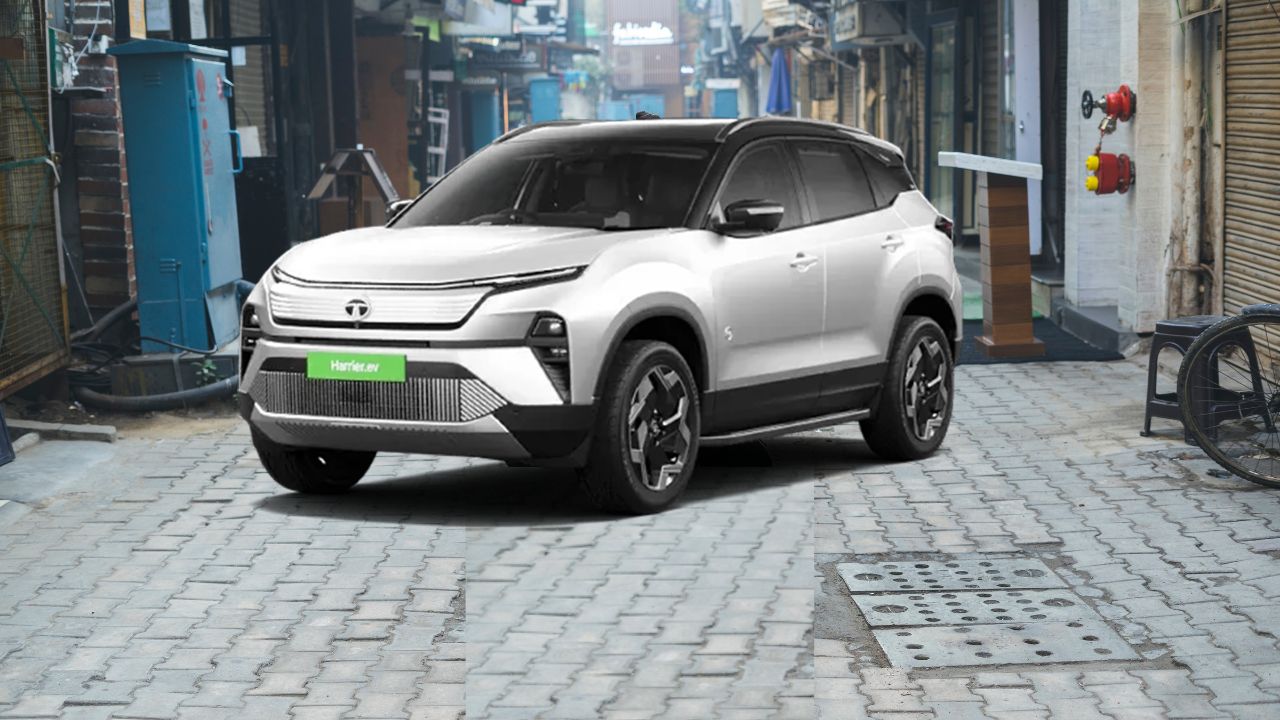
A Harrier.ev advertised at Rs 14.49 lakh looks like a different car from the Rs 21.79 lakh Harrier.ev on the regular price list. It isn’t because Tata launches BaaS. Tata Motors’ EV arm has moved the battery into a separate loan, so the sticker price falls while the battery cost still has to be paid.
Tata.ev has extended Battery-as-a-Service to Nexon, Curvv, Sierra and Harrier, after launching it on the Tiago and Punch. Tata’s battery financing option now covers all six models, so it’s worth working out what you actually save.
Tata Launches BaaS For All EVs
Buyers can still purchase any Tata EV with the battery included. Tata launches BaaS as an extra route, not a replacement. Tata calls it a dual-loan finance product: the vehicle and battery sit in separate loan accounts with flexible tenures, and multiple financiers are on board. The vehicle loan works like a normal car loan. The battery payment depends on battery size, down payment and tenure.
Tata’s Chief Commercial Officer, Vivek Srivatsa, said customers now want a choice in how they finance an EV as well as which one they buy. The company says the same vehicle technology, product experience and ownership support apply either way.

Model-wise Tata EV BaaS Prices
| Model | BaaS vehicle price (ex-showroom) | Regular starting price (with battery) | Upfront saving vs regular price | Battery usage cost |
| Tiago.ev | ₹4.69 lakh | ₹6.99 lakh | ₹2.30 lakh | ₹2.6/km |
| Punch.ev | ₹6.59 lakh | ₹9.79 lakh | ₹3.20 lakh | ₹2.6/km |
| Nexon.ev | ₹8.99 lakh | ₹14.34 lakh | ₹5.35 lakh | ₹4.4/km |
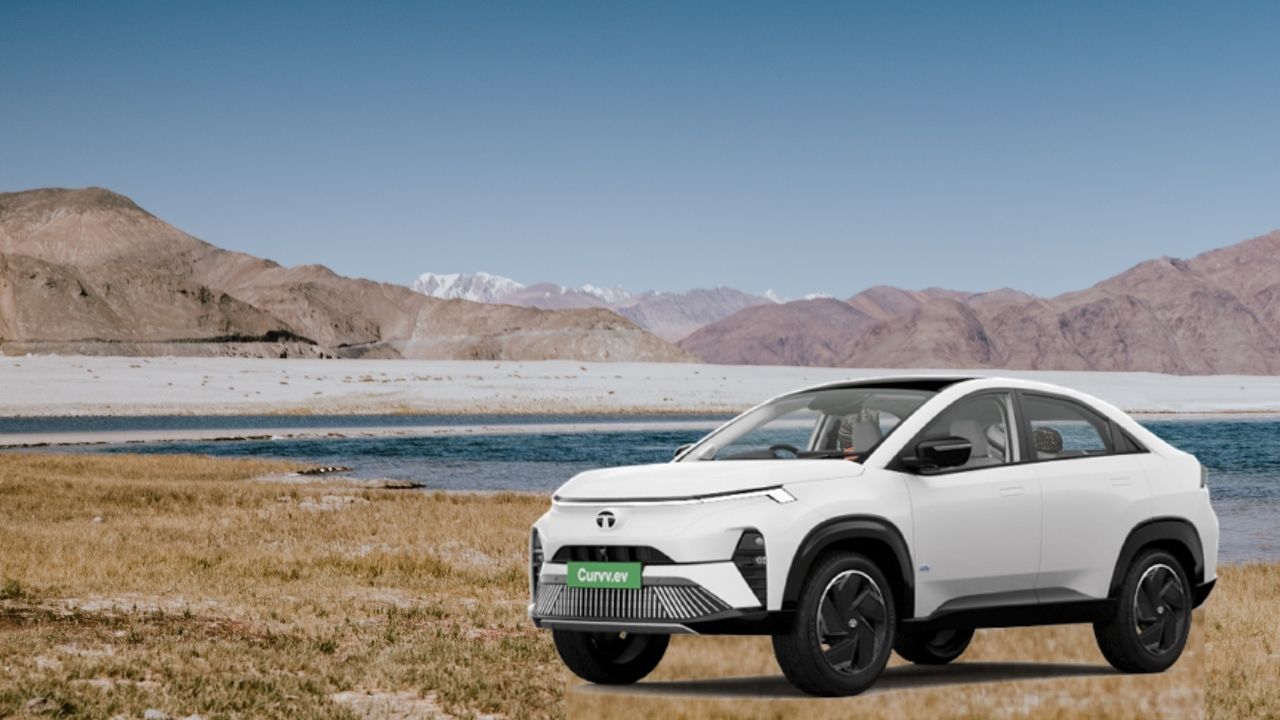
| Curvv.ev | ₹10.99 lakh | ₹17.19 lakh | ₹6.20 lakh | ₹5.0/km |
| Sierra.ev | ₹11.99 lakh | ₹18.79 lakh | ₹6.80 lakh | ₹5.5/km |
| Harrier.ev | ₹14.49 lakh | ₹21.79 lakh | ₹7.30 lakh | ₹5.9/km |
The Harrier.ev’s ex-showroom price drops from Rs 21.79 lakh to Rs 14.49 lakh under BaaS. The prices apply to entry-level variants for personal users, and they exclude government levies, road tax, insurance and TCS. Tiago’s saving is the smallest and Harrier’s the largest, because a bigger battery means a bigger chunk moved out of the sticker price.
Battery capacity and claimed range for each model weren’t in the launch coverage that could verify, so check Tata’s own configurator before quoting specs in your budget.
See Full Detail :- New Hyundai Flagship Models Arriving Soon to Dominate Indian SUV Market
How Battery Loan Charges Are Calculated
Tata quotes the battery cost per kilometre. The battery financing or usage cost starts at Rs 2.6 per km. Take a guess with these starting figures, as it’s not the rate for each model, so ask the dealer for the exact number on your variant.
Tata’s illustration assumes 60 km per day for most models and 44 km per day for the Tiago.ev. At Rs 2.6/km and 44 km a day, that works out to roughly Rs 114 a day, or about Rs 3,400 a month. Your real figure will differ with your driving and your financing terms.
The battery payment isn’t your running cost. Charging, maintenance and repairs are extra. Electricity still comes on top.
One warning applies to the whole scheme. The lower price is a separation of costs for financing purposes, not an equivalent discount on the complete vehicle. You are paying for the battery, just in a different account.
Tata BaaS For All EVs VS Rivals
Tata is catching up to a crowded field. Mahindra recently introduced BaaS for the XEV 9S and XEV 9e, and MG’s Hector Tomahawk EV starts at Rs 13.99 lakh plus a battery rental of Rs 4.90 per km. The same report says Hyundai’s Creta Electric, Kia’s Syros EV, Citroen’s e-C3X and Toyota’s Ebella also have BaaS options.
MG’s Rs 4.90/km is the clearest benchmark. At Tata’s 60 km/day assumption, that rate comes to about Rs 8,800 a month for battery rental alone. Tata hasn’t shared per-km rates for its larger SUVs yet, so it’s too early to say whether the Sierra or Harrier will be cheaper.
Tata’s edge is that all six models are covered, so you can stay in one brand whether you want a Rs 4.69 lakh hatchback or a Rs 14.49 lakh SUV.
The main test is how long you’ll keep the car and how far you’ll drive it. Take the Tiago.ev. The Rs 2.30 lakh upfront saving divided by Rs 2.6/km gives about 88,000 km. At 44 km a day, that’s around five and a half years. If the per-km figure is the entire battery payment and the tenure runs that long, the saving is really a deferral. That ignores interest and any structure that couldn’t be confirmed yet.
Which Kind of EV Buyers Opt For BaaS?
- Tight upfront budgets: you can afford the monthly payments but not a large down payment.
- Low-mileage drivers: you drive well under Tata’s daily assumptions, so a per-km battery charge costs you less.
- Short-tenure owners: you plan to sell within a few years and won’t stay on the battery loan long.
If you drive heavily or keep cars for a decade, buying outright with the battery included will likely cost less over time.
Read Also :- Renault Duster Hybrid Launches in India on 17 October
Conclusion
Tata launches BaaS for EV across models — Tiago, Punch, Nexon, Curvv, Sierra and Harrier. EV buyers can now finance a car on two different routes, this lowers the sticker but not the car price. This is not a discount, it’s a way to make a broader financing option for EVs.
Before signing, ask the dealer for the total down payment across both loans, the total payable over both tenures, and the battery EMI in writing. Compare that with a standard single loan. If the BaaS total isn’t clearly lower for your usage, skip it.
And if your budget is tight, consider this as a chance to buy an EV under Battery-as-a-Service scheme.
