
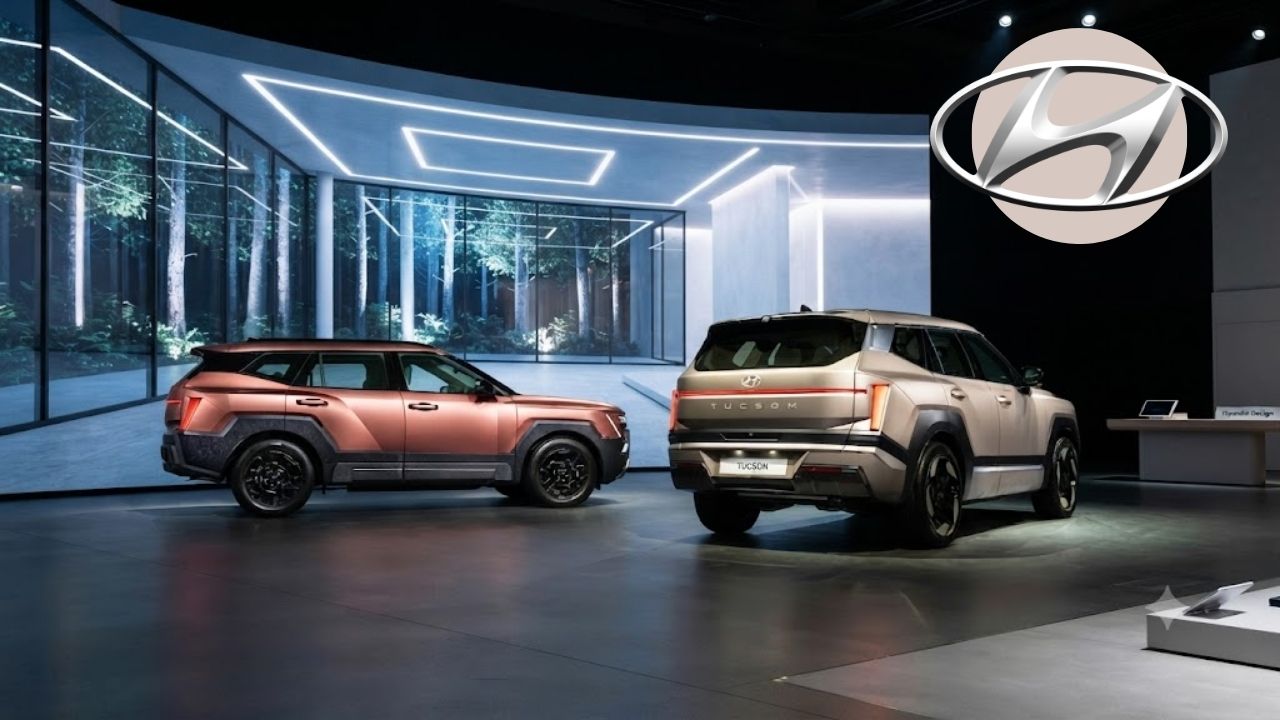
The New Hyundai Flagship Models are preparing to dominate the Indian SUV market. The 2026 end and 2027 is holding off the new vehicle purchase for both cars. The New 2027 Hyundai Tucson and Hyundai Bayon are going to be in every car buyer’s radar. However, Tucson lunch date is unconfirmed so early buyers should reconsider it.
One is a massive generational shift for Hyundai’s premium offering, pushing hard into luxury territory. The other is a compact crossover meant to bring European styling to the sub-15 lakh bracket. Here is exactly what you get with both models, how they stack up against the competition, and whether you should actually wait for them.
Why the Tucson Is Coming Back at All
The current Tucson stopped coming in the market in 2025 because it doesn’t hold its foot against premium D-segment rivals. It seems like a second chance for the model to return rather than a routine update. Hyundai clearly thinks the formula needs to change, because what it has revealed globally is not a mild facelift — it’s a full fifth-generation redesign.
The new-gen Tucson has been revealed with a radical boxy design, larger dimensions and Hyundai’s new Pleos infotainment system, and it could also preview future India-bound models. That last part matters for Indian buyers specifically, because Hyundai has a habit of trickling design language down from global flagships into mass-market SUVs — the current Creta’s styling cues borrowed heavily from the previous Tucson and Santa Fe, and this cycle looks set to repeat.
Read Also 👉 Maruti Suzuki Cars Are Coming To India by 2027
2027 Hyundai Tucson: Boxier, Bigger, & Hybrid-Powered
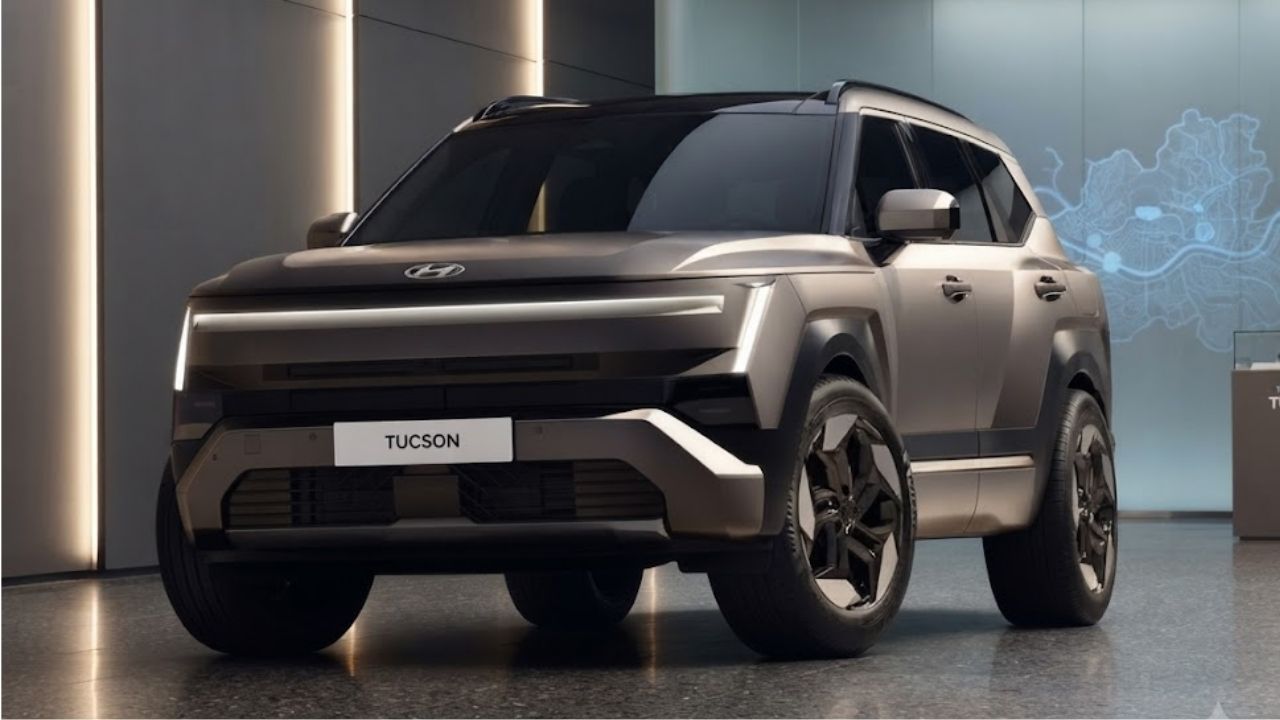
The confirmed specification of the fifth-generation Tucson is revealed in South Korea but Hyundai hasn’t announced India specific technical details yet. Current model has sharp flowing lines but 2027 Tucson adopts the “Art of Steel” design language. The design is boxy, upright, and rugged more like a scaled-down Palisade.
Tucson Dimensions: Growing in Every Direction
The 2027 Hyundai Tucson model is significantly larger, up to 4.7 meters long, 40mm wider and 20mm taller than the outgoing model. It’s coming with more wheelbase — 30mm to 2,785mm.
So it resolves the current model rear-seat space problem with extra 29mm of height which gives more headroom to sit in the back seat comfortably. The rear doors are now changed with an 83-degree angle to provide easier access. Tucson is behaving like a full-size SUV lion who accomplished its territory.
Powertrain: The Hybrid Push
The specifications are still unconfirm for the Indian model but global model reveal highlights a major shift toward hybridization. Its petrol engine of 1.6L is producing 193 bph of power and 265 Nm of torque. It runs on an 8-speed automatic transmission which combined with a next-generation hybrid system for a total output of 245hp.
For a Hybrid set up, a 1.6-litre turbo-petrol combined with a next-generation hybrid system for a total output of 245hp on a 8-speed automatic transmission. The power like this in a hybrid is absolute engineering. Hyundai claims an impressive fuel efficiency figure of 17.4kpl for this setup.
Tech and Cabin Upgrades
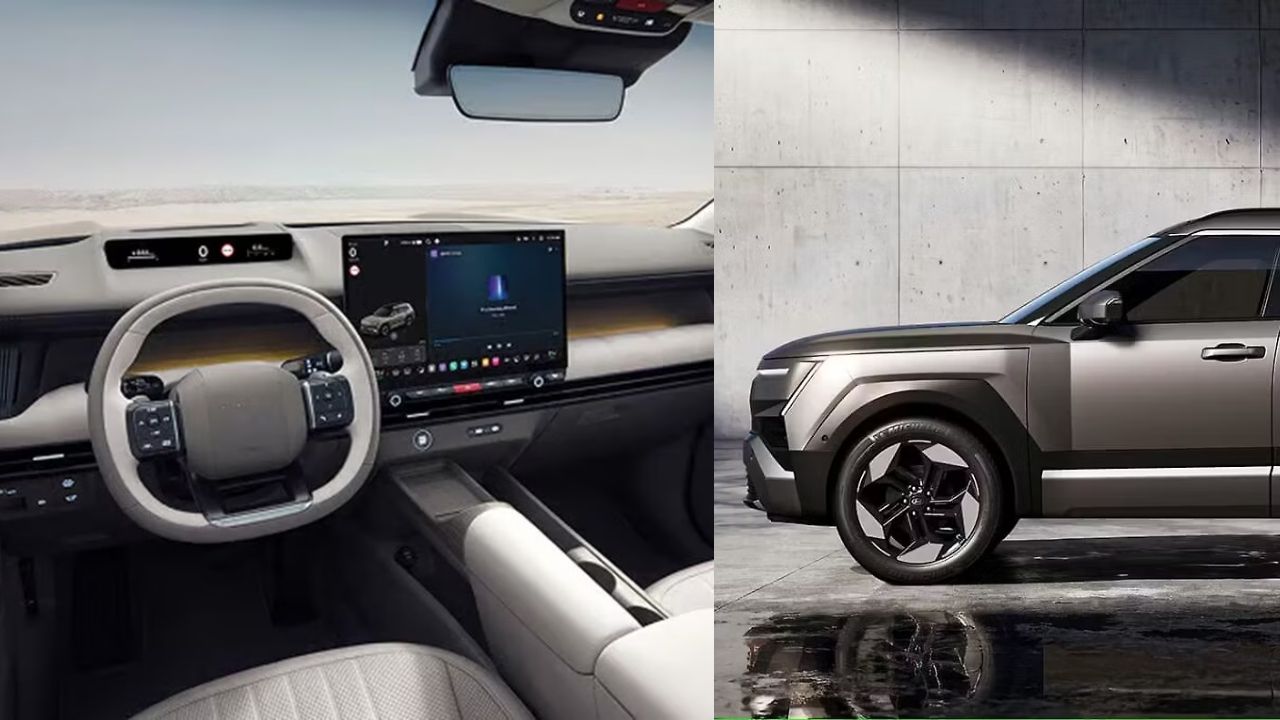
The cabin receives a massive overhaul, centered around the new Pleos Connect infotainment system running built-in Gleo AI. The central touchscreen will be available in massive 12.9-inch or 17-inch sizes depending on the trim. Hyundai smartly retains physical controls for essential functions, avoiding the trap of hiding climate settings in endless touchscreen menus.
Safety gets a boost with 9 airbags as standard, an updated navigation-based adaptive cruise control, and a memory-based reverse assist that can automatically steer the car backward along its previous path.
Read Also 👉 Why Salaried Indians Are Buying Mercedes Cars
Tucson Competitor Comparison: The Luxury SUV Battle
The current Tucson rivals in the Indian markets are Jeep Compass and VW Tiguan but the new model is extended its size and hybrid powertrain which also raises the price and pushes it into entry-level luxury SUVs.
| Feature | 2027 Hyundai Tucson (Global Spec) | Jeep Compass | Volkswagen Tiguan |
| Engine | 1.6L Turbo / 1.6L Hybrid | 2.0L Diesel | 2.0L Turbo Petrol |
| Power | 193hp / 245hp | 170hp | 190hp |
| Dimensions (LxWxH) | 4700 x 1905 x 1685 mm | 4405 x 1818 x 1640 mm | 4509 x 1839 x 1665 mm |
| Key Tech | 17-inch screen, Reverse Assist | 10.1-inch screen | 8-inch screen |
Hyundai Bayon: The Premium Compact Crossover
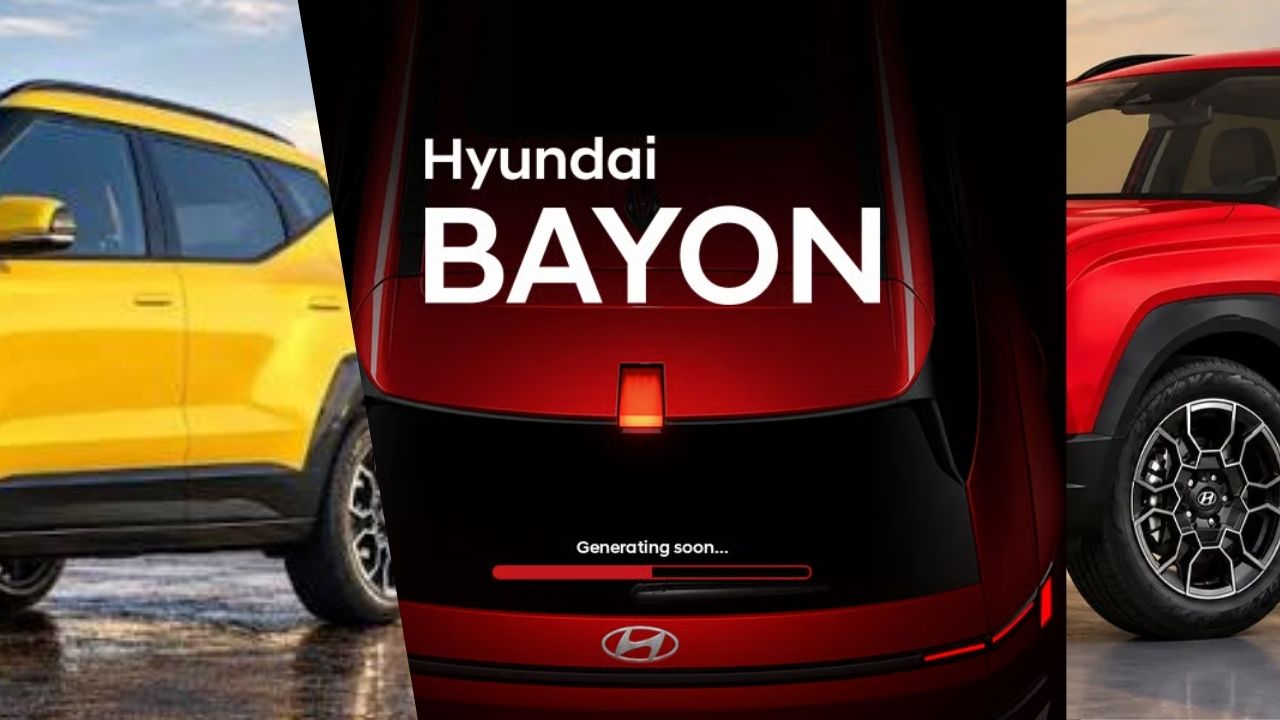
While the Tucson goes upmarket, the Hyundai Bayon aims to fill a gap in the highly competitive compact SUV segment. Bayon will arrive in the festive season of 2026 at a price range of ₹10 lakh — ₹15 lakh (ex-showroom). It is basically a crossover version of the i20 platform designed specifically for the European market.
The Hyundai Bayon specifications for the Indian model is based on the international Bayon’s underpinnings. It is a compact SUV positioned between Venue and the next-generation Creta, not too small, not too expensive. Hyundai opened bookings across dealerships and its website on September 23, 2026.
Bayon’s Engine That Aim High
The current model carries a 1.0L petrol engine which gives 90 bhp of power and 172 Nm of torque. The transmission is up to 7-speed DCT automatic while the upcoming model brings 6-speed manual and CVT automatic options. It extended the engine to 1.5L 4-cylinder petrol producing 115PS of power and 144Nm of torque. This is the same engine set up that Creta and Verna uses.
But Bayon is the first Hyundai model engineered with a factory-fitted CNG option in a 4.3 metres long vehicle. It expects to use a 1.5L Hy-CNG dual-cylinder setup.
Features That Sets Hyundai Bayon Apart
Hyundai is known for packing its cars with features, and the Bayon is no exception. It brings a full convenient setup — a dual 10.25-inch screen for infotainment and digital cluster. It offers full experience to admire nature with a panoramic sunroof, and ventilated seats. The connectivity is reliable, providing wireless Android Auto/Apple CarPlay. View all corners outside the car with a 360-degree camera. The Bayon is a full-packed flagship segment that offers a premium experience.
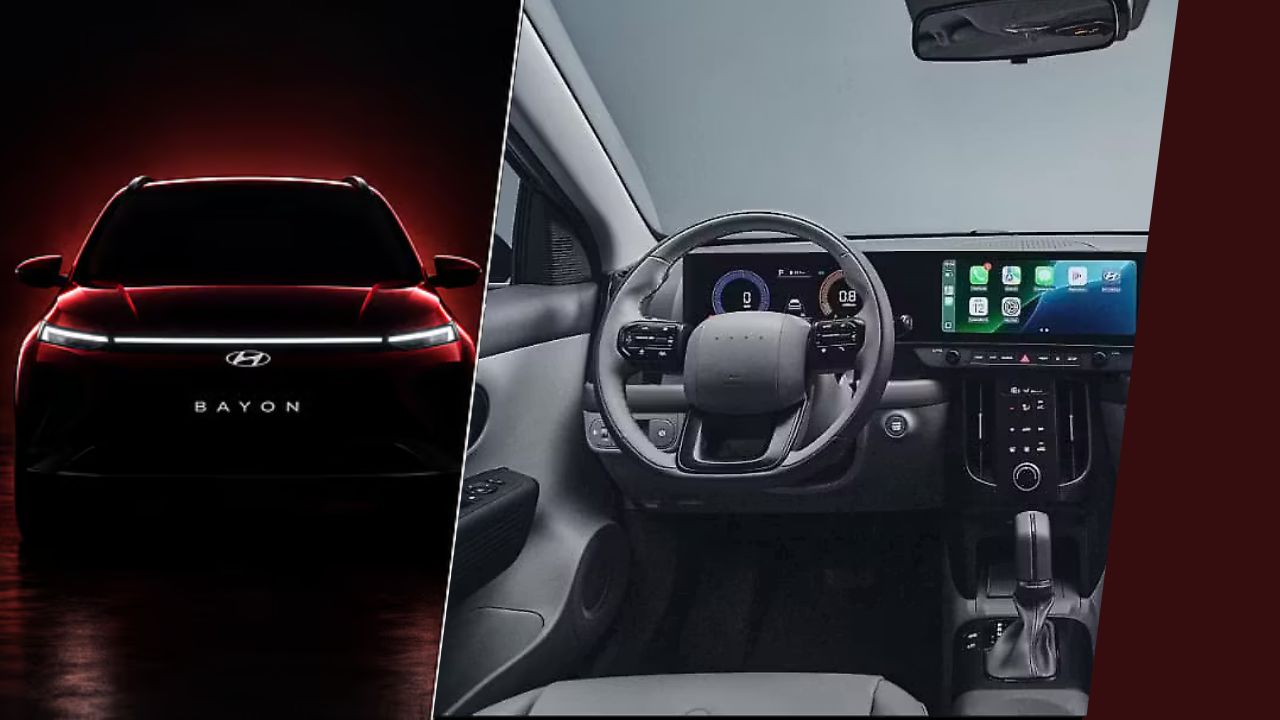
With advanced features, Hyundai never compromising on the safety of their customers. Expect a Level 2 ADAS suite and 6 airbags as standard, meeting the growing demand for safety tech in the Indian market.
Hyundai has confirmed the Bayon uses the Art of Steel language featuring sculpted surfaces and sharp character lines. Inside, the cabin takes heavy inspiration from the Brazil-spec fourth-generation i20. Hyundai also teased the Wheel specifics, it offers 17-inch dual-tone machine-cut alloy wheels wrapped in 215/55-section tyres.
Hyundai Bayon Rivals: The Crowded Compact Segment
The Bayon will battle the Maruti Suzuki Fronx, Tata Nexon, and even its sibling, the Venue.
| Feature | Hyundai Bayon (Expected) | Maruti Suzuki Fronx | Tata Nexon |
| Engine | 1.0L Turbo Petrol | 1.0L Turbo / 1.2L NA | 1.2L Turbo / 1.5L Diesel |
| Max Power | ~88.5 bhp | 100 bhp / 89 bhp | 118 bhp / 113 bhp |
| Price (Estimated/Current) | ₹10 – 15 Lakh | ₹7.51 – 13.04 Lakh | ₹8.00 – 15.50 Lakh |
| ADAS | Yes (Level 2 Expected) | No | No (Only basic features) |
How the Hyundai Bayon Stacks Up Against the Victoris
The most bigger rival is Maruti Suzuki Victoris since it already occupies the space the Bayon is aiming for and uses the same powertrain strategy. Victoris mild-hybrid petrol price starts at Rs 10.50 lakh for base variant and goes up at Rs 19.22 lakh for the top AWD automatic variant.
While the pricing for CNG and strong Hybrid variants can rise up to Rs 14.57 lakh and Rs 19.99 lakh respectively. Check the dealership price at your location because the total price depends on the additional charges of your city.
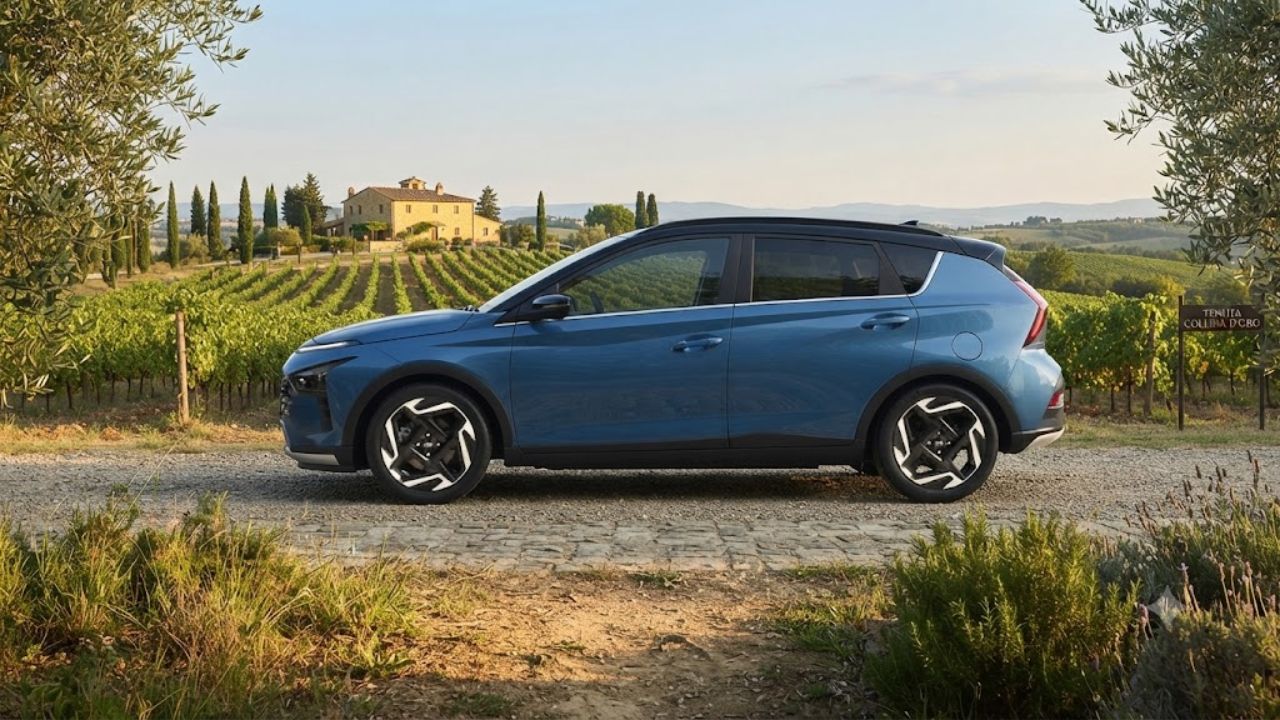
If the Bayon really does launch at Rs 9–14 lakh, its top-spec CNG or automatic variant would undercut the Victoris’s equivalent trims by a meaningful margin, while offering a smaller footprint. The trade-off is obvious: the Victoris gets a strong-hybrid option and AWD, neither of which the Bayon is expected to offer at launch.
If fuel efficiency and hybrid tech matter more to you than price, the Victoris still has the edge on paper — but if you want CNG practicality in a package smaller and cheaper than a full-size Creta rival, the Bayon is shaping up to be the more sensible buy.
Should You Wait for the Tucson or Buy Now?
This is really two different buyer conversations, because the Tucson and Bayon aren’t competing for the same money.
Hyundai has not announced the new 2027 Hyundai Tucson price and specification details for India. Nobody knows the actual launch date yet so treating any number online is a guess. Wait for this boxier Art of Steel design and the promise of a proper generational leap in refinement and tech, if you are not in a hurry to buy a vehicle this year. Buying any — a Skoda Kodiaq, Tata Harrier, the same segment makes more sense.
If you’re shopping in the Rs 10–15 lakh compact SUV space, the Hyundai Bayon is a much more actionable wait. Bookings have already opened, the festive-season launch window is real and near-term, and the CNG option addresses a genuine gap that the Victoris and Kushaq don’t fully cover at this price point. Unless you need a car immediately, holding off a few weeks to see final Bayon pricing and variant specifics is a low-risk decision — you’re not waiting on a car that might slip by a year, you’re waiting on one that’s already taking bookings.
Read Also 👉 Rolls Royce Unveils Custom Car Using Sea Snail Shells
Conclusion
These New Hyundai Flagship Models are expanding the company’s territory in the powerful SUV segment. The new 2027 Hyundai Tucson is coming back with refined components to deliver an excellent driving experience. On the other hand, Hyundai Bayon is launching in this year’s festive season with a CNG option, a direct rival to Victoris, Fronx, Nexon. Indian buyers who are looking for a new vehicle in a range of Rs 10 lakh can consider this flagship model to buy.
