
 Fuel efficiency has become one of the biggest priorities for Indian car buyers in 2026 after the prices of petrol and diesel go high. It is continuously growing so buyers are focusing more on how much a car will cost to run every day. Whether they are buying normal hatchbacks, sedans, or SUV the concern of finding most fuel efficient cars in India is prior.
Additionally, figuring out the car’s fuel economy through official ARAI mileage figures is old. Now people are calculating on fuel efficiency that is conducted in real-world road conditions and traffic because these factors have an impact on fuel consumption. That laboratory-tested number can only give you hints but it depends on the driving habit.
Let’s see what are those factors and which are the most fuel efficient cars India in 2026 for daily use.
Impacts of Different Engines on Car’s Fuel Efficiency
The Evolution of More Efficient Petrol Engines
The Indian car market is still dominated by naturally aspirated petrol engines while there are electric vehicles, hybrids, and CNG models. Car makers have been honing these engines for years to make them more fuel efficient without sacrificing reliability or driving up maintenance costs.
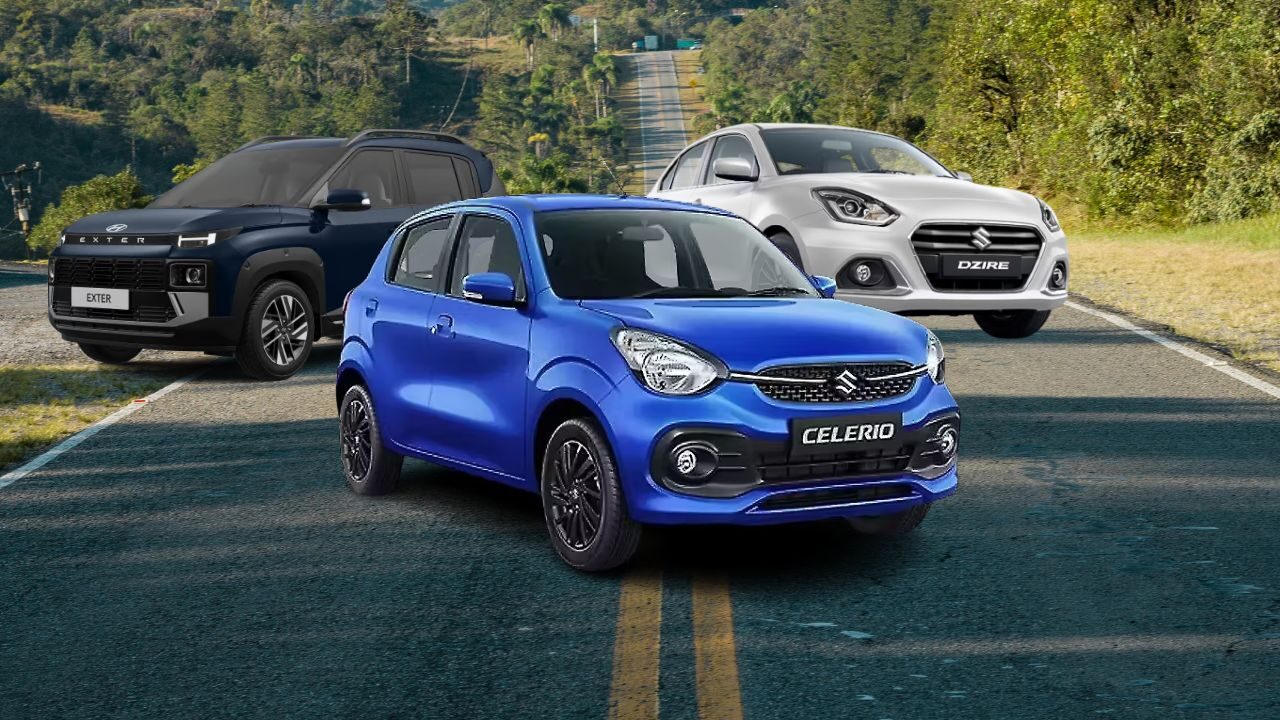
- 1. Maruti Suzuki Celerio is a proven example which is still the most fuel efficient petrol car in India. The Celerio is based on Maruti Suzuki’s new light-weight HEARTECT platform which enables the 1.0-litre K10C petrol engine to be more peppy without being more thirsty as the car weighs in at a mere ~760 kg.
Celerio gives 26.68 kmpl but 19–21 kmpl of mileage in city and 24 kmpl on highways claimed by the owner which makes it one of the most fuel-efficient petrol cars for daily use.
- The latest Swift and Dzire have also been a game changer for Maruti Suzuki. Rather than sticking with the old four-cylinder K-Series engine, the company launched the brand new 1.2-litre, three-cylinder Z12E petrol engine for the 2025 and 2026 editions. Although power output has dropped slightly to 82 hp and 112 Nm of torque, the priority now is fuel economy and smoother running at lower speeds.
The latest Swift weighs nearly 90 kg less than the previous generation which improves efficiency. These changes open real-world driving experiences more comfortably and reliably. The Swift Manual, rated at 24.80 kmpl by ARAI, but the real mileage is around 17–19 kmpl. If the driver is taking Swift on highway with steady driving, it delivers 22 kmpl while the AMT version gives 16–18 kmpl in city traffic as the early gear shifts making engine speed low.
Owners commonly report that the Maruti Suzuki Dzire delivers 15–17 kmpl in heavy city traffic which makes it also the best fuel efficient car. It becomes the most fuel-efficient compact sedan available in India. It gives 20–22 kmpl on highways.
| Vehicle Model | Powertrain | ARAI Claim (kmpl) | Real-World City (kmpl) | Real-World Highway (kmpl) |
| Maruti Suzuki Celerio | 1.0L K10C Petrol MT | 26.68 | 19 – 21 | 23 – 24 |
| Maruti Suzuki Swift | 1.2L Z12E Petrol MT | 24.80 | 15 – 17 | 20 – 22 |
| Maruti Suzuki Dzire | 1.2L Z12E Petrol MT | 24.79 | 14 – 16 | 19 – 21 |
| Toyota Glanza / Baleno | 1.2L Petrol MT | 22.94 | 15 – 17 | 19 – 21 |
| Tata Altroz | 1.2L Revotron Petrol MT | 19.33 | 12 – 14 | 16 – 18 |
These models highlight the fact that lighter platforms, modern engine design and better engineering are allowing petrol cars to still remain as a viable and economical option for Indian buyers.
CNG Cars are the Most Cost-Effective Choice for Daily Driving
CNG cars continue to offer the lowest running costs in India. After petrol engines, car buyers mostly choose CNG cars if they want efficiency but there is one major drawback was the large gas cylinder that occupied large space. Fortunately, manufacturers have solved this problem with smarter packaging solutions.
- Tata Motors has brought in a dual-cylinder CNG system, wherein the conventional single 60-litre cylinder is replaced with two smaller 30-litre cylinders placed under the boot floor. This design enables more space for luggage without impacting fuel capacity. Take the Tata Punch iCNG, for instance, it provides close to 210 litres of usable boot space, which is a whole lot more practical for everyday family use.
It offers a 1.2-litre three-cylinder Revotron engine that produces 72 hp and 103 Nm of torque. Tata Punch iCNG has a claimed mileage of 26.99 km/kg. In city roads the Punch returns approximately 20-21km/l and on highways.
- Hyundai is also bringing a Hy-CNG Duo system to market in the Hyundai Exter. Smart placement of the cylinders under the floor means the Exter still manages to hold an impressive 391 litres of boot space, which is among the largest for CNG cars in the segment. This makes it a great choice for buyers who want to combine cheap running costs with day-to-day usability.
The Hyundai Exter is equipped with the 1.0L Kappa naturally aspirated engine that generates 68 hp and 95 Nm of torque. Its four-cylinder design provides smoother acceleration, less vibration and quieter operation, a boon especially when travelling in busy city streets. The Hyundai Exter Hy-CNG carries an ARAI mileage rating of 27.10 km/kg, the Exter gets a realistic mileage of 22-23 km/kg on city roads and 31 km/kg on highways.
Selection between them often depends on priorities – the Exter provides more refinement and boot space, while the Punch impresses with its solid build, compliant suspension and a five-star Global NCAP safety score.
Read More:- Car Loan Interest Rates in India 2026 – Compare Banks and EMI Options
Strong Hybrids are Redefining Fuel Efficiency
If your budget lies between ₹15–25 lakh, strong hybrid cars are best for you. They are equipped with latest technology features, spacious cabin, and excellent design which represent your style without consuming high fuel.
Few models such as Toyota Urban Cruiser Hyryder, Maruti Suzuki Grand Vitara, and Honda City e:HEV are the best hybrid models of this year. It is built on a petrol engine combined with an electric motor and a battery pack to provide a level of real-world efficiency that is miles ahead of the traditional petrol cars.
These systems automatically transition between electric and petrol power based on the current driving conditions to make the most efficient use of energy. When the battery is out of charge, the petrol engine fires up automatically, and the electric motor and petrol engine work concurrently. It makes the car the best option for both city and highway driving.
Strong hybrids can run on electric power alone at low speeds, allowing the vehicle to move through traffic with minimal fuel consumption. Because the electric motor takes care of a lot of the driving at lower speeds, the petrol engine can stay off for long stretches, reducing fuel consumption.
- The Honda City e:HEV is as competitive as it gets when it comes to hybrid sedans in India. It offers a dual-motor hybrid system powered by a 1.5-litre Atkinson-cycle petrol engine that seamlessly switches between engine, electric and engine+electric drive modes to prioritize which mode to deliver power.
Honda SENSING The Electronics Room TSR (Traffic Sign Recognition) Detects traffic signs such as speed limit and stop signs (depending on region). It makes a lot of sense over the normal petrol sedans like the Volkswagen Virtus and Hyundai Verna which give around 12-14 kmpl in city driving as the monthly fuel bill can soak the City e:HEV.
- Both Toyota Hyryder & Maruti Grand Vitara are available with both mild-hybrid and strong-hybrid powertrains. This version offers 14–17 kmpl in real-world driving. In city driving, a strong-hybrid model gives 20–24 kmpl of mileage. And their electric power at low speeds, they are much more efficient than petrol or diesels of a similar size, particularly in stop-start traffic.
- Toyota has now also introduced hybrid technology in the Innova Hycross as well that returns 14-15 kmpl in real-world driving which is an impressive number for a big three-row MPV that tips the scales at close to two tonnes.
| Vehicle Model | Powertrain Architecture | ARAI Claim (kmpl) | Real-World Mixed Average (kmpl) |
| Honda City e:HEV | 1.5L Strong Hybrid e-CVT | 27.26 | 22.0 – 24.0 |
| Toyota Hyryder | 1.5L Strong Hybrid e-CVT | 27.97 | 21.5 – 23.0 |
| Maruti Grand Vitara | 1.5L Strong Hybrid e-CVT | 27.97 | 21.5 – 23.0 |
| Toyota Innova Hycross | 2.0L Strong Hybrid e-CVT | 21.10 | 14.6 – 15.0 |
Which Fuel-Efficient Car Should You Buy in 2026?
Fuel efficiency depends on how owners use their cars but some recommendations are mentioned below to make you guess what you need:
For high-mileage city drivers: there are a lot of options but the two undeniable ones are Cruiser Hyryder and Grand Vitara are the most strong hybrid. Because they can operate on electric power in stop-and-go traffic, they are the most efficient at falling below 20 kmpl in city driving while providing the drivers with a smooth automatic riding experience.
For budget-conscious buyers: There are petrol cars which are upgraded with CNG engines like Celerio and Wagon R, are the best if your budget is under Rs 9 lakh. They provide the lowest running cost. A 26-30 km/kg is a real-world efficiency that makes them the most fuel efficient cars to own.
For families prioritizing safety: Tata Punch iCNG has five-star Global rating and also provides low running costs without sacrificing boot space.
For premium sedan buyers: Honda City e:HEV is good for daily use, with advanced safety features and good fuel economy it becomes the perfect sedan in the market.
Conclusion
Choosing the most fuel-efficient car in India in 2026 is no longer just about looking at the highest ARAI mileage figure. Calculating fuel economy based on daily running costs and driving cost are the right way to know the fuel consumption.
The most efficient car for you is the one that fits with your driving style and helps you save fuel. Whether it’s petrol, CNG, or hybrid cars, buyers should choose the one which continues to deliver excellent real-world mileage.
