0

Hyundai Exter Facelift: Smarter Looks, Bigger Tech, Same City-Friendly Charm

Published Jan 31, 2026, 8:26 AM
Last Updated Apr 8, 2026, 7:20 AM

Hyundai Exter facelift

Hyundai Exter Facelift refresh is a smart play with no radical redesign, just some sharper styling, a tech-loaded cabin, plus practical upgrades that really matter. It stays true to being small, affordable, and ready for the city, while quietly levelling up to take on rivals like Punch and Fronx. 

Exterior Refresh: Subtle but Sharp

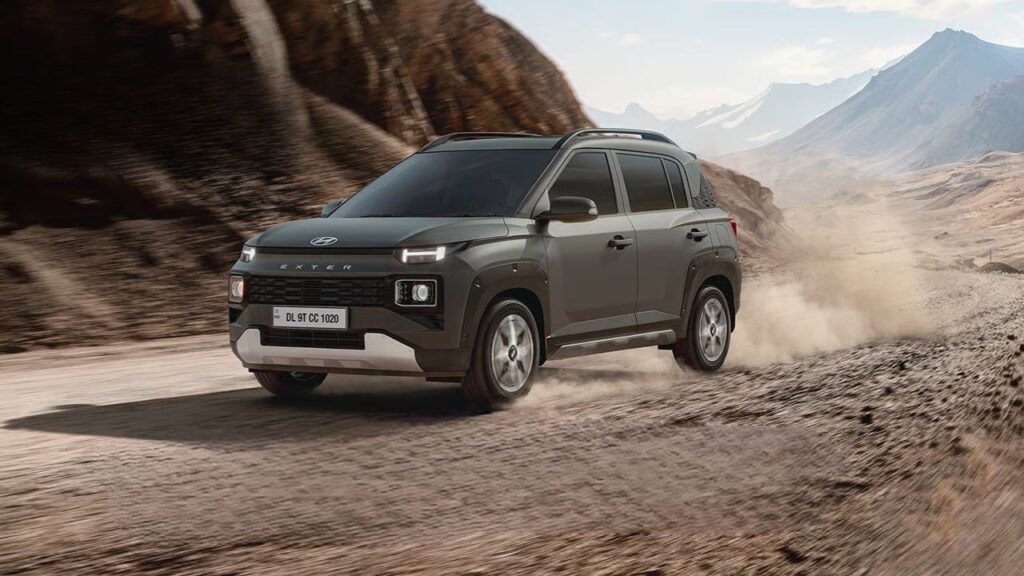
There’s no need to wait for car overhaul—Hyundai is playing it relatively safe and just cleaning up its looks. Spy shots reveal new alloy wheels as the first element catching the eye, together with a sportier stance. The front grille could be a bolder mesh style, the tail lights could be sharpened brighter with smoked accents, a redesigned rear spoiler brings that little bit extra for highway runs.

The full reveal is obscured by camouflage, but rumors point towards chunkier wheel arch cladding and redesigned side sills for a rougher look, inspired by the Venue’s rugged charm. 

Colors Options? New choices, such as a deeper Abyss Black or starlight Titan Grey, may be included in the range. Measuring less than 4 meters in length (to be exact, 3.8 m long), it’s compact and cute enough to be rested in the city, while vowing a firm stance on rough roads. 

Read More:-  Creta vs Seltos: The Battle of Korean Siblings That’s Tearing Car Buyers Apart

Interior Upgrades: Space and Smarts

This is the brightest point of the facelift – Hyundai is addressing real-world complaints. Cabin space increases up a notch, with whispers of some clever packaging to provide more rear legroom and a driver armrest for those long drives to Delhi or Agra. Split folding rear seats (60:40 format) also mean easier cargo hauls for weekend getaways. 

Tech also jumps forward in Hyundai Exter facelift. Imagine a giant 12.9-inch touchscreen powered by Android Auto OS (AAOS) — Hyundai’s first-wide market offering through which you can access third-party apps like maps or music without any hiccups. 

Placed alongside a 9.9-inch digital driver’s display, it is a cockpit upgrade that feels premium without the Venue price tag. Voice-enabled sunroof is also given and Ventilated seats? Possibly in top trims. Add Alexa integration, wireless charging, and a dual-camera dashcam and it’s a gadget lover’s dream. 

Comfort features such as a cooled glove box, plenty of USB ports and ambient lighting make things cosy. Considering the dimensions (under 4 meters) and the price (starting about ₹6-11 lakh), the interior feels well above its league for a sub-4-meter SUV. 

Powertrain

It offers 1.2-litre petrol engine to generate 82 bhp and 113.8 Nm of torque. With a slick 5-speed manual or an AMT on the flipside, it produces lively city dynamics and a claimed 19–20 kmpl fuel efficiency, gentle on your pocket and perfect for daily rides. 

Powertrain

Hyundai Exter facelift offers 68 bhp/95.2 Nm twin-jet unit with 5-speed manual comes back, and CNG-AMT tandem could make an appearance to take on competitors such as the Punch. No turbo or hybrid, yet, but Hyundai’s idle start-stop and battery saver are making this one clean. ARAI claims hold strong, which is a good thing considering the fuel prices in India. 

Safety Suite: Leveling Up

Safety is not a second thought. It retains the existing Exter’s 5-star Global NCAP rating with the addition of six airbags, ESC, hill assist and TPMS. Facelift Eyes adds ADAS goodies in the form of forward collision warning, lane keep assist, adaptive cruise, and blind spot alerts in top variants is rare for this price point.

Driving Experiencing on the Road

From the test mules, the Hyundai Exter facelift is expected to drive like the original – light steering for on U-turns, good high speed stability and suspension that absorbs bumps without feeling too soft. That extra cabin space? It’ll make a difference on family outings, cramming five with bags in no strain.

Driving Experiencing on the Road

Idle in mixed traffic 16-18 kmpl petrol, on CNG is good. It’s not a rocket, but overtakes feel confident, and the AMT eases the stop-go misery. 

Pricing Strategy for Hyundai Exter facelift

Expected to be priced around ₹6.5 — 11.5 lakh (ex-showroom) for Hyundai Exter facelift, the will be positioned below the facelifted Venue and bring in handsome volumes by stealing sales from Tata Punch, Maruti Brezza, and Mahindra XUV3OO. Pro Pack variants with extras such as dashcams sweeten the deal. 

Conclusion

With updated styling, a surprisingly premium cabin, robust safety features and familiar running gear, the Hyundai Exter facelift seems like a comprehensive package rather than a cursory update. If Hyundai prices it right, this sub-4-meter SUV has all the makings of the new value king of its segment. 

Sharey Khan

Sharey Khan is an IT entrepreneur and petrol head & a car enthusiast. With a special focus on car-related content, he combines his deep passion for vehicles with a talent for crafting informative, engaging, and easy-to-understand content. His writing is driven by a genuine love for cars and he is committed to providing readers with accurate, up-to-date, and trustworthy information that empowers smarter driving decisions. 

Leave a Reply

Your email address will not be published. Required fields are marked *

0

3 Affordable Full-Size Sedans Launching Soon You Should Wait For

Published Apr 27, 2026, 12:39 PM
Last Updated Apr 28, 2026, 12:37 PM

Sedans

For nearly 10 years, the automotive industry has been fixated on raising everything up on stilts. We observed automotive legends phased out or turned into SUVs, but now these 3 affordable full-size sedans launching soon are worth buying. 

To improve efficiency and range for a full-size car, automotive industries are focusing on better aerodynamics that make a huge comeback. If you’ve been clinging to your beloved old Toyota Avalon, Chevy Impala, or Chrysler 300, anxiously waiting for a competent successor that won’t require a second mortgage, you’re in luck.

We have a couple of sensational new sedans to follow for 2026 and beyond. So, let’s look further at these 3 affordable full-size sedans features and specifications. 

Why the Affordable Full-Size Sedans is Making a Comeback

After the market pivoted to SUVs, the manufacturers eliminated their full-size sedans because they were being pinched by midsize cars getting bigger and SUVs providing “commanding” ride heights. But here’s the 2026 reality check: plowing a heavy block of metal through the air kills your fuel economy and EV battery range. 

Sedans cheat the wind by definition. Sedans offer better aerodynamics and have a lower center of gravity which means smooth and comfortable ride as it gives better handling, a quieter cabin at highway speeds and substantially better fuel economy. What’s more, the contemporary EV-usable “skateboard” chassis design features a flat floor, with wheels pushed out to the extreme corners of the vehicle. This gives the forthcoming cars cavernous interiors that rival huge luxury SUVs, but at a fraction of the price. 

If you’re looking for big seats, big legroom, big road-trip cruising comfort, and a trunk you can really stuff things in all without the luxury tax hassles, these reasonably priced affordable full-size sedans are your golden ticket. 

1.The 2026 Dodge Charger 4-Door (SIXPACK & Daytona)

If you’re looking for big seats, big legroom, big road-trip cruising comfort, and a trunk you can really stuff things in all without the luxury tax hassles—these reasonably priced full-size sedans are your golden ticket. 

It’s giving vibes of no regrets, no apologies, a practical beast of burden. Dodge has basically built a minivan that wants to deck you. Keeping the old muscle body alive with an advanced platform (the STLA Large architecture). 

Features & Specifications

The biggest takeaway: You don’t have to go electric if you aren’t ready. The 2026 Charger is available in two distinct trims this time around from Dodge:

The Daytona (EV): The gas-car version that comes standard with all-wheel drive, a huge battery pack, and a “Fratzonic Chambered Exhaust” (yes, a fake exhaust system that’s as loud as a Hellcat V8).

THE SIXPACK (Gas): You can still have internal combustion too, in the form of a 3.0-litre twin-turbo I6, which Dodge are calling the Hurricane, and it’s going in this beast. It will come in Standard Output (about 420 horsepower) and High Output (more than 500 horsepower). 

The previous generation Charger was known for a small back seat despite its huge outside dimensions. The new 2026 platform corrects this problem entirely. The legroom in the back is said to be extraordinary, and with a rear liftgate (hatchback) configuration you will have SUV-like cargo space while maintaining a sleek sedan design.

Prices in the Base Gas models start in the low-to-mid $40,000s making it an affordable full-size car. It’s practical enough for school dropoffs and wild enough to make you smile on a deserted backroad. 

See Full Details: Hybrid Showdown: 2026 Honda Accord vs Toyota Camry hybrid

2.The 2026 Nissan Maxima (EV Rebirth)

Nissan’s “4-Door Sports Car” was nudged out quietly after a lengthy run, but its retirement is more of a hiatus. The 2026 Nissan Maxima is totally equipped with an electric motor to be Nissan’s flagship electric sedan.

The new Nissan Maxima is inspired by Nissan’s IMs concept that means it will drop a sleek and amazing design that could win your heart. Look for a clean, streamlined look — also referred to by designers as an “elevated sports sedan” which is a little higher off the ground than a traditional car but lower than a crossover. 

Features & Specifications

The 2026 Maxima will be built on the same platform that is used for the Nissan Ariya electric SUV which is a long-wheelbase version of the CMF-EV. 

Dual-Motor AWD: If you buy the higher trim, you can get up to 400 horsepower on this electric car with Ariya e-4ORCE all-wheel-drive system.

Range: It will be the real highway cruiser as Nissan expected to offer 300 miles range on a full charge. 

Charging: Expected to offer a 800-volt architecture to support super fast charging, making long trips easier. 

Up until now, it must be said that Nissan has nailed “affordable luxury” better than just about anyone when they set their minds to it. The previous Maxima was renowned for its super-comfy Zero Gravity seats and materials that were worthy of an Infiniti.

The new EV Maxima will carry that torch forward. Since electric motors occupy so little space, the new Maxima’s interior will be roomy. If a tranquil, whisper-quiet, tech-loaded executive sedan without an $80,000+ sticker for a Mercedes EQE or BMW i5 strikes your fancy, the seventh-generation Maxima seems like it could be your best bet in the full-size segment. 

See Full Detail: New BMW M4 2028 Coupe Digitally Enters The BMW Neue Klasse M4 Era

3.The 2026 Kia EV8 (The Stinger / K8 Successor)

Kia has been absolutely killing it lately. The EV6 and EV9 have scooped just about every major automotive award on the planet, but they’ve left a void in our hearts since the beloved Stinger and the Cadenza/K8 discontinuation. Enter the forthcoming Kia EV8 (internally referred to as Project GT1). 

Sleek and low, wide and quick to the point of menace. Looking at European models, Kia is becoming more affordable with its pricing policies. It’s easy to get a fastback roofline, distinctive LED lighting signatures and an outstanding look.

Features & Specifications

Now things are getting crazy. The EV8 is expected to be the first vehicle to be produced on Hyundai Motor Group’s new eM platform.

Massive Battery: Leaks suggest this phone will come with a massive 113.2 kWh battery. It’s larger than what you get in most full-size SUVs.

Crazy Range: The aerodynamic shape of the sedan combined with that giant battery pack has range estimates approaching 450 to 500 miles on the European cycle (expect a very realistic 370 to 400 miles on the EPA).

Power: The high-end GT model could potentially be over 600+ horsepower, the base RWD should have at least 200-300 horsepower, which is more than enough to achieve maximum range and low cost. 

Of the many new sedans scheduled for launch in 2026, the EV8 is expected to be the most high-tech. It’s not all about straight-line speed, eM is being designed with Level 3 autonomous driving capabilities and sports a software-defined architecture that will allow the vehicle to update and enhance itself over time via over-the-air updates.

If you want a tech-forward, hyper-efficient, long-range cruiser that provides executive-level a spacious space for less than $55,000, then the EV8 is the car to wait for. It’s going to be a lesson in how to combine cheap price & flagship-level features. 

Which Affordable Full-Size Sedans are Right for You?

Feature 2026 Dodge Charger (4-Door) 2026 Nissan Maxima (EV) 2026 Kia EV8
Best For… The muscle car enthusiast who needs family space. The tech-lover seeking a quiet, premium commuter. The road-tripper who suffers from range anxiety.
Powertrain Gas (Twin-Turbo I6) or EV EV (Single or Dual Motor) EV (Next-Gen eM Platform)
Vibe / Style Aggressive, retro-modern, muscular. Futuristic, elevated, sophisticated. Sweeping, aerodynamic, grand-tourer.
Estimated Base Price ~$40,000 (Gas) / ~$50,000 (EV) ~$45,000 ~$50,000
Standout Feature Fratzonic Exhaust & Hatchback practicality. Zero Gravity seats & lounge-like interior. Massive 113 kWh battery & crazy range.

How To Choose in These 3 Affordable Full-Size Sedans Over SUVs?

Still confused to decide which one is best in these upcoming cruisers? Here’s a quick rundown that may help you picture your choices. 

With the market being SUV-crazy right now, automakers are charging a premium for the “utility” body style. You can often get a well-equipped full-size sedan for the same price as a stripped-down mid-size SUV.

A car that is 6 inches lower to the ground will handle better, roll less and feel a whole lot more stable at 75 mph on the highway. People buy SUVs because they want space, but they never actually look at the real spec sheets. The back seat of a future Kia EV8 or Dodge Charger could actually have more room than a compact or mid-size SUV. 

If you are upgrading to an electric vehicle, drag coefficient is all that matters. SUVs are shoving a huge block of air out of their way. The new sedan launches 2026 cut through it. It takes you more miles, so you spend less time tethered to a plug on road trips. 

Conclusion

The era of the boring car is coming to an end. A long time ago, if you wanted a spacious, comfortable vehicle that didn’t cost an arm and a leg, your only real option was a crossover that handled like a soaked dish sponge.

The new sedan launches 2026 brought to bear are a sign that car manufacturers are at least somewhat hearing the pleas of drivers who want style, efficiency and driving dynamics without having to put horse power related passenger comfort. If you want to run tire-smoke like the Dodge Charger, or spend your commute in the lap of plush executive serenity like the Nissan Maxima, or believe you should be able to efficiently road-tip for days in a hyper environment friendly big car like the Kia EV8, the golden age of the big car is back.

0

Khan Sir Car Collection That Will Blow Your Mind

Khan Sir Car Collection

Some people admire others with their choices, Khan Sir also surprised his students and fans with his down-to-earth choice. Khan Sir Car Collection is not parked million-dollar luxurious cars, his garage reflects his mix of practicality, comfort, and style that matches his dynamic persona. He takes many student’s hearts with his teaching style and knowledge but Khan Sir’s garage is taking their brain too by admiring them for the simple but practical taste in cars. 


Taking a look at Khan Sir’s exclusive taste in cars will blow your mind as it reveals his lifestyle choices. From the strong and safe Tata Harrier to stylish and big Crysta, each car reflects his automotive engineering choices which leaves you impressed. 

Tata Harrier – The Premium Choice


Tata Motor isn’t introducing just a simple SUV but it is a remarkable segment that blends with muscular design, modern technology, and incredible high safety functions. Its strong body is proven for preventing passengers’ life risk during crashes. 

Exterior and Interior Design

Its exterior design including aggressive front grille, R17 alloy wheels and dual color option enhances its visual on the road. While its interior gives a premium feel with wooden inserts, infotainment system, and generous cabin space making every journey luxurious.

Tata Harrier

Image credit: cars.tatamotors


Features of Tata Harrier

The Tata Harrier is Khan sir’s favorite as it represents his choice of investing in an Indian automotive company. The Harrier offers a 1956cc diesel engine that delivers the speed of 167 bhp with 350 Nm torque, giving incredible experience in both city and long trips.


Features  Specification
Engine 2.0L Diesel
Transmission 6-speed manual & automatic
Safety Rating 5-star 
Mileage 16.8 kmpl (Approx.)
Boot Space 445L


The Tata Harrier SUV will provide up to 5 passengers to sit comfortably in its spacious cabin. This SUV is offering acceleration speed from 1-100 km/h in 10.8 seconds. Khan sir’s SUV is worth around Rs. 24 Lakh. 

Mahindra Scorpio – The People’s Favorite

The Mahindra Scorpio shows Khan sir’s special connection to common people as “he refuses 107 crore offer instead he chose to serve his mission for educating unprivileged students.” This SUV received huge popularity in north India due to its reliability and robust performance. 

Bold and Muscular Design

Whether you are going on city streets or rough off-road trails, the Scorpio will thrive on with ease. Its bold design stood out for commanding road presence. Dual-tone bumpers and skid plates for a rugged look and tall-upright body style and high ground clearance delivers an impressive look of an SUV that makes it a head-turner everywhere it goes. 

Mahindra Scorpio SUV from Khan Sir Car Collection with bold design and strong performance

Image credit: auto.mahindra


Features of Scorpio

Mahindra Scorpio is delivering outstanding performance without compromising comfort and convenience with its strong low-end torque and refined gearshifts. Interior comfort does not just end with driving features but it offers full premium experience with spacious cabin space, automatic climate control, navigation support in high-end infotainment systems. 


Features Specification
Engine 2184cc diesel
Transmission 6-speed manual & automatic
Seating capacity 7-seater
Mileage Around 14.4 kmpl
ADAS Cruise control, emergency brakes, warning system for lane departure, and forward collision


This car offers a 2184cc classic engine that delivers 130 bhp of power with 300 Nm Torque. It supports 60 litres fuel capacity and 7-seater leather seats for a comfortable ride, valued at Rs. 13.77 Lakh. This strong build and stylish design is making it perfect for professional use, reflecting Khan Sir’s practical approach to life. Scorpio has strengthened its ability on both rough and steep areas with its high ground clearance and robust suspension.


Toyota Innova Crysta – The Reliable Workhorse

Khan Sir travels on Toyota Innova Crysta for his daily visits to coaching centers. The premium quality offers spacious interior blends with comfortable seats, exceptional features, and proven reliability. The Crysta is very reliable for long tours with family or friends.

Elegant and Premium Design

It is perfect for family due to its comfort, reliability and practicality, the Crysta has earned its reputation with its proven durability with stylish design and premium features. Its aerodynamic body lines and 17-inch alloy wheels and wraparound rear lamps, making a sophisticated road presence.

Toyota Innova Crysta from Khan Sir Car Collection with premium comfort and reliability

Image credit: auto.mahindra

Features of Toyota Innova Crysta

Crysta’s interior is delivering comfort and reliability to its owner with high-quality material, climate control functions, and roof-mounted AC vents. Safety features are strong with 7 airbags, ABS with EBD and stability at fast speed making it reliable for highway trips.


Features Specification
Engine 2393cc diesel
Power 147 bhp
Transmission 5-speed manual
Seating Capacity 7 seater
Mileage 16 kmpl
Fuel Capacity 65 litres


This car is designed with advanced safety features including Vehicle Stability Control, Electronic Brake, 7 Airbags, ABS with EBD, Camera view, for long-distance trips. Comfortable seats and spacious cabin with multiple storage options, making it an ideal car for families. Khan Sir’s Toyota Innova Crysta valued at Rs. 19 lakhs.

Conclusion

Khan Sir Car Collection is inspiring for many students who have been following him. Life of Khan Sir is just as simple as it seems in his classes. His choices of cars with simplicity and practicality become more impressive, these cars are not just simple but they are reliable for personal and professional use. 

0

Hyundai Cars See Major Price Reductions Under GST 2.0 Reform

Published Sep 24, 2025, 11:28 AM
Last Updated Apr 22, 2026, 11:35 AM

Hyundai Motor India has significantly benefited from the GST 2.0 reforms that took effect on September 22, 2025. The company passes all the perks of lower taxes right away with buyers. The updates rates of GST cuts down the real price of Hyundai Cars, buyers can save from ₹60,640 up to ₹2.40 lakh. GST 2.0 changes mark India’s biggest tax update since the 2017 GST launch. The government has simplified the complex four-tier structure (5%, 12%, 18%, 28%) into simplified form (5% on basics and 18% on regular items). And the luxury rate with 40%, let’s look what it means to Hyundai cars:

Small cars with 1200cc petrol, 1500cc diesel, and ≤4m length get a reduction from 28% to 18% GST.

Larger Cars and SUVs get down to 50% including cess, now GST rate set at 40%

Electric vehicles continues at 5% GST rate

Model-wise Price Reductions

Hyundai’s price cuts in different ways for various vehicle types with SUVs receiving the most substantial reductions. 

Premium SUVs

Tucson Up to ₹2.40 lakh reduction (highest across the lineup)
Alcazar Up to ₹75,376 cheaper
Creta Up to ₹72,145 reduction
Venue Up to ₹1.24 lakh lower
Exter Up to ₹89,209 price drop

Sedans

Verna Up to ₹60,640 reduction
Aura Up to ₹78,465 cheaper

Hatchbacks

i20 Up to ₹98,053 reduction
Grand i10 Nios Up to ₹73,808 price cut

Market Impact and Sales Performance

Image credit hyundai

GST 2.0’s launch during the festive period sparked huge market energy. Hyundai recorded 11,000 dealer billings on September 22, 2025 making a huge single-day performance than the five years of sales. This remarkable hit emphasizes how price cuts boosted buyer interest towards Hyundai cars. 

Tarun Garg, Whole-Time Director and COO at Hyundai Motor India welcoming the positive market response. “Navaratri’s lucky beginning, boosted by GST 2.0, changed the company’s sales growth and brought real energy to the market.

GST Rate Categories for Hyundai Models

The rates are decreased as per the new GST structures, there are several Hyundai Models which are represented here with saving percentage that applied on it.

Image credit: hyundai

Vehicle Category Savings GST rate cuts
Sub-4 meter petrol vehicles 11% savings from 29% to 18%
Sub-4 meter diesel vehicles 13% savings from 31% to 18%
Larger cars with engines up to 1,500cc 5% savings from 45% to 40%
SUVs above 4m with engines 1,500cc 10% savings from 50% to 40%

From Old Price To New Price After Reduction + Festive Offer

Models Old Ex-Showroom Price GST Reduction New Ex-Showroom Price Additional Offer Up To
VENUE ₹7,94,100 ₹67,719 ₹7,26,381 ₹50,000
EXTER ₹6,20,990 ₹52,957 ₹5,68,033 ₹70,000
i20 ₹7,50,900 ₹64,035 ₹6,86,865 ₹50,000
AURA ₹6,54,100 ₹55,780 ₹5,98,320 ₹40,000
Grand i10 NIOS ₹5,98,300 ₹51,022 ₹5,47,278 ₹55,000
ALCAZAR ₹14,99,000 ₹51,695 ₹14,47,305 ₹65,000

Industry-wide Transformation

Image credit: hyundai

The GST 2.0 changes have wider impacts through India’s car sector. All the big companies—car manufactures offer huge price cuts as Hyundai gives to its customers. Dropping the compensation cess cuts rates. The new GST structures simplified things and made it clear for the buyers.

Read More:-  Maruti Suzuki Victoris: The Family SUV Everyone’s Waiting for in 2025

Effective Date and Implementation

All revised prices became effective from 22 September 2025, clashing into the festive season in India. This combination boosts the sales for all the vehicle manufacturers.The holiday time has always been prime for buying cars.

Conclusion

This comprehensive price reduction across Hyundai’s lineups combined with additional festive offers, making its brand compete better in India. The GST 2.0 changes bring big benefits to buyers and let more people afford cars. Those buyers who are interested in basic and mid-range models become more happy because the price reductions are most substantial in that segment.

0

Volvo XC90 vs Audi Q7: Price, Features, Performance & More Compared!

Published Jun 5, 2025, 5:43 AM
Last Updated Apr 22, 2026, 11:38 AM

Many buyers compare the 2025 Volvo XC90 vs Audi Q7. Both are large luxury SUVs with three rows of seats. They have modern designs and tech. They are sold in the US and UK. But there are key differences. We look at price, interior, tech, safety, performance, fuel economy, space, warranty, and more. This guide helps you see the strengths and weaknesses of each.

Pricing of Volvo XC90 vs Audi Q7

Pricing of Volvo XC90 vs Audi Q7

United States

In the US, the Volvo XC90 starts around $59,745 for the base model. Volvo also sells higher trims (Plus, Ultra) up to about $68,245. The Audi Q7 starts slightly higher in price. Its base Premium trim has an MSRP around $61,795 (the Q7 Premium Plus and Prestige trims cost more). In general, the Audi Q7 costs a bit more than the Volvo at entry level in the US.

United Kingdom

In the UK, the starting price for the base Volvo XC90 Core trim is around £63,790. Volvo’s RRP range goes up to around £84,260 for top trims. The Audi Q7 in the UK starts at about £71,525 OTR for the S line trim. Audi also offers higher levels (e.g. Vorsprung over £94,000). 

Interior Features of Volvo XC90 and Audi Q7

The Volvo XC90 interior is clean and modern. It has a large portrait-style touch screen (11.2 inches) in the center. The cabin features clean, simple lines and is built with high-quality materials. Volvo even uses eco-friendly seat fabrics (Nordico textile) in some models. The XC90 seats up to 7 people. The second row has three seats that slide and recline, giving good knee and headroom. 

The third row is smaller, best for children or short trips. Volvo’s Core trim includes Google-based services and driver aids built in (like adaptive cruise control and blind-spot warning). Higher trims add nicer sounds and lighting. One drawback: some reviews note that the XC90’s infotainment can feel dated and it lacks Android Auto support.

The Audi Q7 interior is upscale. It also seats seven (though some models drop the third row). Audi’s cabin has premium leather, nice trims, and a classic layout. A standout feature is the Virtual Cockpit—a fully digital 12-inch display that’s sharp, clear, and easy to customize.

There are multiple screens (including a tablet-style MMI touch screen) and an available head-up display. The Q7’s seats are well-cushioned and roomy. In tests, tall adults fit comfortably in the second row, and the Q7 offers three separate second-row seats that can slide fore and aft. Overall, the Audi interior feels very high-tech and solidly built.

Technology of Volvo XC90 vs Audi Q7

Technology of Volvo XC90 vs Audi Q7

Both SUVs have modern tech, but they take different approaches. The XC90 uses Volvo’s new Android-based system. The XC90 has over-the-air updates for its software, so features can improve over time. It offers wireless Apple CarPlay, but no Android Auto. The touchscreen is large and high-resolution, and many controls are touch-based.

The Audi Q7 uses Audi’s MMI interface. It includes an online navigation system and supports both Apple CarPlay and Android Auto. Audi’s infotainment system is quick to respond and supports voice commands for easy control.

Both vehicles have lots of driver aids: lane-keep assist, blind-spot alert, parking sensors, etc. In summary, Volvo’s tech is centered on Google integration, while Audi focuses on its own polished MMI system with a sharp digital cockpit.

Safety of Volvo XC90 vs Audi Q7

Safety is a strong point for both models. Volvo markets the XC90 as “one of the safest cars on the road”. It comes standard with many safety systems: automatic emergency braking, lane departure warning, blind-spot monitoring, rear cross-traffic alert, and more. 

Volvo often earns top marks in crash testing (though exact 2025 crash ratings are not yet available, the brand has a strong safety reputation).

The Audi Q7 also scores very high on safety. In the United States, the 2025 Q7 earned the IIHS Top Safety Pick+ award. The Audi Q7 also comes with many standard features: blind-spot detection, lane-keep assist, rear automatic emergency braking (per IIHS notes). 

Performance of Volvo XC90 vs Audi Q7

Under the hood, the Volvo XC90 offers two main gas engines (mild hybrids). The base “B5” turbocharged 4-cylinder engine produces around 247 horsepower, and it comes standard with all-wheel drive and an 8-speed automatic transmission. For a hybrid boost, Volvo also offers a T8 plug-in version (not covered here), which boasts significantly higher power. The XC90’s power feels smooth and adequate. It is not meant to be a sports car, but it can still merge and pass with reasonable ease.

The Audi Q7 comes with either a turbocharged 2.0L four-cylinder (badged 45 TFSI) making about 261 hp, or a turbo V6 (55 TFSI) making 335 hp. In fact, Audi claims the V6 model can go from 0 to 60 mph in about 5.5 seconds. 

Even the base 2.0T is no slouch, taking roughly 6.9 seconds to 60 mph in testing. The Q7 delivers power in a smooth and polished way. In general, the Audi feels more powerful and quicker than the XC90, especially in higher trims.

Fuel Efficiency of Volvo XC90 and Audi Q7

Fuel Efficiency of Volvo XC90 and Audi Q7

The Volvo XC90 in gas form has EPA ratings of about 26 mpg combined for the B5 model, and 23 mpg combined for the B6 model. In city/highway terms, the B5 is roughly 23/30 mpg, and B6 is 20/26 mpg. In practice, expect mid-20s in normal driving. The XC90 plug-in hybrid (T8) can drive about 45 miles on electric alone before the gas engine kicks in, which saves fuel on short trips.

For the Audi Q7, EPA combined fuel economy is around 21-22 mpg for the gasoline models (according to recent reviews). Both the 2.0T and 3.0T engines get an average of around 21 mpg combined. 

In general, the XC90 hybrid tends to be slightly more fuel-efficient due to its advanced mild-hybrid tech, especially in city driving, while the Audi’s larger engine means a bit lower mpg. However, both vehicles will not match the fuel economy of much smaller SUVs.

Also Read : Jeep Compass vs Subaru Crosstrek: Which Compact SUV Should You Really Buy in 2025?

Conclusion

The Volvo XC90 vs Audi Q7 debate comes down to priorities. Both are three-row luxury SUVs with strong safety and features. The XC90 stands out for its safety-first design, clean Scandinavian interior, and available hybrid powertrain. It also tends to be a bit less costly. It is roomier when all seats are up and has won top safety honors too. 

For a buyer who values safety and a simple, modern cabin, the Volvo may be best. For someone who wants sportier performance and a more luxury feel, the Audi is a great choice. In either case, both the 2025 XC90 and Q7 offer a premium experience, so it often comes down to which brand and driving style you prefer. 

0

EV vs Petrol vs Hybrid: Which Car Type Is Perfect for You in 2025?

The 2025 car market is unrecognizable compared to just a few years ago. Between that and gas prices rising and EV charging networks growing and brands doubling down on hybrids, there’s now an embarrassment of options for buyers. But more options can make things confusing— EV vs Petrol vs Hybrid, do you go with a petrol car you know and trust, get a full electric vehicle, or take the middle ground in a hybrid? They all have their strengths, costs and suitability to one’s lifestyle. In this guide we’ve distilled the key differences — in running costs, convenience and the newest models — to help you decide which type of car really fits your life in 2025. 

Comparison At A Glance

Choose an EV if most of your daily driving is city/commute (≤100–200 km/day), you can charge at home/work, and you want the lowest running costs and least hassle. Opt for a Petrol car if you frequently do high mileage where chargers are sparse, need quickest refuel and lowest initial outlay, or biggest model/network. Get a Hybrid if you desire much more fuel economy than petrol, far less range-anxiety than a full EV, and you travel a lot on combined city/highways runs. 

Factors That Define Which Car Type is Perfect For You in 2025

Upfront price Value for EVs, Petrol, & Hybrid Cars

  • Mainstream EVs in India in 2025 start at around mid-₹7–12 lakh for city-centric models and extend to ₹20 lakh+ for full-sized SUVs and premium cars. (dealer listings reveal plenty of choice throughout the price spectrum).
  • Petrol cars are the cheapest to begin with – good small hatchbacks are available for much less than ₹7 lakh.
  • Hybrids (mild/strong/plug-in forms) are priced between petrol and EVs; popular models (Maruti, Toyota, MG) tend to start ₹8–12 lakh. 

Running Cost for EVs, Petrol, & Hybrid Cars

EV home charging is usually in the range of ₹6–₹10 per kWh, which in the case of regular hatchbacks or small SUVs works out to about ₹0.8–₹1.5/km – still a lot less than what petrol costs. 

Cost of petrol per litre for running cost. For city driving (15–18 km/L) that works out to around ₹5–8 per km per km – but it depends on the model and the city. 

EVs are miles ahead on running costs per km if you have dependable home charging or cheap, electric-friendly, off-peak tariffs.

Convenience & everyday life: charging refuelling

Refuelling petrol: 3-5 min at any petrol station. They are all spaced evenly everywhere. 

Charging EVs: home charging overnight is most convenient (adds minimal friction). While public fast chargers are becoming more numerous and reliable, they remain patchy; national and private initiatives are working to expand the networks. The IEA expects a significant rise in public chargers in the next few years.

EV convenience recedes significantly if you live in a flat with no assured parking/charger access and no workplace charging. 

Range for practical everyday use & long haul trips

Budget EV hatchbacks tend to have 200-450 km of usable range depending on the variant. For a few long journeys you can plan for charging breaks – slower than filling up on petrol, but it can be done.

Hybrids and petrol vehicles offer seamless, rapid long-distance travel without the need to stop and recharge — which is a significant advantage for highway users.

Government assistance & incentives (important if you are buying now)

Various central and state subsidies (through portals such as e-AMRIT, the FAME scheme details) exist albeit till date non-uniformed, the state EV policies — these can significantly reduce the cost of the EV or of the charging infrastructure. FAME II and related demand incentives have informed subsidies and procurement schemes. Refer to e-AMRIT/FAME pages and your state policy before purchasing.

(Practical advice: incentives are frequently models- and region-specific. All EVs don’t get the same perks, check with dealer + State EV policy). 

Read More:-  Hyundai Elantra 2025 Review: Price, Trims, Hybrid & N Line Features Revealed!

Maintenance, Resale and Dependability

EVs: Less moving parts → less scheduled maintenance (no oil changes, fewer brake jobs because of regen braking). The health of the battery is the biggest long-term concern; warranties on batteries are provided by manufacturers (usually for 8 years/1.6 lakh km or so on a number of models).

Petrol: Well established service network and cheap spare parts in India, high predictability.

Hybrid:The addition of a hybrid system (engine + electric components) brings complexity, but manufacturers like Toyota have decades of proven hybrid tech and solid service networks in India.

The resale value for EVs is stabilising, but it still depends on the model – stick to well-known, popular brands for reduced risk. 

Environment & Social Aspects

Lifecycle vehicle emissions of EVs are a function of the electricity mix, as they have no tailpipe emissions. India’s grid is greening and policy pushes gradually lower lifecycle emissions for EVs. Hybrids reduce emissions versus petrol, particularly in urban driving. 

Simple decision checklist: who should choose which option

Pick EV if:

You drive less than 300 km a day and most of your trips are within the city. If you can charge at home (private parking) or your office provides charging and desire to have the lowest running cost and lesser maintenance hassles. It’s best if you care about low tailpipe emissions and technology-enhanced features.

Pick Petrol if:

You do at least some long highway cruising, you travel out into the country, or you just live where EV chargers are hard to find. You want the lowest initial cost and refuel fastest and have access to the widest network.

Pick Hybrid if:

You’d like to get vastly superior fuel economy to petrol without having to depend on charging stations. You do both city and highway driving and want to move seamlessly through both without the need to plan your route around charging stops. You also like tried and tested reliable (Toyota/Maruti strong hybrids have a good track record in India).

Some Latest Models of EV / Hybrid / Petrol Cars

Type Model Key Specs
Electric Vehicles  Tata Harrier EV Launched mid-2025. Comes with AWD dual-motor option, very impressive real-range (up to ~627 km MIDC in best variant). Strong contender in the mid-size SUV EV space.
Hyundai Creta EV Scheduled early-2025. Multiple battery pack options. Expected range ~390-470 km depending on battery size. Features like DC fast charging, interior tech upgrades.
Maruti Suzuki e-Vitara To launch in mid/late 2025. Two battery options (≈49 kWh and ≈61 kWh), claimed range up to ~500 km in some trims. Will compete with Creta EV etc. 
Hybrids Toyota / Maruti / Suzuki strong or mild hybrids (Grand Vitara strong hybrid) Coming in H2 2025. Third-row / 7-seater version too. Strong hybrid (self-charging) gives the benefit of much better mileage than petrol alone. 
Toyota Fortuner Mild-Hybrid Neo Drive Already launched in 2025. Adds mild-hybrid tech to the Fortuner to improve stop-start behaviour, small torque assist etc. Good for those who drive big SUVs but want improved efficiency.
Hyundai Creta Hybrid Already launched in 2025. Adds mild-hybrid tech to the Fortuner to improve stop-start behaviour, small torque assist etc. Good for those who drive big SUVs but want improved efficiency.
Petrol Mahindra Thar / Bolero Updated models set to launch in Oct-2025. These are mature, rugged, proven petrol SUVs with facelifted features. Good for off-road / rural tasks or for those who like strong looks + robust service
Skoda Octavia RS For those looking for a more premium sedan with petrol performance and features. The RS version adds sportiness. May have higher maintenance costs but strong appeal if you want power + brand.

Conclusion

There’s no such thing as the “best” car for everyone, because EV vs Petrol vs Hybrid is a confusing debate but what works for one person depends on how they drive, where they live, and what kind of vehicle they find most useful. If you mostly drive in a city, and have reliable access to an outlet, an EV provides unparalleled running costs and a green driving experience. If highway and long road trips are the staple of your life and you want to fill up as quickly as possible—and as cheaply as possible up front—gas cars are still the prudent choice. And if you want to save fuel but don’t want to plug in, hybrids give us the best of both worlds. In the end, the ideal car for you in 2025 isn’t what’s the biggest hit of the day — it’s the vehicle that fits your everyday life and your plans for the future.