0

Mercedes-Benz GLS SUV Impact on the Global Automotive Industry

Mercedes-Benz GLS SUV

The Mercedes-Benz GLS SUV is the benchmark for luxury full-size SUVs by virtue of its advanced design, engineering excellence and boundless roominess. The GLS replaces the GL-Class in that role, and not only has it established itself as the flagship model in the Mercedes lineup, but as a global automotive leader. It’s not just superficial, it revolutionizes the way SUVs are constructed and what customers expect in a luxury SUV. This evolution embodies the creativity with which Mercedes-Benz continually leads in luxury, and once again. 

How the Mercedes-Benz GLS Redefined Luxury SUV Standards Worldwide

The GLS, originally known as the GL-Class and rebranded in 2016, raised the bar for full-size luxury crossovers with three rows of seating for seven passengers. Sitting atop the GLE, it delivers imposing presence alongside state-of-the-art Airmatic air suspension (AIRMATIC) and luxurious interiors adorned with Nappa leather and wood veneers. Worldwide, it set higher standards for SUVs for competitors like the BMW X7 and the Cadillac Escalade to live up to in terms of refinement and technology suites, such as MBUX infotainment with dual 12.3-inch displays. 

This vehicle established the term “S-Class of SUVs” as a category label, mixing limousine comfort with off-road capability through 4MATIC all-wheel drive. Sales that surpassed expectations – more than 20,000 Maybach versions every year around the world – revealed the appetite for such flagships, shaping shifts in the industry towards the ultra-premium. 

Reshaping Global Manufacturing Hubs

A landmark 2026 decision also allowed India to become the first market outside the US to manufacture the Mercedes-Maybach GLS locally at the Chakan facility near Pune. That hammered prices by more than ₹40 lakh, from ₹3.17 crore to ₹2.75 crore ex-showroom, making ultra-luxury achievable in the midst of India’s surging affluence. India’s ascent to a top-five global Maybach market in 2025, with 2024 sales surpassing 500 units (predominantly GLS), proved “Make in India” for premium autos. 

There are two things to watch here: first, a growing focus on developing rather than developed economies as the centers of production. The localization of Mercedes diminishes import duties, waiting time and the carbon foot from shipping, which has Volkswagen and Audi considering similar tactics in Asia. It strengthens India’s auto eco system, generating skilled employments and local supplier network for customised components. 

Driving Innovation and Technology Adoption

The GLS introduced features that are now industry standard, such as adaptive cruise control with lane-keep assist and 360-degree surround cameras, years before they were required by law. Its mild-hybrid powertrains (3.0L I6 or 4.0L V8) offer the right mix of performance (up to 550 hp in Maybach) and efficiency, pushing rivals toward electrification—EV penetration in Mercedes’ high-end climbed 20% by 2026. The air suspension with off-road programs and up to 36mm ground clearance set a new standard for SUV flexibility. 

Driving Innovation and Technology Adoption

Safety-wise, PRE-SAFE Impulse Side and the transparent hood technology with camera raise the bar, also influencing Euro NCAP standards. On a global level, GLS demand pushed luxury brands to more R&D on hyperscreens and Level 2+ autonomy. 

Mercedes-Benz GLS Market Growth and Its Impact on Global SUV Competition

Reliable, practical and comfortable, this helped Mercedes to take the lead in the luxury SUV segments, putting pressure on Range Rover. It sold more than its rivals in the US and China—two key markets—and recent 100%+ year-on-year Maybach growth in India for Maybach in 2024 signals growing dominance. This forced BMW and Audi to bring their flagships up to a higher level, creating a virtuous cycle of innovation.

Mercedes-Benz GLS Market Growth

GLS, meanwhile, gives Mercedes a handsome margin (Maybach 2019 over 20,000 units/year) and halo effect to bring buyers into to the most basic models. In an environment where luxuries are forecast to grow at single digit in 2026, it maintains its premium pricing power. 

Cultural Influence of the Mercedes-Benz GLS SUV

Behind the specs, the GLS is wrapped in aspirational packaging, showing up in Bollywood films and CEO garages that lends Mercedes some brand prestige. 

Aspect GLS Impact Competitor Response
Pricing Strategy India localization drops ₹40L+  BMW eyes Asia plants
Sales Growth India top-5 Maybach market  Audi ramps X8 production
Tech Features MBUX, AIRMATIC standards  Escalade adds Super Cruise
Production Hubs India 2nd after US  VW explores India EVs

Its massage-equipped, chauffeur-friendly rear executive seats serve global elites, helping to change perceptions away from tough SUVs and toward mobile offices. Environmentally, logistics emissions are reduced by producing locally, in line with sustainability drives. 

Read More:-  Ramesh Babu Car Collection: India’s Biggest Luxury Rental Garage

Conclusion

While looking ahead for Mercedes-Benz GLS SUV hybrids and EVs by 2027, its legacy continues in redefining luxury mobility. From Tuscaloosa roots to Pune production, GLS exemplifies the engineered versatility that propels the industry. With a 2025 re-election for President Trump driving US-India trade negotiations, more such cross-border successes are on the cards. 

Sharey Khan

Sharey Khan is an IT entrepreneur and petrol head & a car enthusiast. With a special focus on car-related content, he combines his deep passion for vehicles with a talent for crafting informative, engaging, and easy-to-understand content. His writing is driven by a genuine love for cars and he is committed to providing readers with accurate, up-to-date, and trustworthy information that empowers smarter driving decisions. 

Leave a Reply

Your email address will not be published. Required fields are marked *

0

Best Second Hand Cars to Buy in India – Used Car Buying Guide

Published Jun 22, 2026, 10:37 AM
Last Updated Jun 22, 2026, 11:04 AM

Best Second Hand Cars

Car pricing is rising constantly in India and right now, cars are becoming an essential part of everyone’s life. Buying a Second Hand Cars is becoming a smart option because every new model of car value depreciates after two or three years, so most people secure themselves by spending over on a new one when they can get that model at half of price. Used cars are also a great option for first time buyers.

But it’s not that simple, you must know that the used cars market is in large numbers and choosing the right one is difficult. Every seller wants to pass off the car by saying “fully maintained”, “good condition”, and present it in an excellent condition without telling you the truth. They won’t tell you if there’s any flood-damaged or accident-repaired. That’s why buying a used car requires more than just finding a good deal. 

Let’s look into this guide to understand how you can buy a Second Hand Cars and which models can be good to pick in 2026. 

Why Second Hand Cars Are a Smart Choice in 2026

There is a financial reason for buying Second Hand Cars. A new car loses its value around 15–20% in the first year after it leaves the showroom. So buying a two or three-year-old car instead, you avoid that major depreciation which was faced by first hand car owners. While you get a well-maintained vehicle at a much lower price. 

A few other reasons second hand cars are gaining popularity in India:

  • Lower upfront cost means smaller loan amounts and lower EMIs.
  • Better insurance premiums since the insured declared value (IDV) is lower than a new car.
  • Access to higher segments – don’t pick five/six years old models to buy, choose a used premium sedan or SUV for the price of a brand-new entry-level hatchback.
  • Certified used car programs like Maruti True Value, Mahindra First Choice, clear your mind and help you to choose the right car. There are other brands that offer such programs like Hyundai Promise, and Toyota U Trust, these have made the process far more trustworthy than it used to be.
  • Online platforms also provide inspection reports, warranties, and even doorstep delivery for second hand cars. You can check OLX autos and CarDekho to find out. 

Those days were long gone when buying a second hand cars was a mistake because the market has now matured enough to make it a sensible financial decision rather than a compromise.

Best Second Hand Cars to Buy in India by Category

Not every used car is a good used car. There are few models that offer reliability, better value and easier to maintain over time. So let’s check out which second hand cars are best to buy.

Best Second Hand Hatchbacks

Hatchbacks are usually the easiest entry point into car ownership, and they remain extremely popular in the used car segment because of low maintenance costs and great fuel efficiency.

  • Maruti Suzuki Swift – Arguably India’s most popular used car. Strong resale value, easy availability of spare parts, and a massive service network make it a safe choice.
  • Hyundai i20 – It offers more premium features that let you feel excellent drive, a good pick if you want something a notch above the basics.
  • Maruti Suzuki Baleno – Ideal for those who are looking for a hatchback that offers good fuel economy, and decent resale value.
  • Tata Tiago – Tata is number one in safety rating, proved in many real accidents. Some variants build on solid structure, appealing to safety-conscious buyers.

Best Second Hand Sedans

If you want more comfort on long drives and a bit more road presence, a used sedan is worth considering.

  • Honda City – Known for being a driver’s car with smooth performance and excellent reliability. A used City is almost always a safe bet.
  • Maruti Suzuki Ciaz – Best to buy if you want a spacious cabin, low maintenance costs, and reasonable fuel economy.
  • Hyundai Verna – Offer best features and comfort drive that let you have a premium experience.
  • Skoda Rapid / Volkswagen Vento – Great for those who want a more “European” driving feel, though maintenance costs can be a bit higher.

Best Second Hand SUVs and Compact SUVs

New SUVs and compact SUVs attract everyone these days with their comfort and reliable nature. The Second Hand SUV market has grown rapidly as a result. 

  • Maruti Suzuki Brezza – Brezza is easy to maintain so it’s the top pick in the used compact SUV list. It offers good fuel efficiency that also makes it the best choice.
  • Hyundai Creta – Most buyers wanted a powerful SUV with advanced features and safety suite and Creta is the best option in used SUV.
  • Kia Seltos – If you want to buy a stylish second hand SUV loaded with tech then Seltos is the best option.
  • Mahindra XUV300 – Good safety ratings and a punchy engine, a strong contender if you want something rugged.
  • Tata Nexon – Excellent safety scores and solid built quality, often available at attractive used prices.

Best Second Hand Premium Cars

If your budget allows and you’re chasing a more luxurious driving experience, certain premium used cars offer incredible value because of how steeply they depreciate.

  • Toyota Fortuner – Holds resale value better than most SUVs in its class, but always gets a thorough inspection given its heavy usage profile in many cases.
  • Honda Civic / Honda Accord (older generations) – Solid build Honda Civic offer smooth and excellent ride but maintenance is costly. 
  • Mercedes-Benz C-Class / BMW 3 Series (5+ years old) – Before buying these cars, check their maintenance history. The value of these cars depreciates massively, so a 5-6 year old model can be available at a fraction of the original price. 

Read More :- How to Increase Your Car Resale Value Without Overspending on Maintenance

What to Check Before Buying a Used Car

Don’t rush here because regretting later can give you nothing but a headache. Because these parts are essential to consider while buying a Second Hand Cars. 

1. Verify the Paperwork First

Before you even look at the car, check the documents. check the registration certificate and match the used car engine number. If the car is registered in a different state, ask for a No Objection Certificate (NOC). There are also insurance documents and PUC certificates along with these documents. Also, check that the loan is cleared if the previous car owner made a purchase on loan.

2. Check the Service History

If the previous car owner follows regular service then it becomes trustworthy because gaps in service cause problems in engine parts quickly. Ask them to show records or documents of previous servicing of a car from authorized centers.

3. Inspect for Accident or Flood Damage

Look closely at the car exterior, if you see mismatched paint or even panel gaps that may indicate a car was involved in an accident. If you wanna check flood damage, take a look under the carpets for rust. If there is a smell when you open the doors that suggest a water exposure. then check the tyres for uneven wear which could point to alignment or suspension issues from an accident.

If you’re not confident inspecting this yourself, it’s worth paying for a professional pre-purchase inspection. Several services now do this for a few hundred rupees and can save you from a very expensive mistake.

4. Take It for a Proper Test Drive

Take a test drive on different routes at different speeds to test its engine and transmission. It also lets you know how smoothly it runs. Check AC cooling capacity, and other features while driving. Any sound from a car, loose brake, or suspension must be checked carefully. Steering must turn right and left smoothly.

5. Compare the Asking Price With Market Value

Visit offline used car markets or visit online platforms like Cars24, or OLX Autos to check and compare the specific model price. If the kilometers are exceeded, you can negotiate with the sellers to lower the price. Do not trust on anyone’s word, use your inspection process to negotiate if the car is lacking something but check the least compared value of the second hand car to negotiate logically.

Read More:-  Car Maintenance Tips That Save Money And Valuable Time

Buying Used Cars Through Dealers vs Buying Privately

Both routes have their pros and cons, and the right choice depends on how much risk you’re comfortable with.

Buying from a certified dealer  Buying from a private seller
Comes with a warranty and inspection report. No inspection report or guarantee
Price is higher Lower price from dealers
Documents and transfer process is easy Paperwork and transfer handled by yourself
No hidden issues Buy with experienced car owners or check by yourself for hidden issues

Beginners must consider buying from a certified dealer or platform rather than directly as this is generally the safer choice, even if it costs a little more.

Financing a Used Car in India

Most banks give used car loans but with higher interest rates. That typically ranges between 9% and 14% depending on the lender, the car’s age, and your credit profile. You can compare those rates with other lenders and try to give higher down payment for less EMI burden. The older the car, the higher the interest rates. Always compare the price before finalizing it.

Common Mistakes to Avoid When Buying Second Hand Cars

  • Looks, avoid making choices based on shiny exterior but buy based on working of the car under the hood. 
  • Test drive is non-negotiable for buying any car
  • Car papers are more important than anything as multiple ownership in a short span indicates a red flag.
  • Kilometers matters for every used cars so check the odometer
  • Do not rush, take your time and check everything carefully.

Read More :- Manual vs Automatic Cars — Which One Should You Buy?

Conclusion

Buying Second Hand Cars in India was not that easy a few years ago but because of certified dealers it has become possible to buy used cars that don’t give you a headache later. It is a more smart and practical choice these days as the car market is massively growing but still checking carefully every corner of the car is your duty. Spend time checking the paperwork, get the car inspected, compare prices across used cars in the same segment, and don’t let urgency cloud your judgement.

Whether you’re eyeing a budget-friendly hatchback like the Swift, a feature-loaded SUV like the Creta, or a luxury sedan that’s depreciated nicely, the right used car is out there — you just need to buy smart, not fast.

0

Ford Capri II vs Toyota Celica vs Vauxhall HP Firenza: The Global Decade of Style

Published Oct 17, 2025, 5:25 AM
Last Updated Oct 17, 2025, 5:28 AM

Ford Capri II vs Toyota Celica vs Vauxhall HP Firenza

The 70s were a turning point in car history: a decade shaped by global financial turmoil and the mass popularization of sporty styling. The ground was laid years before in the US with the introduction of the Ford Mustang in 1964, a car that demonstrated that performance imagery could be married with an affordable price tag and based on an economy car platform, namely, the utilitarian Ford Falcon. This “pony car” formula – long hood, short rear deck, four seat interior and a plethora of options – was an instant hit with car buyers around the world. 

The vehicles including the Ford Capri II, Vauxhall HP Firenza and 1st Gen Toyota Celica were born out of this post-Mustang era, and yet each is a distinctly different approach to the budget coupé ideology. 

Ford Capri II

Ford Capri II

The Capri II was a natural progression for Ford’s European pony car. Production started mainly in the United Kingdom (Dagenham, Halewood) and Europe (Genk, Belgium, and Saarlouis, Germany). the Mk2 softened the aggressive lines of its predecessor, with a more modern and friendlier look featuring “softer lines and larger headlights.” 

Engineering and Accessibility

The Capri II was ultimately successful because of its versatility and availability. Ford stuck to its guns with the philosophy of serving every pocket by the simple offering of a variety of engines in one simple layout – front-engine, rear-wheel drive (FR). For the budget-conscious buyer, the car had the I-4 1.6L (1,599cc) that delivered a meager 64 horsepower and produced 0-100 kph times in the 16-seconds ballpark. A somewhat more balanced choice was the 2.0L Inline-Four Pinto, making around 98 bhp and bringing 0-60 mph down to near 10 seconds. Up top, there was the potent V6 3.0L engine. 

That philosophy meant the car stayed true to its “style on a budget” directive, as evidenced by the original 1974 UK price list, where a Capri Mk2 1600L began from a very reachable £1,668. 

Read More:- Range Rover Reaches New Heights with the Astronaut Edition

Driving Experience and Legacy

Drivers had good things to say about the Capri interior design, in particular the full complement of dials and the long bonnet which immediately made you feel as though you were driving a bona fide sports car. Controls were said to be both light and direct. 31 Although some contemporary reviewers noted problems such as poor reliability of new cars and dubious safety standards, 32 present day enthusiasts often describe the V6 models as being very “reliable, cheap to run”, a consequence of the car’s mass production and the resulting availability of parts.

The straight-six engine, especially in the later 2.8i injection versions, had a “great sound from the engine and exhaust”. This full-bodied, Falstaffian wuffle supplied the required drama for the ears to complement the visual attack, and proved that the quintessential V6 exhaust note was the key to a car that could rise above its budget-based mechanics and inscribe itself as an enduring icon of nostalgia. 

The Contradiction in Current Value

Ford Capri II Current Value

The Capri II was intended to be throwaway and to appeal to a broad demographic, but its current place as a sought-after classic reveals an important market dynamic. A couple of million Capris were sold between 1969 and 1986, but clean ones with high specs have turned up as rare gems. Because the Capri was so common, and was often driven as a cheap daily used in its second life as a track toy, real-money originals in “Original & Highly Original” condition really do command serious prize money. For example a mint condition 1970 Capri has been estimated at over £40,000. 

Vauxhall HP Firenza ‘Droopsnoot’

Vauxhall HP Firenza 'Droopsnoot'

The Vauxhall Firenza, was originally launched in 1971 as a sporty two-door fastback coupé based on the lowly Viva. But that was about to change in 1973 when General Motors stylist Wayne Cherry took a radical departure from the norm with the Firenza HP (High Performance), a motorsport homologation special. 

Radical Styling and Advanced Engineering

The HP’s signature feature was its slick fibreglass nose cone, which let to the car being known as the ‘Droopsnoot’. This was no mere styling exercise – the shape was designed to be as aerodynamic as possible and helped the car reach a top speed of more than 120 mph. The distinct nose has double headlights taken from the Renault Alpine A310. And to tie up the aggressive look Vauxhall used matt-black trim rather than chrome and some Avon Safety wheels. Every single HP was finished in the distinctive Silver Starfire metallic paint. 

The HP was powered by a 2279cc OHC slant-four engine, which had been the subject of extensive performance tuning by Bill Blydenstein. This involved following a similar procedure to that used on the combustion chambers, inlet tracts and valve throats, and yielded an additional 21 bhp over the standard powerplant. The result was 131 bhp , and a broad torque band so the car was easy to drive. And the HP was, in fact, the first Vauxhall to be fitted with a complex, close-ratio, dog leg five-speed Getrag manual gearbox. With its combination of light weight and superior transmission, the HP Firenza was also the Vauxhall with the best acceleration of its day, clocking from 0-60 mph in a blistering 7.6 seconds. 

Market Paradox

Vauxhall HP Firenza Market Paradox

This severe scarcity is what governs its place in the classic market.Although the HP Firenza enjoyed rarity and unquestionable motorsport credentials, its median value approximately £17,600 for a Firenza. Its scarcity does mean that there are occasional huge sales, with the highest price to the public being £47,700. 

Toyota Celica (1st Generation)

Toyota Celica

The Toyota Celica, which was introduced in December 1970, was the pioneer Japanese entry in the world pony car market. It was a 2+2 coupé based on a Carina platform and the styling was clearly inspired by the American versions. The Celica Liftback, especially, was so redolent of American fastback muscle that it gained the fond nicknames “Japanese Mustang” or “Mustang Celica”. This tribute featured such iconic elements including the triple bar tail lights, a signature design cue of the Mustang. 

Technological Sophistication and Dynamic Appeal

Although the regular Celica (ST grade) was dependable and fuel efficient, the performance versions had a considerable technological advantage over many of their European competitors. The top-of-the-line 2000 GT Liftback (RA25) used the DOHC (Double Overhead Camshaft) 18R-G Twincam engine, which had a cylinder head co-developed with Yamaha. This sophisticated engine was rated at 134 hp/145 bhp maximum power. 

The Reliability Paradox 

The Reliability Paradox

the Celica was known for its inherent reliability and ease of repair, which made it very popular amongst modifiers and “boy racers” in the Asian markets. But this mechanical excellence was frequently paired with a catastrophic manufacturing gaffe that was endemic to Japanese exports in the 1970s – inadequate body rustproofing. 

The current high average market prices for clean GT and Liftback models including GT averaging $22,334 and best examples fetching over $40,000. 

Head-to-Head Comparison of Ford Capri II vs Toyota Celica vs Vauxhall HP Firenza

Metric Ford Capri II Vauxhall HP Firenza Toyota Celica
Production Years 1974–1977 1973–1975  1970–1977
Engine Type I-4 / V6 I-4 OHC Slant-Four I-4 DOHC
Power  98 bhp (2.0L) – 158 hp (3.0L)  131 bhp 134–145 hp 
0-60 mph 10.0 s 7.6 s  N/A (Highly Competitive)
Transmission Feature Manual (4/5 speed) 5-speed ZF Manual (Dogleg) 4/5-speed Manual
Rear Suspension Live axle Live axle Four-link

The Price Valuation and Market Dynamics

Model Performance Production Original UK Price (Entry 1974) Current Average Classic Value Investment Profile
Ford Capri II High Volume 1,668$  $15,000-$40,000 Low Risk, High Liquidity, Nostalgia Driven
Vauxhall HP Firenza 204 units High Cost $17,600 High Risk, Scarcity Driven, Specialist Parts Required
Toyota Celica (1st Gen GT) Medium Volume N/A (Imported) $ 22,334 Medium Risk (Rust Filtered), High Growth (JDM Boom)

Who is The Winner?

Winner for Everyday Practicality and Accessibility: The Ford Capri II. Ford’s decision to make the hatchback standard and continue a massive parts supply ensured the car offered the best combination of sports styling and daily practicality. Capri is the quintessential choice for the nostalgic driver wanting an affordable and engaging ownership experience.

Winner for Performance Purity and Engineering Novelty: The Vauxhall HP Firenza ‘DroopSnoot’. Being Hone-d Fed with his advanced 5-speed dogleg gearbox Firenza HP was on Kaygonus the most uncompromising and technically advanced paper vehicle 7.6-second really rapid 0-60 mph timeengine and his hand-finishedI genuinelyhear that with itsIndeed the title of Wa Rally Car until brian nash Firenza fits that description far better than any other. Its defeat was solely in the market place and not product quality.

Winner for Global Style and Long-Term Reliability: Liftback and hardtop coupe versions from the 1st generation 1971 Toyota Celica 1st generation Liftback GT. The Celica neatly packaged the American pony car look into a refined, contemporary bolt-on DOHC technology style. Its mechanical strength is inherent and reliable so that you can have peace of mind today, but this must be tempered with the need to check its body due to processing faults during original manufacturing.  

Conclusion

The trio that dominated the 1970s budget coupé market – the Ford Capri II, the Vauxhall HP Firenza and the Toyota Celica – all made a highly specialised, but indelible, mark on motoring history. Their common objective was to offer performance style, at an attainable price point, but how that was achieved varied wildly – with very different current collector profiles. 

0

Ken Griffin Car Collection: The Man Behind the Hypercar Obsession 

Published Jan 6, 2026, 1:13 PM
Last Updated Jan 8, 2026, 7:25 AM

Ken Griffin Car Collection

When you think billionaire hedge fund executives such as Ken Griffin, you probably think of sprawling office buildings, high-stakes business transactions, and the $43.2 billion he oversees through his Citadel empire. Ken Griffin Car Collection is something else, perhaps just as exhilarating: a garage that reads like a love letter to automotive creativity and raw, unadulterated speed.

Ken Griffin isn’t just buying cars: he’s automotive royalty. And in stark contrast to scores of billionaires who appear to consider supercars nothing more than taxis to park and admire, Griffin drives these machines. He is a unique collector in that he thinks a hypercar’s real purpose in life is to drive it, to feel it under your wheels, to listen to that symphony of a screaming motor and racing wind, and to take it as far as you possibly can mechanically. 

The Crown Jewels Of Ken Griffin

LaFerrari 

LaFerrari is the crowning glory of Griffin’s collection

The LaFerrari is the crowning glory of Griffin’s collection—and its name says it all. LaFerrari is written in Italian and means “the Ferrari”, a designation used because there is simply nothing else like it. It’s not an overstatement. The hypercar provides a 6.3-litre V12 with a Formula 1–inspired electric motor, producing an astonishing 950bhp. The end result is more explosive performance, sprinting from 0 to 62 mph in less than three seconds, which helped it become one of the most amazing Ferraris ever produced.  

Category Specification Details
Engine 6.3L F140 V12 + Electric Motor 800 PS (V12) + 163 PS (KERS); 6,262 cc
Power/Torque Combined Output 963 PS; >900 Nm
Transmission 7-speed Dual-Clutch Automatic
Dimensions Length/Width/Height/Wheelbase 4702 / 1992 / 1116/ 2650 (all in mm)
Weight (Dry) Kerb Weight 1,585 kg
Performance 0-100 km/h / Top Speed <2.6s / >350 km/h
Production Units (Coupé) 499 (2013-2016)
Price (Original) Base MSRP ~€1-1.5 million / $1.5M


The LaFerrari represents the ultimate expression in engineering at the moment of its creation. Combined with its KERS hybrid system, active aerodynamics and carbon-fibre skin, it seems less a car and more a racecar in a suit for the road. Now the cleanest examples can easily fetch $4 to $5 million or more, but for Griffin the value isn’t just financial. It’s about having something that fewer than 500 people in the entire world will get to experience. 

McLaren P1

McLaren P1

Then there is the McLaren P1 —McLaren’s audacious retort to Ferrari’s hypercar dominance. Boasting 903 horsepower and state-of-the-art F1-derived technologies such as an adjustable rear wing and active suspension, the P1 is McLaren’s love letter to innovation. Only 375 were manufactured. Griffin’s take comes in glossy black, a choice that allows the car to do the talking instead of shouting with color. At about $2 million in the collector’s market, it is a tour de force that captures the very moment when hybrid hypercars were redefining what was possible in the automotive world. 

Category Specification Details 
Engine 3.8L Twin-Turbo V8 + Electric Motor 727 PS (V8) + 179 PS (electric); 3,799 cc
Power/Torque Combined Output 916 PS; 900 Nm
Transmission 7-speed Dual-Clutch Rear-Wheel Drive
Dimensions Length/Width/Height/Wheelbase 4,595 / 2160 / 1199 / 2674 (all in mm)
Weight (Dry/Kerb) Dry Weight 1,395 kg / 1,547 kg
Performance 0-100 km/h  2.8s 
Production Units 375 (2013-2015)
Price (Original) Base MSRP Starts at $1.15 million 


Lamborghini Huracán

Lamborghini Huracán Performante – the adrenaline-fueled monster in an eye-watering shade of yellow that just wants you to stare at it. With its active aerodynamics system that adapts on the fly, 631 horsepower and sub-3-second 0-62 time, this is the ultimate animal in Griffin’s collection. Its stablemates at his garage are all about sophistication, technological refinement, but the Performante is pure aggression in a Lamborghini wedge. 

Category Specification Details
Engine 5.2L V10 Naturally Aspirated 640 PS, 600 Nm 
Transmission 7-Speed Dual-Clutch (LDF) AWD or RWD options
Dimensions Length/Width/Height/Wheelbase 4458 / 1924 / 1181 / 2620 (all in mm)
Weight (Dry/Kerb) Kerb Weight ~1,422-1,550 kg
Performance 0-100 km/h / Top Speed 2.9s / >325 km/h
Fuel Economy ARAI Combined 11.24 kmpl
Production Era Variants Overview 2014-present; EVO (2019+)
Price (India Ex.) Approximate Base ₹3-4.5 crore 


Beyond the Holy Trinity

Bugatti Chiron

Bugatti Chiron

Griffin also has a Bugatti Chiron, it gives an insane 1,500 horsepower. With an electronically limited top speed of 261 mph, it is more than just a car. It’s not just fast—it’s rolling, pure insanity on wheels, this thing is.  

Category Specification Details
Engine 8.0L W16 Quad-Turbo 1,500 PS, 1,600 Nm, 7993 cc
Transmission 7-Speed Dual-Clutch All-Wheel Drive
Dimensions Length/Width/Height/Wheelbase 4,544 / 2038 / 1212 / 2711 (all in mm)
Weight (Kerb) Curb Weight 1,995 kg
Performance 0-100 km/h / Top Speed 2.5s / 420 km/h (electronically limited)
Fuel Capacity Tank 100 liters
Production Units 500 (2016-2022)
Price (Original) Base MSRP Starts at €2.5-3 million 


Pagani Huayra

There is also a Pagani Huayra among his collection, a $3.4 million sculpture of aluminum and carbon fiber that looks like it should be hanging in a museum. 

Category Specification Details​
Engine 6.0L V12 Twin-Turbo 720-791 PS; 1,000 Nm; 5,980 cc
Transmission 7-Speed Automated Sequential Manual RWD
Dimensions Length/Width/Height/Wheelbase 4,630/ 2036 / 1169/ 2795 (all in mm)
Weight (Dry) Dry Weight 1,350 kg
Performance 0-100 km/h / Top Speed 3.2s / >370 km/h
Production Units (Base) 100 (2012-2018); various limited editions
Price (Original) Base MSRP ~€2.5 million / ₹15-30 crore est.

The use of four flaps in active aerodynamics can generate as much as 700kg of downforce, as well as the carbo-titanium chassis providing the strength to weight ratio suitable for the hypercar classification. Editions like the BC (40 units, 791 PS), Imola (Codalunga), and track-only R accentuate bespoke customization and F1-inspired technology. The Cabin welcomes guests to unparalleled luxury with artisanal leather, carbon fiber and digital screens. 

The Griffin Philosophy

The way Ken Griffin goes about collecting cars is the way he goes about business: find the best, know how it works inside and out, and never settle for second place. Every one of the cars in his collection is the best of its time—be that time in cutting edge hybrid technology, earth-shattering horsepower, or engineering creativity that smash traditional norms. 

Griffin Car Collection Value

The ballpark value of his known collection sits in the $15-20 million range, pocket change relative to Griffin’s net worth. But the hours, research and emotional labor it takes to assemble a collection like that says as much about what he cares about beyond the hedge fund. 

Conclusion

The Ken Griffin Car Collection isn’t to flaunt that he’s rich — he just likes really well made cars. From the F1-derived hybrid powerplant of the Ferrari, LaFerrari to the active aerodynamics of the Lamborghini Performante, every car is a moment in time where human ingenuity reached new heights. For Griffin, driving is more than just transportation; it’s a look at the future, one hypercar at a time. 

2

Mahindra Sold 64,092 SUVs in September 2026: What Drove Up Mahindra Sale From 14% 

Published Oct 9, 2026, 12:44 PM
Last Updated Oct 9, 2026, 12:57 PM

Mahindra Sale

Mahindra Sale value increased this year by 14% from the 56,233 units sold in September 2025. SUVs leaving a dealership network roughly every 40 seconds, Mahindra sold 64,092 SUVs in September 2026. The number says more about where Indian buyers are putting their money than any launch event did.

Before selecting any car to buy, check why it sits at 2nd position in India’s passenger vehicle retail market, beating Tata Motors. Understanding where to put your money is incredibly important but it also doesn’t mean that car features and performance do not matter at all.

Mahindra Sold 64,092 SUVs: The September Numbers

Mahindra manufacturing is widely dependent on commercial vehicles, three-wheelers, and export so Mahindra’s total vehicle sales came to 1,14,874 units, up 15%. Mahindra SUV figure alone grew 8.2% over August, sold 59,257 units, a gain of 4,835. This tells a story of trust and capability in a company’s vehicle, not just figures.

The financial-year picture is stronger. From April to September 2026, Mahindra sold 3,58,142 utility vehicles domestically, up 20% from 2,97,570 units during the same period last year. With an average of around 59,700 units per month, September’s sales were higher than the six-month average. 

Mahindra

Two details complicate the story. Exports fell 7% to 4,019 units from 4,320, so the growth is a home-market story. And Mahindra said it crossed 1 lakh sales of its Electric Origin SUVs, a useful marker for how quickly the brand’s EV line has built volume.

Autocar India’s wholesale table shows Mahindra Sale at 56,745 units, up under 1%, and Vahan registration data puts September at 57,817. Wholesale counts what reaches dealers, registrations count what reaches customers, and company releases follow their own definitions. The 64,092 figure is Mahindra’s reported domestic SUV number.

What Factors Drove the Growth of Mahindra Sale

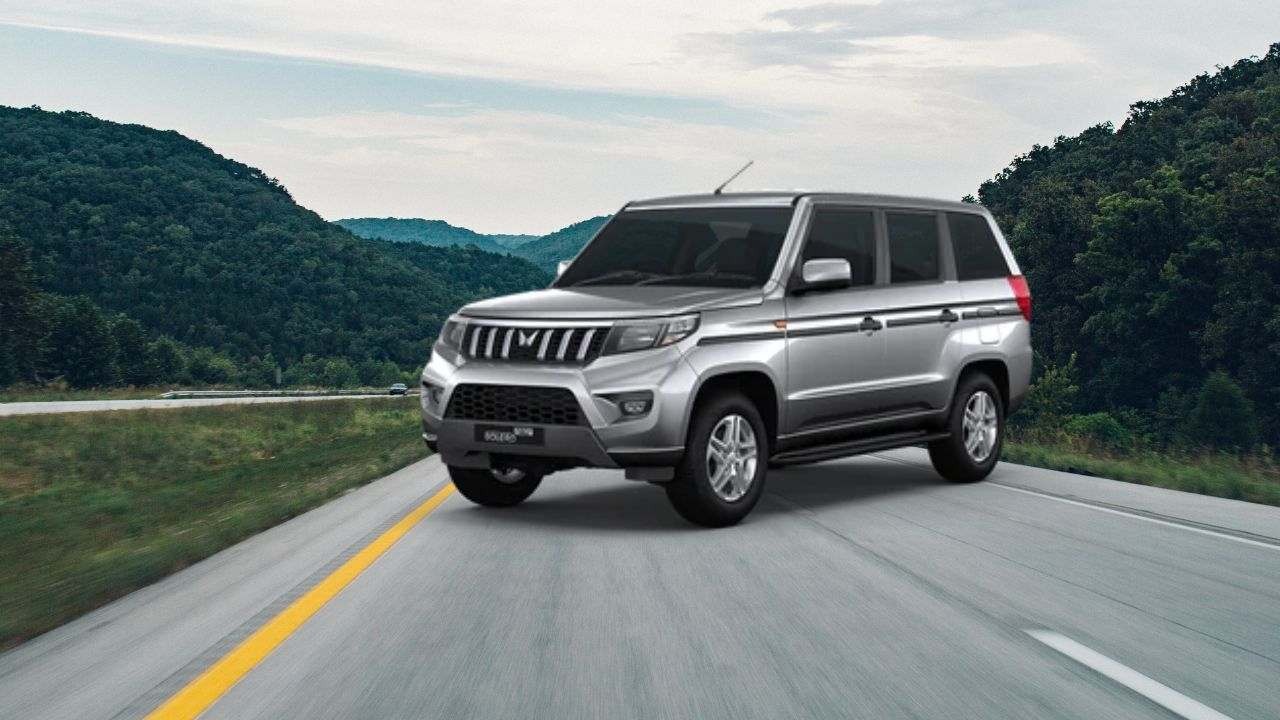
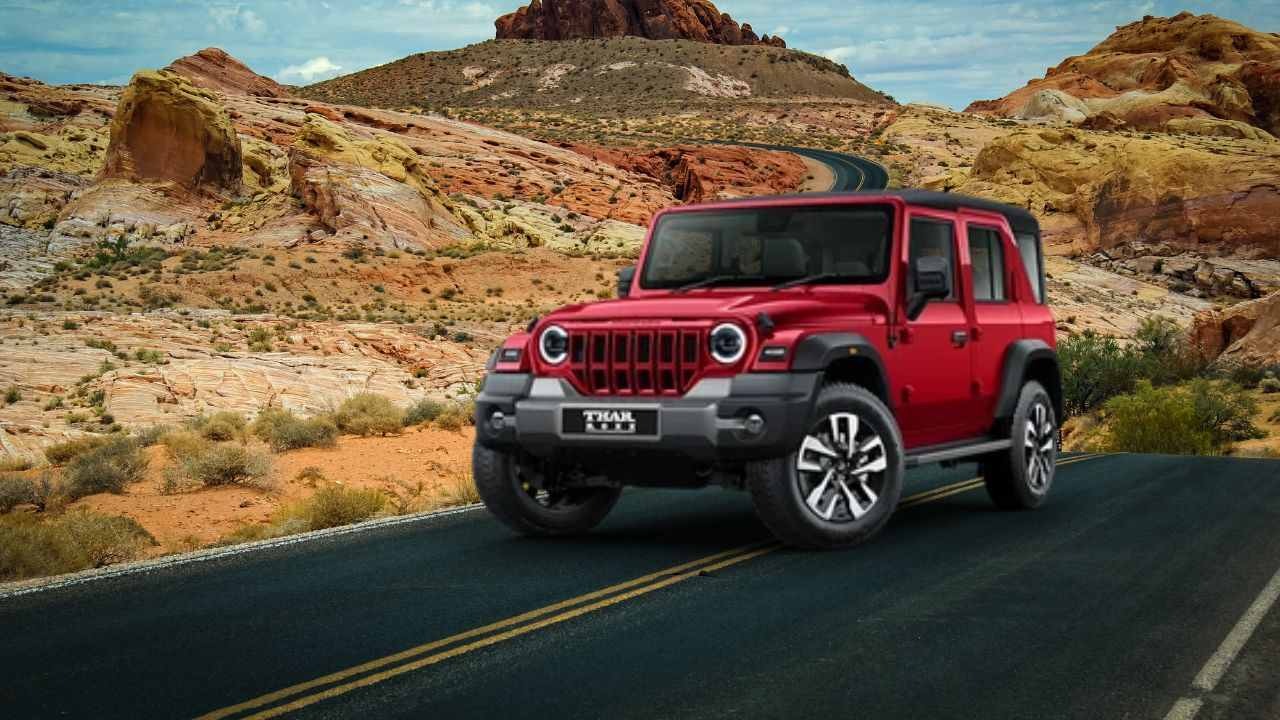
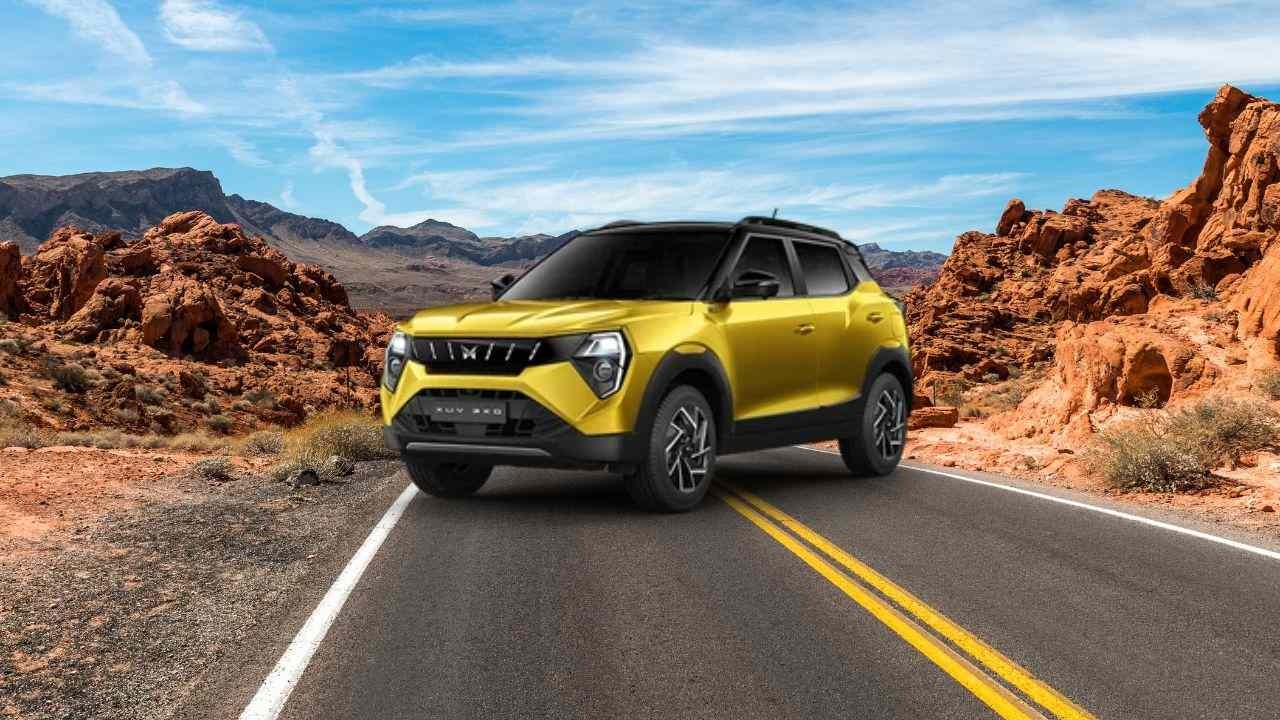
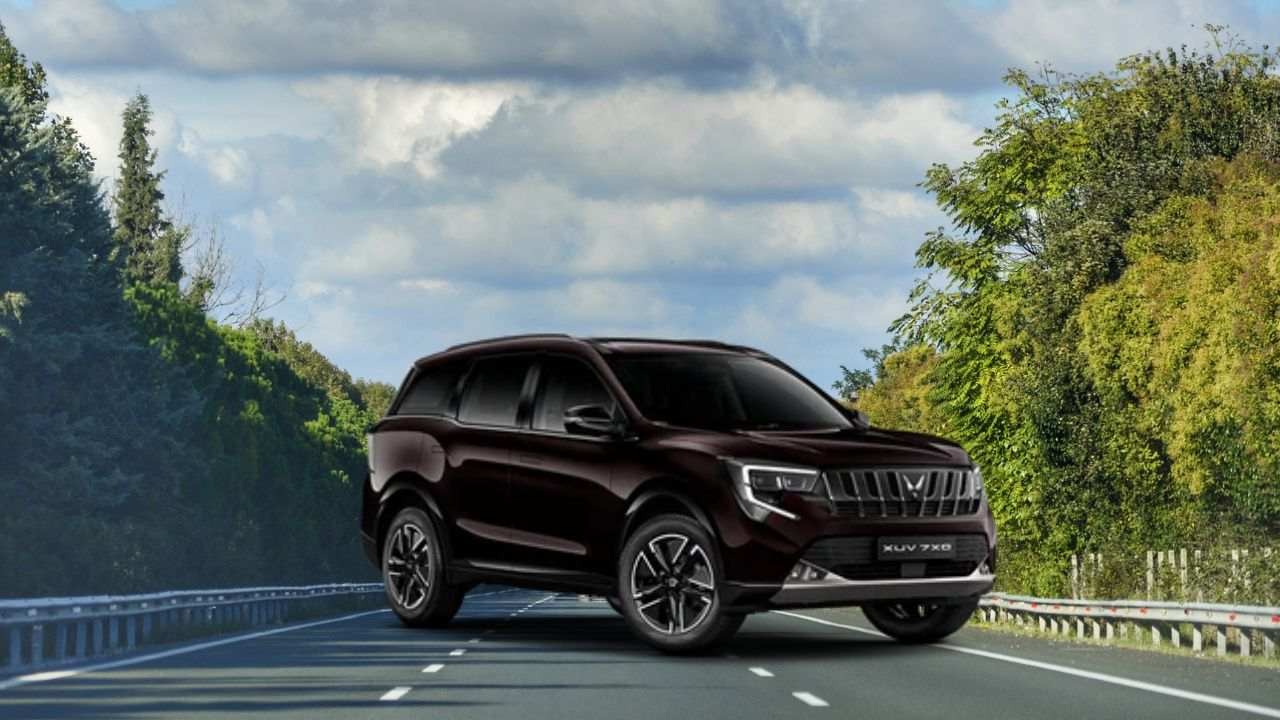
The festive season is the obvious tailwind. Industry coverage notes that sub-4-metre and mid-size SUVs contributed most to September’s market sales, and Mahindra’s range covers both, from the Bolero and Bolero Neo through the Scorpio Classic, Scorpio N, Thar Roxx and XUV 7XO. The Thar OG launch added fresh news to the showroom conversation.

Mahindra vs Tata vs Hyundai

The base effect matters too. Every SUV gets full attention when we look over September 2025 which was itself a strong month. SUV sales had already risen 43% in September 2025 compared with August, making this year’s 14% growth more significant. 

Mahindra vs Tata vs Hyundai in September 2026

Mahindra’s domestic SUV sales trailed Tata Motors’ reported 68,810 passenger vehicles by 4,718 units, and led Hyundai’s domestic 57,166 by 6,926. 

Growth rates were close: Tata at 15.32%, Mahindra at 14%, Hyundai at 10.9%. Tata’s figure varies by source Autocar India lists a much lower number.

The comparison is also not like-for-like. Mahindra sells almost entirely SUVs, while Tata and Hyundai’s totals include hatchbacks and sedans. Against Hyundai in particular, Mahindra is winning with a narrower product mix, which is the stronger result.

Mahindra Tata Motors Hyundai
Sept 2026 domestic 64,092 68,810 (verify) 57,166
YoY growth 14% 15.32% 10.9%

Mahindra sold 64,092 SUVs in September 2026 could work as a proof for the company to say “Worth The Money”, even though sales volume is not a quality score, but this figure speaks louder.

Mahindra sold

For the buyer, higher volume sales usually suggests that the company’s service-network is broader and resale value is strong. So you can plan your next vehicle easily after taking a written quote from the dealer for your choice of variant.

From August to December, it is a peak time of the Indian car market so companies also offer discounts and exchange offers. Confirm it from the 2-3 dealers because a month of record sales gives the company leverage. You could negotiate on accessories, insurance and exchange value instead of expecting a headline price cut.

 Skoda Slavia Facelift Comes With Automatic Shift & More Features

Conclusion

Mahindra’s September 2026 sales show that its SUV range continues to attract strong demand, helped by the festive season, a broad model lineup and growing interest in electric SUVs. The 14% year-on-year rise is encouraging, especially with sales staying above the company’s April–September monthly average. 

For buyers, though, Mahindra sold 64,092 SUVs in September 2026 holding a strong Mahindra Sale alone shouldn’t decide the purchase. Compare variants, check delivery timelines and negotiate insurance, accessories and exchange offers before booking. 

0

Hyundai Alcazar 2025: Latest Price, Specifications, Features, Mileage and Engine Details

Published Dec 16, 2025, 10:19 AM
Last Updated Dec 16, 2025, 11:05 AM

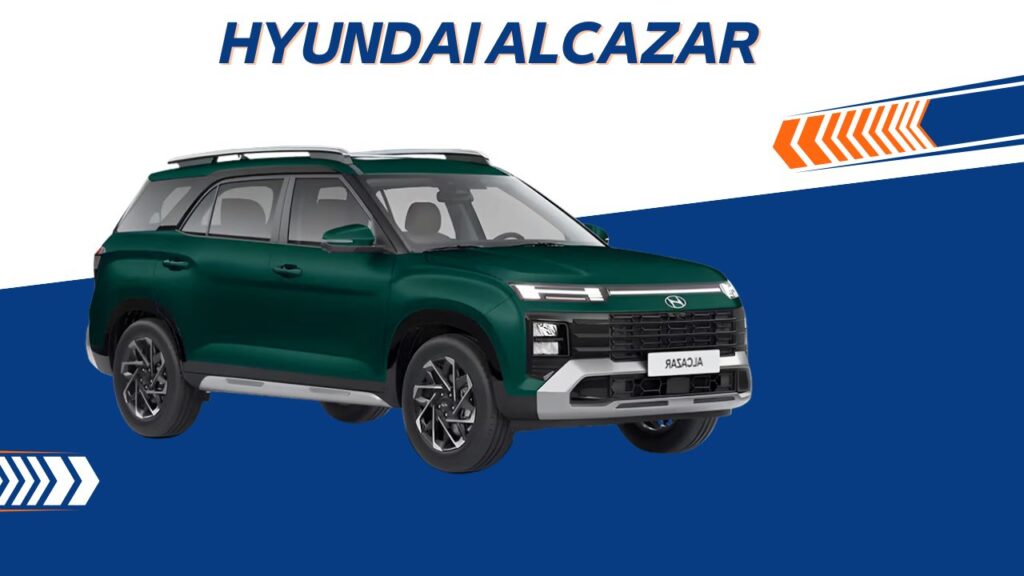
Hyundai Alcazar 2025

Purchasing a family SUV in India usually requires you to balance space, features, mileage, and budget — all at the same time. Most offerings promise one thing, but ask buyers to compromise on another. The Hyundai Alcazar 2025 is a good-balanced offering catering to the folk who are not ready to pay premium SUV prices but need the comfort and practicality of a three-row SUV. 

Now with revised pricing, a range of fuel-efficient petrol engine options, modern technology and best-in-class safety features, the Alcazar tries to strike that sweet spot between cost-effective and premium. So, without further show, this is a complete review on what 2025 Hyundai Alcazar has in store for you as a midsize SUV option.  

Price Range For Hyundai Alcazar

The Alcazar is surprisingly well within reach, beginning at a pocket-friendly ₹14.47 lakh (ex-showroom) for the base Executive variant with a petrol engine and 6-speed manual transmission. 

The pricing is symmetrically designed for all variants with an upper-limit of ₹21.10 lakh for the diesel automatic high-spec Signature 6 seater variant. Hyundai has also announced price cut of up to ₹75,000 in line with new GST 2.0 rates from September 2025, which would make this SUV even more appealing to prospective buyers. 

Engine Options

The 2025 Alcazar offers a real choice between two very different powertrains, each with its own personality. The 1.5 litre turbo charged petrol engine is a fast moving engine which produces 160 PS at 5500 rpm and a good 253 Nm Torque over 1500-3500 rpm. It’s polished, reactive and works wonderfully with a 6-speed manual or a sophisticated 7-speed dual-clutch automatic gearbox. If refinement and city-friendly everyday drivability are what you’re looking for, this is the engine to get.​

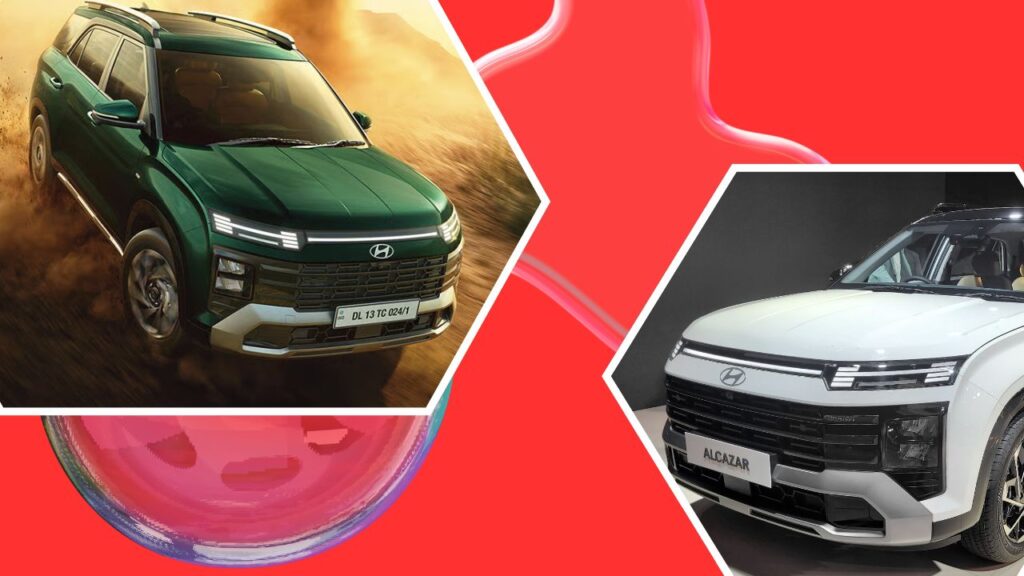
Hyundai Alcazar 2025

On the other hand, the 1.5-litre diesel engine is more practical, offering 114 PS at 4,000 rpm along with 250 Nm of torque in the 1,500-2,750 rpm rev band. Though not as powerful, diesel has that signature low-end torque that many Indian buyers love for highway cruising and towing. You are offered either a 6-speed manual or a 6-speed torque converter automatic transmission here. 

Real-World Mileage

This is the right place where the alcazar truly shines for tightfisted families. The diesel manual version offers a superlative 20.4 kmpl making it one of the best options for long highway drives. Even the diesel auto is well under way with a decent 18.1 kmpl. 

Diesel Manual 20.4 kmpl Long highway drives & maximum fuel savings
Diesel Automatic 18.1 kmpl Comfortable cruising with good efficiency
Petrol Manual 17.5 kmpl Balanced performance and daily usability
Petrol Automatic 18.0 kmpl Smooth driving with refined performance

The petrol variants are slightly less thirsty and return 17.5 kmpl with the manual and 18.0 kmpl with the automatic, but if you consider the performance and refinement they offer, these figures are still miles ahead of almost anything else in the segment.  

Features That Feel Premium

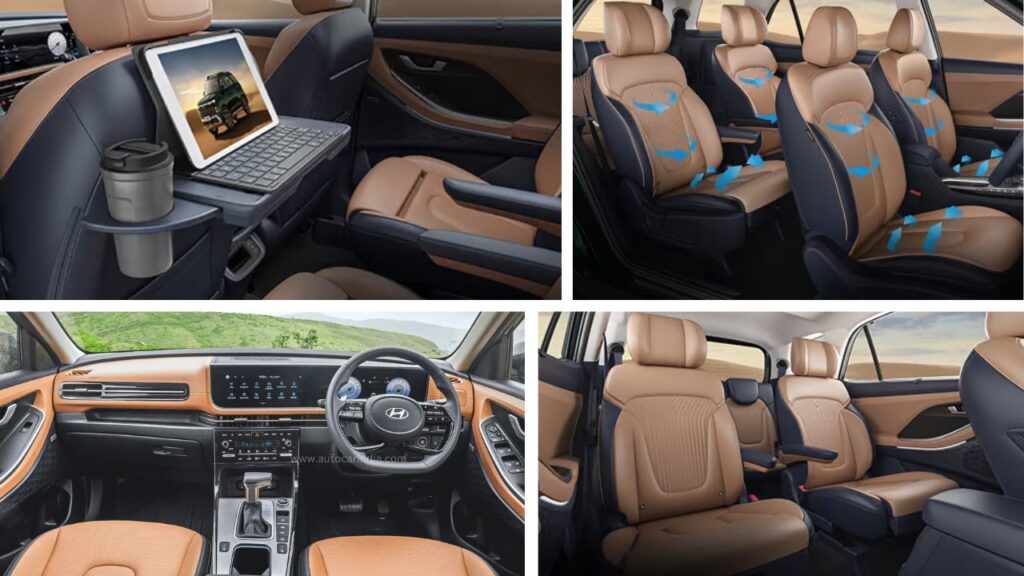
Step inside the cabin and you’ll soon realize that Hyundai hasn’t cheaped out on the creature comforts. The 10.25-inch infotainment system dominates the dashboard, now with wireless Android Auto and Apple CarPlay support through a new wired-to-wireless adapter. The all-digital 10.25-inch driver’s instrumentation cluster also gives that premium digital cockpit feel you would expect from a car that costs a lot more.​

Hyundai Alcazar Features That Feel Premium

In terms of comfort, the Alcazar indulges its passengers with dual-zone automatic climate control, ventilated seats for front and second row (in higher variants), an 8-speaker Bose audio system, and a voice-enabled panoramic sunroof. The second-row wireless charger and power-adjustable seats speak to Hyundai’s consideration of families taking long trips. 

Read More:-  Jay Leno’s Car Collection: A Passion That Goes Beyond the Garage

Safety and Advanced Technology

For modern buyers, the clear highlight of the car is its Level 2 ADAS (Advanced Driver Assistance System) package. It has adaptive cruise control which keeps a safe distance on the highway, lane-keeping assist that helps you from unintended lane drift, forward collision warning with brake assistance, plus blind-spot monitoring and rear cross-traffic alert to give you more confidence on the road and in parking lots.  

If you’re worried about highway safety and minimizing driver strain on long hauls, these features make the price premium over cheaper models worth it.​​

Outside of ADAS, there are six airbags for all variants with the option of two more in the top trim, hill-start assist, ESP, a 360-degree camera system and rain-sensing wipers. It’s an active-safety package that seems authentic, rather than thrown in just to meet a checklist. 

Dimensions and Practicality

Length  4,560 mm
Width 1,800 mm
Height  1,710 mm
Wheelbase  2,760 mm

These measurements equal to real comfort on all the three rows, making it sit six or seven occupants, with the option of captain seats in the middle row for more comfort.  

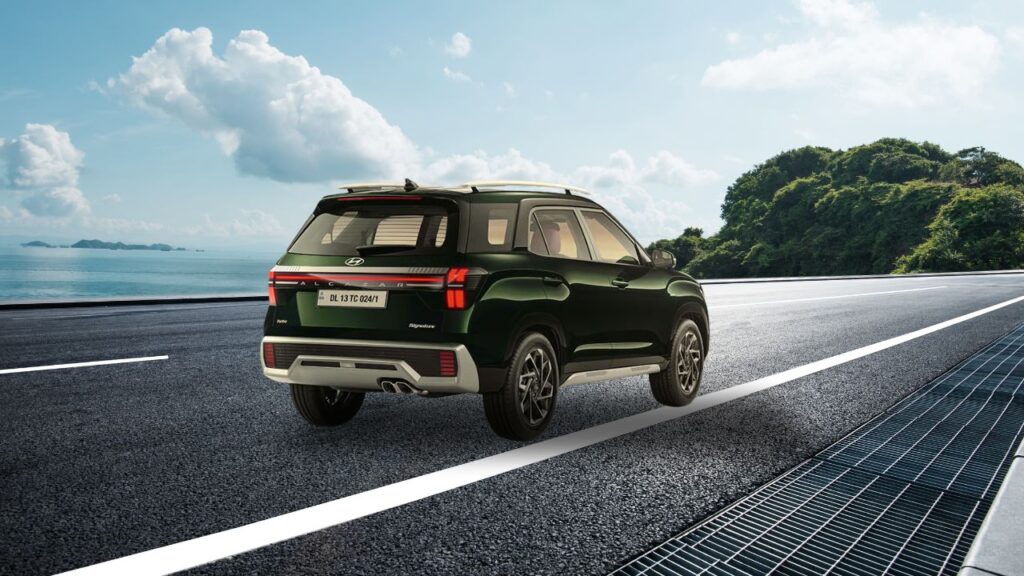
Hyundai Alcazar 2025

The 200-mm ground clearance takes care of all Indian road conditions quite well and a 50-litre fuel tank allows you to ride a long way between fuel stops. The 180-litre boot capacity is adequate for luggage for weekend trips, although you’ll need to fold seats for larger loads. 

Conclusion

The 2025 Hyundai Alcazar looks to be a compelling offer for Indian families seeking value for money with minimal compromises. Whether you want to opt for fuel efficiency with the diesel or refinement with the petrol, choose the convenience of the automatic or the involvement of the manual transmission, an Alcazar variant for your lifestyle and budget awaits you. 

With segment-leading safety technology and plush creature comforts usually found in premium vehicles, the Alcazar delivers more than expected making it truly worth your consideration.