
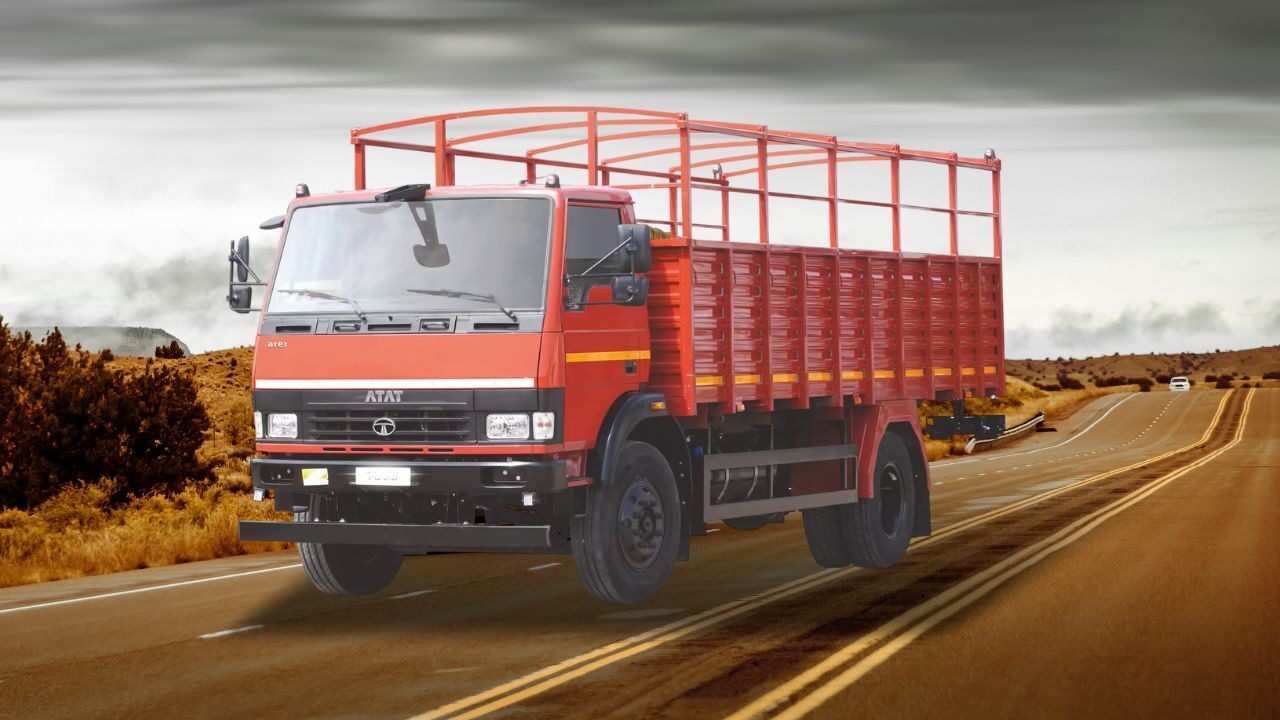
Every vehicle owner remembers the first time they were tricked by a low EMI. The vehicle looked affordable, the loan tenure looked comfortable, and six months later the same person was staring at a fuel bill that had quietly become their biggest monthly expense. The ROI of Commercial Vehicles in India is not a purchase decision. It is a cash flow decision which comes along with a vehicle. And treating it any other way is how companies wind up with a money-losing asset rather than a money-making one.
Prices of diesel are remaining at ₹96-₹98 per litre in most Indian cities while a few like Andhra Pradesh have crossed the ₹105 mark. For owners of trucks, tempos and pickups, that number has an immediate bearing on profitability, since fuel costs can make up 40 to 55% of a commercial vehicle’s lifetime operating cost. The initial purchase price, although significant, is generally a more fixed and predictable cost. That is why the first thing every buyer should assess isn’t the sticker price, it’s how much the car will cost to operate on a daily basis.
What “Cost” Actually Means for a Commercial Vehicle
The ex-showroom price is just the beginning in terms of commercial vehicle budgeting. For instance, India’s best-selling mini truck for last-mile deliveries, Tata Ace, is priced from ₹3.99 lakh to ₹6.69 lakh (ex-showroom) based on the variant. The Ashok Leyland Dost range meant for heavier loads begins from ₹6.68 lakh to ₹ 10.34 lakh, with the ROI of Commercial Vehicles in India and ROI of Commercial Vehicles in India variant priced higher.
However, the total cost you pay once after including the cost of the registration, insurance, and state roads taxes is higher. Additional charges like these typically add 8 to 12% to the sticker price, so it’s important to plan for more than the sticker price.
Where ROI of Commercial Vehicles in India Lost
The bigger expense begins after the vehicle hits the road. Fuel, driver salaries, regular maintenance, tire replacement, insurance, permits and unforeseen repairs all contribute to the cost of monthly operations, and unlike EMI, these costs can fluctuate widely.
Tires and engine components of long distance or heavy-duty vehicles are under greater stress and wear out faster. Therefore, a model with a lower purchase price may cost you more during the life of the product. This is why experienced fleet managers look at cost per kilometre rather than the bare purchase price, since it gives a more accurate sense of fuel efficiency, maintenance, depreciation and other operating costs.
Where the Profit Actually Comes From
ROI of Commercial Vehicles in India is rarely about the freight rate alone. It comes from utilisation, which is a polite way of saying: how many days a month is the vehicle actually earning instead of sitting idle. A truck that runs 24 days a month will always beat a cheaper truck that runs 15 days a month, even if the second one has a lower EMI. Idle time is the single biggest silent killer of ROI of Commercial Vehicles in India, whether it’s caused by a breakdown, a driver shortage, or simply poor route planning.
The second lever is load efficiency. Businesses that consistently run at 60 to 70% of a vehicle’s rated payload capacity are effectively paying full fuel and maintenance costs for a fraction of the earning potential. Matching the vehicle class to the actual cargo pattern, rather than buying one size up “just in case,” is one of the most underrated ROI decisions a business owner makes. A Bada Dost bought for loads that a standard Dost could easily handle is dead capital sitting on four wheels.
The third lever, and the one almost nobody talks about, is resale value. Tata and Ashok Leyland vehicles tend to hold value better in the Indian secondary market simply because spare parts and service networks are everywhere, which matters enormously when a five-year-old truck needs to be sold to fund the next purchase. A vehicle that’s cheap to maintain throughout its life is also, almost always, the one that resells for a fair price later.
The Financing Trap Nobody Warns You About
Commercial vehicle loans in India typically run at interest rates a couple of points higher than passenger vehicle loans, reflecting the higher risk lenders associate with commercial use. A longer tenure lowers the EMI on paper but stretches interest payments across more months, which quietly increases the total cost of ownership.
The smarter approach, and one that experienced fleet owners follow without exception, is to size the loan against realistic monthly earnings rather than against the maximum EMI a bank is willing to approve. Banks will always approve more than a business can comfortably repay, because the risk sits with the borrower, not the lender.
Note: Diesel prices, vehicle pricing, and interest rates change frequently and vary by state and lender. Always confirm current on-road prices, fuel rates, and loan terms with authorised dealers and banks before making a purchase decision.
BS6 Compliance and the Long-Term Cost Angle
Every new commercial vehicle sold in India today runs on BS6 emission regulation, which has pushed upfront vehicle costs compared to the older BS4 generation but has also improved fuel efficiency in most modern engines.
For a business calculating ROI over a five to seven year holding period, this trade-off usually works in the buyer’s favour, since better mileage compounds into meaningful fuel savings over tens of thousands of kilometres. The mistake to avoid is buying an older, non-compliant vehicle secondhand purely to save on the initial price, since resale restrictions and rising fuel costs can erase that saving within a couple of years.
Read More:- Best Cars for Daily Office Commute: Top Comfortable & Fuel-Efficient Cars
Diesel, CNG, or Electric: The ROI Angle, Not the Trend Angle
CNG variants of vehicles like the Dost and Ace are gaining traction in Indian cities specifically because CNG remains meaningfully cheaper than diesel per kilometre, even after accounting for the lower fuel efficiency compared to diesel engines. For businesses running fixed intracity routes with reliable access to CNG stations, this can genuinely lower the cost per kilometre.
Electric commercial vehicles are still a smaller piece of the market, and while running costs are lower, the higher upfront price and patchy charging infrastructure outside major metros mean the ROI case only works cleanly for businesses with short, predictable routes and access to depot charging. This isn’t a case of one fuel type being universally better. It’s a case of matching fuel type to route pattern, which is the same discipline that governs every other part of this decision.
The Real Formula for Business Owners
The ‘ROI of Commercial Vehicles in India’ question comes down to one practical comparison: total monthly earnings from the vehicle, minus fuel, driver salary, maintenance, insurance, and EMI, measured against how much capital was actually put in to acquire it.
A vehicle that looks expensive but stays on the road every working day, carries near its full rated load, and holds resale value will consistently outperform a cheaper vehicle that spends a third of its life in the workshop.
In Indian commercial transport, the businesses that make money aren’t the ones that bought the cheapest truck. They’re the ones that bought the right truck for their actual freight pattern and ran it hard, every single day, for years.
Conclusion
You should look for a commercial vehicle as a long-term business investment, not just a one-time purchase. The ROI could improve if you choose the right payload capacity, use recommended fuel, and try not to exceed the speed. Before making a decision, compare the total cost of ownership to understand the exact ROI of Commercial Vehicles in India.
The most profitable commercial vehicle is the one which delivers lower cost per kilometre, spends more time on the road, and has strong resale value.
