0

JLR Landing a Land Rover Defender Pickup Truck In US 

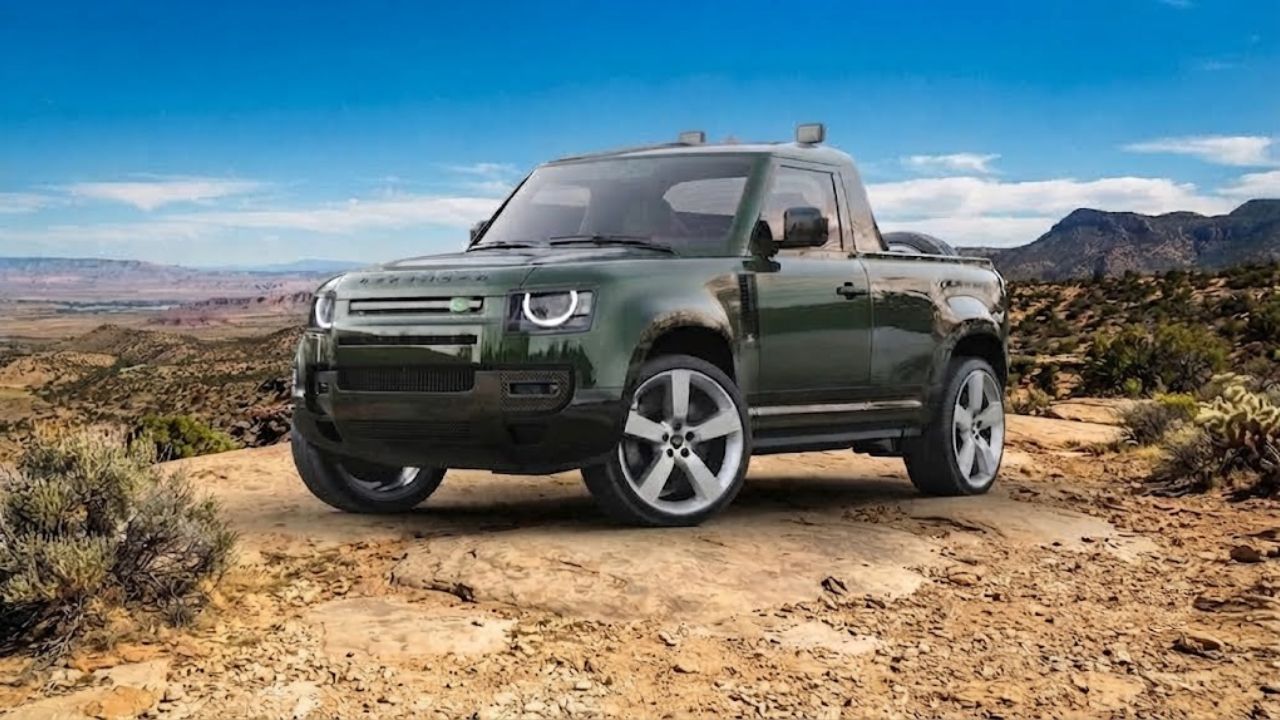
Land Rover Defender Pickup Truck

For years, Defender fans have asked why Land Rover keeps teasing a pickup version and never builds one. Now, Jaguar Land Rover (JLR) is working with Stellantis to build a Land Rover Defender pickup truck in the United States — and the reason has less to do with off-road capability and more to do with import tariffs.

The specifications are still not confirmed. This is the first product of collaboration so expecting great tech and reliability of a pickup truck is the first thing to think about.

The Official Agreement Between JLR and Stellantis on Product Development

Back in May 2026, JLR and Stellantis signed a non-binding memorandum of understanding (MoU) to “explore opportunities to collaborate on product development” in the US, along with shared manufacturing capacity. At the time, neither company named a specific vehicle.

That changed in September 2026, when Automotive News reported that the first product out of this alliance would be a Land Rover Defender pickup truck built for the US market. JLR’s Chief Financial Officer, Richard Molyneux, confirmed on an earnings call that the two companies intend to finalize the broader agreement by the end of 2026. JLR’s CEO, PB Balaji, has separately said the goal is to grow JLR’s US business to eventually match the size of its entire global business — a genuinely ambitious target.
JLR and Stellantis

Stellantis has acknowledged joint discussions are underway, but neither company has publicly confirmed “pickup truck” as the specific output. 

Why Land Rover Defender Pickup Truck Has to Be Built in America

This is really a tariff story wearing a product story’s clothes.

Every Defender sold in the US today — the 90, 110, and 130 — ships in from JLR’s plant in Nitra, Slovakia. Passenger vehicles built in the UK and EU already face added US import tariffs. But trucks get hit worse: American light trucks and pickups imported from abroad face the 25% “Chicken Tax,” a tariff that’s been on the books since the 1960s and makes shipping a European-built truck to the US financially unworkable.

Building the pickup on US soil with Stellantis sidesteps that tariff entirely. North America now accounts for roughly 30% of JLR’s global sales, while China — once its biggest market — has fallen to under 7%. A pickup built for Americans, by an American-based partner, is JLR reading the room.

If it happens, it would also mark JLR’s first vehicle assembly in the US, and the first Land Rover-badged pickup sold there since British Leyland shipped over Series I and Series II trucks in the 1960s and early ’70s.

Read More 👉  This Used Luxury Car Costs the Same as a Top-Spec Maruti Fronx

The Engineering Behind Defender

The current Defender is a unibody vehicle. Stellantis’s American trucks — the Ram 1500, Ram Heavy Duty, and Jeep Gladiator — are body-on-frame. Those are different structural philosophies, and no one has said which way a Defender pickup would go. 

Land Rover Defender

Stellantis does have unibody experience through the Jeep Grand Cherokee and Dodge Durango, so a unibody truck isn’t off the table, but it’s not confirmed either.

Powertrain is just as open. Shipping Defender’s European engines to the US would trigger its own tariffs, but slotting in an off-the-shelf Stellantis engine might not fit a vehicle Land Rover wants to sell at premium prices. 

Size, trim strategy, launch year, and pricing haven’t been disclosed by either company. Any number you see for engine output, mileage, or price right now is a guess dressed up as a leak.

Land Rover Defender Pickup Truck Rivals Already In The Market

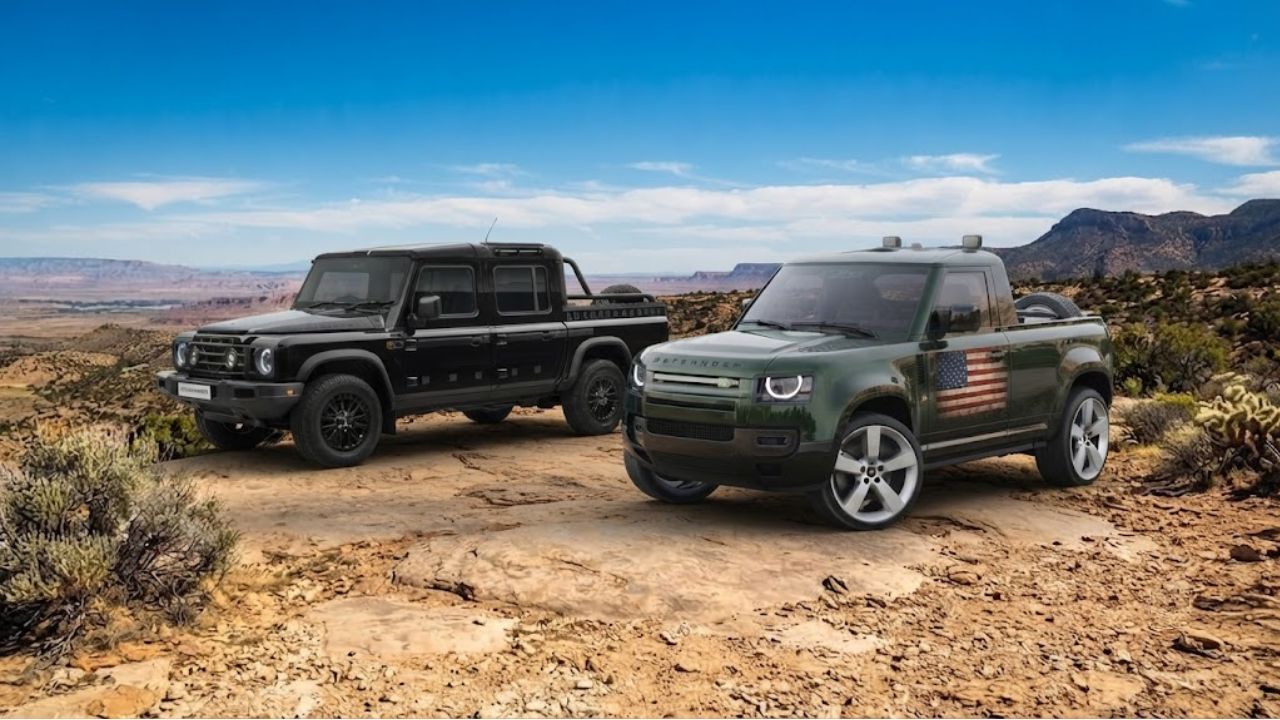
The Ineos Grenadier Quartermaster as the closest natural rival — a body-on-frame, old-school off-roader with genuine pickup credibility and a similar niche, premium-utility positioning. The Jeep Gladiator gets the hook too, though as a lower-priced, less luxury-focused alternative rather than a direct match.

Beyond that, a Defender pickup would land in the same rarefied air as loaded trim levels of the Ford F-150 Platinum and GMC Sierra Denali — trucks that compete less on payload bragging rights and more on cabin quality and brand cachet. If JLR positions this as a genuine luxury pickup rather than a rebadged Stellantis product, that’s the shelf it’s aiming for.

Read More 👉 Get New Maruti Premium Hatchback at Lower Price

Expected Specification and Size of Land Rover Defender Pickup Truck 

Land Rover Defender Pickup are using the Defender 110 as the donor vehicle since it’s the volume model closest to a crew-cab truck’s proportions. The current Defender 110 measures around 5,018mm in length including the rear-mounted spare wheel and uses a 3,022mm wheelbase. The most-floated build approach isn’t a clean-sheet truck at all — it would keep the 110’s front section, four doors and five-seat cabin, and simply replace the rear luggage compartment with an open load bed. 
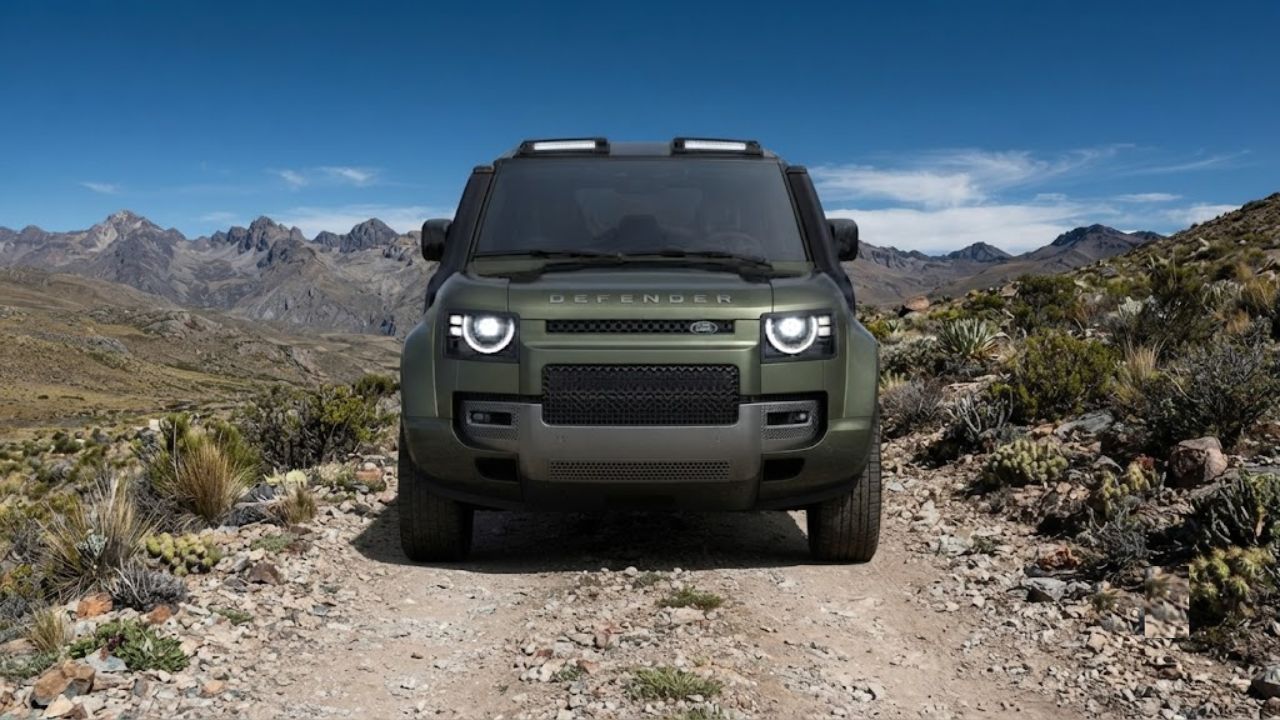
Land Rover Defender

Unlike traditional pickups, the Defender uses JLR’s aluminium D7x monocoque architecture rather than a separate ladder-frame chassis. Stellantis’s US trucks (Ram 1500, Ram HD, Gladiator) are body-on-frame. But still it’s unconfirmed.

The current lineup runs from a 296-hp turbocharged four-cylinder to a 626-hp twin-turbo V8, but European-built JLR engines would face import tariffs if shipped over for US assembly. An off-the-shelf Stellantis engine dodges that, but risks feeling wrong in a truck JLR wants to price at a premium. 

Read More 👉 BMW i5 LWB On Road Price Is Lower Than What Buyers Expected

Conclusion

If the deal is finalized by the end of 2026 as JLR’s CFO suggested, the realistic next milestone to watch for is an official confirmation of the vehicle itself. Concept reveals, platform confirmations, and pricing typically trail an MoU finalization by a year or more in projects like this.

For now, JLR wants an American-built Land Rover Defender Pickup Truck badly enough to partner with a rival automaker to get around a 60-year-old tariff law. Everything past that — what it looks like, what it costs, whether it ever reaches a market outside the US is still an open question.

 

Alok Kabir

Alok is an experienced SEO Specialist skilled in blogging and SEO-friendly content creation. He also specializes in Content Optimization and Technical SEO, including website optimization, crawlability, indexing, site speed, and on-page improvements to enhance search rankings and online visibility.

Leave a Reply

Your email address will not be published. Required fields are marked *

0

New Hyundai Flagship Models Arriving Soon to Dominate Indian SUV Market

Published Sep 25, 2026, 11:10 AM
Last Updated Sep 26, 2026, 8:03 AM


New Hyundai Flagship Models

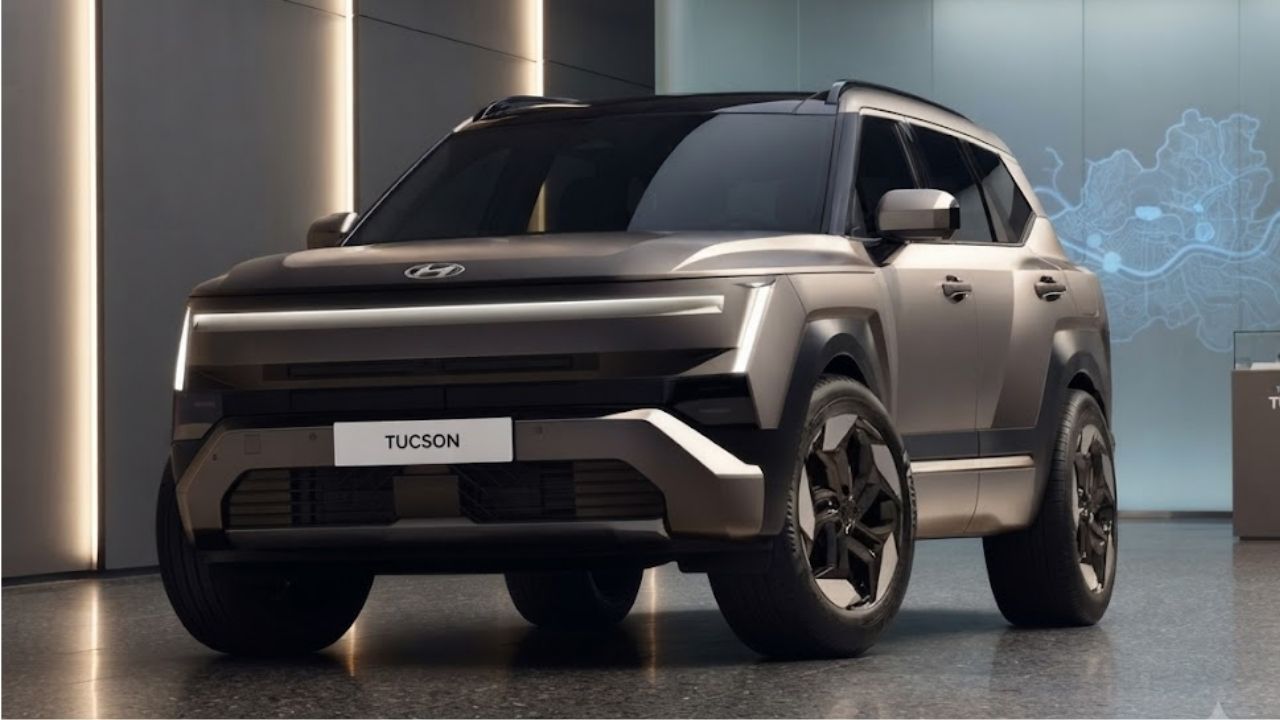
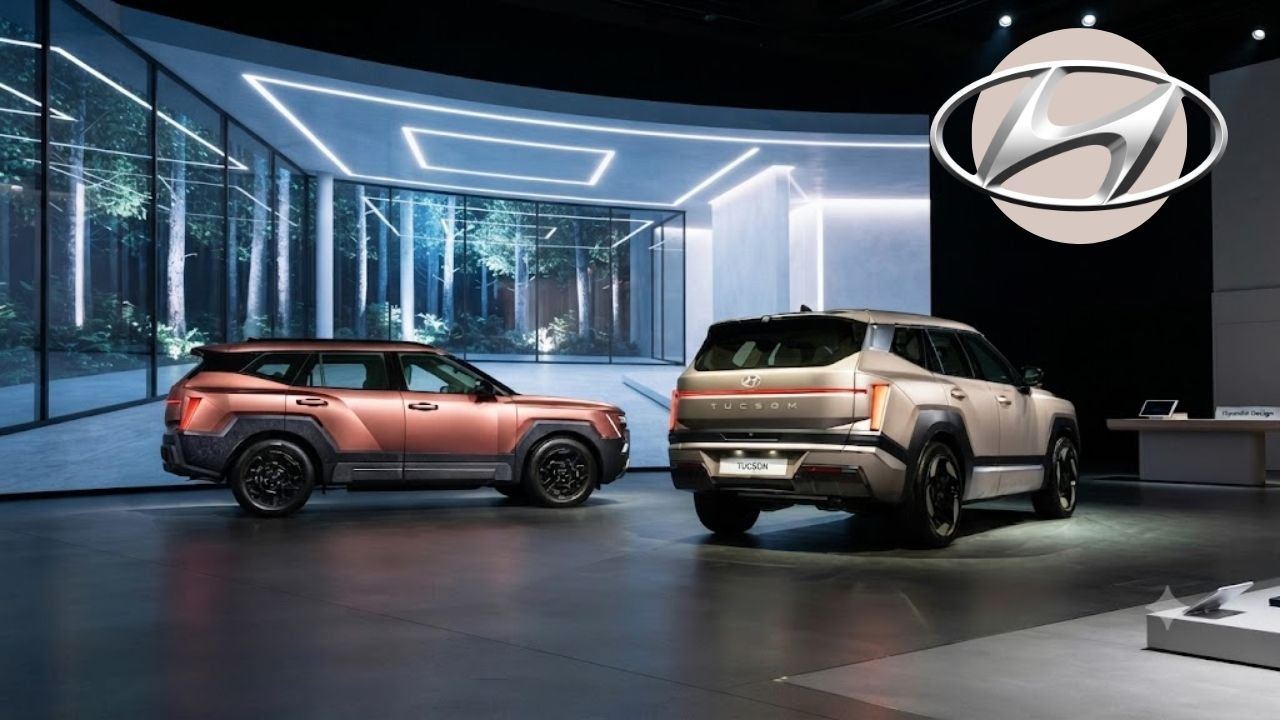
The New Hyundai Flagship Models are preparing to dominate the Indian SUV market. The 2026 end and 2027 is holding off the new vehicle purchase for both cars. The New 2027 Hyundai Tucson and Hyundai Bayon are going to be in every car buyer’s radar. However, Tucson lunch date is unconfirmed so early buyers should reconsider it.

One is a massive generational shift for Hyundai’s premium offering, pushing hard into luxury territory. The other is a compact crossover meant to bring European styling to the sub-15 lakh bracket. Here is exactly what you get with both models, how they stack up against the competition, and whether you should actually wait for them.

Why the Tucson Is Coming Back at All

The current Tucson stopped coming in the market in 2025 because it doesn’t hold its foot against premium D-segment rivals. It seems like a second chance for the model to return rather than a routine update. Hyundai clearly thinks the formula needs to change, because what it has revealed globally is not a mild facelift — it’s a full fifth-generation redesign.

The new-gen Tucson has been revealed with a radical boxy design, larger dimensions and Hyundai’s new Pleos infotainment system, and it could also preview future India-bound models. That last part matters for Indian buyers specifically, because Hyundai has a habit of trickling design language down from global flagships into mass-market SUVs — the current Creta’s styling cues borrowed heavily from the previous Tucson and Santa Fe, and this cycle looks set to repeat.

Read Also 👉  Maruti Suzuki Cars Are Coming To India by 2027 

2027 Hyundai Tucson: Boxier, Bigger, & Hybrid-Powered

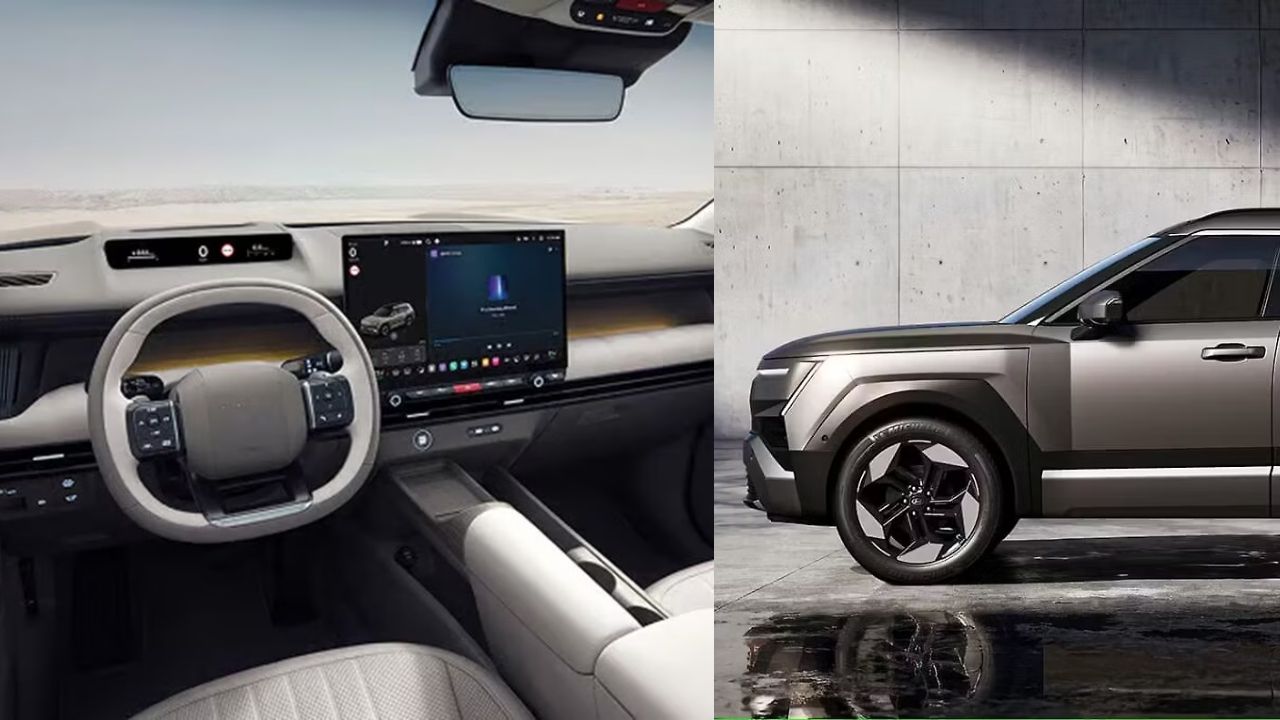
The confirmed specification of the fifth-generation Tucson is revealed in South Korea but Hyundai hasn’t announced India specific technical details yet. Current model has sharp flowing lines but 2027 Tucson adopts the “Art of Steel” design language. The design is boxy, upright, and rugged more like a scaled-down Palisade.

2027 Hyundai Tucson

Tucson Dimensions: Growing in Every Direction

The 2027 Hyundai Tucson model is significantly larger, up to 4.7 meters long, 40mm wider and 20mm taller than the outgoing model. It’s coming with more wheelbase — 30mm to 2,785mm.

So it resolves the current model rear-seat space problem with extra 29mm of height which gives more headroom to sit in the back seat comfortably. The rear doors are now changed with an 83-degree angle to provide easier access. Tucson is behaving like a full-size SUV lion who accomplished its territory. 

Powertrain: The Hybrid Push

The specifications are still unconfirm for the Indian model but global model reveal highlights a major shift toward hybridization. Its petrol engine of 1.6L is producing 193 bph of power and 265 Nm of torque. It runs on an 8-speed automatic transmission which combined with a next-generation hybrid system for a total output of 245hp. 

For a Hybrid set up, a 1.6-litre turbo-petrol combined with a next-generation hybrid system for a total output of 245hp on a 8-speed automatic transmission. The power like this in a hybrid is absolute engineering. Hyundai claims an impressive fuel efficiency figure of 17.4kpl for this setup.

Tucson Dimensions

Tech and Cabin Upgrades

The cabin receives a massive overhaul, centered around the new Pleos Connect infotainment system running built-in Gleo AI. The central touchscreen will be available in massive 12.9-inch or 17-inch sizes depending on the trim. Hyundai smartly retains physical controls for essential functions, avoiding the trap of hiding climate settings in endless touchscreen menus.

Safety gets a boost with 9 airbags as standard, an updated navigation-based adaptive cruise control, and a memory-based reverse assist that can automatically steer the car backward along its previous path.

Read Also 👉 Why Salaried Indians Are Buying Mercedes Cars

Tucson Competitor Comparison: The Luxury SUV Battle

The current Tucson rivals in the Indian markets are Jeep Compass and VW Tiguan but the new model is extended its size and hybrid powertrain which also raises the price and pushes it into entry-level luxury SUVs.

Feature 2027 Hyundai Tucson (Global Spec) Jeep Compass Volkswagen Tiguan
Engine 1.6L Turbo / 1.6L Hybrid 2.0L Diesel 2.0L Turbo Petrol
Power 193hp / 245hp 170hp 190hp
Dimensions (LxWxH) 4700 x 1905 x 1685 mm 4405 x 1818 x 1640 mm 4509 x 1839 x 1665 mm
Key Tech 17-inch screen, Reverse Assist 10.1-inch screen 8-inch screen

Hyundai Bayon: The Premium Compact Crossover

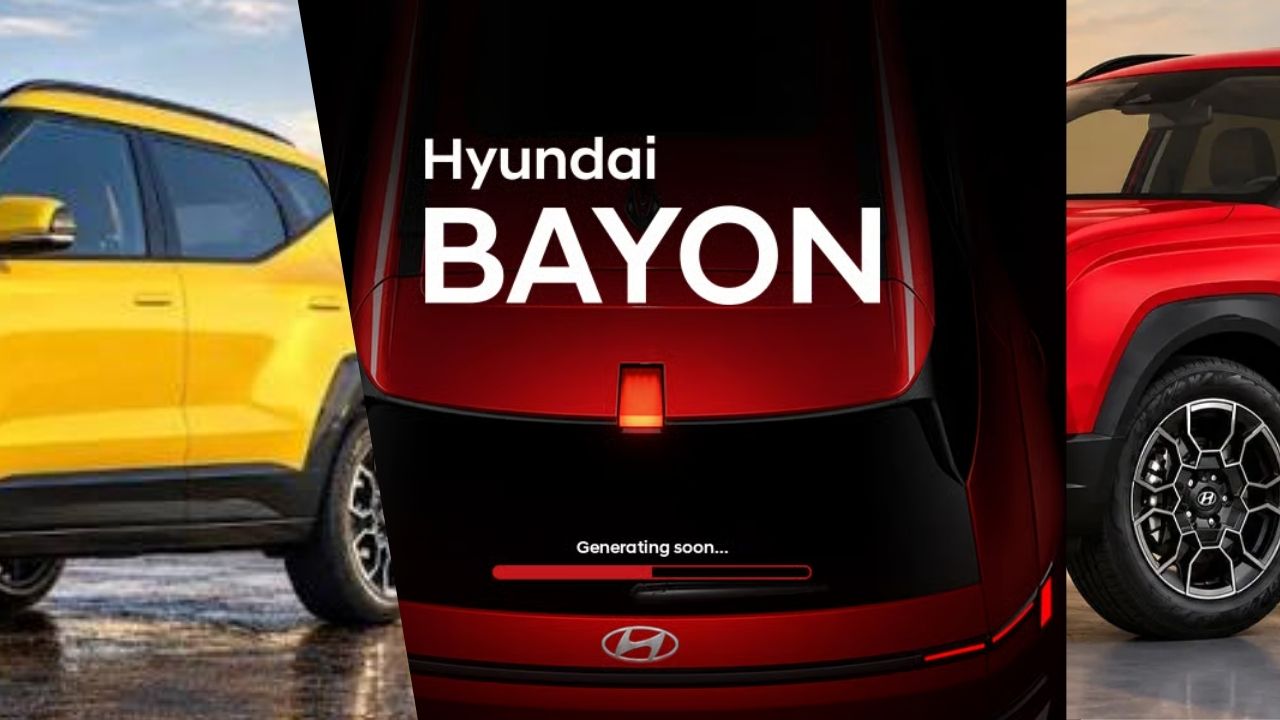
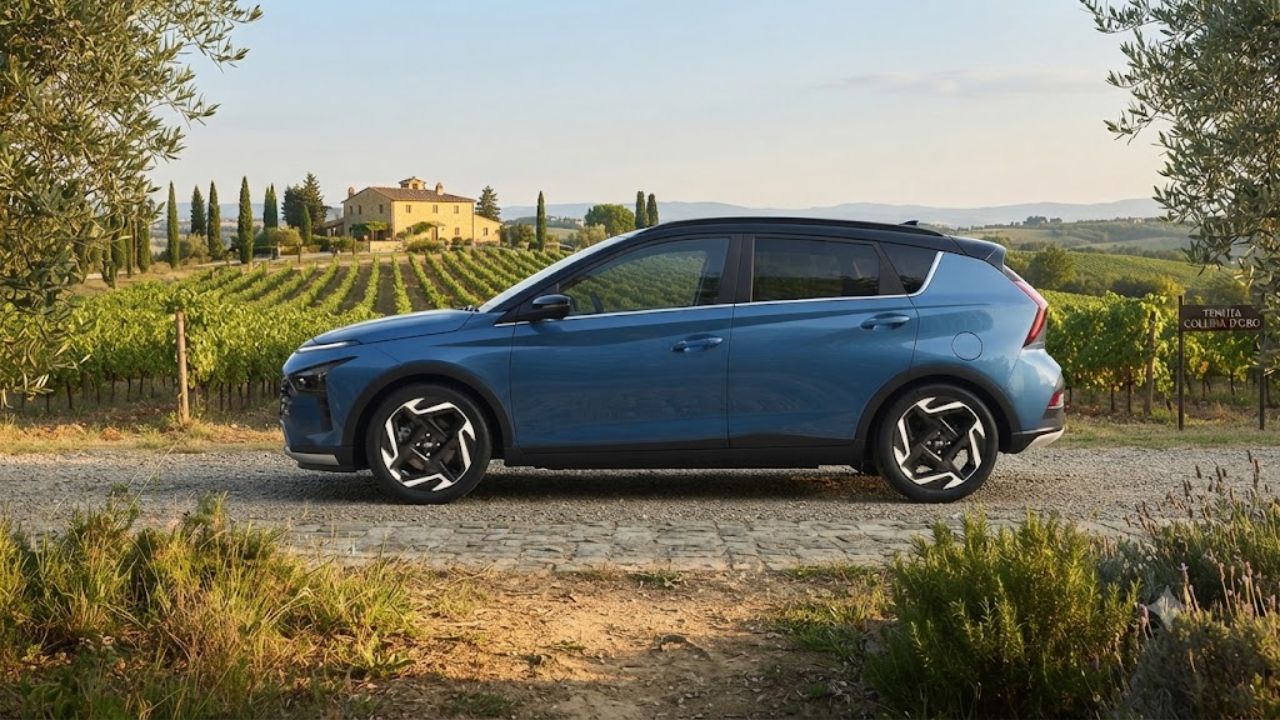
While the Tucson goes upmarket, the Hyundai Bayon aims to fill a gap in the highly competitive compact SUV segment. Bayon will arrive in the festive season of 2026 at a price range of ₹10 lakh — ₹15 lakh (ex-showroom). It is basically a crossover version of the i20 platform designed specifically for the European market.

The Hyundai Bayon specifications for the Indian model is based on the international Bayon’s underpinnings. It is a compact SUV positioned between Venue and the next-generation Creta, not too small, not too expensive. Hyundai opened bookings across dealerships and its website on September 23, 2026. 

Hyundai Bayon

Bayon’s Engine That Aim High

The current model carries a 1.0L petrol engine which gives 90 bhp of power and 172 Nm of torque. The transmission is up to 7-speed DCT automatic while the upcoming model brings 6-speed manual and CVT automatic options. It extended the engine to 1.5L 4-cylinder petrol producing 115PS of power and 144Nm of torque. This is the same engine set up that Creta and Verna uses.

But Bayon is the first Hyundai model engineered with a factory-fitted CNG option in a 4.3 metres long vehicle. It expects to use a 1.5L Hy-CNG dual-cylinder setup.

Features That Sets Hyundai Bayon Apart

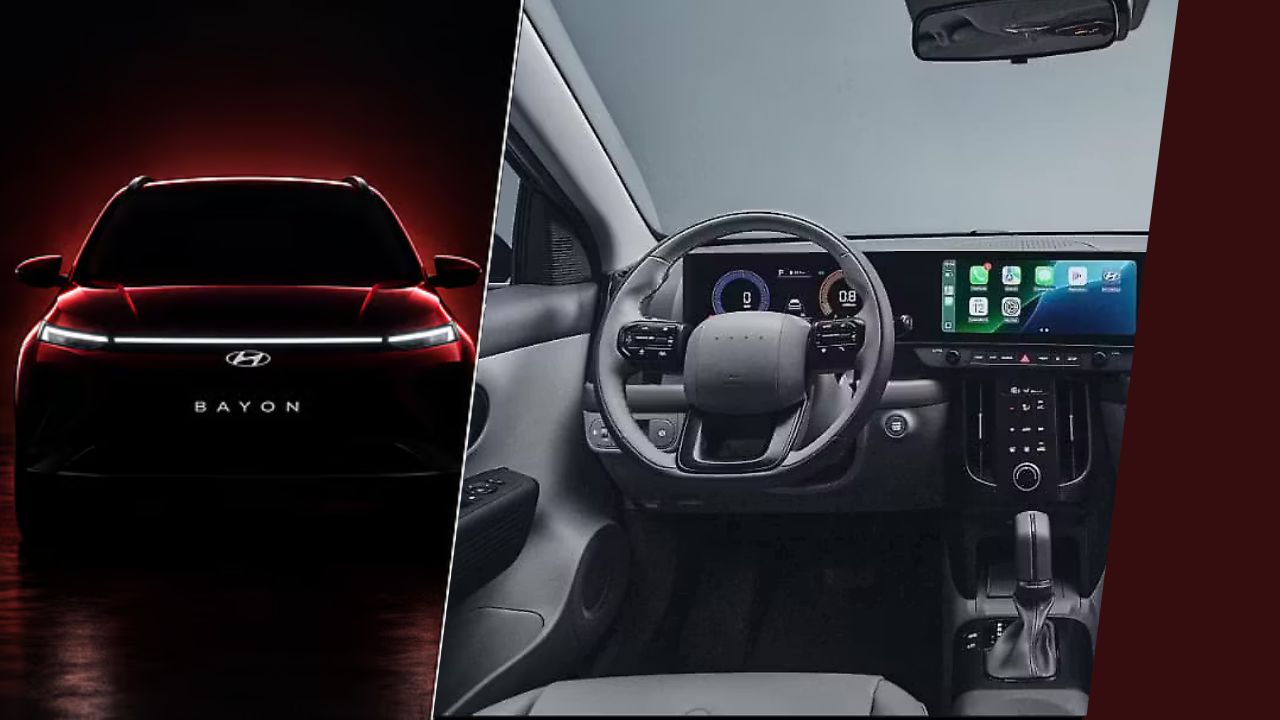
Hyundai is known for packing its cars with features, and the Bayon is no exception. It brings a full convenient setup — a dual 10.25-inch screen for infotainment and digital cluster. It offers full experience to admire nature with a panoramic sunroof, and ventilated seats. The connectivity is reliable, providing wireless Android Auto/Apple CarPlay. View all corners outside the car with a 360-degree camera. The Bayon is a full-packed flagship segment that offers a premium experience.

Features That Sets Hyundai Bayon Apart

With advanced features, Hyundai never compromising on the safety of their customers. Expect a Level 2 ADAS suite and 6 airbags as standard, meeting the growing demand for safety tech in the Indian market. 

Hyundai has confirmed the Bayon uses the Art of Steel language featuring sculpted surfaces and sharp character lines. Inside, the cabin takes heavy inspiration from the Brazil-spec fourth-generation i20. Hyundai also teased the Wheel specifics, it offers 17-inch dual-tone machine-cut alloy wheels wrapped in 215/55-section tyres.

Hyundai Bayon Rivals: The Crowded Compact Segment

The Bayon will battle the Maruti Suzuki Fronx, Tata Nexon, and even its sibling, the Venue.

Feature Hyundai Bayon (Expected) Maruti Suzuki Fronx Tata Nexon
Engine 1.0L Turbo Petrol 1.0L Turbo / 1.2L NA 1.2L Turbo / 1.5L Diesel
Max Power ~88.5 bhp 100 bhp / 89 bhp 118 bhp / 113 bhp
Price (Estimated/Current) ₹10 – 15 Lakh ₹7.51 – 13.04 Lakh ₹8.00 – 15.50 Lakh
ADAS Yes (Level 2 Expected) No No (Only basic features)

How the Hyundai Bayon Stacks Up Against the Victoris

The most bigger rival is Maruti Suzuki Victoris since it already occupies the space the Bayon is aiming for and uses the same powertrain strategy. Victoris mild-hybrid petrol price starts at Rs 10.50 lakh for base variant and goes up at Rs 19.22 lakh for the top AWD automatic variant.

While the pricing for CNG and strong Hybrid variants can rise up to Rs 14.57 lakh and Rs 19.99 lakh respectively. Check the dealership price at your location because the total price depends on the additional charges of your city. 

Hyundai Bayon Stacks Up Against the Victoris

If the Bayon really does launch at Rs 9–14 lakh, its top-spec CNG or automatic variant would undercut the Victoris’s equivalent trims by a meaningful margin, while offering a smaller footprint. The trade-off is obvious: the Victoris gets a strong-hybrid option and AWD, neither of which the Bayon is expected to offer at launch. 

If fuel efficiency and hybrid tech matter more to you than price, the Victoris still has the edge on paper — but if you want CNG practicality in a package smaller and cheaper than a full-size Creta rival, the Bayon is shaping up to be the more sensible buy.

Should You Wait for the Tucson or Buy Now?

This is really two different buyer conversations, because the Tucson and Bayon aren’t competing for the same money.

Hyundai has not announced the new 2027 Hyundai Tucson price and specification details for India. Nobody knows the actual launch date yet so treating any number online is a guess. Wait for this boxier Art of Steel design and the promise of a proper generational leap in refinement and tech, if you are not in a hurry to buy a vehicle this year. Buying any — a Skoda Kodiaq, Tata Harrier, the same segment makes more sense.

If you’re shopping in the Rs 10–15 lakh compact SUV space, the Hyundai Bayon is a much more actionable wait. Bookings have already opened, the festive-season launch window is real and near-term, and the CNG option addresses a genuine gap that the Victoris and Kushaq don’t fully cover at this price point. Unless you need a car immediately, holding off a few weeks to see final Bayon pricing and variant specifics is a low-risk decision — you’re not waiting on a car that might slip by a year, you’re waiting on one that’s already taking bookings.

Read Also 👉  Rolls Royce Unveils Custom Car Using Sea Snail Shells 

Conclusion 

These New Hyundai Flagship Models are expanding the company’s territory in the powerful SUV segment. The new 2027 Hyundai Tucson is coming back with refined components to deliver an excellent driving experience. On the other hand, Hyundai Bayon is launching in this year’s festive season with a CNG option, a direct rival to Victoris, Fronx, Nexon. Indian buyers who are looking for a new vehicle in a range of Rs 10 lakh can consider this flagship model to buy.


0

Pre-Approved Car Loan Gains Dealership Discounts on Launch Day

Car Loan

If you’re the customer still waiting on your bank to process a Car Loan application at that point, you’ve already lost the negotiation. A pre-approved Car Loan is how buyers who show up prepared to avoid that exact trap — they walk in already knowing what they can spend, and they can say yes to a deal in the same minute it’s offered.

Why Dealership Discounts Disappear Within Hours of a Launch

Manufacturers allocate a fixed number of units to each dealership for launch week, and dealers are told exactly how much discretionary discount they can offer per unit — usually a mix of a cash discount, an exchange bonus, and a corporate or loyalty benefit. 

That pool isn’t infinite. Once a dealer hits their unit target for the day, or once regional sales managers pull back the discretionary discount because demand is running hot, the next customer gets a thinner deal, even if it’s the same model, same day, same showroom.

This is why sales staff push hard for on-the-spot booking. A customer who needs three days to arrange financing isn’t just slow — they’re a risk that the discount window closes before the deal is locked in. Dealers will visibly prioritize buyers who can commit immediately, because a confirmed sale protects their unit count against that day’s allocation.

See Full Detail: How to get a Car Loan in 2026

What a Pre-Approved Car Loan Actually Does for You

A bank or NBFC confirms your loan amount, tenure, and interest before choosing any car to buy is a pre-approved Car Loan. It’s built off your salary slips, ITR, credit score, and existing liabilities — not off a specific vehicle’s invoice. 

A pre-approved Car Loan is a separate product of public, private banks, and NBFCs from a regular Car Loan which you can get through net banking or mobile app if you are an existing customer of SBI, HDFC, ICICI, or Axis bank with a clean repayment history. 

If you are an existing user of the lender then it takes 24 to 48 hours which is faster than a fresh loan applicant tied to a specific vehicle which gets 3 to 7 working days for turnaround. As it requires the dealer’s proforma invoice and RC-related paperwork to be finalized first.

You walk into the dealership holding a sanction letter that states a loan amount, not a down-payment negotiation you still need to work out with your bank.

How Pre-Approved Car Loan Changes the Negotiation at the Dealership

Salespeople read pre-approved car buyers differently, and it shows in three specific ways.

First, you can accept a discount the moment it’s offered instead of asking for 24 hours to “check with the bank.” That single difference is often what determines whether you get the full launch-day offer or a reduced one revised after allocation tightens.

Second, you’re no longer dependent on the dealer’s in-house finance desk, which usually has a tie-up with one or two specific lenders. Dealer-arranged financing sometimes comes bundled with a lower cash discount, because the dealership earns a commission from the lender and factors that into the deal structure. Walking in with your own sanction means the dealer has one less lever to work with, which shifts some of that margin back into your discount.

Third, you gain a genuine comparison point. If the dealer’s finance partner offers a rate higher than your pre-approved one, you have a documented number to negotiate against — either they match it, adjust the on-road price, or you take your pre-approved Car Loan and simply pay the invoice amount directly.

Pre-Approved Car Loan vs. Dealer-Arranged Financing

Pre-Approved Car Loan Dealer-Arranged Financing
Timing Sanctioned before car selection Processed after invoice is generated
Speed at dealership Instant — can close deal same day Can take 2–5 days for disbursal
Interest rate Set by your own bank relationship/credit score Often tied to dealer-lender tie-up, may include hidden margin
Negotiating leverage High — dealer treats you like a cash buyer Lower — dealer controls the finance terms
Best for Buyers targeting launch-day or festive offers Buyers with no existing banking relationship or lower credit score needing dealer-assisted approval

Dealer-arranged loans can still make sense if your credit profile is thin or new-to-credit, since dealership finance desks sometimes have relationships with NBFCs willing to underwrite buyers a mainstream bank’s pre-approval algorithm would reject. Pre-approval works best for buyers who already have an established banking or credit history.

Documents and Eligibility for Pre-Approval Car Loan

Requirements are lighter than a standard Car Loan because there’s no vehicle to underwrite against yet, but lenders still check the same core financial profile:

  • Salary slips for the last 3 months (salaried) or ITR for the last 2 years (self-employed)
  • Bank statements, usually 6 months
  • PAN and Aadhaar
  • Existing loan or credit card statements, if any
  • The CIBIL score above 700 is considered the best, 650–700 range scores also get approved but at a higher rate or lower loan-to-value ratio

Salaried applicants with an existing relationship with the lender (salary account, credit card, or a prior closed loan) tend to see faster pre-approval for Car Loan and sometimes a marginally better rate offer than a completely new-to-bank applicant, though this varies by lender’s internal scoring model and isn’t publicly documented as a fixed rule.

What Pre-Approval Car Loan Doesn’t Guarantee

Pre-approved Car Loan is not a blank cheque, and treating it like one is where buyers get caught out.

The sanctioned amount is based on your income and credit profile, not on the car you eventually pick. If you choose a variant that pushes the on-road price above what you’d planned, the gap between your sanctioned amount and the actual price is still yours to cover — either as a larger down payment or a fresh top-up application, which won’t move at launch-day speed.

Pre-approval also usually comes with a validity window, commonly 30 to 90 days depending on the lender. If your launch-day purchase slips past that window, you may need to reapply, and market interest rates could have moved in the interim.

Finally, the interest rate quoted at pre-approval stage is typically indicative, not final — it gets locked only once the loan is actually disbursed against a real invoice. If your credit score dips between pre-approval and disbursal (a missed credit card payment, a new loan taken elsewhere), the bank can reprice the offer.

Step-by-Step: Getting Pre-Approved Car Loan Before Launch Day

  1. Check pre-approval offers through your existing bank’s net banking or app first — many banks show a pre-qualified Car Loan offer directly on the dashboard for customers with a salary account or credit history with them.
  2. If nothing’s pre-qualified automatically, apply directly with 2–3 lenders in the week before the launch, not the day before — give the 24–48 hour processing window room to work.
  3. Ask explicitly for the sanction letter in writing, with the loan amount, tenure, and indicative rate stated.
  4. Confirm the validity window of the sanction and calendar a reminder before it lapses.
  5. On launch day, lead with the sanction letter when the salesperson opens finance discussions — this signals immediately that you’re not a financing risk and shifts the conversation straight to on-road pricing and discount stacking.

Conclusion

If you’re planning to buy on or near a launch date and you already have a reasonably clean credit history, yes — the two days it takes to get pre-approved is small compared to the discount you risk losing by being the customer who needs time to arrange financing. If your credit profile is new or thin, dealer-arranged financing may still be your realistic path in, discount trade-off included. 

Either way, don’t walk into a launch-day showroom assuming you’ll sort financing after you’ve picked the car — by the time you’re ready to sign, the deal that made the car attractive in the first place may no longer be on the table.

0

Audi SQ8 Launched in India: New Engine, High Performance & Design

Audi SQ8

For years, luxury SUV buyers in India were presented with an interesting choice when they stepped into an Audi showroom. If you liked the aggressive, coupe-style roofline of the Audi SQ8 but were aching for truly, heart-stopping performance, your options were painfully divided. Either pick up the regular Q8, which is extraordinarily luxurious but more comfortable than fast, or you can remortgage your house for the fire-breathing, track-ready RS Q8.

The difference was a hefty Rs 1.2 Crore. Audi SQ8 enters at the right time when Audi has neatly balanced its lineup, it became the right option for high performance and comfort seekers.

Price of New Audi SQ8

Introduced with a starting price of Rs. 1.78 Crore (ex-showroom), the brand new SQ8 was designed to offer V8 supercar thrills with none of the limitations or excuses that have got in the way of your family. Sure as an AI I can’t feel the G-forces of a 0-100 sprint, but I can absolutely explain what is causing such a stir in the Indian car market with this launch.

Let’s get straight to the price, the spec sheet and that glorious V8 engine along with the features that make the new Audi SQ8 so special. 

Variant Ex-Showroom Price Engine / Power
Audi Q8 Rs 1.13 Crore 3.0L V6 / 340 hp
Audi SQ8 (New) Rs 1.78 Crore 4.0L V8 / 507 hp
Audi RS Q8 Performance Rs 2.34 Crore 4.0L V8 / 640 hp

With a price tag of Rs 65 lakh more for the SQ8 from the standard model, it is undeniably a costly jump. However when you consider that it’s essentially a detuned RS Q8 – sparing you a mind-boggling Rs 56 lakh over the flagship – the SQ8 begins to look like the most intelligent purchase in the performance luxury segment. 

Absolute Best Part of This Car

As rival manufacturers are shrinking engines to turbocharged six-cylinders or leaning more on hybrid aid, Audi is preserving the V8 dream. It offers a 4.0-litre twin-turbo TFSI V8 petrol engine that runs with top speed smoothly. 


Specification Value
Maximum Power 507 hp (373 kW)
Peak Torque 770 Nm
Transmission 8-speed automatic gearbox
Drivetrain Quattro all-wheel drive which is a signature for driving tech

Audi SQ8 Performance 

The moment you press the accelerator, this SUV shoots from 0 to 60 mph in 4.1 seconds. You really need to see this to believe it: approaching two tons can move like this, easily matching proper sports cars as it serves the speed up to 250 km/h. 

Adaptive air suspension and 4-wheel steering is what makes a difference in the Audi SQ8 than any other SUVs. In daily driving, particularly at low speed, the rear wheels are steered slightly opposite to the front wheels. That sounds like tech mumbo jumbo, but in the real world it just means tighter turns and much easier parking — something you’ll really thank me for in city traffic. 

SQ8’s sport exhaust system

Step on it more on the freeway and the system compensates. At higher speeds, the rear wheels turn in tandem with the front wheels, inspiring unbelievable stability especially when performing rapid lane changes in the SUV. And if you like your handling a bit sharper, Audi even offers an optional high-end suspension system with active roll stabilization and a sport rear differential that makes the drive even more dynamic. 

And then there’s the sound. Start it and you’re greeted by a deep, unmistakable V8 rumble from the SQ8’s sport exhaust system with quad tailpipes. Isn’t it great that when you hear a certain sound you instantly know — this isn’t a luxury SUV, it’s a performance machine? 

A Design That Commands Respect

The SQ8 hits the right balance between imposing and subtle. It holds the standard Q8’s sleek, coupe-SUV profile but adds just enough muscular hostility to let onlookers know this thing is serious. 

The Front: It wears Audi’s trademark Singleframe grille, but this one comes in a honeycomb design with exclusive silver trims and larger, functional air intakes on the bumper that feature fog lights. 

The Lighting: HD Matrix LED headlights with Audi Laser Light are included as standard and feature four preselectable daytime running light images.

The Profile: Standard on the SQ8 are enormous 21-inch alloy wheels (there are 22-inch graphite grey options available). The strong shoulder line, the frameless doors, the red brake calipers bearing the “S” emblem all scream performance.

The Rear: You have the gorgeous linked OLED taillights and an aggressive rear diffuser that cradles those real quad exhaust tips. 

Inside the Cabin

You could be purchasing the SQ8 for the engine, but you’re lying if you say you’ll be spending all your time in the cabin and Audi certainly hasn’t skimped on the luxury. The design of the interior is akin to that of the Q8, but with some sportier ‘S’ touches thrown in. 

Audi SQ8 Tech & Displays:

Audi’s slick dual-screen layout takes up much of the dashboard space. There’s a 10.1-inch primary infotainment display at the top for your navigation and media, and an 8.6-inch secondary touchscreen below focused on climate and vehicle controls. The 12.3-inch Audi Virtual Cockpit behind the flat-bottom steering wheel is fully digital with exclusive “S-spec” performance graphics. 

Audi SQ8 comfort

Comfort & Materials:

It’s the best of both worlds when it comes to the Audi SQ8 seats. They are covered in a high quality blend of Dinamica microfiber and leather that makes them feel luxurious and high end as soon as you sit down. 

But these aren’t bucket racing seats. They’re both just as comfortable for everyday use, says Audi. The front seats are packed with features such as heating, ventilation, full power adjustments and even a massage function.

Cabin features that gives immense look include:

  • A panoramic sunroof is provided in this car.
  • Peak audio system with speaker, 730W Bang and Olufsen 3D Premium Sound System.
  • Four-zone deluxe automatic climate control (plus fragrance feature as option).
  • Multi-color ambient light (30 colors in options).
  • Soft-close doors (automatic latching) and power tailgate.
  • A supremely practical 604-litre boot space.

Safety and Driver Assistance

What we’ve learned is that the need for safety tech scales with power. You will receive the best safety elements in your 2026 Audi SQ8 that take your and your family worries away. It includes:

  • The cabin has 8 Airbags to open in any crash.
  • Driving and Parking is becoming easier with a 360-degree camera system.
  • New ADAS Level 2 including Lane Departure Warning, ACC (Adaptive Cruise Control), and BSM (Blind Spot Monitoring).
  • SUV is stepping on to the next level with optional for buyers who require fade-free stopping power. 

Conclusion

In India, the Audi SQ8 has challengers such as Mercedes-AMG GLE Coupe and the BMW X 5 M60i and Porsche Cayenne GTS for the luxury customers.

But there’s really nothing like the Audi SQ8. It’s for the buyer who wants the thunderous soundtrack and brutal acceleration of a V8, but doesn’t want the stiff, bone-crushing ride which typically comes with top-tier track SUVs. 

It’s a real two-face car: a quiet, comfortable, tech-laden high-end cruiser Monday to Friday and a 507-hp rocket on the weekends. It certainly is a big ask at Rs 1.78 crore. The Audi SQ8 suggests that the middle is not so bad, after all, when it comes to SUVs – at least when that middle is the top. 

0

Toyota Vellfire Car Price 2025 – On-Road Cost, Interior & Features

Published Sep 17, 2025, 11:18 AM
Last Updated Apr 9, 2026, 11:23 AM

The 2025 Toyota Vellfire is a top-class model meticulously engineered with comfy, private space for folks who want a luxurious ride. The Vellfire commands a high price which places it in direct competition to other luxury cars and SUVs. But Vellfore delivers unique features and luxury, especially its passenger seats that won’t be found elsewhere. Take a look at Toyota Vellfire Car Price 2025, its features and clever design which makes this car a special kind of modern luxury.

A Redefined Toyota Vellfire

The new-generation Vellfire is a symbol of luxury and class. The latest Vellfire represents a major upgrade with high-end features and an extremely powerful engine. Its captivating exterior and interior make it a first-class vehicle. This is the experience the 2025 Toyota Vellfire will give you. It’s a unique piece of Toyota delivered in India at an expensive price but worth it. Even European SUVs fail to deliver this kind of comfort and luxury in a car back-seat. 

Toyota Vellfire Price and On-Road Cost

The pricing of the Vellfire in India shows it’s a premium choice. It comes in two types: the basic “Hi” and the fancy “VIP Executive Lounge.” The ex-showroom price for “Hi” variant nearly starts at ₹1.22 crore, while the “VIP Executive Lounge” price starts at ₹1.32 crore. It’s a big jump from the previous model price in 2020, a ₹40 lakh hike shows the new model gives more luxury and enhanced features. The price is worth it for its top-tier luxury item like the other high-end cars in a market. It is almost unaffected by the market fluctuations in this gap of time or even a slight price reduction anticipated from a “GST 2.0” reform.

Image credit: Toyotabharat

To understand the real price for a Vellfire, you need to look at the past showroom tag. The on-road cost, which is the amount a buyer ultimately pays, includes several things like showroom price, RTO fees and road tax, insurance, and other charges. The most significant is road tax as it depends on the car’s price, engine size, and fuel type. It also affected from state to state. For example, this car’s price is over ₹10 lakh at 11% of their showroom price in Uttar Pradesh. Here is the breakdown for estimated on-road price range for Vellfire in different states.

City Estimated On-Road Price Range
Delhi ₹1.41 – ₹1.53 Crore
Mumbai ₹1.45 – ₹1.57 Crore
Bengaluru ₹1.51 – ₹1.64 Crore
Hyderabad ₹1.44 – ₹1.56 Crore

Interior, Comfort, and Features

The rear cabin is the heart of Vellfire which is designed to be the best relaxing space for trips enthusiasts. Its VIP Executive Lounge gives a first-class comfort with soft leather and cool stitching. You can move them according to your comfort, also have heat,cooling and back massage functions. Power footrest is a unique feature of this car which lets you stretch out on long drives. The Vellfire offers a special handheld device and buttons for tweaking seat settings, lights, sunroof, and power doors. One of the coolest smart features of Vellfire is “Pitch & Bounce Control,” which cuts down on up-and-down motion for ultimate passenger comfort.

Image credit: Toyotabharat

A big 14-inch screen is positioned in front and center and also a 14-inch TV in the back for entertainment. You can stream from your phone, fully customizable digital driver’s display, wireless charging, and Heads-up display on the windshield, all these features available inside the car. You are going to get a fancy vibe with top-notch materials, Two sunroofs and mood lighting with 14 base colors and 50 custom options, all these features enhance your personalization and space.

Bold and Commanding Exterior and Presence

The 2025 Toyota Vellfire grabs attention with its aggressive and commanding exterior that delivers a unique entry on road. Its front grille with chrome and black accents make an intense vibe for a strong look. Its two-tone bright and dark 19-inch wheels deliver a more promising ride than any other vehicle. It comes in three colors: Black, Grey, and White which defines the classic appearances.

Read More:- Nissan Frontier vs Toyota Tacoma: Which Truck Should You Choose in 2025?

Performance and Engineering

The most important part of the vehicle is their engineering which makes them a strong contender on the road. The Vellfire offers a 2.5-litre hybrid engine which makes 190 horsepower and 240 Nm of torque. It offers All-wheel drive, e-CVT automatic, to deliver steady and smooth rides.

The Vellfire consumes less fuel about 19.28 km per liter which makes it more convenient. Well, it provides smooth comfortable not but fit for speedy rides, the stiff suspension can be bumpy on rough roads. However, the vellfire engine is ideal for relaxed and city trips. 

Safety and Security

Safety is a priority, whether you ride comfortably in a city but accidents or crashes can happen at any time. The 2025 Vellfire comes with 6 airbags, touch body, and Toyota smart Safety Sense system to give you peace of mind. It got a 4-star safety score from Japan NCAP in 2024. It offers co-pilot which gives collision warning, cruise control, lane keeping, blind spot warning, 360-degree camera. All these features will ensure your safety as a protective guardian. 

Conclusion

The Toyota Vellfire is a great pick for wealthy people who use a driver for city rides. It delivers luxurious private space and an excellent ride which puts passengers in a calm and comfortable ride. The Vellfire delivers smart and high tech features which makes you experience excellent first-class comfort. 

0

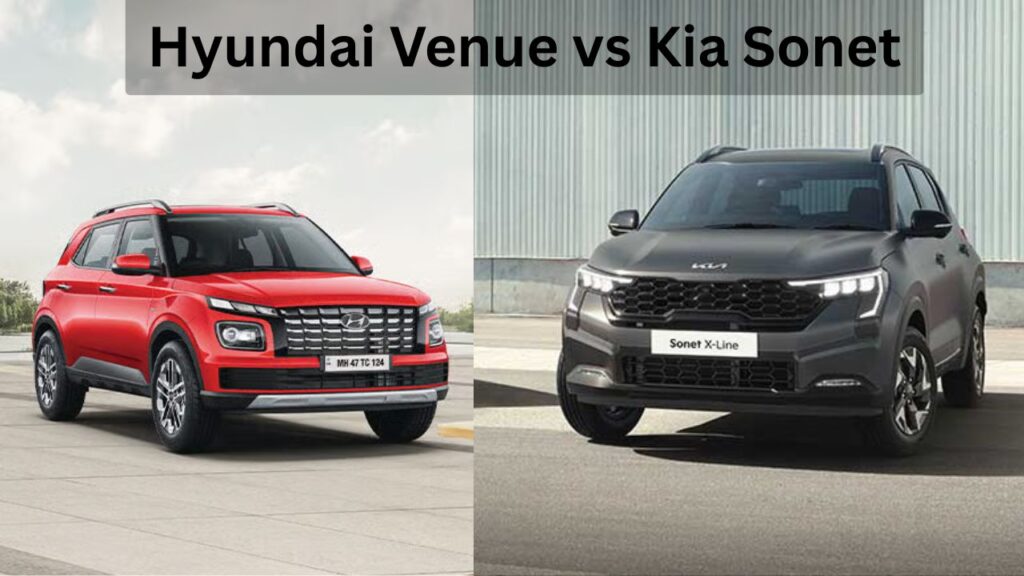
Hyundai Venue vs Kia Sonet: Which Compact SUV Wins the Battle?

Published Aug 18, 2025, 10:19 AM
Last Updated Apr 11, 2026, 11:11 AM

The compact SUV has emerged as a first choice between petrol and electric models. As the market looks to 2025, Hyundai Venue vs Kia Sonet offer a blend of fuel efficiency, performance, and advanced features that make them increasingly attractive for any SUV buyer. In the early Q1 of 2024 & 2025 hybrid electric vehicles have increased their sales more than other electric or plug-in hybrid vehicles. The increasing growth of these SUVs makes them a strong contender. People’s preferences have shown for these new hybrid electric models of Hyundai and Kia.

Let’s look into the details of these compact SUVs such as price, performance, fuel economy, safety features, and what makes them a strong contender in 2025 SUVs. 

Hyundai Venue vs Kia Sonet: The 2025 Best Compact SUVs 

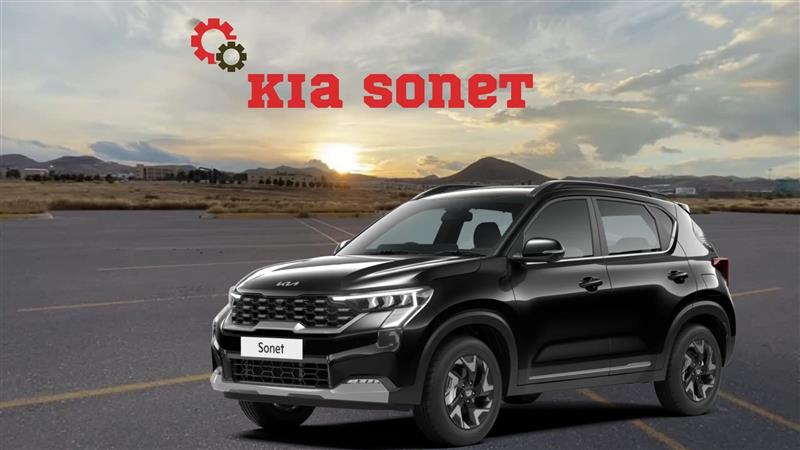
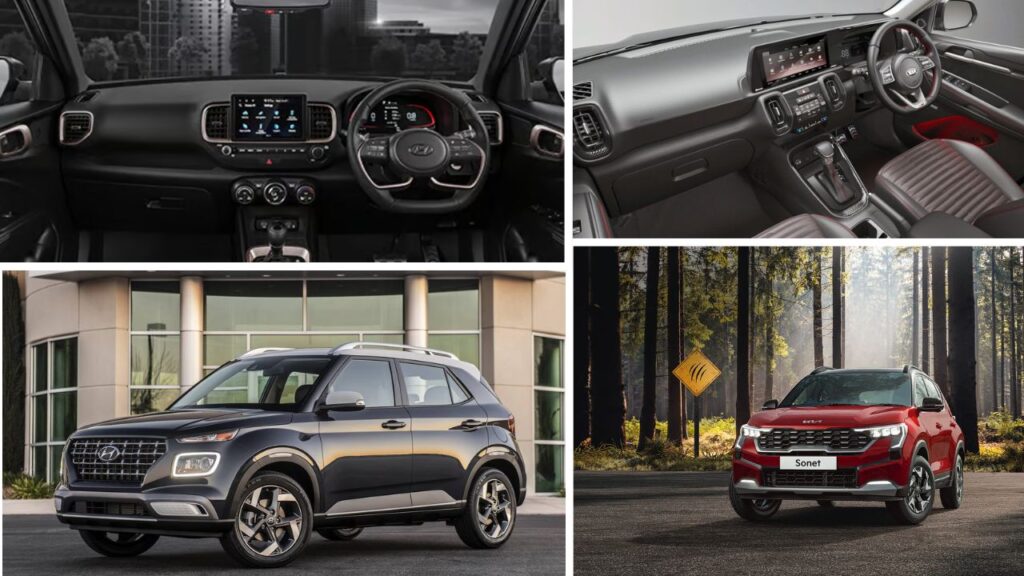
Kia Sonet

The Kia Sonet is on the top consistently due to its powerful performance and other key points which attract the most is industry-leading reliability and future-rich interior making it a strong contender in its segment. It offers a perfect balance of fuel efficiency and practicality. 

The 2025 model comes with a mileage of up to 18.4 kmpl for petrol and 24.1 kmpl for diesel variant. A 1.2L petrol engine with 5-speed manual transmission, 1.0L turbo-petrol with 7-speed DCT, and 1.5L diesel engine with 6-speed manual transmission.

The Kia Sonet starting price is around $9,600 to $10,000. It offers the best safety features to keep the passenger safe during the crash with multiple airbags, ABS safety function, dynamic cruise control, lane assist, and pedestrian detection.

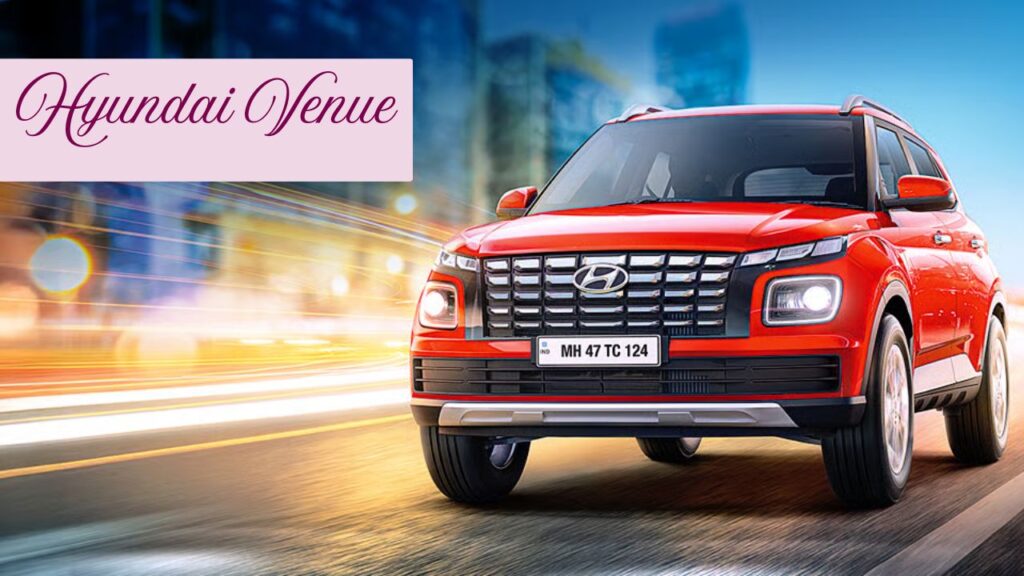
Hyundai Venue

The Hyundai Venue brings new design in both exterior and interior. The Hyundai Venue 2025 is a significantly popular model in many international markets and offers high-premium features for comfortable trips that includes leatherate seats and fuel efficiency. 

The starting price of Hyundai Venue is around $20,200. This highly powerful model is delivering 1.2-litre naturally aspirated petrol engine without automatic transmission, but DCT is available in the 1.0-litre turbo petrol engine. 

Its impressive features include safety functions – drive assist, collision warning, and lane departure detection. Its angular design looks inspired by other Hyundai SUVs like the Alcazar, the sleek impression with its new front is remarkable. 

Hyundai Venue vs Kia Sonet: Same DNA, Different Flavors

While there is comparison between powerful compact SUVs which offer impressive looks, it is hard to decide which one is more strong and reliable. Both Hyundai Venue and Kia Sonet are built on K2 small car architecture offering the same structural parts that lead to similar driving dynamics and safety fundamentals.

Engines Both SUVs Share

The 1.2-litre naturally aspirated petrol engines are not very quick but almost reliable and fuel efficient to deliver 5-speed manual ride and 83 PS power. The 1.0-litre twin turbo engine produces 120 horsepower and 172 lb-ft of torque which delivers fast speed with 6-speed iMT clutchless manual or 7-speed dual clutch automatic for smoother gear switching.

Kia Sonet’s Extra Power Options

For those buyers who want more power, a 1.5L petrol engine offers incredible power. Sonet’s 1.5L diesel engine delivers 6-speed manual and automatic power that delivers better fuel efficiency and high torque for rush and highways. 

Venue no longer offers these features including automatic mode in diesel, it makes Sonet a best choice.

Read More 👉  Tata Nexon vs Hyundai Creta: Which 2025 SUV Will Rule the Roads?

Comfort & Interiors: Which SUV Feels More Premium?

The 2025 Hyundai Venue offers softer seats with original material, 4-way adjustable feature and 2-step reclining gives comfortable rides to its passengers. It offers 5 passenger seating, its modern and user-friendly cabin is the major selling point of Venue. The high quality material giving a premium look with various colour options might set an amazing impression.

The 2025 Kia Sonet is offering a premium look with more cabin space and cargo space for passengers. Long trips can no longer be hard with its comfortable ventilated seats that deliver power-adjustable to hot weather. Electric sunroof and automatic climate control is more attractive to the buyer who wants an SUV for longer trips without compromising their comfort.

Category Venue 2025 Sonet 2025
Starting Price  $34,050 $36,100
Engine Options 1.2L & 1.5L  1.2L & 1.5L 
Max Power 113bhp  114bhp 
Max Torque 250Nm  250Nm 
Transmission Options 6-speed MT 6-speed MT
Mileage (ARAI) Up to 24.2 km/l  Up to 24.1 km/l 
Boot Space 350 litres 385 litres
Fuel Tank Capacity 45 litres 45 litres
Ground Clearance 190 mm 205 mm
Safety Features 6 Airbags, ABS, EBD, Rear Parking Camera 6 Airbags, ABS, Rear Parking Camera, ADAS, 360° Camera
Modern Tech  360° Camera, Wireless Charging, Sunroof  ADAS, Digital Driver Display, Powered Driver Seat, Ventilated Seats, Sunroof

Final Verdict

With the modern design and advanced features Hyundai Venue vs Kia Sonet compact SUVs are hitting at the top rank consistently. The high demand for these is rising due to their safety functions, impressive look and most importantly they are hybrid models. As the world evolves in the automotive landscape, the SUV has more demand in the market. 

Which one should you buy? It is totally up to your priorities and budget, choose the right vehicle for your convenience because both offer somewhat same engines, design with little difference in their interior and budget. Overall, both are best and get positive reviews from consumers.