1

How Electric Cars Are Changing the Future of Transportation

Published Jun 13, 2026, 12:16 PM
Last Updated Nov 2, 2026, 5:04 PM

Electric Cars

For years petrol or diesel cars have dominated on the road, but now the future of transportation is shifting to Electric Cars. They are already in the market and become a practical choice for millions of people worldwide. People prefer EVs to buy in 2026 as they offer low running cost, advanced technology, and less expensive maintenance.

However, car makers are still working on the batteries to provide more range. That future is near when average people can also afford Electric Cars. Governments and automakers invest heavily in electrification for making charging accessible easily.

The Transportation Shift is Already Happening

The smarter, faster, comfortable transport will become Electric Cars in the future. So choose wisely before you’re going to buy a new car. The resale value also dropped of petrol and diesel cars and EVs offer excellent technology with good range of driving. 

Global electric vehicle sales crossed 17 million units in 2024. China alone put more EVs on the road last year than the entire world did in 2021. India’s EV two-wheeler and three-wheeler market is exploding, with four-wheelers catching up fast. Tata Nexon EV is no longer a novelty on Indian roads — it’s traffic.

The question isn’t whether Electric Cars will change transportation. They already are. So are you going to be ahead of that change, or scrambling to catch up?

Read More:- The Future of Electric Vehicles: What Drivers Need to Know

What Actually Changes When a Car Runs on Electricity

The engine disappears. Not just physically — the entire relationship between a driver and maintenance changes. No oil changes. No coolant flushes. No timing belt anxiety. An electric motor has roughly 20 moving parts. A combustion engine has over 2,000. That’s not a small difference — that’s a different category of machine.

Refuelling becomes recharging — and that changes your whole routine. You stop thinking about fuel the way you think about groceries. Instead, you plug in at home overnight. Your car is full every morning. The “range anxiety” people talk about? It’s mostly psychological — the average Indian commuter travels under 40 km a day. Even entry-level EVs handle that with room to spare.

The car becomes a software device. This is the part that surprises people most. EVs aren’t just cars with batteries — they’re computers on wheels. They get over-the-air software updates. Their performance can literally improve after you buy them. Tesla has pushed updates that added features and improved range on cars already sitting in someone’s garage. That’s unprecedented in automotive history.

What This Means for Roads, Cities, and Air

If your city’s electricity is primarily coal-generated, an EV charged there is still indirectly burning fossil fuel — just upstream. India is working to fix this. Renewable energy capacity is growing rapidly, and as the grid gets cleaner, every EV on that grid gets cleaner automatically, without any change from the owner. That’s a compounding advantage no petrol car can ever have.

But air quality? That improvement is immediate and local. No tailpipe means no exhaust in city traffic. Anyone who’s sat in Delhi or Lucknow traffic in summer knows exactly how much that matters at street level.

Urban noise also drops. Electric motors are nearly silent. A city with predominantly electric vehicles would be a fundamentally quieter place — and that has real mental health implications that researchers are only beginning to document.

You Know That:- Which Car Is Best: Petrol or Diesel?

Pricing Structure For Electric Cars

Transportation isn’t just about getting from home to office or one city to another. It’s an enormous economic engine and Electric Cars are rewiring it.

The fuel economy argument alone is stark. Running an EV in India typically costs around ₹1–1.5 per km in electricity. A petrol car costs ₹6–8 per km at current fuel prices. For someone driving 15,000 km a year, that’s a saving of ₹67,500 to ₹1.05 lakh annually — every year. The higher upfront cost of an EV starts looking very different when you do that math over five years.

Then there’s what this does to jobs. Petrol stations, engine mechanics, spare parts manufacturers — entire ecosystems built around combustion are under slow pressure. New ecosystems are being built: charging infrastructure, battery manufacturing, software engineers for automotive systems. The jobs aren’t disappearing, they’re migrating. But migration is uncomfortable for the people in the middle of it.

EV Batteries Are Still a Problem

Batteries are still a big problem for EV cars and people hesitate while buying an electric car because of this.

Recent reporting of child labor in Africa raises concern as this happened in Cobalt mines. The material is used in batteries along with lithium and manganese. Recycling infrastructure isn’t completed properly yet. This doesn’t mean that EVs are harmful for our environment, instead it pushed manufacturers for stronger policies on battery sourcing.

The technology is improving. Solid-state batteries, sodium-ion alternatives, and better recycling processes are all in active development. But “it’ll be better later” isn’t the same as “it’s fully solved now.”

Where The Future of Transportation is Going?

The trajectory is clear, even if the timeline isn’t perfectly predictable.

Several countries have set deadlines to phase out new petrol and diesel car sales — Norway by 2025 (already there), UK by 2035, India pushing hard toward electrification targets under its FAME scheme. Automakers globally are retooling factories. Maruti Suzuki, which long resisted full electrification, is now accelerating its EV lineup. When the most conservative, mass-market carmaker in India pivots, the direction of travel is settled.

What remains uncertain is speed and equity. If charging infrastructure will expand fast to reach Tier 2 and Tier 3 cities and cut the manufacturing costs with time to make a car affordable for middle-income buyers. 

Read More:- Car Maintenance Tips That Save Money And Valuable Time

Conclusion 

In a changing world, people are choosing cars with batteries rather than petrol or diesel. Electric Cars support sustainability and reshaping transportation, cities, and the global automotive industry. Adaptation of EVs are growing faster, despite facing challenges like battery production, recycling, and charging infrastructure.

The future of transportation is not a petrol or diesel car anymore. But Electric Cars are leading that transformation to a greener world. Although, it’s not limited to it, it offers advanced tech in a car, speed and comfort too.

Sharey Khan

Sharey Khan is an IT entrepreneur and petrol head & a car enthusiast. With a special focus on car-related content, he combines his deep passion for vehicles with a talent for crafting informative, engaging, and easy-to-understand content. His writing is driven by a genuine love for cars and he is committed to providing readers with accurate, up-to-date, and trustworthy information that empowers smarter driving decisions. 

One Comment

Leave a Reply

Your email address will not be published. Required fields are marked *

0

Toyota Urban Cruiser BEV Teased in India: Launch Timeline, Range, Features & Price

Published Jan 7, 2026, 12:48 PM
Last Updated Apr 10, 2026, 7:19 AM

Toyota Urban Cruiser BEV

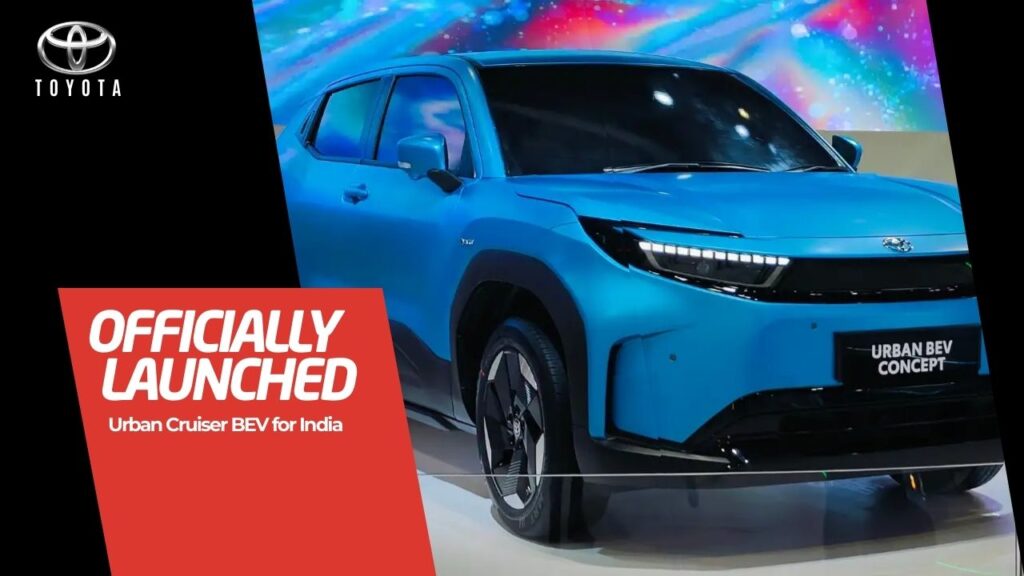
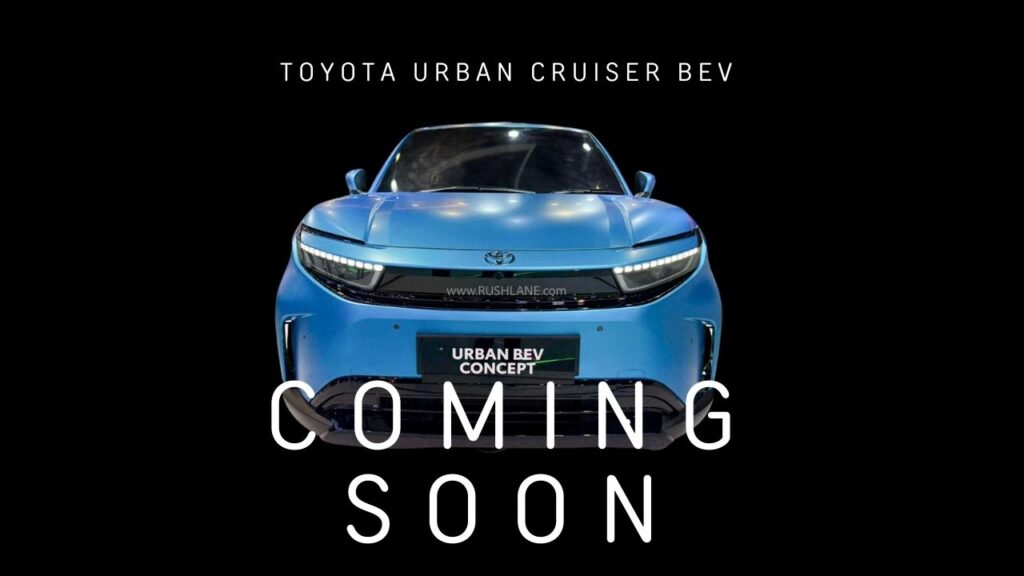
If you are among those waiting for a right-sized, family-friendly electric SUV from Toyota for India — now the wait just got a whole lot more exciting. Toyota has now officially teased the Toyota Urban Cruiser BEV (Battery Electric Vehicle) for India for the very first time, hinting that the launch is just around the corner. This is not just some other concept or a long-term promise- this is a near-production electric SUV ready for India and it will hit showrooms soon.

​In this blog, let’s check predicted features, design, battery choices, and what makes the Urban Cruiser BEV very likely to be one of the most buzz-worthy EVs in the Indian market. 

First Clear Glimpse Of Toyota’s India-Spec EV

New teaser unveiling Urban Cruiser BEV front and side views provides a solid glimpse at Toyota’s design language for its first electric SUV in India.

  • The SUV features slim LED headlamps with eyebrow-style DRLs and are connected by a light strip, lending it a contemporary look. 
  • As one would expect on an EV, the grille is closed and rendered in body colour or piano black, hiding the front behind clean, futuristic-looking material. 
  • The bonnet is sculpted and the aggressive bumper stance is tough enough for an SUV.
  • On the side, you also see the ‘BEV’ badge right behind the charging port, confirming this is a full electric vehicle. 

The overall India-spec Urban Cruiser BEV appears very near to the concept. It’s production-ready and stylish but not particularly flashy or experimental. 

Shared DNA With Maruti e Vitara – But With Toyota Flavour

Toyota Urban Cruiser BEV is based on the Maruti Suzuki e Vitara platform. Both electric SUVs will be produced at Maruti Suzuki’s Gujarat plant and are built on the same EV underpinnings.

Toyota Urban Cruiser BEV

In other words, it’s Toyota’s take on Maruti’s first electric SUV – same base, different design. They are expected to be close in size, measuring about 4.2-4.3 meters long with a 2,700 mm wheelbase, which would position them in the midsize SUV category. You’ll also find the same EV platform, flat floor, battery configuration, and similar powertrain and range options.

The difference is in the design and branding behind which Toyota is well known. The Urban Cruiser BEV has Toyota-specific design features and details of lighting, alloy wheels and trims and includes Toyota’s global design language and brand reliability. 

Toyota Urban Cruiser BEV Expected Features & Interior

Although Toyota has not shown the inside of the India-spec Urban Cruiser BEV as of yet, thanks to the global car and e Vitara, we know what will be on offer:  ​  

Two-spoke steering wheel with a chunky, modern design – similar to recent Maruti/Toyota models. A 10.25-inch touchscreen infotainment system with connected car technology, navigation, smartphone connectivity, and may be some built-in apps. A 10.1-inch fully digital instrument cluster that displays EV-related details such as range, battery status, energy flow, drive modes and regen levels.  

Premium options are expected to be: 

  • Heated Auto climate control
  • Electronic Park Brake with Auto Hold
  • Wireless charging
  • JBL sound system (high spec models)
  • Panoramic or single-pane sunroof (variant dependent).

Speaking of practicality, the overseas Urban Cruiser EV and e Vitara feature sliding rear seats that slide forwards and backwards to offer flexibility between rear legroom and boot space.This is a very user-friendly feature for Indian families who often juggle airport runs, city commutes, and highway trips in one car»rdquo; 

Safety Kit will also likely be robust:

  • 6 airbags as standard
  • Level 2 ADAS suite including adaptive cruise control, lane-keep assist, lane departure warning, pre-collision warning.
  • ​A 360-degree camera, TPMS, ESC, front and rear parking sensors.

All in all, the Urban Cruiser BEV appears to be a comfortable, technology-laden, and safety-centric EV SUV — not just a “born-electric experiment.” 

Urban Cruiser BEV Battery Options and Range

There will be two battery options for the Urban Cruiser BEV and range is left to be one of its biggest “excitement” factors.

Urban Cruiser BEV battery options & range

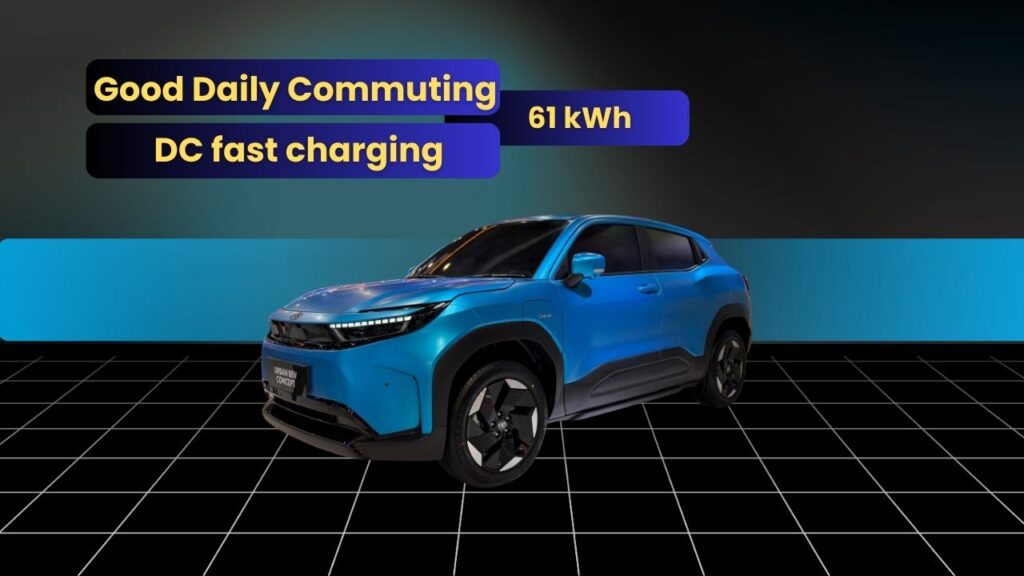
Battery: Toyota will probably provide a 49 kWh battery and a bigger 61 kWh battery. The smaller pack is estimated to output around 143–144 PS, while the bigger one could pump out about 173–174 PS. 

Powertrain: Both are likely to be front wheel drive secures. A global version with AWD is available, but whether it will be released in India is still unknown.

Range: The 61 kWh battery claims to give more than 500 km ARAI cycle range which is similar to that of the Maruti eVitara with a claim of 543 km. On a practical standpoint, the range is probably good for 350–400 km, which is plenty for daily commuting in addition to weekend jaunts.

Charging information has yet to be announced, but DC fast charging and a home AC wall charger should be available. 

Launch Timeline & Expected Price In India

The Toyota Urban Cruiser BEV is anticipated to bring its India debut in the coming days. After its full disclosure, some reports suggest that 19 January may be the date of the launch.

Launch Timeline & Expected Price In India

As for the price, it is likely to be priced in the range of ₹16 lakh to ₹22 lakh (ex-showroom) approximately depending upon the variant and battery pack. 

Conclusion

The Toyota Urban Cruiser BEV is poised to be a very good and value-for-money guess of this new segment in India’s electric SUV market. It is a familiar, family-based SUV model, but with contemporary EV technology, long-range claims, and Toyota reliability. sharing underpinnings with the Maruti e Vitara, buyers get a proven platform, while Toyota adds its own styling, tuning, and brand value.

If priced right, the Toyota Urban Cruiser BEV will be a fine compromise of pragmatism, performance, features, and safety. Indian families who want to move away from petrol or diesel SUVs but don’t want to take that dangerous jump to going electric, this is quite possibly one of the most well-rounded, and confidence-inspiring, EV options you’ll find. 

0

Kia Seltos vs MG Hector: Which SUV Offers More For Your Money?

Published Aug 20, 2025, 9:25 AM
Last Updated Aug 21, 2025, 10:40 AM

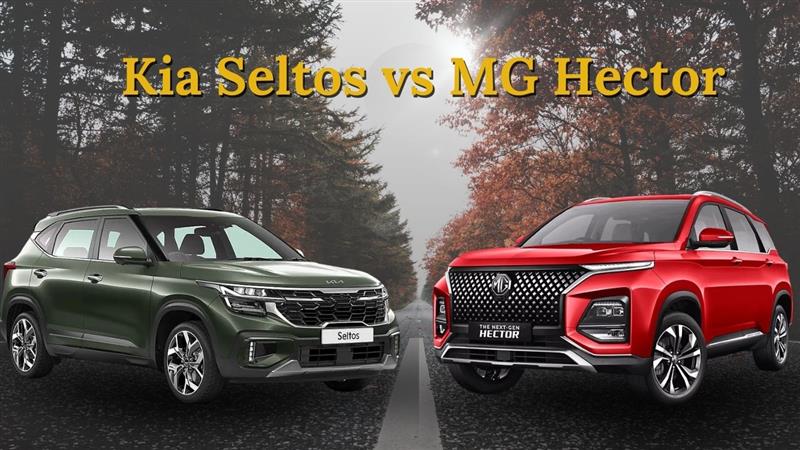
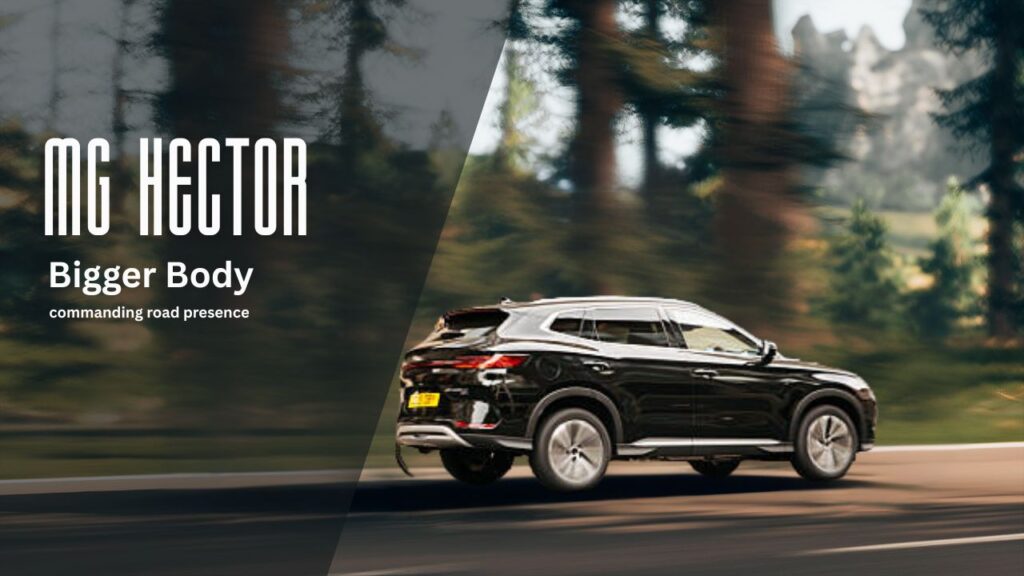
Making a decision for buying an SUV which is worth your money then Kia Seltos vs MG Hector are two beasts ready to roar on roads. Both deliver wonderful performance with unique features and style. If you look from outside MG Hector is bigger in comparison to Kia Seltos, which makes it ideal for large families who consistently travel. 

Kia Seltos vs MG Hector side by side comparison showcasing design, size, and performance differences


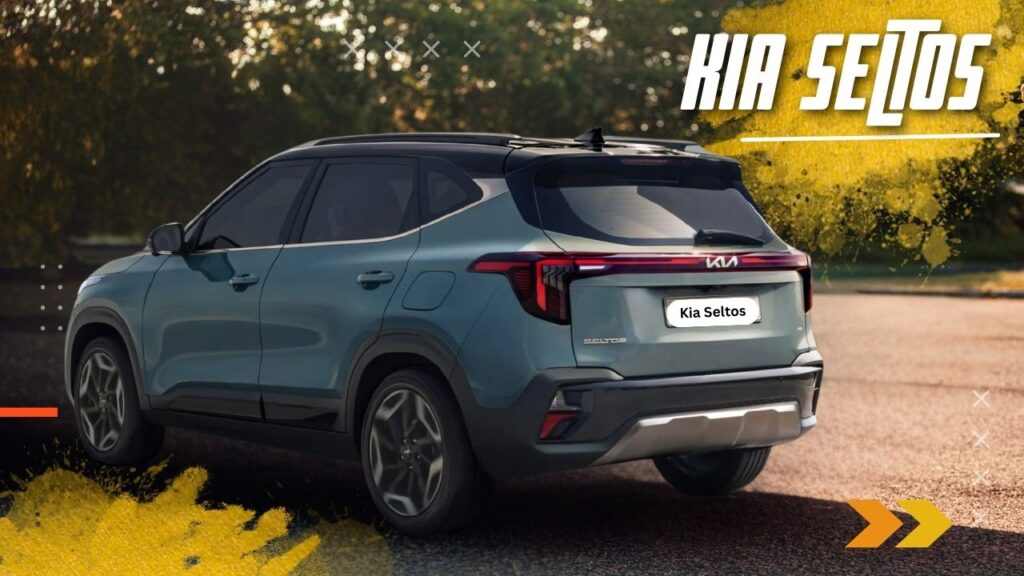
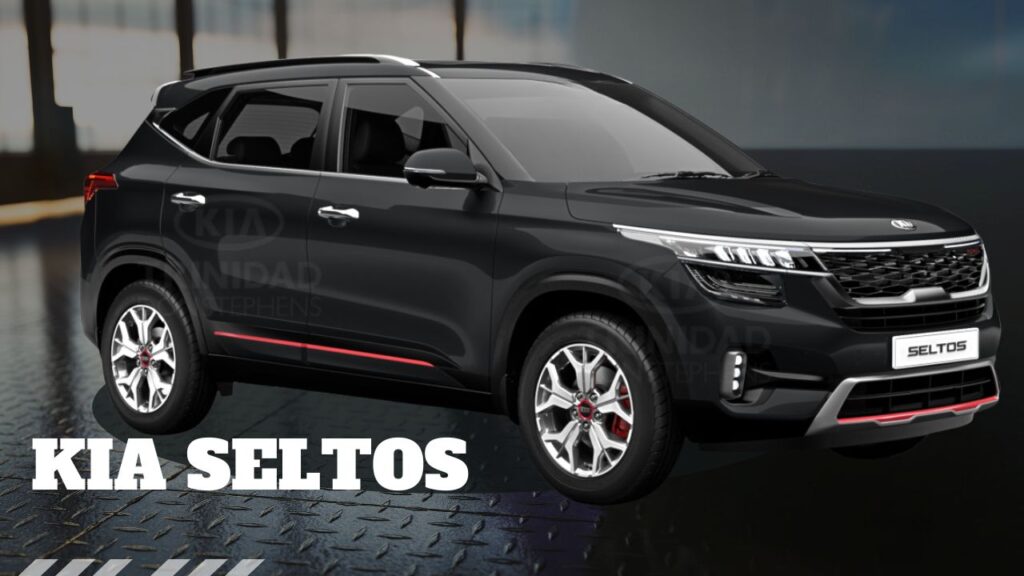
Kia Seltos cunning design is making a valuable impression and gives an incredible feeling to experience the compact SUV ride with powerful petrol engine. Both offer full safety features with different functions and their price is also slightly different. 


If you prefer to buy an SUV for yourself or a small family then Seltos is best but if you want a spacious cabin and boot space for a big family then Hector is good for you.


Let’s explore their details in depth to make a better choice for yourself before buying a car.

Kia Seltos vs MG Hector: Key Difference at a Glance

Size and Space: MG Hector has a bigger body than Kia Seltos, is spacious for its segment but not as Hector. Because of the larger body Hector has larger space inside the SUV which makes it ideal for families.


Price: The Seltos’ starting price is Rs. 11.19 Lakh which is lower than Hector Rs. 14.50 Lakh. 


Engine and Performance: Both cars offer different performance with different engines, Kia Seltos turbo-petrol engine and Hector Diesel engine is powerful. Seltos’ diesel and Hector’s petrol engine are also good but not that powerful. Seltos offers more transmission options than Hector.


Features: MG Hector has a 14-inch touchscreen infotainment system and extensive connection functions. Seltos has dual-screen setup that integrates both infotainment & digital cluster, along with ADAS suite.


Let’s dig deeper into their features that make them different from each other.

Exterior and Dimensions

The MG Hector has a bigger body which makes a more commanding road presence. It offers more interior space while expanding its dimensions to make it bigger.

Kia Seltos vs MG Hector exterior and dimensions comparison showcasing sporty compact SUV design versus larger spacious SUV body

The Kia Seltos look more sportier and have an impressive modern design with sharp lines. It is easier to handle in a small space in the city and easily park with its compact size.

Interior and Features

Both cars offer advanced features but in different areas. Hector offers a larger infotainment system which controls car overall functions and advanced suite of connected car features. 

Seltos is more driver centric with two integrated screens of infotainment and digital cluster. A dual-zone climate control system is also available in Seltos.

Also Read: Honda City vs Toyota Corolla Altis: Which Sedan Rules the Road?


Performance and Driving Dynamics

A 2.0-litre engine of Hector is ready for adventurous trips to give you an unstoppable journey ride. Its diesel engine is a proven powerhouse than Seltos. However, Seltos’ 1.5-litre turbo-petrol engine is more powerful than Hector’s turbo-petrol engine.

Kia Seltos vs MG Hector performance and driving dynamics comparison highlighting turbo petrol and diesel engines with smooth transmission options

In terms of transmission, the Seltos offers a iMT (intelligent manual transmission and 7-speed DCT which delivers mind-blowing driving dynamics.

Safety

If your priority is safety first then both SUV has wider features for safety measures including six airbags and level 2 ADAS. For preventing car crashes, lane departure warning, automatic emergency braking, and forward collision warning are marvellous features that are really helpful. Hector has still not been officially tested but Seltos got 3-star rating from Global NCAP rating.


Feature Kia Seltos MG Hector
Dimensions 4365×1800×1645mm

Wheelbase: 2610mm

4699×1835×1760mm

Wheelbase: 2750mm

Boot Space 433 Litres 587 Litres
Engine Options 1.5L Petrol, 1.5L Turbo-Petrol, 1.5L Diesel 1.5L Turbo-Petrol, 2.0L Diesel
Power Petrol / Turbo / Diesel

113bhp / 158bhp / 114bhp

Turbo / Diesel 

141bhp / 168bhp

Torque 144Nm / 253Nm / 250Nm 250Nm / 350Nm
Transmission Manual/ iMT, CVT, 7-DCT, 6-Automatic Manual, CVT (Petrol only)
Mileage (ARAI) Up to 20.7kmpl (Diesel) Up to 15.58kmpl (Diesel)
Infotainment 10.25-inch HD Touchscreen 14-inch HD Touchscreen
Safety 6 airbags, Level 2 ADAS, all-wheel disc 6 airbags, Level 2 ADAS, all-wheel disc
Comfort Features Ventilated seats, dual-zone climate control, sunroof, 8-way power-adjustable driver’s seat, 360-degree camera Ventilated seats, sunroof, 6-way power-adjustable driver’s seat


Conclusion

Choosing between Kia Seltos vs MG Hector is highly confusing when a buyer wants a car with full modern features and powerful performance as both offer the same. But:

If you prefer more space, more big, and comfortable SUV then MG Hector fits in. 

If you prefer a more sportier look compact style SUV then the Kia Seltos is the best option.

0

How to Buy a Used Car Online ?

With the emergence of India as a global hub for small cars, there is a huge increase in the number of vehicles on-road. New cars are available with attractive offers, and so are used cars available at affordable prices. With increased choice and accessibility, first time buyers may face confusion In buying a car. In today’s article, we take a look at used cars. How should you buy a used car? And what are the things to look out for?


The Following Points to Remember while  buying used cars. We will take a look at the following steps:

  • Locating your dream car
  • Inspection of car
  • Finalizing on the price
  • Transferring of ownership


How to Buy a Used Car Online


Locating your dream car

After deciding that you want to buy a used car, you will need to finalize on which make and model you wish to buy. This will mostly be dependent on your budget and personal preferences. For budget, you can use car valuation guides as present on Badicar.com or you can get a fair idea by just browsing cars for sale.

After deciding about the car to buy, the next task is to find the same available with a seller. You can use online classifieds portals such as Badicar.com which have listings of both dealers and individuals. Alternatively, you can approach your local dealers, use a newspaper ad or locate a car through references. Indeed, personal contacts are often an important channel to find a car.

While choosing between a dealer or individual, you may often get a better deal from a direct purchase, but after sales and warranty would be an issue. Thus, there is some benefit in paying more for the trust that a dealer can give.

Before making your way to the car, get a full understanding of its condition over phone or email and get an initial idea on the price the seller wants. Remember that there is no such thing as a fixed price, and you should always be able to get a bit down from the seller’s current cost.

Inspection of car

After locating the car and visiting the venue, you will now need to inspect it so that you can offer a correct price for the car. Remember that damage to the car need not deter you per se, as you can use it as a lever to reduce the cost. In this, you should be able to make a rough estimate on the cost it would entail to repair that damage.

The following is an overall checklist for purchasing a second hand car.

Tyres

The condition of tyres, its life and nature of wear must be noted. Improper or uneven tyre wear indicates there is possibility of misalignment of tyres. Each tyre should be checked whether it’s been retreaded or original because the cost of a new tyre is high.
Body

The condition of body and upholstery, paint etc. must also be checked. Sometimes long term usage of vehicles in coastal areas causes rust formation in body or on the under-chassis. Moreover, any dents, repainting jobs or deep scratches can be hints for more serious damage and necessitate a more thorough investigation from your end.
Battery

The condition of battery is also essential before deciding on the cost to pay, as it is a high cost item. Check for any residue on the battery.
Suspension

Make sure that you take a drive of the car to research the car’s suspension. For this purpose, it’s better to drive the vehicle on an uneven road so that you can check for a rattling noise of the body and its suspension system. The wear and tear of parts and assembly can be understood from a rattling noise.
Engine and drive quality

The condition of engine is also to be noted. Ease of starting and a good pick up are desired during a road test. In the meanwhile, also give the break system a check and ensure that car’s stop is smooth and effective. Don’t forget testing the hand brake either.

During the drive, take a look at the exhaust smoke to indicate condition of cylinder and working parts.

In general, issues in this section may require a large amount of work to fix, and thus may make you to skip the purchase.
Clutch, gearbox, differential and joints

On a road test, also take a look at the clutch. It is one component which can have serious wear and tear if the car is not driven properly. The gearbox should work nice and smoothly. These components can be checked on road test or on a hoist
Mileage

Check out the Kilometers that the car has run. The more the odometer reading, the nearer you are to changes in parts of the car, which means that you should expect large repair bills. Thus, reduce your offer if need be.
The R.C. Book

The vehicle’s R.C. Book must be checked to get information on a number of items.

Tax Payments

The tax payment and expiry date can be seen from the RC Book. If the expiry date is near, it means that you will need to spend money on the car soon. Thus, it may be a reason to decrease your offer for the car.

Model and Year of Manufacture

Verify the car’s age through the RC Book. Each year passed is one year of depreciation and thus it is one of the most important factors in depreciation. Also use the age of the car as an input to verify whether the car’s mileage is accurate or whether it has been tampered with.

Number of Owners

Use the RC book to verify the number of owners that the car has had. A larger number of owners is an alarm signal and can point at some issue with the car. Make sure to ask and do more research in this case.
Service records

Take a look at the car’s service records. Have the repairs been done at official service stations. Are all the services there? The records should tally with the car’s age.

An interesting point in this is also the identity of the owner. In general, cars owned by members of the Parsi community, doctors or army men are preferred as they are generally much better maintained.
Insurance status

While inspecting vehicle documents, it’s important to check out the type of insurance of the vehicle and whether it is still having valid period or not. Since insurance is legally mandatory, a longer expiry date means you will be able to save some money on the insurance costs.

In insurance, the main types Insurance are Comprehensive and third party insurance.

  • Comprehensive Insurance

    In this type, all risks as mentioned in the Motor Vehicle Act, such as accidents and theft are covered. Importantly, the insurance company will reimburse you for damages to your own car itself, over and above damages caused to other parties.
  • Third Party Insurance.

    The third party insurance policy does cover insurance for the policy holder but only for other persons involved in accidents.Obviously, a comprehensive insurance is more expensive than a third party insurance.

Accessories

Check for the presence of accessories in the car. Any accessories can allow you to offer a bit more for the car.

Taking the make, model, variant and age of the car as a starting point, the above points will help you to calibrate your offer for the car better.

Summary of the process

Deciding on the price to be quoted while selling and buying a car is a cumbersome and complicated task, since it involves so many factors. In sum, the process is as below:

First decide about your priority of car, i.e. whether you are looking for a particular brand or a car which suits your traveling needs. It’s important because most of the time people end up paying extra for particular brands when reliable cars from other makes are available at lower price. If you are looking for that exact car, you should be ready to pay a bit more for it. Decide on the make and model that you want.

Check on classifieds sites to get an idea on the quoted price for particular models and year of make along with accessories present. Then, start contacting sellers and making appointments.

Check the car in person and decide about the worthiness of car for the quoted price. Use the above checklist to counter offer the seller’s price, but be sure to take your time and walk away if you’re not getting the deal closed.

Transferring of ownership

So you’ve agreed with the seller on an amount and given him a token amount for the car. Now, you need to close the deal completely and get the car transferred to your name.

First, complete the payment to the seller and take a receipt for the payment as well as the RC Book. After receiving the payment, the seller must within 14 days submit relevant documents to the RTO as prescribed by the concerned RTO. He will get a no objection certificate and provide the same the buyer. As a rule seller must take care of this, however, in most of cases the buyer will go for it after getting sign of seller in the relevant forms.

The buyer should submit the Original RC with seal of no objection to the concerned RTO of his residence. With showing of all relevant documents such as RC book, Insurance note, Emission certificate etc. the RTO will put the car on the buyer’s name and thus complete formalities of transfer of ownership.

Conclusion

Buying a used car is never easy, but it can be simplified provided the correct relevant procedure is followed. Apart from the above mentioned tips, don’t be shy of bringing along a mechanic or a friend who may know more about cars. It will surely help for discussions and coming to a conclusion about car.

Judging the price of a car is a very important point in any vehicle buying and selling. With thorough research of available used cars you will be able to make an educated offer.

At Badicar.com we hope to be one such complete source to help people to decide on buying of used cars and bikes. Please do contact us or comment below for any questions or tips.

0

Top Points to keep in mind while buying a used car online

First Time Buyer’s Checklist

Before it comes to the process of buying a used car, the biggest challenge is selecting the car you need to buy.

When you are buying a used car, it is possible to get swayed very easily. For example, when you go to a dealership you might see a 7-year-old Hyundai Verna for 7 Lakhs and standing next to it you’ll see a 4-year-old Honda Accord (which is a far more premium car) for 9 lakhs. You might convince yourself to spend that extra 2 lakh and pick up an Accord but the cost of running and maintaining an Honda Accord is far higher than that of Hyundai Verna. In the long run, you’ll end up spending a lot more money on used car’s maintenance.

Check the used car’s condition

Despite being a used car, the vehicle you are considering should be in good running condition, and must be good value for money. Take the vehicle for a test drive and get all major systems such as engine, cooling, transmission, wheels, etc by an expert or checked by a trusted mechanic. These checks will help you ascertain whether the car is as well-maintained as the seller claims. Further, you can plan (10% of value of used car) for unavoidable repairs and maintenance and include the same in your budget.

Tip: Ensure that you carry out a thorough check when you go to take the delivery of your vehicle as well. This is important because a dealer might replace some of the components from your seeing of the vehicle to the delivery of the vehicle- for example – he might replace new brake pads with old ones.

Registration documents

Is the seller the real owner of the car? Is this the first or the second time it is being resold? The Owner Serial Number in the RC book or smart card indicates the number of times the car has been sold. Has the owner paid all dues, including road tax? Ensure the seller provides you with other papers that need to be verified, including the original invoice, NOC from the car loan provider, and road tax receipt.

The car’s transfer is effected when you and the seller sign on RTO Forms 29 and 30. Further, the seller must submit Form 28, which is the NOC for transfer of the car.

Car insurance

Tip 1: Check the car’s insured value in the policy, It will be a useful benchmark during price negotiations.

Tip 2: Track the No Claim Bonuses over the past 2-3 years. Frequent claims may imply frequent accidents requiring repair and maintenance to the vehicle.

Tip 3: Get the seller’s car insurance policy transferred in your name or buy a new policy within 2 weeks of the date of transfer of the car.

Not doing above may lead to your insurance claim being rejected in case of any accident or mishap. Only claims related to third parties will be approved under the deemed insurance policy transfer of the law.

Documents required

  • Proof of sale of the car
  • Proof of delivery of car to your possession
  • New RC book issued in your name
  • Request from the seller for cancellation of policy
  • Your application for transfer of the policy

Potential modifications

Can you convert the car into a dual-fuel automobile for example CNG? Can you opt for upgrades for greater comfort, safety, and value? Older vehicles may come cheap but may be impossible to upgrade. A relatively new model is preferable, especially if it comes at an affordable price as compared to the used one.

Get Your Deal Today – Click Here