0

Which Car Is Best: Petrol or Diesel? Pros, Cons & Complete Comparison

Published Jun 10, 2026, 12:18 PM
Last Updated Nov 2, 2026, 5:17 PM

Petrol vs Diesel Car

When you visit a showroom of Maruti, Honda, Tata or any brand, you probably get confused which car is best for you — Petrol vs Diesel Car? The generic answer is it depends on your usage and region but cars are also affected by many factors that make them different from each other. If you are not sure then continue reading to understand it properly.

Let’s Understand the Basics

Factor Petrol Car Diesel Car
Ignition Spark plug Compression ignition
Driving feel Smoother, quicker response at low speeds Strong torque, better at sustained speeds
Best usage City driving, short trips Highway driving, long-distance travel
Upfront price Lower Usually ₹1–2 lakh higher
Fuel cost Petrol is usually costlier per litre Diesel is usually cheaper per litre
Fuel efficiency Lower than diesel Usually 20–25% better
Maintenance Simpler and cheaper More complex and costlier
Best annual mileage Below 12,000–15,000 km Above 20,000 km
Resale value Improving, especially in small cars Traditionally strong, but affected by emission rules
Emissions More CO2 per km More PM2.5 and NOx

A petrol engine uses spark plugs to ignite a mixture of air and fuel. It runs smoother, quickly picks high speed, and feels more responsive mostly at lower speeds. This makes petrol engine cars preferable for smaller distances, city driving.

A car built on a diesel engine uses compression (high pressure) to ignite the fuel, not a spark plug. It generates more torque (that pulling power you feel when you accelerate), runs at lower RPMs, and uses less fuel on longer distances.

That’s the core difference — and it explains almost everything else about how they behave on the road.

The Cost Factor: Upfront vs Long-Term

Most buyers end their discussion on Petrol vs Diesel Car when it comes to the money. 

Same car but diesel variant cost around ₹1 lakh to ₹2 lakh which is more expensive petrol variant. Manufacturing cost drives the extra price of the car because diesel engines have more complex parts.

However, Diesel fuel is cheaper per litre than petrol in India (usually by ₹10–₹15 per litre). And that makes it more fuel-efficient — a diesel car might give you 20–25% better mileage than the petrol version of the same model.

So here’s the math that actually matters: the break-even point.

Driving in a city less than 10,000–12,000 km a year, it will take you 6–8 years to compensate for the extra cost you paid to the showroom owner for the diesel variant through fuel savings. By that time, you’re probably thinking about your next car anyway.

But if you’re clocking 20,000+ km a year — long highway runs, intercity travel, road trips — a diesel car will pay for itself in 2–3 years and save you a significant amount after that.

The simple rule: high mileage = diesel makes financial sense. Low to moderate mileage = petrol wins.

City Driving vs Highway Driving

City Commuting 

If you use a car mostly for city trips then choose Petrol engines as they love city driving. They’re more responsive at low speeds, gear shifting is very light, and the engine doesn’t need to warm up as much. Start-stop traffic — which is basically the story of driving in any Indian metro — suits petrol engines far better. 

In this traffic area, Diesel engines won’t cope up because they perform best at sustained speeds and consume less fuel. In city conditions, their fuel efficiency advantage largely disappears, and the engine can be reluctant at low revs.

On the Highway

The diesel engine wins here, that high torque means effortless overtaking, smooth cruising at 100+ km/h, and significantly better fuel economy over long stretches. A diesel car on the highway is a genuinely satisfying experience — particularly for long-distance drivers.

Petrol engines can also run on highways but for the run on higher speed they need more fuel to work harder.

The Maintenance Cost For Each Fuel Type

Diesel cars leave your wallet empty for maintenance as their parts are more complex. And diesel-specific components (like the fuel injectors and turbocharger) need time-to-time and attentive servicing.

Petrol cars are simpler under the hood. Routine servicing is cheaper, and mechanics are more familiar with petrol engines — particularly at smaller garages in Tier 2 and Tier 3 cities.

One important thing to understand is that diesel cars need to be driven regularly. If you left them in a garage like any showpiece, a diesel engine can develop issues. Petrol engines can sit without creating any problem for a long time, perfect if the car is a second vehicle or used only on weekends.

Environment and Emissions

Environmental considerations are increasingly playing a bigger role in the petrol vs diesel car debate. Diesel engines emit larger quantities of PM2.5 particles and nitrogen oxides (NOx), which are air pollutants that harm the environment and human health. Petrol engines produce more CO2 per kilometre, but they generate a fraction of the harmful particles. 

India’s BS6 emission rules have brought diesel engines much cleaner than before — but the gap hasn’t fully closed. Several Indian cities have placed restrictions on older diesel vehicles, and there are ongoing policy discussions to set more regulations in pollution-heavy metros.

There are few cities like Delhi and Mumbai where pollution is rising day-by-day and so are emission concerns. It is worth knowing the resale value of your car.

Read more:- How to Calculate Average of Car With Explained Methods and Formula

Resale Value of Diesel & Petrol Cars

Diesel cars have long had better resale values because buyers thought they were more cost-effective to operate. That narrative has been shifting.

The prices are rising and rules are tightening on using diesel cars to prevent air pollution. Petrol cars are increasingly competitive in the used car market and in some segments (hatchbacks, small SUVs), they actually hold value better than diesel equivalents.

You can check any model resale value at the used car market. The segment matters a lot here.

Which Fuel Type Suits You Better?

Let’s make this as simple as possible.

Your Situation Better Choice Why
Mostly city driving Petrol Better low-speed response and lower maintenance
Annual driving below 12,000–15,000 km Petrol Diesel’s higher price takes longer to recover
Car used only on weekends Petrol Handles idle periods better
Daily highway commute Diesel Better mileage and torque
Annual driving above 20,000 km Diesel Fuel savings recover the higher purchase cost
Large SUV or MUV buyer Diesel Strong torque and better long-distance economy
First-time small-car buyer Petrol Lower upfront cost and simpler ownership

Go petrol if:

  • You drive mostly within the city
  • Your annual mileage is under 12,000–15,000 km
  • You want lower upfront cost and simpler maintenance
  • The car will sit idle for days or weeks at a stretch
  • You’re buying a small hatchback or entry-level sedan

Go diesel if:

  • You regularly cover long distances — highway commutes, intercity travel
  • Your annual mileage crosses 20,000 km comfortably
  • You’re buying a larger vehicle (SUV, MUV, premium sedan) where diesel variants make more economic sense
  • You want strong torque and highway cruising ability

CNG and Electric Taking Over Larger Part in Fuel Economy

In 2026, you must understand that petrol vs diesel isn’t the only choice anymore. CNG has become a very practical third option for high-mileage city drivers. It gives more fuel efficiency than both Petrol or Diesel engines, and factory-fitted CNG kits in models like the Maruti Suzuki Alto K10 and Tata Tiago CNG are far more refined than they used to be.

Car manufacturers are making more Electric vehicles (EVs) as their demand is rapidly growing around the world. After petrol becomes more expensive, EVs seem to be the best option for you. Tata Nexon EV and MG Windsor making a compelling case for urban buyers.

But if you’re specifically choosing between petrol and diesel — the two questions to ask yourself are: how much do you drive, and where? The answers will almost always lead you to the right choice.

Conclusion

There’s no universally “better” fuel type. Petrol vs Diesel Car engines are optimised for different kinds of drivers and different kinds of roads.

If you spend around 800–1,000 km a month on the city roads, a petrol car will prove to be cheaper for you and involve fewer hassles. If you’re a long drive enthusiast, you regularly crisscross city limits – diesel will thank you for every kilometre you put on the odometer. 

Know your driving habits honestly, do the break-even math for the specific car you’re buying, and you’ll make the right call.

Sharey Khan

Sharey Khan is an IT entrepreneur and petrol head & a car enthusiast. With a special focus on car-related content, he combines his deep passion for vehicles with a talent for crafting informative, engaging, and easy-to-understand content. His writing is driven by a genuine love for cars and he is committed to providing readers with accurate, up-to-date, and trustworthy information that empowers smarter driving decisions. 

Leave a Reply

Your email address will not be published. Required fields are marked *

0

BMW X5 vs Audi Q7: 2026 Feature, Comfort & Tech Comparison Guide

Published May 14, 2025, 5:21 AM
Last Updated Nov 5, 2026, 4:31 PM

BMW X5 vs Audi Q7 2025 Feature, Comfort & Tech Comparison Guide

Choosing between two luxury SUVs like the BMW X5 vs Audi Q7 can be tough. Both are stylish, powerful, and packed with features. They are perfect for families or individuals who want comfort, speed, and smart technology. In 2025, both brands have updated their SUVs with better performance, new tech, and more comfort than ever before.

This blog will help you compare the BMW X5 vs Audi Q7 based on engine performance, comfort, technology, and features. We will also look at pricing and space. If you’re planning to buy a luxury SUV this year, this guide is just for you. The keyword BMW X5 vs Audi Q7 will help you search and understand more about these models.

Let’s begin by comparing how both these SUVs drive.

Engine and Performance Comparison of BMW X5 vs Audi Q7

When we compare the BMW X5 vs Audi Q7, the first thing most people want to know is which one is more powerful? In 2025, BMW has given the X5 three main engine options:

  • A turbocharged 3.0-liter 6-cylinder engine that produces 375 horsepower.
  • A plug-in hybrid version (xDrive50e) that makes 483 horsepower and runs up to 40 miles on electric power.
  • A powerful 4.4-liter V8 engine in the M60i trim that gives 523 horsepower.
  • And finally, the X5 M Competition delivers 617 horsepower — made for those who love speed.

Now let’s talk about the Audi Q7. The Q7 starts with a smaller 2.0-liter turbo engine that gives 261 horsepower. A stronger 3.0-liter V6 engine is also available with 335 horsepower. If you choose the SQ7 version, you get a 4.0-liter V8 with 500 horsepower. It’s fast and fun to drive.

BMW X5 vs Audi Q7

When we look at speed, the BMW X5 vs Audi Q7 comparison shows that the X5 is faster, especially in its V8 models. It even goes from 0 to 60 mph in just 3.7 seconds with the M trim. The Audi Q7 is strong, but it’s slightly slower in comparison. If you love performance, BMW wins here.

BMW X5 vs Audi Q7 Interior and Comfort

The next thing to consider in the BMW X5 vs Audi Q7 debate is interior comfort. Luxury buyers expect high-quality cabins and soft seats. And both SUVs do a great job here.

The BMW X5 has a modern and clean cabin. It comes with high-end materials like soft synthetic leather or real leather on higher trims. The front seats are heated as standard, and you can also choose cooling and massaging seats in upper trims. It uses a large curved display that combines two screens….one for your speed and the other for infotainment.

BMW X5 vs Audi Q7 Interior and Comfort

On the other hand, the Audi Q7 comes with a three-row setup. That means it can carry seven people, while the X5 seats five (or seven with an optional third row). The Q7 gives you leather seating, a classy layout, and lots of space. It also offers heated, ventilated, and massaging seats in the higher models.

If you want to compare comfort in the BMW X5 vs Audi Q7, then Audi gets a small win for bigger seating capacity. But BMW gives you a slightly more modern and tech-filled cabin. Choose Audi for more seats, but pick BMW for a cleaner and more futuristic interior.

BMW X5 vs Audi Q7 Technology and Infotainment

Now lеt’s movе on to smart fеaturеs. Today, tеch plays a big rolе in choosing a car. Whеn wе look at thе BMW X5 vs Audi Q7 tеch sеtup, both vеhiclеs imprеss.

Thе 2025 BMW X5 comеs with thе latеst iDrivе 8.5 systеm. This systеm usеs a 12.3-inch digital drivеr scrееn and a 14.9-inch touchscrееn. It includеs wirеlеss Applе CarPlay, Android Auto, navigation, voicе commands, and еvеn gеsturе control in somе trims. You can also gеt a hеad-up display, a prеmium Bowеrs & Wilkins sound systеm, and advancеd safеty tools likе lanе kееping assist and adaptivе cruisе control.

Thе Audi Q7 usеs thе Virtual Cockpit Plus, which is a 12.3-inch scrееn bеhind thе stееring whееl. It also has a dual-scrееn sеtup in thе cеntеr: onе scrееn for mеdia, and anothеr for climatе control. It includеs wirеlеss Applе CarPlay, Android Auto, and a Bang & Olufsеn sound systеm for clеar audio. Safеty fеaturеs includе adaptivе cruisе assist and a top-viеw camеra.

If wе comparе thе tеch in BMW X5 vs Audi Q7, BMW has thе еdgе with its smoothеr usеr еxpеriеncе and nеwеr infotainmеnt. Audi is also strong but usеs two touchscrееns, which somе pеoplе may find hardеr to usе.

Cargo Space and Practical Features of BMW X5 vs Audi Q7

Spacе is anothеr arеa whеrе buyеrs want valuе. Lеt’s comparе how much еach SUV can carry.

Thе BMW X5 givеs you 33.9 cubic fееt of cargo spacе bеhind thе sеcond row and up to 72.3 cubic fееt whеn you fold thе rеar sеats. It also offеrs an optional third row, though it’s small and bеst for kids.

Cargo Space and Practical Features of BMW X5 vs Audi Q7

Thе Audi Q7 comеs with standard third-row sеating. Bеhind thе third row, it givеs you 14.2 cubic fееt of cargo spacе. If you fold thе third row, you gеt 35.7 cubic fееt. With all thе back sеats foldеd, it givеs up to 69.6 cubic fееt of spacе.

So in thе BMW X5 vs Audi Q7 cargo spacе comparison, BMW offеrs morе room if you don’t nееd thе third row. Audi givеs you morе sеating but lеss spacе whеn all sеats arе in usе. Choosе basеd on whеthеr you nееd cargo or еxtra sеats.

Read Also : Kia Telluride vs Hyundai Palisade: Price, Performance & Value Compared

Pricing Comparison of BMW X5 vs Audi Q7

One of the biggest questions people ask when comparing the BMW X5 vs Audi Q7 is about price. Let’s look at the base and high-end prices for 2026 models.

  • The BMW X5 starts at around $66,300. The price goes higher if you choose the hybrid or V8 trims.
  • The Audi Q7 starts at $60,500. The SQ7, with a V8 engine, starts at over $90,000.

So, Audi is more affordable at the start, but higher trims can be just as expensive as BMW. In the BMW X5 vs Audi Q7 price comparison, Audi wins if you want to spend less. But BMW offers more engine choices and premium tech at higher levels.

Final Verdict

Now that we’ve covered every area, let’s sum up the BMW X5 vs Audi Q7 2026 comparison.

  • Engine and Speed: BMW X5 wins with more powerful engines and faster acceleration.
  • Interior and Comfort: Audi Q7 wins with more seating; BMW wins with a modern layout.
  • Technology: BMW’s iDrive system is newer and easier to use. Audi is still very good.
  • Cargo and Space: BMW X5 gives you more cargo space if you skip the third row.
  • Price: Audi Q7 is cheaper at entry level, but BMW gives more performance options.

So, who should buy the X5? If you want speed, better tech, and don’t need a full third row, the BMW X5 is the better choice. But if you want three rows, classy interiors, and a smoother price tag, the Audi Q7 is great.

In the end, the BMW X5 vs Audi Q7 decision depends on what you value more…speed and tech, or space and price. Either way, you’ll be driving one of the best luxury SUVs of 2026.

Frequently Asked Questions

Q.1. How many sеats in a BMW X5?

Thе BMW X5 comеs standard with fivе sеats. Howеvеr, it offеrs an optional third-row packagе, which incrеasеs sеating capacity to sеvеn for addеd flеxibility and family usе.

Q.2. What is the BMW Exеcutivе Packagе?

Thе BMW Executive Package includes luxury upgradеs likе soft-closе doors, heated and ventilated seats, hеad-up display, gеsturе control, and prеmium intеrior fеaturеs, enhancing comfort and convenience for drivers and passеngеrs.

Q.3. What is the BMW Executive Package?

Thе BMW Executive Package is a premium option that adds advanced features such as adaptivе LED lights, ambiеnt lighting, upgradеd matеrials, and drivеr-assistancе tools to crеatе a first-class driving еxpеriеncе.

Q.4. Doеs a BMW X5 havе a third row?

Yеs, thе BMW X5 offеrs an optional third-row sеat, expanding total station to sеvеn. It’s ideal for families nееding extra passеngеr space, although it’s bеst suitеd for childrеn.

Q.5. Does BMW X5 have adaptive cruise control?

Yеs, thе BMW X5 offеrs adaptivе cruisе control as part of thе available Driving Assistance Professional Package. It adjusts spееd automatically to maintain distancе from vеhiclеs ahеad during driving.

0

Mercedes-Benz GLC Electric Comes With 715 km Range 

Published Sep 30, 2026, 12:40 PM
Last Updated Sep 30, 2026, 1:02 PM

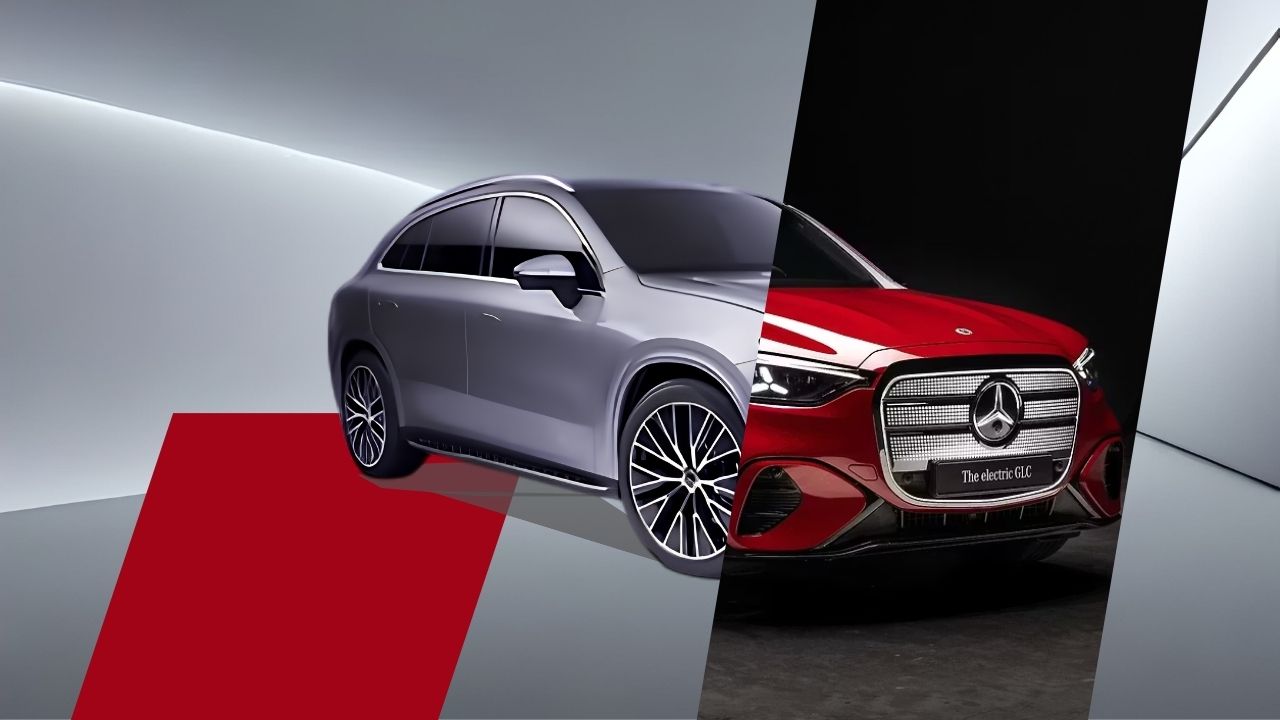
Mercedes-Benz GLC Electric

The Mercedes-Benz GLC Electric coming to India on 4 November 2026, it reaches faster than usual right after six months of its European debut. Bookings are expected to open in the first week of October, with local assembly at its Chakan plant in Pune. If you’re weighing a ₹80-lakh-plus electric SUV, first understand a few factors. Does it look like it’s worth the money, does it go far enough, and is it better than what BMW is about to bring?

Mercedes-Benz GLC Electric Design: A German Luxury Car Rethought

The GLC Electric carries Mercedes’ newest design language. The front gets a reworked grille and the rear gets a full-width light bar. The proportions stay familiar for an SUV, which matters commercially: this is a stylish car that still reads as a GLC from 50 metres away. It measures 4,845 mm long, 1,913 mm wide and 1,644 mm tall. India gets the standard-wheelbase version, with a 2,972 mm wheelbase.

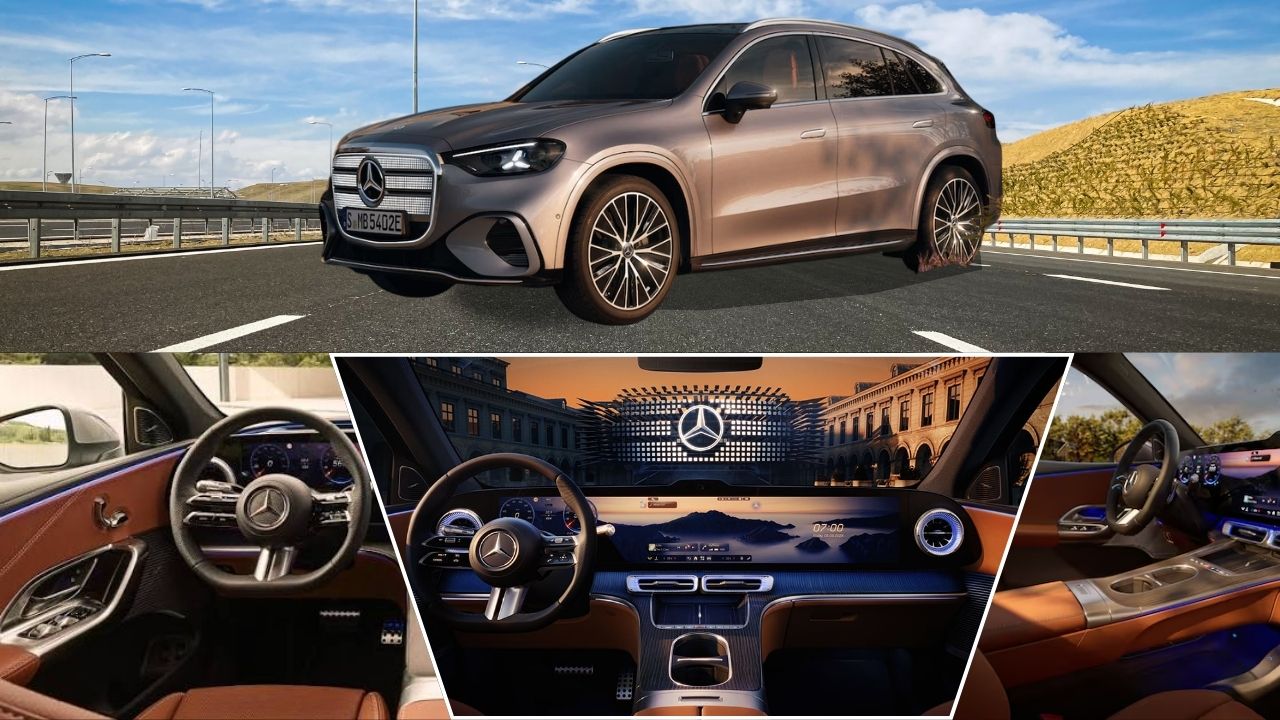
The cabin leans hard on screens. A MBUX Hyperscreen spans the dashboard, though sources disagree on its size. It is somewhere between 33.1—39 inches, so check Mercedes’ India brochure. The India-bound variant listing shows a Burmester sound system, front-only massage seats, a fixed glass sunroof, over-the-air updates and blind spot monitoring. Treat that as the expected equipment list until Mercedes publishes the final one.

Electric Performance: Power, Range and Charging

The GLC 400 4Matic version is coming to India which runs on all-wheel drive and two motors. This Mercedes luxury vehicle delivers 483 hp of power and 800 Nm of torque, reaching over a 100 km/h time of 4.3 seconds. It offers a 360 kW with two-speed transmission sitting on the rear axle only.

A 4.3-second sprint puts an SUV of this size in performance-car territory, and it is quicker than any petrol GLC below the AMG versions.

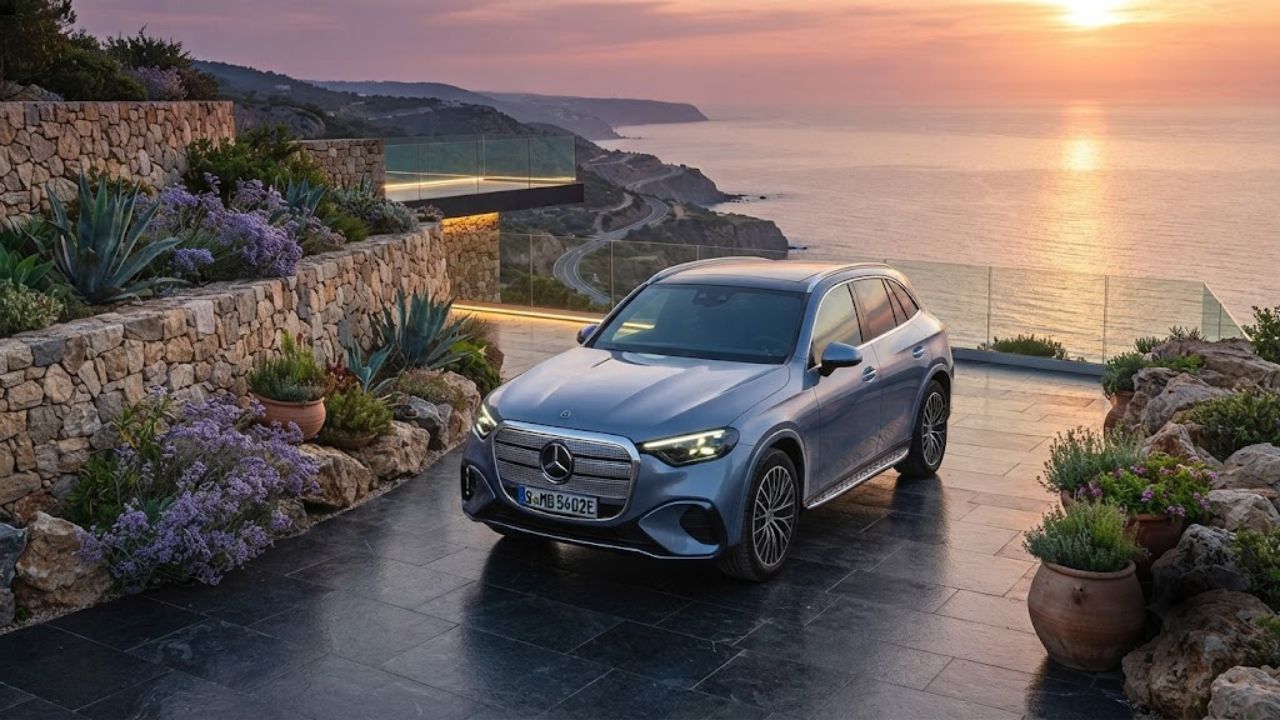
Mercedes-Benz GLC Electric Design

The battery is 94 kWh, good for a claimed 715 km on the WLTP cycle. Two caveats apply. That is a European test figure, and the US EPA rating is a lower 300 miles (about 480 km). India’s ARAI number, which we don’t have yet, will be what Mercedes advertises locally. Real highway range with the AC on will be lower still.

Charging is where the 800-volt architecture pays off. Peak DC charging is 330 kW, and Mercedes quotes 10 to 80 percent in about 22 minutes on a compatible 800V charger. On a 400V charger, speed is capped at around 100 kW. Most Indian public fast chargers won’t deliver anything close to 330 kW, so in practice you’ll charge slower than the headline. At home, the 11 kW AC onboard charger takes roughly 8.5 hours for a full charge. That suits overnight charging in a house or society with a dedicated point.

Read More 👉  Renault Duster Hybrid Launches in India on 17 October 

Mercedes-Benz GLC Electric Price in India

Mercedes has not announced a price. Most outlets expect ₹80 to ₹90 lakh ex-showroom, while Autocar India’s estimate runs higher, at ₹87 to ₹95 lakh. Local assembly should help. For reference, European pricing starts at €71,281. The final figure will be confirmed on 4 November, so treat everything above as an estimate.

GLC Electric vs BMW iX3: The Rival That Matters

GLC Electric vs BMW iX3

The BMW iX3 is the obvious comparison, and on paper it is the stronger EV. It has a 108.7 kWh battery and up to 805 km of WLTP range with 400 kW charging. The GLC counters with more power and a quicker sprint. The iX3 50 xDrive makes 469 bhp and 645 Nm and reaches 100 km/h in 4.9 seconds.

GLC 400 4Matic iX3 50 xDrive
Power / torque 483 hp / 800 Nm 469 hp / 645 Nm
0-100 km/h 4.3 s 4.9 s
Battery 94 kWh 108.7 kWh
WLTP range 715 km up to 805 km
Peak DC charging 330 kW 400 kW
India status Launch 4 Nov 2026 Expected 2027

The iX3’s India timing and price are unclear. Expected for a February 2027 launch at ₹65 to ₹70 lakh, the long-wheelbase version arrives in 2027. The BMW may end up cheaper and longer-legged, but Mercedes will have a few months on sale before it arrives.

Read More 👉  Tata Launches BaaS Across Its Whole EV Range: Is the Lower Price Real?

Conclusion 

If you are planning to book a Mercedes-Benz GLC Electric in early October, and the price announcement is on 4 November. Book only after you’ve seen the ARAI range figure and the final variant equipment list.

You’ll get a Mercedes badge and cabin, have a reliable home charger, and mostly drive in and around a city. The GLC Electric is more of a family SUV than a luxury sedan. If a sedan was on your shortlist, its extra ride height and boot space are the trade.

Wait if you regularly do long highway runs. The 330 kW peak charging speed is unlikely to be usable on most Indian routes, and the iX3 may offer more range for less money.

0

How to Remove Scratches from Car Surfaces Like a Pro 

How to Remove Scratches from Car Surfaces

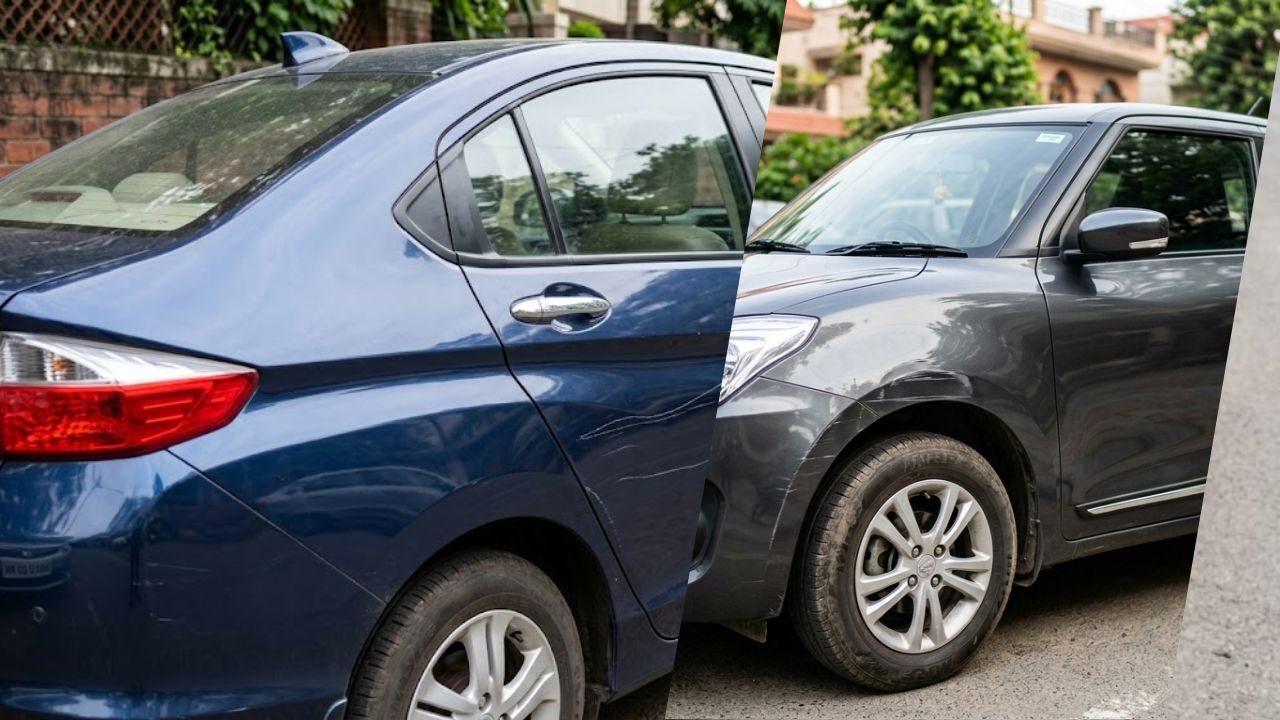
Finding a fresh scratch on your car is an instant gut punch. Whether someone accidently hit with a shopping cart, children can throw a ball at your car when it’s parked outside, or a mysterious parking lot incident, car scratches happen to the best of us. Calling a local garage is not mandatory. Instead, knowing how to remove scratches from a car can save your money from higher expenses.

Learning How to Remove Scratches from Car surfaces at home is entirely doable, even if you are not really a car enthusiast or have zero knowledge on its parts. This isn’t rocket science but a necessary lesson which can keep your wallet from flowing out. 

Fixing a deep scratch in the same way as you treated the light scratch can’t help you fix the car surface. So let’s walk through this blog and learn how to understand different types of scratches and how to fix them flawlessly.

Understanding How Deep Your Car Scratch (Thumbnail Test)

Car paint on latest cars is done by a layer of three distinct coatings. So, figuring out how deep the scratch in a car exactly will help to fix it safely without hurting the other coatings. 

  • Clear Coat Scratches (Level 1): Easy to fix because it is shallow cut on the top layer. If it seems to disappear when the car gets wet, it’s just a clear coat scratch.
  • Primer Scratches (Level 2): It reached on the second layer of the coating and exposed the dull, often light-colored or gray primer underneath.
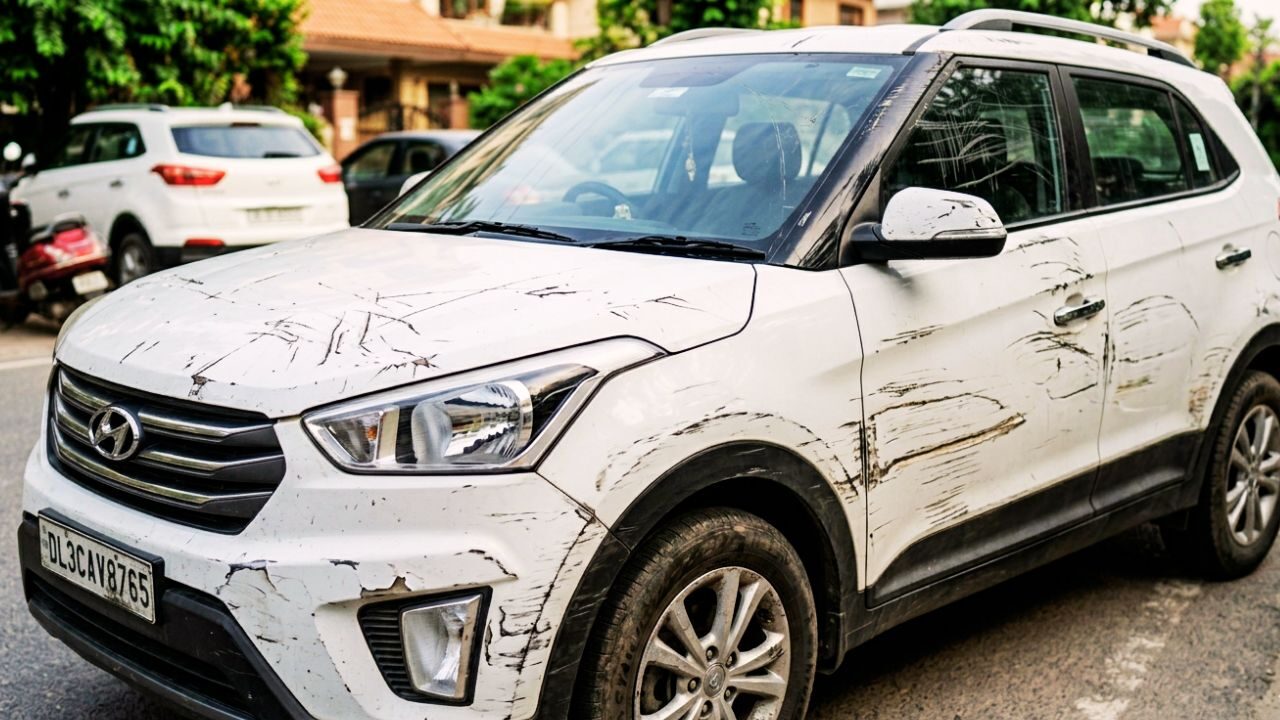
  • Deep/Metal Scratches (Level 3): It is a disaster when you can see the silver body of your car. It’s needed your extra efforts to fix it and You’ll want to tackle this quickly to prevent rust from setting in.

How to check: Run your thumbnail gently across the scratch. If your nail glides right over it without catching, congratulations—it’s a surface-level clear coat scratch. If your nail catches or drops into a groove, it’s a deeper primer or metal scratch.

Read More :-  DIY Car Care: Simple Checks to Keep Your Vehicle Running Smoothly

How to Remove Scratches from Car Surface

No matter how deep your car gets scratches, you can remove them with these methods and enough effort. These methods are applied according to the scratches level.

Method 1: The Quick Fix for Light Clear Coat Scratches

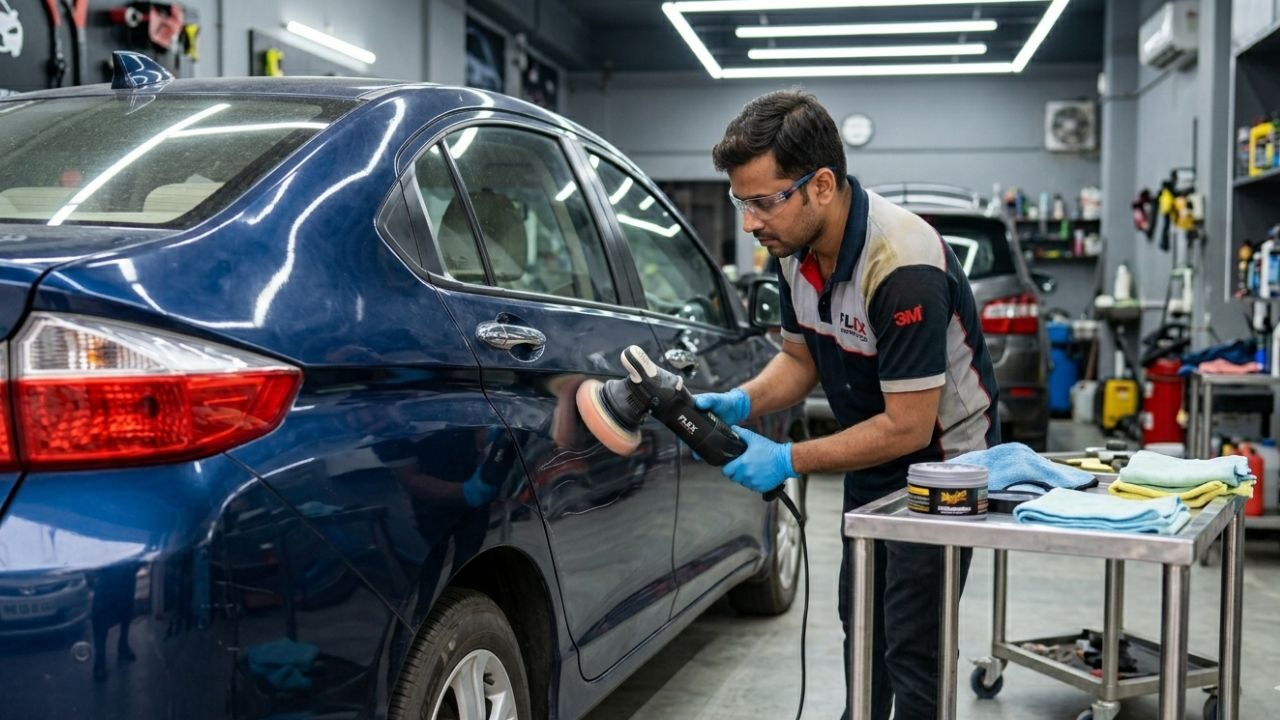
After passing the thumbnail test, you immediately have to begin getting yourself ready to take out the very light car scratch within twenty minutes with a normal scratch remover product. 

normal scratch remover product

Materials You’ll Need:

  • Car wash soap and clean microfiber towels
  • A mild scratch removal compound (Meguiar’s Ultimate Compound or 3M are great, reliable options)
  • A foam applicator pad
  • Your favorite car wax

The Step-by-Step Process:

  1. Wash and Dry Scratch Part: To eliminate dust and grim. If you buff a car when it’s dirty then your car paints along with tiny dirt particles, creating hundreds of new swirl marks.
  2. Apply the Compound: Take a foam applicator pad and put a quarter-sized amount of the scratch remover on it.
  3. Use a Little Elbow Grease: Rub the compound on the scratch using circular motion. Use your hand at a 45-degree angle to the scratch rather than straight along it. This ensures the product fills and levels out the sharp edges of the scratch.
  4. Wipe and Inspect: Buff away the extra foam from the area with a clean microfiber towel. Take a look. Is it still visible? If it’s fading but still there, give it another round.
  5. Add New Protective Wax Layer: Applying the compound will eliminate the car’s protective wax layer. So, put on a new layer of wax or ceramic spray to reconstruct the protective layer to protect the freshly polished paint.

Method 2: The Toothpick Trick for Deep Scratches

When a scratch exposes the primer or bare metal, buffing won’t save you because the paint is physically gone. You need to fill that tiny valley back up with fresh paint.

scratch exposes the primer or bare metal

Materials You’ll Need:

  • Check the car’s driver-side door jamb for the exact paint color code.
  • If the scratch shows a metal then Automotive primer is needed.
  • Isopropyl alcohol is optional but can be good for cleaning.
  • Fine-grit sandpaper (2000 or 3000 grit)
  • A standard toothpick (trust me on this)

Read More:-  How to Maintain Your Car Engine Properly

The Step-by-Step Process:

  1. Prep and Clean the Scratch: Use isopropyl alcohol for cleaning the wound of the car. It will remove the old wax, oil, and road dirt. If you notice rust anywhere on that scratch then use sandpaper or a small knife to gently scrape it before moving on.
  2. Apply Primer (If Metal is Exposed): This is where you are going to use that toothpick to put a machine primer into the base of the scratch. Give it 30 minutes to dry and don’t fill it to the top yet.
  3. Layer the Touch-Up Paint: Shake the paint and apply it with your toothpick instead of the brush attached to the cap. Take a tiny dip of drop of paint and apply it into the scratch. The paint will naturally flow into the groove. Keep making a layer of paint until it’s slightly higher than the surrounding paint.
  4. Sand and Smooth the Area: Once the paint becomes solid dry, wrap your sandpaper into a small block and wet with soapy water to rub the paint using very light pressure. Keep the area wet and sand just until the new paint sits perfectly flush with the old paint.
  5. Buff Back the Shine: When you look at the area where you are sanding, it will still look dull and hazy. To polish away the haze, grab your rubbing compound and a microfiber towel and do it with lighter hands until the high-gloss shine returns. In the end, apply a layer of wax and you are all set.

Critical Mistakes to Avoid

  • Relying on the “Toothpaste Hack”: Small tricks on Youtube doesn’t give your car the exact look from before. Using regular white toothpaste for car scratches could be a silly choice and it can only let haze over a micro-scratch, it doesn’t have the lubricants found in actual car polishes. It can easily leave your paint looking dull and scratched if you over-scrub.
  • Pressing Too Hard While Sanding: Wet sanding requires virtually zero downward pressure. Let the paper do the work. If you push too hard, you’ll cut straight through your factory clear coat, which will require an expensive trip to the paint booth.
  • Eyeballing Your Paint Color: Never guess your paint color at the auto parts store. “Graphite Gray” from one car brand is completely different from another’s. Always look up your vehicle’s official color code on the sticker inside your driver’s door jamb.

Fixing a scratch is a time taking job but looking over your car again without an ugly blemish is quite satisfying. Don’t lose patience, just follow the instructions carefully, and watch the scratches disappear right before your eyes. 

Read More:- Nicholas Pooran Car Collection: IPL Champion Owns Cars That Suits His Lifestyle

Conclusion of How to Remove Scratches from Car

Car scratches may look frustrating, but most of them can be quickly fixed at home without spending high costs on repairing shops. If your weekend is boring and nothing to do on the list, you can grab a list of materials that are required to fix the car scratch. 

Clear instructions and materials are necessary to remove scratches from cars. Understanding How to Remove Scratches from Car Surfaces will not just save your money but also give you a chance to tackle small things on your own. This is the best way to invest your free time rather than scrolling down on social media.

0

Hyundai’s Compact Electric SUV for India: What We Know About the HE1i

Published Oct 21, 2026, 1:02 PM
Last Updated Nov 5, 2026, 5:11 PM

Compact Electric SUV

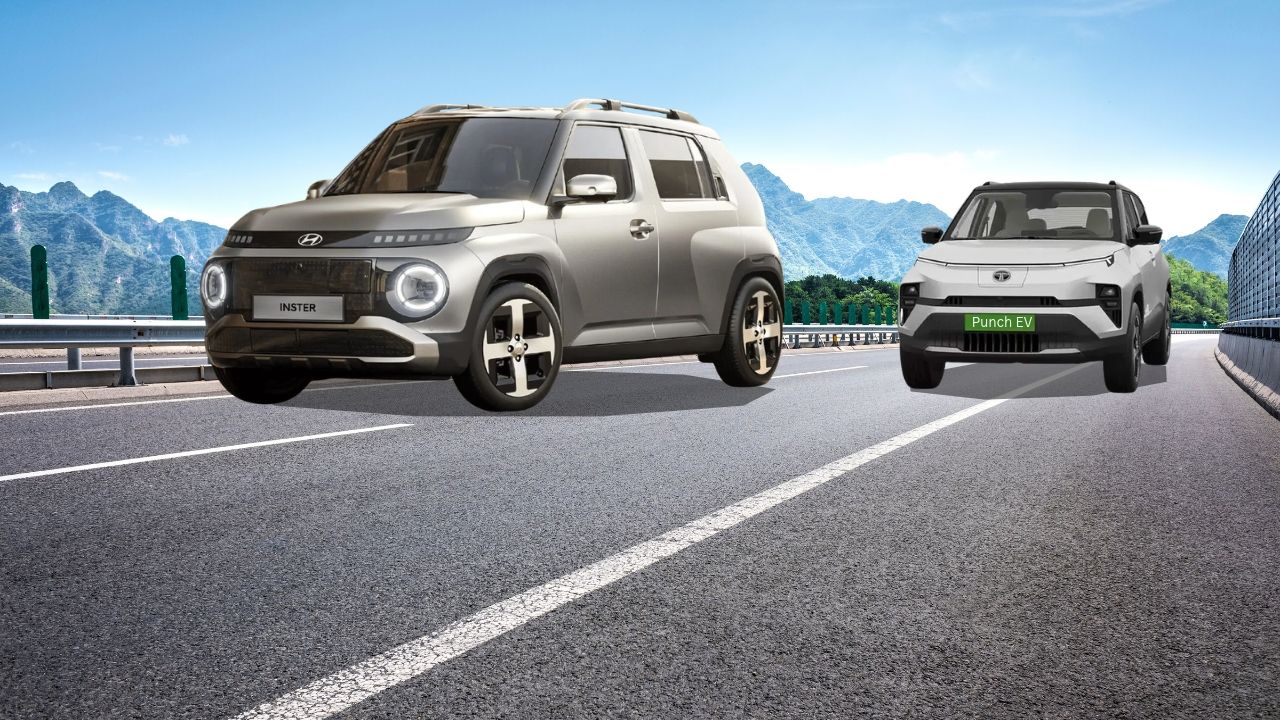
The EV segment is filled with outstanding performances from the Tata Punch EV, Mahindra XUV 3XO EV and Kia Syros EV. Hyundai India has confirmed a new compact electric SUV to join them with a brand-new design. Codenamed HE1i, the upcoming electric SUV is now likely to be called the Hyundai Ioniq P following company’s recent trademark filing in India.

Over the past couple of years, the electric segment has taken over showroom space which is hard to ignore. But premium electric crossovers are hard to get for most buyers, who want an affordable and reliable compact electric SUV from a brand they already trust.

The SUV will be made for India, measure under four metres, and feature India-specific design changes. The Ioniq P name has recently appeared in Hyundai’s trademark filing under Class 12, which covers automobiles and related components. However, the company has not officially confirmed the production name yet.

The launch timing is still unconfirmed, but expect to arrive in FY2026-27. Get more details from the new Hyundai’s compact electric SUV.

HE1i Expected Features & Specs: Battery, Range and Charging

For most Indians buying a car is an emotion and a vehicle for family road trips, the daily battle armor against chaotic office traffic, and a proud parking spot accomplishment. 

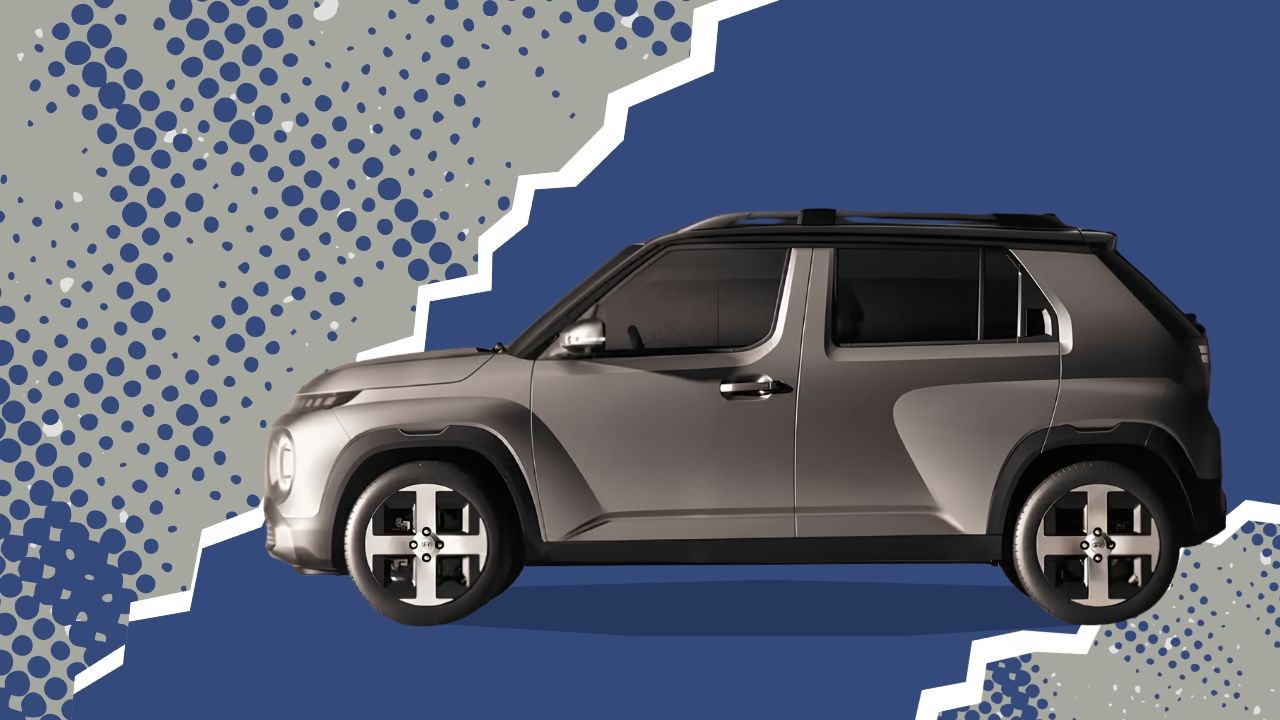
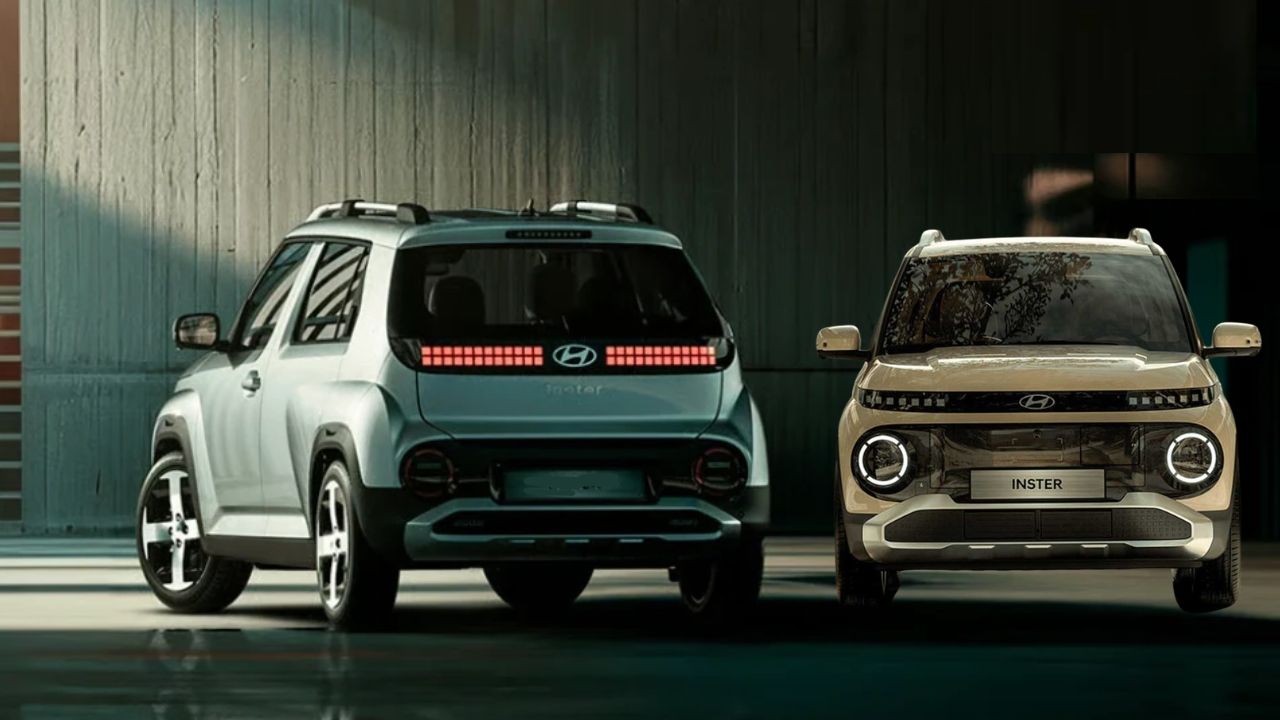
The Hyundai Ioniq P is expected to arrive in Standard Range and Long Range variants, giving buyers different battery options depending on their driving requirements. The electric SUV is expected to use the E-GMP (K) platform, which also underpins the Hyundai Inster sold in international markets.

While the exact battery capacities and driving range for the India-spec model remain unconfirmed, reports suggest that Hyundai is considering two battery configurations. The overseas Inster offers 42 kWh and 49 kWh battery options, while the recently introduced Kia Syros EV also provides a reference for the possible battery setup.

Hyundai is expected to use imported battery cells for the initial production batches following delays in its domestic battery cell programme with Exide Industries. Local battery cell sourcing is planned for a later stage.

HE1i Expected Features & Specs

Hyundai has confirmed that the upcoming electric SUV will get Level 2 ADAS and a next-generation infotainment system. These features could make the Ioniq P a strong option in the affordable electric SUV segment. The cabin is also expected to feature a large touchscreen infotainment system and digital instrumentation, although the complete equipment list is yet to be revealed.

The Hyundai Ioniq P is being developed as a standalone electric SUV rather than an electric version of an existing petrol-powered model. It will use the E-GMP (K) architecture and feature India-specific styling and engineering.

The design is specifically prepared for Indian style and roads. Expect an upright stance, high ground clearance, skid plates, and robust body cladding designed to handle monsoon potholes and unexpected speed breakers.

Taking cues from Hyundai’s global EV lineup, expect futuristic pixelated LED DRLs and bold light bars that give it an unmistakable street presence. It will offer more legroom and elbow room and connectivity support with intuitive Android Automotive-based software. So expect a comfort and smoother driving experience.

 Tesla Flying Car Mechanics Make The Flight Possible

Price Expectations For the Compact Electric SUV

Estimates cluster around Rs 10 lakh at the entry end. Expects Rs 10-16 lakh ex-showroom for Hyundai’s compact electric SUV. That spread is wide enough to put the top trim near Nexon EV territory, so the real question is how Hyundai prices the 49 kWh-class variant, not the base car.

Hyundai Ionic P vs Tata Punch EV vs Nexon EV

Until now, manufacturers like Tata and Mahindra have dominated the affordable and mid-tier electric SUV market. Hyundai is now preparing to enter this segment with the Ioniq P, an India-focused compact electric SUV designed for everyday use and urban commuting.

Hyundai Ionic P(expected) Tata Punch EV Tata Nexon EV
Price (ex-showroom) Rs 10-16 lakh (estimate) Rs 9.69–12.59 lakh Rs 12.49–17.49 lakh
Battery 42 / 45 kWh 30 / 40 kWh 30 / 45 kWh
Claimed range 400 km  468 km ARAI (40 kWh) 489 km MIDC (45 kWh)

The Punch EV is one of the key models the Ioniq P will have to compete with. Tata quotes a claimed range of up to 468 km for the 40 kWh version, while its estimated real-world range is around 335–355 km. Tata also offers a battery-as-a-service (BaaS) option, with prices starting at Rs 6.49 lakh plus a battery rental of Rs 2.6 per km. This gives buyers a lower upfront purchase option and could make pricing a major challenge for Hyundai.

HE1i vs Tata Punch EV

For context, the car above it in Hyundai’s range launched at Rs 17.99 lakh ex-showroom as the Creta Electric, so the HE1i has room to sit well below it.

  Hyundai Bayon Bookings Open at ₹11,000 With a 1.5L Petrol Engine

Conclusion

There’s no confirmed price yet, but Hyundai’s upcoming Ioniq P could become an interesting option in the affordable electric SUV segment. With its India-specific development, two expected battery options, Level 2 ADAS and next-generation infotainment system, it has the potential to compete strongly against established rivals.

0

Car loan interest rates in India: Compare Banks, EMIs and Loan Options

Published Jun 29, 2026, 12:27 PM
Last Updated Nov 3, 2026, 11:43 AM
Car loan interest loan

Car loan interest loan

Buying a car is a major financial decision, and choosing the right financing option can make a significant difference to your overall expenses. Before applying for a loan, it is important to understand Car loan interest rates, repayment terms, eligibility requirements and additional charges.

In India, banks and financial institutions offer car loans for new and used vehicles at different interest rates. The rate you receive depends on several factors, including your CIBIL score, income, loan amount, repayment tenure and the lender’s policies.

This guide covers the car financing process, what borrowers need to be concerned with and how to find their best fit within their respective financial budgets.

What Are Car loan interest rates?

A Car loan interest rate is the percentage charged by a bank or financial institution for lending money to purchase a vehicle. It is usually expressed as an annual percentage rate.

For example, if you borrow ₹8 lakh at an annual interest rate of 9% for five years, the interest will be included in your monthly Equated Monthly Instalments (EMIs).

A lower rate generally means lower borrowing costs, but the final amount you pay also depends on the loan tenure, processing fees and repayment conditions.

Car loan interest rates in India: Bank Comparison

Interest rates vary across lenders and may change based on the applicant’s credit profile and the type of vehicle.

The following are indicative starting rates published by selected lenders in 2026. These are not guaranteed offers.


Bank

Indicative Starting Rate

Canara Bank 

7.45% p.a. onwards

Union Bank of India 

7.50% p.a. onwards

Bank of Baroda 

7.60% p.a. onwards

Punjab National Bank 

7.60% p.a. onwards

HDFC Bank

8.15% p.a. onwards

ICICI Bank 

8.40% p.a. onwards

State Bank of India 

8.40% p.a. onwards


Rates are indicative and based on lender information available in 2026. Special offers, vehicle categories, credit scores and loan terms can affect the final rate. Always confirm the latest offer directly with the bank before applying.

Factors That Affect Your Car Loan Interest Rate

Lenders assess several details before deciding the interest rate for an applicant.

1. CIBIL Score

Your credit score helps lenders evaluate your repayment history and creditworthiness. A strong score, often around 750 or above, may improve your chances of receiving a competitive rate.

2. Monthly Income and Employment

A stable income and reliable employment can help demonstrate your ability to repay the loan. Lenders may also consider your existing financial commitments.

3. Loan Amount and Down Payment

A higher down payment reduces the amount you need to borrow. This can lower your EMI and total interest payable.

4. Loan Tenure

A longer repayment period generally reduces the monthly EMI but increases the total interest paid over the life of the loan.

5. New or Used Car

Interest rates for used vehicles are often higher than those for new cars. The age, condition and valuation of a second-hand vehicle may also affect loan approval and pricing.

How to Calculate Your Car Loan EMI

Your monthly EMI depends on the loan amount, interest rate and repayment period.

For example, consider a loan of ₹8 lakh with an interest rate of 9% per annum for five years.


Loan Details

Amount

Loan amount

₹8,00,000

Interest rate

9% p.a.

Loan tenure

5 years

Estimated monthly EMI

₹16,607

Total repayment

₹9,96,420

Total interest

₹1,96,420

These figures are approximate and exclude additional charges.

Using an online car loan EMI calculator can help you compare different loan amounts, interest rates and repayment periods before making a decision.

Fixed vs Floating Car loan interest rates

Borrowers should understand the difference between fixed and floating interest rates before choosing a loan.

  • Fixed interest rate: The rate generally remains unchanged throughout the agreed loan tenure, making monthly repayments more predictable.
  • Floating interest rate: The rate may change according to the applicable benchmark and lender’s terms. This can affect the EMI or repayment schedule.

The availability of these options depends on the lender and loan product. Check the loan agreement to understand how rate changes are handled.

Documents Required for a Car Loan in India

The documents required may vary by lender, but applicants are commonly asked to provide:

  • PAN card and Aadhaar card or other accepted identity proof
  • Address proof
  • Recent salary slips or income proof
  • Bank statements
  • Employment or business details
  • Car quotation or vehicle details
  • Passport-size photographs, if required

Self-employed applicants may need additional business and income documents.

A Few Tips Before You Sign Anything

  • Don’t just compare interest rates — look at processing fees and foreclosure charges too. A loan with a slightly higher rate but zero processing fee might actually cost you less.
  • Negotiate. If you have a good credit score and a stable income, you can typically request a better rate – than the one first quoted at your bank. 
  • Check whether the bank offers any small discounts, such as a lower interest rate for women or people who already have an account. 
  • Avoid stretching your tenure just to make the EMI look small. A longer tenure quietly adds up to a lot more interest paid over time.

What is the lowest car loan interest rate in India?

Some banks claim to offer starting rates around 7.45% per annum in 2026 just because the broadcasting bank claims to do so. Rate it depends on the lender type, vehicle type, credit score and the loan conditions. 

What CIBIL score is required for a car loan?

Generally, the lower a score one has, the higher the hurdles to be surpassed for securing competitive offers. Even though one’s eligibility criteria may vary as people with lower credit scores can still get with a higher interest rate. 

Is a five-year car loan better than a seven-year loan?

So in general the monthly EMIs will be higher for a five-year loan and the total interest will be lower. If you get a seven-year loan you can lower the EMI in exchange for more interest for us. 

Can I get a car loan without a down payment?

Some lenders offer financing that covers a large portion or, in certain cases, the full on-road price. Approval depends on eligibility, vehicle value and the lender’s policy.

Are used car loan rates higher than new car loan rates?

Factors such as the age of the vehicle, its resale value and the loan risk can result in used car loans having higher interest rates. 

Conclusion

Since finance options are available for a new car in 2026, do not accept whatever you’re handed on the spot at the dealership. You should know the latest Car loan interest rates before you look for a dealer. If you compare interest rates of public & private banks and take note of your CIBIL score and choose a 4-5 year tenure (instead of a protracted 7 yrs loan), you are able to put back hundreds of hard-earned rupees back into your wallet, month by month.