0

JSW Motors: Can a Steel Major Succeed in India’s New-Energy Vehicle Market?

Published Nov 25, 2026, 10:00 AM
Last Updated Nov 25, 2026, 4:17 PM

JSW Motors

A company best known for rolling steel coils will ask Indian car buyers for their money on December 3. JSW Motors will hold its brand launch and unveil its first SUV that day. The idea is not as strange as it sounds, but the product is more borrowed than the brand’s steel-and-ambition story suggests.

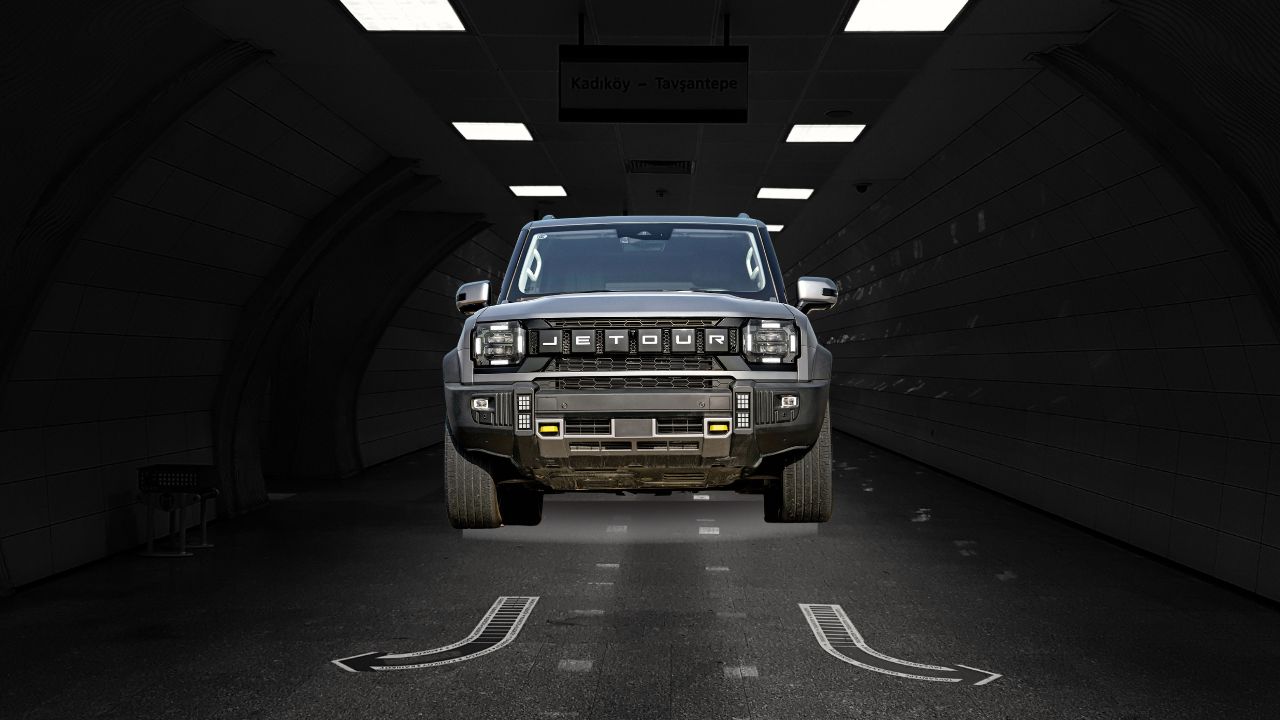
The first car won’t be a ground-up JSW design. It is expected to be a large SUV based on Chery’s Jetour T2, with the T2’s plug-in hybrid powertrain, assembled from CKD kits at the Chhatrapati Sambhajinagar plant. It should measure about 4.7 metres, longer than the Tata Safari, and carry JSW badging rather than the Jetour name. “Combat” is the likely Indian name, and the hybrid is a 1.5-litre turbo-petrol. Treat the name as unconfirmed until the unveiling.

A Jaecoo J5 hybrid, an iCar V23 EV and a J5 EV are lined up behind the first SUV. The brand has also trademarked seven model names, so the lineup will carry distinct names, not a numbered family.

The detail that matters most for buyers is the powertrain order. JSW has confirmed its first passenger vehicle will be a plug-in hybrid, not an EV. That makes the lead product a hedge for a market where charging anxiety still shapes purchases.

Why JSW Motors Is Betting Big on India’s New-Energy Vehicle Market

While JSW is not steel led, it has moved into the car sector in late 2023 by investing in MG Motor India. JSW and Everstone jointly own 51% of the current JSW MG Motor India company. It therefore already has access to a distribution network and understands the Indian car retail market, as well as having supply chain expertise.

JSW Motors Is Betting Big on India

The JSW group has invested between $2-3 billion into JSW Motors and aims to establish an engineering facility employing 2000 engineers by 2029. Further, there is preparatory work underway. 

On November 23rd, an MoU was signed with ARAI which relates to areas including engineering, ADAS, battery testing, functional safety and homologation. Chery provides JSW with already tested technologies and therefore JSW can produce and bring a car to market in months. This fast timescale is JSW’s main benefit compared to a start-up.

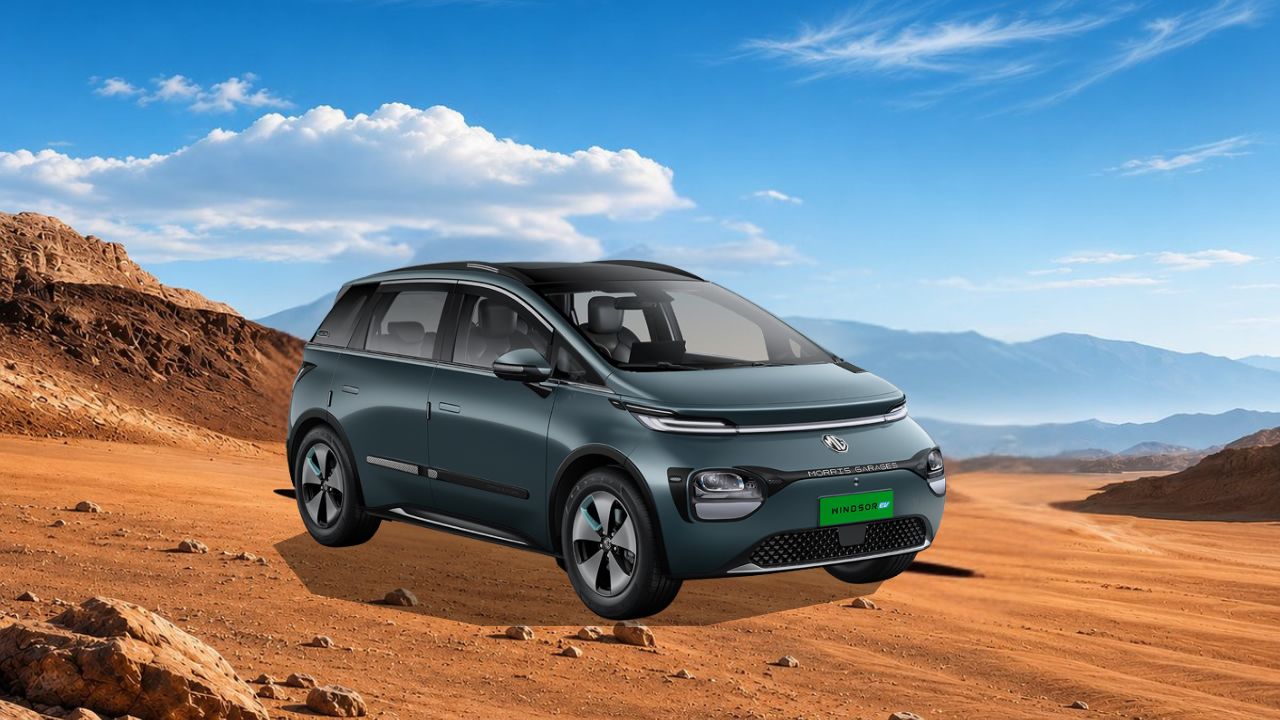
See Details👉 2027 MG Windsor Facelift: 500+ km Range, Premium Features and Expected Price

The Biggest Challenges That Could Derail JSW Motors’ India Plans

Reuters has noted that JSW MG Motor has yet to turn a profit. A second car brand adds cost before the first one is making money.

Rebadging is another issue. Consumers in India weigh after-sales and secondary market value as well as specification. An entirely new Chinese-based brand must therefore effectively demonstrate these two areas. 

As such, as well as the high profile of a launch, dealerships are also very important. The CEO has stated that the initial dealership will be established nearer to when the product is launched. Without local servicing, irrespective of how good a vehicle’s spec, it will not sell.

The third risk is internal. JSW will now sell MG-badged and JSW-badged cars side by side. If the two lineups overlap, they will compete with each other for the same buyers.

How JSW Motors Plans to Compete With Tata, Mahindra and Hyundai

Competition will intensify further as Tata, Mahindra, Maruti Suzuki and Hyundai are expected to add to their electric vehicle (EV) offerings in the next 12-18 months.

JSW Motors Plans

JSW’s T2-powered SUV will also be differentiated by its plug-in hybrid technology and four-wheel drive capability in an area which is still relatively under-developed in India. The JSW J5 based EV will then price, range and recharging-wise, battle it out against the Hyundai Creta Electric and Tata’s own electric SUVs.

It has been reported that JSW’s range will retail for between ₹10-50 lakh and that sales will commence in January 2027. But until the December 3 product launch, these are still just projections.

Explore Now 👉  Hyundai is Bringing Two New 7-Seaters in India: Neira MPV and Premium NI1i Hybrid SUV

Conclusion

JSW Motors has access to finance, technology alliances and expertise. Yet in addition to offering SUVs based around existing platforms and re-branded models it must also provide good value for money, effective post-sales service and re-saleability. 

Although the December 3 event will give an initial insight into JSW’s aspirations, it is the building of consumer confidence which will prove to be the greater task.

Alok Kabir

Alok is an experienced SEO Specialist skilled in blogging and SEO-friendly content creation. He also specializes in Content Optimization and Technical SEO, including website optimization, crawlability, indexing, site speed, and on-page improvements to enhance search rankings and online visibility.

Leave a Reply

Your email address will not be published. Required fields are marked *

0

Kia Carens CNG, Clavis CNG & Carnival Hybrid Pre-Bookings Open In India

Kia Carens CNG

Kia has opened pre-bookings for three new powertrain options in India — the Carnival Hybrid, Carens CNG and Carens Clavis CNG but none has an official price yet. The Carnival Hybrid pre-bookings create excitement among buyers because it brings electrification to Kia’s flagship MPV, while the two Carens variants finally offer a factory-fitted CNG setup instead of a dealer-installed kit. 

If you’ve been waiting for a factory-fitted CNG Kia or a hybrid alternative to the diesel Carnival, here’s what you’re actually signing up for before you hand over a booking amount.

Carnival Hybrid Pre-Bookings Are Open, But The Price Isn’t Announced

The Carnival Hybrid pre-bookings went live days after Kia showcased the model at its Inspiration Day event in early September 2026 — the same event where the new three-row Kia Sorento was unveiled. 

The Sorento launched on September 4 at Rs 27.99 lakh ex-showroom with diesel, hybrid and AWD options, and the Carnival Hybrid borrows the underlying idea: a strong-hybrid setup built around a 1.6-litre G1.6T turbo-petrol engine, paired here with a 6-speed automatic gearbox.

Carnival Hybrid

Kia is offering the hybrid only on the Carnival’s Limousine+ trim, which today is sold exclusively with a diesel engine at Rs 59.65 lakh ex-showroom. That number is the one to anchor your expectations to. The hybrid isn’t replacing the diesel — it’s slotting in alongside it as a premium alternative, expecting it to land above that Rs 59.65 lakh mark rather than undercut it. Kia hasn’t confirmed a figure yet.

What Changes Over The Diesel Limousine+ 

Design and Exterior

A 18-inch Crystal Cut dual-tone aero alloy wheels, Active Air Flaps for better aerodynamics, and a Virtual Engine Sound System that generates an audible warning when the Carnival is crawling on electric power alone. 

That last one isn’t a gimmick — strong hybrids can be silent enough at parking-lot speeds to genuinely surprise pedestrians, so the artificial sound is a real safety addition, not badge dressing. 

Interior Features & Functions

Inside, Kia has added a Smart Pure Air Purifier with an AQI readout, retractable height-adjustable seat-back tables with wireless charging built in, monotone ambient lighting, and leatherette-wrapped door trims. 

Everything that already worked on the Limousine+ carries over unchanged: dual 12.3-inch displays, three-zone climate control, a 12-speaker Bose system, eight airbags, Level 2 ADAS, and a 360-degree camera.

Kia Hybrid Discount Rate

Under India’s GST 2.0 structure, in effect since September 2025, hybrids don’t get the same tax break as pure EVs — only battery electric vehicles sit at the concessional 5% rate. A large hybrid like the Carnival, well over 4 metres long and running a 1.6-litre engine, falls into the same 40% GST slab as any other big diesel or petrol SUV in that size class. 

Whatever premium the Carnival Hybrid ends up carrying over the diesel Limousine+ will come entirely from Kia’s own component and engineering costs, not from any tax advantage passed on to buyers — worth knowing if you were assuming “hybrid” automatically means a lighter tax bill in India the way it does with EVs.

Kia Hybrid Rivals in The Market

The awkward part for anyone trying to cross-shop Carnival Hybrid against India’s other hybrid MPV. The Toyota Innova Hycross tops out around Rs 32.95 lakh ex-showroom for its fully loaded ZX(O) hybrid variant and returns an ARAI-claimed 23.24 kmpl. 

Kia Hybrid and Toyota Innova

The Carnival Hybrid will likely launch at close to double that price. These two aren’t really fighting for the same buyer — the Hycross is the practical, efficiency-first hybrid MPV; the Carnival Hybrid is Kia betting that a narrower slice of luxury-MPV buyers wants electrification without giving up the Limousine+ badge and its chauffeur-driven positioning. 

If you’re putting the two on a spreadsheet expecting a like-for-like fight, you’re comparing the wrong cars — the Carnival Hybrid’s real rival is arguably its own diesel sibling, not anything wearing a Toyota badge.

Read More 👉 Tata Nexon On-Road Price Lucknow — Best Compact SUV At This Price Point


Carens CNG And Clavis CNG Finally Give Kia A Factory-Fitted Option

The second half of Carnival Hybrid pre-bookings announcement matters more for volume, because it fixes something Kia has never offered in India. Every CNG Carens on the road today runs on a government-approved dealer-fitted kit sourced from Lovato — bolted on after the car leaves the factory, tuned around an engine that was never designed to run on gas. 

Kia Hybrid

The Carens CNG and Carens Clavis CNG change that by moving CNG integration onto the assembly line itself, which means the engine calibration, fuel delivery, and even the suspension tuning are built around dual-fuel operation from day one instead of retrofitted around it.

Power and Transmission Performance

Both use Kia’s G1.5 naturally aspirated 1.5-litre petrol engine, paired exclusively with a 6-speed manual gearbox — there’s no automatic CNG option at launch, so buyers who want a slushbox will have to stick with petrol or diesel. The tank is a 60-litre unit mounted under the boot floor, and Kia claims usable boot space still comes in around 116 litres, which will matter to anyone who has watched an aftermarket CNG kit swallow an entire trunk. 

Running on gas, the engine makes 93hp and 123Nm, down from 115hp and 144Nm on petrol. That drop is normal for factory CNG tuning, but it’s worth knowing going in if you’re used to how the regular Carens drives and expect the CNG version to feel identical under load.

Kia has also revised the suspension tuning and switched to 16-inch wheels with 16-inch disc brakes, specifically to handle the extra weight the tank and hardware add over the rear axle. Inside, there’s a dedicated CNG Fuel Change Switch and a 4.2-inch colour TFT instrument cluster that shows CNG Distance-to-Empty — a small thing, but a genuine upgrade if you’ve ever driven a retrofitted CNG car with no real idea how many kilometres of gas are left in the tank.

Trim availability is where the two models split. The standard Carens CNG is expected to be limited to the Premium trim, plus a dedicated M-Drive trim built for commercial and fleet buyers — cab operators, essentially. 

The Carens Clavis CNG, positioned as the more premium option, gets its own HTM trim for the same commercial use case, alongside CNG on regular passenger trims. If you’re buying for a fleet specifically, ask your dealer directly about what the M-Drive and HTM trims strip out, since fleet-spec variants often drop features you’d expect on a personal-use car.

Read More 👉 Hyundai Creta On-Road Price In Lucknow: Get Details Before Entering Into a Showroom

How Kia’s Numbers Stack Up Against Ertiga, XL6 And Rumion

Kia isn’t creating a new segment here — it’s entering one Maruti Suzuki has quietly dominated for years, with Toyota’s badge-engineered version riding along. 

Model Engine CNG Output Claimed Mileage Ex-showroom Price
Kia Carens CNG 1.5L NA petrol 93hp / 123Nm Not yet disclosed Not yet announced
Kia Carens Clavis CNG 1.5L NA petrol 93hp / 123Nm Not yet disclosed Not yet announced
Maruti Ertiga CNG 1.5L K15C petrol ~87hp / 121.5Nm 26.11 km/kg ~Rs 10.9–12 lakh
Maruti XL6 CNG 1.5L K15C petrol ~87hp / 121.5Nm 26.11–26.3 km/kg ~Rs 12.28–12.43 lakh
Toyota Rumion CNG 1.5L petrol ~86hp / 121.5Nm 26.11 km/kg ~Rs 11.4 lakh

Kia hasn’t disclosed a CNG mileage figure for either model, and that’s a real gap, not a footnote — mileage is the entire reason someone chooses a CNG MPV over petrol or diesel, and until Kia publishes an ARAI number there’s no way to know if the Carens CNG actually beats the Ertiga’s proven 26.11 km/kg or just matches it with a nicer cabin around it. 

For a rough price anchor, Kia’s existing dealer-fitted Carens Premium CNG kit currently sells for around Rs 11.77 lakh ex-showroom — useful context, but not a preview of what the new factory-fitted variant will cost, since factory integration typically carries its own premium over a retrofit. 

Should You Put Down A Booking Amount?

Booking amounts in India are typically refundable — but “typically” is doing a lot of work in that sentence, and refund terms vary by dealer, so read the booking form before you pay, not after. 

Beyond that, the real question is what a Carnival Hybrid pre-bookings buys you right now: a place in the queue, not a locked-in price. 

Carnival Hybrid

If Kia’s own timeline holds and pricing lands by “end of September or early October 2026,” per its dealer network, you’re looking at a wait measured in weeks, not months — short enough that booking early mostly secures faster delivery once prices are announced, rather than protecting you from a price hike between now and launch.

Where Carnival Hybrid pre-bookings gets genuinely tactical is the CNG decision. If lower running costs are your only reason for wanting a Carens or Clavis, don’t book blind — wait a few weeks it’ll take Kia to publish an ARAI mileage figure. 

A CNG MPV returning 22 km/kg instead of the Ertiga’s 26 km/kg changes five-year ownership economics by a meaningful amount, and right now nobody outside Kia knows which side of that gap the Carens CNG lands on. 

For the Carnival Hybrid, the calculation runs differently — buyers at that price point aren’t shopping on running costs, they’re deciding whether the added kit and the hybrid badge justify a premium over a diesel Limousine+ that already does the job well.

Fleet and commercial buyers eyeing the M-Drive or HTM trims. Commercial variants tend to sell out of early production allocations fast because operators buy in volume, and waiting for a finalised spec sheet rarely changes the math the way it might for a private, feature-conscious buyer.

Read More 👉  Maruti Suzuki September 2026 Offers: Save Money On Your New Car

Conclusion

Kia’s three pre-bookings are aimed at very different buyers. The Carnival Hybrid is a premium alternative to the diesel Limousine+, while the Carens and Clavis CNG are more practical attempts to take on the factory-CNG MPVs that Maruti and Toyota have dominated for years.

For private buyers, there’s little reason to rush for Carnival Hybrid pre-bookings before the missing numbers arrive. The Carnival Hybrid needs an official price to show whether its premium over the diesel makes sense, while the Carens CNG needs its ARAI mileage figure to prove that it can compete with the Ertiga, XL6 and Rumion on running costs. 

If you’re a fleet buyer targeting the M-Drive or HTM trims, booking early makes more sense. For everyone else, waiting a few weeks for Kia’s final pricing and mileage figures could make the decision much easier.

0

Erica Kirk Luxury Car Collection Featuring Rare Supercars and Premium Models

Published Dec 13, 2025, 7:43 AM
Last Updated Apr 7, 2026, 5:31 AM

Erica Kirk Luxury Car Collection

The subject of Erica Kirk Luxury Car Collection rarely strays from the garages of Hollywood A-listers or tech moguls in the automotive world, but once in a while a political or business figure makes for a collection that is surprising and worth a second look. Erika Kirk, CEO of Turning Point USA and widow of founder Charlie Kirk, has fashioned a life that is equal parts high-stakes leadership and undeniable luxury. 

After the well-publicized and tragic death of her husband in 2025, Erika not only gained control of a media empire but also a carefully selected fleet of vehicles that is an eclectic array of American muscle, sophisticated luxury, and rugged utilitarianism.

Gear-heads and lifestyle watchers can learn a lot by studying Erika Kirk’s garage, which is essentially a collection of two: track-focused engineering with blistering speed, cradled by quiet opulence and family-hauling fortresses. So, let’s take a closer look at the cars that make up her collection, and see what exotic and rare supercars are available for this power player. 

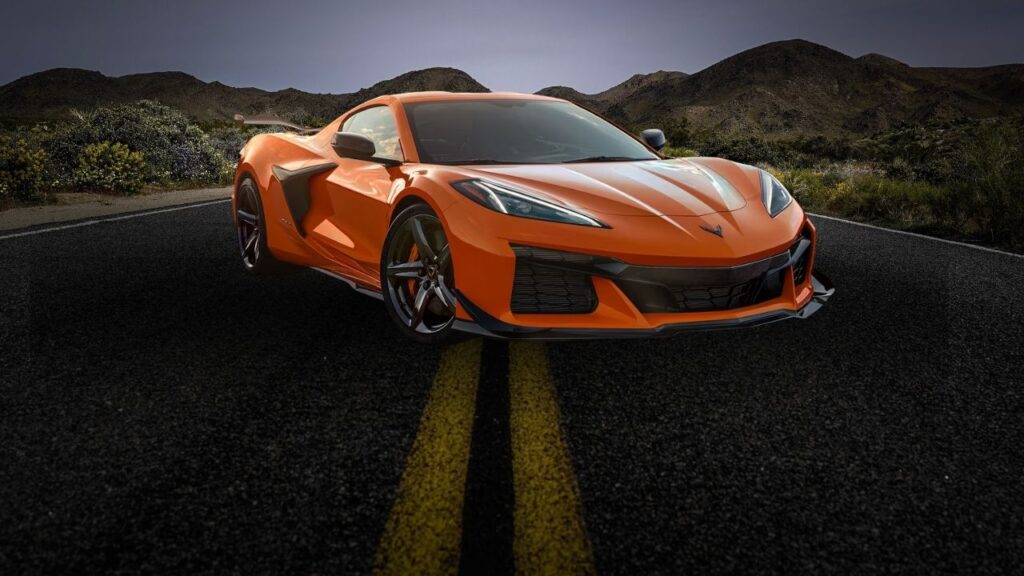
2025 Chevrolet Corvette Z06

If there’s one car that sums up the “SUPERCAR” status of this group, it’s the 2025 Chevrolet Corvette Z06. Some collectors chase Italian badges for the prestige, but the Kirks’ choice of the Z06 indicates a taste for world-beating performance with an American passport.

2025 Chevrolet Corvette Z06

The Z06 isn’t just a “fast car”, it’s a naturally aspirated marvel. At its core lies the LT6 5.5-liter V8 engine, a flat-plane crank wonder that revs to an 8,600 RPM redline. This isn’t the lazy rumbling like a traditional muscle car: it’s a high pitched race-bred shriek that can go head-to-head with a Ferrari 458. 

For Erika, a person who is frequently in front of the camera, the Z06 has a bold presence. The wide-body stance, aggressive aero kit, and massive carbon ceramic brakes, let me tell you this car is made for some serious getting around. It is said to be one of the “flagship” cars in the estate and is thought to be worth between £110k and £150k, depending on which trim and carbon fibre options you go for. It does 0-60 mph in a blistering 2.6 seconds, making it quicker than a bunch of European exotics that cost three times as much. 

2024 Lincoln Nautilus Reserve

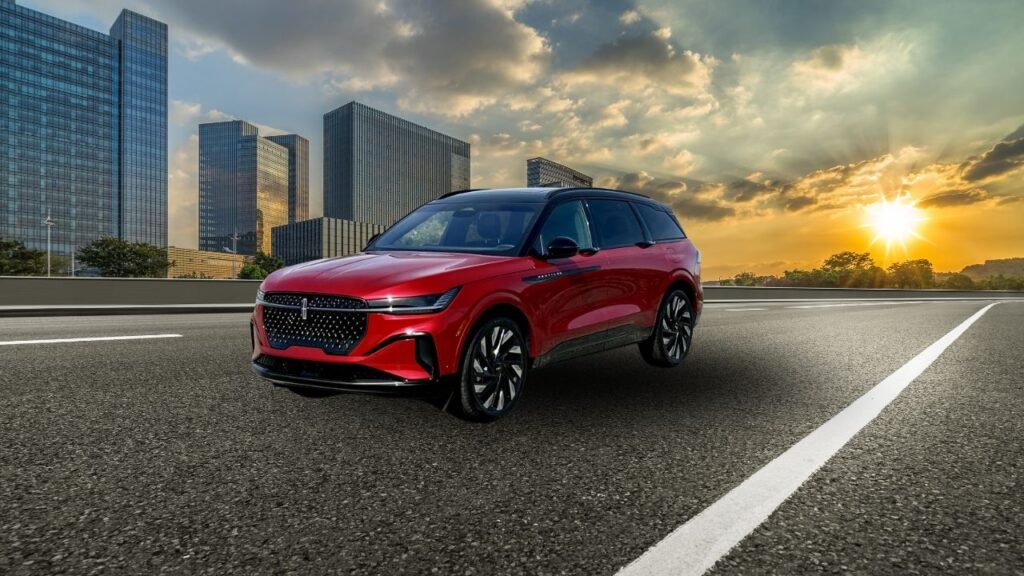
When the cameras are off and the school run begins, the Corvette stays home. Out goes the 2023 Lincoln Nautilus, and in comes the 2024 Lincoln Nautilus Reserve. That choice underscores a move toward “Quiet Flight” – Lincoln’s design ethos that places sanctuary over sportiness.

2024 Lincoln Nautilus Reserve

For a mother of two who is also the CEO of a national organization, the Nautilus is a mobile command post. The Six is especially known for its 48-inch panoramic display that stretches across the whole dashboard, creating a futuristic yet calm digital experience. It is powered by either a 2.0-liter turbocharged inline-four engine or a hybrid powertrain option, focusing more on smooth power delivery than outright power. 

The cabin is draped in high-quality leather, and its 24-way Perfect Position seats include a massage function – necessary for high-pressure days. It’s a more understated flex: a car that doesn’t scream “look at me,” but rather whispers “I’m here.” 

Range Rover Autobiography

No high-end automobile collection would be complete without the lord of the SUVs. Reports and videos from the Kirk compound occasionally show sleek, blacked-out SUVs, presumed to be zRange Rovers. Among the elite political class, business magnates, the Range Rover is the dress code.


Range Rover Autobiography

Range Rover Autobiography or a high-spec SE, this car takes the best bits of the off-road accessible Range Rover and the limousine-like comfort of the standard model. Based on the BMW 7 Series, the 4.4-liter twin-turbo V8 powertrain (manufactured by BMW) produces about 523 horsepower. 

Why This Essential For Erika Kirk, The one thing Erika always points out is the command driving position and how secure she feels in the car. With hot-stone massage seats, a meridian sound system and an intimidating road stature, it feels more like a bunker on wheels. It’s the car to arrive at galas, board meetings or private airports. 

Read More:- Maruti Dzire ZXI+ Specs Overview with Features, Performance, Safety and Design

The Rugged Outlier — 2018 Jeep Wrangler JK

A perfect vehicle for the Kirk, which became the compatible partner in the Arizona desert is a 2018 Jeep Wrangler JK. 

In that way, the addition lends a touch of realism to the line up. It’s as if through all those private jets and Manhattan apartments, you can still get outside and go on an adventure. The Wrangler JK is renowned for its off-road capabilities, with solid axles and a removable top. It‘s not about luxury, it’s about freedom. It’s the car you bring when you want to get lost in the canyons, hide away from politics and media. 

Jeep Wrangler JK

It’s the complete opposite of the digital shine on the Lincoln and the precision of the Corvette: a physical representative for a more grounded, “tomboy” aspect of Erika’s style that she’s talked about in interviews before. 

The Power Within the Garage

In order to get a real sense of the range within this set, we need only examine the figures. Here is a specification sheet comparison for the best models of Erica Kirk Luxury Car Collection. 

Spec / Feature 2025 Chevy Corvette Z06 2024 Lincoln Nautilus Range Rover (Est. V8)
Engine 5.5L LT6 V8 (Flat-Plane) 2.0L Turbo I-4 / Hybrid 4.4L Twin-Turbo V8
Horsepower 670 hp @ 8,400 rpm ~250 – 310 hp 523 hp
0-60 MPH 2.6 seconds ~7.0 seconds 4.4 seconds
Drivetrain RWD (Mid-Engine) AWD AWD
Primary Use High-Performance Driving Daily Luxury / Family Executive Transport
Est. Price $115,000+ $55,000 – $75,000 $160,000+
Vibe American Supercar Digital Sanctuary British Opulence

Conclusion

For Erica Kirk Luxury Car Collection is not just assets, it is a story of the chapter of her life that she is currently living. The Corvette is the embodiment of brazen, unapologetic American daring — and her late husband shared that trait. The Range Rover and Lincoln represent the maternal, executive and protective roles she inhabits today, roles that require safe, cutting-edge and status-driven wheels. Yet the Jeep remains a link to the Arizona beginnings and her exhilaration at finding a dusty trail.

In an era of influencers just leasing the latest Lamborghini for the ’Gram, this collection feels curated and intentional. It straddles the “Rare Supercar” jolt of the Z06 with the “Premium Model” practicality you need to run an empire. For Erika Kirk, these aren’t just cars to look at — they are instruments of a business where you need power, on every level. 

0

The Best Skoda Cars Under 10 lakh In India – Stylish, Reliable And Budget-Friendly Options

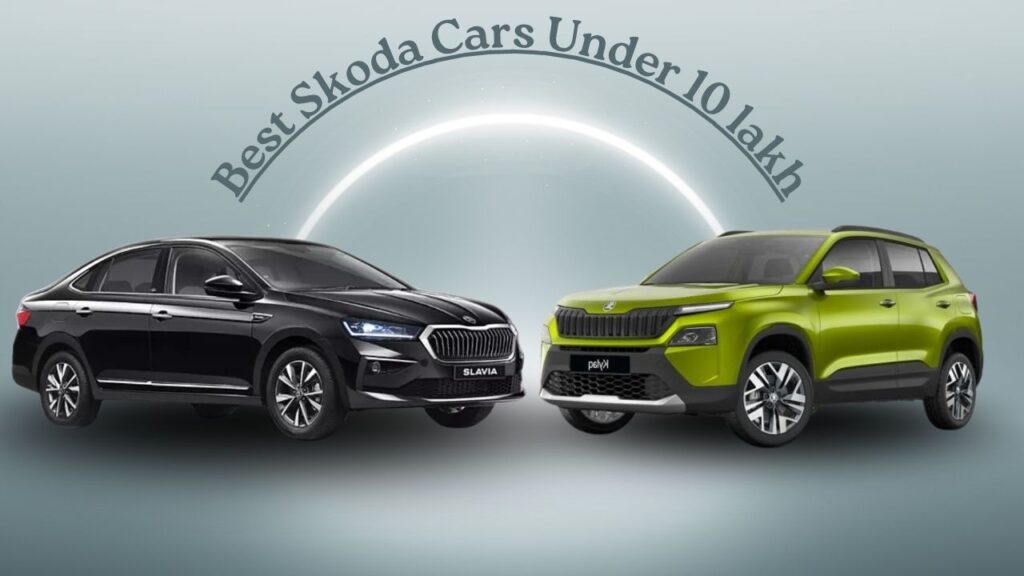
Best Skoda Cars Under 10 lakh In India

In the segment of ₹10 lakh cars, very few brands have built the same trust, quality and safety standards as Skoda. Renowned for rock solid European engineering and world class reliability, Skoda provides a premium experience on the road even in the affordable market segment. In 2025, Best Skoda Cars Under 10 Lakhs has made owning a Skoda now simpler than let’s say ever before, with four exceptional variants across two models; the sleek and rugged Skoda Kylaq and the sophisticated Skoda Slavia. 

There are 4 variants across 2 models:

Skoda Kylaq Classic ₹7.55 Lakh
Skoda Kylaq Signature ₹9.00 Lakh
Skoda Kylaq Signature AT ₹10.00 Lakh
Skoda Slavia 1.0L Classic ₹10.00 Lakh

All prices are ex-showroom and offer amazing value for the precision of a premium European engineering, world class safety and dependable driving. 

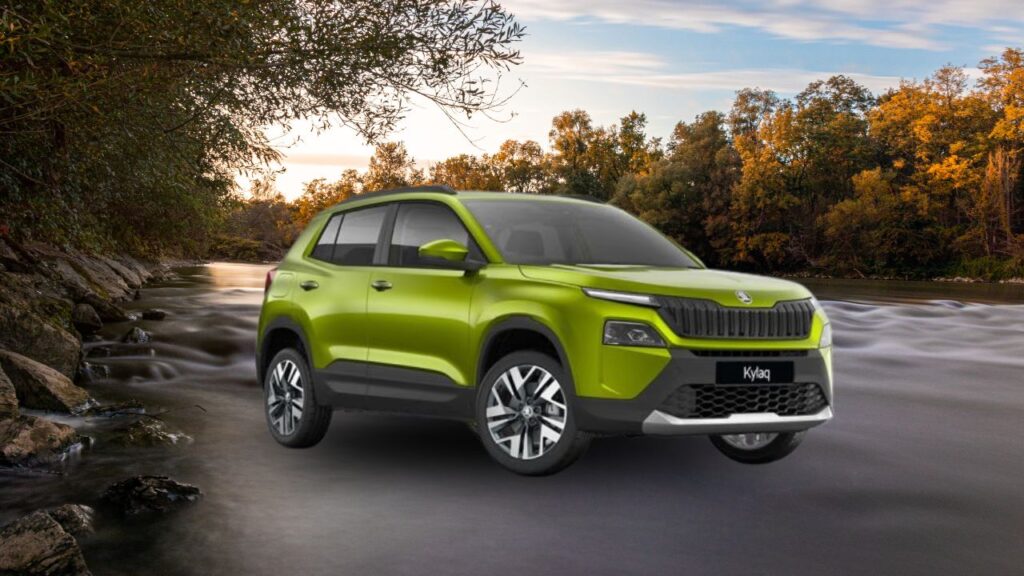
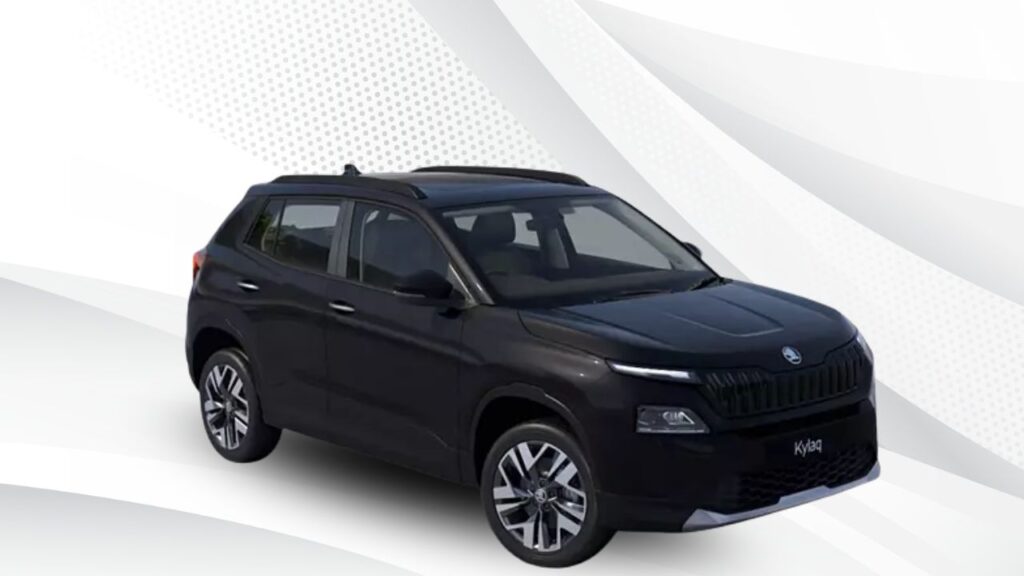
Skoda Kylaq

Rated 5 star by Bharat NCAP, Skoda Kushaq is the safest sub-4 metre SUV in its class & the cheapest Skoda in India. when and where it was presented in November 2024 It has a premium features and European build quality at the right price. 

Classic Variant

Skoda Kylaq Classic Variant

Image credit: Skoda

Classic Skoda Kylaq Variant 1 would be the functional leader in the range of ₹7.55 Lakh. 1.0 TSI Turbo Petrol engine With 999 cc three cylinder engine, it delivers stunning power output of 114 horsepower at 5000-5500 rpm and peak torque of 178 Nm at 1750-4000 rpm. The 6-speed manual transmission of the car ensures a comfortable and entertaining ride. A 45-liter fuel tank and an ARAI-certified mileage of 19,68 kmpl make for good mileage for both the daily commute and the long drive. If you want a cheap, reliable car that still focuses on performance, you can’t go too wrong with the Kylaq Classic. 

Space & Safety Features

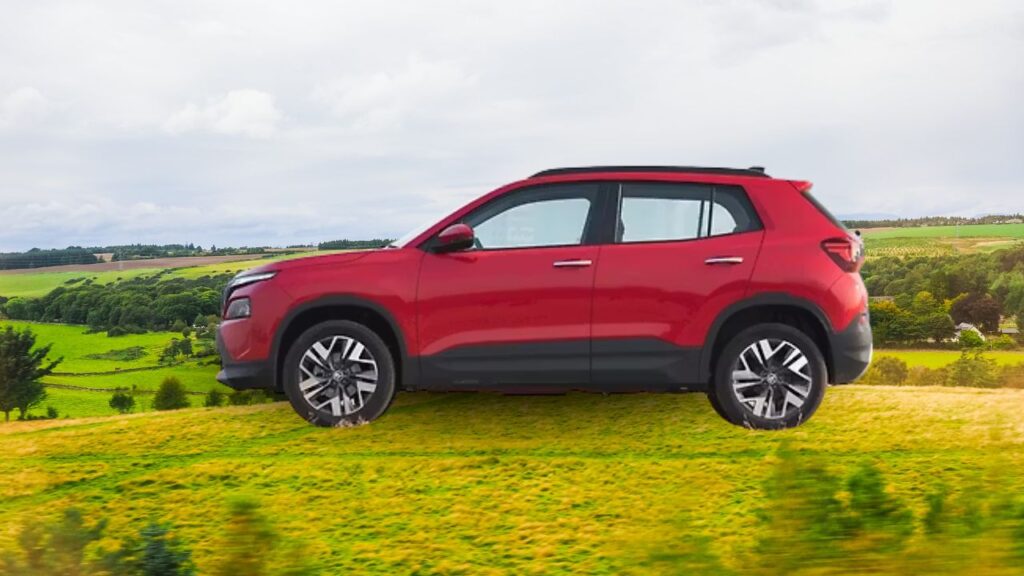
With the distance between the axles at 2,566 mm, the car provides a stable and comfortable ride. Its 189 mm ground clearance makes it perfect for Indian roads. It is the best in class with a spacious 446 liters boot capacity. 

Standard six airbags which is rare in this price bracket, plus the 5-seater ensures the car’s safety. Scoring 30.88/32 in adult safety and 45/49 in child safety, it holds a 5-star rating from the Bharat NCAP. ABS with EBD, ESC, Traction Control, Multi-Collision Braking and rear parking sensors are some of the modern safety features. Family security is enhanced by the ISOFIX child seat anchors. 

Excellent Exterior & Interior Comfort

Skoda Kylaq Excellent Exterior & Interior Comfort

Image credit: Skoda

The graceful LED high mount brake lights and LED tail lights which add a modern touch to the design. With its robust 16 inch steel wheels with stylish wheel covers, it is both rugged and stylish. The sophisticated look is further highlighted by the ORVMs and the door handles that are painted with the body color. 

Step inside, The fabric clad cabin relevantly adds to the cozy and refined ride. The multi-function steering wheel allows you to conveniently control the important functions, and the easy steering wheel enables you to find the most comfortable driving position. The electrically adjustable ORVMs adds to the convenience by allowing you to easily make smooth adjustments to get the optimal visibility, and for your convenience, you get power windows – all 4 of them. 

This variant is available in 7 colors options including Brilliant Silver, Carbon Steel, Deep Black Pearl, Tornado Red, Candy White, Lava Blue, Olive Gold.

Read More:- Top Volkswagen Cars Under 10 Lakh in India – Affordable Style, Performance and Reliability 

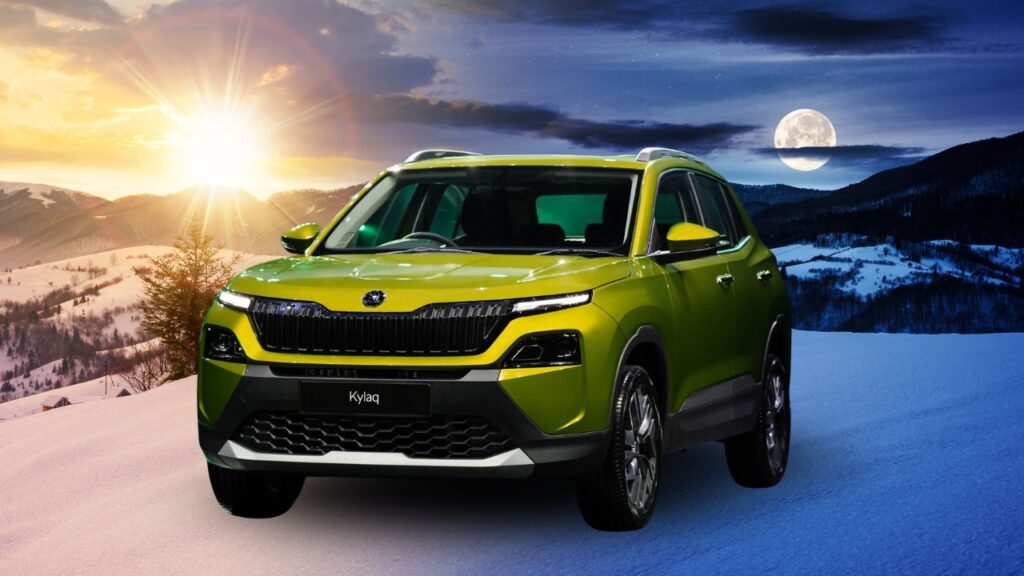
Kylaq Signature Variant 2

An excellent model pushing the boundaries of contemporary options and good value for money, the Kylaq Variant 2: Signature at ₹9.00 Lakh is a solid pick for those seeking somewhere between the two extremes. It is based on the Classic model but with a load of useful convenience and technology upgrades. Its cruise control, a 7-inch touchscreen infotainment system that works with wired Android Auto and Apple CarPlay, and 16-inch silver alloy wheels. The four-speaker audio system makes the entertainment even more enjoyable and your safety is ensured by the Tyre Pressure Monitoring System (TPMS). For a more premium feel inside, the steering wheel features leatherette wrapping. 

Kylaq Signature Variant 2

Image credit: Skoda

This variant is powered by a 1.0 TSI engine which produces 114 bhp and 178 Nm of torque, mated to a 6-speed manual gearbox and delivers a mileage of 19.68 kmpl. The Signature model is the right choice if you want the best in features but when you cannot compromise on performance or value for money. 

Why Signature variant Worth ₹1.45 Lakh More

The Kylaq turns upscale rather than plain in the Signature trim. This is the least expensive model with a touch screen with smartphone integration, cruise control for highway driving, and TPMS for safety. Also, the appearance is enhanced significantly with alloy wheels. 

Kylaq Signature AT Variant 3

With the 6-speed Torque Converter Automatic Transmission, the Kylaq Variant 3: Signature AT (₹10.00 Lakh) offers a superior driving experience. This option is ideal for city-dwellers as it was designed to make urban driving simple and effortless. It brings an automatic gearbox for greater convenience and retains all features from the Signature Manual variant. Being higher variants, they also come with paddle shifters which provide a sportier driving experience.

Kylaq Signature AT Variant 3

Image credit: Skoda

The convenience and comfort of the automatic version make it all the more worth while as it returns bit less mileage (19.05 kmpl) than manual version (19.68 kmpl) Though you have to sacrifice a little bit of mileage (19.05 kmpl) from the manual version (19.68 kmpl) but the convenience that automatic version provides is worth giving up for a little bit of mileage. This model offers a sublime combination of practicality and performance, which the discerning motorist will appreciate. 

Why Choose Automatic

Hustle and bustle of city driving can be nerve-wracking at the best of times but an automatic transmission offers a handy fix. It also prevents the need to engage the clutch all the time, making long commutes less tiring. It comes with paddle shifters, which allows the driver to manually shift gears if needed for convenience and control. Unless you want to be worrying about your car slewing sideways in this modern age, where automatics deliver the same power and performance as a manual, which in turn means you’ve had to sacrifice nothing in driving dynamics. 

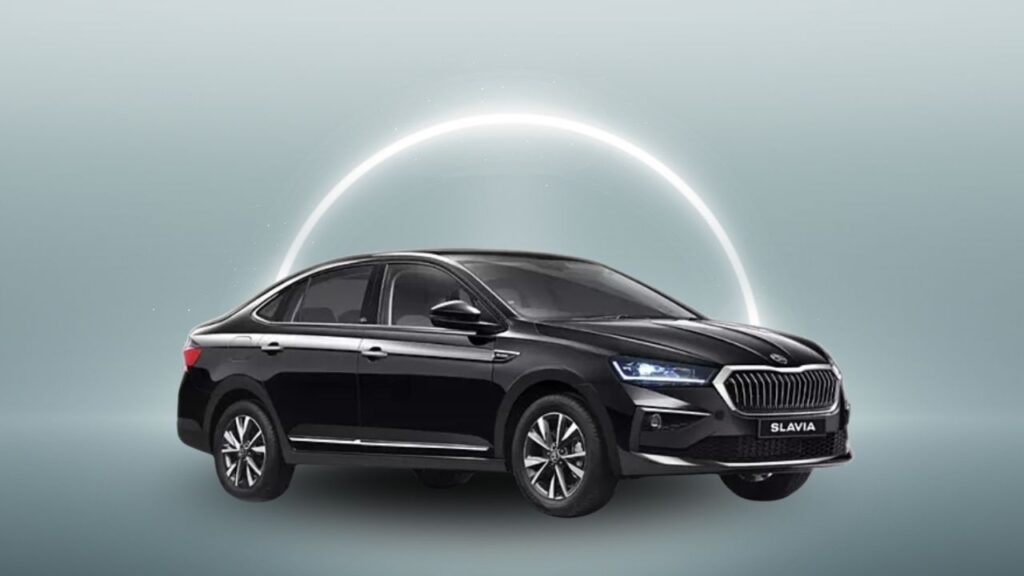
Skoda Slavia 1.0L Classic

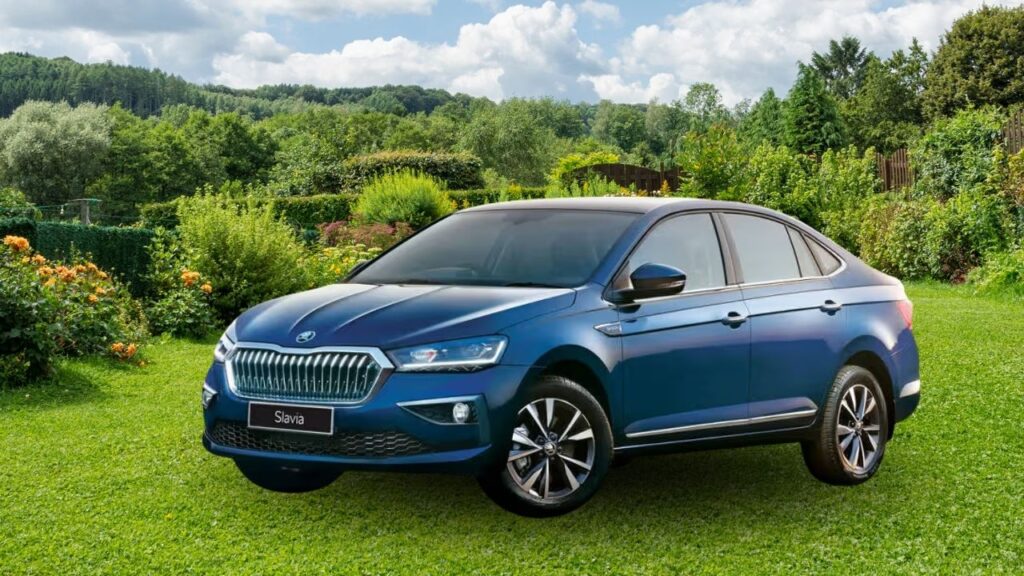
The Skoda Slavia is an elegant and spacious premium mid-size sedan with refinement to match. The 1.0L Classic base model is priced at ₹10 lakh which is a vastly different offering compared to the Kylaq. 

Skoda Slavia 1.0L Classic

Image credit: Skoda

Engine Performance & Space

Slavia 1.0L Classic is a premium sedan which has a perfect balance of functionality, comfort, and performance. This 3-cylinder machine’s 999 cc, 1.0 TSI Turbo Petrol engine produces a staggering maximum power of 114 horsepower at 5000–5500 rpm along with a peak torque of 178 Nm between 1750 and 4500 rpm. The car comes with a 6 speed manual gearbox which makes driving even more fun. It is a great fuel efficient car with mileage 20.32 kmpl. With a wheelbase of 2,651 mm — 85 mm longer than the Kylaq, the car affords more legroom to rear passengers. While it is 10 mm shorter than the Kylaq, its 179 mm ground clearance works great on Indian roads. The Slavia is ideal for long journeys with a lot of luggage to carry as it has a massive boot space of 521 litres. 

Sleek Design & Safety Features

The car comes with several modern, premium features aimed at making driving easier and the occupant more comfortable and safe. Its stylish exterior includes a hexagonal chrome grille, 15-inch steel wheels and crystalline LED tail lamps. Electrically adjustable with an integrated turn indicator, the functions also benefit the utility of the car, along with being body-colored.

Kylaq Signature Variant 2 Sleek Design & Safety Features

Image credit: Skoda

The interior of the car features premium fabric seats, tilt telescopic audio controls, multi-function steering wheel and semi-digital instrument cluster. The driver seat is height adjustable while the power windows come with one-touch down feature for the driver. 60:40 split folding rear seats add more flexibility. 

A 5-star crash safety rating for adult and child protection from Global NCAP, ABS with EBD, electronic stability control, traction control system, hill hold control, multi-collision braking, ISOFIX child seat mounts, and rear parking sensors, with six airbags standard on all variants, means safety priorities. Combined they ensure a driving experience that is safe. This vehicle has been designed to meet the needs of the modern driver and high standards of reliability and performance by utilizing state of the art technology, luxurious interiors and robust safety measures. 

Infotainment & Technology

The car is equipped with a 7-inch touchscreen infotainment system that runs on a modern and user-friendly interface. It wired Android Auto and Apple CarPlay help you access your smartphone smoothly for more accessibility and convenience. The sound system in standard models has two speakers while the higher models are equipped with four speakers for superior sound. Bluetooth functionality to make hands free phone calls and stream audio wirelessly adds another element of functionality and convenience to the system.  

Suspension & Handling

The car is equipped with a MacPherson strut front suspension system, allowing independent operation for enhanced handling and ride comfort. A twist beam suspension is fitted at the rear which is a semi-independent setup offers a good compromise between cost and adequate performance.

Kylaq Signature Variant 2 Suspension & Handling

Image credit: Skoda

Electric power steering offers crisp handling and effortless maneuvering. The rear wheels are equipped with drum brakes, which are a practical, effective braking solution and the front wheels have disc brakes, which allow reliable stopping power. 

Comparison of Kylaq vs Slavia Classic

Urban parents have ever-evolving needs, and they tend to seek out vehicles that not only accommodate their daily needs, but also have enough space and comfort to be taken on family road trips. Meanwhile, first-time SUV owners are looking for a model that will serve as a first step into the sport utility world, by being accessible and reliable. People who drive on rough roads all the time need a tough, high-performing, long-lasting vehicle like Kylaq

 to make it through them.  

To have a smooth and enjoyable travelling on the road, travelers who travel on highways often want to know which cars are the most comfortable and reliable for long days behind the wheel. Buyers who have families and who prioritize having as much room for luggage as possible will opt for vehicles that can easily accommodate both passengers and cargo because they know practicality and versatility are key. Efficiency of fuel Customers who buy fuel efficient vehicles want to their operating costs to be as low as possible and to have the least impact on the environment, dynamic performance, precise control and a unique driving experience.  

Feature-by-Feature Comparison Table

Feature Kylaq Classic Kylaq Signature Kylaq Signature AT Slavia Classic
Price ₹7.55 L ₹9.00 L ₹10.00 L ₹10.00 L
Body Type Compact SUV Compact SUV Compact SUV Sedan
Transmission Manual Manual Automatic Manual
Mileage 19.68 kmpl 19.68 kmpl 19.05 kmpl 20.32 kmpl
Boot Space 446 L 446 L 446 L 521 L
Ground Clearance 189 mm 189 mm 189 mm 179 mm

Why Choose Skoda Under ₹10 Lakh?

  • European Quality at Indian Prices: Both Kylaq and Slavia are based on the MQB-A0-IN platform, a platform co-developed by Skoda and Volkswagen tailored for Indian conditions. 
  • Uncompromising Safety: All Skoda cars under ₹10 lakh are equipped with 6 airbags as standard – something even some cars at twice the price omit.
  • Proven Powertrain: The 1.0 TSI is no experimental engine – it has been tested in battle under the hoods of thousands of Kushaq and Slavia
  • Strong Resale Value: The rising popularity of Skoda in India - along with solid safety credentials and the India 2.0 commitment – is allowing better resale values as compared to the older Skoda models

Conclusion

With 4 unique variants under ₹10 lakh, Skoda is undisputed king in choice, safety and value for money in this segment. Kyrobatic Classic, the affordable and safe Kyroq Signature, the convenient Kyroq Signature AT and the spacious and efficient Slavia Classic which ever you choose, you benefit from leading European engineering, world-class safety and the pride of a globally recognised brand. The 1.0 TSI engine with six airbags and the same 5-star safety rating is available in all four skoda variants which only goes to show that the brand refuses to cut corners when it comes to what really matters, no matter the price tag. 

0

What is ORVM in a Car and How Does it Work?

ORVM in a Car

ORVM is a part you use everyday when you’re driving a car. Outside Rear View Mirror helps you navigate side vehicles and that’s why they are mounted on the doors of your car. But if you don’t know how to use it efficiently and how it works then continue reading this blog because it helps you understand why it is so helpful in driving and parking situations. 

What Does ORVM Stand For?

ORVM is short for Outside Rear View Mirror. Car manufacturers use this term at professional standards to refer to the side mirrors which fit on the outside of a car’s doors. The official term is also used by mechanics and automotive engineers. It is presented on both sides — driver’s and one on the passenger’s side.

The term, ORVM, companies use to show their precision at standard level. In technical documentation, especially in manuals, insurance paperwork, and manufacturing specs, there’s also an IRVM, which refers to the inside Rear View Mirror because it is placed inside the cabin. 

Having distinct acronyms avoids confusion between the two, since both serve a similar purpose but sit in very different locations and work differently.

Why ORVMs Exist in the First Place

Your eyes can miss blind spots especially at night so these mirrors will help you. Even being attentive while driving, you simply can’t see everything from the inside. The IRVM covers what’s directly behind your vehicle but it can’t show you the side view or on the diagonal side. 

Both ORVM and IRVM are essentials for safe driving for yourself and others. They are mostly used during lane changes, reversing, or merging into traffic. If you use both kinds of mirrors, it cuts down blind spots and reduces the risk of collisions during turns or lane shifts.

ORVMs give the driver a wide-angle view of the lanes beside that’s why they are positioned on both sides of the car. It also helps in diagonally shifting lanes or overtake as it allows us to see slightly behind the vehicle. 

How Does an ORVM Work?

When you look at an ORVM, it just looks like a plain piece of glass in a plastic shell. However, depending on the vehicle trim, a lot of engineering can be packed into that small unit. Here is a rundown of how it works. 

1. The Mirror Housing and Glass

The core of the ORVM is the mirror glass itself, usually convex (slightly curved outward) rather than flat. The curve is deliberate — it expands the display of a flat mirror so the driver can see more of the road, although it does make objects appear a bit smaller and farther away than they really are. That’s also why the phrase “Objects in mirrors are closer than they appear” is written on a lot of passenger-side mirrors. 

The glass is held within a housing, typically ABS plastic or a comparable resilient polymer, that is secured to an adjustable mounting bracket at the car door. 

2. Manual vs. Electric Adjustment

Manual ORVM adjustment are quite common among older and budget cars, where you use your hand to push the mirror and adjust it. This is simple and inexpensive, but inconvenient, particularly if the driver has to adjust the passenger seat mirror on the road. 

Electrically adjustable ORVM are offered in most of the modern vehicles. These have a small motor within the mirror housing that is controlled with a switch located on the door or in the center console. The switch allows you to select the left or right mirror, and then adjust it up, down, left or right by using a joystick control. This motor moves the mirror glass via small gears, giving you precise control without leaving your seat.

3. Folding Mechanism

Most ORVMs are available with a folding mechanism, manual or electric. This allows the mirrors to be folded in towards the body of the car. This is beneficial for: 

  • Narrow parking spaces where extended mirrors might get bumped
  • Protecting mirrors from getting knocked off in busy traffic or tight alleys
  • Reducing the car’s width for garage parking

For electric folding systems, the folding and unfolding is handled by a separate small motor concealed in the mirror base, generally activated by a button or automatically when you lock the car. 

4. Heating Element (Defogger)

In cold climates, ORVMs generally come with embedded heating wires on the glass surface. When activated it warms the glass slightly to remove fog, frost and moisture, with the result that visibility never is affected during winter or rainy weather. 

5. Integrated Indicators and Cameras

Higher-end and modern cars pack even more into the ORVM housing:

  • Turn signal indicators: Small LED lights embedded into the mirror casing that blink when you use the indicator, making your turn more visible to vehicles beside and behind you.
  • Blind Spot Monitoring (BSM) sensors: Some ORVMs are equipped with sensors that sense vehicles in your blind spot and notify you through light or sound 
  • Camera-based mirrors: A few premium and electric vehicles have replaced the traditional glass mirror entirely with a small camera, streaming a live feed to a screen inside the cabin. This reduces wind resistance and improves aerodynamics, though it’s still uncommon in mainstream vehicles.

Read More:- How to Claim Car Insurance for Own Damage: A Step-by-Step Guide

Why ORVMs Matter More Than You’d Think

Your car’s mirrors are one of those things you don’t really notice until they stop working — a mirror gets knocked by a passing car, ceases folding, or the electric adjustment quits responding. But every time you are on the road ORVMs contribute significantly towards your safety. You use them to judge distances when overtaking, to see cyclists, other cars, trucks, or motorbikes hiding in blind spots, and when reversing or parallel parking. 

ORVMs are getting damaged easily because they are outside of the car and get easily hit by anything, mostly in traffic areas and narrow parkings. Due to this, spare part dealers have their ORVMs listed with names for mechanics and car owners to quickly identify the required component for replacement against their car’s make, model and variant. 

Conclusion

ORVM might seem like a complex term but in reality, it is nothing but the outside mirrors which all of us use many times in a day without even thinking about it. Knowing what goes into them, from the curved glass to the motorized adjustments, folding mechanisms, heating elements and, more and more, built in sensors and cameras makes you appreciate how much engineering is involved in keeping you safe on the road. 

The next time you look at your side mirror before switching lanes, you’ll know there’s a lot more happening behind that little piece of glass than you realize. 


0

EV vs Petrol vs Hybrid: Which Car Type Is Perfect for You in 2025?

The 2025 car market is unrecognizable compared to just a few years ago. Between that and gas prices rising and EV charging networks growing and brands doubling down on hybrids, there’s now an embarrassment of options for buyers. But more options can make things confusing— EV vs Petrol vs Hybrid, do you go with a petrol car you know and trust, get a full electric vehicle, or take the middle ground in a hybrid? They all have their strengths, costs and suitability to one’s lifestyle. In this guide we’ve distilled the key differences — in running costs, convenience and the newest models — to help you decide which type of car really fits your life in 2025. 

Comparison At A Glance

Choose an EV if most of your daily driving is city/commute (≤100–200 km/day), you can charge at home/work, and you want the lowest running costs and least hassle. Opt for a Petrol car if you frequently do high mileage where chargers are sparse, need quickest refuel and lowest initial outlay, or biggest model/network. Get a Hybrid if you desire much more fuel economy than petrol, far less range-anxiety than a full EV, and you travel a lot on combined city/highways runs. 

Factors That Define Which Car Type is Perfect For You in 2025

Upfront price Value for EVs, Petrol, & Hybrid Cars

  • Mainstream EVs in India in 2025 start at around mid-₹7–12 lakh for city-centric models and extend to ₹20 lakh+ for full-sized SUVs and premium cars. (dealer listings reveal plenty of choice throughout the price spectrum).
  • Petrol cars are the cheapest to begin with – good small hatchbacks are available for much less than ₹7 lakh.
  • Hybrids (mild/strong/plug-in forms) are priced between petrol and EVs; popular models (Maruti, Toyota, MG) tend to start ₹8–12 lakh. 

Running Cost for EVs, Petrol, & Hybrid Cars

EV home charging is usually in the range of ₹6–₹10 per kWh, which in the case of regular hatchbacks or small SUVs works out to about ₹0.8–₹1.5/km – still a lot less than what petrol costs. 

Cost of petrol per litre for running cost. For city driving (15–18 km/L) that works out to around ₹5–8 per km per km – but it depends on the model and the city. 

EVs are miles ahead on running costs per km if you have dependable home charging or cheap, electric-friendly, off-peak tariffs.

Convenience & everyday life: charging refuelling

Refuelling petrol: 3-5 min at any petrol station. They are all spaced evenly everywhere. 

Charging EVs: home charging overnight is most convenient (adds minimal friction). While public fast chargers are becoming more numerous and reliable, they remain patchy; national and private initiatives are working to expand the networks. The IEA expects a significant rise in public chargers in the next few years.

EV convenience recedes significantly if you live in a flat with no assured parking/charger access and no workplace charging. 

Range for practical everyday use & long haul trips

Budget EV hatchbacks tend to have 200-450 km of usable range depending on the variant. For a few long journeys you can plan for charging breaks – slower than filling up on petrol, but it can be done.

Hybrids and petrol vehicles offer seamless, rapid long-distance travel without the need to stop and recharge — which is a significant advantage for highway users.

Government assistance & incentives (important if you are buying now)

Various central and state subsidies (through portals such as e-AMRIT, the FAME scheme details) exist albeit till date non-uniformed, the state EV policies — these can significantly reduce the cost of the EV or of the charging infrastructure. FAME II and related demand incentives have informed subsidies and procurement schemes. Refer to e-AMRIT/FAME pages and your state policy before purchasing.

(Practical advice: incentives are frequently models- and region-specific. All EVs don’t get the same perks, check with dealer + State EV policy). 

Read More:-  Hyundai Elantra 2025 Review: Price, Trims, Hybrid & N Line Features Revealed!

Maintenance, Resale and Dependability

EVs: Less moving parts → less scheduled maintenance (no oil changes, fewer brake jobs because of regen braking). The health of the battery is the biggest long-term concern; warranties on batteries are provided by manufacturers (usually for 8 years/1.6 lakh km or so on a number of models).

Petrol: Well established service network and cheap spare parts in India, high predictability.

Hybrid:The addition of a hybrid system (engine + electric components) brings complexity, but manufacturers like Toyota have decades of proven hybrid tech and solid service networks in India.

The resale value for EVs is stabilising, but it still depends on the model – stick to well-known, popular brands for reduced risk. 

Environment & Social Aspects

Lifecycle vehicle emissions of EVs are a function of the electricity mix, as they have no tailpipe emissions. India’s grid is greening and policy pushes gradually lower lifecycle emissions for EVs. Hybrids reduce emissions versus petrol, particularly in urban driving. 

Simple decision checklist: who should choose which option

Pick EV if:

You drive less than 300 km a day and most of your trips are within the city. If you can charge at home (private parking) or your office provides charging and desire to have the lowest running cost and lesser maintenance hassles. It’s best if you care about low tailpipe emissions and technology-enhanced features.

Pick Petrol if:

You do at least some long highway cruising, you travel out into the country, or you just live where EV chargers are hard to find. You want the lowest initial cost and refuel fastest and have access to the widest network.

Pick Hybrid if:

You’d like to get vastly superior fuel economy to petrol without having to depend on charging stations. You do both city and highway driving and want to move seamlessly through both without the need to plan your route around charging stops. You also like tried and tested reliable (Toyota/Maruti strong hybrids have a good track record in India).

Some Latest Models of EV / Hybrid / Petrol Cars

Type Model Key Specs
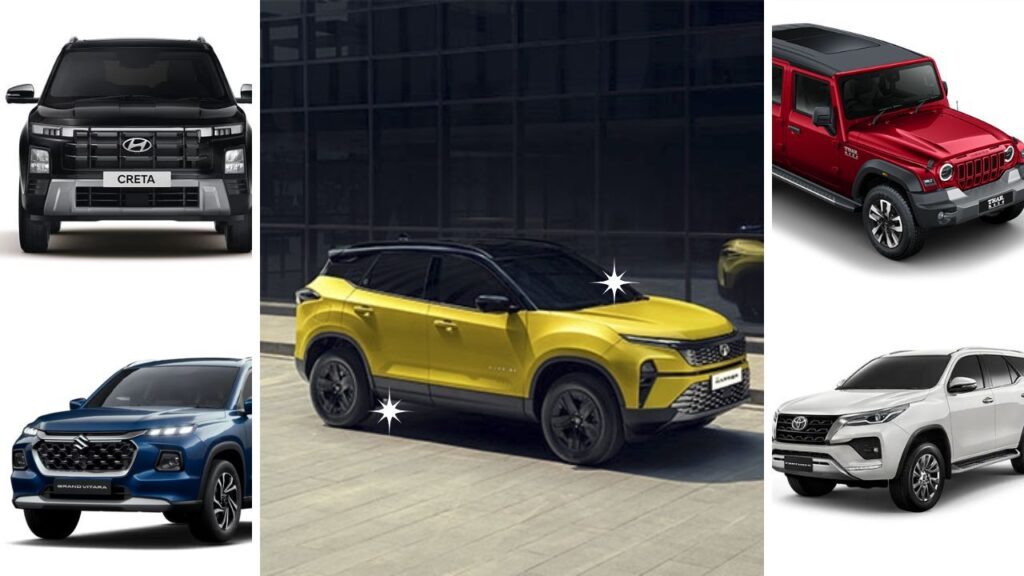
Electric Vehicles  Tata Harrier EV Launched mid-2025. Comes with AWD dual-motor option, very impressive real-range (up to ~627 km MIDC in best variant). Strong contender in the mid-size SUV EV space.
Hyundai Creta EV Scheduled early-2025. Multiple battery pack options. Expected range ~390-470 km depending on battery size. Features like DC fast charging, interior tech upgrades.
Maruti Suzuki e-Vitara To launch in mid/late 2025. Two battery options (≈49 kWh and ≈61 kWh), claimed range up to ~500 km in some trims. Will compete with Creta EV etc. 
Hybrids Toyota / Maruti / Suzuki strong or mild hybrids (Grand Vitara strong hybrid) Coming in H2 2025. Third-row / 7-seater version too. Strong hybrid (self-charging) gives the benefit of much better mileage than petrol alone. 
Toyota Fortuner Mild-Hybrid Neo Drive Already launched in 2025. Adds mild-hybrid tech to the Fortuner to improve stop-start behaviour, small torque assist etc. Good for those who drive big SUVs but want improved efficiency.
Hyundai Creta Hybrid Already launched in 2025. Adds mild-hybrid tech to the Fortuner to improve stop-start behaviour, small torque assist etc. Good for those who drive big SUVs but want improved efficiency.
Petrol Mahindra Thar / Bolero Updated models set to launch in Oct-2025. These are mature, rugged, proven petrol SUVs with facelifted features. Good for off-road / rural tasks or for those who like strong looks + robust service
Skoda Octavia RS For those looking for a more premium sedan with petrol performance and features. The RS version adds sportiness. May have higher maintenance costs but strong appeal if you want power + brand.

Conclusion

There’s no such thing as the “best” car for everyone, because EV vs Petrol vs Hybrid is a confusing debate but what works for one person depends on how they drive, where they live, and what kind of vehicle they find most useful. If you mostly drive in a city, and have reliable access to an outlet, an EV provides unparalleled running costs and a green driving experience. If highway and long road trips are the staple of your life and you want to fill up as quickly as possible—and as cheaply as possible up front—gas cars are still the prudent choice. And if you want to save fuel but don’t want to plug in, hybrids give us the best of both worlds. In the end, the ideal car for you in 2025 isn’t what’s the biggest hit of the day — it’s the vehicle that fits your everyday life and your plans for the future.