0

Honda Car Offers on City, Elevate and Amaze, Save Up to ₹1.97 Lakh

Published Feb 18, 2026, 12:29 PM
Last Updated Feb 19, 2026, 12:21 PM

honda discount offer city, elevate, amaze

Honda is offering massive discounts on some of its amazing models in the month of Feb 2026 including the Honda City, Elevate and Amaze. The brand is going all out to appeal to the sedan lovers, SUV-seekers and the first-time car buyers. From luxurious executive sedans and city SUVs to no-nonsense compact vehicles, Honda’s whole range can be had for much less, it’s shaping up to be an unusually seller-friendly stretch of a few years. 

Whether you’re swapping your old ride for a new one or joining the Honda family for the initial time, these deals make February 2026 a great time to buy. 

Discount Details

Honda is now providing a special price drop of ₹1.97 Lakh on the City sedan. These advantages include cash discounts, exchange offers and loyalty bonuses, making it a good deal for buyers. 

The Elevate is also getting discounts (up to ₹1.48 Lakh). And, on top of all the financial incentives, buyers are entitled to a strong 1.5-litre petrol engine that delivers optimal efficiency and a bunch of futuristic technology options.

The Amaze provides a discount of up to ₹68,000 on the 2nd generation model and ₹57,000 on the 3rd generation variant. These benefits could be cash discounts or loyalty points. 

5th Gen Honda City (2026)

The 5th generation Honda City (2026) remains the premium executive sedan in a world that’s more dominated by SUVs, catering towards those who prefer comfort, refinement, and driving dynamics than SUV looks. It rivals in the C-segment but it targets sophistication, efficiency, technology rather than pure power.

Powertrains

The 1.5L i-VTEC petrol engine provides a smooth and linear power delivery, thanks to its high-revving nature and unique VTEC performance. It is mated with either a 6-speed manual gearbox or a sophisticated CVT, serving a variety of driving tastes. 

Meanwhile, the petrol engine is combined with electric motors by means of strong hybrid (e:HEV) technology to generate instant torque of 253 Nm, EV-like smoothness that is well suited for urban driving and fuel economy of 27.13 kmpl.

A City on a Light But Rigid Platform 

The City is designed to produce a comfortable ride, a stable platform and easy handling, suited for city as well as highway driving. The suspension is soft enough, the steering is light in the city but firm enough on the highway to give you confidence and the refinement is still something you can expect to find by the bucketful. 

Honda City

Variants

The 2026 model range (SV, V, VX, ZX) has been organized to allow everyone exceptional levels of premium features at all price levels, from comprehensive safety features in the base model to lavish interiors and full ADAS in the top ZX variant. 

2026 Honda Elevate

The 2026 Honda Elevate is Honda’s first offering in the mid-size SUV segment and is aimed as a practical, no-frills option to the feature-packed rivals like the Creta and Seltos. With its boxy, masculine styling, it is designed around the core values of an SUV – space, visibility, toughness, and real-life practicality, which makes the Indian urban conditions a great match for it.

Practicality 

Derivative of the City but developed as an SUV, Elevate has a ground clearance of 220 mm (highest in its segment), stiffened suspension, and small turning radius. It’s at home on rugged terrain, and in congested city streets. It’s true SUV practicality meets urban comfort, Do your own thing, and have it all.  

Honda Elevate

Interior

Inside, the high seats renderiosity, easy ingress and egress, a spacious cabin and a 458L boot add to the contemporary 10.25-inch touchscreen with wireless connectivity. It’s pretty clear they were designing for everyday ergonomic utility rather than flashy tech toys. 

Engine and Drive

Based on the same 1.5L petrol engine as the City, the Elevate is tuned for higher low-speed output to compensate for its additional weight. Though fuel economy on the highway is a bit lower than the sedan’s, it has a more commanding presence on the road and better capability on rough roads. 

Variants

The 2026 lineup (SV, V, VX, ZX + ZX Black Edition) covers a broad spectrum of customers, with the Black Edition specifically aimed at the younger generation. The Elevate turns out to be the best value proposition in the ₹15 lakh budget segment, with discounts going as high as ₹1.48 lakh. 

Read More:- Tata Cars Discount 2026: Up to ₹1.55 Lakh Off on Tiago EV, Punch & Altroz

Honda Amaze

The Honda Amaze 2026 takes the compact sedan segment for a turn, as the Japanese carmaker makes available a new 3rd-generation Amaze alongside the 2nd-gen model - an intelligent two-tier approach for budget and premium buyers. As the entry-level model for Honda, the Amaze is vital in drawing first time car buyers to the brand.

Safety & Technology

Safety and technology are the biggest leaps. New Amaze scores 5-star Bharat NCAP, and becomes the first compact sedan to provide Jaguar Land Rover adds Adaptive Cruise Control, Lane Keep Assist to its vehicles and we’re excited to see these features in a sub-₹10 lakh car—unreal in this segment. 

Honda Amaze

Engine and Practicality

Amaze is designed for the city users and that is why it comes with 1.2L i-VTEC petrol engine making 90 PS power and 110 Nm torque. Its light weight gives it agility in traffic, and the CVT gearbox provides smooth, jerk-free driving – much more refined than AMT competitors which makes it perfect for city driving. Ride quality, on the other hand, is enhanced by a more comfort-oriented suspension.

Variants 

There are V, VX and ZX variants in the line-up with the ZX Tech variant having LED projector headlamps, cruise control and full ADAS. Slashed prices for both generations make the Amaze one of the most value-for-money cars in this segment. 

Read More:-  Tata Cars Discount 2026: Up to ₹1.55 Lakh Off on Tiago EV, Punch & Altroz

Head-to-Head Comparison in Honda City & Elevate 

Feature Honda City (Sedan) Honda Elevate (SUV)
Ride Comfort Superior: Less body roll, settled ride at 120 km/h. Good: Absorbs bumps well, but more vertical movement.
Space Superior: More legroom, airier cabin. Adequate: Good headroom, but cabin feels narrower.
Practicality Low: Low ground clearance (165mm) requires care. High: 220mm clearance conquers any road.
Driving Feel Engaging: Low seating, aerodynamic. Commanding: High visibility, confident stance.
Verdict For highway runners and rear-seat passengers. For city explorers and rough-road users.

Pricing Reality of Honda Cars

Honda City Pricing Structure

Variant Ex-Showroom Price On-Road Price Tip
Entry Point (SV MT) ~₹11.95 Lakh ~₹14.01 Lakh Base model for budget buyers.
Sweet Spot (V CVT) ~₹13.95 Lakh ~₹16.24 Lakh Best value with CVT comfort.
Flagship (e:HEV) ~₹19.99 Lakh ~₹23.26 Lakh Hybrid top-end and effective 

Honda Elevate Pricing Structure

Variant Ex-Showroom Price On-Road Price Notes
Entry Point (SV MT) ~₹11.59 Lakh ~₹13.91 Lakh Base model for budget buyers.
Top End (ZX CVT) ~₹16.20 Lakh ~₹19.40 Lakh Loaded with premium features, before ₹1.48 Lakh benefits (effective on-road under ₹18 Lakh).

Honda Amaze Pricing Structure 

Variant Ex-Showroom Price On-Road Price Notes
Entry Point (V MT) ~₹7.48 Lakh ~₹8.78 Lakh Affordable base sedan for city use.
Top End (ZX CVT) ~₹10.00 Lakh ~₹11.33 Lakh Premium auto with ADAS features.

Conclusion

February 2026 has a unique alignment of inventory correction and strategic repositioning that created a “buyer’s market” for Honda vehicles. For buyers who can see a little further than SUV hysteria, the City and Amaze provide levels of engineering depth rarely found today, while the Elevate is a solid, no-nonsense option in the gadget-packed field. 

Sharey Khan

Sharey Khan is an IT entrepreneur and petrol head & a car enthusiast. With a special focus on car-related content, he combines his deep passion for vehicles with a talent for crafting informative, engaging, and easy-to-understand content. His writing is driven by a genuine love for cars and he is committed to providing readers with accurate, up-to-date, and trustworthy information that empowers smarter driving decisions. 

Leave a Reply

Your email address will not be published. Required fields are marked *

0

Ken Griffin Car Collection: The Man Behind the Hypercar Obsession 

Published Jan 6, 2026, 1:13 PM
Last Updated Jan 8, 2026, 7:25 AM

Ken Griffin Car Collection

When you think billionaire hedge fund executives such as Ken Griffin, you probably think of sprawling office buildings, high-stakes business transactions, and the $43.2 billion he oversees through his Citadel empire. Ken Griffin Car Collection is something else, perhaps just as exhilarating: a garage that reads like a love letter to automotive creativity and raw, unadulterated speed.

Ken Griffin isn’t just buying cars: he’s automotive royalty. And in stark contrast to scores of billionaires who appear to consider supercars nothing more than taxis to park and admire, Griffin drives these machines. He is a unique collector in that he thinks a hypercar’s real purpose in life is to drive it, to feel it under your wheels, to listen to that symphony of a screaming motor and racing wind, and to take it as far as you possibly can mechanically. 

The Crown Jewels Of Ken Griffin

LaFerrari 

LaFerrari is the crowning glory of Griffin’s collection

The LaFerrari is the crowning glory of Griffin’s collection—and its name says it all. LaFerrari is written in Italian and means “the Ferrari”, a designation used because there is simply nothing else like it. It’s not an overstatement. The hypercar provides a 6.3-litre V12 with a Formula 1–inspired electric motor, producing an astonishing 950bhp. The end result is more explosive performance, sprinting from 0 to 62 mph in less than three seconds, which helped it become one of the most amazing Ferraris ever produced.  

Category Specification Details
Engine 6.3L F140 V12 + Electric Motor 800 PS (V12) + 163 PS (KERS); 6,262 cc
Power/Torque Combined Output 963 PS; >900 Nm
Transmission 7-speed Dual-Clutch Automatic
Dimensions Length/Width/Height/Wheelbase 4702 / 1992 / 1116/ 2650 (all in mm)
Weight (Dry) Kerb Weight 1,585 kg
Performance 0-100 km/h / Top Speed <2.6s / >350 km/h
Production Units (Coupé) 499 (2013-2016)
Price (Original) Base MSRP ~€1-1.5 million / $1.5M


The LaFerrari represents the ultimate expression in engineering at the moment of its creation. Combined with its KERS hybrid system, active aerodynamics and carbon-fibre skin, it seems less a car and more a racecar in a suit for the road. Now the cleanest examples can easily fetch $4 to $5 million or more, but for Griffin the value isn’t just financial. It’s about having something that fewer than 500 people in the entire world will get to experience. 

McLaren P1

McLaren P1

Then there is the McLaren P1 —McLaren’s audacious retort to Ferrari’s hypercar dominance. Boasting 903 horsepower and state-of-the-art F1-derived technologies such as an adjustable rear wing and active suspension, the P1 is McLaren’s love letter to innovation. Only 375 were manufactured. Griffin’s take comes in glossy black, a choice that allows the car to do the talking instead of shouting with color. At about $2 million in the collector’s market, it is a tour de force that captures the very moment when hybrid hypercars were redefining what was possible in the automotive world. 

Category Specification Details 
Engine 3.8L Twin-Turbo V8 + Electric Motor 727 PS (V8) + 179 PS (electric); 3,799 cc
Power/Torque Combined Output 916 PS; 900 Nm
Transmission 7-speed Dual-Clutch Rear-Wheel Drive
Dimensions Length/Width/Height/Wheelbase 4,595 / 2160 / 1199 / 2674 (all in mm)
Weight (Dry/Kerb) Dry Weight 1,395 kg / 1,547 kg
Performance 0-100 km/h  2.8s 
Production Units 375 (2013-2015)
Price (Original) Base MSRP Starts at $1.15 million 


Lamborghini Huracán

Lamborghini Huracán Performante – the adrenaline-fueled monster in an eye-watering shade of yellow that just wants you to stare at it. With its active aerodynamics system that adapts on the fly, 631 horsepower and sub-3-second 0-62 time, this is the ultimate animal in Griffin’s collection. Its stablemates at his garage are all about sophistication, technological refinement, but the Performante is pure aggression in a Lamborghini wedge. 

Category Specification Details
Engine 5.2L V10 Naturally Aspirated 640 PS, 600 Nm 
Transmission 7-Speed Dual-Clutch (LDF) AWD or RWD options
Dimensions Length/Width/Height/Wheelbase 4458 / 1924 / 1181 / 2620 (all in mm)
Weight (Dry/Kerb) Kerb Weight ~1,422-1,550 kg
Performance 0-100 km/h / Top Speed 2.9s / >325 km/h
Fuel Economy ARAI Combined 11.24 kmpl
Production Era Variants Overview 2014-present; EVO (2019+)
Price (India Ex.) Approximate Base ₹3-4.5 crore 


Beyond the Holy Trinity

Bugatti Chiron

Bugatti Chiron

Griffin also has a Bugatti Chiron, it gives an insane 1,500 horsepower. With an electronically limited top speed of 261 mph, it is more than just a car. It’s not just fast—it’s rolling, pure insanity on wheels, this thing is.  

Category Specification Details
Engine 8.0L W16 Quad-Turbo 1,500 PS, 1,600 Nm, 7993 cc
Transmission 7-Speed Dual-Clutch All-Wheel Drive
Dimensions Length/Width/Height/Wheelbase 4,544 / 2038 / 1212 / 2711 (all in mm)
Weight (Kerb) Curb Weight 1,995 kg
Performance 0-100 km/h / Top Speed 2.5s / 420 km/h (electronically limited)
Fuel Capacity Tank 100 liters
Production Units 500 (2016-2022)
Price (Original) Base MSRP Starts at €2.5-3 million 


Pagani Huayra

There is also a Pagani Huayra among his collection, a $3.4 million sculpture of aluminum and carbon fiber that looks like it should be hanging in a museum. 

Category Specification Details​
Engine 6.0L V12 Twin-Turbo 720-791 PS; 1,000 Nm; 5,980 cc
Transmission 7-Speed Automated Sequential Manual RWD
Dimensions Length/Width/Height/Wheelbase 4,630/ 2036 / 1169/ 2795 (all in mm)
Weight (Dry) Dry Weight 1,350 kg
Performance 0-100 km/h / Top Speed 3.2s / >370 km/h
Production Units (Base) 100 (2012-2018); various limited editions
Price (Original) Base MSRP ~€2.5 million / ₹15-30 crore est.

The use of four flaps in active aerodynamics can generate as much as 700kg of downforce, as well as the carbo-titanium chassis providing the strength to weight ratio suitable for the hypercar classification. Editions like the BC (40 units, 791 PS), Imola (Codalunga), and track-only R accentuate bespoke customization and F1-inspired technology. The Cabin welcomes guests to unparalleled luxury with artisanal leather, carbon fiber and digital screens. 

The Griffin Philosophy

The way Ken Griffin goes about collecting cars is the way he goes about business: find the best, know how it works inside and out, and never settle for second place. Every one of the cars in his collection is the best of its time—be that time in cutting edge hybrid technology, earth-shattering horsepower, or engineering creativity that smash traditional norms. 

Griffin Car Collection Value

The ballpark value of his known collection sits in the $15-20 million range, pocket change relative to Griffin’s net worth. But the hours, research and emotional labor it takes to assemble a collection like that says as much about what he cares about beyond the hedge fund. 

Conclusion

The Ken Griffin Car Collection isn’t to flaunt that he’s rich — he just likes really well made cars. From the F1-derived hybrid powerplant of the Ferrari, LaFerrari to the active aerodynamics of the Lamborghini Performante, every car is a moment in time where human ingenuity reached new heights. For Griffin, driving is more than just transportation; it’s a look at the future, one hypercar at a time. 

0

New GST Pricing For Popular Cars in India: September Updates on Latest Car Price Drop 

Published Sep 15, 2025, 12:14 PM
Last Updated Sep 15, 2025, 12:15 PM

New GST Car Price Drop September 2025 in India

This September, car prices drop down with a huge difference under the new GST slabs. From the brands Hyundai, Kia, Honda, Toyota, Tata, Volkswagen, Skoda, Mahindra, Renault, to luxurious cars MG, BMW, AUDI And Mercedes-Benz Prices Dropped. This gives big relief to the car automobile industry, this benefit applies to all car segments in India. Check out every brand’s big price reduction which is going to be applicable after 22 September 2025. 

GST rates have reduced from 28% to 18% on all 1200cc engines with <4m length. Large Sedans and SUVs get 40% flat due to fluctuation from 50% GST. Here’s the breakdown of each brand price reduction detail under the GST 2.0.

Read More :- Best Cars for Mountain Roads: Drive Smoothly on Snow, Hills & Winding Terrains

Latest Price Drops After GST 2.0

Brand Model(s) Maximum Saving (₹)
Tata Tiago – 85,000; Altroz/Harrier/Safari – 1–1.55 lakh; Nexon – 1.50 lakh 1.55 lakh
Mahindra Thar – 1.35 lakh; Scorpio N – 1.45 lakh; XUV700/3XO – 1.56 lakh 1.56 lakh
Hyundai Tucson – 2.40 lakh; Alcazar – 75,000; Creta – 72,000; i20 N Line – 1.08 lakh; Verna – 60,000 2.40 lakh
Kia Carnival – 4.49 lakh; Syros – 1.86 lakh; Sonet – 1.64 lakh; Seltos – up to 45% cut 4.49 lakh
Renault Triber – 96,000; Kiger – 80,195; Kwid – 55,000 96,000
Honda City/Amaze – 72,000; Elevate – 58,400 72,000
MG Astor – 54,000; Hector – 3 lakh; Gloster – 3 lakh 3.00 lakh
Volkswagen Virtus/Taigun – 66,000; Tiguan R-Line – 3.27 lakh 3.27 lakh
Skoda Kodiaq – 3 lakh; Kylaq – 1.19 lakh; Others – up to 3.28 lakh 3.28 lakh
Toyota Glanza – 85,000; Fortuner – 3.49 lakh; Vellfire – 2.78 lakh; Lexus – up to 20 lakh 20.0 lakh
BMW 2 Series – 1.6 lakh; 5 Series – 4.15 lakh; XM – 6 lakh; M2/M4/M5 – 10 lakh 10.0 lakh
Audi A4 – 2.64 lakh; A6 – 3.64 lakh; Q7 – 6.15 lakh; Q8 – 7.83 lakh 7.83 lakh
Mercedes-Benz A-Class – 2.6 lakh; C-Class – 3 lakh; E-Class – 4 lakh; GLA – 3 lakh; S-Class – 10 lakh+ 25.0 lakh

Tata 

Tata Motors Cars Price Drop After GST September 2025

Image credit: Tatamotors

The Tata latest models price is dropped which creates an opportunity for buyers to save up to Rs 1.55 lakh. The Tata Altroz, Tata Harrier, and Tata Safari price has been reduced by more than 1 lakh due to revised GST rates. Small cars like Tiago save up to 11% with new GST rates which means you can purchase Tata Tiago with Rs. 85,000 off. The Tata Nexon price has been reduced up to Rs 1.50 lakh. 

Mahindra

Mahindra Cars Price Drop After GST 2.0 Reform

Image credit: Mahindra

Mahindra also dropped its price on its popular models like Thar Roxx, Scorpio N, 3XO, and XUV700. Customers can get more than 1 lakh saving on these cars. The maximum saving up to Rs 1.56 lakh for XUV 3XO, Thar save up to Rs 1.35 lakh and Scorpio N save up to 1.45 lakh. Mahindra has passed the benefit early for its customers which creates a great opportunity for buyers in India.

Hyundai

Hyundai Cars Discounted Prices in India GST 2025

Image credit: Hyundai

This one reduced more than 2 lakh on its significant models like Alcazar and Creta. Customers have to wait till 22 September 2025 for purchasing Hyundai cars at a lower price. Tucson, mid-size SUV gets a huge price cut up to 2.4 lakh under new GST slabs. Other popular cars like Alcazar save up to 75,000, i20 N Line save up to 1.08 lakh and Creta save up to 72,000. The least saving is up to 60,000 for Verna. 

Kia

Kia Cars Price Cut September 2025 GST Updates

Image credit: Kia

Kia is also a Korean automaker which is offering up to Rs. 4.49 lakh on Kia Carnival but other models like Syros and Sonet also offer huge savings. Buyers can save up to Rs 1.86 lakh on Syros and Rs. 1.64 lakh on Sonet. Seltos and other models also offer up to 45% saving under the revised GST slabs. 

Read More:- Donald Trump Car Collection: A Look Inside His Garage

Renault

Renault Cars Price Drop After GST Reduction in India

Image credit: Renaultgroup

Renault also gave a huge saving on its triber, Kwid, and Kiger up to 96,000. You must remember that the price fluctuation also depends on the vehicle’s variant. Buyer can save up to Rs. 80,195 on Renault Kiger but it is applicable after 22 september 2025 purchase. The Renault Triber also reduced its price over 96,000 which is a maximum saving than the Renault Kwid which only benefits up to Rs 55,000.

Honda

Honda Cars New Price After GST Update India

Image credit: Honda

Honda offers up to 3.5% price cut on Honda Amaze, Honda City, and Honda Elevate which save up to 72,000 after 22 september 2025 purchase. However, elevate has only offered up to 58,400 as a benefit for their buyers. Please note that the benefit also depends on the variant and powertrain of the car you selected.

MG

MG Cars Price Reduction September 2025 India

Image credit: MG motors

MG Astor, MG Hector, and Gloster have now come with a huge saving up to Rs. 3 lakh. These models are built on ICE, making it perfect for every ride. Astor can save up to Rs 54,000 and Gloster can save up to 3 lakh, also offering 100% on-road funding.

Volkswagen

Volkswagen Cars Price Cut After GST Reform India

Image credit: Volkswagen

The Volkswagen offer huge benefit up to Rs 3.27 lakh which opens up the opportunity for buyers. The new GST rates cut the price for flagship models like Virtus, Taigun, and Tiguan R Line, SUV with over 1500 cc engine. Most models like Virtus and Taigun get over 66,000 GST benefits and Tiguan save over 3 lakh under the revised GST rates.

Skoda

Skoda Cars Discounted Price September 2025 GST

Image credit: Skoda

Skoda has reduced the price up to Rs 3.28 lakh on its most of the models. Customers can get a huge benefit on their purchase after 22 September 2025 when the new price is applicable on cars like Skoda Kodiaq and Kylaq up to Rs. 3 lakh and 1.19 lakh. The reduced prices also depend on the variant of the Skoda.

Toyota

Toyota Cars Price Reduction India GST 2025

Image credit: Toyota

Toyota has become more affordable with its new revised price, the huge price cut received of 5.77 lakh for Lexus. According to the GST 2.0 reform, it received a massive price reduction up to Rs. 20 lakh. The price reduction up to 85,000 for Glanza, 3.49 lakh for Fortuner, and brand’s flagship Vellfire also received a huge price cut up to Rs 2.78 lakh.

BMW

BMW Cars Price Drop After GST 2.0 in India

Image credit: BMW

The luxurious BMW also reduced its price up to Rs. 8.9 lakh under the GST 2.0 reform. There are several modern and excellent models which got a huge price cut like BMW 2 series got up to 1.6 lakh, BMW 5 series saves up to 4.15 lakh and M2/M4/M5 saves up to 10 lakh after 22 September 2025. The massive price cut is up to 6 lakh on XM models which opens up a huge opportunity for BMW lovers.

Read More:- Hyundai Ioniq 5 vs Tesla Model Y: Which EV Wins in 2025?

AUDI 

Audi Cars Price Reduction September 2025 GST

Image credit: AUDI

AUDI is offering a huge saving of its flagship model Audi Q8 for up to Rs 7.83 lakh. While other models of AUDI such as Q7 get 6.15 lakh, A6 saves 3.64 lakh and A4 offers 2.64 lakh. These models received massive savings from under the new GST slabs. The new AUDI prices make a big difference in the market.

Mercedes-Benz

Mercedes-Benz Cars Discounted Price After GST 2.0

Image credit: Mercedes-Benz

The biggest difference in price is made for Mercedes-Benz under the new GST slabs which can save you up to Rs 25 lakh. The most selling models like C-Class can save up to 3 lakh, E-Class gets you up to 4 lakh benefit, S-Class offers over 10 lakh benefit but the price fluctuation varies on the variant of the car. GLA offers Rs 3 lakh and an A-Class sedan also offers 2.6 lakh. 

Conclusion

The latest cars’ prices dropped down which makes a big difference in the Indian market. Buyers can get a massive benefit on these cars purchase but the new price is applicable after 22 September 2025. The new price fluctuation is reflected by the new GST reform that leads to the car prices slashed with a huge difference.

0

DIY Car Care: Simple Checks to Keep Your Vehicle Running Smoothly

Published Jun 4, 2026, 10:29 AM
Last Updated Nov 2, 2026, 6:29 PM

DIY Car Care

Your true road partner is your car, and you need to take care of her regularly. Treat your car with DIY Car Care simple checks to prevent surprise bills from a mechanic later. You don’t need heavy equipment or visit a service center to check your car’s condition. Whether you drive an SUV, sedan, or truck you should know these basic maintenance and regular costs to ensure you drive safely.  

Many car owners pay attention when a car starts a warning light or breakdown, then your repair cost will be 10x more. Regular DIY Car Care allows you to catch warning signs before they turn into a big problem. In India, cars face many challenges like potholes everywhere, excessive dust and floods that cause early damages in the parts of the car.

Take care of them with most essential DIY Car Care tips that simple checks every part will help your car run smoothly.

Why DIY Car Care is Non-Negotiable in India

Indian roads are brutal and exhaust your car earlier than its time. Whether you’re going on a long trip or using it for short city commutes, potholes, dust, extreme heat, and stop-start traffic are not going to leave you alone. There are reasons why you cannot afford to ignore simple checks:

Road Conditions

Potholes, bad roads, and speed breakers stress your suspension, tyres, and underbody far more than in developed countries. Regular checks catch damage early.

Extreme Climate

45°C summers degrade coolant, tyres, and batteries fast. Monsoons cause rust, electrical shorts, and brake fade. Each season needs specific attention.

Traffic & Stop-Go

Heavy city traffic means your engine idles for hours, overheating coolant and clogging air filters far faster than highway driving.

Fuel Adulteration Risk

Adulterated or low-quality fuel damages injectors and carburettors. Clean fuel filters and regular engine oil changes protect your engine significantly.

Read More:-  Car Maintenance Tips That Save Money And Valuable Time

Essential DIY Checks Every Indian Car Owner Must Know

You need to visit a mechanic for simple car checks. Most require zero tools or a simple ₹50 torch. Let’s go one by one. 

1. Engine Oil Level Check 

You must check your car’s engine oil level at every 1000 km or monthly. Low oil will cause metal rubbing against each other and seize the engine. Open the bonnet, pull the dipstick, wipe it clean, re-insert, pull again. Now check the level of oil, it must sit between min and max points. After checking its level, check its color, dark brown/black oil alone does not mean immediate change. Judged by the service interval, oil level, and owner’s-manual guidance. .

Due to dust and traffic heat, engines consume oil faster. Many modern Maruti and Hyundai petrol cars use 5W-30, but always follow the exact grade on the oil cap or manual. Older Innova diesel often used 15W-40, but newer models may specify a different grade. Always buy branded oil — Castrol, Shell, Motul are trusted names. 

Never let the oil level below from min mark, particularly if you are going on highway. Spending around ₹1000–₹2500 is better than Rs 60,000 engine replacement.

2. Coolant / Radiator Water Level 

Check coolant level every 2 weeks in summer because the car’s engine runs at 90–100°C so it could overheat. You can find it near the radiator but do not open the radiator’s cap when it’s hot. The level of coolant must sit between LOW and FULL marks.

Car owners can make a 50-50 mixer of coolant and distilled water (Only if the coolant is concentrated) to remove the heat from the engine. But do not use tap or RO water, it will block your radiator. Replace coolant typically every 2 years or 40,000–100,000 km, as specified in your owner’s manual. 

3. Tyre Pressure & Condition 

Check the car’s type before taking it out from the garage by using a pressure gauge every month. Most hatchbacks commonly need around 30–36 PSI. Check the sticker inside your driver’s door or owner’s manual. Because Under-inflated tyres can cause fuel waste.

Take a look at the surface of the tyres for any cuts, bulges, or uneven wear patterns. Uneven wear signals misalignment or shock absorber problems. Don’t forget the spare tyre — you will regret it on longer trips.

4. Battery Health Check 

Car batteries do not survive long in India. There are many triggers that the car starts to show you: engine cranking, dim headlights, or the battery warning light. Check the electrolyte level in each cell to keep it at top. 

Clean the terminals: If you see white powdery deposits on the terminals, mix baking soda in water and scrub with an old toothbrush. Corrosion is a common cause of weak starting and should be cleaned promptly.

5. Brake Fluid & Brake Pad Inspection

Brakes are not negotiable. If your brakes stop working, it can cause a serious incident on the road. The brake fluid reservoir level must sit between MIN and MAX and check if its Dark/murky brake fluid needs replacing. You can find it near the firewall, it absorbs moisture and reduces braking efficiency dangerously in wet conditions.

Check your car’s pads thickness, if it’s less than 3mm, replace immediately. A worn pad will cause noise while braking. Grinding metal sound will later cost you highly. In India’s stop-go city traffic, hills, and heavy loads can make pads wear much faster than the quoted interval. Front pads commonly last about 25,000–50,000 km.

Read More:-  Kendrick Lamar Car Collection is Classic Garage With Old & New Luxury Cars

6. Air Filter Inspection

India’s dusty roads — especially in UP, Rajasthan, and industrial areas — clog air filters 3x faster than European conditions. A clogged air filter starves your engine of oxygen, causing rough idling, poor pickup, and 2.5% fuel-economy drop from a clogged filter in the tested condition.

Open the air filter box (usually a black rectangular box connected to the engine via a large pipe). Remove the filter. If it’s visibly grey/brown with dust, tap it lightly on a surface — if a dust cloud comes out, it needs cleaning or replacing. Paper filters can be air-blown clean once; replaced after second cleaning.

7. Windshield Washer & Wiper Blades

In monsoon, visibility is mandatory while driving. Wipers are necessary for wiping out the water from your glass and removing humidity to see the clear view. Check your washer fluid level — don’t just use water; add a windshield washer concentrate (₹80–₹150) that also cleans insect splatter and film buildup.

Wiper blades are necessary particularly in the monsoon season. If they are broken or don’t work then change it. Worn wipers are a serious safety risk in heavy rain. Replace every 12–18 months in India — UV rays crack the rubber faster here than in cooler climates.

8. All Lights Check

Check every light in a car both outside and inside. Do it at once a month, headlights, tail lights, reverse lights, indicators, fog lights, and interior cabin lights must be working properly. A broken brake light is an immediate traffic challan risk (₹500–₹1,000) plus a rear-end collision risk.

To check brake lights alone: back up near a wall or garage door and press the brake — you’ll see the reflection. Or ask someone to stand behind. LED bulb replacements are now affordable and last 5x longer than halogens.

9. Belt & Hose Visual Inspection

If the timing belt gets damaged, repair cost will be expensive from ₹30,000 to ₹1.5 lakh. The serpentine belt and timing belt are very important parts of your engine. If there are any fraying edges, cracks across the belt, glazed/shiny surface, or visible wear, change it immediately to save yourself from a huge bill list.

Hoses: Remember that engine must be cool before you touch hoses. They should feel firm but slightly flexible. If they feel tight, hard or too soft then change it. Leaking hoses leave a puddle under your car — never ignore a puddle.

10. Underbody & Fluid Leak Check

After parking overnight, check the ground under your car. Any puddles? Clear water from AC drain = normal. Oily dark patch = engine oil or gearbox leak. Reddish fluid = power steering or automatic transmission fluid. Yellowish-green = coolant leak. Each means something specific is failing.

Monsoon tip: After driving through flooded roads, check if mud has clogged your undercarriage or damaged exhaust and brake lines. Get a pressure wash done if you drive through deep water.

Read More:- How to Maintain Your Car Engine Properly

Cost Comparison: DIY vs Garage in India

Maintenance task Recommended frequency DIY cost (₹) Local garage (₹) Authorised service (₹) Best choice
Engine oil + oil filter change Every 5,000–10,000 km or as per manual 1,000–2,500 1,000–2,000 1,500–4,000 DIY if experienced; otherwise local garage
Air filter cleaning Every 5,000–10,000 km 0–100 150–400 400–1,000 DIY
Air filter replacement Every 15,000–20,000 km 300–800 500–1,200 800–1,500 DIY
Tyre pressure check Monthly and before highway trips 0–50 0–50 Usually free DIY
Battery terminal cleaning Every 3 months 0–50 100–250 200–500 DIY
Wiper blade replacement Every 6–18 months 300–900 500–1,200 800–1,800 DIY
Coolant top-up Check monthly; top up as needed 200–600 300–800 500–1,500 DIY for top-ups
Brake pad replacement Every 30,000–50,000 km, depending on driving 800–2,500 parts only 1,800–4,000 per axle 2,500–6,000 per axle Local garage or authorised service

India-Specific Seasonal DIY Car Care Calendar

Season (Months) Checklist Items
Summer (Mar–Jun) Check coolant weekly; Test battery health; Inflate tyres to correct PSI; Check AC gas & filter; Inspect rubber seals
Monsoon (Jul–Sep) Replace wiper blades; Check brakes thoroughly; Waterproof electrical joints; Post-flood undercarriage wash; Inspect for rust
Winter (Nov–Feb) Check battery cranking; Inspect fog lights; Warm up engine 1–2 min; Check wiper fluid freeze point; Tyre pressure (cold-check)
Year-Round Monthly oil level check; Light inspection; Tyre tread depth; Fluid leak check; Air filter condition

Conclusion

DIY Car Care is absolutely worth it in India. Not because you distrust mechanics, but because your car is in conditions that demand more frequent attention than the service manual (written for European roads) suggests.

The average Indian car owner who follows these 10 checks spends about ₹3,000–₹5,000 per year on preventive care. Those who ignore it? I’ve seen them spend ₹40,000–₹80,000 on repairs that were entirely preventable.

  • Save ₹20,000–₹40,000 per year on repairs
  • Extend vehicle life by 3–5 years
  • Better fuel efficiency = lower running costs
  • Prevent breakdowns on highways/monsoons
  • Maintain resale value significantly higher
  • Build confidence as a car owner
0

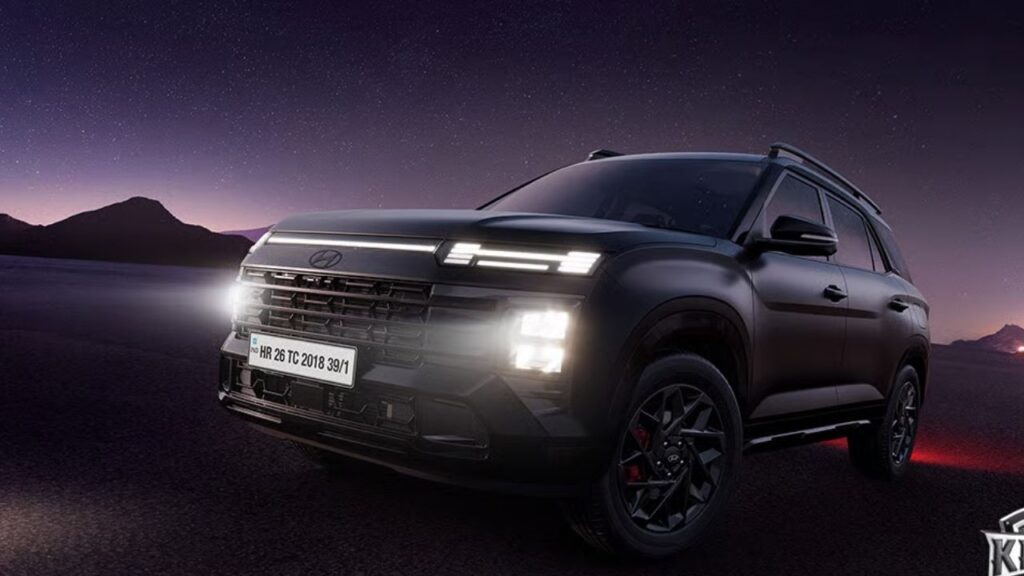
Hyundai Exter Facelift: Smarter Looks, Bigger Tech, Same City-Friendly Charm

Published Jan 31, 2026, 8:26 AM
Last Updated Apr 8, 2026, 7:20 AM

Hyundai Exter facelift

Hyundai Exter Facelift refresh is a smart play with no radical redesign, just some sharper styling, a tech-loaded cabin, plus practical upgrades that really matter. It stays true to being small, affordable, and ready for the city, while quietly levelling up to take on rivals like Punch and Fronx. 

Exterior Refresh: Subtle but Sharp

There’s no need to wait for car overhaul—Hyundai is playing it relatively safe and just cleaning up its looks. Spy shots reveal new alloy wheels as the first element catching the eye, together with a sportier stance. The front grille could be a bolder mesh style, the tail lights could be sharpened brighter with smoked accents, a redesigned rear spoiler brings that little bit extra for highway runs.

The full reveal is obscured by camouflage, but rumors point towards chunkier wheel arch cladding and redesigned side sills for a rougher look, inspired by the Venue’s rugged charm. 

Colors Options? New choices, such as a deeper Abyss Black or starlight Titan Grey, may be included in the range. Measuring less than 4 meters in length (to be exact, 3.8 m long), it’s compact and cute enough to be rested in the city, while vowing a firm stance on rough roads. 

Read More:-  Creta vs Seltos: The Battle of Korean Siblings That’s Tearing Car Buyers Apart

Interior Upgrades: Space and Smarts

This is the brightest point of the facelift – Hyundai is addressing real-world complaints. Cabin space increases up a notch, with whispers of some clever packaging to provide more rear legroom and a driver armrest for those long drives to Delhi or Agra. Split folding rear seats (60:40 format) also mean easier cargo hauls for weekend getaways. 

Tech also jumps forward in Hyundai Exter facelift. Imagine a giant 12.9-inch touchscreen powered by Android Auto OS (AAOS) — Hyundai’s first-wide market offering through which you can access third-party apps like maps or music without any hiccups. 

Placed alongside a 9.9-inch digital driver’s display, it is a cockpit upgrade that feels premium without the Venue price tag. Voice-enabled sunroof is also given and Ventilated seats? Possibly in top trims. Add Alexa integration, wireless charging, and a dual-camera dashcam and it’s a gadget lover’s dream. 

Comfort features such as a cooled glove box, plenty of USB ports and ambient lighting make things cosy. Considering the dimensions (under 4 meters) and the price (starting about ₹6-11 lakh), the interior feels well above its league for a sub-4-meter SUV. 

Powertrain

It offers 1.2-litre petrol engine to generate 82 bhp and 113.8 Nm of torque. With a slick 5-speed manual or an AMT on the flipside, it produces lively city dynamics and a claimed 19–20 kmpl fuel efficiency, gentle on your pocket and perfect for daily rides. 

Powertrain

Hyundai Exter facelift offers 68 bhp/95.2 Nm twin-jet unit with 5-speed manual comes back, and CNG-AMT tandem could make an appearance to take on competitors such as the Punch. No turbo or hybrid, yet, but Hyundai’s idle start-stop and battery saver are making this one clean. ARAI claims hold strong, which is a good thing considering the fuel prices in India. 

Safety Suite: Leveling Up

Safety is not a second thought. It retains the existing Exter’s 5-star Global NCAP rating with the addition of six airbags, ESC, hill assist and TPMS. Facelift Eyes adds ADAS goodies in the form of forward collision warning, lane keep assist, adaptive cruise, and blind spot alerts in top variants is rare for this price point.

Driving Experiencing on the Road

From the test mules, the Hyundai Exter facelift is expected to drive like the original – light steering for on U-turns, good high speed stability and suspension that absorbs bumps without feeling too soft. That extra cabin space? It’ll make a difference on family outings, cramming five with bags in no strain.

Driving Experiencing on the Road

Idle in mixed traffic 16-18 kmpl petrol, on CNG is good. It’s not a rocket, but overtakes feel confident, and the AMT eases the stop-go misery. 

Pricing Strategy for Hyundai Exter facelift

Expected to be priced around ₹6.5 — 11.5 lakh (ex-showroom) for Hyundai Exter facelift, the will be positioned below the facelifted Venue and bring in handsome volumes by stealing sales from Tata Punch, Maruti Brezza, and Mahindra XUV3OO. Pro Pack variants with extras such as dashcams sweeten the deal. 

Conclusion

With updated styling, a surprisingly premium cabin, robust safety features and familiar running gear, the Hyundai Exter facelift seems like a comprehensive package rather than a cursory update. If Hyundai prices it right, this sub-4-meter SUV has all the makings of the new value king of its segment. 

0

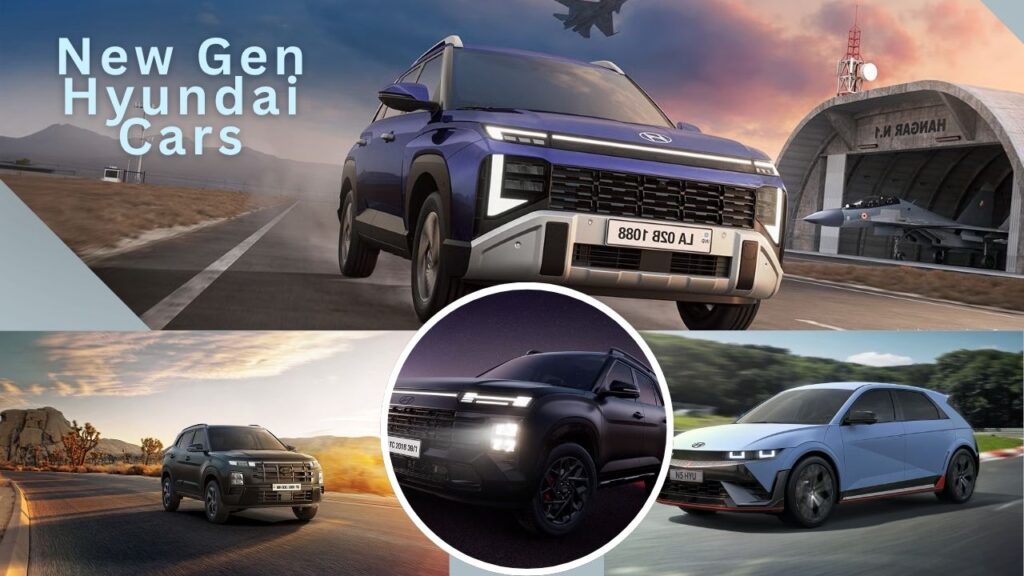
New Gen Hyundai Cars: Latest Models, Features, and Innovations in 2025

New Gen Hyundai Cars 2025

Hyundai enters 2025 with an expanded vehicle lineup. It continues their vision of smarter, safer, and more connected travel. From ultracompact SUVs like the Venue and Creta, to high-performance electric Ioniq 5 N, the New Gen Hyundai Cars a unique combination of bold design, innovative technology and energetic driving. Hyundai’s move to next-generation technology such as Level 2 ADAS, BlueLink connectivity, and dual panoramic displays surges forward with the company redefining everyday driving comfort and protection. Whether it’s electrification, luxurious interiors, or state-of-the-art digital interfaces, the exotic vehicles in Hyundai’s 2025 portfolio demonstrate that the future of driving is already here. 

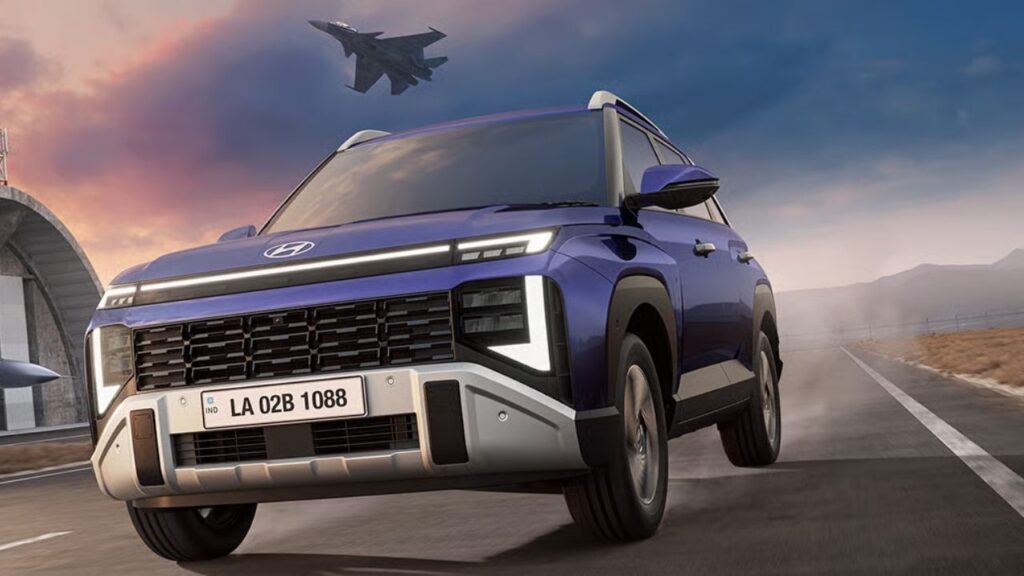
2025 Hyundai Venue

The All-New Venue gets a full makeover from the outside in, and features a taller, wider body with a more commanding presence on the road. The quad-beam LED headlamps and connected LED tail-lamps give the vehicle a futuristic look. The cabin also features segment-first dual 12.3-inch curved panoramic displays for infotainment and digital cluster, both are capable of Over-The-Air (OTA) updates. 

2025 Hyundai Venue

Image credit: Hyundai

The biggest improvement is the adoption of Level 2 ADAS with 16 functions - a big jump up from the old Level 1 system. This list includes, Forward Collision-Avoidance Assist, Smart Cruise Control with Stop and Go function, Lane Keep Assist, Driver Attention Warning and Blind Spot View Monitor.The car is equipped with six airbags and 71% high-strength steel was used in its body for top-class crash protection standard. 

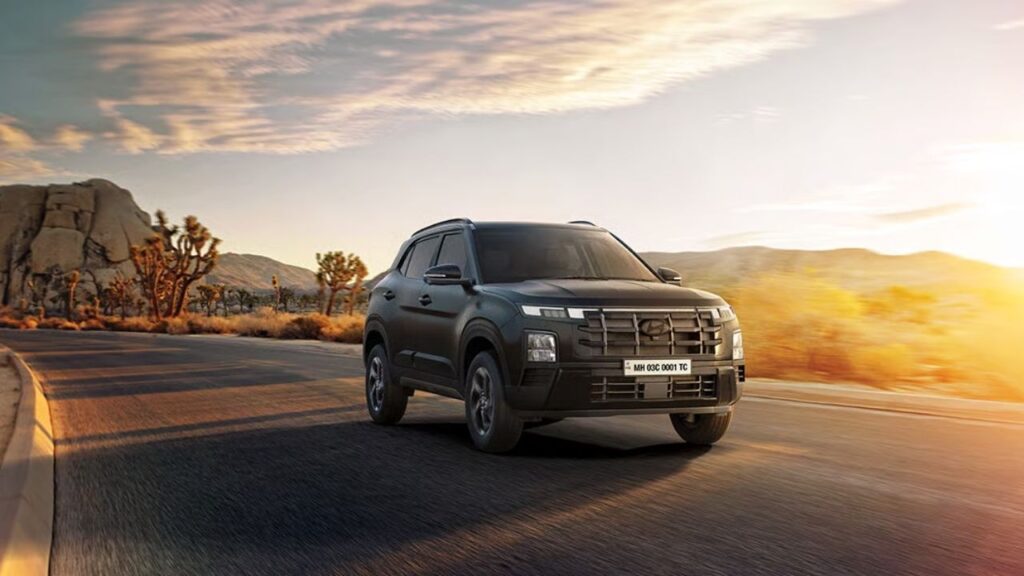
2025 Hyundai Creta

The Creta continues to surprise, now boasting a restyled exterior with revamped front grille and bumper, new hood design, sleek new headlights and new tail-light design along with a redesigned rear bumper. Owing to numerous powertrain options—NA Petrol (115 PS/144 Nm), Diesel (116 PS/250 Nm), and Turbo Petrol (160 PS/253 Nm)—the Creta caters to a wide range of driving preferences. 

2025 Hyundai Creta

Image credit: Hyundai

The inside boasts two 10.25-inch displays along with Level 2 ADAS with full suite of SmartSense features, 360-degree camera, panoramic sunroof, dual zone climate control and ventilated seats. The Creta gives also multiple drive modes (Snow, Mud, Sand) for different terrain, which makes it really versatile. 

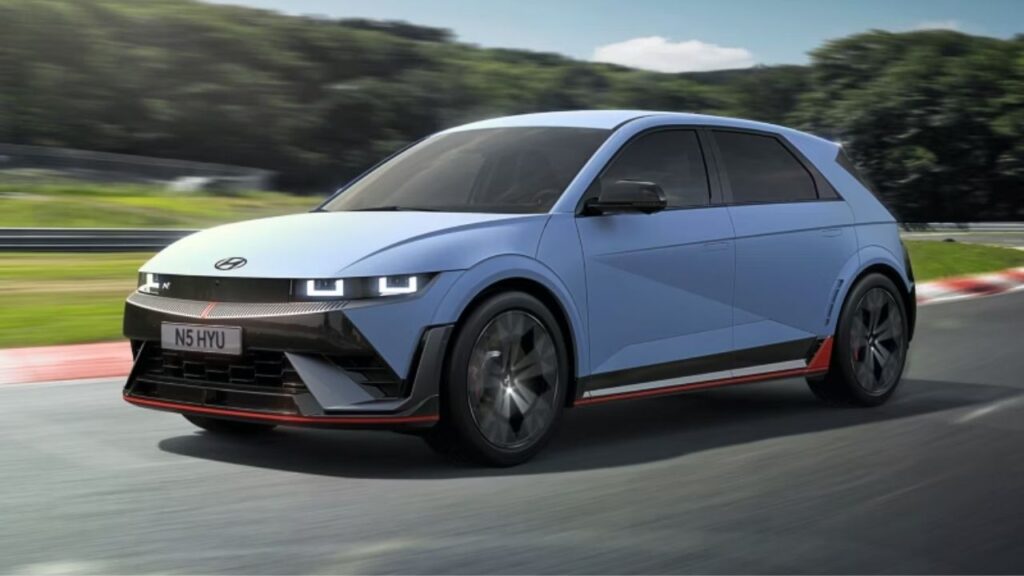
2025 Hyundai Ioniq 5 N

This fast electric SUV redefines what is possible for an EV. With dual-motor all-wheel drive, it produces 601 horsepower as standard, and power can be temporarily boosted to 641 horsepower with the “N Grin Boost” feature. The acceleration is exhilarating — 0-60 mph in about 3.25 seconds with Launch Control activated. 

2025 Hyundai Ioniq 5 N

Image credit: Hyundai

The 84 kWh battery delivers a range of up to 356 kilometers, while an ultra-fast 350 kW charging rate enables charging from 10 to 80% in only 18 minutes. Ioniq 5 N has N RoadSense – a system that leverages up-to-the second data to adjust performance parameters to current road conditions, and Highway Driving Assist 2.0 for semi-autonomous highway driving. 

2025 Hyundai Alcazar

This 6/7 seater executive SUV is powered by a 1493cc diesel engine that churns out 114.4 bhp at 4000 rpm along with 250 Nm of peak torque. It runs smooth with a 6 speed automatic transmission. The interior offers dual 10.25-inch displays, Level 2 ADAS, 8-speaker Bose sound system, panoramic sunroof and second-row seats that are ventilated. 

2025 Hyundai Alcazar

Image credit: Hyundai

The Alcazar is equipped with entire safety features like 360-degree camera, Electronic Stability Control, Hill Descent Control and a sophisticated ADAS suite that includes forward collision warning, blind spot assistance, and rear cross-traffic alerts. 

New High-End Features Introduced In Latest Hyundai Cars

Level 2 Advanced Driver Assistance Systems 

Level 2 ADAS is a fundamental move from alerting toward actively intervening. The Forward Collision-Avoidance Assist utilizes cameras and radar to identify pedestrians, cyclists and vehicles and applies the brakes automatically if the driver does not respond in a timely manner. Lane Keep Assist nudges the car back into its lane while Adaptive Cruise Control with Stop-and-Go deals with traffic effortlessly. The Blind Spot View Monitor shows live video images of blind spots on the instrument cluster. 

BlueLink Connected Car Technology

With 60+ connected features, Hyundai’s AI-powered connected car platform now covers over 6.75 lakh vehicles in India. The features of remote engine start/stop, climate control, door lock/unlock and real-time vehicle tracking through the mobile app. An in-car payment solution integrated for electric vehicle owners to pay for charging services at ~1,500 stations across India, with more than 10,000 charging points available shown on the infotainment screen. 

Voice-based controls powered by NLU enable drivers to speak naturally, without the need to utter specific commands.Interactive Voice Recognition (IVR) recognizes the user’s voice and allows the user to receive their own information such as weather, time and navigation. 

Premium Interior Features

The 12.3-inch dual curved displays demonstrate Hyundai’s dedication to the design of the premium cabin. Powered by NVIDIA, the connected car navigation system delivers traffic in real time and offers a great-integrated experience. Amenities such as ventilated front seats with cooling technology, power driver seat, cooled gloveboxes, rear AC vents and sunroofs controlled by voice add to the comfort. 

Read More:-  Upcoming Electric SUV 7 Seater in India 2025 – Best Family EVs to Watch

Latest Innovations and Design Elements

Structural Engineering

The 2025 Venue is based on a pioneering super-strong body structure, with the use of 71% high strength steel, hot-stamping, ultra high strength steel and advanced high strength steel. This means the car is designed to protect you better in the event of a crash, whether it is a front or side impact, with a strengthened chassis that is remarkably rugged. 

Global Technology Integration

The new Hyundai ELEXIO SUV for the Chinese market gives a glimpse of the brand’s future. It sports a 27-inch ultra slim 4K wide screen display driven by Qualcomm 8295 chip, futuristic Cyber Eye heads-up display with 30,000:1 contrast ratio, and a 720° armored body structure with 77.5% high- strength steel content and nine-airbag system.

Powertrain Options

The 2025 model lineup has a range of powertrains to suit your needs. There are two engine options for the Tucson, a 2.5-liter four-cylinder (187 hp) or 1.6-liter turbo hybrid (up to 38 MPG). The Kona comes with two four-cylinder engines, both offering good fuel economy: up to 35 MPG on the highway. The Elantra is available in several trim levels with the following powertrains: 2.0-liter naturally aspirated (147 hp), 1.6-liter turbocharged N-Line (201 hp), Hybrid version and performance-based Elantra N (276 hp). The Sonata has a 2.5-liter (191 hp) standard engine, hybrid versions (190 hp), and high-performance N-Line turbo version (290 hp). 

Conclusion

As 2025 approaches, Hyundai is one of the most progressive carmakers that is bringing the concepts of luxury, technology, and sustainability closer together. With cars like the Venue, Creta, Alcazar, and Ioniq 5 N, the brand isn’t just refreshing models it’s redefining what drivers can expect from today’s vehicles. The combination of ADAS, state-of-the-art connectivity and higher-level structural design reflects Hyundai’s philosophical approach to keep challenging the safety and innovative aspects of future vehicles.Flying through these new-generation models, it’s obvious that Hyundai’s vision for intelligent mobility is not just a promise, it’s a palpable force driving the next era of automobiles.