0

New Tata Safari EV Triple Screen Dashboard Spied – Launch Soon

Published Sep 22, 2026, 9:58 AM
Last Updated Sep 26, 2026, 8:43 AM

Tata Safari EV

The new Tata Safari EV soon enters the market with three rows and three screens. Since Tata always comes with specific functionality, this time Safari makes an exceptional presence in a seven-seat family SUV segment. Tata hasn’t confirmed the dashboard, the launch date or the price. The outlet speculated that the Safari EV could end up better equipped than the Harrier EV.

What the Spy Shots Show About the Triple Screen Dashboard

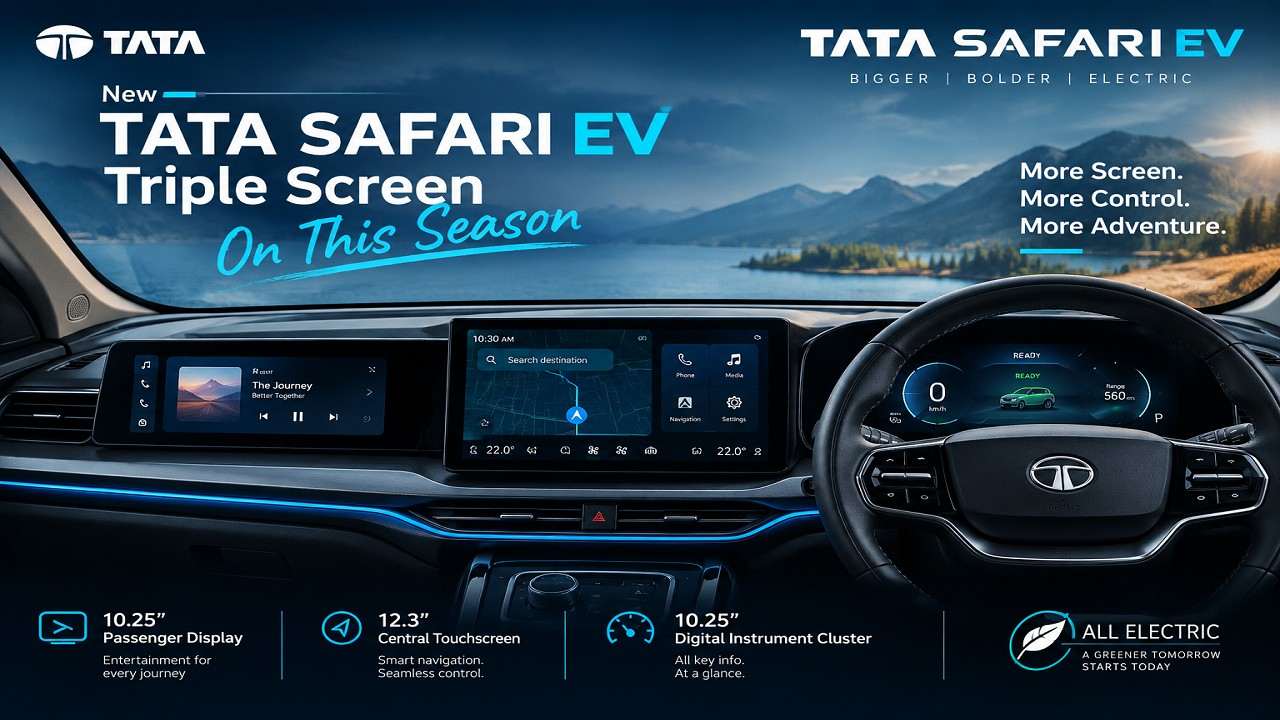
Photos credited to Rushlane that show a Tata Safari test mule with a triple-screen layout in the cabin. Nobody at Tata has said which Safari that is. The mule could just as easily preview an update to the petrol and diesel Safari, which has no such setup today. Only the Sierra and Sierra EV carry three screens in Tata’s line-up.

If Tata reuses the Sierra EV hardware, expect a 10.25-inch driver display, a 12.3-inch central touchscreen and a 12.3-inch passenger screen. The last one is the party piece. The co-driver can stream shows or play games, using a phone as a controller or a paired Bluetooth gamepad. It would also give the Safari something the Harrier, which stops at two displays, doesn’t have — a feature that feels fitting for Tata’s flagship SUV. 

The Safari EV spotted with no tailpipe, a side step that the petrol and diesel Safari don’t offer, and the independent multi-link rear suspension borrowed from the Harrier EV. It is an ICE-to-EV conversion on Tata’s Acti.ev+ platform. Software should follow the Harrier EV too. Along with a 540-degree camera, auto park assist, and vehicle-to-load charging are all expected.

BMW i5 LWB On Road Price In Lower Than What Buyers Expected 

New Tata Safari EV Launch Date and Price

The official launch date for the new Tata Safari EV is yet to be announced. It is expected to arrive in a festive-season 2026 so people will pick the new model at the time of diwali at a discounted price. 

Prices of Safari EV are expected around Harrier EV price which runs ₹21.79–30.54 lakh as of September 2026. Now the Safari EV is positioned above it so the starting price could be around ₹22.5 lakh ex-showroom, which can also raise up to ₹26—₹32 lakh.

A ₹22.5 lakh start would leave the Safari EV under ₹1 lakh above the Harrier EV’s base price. That’s thin for a longer three-row flagship, so read ₹22.5 lakh as a floor, not a forecast.

The Harrier EV as Blueprint of Battery, Range and Drivetrain

Expect the Safari EV to carry over the Harrier EV’s 65kWh and 75kWh batteries. On the Harrier EV, the single-motor rear-drive versions make 235bhp, while the 75kWh dual-motor version makes 390bhp and 504Nm. It is unconfirmed on AWD output, so check Tata’s own launch specs sheet when it arrives. 

MIDC-certified range on the Harrier EV is 538km for the 65kWh RWD, 622km for the 75kWh AWD and 627km for the 75kWh RWD. The larger, heavier Safari EV is likely to land slightly lower. Harrier EV’s real-world range is 400–500km, which is the more honest planning figure.

The bigger question is how Tata has packaged everything. The battery placement could affect under-thigh support and seating posture in the third row, so buyers shouldn’t expect the same level of comfort back there. 

Safety is another unknown for now. The Harrier EV scored five stars in Bharat NCAP, including full marks for adult occupant protection, but there’s no crash-test result for the Safari EV yet. 

JLR Landing A Land Rover Defender Pickup Truck In Us

New Tata Safari EV vs Mahindra XEV 9S

The XEV 9S is the direct rival, and it’s already on sale. It launched at an introductory ₹19.95 lakh with bookings opening in January 2026. Prices now run ₹20.65–30.90 lakh as of September 2026. 

Battery options are 59kWh, 70kWh and 79kWh, with claimed ranges of 521km, 600km and 679km. The 79kWh version makes 282bhp, and every version is rear-wheel drive.

New Tata Safari EV (expected) Mahindra XEV 9S
Price (ex-showroom) Unconfirmed; ~₹22.5 lakh floor estimate ₹20.65–30.90 lakh
Battery 65 / 75kWh 59 / 70 / 79kWh
Claimed range Slightly below Harrier EV’s 538–627km MIDC 521 / 600 / 679km
Drivetrain RWD and AWD RWD only
Triple screens Spied, unconfirmed Three 12.3-inch screens
Availability Festive season 2026, unconfirmed On sale now

The XEV 9S has real compromises. Its third row suits children or shorter adults, and the boot is very small with all three rows in use. The real-world mileage delivered at 510km, about 75% of the claim. Mahindra also went after the entry price: from 28 August the XEV 9S starts at ₹12.65 lakh ex-showroom under a battery-subscription scheme, plus a battery rental fee.

The triple screen, then, is a catch-up move. Mahindra’s XEV 9S offers three screens from the base variant. Tata’s better card is the Harrier EV’s dual-motor hardware. If the Safari EV inherits it, it would be the only three-row electric SUV here with all-wheel drive.

What Maruti Suzuki Three-Row SUVs Offers in India

The e Vitara is the only Maruti Suzuki EV which is on sale in India, and it’s a five-seater. It costs ₹16.19–20.21 lakh as of September 2026. It comes with 49kWh and 61kWh batteries, ARAI-rated at 440km and 543km, and earned five stars from Bharat NCAP. A Maruti EV buyer who needs seven seats has nothing to buy, and we found no confirmed launch date for a three-row Maruti EV.

So the cross-shopping happens with Maruti’s petrol and hybrid seven-seaters, which sit at very different price points:

  • Ertiga: ₹8.9–13.04 lakh. Claimed mileage is 20.3–20.51kmpl. The third row is cramped for taller passengers and the boot shrinks with all rows up.
  • XL6: From ₹11.62 lakh. It is a strict six-seater with second-row captain seats.
  • Invicto: ₹24.97–28.61 lakh, a hybrid available in 7- and 8-seat layouts. It’s a rebadged Toyota Innova Hycross.

The Ertiga comparison is a money question. Against a ₹22.5 lakh Safari EV, the gap is about ₹13.6 lakh before insurance and registration. Whether the EV recovers depends on your daily distance and your electricity tariff, and few families drive enough to close a gap that size. The Invicto is the real cross-shop. It lands squarely inside the Safari EV’s likely price band and asks you to plug in nothing.

Conclusion

If you want three rows and a plug before the festive season, the XEV 9S is the only one you can actually buy today, and its subscription pricing lowers the entry cost if you accept a per-kilometre battery fee. 

If all-wheel drive matters to you, or you’re already committed to Tata, waiting is reasonable. The Harrier EV’s dual-motor setup suggests Tata can offer AWD here, but no Safari EV variant list exists yet.

If your ceiling is around ₹15 lakh, none of this applies. The Ertiga and XL6 fit your budget and the Safari EV won’t. If you’re spending ₹25 lakh and don’t want an EV, the Invicto is your comparison, not the Safari.

One thing the triple screen should not decide: the Mahindra already has one, so it doesn’t separate the two cars. What separates them is price, the third row and range in the real world, and Tata has published none of those.

So there is not a fixed answer on which car you should buy or waiting for the new Tata Safari EV is the last option. List out your priorities and then decide.

The new Tata Safari EV brings a triple screen dashboard on a Harrier EV’s dual-motor setup that marks it as Tata’s SUV flagship model. But any specifications and prices are not listed by Tata, the inside reports and spied photo is clearer to know what’s coming into the market under the most trusted brand tag.

Alok Kabir

Alok is an experienced SEO Specialist skilled in blogging and SEO-friendly content creation. He also specializes in Content Optimization and Technical SEO, including website optimization, crawlability, indexing, site speed, and on-page improvements to enhance search rankings and online visibility.

Leave a Reply

Your email address will not be published. Required fields are marked *

0

Khan Sir Car Collection That Will Blow Your Mind

Published Aug 27, 2025, 7:58 AM
Last Updated Aug 27, 2025, 8:00 AM

Khan Sir Car Collection

Some people admire others with their choices, Khan Sir also surprised his students and fans with his down-to-earth choice. Khan Sir Car Collection is not parked million-dollar luxurious cars, his garage reflects his mix of practicality, comfort, and style that matches his dynamic persona. He takes many student’s hearts with his teaching style and knowledge but Khan Sir’s garage is taking their brain too by admiring them for the simple but practical taste in cars. 


Taking a look at Khan Sir’s exclusive taste in cars will blow your mind as it reveals his lifestyle choices. From the strong and safe Tata Harrier to stylish and big Crysta, each car reflects his automotive engineering choices which leaves you impressed. 

Tata Harrier – The Premium Choice


Tata Motor isn’t introducing just a simple SUV but it is a remarkable segment that blends with muscular design, modern technology, and incredible high safety functions. Its strong body is proven for preventing passengers’ life risk during crashes. 

Exterior and Interior Design

Its exterior design including aggressive front grille, R17 alloy wheels and dual color option enhances its visual on the road. While its interior gives a premium feel with wooden inserts, infotainment system, and generous cabin space making every journey luxurious.

Tata Harrier

Image credit: cars.tatamotors


Features of Tata Harrier

The Tata Harrier is Khan sir’s favorite as it represents his choice of investing in an Indian automotive company. The Harrier offers a 1956cc diesel engine that delivers the speed of 167 bhp with 350 Nm torque, giving incredible experience in both city and long trips.


Features  Specification
Engine 2.0L Diesel
Transmission 6-speed manual & automatic
Safety Rating 5-star 
Mileage 16.8 kmpl (Approx.)
Boot Space 445L


The Tata Harrier SUV will provide up to 5 passengers to sit comfortably in its spacious cabin. This SUV is offering acceleration speed from 1-100 km/h in 10.8 seconds. Khan sir’s SUV is worth around Rs. 24 Lakh. 

Mahindra Scorpio – The People’s Favorite

The Mahindra Scorpio shows Khan sir’s special connection to common people as “he refuses 107 crore offer instead he chose to serve his mission for educating unprivileged students.” This SUV received huge popularity in north India due to its reliability and robust performance. 

Bold and Muscular Design

Whether you are going on city streets or rough off-road trails, the Scorpio will thrive on with ease. Its bold design stood out for commanding road presence. Dual-tone bumpers and skid plates for a rugged look and tall-upright body style and high ground clearance delivers an impressive look of an SUV that makes it a head-turner everywhere it goes. 

Mahindra Scorpio SUV from Khan Sir Car Collection with bold design and strong performance

Image credit: auto.mahindra


Features of Scorpio

Mahindra Scorpio is delivering outstanding performance without compromising comfort and convenience with its strong low-end torque and refined gearshifts. Interior comfort does not just end with driving features but it offers full premium experience with spacious cabin space, automatic climate control, navigation support in high-end infotainment systems. 


Features Specification
Engine 2184cc diesel
Transmission 6-speed manual & automatic
Seating capacity 7-seater
Mileage Around 14.4 kmpl
ADAS Cruise control, emergency brakes, warning system for lane departure, and forward collision


This car offers a 2184cc classic engine that delivers 130 bhp of power with 300 Nm Torque. It supports 60 litres fuel capacity and 7-seater leather seats for a comfortable ride, valued at Rs. 13.77 Lakh. This strong build and stylish design is making it perfect for professional use, reflecting Khan Sir’s practical approach to life. Scorpio has strengthened its ability on both rough and steep areas with its high ground clearance and robust suspension.


Toyota Innova Crysta – The Reliable Workhorse

Khan Sir travels on Toyota Innova Crysta for his daily visits to coaching centers. The premium quality offers spacious interior blends with comfortable seats, exceptional features, and proven reliability. The Crysta is very reliable for long tours with family or friends.

Elegant and Premium Design

It is perfect for family due to its comfort, reliability and practicality, the Crysta has earned its reputation with its proven durability with stylish design and premium features. Its aerodynamic body lines and 17-inch alloy wheels and wraparound rear lamps, making a sophisticated road presence.

Toyota Innova Crysta from Khan Sir Car Collection with premium comfort and reliability

Image credit: auto.mahindra

Features of Toyota Innova Crysta

Crysta’s interior is delivering comfort and reliability to its owner with high-quality material, climate control functions, and roof-mounted AC vents. Safety features are strong with 7 airbags, ABS with EBD and stability at fast speed making it reliable for highway trips.


Features Specification
Engine 2393cc diesel
Power 147 bhp
Transmission 5-speed manual
Seating Capacity 7 seater
Mileage 16 kmpl
Fuel Capacity 65 litres


This car is designed with advanced safety features including Vehicle Stability Control, Electronic Brake, 7 Airbags, ABS with EBD, Camera view, for long-distance trips. Comfortable seats and spacious cabin with multiple storage options, making it an ideal car for families. Khan Sir’s Toyota Innova Crysta valued at Rs. 19 lakhs.

Conclusion

Khan Sir Car Collection is inspiring for many students who have been following him. Life of Khan Sir is just as simple as it seems in his classes. His choices of cars with simplicity and practicality become more impressive, these cars are not just simple but they are reliable for personal and professional use. 

0

Zero Depreciation Car Insurance: Benefits, Coverage & Cost

Published Jul 28, 2026, 12:26 PM
Last Updated Jul 28, 2026, 12:28 PM

Zero Depreciation Car Insurance

You back into a pole at 5 kmph. Bumper’s cracked, headlight’s gone. The garage quotes ₹50,000. Then your insurer settles the claim and pays out closer to ₹37,000. The other ₹13,000? Depreciation. So you must understand where Zero Depreciation Car Insurance will help. Your bumper and headlight are made of plastic and rubber, and every standard comprehensive policy in India applies a flat 50% cut to those parts, no matter how new the car is.

This is the exact gap that Zero Depreciation Car Insurance is built to close. It’s an add-on, not a separate policy that sits on top of your comprehensive cover and tells the insurer: don’t deduct depreciation on the parts you’re replacing, just pay the real repair bill, minus the deductible. For a car that’s still within its first few years, that difference in payout can run into thousands of rupees on a single claim.

Why Depreciation Reduces Your Insurance Claim 

The Insurance Regulatory and Development Authority of India (IRDAI) sets a standard age-based depreciation schedule that every insurer follows for a regular comprehensive claim. It looks like this:

Age of vehicle Depreciation on parts
Up to 6 months Nil
6 months – 1 year 5%
1 – 2 years 10%
2 – 3 years 15%
3 – 4 years 25%
4 – 5 years 35%
5 – 10 years 40%
Above 10 years 50%

On top of that age-based table, a few part categories get a fixed rate regardless of how old the car is: rubber, nylon and plastic parts, tyres, tubes and batteries are depreciated at a flat 50%, fibreglass components at 30%, and glass at 0% (glass is the one thing you always get paid for in full). 

Zero Depreciation Car Insurance

Bumpers, dashboards, trims, wiper blades, headlight housings — the parts that actually get damaged in a fender-bender mostly fall into that 50% bucket. That’s why even a fairly minor accident on a fairly new car can leave you covering a surprising chunk of the bill yourself.

Zero Depreciation Car Insurance cover essentially waives that deduction, so the claim tracks the garage invoice far more closely.

Coverage and Limits of Zero Depreciation Car Insurance 

It’s worth being precise here, because “zero depreciation car insurance” doesn’t mean zero deductions of any kind.

  • Metal, plastic, rubber and fibreglass parts replaced during an accident repair are paid in full (subject to your deductible), instead of at the depreciated rate.
  • Tyres and tubes are a common exception: even with zero depreciation, insurers typically still apply the standard 50% cut on tyres and tubes unless you’ve separately added a “Tyre Protect” cover. It’s an easy detail to miss when you’re comparing quotes.
  • Mechanical or electrical breakdown, and damage from regular wear and tear rather than an accident, still isn’t covered — Zero Depreciation Car Insurance only changes how accidental-damage claims are calculated, not what counts as a valid claim.
  • Most insurers cap how many zero-dep claims you can make in a policy year — some restrict it to two, while a handful of newer-generation plans from insurers like ICICI Lombard and Tata AIG are now marketing unlimited zero-dep claims. This varies enough between insurers and even between plans from the same insurer that it’s genuinely worth reading the policy wording rather than assuming.

Read More:-  How to Save Money on Car Insurance?

How Zero Depreciation Insurance Reduces Repair Costs

Go back to that ₹50,000 repair bill. Without Zero Depreciation Car Insurance, a 2-year-old car loses ₹13,000 to depreciation on that claim alone (50% off the plastic/rubber components, 10% off everything else). With Zero Depreciation Car Insurance, most of that comes back to you. Multiply that across the accidental fender-benders, chipped bumpers and cracked tail-lamps most cars pick up in city driving, and the add-on pays for itself fairly quickly on a newer vehicle.

Zero Depreciation Car Insurance

There’s a second, quieter benefit too: because you’re not fighting over depreciated part values, claims tend to settle with less back-and-forth with the surveyor. And if you eventually sell the car, having a clean repair history with OEM-grade parts (rather than a patchwork of cost-cut replacements) tends to help at resale.

Zero Depreciation Car Insurance Cost

Zero dep isn’t free — it adds roughly 10-25% to your own-damage premium, since it’s calculated as a percentage loading rather than a flat fee. For a 2025 Tata Nexon insured at an IDV of around ₹12 lakh, a standard comprehensive premium of about ₹7,800 rose to roughly ₹9,500 with Zero Depreciation Car Insurance added — an extra ₹1,700 for the year. 

That’s one illustrative example rather than a universal figure; your actual loading will depend on the car’s make, model, city (Delhi and Mumbai typically load higher than smaller towns), and the insurer’s own pricing, so treat it as a ballpark and get an actual quote before renewal.

Eligibility is the other cost-adjacent factor: most insurers restrict Zero Depreciation Car Insurance to vehicles up to 5 years old, though the exact cutoff varies by company — some extend it a year or two further for an additional loading.

Who Should Consider Zero Depreciation Cover? 

For a new car, or one still in its first three to five years, yes — this is close to a default recommendation. That window is when a car both depreciates fastest and gets into the most fender-benders, so the add-on is doing real work every time you make a claim. 

It’s an easy call for anyone on a car loan too, since lenders often prefer the vehicle stays fully protected until the EMIs are cleared, and for owners of premium or luxury cars, where part costs run high enough that even a 15-20% depreciation cut is a meaningful sum.

Zero Depreciation Car Insurance

Past the five-to-seven-year mark, the math flips. The car’s IDV has dropped enough that claim sizes shrink, the depreciation percentage is already near its ceiling anyway, and the extra premium starts looking like money spent on a cover you’re unlikely to use fully. 

At that stage, most owners are better off putting that premium toward a straightforward comprehensive policy and, if anything, an engine-protector or return-to-invoice add-on instead.

A Quick Checklist Before You Buy 

Don’t just add Zero Depreciation Car Insurance because the salesperson recommends it — actually check three things on the quote: how many zero-dep claims the policy allows per year, whether tyres and tubes are excluded from the waiver, and how much your own-damage premium actually rises with it added versus without. 

A ₹1,500-2,000 annual increase on a 2-year-old car is an easy yes. The same increase on a 6-year-old hatchback is worth doing the arithmetic on first.

Read More:- How to Renewal Car Insurance: Step-by-Step Guide (2026)

Conclusion

Zero Depreciation Car Insurance is among the few addons that actually come handy at the time of making a claim. For cars that are new or less than five years old, the higher premium often makes sense because it can greatly reduce your repair costs.  

Coverage limits, claim caps and exclusions differ between insurers, so it’s worth comparing the policy wording rather than assuming all zero-dep plans are created equal in terms of benefits. A couple of minutes checking the small print today could save you thousands on your next repair bill. 


0

Inside Mark Zuckerberg’s Car Collection: Luxury, Style & Surprises

Published Aug 23, 2025, 11:21 AM
Last Updated Aug 25, 2025, 6:24 AM

Mark Zuckerberg car collection featuring Honda Fit, Tesla Model S, Pagani Huayra and more

Flashy supercars may be the style of many billionaires but Mark Zuckerberg’s Car Collection is not just about luxury, it reflects his personality. His garage is telling a simple but intriguing story of the man who also prefers eco-friendly cars. But also sharing his modest interest in sedans and some other luxury cars. So, let’s explore these car’s features that offer strong performance on the road.

1. Honda Fit (Jazz) 

Honda Fit (Jazz) compact hatchback owned by Mark Zuckerberg

Image Courtesy: automobiles.honda

Honda Fit is also known as Jazz in some countries, this car is sharing a classic vibe of Zuckerberg no-show lifestyle rather than seeking attention on the road. The incredibly powerful 1.5L engine offers a powerful performance but his choice is unexpected. Priced around $20,000, this compact hatchback shows that he prefers practicality over glamour. He values comfort and efficiency with spacious interior, reliable maintenance and comfortable daily city commute. 

Features Specification
Engine 1.2L or 1.5L petrol/hybrid
Fuel Efficiency 16–18.2 km/l petrol, 22–27 km/l hybrid
Transmission Manual (5-speed), CVT Automatic
Seating Capacity 5 seats
Boot Space Fit: 470L, Jazz: 354L
Price $17,945

2. Volkswagen Golf GTI

Volkswagen Golf GTI hatchback from Mark Zuckerberg’s car collection

Image courtesy: vw.com

This one has special value around the globe because of Volkswagen Golf GTI hidden sporty performance under the simple look. While it represents Zuckerberg’s calm but powerful personality. This unique model will deliver its high performance with 2.0L turbocharger engine when needed. Classic hatchback design with modernized features is ready for both city and highway rides. Speed up to 240 horsepower can give a smoother ride without an overly flashy look.

Features Specification
Engine 2.0L Turbocharged Petrol, 4-cylinder
Horsepower 261 bhp
Torque 370 Nm
Transmission 7-speed DSG (Automatic)
0-100 km/h speed  5.9 seconds
Boot Space 380L
Price $30,000

3. Acura TSX 

Acura TSX premium sedan owned by Mark Zuckerberg

Image courtesy: acura.com

The Acura TSX is a unique model that combines reliability, comfort and a premium look without going overboard that fits for a perfect match of Zuckerberg’s balanced approach to life. It offers 2.4L i-VTEC powerful engine and smoother rides that’s a good one for handling everyday traffic. With advanced safety features and elegant look, it still focuses on comfort and practicality that represent premium style without screaming wealth.

Features Specification
Engine 2.4L inline-4 engine
Horsepower 201
Transmission 5-speed automatic
Seating Capacity 5 seats
Drivetrain Front-Wheel Drive (FWD)
Price $30,000 

Read more :- Inside the Exclusive Yuvraj Singh Car Collection

4. Infiniti G Sedan

Mark Zuckerberg’s Infiniti G Sedan

Image courtesy: infiniti.com

Zuckerberg parked an Infiniti G Sedan in his garage, this car is a mix of Japanese precision with a luxury touch. It offers powerful horsepower with a 3.7L V6 engine and gives a sporty driving feel. With its long-term reliability and luxurious cabin offer a premium experience. It represents Zuckerberg’s balance between innovation and tradition that mirrors tech with consistency of car. 

Features Specification
Engine 3.7-liter V6 engine
Fuel Efficiency Approx. 8 km/l 
Transmission 7-speed automatic (AMT)
Seating Capacity 4 seats
Boot Space 210 liters
Price $33,000

5. Pagani Huayra

Pagani Huayra Italian hypercar from Mark Zuckerberg’s car collection

Image courtesy: pagani.com/huayra

It’s not a surprise to see this luxury in any billionaire’s garage but Zuckerberg’s list also has a supercar, the Pagani Huayra. The Italian hypercar costs over $1.4 million that is worth its brilliance of engineering. Pagani offers luxurious interior and stylish exterior, but what makes it more attractive is a 6.0L V12 twin-turbo strong engine that gives jaw-dropping acceleration up to 720+ horsepower speed. Zuckerberg’s Pagani represents another personality that appreciates innovation, exclusivity and top-tier craftsmanship.

Features Specification
Engine 6.0L Twin-Turbocharged V12 AMG engine
Fuel Efficiency Approximately 8-10 mpg 
Transmission 7-speed automated manual (AMT)
Horsepower 730 HP
Torque 738 lb-ft
Seating Capacity 2 seats
Price $1.4 Million

6. Tesla Model S

Tesla Model S electric car owned by Mark Zuckerberg

Image courtesy: tesla.com

Zuckerberg’s interest in Tesla Model S shows that he generally supports futuristic technology. This model represents his eco-friendly mindset, with zero emissions. It offers electric powertrain with up to 396 miles of range and it can go from 0 to 60 mph within 3.1 seconds. Its interior is well-equipped with advanced tech, autopilot mode is a remarkable innovation.

Features Specification
Engine Electric motors (3 motor versions in Plaid)
Horsepower 1020 hp 
Torque 1050 lb-ft 
Fuel Efficiency EPA combined 101 MPGe 
Transmission Single-speed automatic (direct drive)
Seating Capacity 5 seats
Boot Space 28 cubic feet
Range 348–410 miles
Price $90,000

Zuckerberg’s Car Collection: More than just cars

His simplicity, practicality and eco-friendliness is matched with every car. Zukhurberg’s interest in selective luxury is also seen but his personality has shown that he prefers engines which serve a purpose beyond showing-off wealth. 

  • His Honda Fit and Volkswagen Golf GTI shows how much he prefers classic automotive rather than luxury.
  •  Acura TSX and Infinity G Sedan shows his selection of practicality blended with comfort over modern premium cars.
  • Tesla Model S highlights his interest in sustainable technology and Pagani Huayra reveals his interest in pure luxury and iconic design.

Final Thoughts 

Mark Zuckerberg’s car collection is not just about speed or price tag but it’s all about ‘values’. His garage is highlighting the different parts of his personality. These cars are just simple in looks but their performance is amazing. They are the winner in smoother rides, he chooses these cars according to his moods – comfort, practicality, and occasionally premium feel.

0

How to Increase Your Car Resale Value Without Overspending on Maintenance

Published Jun 15, 2026, 10:32 AM
Last Updated Nov 2, 2026, 4:53 PM

Increase Your Car Resale Value

Everyone is hoping for a good resale value of their old cars. Looking to buy a new car, you must want to get the best car resale value but most cars depreciate at 10% more each year. So, if you are selling your used car after six years since the day you bought it, get halved of the value. Second-hand car valuation of less popular brands or models get more than half depreciation in a resale price.

Understanding what actually drives used Car Resale Value, helps you increase your car resale value up to Rs. 10000. So, take a look at ways on How to Increase Car Resale Value.

Understanding Car Resale Value 

Here’s the truth: In India, every car loses 15-20% of its value in one year alone which means the loss has already started right after it leaves the showroom. By year three, you’re typically looking at 40–50% depreciation. But there are many ways to maintain car value over time. Same cars but different owners can get resale value based on the condition of a car.

But not every car falls at the same rate if you look closely at this example, you will understand what it means:

For instance, someone in Delhi buys a Maruti Suzuki Swift VXi at ₹7.50 lakh in 2022. After three years he sold it for approximately ₹5.60–5.80 lakh after driving about 12,000 km per year and maintained it time-to-time. gets it serviced at authorized centres, and sells it in 2025. He recovers nearly 77% of his purchase price because the brand holds the resale value around 75–80% in 3 years.

Car Resale Value 

Now compare that to a friend who bought a mid-range European sedan at ₹28 lakh. Same timeline, same condition. By year three, he’s looking at recovering maybe 45–50% — roughly ₹12.60–14 lakh — because luxury cars depreciate faster and have fewer buyers in the second-hand market.

The car you choose to buy is already a resale decision. Everything else is maintenance.

What Actually Determines Resale Value?

  • Brand reputation and service network — More service centres = more buyers willing to take the risk
  • Fuel efficiency — Petrol cars sell more easily in cities; diesel holds better in high-mileage use cases
  • Number of owners — Single-owner cars can fetch ₹50,000–₹1 lakh more than multi-owner equivalents
  • Colour — White, silver, and grey are safe. Bright orange is a personal choice that the resale market won’t thank you for
  • Accident history — Even a minor repair without documentation kills buyer trust
  • Service records — A complete service book from authorized centres is worth real money

How to Increase Car Resale Value: Practical Steps With Examples

These aren’t generic tips on How to Increase Car Resale Value. Each one comes with what it actually does to your price.

1. Service It On Time, Every Time — At Authorized Centres

This is the highest-leverage thing you can do. A complete, stamped service history from authorized dealers signals to any buyer that the car hasn’t been neglected. If you try to skip one or two services then the car will later show up the gap which makes it difficult for you to cover it in less spending. Experienced car buyers can tell the difference immediately.

Example: Two identical 2022 Hyundai Cretas. One has a complete Hyundai-authorised service record. The other was serviced at a local mechanic. The first one sells for ₹1–1.5 lakh more, all else equal.

Car Resale Value

2. Keep Mileage Reasonable

In India, the market generally accepts 10,000–15,000 km per year as normal. If you cross nearly 90,000 km on a 5-year-old car then its resale value will fall immediately. No matter how perfect your car condition is, you’ll face price resistance eventually.

Car Resale Tips: It’s best to plan your resale time according to the odometer, not a year, if you are using your car most of the time and hoping for the best resale value.

3. Avoid Modifications

Spending ₹40,000 to look cool (you may think) adds zero resale value. It often subtracts from it, because the buyer doesn’t know what’s been altered, what’s been drilled, or what original parts were changed. Stock is always safer for resale.

Adding minor accessories which are worth less and easily removable or changed would be fine. Minor accessories like dash cams, seat covers, and floor mats are fine. Structural or cosmetic modifications are a resale liability.

4. Address Dents, Scratches, and Interior Wear Before Selling

Spending ₹3,000–5,000 to polish your car with a new paint to make it shine like a new car can increase 20% of your car’s value. Recovering physical damage or scratches from a car before putting it on resale could recover ₹15,000–25,000 in negotiations. Buyers anchor on visible damage, and they always overestimate repair costs.

Before selling: Fix deep scratches and paint touch-up, clean the interior, replace old mats and covers with new ones, and ensure tech features are working properly. The car’s appearance is the buyer’s first emotional signal — and buyers negotiate hardest when something feels neglected.

5. Clear All Dues and Get the RC in Order

Unpaid challans, hypothecation (loan) not cleared from RC, or an address mismatch on the RC are deal-breakers. Get these sorted before you list the car. RC transfer issues are one of the biggest friction points in used car sales in India — remove that risk and you instantly become a more attractive seller.

Maintain your documents of regular servicing at a verified service center to make a buyer trust you. This is a necessary exercise in all the ways to maintain car value over time.

6. Choose the Right Time to Sell is Best Car Resale Tips

Reselling your car in the festive season (October–December) could get you the best resale value for a maintained and perfectly representable car. If you have followed ways to maintain car value over time then it won’t be so hard. The second-hand car value gets ₹20,000–40,000 less in the off season. So, choose the right month to resale your car. 

Which Car Brands and Models Have Good Resale Value in 2026?

You can get any car resale price at verified tools like Car24 at 3 years from purchase. The value of your old car depends on the car condition, model and how many kilometers it runs. From current market data, here is the estimated Used Car Resale Value of popular car models at 3 years from purchase with authorized service history, and 35,000–40,000 km driven.

Car model Ex-showroom price (November 2026) Resale estimate at 3 years (₹) Value retention Why it holds value
Maruti Suzuki Swift ₹5.84–8.89 lakh ₹4.50–6.70 lakh 75–80% Highest-volume hatchback; cheap parts, widespread service network, constant second-hand demand; base/mid variants sell within a week.
Hyundai Creta ₹11.00 lakh – ₹20.42 lakh ₹9.00–15.00 lakh 70–75% Leading mid-size SUV; frequent updates, wide service network, aspirational demand in Tier 2/3 cities; petrol automatic variant sells fastest.
Toyota Innova Crysta ₹19.99 lakh – ₹26.55 lakh ₹14.00 lakh – ₹21.00 lakh (3–4 yrs) 70–80% Strong commercial (cab/travel) demand keeps prices high even for high-mileage units; Toyota diesel reputation; easy to sell when well maintained.
Toyota Fortuner ₹34.76–50.46 lakh
₹26.00–40.00 lakh 72–78% Status symbol, Toyota reliability, limited supply of well-maintained units; older high-mileage examples still sell at premium.
Mahindra Thar LXT 4WD Diesel ₹16.43 lakh (MT); AT around ₹18 lakh
~₹12.00 lakh – ₹14.00 lakh ~71.8% Cult following, unique positioning, demand outpaces supply for new units; 4WD diesel variant retains exceptionally well.
Maruti Suzuki Baleno ₹5.99–9.99 lakh
₹5.20–7.50 lakh 72–76% Premium hatchback appeal, strong Maruti reliability perception, popular with first-time buyers (large buyer pool).

A Note on Luxury and EV Cars

Luxury cars (BMW, Mercedes, Audi) depreciate fast in India, often 45–55% in three years. The maintenance cost stigma suppresses second-hand demand. EVs are rapidly growing in the market so their resale mostly depends on durability of batteries. The market is still developing its pricing norms with time. If you own a Tata Nexon EV or Punch EV, check battery health certification before listing.

Read More:- Kendrick Lamar Car Collection is Classic Garage With Old & New Luxury Cars

Verified Tools to Check Car Resale Value in India

Don’t guess. Use data. Here are the platforms that give you real market-based estimates of Used Car Resale Value:

Car Resale Value

1. CarDekho Used Car Valuation

  • Enter brand, model, variant, registration year, and kilometres driven
  • Uses real-time market data and pricing trends from thousands of listings
  • No registration required; free to use
  • Best for: Quick estimates on popular models like Swift, Creta, City

2. CarWale AccuPrice

  • Powered by Machine Learning trained on data from over 5 lakh previous car listings
  • Factors in fuel type, transmission, mileage, age, and regional pricing
  • Trusted by over 1 crore users in India
  • Best for: Comparing market price ranges across variants before listing

3. Cars24 Valuation Tool

  • Updated for 2026 with EV battery health metrics included
  • Offers end-to-end selling — if you accept the valuation, inspection and payment can be completed within 24 hours
  • Includes seller protection (Kavach) during RC transfer period
  • Best for: Sellers who want speed and don’t want to deal with individual buyers

4. CarTrade Valuation

  • Uses data from verified buyers and sellers across India
  • Pricing engine updated regularly with live market data
  • Good for cross-checking estimates from other platforms

5. CarBike4u Free Car Valuation

  • Quick 2-minute estimate; no registration needed
  • Useful regional context — accounts for city-wise price variation (Delhi-NCR typically returns 5–8% higher than national average)
  • Best for: Understanding how your city affects your resale price

Pro tip: Run your car through at least two or three of these tools and compare. The range they give you collectively is more useful than any single estimate. If the market values your car at ₹6–7 lakh, that’s your negotiation floor — not your starting price.

Read More :- How Electric Cars Are Changing the Future of Transportation

Conclusion

If you’re reading this before your next purchase — you’re ahead. Choose a model with strong market demand, stick to popular colours, buy the petrol or diesel variant that matches your actual usage, and commit to authorized service from day one.

If you already own the car — stop waiting. The ways to maintain car value over time are not glamorous: service on schedule, fix visible damage, keep documentation clean, and don’t modify what doesn’t need modifying. Most of what destroys resale value is neglect, not damage. And when it’s time to sell, use the tools above to walk in with a number — not a hope.

How to Increase Car Resale Value before selling doesn’t require a checklist of 30 things. It requires consistency across three or four things done over years, not days. That’s both the boring truth and the profitable one.

0

Pre-Approved Car Loan Gains Dealership Discounts on Launch Day

Car Loan

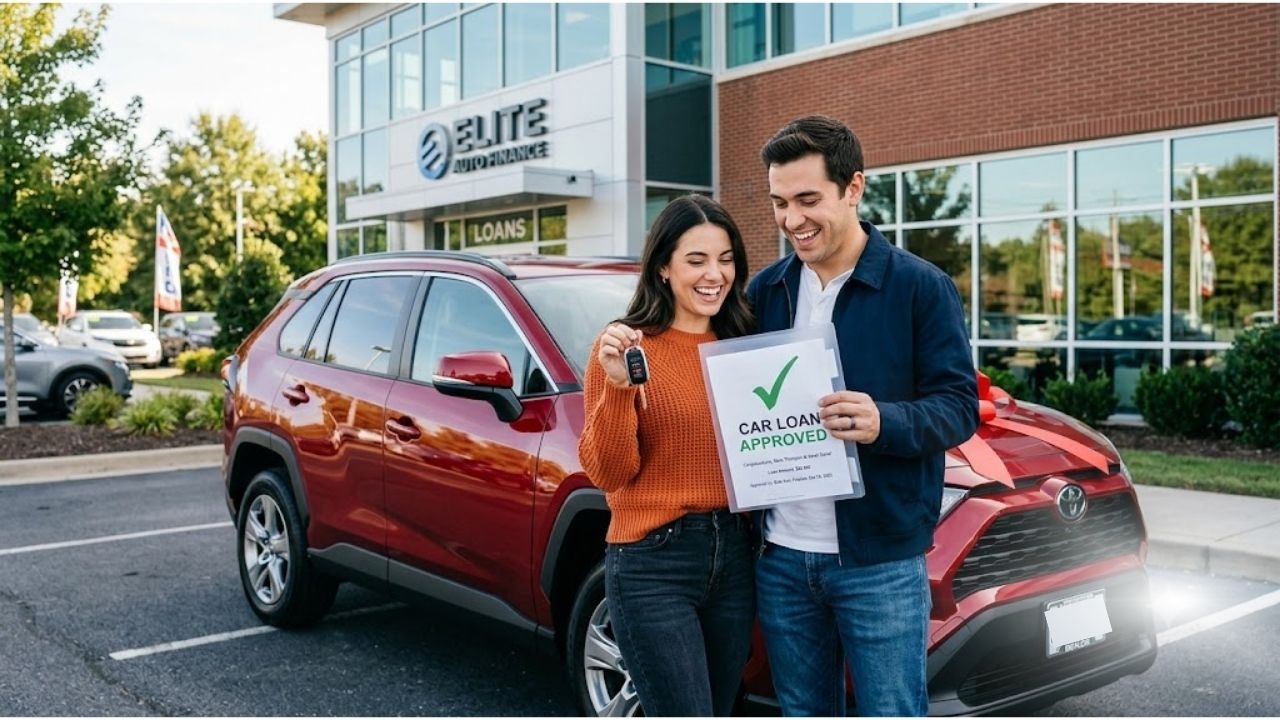
If you’re the customer still waiting on your bank to process a Car Loan application at that point, you’ve already lost the negotiation. A pre-approved Car Loan is how buyers who show up prepared to avoid that exact trap — they walk in already knowing what they can spend, and they can say yes to a deal in the same minute it’s offered.

Why Dealership Discounts Disappear Within Hours of a Launch

Manufacturers allocate a fixed number of units to each dealership for launch week, and dealers are told exactly how much discretionary discount they can offer per unit — usually a mix of a cash discount, an exchange bonus, and a corporate or loyalty benefit. 

That pool isn’t infinite. Once a dealer hits their unit target for the day, or once regional sales managers pull back the discretionary discount because demand is running hot, the next customer gets a thinner deal, even if it’s the same model, same day, same showroom.

This is why sales staff push hard for on-the-spot booking. A customer who needs three days to arrange financing isn’t just slow — they’re a risk that the discount window closes before the deal is locked in. Dealers will visibly prioritize buyers who can commit immediately, because a confirmed sale protects their unit count against that day’s allocation.

See Full Detail: How to get a Car Loan in 2026

What a Pre-Approved Car Loan Actually Does for You

A bank or NBFC confirms your loan amount, tenure, and interest before choosing any car to buy is a pre-approved Car Loan. It’s built off your salary slips, ITR, credit score, and existing liabilities — not off a specific vehicle’s invoice. 

A pre-approved Car Loan is a separate product of public, private banks, and NBFCs from a regular Car Loan which you can get through net banking or mobile app if you are an existing customer of SBI, HDFC, ICICI, or Axis bank with a clean repayment history. 

If you are an existing user of the lender then it takes 24 to 48 hours which is faster than a fresh loan applicant tied to a specific vehicle which gets 3 to 7 working days for turnaround. As it requires the dealer’s proforma invoice and RC-related paperwork to be finalized first.

You walk into the dealership holding a sanction letter that states a loan amount, not a down-payment negotiation you still need to work out with your bank.

How Pre-Approved Car Loan Changes the Negotiation at the Dealership

Salespeople read pre-approved car buyers differently, and it shows in three specific ways.

First, you can accept a discount the moment it’s offered instead of asking for 24 hours to “check with the bank.” That single difference is often what determines whether you get the full launch-day offer or a reduced one revised after allocation tightens.

Second, you’re no longer dependent on the dealer’s in-house finance desk, which usually has a tie-up with one or two specific lenders. Dealer-arranged financing sometimes comes bundled with a lower cash discount, because the dealership earns a commission from the lender and factors that into the deal structure. Walking in with your own sanction means the dealer has one less lever to work with, which shifts some of that margin back into your discount.

Third, you gain a genuine comparison point. If the dealer’s finance partner offers a rate higher than your pre-approved one, you have a documented number to negotiate against — either they match it, adjust the on-road price, or you take your pre-approved Car Loan and simply pay the invoice amount directly.

Pre-Approved Car Loan vs. Dealer-Arranged Financing

Pre-Approved Car Loan Dealer-Arranged Financing
Timing Sanctioned before car selection Processed after invoice is generated
Speed at dealership Instant — can close deal same day Can take 2–5 days for disbursal
Interest rate Set by your own bank relationship/credit score Often tied to dealer-lender tie-up, may include hidden margin
Negotiating leverage High — dealer treats you like a cash buyer Lower — dealer controls the finance terms
Best for Buyers targeting launch-day or festive offers Buyers with no existing banking relationship or lower credit score needing dealer-assisted approval

Dealer-arranged loans can still make sense if your credit profile is thin or new-to-credit, since dealership finance desks sometimes have relationships with NBFCs willing to underwrite buyers a mainstream bank’s pre-approval algorithm would reject. Pre-approval works best for buyers who already have an established banking or credit history.

Documents and Eligibility for Pre-Approval Car Loan

Requirements are lighter than a standard Car Loan because there’s no vehicle to underwrite against yet, but lenders still check the same core financial profile:

  • Salary slips for the last 3 months (salaried) or ITR for the last 2 years (self-employed)
  • Bank statements, usually 6 months
  • PAN and Aadhaar
  • Existing loan or credit card statements, if any
  • The CIBIL score above 700 is considered the best, 650–700 range scores also get approved but at a higher rate or lower loan-to-value ratio

Salaried applicants with an existing relationship with the lender (salary account, credit card, or a prior closed loan) tend to see faster pre-approval for Car Loan and sometimes a marginally better rate offer than a completely new-to-bank applicant, though this varies by lender’s internal scoring model and isn’t publicly documented as a fixed rule.

What Pre-Approval Car Loan Doesn’t Guarantee

Pre-approved Car Loan is not a blank cheque, and treating it like one is where buyers get caught out.

The sanctioned amount is based on your income and credit profile, not on the car you eventually pick. If you choose a variant that pushes the on-road price above what you’d planned, the gap between your sanctioned amount and the actual price is still yours to cover — either as a larger down payment or a fresh top-up application, which won’t move at launch-day speed.

Pre-approval also usually comes with a validity window, commonly 30 to 90 days depending on the lender. If your launch-day purchase slips past that window, you may need to reapply, and market interest rates could have moved in the interim.

Finally, the interest rate quoted at pre-approval stage is typically indicative, not final — it gets locked only once the loan is actually disbursed against a real invoice. If your credit score dips between pre-approval and disbursal (a missed credit card payment, a new loan taken elsewhere), the bank can reprice the offer.

Step-by-Step: Getting Pre-Approved Car Loan Before Launch Day

  1. Check pre-approval offers through your existing bank’s net banking or app first — many banks show a pre-qualified Car Loan offer directly on the dashboard for customers with a salary account or credit history with them.
  2. If nothing’s pre-qualified automatically, apply directly with 2–3 lenders in the week before the launch, not the day before — give the 24–48 hour processing window room to work.
  3. Ask explicitly for the sanction letter in writing, with the loan amount, tenure, and indicative rate stated.
  4. Confirm the validity window of the sanction and calendar a reminder before it lapses.
  5. On launch day, lead with the sanction letter when the salesperson opens finance discussions — this signals immediately that you’re not a financing risk and shifts the conversation straight to on-road pricing and discount stacking.

Conclusion

If you’re planning to buy on or near a launch date and you already have a reasonably clean credit history, yes — the two days it takes to get pre-approved is small compared to the discount you risk losing by being the customer who needs time to arrange financing. If your credit profile is new or thin, dealer-arranged financing may still be your realistic path in, discount trade-off included. 

Either way, don’t walk into a launch-day showroom assuming you’ll sort financing after you’ve picked the car — by the time you’re ready to sign, the deal that made the car attractive in the first place may no longer be on the table.