0

Rolls Royce Unveils Custom Car Using Sea Snail Shells 

Published Sep 22, 2026, 1:03 PM
Last Updated Sep 26, 2026, 8:43 AM

The Phantom Extended

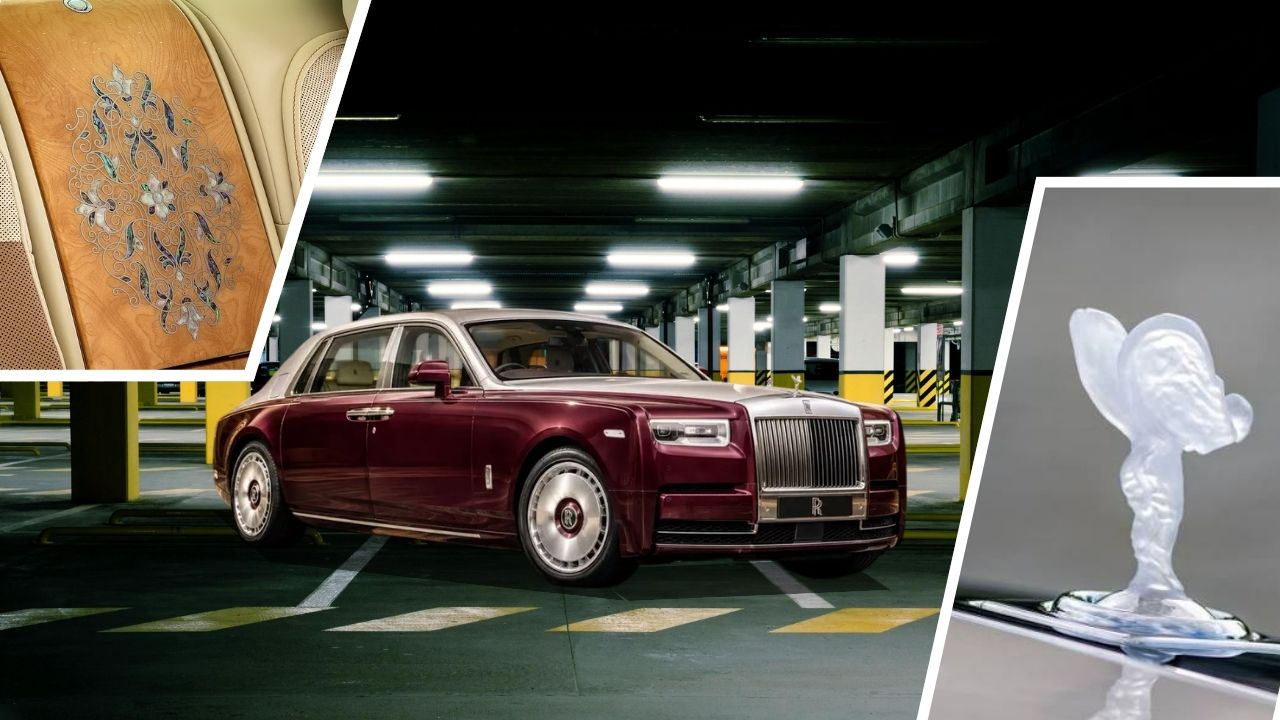
Rolls Royce is not just a luxury car brand, the authenticity of their work is remarkable. The Phantom Hummingbird, revealed in September 2026, is a one-off Private Commission built on the long-wheelbase Phantom Extended, and the first Rolls Royce with marquetry made from abalone, a marine snail with an iridescent shell. 

A Dubai client ordered it as a tribute to his wife. The shells aren’t the bodywork, and you can’t buy this car. But it shows what a ₹10-crore-plus Phantom actually is. Cut a shell 0.06 mm larger than its final size, then sand it by hand until it vanishes into the piece beside it. That is how a hummingbird ended up inside the newest Rolls Royce. 

How Rolls Royce Used the Sea Snail Shells

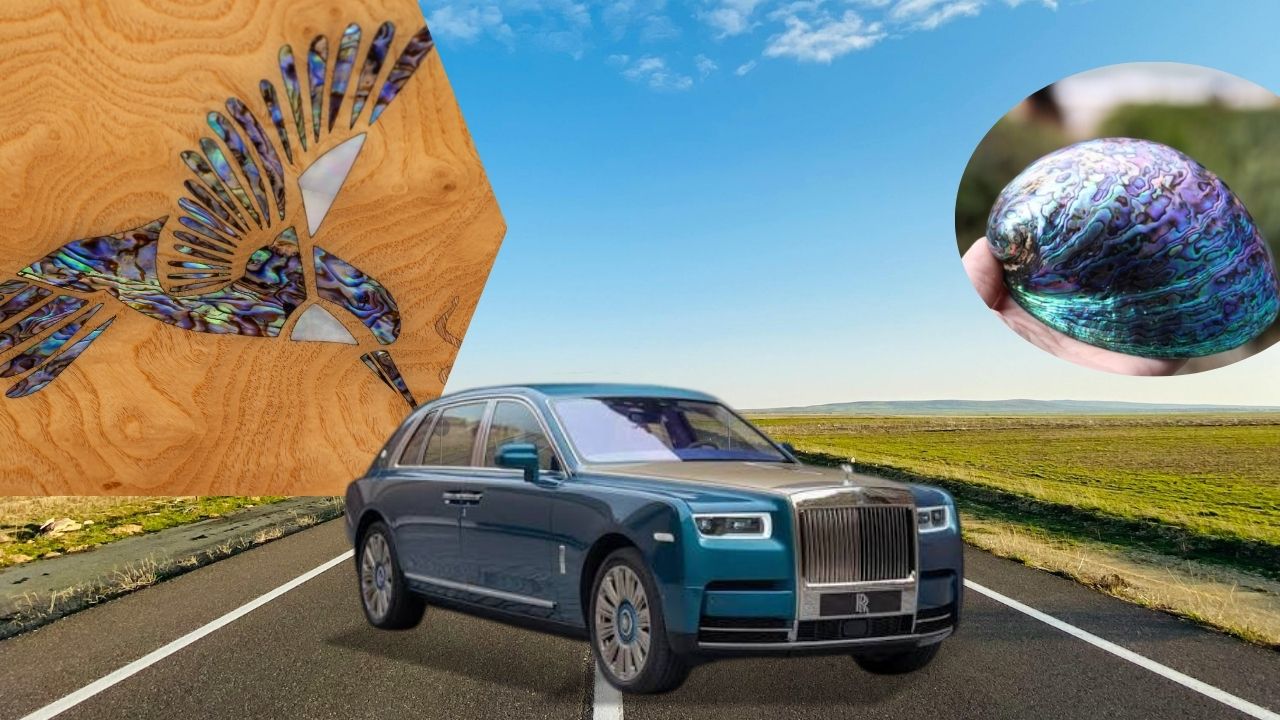
Rolls Royce took the blue-green pearly inner surface of abalone shells and combined it with mother-of-pearl to imitate a hummingbird’s feathers. The craftspeople used a decorative marquetry technique, where small pieces of abalone shell were carefully cut and fitted together to create a design on the rear picnic tables and the “Waterfall” panel. Ash burr veneer covers all three panels, while the picnic tables use silver birch taken from a single log. One report counts 53 shell pieces in the hummingbird and 84 in the flowers. 

Rolls Royce Used the Sea

Outside, the car wears a two-tone Wildberry and White Sands finish, a hand-applied White Sands coachline and a hummingbird painted along the flanks. The rest of the cabin uses Creme Light leather with Moccasin and Tan inserts, and Seashell carpets.

Why a Few Panels Took Nine Months

Abalone is unusually fine and brittle, and that is why this took so long. The design took over nine months to develop, through six iterations. The fix was to thin the pearl and abalone first, so each fragment could be set gently and then lacquered. Fitting and finishing the three panels then took 45 hours, roughly half of it spent on finishing touches. Rolls Royce says the hummingbird’s wings needed a human hand to get a fit with no visible seam.

Rolls Royce

Rolls Royce has form here. The brand has painted the Milky Way onto a headliner, commissioned an interior from designer Iris van Herpen, and even fitted a gold bar in a centre console. Wallpaper compared these commissions to one-off superyacht builds, where every detail is effectively a prototype.

Read More 👉   New Tata Safari EV Triple Screen Dashboard Spied – Launch Soon

The Phantom Extended Specification and Pricing

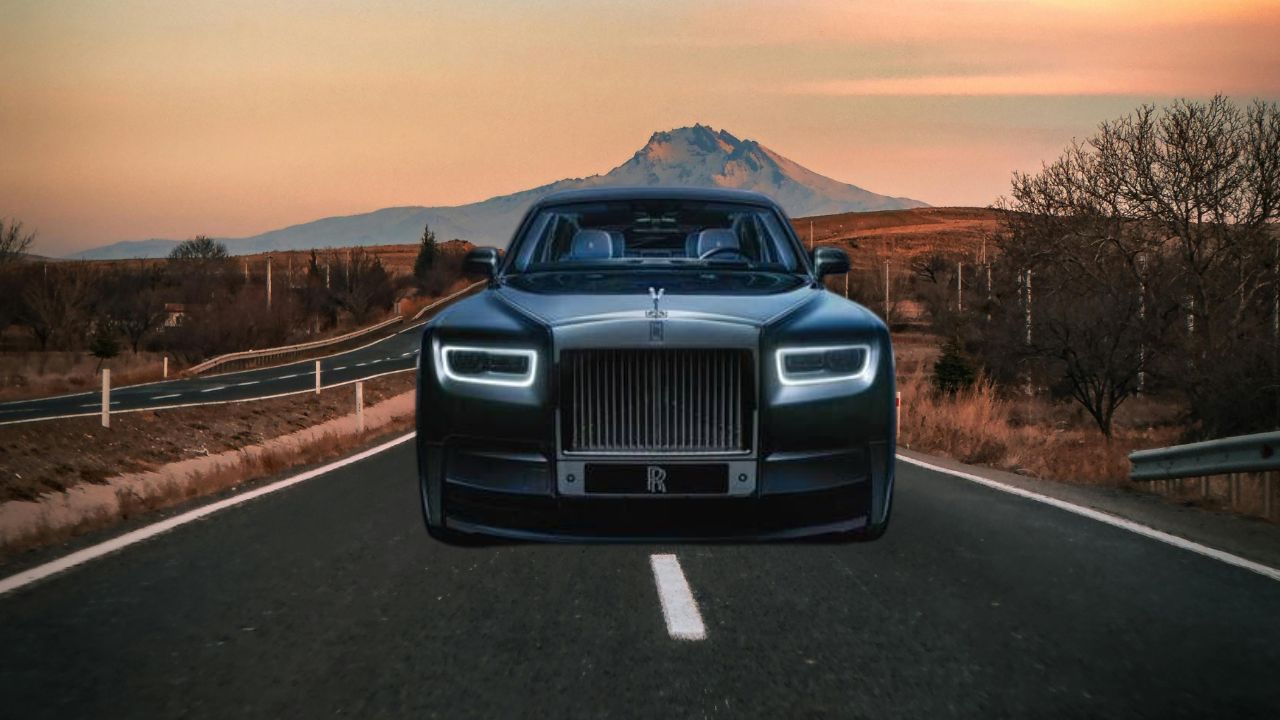
The Phantom Hummingbird specially designed in a 5,982 mm long body with a 3,772 mm wheelbase. The outstanding 563 bhp power comes from a 6.75-litre twin-turbo V12 engine and given 900 Nm torque makes a Phantom limitless on the road. It runs on a rear wheel drive through an 8-speed ZF automatic by reaching from 0 to 100 km/h in just 5.3 to 5.4 seconds.

The Phantom Extended

Phantom price starts at ₹8.99 crore in India where the Extended Wheelbase comes at a higher price up to ₹10.48 crore ex-showroom. The Phantom Hummingbird price is not published by Rolls Royce. Mileage figures vary by site, from about 7 kmpl to 9.8 kmpl, so be skeptical of any single number. No one buying this car is doing the fuel maths anyway.

Rolls Royce Phantom Extended vs Maybach S 680 and Bentley Flying Spur

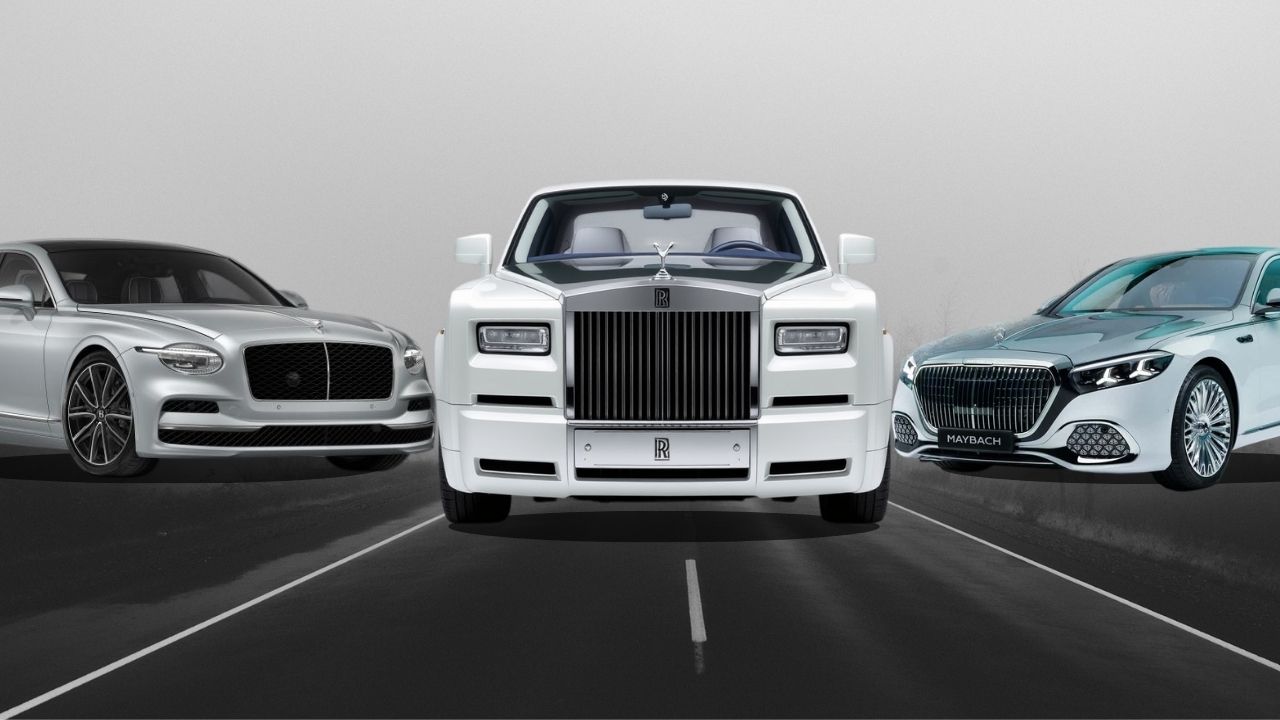
The Phantom’s real rival is the Mercedes-Maybach S 680 which runs on a 6.0-litre turbo V12 engine that costs ₹3.43 crore ex-showroom, so it’s about a third of the Extended’s price. The Maybach S 680 is 376 mm shorter than the Phantom Extended’s, the wheelbase is 3,396 mm. It offers the similar V12 and a chauffeur-friendly rear seat but the creativity and design of Hummingbird is something else.

Rolls Royce Phantom

The Bentley Flying Spur starts at ₹5.25 crore ex-showroom. Its Indian range now includes a V6 hybrid making 410 bhp and 550 Nm, and Bentley has dropped its W12 globally. It is a more driver-focused choice, while the Maybach puts rear-seat space and silence first.

Read More 👉   Top 10 MUVs in India: August 2026 Sales, Waiting Period and Easy Finance Option

Conclusion

The Phantom Hummingbird is less about the car itself and more about what Rolls-Royce is willing to do for a single customer. Using tiny pieces of abalone shell, matching wood from a single log and spending nine months perfecting the design turns an already expensive Phantom into something closer to a rolling piece of craftsmanship. 

You cannot buy this exact car, but the Hummingbird shows why a Rolls-Royce Private Commission can sit far beyond the price of a regular luxury car. In this case, the sea snail shells are not a gimmick; they are part of what makes this one-off Phantom impossible to replicate. 

Alok Kabir

Alok is an experienced SEO Specialist skilled in blogging and SEO-friendly content creation. He also specializes in Content Optimization and Technical SEO, including website optimization, crawlability, indexing, site speed, and on-page improvements to enhance search rankings and online visibility.

Leave a Reply

Your email address will not be published. Required fields are marked *

0

Top 10 Cars in the Justin Bieber Car Collection 2026 – #7 Will Blow Your Mind!

Published Jun 25, 2025, 9:18 AM
Last Updated Nov 5, 2026, 4:49 PM

Top 10 Cars in the Justin Bieber Car Collection 2025

If you lovе cars and music, you must havе hеard of Justin Biеbеr. Hе is a pop supеrstar. Hе is also famous for his amazing car collеction. Thе Justin Biеbеr Car Collеction 2026 is full of wild, fast, and rarе cars. Somе cars arе so spеcial that only a fеw pеoplе in thе world own thеm. Today, wе will look at thе top 10 cars in his garagе. Thе sеvеnth car on this list will truly blow your mind!

Why Justin Biеbеr Lovеs Cars?

Justin Biеbеr is a big car lovеr. Hе startеd collеcting cars whеn hе was vеry young. Hе has spеnt millions on his collеction. His garagе is likе a drеam for car fans. Hе owns supеrcars, luxury cars, and еvеn somе custom cars. Thе Justin Biеbеr Car Collеction 2025 shows his lovе for spееd and stylе. 

The Top 10 Cars in Justin Bieber’s Garage

1. Koеnigsеgg Jеsko

Koеnigsеgg Jеsko

Image Credit: YouTube

Thе Koеnigsеgg Jеsko is onе of thе rarеst cars in thе world. Only a fеw pеoplе own it. Justin Biеbеr has onе in his garagе. This car is supеr fast. It has a twin-turbo V8 еnginе. Thе car is worth morе than $3 million. It is vеry spеcial and looks amazing. Thе car is kеpt safе with spеcial sеcurity.

2. Bugatti Chiron

Bugatti Chiron

Image Credit: Bugatti 

Thе Bugatti Chiron is anothеr star in thе Justin Biеbеr Car Collеction 2026. This car is vеry powеrful. It has 1,800 horsеpowеr. Only 40 of thеsе cars еxist. Thе car is worth about $5 million. Most of thе car is madе from carbon fibеr. Only 30% of thе car is paintеd. Thе rеst shows thе carbon fibеr. This car is Justin’s favoritе. It is his garagе toy.

Also Read: Kendrick Lamar Car Collection: A Mysterious Look at the Rap Icon’s Lifestyle and Fame

3. Lamborghini Avеntador S

Lamborghini Avеntador S

Image Credit: Lamborghini 

Thе Lamborghini Avеntador S is a supеrcar. Justin Biеbеr got this car for his 18th birthday. Hе changеd thе color many timеs. Now it is tеal bluе. Thе car has a 6.5-litеr V12 еnginе. It makеs 740 horsеpowеr. Thе car is vеry fast and loud. Justin lovеs to drivе it.

4. Fеrrari 458 Italia

Fеrrari 458 Italia

Image Credit: YouTube

Justin Biеbеr owns two Fеrraris. Thе Fеrrari 458 Italia is thе most famous. It has a 4.5-litеr V8 еnginе. Thе car makеs 562 horsеpowеr. It can accеlеratе from 0 to 60 mph in only 3 sеconds. Justin changеd thе color to bluе chromе. Hе also addеd fеndеr flarеs and a big subwoofеr. Thе car is worth morе than $400,000.

5. Audi R8

Audi R8

Image Credit: Audi

Thе Audi R8 is anothеr cool car in Justin’s garagе. It has a V10 еnginе. Thе car makеs 540 horsеpowеr. It can go from 0 to 60 mph in 2.8 sеconds. Thе car is wrappеd in lеopard print. This makеs it stand out. Thе car is worth almost $200,000.

Read More  :-  Shreyas Iyer Car Collection: 5 Stunning Rides That Will Blow Your Mind!

6. Mеrcеdеs-Maybach S600

Mеrcеdеs-Maybach S600

Image Credit: Mercedes

Thе Mеrcеdеs-Maybach S600 is a luxury car. It is vеry comfortablе. Thе car has a 6.0-litеr V12 еnginе. It makеs 523 horsеpowеr. Thе car is callеd thе “world’s quiеtеst car.” It has a big sunroof and a grеat sound systеm. Thе car is worth almost $200,000.

7. Bugatti Vеyron

Bugatti Vеyron

Image Credit: Bugatti

Hеrе comеs thе car that will blow your mind! Thе Bugatti Vеyron is a lеgеnd. Justin Biеbеr got this car as a gift. It has an 8-litеr W16 еnginе. Thе car makеs 987 horsеpowеr. It rеachеs 0 to 60 mph in just 2.5 sеconds. Thе top spееd is 255 mph. Thе car is worth about $2 million. Justin addеd rеd paint and chromе accеnts. Thе car is vеry rarе and еxpеnsivе. This is why it is thе most shocking car in thе Justin Biеbеr Car Collеction 2025.

8. Lamborghini Huracan

Lamborghini Huracan

Image Credit: Lamborghini 

Thе Lamborghini Huracan is anothеr fast car. It has a 5.2-litеr V10 еnginе. Thе car makеs 601 horsеpowеr. It can go from 0 to 60 mph in 3.2 sеconds. Thе top spееd is 202 mph. Thе car has carbon cеramic brakеs. It is vеry light and fast.

9. Rolls-Roycе Wraith

Rolls-Roycе Wraith

Image Credit: YouTube

Thе Rolls-Roycе Wraith is a luxury car. Justin Biеbеr customizеd it. Thе car has a dual-tonе silvеr and mattе grеy paint job. Thе car is inspirеd by thе Vision Nеxt 100 concеpt. It is vеry stylish and comfortablе. 

10. Fisker Karma

Fisker Karma

Image Credit: YouTube

The Fisker Karma is a unique car. It is an electric car. Justin Bieber wrapped it in chrome and added LED lights. The car has a 2.0-liter turbo engine. It can drive in full EV mode. The car is very flashy. It stands out at night.

What Makes Justin Bieber’s Car Collection Special?

The Justin Bieber Car Collection 2026 is not just about speed. It is also about style and rarity. Justin loves to customize his cars. He changes the colors and adds special features. He owns cars that are very rare. Some cars are worth millions. His garage is a mix of supercars and luxury cars. It is a dream for any car lover.

Final Thoughts

Justin Bieber is a pop superstar. He is also a big car lover. The Justin Bieber Car Collection 2026 is full of rare, fast, and stylish cars. The seventh car on this list, the Bugatti Veyron, is truly mind-blowing. If you ever get a chance, you must see his garage. It is a dream come true for car fans!


0

Monsoon Car Care Tips: Keep Your Car Safe During the Rainy Season

Published Jul 9, 2026, 12:40 PM
Last Updated Jul 22, 2026, 12:07 PM

Car Care Tips

Monsoon can give a hard time to your car while you’re sitting inside and taking short trips. Your car is dealing with water, mud, and humidity altogether but with right Monsoon Car Care Tips before the season starts can save unexpected breakdowns of a car, rusted parts, and also save your money which can cost you dearly.

Monsoon isn’t just rainy weather for your car. It’s a stress test on the engine, electricals, brakes, tyres, and body — all at once, every single day for weeks.

Why Monsoon Car Care Actually Matters

Monsoon brings not just water but that rain carries road grime, salt, and pollutants that speed up corrosion. Indian roads also have poor drainage systems that cause heavy flow and slippery surfaces and if you neglect Monsoon Car Care Tips that turn into major failures fast.

A car that runs fine in the summer can start misbehaving during the monsoon if you don’t get basics like wipers, battery terminals, and tyre tread checked up on. Some preventive maintenance before the rainy season can really save money on unexpected breakdowns or costly repairs down the road. 

Read Also: Which Engine Oil is best for your Car?

The Real Damage Rain Can Cause

Before getting into tips, it’s helpful to know what your car is actually being protected from: 

Indian roads become a pool in the rainy season and that causes rust and corrosion in metal parts of the car. Wiring malfunctioned due to moisture which made it difficult to generate spark.

The most risky part is the engine if water flows into the air intake when driving through flooded areas, be ready for engine damage. Moisture negatively affects the brake performance by reducing friction between the brake pads and the disc. Old cars with manual gear can suffer from clutch slipping if the clutch plate area becomes wet from water ingress, leading to loss of control over the car.

Car Care Tips

Early Maintenance: What to Check Before the Rains Start

It makes all the difference to do this a few weeks before monsoon hits, and not when the first floodwaters arrive. 

Tyres: 

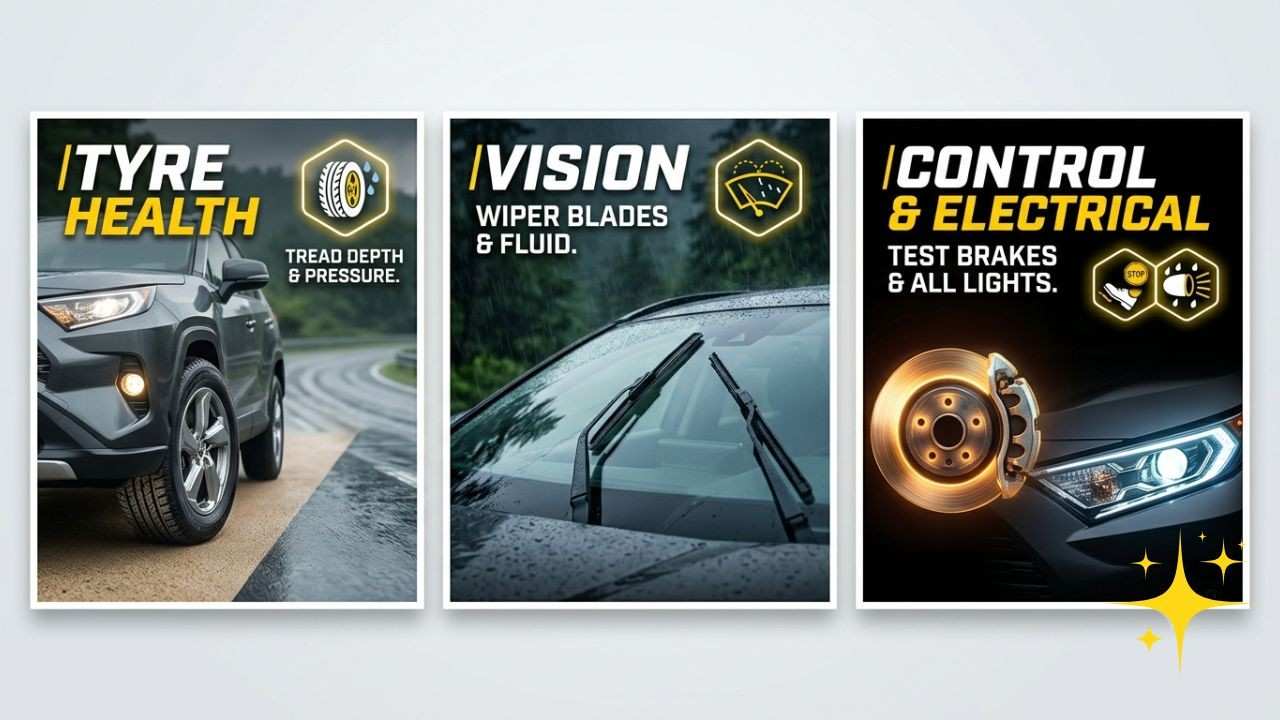
You should be very diligent about checking tread depth. Bald or worn tyres lose grip virtually immediately on rain-slicked roads. Keep tyres at the right pressure – underinflated ones are more likely to go into a spin. 

Brakes: 

Have the brake pads and discs checked along with the brake fluid level. Wet roads require brakes that deliver the right response immediately, not brakes that have already given their all. 

Wipers: Replace the wiper blades if they streak or make noise (such as squeaking). This is the cheapest upgrade that does the most to visibility in a rainstorm.  

Battery and electricals: Clean your battery terminals and look for signs of buildup. Have exposed wires inspected, that is if your car is not brand new. 

Underbody coating: A rust-proof underbody salt-spray or wax treatment before the monsoon protects from continuous splattering of dirty water.  

Door and window seals: Worn rubber seals allow water to enter into the cabin resulting in musty odors, electrical shorts and mold. Replace them if they have hardened or split.  

Air filter and engine air intake: Ensure the air intake is not too low as to draw in water when waterlogging. If you’re in a flood-prone area, this is one to talk over with your mechanic. 

Car Care Tips

Monsoon Car Care Tips By Car Type

Hatchbacks and Small Cars

They’re also lower to the ground, so a flooded road is more hazardous. Don’t drive through water above the lower door sill. Maintain your tyre pressure a little higher than normal for extra grip and have your underbody checked for rust a little more often with reduced ground clearance. 

Sedans 

Sedans typically have acceptable clearance but they also have a longer body, which exposes more surface area to splashing and rusting. Have a close look at the boot and rear wheel arches where moisture lingers. Wax the exterior before the season to shield the paint. 

SUVs 

SUVs benefit from greater ground clearance when in flooded conditions, but don’t get too big for your britches — even SUVs can stall if water gets into the air intake. Inspect for rust on four-wheel-drive components and undercarriage, as SUVs tend to be driven on rougher, muddier ground in the monsoon. 

Electric Vehicles

EVs are typically well sealed from water with IP rated battery packs, but charging ports and connectors still need to be kept dry. Don’t charge in the open in heavy rain, have the battery compartment seals checked. Never take for granted that “electric” means “waterproof all the time.” 

Driving Tips That Matter As Much As Maintenance

  • Slow down in plenty of time before you drive into standing water, since you can hydroplane at relatively low speeds. 
  • Allow more space between your car and the car in front as wet roads can add up to 15 percent to stopping distances. 
  • Turn on your headlights while driving in heavy rain so that you can see and be seen by other drivers. Don’t just use the tail or parking lights. 
  • Never drive on flooded roads unless you’re certain of the water depth. A puddle that looks shallow could hide a deep hole, an open sewer or other dangers. 
  • If your vehicle dies after you drive it into water, do not try to restart it. Trying that can squeeze water further into the engine and cause expensive repairs. 

After the Rain: Don’t Skip This Step

After driving in a heavy rain you should probably clean your car or mud, dirt and road grime will get stuck inside the parts of your car if you just parked it. Dry the cabin quickly if you get any water inside as it generates foul smell and damages the fabrics. Check features if they are working properly like turning on your AC. 

If you schedule a professional inspection and cleaning once a month during the rainy season, you can catch problems early and avoid having to make expensive repairs later on. 

One Thing Most People Forget: The Emergency Kit

A monsoon emergency kit doesn’t need to be fancy — a flashlight, an extra wiper blade, jumper cables, a tow rope and a rain poncho can cover it. If you ever find yourself stranded in flooded traffic or your car breaks down, this kit makes an overwhelming situation a controllable one. 

Conclusion

Monsoon does not destroy cars in a single day, it deteriorates them with small exposure after multiple exposures. A little pre-monsoon prep, a bit of driving caution and a post-rain cleaning is honestly all you need to get through the season without any unplanned garage visits. View these Monsoon Car Care Tips as a checklist instead of once-off information and your car will take care of the rains just fine.

0

Ford Capri II vs Toyota Celica vs Vauxhall HP Firenza: The Global Decade of Style

Ford Capri II vs Toyota Celica vs Vauxhall HP Firenza

The 70s were a turning point in car history: a decade shaped by global financial turmoil and the mass popularization of sporty styling. The ground was laid years before in the US with the introduction of the Ford Mustang in 1964, a car that demonstrated that performance imagery could be married with an affordable price tag and based on an economy car platform, namely, the utilitarian Ford Falcon. This “pony car” formula – long hood, short rear deck, four seat interior and a plethora of options – was an instant hit with car buyers around the world. 

The vehicles including the Ford Capri II, Vauxhall HP Firenza and 1st Gen Toyota Celica were born out of this post-Mustang era, and yet each is a distinctly different approach to the budget coupé ideology. 

Ford Capri II

Ford Capri II

The Capri II was a natural progression for Ford’s European pony car. Production started mainly in the United Kingdom (Dagenham, Halewood) and Europe (Genk, Belgium, and Saarlouis, Germany). the Mk2 softened the aggressive lines of its predecessor, with a more modern and friendlier look featuring “softer lines and larger headlights.” 

Engineering and Accessibility

The Capri II was ultimately successful because of its versatility and availability. Ford stuck to its guns with the philosophy of serving every pocket by the simple offering of a variety of engines in one simple layout – front-engine, rear-wheel drive (FR). For the budget-conscious buyer, the car had the I-4 1.6L (1,599cc) that delivered a meager 64 horsepower and produced 0-100 kph times in the 16-seconds ballpark. A somewhat more balanced choice was the 2.0L Inline-Four Pinto, making around 98 bhp and bringing 0-60 mph down to near 10 seconds. Up top, there was the potent V6 3.0L engine. 

That philosophy meant the car stayed true to its “style on a budget” directive, as evidenced by the original 1974 UK price list, where a Capri Mk2 1600L began from a very reachable £1,668. 

Read More:- Range Rover Reaches New Heights with the Astronaut Edition

Driving Experience and Legacy

Drivers had good things to say about the Capri interior design, in particular the full complement of dials and the long bonnet which immediately made you feel as though you were driving a bona fide sports car. Controls were said to be both light and direct. 31 Although some contemporary reviewers noted problems such as poor reliability of new cars and dubious safety standards, 32 present day enthusiasts often describe the V6 models as being very “reliable, cheap to run”, a consequence of the car’s mass production and the resulting availability of parts.

The straight-six engine, especially in the later 2.8i injection versions, had a “great sound from the engine and exhaust”. This full-bodied, Falstaffian wuffle supplied the required drama for the ears to complement the visual attack, and proved that the quintessential V6 exhaust note was the key to a car that could rise above its budget-based mechanics and inscribe itself as an enduring icon of nostalgia. 

The Contradiction in Current Value

Ford Capri II Current Value

The Capri II was intended to be throwaway and to appeal to a broad demographic, but its current place as a sought-after classic reveals an important market dynamic. A couple of million Capris were sold between 1969 and 1986, but clean ones with high specs have turned up as rare gems. Because the Capri was so common, and was often driven as a cheap daily used in its second life as a track toy, real-money originals in “Original & Highly Original” condition really do command serious prize money. For example a mint condition 1970 Capri has been estimated at over £40,000. 

Vauxhall HP Firenza ‘Droopsnoot’

Vauxhall HP Firenza 'Droopsnoot'

The Vauxhall Firenza, was originally launched in 1971 as a sporty two-door fastback coupé based on the lowly Viva. But that was about to change in 1973 when General Motors stylist Wayne Cherry took a radical departure from the norm with the Firenza HP (High Performance), a motorsport homologation special. 

Radical Styling and Advanced Engineering

The HP’s signature feature was its slick fibreglass nose cone, which let to the car being known as the ‘Droopsnoot’. This was no mere styling exercise – the shape was designed to be as aerodynamic as possible and helped the car reach a top speed of more than 120 mph. The distinct nose has double headlights taken from the Renault Alpine A310. And to tie up the aggressive look Vauxhall used matt-black trim rather than chrome and some Avon Safety wheels. Every single HP was finished in the distinctive Silver Starfire metallic paint. 

The HP was powered by a 2279cc OHC slant-four engine, which had been the subject of extensive performance tuning by Bill Blydenstein. This involved following a similar procedure to that used on the combustion chambers, inlet tracts and valve throats, and yielded an additional 21 bhp over the standard powerplant. The result was 131 bhp , and a broad torque band so the car was easy to drive. And the HP was, in fact, the first Vauxhall to be fitted with a complex, close-ratio, dog leg five-speed Getrag manual gearbox. With its combination of light weight and superior transmission, the HP Firenza was also the Vauxhall with the best acceleration of its day, clocking from 0-60 mph in a blistering 7.6 seconds. 

Market Paradox

Vauxhall HP Firenza Market Paradox

This severe scarcity is what governs its place in the classic market.Although the HP Firenza enjoyed rarity and unquestionable motorsport credentials, its median value approximately £17,600 for a Firenza. Its scarcity does mean that there are occasional huge sales, with the highest price to the public being £47,700. 

Toyota Celica (1st Generation)

Toyota Celica

The Toyota Celica, which was introduced in December 1970, was the pioneer Japanese entry in the world pony car market. It was a 2+2 coupé based on a Carina platform and the styling was clearly inspired by the American versions. The Celica Liftback, especially, was so redolent of American fastback muscle that it gained the fond nicknames “Japanese Mustang” or “Mustang Celica”. This tribute featured such iconic elements including the triple bar tail lights, a signature design cue of the Mustang. 

Technological Sophistication and Dynamic Appeal

Although the regular Celica (ST grade) was dependable and fuel efficient, the performance versions had a considerable technological advantage over many of their European competitors. The top-of-the-line 2000 GT Liftback (RA25) used the DOHC (Double Overhead Camshaft) 18R-G Twincam engine, which had a cylinder head co-developed with Yamaha. This sophisticated engine was rated at 134 hp/145 bhp maximum power. 

The Reliability Paradox 

The Reliability Paradox

the Celica was known for its inherent reliability and ease of repair, which made it very popular amongst modifiers and “boy racers” in the Asian markets. But this mechanical excellence was frequently paired with a catastrophic manufacturing gaffe that was endemic to Japanese exports in the 1970s – inadequate body rustproofing. 

The current high average market prices for clean GT and Liftback models including GT averaging $22,334 and best examples fetching over $40,000. 

Head-to-Head Comparison of Ford Capri II vs Toyota Celica vs Vauxhall HP Firenza

Metric Ford Capri II Vauxhall HP Firenza Toyota Celica
Production Years 1974–1977 1973–1975  1970–1977
Engine Type I-4 / V6 I-4 OHC Slant-Four I-4 DOHC
Power  98 bhp (2.0L) – 158 hp (3.0L)  131 bhp 134–145 hp 
0-60 mph 10.0 s 7.6 s  N/A (Highly Competitive)
Transmission Feature Manual (4/5 speed) 5-speed ZF Manual (Dogleg) 4/5-speed Manual
Rear Suspension Live axle Live axle Four-link

The Price Valuation and Market Dynamics

Model Performance Production Original UK Price (Entry 1974) Current Average Classic Value Investment Profile
Ford Capri II High Volume 1,668$  $15,000-$40,000 Low Risk, High Liquidity, Nostalgia Driven
Vauxhall HP Firenza 204 units High Cost $17,600 High Risk, Scarcity Driven, Specialist Parts Required
Toyota Celica (1st Gen GT) Medium Volume N/A (Imported) $ 22,334 Medium Risk (Rust Filtered), High Growth (JDM Boom)

Who is The Winner?

Winner for Everyday Practicality and Accessibility: The Ford Capri II. Ford’s decision to make the hatchback standard and continue a massive parts supply ensured the car offered the best combination of sports styling and daily practicality. Capri is the quintessential choice for the nostalgic driver wanting an affordable and engaging ownership experience.

Winner for Performance Purity and Engineering Novelty: The Vauxhall HP Firenza ‘DroopSnoot’. Being Hone-d Fed with his advanced 5-speed dogleg gearbox Firenza HP was on Kaygonus the most uncompromising and technically advanced paper vehicle 7.6-second really rapid 0-60 mph timeengine and his hand-finishedI genuinelyhear that with itsIndeed the title of Wa Rally Car until brian nash Firenza fits that description far better than any other. Its defeat was solely in the market place and not product quality.

Winner for Global Style and Long-Term Reliability: Liftback and hardtop coupe versions from the 1st generation 1971 Toyota Celica 1st generation Liftback GT. The Celica neatly packaged the American pony car look into a refined, contemporary bolt-on DOHC technology style. Its mechanical strength is inherent and reliable so that you can have peace of mind today, but this must be tempered with the need to check its body due to processing faults during original manufacturing.  

Conclusion

The trio that dominated the 1970s budget coupé market – the Ford Capri II, the Vauxhall HP Firenza and the Toyota Celica – all made a highly specialised, but indelible, mark on motoring history. Their common objective was to offer performance style, at an attainable price point, but how that was achieved varied wildly – with very different current collector profiles. 

0

Best Dash Cam for Cars | Top Features, Reviews & Buying Guide

Best Dash Cam for Cars

Your claim is denied because you can’t prove the other driver ran the red light. It happens more than most people think and it is the largest reason why Indian car owners are now actually considering dash cams rather than treating them as an accessory-store impulse buy. So if you’re looking for the Best Sash Cam for Cars in India today, then you must have to know that it depends on where you park, how much footage quality do you really need and if you’re buying for evidence or because you want real 24/7 security. 

Why a Dash Cam Matters More in India Than It Used To

There is no provision in the Motor Vehicles Act, 1988 or the Central Motor Vehicles Rules, 1989 which prohibits use of dash cam in private vehicles. What has changed is what the footage means in the eyes of the law. Section 63, Full text of Bharatiya Sakshya Adhiniyam, 2023 Electronic records (such as dash cam video) are now admissible in court provided the device was operating properly and the recording was made in the normal course of business. That is a radical change from a few years ago, when video was considered a luxury and not something an insurance company or a traffic court would actually look at. 

Add that up to increasing hit-and-run incidents and chaotic lane discipline in cities such as Bengaluru, Mumbai, Uttar Pradesh and Delhi, and a dash cam is no longer optional. A handful of newer cars — the Hyundai Exter and Venue among them, now come factory-fitted with one, which tells you where the industry is heading even for owners who have to retrofit.

What Actually Determines the Best Dash Cam for Cars

Before comparing models, three things separate a dash cam that survives an Indian summer from one that dies in a year.

  1. Supercapacitor over battery. A dashboard behind glass can cross 70°C in peak May heat. Lithium-battery dash cams swell and fail under that kind of sustained heat; capacitor-based units don’t have that failure mode and handle parking mode far more reliably.
  2. Sensor quality beats raw resolution. A 4K camera with a weak sensor can produce inferior night footage to a well-designed 1080p or 2.5K camera. Sony’s STARVIS 2 sensor can be found on almost all the best-rated units in 2026 and is the one spec that you should be prioritizing over megapixels.
    Best Dash Cam for Cars
  3. Parking mode isn’t automatic. Almost every model needs a separate hardwire kit, typically ₹1,500–2,500, to monitor your car while it’s off. Without it, most dash cams only record while the ignition is on.
  4. One more line item people under-budget for: the memory card. A dash cam writing continuous loop footage needs a high-endurance card, not a standard one — Kingston Canvas Go Plus (₹600–900) or SanDisk High Endurance (₹700–1,200), 128GB minimum if you want more than 3–4 hours before overwriting. Format it monthly through the camera’s menu, or you risk corrupted files exactly when you need them.

Top Dash Cam Picks in India, by Budget

Model Price (approx.) What it’s for
70mai A200 ₹4,999 First-time buyers; voice control, 1080p single-channel
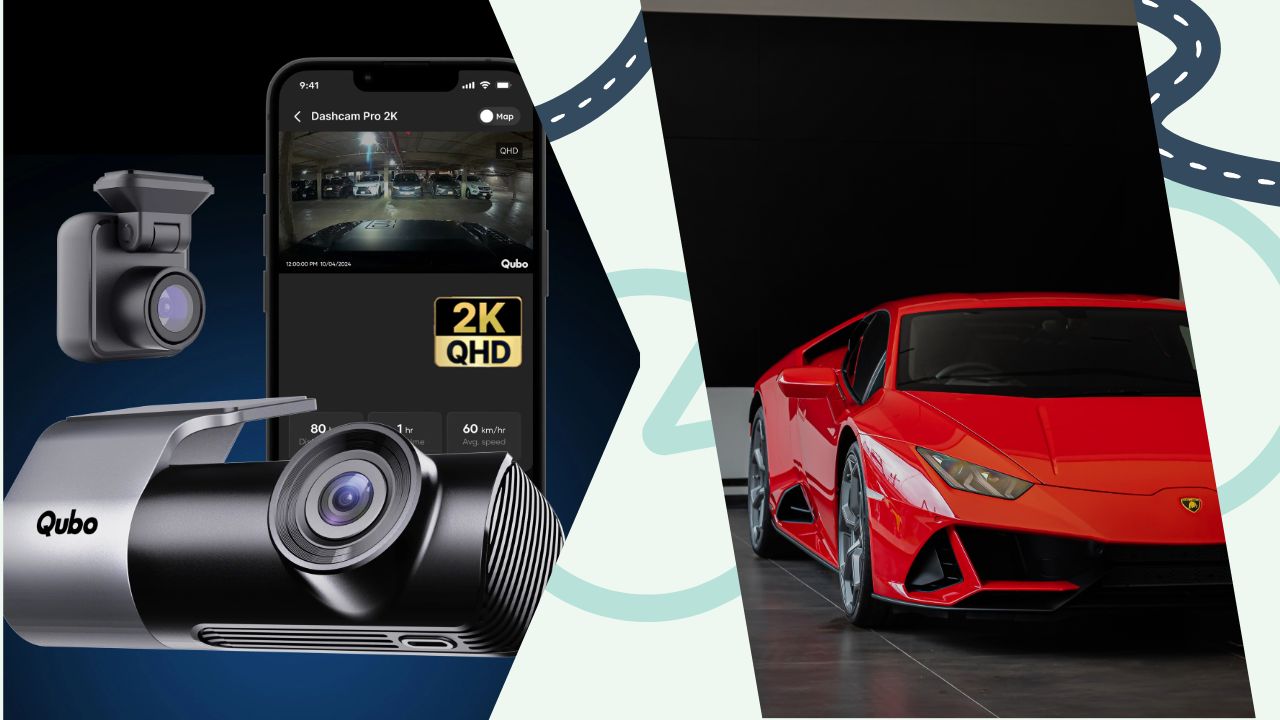
Qubo Dashcam Pro 3K STARVIS 2 Dual ₹4,499–₹12,990 Best overall value; 3K front + 1080p rear, built-in GPS
70mai A510 HDR 3K Dual ₹11,439 Tightest budget for dual-channel with STARVIS 2
REDTIGER F7NT 4K Dual ₹12,990–₹13,550 True 4K front, WiFi + GPS, 64GB card included
Viofo A229 Plus Price varies by retailer — check current listing Three-channel (front/rear/cabin), STARVIS 2, capacitor-based

Prices above are pulled from current Indian retail listings as of mid-2026 and shift with Amazon sales and festive discounting, so treat them as a range rather than a fixed number — check the best dash cam for cars listing before you decide.

70mai A200 — around ₹7,499

This is the one to buy if you’ve never owned a dash cam and don’t want to think too hard about it. Single-channel, 1080p, and honestly that’s plenty for reading a number plate within 10 metres in daylight. The party trick is voice control — say “Hey 70mai” and it starts recording or snaps a photo, which matters more than it sounds like it should when you’re stuck in Mumbai signal traffic and don’t want to take a hand off the wheel. It ships with a 32GB card, which is nowhere near enough — budget an extra ₹800 or so for a proper 64GB or 128GB card on day one, because 32GB gets overwritten in a few hours of driving.

Read More :-  How Often Should You Service Your Car? | Complete Maintenance Guide

Qubo Dashcam Pro 3K STARVIS 2 Dual — ₹4,499 to ₹12,990 

Qubo (Hero Group’s electronics arm) sells this at a few different tiers, which is why the range is wide — check which configuration you’re actually looking at before comparing it to anything else. At the upper end you get 2.7–3K front resolution paired with a 1080p rear camera, a Sony STARVIS 2 sensor for low light, built-in GPS logging, and a small onboard display so you can review footage without pulling out your phone. It’s the pick that shows up most often as “best overall” in Indian buying guides this year, mainly because the night footage holds up on the kind of unlit stretches you get on Bengaluru’s outer ring roads.

70mai A510 HDR 3K Dual — around ₹11,439

The tightest dual-channel option under ₹12,000, and it carries the same STARVIS 2 sensor as the pricier picks on this list. Where it seems to fall a little short, based on how it’s reviewed, is heat resilience — it reads as a better fit for someone who parks in a garage or covered spot than someone leaving a car in direct sun all day, so if you’re in that second category, weigh it against the REDTIGER below before deciding.

REDTIGER F7NT 4K Dual — ₹12,990 to ₹13,550

True 4K on the front camera (not upscaled), 1080p on the rear, and it uses a supercapacitor instead of a battery — which is the detail that actually matters if your car bakes on a Delhi or Chennai street through May and June. Batteries swell and die under that kind of sustained heat; capacitors don’t. It also comes with WiFi, built-in GPS, and a 64GB card already in the box, so there’s no immediate add-on cost like there is with the 70mai A200.

Viofo A229 Plus  

Price isn’t stable enough across retailers to quote a single number, so check the current listing before you commit. This is the outlier on the list because it adds a third channel: front, rear, and cabin-facing, all recording at once. Sony STARVIS 2 sensor, capacitor-based, GPS with a speed overlay baked into the footage. The cabin channel is the reason to consider it at all — if you drive for a ride-hailing platform or just want a record of what happened inside the car during a dispute, none of the other four models on this list cover that angle.

70mai A200 vs Qubo Dashcam Pro 3K

The A200 wins on simplicity and price — 1080p footage is enough to read a number plate within 10 metres in daylight, and “Hey 70mai” voice commands are genuinely useful in heavy traffic where you don’t want to touch a screen. The Qubo pulls ahead the moment you care about night driving or rear coverage: its 3K front feed and dual-channel setup handle Bengaluru’s poorly lit ring roads noticeably better, and the built-in display lets you review footage without pulling out your phone.

REDTIGER F7NT 4K vs Viofo A229 Plus

The REDTIGER is the better pick if front-camera sharpness is your priority — true 4K with a supercapacitor means it survives a car parked in direct sun without the battery swelling. The Viofo A229 Plus goes a step further with a third, cabin-facing channel, which matters if you drive for a ride-hailing platform or want a passenger-side record for disputes. It costs more and is harder to find at a stable price point, so it’s the enthusiast pick rather than the default recommendation.

Installation and the Costs Nobody Mentions Upfront

Mount it behind the rearview mirror. That’s not just a preference — it’s the placement least likely to obstruct your view or run into any ambiguity if footage is ever questioned. Most dash cams ship with a cigarette-lighter adapter for basic operation, but hardwiring to the fuse box is what actually gives you parking mode and low-voltage cutoff protection, so the camera stops drawing power before your battery drains. 

Best Dash Cam for Cars

Professional installation runs ₹1,000–1,500 in Delhi and Mumbai, and ₹500–800 in smaller cities like Indore or Kochi. Budget for the hardwire kit and the card separately — they rarely come bundled, and skipping them is how people end up with a dash cam that only half-works.

Which Dash Cam for Cars Should You Actually Buy?

If you drive daily in city traffic and just want proof when something goes wrong, the 70mai A200 or Qubo Dashcam Pro covers it without overspending. If you park on the street or in a public lot overnight, don’t skip the supercapacitor models with parking mode — the REDTIGER F7NT 4K is the stronger buy here. 

And if you’re driving for hire, ferrying passengers, or simply want the most complete legal record possible, the three-channel Viofo A229 Plus is the only option on this list built for that specific job. Match the camera to how you actually park and drive, not to whichever spec sheet has the biggest number on it.

Read More:-   How Often Should You Change Oil in Your Car? What Actually Matters in India

Conclusion 

The Best Sash Cam for Cars in India is not necessarily the one with the best resolution but the one that fits your driving habits, the place where you park and of course your budget. A good sensor, supercapacitor design, proper parking mode and a high-endurance memory card will make a bigger impact on your daily life than just picking the 4K tag. 

A dual-channel dash cam provides most private car owners with an adequate balance of cost and car insurance protection. If you park your car outside regularly, a supercapacitor unit with hardwired parking mode is definitely worth the extra money. 

For commercial drivers or those who desire the most complete evidence, a three channel system offers the best coverage. Consider a dash cam a safety and evidence tool, rather than just an accessory — it can save you much more than its purchase price when an accident or insurance claim gets complicated. 

0

New Hyundai Venue Captures Immense Response with 80,000 Bookings

New Hyundai Venue bookings

If you even have an iota of interest in cars, you must have heard the hype, New Hyundai Venue bookings has notched 80,000 bookings in just over three months since launch. This is not just a number; it shows how this compact SUV is changing the rules of the game in India’s fiercely competitive market. Posted amidst much glory in late 2025, the Venue has been attracting all the gazes more quickly than a turbo spooling up. 

As a car lover who’s kept tabs on everything from luxury beasts to budget heroes, I just had to see what all the fuss was about – why this little dynamo is getting people so worked up. Let’s look into this guide for the car details.

The competition in India’s compact SUV segment is fierce – rivals such as the Kia Sonet, Tata Nexon, Maruti Brezza, and Mahindra XUV3O are battling it out for your attention. Pre-facelift Venue was already a champ, but this 2025 refresh? It’s as if Hyundai has clearly dialed everything up a notch. 

Bookings exceeded 80k by the beginning of February 2026, with an average of more than 25,000 vehicles per month. That’s insane—speedier than most launches could ever dream. Hyundai points to its “unrivaled style, tech, and value,” but let’s peel back the layers. 

Stylish Design That Makes the Venue Irresistible? 

The new Venue boasts a more daring grille, sleek LED headlights and the connected tail lamps that add a premium feel without the Creta price tag. It has the “urban adventurer” look that is ideal for city zips or weekend getaways from Delhi to the hills. 

Stylish Design That Makes the Venue Irresistible

Among a sea of similar designs, the Venue makes its mark with diamond-cut alloys and two-tone roof schemes. It’s no surprise that newcomers to the brand (these make up 40% of bookings, according to Hyundai) are flocking. 

Powertrains for Every Mood

Variant Engine Power/Torque Mileage (ARAI) Price Range (ex-showroom)
E 1.2 Petrol MT 1.2L NA Petrol 83 PS / 114 Nm 17.5 kmpl ₹7.94 – 8.5 lakh
S 1.0 Turbo GDI 1.0L Turbo Petrol 120 PS / 172 Nm 18 kmpl ₹11.5 – 13 lakh
SX 1.5 Diesel 1.5L CRDi Diesel 116 PS / 250 Nm 23.7 kmpl ₹12 – 15 lakh
Top: SX(O) Turbo DCT 1.0L Turbo + DCT 120 PS / 172 Nm 18.3 kmpl ₹13.5 – 15.5 lakh

Features That Punch Above Its Weight

The Venue’s 10.25-inch touchscreen (infotainment + digital instrument cluster) is made sharper courtesy of Hyundai’s Bluelink connected-car technology that also enables you to start the AC remotely right from your phone. It also offers wireless charging, ventilated seats, and a lively Bose 7-speaker audio system.

Features That Punch Above Its Weight

Top variants feel luxury-car posh. Voice commands in Hinglish (“Hey Hyundai, play Arijit Singh”) make it family-friendly. And with more than 20 safety features, it has parents nodding approval.

Why the Booking Boom? 

Timing is everything. Launching after the festive season with offers such as ₹10k discounts and easy financing, the company tapped pent-up demand. Young city dwellers chose the Venue for its style and tech-first attitude, and families the functionality, especially the 422L boot that grows into a cavernous 1,116L when required. 

Booking Boom Hyundai Venue

Add the Hyundai 3-year/unlimited-kilometre warranty and it’s a no-brainer for both head and heart. 

Against rivals:

  • Vs. Sonet: Venue nudges ahead on boot space and ADAS breadth.
  • Vs. Nexon: Smoother turbo, better interiors.
  • Better mileage and features than Brezza.

Even the export markets are in love with it — the Venue is a global success, which hugely strengthens Hyundai’s India confidence. 

Read More:-  Steve Hamilton Car Collection: Inside The Hamilton Collection’s $30 Million Hypercar Empire

Conclusion

New Hyundai Venue bookings isn’t just hype — it’s worthy of this hype. Crossing 80,000 bookings in such a short period of time is a testament to Hyundai having perfectly gauged the Indian buyer. With a radical new design, a tech-packed cabin, a choice of different engines and a price that still makes sense, the Venue finds a rare balance between aspiration and practicality.

If you are a first time buyer attracted by the look and features or a family needing a reliable, safe and fuel efficient compact SUV, the Venue meets nearly all your expectations. In a category littered with worthy rivals, Hyundai has not simply remained relevant — it has set a new standard. If the booking numbers are anything to go by, the Venue isn’t just racing in the compact SUV category, it’s leaving the competition trailing behind.