0

Best Automatic Cars Under 10 Lakhs in India – Easy Driving Options

Published Jun 24, 2026, 12:55 PM
Last Updated Nov 2, 2026, 4:35 PM

Automatic Cars Under 10 Lakhs in India

Young generations are more leaning towards automatic cars since they are easy to shift gears and star-stop traffic in metro cities. They are genuinely expensive for a middle class person but automakers understand this issue so they are trying to make more affordable cars. There are some Automatic Cars Under 10 Lakhs which offer excellent features and outstanding performance.

Top brands like Maruti Suzuki, Hyundai, and Tata launched budget-friendly automatic hatchbacks and compact SUVs and left the luxury tag of AMT or CVT gearbox which was beyond 10 lakhs a few months back.

Let’s look into the details and prices of these excellent models which can drive you crazy when you sit behind the steering.

Why Go for an Automatic in the First Place?

Automatic cars are worth buying now more than ever due to fast-paced life and traffic jams. In frequent stop-start traffic, a manual car requires repeated clutch operation and gear changes, which can make driving more tiring for the driver.

If you are living in a city, automatic cars are about saving your mental energy in traffic. You can rely on it as there is no clutch, no gear shifting stress, that gives you the best driving experience for beginners, especially new drivers and elderly family members who find manual gear shifting tiring.

The fuel efficiency gap between manual and automatic has also shrunk a lot, thanks to AMT (Automated Manual Transmission) technology. So you’re not really losing much on mileage anymore while gaining a ton of convenience.

However, AMT is not perfect. It can feel a bit irregular at very low speeds, may pause while downshifting when overtaking, and is not as fun as a manual gearbox. For regular city commuting, though, these trade-offs are usually acceptable.

Top Automatic Cars Under 10 Lakhs You Should Actually Consider

1. Maruti Suzuki Alto K10 AGS

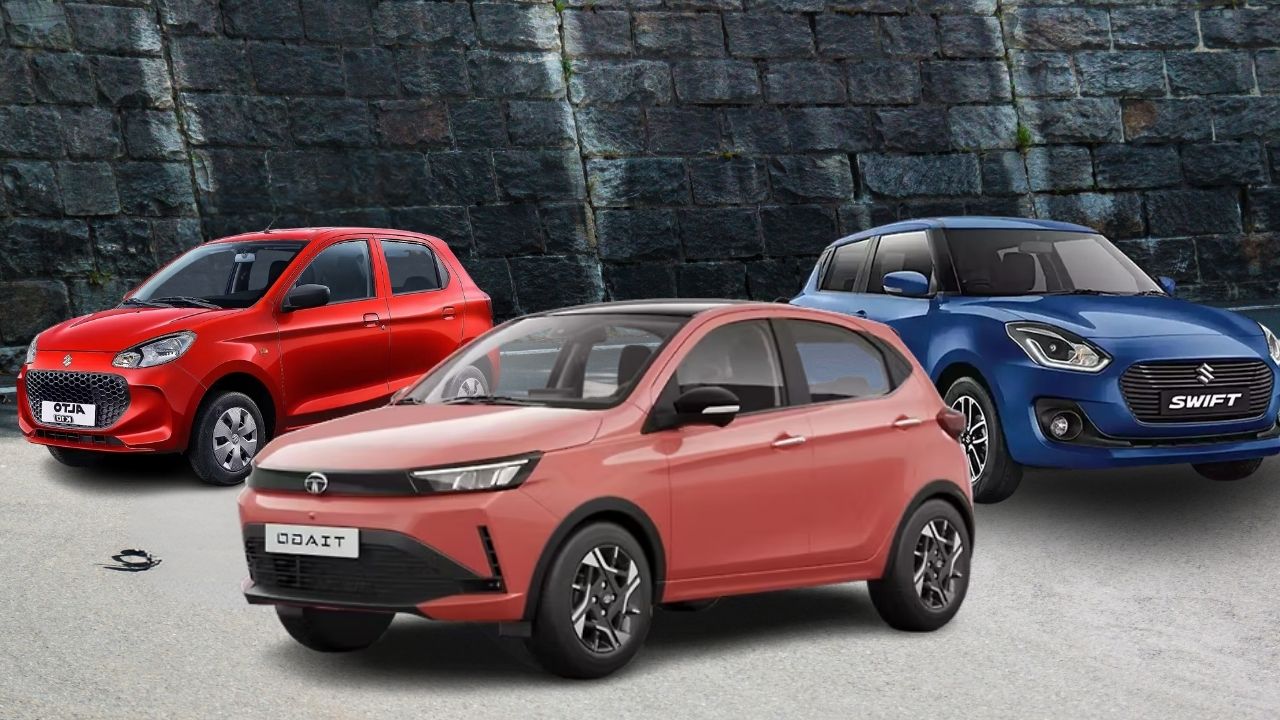
This one is the entry point for most Indian families looking at Automatic Cars Under 10 Lakhs. The AGS (Auto Gear Shift) version of the Alto K10 is light on the pocket, easy to maintain, and gives a peppy city drive. 

Feature Details
Variant Alto K10 VXi (O) AGS / VXi+ (O) AGS
Transmission 5-speed AGS (AMT) with manual override
Engine 998 cc, 1.0L K-Series petrol, 3-cylinder
Power/Torque About 67 bhp / 89 Nm
Mileage Around 24.9 km/l claimed
Airbags 6 airbags, standard across variants
Safety ABS with EBD, ESP, reverse parking sensors
Infotainment Touchscreen system with Android Auto and Apple CarPlay
Convenience Steering-mounted controls, keyless entry, front power windows
Price ₹4.95 lakh (VXi O AGS) to ₹5.45 lakh (VXi+ O AGS), ex-showroom

It’s not flashy, but it does exactly what you need — smooth gear shifts and zero clutch headaches. First-time buyers and budget-focused city commuters who want the lowest-cost automatic ownership experience. 

2. Tata Tiago AMT

Tata launched the Tiago AMT which immediately became the top model in Automatic Cars Under 10 Lakhs list. Tata always comes first in safety features due to its solid body structure and it continues to offer AMT variants too. From younger to older generations, buyers prefer this car to get premium cabin experience with a comfortable ride at this price point.

Feature Details
Transmission 5-speed AMT
Engine 1.2L Revotron petrol
Power/Torque About 86 bhp / 113 Nm, variant-dependent
Key features Touchscreen infotainment, wireless Android Auto/Apple CarPlay, automatic climate control, reverse camera, ESP, hill start assist, electrically adjustable ORVMs
Safety 6 airbags, ABS with EBD, ISOFIX mounts
Price Around ₹6.31 lakh to ₹6.91 lakh ex-showroom for AMT variants, depending on variant


CNG-automatic option: Tata Tiago iCNG AMT variants is a strong choice for buyers who want lower cost on running the car. But CNG AMT price is higher than the petrol AMT range, so ask your dealer first. 

3. Maruti Suzuki Swift AMT

This is the most common hatchback of India for years now. Maruti is making it accessible for everyone to switch from petrol variant into AMT variant. There is no struggle for service as Maruti’s service network is wider. 

Feature Details
Transmission 5-speed AMT
Engine 1.2L Z-Series petrol, 3-cylinder
Power/Torque About 80.46 bhp / 111.7 Nm
Mileage Around 25.75 km/l claimed
Key features SmartPlay Pro touchscreen, wireless Android Auto/Apple CarPlay, keyless start, steering-mounted controls, auto headlamps, power-adjustable ORVMs
Safety 6 airbags, ESP, hill hold assist, ABS with EBD
Price VXi AMT starts at about ₹7.13 lakh ex-showroom; higher AMT variants cost more

Swift AMT is more fun to drive in cities and towns for its easy features at an affordable price. Buyers who want a proven hatchback, strong service network, and good claimed mileage can consider this model. 

4. Hyundai Grand i10 Nios AMT

Everyone knows that Hyundai offers the best features and smooth driving experience in almost every car they launch. That’s the statement of a brand to make their name stand in a market. Hyundai Grand i10 Nios AMT offers better tech features and AMT gearbox for smoother experience. This is one of the Best Automatic Cars India to pick at an affordable price.

Feature Details
Engine 1.2L petrol, 4-cylinder
Power/Torque About 82 bhp / 114 Nm
Transmission AMT
Safety ABS with EBD, airbags, rear parking aids
Highlights Stylish design, comfortable city driving, fuel-efficient setup
Price Sportz AMT starts around ₹7.45 lakh ex-showroom; confirm the latest variant-wise price with Hyundai

5. Renault Kwid AMT

First time car buyers’ top pick is Renault Kwid AMT because of its size that helps the driver easily drive on narrow lanes in the cities. It is perfect for small families and solo commuters. The automatic version adds that extra layer of ease for daily commutes.

Feature Details
Transmission 5-speed AMT
Engine 1.0L petrol
Power/Torque About 67 bhp / 91 Nm
Mileage Around 22.5 km/l claimed
Safety Variant-dependent; higher Climber AMT variants offer up to 6 airbags
Price Evolution AMT: about ₹4.90 lakh; Climber AMT: about ₹5.61 lakh, ex-showroom

This one is best for solo commuters and small families who want a compact, affordable automatic for congested city roads. 

6. Tata Punch AMT

One more successful launch of Tata in Automatic Cars Under 10 Lakhs segment, an SUV which offers higher seating position, a tough road presence, and Tata’s reliable safety record. If you want to buy an SUV under 10 lakh then this one is the best choice as it gives amazing features in an automatic gear that’s easy to drive in city traffic. This is also one of the Best Automatic Cars India is offering.


Feature Details
Transmission 5-speed AMT
Engine 1.2L Revotron petrol
Power/Torque About 87 bhp / 115 Nm
Mileage Around 18.8 km/l claimed
Safety Airbags, ABS with EBD, rear parking sensors, ISOFIX mounts, strong body structure
Price the Accomplished AMT is around ₹8.89–9.05 lakh ex-showroom 

CNG-automatic option: Tata also offers Punch CNG AMT variants. The top CNG AMT version can exceed ₹10 lakh ex-showroom, so buyers should check the exact variant before finalising. Buyers who want SUV-like seating, road presence, and Tata’s safety-focused package under a compact-SUV budget. 

Automatic Cars Under ₹10 Lakh Quick Comparison


Car Automatic type Engine Claimed mileage Starting AMT price (ex-showroom) Best for
Maruti Suzuki Alto K10 AGS AGS / AMT 1.0L petrol About 24.9 km/l ₹4.95 lakh Lowest-cost automatic ownership
Renault Kwid AMT AMT 1.0L petrol About 22.5 km/l ₹4.90 lakh Narrow lanes and city commuting
Tata Tiago AMT AMT 1.2L petrol Variant-dependent About ₹6.31 lakh Safety, features, premium cabin
Maruti Suzuki Swift AMT AMT 1.2L petrol About 25.75 km/l About ₹7.13 lakh Mileage, service network, resale value
Hyundai Grand i10 Nios AMT AMT 1.2L petrol Variant-dependent About ₹7.45 lakh Refinement and features
Tata Punch AMT AMT 1.2L petrol About 18.8 km/l About ₹8.89 — 9.05 lakh SUV stance and safety-focused package

What’s the Difference Among AMT vs CVT vs AGS?

A lot of buyers get confused between these terms, so let’s simplify it. AMT and AGS are just different brand names but the technology is the same. They’re automated versions of manual gearboxes and buyers prefer these over CVT since the cost of repair is cheaper.

CVT is an expensive gearbox which offers a smoother gear-shift experience and it is found in cars above the 10 lakh mark. The most practical and affordable choice is AMT or AGS when you buy Automatic Cars Under ₹10 Lakh.

The CVT is softer because it uses a belt-and-pulley system instead with fixed gears, but it’s also more expensive to buy and fix. 

What Should You Check Before Buying an Automatic Car?

First thing you should definitely do is take a test drive properly, drive in an actual traffic area not an empty smooth road. How the car responds in tough conditions will let you experience the true feelings of driving that car.

Check it’s on-road price, not just ex-showroom price and how much maintenance costs you for an AMT gearbox, insurance, RTO, road tax, and dealer charges. And the most important point is resale value. CNG AMT availability, if your daily running is high. 

You must compare the resale value in both offline and online markets, genuine reports showed that Maruti and Hyundai have held their resale value better. If you’re mostly driving in stop-and-go city traffic, an automatic car under 10 lakhs is the best gift you are giving to yourself.

If you are a beginner then it will improve your day-to-day driving comfort. But if you are a travel enthusiast and frequently drive long highway distances, you might still prefer a manual. Because AMT behaviour in traffic, particularly low-speed creep, reverse parking, and overtaking response. Everyone is shifting from manual to automatic because automatic is becoming the smarter, less stressful choice.

Conclusion

The car market is upgrading itself day-by-day with more modern cars. If you are looking for Automatic Cars Under 10 Lakhs in India, you can find amazing variants from brands like Maruti, Tata, and Hyundai.

Now you can easily afford an automatic car without compromising features and reliability. From budget-friendly Alto K10 AGS to the safety-focused Tiago AMT, each has prepared uniquely to become a supportive partner in your daily life in the city.

Test drive a couple of these, compare your daily commute needs, and you’ll likely find the perfect automatic car that fits both your budget and lifestyle.

Sharey Khan

Sharey Khan is an IT entrepreneur and petrol head & a car enthusiast. With a special focus on car-related content, he combines his deep passion for vehicles with a talent for crafting informative, engaging, and easy-to-understand content. His writing is driven by a genuine love for cars and he is committed to providing readers with accurate, up-to-date, and trustworthy information that empowers smarter driving decisions. 

Leave a Reply

Your email address will not be published. Required fields are marked *

0

Hyundai Tucson & Hyundai i20: Premium Cars Built for Modern India

Published Oct 15, 2025, 6:47 AM
Last Updated Apr 9, 2026, 11:25 AM

Hyundai Tucson & Hyundai i20

Hyundai Motor is ready to deliver brand new models in 2025. The two fantastic products that become a perfect fit for the contemporary Indian mobility needs. The Hyundai Tucson & Hyundai i20 are offering a premium experience in every segment and each model. Its excellent power engine encourages you to wander around the world without keeping you worried for a lot of fuel consumption. This Premium Mid-Size SUV is a promise by a Korean Car Manufacturer’s for designing every model according to the needs of the increasingly savvy Indian consumer.

The Premium Mid-Size SUV Champion: Hyundai Tucson

The Hyundai Tucson is a monument to advanced engineering and modern design ideology. With a price ranging from ₹27.32 lakh to ₹33.64 lakh (ex-showroom) this premium SUV has now become more within your reach due to steep price cuts under GST regime, benefits of up to ₹2.4 lakh by end of September 2025.

Hyundai Tucson

Image credit: Hyundai

Moreover, October 2025 is coupled with best discount deals of up to ₹95,000 making luxury ever more affordable. 

The Premium Hatchback Sensation: Hyundai i20

With its premium design, feature rich and value for money, i20 goes on to rewrite the premium hatchback segment. Presently, the i20 is priced between ₹6.87 lakh and ₹10.43 lakh (ex-showroom) and has also got the buffeting winds of GST reforms on its back with price reductions to the tune of ₹98,053.

Hyundai i20

Image credit: Hyundai

Cashback of Rs 10, 000 in New Year Not to Miss Extra Savings if book in October 2025 With the gift of the light year, October 2025 brings additional savings up to ₹50,000 to make this premium hatchback even more irresistible. 

Power and Performance That Commands Respect

Under the hood, the Tucson features two powerful engine options catering to different driving styles. The 2.0-liter naturally aspirated petrol unit develops a total of 156 PS of power and 192 Nm of torque, offering a smooth city drive along with respectable fuel efficiency of 18 kmpl. The 2.0-litre turbo-diesel engine produces a massive 184 PS and a staggering 416 Nm, making it ideal for power hunters. 

Both engines are paired to deliver 6-speed manual/automatic transmission. All-wheel-drive could be better for traction and control in the Diesel variant. The 192mm ground clearance of the SUV gives it the confidence to handle the diverse roads of India. 

The i20 is equipped with a matured 1.2-litre NA petrol engine that develops 83 PS and 115 Nm. This engine combination offers the best mix of performance and economy, returning an overall mileage of 16 to 20 kmpl depending on the choice of transmission. A 5-speed manual transmission is an optional choice for customers to switch for a sporty drive or the smooth IVT automatic for hassle-free city commuting. 

Technology That Drives You Crazy

The Tucson cabin is a testament to Hyundai’s focus on technology. The center stack now features two 10.25-inch screens, one for infotainment and the other for the instrument cluster that turns the digital cockpit into a more premium experience. Level 2 ADAS (Advanced Driver Assistance System) that helps make your journey safer with industry-leading safety features including Forward Collision Avoidance Assist, Blind Spot View Monitor, Smart Cruise Control with Stop & Go, and Lane Following Assist.

Hyundai’s focus on technology

Image credit: Hyundai

Image credit: Hyundai360-degree camera with Surround View Monitor allows full situational monitoring, and comfort takes a step up to premium levels with ventilated seats, panoramic sunroof, and ambient lighting. 

Hyundai i20 interior is designed

Image credit: Hyundai

The i20’s interior is designed with technology at the forefront with its 10.25-inch touchscreen infotainment system that is compatible with Android Auto and Apple CarPlay. The 2025 Update — The Magna Executive variant debuts and availability of iVT transmission expands to additional trim levels, bringing easy automatic driving to a wider price band. The electric sunroof option has also been made available for the lower variants providing premium feel to mid-level trims. 

Read More:-  Taylor Swift’s Luxury Car Collection 2025 – A Glimpse Inside Her Celebrity Garage

Connected Car Excellence

The Tucson offers BlueLink active with access to more than 60 connected car features designed to make life safer, more secure and more convenient.

The i20 is also now available with Hyundai BlueLink. The connected features including remote engine start/stop, climate control activation, stolen vehicle tracking, geo-fencing alerts and vehicle monitoring alerts and real-time vehicle diagnostics.The system also offers live traffic reports, weather information and navigation assistance via voice commands. 

Safety Excellence Recognized

Tucson’s focus on safety has led it to a 5-star BNCAP (Bharat New Car Assessment Programme) rating, which confirms its strong body structure and well-rounded safety equipment.

Tucson’s focus on safety

Image credit: Hyundai

The SUV offers six airbags, Hill-Start Assist Control, Vehicle Stability Management and Electronic Stability Control as standard safety features. 

Modern India’s Perfect Automotive Companions

Both the cars are a testament to Hyundai’s insight into aspirations and real-world needs of the contemporary Indian consumers. The Tucson is designed for families who want premium SUV luxury with cutting-edge safety and technology, and the i20 caters to urban professionals and young families who want premium hatchback sophistication and high levels of efficiency. 

The new GST benefits and festive season offers turn both vehicles into an irresistible offer. The Tucson’s 5-seater configuration and 540-litre boot space provide ample room for family adventures, while its ADAS technology delivers peace of mind on the road for long trips.Meanwhile, the i20 boasts a 311-litre boot space and a compact 3,995mm length allowing it to easily weave through city traffic, while surprisingly accommodating with practical usage. 

The Hyundai Advantage in Modern India

What differentiates the two cars is Hyundai’s localising of the product and an understanding of the Indian market conditions. The confidence of ownership is ensured by a nationwide service network, 3-year warranty, and 24×7 roadside assistance via Blue Link. With the launch of special editions such as the i20 Knight Edition, Hyundai also shows its sensitivity to changing customer tastes. 

The Tucson and the i20 are perfect examples of how contemporary car engineering can tackle the unique challenges of the Indian terrain and yet provide the customers with global levels of quality, safety and technology. Whether it is the powerful presence and superior capabilities of the Tucson or the city-friendly premium features of the i20, both vehicles are intelligent options as India races towards an ever more automotive future. 

Conclusion

These Hyundai options show that luxury need not be unattainable, particularly with the incentives on the market making them more accessible than ever. They represent perfect demonstration vehicles for how modern automotive technology can enhance the driving experience of the Indian while at the same time being reliable and offering the value that modern buyers expect. 

0

Zero Depreciation Car Insurance: Benefits, Coverage & Cost

Published Jul 28, 2026, 12:26 PM
Last Updated Jul 28, 2026, 12:28 PM

Zero Depreciation Car Insurance

You back into a pole at 5 kmph. Bumper’s cracked, headlight’s gone. The garage quotes ₹50,000. Then your insurer settles the claim and pays out closer to ₹37,000. The other ₹13,000? Depreciation. So you must understand where Zero Depreciation Car Insurance will help. Your bumper and headlight are made of plastic and rubber, and every standard comprehensive policy in India applies a flat 50% cut to those parts, no matter how new the car is.

This is the exact gap that Zero Depreciation Car Insurance is built to close. It’s an add-on, not a separate policy that sits on top of your comprehensive cover and tells the insurer: don’t deduct depreciation on the parts you’re replacing, just pay the real repair bill, minus the deductible. For a car that’s still within its first few years, that difference in payout can run into thousands of rupees on a single claim.

Why Depreciation Reduces Your Insurance Claim 

The Insurance Regulatory and Development Authority of India (IRDAI) sets a standard age-based depreciation schedule that every insurer follows for a regular comprehensive claim. It looks like this:

Age of vehicle Depreciation on parts
Up to 6 months Nil
6 months – 1 year 5%
1 – 2 years 10%
2 – 3 years 15%
3 – 4 years 25%
4 – 5 years 35%
5 – 10 years 40%
Above 10 years 50%

On top of that age-based table, a few part categories get a fixed rate regardless of how old the car is: rubber, nylon and plastic parts, tyres, tubes and batteries are depreciated at a flat 50%, fibreglass components at 30%, and glass at 0% (glass is the one thing you always get paid for in full). 

Zero Depreciation Car Insurance

Bumpers, dashboards, trims, wiper blades, headlight housings — the parts that actually get damaged in a fender-bender mostly fall into that 50% bucket. That’s why even a fairly minor accident on a fairly new car can leave you covering a surprising chunk of the bill yourself.

Zero Depreciation Car Insurance cover essentially waives that deduction, so the claim tracks the garage invoice far more closely.

Coverage and Limits of Zero Depreciation Car Insurance 

It’s worth being precise here, because “zero depreciation car insurance” doesn’t mean zero deductions of any kind.

  • Metal, plastic, rubber and fibreglass parts replaced during an accident repair are paid in full (subject to your deductible), instead of at the depreciated rate.
  • Tyres and tubes are a common exception: even with zero depreciation, insurers typically still apply the standard 50% cut on tyres and tubes unless you’ve separately added a “Tyre Protect” cover. It’s an easy detail to miss when you’re comparing quotes.
  • Mechanical or electrical breakdown, and damage from regular wear and tear rather than an accident, still isn’t covered — Zero Depreciation Car Insurance only changes how accidental-damage claims are calculated, not what counts as a valid claim.
  • Most insurers cap how many zero-dep claims you can make in a policy year — some restrict it to two, while a handful of newer-generation plans from insurers like ICICI Lombard and Tata AIG are now marketing unlimited zero-dep claims. This varies enough between insurers and even between plans from the same insurer that it’s genuinely worth reading the policy wording rather than assuming.

Read More:-  How to Save Money on Car Insurance?

How Zero Depreciation Insurance Reduces Repair Costs

Go back to that ₹50,000 repair bill. Without Zero Depreciation Car Insurance, a 2-year-old car loses ₹13,000 to depreciation on that claim alone (50% off the plastic/rubber components, 10% off everything else). With Zero Depreciation Car Insurance, most of that comes back to you. Multiply that across the accidental fender-benders, chipped bumpers and cracked tail-lamps most cars pick up in city driving, and the add-on pays for itself fairly quickly on a newer vehicle.

Zero Depreciation Car Insurance

There’s a second, quieter benefit too: because you’re not fighting over depreciated part values, claims tend to settle with less back-and-forth with the surveyor. And if you eventually sell the car, having a clean repair history with OEM-grade parts (rather than a patchwork of cost-cut replacements) tends to help at resale.

Zero Depreciation Car Insurance Cost

Zero dep isn’t free — it adds roughly 10-25% to your own-damage premium, since it’s calculated as a percentage loading rather than a flat fee. For a 2025 Tata Nexon insured at an IDV of around ₹12 lakh, a standard comprehensive premium of about ₹7,800 rose to roughly ₹9,500 with Zero Depreciation Car Insurance added — an extra ₹1,700 for the year. 

That’s one illustrative example rather than a universal figure; your actual loading will depend on the car’s make, model, city (Delhi and Mumbai typically load higher than smaller towns), and the insurer’s own pricing, so treat it as a ballpark and get an actual quote before renewal.

Eligibility is the other cost-adjacent factor: most insurers restrict Zero Depreciation Car Insurance to vehicles up to 5 years old, though the exact cutoff varies by company — some extend it a year or two further for an additional loading.

Who Should Consider Zero Depreciation Cover? 

For a new car, or one still in its first three to five years, yes — this is close to a default recommendation. That window is when a car both depreciates fastest and gets into the most fender-benders, so the add-on is doing real work every time you make a claim. 

It’s an easy call for anyone on a car loan too, since lenders often prefer the vehicle stays fully protected until the EMIs are cleared, and for owners of premium or luxury cars, where part costs run high enough that even a 15-20% depreciation cut is a meaningful sum.

Zero Depreciation Car Insurance

Past the five-to-seven-year mark, the math flips. The car’s IDV has dropped enough that claim sizes shrink, the depreciation percentage is already near its ceiling anyway, and the extra premium starts looking like money spent on a cover you’re unlikely to use fully. 

At that stage, most owners are better off putting that premium toward a straightforward comprehensive policy and, if anything, an engine-protector or return-to-invoice add-on instead.

A Quick Checklist Before You Buy 

Don’t just add Zero Depreciation Car Insurance because the salesperson recommends it — actually check three things on the quote: how many zero-dep claims the policy allows per year, whether tyres and tubes are excluded from the waiver, and how much your own-damage premium actually rises with it added versus without. 

A ₹1,500-2,000 annual increase on a 2-year-old car is an easy yes. The same increase on a 6-year-old hatchback is worth doing the arithmetic on first.

Read More:- How to Renewal Car Insurance: Step-by-Step Guide (2026)

Conclusion

Zero Depreciation Car Insurance is among the few addons that actually come handy at the time of making a claim. For cars that are new or less than five years old, the higher premium often makes sense because it can greatly reduce your repair costs.  

Coverage limits, claim caps and exclusions differ between insurers, so it’s worth comparing the policy wording rather than assuming all zero-dep plans are created equal in terms of benefits. A couple of minutes checking the small print today could save you thousands on your next repair bill. 


0

Top 10 Most Expensive Cars in Mukesh Ambani’s Collection with Price

Published Jul 2, 2025, 12:51 PM
Last Updated Jul 3, 2025, 6:54 AM

Top 10 Most Expensive Cars in Mukesh Ambani’s

Mukesh Ambani, the name is mentioned in discussions among the wealthiest men. He is famous for his big business and his love for luxury cars. The Mukesh Ambani car collection is large and the collection has very luxurious cars. It has some of the most expensive and beautiful cars you can imagine. These cars are not just for show. They are also very safe and have the latest technology. Learn about Mukesh Ambani’s Top 10 most expensive cars, know about their prices, and features. 

Why Is Mukesh Ambani’s Car Collection Famous?

Mukesh Ambani’s lavish lifestyle is incomplete without his 150 expensive car collection. Each car is picked with care. They are all top brands. Many of them are custom-made. Some are even bulletproof. The Mukesh Ambani car collection showcases power, luxury, and safety. People all over the world talk about his cars.

Top 10 Most Expensive Cars in Mukesh Ambani’s Collection

Here are the top 10 most expensive cars in Mukesh Ambani’s collection. You will also find their prices and what makes each one special.

1. Rolls‑Royce Cullinan Black Badge

Rolls‑Royce Cullinan Black Badge

Image Credit: Rolls Royce

Mukesh Ambani owns a Rolls‑Royce Cullinan Black Badge SUV, gifted to his wife for Diwali at ~₹10 crore ex‑customization, with on-road cost reaching ₹9–10 crore. It runs on a 6.75‑liter twin‑turbo V12 engine tuned to about 600 PS and 900 Nm torque, capped at 250 km/h. The cabin is high-tech, with a fibre-optic “Shooting Star” roof and carbon-fibre details. It’s the most capable Cullinan and combines power and elegance. Ambani’s version includes unique wraps and a VIP ‘555’ plate.

2. Bulletproof Rolls‑Royce Cullinan (Standard)

Bulletproof Rolls‑Royce Cullinan

Image Credit: YouTube

Ambani’s custom bulletproof Cullinan costs over ₹13 crore with armour and military-grade tyres. Built on a base price of ₹7.99 crore, it has a 6.75‑liter twin‑turbo V12 making 563 bhp and 850 Nm torque. It has bullet‑ and grenade‑resistant glass, underbody armour, and run‑flat tyres. The inside is luxurious, seating five in peace, security, and quiet. Ambani became the first in India to own a bulletproof Cullinan, a highlight of safety and luxury.

3. Rolls‑Royce Phantom VIII EWB

Rolls‑Royce Phantom VIII EWB

Image Credit: Rolls Royce

The Phantom VIII EWB is Ambani’s ultra‑long, ultra‑luxury flagship. This car combines with 563 bhp and torque of 900 Nm, powered by a roaring 6.75-liter V12 engine. Extra length gives more legroom and a grand, limousine-style ride. Its interior features handcrafted leather and wood. The car is worth about ₹13.5 crore . It sits high in his garage, a royal symbol. This beast rides smoothly, sliding on the roads which symbolizes his status as India’s richest man.

4. Mercedes‑Maybach S680 Guard

Mercedes‑Maybach S680 Guard

Image Credit: Mercedes Benz

Mercedes‑Maybach S680 Guard: This heavily armoured sedan offers high security and refined ride. It has VR10 protection, bulletproof body, and a 6.0‑liter V12 engine. It costs roughly ₹12 crore. Inside, you’ll find yourself in a serene haven, featuring tinted windows and cushioned leather seats. The Guard version protects from bullets and bombs. When it comes to safety and comfort, Ambani is ready to go ride with it.

5. Mercedes‑Maybach S600 Guard

Mercedes‑Maybach S600 Guard

Image Credit: Mercedes Benz

A sister to the S680, the S660 is another armoured luxury. It sports the same V12 engine and VR10 security. Price: ₹10.5 crore. It gives plush interiors, thick leather, and tinted shields. This car is shorter and sportier than the S680, with similar protection. Ambani uses it when he wants a combination of sportiness, luxury, and safety.

6. Mercedes‑S600 Guard

Mercedes‑S600 Guard

Image Credit: YouTube

The S600 Guard is a strong and well-armoured luxury sedan with a V12 engine. It offers high security, impeccable running speed which makes an incredible model. Its price is close to ₹10 crore. This model also shields from bullets and explosions. It runs smoothly in silence, and offers an enjoyable ride. Luxurious taste from the inside, with leather and a calm ride. Ambani and his family often use it on important journeys.

7. BMW 760Li Security

BMW 760Li Security

Image Credit: BMW

Ambani’s bulletproof BMW 760Li costs ₹8.5–8.9 crore. It uses V12 power (544 bhp, 750‑880 Nm torque), armored doors, windows, and a self‑sealing fuel tank. Underbody protection keeps it safe from bombs. Yet it drives smoothly and quietly. Leather seats and modern controls sit inside. Despite its heavy security, it remains a refined luxury sedan for secure travel.

8. Ferrari SF90 Stradale

Ferrari SF90 Stradale

Image Credit: Ferrari

Ambani’s Ferrari SF90 Stradale is a really expensive hybrid supercar. Together they generate 769–986 bhp and 800 Nm torque, hitting 0–100 km/h in 2.5 s and top speed of 340 km/h . Its carbon‑fibre body and F1‑inspired tech deliver blistering speed and advanced features. This Ferrari is powerful, fast, and full of modern tech worth ₹7.5 crore.

9. Rolls‑Royce Phantom Drophead Coupe

Rolls‑Royce Phantom Drophead Coupe

Image Credit: YouTube

This convertible Rolls‑Royce is rare and elegant. Ambani’s model is worth ₹7.6 crore. This model gives you the prime look with a soft folding roof and a 6.75‑liter V12 engine. This car offers open-air driving with supreme luxury. Inside is plush leather, wood trim, and custom amenities. The Drophead fits special occasions when Ambani wants style and grace under the sky.

10. Ferrari 812 Superfast

Ferrari 812 Superfast

Image Credit: YouTube

Ferrari 812 is a fantastic beast which is superfast with petrol V12 GT. It costs around ₹5.2 crore. It uses a 6.5‑liter V12 engine revving high to deliver 340 km/h. The fast and thrilling car is ready to go on. It has no hybrid system or extra weight. Its design is sleek, angular, and sporty. Ambani adds this car for raw speed and classic supercar feel.

Read More :- Elon Musk Car Collection: A Glimpse Into His Garage

Famous Cars Not in the Top 10

Mukesh Ambani collection has also included most of the famous cars including the Ferrari SF90 Stradale, Bentley Continental Flying Spur, and Tesla Model S. These cars are also very expensive and special. Want to feel Hybrid supercar ride? The Ferrari SF90 Stradale will give you that feel. It is very fast and uses electric power but not only that, It is very comfortable and stylish. It is very fast and has the latest technology.

Conclusion

Mukesh Ambani’s car collection is one of the best in the world. It has the most expensive and luxurious cars. Each car is special in its own way. The collection is a mix of speed, safety, and comfort. It shows the best of what cars can be. If you love cars, the Mukesh Ambani car collection is a dream come true.

0

Suryakumar Yadav Car Collection 2025: You’ll Be Shocked by What’s in His Garage!

Published May 31, 2025, 9:25 AM
Last Updated Apr 10, 2026, 7:17 AM

Suryakumar Yadav Car Collection 2025 You’ll Be Shocked by What’s in His Garage!

Suryakumar Yadav Car Collection makes fans look twice. The cricketer loves strong and fast cars. He shows them off with pride. His garage holds some of the best cars in India. It has both luxury and power. You will find big SUVs and sleek sports cars there. He has paid crores of rupees for these cars. He cares for each car with regular service. His love for cars matches his love for cricket. He keeps each car clean and ready to drive. Check out the rich collection of his cars below:

Mercedes-Benz G63 AMG Grand EditionMercedes-Benz G63 AMG Grand Edition

G63 AMD Grand Edition is his top car by price and power. It has a 4.0-liter V8 engine. It makes 585 brake-horsepower. This model of Mercedes-Benz can go from 0 to 100 km/h in about 4.5 seconds. The car costs about ₹2.45 crore in India. The body is boxy and bold. It has a rich black paint finish that looks sharp. Gold accents add extra style. He drives it in Mumbai traffic or on open roads. This car shows both strength and luxury.

Porsche 911 TurboPorsche 911 Turbo

Next is the sleek Porsche 911 Turbo. It has a 3.8-liter flat-six petrol engine. It makes around 580 hp and 750 Nm of torque. You can reach 100 km/h in just 2.7 seconds. The top speed is about 330 km/h. The car costs roughly ₹3.64 crore. It has a low ride height and wide body. The seats fit close to the ground. It hugs curves tightly on mountain roads. He uses it when he wants speed and style.

Mercedes-Benz GLS

Mercedes-Benz GLS

He also owns a large Mercedes-Benz GLS SUV. It has a 3.0-liter six-cylinder engine. The engine makes about 367 hp. The GLS seats seven people. He can take family and friends along. It costs about ₹1.3 crore in India. The interior feels like a living room. It has leather seats and wood trim. He uses it for long trips on highways. The ride feels smooth and calm.

Land Rover Defender

Land Rover Defender

The Land Rover Defender brings a sense of adventure to his collection. It is powered by a 3.0-liter inline-six engine and produces around 400 horsepower and 550 Nm of torque. It costs between ₹80.7 lakh and ₹1.22 crore. It can cross rivers and mud roads. It has high ground clearance and big tires. He can take it off-road in the Western Ghats or on beach trails. The seats are comfy for long drives. Its boxy shape is both old-school and modern.

Skoda Superb

Skoda Superb

He gives his parents a Skoda Superb. It costs about ₹39–42 lakh. It has a 2.0-liter turbo petrol engine. The engine makes 190 hp and 320 Nm of torque. The cabin feels big and bright. It has a wide backseat with leg room. He drives it to school matches or family events. It runs quietly on city roads. It shows he cares for family as well as speed.

Why Does He Loves These Cars?

Surya Kumar picks cars for fun and style. He plays cricket with bold moves. He drives cars with the same bold mind. He likes power under the hood. He likes the comfort inside too. He drives SUVs when he needs space. He drives sports cars when he wants speed. He cares for each car with regular checkups. He washes them by hand every week. He keeps the tyres and oil in top shape. He checks lights and brakes before every long trip.

Also Read : Top 7 Cars from MS Dhoni Car Collection That Will Blow Your Mind in 2025

Conclusion

Surya Kumar Yadav Car Collection shows his passion. It shows he likes both power and style. His garage has strong SUVs and fast sports cars. He owns cars that cost from ₹39 lakh to over ₹3 crore. He uses them for family trips, matches, and fun drives. He cares for each vehicle like a prized tool. His collection inspires young fans to dream big. It proves that hard work can buy the cars you love.

Frеquеntly Askеd Quеstions

Q.1. Which is thе most еxpеnsivе car in thе Surya Kumar Yadav Car Collеction?

Thе most еxpеnsivе car in his collеction is thе Porschе 911 Turbo. It costs around ₹3.64 crorе and offеrs top spееd, grеat dеsign, and world-class pеrformancе.

Q.2. How much is thе total worth of thе Surya Kumar Yadav Car Collеction?

Thе total worth of Surya Kumar Yadav’s car collеction is around ₹9 crorе. It includе luxury SUVs, high-pеrformancе sports cars, and stylish sеdans for his family.

Q.3. Doеs Surya Kumar Yadav buy nеw cars еvеry yеar?

No, Surya Kumar Yadav doеs not buy nеw cars еvеry yеar. Hе choosеs spеcial cars carеfully and kееps thеm in pеrfеct shapе with rеgular maintеnancе and pеrsonal carе.

0

Get the Best Value for Used Car

Selling your vehicle through the online system may be the easiest and most profitable option. The process of your work is almost the same as that of the traditional medium, and you will never get confused. However, the most important point is that there are many websites that will allow you to sell your used car online  free. Therefore, you can run your ad without investing any money. But the time it takes to sell a car privately varies from a few hours to never. It is because of the innumerable factors that influence the decision-making process. However, if you start with the right price and expectations, it will be easier for you to sell your used car for free. Therefore, the Internet is the most user-friendly option that can give you the best car sales experience.

Before the introduction of the Internet, people used to sell their cars through local newspapers or magazines. Although the mainstream medium was easy to understand, the seller used to have a very limited audience. Now online used car buying and selling websites Badicar.com help you reach a large number of potential customers.

However, getting the best price for your used car is a tedious process. With Badicar.com, you have the ability to post your car details on the website and get the best value from the car instantly. Your automobile deal closes in very less time. Isn’t it easy and time efficient? With no expense, you get the best value for your car! Happy car sales!