0

Top 10 Electric Vehicles to Watch in 2025: Features and Prices

Published Apr 24, 2025, 9:25 AM
Last Updated Apr 25, 2025, 5:51 AM

Best Electric Cars 2025: Electric vehicles are increasingly popular today because they are more environmentally friendly and cost-effective compared to gas-powered ones, With new models releasing Each year, 2025 promises many electric cars (EVs) that will surely mix and match performance, price and tons of features.

In this articlе, wе will check out the top 10 bеst еlеctric cars of 2025. We will explore their pricе, pеrformancе and fеaturеs so you can dеcidе which onе is right for you.

1. 2025 Hyundai Ioniq 6

Thе 2025 Hyundai Ioniq 6 is onе of thе bеst еlеctric sеdans availablе. It has a fantastic driving rangе and is fun to drivе. This car offеrs many fеaturеs, making it a grеat choicе for thosе looking for a balancе of pеrformancе and tеchnology. Howеvеr, it has a smallеr cargo spacе than somе compеtitors, which might not bе idеal if you nееd еxtra room for luggagе or othеr itеms.

Hyundai Ioniq 6

Pricе: $37,850 – $54,600
Driving Rangе: 111-151 milеs (City), 94-120 milеs (Highway)
Scorе: 8.9/10

This еlеctric vеhiclе (EV) shows how еlеctric vеhiclе trеnds in 2025 arе focusing on providing bеttеr driving rangеs and morе еxciting driving еxpеriеncеs.

Also Read : Hybrid vs. Electric Cars: Which Should You Choose in 2025?

2. 2024 Dodgе Chargеr Daytona

Thе 2024 Dodgе Chargеr Daytona is a powеrful, musclе-stylе еlеctric car. It is pеrfеct for pеoplе who lovе spееd and powеr but also want to еmbracе modеrn еlеctric car tеchnology. Whilе its pеrformancе is outstanding, thе ridе is comfortablе and practical for еvеryday usе.

Dodgе Chargеr Daytona

Pricе: $57,995 – $64,995
Driving Rangе: Not availablе yеt
Scorе: 8.8/10

Also Read : How to Find the Best Used Car Near Me: A Step-by-Step Guide

3. 2025 Nissan Lеaf

Thе Nissan Lеaf has bееn around for a whilе and rеmains a solid choicе for pеoplе looking for an affordablе еlеctric car. Thе 2025 vеrsion offеrs good pеrformancе and еxcеllеnt valuе for thе monеy. It has a hatchback dеsign, which givеs it plеnty of intеrior spacе, making it a practical choicе for еvеryday еrrands.

Nissan Lеaf

Pricе: $28,140 – $36,190
Driving Rangе: 121-123 milеs (City), 98-99 milеs (Highway)
Scorе: 8.0/10

Thе Nissan Lеaf is a grеat еxamplе of affordablе еlеctric cars that makе thе transition to еlеctric vеhiclеs еasiеr for many drivеrs.

4. 2025 Lucid Air

If you arе looking for a luxury еlеctric sеdan, thе Lucid Air is onе of thе bеst options availablе. Thе 2025 Lucid Air offеrs imprеssivе pеrformancе, еxcеptional rangе, and a comfortablе ridе. This car is built to providе a luxurious еxpеriеncе with prеmium fеaturеs.Lucid Air

Pricе: $69,900 – $249,000
Driving Rangе: 108-149 milеs (City), 101-142 milеs (Highway)
Scorе: 9.3/10

Thе Lucid Air shows how luxury еlеctric cars arе stеpping up in both pеrformancе and comfort, proving that EVs can bе both high-tеch and sophisticatеd.

5. 2025 Tеsla Modеl 3

Thе Tеsla Modеl 3 is onе of thе most popular еlеctric vеhiclеs in thе world. Thе 2025 vеrsion continuеs to lеad thе еlеctric car markеt with its powеrful pеrformancе and еxcеllеnt rangе. It is known for its minimalist intеrior and advancеd tеchnology. Although it’s not thе most luxurious, thе Tеsla Modеl 3 еxcеls in affordability, making it onе of thе bеst choicеs for pеoplе looking to buy a high-pеrformancе EV at a rеasonablе pricе.

Tеsla Modеl 3

Pricе: $42,490 – $54,990
Driving Rangе: Not availablе yеt
Scorе: 9.1/10

Thе Tеsla Modеl Y pricе 2025 is a grеat option if you’rе looking for a smallеr vеrsion of Tеsla’s largеr еlеctric SUVs. Thе Modеl Y providеs imprеssivе fеaturеs and pеrformancе for thosе who want a Tеsla but nееd a bit morе spacе.

Also Read : Hybrid vs. Electric Cars: Which Should You Choose in 2025?

6. 2025 BMW i7

Thе 2025 BMW i7 is a prеmium еlеctric sеdan that brings BMW’s luxury еxpеriеncе to thе world of еlеctric vеhiclеs. With a high-еnd intеrior and powеrful еnginе options, thе i7 stands out in thе еlеctric car markеt. Howеvеr, it comеs at a highеr pricе comparеd to othеr еlеctric cars.

BMW i7

Pricе: $105,700 – $168,500
Driving Rangе: 74-87 milеs (City), 80-95 milеs (Highway)
Scorе: 9.0/10

7. 2025 Hyundai Ioniq 5

Thе Hyundai Ioniq 5 is onе of thе most wеll-roundеd еlеctric SUVs. It offеrs еxcеllеnt rangе, a comfortablе ridе, and lots of tеchnology fеaturеs. Thе Ioniq 5 is a grеat choicе for thosе who want a practical еlеctric car with plеnty of spacе for passеngеrs and cargo.

Hyundai Ioniq 5

Pricе: $42,600 – $58,200
Driving Rangе: Not availablе yеt
Scorе: 9.1/10

Thе EV battеry rangе in thе Ioniq 5 is imprеssivе, and this SUV continuеs to bе a favoritе among pеoplе looking for an еlеctric car with good valuе.

8. 2025 Chеvrolеt Equinox EV

Chеvrolеt’s nеw еlеctric SUV is a fantastic choicе for familiеs who want a roomy, practical, and affordablе еlеctric vеhiclе. Thе 2025 Equinox EV has a smooth ridе, amplе spacе for passеngеrs, and a compеtitivе pricе.

Chеvrolеt Equinox EV

Pricе: $33,600 – $43,400
Driving Rangе: Not availablе yеt
Scorе: 9.0/10

Also Read : Cheapest SUV Cars in the USA – 2025 Edition with Price & Features

9. 2025 Ford Mustang Mach-E

Thе 2025 Ford Mustang Mach-E is a fun, sporty еlеctric SUV. It offеrs еxcеllеnt pеrformancе and a comfortablе intеrior, making it a grеat choicе for pеoplе who want an еlеctric car with a bit of pеrsonality. Thе Mustang Mach-E stands out with its sporty dеsign and powеrful еnginе options.

Ford Mustang Mach-E

Pricе: $36,495 – $52,495
Driving Rangе: Not availablе yеt
Scorе: 8.9/10

10. 2025 Ford F-150 Lightning

Thе Ford F-150 Lightning is an еlеctric vеrsion of thе famous Ford F-150 truck. It brings all thе powеr and utility of thе F-150, but with thе addеd bеnеfits of еlеctric pеrformancе. Thе F-150 Lightning is pеrfеct for thosе who nееd a powеrful truck but want to rеducе thеir carbon footprint.

Ford F-150 Lightning

Pricе: $47,780 – $84,995
Driving Rangе: 73-78 milеs (City), 60-63 milеs (Highway)
Scorе: 9.4/10

Elеctric pickup trucks arе bеcoming morе common, and thе F-150 Lightning shows how еlеctric vеhiclеs can also sеrvе pеoplе who nееd a vеhiclе for tough work tasks.

Why Elеctric Vеhiclеs Arе Growing in Popularity?

Thе risе of еlеctric vеhiclеs is not just about going grееn. It is also about saving monеy on fuеl, rеducing your carbon footprint, and gеtting bеttеr pеrformancе. Ovеr timе, еlеctric vеhiclеs havе bеcomе morе affordablе, with many options now availablе for diffеrеnt typеs of drivеrs. With thе growing numbеr of affordablе еlеctric cars, morе pеoplе arе considеring switching to EVs.

Elеctric vеhiclе trеnds in 2025 show a strong push for grеatеr driving rangе, fastеr charging timеs, and morе budgеt-friеndly options. Automakеrs arе continuously innovating, making EVs morе accеssiblе and practical for еvеryday usе.

Conclusion

Now is the best time ever to think about an electric vehicle. Taking the variety of options available for 2025 into consideration, it can be said that there will surely be something for everyone. Perhaps you seek an inexpensive EV like the Nissan Leaf, a luxury model like the Lucid Air, or a speedy electric SUV like the Ford Mustang Mach-E. Whatever your next EV is, it’s here to serve your needs.

As electric vehicles are continuing to improve, we can expect more interesting innovations on the horizon. The Tesla Model Y price 2025 still is a good choice for a well-rounded EV that checks the box on performance, range, and price.

If you are someone new to electric vehicles, it is important to know the EV battery range and how other models could affect your driving habits. When you pick one of the best electric cars of 2025, you can enjoy lower running costs, improved performance, and a greener future.

 

Bipin Sharma

Bipin Sharma is a seasoned automotive content writer with over 10 years of hands-on experience in the world of cars. From the latest car news and reviews to in-depth maintenance tips and expert buying guides, Bipin covers everything that drives the automotive world. Writing about cars isn’t just his profession — it’s his passion. His deep industry knowledge and love for automobiles fuel every blog he creates, helping readers make informed decisions and stay updated on the fast-evolving auto landscape.

Leave a Reply

Your email address will not be published. Required fields are marked *

0

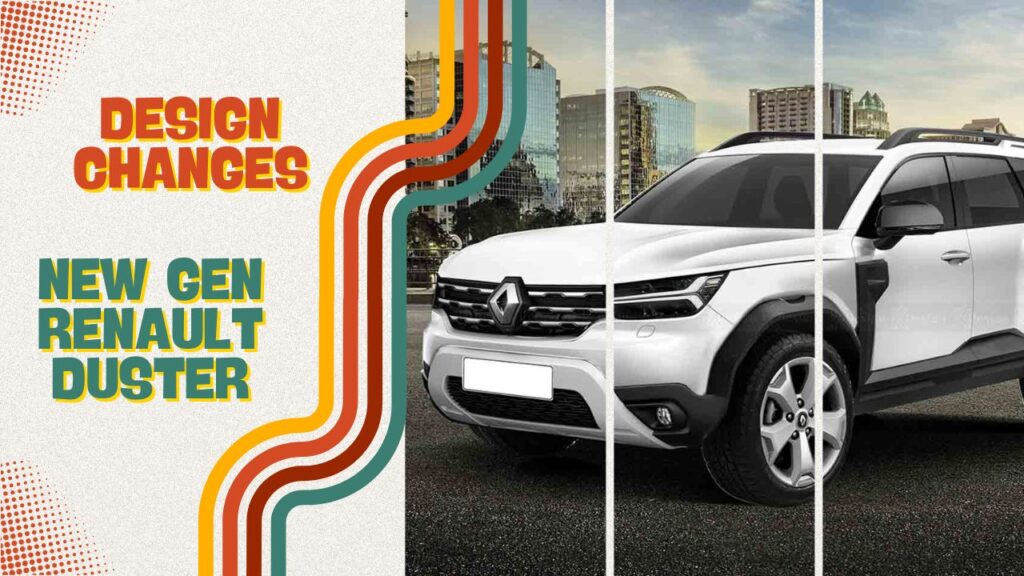
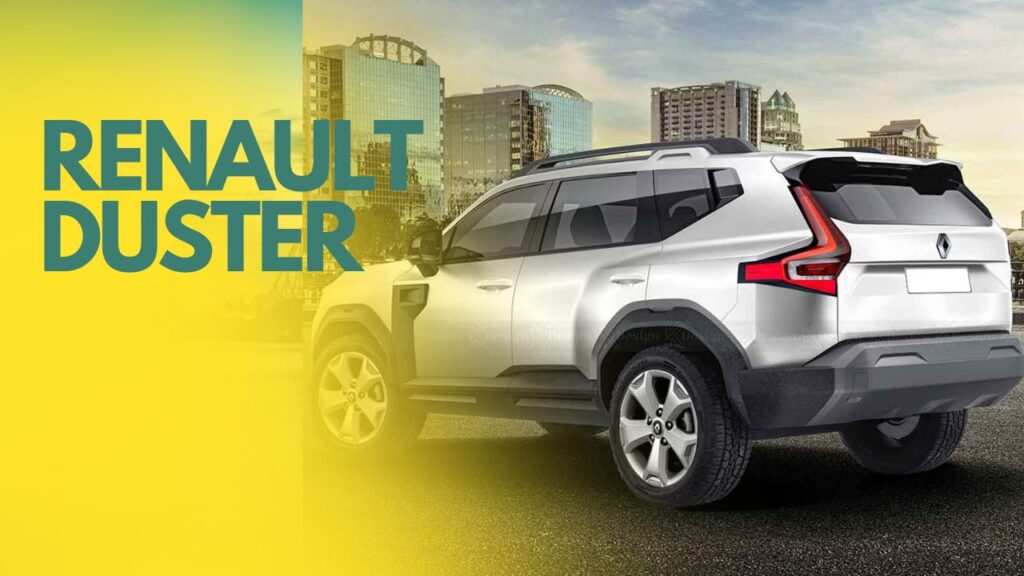
New Gen Renault Duster Spied With More Detailed Design Changes

Renault Duster

So buckle up, because after a four-year wait, Renault is reviving one of the best-selling compact SUVs in India and it’s coming with a full makeover. The new-generation Renault Duster, which will be unveiled on 26 January 2026, is more than just a cosmetic refresh. Spy images from Indian roads show that Renault has reborn this much-loved SUV for the modern buyer, and the changes are staggering to say the least. 

A Bolder Face Meets Modern Tech

The first thing that catches your eye in the spy shots is the front end, which is all new. There are none of those simple, round headlights anymore. The new Duster comes with eye-catching street LED headlights with signature eyebrow-shaped LED DRLs (daylight running lamps), providing it a futuristic stance. This is especially intriguing because Renault is going India-specific here, the global model gets Y-shaped LED DRLs, but we get this unique eyebrow motif.

The front bumper is entirely new with triple slatted air intake with the rugged appearance of the SUV being maintained with some sophisticated touches. The fog lamps are nicely placed on either side in a narrow air dam that also contribute to the visual weight and presence. Face it: this is an SUV, and it has no regrets about it. 

The Rear Gets a Connected Heart

This is where Renault is looking to tailor to tastes in India. The global screen is made up of Y-bloop patterns tail lamps, but the Indian version has a special something that connect the tail lamps not just outfitted with a LED light strip that runs across the tailgate and connects the 2 tail lamps. This is a trend that is really building steam in India, and Renault knows what the buyers want. It’s a small touch, but it makes the rear profile look a lot more premium and contemporary.

The Rear Gets a Connected Heart

The roofline gains a notched spoiler for a sporty touch, while a roof spoiler and rear wiper enhance practicality. The overall silhouette is still squat and muscular—classic Duster DNA—but the proportions are more sophisticated, more mature. 

The Tech That Makes It Feel Premium

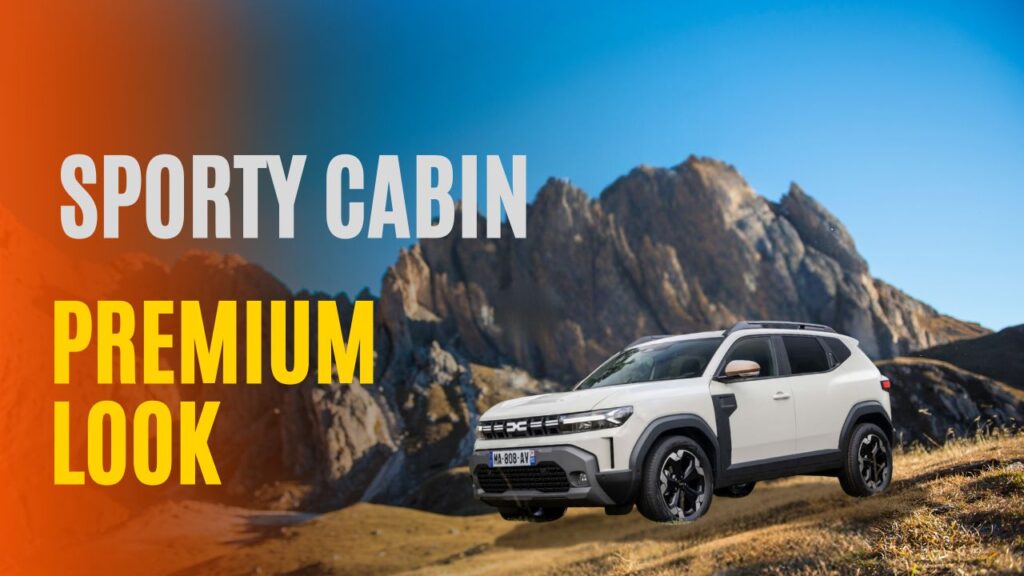
On the inside, the new Duster boldly enters the 21st century. The black-themed cabin is sporty with green stitching accents – a visual treat that instantly communicates a younger, more premium feel. That is a telling one-two punch that shows you Renault is not seeking to beat competitors on price, they’re going after buyers who want substance as well as style.

Now, the tech package is where things start to get really interesting. 

It features a 10.1-inch touchscreen infotainment system as well as a 7-inch digital driver’s display, giving you the triple-screen dashboard layout seen in far more expensive SUVs. With Android Auto and Apple CarPlay wireless, your smartphone integration is frictionless. Besides wireless phone charging, dual-zone automatic climate control and ventilated front seats that come on the higher trims, the Duster suddenly seems like a car built for comfort in the real world. 

Read More :- Rinku Singh Car Collection: From Maruti Swift to Fortuner Legender

Safety Meets Smart Features

Here’s something that really pops out: the new Duster will also be the first Renault in India to come equipped with an ADAS Level 2 suite. The radar sensor can be clearly seen in the spy shots below, which confirms this massive leap in safety. Pair that with a 360-degree camera rig (camera modules can be seen on the test vehicles), and you have features that are actually useful for Indian road conditions – be it getting out of tight parking spaces or highway driving.

Six airbags, electronic stability control, blind-spot detection, lane-keeping assist and tyre pressure monitoring complete a comprehensive safety package. That’s the sort of feature set which makes you wonder how safety standards have advanced in the compact SUV category. 

Under the Bonnet—Power Meets Efficiency

The India version of the Duster is also expected to be powered by a 1.5-litre diesel engine from Renault’s global range. If you are looking for a more frugal option, there is a 1.0-litre turbocharged petrol variant from the Kiger family. Transmission options will include a manual, CVT and a dual-clutch automatic, allowing buyers a degree of choice no matter the budget or driving style.

Under the Bonnet—Power Meets Efficiency

There’s also talk of a hybrid version being introduced within a year of the launch — a wise move in a time when efficiency is becoming more important to buyers in India. 

Additional Details That Matter

What truly captivates you when you see the spy shots is how well the India-spec Duster has been aligned. The rear door handles that are mounted on the C-pillar help in giving the profile a neater, more premium look. Large wheel-arch cladding and skid plates keep reminding you that this SUV still has a bit of a soft underbelly. A power tailgate, until now reserved for pricier models, is another practical feature signaling greater convenience.

The 17-inch or 18-inch (depending on the variant) alloys sport new designs that are exclusive to the Indian market, while roof rails and dual-tone ORVMs with turn indicators on them complete the exterior package. 

Read More:- Nissan Cars Launching Two Titans Together in India: Nissan Gravity MPV and Tekton SUV

Conclusion

The all-new Renault Duster is an interesting indicator of how Renault views the Indian market. But rather than just shelling out the global vehicle like they used to, they’re making real thị trường, arm-level compromises to it. The eyebrow DRLs, connected taillamps, interior styling, and premium features, hint that Renault has its finger on the pulse of what Indian buyers will want in 2026.

This isn’t just a return, it’s a reimagination. It will rival the Hyundai Creta, Kia Seltos and MG Hector, but with its own design language, well-rounded tech package and that undeniably rugged character, it is doing its bit to tell Indian car buyers why they once fell in love with the Duster. 

The release date is January 26, 2026. So mark your calendars – this is a comeback story for the ages. 

1

What Is ADAS? A Complete Guide to Advanced Driver Assistance Systems

Published Jul 10, 2026, 12:19 PM
Last Updated Jul 22, 2026, 12:07 PM

ADAS

Advanced Driver Assistance System is a friend of driver in new cars as safety tech to prevent the crash. That vagueness is the problem. ADAS isn’t one feature. It’s a bundle of separate systems, each doing a very specific job, and understanding them individually is the only way to actually judge whether a car’s ADAS package is worth paying for — or whether it’s mostly a marketing sticker.

ADAS features fall into three buckets — ones that warn you (FCW, LDW, BSM), ones that act for you (AEB, LKA, ACC), and ones that inform you (TSR, TPMS, parking cameras). A car with a long feature list might lean heavily on the “inform” bucket, which sounds impressive but does less heavy lifting than one solid AEB system.

So let’s break it down properly, one system at a time.

What Does ADAS Actually Stand For?

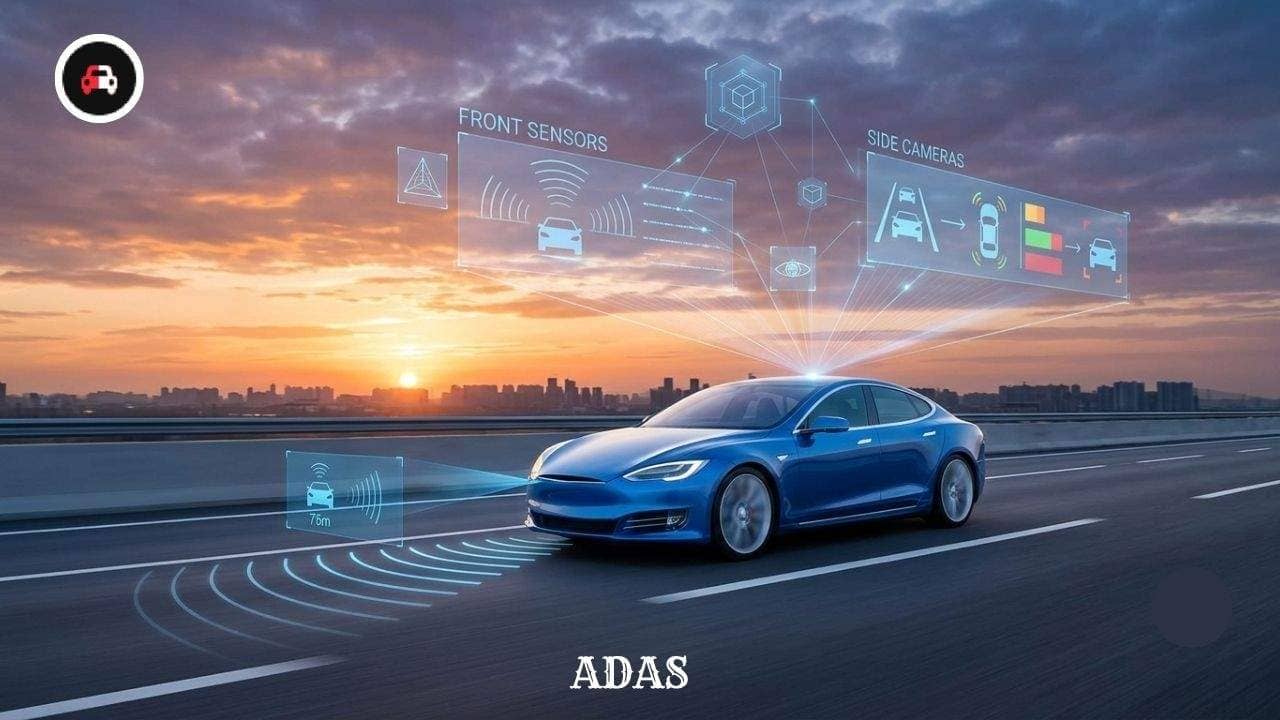
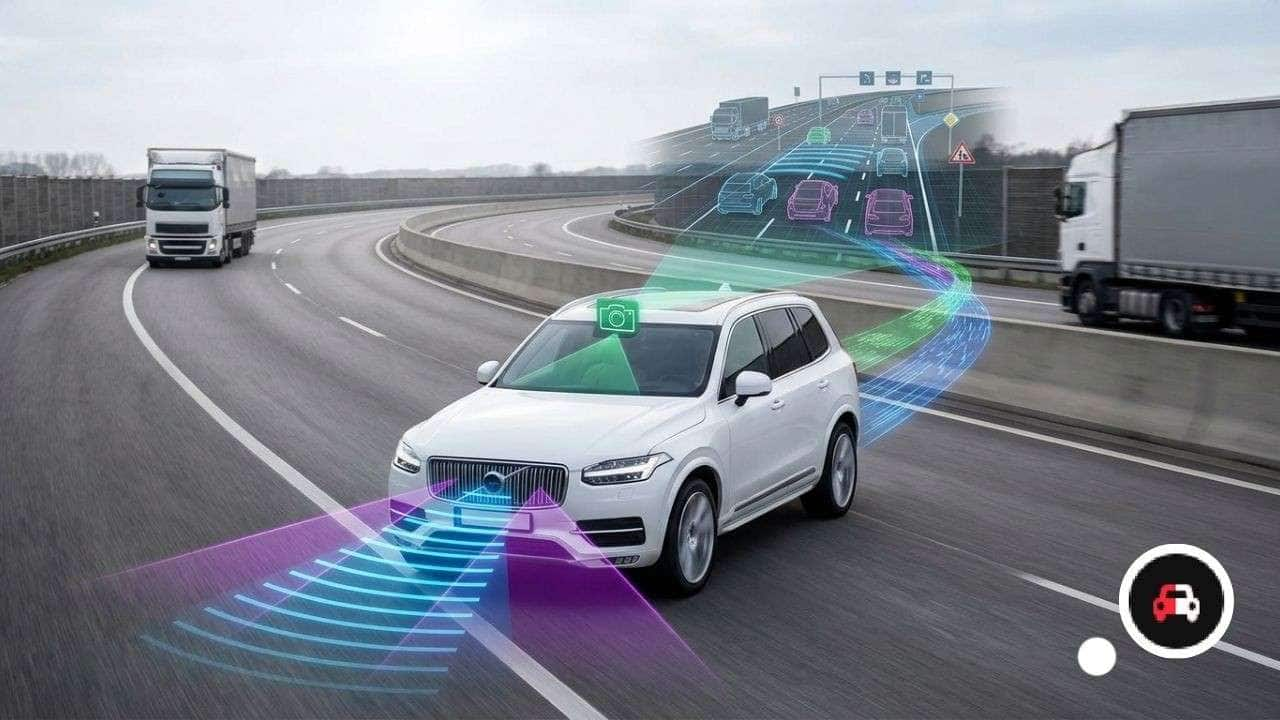
ADAS stands for Advanced Driver Assistance Systems. The keyword there is assistance — not automation. Every ADAS feature is built to support the driver, not replace them. When you drive a car with an ADAS system, it watches the road through cameras, radar, and sensors, to detect any object or something so it intervenes with a warning or a slight correction that driver might miss.  

The car suddenly braking up front, a vehicle slowly drifting into your lane, a pedestrian emerging from between parked cars. Think of it less like autopilot and more like a very alert co-passenger who’s looking at the rearview mirrors and road behind you at the same time you’re looking at the road in front of you, and who taps you on the Shoulder or takes the wheel for half a second when something feels off. 

How ADAS Actually Works Behind the Scenes

Every ADAS feature runs on the same basic loop, even though the end result looks different each time. It helps to understand this loop before getting into individual features, because it explains why some systems work brilliantly on Indian highways and struggle in city traffic.

ADAS

Step 1: Sensing

The car continuously gathers information from a combination of hardware — typically a forward-facing camera located near the rearview mirror, radar sensors embedded in the front bumper, ultrasonic sensors distributed around the body for close-range detection, and in some cases LiDAR on more advanced platforms. They’re all looking at the world in a different way: radar is good at measuring distance and speed in the rain or fog, while cameras get a better look at lane markings, traffic signs, and what an object, well, actually is. 

Step 2: Processing

All that raw information is sent to an onboard computer that runs it through algorithms trained to identify patterns — a pedestrian outline, a motorised two-wheeler darting through lanes, brake lights ahead. This needs to be done in a matter of milliseconds because when you’re driving on the highway, half a second lag means you’ve travelled several car-lengths of road. 

Step 3: Decision

Using this information, the system decides if the situation warrants a warning like a beep, alert on the dashboard, or seat vibration or intervention by braking, trimming the steering, or limiting the power of the engine. 

Step 4: Action

The car either alerts you or acts automatically applying brakes, correcting steering input, or adjusting speed, depending on which specific ADAS feature has triggered.


Once you understand this four-step loop, every individual ADAS feature is just a variation of “sense something specific, process it, decide, act.”

The Core ADAS Features, Explained One by One

1. Adaptive Cruise Control (ACC)

Standard cruise control maintains a constant speed. Adaptive cruise control takes this a step further – it travels at a set speed, but will also slow down and speed up to maintain a preset gap between your car and the one in front of you, using radar to keep tabs on that vehicle. In Indian highways like the Yamuna Expressway or Mumbai-Pune, this is actually helpful as it does away with the endless pressing on the accelerator and brake pedals in the moving traffic. 

2. Autonomous Emergency Braking (AEB)

This is arguably the most safety-critical feature in the whole ADAS suite. AEB watches the road ahead and, if it detects an imminent collision that the driver hasn’t reacted to, applies the brakes on its own — sometimes fully, sometimes partially to reduce impact speed. It’s designed as a last line of defence, not a substitute for paying attention.

3. Lane Keep Assist (LKA) and Lane Departure Warning (LDW)

These two often get bundled together but do slightly different jobs. Lane Departure Warning simply alerts you — a beep or a steering wheel vibration — if you drift out of your lane without indicating. Lane Keep Assist goes further and gently steers the car back into the lane. On Indian roads where lane discipline is, let’s be honest, inconsistent at best, this feature can be a bit of a mixed bag — it works well on marked highways but can get confused on roads with faded or missing lane paint.

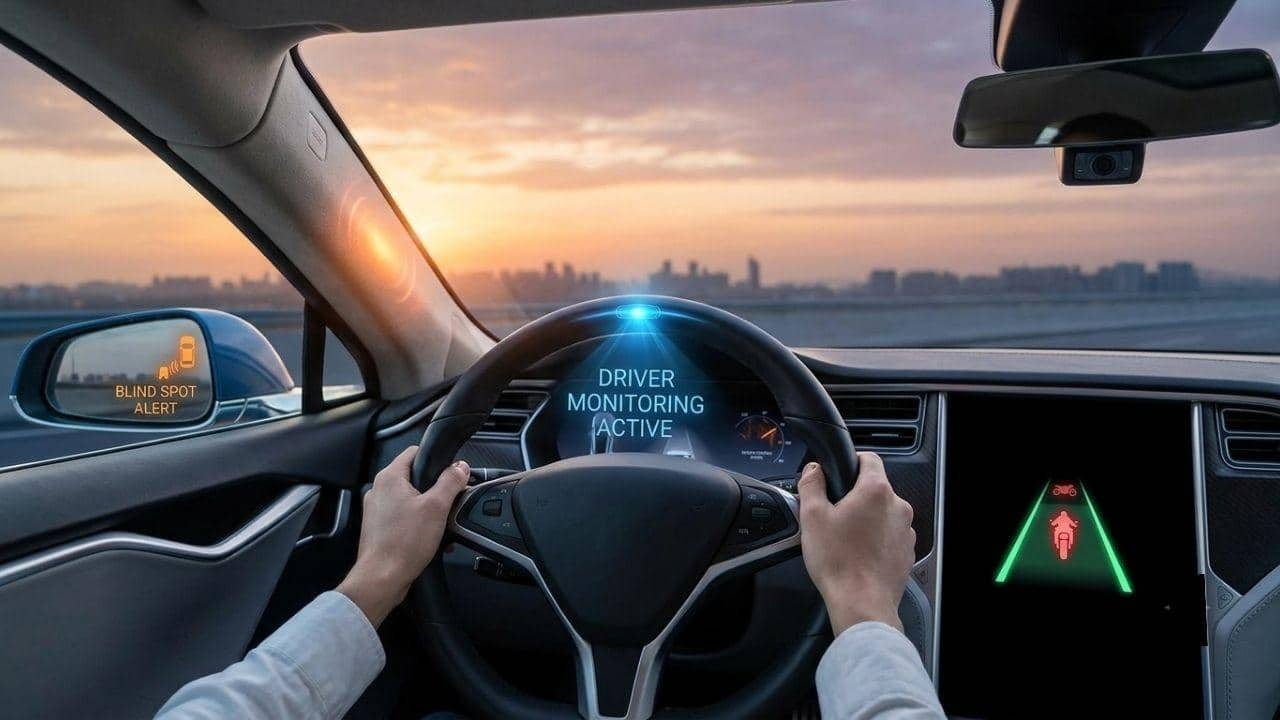
4. Blind Spot Monitoring (BSM)

Sensors placed on the back corners of the car keep an eye on your blind spots for adjacent vehicles like cars, motorcycles, and more. If an object is detected, a warning light appears on the corresponding side mirror and many systems also emit an audible alert if you signal to change lanes. It is quite handy in Indian traffic where two-wheelers and auto-rickshaws tend to criss-cross in the blind spots quite easily. 

5. Forward Collision Warning (FCW)

This feature is a warning system and does not perform the function of an intervention. If it detects that you are closing in on the car ahead too quickly, it will activate visual and audible alerts, allowing you to brake or steer away to avoid a collision. 

6. Parking Assist and Surround View / 360-Degree Camera

Multiple cameras and ultrasonic sensors are combined to generate a top-down view of the vehicle, which takes the stress out of parallel parking or driving through tight residential gates. Certain systems are now equipped with semi-automated parking, with the car manoeuvring into a space while you control the brake. 

7. Traffic Sign Recognition (TSR)

Based on the feed from a forward-facing camera, the system recognizes speed limit, no-entry, other traffic signs, and shows them on the instrument cluster or on the screen of the infotainment system. So you can keep track of the road rules, even if you do accidentally drive past a sign. 

8. Driver Attention/Fatigue Monitoring

Using either steering pattern analysis or an in-cabin camera, this system tracks signs of drowsy or distracted driving — inconsistent steering corrections, prolonged eye closure — and prompts you to take a break. Extremely relevant for long highway drives, which is a big part of Indian road travel culture.

9. Tyre Pressure Monitoring System (TPMS)

While TPMS isn’t always considered an ADAS, it certainly falls under the umbrella of vehicle safety tech systems. It constantly monitors the tyre pressure and notifies you if it goes below the recommended level, saving you from trouble of poor handling, decreased fuel efficiency or even a tyre blowout. 

ADAS

The Levels of Driving Automation — Where Does ADAS Fit?

Much of the confusion around ADAS happened due to being confused with self-driving vehicles. There are six levels of driving automation as defined by the Society of Automotive Engineers (SAE), and it’s helpful to understand where ADAS fits on that spectrum. 


Level Name What It Means
Level 0 No Automation Driver does everything; car may just have basic warnings.
Level 1 Driver Assistance One system helps, like cruise control OR lane keeping — not both together.
Level 2 Partial Automation Car controls steering and speed together, but driver must stay fully alert. Most ADAS cars sold in India today sit here.
Level 3 Conditional Automation Car handles most driving in specific conditions; driver can look away briefly but must be ready to take over.
Level 4 High Automation Car drives itself fully within a defined area or condition, no driver needed in that zone.
Level 5 Full Automation No steering wheel needed at all, under any condition. Still not commercially available anywhere.


Almost all cars that are sold in India with “ADAS” slapped on as a feature — the Mahindra XUV700 and Scorpio-N, Tata Curvv, Hyundai Creta, MG Astor, and a bunch of Toyota and Honda models, are all Level 1 or Level 2. That means the car is helping, not driving. Taking your hands off the wheel because the car has ADAS is the exact kind of assumption that gets people killed.  

Why ADAS Matters More in India Than the Marketing Suggests

It’s easy to dismiss ADAS as a Western safety obsession bolted onto Indian cars for export-market compliance. But the argument in favour of it in Indian conditions is perhaps stronger, not weaker. Indian traffic is dense, heterogeneous, and chaotic — two-wheelers darting across lanes, pedestrians jaywalking, sudden braking on tailgated city traffic, and long monotonous stretches of highways where drowsiness easily sets in. These are precisely the situations where AEB, FCW, and driver fatigue monitoring earn their keep.

That’s also a fair point on the other side of the argument. Features like Lane Keep Assist require crisp lane markings, which are still a rarity on many Indian roads. The better question isn’t just “does this car have ADAS,” but “what ADAS features does it have, and do those features correspond to the roads and conditions I deal with, day-in and day-out?” 

Is ADAS Worth Paying Extra For?

If the choice is between a base variant and one with AEB, forward collision warning, and blind spot monitoring, the safety case is strong enough that it’s hard to argue against it, especially for anyone doing regular highway driving. Features like fully automated lane keeping or advanced parking assist fall more into the comfort category — genuinely nice to have, but not something to stretch your budget for if money’s tight.

A useful way to assess ADAS is to weigh more the functions that can intervene to avoid accidents, such as Automatic Emergency Braking (AEB) and Adaptive Cruise Control (ACC), compared to those that are more informative, such as Traffic Sign Recognition (TSR) or a 360° camera. Active intervention systems have a more direct impact on safety, informational features are mostly aimed at convenience and driver awareness. 

Conclusion

ADAS is really a collection of safety features, not just one. Every system helps with a different part of driving, from alerting you to potential dangers to actively working to prevent a crash. Understanding the capabilities and limitations of these features can help you select the right vehicle and the safety systems that you can best take advantage of on the road.

0

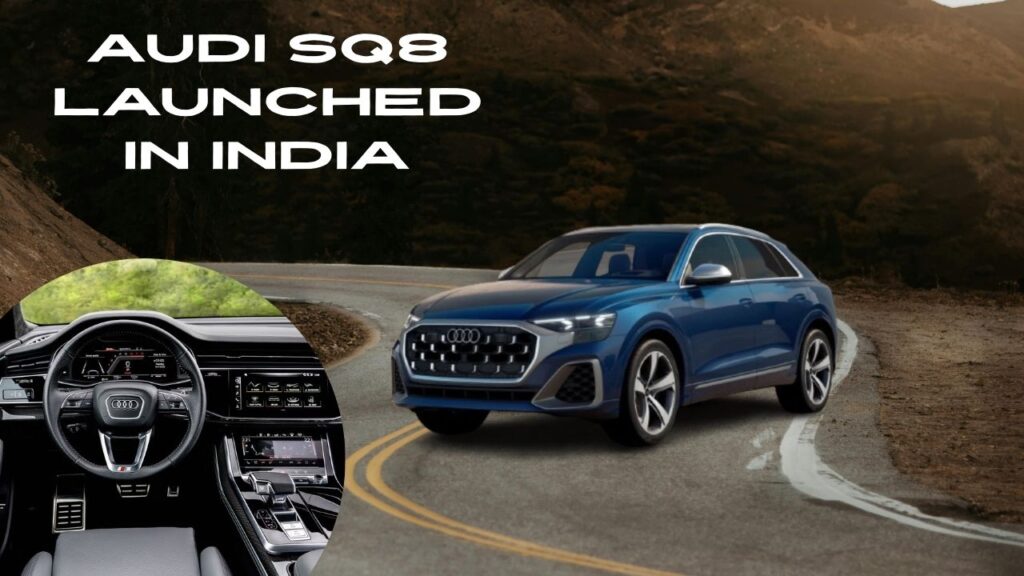
Audi SQ8 Launched in India: New Engine, High Performance & Design

Audi SQ8

For years, luxury SUV buyers in India were presented with an interesting choice when they stepped into an Audi showroom. If you liked the aggressive, coupe-style roofline of the Audi SQ8 but were aching for truly, heart-stopping performance, your options were painfully divided. Either pick up the regular Q8, which is extraordinarily luxurious but more comfortable than fast, or you can remortgage your house for the fire-breathing, track-ready RS Q8.

The difference was a hefty Rs 1.2 Crore. Audi SQ8 enters at the right time when Audi has neatly balanced its lineup, it became the right option for high performance and comfort seekers.

Price of New Audi SQ8

Introduced with a starting price of Rs. 1.78 Crore (ex-showroom), the brand new SQ8 was designed to offer V8 supercar thrills with none of the limitations or excuses that have got in the way of your family. Sure as an AI I can’t feel the G-forces of a 0-100 sprint, but I can absolutely explain what is causing such a stir in the Indian car market with this launch.

Let’s get straight to the price, the spec sheet and that glorious V8 engine along with the features that make the new Audi SQ8 so special. 

Variant Ex-Showroom Price Engine / Power
Audi Q8 Rs 1.13 Crore 3.0L V6 / 340 hp
Audi SQ8 (New) Rs 1.78 Crore 4.0L V8 / 507 hp
Audi RS Q8 Performance Rs 2.34 Crore 4.0L V8 / 640 hp

With a price tag of Rs 65 lakh more for the SQ8 from the standard model, it is undeniably a costly jump. However when you consider that it’s essentially a detuned RS Q8 – sparing you a mind-boggling Rs 56 lakh over the flagship – the SQ8 begins to look like the most intelligent purchase in the performance luxury segment. 

Absolute Best Part of This Car

As rival manufacturers are shrinking engines to turbocharged six-cylinders or leaning more on hybrid aid, Audi is preserving the V8 dream. It offers a 4.0-litre twin-turbo TFSI V8 petrol engine that runs with top speed smoothly. 


Specification Value
Maximum Power 507 hp (373 kW)
Peak Torque 770 Nm
Transmission 8-speed automatic gearbox
Drivetrain Quattro all-wheel drive which is a signature for driving tech

Audi SQ8 Performance 

The moment you press the accelerator, this SUV shoots from 0 to 60 mph in 4.1 seconds. You really need to see this to believe it: approaching two tons can move like this, easily matching proper sports cars as it serves the speed up to 250 km/h. 

Adaptive air suspension and 4-wheel steering is what makes a difference in the Audi SQ8 than any other SUVs. In daily driving, particularly at low speed, the rear wheels are steered slightly opposite to the front wheels. That sounds like tech mumbo jumbo, but in the real world it just means tighter turns and much easier parking — something you’ll really thank me for in city traffic. 

SQ8’s sport exhaust system

Step on it more on the freeway and the system compensates. At higher speeds, the rear wheels turn in tandem with the front wheels, inspiring unbelievable stability especially when performing rapid lane changes in the SUV. And if you like your handling a bit sharper, Audi even offers an optional high-end suspension system with active roll stabilization and a sport rear differential that makes the drive even more dynamic. 

And then there’s the sound. Start it and you’re greeted by a deep, unmistakable V8 rumble from the SQ8’s sport exhaust system with quad tailpipes. Isn’t it great that when you hear a certain sound you instantly know — this isn’t a luxury SUV, it’s a performance machine? 

A Design That Commands Respect

The SQ8 hits the right balance between imposing and subtle. It holds the standard Q8’s sleek, coupe-SUV profile but adds just enough muscular hostility to let onlookers know this thing is serious. 

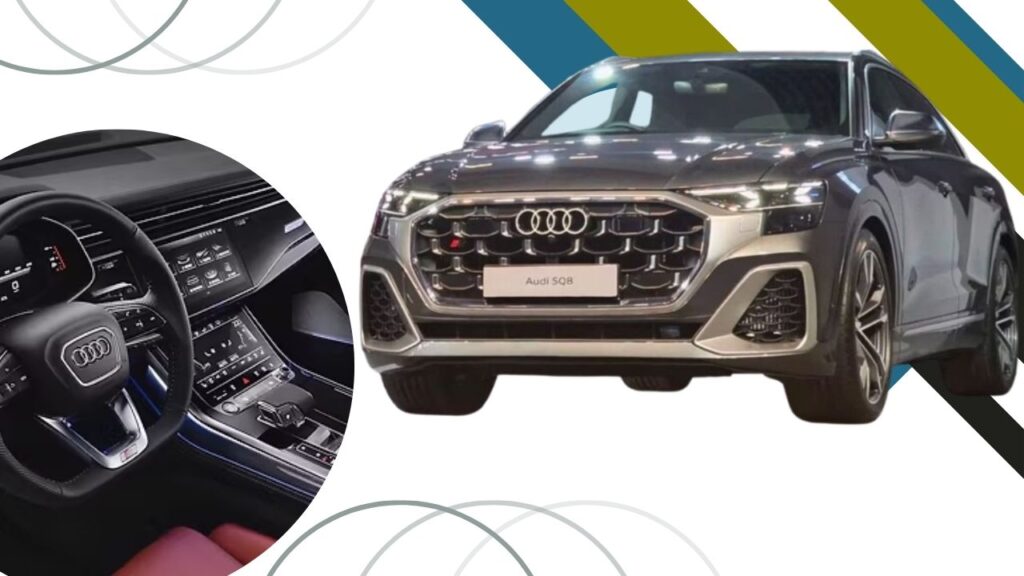
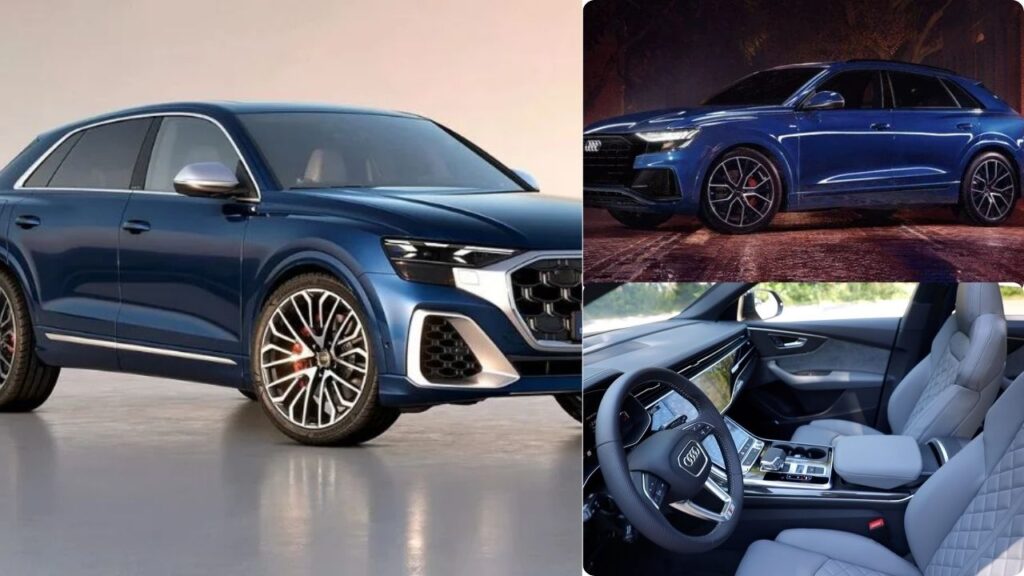
The Front: It wears Audi’s trademark Singleframe grille, but this one comes in a honeycomb design with exclusive silver trims and larger, functional air intakes on the bumper that feature fog lights. 

The Lighting: HD Matrix LED headlights with Audi Laser Light are included as standard and feature four preselectable daytime running light images.

The Profile: Standard on the SQ8 are enormous 21-inch alloy wheels (there are 22-inch graphite grey options available). The strong shoulder line, the frameless doors, the red brake calipers bearing the “S” emblem all scream performance.

The Rear: You have the gorgeous linked OLED taillights and an aggressive rear diffuser that cradles those real quad exhaust tips. 

Inside the Cabin

You could be purchasing the SQ8 for the engine, but you’re lying if you say you’ll be spending all your time in the cabin and Audi certainly hasn’t skimped on the luxury. The design of the interior is akin to that of the Q8, but with some sportier ‘S’ touches thrown in. 

Audi SQ8 Tech & Displays:

Audi’s slick dual-screen layout takes up much of the dashboard space. There’s a 10.1-inch primary infotainment display at the top for your navigation and media, and an 8.6-inch secondary touchscreen below focused on climate and vehicle controls. The 12.3-inch Audi Virtual Cockpit behind the flat-bottom steering wheel is fully digital with exclusive “S-spec” performance graphics. 

Audi SQ8 comfort

Comfort & Materials:

It’s the best of both worlds when it comes to the Audi SQ8 seats. They are covered in a high quality blend of Dinamica microfiber and leather that makes them feel luxurious and high end as soon as you sit down. 

But these aren’t bucket racing seats. They’re both just as comfortable for everyday use, says Audi. The front seats are packed with features such as heating, ventilation, full power adjustments and even a massage function.

Cabin features that gives immense look include:

  • A panoramic sunroof is provided in this car.
  • Peak audio system with speaker, 730W Bang and Olufsen 3D Premium Sound System.
  • Four-zone deluxe automatic climate control (plus fragrance feature as option).
  • Multi-color ambient light (30 colors in options).
  • Soft-close doors (automatic latching) and power tailgate.
  • A supremely practical 604-litre boot space.

Safety and Driver Assistance

What we’ve learned is that the need for safety tech scales with power. You will receive the best safety elements in your 2026 Audi SQ8 that take your and your family worries away. It includes:

  • The cabin has 8 Airbags to open in any crash.
  • Driving and Parking is becoming easier with a 360-degree camera system.
  • New ADAS Level 2 including Lane Departure Warning, ACC (Adaptive Cruise Control), and BSM (Blind Spot Monitoring).
  • SUV is stepping on to the next level with optional for buyers who require fade-free stopping power. 

Conclusion

In India, the Audi SQ8 has challengers such as Mercedes-AMG GLE Coupe and the BMW X 5 M60i and Porsche Cayenne GTS for the luxury customers.

But there’s really nothing like the Audi SQ8. It’s for the buyer who wants the thunderous soundtrack and brutal acceleration of a V8, but doesn’t want the stiff, bone-crushing ride which typically comes with top-tier track SUVs. 

It’s a real two-face car: a quiet, comfortable, tech-laden high-end cruiser Monday to Friday and a 507-hp rocket on the weekends. It certainly is a big ask at Rs 1.78 crore. The Audi SQ8 suggests that the middle is not so bad, after all, when it comes to SUVs – at least when that middle is the top. 

0

Tata Punch vs Nissan Magnite: Which Compact SUV Should You Buy?

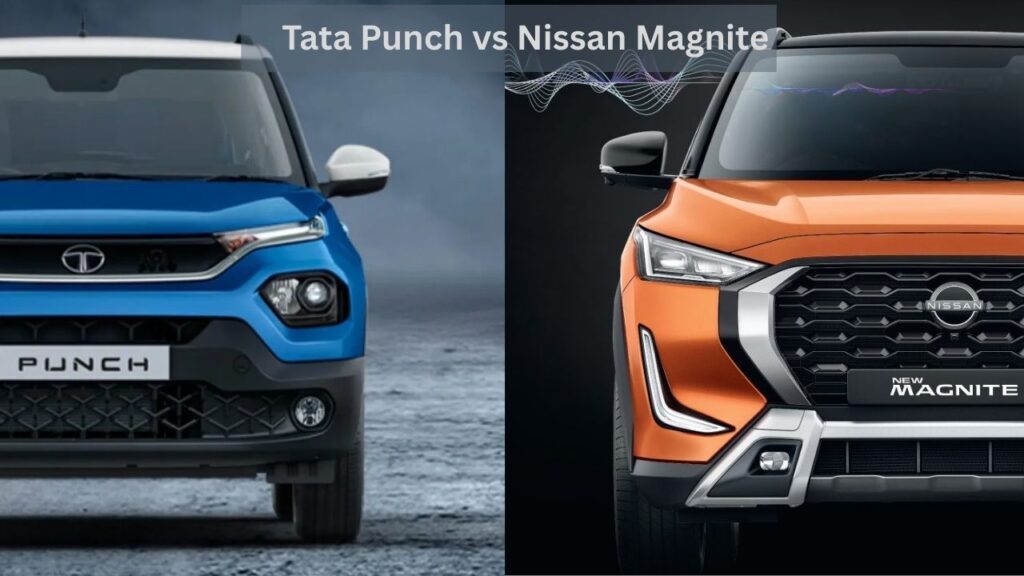
Tata Punch vs Nissan Magnite Compact SUV front side comparison

When it comes to Best Compact SUVs then Tata Punch vs Nissan Magnite is a top debating buzz. The debate between these two is a never ending road because both have similar price points and offer powerful engines. It’s hard to decide one when the other doesn’t back down to show its power and stunning look. 

Both Tata Punch and Nissan Magnite offer a compelling package that makes it hard for the buyer to choose one between them. But both are slightly different from each other in their features and design, you can explore the details to decide which Compact SUV should you buy.

Performance and Engine

Tata Punch is offering a 1.2-litre Revotron petrol engine that delivers wonderful speed up to 87 bhp for city trips but feels a little bit underpowered on highways with both 5-speed manual and automatic transmission. It also offers a CNG variant for the eco-conscious who doesn’t want to compromise powerful features. 

Tata Punch 1.2L Revotron petrol engine with manual and AMT options

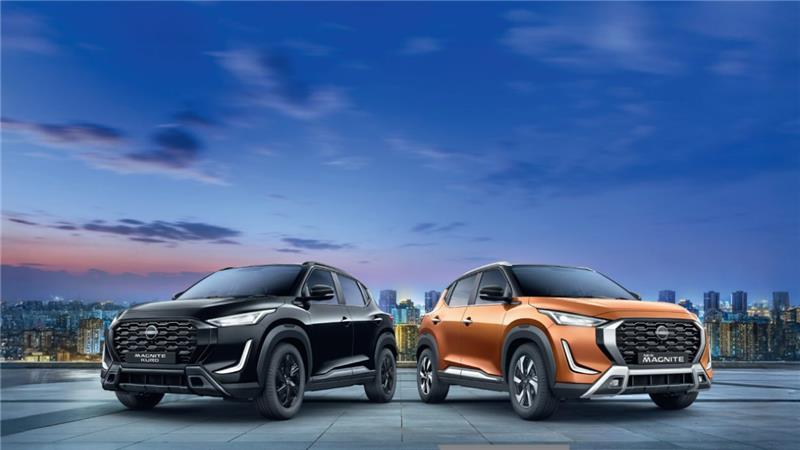
Nissan Magnite is offering 1.0-litre natural aspirated petrol engine and turbo-petrol engine for providing a more spirited and engaging driving experience on highways. It becomes your best off-road partner with its continuously variable transmission that gives a smoother and comfortable ride experience. 

Nissan Magnite turbo-petrol engine with CVT transmission

If you prefer more power driving experience and looking for the best highway partner then Nissan Magnite (Turbo Variant) is the best option. While Tata Punch is actually best for city commutes.

Features Tata Punch Nissan Magnite
Max Power 87 bhp 71 bhp, 99 bhp (turbo)
Max Torque 115 Nm 96 Nm, 152 Nm (turbo)
Transmission 5-speed manual & AMT 5-speed manual & AMT

Safety

Tata Punch got a 5-star safety rating from Global NCAP for delivering safety standards features including dual airbags, ABS with EBD, and ISOFIX child safety that prevent huge damage to its passengers. 

Nissan Magnite is also got 5-star from Global NCAP that is worth it because of its extra features for safety purposes. It got a slightly lower rating for its base model in its earlier test. But overall safety features are perfect in both the cars. The Tata Punch has an excellent reputation for its strong structure and quality, Magnite also has 5-star rating to the higher-end variants with more airbags.

Features and Interior

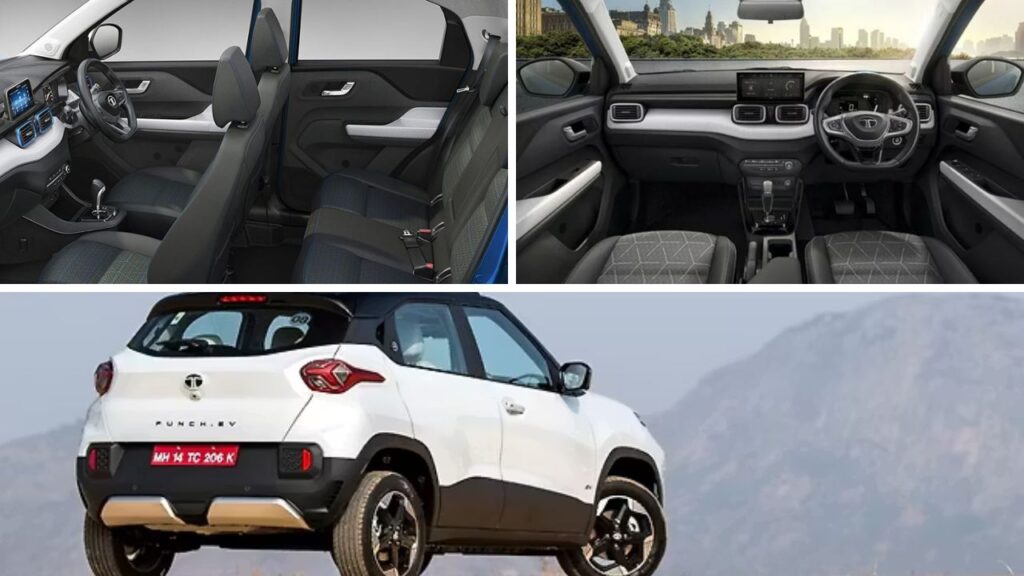
The Tata Punch is offering a well-equipped cabin with advanced tech of infotainment system, single-pane sunroof, automatic climate control, and cruise control that makes it feel more premium to sit inside the car and take a comfortable trip. 

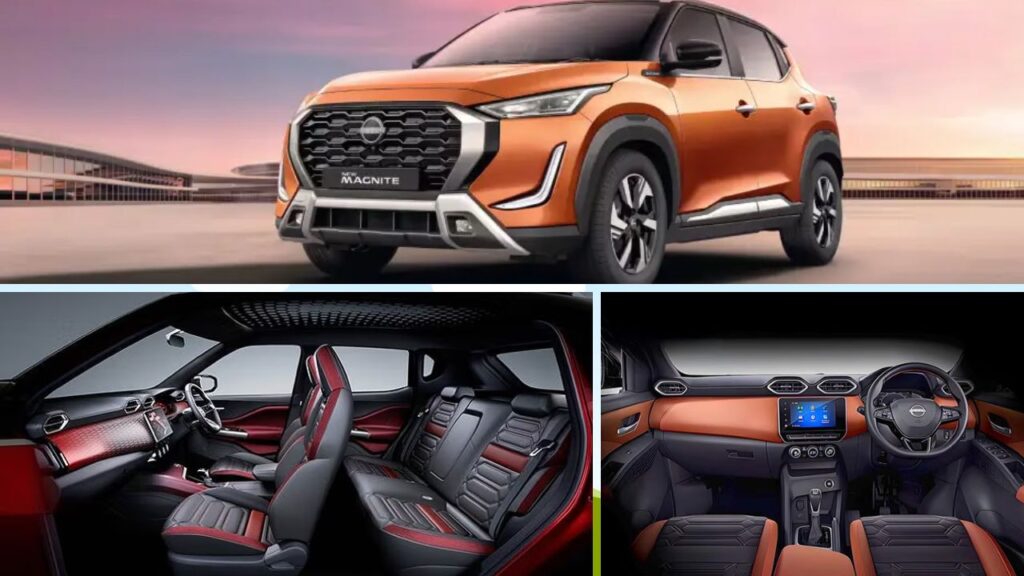
Tata Punch interior cabin vs Nissan Magnite digital dashboard

Nissan Magnite comes with a strong body with a perfect 360 degree camera and infotainment system, and digital instrument cluster which makes it perfect for long trips with advanced features and comfortable premium-feel interior. 

Space and Practicality

Tata Punch is offering larger space up to 366 litres that gives comfortable long trips. It delivers a quality ride and handles rough roads with excellent ways that ease up everything. 

The Magnite is slightly longer than the Punch that delivers more space for better legroom for rear passengers. Its ground clearance is also higher as it has a longer wheelbase at 205 mm compared to the Punch’s 187 mm. The Magnite’s boot space is 336 liters.

Tata Punch is ideal for those who want a comfortable ride on rough roads and Magnite is offering other advantages with more ground clearance and legroom space.

Read More:- Inside Mark Zuckerberg’s Car Collection: Luxury, Style & Surprises

Price and Value for Money

Punch has many variants and price varies upon their model, base models have attractive prices. The price lies upon a range of Rs. 6.20 lakh to Rs. 10.32 lakh. Tata Punch is accessible to a wider audience due to its availability in the market.

The Magnite is also an affordable SUV which offers advanced features and powerful engine. Magnite price ranges between Rs. 6.14 Lakh and Rs. 13.59 Lakh which is slightly different from Punch.

Both Nissan and Tata have offered similar price points with slightly different features. Nissan has more features and provides a smoother ride with more comfortable space.


Choose If… Tata Punch Nissan Magnite
Safety Priority 5-star Global NCAP (base model itself is very safe) 4-star safety (good, but not the best)
Build Quality & Ride Solid build, comfortable ride, spacious cabin for city drives Decent comfort, focuses more on driving fun than heavy build
Interiors More conventional, well-appointed cabin Stylish, youthful interiors with quirky design
Driving Performance Adequate for city & casual highway drives Turbo-petrol option gives strong highway performance
Budget-Friendly Slightly higher starting price due to safety & solid build Pocket-friendly, excellent value for money
Features Good but not feature-loaded in base trims Feature-rich (360° camera, larger touchscreen, connected features)
Ground Clearance / Rough Roads Good enough for city and small potholes Higher ground clearance, better for rough/unpaved terrain

Conclusion

In Tata Punch vs Nissan Magnite, there is no winner because you should choose a vehicle according to your need and preferences. Some people need more comfort and space. Nissan Magnite is best for them. Tata Punch on the other hand, offers best safety precautions to prevent crashes and good for city commutes.

0

Lionel Messi Car Collection 2025: Price, Models & Exclusive Photos

Lionel Messi

When you think about Lionel Messi, you think about the quick dribbles, excellently timed free-kicks and trophies that he has won in his career. But off the field, the Argentine star leads a life of extreme opulence — one he displays most dramatically in his incredible collection of cars. With a net worth of $600 million, Messi hasn’t just invested in homes and businesses – he’s now curated a garage that reads like a luxury automotive hall of fame. 

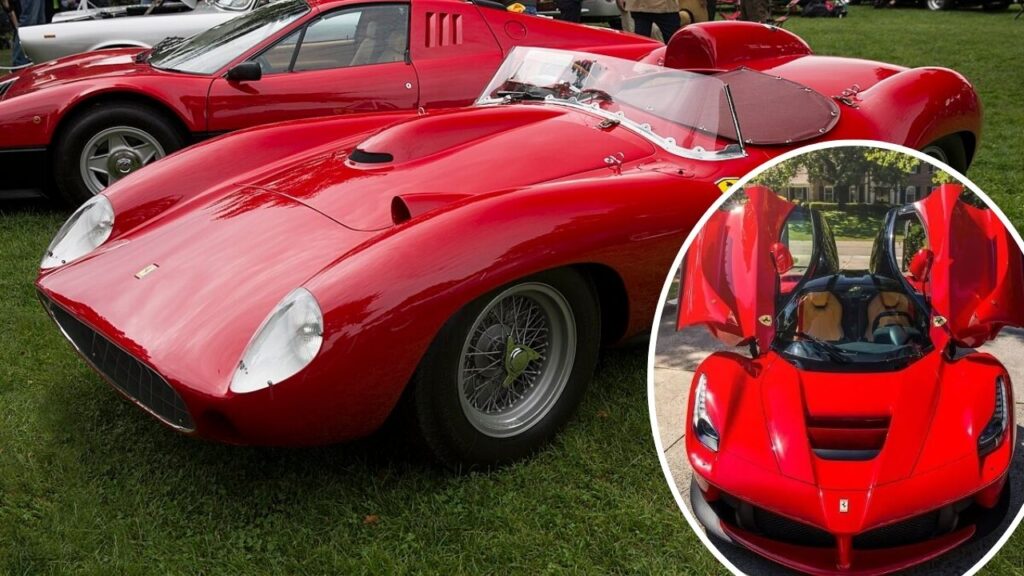
Ferrari 335 S Spider Scaglietti

Messi’s place in the world of football is fully encapsulated in one car, the Ferrari 335 S Spider Scaglietti, worth a mind-boggling $36million. This is not just any Ferrari-it’s iconic 1957 model that has charmed collectors around the globe. What makes this purchase all the more memorable was the bidding war. 

Lionel Messi Ferrari 335 S Spider Scaglietti

Messi actually outbid Cristiano Ronaldo to snag this ultra-rare gem, writing yet another chapter in the so-famed rivalry between the two football titans. The Scaglietti isn’t just a car line, it’s a part of automotive history, a classic vintage elegance and stunning engineering brilliance. 

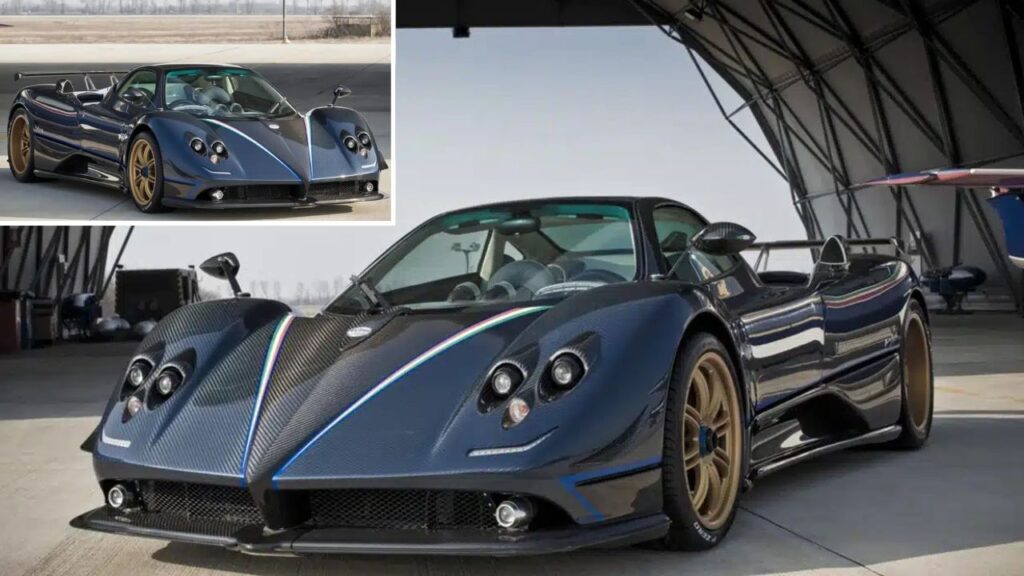
Pagani Zonda Tricolore

The bespoke Italian supercar is the ultimate expression of performance engineering. Powered by a 7.3-litre V12 engine that makes 670bhp, the Zonda Tricolore can achieve a top speed of 350 km/h. Its unique design and artificial intelligence driven optimization make the lightweight carbon fiber body more like a work of art than a vehicle. 

Lionel Messi Pagani Zonda Tricolore

When Messi commands this one-of-a-kind beauty, he’s not merely driving a car — he’s flying a rare masterpiece that only a select few will ever possess. It cost about $2 million.

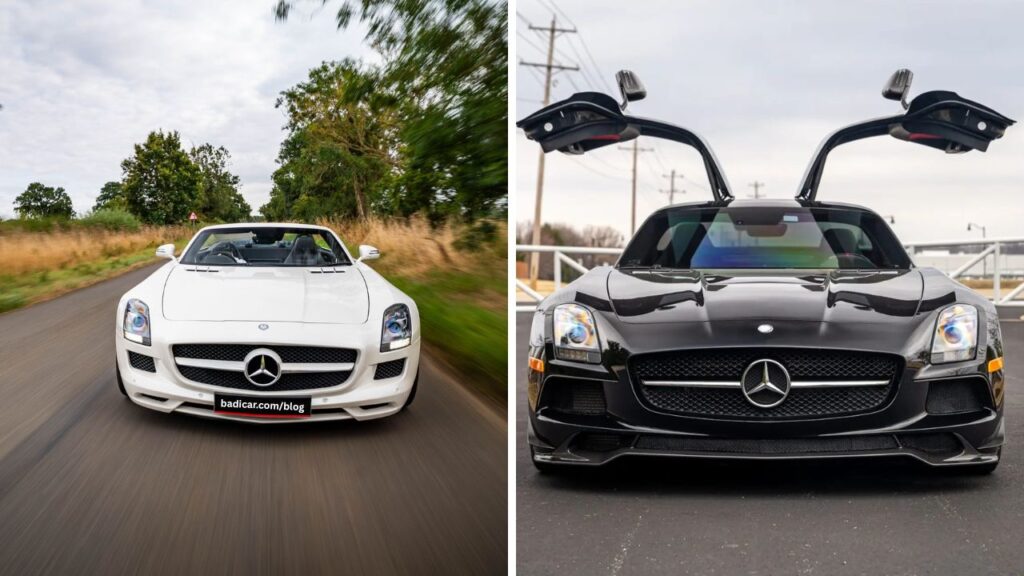
The German Luxury Statement: Mercedes SLS AMG

Elegance and raw power come together in the Mercedes SLS AMG, which Messi was the owner of for $642,490. This luxury sports coupe is also immediately distinguishable by its breathtaking gull-wing doors – a design element that’s much more functional than it seems. Powering it all is a 6.2-liter V8 that produces 583 horsepower, which helps the car go from 0 to 60 miles per hour in 3.7 seconds. 

Lionel Messi Mercedes SLS AMG

It’s no surprise that the SLS AMG epitomizes the fine line between Mercedes’ luxurious brand and high performance engineering, and can be seen at Messi’s homes in Argentina and Miami. 

The Audi Trinity: A Barcelona Legacy

Considering the FC Barcelona during his golden years Messi had a special tie with Audi, as the club was sponsored by the automobile company. As a result, he owns three Audis: the RS6 ($108,000), the A7 ($69,200), and the Q7 ($54,590).

The Audi Trinity A Barcelona Legacy

These German vehicles are more than just cars — They’re physical mementos of his glory days at Camp Nou, each one is symbolic of trophies, titles, and unforgettable moments he won and created in Barcelona. 

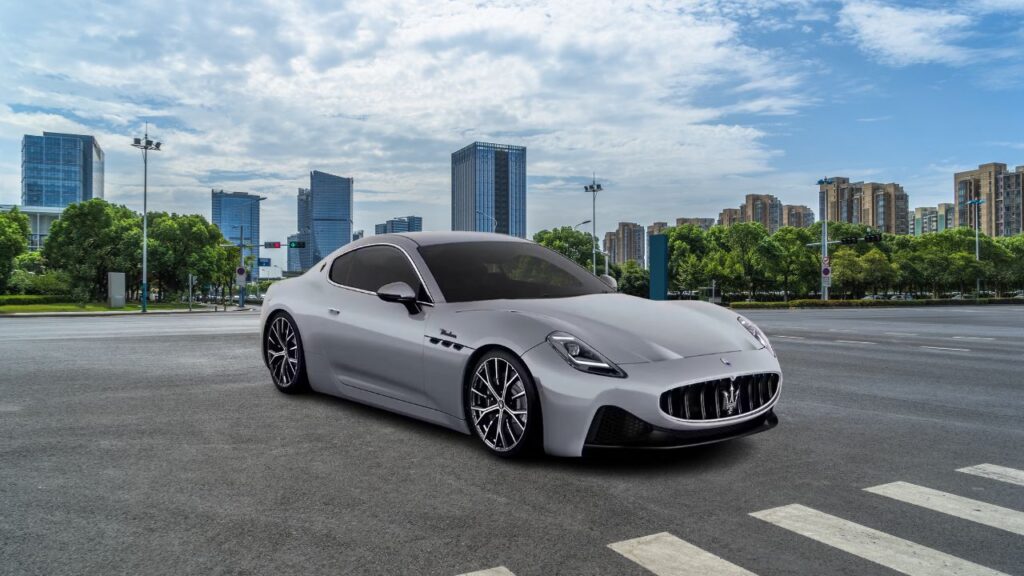
Maserati Gran Turismo MC Stradale

Lionel Messi si avecina Argentina a menudo conduce su Maserati GranTurismo MC Stradale, superdeportivo cuyo precio ronda los $242.100. This is what makes this powerful 4.7 litre V8 engine producing 444 bhp which can reach from 0 to 60 mph on the speedometer in 4.5 seconds.

Maserati Gran Turismo MC Stradale

From its Italian styling and racing heritage, the Maserati portrays Messi’s attributes in speed, control, and precision on the field and off.  

The Luxury SUV Duo: Range Rovers

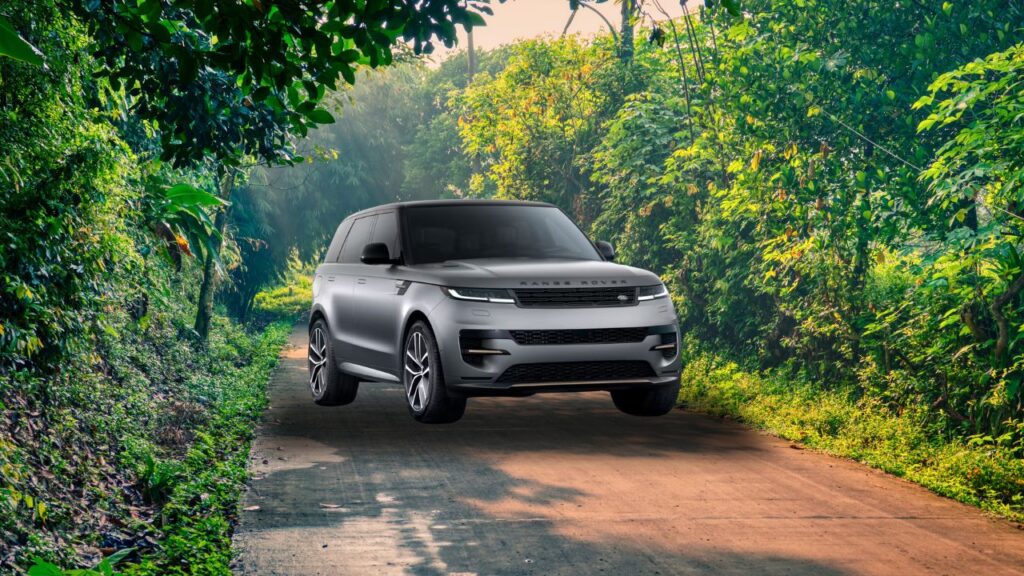
The $200,000 Range Rover Vogue and the $69,500 Range Rover Sport are the two tigers running on road. The Vogue, seen regularly in his Barcelona days, is powered by a supercharged 5.0-liter V8 engine and is the ultimate in luxury. 

Lionel Messi Range Rovers

With the 3.0-liter V6 Range Rover Sport delivers a driving experience more engaging than ever, while upholding the brand’s renowned comfort and refinement. These SUVs are great for a family man – Messi – they’re roomy, powerful and dripping in luxury so there’s no mistaking them. 

Read More:- Hyundai Alcazar 2025: Latest Price, Specifications, Features, Mileage and Engine Details

Cadillac Escalade

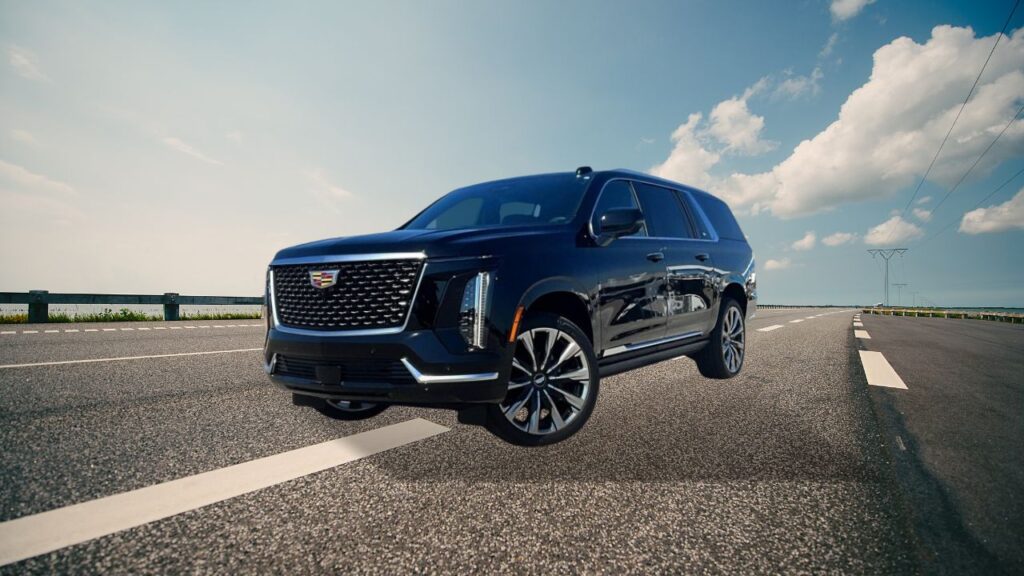
He owns a Cadillac Escalade and he mostly visits his home in the car. This one gives a luxurious vibe as it is worth $242,100. This high-performance car has a 4.7-liter V8 producing 444 horsepower, which can go from 0 to 60 in only 4.5 seconds.

Lionel Messi Cadillac Escalade

With its clean Italian design, racing background and, let’s face it, quite common (in a good way) association with football through brand partnerships, the Maserati encapsulates Messi’s traits — speed, control and precision, both on and off the pitch. 

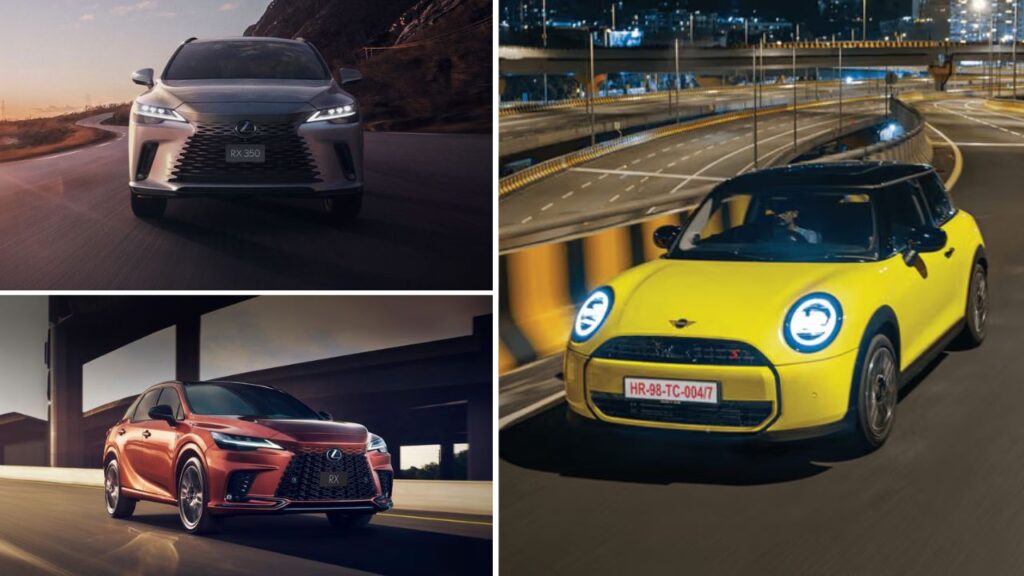
Lexus RX 450h & Mini Cooper

Lionel Messi Lexus RX 450h and Mini Cooper

For all his exotic supercars, Messi also values practicality. He has a Lexus RX 450h ($46,800), which is known for its good gas mileage and reliability, and a cute Mini Cooper ($19,733) for driving around town. These cars demonstrate even a soccer god knows how to credit – mix exotica with day to day usability. 

Conclusion

The global superstar has an incredible car collection that totals about $3.6 Million but don’t let this fool you, it is the story of a man that has done it all in football. It’s not all about horsepower and price tags; it’s about passion, legacy and a life lived at full throttle. From the ultra-rare Ferrari that was once part of a museum exhibition to the modest Mini Cooper ideal for a quick city getaway, Messi’s garage is a reflection of the many sides of the greatest footballer of our time.