0

Top New Midsize SUVs in 2025 – Stylish, Spacious & Performance-Packed Option

Published Nov 10, 2025, 11:18 AM
Last Updated Apr 13, 2026, 12:30 PM

Top New Midsize SUVs in 2025

2025 Midsize SUV: Fresh energy in the midsize SUV segment for 202 5 The midsize SUV segment is ever growing in size and production for 2025 is set to increase with these three new models. This house of power, size, smart traits, and family vacation gives the right combination. Manufacturers manufacture rugged off-road rides and silky luxury rides. They have created standout appearance and business sturdiness with refined hi-tech tech. Whether you require seats and storage for all the family on your journeys, or speed and gadgets for a fun drive on a track, then these models fit the bill. Here’s the best brand new for 2025 They’re the Kia Telluride and Hyundai Palisade, — Ford Bronco, Mazda CX-90, Toyota Grand Highlander and Subaru Outback. Each increases the bar when it comes to looks, protection, and skills. 

Kia Telluride

Kia Telluride

Feature Specification
Starting Price $37,885​
Seating Space 7 passengers 
Engine 3.8L V6
Transmission 8-speed automatic 
Power & Torque 291 hp & 262 lb-ft torque 
Fuel Efficiency 20-22 MPG combined 
Towing Space 5,000 lbs

Front and rear heating and ventilation for seats. Leads its class in second-row legroom. Wireless charging tray. 360-degree surround-view cameras. Automated emergency braking with turn-junction detection. Blind-spot collision alert. Lane keep assist. Premium audio package. 

2026 Hyundai Palisade

2026 Hyundai Palisade

Feature Specification
Starting Price $41,035 
Seating Space 8 passengers (3-row) 
Engine 3.5L V6, Hybrid option available​
Transmission 8-speed automatic with shift-by-wire 
Drivetrain FWD or HTRAC all-wheel drive

Bold new exterior proportions, mid-century modern furniture-inspired interior, panoramic curved display (12.3-inch cluster), dual-swing multi console with UV-C sterilization, ambient mood lamp, hands-free smart liftgate, Hyundai Digital Key 2, forward collision-avoidance assist with full detection, blind-spot view monitor, navigation-based smart cruise control. 

Safety: 10 air bags including knee and centre airbag, a full suite driver assistance systems. Adopting a new design language, the 2026 Palisade offers more space over all with a longer wheelbase and wider body that gives it improved poise and stance. Its furniture designed interior makes for a premium living space that takes the driving experience to new heights. 

Ford Bronco

Ford Bronco

Feature Specification
Starting Price $41,990 
Seating Space 5-7 passengers (2-door or 4-door available) 
Engine Options 2.3-litre EcoBoost turbo 
2.7-litre EcoBoost twin-turbo V6
3.0-litre EcoBoost V6
Transmission 10-speed automatic 
Drivetrain Standard 4×4
Fuel Efficiency 17-20 MPG combined

AWD Capability Ratings, Advanced Trail Turn Assist, Terrain Management Modes, new-for-2019 standard electronic locking differentials and outstanding approach/departure angles, Terrain Response system

Performance: V6 0-60 acceleration in about 6.2 seconds. Yet the Ford Bronco manages to straddle daily-driver pragmatism and full on off-road adventure unlike any other vehicle on the market. Its advanced technology and refined on-road behavior catch off guard those who expected nothing but rugged capability. 

Mazda CX-90

Mazda CX-90

Feature Specification
Starting Price $37,845 — $38,800 
Seating Space 8 passengers (3-row) ​
Engine 3.3L e-SKYACTIV and 369 lb-ft torque 
Transmission 8-speed automatic ​
Drivetrain i-Activ AWD (standard on all 2026 trims) ​
Fuel Efficiency 25 MPG combined 
Towing Space 5,000 lbs

360 Degree View Monitor, Active Driving Display (Head Up Display), Driver Personalization (Memory Seat 2 Position/Memory Mirror), Nappa leather-trimmed seats (option), Panoramic Moonroof, Sport/Off-road/Towing mode, Kinematic Posture Control, Mi-Drive system

Technology: Wireless Apple CarPlay, Android Auto, premium audio system, 10.25-inch display.

Mazda’s CX-90 keeps driving fun first, but the family stuff is well covered. Its smooth turbocharged inline-6 engine delivers the right balance of responsiveness and efficiency. 

Toyota Grand Highlander

Toyota Grand Highlander

Feature Specification
Starting Price $42,355 (gas) / $45,705 (hybrid) ​
Seating Space 7-8 passengers
Engine Options 2.4L turbo with 265 hp
Hybrid powertrains available with 27-36 MPG combined Fuel Eff.
Transmission 8-speed automatic ​
Drivetrain All-wheel drive ​
Fuel Eff. 22 MPG combined (gas) 

&

27-36 MPG combined (hybrid)

Towing Space 5,000 lbs 

Heated and cooled driver and front passenger seats, 8-way power seats with lumbar support, wireless charging, blind spot monitor, adaptive cruise control, lane keep assist, pre-collision system, blind-spot warning, rear cross-traffic alert.

The Grand Highlander offers Toyota’s legendary reliability with modern day comforts and best-in-class fuel efficiency in hybrid trim, an ideal choice for the environmentally conscious family. 

Subaru Outback

Subaru Outback

Feature Specification
Starting Price Lower price point (approx. $29,995 base MSRP) ​
Seating Space 5 passengers ​
Engine Options 2.5L naturally aspirated 4-cylinder
2.4L turbocharged 4-cylinder
Transmission CVT​
Power & Torque 182 hp / 176 lb-ft torque 
260 hp / 277 lb-ft torque
Fuel Efficiency 26-28 MPG & 23-28 MPG turbo
Towing Space Up to 3,500 lbs

Standard all wheel-drive with off-road-capable Wilderness trim option, newly tailored drivetrain for excessive grade (40%), new transmission gear ratios. Outback delivers wagon utility with true all-terrain capability, so adventurers have not only the means to explore, but the reason to do so every day. 

Read More:-  Mini Countryman S ALL4 – Stylish, Powerful & Premium Compact SUV

Conclusion

The 2025 midsize SUV lineup shows that you can have a practical vehicle with a personality. Each has its own taste with the Kia Telluride is the refined comfort, the Hyundai Palisade is what family travel should be, the Ford Bronco is unbeatable off-road enthusiasm, the Mazda CX-90 delivers driving thrill and elegance, the Toyota Grand Highlander is all about efficiency and dependability, and the Subaru Outback is still rugged adventure meets everyday usability. Whether you’re into tech, utility, or pace, these are the SUVs that offer the best combination of leading-edge innovation and everyday usefulness for today’s drivers in 2025. 

Sharey Khan

Sharey Khan is an IT entrepreneur and petrol head & a car enthusiast. With a special focus on car-related content, he combines his deep passion for vehicles with a talent for crafting informative, engaging, and easy-to-understand content. His writing is driven by a genuine love for cars and he is committed to providing readers with accurate, up-to-date, and trustworthy information that empowers smarter driving decisions. 

Leave a Reply

Your email address will not be published. Required fields are marked *

0

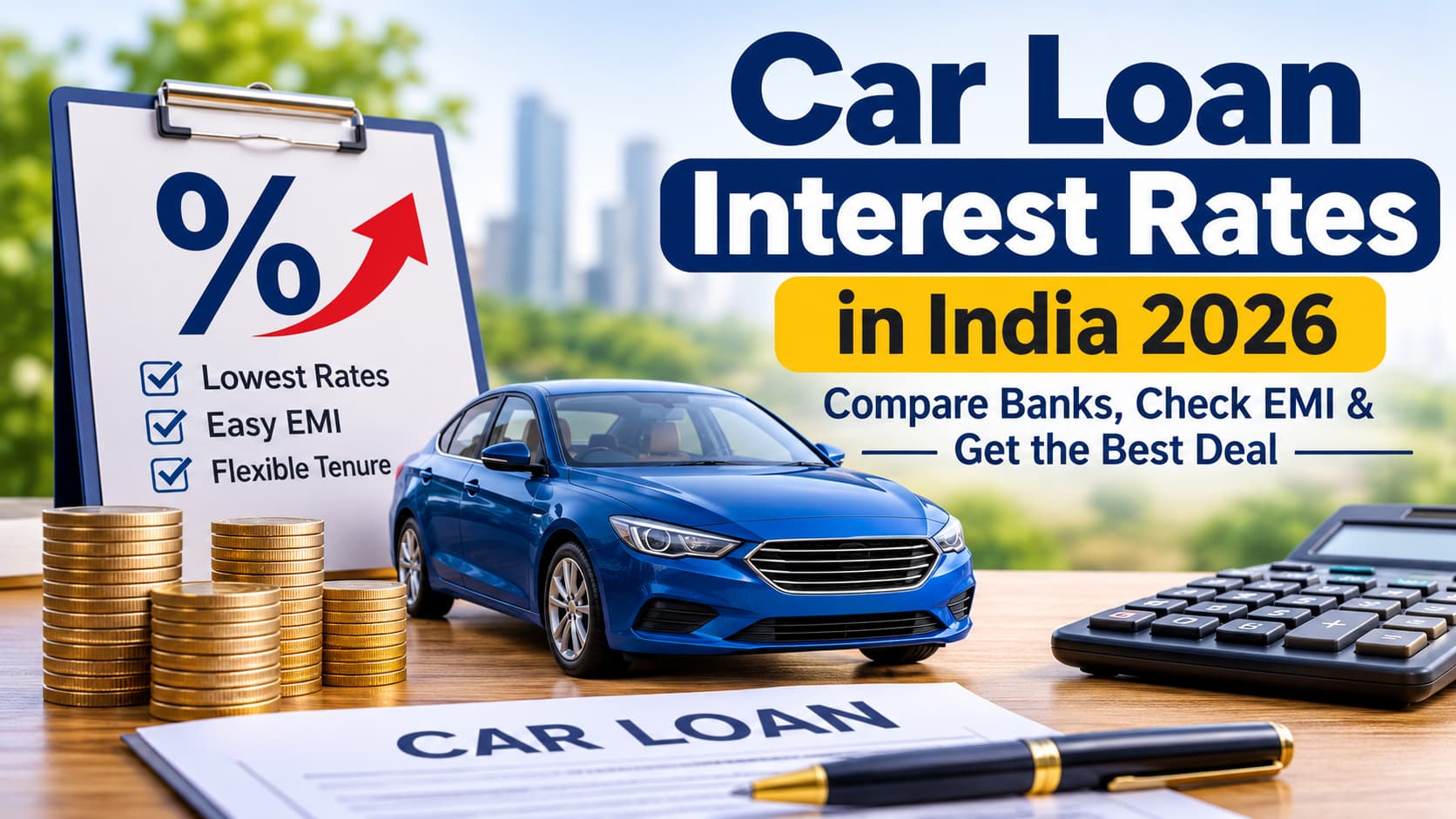
Car loan interest rates in India: Compare Banks, EMIs and Loan Options

Published Jun 29, 2026, 12:27 PM
Last Updated Nov 3, 2026, 11:43 AM
Car loan interest loan

Car loan interest loan

Buying a car is a major financial decision, and choosing the right financing option can make a significant difference to your overall expenses. Before applying for a loan, it is important to understand Car loan interest rates, repayment terms, eligibility requirements and additional charges.

In India, banks and financial institutions offer car loans for new and used vehicles at different interest rates. The rate you receive depends on several factors, including your CIBIL score, income, loan amount, repayment tenure and the lender’s policies.

This guide covers the car financing process, what borrowers need to be concerned with and how to find their best fit within their respective financial budgets.

What Are Car loan interest rates?

A Car loan interest rate is the percentage charged by a bank or financial institution for lending money to purchase a vehicle. It is usually expressed as an annual percentage rate.

For example, if you borrow ₹8 lakh at an annual interest rate of 9% for five years, the interest will be included in your monthly Equated Monthly Instalments (EMIs).

A lower rate generally means lower borrowing costs, but the final amount you pay also depends on the loan tenure, processing fees and repayment conditions.

Car loan interest rates in India: Bank Comparison

Interest rates vary across lenders and may change based on the applicant’s credit profile and the type of vehicle.

The following are indicative starting rates published by selected lenders in 2026. These are not guaranteed offers.


Bank

Indicative Starting Rate

Canara Bank 

7.45% p.a. onwards

Union Bank of India 

7.50% p.a. onwards

Bank of Baroda 

7.60% p.a. onwards

Punjab National Bank 

7.60% p.a. onwards

HDFC Bank

8.15% p.a. onwards

ICICI Bank 

8.40% p.a. onwards

State Bank of India 

8.40% p.a. onwards


Rates are indicative and based on lender information available in 2026. Special offers, vehicle categories, credit scores and loan terms can affect the final rate. Always confirm the latest offer directly with the bank before applying.

Factors That Affect Your Car Loan Interest Rate

Lenders assess several details before deciding the interest rate for an applicant.

1. CIBIL Score

Your credit score helps lenders evaluate your repayment history and creditworthiness. A strong score, often around 750 or above, may improve your chances of receiving a competitive rate.

2. Monthly Income and Employment

A stable income and reliable employment can help demonstrate your ability to repay the loan. Lenders may also consider your existing financial commitments.

3. Loan Amount and Down Payment

A higher down payment reduces the amount you need to borrow. This can lower your EMI and total interest payable.

4. Loan Tenure

A longer repayment period generally reduces the monthly EMI but increases the total interest paid over the life of the loan.

5. New or Used Car

Interest rates for used vehicles are often higher than those for new cars. The age, condition and valuation of a second-hand vehicle may also affect loan approval and pricing.

How to Calculate Your Car Loan EMI

Your monthly EMI depends on the loan amount, interest rate and repayment period.

For example, consider a loan of ₹8 lakh with an interest rate of 9% per annum for five years.


Loan Details

Amount

Loan amount

₹8,00,000

Interest rate

9% p.a.

Loan tenure

5 years

Estimated monthly EMI

₹16,607

Total repayment

₹9,96,420

Total interest

₹1,96,420

These figures are approximate and exclude additional charges.

Using an online car loan EMI calculator can help you compare different loan amounts, interest rates and repayment periods before making a decision.

Fixed vs Floating Car loan interest rates

Borrowers should understand the difference between fixed and floating interest rates before choosing a loan.

  • Fixed interest rate: The rate generally remains unchanged throughout the agreed loan tenure, making monthly repayments more predictable.
  • Floating interest rate: The rate may change according to the applicable benchmark and lender’s terms. This can affect the EMI or repayment schedule.

The availability of these options depends on the lender and loan product. Check the loan agreement to understand how rate changes are handled.

Documents Required for a Car Loan in India

The documents required may vary by lender, but applicants are commonly asked to provide:

  • PAN card and Aadhaar card or other accepted identity proof
  • Address proof
  • Recent salary slips or income proof
  • Bank statements
  • Employment or business details
  • Car quotation or vehicle details
  • Passport-size photographs, if required

Self-employed applicants may need additional business and income documents.

A Few Tips Before You Sign Anything

  • Don’t just compare interest rates — look at processing fees and foreclosure charges too. A loan with a slightly higher rate but zero processing fee might actually cost you less.
  • Negotiate. If you have a good credit score and a stable income, you can typically request a better rate – than the one first quoted at your bank. 
  • Check whether the bank offers any small discounts, such as a lower interest rate for women or people who already have an account. 
  • Avoid stretching your tenure just to make the EMI look small. A longer tenure quietly adds up to a lot more interest paid over time.

What is the lowest car loan interest rate in India?

Some banks claim to offer starting rates around 7.45% per annum in 2026 just because the broadcasting bank claims to do so. Rate it depends on the lender type, vehicle type, credit score and the loan conditions. 

What CIBIL score is required for a car loan?

Generally, the lower a score one has, the higher the hurdles to be surpassed for securing competitive offers. Even though one’s eligibility criteria may vary as people with lower credit scores can still get with a higher interest rate. 

Is a five-year car loan better than a seven-year loan?

So in general the monthly EMIs will be higher for a five-year loan and the total interest will be lower. If you get a seven-year loan you can lower the EMI in exchange for more interest for us. 

Can I get a car loan without a down payment?

Some lenders offer financing that covers a large portion or, in certain cases, the full on-road price. Approval depends on eligibility, vehicle value and the lender’s policy.

Are used car loan rates higher than new car loan rates?

Factors such as the age of the vehicle, its resale value and the loan risk can result in used car loans having higher interest rates. 

Conclusion

Since finance options are available for a new car in 2026, do not accept whatever you’re handed on the spot at the dealership. You should know the latest Car loan interest rates before you look for a dealer. If you compare interest rates of public & private banks and take note of your CIBIL score and choose a 4-5 year tenure (instead of a protracted 7 yrs loan), you are able to put back hundreds of hard-earned rupees back into your wallet, month by month. 

0

EV vs Petrol vs Hybrid: Which Car Type Is Perfect for You in 2025?

The 2025 car market is unrecognizable compared to just a few years ago. Between that and gas prices rising and EV charging networks growing and brands doubling down on hybrids, there’s now an embarrassment of options for buyers. But more options can make things confusing— EV vs Petrol vs Hybrid, do you go with a petrol car you know and trust, get a full electric vehicle, or take the middle ground in a hybrid? They all have their strengths, costs and suitability to one’s lifestyle. In this guide we’ve distilled the key differences — in running costs, convenience and the newest models — to help you decide which type of car really fits your life in 2025. 

Comparison At A Glance

Choose an EV if most of your daily driving is city/commute (≤100–200 km/day), you can charge at home/work, and you want the lowest running costs and least hassle. Opt for a Petrol car if you frequently do high mileage where chargers are sparse, need quickest refuel and lowest initial outlay, or biggest model/network. Get a Hybrid if you desire much more fuel economy than petrol, far less range-anxiety than a full EV, and you travel a lot on combined city/highways runs. 

Factors That Define Which Car Type is Perfect For You in 2025

Upfront price Value for EVs, Petrol, & Hybrid Cars

  • Mainstream EVs in India in 2025 start at around mid-₹7–12 lakh for city-centric models and extend to ₹20 lakh+ for full-sized SUVs and premium cars. (dealer listings reveal plenty of choice throughout the price spectrum).
  • Petrol cars are the cheapest to begin with – good small hatchbacks are available for much less than ₹7 lakh.
  • Hybrids (mild/strong/plug-in forms) are priced between petrol and EVs; popular models (Maruti, Toyota, MG) tend to start ₹8–12 lakh. 

Running Cost for EVs, Petrol, & Hybrid Cars

EV home charging is usually in the range of ₹6–₹10 per kWh, which in the case of regular hatchbacks or small SUVs works out to about ₹0.8–₹1.5/km – still a lot less than what petrol costs. 

Cost of petrol per litre for running cost. For city driving (15–18 km/L) that works out to around ₹5–8 per km per km – but it depends on the model and the city. 

EVs are miles ahead on running costs per km if you have dependable home charging or cheap, electric-friendly, off-peak tariffs.

Convenience & everyday life: charging refuelling

Refuelling petrol: 3-5 min at any petrol station. They are all spaced evenly everywhere. 

Charging EVs: home charging overnight is most convenient (adds minimal friction). While public fast chargers are becoming more numerous and reliable, they remain patchy; national and private initiatives are working to expand the networks. The IEA expects a significant rise in public chargers in the next few years.

EV convenience recedes significantly if you live in a flat with no assured parking/charger access and no workplace charging. 

Range for practical everyday use & long haul trips

Budget EV hatchbacks tend to have 200-450 km of usable range depending on the variant. For a few long journeys you can plan for charging breaks – slower than filling up on petrol, but it can be done.

Hybrids and petrol vehicles offer seamless, rapid long-distance travel without the need to stop and recharge — which is a significant advantage for highway users.

Government assistance & incentives (important if you are buying now)

Various central and state subsidies (through portals such as e-AMRIT, the FAME scheme details) exist albeit till date non-uniformed, the state EV policies — these can significantly reduce the cost of the EV or of the charging infrastructure. FAME II and related demand incentives have informed subsidies and procurement schemes. Refer to e-AMRIT/FAME pages and your state policy before purchasing.

(Practical advice: incentives are frequently models- and region-specific. All EVs don’t get the same perks, check with dealer + State EV policy). 

Read More:-  Hyundai Elantra 2025 Review: Price, Trims, Hybrid & N Line Features Revealed!

Maintenance, Resale and Dependability

EVs: Less moving parts → less scheduled maintenance (no oil changes, fewer brake jobs because of regen braking). The health of the battery is the biggest long-term concern; warranties on batteries are provided by manufacturers (usually for 8 years/1.6 lakh km or so on a number of models).

Petrol: Well established service network and cheap spare parts in India, high predictability.

Hybrid:The addition of a hybrid system (engine + electric components) brings complexity, but manufacturers like Toyota have decades of proven hybrid tech and solid service networks in India.

The resale value for EVs is stabilising, but it still depends on the model – stick to well-known, popular brands for reduced risk. 

Environment & Social Aspects

Lifecycle vehicle emissions of EVs are a function of the electricity mix, as they have no tailpipe emissions. India’s grid is greening and policy pushes gradually lower lifecycle emissions for EVs. Hybrids reduce emissions versus petrol, particularly in urban driving. 

Simple decision checklist: who should choose which option

Pick EV if:

You drive less than 300 km a day and most of your trips are within the city. If you can charge at home (private parking) or your office provides charging and desire to have the lowest running cost and lesser maintenance hassles. It’s best if you care about low tailpipe emissions and technology-enhanced features.

Pick Petrol if:

You do at least some long highway cruising, you travel out into the country, or you just live where EV chargers are hard to find. You want the lowest initial cost and refuel fastest and have access to the widest network.

Pick Hybrid if:

You’d like to get vastly superior fuel economy to petrol without having to depend on charging stations. You do both city and highway driving and want to move seamlessly through both without the need to plan your route around charging stops. You also like tried and tested reliable (Toyota/Maruti strong hybrids have a good track record in India).

Some Latest Models of EV / Hybrid / Petrol Cars

Type Model Key Specs
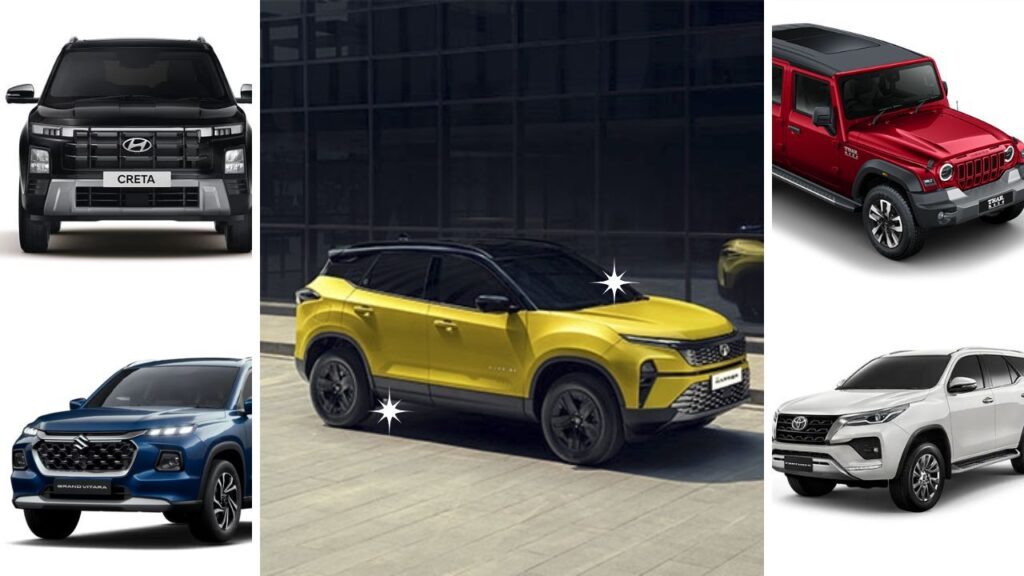
Electric Vehicles  Tata Harrier EV Launched mid-2025. Comes with AWD dual-motor option, very impressive real-range (up to ~627 km MIDC in best variant). Strong contender in the mid-size SUV EV space.
Hyundai Creta EV Scheduled early-2025. Multiple battery pack options. Expected range ~390-470 km depending on battery size. Features like DC fast charging, interior tech upgrades.
Maruti Suzuki e-Vitara To launch in mid/late 2025. Two battery options (≈49 kWh and ≈61 kWh), claimed range up to ~500 km in some trims. Will compete with Creta EV etc. 
Hybrids Toyota / Maruti / Suzuki strong or mild hybrids (Grand Vitara strong hybrid) Coming in H2 2025. Third-row / 7-seater version too. Strong hybrid (self-charging) gives the benefit of much better mileage than petrol alone. 
Toyota Fortuner Mild-Hybrid Neo Drive Already launched in 2025. Adds mild-hybrid tech to the Fortuner to improve stop-start behaviour, small torque assist etc. Good for those who drive big SUVs but want improved efficiency.
Hyundai Creta Hybrid Already launched in 2025. Adds mild-hybrid tech to the Fortuner to improve stop-start behaviour, small torque assist etc. Good for those who drive big SUVs but want improved efficiency.
Petrol Mahindra Thar / Bolero Updated models set to launch in Oct-2025. These are mature, rugged, proven petrol SUVs with facelifted features. Good for off-road / rural tasks or for those who like strong looks + robust service
Skoda Octavia RS For those looking for a more premium sedan with petrol performance and features. The RS version adds sportiness. May have higher maintenance costs but strong appeal if you want power + brand.

Conclusion

There’s no such thing as the “best” car for everyone, because EV vs Petrol vs Hybrid is a confusing debate but what works for one person depends on how they drive, where they live, and what kind of vehicle they find most useful. If you mostly drive in a city, and have reliable access to an outlet, an EV provides unparalleled running costs and a green driving experience. If highway and long road trips are the staple of your life and you want to fill up as quickly as possible—and as cheaply as possible up front—gas cars are still the prudent choice. And if you want to save fuel but don’t want to plug in, hybrids give us the best of both worlds. In the end, the ideal car for you in 2025 isn’t what’s the biggest hit of the day — it’s the vehicle that fits your everyday life and your plans for the future. 

0

Jay Leno’s Car Collection: A Passion That Goes Beyond the Garage

Published Dec 15, 2025, 12:08 PM
Last Updated Apr 8, 2026, 7:28 AM

Jay Leno's Car Collection

When you think of Jay Leno, most of which are his notoriously large smile and decades of being one of the world’s best late-night comedians on The Tonight Show. But to gear-heads across the globe, Jay is something else entirely – a man who has made his childhood dreams come true by building one of the most spectacular automotive collections the world has ever seen. Before you dismiss, let’s check out Jay Leno’s Car Collection in a massive 122,000-square-foot garage near Burbank Airport. 

The Story Behind the Collection

What sets Jay Leno’s collection apart is not only its size or its estimated value of 52 to 100 million dollars. It’s the philosophy behind why he collects them. Unlike many rich collectors who lock up their treasures and let them gather dust, Jay is different. He drives them on a regular basis, takes adventures in them, and even makes a wildly popular YouTube show, “Jay Leno’s Garage,” where he lets his passion for cars take center stage. His mantra: “These cars are made to be driven.” 

1955 Buick Roadmaster 

Jay at sixteen had bought a 1934 Ford pickup truck. It was his first car ever. He swapped it for a Datsun 1600 by the time he was done with his first couple of gigs. The big shift hit when he moved to California There in the early ’70s he picked up a 1955 Buick Roadmaster for a mere $350. Jay happily named it “Rosebud.” It’s one of his top treasures. He spent time and money to make it run like a modern beast. All while maintaining it classic, old-school style. 

1955 Buick Roadmaster

That one purchase sent him on a path that would see him become the third most-googled car collector in the world, behind only Cristiano Ronaldo and Bill Gates. 

1909 Baker Electric That Predates The Titanic Itself

Baker Electrics of 1909 boasted thick lead-zinc or nickel-iron batteries, series-wound motors that could withstand great overloads, and top speeds of 14-25 mph with ranges up to records such as 201 miles on a charge by 1910.

1909 Baker Electric

Controls included a rudder-style tiller for steering, and throttle was controlled by a twist lever, eliminating the hazards of hand-cranking gasoline engines then in vogue. 

Jay Leno’s Favorite Car: 1972 Mercedes-Benz 600 Kompressor

The 1972 Mercedes-Benz 600 Kompressor is a unique, one-off W100 “Grosser” limousine owned by Jay Leno with a non-factory supercharger on the standard 6.3-litre V8 engine. This upgrade takes the power from the OEM 250 hp and 369 lb-ft to well in excess of 525 hp, and that power will get you to well in excess of 130 mph in a vehicle that weighs over 6,000 pounds with a load. 

1972 Mercedes-Benz 600 Kompressor

Built between 1963 and 1981 with approximately 2,677 units made, the base 600 was the quintessential luxury treat for dignitaries with hydraulic everything – from doors to windows.  

2026 McLaren W1 Hypercar

A 4.0-liter twin-turbo V8 is mated to a 342-hp electric motor. They produce a combined 1,258 horsepower and 988 lb-ft of torque. This arrangement allows the car to achieve 217 mph with a 0-60 mph time of 2.7 seconds. The dry weight is 3,084 pounds giving a power-to-weight ratio of about 2.5 pounds per hp. It is a real engineering tour de force.

2026 McLaren W1 Hypercar

The 1.38kWh high-performance hybrid battery of McLaren’s High-Performance Hybrid Powertrain is both 88 lbs lighter than that of the P1’s hybrid system and twice as powerful. 


Another Remarkable Piece is The 2006 GM EcoJet 

A Honeywell LT101 gas turbine, commonly found in helicopters, is mid-mounted, producing 650 horsepower and around 400-583 lb-ft of torque, with a few tuned variants making 750 hp. The 2006 GM EcoJet then powers the rear wheels through a four-speed automatic transaxle borrowed from a C5 Corvette, which is required since the turbine needs to be under constant load and without a manual clutch. 

The 2006 GM EcoJet 

The engine rides the high r.p.m.s (something near to 48,000), and that produces so much baseline power it makes braking a challenge. Jay Leno is the owner and driver of the prototype and demonstrates its road-worthiness, ignoring jet quirks such as scant engine braking. 

Jay Also Owns Incredibly Rare Machines: The 1992 Lotus Carlton 

The 1992 Lotus Carlton (or Lotus Omega in continental Europe) is a sports saloon produced by Lotus Engineering based on the Vauxhall Carlton/Opel Omega with a twin-turbo 3.6 litre inline-6 engine. Manufactured between 1990 and 1992 in limited quantities (roughly 950 units due to homologation requirements), it gave supercar speed in an everyday four-door package, and earned a reputation as one of the quickest saloons of its time. 

Read More:-  Erica Kirk Luxury Car Collection Featuring Rare Supercars and Premium Models

What Sets Jay apart From Other Collectors

Jay is picky about some brands. Notably, he has no Ferraris in his garage, just because he didn’t like “having to jump through all these VIP hoops” to become a Ferrari owner. He’d just as soon spend his money on cars that really excite him or that have significant chapters in the history of the automobile. 

What really pushes Jay Leno’s collection over the edge from just stuff to real collection is his dedication to preservation and education. He doesn’t just drive his cars, but also films them for his show, where millions learn about automotive history, engineering and the stories behind these machines. 

Conclusion

Jay Leno’s Car Collection is not just a testament to his wealth — it’s a living testament to car culture and automotive enthusiasm. In an age when technology is advancing at the speed of light and miracles from yesterday are taken for granted today, Jay’s garage is a place that celebrates mechanical art. His collection spans the story of human ingenuity from the earliest cars to the hypercars of the future – and it is all owned by one man who actually loves every single vehicle in his care. 

0

Car Insurance Guide: Coverage, Costs & Best Policy Tips

Car Insurance

Car Insurance Guide for Beginners is crucial for understanding which type of insurance car owners have to buy. It helps protect you and third person during an accident or crash in this hectic world, everyone is in a hurry and this causes more accidents right now than ever. Having insurance on your car can remove a financial burden on your head.

Car owners must know which insurance is right for you, so this blog will help you to understand why insurance is important and which one is right for you.

What Is Car Insurance And Why Do You Even Need It?  

Car Insurance is a policy that supports you in the crisis that occurs by your car. The insurance company where you make a deal to pay a regular amount and in return, they agree to cover certain costs of the accident, theft, and damage to your car. 

This method works like you pay a small, every month to avoid being hit with a massive, unpredictable bill when something bad happens. 

Countries like India, the US, and the UK offered at least basic car insurance as required by law. They can fine you if you don’t have insurance or have your license revoked. But beyond the legal requirement, it’s just smart financial protection. 

The Different Types of Car Insurance Coverage

Beginners can get confused while choosing “one” type of car insurance. You can combine several different types of coverage according to your needs and budget.

Coverage Type What It Covers Who It Protects
Third-Party Liability Damage or injury you cause to others The other person
Collision Damage to your car from a crash You
Comprehensive Theft, fire, weather, vandalism You
Personal Injury Protection (PIP) Your medical bills after an accident You and your passengers
Uninsured Motorist Accidents caused by drivers with no insurance You
Roadside Assistance Breakdown, towing, flat tyres You

There are some important coverages that you must know about them closely:

Third-Party Liability

This is the minimum required by law in most places. When you cause damage to someone’s car or during an accident, a person gets injured, Third-Party Liability covers medical bills and repair costs but not your own car or injury.

Comprehensive Coverage

It is not going to cover collision incidents but Comprehensive Coverage pays when it’s a matter of theft, fire, flood, hail, fallen trees, and vandalism. So it can cover if the tree falls on your car on your parked car not a collision.

Collision Coverage

Collision Coverage replaces or repairs your car after a collision. Whether it’s your fault or not, if your car loses balance and hits someone’s car then this pays off.

PIP / Medical Payments

It pays hospital bills, ambulance fees, and sometimes lost wages after an accident, for you or anyone in the car. It is mandatory in some cities but optional to others.

How Car Insurance Premiums Are Calculated

Having a calculated car insurance premium can be beneficial for your finances for the same car you’re driving. 

Factor How It Affects Your Premium
Age Young drivers (under 25) typically pay more
Driving history Accidents or tickets = higher premium
Car model and age Expensive or sporty cars cost more to insure
Location High-traffic or high-crime areas = higher risk
Annual mileage More driving = more exposure to risk
Coverage type Comprehensive > Third-party in cost
Deductible amount Higher deductible = lower premium
NCB (No Claim Bonus) More claim-free years = bigger discount

Your car brand and model matters the most for premium packages. A mid-range hatchback is cheap to insure. But high-end luxury cars cost more because the parts are too expensive. 

Comprehensive vs. Third-Party Insurance

Choose Third-Party only if: Choose Comprehensive if:
Your car’s resale value is low as the model gets old.

Its parts are not expensive and you can afford to repair or replace them on your own

You’re purely trying to meet the legal minimum.

Your car is new and expensive.EMI or loan is still continuing on its term, the amount is not completed.

Living in an area where natural threats or theft are common.

You want peace of mine.

No Claim Bonus Is Your Biggest Long-Term Saving

No Claim Bonus is basically a reward you get from your insurer for not making any claims during a policy year. Let’s see how this works:

Consecutive Claim-Free Years NCB Discount
1 year 20%
2 years 25%
3 years 35%
4 years 45%
5 years or more 50%

Many experienced car owners know a significant 50% discount is valuable. They don’t choose to file for small claims, paying minor repairs from their own money can protect NCB and become more profitable for later.

The policy is tied to you not your car, if you sell the old ones and buy a new car then you can transfer your NCB to the new policy. 

Add-Ons Worth Considering

You need add-ons with standard policies to fill the gaps. You need to pay a little extra for each one but it’s worth it:

  • Zero Depreciation Cover —- With this add-on, when the claim is settled, you get the total cost value of repair without deducting any cost. New car owners mostly considered this add-on.
  • Engine Protection Cover — Engine repairing does not come under standard policies, so Engine Protection Cover the cost for engine damage caused by waterlogging or oil leakage. 
  • Return to Invoice — If your car is stolen or totaled, this add-on pays the original amount of the car with registration and taxes not like the standard insurance which pays the IDV.
  • Roadside Assistance — Battery dies, flat tyres, towing are covered in this add-on. This will help for long distance or remote area drivers.
  • Key Replacement Cover — This add-on covers stolen or lost keys.

Know How to File a Claim?

Try to be calm and make sure that everyone and you are safe then move your car to the safe place.

  1. After an accident, calling the police is the best option and waiting for them.
  2. If you are in a condition to take pictures of the damage then take it with other vehicles and surroundings too.
  3. Call your insurance company, don’t be too late to call them.
  4. Don’t admit fault at the scene, even if it’s your fault. Let the insurers determine liability. 
  5. Get a reference number for this report and monitor the process.
  6. Total the cost of repair or replacement and share it with your insurer. They will deal with the garages to approve your maintenance and get your car repaired.

Tips to Lower Your Premium Without Sacrificing Coverage

  • insurers often give discounts for installing dashcam or anti-theft devices in your car.
  • Agree to pay more out of your pocket shows your voluntary can lower your premium.
  • Take both home and car insurance from the same company to earn a discount.
  • If you don’t go out often by car, declare a lower annual mileage.
  • Renew the coverage at scheduled time and protect your NCB.

Read More:- Huawei-backed Maextro to Launch Maextro S800 Grand Design in June

Conclusion

Car insurance isn’t supposed to be so confusing. In essence, it’s simply coverage — coverage for other people, coverage for your vehicle and coverage for your finances. When you know the facts, selecting the right policy is a lot easier. 

Get the minimum coverage required by law, then ask yourself honestly: What would happen to my finances if my car were damaged, stolen or involved in a major accident? That answer will tell you how much coverage you really need. 

1

Pre-Book Limited-Edition Mini Cooper S Comes With 3-Door Entry

Published Oct 8, 2026, 12:44 PM
Last Updated Oct 13, 2026, 6:41 AM

Pre-Book Limited-Edition

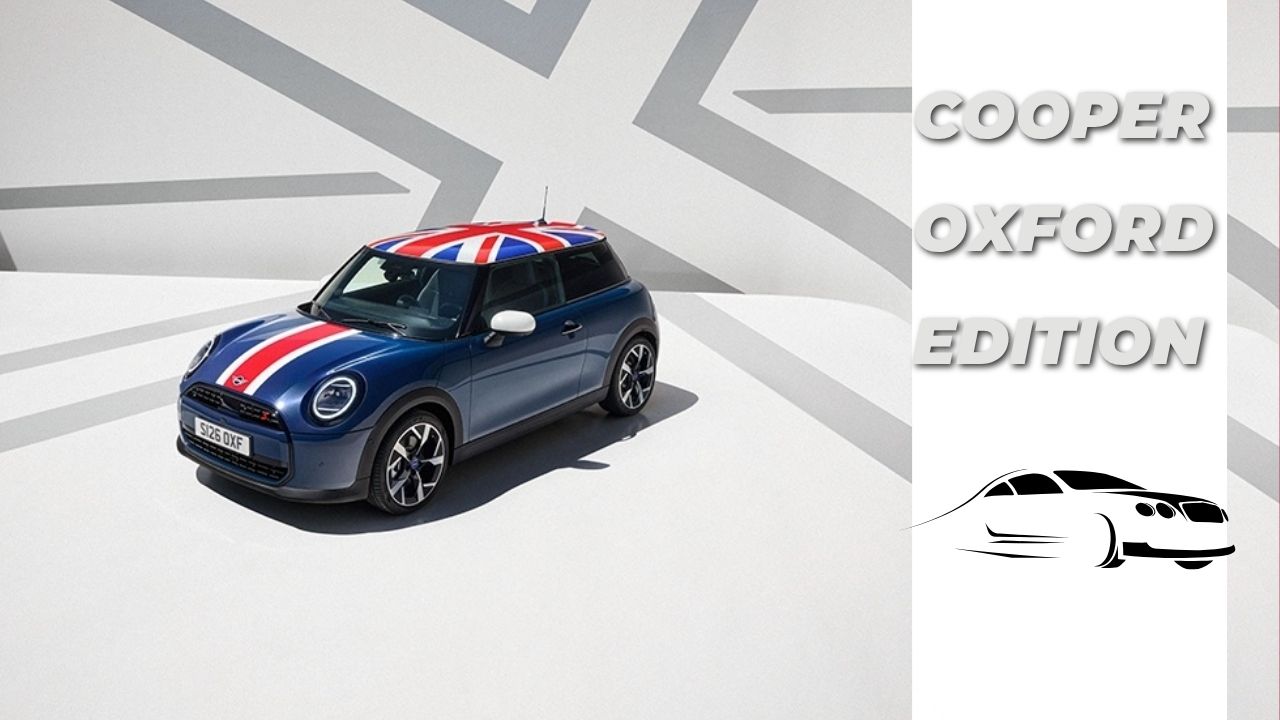
Mini India is launching Limited-Edition Mini Cooper S, it gets Union Jack-inspired styling which pays tribute to the brand’s British heritage. On 8 October 2026, the brand opened pre-launch bookings for the Cooper Oxford Edition, a limited run built on the Mini Cooper S 3-door, and the interesting thing is that the car underneath stays exactly the same, but the Mini didn’t announce a price yet.

It’s worth knowing the styling and interior updates comes with this Oxford Edition before booking through authorised MINI dealerships. You can show interest on the company’s official website.

Mini Cooper S Oxford Edition Pre-Booking

Mini India opened pre-launch bookings across 17 cities via authorized dealerships. Buyer from Delhi NCR, Mumbai, Bengaluru can check out but the price isn’t confirmed yet. You can also show your interest if you’re from Chennai, Hyderabad, Pune and Kochi or request a call back. 

Mini Cooper S Oxford Edition Pre-Booking

Mini has not announced the ex-showroom price which is more important than the colour palette. It has not announced a delivery schedule. And “limited quantities” is the only volume figure on offer, with no unit count. We could not find a booking amount either, so confirm that with your dealer before you transfer anything.

It’s not just a new car launch, it’s a tribute to Oxford in the UK, where original Mini production began and BMW Group started building the modern Mini.

Why This Mini Cooper S Is a 3-Door Only Affair

The “3-door entry” in the headline is less a feature than a format. The Oxford Edition is a special edition of the Cooper S 3-door, the classic short-wheelbase hatchback, and nothing in Mini’s announcement points to a five-door or convertible version.

That shapes who this car is for. Cooper S 3-door offers a tight rear seat and long front door that suggest a person buying for themselves. If your household needs easy rear access every day, the Oxford Edition is the wrong place to spend money regardless of how it looks.

Cooper Oxford Edition Design: Union Jack Graphics 

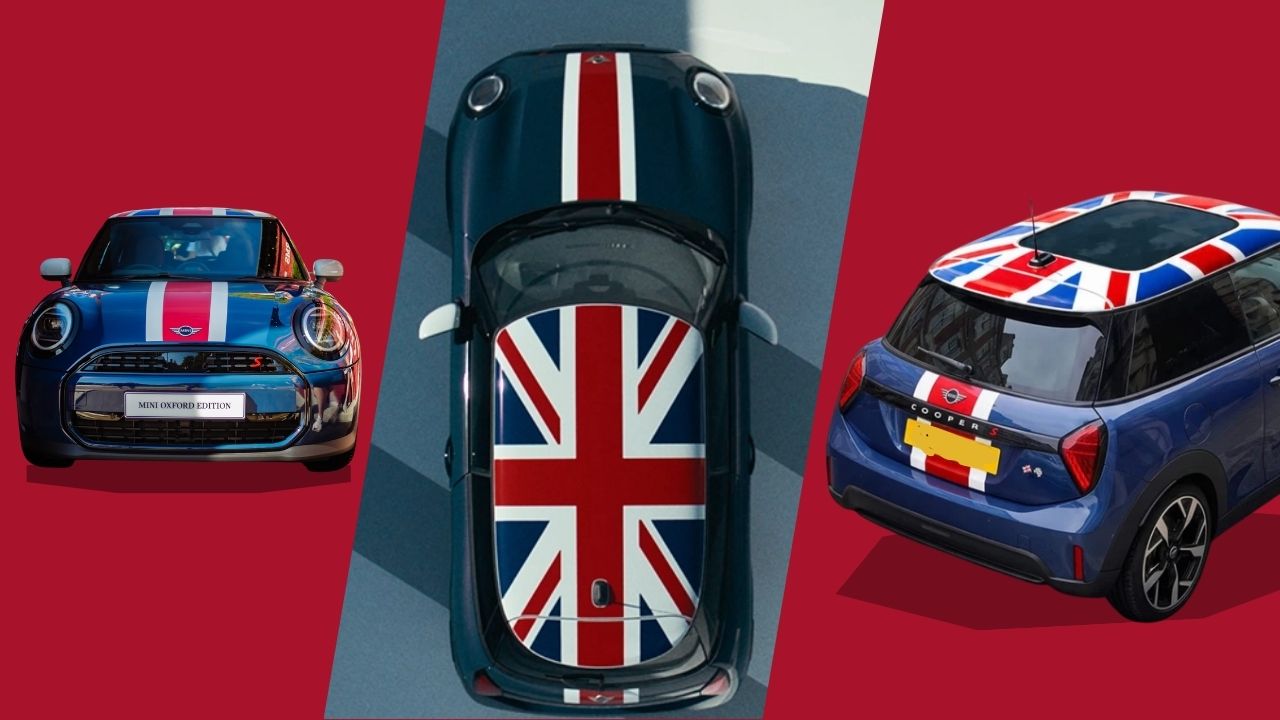
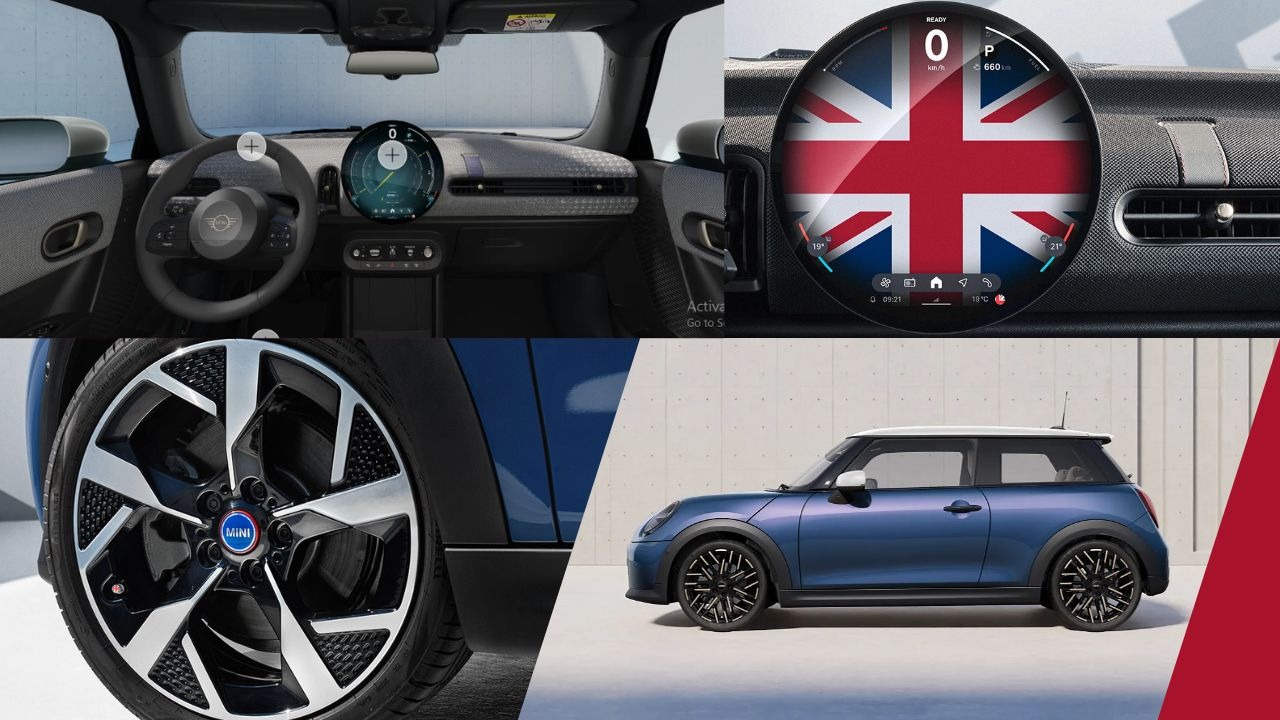
The styling speaks louder with a large Union Jack graphic and matching stripes running down the bonnet and boot which clearly says the special message. The tailgate gets British flag decals, the wheel hub caps are Oxford-specific, and even the valve caps carry the flag.

Mini Cooper S Oxford

Two body colours are listed: Indigo Sunset Blue and Chilli Red, both paired with white mirror caps. The car runs smoothly without compromising the hard physical body and elements. It sits on 18-inch Slide Spoke two-tone alloys wheels which also uses circular LED headlights and it is customisable with daytime running light signatures.

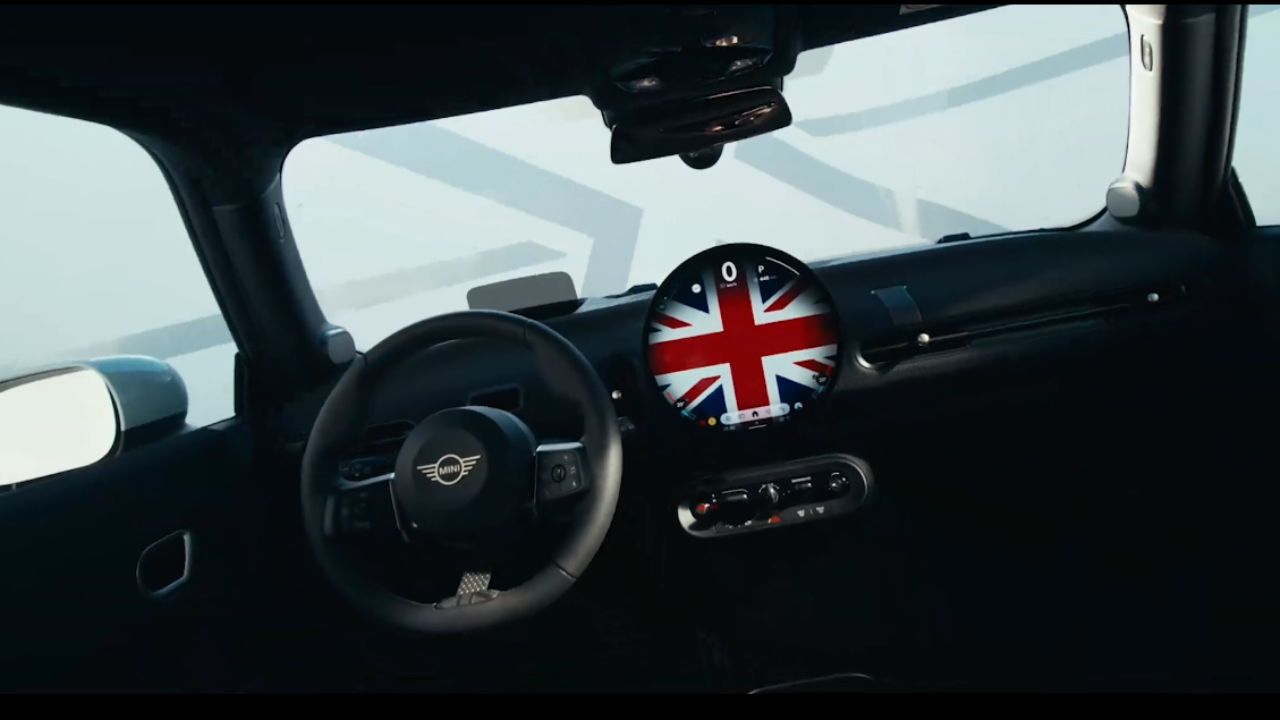
The interior looks cozy and futuristic with a central OLED display which seems perfect for the hatchback. The theme continued to follow inside too, Union Jack badge on the steering wheel and digital Personal Mode background inspired by the flag is something which makes it a special edition. 

Engine and Performance: Same Heart as the Regular Cooper S

Mini says the mechanical package matches the standard Cooper S sold in India, so there is no extra power for the extra money. It performs well with a power of 204 hp and 300 Nm of peak torque from the same 2 L engine that uses petrol. Cooper S power goes to the front wheels through a 7-speed DCT automatic with the torque available between 1,450 and 4,500 rpm.

The car runs in 6.6 seconds from zero to 100 km/h and gives a mileage of 16.82 kmpl but the claimed fuel efficiency number is extracted from the lab test not on the city road with real conditions. 

Earlier Indian-spec Cooper S models were rated at around 189–192 hp, so check the spec sheet or confirm from the dealer about the output figures because it might move over the years.

 👉 Skoda Slavia Facelift Comes With Automatic Shift & More Features

Oxford Edition Premium Cabin and Tech 

The cabin is where the Cooper Oxford Edition earns most of its justification. It uses Mini’s Favoured trim with JCW sport seats in black, a beige and grey knitted dashboard, silver interior accents and an anthracite headliner.

There are advanced features accessible in the car including a circular OLED touchscreen, backed by a head-up display, and a sound system (Harman Kardon) which also gives car owners a quite fun ride. Cooper S also has a panoramic glass roof and heated steering wheel to enjoy the experience of premium driving.

Oxford Edition Premium

The driver gets a special feature: electrically adjustable seats that’s a sign of true luxury. There is wireless charging, an interior camera and multiple digital display modes are also on the list

Connectivity covers wireless Apple CarPlay and Android Auto, Digital Key Plus and remote software updates. Parking help comes from front and rear sensors, a reversing camera and a parking assistant, and automatic climate control and cruise control with braking function are included.

Safety and Driver Assistance

The luxury features and comfort doesn’t mean- no reliability. The safety package in a Limited-Edition Mini Cooper S offers ADAS functions which are new and tested. The car runs with its open sensors which gives collision warning, lane departure warning, speed warning. 

Cooper Oxford Edition doesn’t just protect you while after the crash, but before the crash. Beginners will also drive well with driver attentiveness monitoring, reversing assistant, dynamic stability control, and cornering brake control. And most of the time people don’t get to notice maintenance, so it’s easy with tyre pressure monitor, a run-flat indicator and emergency call functionality.

Traction control and ABS and brake assist also comes along with Mini. We have not seen a crash-test rating published for this specific configuration, so do not read the equipment list as a safety score.

Mini Cooper S Oxford Edition Price

The official price is not out. There was a previous Mini Oxford Edition in India. It launched on 22 October 2018 at Rs 44.90 lakh ex-showroom, limited to 25 units, sold exclusively through Amazon India. At the time, the base Cooper S 3-door was listed at Rs 33.9 lakh, which means that edition carried a premium of roughly Rs 11 lakh. It also used a 192 hp version of the same engine and an earlier-generation cabin.

Cooper Oxford Edition

The 2026 car is a different launch with different equipment, so the 2018 numbers describe a precedent, not a forecast. A regular Cooper S 3-door is currently listed around Rs 42.70 lakh ex-showroom on a dealer-aggregator site, and that figure is unconfirmed by Mini, so verify it locally. Even a premium half the size of the 2018 one would push the Oxford Edition toward the upper forties. That is arithmetic to plan your budget around, not a price Mini has given.

On-road costs add registration, insurance and other charges on top, and they vary a lot by state.

How to Pre-Book the Cooper Oxford Edition

Go through an authorised Mini dealership, or register interest on the website and wait for the call back. Before you commit, ask the dealer four things:

  1. What is the booking amount, and is it refundable if the final price disappoints you?
  2. How many Cooper Oxford Edition units is the dealer allotted?
  3. What is the expected delivery window?
  4. Which of the listed features are standard on this edition and which are paid options?

The refund question is the one that protects you. Pre-launch bookings of Cooper Oxford Edition are placed before the price exists.

👉  5 Lowest-Priced Maruti Suzuki Cars Featuring Automatic Transmission in India

Conclusion

Pre-book if you want the Cooper Oxford Edition specifically, you can accept a three-door body, and you are comfortable committing before the price is known, as long as the booking is refundable. Collectors and Mini loyalists are the natural buyers.

Wait if you care about performance per rupee. A regular Cooper S gives you the same engine and most of the same character, and the Golf GTI gives you more power and five doors once the Mini’s price is announced. Do not pay a limited-edition premium until you have seen the number, and do not let the word “limited” hurry you.