0

Land Rover Defender vs Jeep Wrangler: The Off-Road Battle You Need to See Before You Buy!

Published Aug 8, 2025, 7:35 AM
Last Updated Apr 11, 2026, 11:16 AM

Land Rover Defender vs Jeep Wrangler facing off on rocky terrain in an epic off-road comparison for 2025 SUV buyers.

Both Jeep Wrangler and Land Rover Defender are powerful vehicles and stand out to deliver the best experience on the off road trips. Both are icons and well-engineered to drive in rugged exploration and adventure. But their new models have very different features and specs to conquer the wild. The Wrangler’s ancestors served from decades for the wild adventure so it already became the best in off-road battles. The new Defender, on the other hand, is offering advanced features and more ground clearance for delivering a powerful performance on wild trips. 

It might be confusing to pick the best one which could keep you on the right track and face every challenge on the rocky, steep, and sloppy roads. Let’s dive into both vehicles’ details and see how these two titans stack up.

The Tale of the Tape: Off-Road Geometry

Here are some key points that are important to know when it comes to off-road trips. Let’s see which car is best for off-roading. This off-road geometry for the four-door models of the Jeep Wrangler and the Land Rover Defender will leave your head confusion free:

Specification Wrangler Rubicon Land Rover Defender 
Ground Clearance 10.8 inches Up to 11.5 inches
Approach Angle 44 degrees Up to 38 degrees
Breakover Angle 22.6 degrees Up to 28 degrees
Departure Angle 37 degrees Up to 40 degrees
Wading Depth 30 inches Up to 35.4 inches

Both vehicles are incredible and deliver wonderful performance. While testing them, the Wrangler roars during steep in and out, passing through the rocky road, all thanks to its short design and front angle which was built on purpose for off-roading. However, the Defender also stands out with exceptional features like higher maximum ground clearance, great angle at steep departure, and drive smoothly with inclined planes making it a beast which can pass any obstacle on the ground. The defender is great if you consistently face the roads with deep waters which makes it perfect for floody areas. 

The Tale of the Tape showcasing side-by-side vehicle specifications and off-road capabilities

The strong engine of the Defender can handle any road. Credit source: Carversal

Suspension and Drivetrain: Two Paths to Dominance

Let’s get to the part where these two make a difference – suspension and drivetrain. The Jeep Wrangler stays with their lineage of delivering the off-roader with solid axles front and rear. Many off-roaders like this vehicle for its durability, simplicity, and great at handling rough grounds, especially when the sway bar is off. The Wrangler’s Command-Trac and Rock-Trac 4×4 systems are powerful enough for long rough trips and its locking differentials give mechanical grip that will handle any situation and road. The price ranges between Rs 67.7 Lakh to Rs. 73.16 Cr depends on the variant.

The modern Land Rover Defender vehicle is built on purpose with fully independent air suspension and standard AWD. It definitely passes every off-road test because of its air suspension feature with adjustable height of the vehicle and perfect inside comfort. The real mind-blowing feature of Defender is the Terrain Response 2 System; high-tech technology will analyze the road condition and automatically adjust the settings in the vehicle for every kind of road such as muddy & rocky and also be your supportive partner in rainy or floody areas. The price ranges between Rs 1.09 Cr to Rs. 2.59 Cr depends on the variant.

Power and Performance: From Crawling to Cruising

Switching different engines for different needs is the best option in both the vehicles. The Wrangler offers a 3.6-liter V6, a small turbo engine of 2.0-liter is best for delivering powerful performance on any kind of road. It also offers silent rides after enabling the hybrid 4xe plug-in. But if you want a strong engine then Defender is offering a 6.4-liter V8.

Also offers a 4-cylinder turbo for a perfect smooth ride. A mild-hybrid inline-six, and a supercharged V8 is all in one robust engine to deliver a monstrous ride. Whether you are traveling for long trips or just daily use in the city, the Defender’s powertrains are generally more refined and better.

Power and Performance comparison of two off-road SUVs tackling challenging terrain

Wrangler handling rough grounds like a pro, Credit source: Jeep

The Verdict: Which Off-Roader Reigns Supreme?

It’s not a simple answer to this question as it totally depends on your priorities and interest, but both have sleek designs with little difference in features and inheritance on a strong foundation. 

For simple designs, open-air experience, and strong engine, you can prefer the Jeep Wrangler for your regular off-roading partner. The two most important points that can make up your mind for a Wrangler is its affordability and availability of customization with vast aftermarket parts. 

For more advanced tech features like Terrain Response 2 System, luxury comfort, and prefer for both daily use & family trips. Land Rover Defender’s automatic adjusting features give you a premium driving experience.

While both are offering incredible driving experience with strong engine and off-road support systems. They can handle any situation, the Wrangler is bold and Defender is a more stylish adventurer.  Taking a test drive of both the vehicles before buying it is the right way to choose the right one for you.


Bipin Sharma

Bipin Sharma is a seasoned automotive content writer with over 10 years of hands-on experience in the world of cars. From the latest car news and reviews to in-depth maintenance tips and expert buying guides, Bipin covers everything that drives the automotive world. Writing about cars isn’t just his profession — it’s his passion. His deep industry knowledge and love for automobiles fuel every blog he creates, helping readers make informed decisions and stay updated on the fast-evolving auto landscape.

Leave a Reply

Your email address will not be published. Required fields are marked *

0

Brezza vs Nexon 2026: Battle of the Compact SUVs in 2026

Published Feb 3, 2026, 6:24 AM
Last Updated Apr 6, 2026, 12:27 PM

Brezza vs Nexon 2026

When you visit a car dealer with your gaze flitting between a pair of shiny new SUVs that are daring, stylish and dependable. Whenever it comes to Brezza vs Nexon 2026, people always get confused. At ₹8 to ₹14 lakh ex-showroom, the Tata Nexon and the Maruti Suzuki Brezza are two industry behemoth competing for the top slot, and known for stellar performance. 

Brezza impresses with its simple, functional qualities and vast service network, Nexon boasts premium features and highest safety ratings. Let’s get into this face-off as if we were driving through India’s potholes, practical, fun and coming straight from the heart. 

Price and Variants Breakdown

Both start out at a reasonable price, but your wallet is going to depend on your choices. The starting price of Brezza (LXi petrol MT) is ₹8.26 lakh and the top-end ZXi+ AT DT is ₹13.01 lakh.

Price and Variants Breakdown

Nexon misses out narrowly at ₹7.32 — 14.15 lakh, with fuel options of petrol, CNG and diesel across Smart to Fearless+ model ranges. 

Here’s a quick glance at top sellers:

Aspect Brezza (ZXi CNG) Nexon (Creative CNG/Petrol)
Ex-Showroom ₹11.31 lakh ₹10-12 lakh
On-Road (Delhi) ~₹13 lakh ~₹12-14 lakh
Waiting Period 2 months 1-3 months

Power Under the Hood

Brezza’s 1.5L K15C petrol (101 bhp, 137 Nm) and CNG (87 bhp) variants feel quite peppy in stop-and-go traffic and 19.8 kmpl is the figure with the AT. Smooth and elegant, like sipping chai on a slow breeze but it just doesn’t have the turbo punch to overtake comfortably (0-100 in about 12 seconds). 

Power Under the Hood

Nexon fights back with a 1.2L turbo-petrol (118 bhp, 170 Nm), a diesel (115 bhp), and a CNG option, mated to the 17–24 kmpl. Because of the torque surge, it runs faster and it keeps running at 120 kmph. It is a thrill to have such a vehicle. If you want to fly past trucks on NH24, Nexon is your pal. Brezza rules the mileage marathons, though. 

Design and Road Presence

Brezza’s tough lines, aggressive grille and 198mm ground clearance say “city jungle hunter.” Nexon offers Futuristic LED DRLs, connected taillamps, and 208mm ground clearance whips heads— it’s the bolder peacock.

Design and Road Presence

Dimension-wise, Brezza (3995x1790x1685 mm) and Nexon (marginally wider/taller) are quite similar. Both are five seater vehicles, but with a better boot space of 382L Nexon can carry weekend bags more comfortably than Brezza’s 328L. 

Inside the Cabin: Comfort Clash

Brezza is roomy from inside, functional with rear AC vents, 9-inch touchscreen, wireless charging and sunroof in top variants. The soft-touch plastics are premium enough but a few hard and scratchy bits demonstrates its budget-consciousness. Ride drinks potholes like a champ.

Nexon offers 10.25-inch Harman screen, JBL audio, ventilated seats, panoramic sunroof, and 360-cam. Sure, the digital cluster dazzles but the ergonomics are a disaster—no real cupholders, panels that don’t line up. Rear space is similar, yet Nexon seems airy. 

Safety is Priority

When it comes to safety then only reliable cars can actually get into the head like The Brezza’s 4-star GNCAP (6 airbags, ESP, hill-hold) is rock solid.

Safety is Priority

Nexon with the same gear and a blind-spot monitor in high res, I am a proud 5-star king. In crash tests, the Nexon also provides better protection which is essential while running families around. 

Features Face-Off

Category Brezza Wins Nexon Wins
Infotainment Simple, responsive 9″ 10.25″ + JBL, wireless AA/CP
Convenience Cooled glovebox, HUD Ventilated seats, paddle shifters
Safety Tech 360-cam, 6 bags 5-star + ADAS basics

Read More:- Hyundai Exter Facelift: Smarter Looks, Bigger Tech, Same City-Friendly Charm

Conclusion

It will be a hard choice of Brezza vs Nexon 2026. If your pulse rate increases at the thought of peace of mind, low running expenses, silky-smooth city drives, and Maruti’s unmatched service network, the Brezza seems like the more stable long-term partner. It is smart, comfortable and easy to live with, ideal for daily commuting and hassle free ownership.

However, if you’d like your SUV to make you feel a bit special each time you turn it on, boast strong performance, a bold design, richly appointed interiors and best-in-class safety, the Tata Nexon sounds like the better choice. That 5-star safety rating, turbo punch and premium tech gives it a future-ready and emotional appeal that is unmatched.

In short:

  • Go for Brezza if you prefer reliability and simplicity to flashiness.
  • Go for Nexon if safety, features, & driving excitement are on top of your checklist.

They’re both good compact SUVs — but the one that steals your heart is going to come down to whether you prefer to think with your head or drive with your heart. 

0

Electric Car Under 5 Lakhs | Best Affordable EV Option

Electric Car

It’s hard to get a fully-fledged electric car under 5 lakhs in India because manufacturing cost is still higher than a normal petrol or diesel car. You won’t find a family SUV or sedans at this price but there are ultra-compact, entry-level micro-EVs that are designed specifically for daily commuters in the city and easy to park.

Many people are opting to contribute to the eco-friendly nature. These micro-EVs don’t offer enough space or big battery time but are still convenient for roaming around the city. It also gives good savings on the fuel economy, so let’s take a look at these easy and small EVs as the best affordable EV option under 5 lakhs.

Electric Car Under 5 Lakhs

1. MG Comet EV 

MG Comet EV is the best option to buy if you can afford to buy in Rs 4.99 Lakh with rental fees of Battery. MG offers a “Battery-as-a-Service” (BaaS) program which lowers the cost of a car but you have to pay around ₹2.5 per kilometer accordingly. 

Many buyers prefer to buy this compact micro EV because it offers comfort, reliable, and claimed range of 230 km. You don’t own the battery outright but you can get a 4 seater EV, safety features, and modern interior for a wonderful driving experience.

MG Comet EV

MG Comet EV

Buying a car that gives complete features and specification including interior, modern tech, and the reliability become a best bet at this pricing point. Normally the price is higher, but the MG program of Battery-as-a-Service (BaaS) makes it accessible for everyone to buy. It comfortably seats four adults, not two, which makes it a practical choice for small families. The range of 230 km is good on a full charge, you can commute easily. Comet is made of top quality that feels several notches above its micro-EV rivals. 

2. PMV EaS-E 

The pure city commuter from an Indian startup in just Rs 4.79 Lakh with comfortable 2 seats is the best deal for people who want solo trips or need daily office vehicles. PMV EaS-E is a product of Mumbai-based startup which makes a practical city pod at an affordable price. Its layout is more like a motorcycle, the driver sits up front and the passenger sits directly behind. 

PMV EaS-E

PMV EaS-E

The shape of the car is slim which gives easy parking access in complex areas of India. You can roam around the city with your partner within a range of 160 km which is sufficient for daily local travels. The ownership is unlike MG, you owned a car and battery both. There’s no subscription offer for the battery. While the cost of ownership is genuinely low.

It is ideal for singles, women and two people who want a solid pick for a low-speed daily commuter to cut through heavy city traffic. 

3. Strom Motors R3 

Strom Motors R3 

Strom Motors R3

Another affordable EV under 5 lakh is Strom R3, priced around ₹4.50 Lakh. It looks like a reversed e-riksha in India. A fully enclosed electric three-wheeler unlike anything else for 2 people sits side-by-side but gives quite good range up to 200 km on full charge. 

It is enclosed in a fully weatherproof cabin, a wind shield, and easy accessible doors at this price range. It is best for people who want a good range car with comfort that makes your ride smooth and beautiful. 

Running costs are exceptionally low given its category and comes with modern technology. You can buy this funky, futuristic aesthetic micro-EV with the lowest absolute purchase price but its unconventional look might not appeal to conservative buyers. 

4. Vayve Mobility Eva 

Vayve Mobility Eva 

Vayve Mobility Eva

The upcoming solar-capable smart micro-car in the range of price Rs. 3.25 — 4.49 Lakh. If you can wait then it is worth buying Vayve Eva. 

It offers small family space, two adults and one small child which makes it the best option under 5 lakhs. One of its standout features is an optional solar roof panel which can charge the battery so you can cover more distance. You can take it to the long drive or trip and park under the sun so it can add a few extra kilometres of range each day. 

Vayve Eva is the best EV car for Indians, while it’s still in the pre-launch. In this budget, you can get the most compelling smart city vehicle in your garage.

What About Tata, Maruti, And The Big Brands?

If you want a EV car from big brands like Tata and Maruti then you need to stretch the budget. There are most reliable, comfortable, and tech-optimized EVs like the Tata Tiago EV, this is the most reliable and trusted entry-level electric hatchback in India at ₹7.99 lakh. 

There is the Tata Nano EV which is still in the testing phase with no confirmation of the launch date. It will be around 5 lakh. Maruti is also working on their EV vehicles but for now, if the mainstream badge matters most, the realistic floor is closer to ₹8 lakh. 

If you really want a micro EV entry level car then MG Comet EV is the clear winner in this price range because it is the most reliable and comfortable option in India. 

Model Seating Range Starting price
MG Comet EV (BaaS) 4 230 km ₹4.99 L
PMV EaS-E 2 (tandem) 160 km ₹4.79 L
Strom R3 2 200 km ₹4.50 L
Vayve Eva 2 + child TBA ₹3.25 L

See Also: 3 Affordable Full-Size Sedans

Conclusion 

If you decide to buy an Electric Car Under 5 Lakhs then you can have it. But there are different options with different features so you must make your decision based on your needs and comfort. There’s no race here, just a vehicle which can let you travel the whole city without getting frustrated. 

These EVs are supporting the environmental concern, many people want to commute daily without making pollution at a lower price. Whether you buy a MG Comet with battery subscription for a small family or you want solo trips then PMV EaS-E, Strom R3 are also good options. 

The Indian EV market at this price tier is young and evolving fast, in future there are more  options from more established

0

Super car: Porsche 918 Spyder

Flaunted as the “ultimate hyper car,” the Porsche 918 Spyder specifications are the very first production-oriented road car that broke the seven minute hurdle at the well-known Nurburgring. This hybrid supercar was introduced at the Frankfurt Motor Show. Every Porsche 918 production cars built on the hood, along with several spots inside the cabin. With an extraordinary blend of performance and efficiency, the 918 Spyder has marked the commencement of a new era of supercars.

The Porsche 918 Spyder is powered by a combustion engine and two electric motors. When it comes to performance, the numbers are stunning: 0-60 in 2.2 seconds, 0-100 mph in 4.9 seconds, 1/4 mile time of 9.8 seconds and a top speed of 217 mph. All this performance and cutting-edge technology cannot come cheap, though. The Porsche 918 price for a new car was $845,000, but options like the Weissach package ($84,000) and Liquid Metal paint ($63,000) could push that price to over $1 million. Since Porsche stopped producing this model in 2015, the asking price for a used Porsche 918 Spyder has skyrocketed — it can easily exceed $1.6 million.

To flash over 200 mph, the 918 Spyder relies on a 4.6 L V8 engine and two electric motors. The fossil-fuel-fed Porsche 918 Spyder specs an engine that produces 608 horsepower. The total horsepower of the 918 Spyder is 887, thanks to the performance boost from the two electric motors. The rear electric motor sends 154 horsepower into the transmission.

The second electric motor on the front axle makes 127 horsepower. Without help from the electric motors, the rear-mounted V8 engine, which is derived from the 2005 RS Spyder race car, revs to 9,150 rpm. The combustion engine reaches 398 lb-ft of torque at 6,700 rpm. The rear electric motor features innovative hybrid cooling with air and water. You can’t easily admire the engine or e-motors, though. As the hood doesn’t open, you’d have to take your Spyder to the dealer to take a peek at your Porsche 918 engine.

The Porsche 918 Spyder specs an engine mounted so low down that Porsche engineering had to mount the 918 transmission upside down, for better weight distribution. The rear motor runs through the 7-speed PDK dual-clutch, while the front axle electric motor has only one gear. Surprisingly, the gear selector is a tiny lever mounted just to the right of the steering wheel. At high speed (over 164 mph), the 918 Spyder becomes rear-wheel drive only. That’s because a decoupler disconnects the front electric motor to avoid over-revving. There are five driving modes: electric, hybrid, sport, racing and Hot Lap. The latter uses full engine power but depletes all electric reserves. The beauty of the system is in the electric motors powering the car between the gear shifts. Obviously, the 918 offers brutal acceleration in any circumstance.

A supercar that goes from 0 to 60 mph in a blink needs a matching high-performance braking system. The 918 Spyder has Porsche Ceramic Composite Brakes (PCCB). They have six-piston monoblock calipers at the front and four-piston calipers at the rear. The ceramic discs at the front have a diameter of 16.1 inches. Those at the rear have a diameter of 15.4 inches. Through brake regeneration, the Porsche 918 Spyder specs that the brakes capture most of the energy that would be otherwise wasted as heat during braking. Furthermore, the electromechanical brakes of the 918 Spyder then store that energy in a battery and feed it back through the electric motors. Additionally, daily driving and light braking won’t even invoke the hydraulic system, as both electric motors become generators when the brake pedal is pressed. So every week you need to do a few spirited stops to keep condensation out of your brake lines.

Inspired by Porsche’s previous supercars, the carbon-fiber-reinforced plastic monocoque chassis of the 918 Spyder is lightweight and high-strength. The design of the Porsche hybrid 918 stands out thanks to the top-mounted exhaust pipes and massive rear spoiler. Both are adjustable from the control panel. The Porsche 918 Spyder specs a Targa roof, but you have to remove the top panels manually. They are easy to stow in the trunk. Another distinctive feature of the exterior design of the 918 Spyder is its “Acid Green”brake calipers.  Therefore, Porsche chose to add accents in the same color on the carbon bucket seats, seat belt, and steering wheel ensure design coherency. The Weissach Package adds several pieces of exposed carbon fiber along with gorgeous magnesium wheels. Unquestionably, the differences save over 80 lbs. and make it easily distinguishable at a distance.

The pinnacle of decades of engineering, the Porsche 918 Spyder blends high-tech, efficiency and performance in a weight-saving design. The standard version of the Porsche 918 Spyder weighs 3,691 lbs. With the optional 918 Weissach pack, which improves the driving dynamics, the car is lighter, weighing 3,602 lbs. The 918 Spyder with the Weissach package is the version that made the Porsche 918 Spyder Nurburgring time of 6:57 a reality.

Concurrently, the two electric motors draw their power from a 6.8 kW·h liquid-cooled lithium-ion battery. It has a 20-mile electric range and a total range of 420 miles in hybrid mode. The Porsche Universal Charger takes seven hours to charge the battery when connected to a 110-volt household AC socket. Or only two hours with a 240-volt power supply. An optional HVDC Speed Charging Station can fully charge the lithium-ion battery in 25 minutes. The Porsche 918 Spyder specs are an incredibly fast hybrid for technology aficionados.

To conclude the greatest Porsche to-date, it is an eco-friendly green contrivance. It will mind boggle you to contemplate its working. So what you are waiting for? Get yourself the good Porsche news.


0

Discover the New Kia Telluride – Bold Design, Advanced Tech & Premium Comfort for 2025

Published Nov 14, 2025, 12:51 PM
Last Updated Nov 14, 2025, 12:53 PM
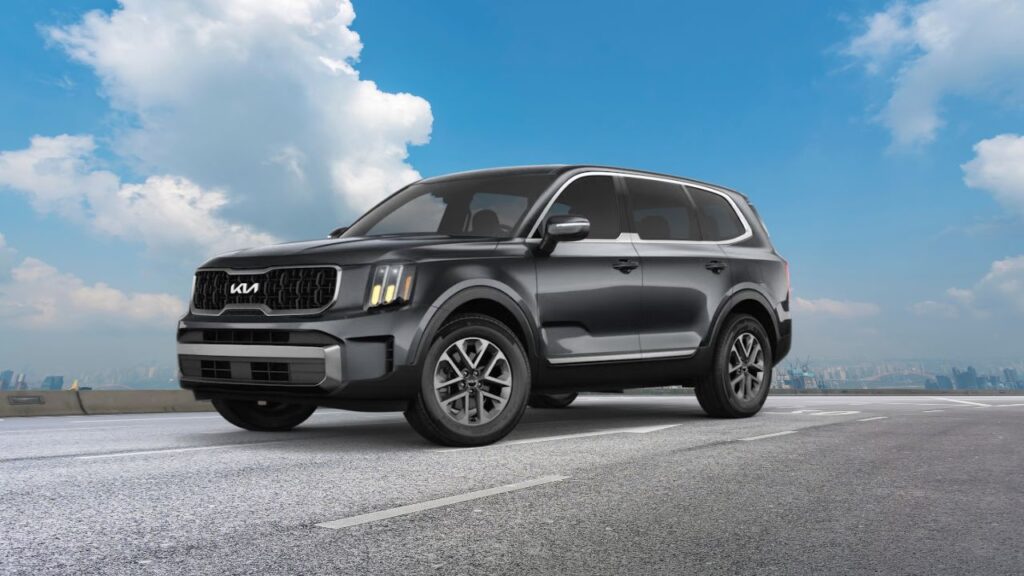
New Kia Telluride

Image credit: Badicar

The 2025 Kia Telluride is a strong contender in the midsize three-row SUV class, offering a great balance of eye-catching exterior design, cutting-edge technology, and real luxury in comfort. This all-in-one guide will take you through what makes the Telluride one of the best SUVs on the market today. 

Bold Exterior Design That Commands Attention

The 2025 Telluride strikes an unmistakable pose with a distinctive grille and an aggressive stance. The distinctive tiger-nose grille is now enhanced by a stronger and more sophisticated texture which enriches its premium feeling, flanked by elegant LED headlamps and optional fog lamps providing the optimum road visibility while keep up with the contemporary styling.  

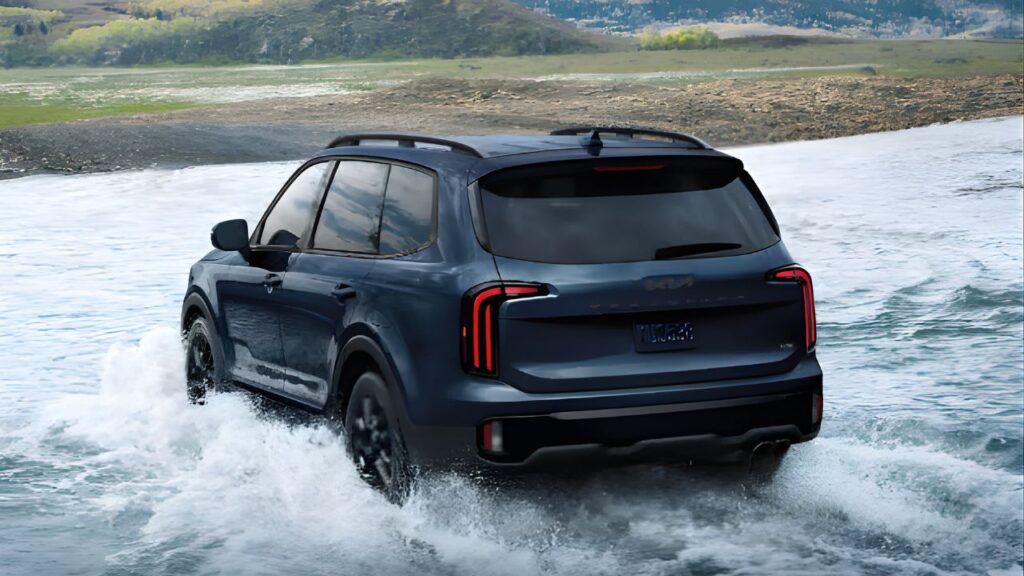
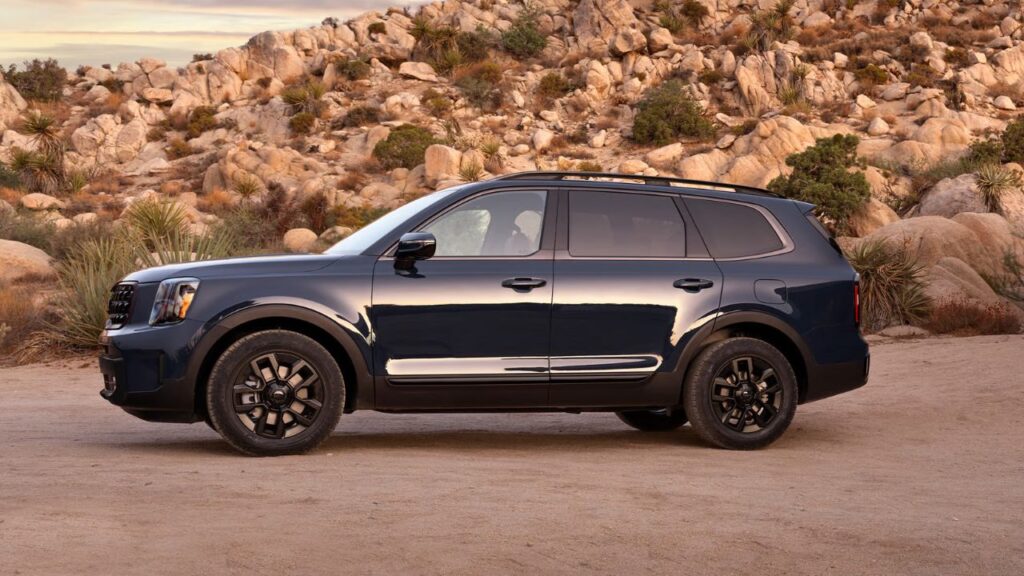
Sculpted body lines and an upright stance The vehicle’s muscular profile has armoured body lines and an upright stance that radiates rugged confidence, yet doesn’t hide away behind elegance. The 18-inch standard alloy wheels make for a tough foundation, while the optional 20-inch wheels in black finish – especially on the X-Line and X-Pro versions – bring a touch of sportiness. The unique 18-inch all-terrain tires exclusive to the X-Pro improve off-road performance and adventure-ready design. 

Functional design details like the roof rails, available hands-free power liftgate, and power-folding side mirrors are a great mix of form and function. The vehicle also has increased ground clearance, up to 8.4 inches (213 mm) on the X-Line and X-Pro models, which makes it really adept at off-road conditions. 

Bold Exterior Design

Image credit: Kia

The colors are especially stunning of Kia Telluride, and there are eight bold exterior colors to choose from to fit any taste – Panthera Metal, Midnight Lake Blue, Wolf Gray, Ebony Black, and Silver. 

Premium Interior Comfort and Spaciousness

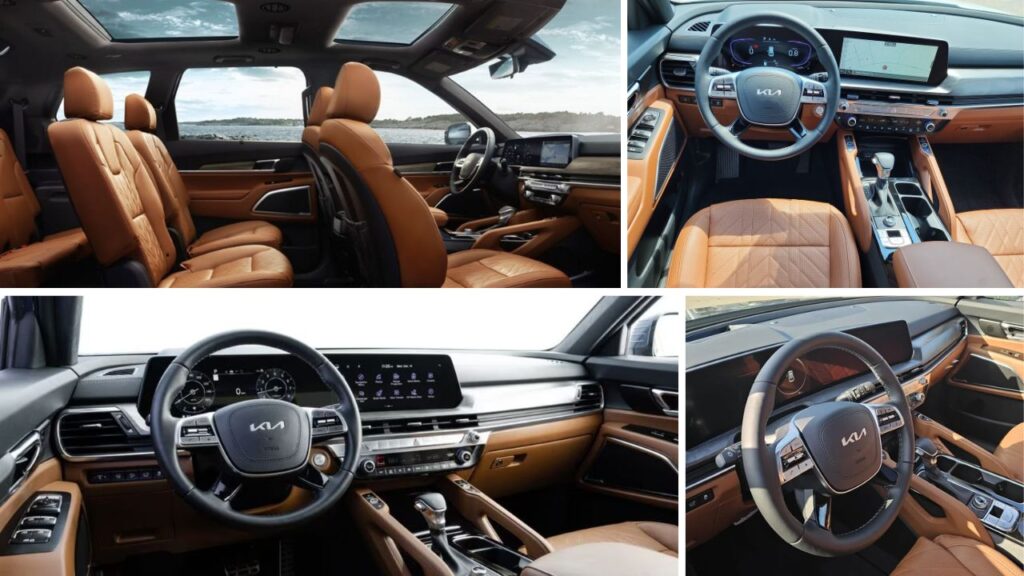
Step inside the 2025 Kia Telluride and you’ll find a cabin crafted for real comfort and utility.The cabin is finished in high-grade materials with well thought-out ergonomics and offers different seating arrangements to suit the requirements of today’s family. 

Seating and Space

The Kia Telluride has a variety of seating options, including up to eight passengers (with bench seating) or seven passengers with available captain’s chairs. More impressively, more legroom is provided in the Kia Telluride’s second row than in the first, ensuring that adults in every row will be comfortable on long journeys.

Cargo flexibility is excellent, with 21 cubic feet behind the third row, 46 cubic feet behind the second row, and as much as 87 cubic feet with both rear rows folded. While testing brought four carry-on bags behind the third row with both back rows collapsed to this spacious configuration. 

Premium Materials and Finishes

Premium Materials and Finishes

Image credit: Kia

The upper level trims of Kia Telluride come with Nappa leather seats, real wood inlays, and suede-like materials on the headliner that bring the refinement up a notch. The available heated and ventilated second row captain’s chairs (with best-in-class legroom) guarantee comfort for passengers in the rear.Lower spec models have a good quality synthetic leather (SynTex) or leather substitute that still feels premium but without the luxury cost.

 Five sophisticated interior color options:​ Black, Gray, Gray & Navy, Mahogany, and Terracotta

Climate Control and Ambient Features

Standard Telluride models are equipped with dual-zone automatic climate control, and rear-seat climate control also comes with dedicated AC vents helping passengers in all three rows of seats remain comfortable. With the available 64-color customizable ambient interior lighting, drivers can personalize the cabin atmosphere while sound-absorbing windshield glass helps keep cabin noise to a minimum for a quiet driving experience. 

Advanced Technology and Connectivity

The 12.3-inch HD touchscreen is equipped with Wi-Fi hotspot, Apple CarPlay, Android Auto, and one controls integrated navigation. Panoramic 12.3in dual displays are available on higher trim levels. Concert-quality sound from the 10-speaker Harman Kardon premium audio system, available on 2.3T and 2.5T Limited models.

The standard 6-speaker audio system on base models. It also features Driver Talk, a function that lets drivers talk to rear-seat passengers without turning around by broadcasting the driver’s voice through the rear-row speakers. 

Every row is equipped with multiple USB-C fast charging ports to keep each passenger connected while on the road. A 110-volt household-style power inverter draws power from the vehicle’s battery to run standard electrical appliances (optional on upper trims). 

Performance and Driving Dynamics

New Kia Telluride Performance and Driving Dynamics

Image credit: Kia

All 2025 Telluride models come standard with a 3.8-liter V6 engine that makes 291 horsepower and 262 pound-feet of torque. This combination gives you snappy acceleration plus fuel economy that’s not shabby — 20 MPG city and 26 MPG highway.

The eight-speed automatic transmission strikes just the right balance between fuel economy and responsiveness, the power delivery feeling as smooth as ever when you need it. Drive Mode Select offers the driver a choice of four driving modes including Comfort, Eco, Sport and Smart modes and an additional Snow mode for Audi all-wheel-drive versions. 

All but the base LX trim level have an all-wheel-drive option, which adds $2,000 to the price and provides better traction and stability in bad weather. X-Pro models really are ready for adventure, with a towing capacity that’s been boosted to 5,500 pounds (5,000 pounds on regular models) and suspension tuning that’s geared for the outdoors. 

Comprehensive Safety and Driver-Assistance Features

The 2025 Telluride’s excellent crash-avoidance and occupant protection capabilities result in a 5-Star NHTSA rating and the IIHS Top Safety Pick+ award. With over 17 standard driver-assistance features, included on every model, it sets the bar for this category.  

Passive Safety

The vehicle is outfitted with nine strategically located airbags (dual front, side curtain, second row side, and driver knee) to help protect all occupants. Anti-Lock Braking System, Electronic Stability Control, Vehicle Stability Management, Hill-Start Assist and Traction Control are a standard combo that helps you maintain control when the going gets tough. 

Active Safety and Driver Assistance

Blind Spot Collision Warning employs steering assist technology that nudges the vehicle back into its lane if the driver begins a lane change with an occupied blind spot. Forward Collision Warning with Pedestrian, Cyclist and Junction-Turning Detection monitors the traffic ahead, giving visual and audible alerts when the risk of collision increases.

AEB: Auto Emergency Braking – the system brakes automatically to prevent or reduce the severity of collision with vehicles, pedestrians or cyclists. Pedestrian Cyclist Lane Keeping and Following Assist: It keeps the vehicle in the lane and corrects the steering wheel in a mild way if the vehicle strays unintentionally from the lane. 

Navigation-Based Smart Cruise Control with Stop & Go lets the vehicle speed vary by curves on the road and navigation information, decelerating when approaching curves and accelerating after passing them up to the preset speed. Available Highway Driving Assist 2 employs cameras, radar and navigation information to keep safe following distances and perform lane changes by using the turn signal. 

Traffic sign recognition, intelligent speed limit assistance, driver attention monitoring and more are among the additional features. The 360-degree Surround View Monitor helps simplify parking and maneuvering at low speeds by displaying an aerial view around the vehicle. ​ 

Kia Telluride Price According To Trim Levels

Trim Starting Price Range (USD) Drivetrain Option
Base and Mid-Level Trims
LX (FWD only) $36,390 – $37,805 Front-Wheel Drive (FWD) only
S $39,390 – $41,390 Available with AWD option
EX $42,090 – $44,090 Available with AWD option
Premium Trims
SX $46,190 – $48,190 Available with AWD option
SX Prestige Starting at $51,390 Standard AWD
Adventure-Oriented Variants
EX X-Line Starting at $46,485 Standard AWD
EX X-Pro Starting at $47,385 Standard AWD
SX X-Line Starting at $49,885 Standard AWD
SX-Prestige X-Line Starting at $52,785 Standard AWD
SX-Prestige X-Pro Starting at $53,685 Standard AWD

Read More 👉 New Tata Sierra 2025 – Price, Features, Launch Date, and Electric SUV Details

Conclusion

The 2025 Kia Telluride offers authentic luxury positioning, but not luxury pricing. The roomy three-row SUV offers a refined interior, modern technology, and a long list of safety equipment at a price that’s far below rivals such as the Lexus GX or premium trims of segment competitors.​

With its bold design statement, genuine premium comfort for up to seven or eight passengers, unsurpassed cargo versatility plus a comprehensive suite of advanced driver-assistance technologies, the Telluride once again proves that it’s the benchmark for families and thrill-seekers in need of a truly capable, connected, and comfortable three-row SUV experience. 

0

Car Loan Interest Rates in India 2026 – Compare Banks and EMI Options 

Published Jun 29, 2026, 12:27 PM
Last Updated Oct 29, 2026, 5:56 PM

Car Loan Interest Rates

You don’t need a finance degree to get a loan or understand Car Loan interest rates in India 2026. You just have to look at every number and calculate, that’s how you can compare each bank and EMI options available to buy a car. Don’t depend on dealerships to let you know because they might tell you where they get the most profit.

You can go through this guide to know everything about Car Loan India and its interest so you can buy a new car without burning your wallet.

The RBI raised the repo rate to 5.50% on October 7 2026. Here’s what that means for your EMI, in the section below.

What Is a Car Loan Interest Rate?

This is a process where the bank is lending you money to buy a car and in return, you have to pay that amount with a little extra known as interest rate each month till the total amount has been paid.

So if a bank says “8% interest,” it means you’re charged 8% a year on the amount you still owe. As you repay, the balance shrinks, and so does the interest part of each EMI. The lower this number, the less you pay overall. Simple as that.

One thing to watch: some dealers and lenders quote a “flat rate,” where interest is calculated on the original loan amount for the whole tenure. That costs far more than a reducing-balance rate with the same number. Always ask which one you’re being quoted.

Car Loan Interest Rates in India (October 2026)

Currently, Car Loan rates in India start from around 7.35% per annum as of mid 2026, and for weaker credit profiles the top end can go past 11%, depending on the bank. Here’s a quick look at where things were: 

Lender New-car loan rate (October 2026)
Canara Bank From 7.45%
Union Bank of India From 7.50%
Bank of Baroda From 7.60% floating; 8.50% fixed
Punjab National Bank From 7.60% floating; 8.60% fixed
HDFC Bank From 8.25%
ICICI Bank From 8.40%
SBI From 8.55%
Tata Capital From 9.49%

Public sector banks (like UCO, Canara, PNB) generally start with lower rates than private banks. But private banks like HDFC and ICICI make up for it with faster approvals and easier paperwork. So it’s not just about the lowest number — it’s about what fits your situation.

Read More:- What Monthly Salary Is Required to Buy a Tata Nexon?

How the RBI’s October 2026 Rate Hike Affects Your Car Loan

On October 7, 2026, the RBI raised the repo rate by 25 basis points to 5.50%, the first hike in nearly three years, and moved its stance to “calibrated tightening.” 

What that means for you depends on your loan:

  • Fixed-rate loan: your EMI doesn’t change.
  • Floating-rate loan linked to a repo-based benchmark: your rate can rise when your lender next resets it. On a ₹5 lakh, 5-year loan, a 0.25% rise adds roughly ₹60 a month.
  • A new loan: ask the bank what benchmark your rate is linked to and how often it resets.

How Is EMI Calculated?

EMI stands for Equated Monthly Installment — basically, the fixed amount you pay every month until your loan is over. It depends on three things:

  • Loan amount – how much you’re borrowing
  • Interest rate – the percentage the bank charges
  • Tenure – how many years you’re taking to repay

When you get a smaller loan, a lower interest rate, and a longer period you will have a lower EMI. However, the longer term also means you are paying interest for longer, therefore even though each month feels lighter, you end up paying more.

Here’s what that looks like on a ₹5 lakh loan. These are approximate reducing-balance figures I calculated, so check them in your bank’s calculator.

Interest rate Tenure EMI Total interest
7.5% 5 years ~₹10,019 ~₹1.01 lakh
8.5% 5 years ~₹10,258 ~₹1.15 lakh
9.5% 5 years ~₹10,500 ~₹1.30 lakh
8.5% 3 years ~₹15,786 ~₹0.68 lakh
8.5% 7 years ~₹7,919 ~₹1.65 lakh

Notice that stretching from 5 to 7 years at the same rate cuts your EMI by about ₹2,300 but adds roughly ₹50,000 in interest. You don’t have to calculate this by hand — every bank has a free EMI calculator on its website. Just enter the loan amount, rate, and tenure, and it does the work for you.

Fixed vs Floating Interest Rate — Which One Should You Pick?

Fixed rate means your interest rate stays exactly the same for the entire loan. Your EMI never changes. It’s predictable — good if you like knowing exactly what you’ll pay every month, with zero surprises.

Floating rate means your interest rate can go up or down depending on what’s happening in the market (linked to things like the RBI’s repo rate). Your EMI might increase or decrease over time. It’s a bit of a gamble — but if rates fall, you could end up paying less overall. With the RBI having just hiked and signalled no near-term cuts, the “rates might fall” case looks weaker than it did a few months ago.

If you’re someone who likes stability and doesn’t want to worry about EMI changing suddenly, go fixed. If you’re comfortable with a bit of unpredictability for a chance at saving money, floating could work better for you.

Which Bank Is Actually “Best”?

It depends on what matters most to you. But here’s a simple way to decide:

Want the lowest possible rate? 

Public sector banks like UCO Bank, Canara Bank, or PNB usually win here. They’re slower with paperwork, but cheaper long-term.

Want quick approval and minimal hassle? 

HDFC Bank and ICICI Bank are reputed for fast in many cases almost entirely digital processing – your best bet to get that car in just a hurry. 

Already have a salary account or relationship with a bank? 

Check with your salary bank first. Existing customers often get preferential rates without even asking.

4 Things That Quietly Affect Your Interest Rate

  1. Your credit score (CIBIL) – Almost any score of 750 and above guarantees the best rates. Below 700, you may be facing higher rates or additional scrutiny. 
  2. Down payment — The more you pay upfront on a 20% or more down payment lessens the bank’s risk; this often leads to a better rate for the customer. 
  3. Loan tenure – Shorter tenure usually comes with a slightly lower rate, but a higher EMI.
  4. New car vs used car – New cars almost always get lower rates than used ones.

A Few Tips Before You Sign Anything

  • Don’t just compare interest rates — look at processing fees and foreclosure charges too. A loan with a slightly higher rate but zero processing fee might actually cost you less.
  • Negotiate. If you have a good credit score and a stable income, you can typically request a better rate – than the one first quoted at your bank. 
  • Check whether the bank offers any small discounts, such as a lower interest rate for women or people who already have an account. 
  • Avoid stretching your tenure just to make the EMI look small. A longer tenure quietly adds up to a lot more interest paid over time.

Read More:-  5 Best Affordable SUVs Under 15 Lakhs In India

Conclusion

Since finance options are available for a new car in 2026, do not accept whatever you’re handed on the spot at the dealership. You should know the latest Car Loan interest rates before you look for a dealer. If you compare interest rates of public & private banks and take note of your CIBIL score and choose a 4-5 year tenure (instead of a protracted 7 yrs loan), you are able to put back hundreds of hard-earned rupees back into your wallet, month by month.