0

2026 Maruti Brezza Spied with New Powertrains and Bumper Design

Published Mar 6, 2026, 10:23 AM
Last Updated Apr 7, 2026, 10:44 AM

Maruti Brezza Spied

The battle among compact SUVs is heating up again in India and Maruti Suzuki is far from quiet. The Maruti Brezza Spied is due for a major revamp following its hegemony of sales charts for nearly ten years. New pictures have surfaced that show us the 2026 Maruti Brezza Facelift with its camouflage partially off, allowing us to see some subtle yet significant changes that indicate this isn’t just another cosmetic nip-and-tuck. 

A Nicer Face with Chrome Accents

The most noticeable difference is the front. Maruti has gone ahead and removed the blacked-out elements which made the current Maruti Brezza Spied look sporty, and in their place are chrome elements that lend a premium feel. The fog lamp housing has been restyled – the previous black cladding that joined the fog lamps with the air intake has been removed. Instead, separate units for the more noticeable fog lights are now included, lending the front end a cleaner and more mature look. 

Maruti Brezza Spied look sporty

Further updates are left if you move to the right. The chrome strip on the side cladding replacing the black plastic trim of the previous model is also a test mule feature flaunting a dual-tone ORVM (Outside Rear View Mirror). What this means is that these features tick the Maruti Brezza Spied a little more upmarket, and take it closer to buyers who want their small SUV to look expensive, without actually being so. 

Maruti Brezza Spied 6-Speed Manual Gearbox

While the changes seen on the Brezza’s exterior are only progressive, it is the mechanical aspect which appears to be getting a revolutionary update. Multiple spy shots confirming a 6-speed manual vs a 5-speed manual gear knob can now be seen inside the cabin through the window. That is a lot better than the current 5-speed unit and it creates the way forward for interesting possibilities.

turbo-petrol engine

Forgoing the new turbo-petrol engine that many enthusiasts were anticipating, the transmission will be mated to the existing 1.5-litre naturally aspirated K15C petrol engine. The engine would at least breathe easier at three digit speeds, the taller gear would improve highway driving and perhaps yield better fuel economy on long drives. Maruti’s target market are families who prefer reliability and mileage over speed and power, and this is perfect for them. 

A turbo-petrol engine is not off the table, either. With the fierce competition from the Hyundai Venue, Kia Sonet and Tata Nexon providing strong turbo options, Maruti may prove us wrong. 

But for now a turbocharged Brezza is here remains unlikely considering that the bigger Grand Vitara and Toyota Hyryder continue to use naturally aspirated engines. 

Interior Tech Gets a Boost

While it remains functional, the current 9-inch Brezza’s screen is beginning to feel a tad cramped when pitted against those of its rivals. This is taken care of in the 2026 Maruti Brezza Spied with a bigger infotainment system, probably a 10.1-inch or even 10.25-inch unit that will improve resolution, touch response and may offer wireless Apple CarPlay and Android Auto as standard on more models. 

There are also ventilated front seats being included, which is now a common feature in this segment and a resort in the scorching summers of India but it’s not officially confirmed. The dual-tone theme along with much lighter colors might be used for the interior as well—making the cabin feel more spacious and premium. 

CNG Continues to Be a Priority

Maruti has not forgotten its CNG customers. 2026 Maruti Brezza possibly coming with an underbody CNG tank, which would change the game. At present, the CNG kit takes up a precious boot space, but underbody installation would retain full 328-litre boot space and provide the running cost benefits of CNG that buyers look for. 

Safety and Features

While the Maruti Brezza is already equipped with six airbags as a standard (Maruti did this in February 2025), the 2026 model is set to raise the bar for the standard even higher. It will provide the Level 2 ADAS safety which is going to be one of the reasons many would buy without thinking twice. It will feature autonomous emergency braking, adaptive cruise control and lane keep assist. 

Maruti Brezza

There is no radar or camera hardware that has been seen yet on the SUV but it may be provided in the higher variants. Still, we will get the 360-degree camera, heads-up display, and Suzuki Connect telematics system will continue, potentially with more features. 

Price & Launch Timeline

The introduction of the new 2026 Maruti Brezza Spied was supposed to take place early this year however, it is delayed now for three to four months and so we can expect it by May 2026. Prolonged testing assures that new engine and transmission combination would be thoroughly tested before it lands in the showrooms, Maruti’s assurance on the betterment. 

Bidding is likely to see a slight upturn “₹ 8.50 lakh — ₹ 14 lakh ex-showroom” across the variants. Given Brezza’s present pricing starts at ₹8.26 lakh, this is a modest increase taking into account the additional kit and mechanical modifications. 

Read More: Fortuner vs Gloster: Which Full-Size SUV is Much Better

Conclusion

If you are looking for a compact SUV presently, the existing Brezza still holds its ground as a good buy, more so with the latest safety updates. But if you spend a lot of time on the highway, it might be worth the wait for the 6-speed manual alone. The bigger touchscreen and the possibility of CNG versions make the deal even sweeter.

For Maruti, the Maruti Brezza Spied with new looks is not about raising the bar — it is about staying the course in a segment it created. And that is what the market needs, occasionally. 

Sharey Khan

Sharey Khan is an IT entrepreneur and petrol head & a car enthusiast. With a special focus on car-related content, he combines his deep passion for vehicles with a talent for crafting informative, engaging, and easy-to-understand content. His writing is driven by a genuine love for cars and he is committed to providing readers with accurate, up-to-date, and trustworthy information that empowers smarter driving decisions. 

Leave a Reply

Your email address will not be published. Required fields are marked *

0

Super car: Porsche 918 Spyder

Flaunted as the “ultimate hyper car,” the Porsche 918 Spyder specifications are the very first production-oriented road car that broke the seven minute hurdle at the well-known Nurburgring. This hybrid supercar was introduced at the Frankfurt Motor Show. Every Porsche 918 production cars built on the hood, along with several spots inside the cabin. With an extraordinary blend of performance and efficiency, the 918 Spyder has marked the commencement of a new era of supercars.

The Porsche 918 Spyder is powered by a combustion engine and two electric motors. When it comes to performance, the numbers are stunning: 0-60 in 2.2 seconds, 0-100 mph in 4.9 seconds, 1/4 mile time of 9.8 seconds and a top speed of 217 mph. All this performance and cutting-edge technology cannot come cheap, though. The Porsche 918 price for a new car was $845,000, but options like the Weissach package ($84,000) and Liquid Metal paint ($63,000) could push that price to over $1 million. Since Porsche stopped producing this model in 2015, the asking price for a used Porsche 918 Spyder has skyrocketed — it can easily exceed $1.6 million.

To flash over 200 mph, the 918 Spyder relies on a 4.6 L V8 engine and two electric motors. The fossil-fuel-fed Porsche 918 Spyder specs an engine that produces 608 horsepower. The total horsepower of the 918 Spyder is 887, thanks to the performance boost from the two electric motors. The rear electric motor sends 154 horsepower into the transmission.

The second electric motor on the front axle makes 127 horsepower. Without help from the electric motors, the rear-mounted V8 engine, which is derived from the 2005 RS Spyder race car, revs to 9,150 rpm. The combustion engine reaches 398 lb-ft of torque at 6,700 rpm. The rear electric motor features innovative hybrid cooling with air and water. You can’t easily admire the engine or e-motors, though. As the hood doesn’t open, you’d have to take your Spyder to the dealer to take a peek at your Porsche 918 engine.

The Porsche 918 Spyder specs an engine mounted so low down that Porsche engineering had to mount the 918 transmission upside down, for better weight distribution. The rear motor runs through the 7-speed PDK dual-clutch, while the front axle electric motor has only one gear. Surprisingly, the gear selector is a tiny lever mounted just to the right of the steering wheel. At high speed (over 164 mph), the 918 Spyder becomes rear-wheel drive only. That’s because a decoupler disconnects the front electric motor to avoid over-revving. There are five driving modes: electric, hybrid, sport, racing and Hot Lap. The latter uses full engine power but depletes all electric reserves. The beauty of the system is in the electric motors powering the car between the gear shifts. Obviously, the 918 offers brutal acceleration in any circumstance.

A supercar that goes from 0 to 60 mph in a blink needs a matching high-performance braking system. The 918 Spyder has Porsche Ceramic Composite Brakes (PCCB). They have six-piston monoblock calipers at the front and four-piston calipers at the rear. The ceramic discs at the front have a diameter of 16.1 inches. Those at the rear have a diameter of 15.4 inches. Through brake regeneration, the Porsche 918 Spyder specs that the brakes capture most of the energy that would be otherwise wasted as heat during braking. Furthermore, the electromechanical brakes of the 918 Spyder then store that energy in a battery and feed it back through the electric motors. Additionally, daily driving and light braking won’t even invoke the hydraulic system, as both electric motors become generators when the brake pedal is pressed. So every week you need to do a few spirited stops to keep condensation out of your brake lines.

Inspired by Porsche’s previous supercars, the carbon-fiber-reinforced plastic monocoque chassis of the 918 Spyder is lightweight and high-strength. The design of the Porsche hybrid 918 stands out thanks to the top-mounted exhaust pipes and massive rear spoiler. Both are adjustable from the control panel. The Porsche 918 Spyder specs a Targa roof, but you have to remove the top panels manually. They are easy to stow in the trunk. Another distinctive feature of the exterior design of the 918 Spyder is its “Acid Green”brake calipers.  Therefore, Porsche chose to add accents in the same color on the carbon bucket seats, seat belt, and steering wheel ensure design coherency. The Weissach Package adds several pieces of exposed carbon fiber along with gorgeous magnesium wheels. Unquestionably, the differences save over 80 lbs. and make it easily distinguishable at a distance.

The pinnacle of decades of engineering, the Porsche 918 Spyder blends high-tech, efficiency and performance in a weight-saving design. The standard version of the Porsche 918 Spyder weighs 3,691 lbs. With the optional 918 Weissach pack, which improves the driving dynamics, the car is lighter, weighing 3,602 lbs. The 918 Spyder with the Weissach package is the version that made the Porsche 918 Spyder Nurburgring time of 6:57 a reality.

Concurrently, the two electric motors draw their power from a 6.8 kW·h liquid-cooled lithium-ion battery. It has a 20-mile electric range and a total range of 420 miles in hybrid mode. The Porsche Universal Charger takes seven hours to charge the battery when connected to a 110-volt household AC socket. Or only two hours with a 240-volt power supply. An optional HVDC Speed Charging Station can fully charge the lithium-ion battery in 25 minutes. The Porsche 918 Spyder specs are an incredibly fast hybrid for technology aficionados.

To conclude the greatest Porsche to-date, it is an eco-friendly green contrivance. It will mind boggle you to contemplate its working. So what you are waiting for? Get yourself the good Porsche news.


0

Huawei-backed Maextro to Launch Maextro S800 Grand Design in June

Maextro S800 Grand Design

Not German or British, a Chinese brand Huawei-backed Maextro is going to Launch Maextro S800 Grand Design in June. If your head is turned with the S800 sedan early model then wait for this one, it’s coming with Grand Design. Richard Yu describes the Maextro S800 launch Grand Design as transcends the ultimate and embraces a grander vision. 

The S800 sales proved that Chinese-made luxury sedans can provide strong features and the Maextro next launch – S800 Grand Design will make a headline as the top ultra-luxury car in the car market. 

Exterior & Richard Yu Philosophy of Maextro S800 Grand Design?

Imagine the S800’s more extravagant, dressed-up sibling with the same body size. The Grand Design is built on the same regular model — 5,480 mm in length, 2,000 mm in width and the same wheelbase of 3,370 mm but covered with an impressive look that is hard to miss.

Maextro S800 Grand Design

Richard Yu, CEO Huawei’s Consumer BG shared his philosophy for the Grand Design as one that “transcends the ultimate and embraces a grander vision.” He announced the lunch details on Chinese social app Weibo with few images of the design. 

The two tone color – white blends with “Far Mountain Cyan” and gold accent is something truly remarkable. It will make people say ‘Wow” and turn their heads again. Its overall impression is less “electric vehicle” and more “rolling ceremony.” 

What Is The Price Of Maextro S800 Grand Design?

The Maextro S800 Grand Design price is expected around 2 million yuan ($293,580 USD), which makes it more valuable than standard S800 which already costs around 708,000 yuan and its top variant up to 1,018,000 yuan.


At the price debate, Maextro isn’t just competing with Chinese brands but also making direct targets at Rolls-Royce, Bentley, and Mercedes-Maybach. It’s a bold move but given how the standard S800 has performed, that’s not a surprise at all.

Statistical Motivation Behind The Grand Design

The regular model of S800 made a record in the selling chart and became one of China’s best-selling ultra-luxury sedans among cars priced above 700,000 yuan. It’s become the most reliable and luxury vehicle among all the sedans.

Maextro S800 Grand Design

S800 became the second most popular car in the Chinese car market as deliveries hit above 17,000 units since its launch. In April 2026 alone, S800 sold over 1,100 units which indicates that actual cars are being sold and put on the road.

After successful response from the car market for the S800 since its launch, Huawei moved forward with this opportunity to launch its next model which covers a more luxurious design. It will launch in June, and market expectations for the S800 Grand Design are high.

See Also : Most Common Car Issues and How to fix them

Interior And Premium Features

Anhui Jianghuai Automobile Group and Huawei made a joint venture — Maextro which manages under Huawei’s HIMA platform. It simply implies that they will surely offer ultra premium tech features in Grand Design.

Interior And Premium Features

The car has a roof-mounted 896-channel LiDAR sensor which means it builds with high-end driving technology. The sensors of the car will detect objects, and create a detailed 3D map of the surroundings. Cameras built into the side pillars, helps to monitor nearby vehicles and cover angles of blind spots.

The Grand Design is equipped with Huawei’s latest safety feature Qiankun ADS 5.0 which provides features like lane keeping, automatic parking, obstacle detection, and advanced assisted driving. 

Maextro S800 Grand Design

Powertrain options include both BEV (battery electric) and EREV (extended range) configurations. BEV fully runs on battery with two motor systems of Huawei that provide strong performance, smooth acceleration, and better control. Meanwhile EREV includes a 1.5T range extender, a small petrol engine in electric version to provide time for the battery to recharge when needed without stopping a car.

This Launch Place Maextro In The Competition

This would be a mistake to underestimate the S800 but it is surprising that a Chinese-made sedan costing around $293,000 can compete in the luxury car market. Everyone is quite confused at first to see the trend but strong sales of the S800 prove that the car has extremely powerful features.

Chinese buyers are now willing to choose domestic brands over famous European brands like Mercedes or BMW. Brands like Maextro shifting the view of Chinese cars means they no longer sell low quality or less prestigious goods. The Grand Design takes that statement even further. 

Maextro S800 Grand Design

It’s not just about the features and specification, but a position to show that a Chinese brand can build something quite strong, high-quality and exclusive which can be considered as ultra-luxury. The Grand Design is the first MPV, V800 of the brand, Maextro is expanding its lineup.

See Also: Electric Cars Under 5 Lakhs | Best Affordable EV Option

Conclusion

The Maextro S800 Grand Design is more than just a car, it’s a statement from a brand who proved that China’s automotive industry can deliver eye-catching designs with advanced Huawei Technology to bring premium comfort in a ride which provides an ultra-luxury driving experience.

After a successful sale of standard S800, the Maextro S800 launch is ready for Grand Design in June 2026. It arrives with high expectations and confidence from buyers who admire domestic brands over foreign vehicles. If the standard proved that Chinese luxury cars can compete, the Grand Design is here to prove they can lead. 

This move by Huawei-backed Maextro showing “Made in China” now stands for Quality and Innovation. 

0

Subaru Forester vs Honda CR-V 2025: Which SUV Is the Real Champion?

Published Jul 31, 2025, 5:52 AM
Last Updated Apr 11, 2026, 11:08 AM

 Subaru Forester vs Honda CR-V 2025 Which SUV Is the Real Champion

When you are going to buy a SUV, you must get confused about which SUV is the real champ — Subaru Forester vs Honda CR-V. Here you can explore their full details of engine, performance, speed, and design of the two most amazing SUVs. Subaru Forester has unveiled its incredible redesign while Honda CR-V continues to ride high on its latest generation. This isn’t just a battle of features and specs but it’s about both car philosophies. 

Both cars are giving utterly experience to their owners, Forester is made for adventurous-ready partners that are always ready for the rough roads and comes with all-wheel drive. On the other hand, Honda CR-V is smooth, fuel-efficient, and comfortable for running around the city with elegance. Let’s look deeper into the comparison of Subaru Forester vs Honda CR-V for making it easier to choose for you.

Performance: A Tale of Two Drivetrains

The biggest difference between these two SUVs lies right under the hood and in the wheels that put the power down.

Subaru Forester: If you are a person who likes to go on adventure trips or rough roads, the Forester is your champion. All new Forester’s provide AWD which is impressive if we look into the best SUV, Subaru’s legendary Symmetrical All-Wheel Drive as standard. It is ready for rain, snow, or on that gravel road to the trailhead. The powerful system is built on the 2.5-liter with 180 horsepower. It provides a four-cylinder to make it unstoppable but it won’t win many drag races, it’s smooth, capable, and gets the job done.

There is big news for Forester lovers — a Forester Hybrid is coming soon which offers the fuel efficiency that means buyers will get a well-performed SUV with no worries for fuel.  

Honda CR-V: Honda CR-V powerful engine of 1.5-litre will give wonderful performance with its quick speed and extensive high brakes. The turbo engine with 190 horsepower, delivers incredible smooth running on road with its elegant look. The highlight is hybrid powertrain — CR-V Hybrid, stronger with 204 horsepower that can give you the thrill and deliver the purpose of fuel saving — we’re talking up to an EPA-estimated 40 MPG combined.

Who Wins? CR-V is good in saving fuel and sticking to city roads but for all-wheel drive, you have to pay extra. While Subaru gives you for free and supports you totally on your off-road adventure.

Performance Verdict: The Forester is the best choice if you want go-anywhere capabilities because it offers. The CR-V is an ideal SUV for those who want an SUV for daily on-road efficiency, especially in its hybrid form which is more powerful.

Read More :- Jeep Wrangler vs Ford Bronco 2025: Full Comparison of Specs, Style & Performance

Interior and Practicality: The Space Race

Both have amazing style but practically different in cargo space, windows, and door. 

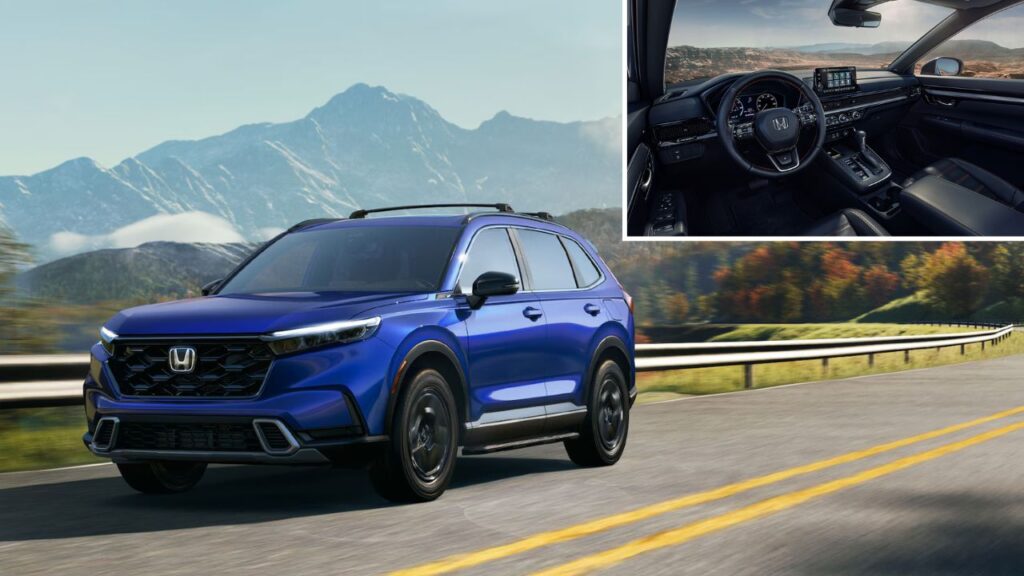
Honda CR-V: The wide interior view and well shaped design is delivering a cool experience to the families traveling or friends enjoying in the SUV. The CR-V is delivering not just a car but total flexibility to their passengers with cargo space of 76.5 cubic feet.

Honda CR-V Interior and Practicality

Honda CR-V Interior and Practicality

The space for the rear seat makes everyone comfortably sit and drive for long hours. Honda has already made the name in fancier cars all over the world.

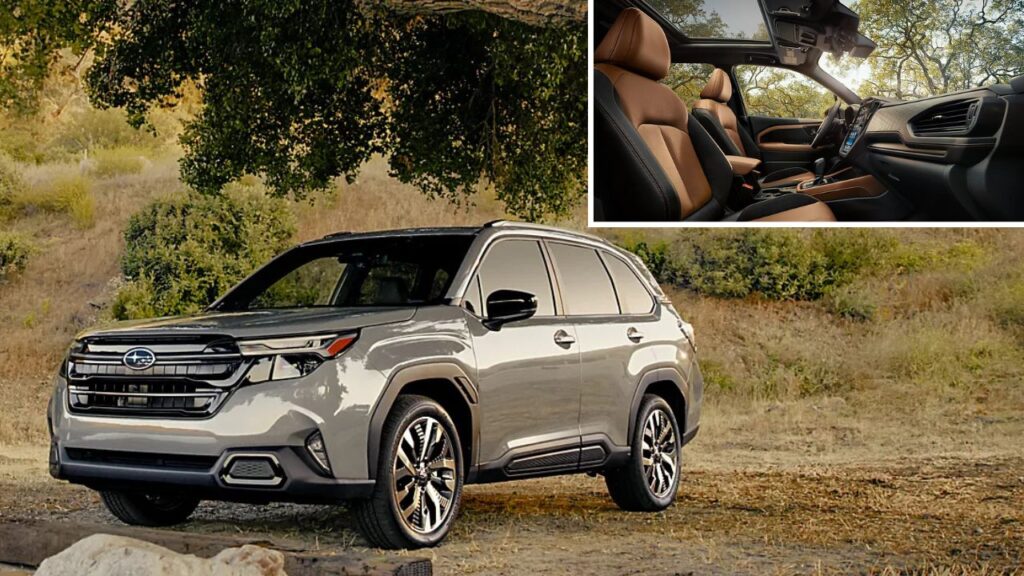
Subaru Forester: The redesigned 2025 Forester offering a cargo space of 74.4 cubic feet with hands-free liftgate for making packing easy. It also offers a wide back opening, no problem with a trip ready mood.

Subaru Forester Interior and Practicality

Subaru Forester Interior and Practicality

You can have a fully functional and modernized interior in one SUV. It has great visibility from the upright windows and thin pillars which is fantastic for navigating tight parking lots or scenic byways. 

Who Wins? Almost a tie because CR-V has a high-end functional and sleek design with more space whereas Forester gives great view and practicality.

Interior Verdict: If you want to feel classic era and a slightly more cargo space then CR-V is might be the best option but If you want good visibility, rugged, and user-friendly design then Forester is a good option. Both are marvelous companions in your driving with a slight difference which will give you incredible experience.

Tech and Infotainment: Screen Time

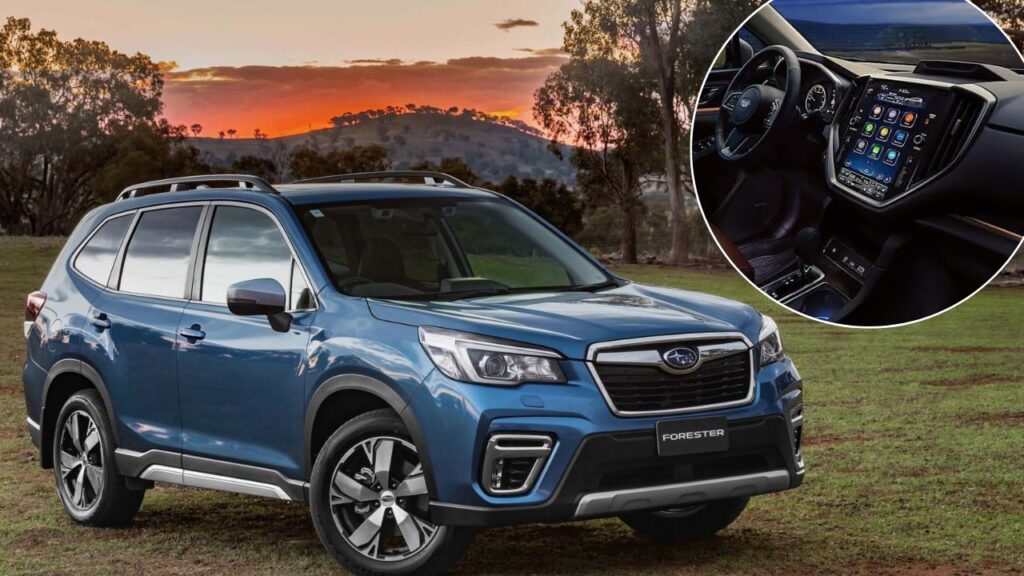
Subaru Forester: The Forester’s new 11.6-inch vertical touchscreen is best for perfect display of the infotainment. Apple Car Play and Android Auto supported infotainment system helps you connect in quick with any device.

Subaru Forester Tech and Infotainment

Subaru Forester Tech and Infotainment

This new tech used in the Forester made it more unique and modern through this upgraded system. 

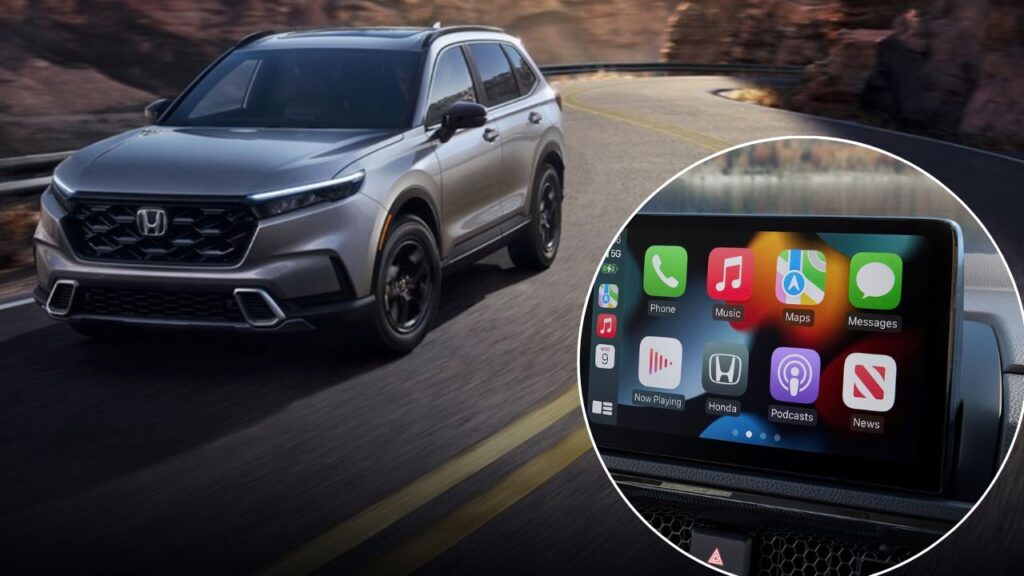
Honda CR-V: People who are comfortable with a 7-inch touchscreen, with a larger 9-inch screen available on higher trims, CR-V is delivering your desire.

Honda CR-V Tech and Infotainment

Honda CR-V Tech and Infotainment

The system is simple and intuitive, but you only get wireless Apple Car Play and Android Auto with the larger 9-inch screen. Tech Verdict: The Forester takes a slight upscale in its tech with a modern big screen with high-end infotainment system for 2025. 

Safety: A Clear Winner Emerges

The SUV will have an advanced tech system, high performance engine, and comfortable interior but safety concerns come first for many buyers. I think it’s important for every person because accidents can take your loved ones away and it’s the main point that makes them two apart from each other. 

Honda CR-V: The CR-V offers a safety system like adaptive cruise control, lane-keeping assist, and automatic emergency braking but it didn’t get IIHS safety ranking for this model. When it comes to safety there is no option in looking for an alternate choice. 

Subaru Forester vs Honda CR-V 2025

Subaru Forester vs Honda CR-V

Subaru Forester: The Forester has a clean role in the Safety section, it delivers you the latest version of its EyeSight driver-assist technology, which now scans wider areas and reacts more quickly. The upgraded system is more advanced in the safety rules. A new Emergency Stop Assist feature can even be tested, bringing the car to halt for safety after a while it senses you become unresponsive.

Safety Verdict: It is clear that Foster is winning here because of its powerful safety measures for passengers and it also got IIHS ranking for its upgraded system. 

The Final Verdict: Which Champion Is Yours?

Both have won on each stage with their powerful performance, design and features but there is a slight difference which makes you choose any one. If you want an SUV for long tour rides then the Forester is a winning trophy because it gives full support for the safety of the passenger. The cargo automatic features are easy to handle by anyone. If you value these things then buying the Forester is worth your money.

CR-V will give you reputation and efficiency for more fields, if you are satisfied with Honda cars before then this might be the best option. If you want an SUV then be sure to take a test-drive for both. And choose what will suit your life journey. 

Choose the 2025 Subaru Forester if:

  • You want full AWD in your SUV with all the weather security support.
  • You want a top safety rated SUV because Safety is your number one priority.
  • You value the best interior and outside view is one of the priorities.
  • You travel more and most likely onto dirt roads, snowy paths, or always ready for adventures.

Choose the 2025 Honda CR-V if:

  • You want a fuel efficient SUV which makes you not worry while spinning around the city.
  • You want more cargo area than Forester to adjust more things, with a good interior look.
  • Spinning around on paving roads is your thing.
  • You believe in Honda’s reputation and flexibility of the quality features, and trust on history of delivering satisfaction.

Ultimately the Subaru Forester vs Honda CR-V, the Forester is the champion of SUV when it comes to adventure and safety, meanwhile the CR-V is the champion of efficiency and refinement. Test drive both, list what you can do with your SUV and which one will help you best in your life and you’ll find your perfect champion.

0

Kia Carens CNG, Clavis CNG & Carnival Hybrid Pre-Bookings Open In India

Kia Carens CNG

Kia has opened pre-bookings for three new powertrain options in India — the Carnival Hybrid, Carens CNG and Carens Clavis CNG but none has an official price yet. The Carnival Hybrid pre-bookings create excitement among buyers because it brings electrification to Kia’s flagship MPV, while the two Carens variants finally offer a factory-fitted CNG setup instead of a dealer-installed kit. 

If you’ve been waiting for a factory-fitted CNG Kia or a hybrid alternative to the diesel Carnival, here’s what you’re actually signing up for before you hand over a booking amount.

Carnival Hybrid Pre-Bookings Are Open, But The Price Isn’t Announced

The Carnival Hybrid pre-bookings went live days after Kia showcased the model at its Inspiration Day event in early September 2026 — the same event where the new three-row Kia Sorento was unveiled. 

The Sorento launched on September 4 at Rs 27.99 lakh ex-showroom with diesel, hybrid and AWD options, and the Carnival Hybrid borrows the underlying idea: a strong-hybrid setup built around a 1.6-litre G1.6T turbo-petrol engine, paired here with a 6-speed automatic gearbox.

Carnival Hybrid

Kia is offering the hybrid only on the Carnival’s Limousine+ trim, which today is sold exclusively with a diesel engine at Rs 59.65 lakh ex-showroom. That number is the one to anchor your expectations to. The hybrid isn’t replacing the diesel — it’s slotting in alongside it as a premium alternative, expecting it to land above that Rs 59.65 lakh mark rather than undercut it. Kia hasn’t confirmed a figure yet.

What Changes Over The Diesel Limousine+ 

Design and Exterior

A 18-inch Crystal Cut dual-tone aero alloy wheels, Active Air Flaps for better aerodynamics, and a Virtual Engine Sound System that generates an audible warning when the Carnival is crawling on electric power alone. 

That last one isn’t a gimmick — strong hybrids can be silent enough at parking-lot speeds to genuinely surprise pedestrians, so the artificial sound is a real safety addition, not badge dressing. 

Interior Features & Functions

Inside, Kia has added a Smart Pure Air Purifier with an AQI readout, retractable height-adjustable seat-back tables with wireless charging built in, monotone ambient lighting, and leatherette-wrapped door trims. 

Everything that already worked on the Limousine+ carries over unchanged: dual 12.3-inch displays, three-zone climate control, a 12-speaker Bose system, eight airbags, Level 2 ADAS, and a 360-degree camera.

Kia Hybrid Discount Rate

Under India’s GST 2.0 structure, in effect since September 2025, hybrids don’t get the same tax break as pure EVs — only battery electric vehicles sit at the concessional 5% rate. A large hybrid like the Carnival, well over 4 metres long and running a 1.6-litre engine, falls into the same 40% GST slab as any other big diesel or petrol SUV in that size class. 

Whatever premium the Carnival Hybrid ends up carrying over the diesel Limousine+ will come entirely from Kia’s own component and engineering costs, not from any tax advantage passed on to buyers — worth knowing if you were assuming “hybrid” automatically means a lighter tax bill in India the way it does with EVs.

Kia Hybrid Rivals in The Market

The awkward part for anyone trying to cross-shop Carnival Hybrid against India’s other hybrid MPV. The Toyota Innova Hycross tops out around Rs 32.95 lakh ex-showroom for its fully loaded ZX(O) hybrid variant and returns an ARAI-claimed 23.24 kmpl. 

Kia Hybrid and Toyota Innova

The Carnival Hybrid will likely launch at close to double that price. These two aren’t really fighting for the same buyer — the Hycross is the practical, efficiency-first hybrid MPV; the Carnival Hybrid is Kia betting that a narrower slice of luxury-MPV buyers wants electrification without giving up the Limousine+ badge and its chauffeur-driven positioning. 

If you’re putting the two on a spreadsheet expecting a like-for-like fight, you’re comparing the wrong cars — the Carnival Hybrid’s real rival is arguably its own diesel sibling, not anything wearing a Toyota badge.

Read More 👉 Tata Nexon On-Road Price Lucknow — Best Compact SUV At This Price Point


Carens CNG And Clavis CNG Finally Give Kia A Factory-Fitted Option

The second half of Carnival Hybrid pre-bookings announcement matters more for volume, because it fixes something Kia has never offered in India. Every CNG Carens on the road today runs on a government-approved dealer-fitted kit sourced from Lovato — bolted on after the car leaves the factory, tuned around an engine that was never designed to run on gas. 

Kia Hybrid

The Carens CNG and Carens Clavis CNG change that by moving CNG integration onto the assembly line itself, which means the engine calibration, fuel delivery, and even the suspension tuning are built around dual-fuel operation from day one instead of retrofitted around it.

Power and Transmission Performance

Both use Kia’s G1.5 naturally aspirated 1.5-litre petrol engine, paired exclusively with a 6-speed manual gearbox — there’s no automatic CNG option at launch, so buyers who want a slushbox will have to stick with petrol or diesel. The tank is a 60-litre unit mounted under the boot floor, and Kia claims usable boot space still comes in around 116 litres, which will matter to anyone who has watched an aftermarket CNG kit swallow an entire trunk. 

Running on gas, the engine makes 93hp and 123Nm, down from 115hp and 144Nm on petrol. That drop is normal for factory CNG tuning, but it’s worth knowing going in if you’re used to how the regular Carens drives and expect the CNG version to feel identical under load.

Kia has also revised the suspension tuning and switched to 16-inch wheels with 16-inch disc brakes, specifically to handle the extra weight the tank and hardware add over the rear axle. Inside, there’s a dedicated CNG Fuel Change Switch and a 4.2-inch colour TFT instrument cluster that shows CNG Distance-to-Empty — a small thing, but a genuine upgrade if you’ve ever driven a retrofitted CNG car with no real idea how many kilometres of gas are left in the tank.

Trim availability is where the two models split. The standard Carens CNG is expected to be limited to the Premium trim, plus a dedicated M-Drive trim built for commercial and fleet buyers — cab operators, essentially. 

The Carens Clavis CNG, positioned as the more premium option, gets its own HTM trim for the same commercial use case, alongside CNG on regular passenger trims. If you’re buying for a fleet specifically, ask your dealer directly about what the M-Drive and HTM trims strip out, since fleet-spec variants often drop features you’d expect on a personal-use car.

Read More 👉 Hyundai Creta On-Road Price In Lucknow: Get Details Before Entering Into a Showroom

How Kia’s Numbers Stack Up Against Ertiga, XL6 And Rumion

Kia isn’t creating a new segment here — it’s entering one Maruti Suzuki has quietly dominated for years, with Toyota’s badge-engineered version riding along. 

Model Engine CNG Output Claimed Mileage Ex-showroom Price
Kia Carens CNG 1.5L NA petrol 93hp / 123Nm Not yet disclosed Not yet announced
Kia Carens Clavis CNG 1.5L NA petrol 93hp / 123Nm Not yet disclosed Not yet announced
Maruti Ertiga CNG 1.5L K15C petrol ~87hp / 121.5Nm 26.11 km/kg ~Rs 10.9–12 lakh
Maruti XL6 CNG 1.5L K15C petrol ~87hp / 121.5Nm 26.11–26.3 km/kg ~Rs 12.28–12.43 lakh
Toyota Rumion CNG 1.5L petrol ~86hp / 121.5Nm 26.11 km/kg ~Rs 11.4 lakh

Kia hasn’t disclosed a CNG mileage figure for either model, and that’s a real gap, not a footnote — mileage is the entire reason someone chooses a CNG MPV over petrol or diesel, and until Kia publishes an ARAI number there’s no way to know if the Carens CNG actually beats the Ertiga’s proven 26.11 km/kg or just matches it with a nicer cabin around it. 

For a rough price anchor, Kia’s existing dealer-fitted Carens Premium CNG kit currently sells for around Rs 11.77 lakh ex-showroom — useful context, but not a preview of what the new factory-fitted variant will cost, since factory integration typically carries its own premium over a retrofit. 

Should You Put Down A Booking Amount?

Booking amounts in India are typically refundable — but “typically” is doing a lot of work in that sentence, and refund terms vary by dealer, so read the booking form before you pay, not after. 

Beyond that, the real question is what a Carnival Hybrid pre-bookings buys you right now: a place in the queue, not a locked-in price. 

Carnival Hybrid

If Kia’s own timeline holds and pricing lands by “end of September or early October 2026,” per its dealer network, you’re looking at a wait measured in weeks, not months — short enough that booking early mostly secures faster delivery once prices are announced, rather than protecting you from a price hike between now and launch.

Where Carnival Hybrid pre-bookings gets genuinely tactical is the CNG decision. If lower running costs are your only reason for wanting a Carens or Clavis, don’t book blind — wait a few weeks it’ll take Kia to publish an ARAI mileage figure. 

A CNG MPV returning 22 km/kg instead of the Ertiga’s 26 km/kg changes five-year ownership economics by a meaningful amount, and right now nobody outside Kia knows which side of that gap the Carens CNG lands on. 

For the Carnival Hybrid, the calculation runs differently — buyers at that price point aren’t shopping on running costs, they’re deciding whether the added kit and the hybrid badge justify a premium over a diesel Limousine+ that already does the job well.

Fleet and commercial buyers eyeing the M-Drive or HTM trims. Commercial variants tend to sell out of early production allocations fast because operators buy in volume, and waiting for a finalised spec sheet rarely changes the math the way it might for a private, feature-conscious buyer.

Read More 👉  Maruti Suzuki September 2026 Offers: Save Money On Your New Car

Conclusion

Kia’s three pre-bookings are aimed at very different buyers. The Carnival Hybrid is a premium alternative to the diesel Limousine+, while the Carens and Clavis CNG are more practical attempts to take on the factory-CNG MPVs that Maruti and Toyota have dominated for years.

For private buyers, there’s little reason to rush for Carnival Hybrid pre-bookings before the missing numbers arrive. The Carnival Hybrid needs an official price to show whether its premium over the diesel makes sense, while the Carens CNG needs its ARAI mileage figure to prove that it can compete with the Ertiga, XL6 and Rumion on running costs. 

If you’re a fleet buyer targeting the M-Drive or HTM trims, booking early makes more sense. For everyone else, waiting a few weeks for Kia’s final pricing and mileage figures could make the decision much easier.

0

Verna vs Slavia vs Virtus: Which Midsize Sedan Should You Buy in 2026?

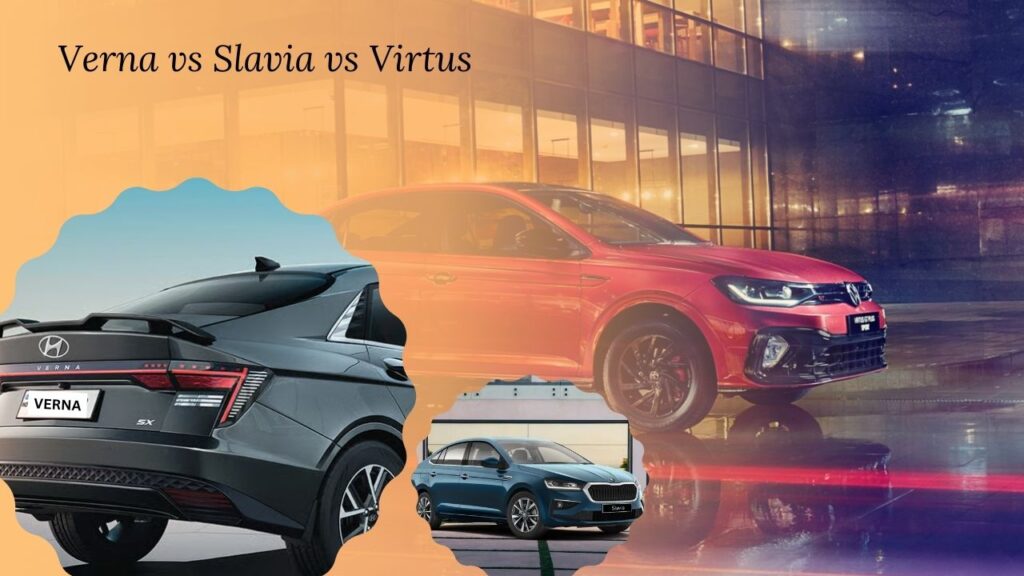
Verna vs Slavia vs Virtus

The Indian auto sector in 2026 is a study in contradictions. “SUV-ification” of the market looked absolute just a few years ago, but now we are seeing a refined “Sedan Renaissance.” This is not a comeback to the budget in Verna vs Slavia vs Virtus, it’s a tactical move by a discriminating band of buyers becoming fatigued with the sacrifices required by high-riding crossovers, the “boaty” body roll and aerodynamic drag.

The C-segment is now a bitter triangular war between the Hyundai Verna, the Skoda Slavia, and the Volkswagen Virtus. They each represent a different view on what a modern car must be. 

The Contenders: A High-Speed Comparison

As we move into early 2026, the market matured. Buyers in hubs like Delhi, Mumbai and Uttarpradesh, where one requires a vehicle that can effortlessly run on the Smooth streets but also negotiate the narrow lanes of India, want more than just ground clearance. They want engineering purity. Let’s see what we can get from Verna vs Slavia vs Virtus.

Feature Hyundai Verna Skoda Slavia VW Virtus
Vibe The Radical Technocrat The Bohemian Traditionalist The Teutonic Titan
Top Engine 1.5L Turbo GDi (160 PS) 1.5L TSI EVO (150 PS) 1.5L TSI EVO (150 PS)
Best For Tech & Features Elegant Comfort Driving Dynamics
Safety 5-Star GNCAP + ADAS 5-Star GNCAP 5-Star GNCAP

Hyundai Verna: The Digital Disruptor

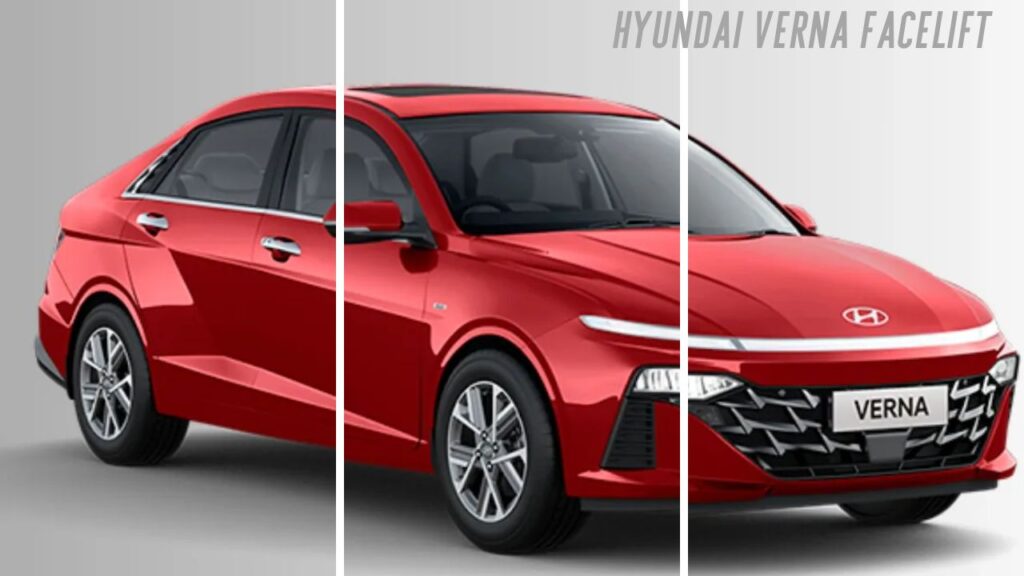
The BN7 Verna is the segment agitator. Its “Sensuous Sportiness” design language with that iconic horizon LED bar – makes it look like an alien from outer space. On the inside, the cabin is like a digital temple.

Hyundai Verna Facelift

Tech Edge: With Level 2 ADAS (Advanced Driver Assistant Systems), the Verna is currently the “brains” in the segment. For a driver in India battling thick winter fog, alerts such as collision warnings aren’t gadgets—they are safety essentials.

Too bad it’s so thick: The 1.5L Turbo GDi is a beast, cranking out 160 PS. It’s the king of the drag-strip, although its DCT (Dual Clutch Transmission) needs a light foot during stop-and-go traffic to keep from overheating.

The European Twins: Slavia & Virtus 

While the Verna talks about the “wow, I want to buy this car” as the Volkswagen Group siblings talk about “feel.” Based on the MQB-A0-IN platform, these vehicles deliver a tank-like structure to make an undeniable performance. 

Skoda Slavia: Elegant Yet Functional

Slavia is the “mini-Octavia.” It’s wider than its competitors, with more shoulder room. Skoda’s “Simply Clever” features — smart-phone pockets, a dedicated recess on the dashboard for a deity — reflect that it deeply understands the Indian consumer. 179 mm of ground clearance settles the SUV advantage for majority of buyers.

Volkswagen Virtus: The Driver’s Choice

The Virtus, especially in the GT Plus Sport trim, is for the enthusiast. It has a “chrome-delete” theme, red brake calipers and is aimed at a younger, performance-focused audience. On the Highways & Expressway, the low-slung Virtus feels surprisingly planted as it crosses the hundred mark. 

When is The Right Time to Buy?

February 2026 is when the big overhauls are scheduled to begin. 

Buy Now: If you want a deal. Verna dealerships (such as SAS or Beeaar Hyundai) are giving out close to ₹1 Lakh worth of benefits to make space for the 2026 refresh. Likewise, purchasing a “MY25” Slavia at Speedworks Skoda will save you a lot.

Wait: If you want ADAS on European cars. By late 2026, the Slavia and Virtus facelift is due with Level 2 ADAS and 360-degree cameras. 

Read More:-  5 Upcoming compact SUVs in India 2026-27 – Hyundai to Renault

Which One You Should Buy?

Deciding among Verna vs Slavia vs Virtus is difficult when you want the best, you can buy:

The tech-savvy family: Go for the Hyundai Verna. It’s the most comfortable three adults in the back, seats are the best ventilated, and the Bose sound system is unparalleled for those long drives.

The Purist: Go for the VW Virtus. Its better steering feedback and composure at high speed make it the best driver’s car under ₹25 Lakh.

The Pragmatic Professional: Go for the Skoda Slavia. It trades prestige and space for a design that’s more classic, and which will still look good five years from now.

Not only is the sedan making it out to 2026, it’s the best-selling passenger car in America by a longshot. 

Conclusion

A clear transition is taking place in 2026, though SUVs still hog the limelight and headlines, sedans are quietly making a comeback. The Verna vs Slavia vs Virtus are more than just competitors, they are three different outlooks on contemporary car production – technology-fueled opulence, engineering purity, and balanced sophistication. This “Sedan Renaissance” feel is not one of nostalgia being driven by aging buyers, but rather they are now mature buyers who value comfort, control, refinement and driving feel rather than just sheer ride height.