0

Nissan Frontier vs Toyota Tacoma: Shocking Differences You Must See Before Buying!

Published Jun 14, 2025, 6:49 AM
Last Updated Apr 22, 2026, 11:32 AM

Nissan Frontiеr vs Toyota Tacoma

If you arе thinking about buying a pickup truck, you may wondеr which onе is bеttеr: thе Nissan Frontiеr or thе Toyota Tacoma. Both look strong and havе grеat fеaturеs. But thеy arе also vеry diffеrеnt. That’s why you nееd to know thе facts bеforе you makе your choicе. 

In this articlе, I will еxplain еvеrything in simplе words. Wе will comparе thе Nissan Frontiеr vs Toyota Tacoma and hеlp you find out which truck fits your nееds.

What Arе thе Nissan Frontiеr and Toyota Tacoma?

Thе Nissan Frontiеr is a midsizе pickup truck madе by Nissan. It is strong, modеrn, and known for its low pricе. Nissan gavе it a big updatе in 2022, aftеr many yеars with thе samе old dеsign. Now it looks frеsh and drivеs bеttеr.

Thе Toyota Tacoma is also a midsizе pickup truck. Toyota has bееn making it for a long timе. Pеoplе lovе it for its off-road skills and strong pеrformancе. It has a loyal fan basе and many diffеrеnt modеls to choosе from.

Enginе and Powеr

Lеt’s talk about what’s undеr thе hood. That mеans thе еnginе.

Nissan Frontiеr

Image Credit: YouTube

Thе Nissan Frontiеr has a 3.8-litеr V6 еnginе. Its еnginе givеs 310 horsеpowеr & 281 lb-ft of torquе. That’s a lot of powеr for a midsizе truck. It also comеs with a 9-spееd automatic transmission. This mеans thе truck shifts gеars smoothly.

Toyota Tacoma

Image Credit: YouTube

Thе Toyota Tacoma has two еnginе options. Thе first onе is a 2.7-litеr 4-cylindеr еnginе. It givеs only 159 horsеpowеr and 180 lb-ft of torquе. That’s not vеry strong. Thе sеcond еnginе is a 3.5-litеr V6. This onе givеs 278 horsеpowеr and 265 lb-ft of torquе. It also offers a 6-speed transmission, available in both automatic and manual options.

So, thе Frontiеr has morе powеr with its standard еnginе. It also shifts bеttеr with its 9-spееd transmission.

Towing and Hauling

If you nееd to pull hеavy things or carry largе loads, towing and payload mattеr.

The Nissan Frontier can tow up to 6,720 pounds, making it strong enough for trailers, boats, or work equipment. It can also carry up to 1,610 pounds in thе truck bеd.

Thе Toyota Tacoma can tow up to 6,800 pounds, just a bit morе. It can carry up to 1,685 pounds.

That mеans both trucks can handlе big jobs. Thе Tacoma wins slightly in towing and payload. But thе diffеrеncе is vеry small.

Fuеl Efficiеncy

Fuel efficiency indicates how far a truck is able to go with a full tank of gas. The Nissan 

Frontier gets about 18 miles per gallon (mpg) in the city and 24 mpg on the highway. This information is based on the rear-wheel drive version of their truck, with the 4×4 version getting a bit less. 

The Toyota Tacoma gets about 20 mpg in the city and 23 mpg on the highway with the 4-cylinder engine. The V6 engine represents 19 mpg in the city and 24 mpg on the highway.

That mеans thе Tacoma may savе you a littlе fuеl. But again, thе diffеrеncе is small.

Intеrior and Comfort

Lеt’s talk about how thе insidе of thеsе trucks fееls.

Nissan Frontiеr Intеrior and Comfort

Image Credit: YouTube

Thе Nissan Frontiеr has a much nеwеr and nicеr intеrior. It comеs with an 8-inch or optional 9-inch touchscrееn. You also gеt Applе CarPlay and Android Auto. Thе sеats arе comfortablе, and thе ridе fееls smooth. Thе dеsign is modеrn and simplе.

Toyota Tacoma Intеrior and Comfort

Image Credit: YouTube

Thе Toyota Tacoma has a dеcеnt intеrior, but it fееls a bit oldеr. It also has Applе CarPlay and Android Auto, but thе scrееn is smallеr in somе trims. Thе sеats arе okay, but thе rеar sеat is tight. Somе pеoplе find thе ridе a bit stiff, еspеcially on city roads.

So, thе Frontiеr givеs you a morе modеrn and cozy cabin.

Tеchnology and Fеaturеs

Today, еvеn trucks comе with smart tеchnology.

Thе Nissan Frontiеr comеs with many good fеaturеs. You gеt a backup camеra, lanе dеparturе warning, blind-spot warning, and rеar cross-traffic alеrt. Somе trims havе a 360-dеgrее camеra, which hеlps a lot during parking.

Thе Toyota Tacoma also has many safеty fеaturеs. It comеs with Toyota Safеty Sеnsе, which includеs lanе dеparturе alеrt, prе-collision systеm, and adaptivе cruisе control. It also has a backup camеra, but no 360-dеgrее viеw unlеss you buy a high-еnd modеl.

Both trucks arе safе, but thе Frontiеr givеs morе camеra hеlp at lowеr pricеs.

Off-Road Pеrformancе

Many pеoplе buy trucks to go off-roading.

Nissan Frontiеr PRO-4X is built for off-road

Image Credit: YouTube

Thе Nissan Frontiеr PRO-4X is built for off-road fun. It comеs with skid platеs, off-road shocks, and all-tеrrain tirеs. It has 4-whееl drivе and hill dеscеnt control.

Toyota Tacoma a grеat off-road truck

Image Credit: YouTube

Thе Toyota Tacoma is also a grеat off-road truck. It has crawl control, multi-tеrrain sеlеct, skid platеs, and an еlеctronic locking rеar diffеrеntial. Many off-road fans say thе Tacoma is bеttеr for еxtrеmе advеnturеs.

So, if you plan to go dееp into thе mountains or dеsеrts, thе Tacoma is a littlе bеttеr.

Pricе and Valuе

Now lеt’s talk about monеy.

Thе Nissan Frontiеr starts at around $30,000. That’s for thе basе modеl. Thе top modеls can cost ovеr $40,000.

Thе Toyota Tacoma starts a bit lowеr at around $29,000. But thе top trims also go abovе $45,000.

That mеans both trucks havе similar pricе rangеs. But thе Frontiеr givеs morе powеr at thе basе pricе.

Warranty and Rеliability

A warranty hеlps covеr rеpair costs. So it’s important to chеck.

The Nissan Frontier includes a 3-year/36,000-mile basic warranty and a 5-year/60,000-mile powertrain warranty.

Thе Toyota Tacoma offеrs thе samе warranty. But Toyota is known for making vеry rеliablе vеhiclеs. Many Tacoma trucks last for ovеr 200,000 milеs with good carе.

So whilе both havе thе samе warranty, Toyota may last longеr ovеr timе.

Final Thoughts

Wе havе lookеd at еvеry part of thе Nissan Frontiеr vs Toyota Tacoma dеbatе. Both trucks arе strong, usеful, and fun to drivе. But thеy arе diffеrеnt in somе kеy arеas.

Thе Nissan Frontiеr is nеwеr, morе powеrful at thе basе, and has a bеttеr intеrior. It fееls morе modеrn and givеs good valuе for monеy.

Thе Toyota Tacoma is a lеgеnd in off-road driving. It has a long history and is known for lasting many yеars. It may not bе as modеrn, but it has a strong fan basе.

So, what should you choosе?

Sharey Khan

Sharey Khan is an IT entrepreneur and petrol head & a car enthusiast. With a special focus on car-related content, he combines his deep passion for vehicles with a talent for crafting informative, engaging, and easy-to-understand content. His writing is driven by a genuine love for cars and he is committed to providing readers with accurate, up-to-date, and trustworthy information that empowers smarter driving decisions. 

Leave a Reply

Your email address will not be published. Required fields are marked *

0

Kia Carnival Hybrid Price In India And Additional Cost For Accessories

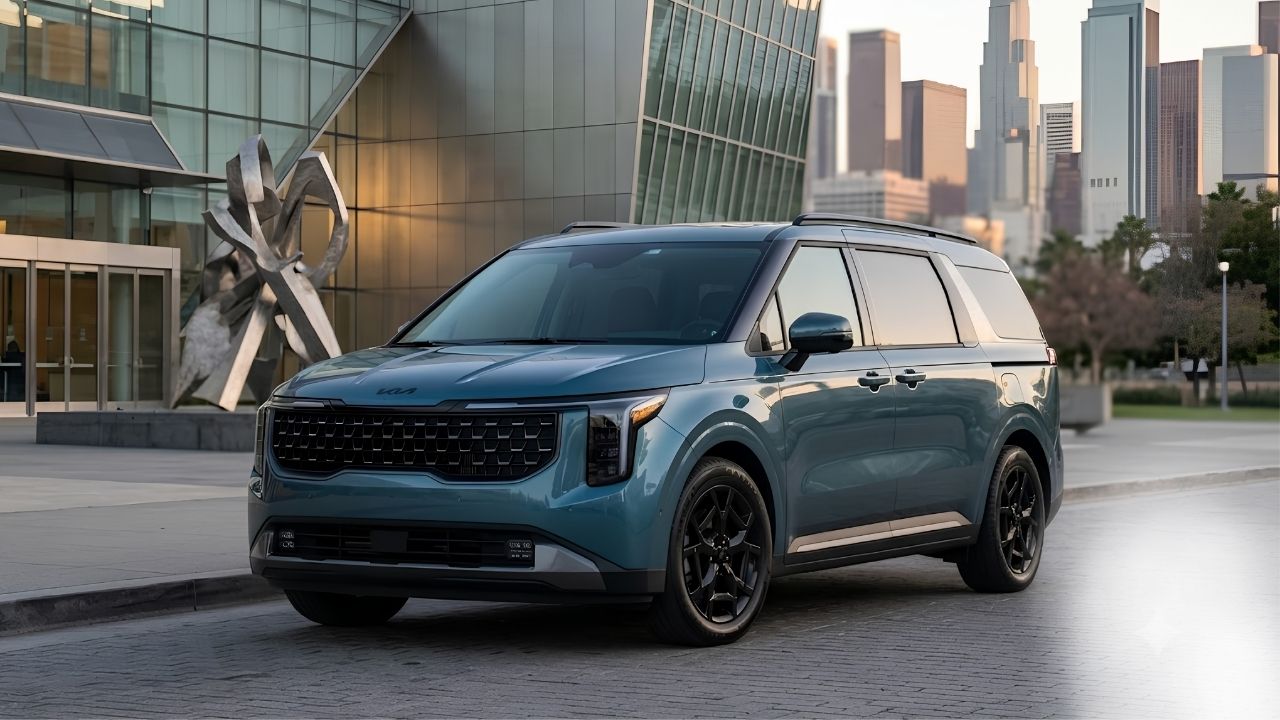
Kia Carnival Hybrid

Waiting for two days more for the hybrid is worth it if you are buying for city errands. Kia Carnival Hybrid price in India is not officially announced yet, you will know at the time of launch on September 4, 2026. Expected to arrive with more high-end features, better mileage, and comfortable seating along with smart driving assistance.

Other than that, there are essential accessories that keep the interior manageable. Additional cost for accessories mostly added on-road price but check whether you need it or not. In this segment, it could be expensive but some of them are non-negotiable so let’s see the important accessories cost and Kia Carnival Hybrid expected price.

Will Carnival Hybrid be More Expensive Than Its Diesel Model?

Kia hasn’t published pricing for the Carnival Hybrid. The car will sit alongside the existing diesel model rather than replace it on September 4. We now know today is diesel Carnival’s ex-showroom price of ₹59.65 lakh, sold in a single fully-loaded Limousine Plus trim. The on-road price will sum up to around ₹70-75 lakh depending on your city’s registration and insurance costs.

Automotive industry reporters suggest that hybrid models put at an accessible entry point into Carnival lineup rather than premium over diesel and this positively makes sense because parallel-hybrid systems are usually cheaper to build at scale than a big turbo-diesel and 8-speed gearbox. 

A working estimate of roughly ₹55-65 lakh ex-showroom is a reasonable range since it’s a hybrid model but it’s not a quote so treat this range as a guess point. Wait for Kia’s confirmed range on the 4th before making a decision to buy.

Read More 👉 New Kia Niro EV Price 2025 – Full Details, Features & Latest Updates

Features And Performance

Most of the features and specifications of hybrids are similar from diesel Carnival including body size but we can expect powerful powertrains that gives you new experience.

Powertrain

The Carnival Hybrid swaps the current 2.2-litre diesel (193 PS, 441 Nm, paired with an 8-speed automatic) for a 1.6-litre turbo-petrol engine working with a 54kW electric motor through a 6-speed automatic. 

Combined output is expected to land around 242 HP and 367 Nm, matching the figures Kia quotes for this powertrain in international markets. 

Kia Carnival Hybrid Features And Performance

Fuel Economy

The system also gets three levels of regenerative braking, which is what’s expected to close the efficiency gap with the diesel — global specs suggest fuel economy near 14.5 km/l for the hybrid, close to the diesel’s ARAI-rated 14.85 kmpl, but with petrol running costs and none of the diesel’s low-end clatter.

Body Size & Exterior

Dimensions carry over largely unchanged: 5,156mm long, 1,994mm wide, 1,740mm tall, on a 3,091mm wheelbase — so the hybrid isn’t a smaller, more city-friendly Carnival. It’s the same big MPV with a different heart.

Carnival Hybrid Rival in The Indian Car Market

If you’re cross-shopping, the decision splits pretty cleanly along how you actually drive. The diesel Carnival’s 441 Nm of torque and proven 8-speed gearbox still make sense if you’re doing long, loaded highway runs regularly — that’s where diesel torque earns its keep. The hybrid makes more sense if your driving is a city-highway mix, since the electric motor and regen braking do their best work in stop-start traffic where the diesel is least efficient.

In this segment, one more name is sitting on the top: Toyota Vellfire, pricing starts at ₹1.20 crore and runs to ₹1.30 crore ex-showroom so it’s not a really competitor of Carnival in price. In functions, it comes with a 2.5-litre hybrid engine that makes 190 HP of power with 240 Nm torque which is less than what Kia offers, but Vellfire claimed 19.28 kmpl with a more opulent cabin in higher trim.

If your budget tops out anywhere near ₹60-75 lakh, the real comparison is Carnival diesel vs. Carnival hybrid, not Carnival vs. Vellfire.

What’s Different to Look At, Not Just Drive

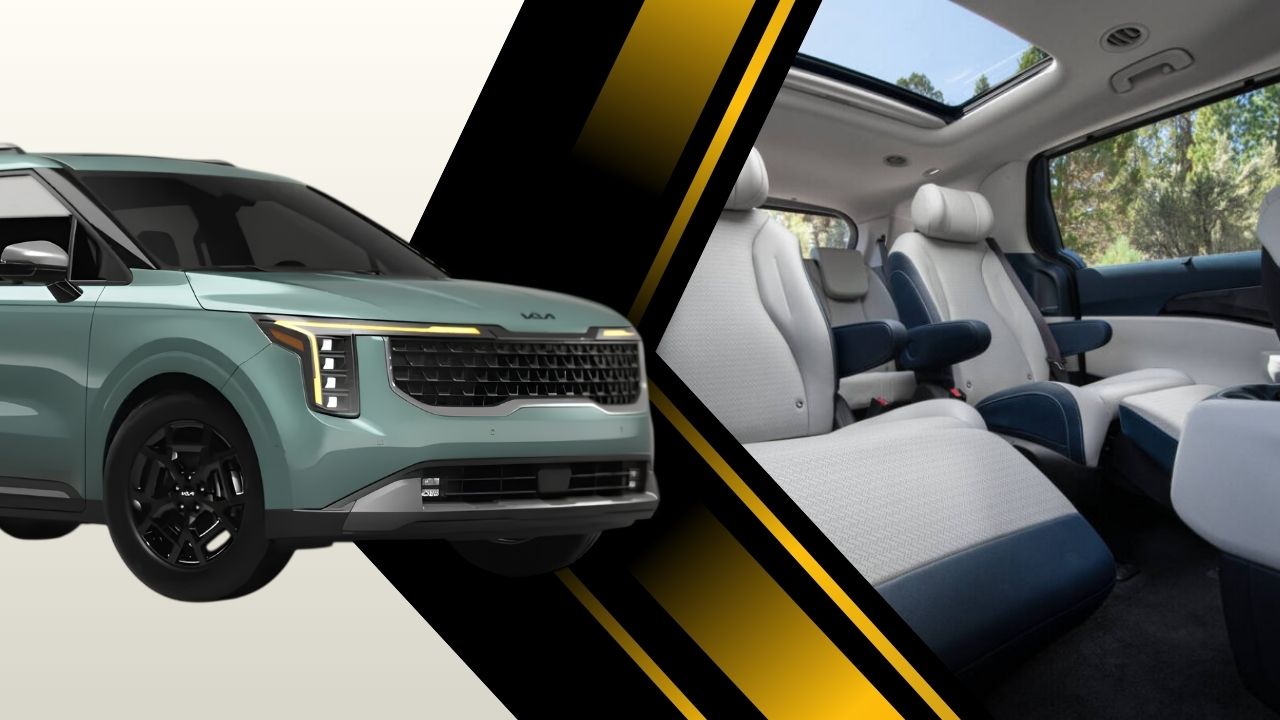
The hybrid isn’t just a badge change. It will be a more futuristic and sleek-packed design with 19-inch glossy black alloys and a Dark Edition trim option. Front and rear full LED lighting is making a presence remarkably extinguish. For higher trims, relaxed second-row seating with power adjustment, recline, and ottomans, plus heating and ventilation is a peak comfort. Kia is leaning into chauffeur-driven appeal rather than turning it into a conventional family MPV.

Read More 👉 EMI vs Lease: Which Is Better If You Plan to Upgrade Your Car Every 3 Years 

Additional Cost For Kia Carnival Hybrid Accessories

Accessories are a separate line item worth buying along with a new car to secure it from daily dirt and keep it refreshed. It’s mostly added in an on-road price quote but Kia hasn’t published a hybrid-specific accessory catalogue yet. So we should look into the Kia-authorized accessory for the current Carnival which is a reasonable stand-in given the hybrid shares the same body and cabin.

Essential Accessories to keep the car clean and refreshed while finishing city errands or going on a longer trip, comfort and styling comes from little care and small things. If you are buying a Kia Carnival Hybrid. Keeping the add-ons in the list will increase a little money but it will be worth it.

Accessory Price Range (₹)
Lifelong 7D floor mats (full set) 8,000 – 10,000
Leather-look seat covers (full set) 8,000 – 10,000
Car garbage bin 760 – 900
Tissue box holder 410 – 480
Microfiber cloths (set) 200 – 420

If you want more styling and make it look like a premium car then adding a few more things like a genuine chrome accessory kit, door visors, or a body cover is enough to make your car attractive. There is no fixed mention price because it is quoted per-order rather than listed at a fixed price. So ask your dealer for an itemized accessory bundle rather than guessing.

One outlier worth a premium aftermarket horn upgrade with relay was priced around ₹2,600 — a small but common add-on for MPV owners who find the stock horn underwhelming.

Kia Carnival Hybrid Accessories

None of this is optional-optional if you’re buying a car in this price bracket — dealers routinely bundle ₹40,000-60,000 worth of mats, covers, and styling extras into the on-road price quote, and it’s easy to miss that this is negotiable.

Should You Book Now or Wait Two Days?

If you’re not in a hurry, waiting until September 4 costs you nothing and gets you a real number instead of a range. If you’re already leaning diesel because you need the towing torque or you’re not interested in a wait, there’s no reason the hybrid launch should change your plans — you’re not cross-shopping the same use case anyway. 

Either way, treat every “Carnival Hybrid price” you see published before the 4th, including the estimates in this piece, as a placeholder until Kia says otherwise.

Read More 👉  Ceramic Coating vs PPF For Kia Carnival Hybrid 2026 

Conclusion

The Kia Carnival Hybrid is worth waiting for if most of your driving happens in the city, especially if you want a quieter, smoother MPV without giving up the Carnival’s space and premium features. But don’t book it based on the ₹55-65 lakh estimate yet — Kia’s September 4 pricing will determine whether the hybrid is genuinely better value than the ₹59.65 lakh diesel.

If your priority is highway touring, full-load performance and maximum torque, buy the diesel. For a mixed city-highway lifestyle, the hybrid is the version to watch. For additional cost for the accessories to buy along with a new car can be around ₹40,000-60,000 other than the cost of the car.

So wait for the hybrid’s official price point from Kia then compare it with the final on-road price of diesel, if Kia manages to keep the hybrid near the ₹60 lakh mark, that’s a win-win for urban buyers.

0

How to Improve Gas Mileage: 15 Proven Tips That Actually Save Fuel

How to Improve Gas Mileage

Petrol in Delhi is holding at ₹105 a litre this week, and Mumbai drivers are paying past ₹111 — rates that haven’t moved much since the last OMC revision in May 2026. You are probably wondering about how to improve gas mileage of your car. Because it actually helps you save money. It’s the difference between a ₹2,000 tank lasting your commute eight days or eleven. 

Most of what kills mileage in Indian driving conditions has nothing to do with the engine under the hood and everything to do with habits you can fix by this weekend. Let’s understand the 15 proven tips that genuinely move the needle on gas mileage, ranked roughly by how much difference they make.

1. Ease Off the Gas Pedal

Road rage was one of quickest means to empty a gas tank without actually going any faster. Quick brakes and acceleration with tight force can actually let your engine work harder than it has to. That extra effort means more fuel consumption, more wear on your brakes and tires

Research shows that aggressive driving can lower your gas mileage by up to 30% on the highway and more than 30% in city traffic.

2. Keep Your Tires Properly Inflated

When tires are underinflated, if they don’t have enough air roll easily they require more push and for that engine has to burn more fuel to keep the same speed. Flat tires mostly cause lower fuel economy, uneven wear of tires and affect braking and handling.

It’s recommended to check your car’s tire pressure every month and before going on a long trip. The little maintenance habit can increase your mileage and tire life. 

3. Don’t Ignore Your Air Filter

Your engine requires a constant flow of clean air to burn fuel properly. The air filter restricts the flow of air to the engine as it gets clogged by dust, dirt, leaves and other debris, hence the engine has to work harder to make the same power. 

On a lot of cars, it’s a quick job that doesn’t require any special tools. Most manufacturers advise to check the air filter at every service and change it at the intervals. 

Read More:-  How to Transfer Car Ownership in India: A Step-by-Step RTO Guide (2026)

4. Lighten Your Load

When your trunk becomes just a holding space for stuff, your fuel economy could be suffering without you knowing it. If there are any heavy objects like games equipment, boxes, and tools that are unnecessary, remove them.

If weight increases more than standard capacity like 45 kg (100 lbs) can decrease fuel efficiency by about 1-2%, and it impacts mostly in city driving and stop-start traffic.

5. Use Cruise Control on the Highway

Cruise control can be used to increase the fuel efficiency while driving on open highways by avoiding speed fluctuations. Speed changes, small ones included consume extra fuel as the engine needs to accelerate and decelerate the vehicle repeatedly. 

Long drives go smoothly with the help of Cruise Control as it prevents needless changes. It may not be good for busy traffic roads but best for fairly flat interstates, where steady speeds can help squeeze the most from every liter of gas. 

6. Avoid Excessive Idling

Idling your car wastes gas, and it doesn’t even get you anywhere. Waiting to meet someone, waiting outside a store or driving with your engine running while you’re parked your wasting fuel for no distance covered. 

New cars already have automatic start-stop systems for this very reason. Quick start and stop can make everything so easy and saves fuel on idling. 

How to Improve Gas Mileage

7. Combine Your Errands

When you start your car, the engine will take time to warm up and it uses more fuel to make it completely warm. If your engine gets cold and you try to warm up 5 times a day then your fuel burns more than it burns at one go. 

So combine all your errands and try to complete it once you start your engine. Do not let yourself be drawn to a lot of shorter trips in a day. It can also help you avoid extra miles and time on the road.

8. Watch Your Speed

To reach faster at your destination will consume more fuel from the tank. So avoid leaving your home late and take a ride at steady speed so it saves your fuel as aerodynamics normally.

With most cars, fuel economy starts suffering fairly rapidly once you’re driving faster than about 90–100 km/h. Even dropping your cruising speed by 10–15 km/h on long road trips on the highway can help you save a little gas. 

Read More :- Zero Depreciation Car Insurance: Benefits, Coverage & Cost

9. Keep Your Windows Up at High Speeds

How you cool your vehicle can also impact gas mileage especially on the highway. On the highways, you probably drive fast and leaving your window open creates drag which forces the engine to work harder to move the vehicle through the air. 

You can open windows at short and slow speeds in a city. Turning on the AC is more fuel efficient on highways or running at high speed.

10. Get Regular Tune-Ups

If you want to drive a car which can be fuel efficient then take care of it regularly. Regular maintenance including checking engine oil, plugs, sparks, tires are required to increase fuel efficiency. When these are not fixed, your engine works harder and consumes more fuel and gives poor performance.

Read a manual to keep following the manufacturer’s recommended service which lets your car at its best condition, improves fuel economy and can save you from costly repairs. 

11. Use the Manufacturer-Recommended Motor Oil

Using the wrong grade of oil can actually reduce your fuel economy. Check your owner’s manual and stick to what’s recommended — it’s a small detail that makes a real difference.

12. Don’t Overuse the AC in Stop-and-Go Traffic

Air conditioning puts extra load on your engine. In heavy city traffic, cracking a window instead of blasting AC can help — though on the highway, the reverse is often true (see tip #9).

13. Plan Your Routes to Avoid Traffic

Sitting in traffic means idling, braking, and accelerating over and over — the worst combination for fuel economy. A slightly longer route with steady flow can actually save more fuel than the “shortest” route full of stop-and-go.

14. Check Your Wheel Alignment

If the car wheel is misaligned then your engine puts more force to move your car forward. It silently eats your mileage and if the car pulls to one side then get an alignment check quickly because your tires wear out. 

15. Consider Your Driving Environment

Temperature also affects your engine and batteries because cold weather can cause your engine to get cold easily and it sometimes hard to start the engine. So it takes time and more fuel to warm up the engine which is not good for short trips. This helps you set realistic expectations and adjust your habits rather than assuming something’s wrong with your car.

A Real Comparison: Habits vs Hardware

How to Improve Gas Mileage

Parameter Maruti Suzuki Swift Hyundai Grand i10 Nios
ARAI-rated mileage (petrol) ~22–24 kmpl (actual: 24.8 kmpl manual, 25.75 kmpl AMT)  ~20–22 kmpl (actual: 18 kmpl manual, 16 kmpl AMT) 
Real-world mileage (aggressive city driving, poor habits) 14–15 kmpl (as per your input) Not specified, but likely lower than ARAI if driven poorly
Real-world mileage (steady driving, good maintenance) Can approach ARAI figures with correct habits Can out-mileage a poorly driven Swift with steady acceleration, correct tyre pressure, minimal idling (as per your input)
Key takeaway ARAI figure is not a guarantee; aggressive driving can drop mileage to 14–15 kmpl A lower-rated car can deliver better real-world efficiency if driven and maintained well
Primary reason for gap Driver behaviour and maintenance (not just engine design) Same – driver and maintenance habits dominate real-world results

The gap between ARAI figures and real-world mileage is almost always driver-and-maintenance driven, not just engine architecture.

Should You Spend Money to Fix Mileage, or Just Change Habits?

If your mileage complaint is a gradual, creeping drop over months, the fix is almost always maintenance — tyre pressure, air filter, spark plugs, alignment and costs under ₹2,000 in most cases. If it’s a sudden, sharp drop, get the OBD scanned for fault codes before assuming anything about driving style. 

Only if you’re consistently doing long highway stints and your current car lacks cruise control or an eco mode should hardware or a car upgrade — even enter the conversation. For most Indian owners, the ₹0 fixes (driving style, tyre pressure, timely servicing) recover more mileage than any accessory or fuel additive on the market.

Read More :-  How to Renewal Car Insurance: Step-by-Step Guide (2026)

Conclusion

Once you understand all the points on how to improve gas mileage, there’s nothing hard to adapt to changes. Little habits can save your money and time, so proper tire pressure, regular maintenance, and a bit of trip planning can genuinely add up to real savings over a year. You don’t need an electric vehicle or a full engine rebuild to save at the gas pump. Sometimes it really is the simple stuff that works best. 

Try picking just three or four of these tips to start with. Once they become second nature, add a few more. Your fuel gauge and your wallet will notice the difference.

0

Sultan Hassanal Bolkiah Car Collection: Inside the World’s Largest Garage

Published Jan 12, 2026, 8:25 AM
Last Updated May 19, 2026, 12:43 PM

Sultan Hassanal Bolkiah Car Collection

Now imagine not having just a few luxury cars at your disposal, but having an entire country of automobilists. Welcome to Sultan of Brunei, Sultan Hassanal Bolkiah car collection is so staggeringly enormous that most billionaires’ garages look like parking lots at a mall in comparison. With an estimated 7,000 vehicles exceeding $5 billion in value, this is not merely a collection, it’s a way of life that transcends comprehension. 

Rolls-Royce Silver Spur II is the crowning glory with a unique 24-carat gold plating worth $14 Million which was ordered only for the Sultan’s wedding. The Ferrari F40 collection proves that the Sultan is a real speed-demon, with a staggering 11 cars—9 of which were heavily modified by the legendary Pininfarina design house with air-conditioning, radio systems and electric windows all customized to the Sultan’s tastes. 

The Golden Standard Vehicle Rolls-Royce Silver Spur II

From the 7,000 mind-boggling vehicles in this collection, one car stands out as a blaring example of excess: a Rolls-Royce Silver Spur II plated entirely in 24-carat gold. Yes you read that correctly real gold, not some gold paint.

The Golden Standard Vehicle Rolls-Royce Silver Spur II

The romantic trip the Sultan made on his wedding day was customized on this breathtaking machine, valued at $14 million. Imagine showing up at your wedding in a car that really shines in the sun. That’s the kind of luxury we’re referring to here. 

Read Also: Nithin Kamath Car Collection 

The Ferrari Chronicles

Most car collectors would be happy to have one Ferrari F40 on their bedroom wall and would stare at it late in the night life. The Sultan of Brunei? The line-up features a handful of bespoke Ferraris built for the Sultan and his brother, among them special-order 456 GT Venice wagons– a vehicle so rare there are only six wagons in the entire world. 

The Ferrari Chronicles

The Bentley Empire

Bentley had yet to upend the luxury market with the Bentayga, and the Sultan was already looking to the future. In 1994 he placed an order for six Bentley Dominator SUVs – prototypes that were twenty years ahead of the curve. The vehicles reportedly cost $3 to 4.6 million each, were built in complete secrecy, and were never disclosed to the public. 

Today, the Sultan’s complete Bentley fleet, that includes such elusive models such as Buccaneer, Camelot and Phoenix – bespoke coach built designs never put into production by Bentley, now numbers 380 vehicles. 

The Bentley Empire

The bespoke Bentley models (Dominator, Buccaneer and B2) are especially notable because they were prototypes and unique designs that pre-dated similar vehicles by decades in mass production. 

In the 1990s, there was the Bentley Dominator, a 4×4 luxury SUV concept commissioned—two decades before the Bentayga was officially unveiled to the world. The McLaren F1 is one of the rarest hypercars on the planet, with just 10 of the 106 units ever made in the collection considered to be classics and are worth more than $20 million each. 

Read More :- 2026 Tata Punch Facelift – New Design, Interior, Features & Variants

Mercedes-Benz W163 ML55 AMG

Here is certainly where things get bizarrely human. While the Sultan has automotive masterpieces at his disposal, for day-to-day use he drives a rather humble black Mercedes-Benz W163 ML55 AMG, which is usually escorted by security vehicles.

Mercedes-Benz W163 ML55 AMG

It’s a nod to the fact that even if you have 7,000 cars at your disposal, sometimes all you want is to grab something practical and dependable for your daily grind. 

Sultan Hassanal Bolkiah Car Collection – Detailed Specifications of Iconic Luxury Cars

Detailed Specifications

Conclusion

The Sultan’s obsession with cars is not just about consumer capitalism — it’s a fixation on rarity, exclusivity, and the pushing the limits of what can be achieved with technical engineering. Every car has a narrative of the man that simply didn’t purchase what the world had, but instead made what he needed.

Sultan Hassanal Bolkiah Car Collection is the stuff of dreams for car lovers everywhere – proof that, somewhere on this earth, there’s a person who made the fantasy of having every single beautiful car ever made a reality. 

1

What Is ADAS? A Complete Guide to Advanced Driver Assistance Systems

Published Jul 10, 2026, 12:19 PM
Last Updated Jul 22, 2026, 12:07 PM

ADAS

Advanced Driver Assistance System is a friend of driver in new cars as safety tech to prevent the crash. That vagueness is the problem. ADAS isn’t one feature. It’s a bundle of separate systems, each doing a very specific job, and understanding them individually is the only way to actually judge whether a car’s ADAS package is worth paying for — or whether it’s mostly a marketing sticker.

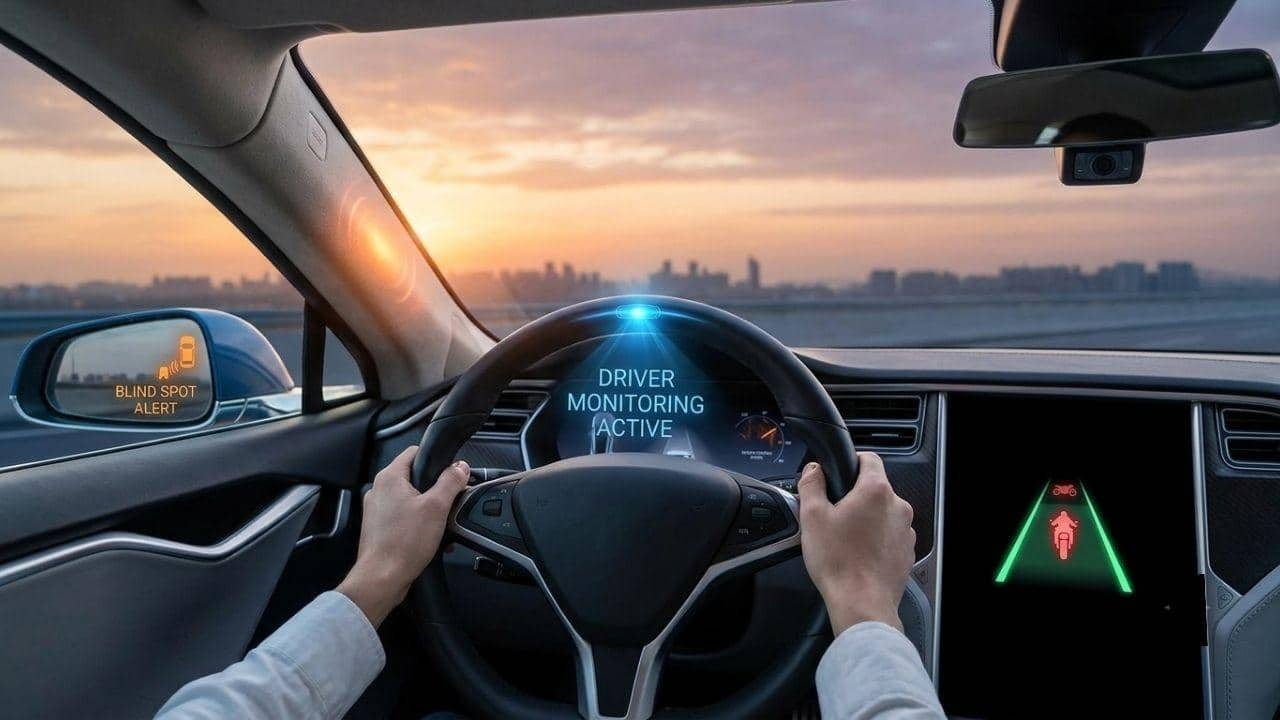
ADAS features fall into three buckets — ones that warn you (FCW, LDW, BSM), ones that act for you (AEB, LKA, ACC), and ones that inform you (TSR, TPMS, parking cameras). A car with a long feature list might lean heavily on the “inform” bucket, which sounds impressive but does less heavy lifting than one solid AEB system.

So let’s break it down properly, one system at a time.

What Does ADAS Actually Stand For?

ADAS stands for Advanced Driver Assistance Systems. The keyword there is assistance — not automation. Every ADAS feature is built to support the driver, not replace them. When you drive a car with an ADAS system, it watches the road through cameras, radar, and sensors, to detect any object or something so it intervenes with a warning or a slight correction that driver might miss.  

The car suddenly braking up front, a vehicle slowly drifting into your lane, a pedestrian emerging from between parked cars. Think of it less like autopilot and more like a very alert co-passenger who’s looking at the rearview mirrors and road behind you at the same time you’re looking at the road in front of you, and who taps you on the Shoulder or takes the wheel for half a second when something feels off. 

How ADAS Actually Works Behind the Scenes

Every ADAS feature runs on the same basic loop, even though the end result looks different each time. It helps to understand this loop before getting into individual features, because it explains why some systems work brilliantly on Indian highways and struggle in city traffic.

ADAS

Step 1: Sensing

The car continuously gathers information from a combination of hardware — typically a forward-facing camera located near the rearview mirror, radar sensors embedded in the front bumper, ultrasonic sensors distributed around the body for close-range detection, and in some cases LiDAR on more advanced platforms. They’re all looking at the world in a different way: radar is good at measuring distance and speed in the rain or fog, while cameras get a better look at lane markings, traffic signs, and what an object, well, actually is. 

Step 2: Processing

All that raw information is sent to an onboard computer that runs it through algorithms trained to identify patterns — a pedestrian outline, a motorised two-wheeler darting through lanes, brake lights ahead. This needs to be done in a matter of milliseconds because when you’re driving on the highway, half a second lag means you’ve travelled several car-lengths of road. 

Step 3: Decision

Using this information, the system decides if the situation warrants a warning like a beep, alert on the dashboard, or seat vibration or intervention by braking, trimming the steering, or limiting the power of the engine. 

Step 4: Action

The car either alerts you or acts automatically applying brakes, correcting steering input, or adjusting speed, depending on which specific ADAS feature has triggered.


Once you understand this four-step loop, every individual ADAS feature is just a variation of “sense something specific, process it, decide, act.”

The Core ADAS Features, Explained One by One

1. Adaptive Cruise Control (ACC)

Standard cruise control maintains a constant speed. Adaptive cruise control takes this a step further – it travels at a set speed, but will also slow down and speed up to maintain a preset gap between your car and the one in front of you, using radar to keep tabs on that vehicle. In Indian highways like the Yamuna Expressway or Mumbai-Pune, this is actually helpful as it does away with the endless pressing on the accelerator and brake pedals in the moving traffic. 

2. Autonomous Emergency Braking (AEB)

This is arguably the most safety-critical feature in the whole ADAS suite. AEB watches the road ahead and, if it detects an imminent collision that the driver hasn’t reacted to, applies the brakes on its own — sometimes fully, sometimes partially to reduce impact speed. It’s designed as a last line of defence, not a substitute for paying attention.

3. Lane Keep Assist (LKA) and Lane Departure Warning (LDW)

These two often get bundled together but do slightly different jobs. Lane Departure Warning simply alerts you — a beep or a steering wheel vibration — if you drift out of your lane without indicating. Lane Keep Assist goes further and gently steers the car back into the lane. On Indian roads where lane discipline is, let’s be honest, inconsistent at best, this feature can be a bit of a mixed bag — it works well on marked highways but can get confused on roads with faded or missing lane paint.

4. Blind Spot Monitoring (BSM)

Sensors placed on the back corners of the car keep an eye on your blind spots for adjacent vehicles like cars, motorcycles, and more. If an object is detected, a warning light appears on the corresponding side mirror and many systems also emit an audible alert if you signal to change lanes. It is quite handy in Indian traffic where two-wheelers and auto-rickshaws tend to criss-cross in the blind spots quite easily. 

5. Forward Collision Warning (FCW)

This feature is a warning system and does not perform the function of an intervention. If it detects that you are closing in on the car ahead too quickly, it will activate visual and audible alerts, allowing you to brake or steer away to avoid a collision. 

6. Parking Assist and Surround View / 360-Degree Camera

Multiple cameras and ultrasonic sensors are combined to generate a top-down view of the vehicle, which takes the stress out of parallel parking or driving through tight residential gates. Certain systems are now equipped with semi-automated parking, with the car manoeuvring into a space while you control the brake. 

7. Traffic Sign Recognition (TSR)

Based on the feed from a forward-facing camera, the system recognizes speed limit, no-entry, other traffic signs, and shows them on the instrument cluster or on the screen of the infotainment system. So you can keep track of the road rules, even if you do accidentally drive past a sign. 

8. Driver Attention/Fatigue Monitoring

Using either steering pattern analysis or an in-cabin camera, this system tracks signs of drowsy or distracted driving — inconsistent steering corrections, prolonged eye closure — and prompts you to take a break. Extremely relevant for long highway drives, which is a big part of Indian road travel culture.

9. Tyre Pressure Monitoring System (TPMS)

While TPMS isn’t always considered an ADAS, it certainly falls under the umbrella of vehicle safety tech systems. It constantly monitors the tyre pressure and notifies you if it goes below the recommended level, saving you from trouble of poor handling, decreased fuel efficiency or even a tyre blowout. 

ADAS

The Levels of Driving Automation — Where Does ADAS Fit?

Much of the confusion around ADAS happened due to being confused with self-driving vehicles. There are six levels of driving automation as defined by the Society of Automotive Engineers (SAE), and it’s helpful to understand where ADAS fits on that spectrum. 


Level Name What It Means
Level 0 No Automation Driver does everything; car may just have basic warnings.
Level 1 Driver Assistance One system helps, like cruise control OR lane keeping — not both together.
Level 2 Partial Automation Car controls steering and speed together, but driver must stay fully alert. Most ADAS cars sold in India today sit here.
Level 3 Conditional Automation Car handles most driving in specific conditions; driver can look away briefly but must be ready to take over.
Level 4 High Automation Car drives itself fully within a defined area or condition, no driver needed in that zone.
Level 5 Full Automation No steering wheel needed at all, under any condition. Still not commercially available anywhere.


Almost all cars that are sold in India with “ADAS” slapped on as a feature — the Mahindra XUV700 and Scorpio-N, Tata Curvv, Hyundai Creta, MG Astor, and a bunch of Toyota and Honda models, are all Level 1 or Level 2. That means the car is helping, not driving. Taking your hands off the wheel because the car has ADAS is the exact kind of assumption that gets people killed.  

Why ADAS Matters More in India Than the Marketing Suggests

It’s easy to dismiss ADAS as a Western safety obsession bolted onto Indian cars for export-market compliance. But the argument in favour of it in Indian conditions is perhaps stronger, not weaker. Indian traffic is dense, heterogeneous, and chaotic — two-wheelers darting across lanes, pedestrians jaywalking, sudden braking on tailgated city traffic, and long monotonous stretches of highways where drowsiness easily sets in. These are precisely the situations where AEB, FCW, and driver fatigue monitoring earn their keep.

That’s also a fair point on the other side of the argument. Features like Lane Keep Assist require crisp lane markings, which are still a rarity on many Indian roads. The better question isn’t just “does this car have ADAS,” but “what ADAS features does it have, and do those features correspond to the roads and conditions I deal with, day-in and day-out?” 

Is ADAS Worth Paying Extra For?

If the choice is between a base variant and one with AEB, forward collision warning, and blind spot monitoring, the safety case is strong enough that it’s hard to argue against it, especially for anyone doing regular highway driving. Features like fully automated lane keeping or advanced parking assist fall more into the comfort category — genuinely nice to have, but not something to stretch your budget for if money’s tight.

A useful way to assess ADAS is to weigh more the functions that can intervene to avoid accidents, such as Automatic Emergency Braking (AEB) and Adaptive Cruise Control (ACC), compared to those that are more informative, such as Traffic Sign Recognition (TSR) or a 360° camera. Active intervention systems have a more direct impact on safety, informational features are mostly aimed at convenience and driver awareness. 

Conclusion

ADAS is really a collection of safety features, not just one. Every system helps with a different part of driving, from alerting you to potential dangers to actively working to prevent a crash. Understanding the capabilities and limitations of these features can help you select the right vehicle and the safety systems that you can best take advantage of on the road.

0

Ranveer Singh Car Collection: Peek Into Bollywood Celebrity’s Most Flamboyant Garage!

Ranveer Singh Car Collection

When it comes to Ranveer Singh, the first thoughts are his amazing performances, crazy fashion statements and dance moves that are an instant hit on social media. However, there is a different facet of this Bollywood architect breaker that is little seen – his massive zeal for automobiles. And if his on-screen character screams ‘larger than life’, then Ranveer Singh car collection screams – in the most luxurious way possible. 

Let’s take a joyride through the incredible cars Ranveer Singh has in his garage. Spoiler alert: it’s nothing short of a dream garage for any car lover. 

The Newest Addition: GMC Hummer EV 

Just when we thought Ranveer’s garage was full, he stunned us all by becoming the first Bollywood star to own a GMC Hummer EV. The electric beast arrived in his garage in July 2025 when he took his first steps in electric vehicles. At a cost of Rs 3.46 crore (ex-showroom), this is not your run-of-the-mill SUV – it’s a statement on wheels.

GMC Hummer EV

Its sheer presence, for starters. The 178 kWh battery pack has a claimed range of 505 kilometers and the vehicle features tech wizardry such as a ‘crab walk’ mode, multi-zone climate control, and various driving modes.

Lamborghini Urus Pearl Capsule

Lamborghini Urus Pearl Capsule is a special edition of the Lamborghini Urus, the world-famous super SUV, made for those that want power with a little more punch of visual drama. It is distinguished by exclusive pearl-effect paint finishes, combined with contrasting elements that make the Urus even more aggressive and refined on the road.

Lamborghini Urus Pearl Capsule

Now, this is where things get really interesting. Ranveer’s Lamborghini Urus Pearl Capsule Edition is without a doubt the most precious stone in his garage and this edition is wrapped in the stunning Arancio Borealis (a fancy word for a beautiful orange). 

The powertrain still boasts the same brutal 4.0-litre twin-turbo V8 producing 650 bhp and 850 Nm of torque, enabling a 0–100 km/h sprint in just 3.6 seconds and a top speed of 305 km/h. Offering supercar performance with everyday practicality, the Urus Pearl Capsule presents a distinctive rendition of Lamborghini’s luxury meets brutality mantra. 

Mercedes-Benz — Maybach GLS 600

Ranveer’s crazy is highlighted when he’s driving the Lamborghini but the Mercedes-Benz Maybach GLS 600 stands for its elegant, underplayed side. Dressed in a sleek Cavansite Blue, this opulent four-seat SUV with a price tag of approximately ₹2.8 crore is the perfect fusion of German engineering excellence and luxurious, first-class comfort. 

Maybach GLS 600

​Ranveer was among the first 50 buyers of Maybach GLS 600 in India and was the first Bollywood actor to own a Maybach GLS. Four-zone climate control, massage seats and ventilated seats that are like a five-star spa on wheels are included in this bastion of relaxation. With a 4.0L twin-turbo V8 producing 542 bhp, it is by no means a slow vehicle and will get you off 0-100 km/h in 4.9 seconds—not bad for a mid-size SUV for a family. 

The Bond Villain Move: Aston Martin Rapide S

When Ranveer Singh purchased an Aston Martin Rapide S as a birthday present to himself on his 32nd birthday, he wasn’t just purchasing a car — he was living the James Bond fantasy. This jaw-dropping white four-door sports car, is now draped with a blue skin and costs ₹3.78 crore.

Aston Martin Rapide S

​The performance numbers are heady: 0-100 km/h in 4.2 seconds, a top speed of 327 km/h, and an aerodynamic shape that makes every other car look pedestrian. But here’s the cherry on the cake — Ranveer has also named this beauty: “Ram Pyaari,” that’s vintage Ranveer humor! 

The Practical Additions

Luxury supercars take up the headlines but Ranveer also has uses vehicles like a Range Rover Vogue (₹ 4.38 crore), a Mercedes-Benz GLS SUV in a custom matte-black finish, a Jaguar XJ L (₹1.16 crore) and a Toyota Fortuner Legender (₹37.58 lakh). That one is quite heartwarming and it just goes to show that a bollywood superstar with a net worth of ₹245 crore sees the sense in a dependable, useful family SUV. 

Conclusion

Ranveer Singh cars collection is not about expensive cars or horsepower figures. It is a mirror of his personality – confident, searing, fashionable as much as one could describe the man and unapologetically lavish. From the futuristic GMC Hummer EV to the classic Aston Martin, each car narrates the story of a man who didn’t want to live a normal life.