0

The 2025 Volvo XC90 Review, Safety Ratings and Pricing in Detail — Best Trims for Families

Volvo XC90 2025

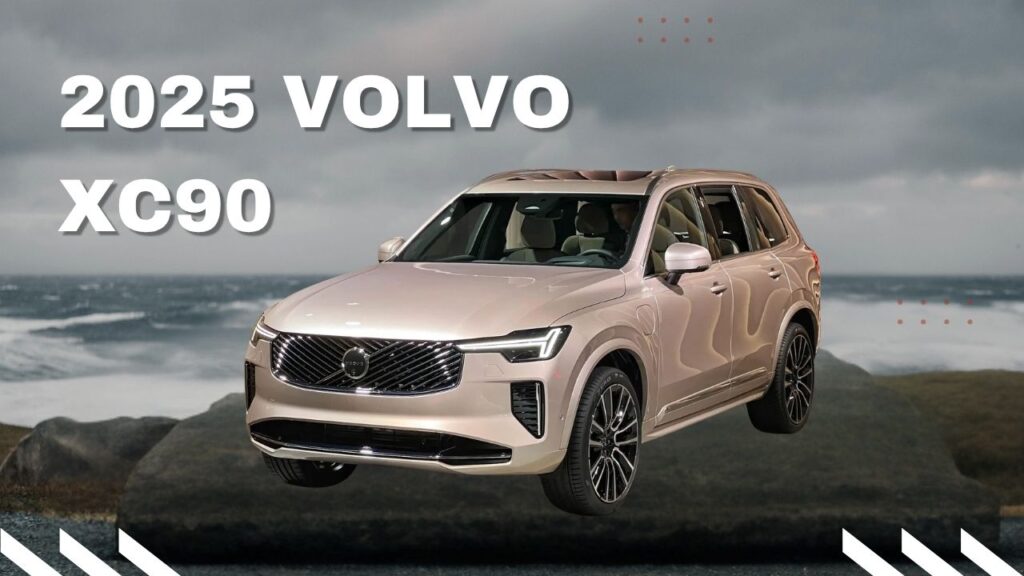
Scandinavian design and family-friendly practicality are two things that really should be synonymous in the luxury SUV segment — and the 2025 Volvo XC90 is still one of the best-rounded vehicles in that space on the market today. With its impeccable safety heritage, hybrid efficiency, and tranquil cabin design, the XC90 still sets the standard for what a luxury SUV for the family should be. Here’s a closer look at the performance, safety, features, pricing, and which trims are the best for families this year. Now the exterior features the familiar elegant lines of Volvo and a slightly revised front grille with LED signature headlights and updated cabin materials.

Inside it’s a different story: warm and inviting Scandinavian minimalism complemented by high-quality leather and wood that exudes comfort and class. The XC90 received IIHS Top Safety Pick+ status and a perfect five-star rating from the NHTSA. With Good ratings in all the crash tests, as well as a range of standard active safety features that include automatic emergency braking, blind-spot warnings, lane keep assist, and adaptive cruise control with lane centering.

Those excellent safety scores — along with Volvo’s free maintenance (3 years/36,000 miles) and strong warranty — make the XC90 a persuasive pick for safety-conscious families seeking peace of mind. 

Powertrain and Solid Performance Built

Volvo provides the XC90 with two 2.0L inline-four turbocharged engines, both 48V mild hybrids and a plug-in hybrid. The base “B5” makes 247 hp while the “B6” adds a supercharger and produces 295 hp. Both models come with AWD as standard, plus an 8-speed auto. When driving, the B5 was snappy enough for daily use, though a few testers say the new B5 “lacks the punch” of its competitors. For more power the B6 is even sharper with 0–60 in about 6.8 s and the XC90’s 5,000 lb maximum towing capacity is reserved for B6 models only (B5 tops out at 4,000 lb).
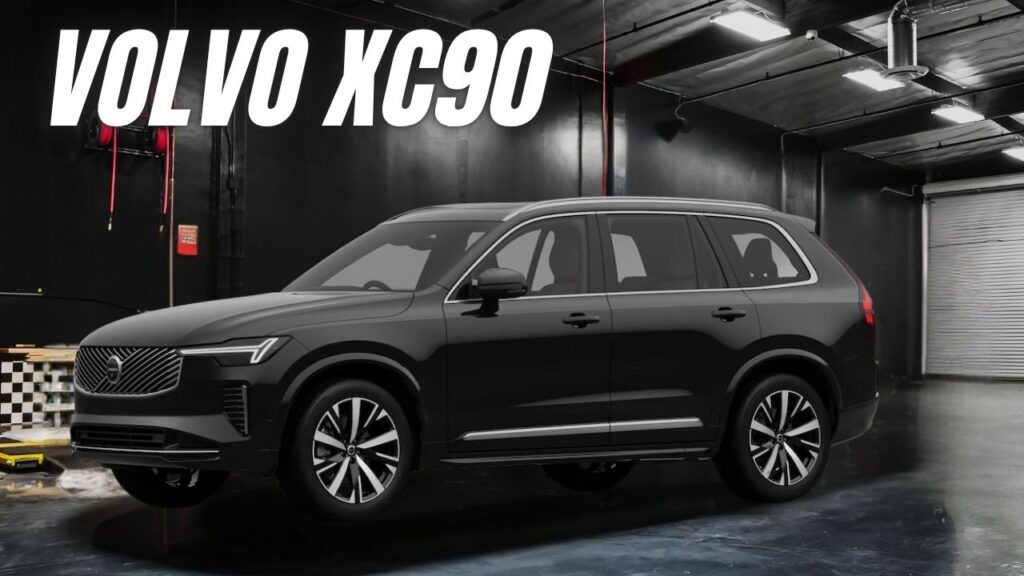
Volvo XC90 Powertrain and Solid Performance Built

Volvo’s premier T8 Plug-In Hybrid now returned to the original “T8” naming couples the turbo I4 with an electric motor for a total of 455 hp and about 33 miles of EV driving. The T8 accelerates briskly from low 5s to 60 and allows the XC90 to run on electric power for daily commutes. All three versions lean more toward comfort than sporty handling, and they boast a composed ride: “The XC90 continues to lean toward comfort rather than outright performance — which is exactly what a family SUV should do. 

The B5 has fairly solid fuel efficiency, the EPA estimates it gets about 26 mpg combined. If you’re looking at the B6, it’s a little bit less at 23 mpg. The T8, however, is the exception with a range of 33 miles on electricity and a fuel economy rating of 58 MPGe, so if you want something a little greener it’s definitely worth a look. 

Interior Comfort and Cabin Space

The redesigned XC90 has a roomy cabin that’s crafted to an incredibly high standard. Driver and passenger front-seat occupants benefit from a comfortable amount of legroom and support, the second row offers close to 37 inches of legroom both in 6- and 7-seat configurations.

Its is fairly roomy, although the optional third row (31.9″ of legroom) lends itself more for toddlers and short trips than for adults on long journeys. Volvo’s minimalist dash is dominated by the tall 11.2″ center display with Android Automotive/Google based and a 12.3″ digital gauge cluster. The more salient points of the cabin — open‑pore wood trim, matte-finish trim, and available ambient lighting — give it a luxury-minded look.

Families will like functional features such as multiple cupholders, the new sliding center console storage and a wireless charging pad (now repositioned). There’s plenty of cargo room as much as about 85.7 cu ft behind the front row because of its tall, beefer box shape. In general, the car’s interior is lauded as “a masterpiece of restraint” with a warm atmosphere”, even as they remark that Volvo still went mostly with touch controls.

Read more:- The Nissan Tekton Engineered for Superior Comfort on Rough Roads

Top Safety and ADAS Features 

Safety and driver assistance features are among the best. Beyond its 5-star crash-test ratings, the XC90 includes as standard equipment a suite of aids: automated emergency braking with pedestrian/cyclist detection, lane-departure warning and lane-keep assist, and adaptive cruise control with lane centering.
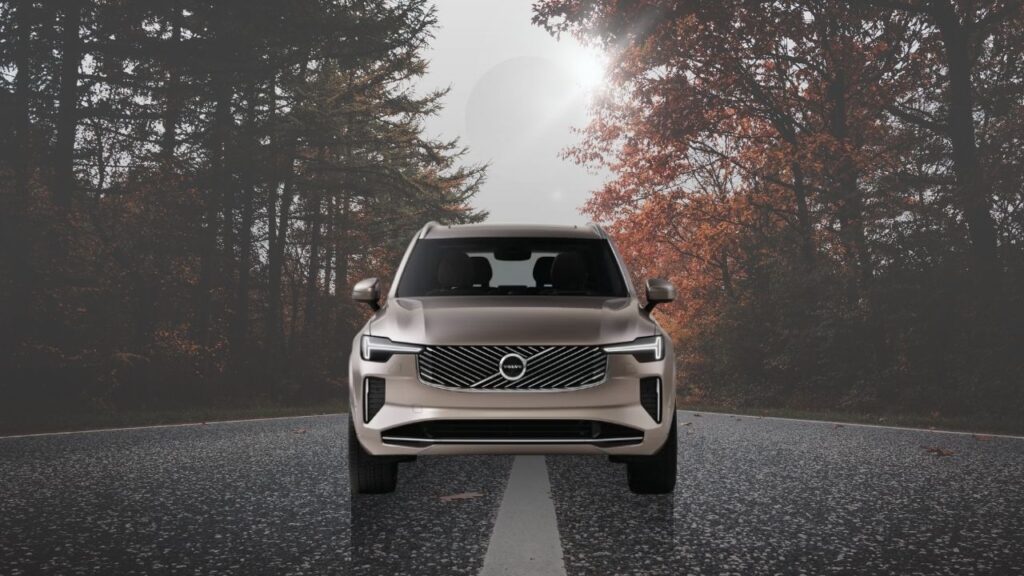
Volvo XC90 Safety and ADAS Features

Headlight performance differs by model — some Good, some Acceptable. But blind-spot monitors and rear automatic braking come with every trim level. Volvo even throws in three years of free scheduled maintenance and an 8-year/100k-mile battery warranty on the hybrids.

Pricing and Value of midsize luxury SUV XC90 

Trim  Engine Power Starting Price
XC90 B5 Core 2.0L Turbo hybrid 247 hp $58,695
XC90 B6 Plus 2.0L Turbo  295 hp $66,195
XC90 B6 Ultra 2.0L Turbo  295 hp $71,395
XC90 T8 Core (PHEV) Plug-in Hybrid 455 hp, 33 mi EV $73,195
XC90 T8 Ultra (PHEV) Plug-in Hybrid  455 hp, 33 mi EV $80,895

Best Trims for Families  

Experts prefer the mid-level Plus trim for the B6 engine with a seven‑seat bench configuration. The car’s Plus trim level incorporates practical amenities, including a panoramic sunroof and upgraded LED headlights, on top of the base Core model without making the vehicle too expensive. 
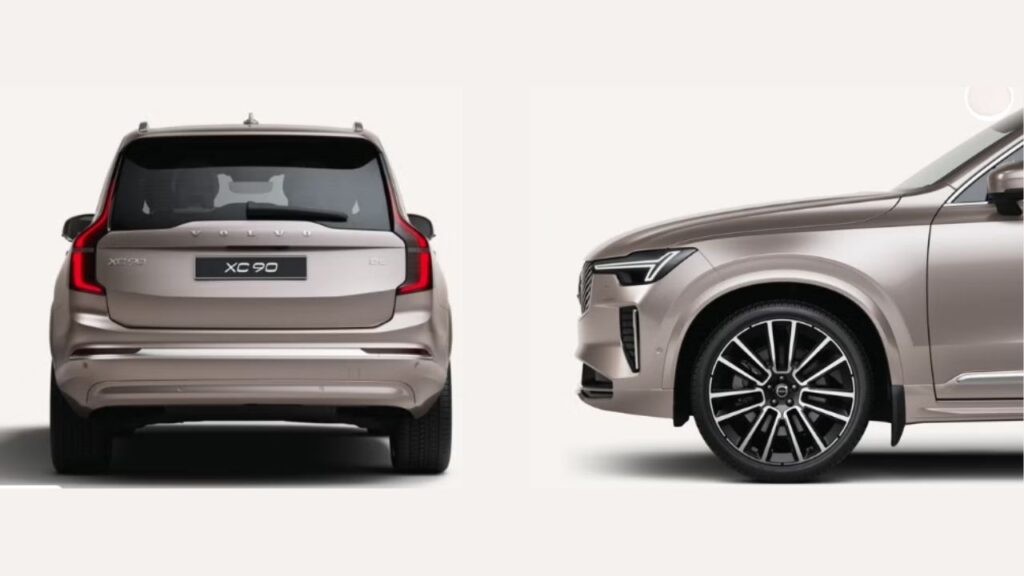
Volvo XC90 Best Trims for Families

Loaded out Ultra adds luxuries premium Bowers & Wilkins audio, ventilated massaging seats, four-zone climate control, multi-color ambient lighting, but Volvo’s kid-friendly safety kit comes stocked well even in lower trims. 

In general, prices are on the high side: the XC90 B5 Core starts at about $58,695, and the top PHEV T8 Ultra is below $82,800 (prior to discounts). With best-in-class safety, seating that flexes in six or seven configurations, and features that make life easier, the XC90 is a very good buy for families. 

Conclusion

The 2025 Volvo XC90 still shines as a family-friendly luxury SUV. It has a quiet, comfortable ride, an upscale and roomy cabin, and excellent safety scores and a long list of standard driver aids.The XC90 owes a lot of its value proposition to that segment, and now it excels there, particularly in the mid-grade Plus /Ultra trims with the B6 or plug-in powertrain, making it really easy to recommend for any family that needs three rows and a solid, safe vehicle. 

Sharey Khan

Sharey Khan is an IT entrepreneur and petrol head & a car enthusiast. With a special focus on car-related content, he combines his deep passion for vehicles with a talent for crafting informative, engaging, and easy-to-understand content. His writing is driven by a genuine love for cars and he is committed to providing readers with accurate, up-to-date, and trustworthy information that empowers smarter driving decisions. 

Leave a Reply

Your email address will not be published. Required fields are marked *

0

Bill Gates Car Collection 2025: Luxury Cars, Price & Lifestyle

Published Sep 3, 2025, 9:34 AM
Last Updated Apr 3, 2026, 5:24 AM

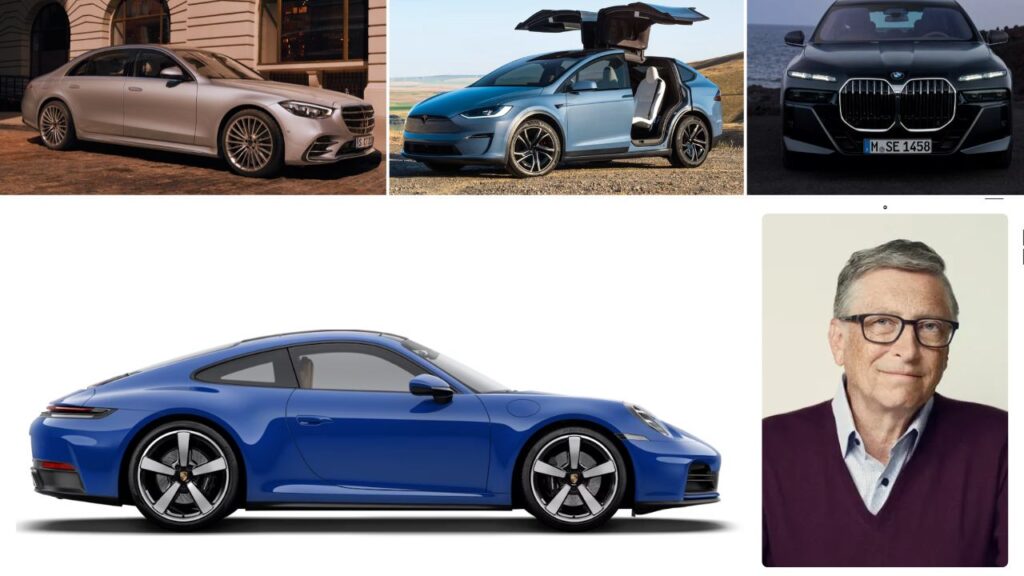
Bill Gates car collection 2025 featuring Porsche, Tesla, Ferrari, BMW, and Mercedes-Benz

One of the most influential philanthropists, co-founder of Microsoft – Bill Gates has a car collection that reflects his lifestyle and his taste in cars. Bill Gates car collection 2025, remains a fascinating blend of iconic models, practical daily drivers, and futuristic automotive tech. 

While Gates net worth of billions could easily allow him to buy different and expensive models. His garage is describing his appreciation for engineering more rather than displaying wealth. 

Let’s explore his collection to see what makes them valuable and expensive.

The Porsche Obsession 

Bill Gates car collection is filled with love for Porsche, he owned a 1979 Porsche 911 Carrera and its variant 930 Turbo. Gates also acquired the 959 model which was banned in the U.S. but now new rules have allowed limited use of this model. These cars build his strong love for German automotive and performance.

Porsche 911

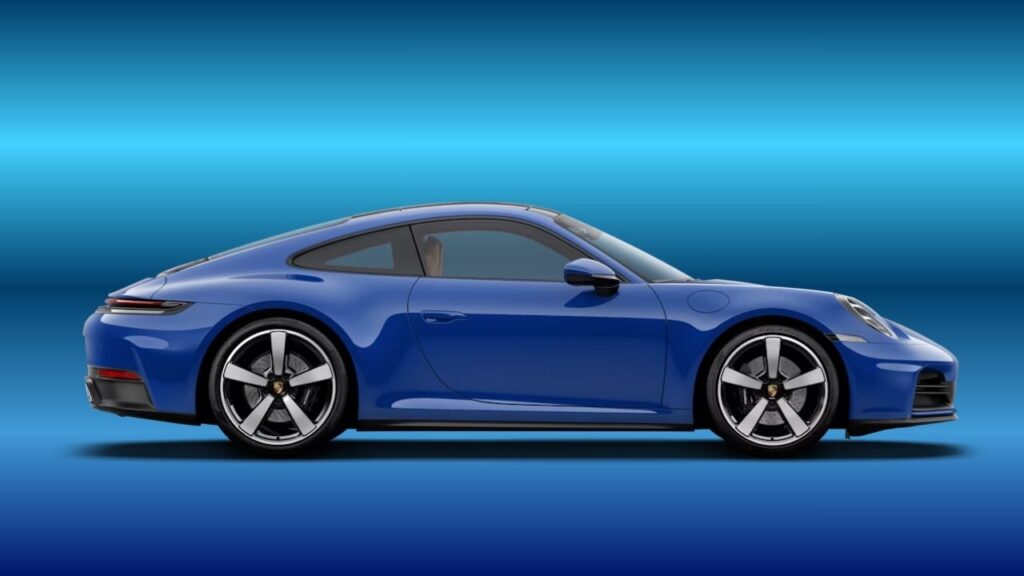
Bill Gates Porsche 911 Carrera in silver with classic round headlights

Image credit: Porsche

Porsche 911 of Bill Gates is a symbol of his early entrepreneurial journey. As it defines the expensive reflection of his life that shows practicality and comfort with its features.

Unique Design of Porsche 911 and Key Features

The most recognizable attributes, characterized by its round headlights, its shape, and sloping roofline. The unstoppable performance with top speed of 294 km/h and 394 PS with acceleration from 0 to 100 km/h in 4.1 seconds. The 911 model price varies on the model, it starts from Rs. 2.11 crore. Variants like Turbo price can go higher to Rs 4.06 crore.

Features Details
Engine 2981cc 6-cylinder twin-turbo
Torque 379 bhp
Transmission 8-speed automatic
Drive Type RWD / AWD

Also Read: Mr Beast Car Collection: Inside the Garage of a YouTube Billionaire!

Porsche 930 and 959 – Features and Design

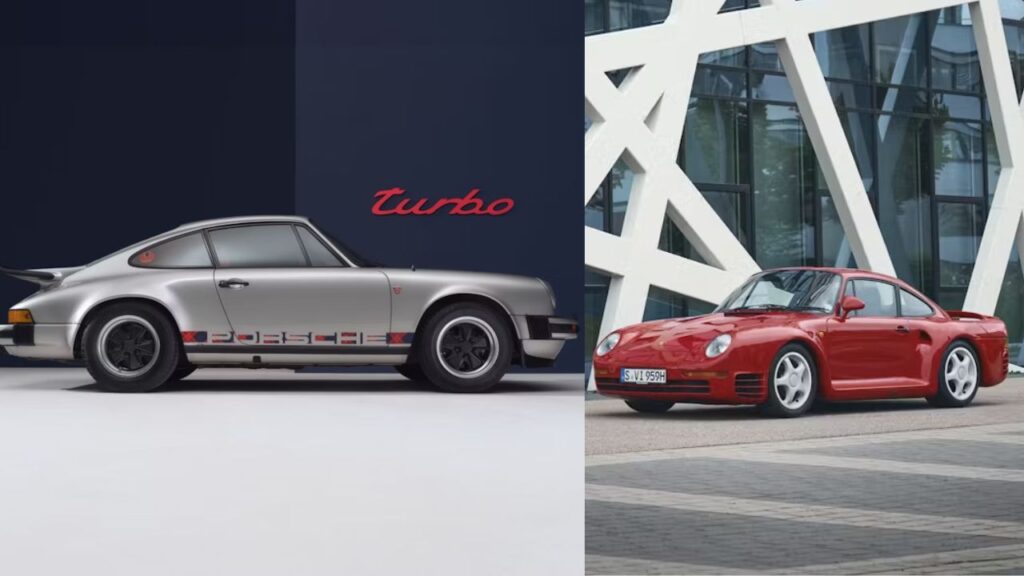
Bill Gates’ Porsche 930 Turbo and rare Porsche 959 supercars showcasing raw power and futuristic design

Image credit: Porsche

These two have held a special position in Gates car collection because of their outstanding performance and iconic designs. They represent different approaches to performance. The 930 turbo is the first turbocharged production 911. This machine earned a nickname “widowmaker” due to its supercar powers that are still used today. 

Feature Porsche 930 Porsche 959
Production Years 1975–1989 1986–1993
Engine Flat-6 turbo Flat-6 twin-turbo 
Drivetrain Rear-wheel drive  All-wheel drive
Transmission 4-speed manual (later 5-speed) 6-speed manual (5 forward + off-road gear)
Braking Vented disc brakes, no ABS Vented disc brakes, ABS
Philosophy Raw, mechanical, driver-focused Tech-laden, future-oriented supercar

A Practical and Eco-Conscious Choice: Tesla Model X

Bill Gates surprised everyone while adding Tesla Model X in his garage. It represents his taste of cars that supports nature without compromising performance. Despite the complex relations with Tesla’s CEO Elon Musk, Gates shows compassion over cars.

Features and Performance

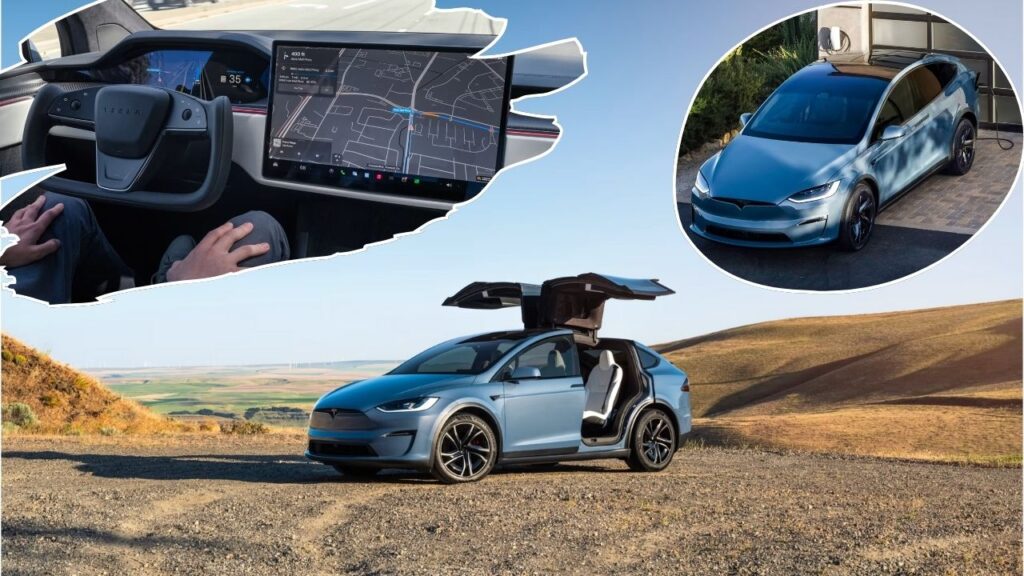
This iconic model has a distinctive feature like Falcon Wing Doors which opens upwards. Doors are functioning automatically that makes an impression.  

Tesla Model X with Falcon Wing Doors owned by Bill Gates

Image credit: Tesla

It offers spacious and versatile seating, making it comfortable for families. It has a wonderful Glass roof which gives an uninterrupted view and the Yoke steering wheel provides an instrument cluster and road view. Its towing capacity is 5000 lbs which is huge in an electric SUV.

Autopilot features let you feel relaxed with warning on lane departure, adaptive cruise control, and emergency braking making it reliable for everyone. Additionally, Full Self-Driving capability delivers advanced features. But it needs supervision obviously, it only includes automatic lane changes and navigation on Autopilot. 

Other Gems in the Collection

Bill Gates’ interest in automotive doesn’t stop at Porsche and Tesla but he also owns other modest cars. 

Mercedes-Benz S-Class

Black Mercedes-Benz S-Class luxury sedan from Bill Gates’ car collection

Image credit: Mercedes-benz

Gates owned a luxury sedan – Mercedes-Benz S-Class, which offered a 3.0L engine with 9-speed transmission to become the fastest sedan. Its safety features include 10 airbags, ABS, and many others that work automatically to assist in driving. It’s high-tech including automatic climate control, electric seats, rear-seat entertainment comes in the S-Class model.

Features Details
Engine 3.0L inline-6 turbo
Transmission 9-speed automatic
Performance 0-100 km/h in 5.1 seconds
Suspension Air suspension with electronically adjustable front & rear
Interior & Exterior Leather seats, power boot, ambient lightning

BMW 7 Series

BMW 7 offers 3.0L engine and 375 horsepower for robust performance on every road. Its comfort and safety features made this car a perfect fit for long trips and city commutes. Its sports and manual modes deliver an incredible experience of journey.

Category Features 
Engine 3.0L / 4.4L V8
Transmission 8-speed automatic
Drivetrain Rear-wheel drive 
Speed 0-100 km/h in 4.1 seconds
Comfort & Tech Infotainment system, ventilated seats, adaptive air suspension
Safety 7 airbags, assistance on lane and 360° camera

Ferrari 348

The Ferrari 348 is a sharp, driver-focused character that blends with stylish design which catch-out everyone’s eyes. With a 3.4L V8 engine it delivers 296 hp to experience an amazing ride.

Features Details
Production Years 1989–1995
Engine 3.4L V8
Power 296 hp
Transmission 5-speed manual
Performance 0-60 mph in 5.3 seconds
Suspension Independent double wishbone front and rear

Conclusion

Bill Gates car collection 2025 is a definition of rare and valuable classic engineering. These cars established his obsession towards groundbreaking engineering and classic designs. Gates values practicality and function in his daily life, even though he has millions of net worth. It’s a collection that proves one thing for sure, sometimes appreciating the art and science of the automobile is more valuable and practical than extravagance. 

0

Range Rover Autobiography vs Bentley Bentayga: The Ultimate Luxury SUV Battle of 2025!

Published Aug 12, 2025, 11:01 AM
Last Updated Aug 13, 2025, 5:53 AM

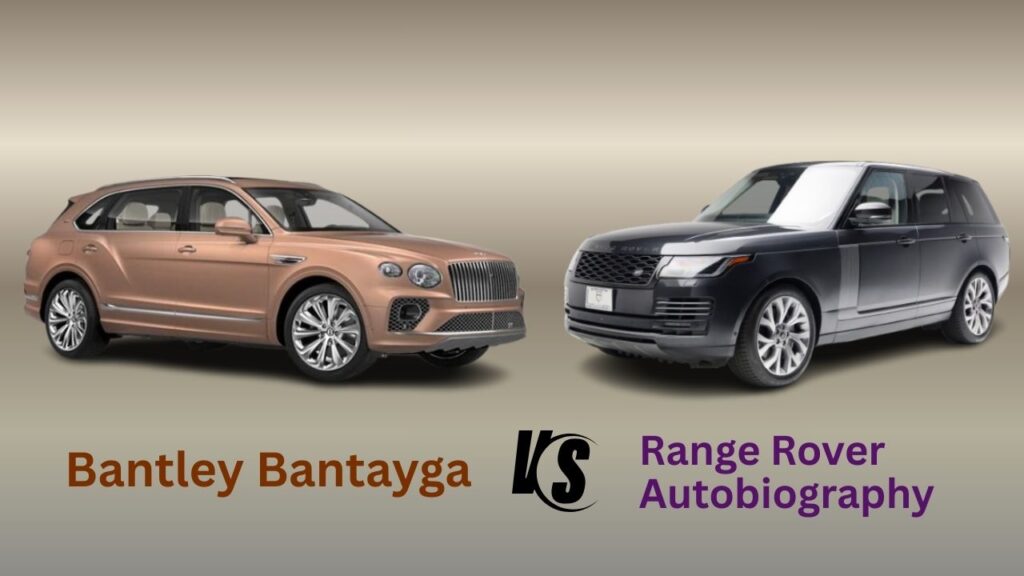
In the world of Ultra-luxury SUVs, these two titans Range Rover Autobiography vs Bentley Bentayga have set a position at the top. Both represent an impressive design with unparalleled comfort and excellent technology. There is no actual comparison between their specifications because of their impeccable engineered machines, but a deep dive into what makes them unique — luxury, power and prestige. At this peak of price, the notion of “best” becomes priority while choosing an SUV. Let’s explore each of the vehicle’s unique personality and brand philosophies to make it the ideal choice for a different discerning person.

Design & Presence: A Tale of Two Aesthetics

Range Rover Autobiography: Understated Elegance and Modern Minimalism

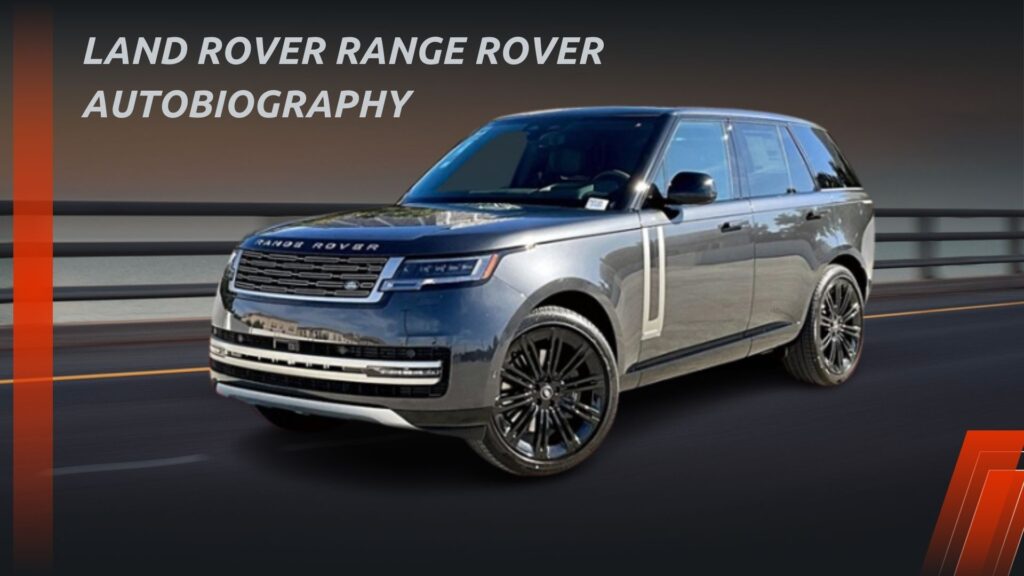
The 2025 Range Rover Autobiography is offering an iconic design with stylish exterior. The original Range Rover’s three defining character lines are inherited that mark a signature of its originality but modern features.

It evolves with modern aesthetic design which includes front-end small, rear with boat-shaped, and split tailgate for impressive look. It offers hidden door handles, 22-inch diamond-finished wheels. The pixel LED headlights which work in daytime too. 

Bentley Bentayga: Masterpiece of Bold Opulence

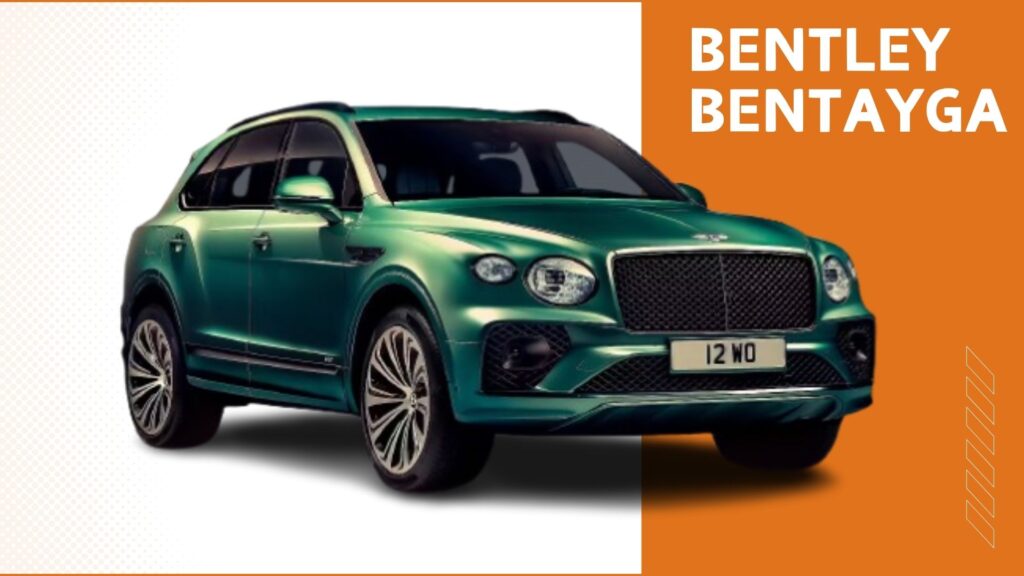
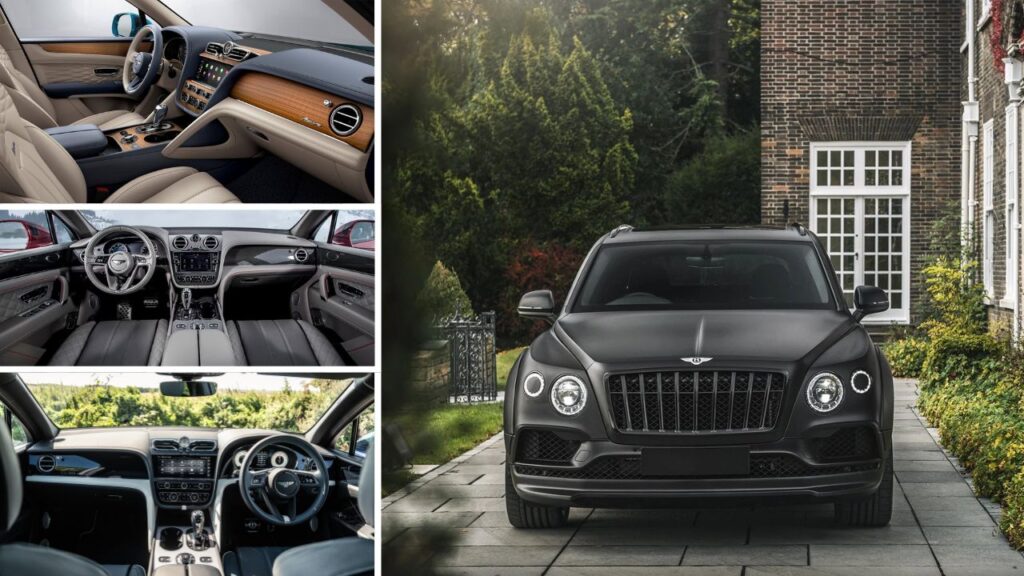
Bentley Bentayga is a masterpiece of bold Opulence and excellent design with its sharp figure lines and front grille. The new features of Bentayga make it memorable in human eyes, it delivers crystal cut shaped headlights which caught everyone’s attention at the entry.

It offers a large side vent, excellent panel size, and 21-inch bold wheels with 3D tail-lamps at rear which adorn the car’s presence. Black exterior accent and carbon fibre interior trim makes this new Black edition more aggressive aesthetic.

Power & Performance: Beyond the Numbers

Range Rover Autobiography: Refined Power and Uncompromising Capability

The Range Rover Autobiography offers excellent performance with the P530 model. Rover’s offers a 4.4-litre engine with horsepower of 523 that delivers a range from 0 to 60 mph speed in just 4.3 seconds. It offers the top speed up to 155 mph. This model is ideal for those who want a powerful SUV. The P550e model offers plug-in hybrid with 3L inline-6 engine with an electric motor to produce 543 horsepower & 590 lb-ft of torque which can go from 0 to 60 mph in 4.7 seconds. This mind-blowing eco-friendly hybrid model is ideal for those who are eco-conscious but want a powerful ride. All models deliver an 8-speed automatic transmission and AWD.

Bentley Bentayga: Unbridled Power and Dynamic Engagement

Bentayga offers a trio engine for different performances on the road, while V8 4L twin-turbo can produce 542 hp and 568 lb-ft of torque that delivers 0 to 60 mph in 4.4 seconds. The plug-in Hybrid is also offering excellent performance with combining 456 horsepower and 516 lb-ft of torque. Bentayga is offering a wonderful smooth ride with its hybrid electric mode and dynamically convenient for every trip.

Read More:-  Lamborghini Urus vs Bentley Bentayga: Which Luxury Beast Deserves Your Garage in 2025

Interior Sanctuary: Craftsmanship Meets Innovation

Range Rover Autobiography: Modern Minimalism and Executive Comfort

Range Rover’s interior is defined as a modern art of luxury which is built of luxurious materials including rich leather, polished wood and metal finishes. The autobiography is a masterpiece with semi-aniline leather seats with both cooling and heated features in seats.

It offers automatic climate control, heater armrests to passengers’ seats and a clearsight mirror and air purification system to enhance the environment inside the SUV. 

Bentley Bentayga: Traditional Opulence and Tactile Luxury

Bentayga’s interior is defined aesthetically by hand-stitched leather seats with well polished wood veneers and enhanced cooling system. It offers space for up to 5 passengers to supply leather diamond quilted seats and an availability of up to 7 seats.

Designed to comfort every passenger and offering features like heating, massage and ventilation. The ambiance of the cabin is eye-catching and allows people to sit comfortably on 22-way adjustable seats to shine.

Pricing & Value Proposition: A Clear Tiering of Luxury

The price is dependent on the variant of the Range Rover Autobiography, MSRP of $151,600 is a starting of the SUV which can raise to $170,900 for Long Wheelbase and $169,400 for 7-seat LWB. 

The Bentley Bentayga V8 price is around $203,900 and can go up to $210,000 to $270,000 for a Hybrid model with high performance. While Bentayga S Black Edition price is around $298,005.

Conclusion: The Verdict in the Luxury Arena

Range Rover Autobiography vs Bentley Bentayga, both are powerful luxury SUVs which offer an amazing automotive experience. The Range Rover offers exceeding comfort and off-road capability that make it ideal for modern connoisseurs who are interested in versatile elegance. While Bentaly Bentayga delivers overt opulence and fastest performance with amazing sleek design that make it best for those who are interested in dynamic and exclusive model of SUV. 

Ultimately, both luxury SUV of 2025 is a choice of priority and brand trust just like choosing between high modernity and antique piece of quality. Both are equally desirable and give excellent performance. The winner is the one which aligns with your interest and lifestyle.

1

What Is ADAS? A Complete Guide to Advanced Driver Assistance Systems

Published Jul 10, 2026, 12:19 PM
Last Updated Jul 22, 2026, 12:07 PM

ADAS

Advanced Driver Assistance System is a friend of driver in new cars as safety tech to prevent the crash. That vagueness is the problem. ADAS isn’t one feature. It’s a bundle of separate systems, each doing a very specific job, and understanding them individually is the only way to actually judge whether a car’s ADAS package is worth paying for — or whether it’s mostly a marketing sticker.

ADAS features fall into three buckets — ones that warn you (FCW, LDW, BSM), ones that act for you (AEB, LKA, ACC), and ones that inform you (TSR, TPMS, parking cameras). A car with a long feature list might lean heavily on the “inform” bucket, which sounds impressive but does less heavy lifting than one solid AEB system.

So let’s break it down properly, one system at a time.

What Does ADAS Actually Stand For?

ADAS stands for Advanced Driver Assistance Systems. The keyword there is assistance — not automation. Every ADAS feature is built to support the driver, not replace them. When you drive a car with an ADAS system, it watches the road through cameras, radar, and sensors, to detect any object or something so it intervenes with a warning or a slight correction that driver might miss.  

The car suddenly braking up front, a vehicle slowly drifting into your lane, a pedestrian emerging from between parked cars. Think of it less like autopilot and more like a very alert co-passenger who’s looking at the rearview mirrors and road behind you at the same time you’re looking at the road in front of you, and who taps you on the Shoulder or takes the wheel for half a second when something feels off. 

How ADAS Actually Works Behind the Scenes

Every ADAS feature runs on the same basic loop, even though the end result looks different each time. It helps to understand this loop before getting into individual features, because it explains why some systems work brilliantly on Indian highways and struggle in city traffic.

ADAS

Step 1: Sensing

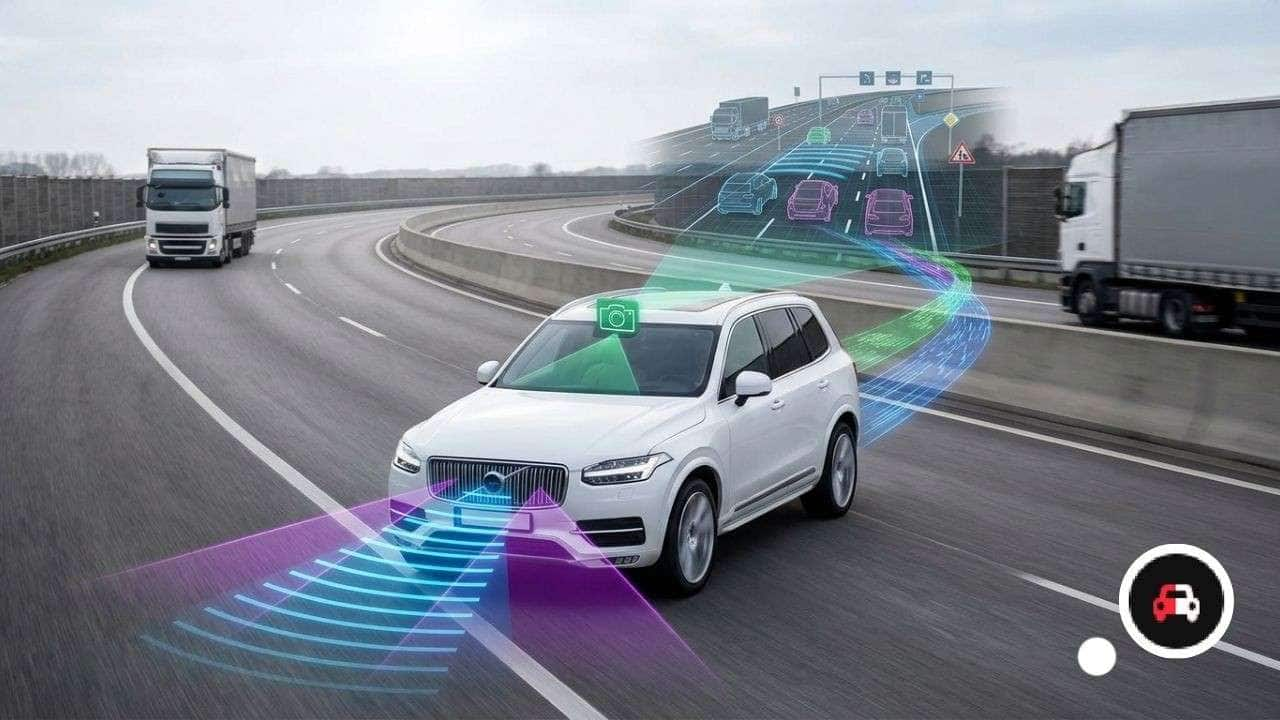
The car continuously gathers information from a combination of hardware — typically a forward-facing camera located near the rearview mirror, radar sensors embedded in the front bumper, ultrasonic sensors distributed around the body for close-range detection, and in some cases LiDAR on more advanced platforms. They’re all looking at the world in a different way: radar is good at measuring distance and speed in the rain or fog, while cameras get a better look at lane markings, traffic signs, and what an object, well, actually is. 

Step 2: Processing

All that raw information is sent to an onboard computer that runs it through algorithms trained to identify patterns — a pedestrian outline, a motorised two-wheeler darting through lanes, brake lights ahead. This needs to be done in a matter of milliseconds because when you’re driving on the highway, half a second lag means you’ve travelled several car-lengths of road. 

Step 3: Decision

Using this information, the system decides if the situation warrants a warning like a beep, alert on the dashboard, or seat vibration or intervention by braking, trimming the steering, or limiting the power of the engine. 

Step 4: Action

The car either alerts you or acts automatically applying brakes, correcting steering input, or adjusting speed, depending on which specific ADAS feature has triggered.


Once you understand this four-step loop, every individual ADAS feature is just a variation of “sense something specific, process it, decide, act.”

The Core ADAS Features, Explained One by One

1. Adaptive Cruise Control (ACC)

Standard cruise control maintains a constant speed. Adaptive cruise control takes this a step further – it travels at a set speed, but will also slow down and speed up to maintain a preset gap between your car and the one in front of you, using radar to keep tabs on that vehicle. In Indian highways like the Yamuna Expressway or Mumbai-Pune, this is actually helpful as it does away with the endless pressing on the accelerator and brake pedals in the moving traffic. 

2. Autonomous Emergency Braking (AEB)

This is arguably the most safety-critical feature in the whole ADAS suite. AEB watches the road ahead and, if it detects an imminent collision that the driver hasn’t reacted to, applies the brakes on its own — sometimes fully, sometimes partially to reduce impact speed. It’s designed as a last line of defence, not a substitute for paying attention.

3. Lane Keep Assist (LKA) and Lane Departure Warning (LDW)

These two often get bundled together but do slightly different jobs. Lane Departure Warning simply alerts you — a beep or a steering wheel vibration — if you drift out of your lane without indicating. Lane Keep Assist goes further and gently steers the car back into the lane. On Indian roads where lane discipline is, let’s be honest, inconsistent at best, this feature can be a bit of a mixed bag — it works well on marked highways but can get confused on roads with faded or missing lane paint.

4. Blind Spot Monitoring (BSM)

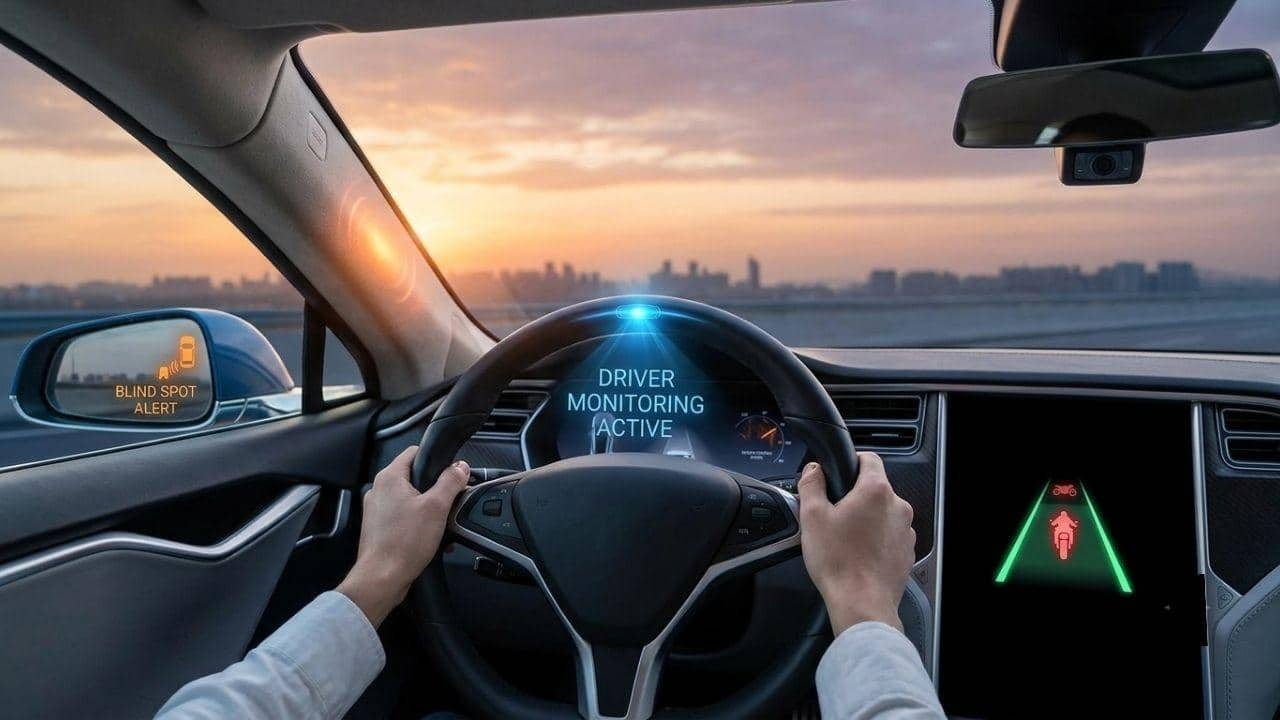
Sensors placed on the back corners of the car keep an eye on your blind spots for adjacent vehicles like cars, motorcycles, and more. If an object is detected, a warning light appears on the corresponding side mirror and many systems also emit an audible alert if you signal to change lanes. It is quite handy in Indian traffic where two-wheelers and auto-rickshaws tend to criss-cross in the blind spots quite easily. 

5. Forward Collision Warning (FCW)

This feature is a warning system and does not perform the function of an intervention. If it detects that you are closing in on the car ahead too quickly, it will activate visual and audible alerts, allowing you to brake or steer away to avoid a collision. 

6. Parking Assist and Surround View / 360-Degree Camera

Multiple cameras and ultrasonic sensors are combined to generate a top-down view of the vehicle, which takes the stress out of parallel parking or driving through tight residential gates. Certain systems are now equipped with semi-automated parking, with the car manoeuvring into a space while you control the brake. 

7. Traffic Sign Recognition (TSR)

Based on the feed from a forward-facing camera, the system recognizes speed limit, no-entry, other traffic signs, and shows them on the instrument cluster or on the screen of the infotainment system. So you can keep track of the road rules, even if you do accidentally drive past a sign. 

8. Driver Attention/Fatigue Monitoring

Using either steering pattern analysis or an in-cabin camera, this system tracks signs of drowsy or distracted driving — inconsistent steering corrections, prolonged eye closure — and prompts you to take a break. Extremely relevant for long highway drives, which is a big part of Indian road travel culture.

9. Tyre Pressure Monitoring System (TPMS)

While TPMS isn’t always considered an ADAS, it certainly falls under the umbrella of vehicle safety tech systems. It constantly monitors the tyre pressure and notifies you if it goes below the recommended level, saving you from trouble of poor handling, decreased fuel efficiency or even a tyre blowout. 

ADAS

The Levels of Driving Automation — Where Does ADAS Fit?

Much of the confusion around ADAS happened due to being confused with self-driving vehicles. There are six levels of driving automation as defined by the Society of Automotive Engineers (SAE), and it’s helpful to understand where ADAS fits on that spectrum. 


Level Name What It Means
Level 0 No Automation Driver does everything; car may just have basic warnings.
Level 1 Driver Assistance One system helps, like cruise control OR lane keeping — not both together.
Level 2 Partial Automation Car controls steering and speed together, but driver must stay fully alert. Most ADAS cars sold in India today sit here.
Level 3 Conditional Automation Car handles most driving in specific conditions; driver can look away briefly but must be ready to take over.
Level 4 High Automation Car drives itself fully within a defined area or condition, no driver needed in that zone.
Level 5 Full Automation No steering wheel needed at all, under any condition. Still not commercially available anywhere.


Almost all cars that are sold in India with “ADAS” slapped on as a feature — the Mahindra XUV700 and Scorpio-N, Tata Curvv, Hyundai Creta, MG Astor, and a bunch of Toyota and Honda models, are all Level 1 or Level 2. That means the car is helping, not driving. Taking your hands off the wheel because the car has ADAS is the exact kind of assumption that gets people killed.  

Why ADAS Matters More in India Than the Marketing Suggests

It’s easy to dismiss ADAS as a Western safety obsession bolted onto Indian cars for export-market compliance. But the argument in favour of it in Indian conditions is perhaps stronger, not weaker. Indian traffic is dense, heterogeneous, and chaotic — two-wheelers darting across lanes, pedestrians jaywalking, sudden braking on tailgated city traffic, and long monotonous stretches of highways where drowsiness easily sets in. These are precisely the situations where AEB, FCW, and driver fatigue monitoring earn their keep.

That’s also a fair point on the other side of the argument. Features like Lane Keep Assist require crisp lane markings, which are still a rarity on many Indian roads. The better question isn’t just “does this car have ADAS,” but “what ADAS features does it have, and do those features correspond to the roads and conditions I deal with, day-in and day-out?” 

Is ADAS Worth Paying Extra For?

If the choice is between a base variant and one with AEB, forward collision warning, and blind spot monitoring, the safety case is strong enough that it’s hard to argue against it, especially for anyone doing regular highway driving. Features like fully automated lane keeping or advanced parking assist fall more into the comfort category — genuinely nice to have, but not something to stretch your budget for if money’s tight.

A useful way to assess ADAS is to weigh more the functions that can intervene to avoid accidents, such as Automatic Emergency Braking (AEB) and Adaptive Cruise Control (ACC), compared to those that are more informative, such as Traffic Sign Recognition (TSR) or a 360° camera. Active intervention systems have a more direct impact on safety, informational features are mostly aimed at convenience and driver awareness. 

Conclusion

ADAS is really a collection of safety features, not just one. Every system helps with a different part of driving, from alerting you to potential dangers to actively working to prevent a crash. Understanding the capabilities and limitations of these features can help you select the right vehicle and the safety systems that you can best take advantage of on the road.

0

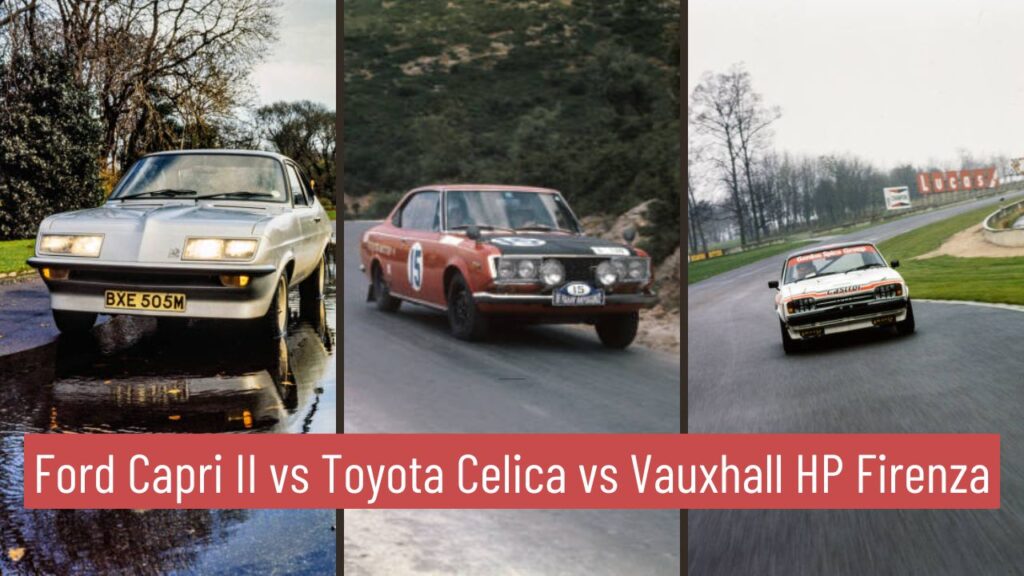
Ford Capri II vs Toyota Celica vs Vauxhall HP Firenza: The Global Decade of Style

Ford Capri II vs Toyota Celica vs Vauxhall HP Firenza

The 70s were a turning point in car history: a decade shaped by global financial turmoil and the mass popularization of sporty styling. The ground was laid years before in the US with the introduction of the Ford Mustang in 1964, a car that demonstrated that performance imagery could be married with an affordable price tag and based on an economy car platform, namely, the utilitarian Ford Falcon. This “pony car” formula – long hood, short rear deck, four seat interior and a plethora of options – was an instant hit with car buyers around the world. 

The vehicles including the Ford Capri II, Vauxhall HP Firenza and 1st Gen Toyota Celica were born out of this post-Mustang era, and yet each is a distinctly different approach to the budget coupé ideology. 

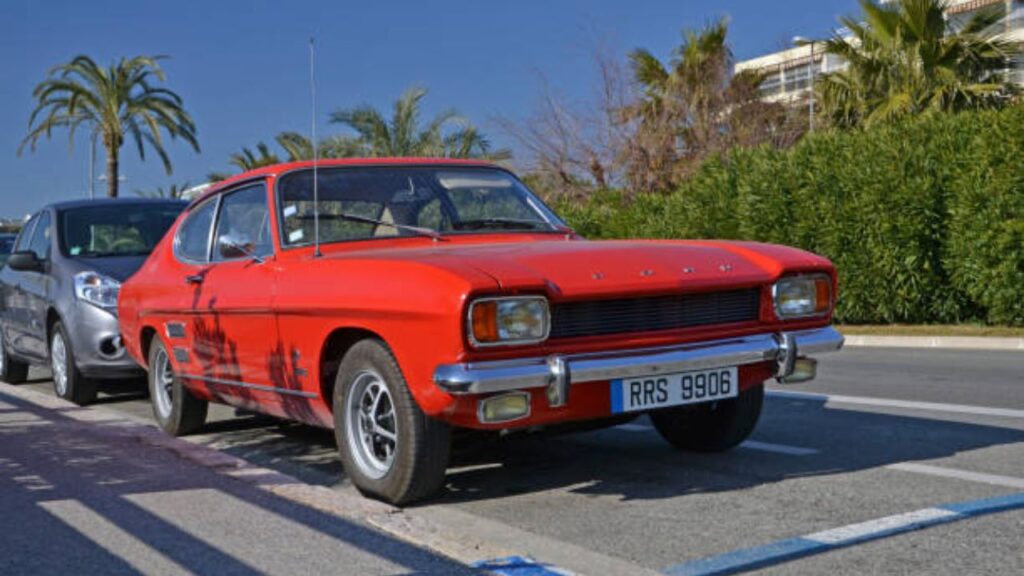
Ford Capri II

Ford Capri II

The Capri II was a natural progression for Ford’s European pony car. Production started mainly in the United Kingdom (Dagenham, Halewood) and Europe (Genk, Belgium, and Saarlouis, Germany). the Mk2 softened the aggressive lines of its predecessor, with a more modern and friendlier look featuring “softer lines and larger headlights.” 

Engineering and Accessibility

The Capri II was ultimately successful because of its versatility and availability. Ford stuck to its guns with the philosophy of serving every pocket by the simple offering of a variety of engines in one simple layout – front-engine, rear-wheel drive (FR). For the budget-conscious buyer, the car had the I-4 1.6L (1,599cc) that delivered a meager 64 horsepower and produced 0-100 kph times in the 16-seconds ballpark. A somewhat more balanced choice was the 2.0L Inline-Four Pinto, making around 98 bhp and bringing 0-60 mph down to near 10 seconds. Up top, there was the potent V6 3.0L engine. 

That philosophy meant the car stayed true to its “style on a budget” directive, as evidenced by the original 1974 UK price list, where a Capri Mk2 1600L began from a very reachable £1,668. 

Read More:- Range Rover Reaches New Heights with the Astronaut Edition

Driving Experience and Legacy

Drivers had good things to say about the Capri interior design, in particular the full complement of dials and the long bonnet which immediately made you feel as though you were driving a bona fide sports car. Controls were said to be both light and direct. 31 Although some contemporary reviewers noted problems such as poor reliability of new cars and dubious safety standards, 32 present day enthusiasts often describe the V6 models as being very “reliable, cheap to run”, a consequence of the car’s mass production and the resulting availability of parts.

The straight-six engine, especially in the later 2.8i injection versions, had a “great sound from the engine and exhaust”. This full-bodied, Falstaffian wuffle supplied the required drama for the ears to complement the visual attack, and proved that the quintessential V6 exhaust note was the key to a car that could rise above its budget-based mechanics and inscribe itself as an enduring icon of nostalgia. 

The Contradiction in Current Value

Ford Capri II Current Value

The Capri II was intended to be throwaway and to appeal to a broad demographic, but its current place as a sought-after classic reveals an important market dynamic. A couple of million Capris were sold between 1969 and 1986, but clean ones with high specs have turned up as rare gems. Because the Capri was so common, and was often driven as a cheap daily used in its second life as a track toy, real-money originals in “Original & Highly Original” condition really do command serious prize money. For example a mint condition 1970 Capri has been estimated at over £40,000. 

Vauxhall HP Firenza ‘Droopsnoot’

Vauxhall HP Firenza 'Droopsnoot'

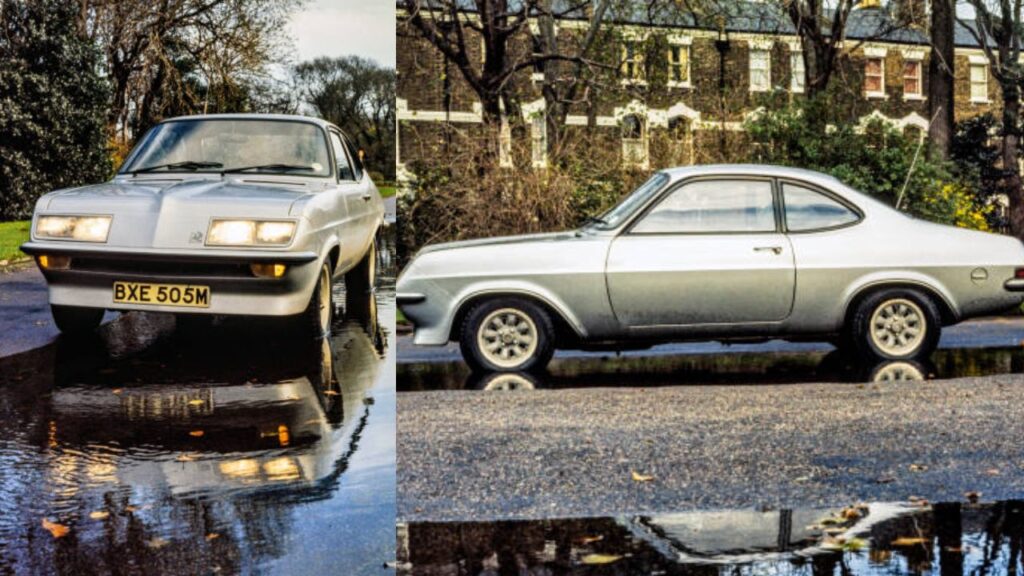
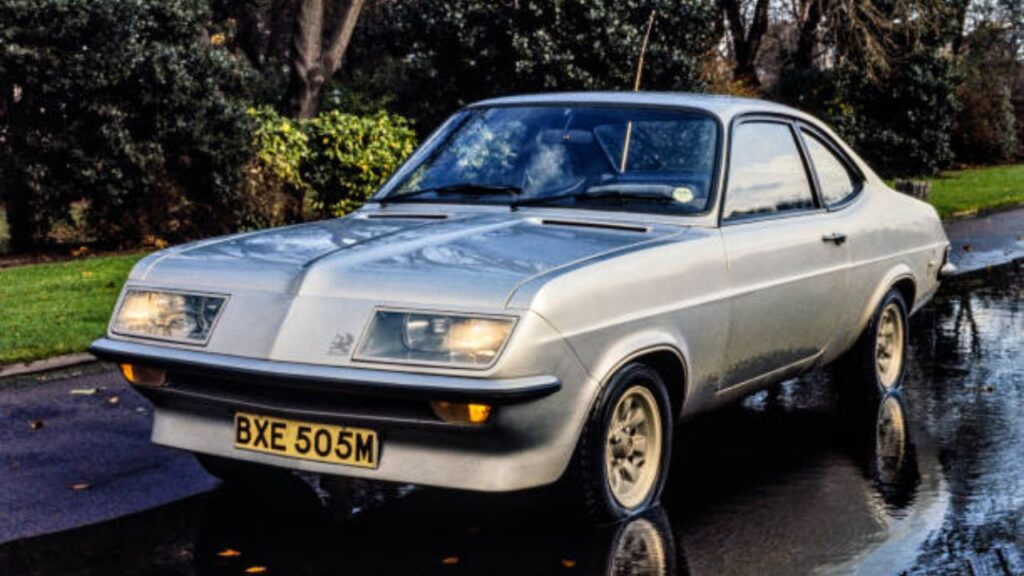
The Vauxhall Firenza, was originally launched in 1971 as a sporty two-door fastback coupé based on the lowly Viva. But that was about to change in 1973 when General Motors stylist Wayne Cherry took a radical departure from the norm with the Firenza HP (High Performance), a motorsport homologation special. 

Radical Styling and Advanced Engineering

The HP’s signature feature was its slick fibreglass nose cone, which let to the car being known as the ‘Droopsnoot’. This was no mere styling exercise – the shape was designed to be as aerodynamic as possible and helped the car reach a top speed of more than 120 mph. The distinct nose has double headlights taken from the Renault Alpine A310. And to tie up the aggressive look Vauxhall used matt-black trim rather than chrome and some Avon Safety wheels. Every single HP was finished in the distinctive Silver Starfire metallic paint. 

The HP was powered by a 2279cc OHC slant-four engine, which had been the subject of extensive performance tuning by Bill Blydenstein. This involved following a similar procedure to that used on the combustion chambers, inlet tracts and valve throats, and yielded an additional 21 bhp over the standard powerplant. The result was 131 bhp , and a broad torque band so the car was easy to drive. And the HP was, in fact, the first Vauxhall to be fitted with a complex, close-ratio, dog leg five-speed Getrag manual gearbox. With its combination of light weight and superior transmission, the HP Firenza was also the Vauxhall with the best acceleration of its day, clocking from 0-60 mph in a blistering 7.6 seconds. 

Market Paradox

Vauxhall HP Firenza Market Paradox

This severe scarcity is what governs its place in the classic market.Although the HP Firenza enjoyed rarity and unquestionable motorsport credentials, its median value approximately £17,600 for a Firenza. Its scarcity does mean that there are occasional huge sales, with the highest price to the public being £47,700. 

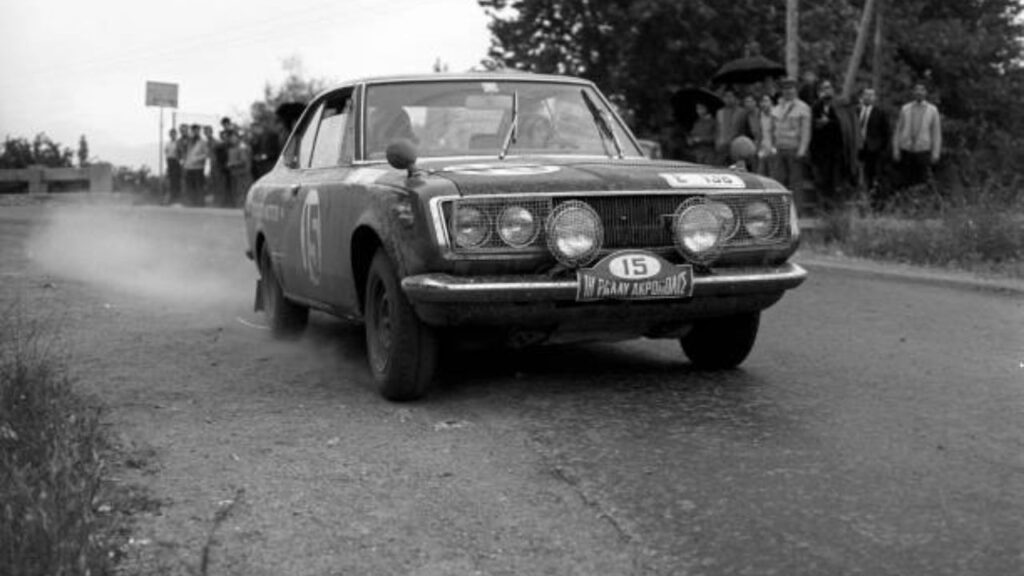
Toyota Celica (1st Generation)

Toyota Celica

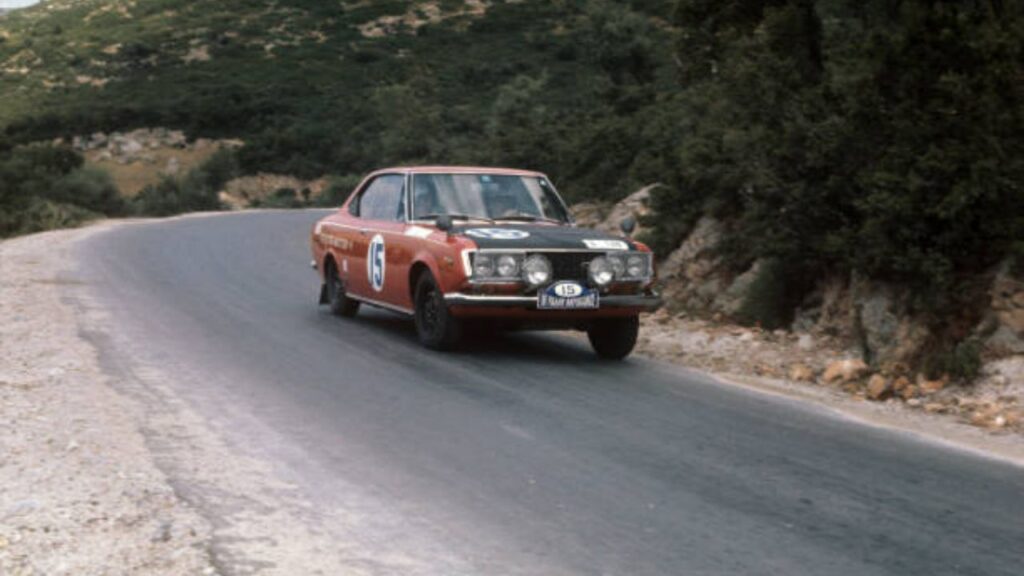
The Toyota Celica, which was introduced in December 1970, was the pioneer Japanese entry in the world pony car market. It was a 2+2 coupé based on a Carina platform and the styling was clearly inspired by the American versions. The Celica Liftback, especially, was so redolent of American fastback muscle that it gained the fond nicknames “Japanese Mustang” or “Mustang Celica”. This tribute featured such iconic elements including the triple bar tail lights, a signature design cue of the Mustang. 

Technological Sophistication and Dynamic Appeal

Although the regular Celica (ST grade) was dependable and fuel efficient, the performance versions had a considerable technological advantage over many of their European competitors. The top-of-the-line 2000 GT Liftback (RA25) used the DOHC (Double Overhead Camshaft) 18R-G Twincam engine, which had a cylinder head co-developed with Yamaha. This sophisticated engine was rated at 134 hp/145 bhp maximum power. 

The Reliability Paradox 

The Reliability Paradox

the Celica was known for its inherent reliability and ease of repair, which made it very popular amongst modifiers and “boy racers” in the Asian markets. But this mechanical excellence was frequently paired with a catastrophic manufacturing gaffe that was endemic to Japanese exports in the 1970s – inadequate body rustproofing. 

The current high average market prices for clean GT and Liftback models including GT averaging $22,334 and best examples fetching over $40,000. 

Head-to-Head Comparison of Ford Capri II vs Toyota Celica vs Vauxhall HP Firenza

Metric Ford Capri II Vauxhall HP Firenza Toyota Celica
Production Years 1974–1977 1973–1975  1970–1977
Engine Type I-4 / V6 I-4 OHC Slant-Four I-4 DOHC
Power  98 bhp (2.0L) – 158 hp (3.0L)  131 bhp 134–145 hp 
0-60 mph 10.0 s 7.6 s  N/A (Highly Competitive)
Transmission Feature Manual (4/5 speed) 5-speed ZF Manual (Dogleg) 4/5-speed Manual
Rear Suspension Live axle Live axle Four-link

The Price Valuation and Market Dynamics

Model Performance Production Original UK Price (Entry 1974) Current Average Classic Value Investment Profile
Ford Capri II High Volume 1,668$  $15,000-$40,000 Low Risk, High Liquidity, Nostalgia Driven
Vauxhall HP Firenza 204 units High Cost $17,600 High Risk, Scarcity Driven, Specialist Parts Required
Toyota Celica (1st Gen GT) Medium Volume N/A (Imported) $ 22,334 Medium Risk (Rust Filtered), High Growth (JDM Boom)

Who is The Winner?

Winner for Everyday Practicality and Accessibility: The Ford Capri II. Ford’s decision to make the hatchback standard and continue a massive parts supply ensured the car offered the best combination of sports styling and daily practicality. Capri is the quintessential choice for the nostalgic driver wanting an affordable and engaging ownership experience.

Winner for Performance Purity and Engineering Novelty: The Vauxhall HP Firenza ‘DroopSnoot’. Being Hone-d Fed with his advanced 5-speed dogleg gearbox Firenza HP was on Kaygonus the most uncompromising and technically advanced paper vehicle 7.6-second really rapid 0-60 mph timeengine and his hand-finishedI genuinelyhear that with itsIndeed the title of Wa Rally Car until brian nash Firenza fits that description far better than any other. Its defeat was solely in the market place and not product quality.

Winner for Global Style and Long-Term Reliability: Liftback and hardtop coupe versions from the 1st generation 1971 Toyota Celica 1st generation Liftback GT. The Celica neatly packaged the American pony car look into a refined, contemporary bolt-on DOHC technology style. Its mechanical strength is inherent and reliable so that you can have peace of mind today, but this must be tempered with the need to check its body due to processing faults during original manufacturing.  

Conclusion

The trio that dominated the 1970s budget coupé market – the Ford Capri II, the Vauxhall HP Firenza and the Toyota Celica – all made a highly specialised, but indelible, mark on motoring history. Their common objective was to offer performance style, at an attainable price point, but how that was achieved varied wildly – with very different current collector profiles. 

0

How to Claim Car Insurance for Own Damage: A Step-by-Step Guide

Published Jul 22, 2026, 9:04 AM
Last Updated Jul 22, 2026, 12:06 PM

How to Claim Car Insurance for Own Damage

Whether it’s a major accident or a minor scratch, damage to your car can leave you wondering what your insurance actually covers. That’s where understanding the Own Damage Cover section becomes important, as many car owners are not fully aware of how it works. Learning How to Claim Car Insurance for Own Damage can help you save money and ensure a hassle-free claims experience.

If you already have a comprehensive car insurance policy, you can claim compensation for damage to your own vehicle—not for damage caused to someone else’s. This is known as an Own Damage (OD) claim. However, simply having coverage isn’t enough. Understanding How to Claim Car Insurance for Own Damage correctly is essential to ensure your claim is processed smoothly and you receive the benefits you’re entitled to.

See Best Cars for Daily Office Commute.

What Counts as “Own Damage”

When your car gets damaged due to reasons that aren’t someone else’s fault or if it is but you are using your own damage cover to get your car repaired instead of relying on the other party’s insurance. 

For instance, your car faces situations including road accidents, collisions, fire, theft, natural disasters like floods, storms, or earthquakes. And even malicious damage like vandalism. That’s where Own Damage covers for repairs.

It is distinct from third-party liability, which covers damage you cause to another person’s vehicle or property. If you want coverage to repair your own vehicle, you need a comprehensive policy (with own damage included) – a third-party-only policy will not assist you in this matter. 

How to Claim Car Insurance for Own Damage

Step 1: Inform Your Insurer Immediately

When car trouble strikes, call your insurer or agent. Many companies allow for damage to be reported within 24-48 hours after the fact, and waiting can make your claim more complicated, or potentially even deny it. Have your policy number ready when you dial — it makes a big difference. 

If another vehicle is involved, or if your vehicle has been stolen or you suffered major damage, report it to the police too. Insurance companies frequently require such documentation, particularly for theft and hit-and-run, so it’s not wasted time even if it seems like you’re doing too much paperwork. You Know that Which Engine Oil is best for Your Car?

Step 2: Get the Vehicle Inspected

When you have reported the claim, the insurer will either arrange for a surveyor to inspect your car or ask you to take your car to a network garage for inspection. Don’t drive the vehicle or do any repairs until this happens — it’s an inspection prior to repair which validates your claim. If you go ahead of time and just fix it, you run the risk of your insurer denying the claim completely. 

Take photos or video of the damage from several angles before anything is touched. Seems like a simple step, but a lot of people forget it in the heat of the moment, and it really helps if there is any argument later on. 

Step 3: Choose Cashless or Reimbursement Claims

You’ll typically have two routes to get your car repaired.

Cashless claim: You bring your car to a garage in your insurer’s network. The insurer pays the garage bill directly, and you only pay the deductible and anything else your policy doesn’t cover. This is the easier, less stressful method and what the majority of people want. 

Reimbursement claim: You have the vehicle fixed at a garage of your choice, pay the full amount and then send the bills to your insurer for reimbursement. This option is good if your favorite garage is not in the insurer’s network, but that means you are paying first and then waiting for the money to come back to you. 

Step 4: Submit the Required Documents

Each insurer requires a unique set of documents, but the standard documents required are:

  • Your policy copy 
  • A filled and signed claim form 
  • Your driving license 
  • Vehicle’s registration certificate 
  • And the repair estimate or bill

In case a third party though or theft is involved, include the FIR or police report as well. 

Missing or incorrect documentation is also a frequent cause of claims being held up, so it’s worth making sure everything’s in order before you submit rather than doing it in dribs and drabs. 

Step 5: Claim Settlement

Once the surveyor approves the damage assessment and your documents are verified, the insurer settles the claim. For cashless claims, they pay the garage directly. For reimbursement claims, the amount is transferred to your account after you’ve paid the garage.

Keep in mind your No Claim Bonus (NCB) will reset if you file an own damage claim, and you’ll have to pay the compulsory deductible plus any voluntary deductible you opted for when buying the policy. For minor damage where repair costs are close to your deductible amount, it’s worth calculating whether filing a claim is even worth it — sometimes paying out of pocket protects your NCB and saves you more in the long run.

A Few Things That Trip People Up

Own damage claims get rejected more often than people expect, usually for avoidable reasons. Driving without a valid license, being under the influence at the time of the accident, using the vehicle for a purpose outside what’s declared in the policy (like using a private car for commercial purposes), or letting your policy lapse before renewal are all common grounds for rejection.

It also helps to know your Insured Declared Value (IDV) going in. This is the maximum amount your insurer will pay in case of total loss or theft, and it directly affects your premium and your payout. Setting it too low to save on premium can leave you underinsured exactly when you need the cover most.

Conclusion for 

Filing an own damage claim isn’t complicated once you know the sequence — report fast, get it inspected before repairs, pick the claim route that suits you, submit clean documentation, and stay aware of how it affects your NCB. The part that actually saves people money and stress isn’t the claim process itself, it’s understanding How to Claim Car Insurance for Own Damage and your policy terms before you’re standing next to a damaged car needing answers immediately.