0

Punch vs Exter: Best Budget Micro-SUV for First-Time Car Buyers

Punch vs Exter

Buying your first car is a little like selecting a long-term roommate. You want it to be reliable and comfortable to live with every day, and cheap enough that the payments don’t make you sweat. That’s precisely why the Tata Punch vs Hyundai Exter comparison has turned out to be a big talking point. For a lot of first-time buyers, this micro-SUV war can confuse them enough to make them go weak in the knees. 

In the 2026 Indian market, two names have turned out to be the de-facto choices for every first-time buyer — Tata Punch & Hyundai Exter. Both the new models are “Micro-SUVs,” which means you get a commanding high-seating position and the “big car” feel without the hassle of parking a tank in a small city space.

But which one should you actually buy? Let’s take a look at the Punch vs Exter comparison to see which one suits you better. 

The First Impression: Design and Presence

For a lot of first-time buyers, the word “SUV” is minimalistic enough.

At first look the Punch 2026 facelift appears robust and sturdy, with the presence and stance of a compact SUV that can take on anything. Its good ground clearance of 193 mm is one of the best in the segment and helps a lot on Indian roads. If your route to work has potholes, patches of rough pavement, or water-filled streets in the monsoon, the Punch is a vehicle that looks like it can take those pummellings and keep going without a second thought.

Hyundai Exter: The Exter taps into a “funky-urban” theme. It’s a little more boxy and “tall-boy” in shape. The H-formed LED lights spark conversation, and it looks like a high-tech gadget on wheels. Though it isn’t as “rugged” looking as the Punch, it does have a polished look that would feel right at home in the parking lot of a corporate headquarters. 

Performance: City Zipping vs. Highway Cruising

Since this is maybe your first car ever, you probably want an easy, no-stress driving experience, particularly when you’re inching along in city traffic.

The Smooth Operator – Hyundai Exter:

The Exter buit on a comfort and refinement that was given by a 1.2-litre 4-cylinder engine. You can sneak in and out from anywhere without making a huge noise when your car goes on. This poise makes for a lot more relaxing, especially in stop-and-go city traffic and what seems like an endless daily grind. And light steering and a quiet cabin also make new drivers feel comfortable behind the wheel. 

City Zipping vs. Highway Cruising

Highway Titan Power Punch

The Power Punch (Tata): The Punch also packs in a 1.2L engine, but it is a 3-cylinder unit, which can seem a bit “vocal” when compared to the Hyundai. But for 2026 Tata has launched a Turbo-Petrol variant for all those who want this car to have a little more “oomph.” For weekend jaunts up the mountains or long hauls on the highway, the Punch’s beefier steering and solid platform seem more grounded and “unstoppable” at speed. 

The “Tech” Factor: What’s Inside?

This is where the fight gets fierce. Features have always been Hyundai’s forte, but Tata has got there fast. 

Feature Tata Punch (Facelift) Hyundai Exter
Infotainment 10.25-inch (Huge & Crisp) 8-inch (User-friendly)
Connectivity Wireless Android Auto/Apple CarPlay Mostly Wired (needs adapter)
Sunroof Yes (Voice Assisted) Yes (Voice Assisted)
Cameras 360-degree camera Rear Camera only
Special Bits Ventilated Seats, Air Purifier Dashcam with Dual Camera

The Punch’s 360-degree camera is a huge boon for a first-time driver. It’s like parking in a video game and not a nerve-racking task. Flip side, the Exter’s factory-fitted dashcam is a great safety feature to record your drives. 

Safety: The Peace of Mind

Tata is inextricable from safety.

Tata Punch – It boasts of 5-star safety rating (Bharat NCAP). The doors close with a satisfying “thud” that makes you feel secure. If safety is the number 1 priority in your life because you have to haul around family, then the Punch is the undisputed reigning heavyweight champion of that category.

Safety The Peace of Mind

Hyundai Exter: Six Airbags are now standard on all variants and that is great. While it’s not yet crash-tested officially, it does bring electronic safety aids such as Stability Control (ESC), and Hill Start Assist so you don’t lose grip on slopes. 

Mileage and Price Matters the Most

As a budget SUV, running cost matters.

  • Fuel efficiency: The Exter manages to fetch a little bit more mileage in the city drive, that too on the CNG variants, which happen to be one of the most polished variants in India.
  • Pricing: Both the cars are priced from around ₹6 lakh (ex-showroom) to ₹10.5 lakh for the top-end variants.

Pro Tip: The Punch CNG is now offered with “Twin Cylinder” technology, which means you get the economy of CNG without the space of your boot for luggage. It’s a game-changer for small families.” 

Which one should you buy?

If you are torn between Tata Punch and Hyundai Exter, have a look at the following points:

Choose the Tata Punch for safety especially in this segment If you want to prioritize safety. You Should Get It Also If You Drive On Rough Roads Or If You Bump Up High Often. For those who love to go spirited driving on the highway, the Turbo engine would be great in this case. 

Punch vs Exter buy

Hyundai Exter giving you quiet engine to drive smoothly on city roads. Its high-end interior quality aside, a better fit and finish also enhances its appeal. The jolt-free, dependable AMT ensures smooth driving and with a wide service network of Hyundai, ownership will be taken care of without any hassles. 

Read More :-  Jeff Bezos’ Insane Car Collection: From Humble Hyundais to Hypercar Royalty

Conclusion

Tata Punch, Hyundai Exter both are great options for a first-time vehicle buyer in the budget micro-SUV segment.

Tata Punch is the safer choice, is more robustly built and can handle rough roads better. If you want a more refined engine, better city ride quality and more refined cabins, Hyundai Exter is the way to go. 

In short, Punch is ideal for durability and safety, while Exter is great for city-friendly comfort and features. 

Sharey Khan

Sharey Khan is an IT entrepreneur and petrol head & a car enthusiast. With a special focus on car-related content, he combines his deep passion for vehicles with a talent for crafting informative, engaging, and easy-to-understand content. His writing is driven by a genuine love for cars and he is committed to providing readers with accurate, up-to-date, and trustworthy information that empowers smarter driving decisions. 

Leave a Reply

Your email address will not be published. Required fields are marked *

0

2026 Tata Punch Facelift – New Design, Interior, Features & Variants

Published Jan 10, 2026, 11:23 AM
Last Updated Apr 11, 2026, 11:05 AM

2026 Tata Punch Facelift

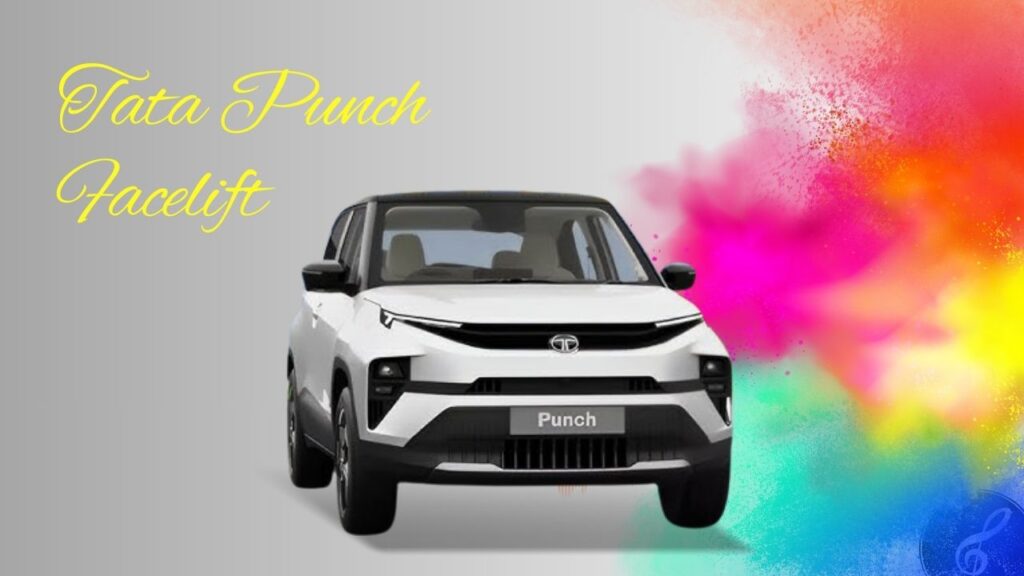
If you’re thinking of getting into the micro-SUV game, then January 13, 2026 will be a date you want to mark on your calendar. Tata Motors is introducing a few major upgrades to the people’s favourite Punch, and the 2026 Tata Punch Facelift is meant to make it even more alluring than before. Let’s take a look at why this new generation is a breakthrough in the cheap SUV segment. 

A Fresh Look of 2026 Tata Punch Facelift

The 2026 Tata Punch Facelift isn’t just a few tweaks here and there refresh―it’s an evolution in an unignorable way. The exterior is inspired by the Punch EV, lending it a futuristic and sophisticated look. Once again, you’ll notice the new LED DRLs (Daytime Running Lights) with stylish and minimalistic black surroundings that look premium without making your wallet cry. The front fascia gets a new bumper with attractive dual-tone finish and split headlamp layout that is really sharp.

A Fresh Look of 2026 Tata Punch Facelift

​Now on to the rear and the Punch offers a very cool connected LED tail-light design that visually links both ends of the car. There is also a black trim across the tailgate, which lends the SUV a more unified and premium look. The revised alloy wheel designs complete the exterior makeover with its rugged micro-SUV feel, but with a contemporary taste, nevertheless. 

Tata Really Impressed Everyone with it’s Upgraded Interior

Step inside the Tata Punch, the cabin still manages to feel spacious, but it does so with a cleaner, more contemporary design language that is used in other Tata products. You will be surprised by the new 2−spoke steering wheel which is more premium to touch and the HVAC controls which have been repositioned and are now touch activated—taking design cues from the more upscale Tata products.

The seats are upholstered now in a fashionable dual-tone black & blue colour theme instead of the single-tone of the previous model. It may be a small thing, but it really makes the cabin look better. Its everything nicer, more premium materials and better seat fabric which helps the Punch feel like it punches above its weight. 

Read More:- Manny Khoshbin Car Collection: Luxury & Hypercars Garage

Modern Features of New Tata Punch Facelift

A highlight is the new infotainment system. You get an 8-inch or the larger 10.25-inch screen with updated graphics and a more user-friendly UI depending on which version you’re taking. The top-tier model takes an additional step forward with a 7-inch digital instrument cluster, delivering a connected and technology-focused driving experience for drivers. 

​Wireless Apple CarPlay and Android Auto are now standard from the Pure+ trim and above, which is fantastic if you’re the type who likes to have your phone integrated with your car. The Pure+ variant also brings in a 8-inch touchscreen, USB Type-C fast charging (at a mind-boggling 65W of power), and even a height-adjustable driver’s seat for those long hauls. 

The Adventure model introduces some pretty amazing technology such as the 360-degree surround- view camera system—a feature that was not available before, and makes parking in tight spaces easier than ever. You’ll also get a blind-spot monitor, perfect for those times when you could use a little extra confidence on busy city streets.

​Top-spec Helps+ S version dazzles with voice-assisted power sunroof, wireless smartphone charger and an auto-dimming interior rear-view mirror. But perhaps the best part is that it features iRA connected car technology, which enables you to remotely lock/unlock your car, keep track of vehicle diagnostics, set up geo-fencing alerts and even call for roadside assistance through your smartphone.

New Punch Facelift Really Stands Out in Safety Technology

For the first time in the sub-4m micro-SUV segment, it comes equipped with ADAS (Advanced Driver Assistance Systems). This isn’t just a marketing hype — ADAS can really help reduce accidents with features like collision warnings and emergency braking assistance.

The Punch already has a door-busting 5-star Global NCAP rating from its predecessor, and Tata has further strengthened this with six airbags as standard across all variants. This is a big deal because you get real protection right from the base Smart variant, not just the top trims. 

In addition, the SUV is equipped with modern safety features including Electronic Stability Control (ESC) and Tyre Pressure Monitoring System (TPMS). At the higher end, the variants get LED fog lamps with cornering function that automatically turn to illuminate the road as they take a turn. From Adventure variant upwards, a 360-degree camera and blind-spot monitoring system boosts driver confidence, more so in jam-packed traffic scenarios. 

Six Beautiful Colors to Choose From

Six Beautiful Colors to Choose From

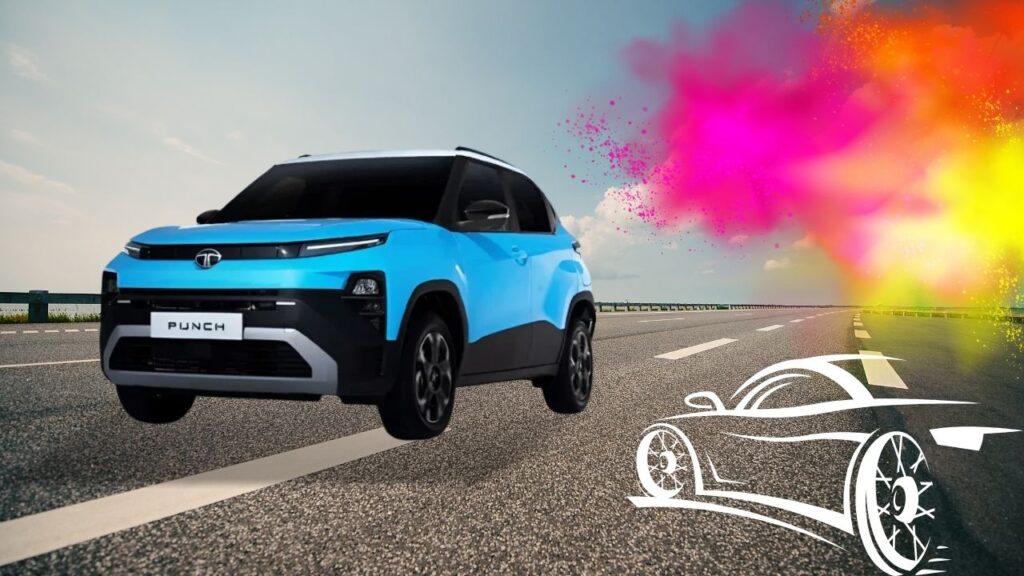
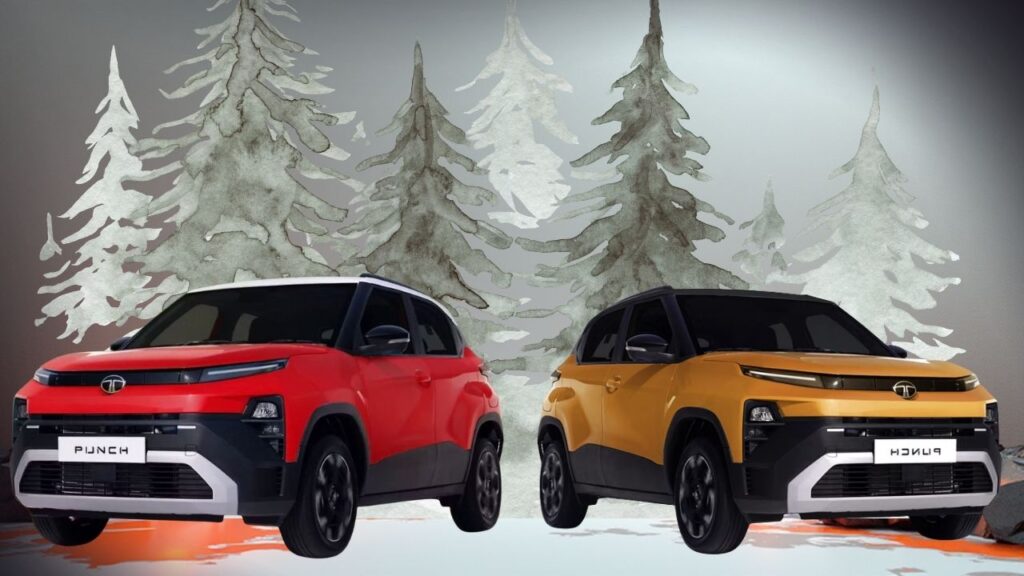
Tata has provided you with a few fantastic options in conceivable Punches to choose from. The six color palette includes Cyantific (a vibrant cyan blue), Bengal Rouge(the eye-opening red), Caramel (rich and refined), Daytona Grey (sleek and modern), Coorg Clouds (elegant beige) and Pristine White. A few of them are shared with the newly introduced Tata Sierra, so you know they’re premium offerings. 

Multiple Variants to Fit Every Budget

The Tata Punch is intelligently offered in six variants : Smart, Pure, Pure+, Adventure, Accomplished, and Accomplished+ S. If you want bare‐minimum features or want everything including the kitchen sink, there is a Punch for you.

Multiple Variants to Fit Every Budget

​The entry level Smart variant is packed with the essentials to keep you and your loved ones safe in six airbags, LED headlamps, drive modes, and remote keyless entry. Each step up you get real features, nothing fluffy. The step-up philosophy means you’re paying for features you really use, and really want. 

Engine Options: Power and Efficiency

The trusted 1.2-litre Revotron NA Revotron naturally aspirated petrol engine (88PS, 115Nm) is retained with both 5-speed manual and 5-speed AMT options, so if you loved the previous Punch’s performance, this is still your old companion.

​However, this is the exciting part: Tata has introduced a 1.2-litre turbo-petrol engine option which could produce close to 120PS and 170Nm of peak torque, mated to a 6-speed manual transmission. That delivers a modest bump in performance for those wanting a little more zip out of their Punch. Also, the CNG variant retains its 73.5PS and 103Nm tune for cost-conscious buyers. 

Conclusion

2026 Tata Punch Facelift is what you expect from a mid-cycle refresh: well-thought-out updates to design, useful features added, more advanced safety technology and the same bang-for-your-buck that we’ve grown to expect. Whether you’re an existing Punch owner looking to move up, or a first-time SUV buyer, this facelift certainly makes a strong case for this micro-SUV.

Segment-first ADAS technology, spacious cabin, six beautiful colour options, smart variant distribution across multiple price points, the new Punch makes a smart choice in a highly competitive market. 

0

How to Get a Car Loan in 2026: Know Everything Before Purchasing 

Published Aug 17, 2026, 11:15 AM
Last Updated Aug 18, 2026, 4:49 AM

Get a Car Loan

You’ve picked the car, negotiated the on-road price, and the dealership’s finance desk is already pushing a “special tie-up rate” from their partner bank. It sounds convenient, but it isn’t always the lowest rate you can get. In 2026, car loan interest rates in India range from roughly 7.40% to 14% per annum for the same loan amount, and that difference can add up to tens of thousands of rupees over a five-year tenure. Knowing how to get a car loan in 2026 means knowing where that gap comes from and how to land on the right side of it.

The market has shifted in a few real ways this year. Public sector banks are leaning harder on repo-linked pricing, which keeps their floating rates unusually low for well-qualified borrowers. Several banks have quietly added “Green Car Loan” schemes for electric vehicles, shaving up to 0.5% off the standard rate but you often have to ask for it by name, because it isn’t always applied automatically. 

And private lenders have gone all-in on speed: some can disburse funds in under 48 hours for pre-approved customers, which matters if you’re trying to lock in a dealership discount that expires this weekend.

Why the Rate on the Loan Sheet Isn’t the Rate You’re Getting

Every bank advertises a “starting from” rate. Almost nobody actually gets it. Your real rate depends on four things: your CIBIL score, your income stability, your relationship with the lender (salary account, existing FD, prior loan history), and how much you’re putting down upfront.

On an ₹8 lakh loan over five years, the difference between a 9% rate and a 10.5% rate works out to roughly ₹600 extra per month and around ₹36,000 more in total interest paid. That’s the real cost of walking into the first bank the dealer recommends instead of comparing two or three.

CIBIL score is the single biggest lever here. Cross 750 and you’re in the best pricing band almost everywhere. Sit between 700 and 749 and expect to pay 0.25–0.50% more. Fall below 700 and you’re either looking at a materially higher rate or a straight rejection from PSU banks — which is usually when NBFCs enter the picture.

Eligibility Criteria Lenders Mostly Check

Most banks and NBFCs in India follow a similar checklist, even if the exact numbers vary:

  • Age: Typically 21 to 60 years for salaried applicants at loan application, extending to 65–70 for self-employed applicants, with the loan expected to close before the borrower turns roughly 60–65 in most bank policies (a few NBFCs stretch this further).
  • Income: Salaried applicants usually need a minimum annual income in the ₹2.5–3 lakh range, though this varies by lender and city tier. Self-employed applicants typically need two years of ITRs and stable business banking history.
  • Documentation for salaried applicants: three recent salary slips, six months of bank statements, and Form 16. Most banks process this category in one to three working days.
  • Documentation for self-employed applicants: two years of ITRs, business proof, and bank statements, with processing usually taking three to seven working days.
  • Credit score: 750+ for the best advertised rates; below 700 usually means a rate markup or a review by a senior underwriter.

Salary credited directly to a bank account matters more than people realize — lenders verify this through payslips and, occasionally, a call to your employer’s HR desk.

Step-by-Step Process of How to Get a Car Loan in 2026 

Start by pulling your CIBIL score before you go anywhere near a dealership — this single step tells you which pricing tier you’re actually shopping in, rather than the one the advertisement implies. From there, decide your down payment; putting down 20% or more instead of the minimum doesn’t just lower your EMI, it often unlocks a better rate because it reduces the lender’s loan-to-value exposure.

Car Loan

Next, get quotes from at least three lenders across the three categories — a PSU bank, a private bank, and an NBFC — rather than accepting the dealership’s in-house financing partner by default. Dealership tie-ups are convenient, but convenience is priced in. 

Once you have two or three sanction letters in hand, use them against each other; lenders will often match or beat a competing offer for a borrower they’ve already approved, especially if you hold a salary or savings account with them. Submit final documentation, get the loan sanctioned, and the amount is disbursed directly to the dealer, not to you.

Read More :-  Best Car Air Filters for Better Engine Performance & Save Your Repair Cost

Car Loan Options in India for 2026

Rates below are moved monthly and vary by credit profile, loan amount, and city — confirm the current number directly with the lender before trying to apply.

  1. State Bank of India (SBI) — Rates run roughly 8.70%–9.85% for new cars, with funding up to 90% of the on-road price and tenure stretching to 84 months. SBI waives foreclosure charges after 24 months, which is a real saving if you plan to prepay. The trade-off is processing speed: expect three to five working days, not 48-hour disbursal. 

Best for: salaried government and PSU employees who want the lowest realistic rate and don’t need same-week funding.

  1. Punjab National Bank (PNB) — One of the lower floating-rate options among public banks, typically in the 7.60%–10.70% band. Strong fit for salaried applicants with a clean credit history. The catch is that PNB’s process is more paperwork-heavy than most private banks. 

Best for: borrowers prioritizing the lowest headline rate over speed.

  1. Bank of Baroda — Its Baroda Car Loan covers up to 90% of a new vehicle’s cost, with a loan cap of ₹5 crore and tenure up to 84 months. Rates span roughly 7.60%–11.35% depending on profile. 

Best for: buyers financing a higher-value vehicle who still want PSU-level pricing at the low end.

  1. Canara Bank — Consistently among the cheapest PSU options, with rates starting near 7.45% for well-qualified applicants. It’s a strong choice if your CIBIL score clears 750 and you’re not in a hurry. 

Best for: high-CIBIL borrowers optimizing purely for the lowest interest cost.

  1. HDFC Bank — HDFC’s own published rack rate as of August 2026 starts from 9.40%, notably higher than some aggregator figures floating around from earlier in the year — a reminder to always check the lender’s own page rather than a comparison site’s cached number. What you’re paying for is speed: HDFC’s Xpress Car Loan offers near-instant pre-approval for existing customers and 100% on-road funding on select models. 

Best for: existing HDFC customers who want funds disbursed within hours, not days.

  1. ICICI Bank — Rates generally sit in the 8.35%–9.60% range for new cars, with a similarly fast digital approval process for pre-approved customers. 

Best for: tech-comfortable borrowers who’d rather apply and track everything through an app.

  1. Kotak Mahindra Bank — Typically priced around 8.99%–10.25%, positioned between the PSU banks and the fastest private lenders on both rate and speed. 

Best for: borrowers who want a middle ground without shopping for five different lenders.

  1. IndusInd Bank — The one private bank in this list still advertising an introductory rate as low as 8.00% on select models, with 100% financing against ex-showroom price and tenure extendable to seven years in some cases. 

Best for: buyers of specific IndusInd-partnered models chasing a rate closer to PSU territory with private-bank speed.

  1. Bajaj Finserv (NBFC) — Rates span a wide 7.50%–14% band, loan amounts up to ₹5 crore, and tenure extendable to 96 months — the longest on this list. Processing fees can run up to 2.95% of the loan amount, and prepayment charges (around 4.72% on the outstanding amount) are steeper than most banks. 

Best for: buyers with a strong credit file who got turned away or under-quoted by a bank, or who need funds faster than a PSU bank can deliver.

  1. Tata Capital (NBFC) — Starts around 9.99%, with loans up to ₹50 lakh and tenure up to 84 months, financing up to 100% of the car’s cost. Salaried applicants need a minimum annual income near ₹3 lakh; self-employed applicants can apply up to age 65. 

Best for: self-employed buyers who don’t fit a bank’s stricter documentation window but still want a recognizable NBFC name.

New Car vs Used Car Loans: The Rate Gap You Need to Know

If the brief calls for a used-car angle, don’t reuse the new-car rate table — it’s misleading. Used car loans run meaningfully higher, typically 11%–16% against 8.75%–10% for new cars, because resale value is harder to predict and repossession risk is higher for the lender. 

New Car vs Used Car Loans

Most banks also finance only 70–75% of the vehicle’s assessed valuation, not the price you agreed with the seller. Buy a three-year-old hatchback for ₹5 lakh that the bank values at ₹4.5 lakh, and your loan tops out around ₹3.37 lakh — the rest comes from your own pocket. 

Vehicle age matters too: most lenders won’t finance cars older than seven or eight years, and total loan tenure typically can’t outlast the car’s remaining useful life by their internal formula.

5-Ways to Lower Your Rate Before You Sign

  1. Push your CIBIL score above 750 if you have even a few weeks of runway before buying — it’s the single biggest rate lever available to you. 
  2. Put down 20% or more instead of the lender’s minimum; it lowers the loan-to-value ratio and lenders price that risk reduction in. 
  3. Choose a shorter tenure where your EMI comfortably fits your budget — shorter loans consistently carry lower rates, even if the monthly payment is higher. 
  4. Route your salary or maintain a savings relationship with the lender you’re applying to; a 0.10–0.25% relationship discount is common and rarely advertised. 
  5. And if you’re buying an EV, ask specifically about a Green Car Loan waiver — several banks in 2026 offer up to 0.5% off, but it’s opt-in, not automatic.

Which Lender Fits You For Car Loan

If your CIBIL score clears 750, you hold a salary account with a large PSU bank, and you can wait three to five working days. SBI, PNB, Bank of Baroda, or Canara Bank will save you the most money over a five-year term. If you need funds released within 48 hours to hold a dealership discount, HDFC Bank, ICICI Bank, or IndusInd Bank’s pre-approved route is worth the extra percentage point. 

If your CIBIL score sits under 700, or you’re self-employed without a clean two-year ITR history, Bajaj Finserv or Tata Capital will approve faster than a bank will — you’re paying for that flexibility in the rate, so treat it as a bridge, not a permanent home for the loan.

Read More :-  Thar Roxx Accessories to Buy Online That Actually Worth Buying in 2026 

Conclusion

Taking a car loan in 2026 isn’t just about finding a lender that will approve you — it’s about finding the rate and terms that make sense for your budget. Your CIBIL score, downpayment, loan tenure, existing relationship with bank, and choice of PSU bank, private lender or NBFC can affect the amount you pay. 

The wisest course of action is to get your credit score first, shop around to 3 or more lenders, negotiate with competing quotes, and don’t be fooled by the headline interest rate alone look at any processing and prepayment fees. A little due diligence before signing can save you thousands over the life of a loan. And when purchasing an EV, be sure to ask specifically about Green Car Loan discounts, as they are not automatically applied. 

0

Zero Depreciation Car Insurance: Benefits, Coverage & Cost

Zero Depreciation Car Insurance

You back into a pole at 5 kmph. Bumper’s cracked, headlight’s gone. The garage quotes ₹50,000. Then your insurer settles the claim and pays out closer to ₹37,000. The other ₹13,000? Depreciation. So you must understand where Zero Depreciation Car Insurance will help. Your bumper and headlight are made of plastic and rubber, and every standard comprehensive policy in India applies a flat 50% cut to those parts, no matter how new the car is.

This is the exact gap that Zero Depreciation Car Insurance is built to close. It’s an add-on, not a separate policy that sits on top of your comprehensive cover and tells the insurer: don’t deduct depreciation on the parts you’re replacing, just pay the real repair bill, minus the deductible. For a car that’s still within its first few years, that difference in payout can run into thousands of rupees on a single claim.

Why Depreciation Reduces Your Insurance Claim 

The Insurance Regulatory and Development Authority of India (IRDAI) sets a standard age-based depreciation schedule that every insurer follows for a regular comprehensive claim. It looks like this:

Age of vehicle Depreciation on parts
Up to 6 months Nil
6 months – 1 year 5%
1 – 2 years 10%
2 – 3 years 15%
3 – 4 years 25%
4 – 5 years 35%
5 – 10 years 40%
Above 10 years 50%

On top of that age-based table, a few part categories get a fixed rate regardless of how old the car is: rubber, nylon and plastic parts, tyres, tubes and batteries are depreciated at a flat 50%, fibreglass components at 30%, and glass at 0% (glass is the one thing you always get paid for in full). 

Zero Depreciation Car Insurance

Bumpers, dashboards, trims, wiper blades, headlight housings — the parts that actually get damaged in a fender-bender mostly fall into that 50% bucket. That’s why even a fairly minor accident on a fairly new car can leave you covering a surprising chunk of the bill yourself.

Zero Depreciation Car Insurance cover essentially waives that deduction, so the claim tracks the garage invoice far more closely.

Coverage and Limits of Zero Depreciation Car Insurance 

It’s worth being precise here, because “zero depreciation car insurance” doesn’t mean zero deductions of any kind.

  • Metal, plastic, rubber and fibreglass parts replaced during an accident repair are paid in full (subject to your deductible), instead of at the depreciated rate.
  • Tyres and tubes are a common exception: even with zero depreciation, insurers typically still apply the standard 50% cut on tyres and tubes unless you’ve separately added a “Tyre Protect” cover. It’s an easy detail to miss when you’re comparing quotes.
  • Mechanical or electrical breakdown, and damage from regular wear and tear rather than an accident, still isn’t covered — Zero Depreciation Car Insurance only changes how accidental-damage claims are calculated, not what counts as a valid claim.
  • Most insurers cap how many zero-dep claims you can make in a policy year — some restrict it to two, while a handful of newer-generation plans from insurers like ICICI Lombard and Tata AIG are now marketing unlimited zero-dep claims. This varies enough between insurers and even between plans from the same insurer that it’s genuinely worth reading the policy wording rather than assuming.

Read More:-  How to Save Money on Car Insurance?

How Zero Depreciation Insurance Reduces Repair Costs

Go back to that ₹50,000 repair bill. Without Zero Depreciation Car Insurance, a 2-year-old car loses ₹13,000 to depreciation on that claim alone (50% off the plastic/rubber components, 10% off everything else). With Zero Depreciation Car Insurance, most of that comes back to you. Multiply that across the accidental fender-benders, chipped bumpers and cracked tail-lamps most cars pick up in city driving, and the add-on pays for itself fairly quickly on a newer vehicle.

Zero Depreciation Car Insurance

There’s a second, quieter benefit too: because you’re not fighting over depreciated part values, claims tend to settle with less back-and-forth with the surveyor. And if you eventually sell the car, having a clean repair history with OEM-grade parts (rather than a patchwork of cost-cut replacements) tends to help at resale.

Zero Depreciation Car Insurance Cost

Zero dep isn’t free — it adds roughly 10-25% to your own-damage premium, since it’s calculated as a percentage loading rather than a flat fee. For a 2025 Tata Nexon insured at an IDV of around ₹12 lakh, a standard comprehensive premium of about ₹7,800 rose to roughly ₹9,500 with Zero Depreciation Car Insurance added — an extra ₹1,700 for the year. 

That’s one illustrative example rather than a universal figure; your actual loading will depend on the car’s make, model, city (Delhi and Mumbai typically load higher than smaller towns), and the insurer’s own pricing, so treat it as a ballpark and get an actual quote before renewal.

Eligibility is the other cost-adjacent factor: most insurers restrict Zero Depreciation Car Insurance to vehicles up to 5 years old, though the exact cutoff varies by company — some extend it a year or two further for an additional loading.

Who Should Consider Zero Depreciation Cover? 

For a new car, or one still in its first three to five years, yes — this is close to a default recommendation. That window is when a car both depreciates fastest and gets into the most fender-benders, so the add-on is doing real work every time you make a claim. 

It’s an easy call for anyone on a car loan too, since lenders often prefer the vehicle stays fully protected until the EMIs are cleared, and for owners of premium or luxury cars, where part costs run high enough that even a 15-20% depreciation cut is a meaningful sum.

Zero Depreciation Car Insurance

Past the five-to-seven-year mark, the math flips. The car’s IDV has dropped enough that claim sizes shrink, the depreciation percentage is already near its ceiling anyway, and the extra premium starts looking like money spent on a cover you’re unlikely to use fully. 

At that stage, most owners are better off putting that premium toward a straightforward comprehensive policy and, if anything, an engine-protector or return-to-invoice add-on instead.

A Quick Checklist Before You Buy 

Don’t just add Zero Depreciation Car Insurance because the salesperson recommends it — actually check three things on the quote: how many zero-dep claims the policy allows per year, whether tyres and tubes are excluded from the waiver, and how much your own-damage premium actually rises with it added versus without. 

A ₹1,500-2,000 annual increase on a 2-year-old car is an easy yes. The same increase on a 6-year-old hatchback is worth doing the arithmetic on first.

Read More:- How to Renewal Car Insurance: Step-by-Step Guide (2026)

Conclusion

Zero Depreciation Car Insurance is among the few addons that actually come handy at the time of making a claim. For cars that are new or less than five years old, the higher premium often makes sense because it can greatly reduce your repair costs.  

Coverage limits, claim caps and exclusions differ between insurers, so it’s worth comparing the policy wording rather than assuming all zero-dep plans are created equal in terms of benefits. A couple of minutes checking the small print today could save you thousands on your next repair bill. 


0

Toyota Urban Cruiser BEV Teased in India: Launch Timeline, Range, Features & Price

Published Jan 7, 2026, 12:48 PM
Last Updated Apr 10, 2026, 7:19 AM

Toyota Urban Cruiser BEV

If you are among those waiting for a right-sized, family-friendly electric SUV from Toyota for India — now the wait just got a whole lot more exciting. Toyota has now officially teased the Toyota Urban Cruiser BEV (Battery Electric Vehicle) for India for the very first time, hinting that the launch is just around the corner. This is not just some other concept or a long-term promise- this is a near-production electric SUV ready for India and it will hit showrooms soon.

​In this blog, let’s check predicted features, design, battery choices, and what makes the Urban Cruiser BEV very likely to be one of the most buzz-worthy EVs in the Indian market. 

First Clear Glimpse Of Toyota’s India-Spec EV

New teaser unveiling Urban Cruiser BEV front and side views provides a solid glimpse at Toyota’s design language for its first electric SUV in India.

  • The SUV features slim LED headlamps with eyebrow-style DRLs and are connected by a light strip, lending it a contemporary look. 
  • As one would expect on an EV, the grille is closed and rendered in body colour or piano black, hiding the front behind clean, futuristic-looking material. 
  • The bonnet is sculpted and the aggressive bumper stance is tough enough for an SUV.
  • On the side, you also see the ‘BEV’ badge right behind the charging port, confirming this is a full electric vehicle. 

The overall India-spec Urban Cruiser BEV appears very near to the concept. It’s production-ready and stylish but not particularly flashy or experimental. 

Shared DNA With Maruti e Vitara – But With Toyota Flavour

Toyota Urban Cruiser BEV is based on the Maruti Suzuki e Vitara platform. Both electric SUVs will be produced at Maruti Suzuki’s Gujarat plant and are built on the same EV underpinnings.

Toyota Urban Cruiser BEV

In other words, it’s Toyota’s take on Maruti’s first electric SUV – same base, different design. They are expected to be close in size, measuring about 4.2-4.3 meters long with a 2,700 mm wheelbase, which would position them in the midsize SUV category. You’ll also find the same EV platform, flat floor, battery configuration, and similar powertrain and range options.

The difference is in the design and branding behind which Toyota is well known. The Urban Cruiser BEV has Toyota-specific design features and details of lighting, alloy wheels and trims and includes Toyota’s global design language and brand reliability. 

Toyota Urban Cruiser BEV Expected Features & Interior

Although Toyota has not shown the inside of the India-spec Urban Cruiser BEV as of yet, thanks to the global car and e Vitara, we know what will be on offer:  ​  

Two-spoke steering wheel with a chunky, modern design – similar to recent Maruti/Toyota models. A 10.25-inch touchscreen infotainment system with connected car technology, navigation, smartphone connectivity, and may be some built-in apps. A 10.1-inch fully digital instrument cluster that displays EV-related details such as range, battery status, energy flow, drive modes and regen levels.  

Premium options are expected to be: 

  • Heated Auto climate control
  • Electronic Park Brake with Auto Hold
  • Wireless charging
  • JBL sound system (high spec models)
  • Panoramic or single-pane sunroof (variant dependent).

Speaking of practicality, the overseas Urban Cruiser EV and e Vitara feature sliding rear seats that slide forwards and backwards to offer flexibility between rear legroom and boot space.This is a very user-friendly feature for Indian families who often juggle airport runs, city commutes, and highway trips in one car»rdquo; 

Safety Kit will also likely be robust:

  • 6 airbags as standard
  • Level 2 ADAS suite including adaptive cruise control, lane-keep assist, lane departure warning, pre-collision warning.
  • ​A 360-degree camera, TPMS, ESC, front and rear parking sensors.

All in all, the Urban Cruiser BEV appears to be a comfortable, technology-laden, and safety-centric EV SUV — not just a “born-electric experiment.” 

Urban Cruiser BEV Battery Options and Range

There will be two battery options for the Urban Cruiser BEV and range is left to be one of its biggest “excitement” factors.

Urban Cruiser BEV battery options & range

Battery: Toyota will probably provide a 49 kWh battery and a bigger 61 kWh battery. The smaller pack is estimated to output around 143–144 PS, while the bigger one could pump out about 173–174 PS. 

Powertrain: Both are likely to be front wheel drive secures. A global version with AWD is available, but whether it will be released in India is still unknown.

Range: The 61 kWh battery claims to give more than 500 km ARAI cycle range which is similar to that of the Maruti eVitara with a claim of 543 km. On a practical standpoint, the range is probably good for 350–400 km, which is plenty for daily commuting in addition to weekend jaunts.

Charging information has yet to be announced, but DC fast charging and a home AC wall charger should be available. 

Launch Timeline & Expected Price In India

The Toyota Urban Cruiser BEV is anticipated to bring its India debut in the coming days. After its full disclosure, some reports suggest that 19 January may be the date of the launch.

Launch Timeline & Expected Price In India

As for the price, it is likely to be priced in the range of ₹16 lakh to ₹22 lakh (ex-showroom) approximately depending upon the variant and battery pack. 

Conclusion

The Toyota Urban Cruiser BEV is poised to be a very good and value-for-money guess of this new segment in India’s electric SUV market. It is a familiar, family-based SUV model, but with contemporary EV technology, long-range claims, and Toyota reliability. sharing underpinnings with the Maruti e Vitara, buyers get a proven platform, while Toyota adds its own styling, tuning, and brand value.

If priced right, the Toyota Urban Cruiser BEV will be a fine compromise of pragmatism, performance, features, and safety. Indian families who want to move away from petrol or diesel SUVs but don’t want to take that dangerous jump to going electric, this is quite possibly one of the most well-rounded, and confidence-inspiring, EV options you’ll find. 

0

Top Points to keep in mind while buying a used car online

First Time Buyer’s Checklist

Before it comes to the process of buying a used car, the biggest challenge is selecting the car you need to buy.

When you are buying a used car, it is possible to get swayed very easily. For example, when you go to a dealership you might see a 7-year-old Hyundai Verna for 7 Lakhs and standing next to it you’ll see a 4-year-old Honda Accord (which is a far more premium car) for 9 lakhs. You might convince yourself to spend that extra 2 lakh and pick up an Accord but the cost of running and maintaining an Honda Accord is far higher than that of Hyundai Verna. In the long run, you’ll end up spending a lot more money on used car’s maintenance.

Check the used car’s condition

Despite being a used car, the vehicle you are considering should be in good running condition, and must be good value for money. Take the vehicle for a test drive and get all major systems such as engine, cooling, transmission, wheels, etc by an expert or checked by a trusted mechanic. These checks will help you ascertain whether the car is as well-maintained as the seller claims. Further, you can plan (10% of value of used car) for unavoidable repairs and maintenance and include the same in your budget.

Tip: Ensure that you carry out a thorough check when you go to take the delivery of your vehicle as well. This is important because a dealer might replace some of the components from your seeing of the vehicle to the delivery of the vehicle- for example – he might replace new brake pads with old ones.

Registration documents

Is the seller the real owner of the car? Is this the first or the second time it is being resold? The Owner Serial Number in the RC book or smart card indicates the number of times the car has been sold. Has the owner paid all dues, including road tax? Ensure the seller provides you with other papers that need to be verified, including the original invoice, NOC from the car loan provider, and road tax receipt.

The car’s transfer is effected when you and the seller sign on RTO Forms 29 and 30. Further, the seller must submit Form 28, which is the NOC for transfer of the car.

Car insurance

Tip 1: Check the car’s insured value in the policy, It will be a useful benchmark during price negotiations.

Tip 2: Track the No Claim Bonuses over the past 2-3 years. Frequent claims may imply frequent accidents requiring repair and maintenance to the vehicle.

Tip 3: Get the seller’s car insurance policy transferred in your name or buy a new policy within 2 weeks of the date of transfer of the car.

Not doing above may lead to your insurance claim being rejected in case of any accident or mishap. Only claims related to third parties will be approved under the deemed insurance policy transfer of the law.

Documents required

  • Proof of sale of the car
  • Proof of delivery of car to your possession
  • New RC book issued in your name
  • Request from the seller for cancellation of policy
  • Your application for transfer of the policy

Potential modifications

Can you convert the car into a dual-fuel automobile for example CNG? Can you opt for upgrades for greater comfort, safety, and value? Older vehicles may come cheap but may be impossible to upgrade. A relatively new model is preferable, especially if it comes at an affordable price as compared to the used one.

Get Your Deal Today – Click Here