0

The Best Skoda Cars Under 10 lakh In India – Stylish, Reliable And Budget-Friendly Options

Best Skoda Cars Under 10 lakh In India

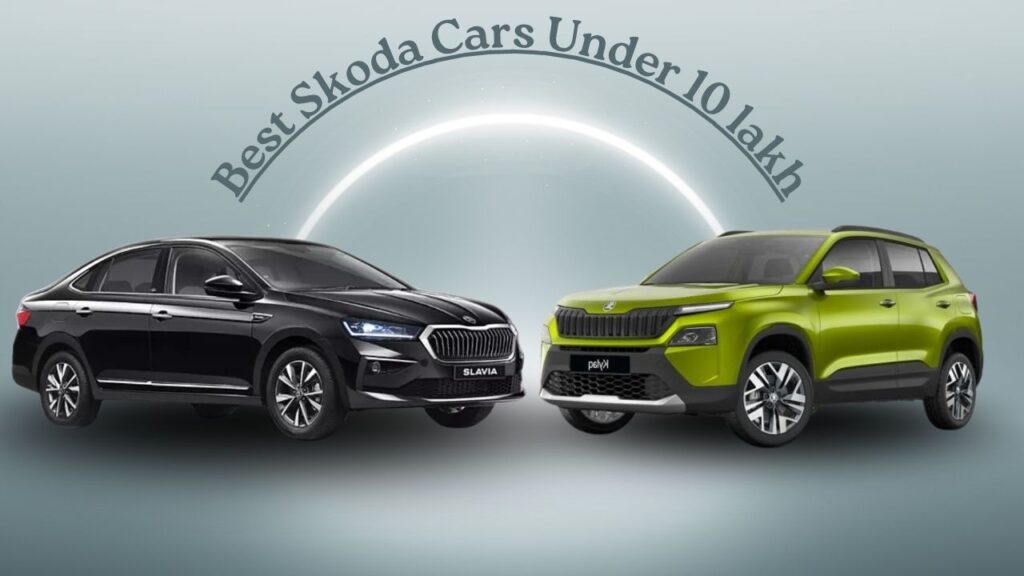
In the segment of ₹10 lakh cars, very few brands have built the same trust, quality and safety standards as Skoda. Renowned for rock solid European engineering and world class reliability, Skoda provides a premium experience on the road even in the affordable market segment. In 2025, Best Skoda Cars Under 10 Lakhs has made owning a Skoda now simpler than let’s say ever before, with four exceptional variants across two models; the sleek and rugged Skoda Kylaq and the sophisticated Skoda Slavia. 

There are 4 variants across 2 models:

Skoda Kylaq Classic ₹7.55 Lakh
Skoda Kylaq Signature ₹9.00 Lakh
Skoda Kylaq Signature AT ₹10.00 Lakh
Skoda Slavia 1.0L Classic ₹10.00 Lakh

All prices are ex-showroom and offer amazing value for the precision of a premium European engineering, world class safety and dependable driving. 

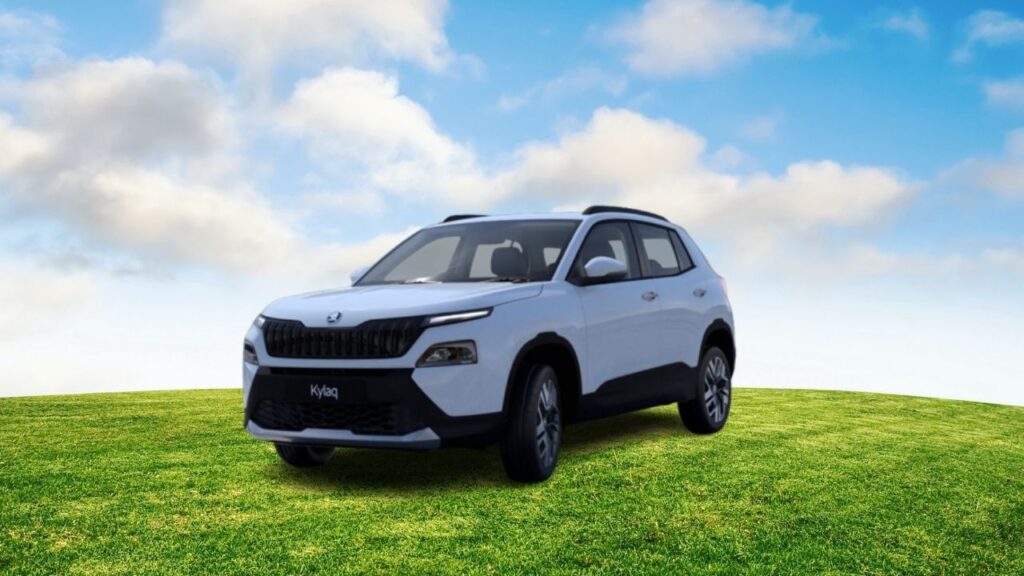
Skoda Kylaq

Rated 5 star by Bharat NCAP, Skoda Kushaq is the safest sub-4 metre SUV in its class & the cheapest Skoda in India. when and where it was presented in November 2024 It has a premium features and European build quality at the right price. 

Classic Variant
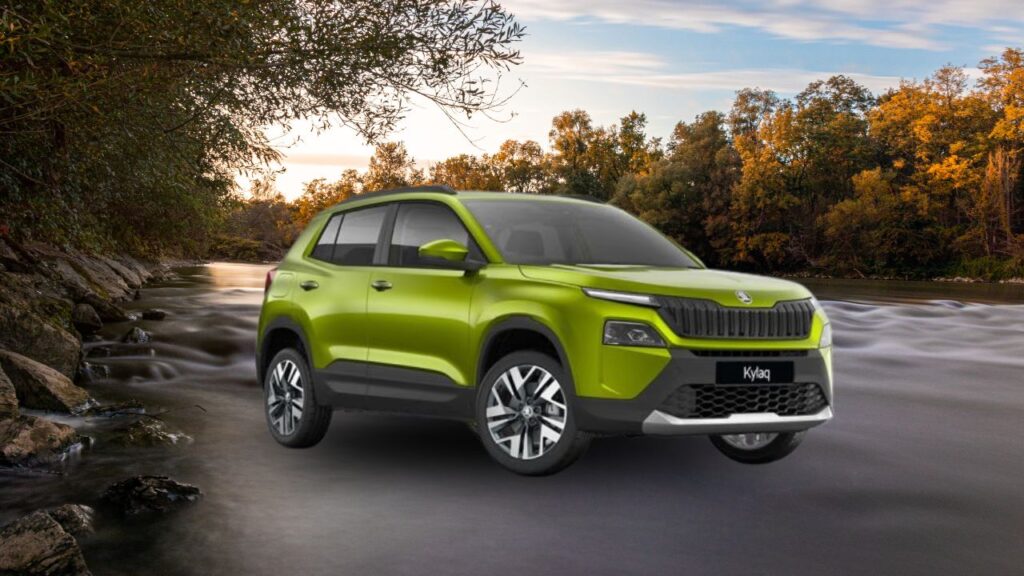
Skoda Kylaq Classic Variant

Image credit: Skoda

Classic Skoda Kylaq Variant 1 would be the functional leader in the range of ₹7.55 Lakh. 1.0 TSI Turbo Petrol engine With 999 cc three cylinder engine, it delivers stunning power output of 114 horsepower at 5000-5500 rpm and peak torque of 178 Nm at 1750-4000 rpm. The 6-speed manual transmission of the car ensures a comfortable and entertaining ride. A 45-liter fuel tank and an ARAI-certified mileage of 19,68 kmpl make for good mileage for both the daily commute and the long drive. If you want a cheap, reliable car that still focuses on performance, you can’t go too wrong with the Kylaq Classic. 

Space & Safety Features

With the distance between the axles at 2,566 mm, the car provides a stable and comfortable ride. Its 189 mm ground clearance makes it perfect for Indian roads. It is the best in class with a spacious 446 liters boot capacity. 

Standard six airbags which is rare in this price bracket, plus the 5-seater ensures the car’s safety. Scoring 30.88/32 in adult safety and 45/49 in child safety, it holds a 5-star rating from the Bharat NCAP. ABS with EBD, ESC, Traction Control, Multi-Collision Braking and rear parking sensors are some of the modern safety features. Family security is enhanced by the ISOFIX child seat anchors. 

Excellent Exterior & Interior Comfort
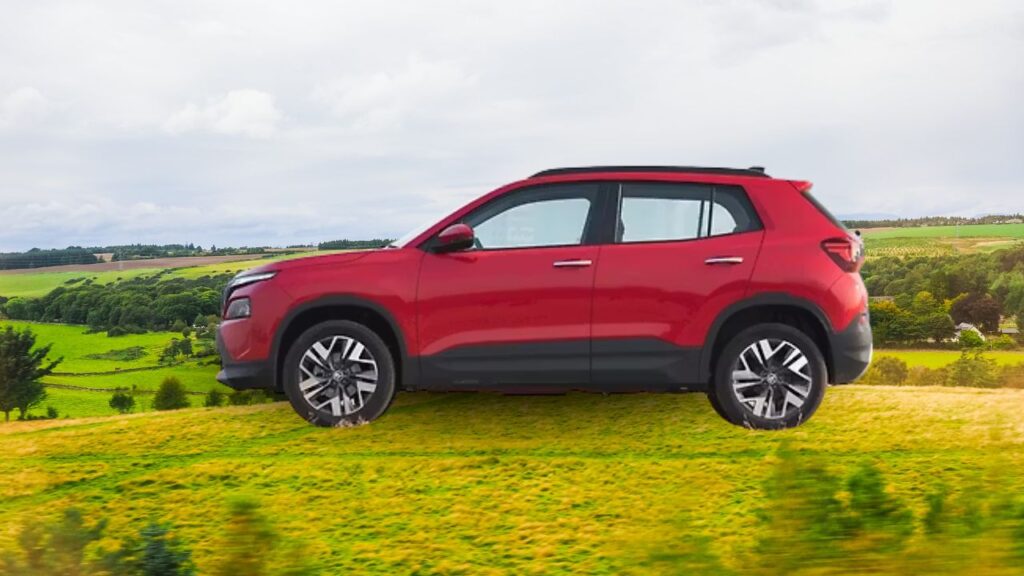
Skoda Kylaq Excellent Exterior & Interior Comfort

Image credit: Skoda

The graceful LED high mount brake lights and LED tail lights which add a modern touch to the design. With its robust 16 inch steel wheels with stylish wheel covers, it is both rugged and stylish. The sophisticated look is further highlighted by the ORVMs and the door handles that are painted with the body color. 

Step inside, The fabric clad cabin relevantly adds to the cozy and refined ride. The multi-function steering wheel allows you to conveniently control the important functions, and the easy steering wheel enables you to find the most comfortable driving position. The electrically adjustable ORVMs adds to the convenience by allowing you to easily make smooth adjustments to get the optimal visibility, and for your convenience, you get power windows – all 4 of them. 

This variant is available in 7 colors options including Brilliant Silver, Carbon Steel, Deep Black Pearl, Tornado Red, Candy White, Lava Blue, Olive Gold.

Read More:- Top Volkswagen Cars Under 10 Lakh in India – Affordable Style, Performance and Reliability 

Kylaq Signature Variant 2

An excellent model pushing the boundaries of contemporary options and good value for money, the Kylaq Variant 2: Signature at ₹9.00 Lakh is a solid pick for those seeking somewhere between the two extremes. It is based on the Classic model but with a load of useful convenience and technology upgrades. Its cruise control, a 7-inch touchscreen infotainment system that works with wired Android Auto and Apple CarPlay, and 16-inch silver alloy wheels. The four-speaker audio system makes the entertainment even more enjoyable and your safety is ensured by the Tyre Pressure Monitoring System (TPMS). For a more premium feel inside, the steering wheel features leatherette wrapping. 
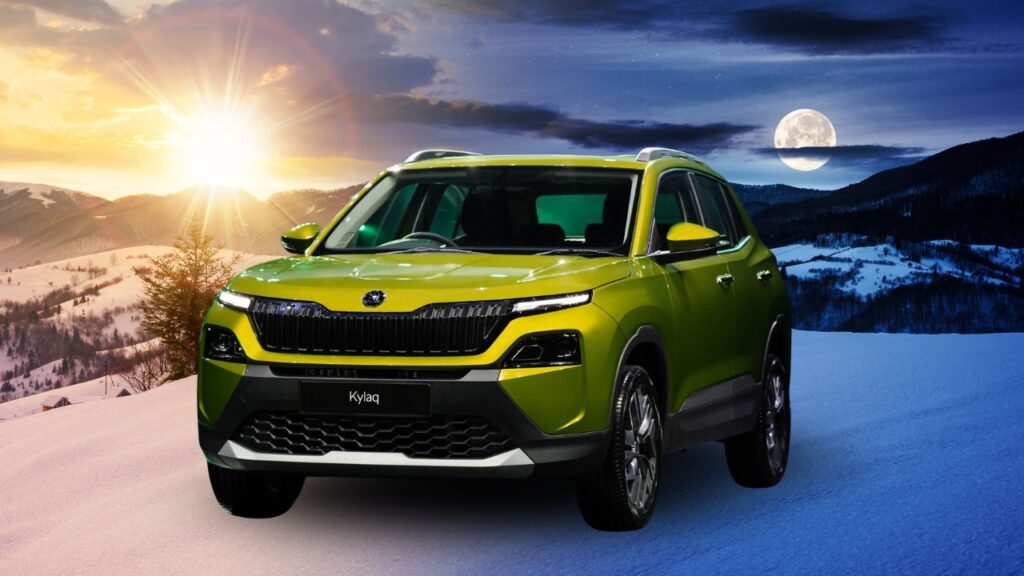
Kylaq Signature Variant 2

Image credit: Skoda

This variant is powered by a 1.0 TSI engine which produces 114 bhp and 178 Nm of torque, mated to a 6-speed manual gearbox and delivers a mileage of 19.68 kmpl. The Signature model is the right choice if you want the best in features but when you cannot compromise on performance or value for money. 

Why Signature variant Worth ₹1.45 Lakh More

The Kylaq turns upscale rather than plain in the Signature trim. This is the least expensive model with a touch screen with smartphone integration, cruise control for highway driving, and TPMS for safety. Also, the appearance is enhanced significantly with alloy wheels. 

Kylaq Signature AT Variant 3

With the 6-speed Torque Converter Automatic Transmission, the Kylaq Variant 3: Signature AT (₹10.00 Lakh) offers a superior driving experience. This option is ideal for city-dwellers as it was designed to make urban driving simple and effortless. It brings an automatic gearbox for greater convenience and retains all features from the Signature Manual variant. Being higher variants, they also come with paddle shifters which provide a sportier driving experience.
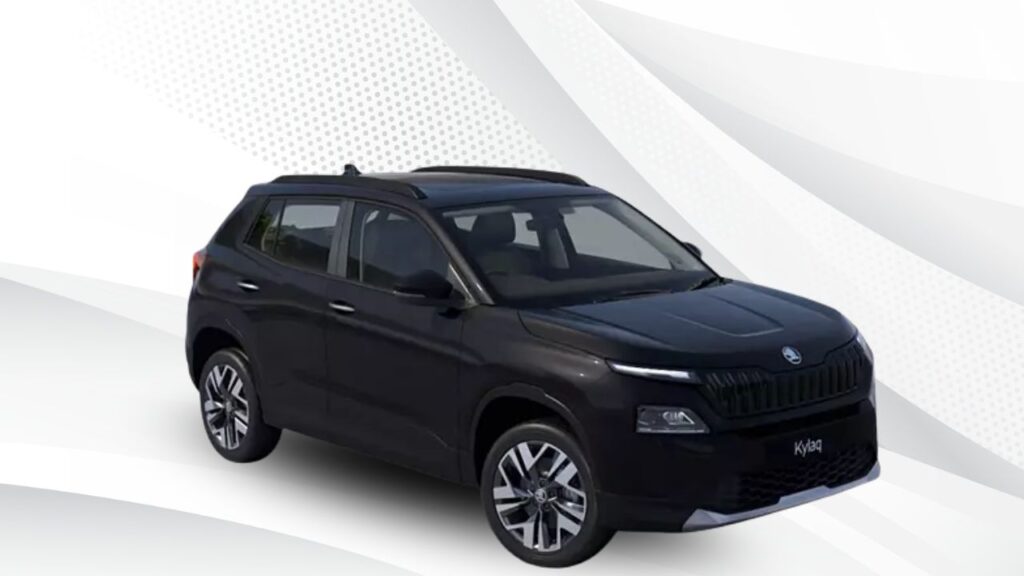
Kylaq Signature AT Variant 3

Image credit: Skoda

The convenience and comfort of the automatic version make it all the more worth while as it returns bit less mileage (19.05 kmpl) than manual version (19.68 kmpl) Though you have to sacrifice a little bit of mileage (19.05 kmpl) from the manual version (19.68 kmpl) but the convenience that automatic version provides is worth giving up for a little bit of mileage. This model offers a sublime combination of practicality and performance, which the discerning motorist will appreciate. 

Why Choose Automatic

Hustle and bustle of city driving can be nerve-wracking at the best of times but an automatic transmission offers a handy fix. It also prevents the need to engage the clutch all the time, making long commutes less tiring. It comes with paddle shifters, which allows the driver to manually shift gears if needed for convenience and control. Unless you want to be worrying about your car slewing sideways in this modern age, where automatics deliver the same power and performance as a manual, which in turn means you’ve had to sacrifice nothing in driving dynamics. 

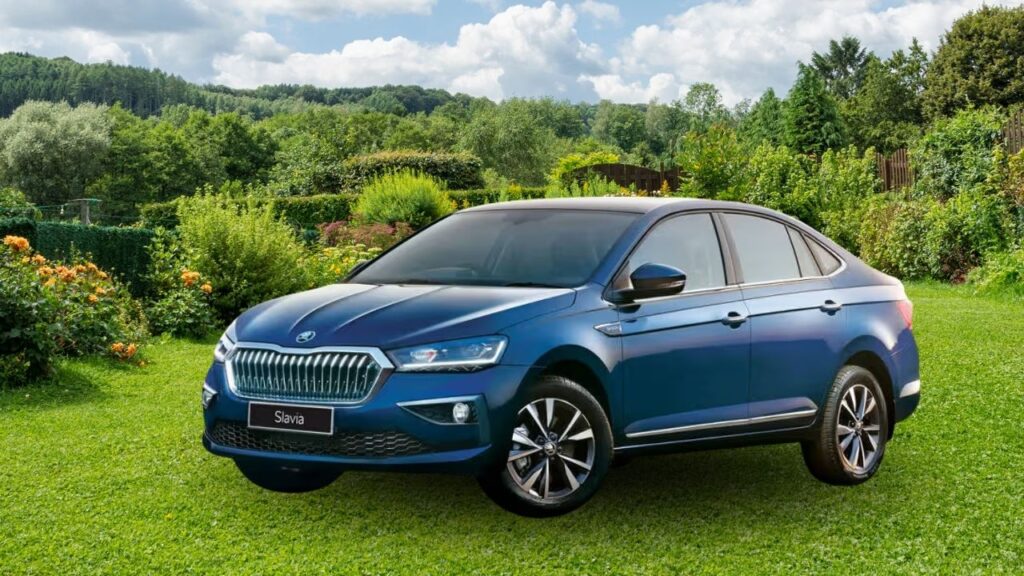
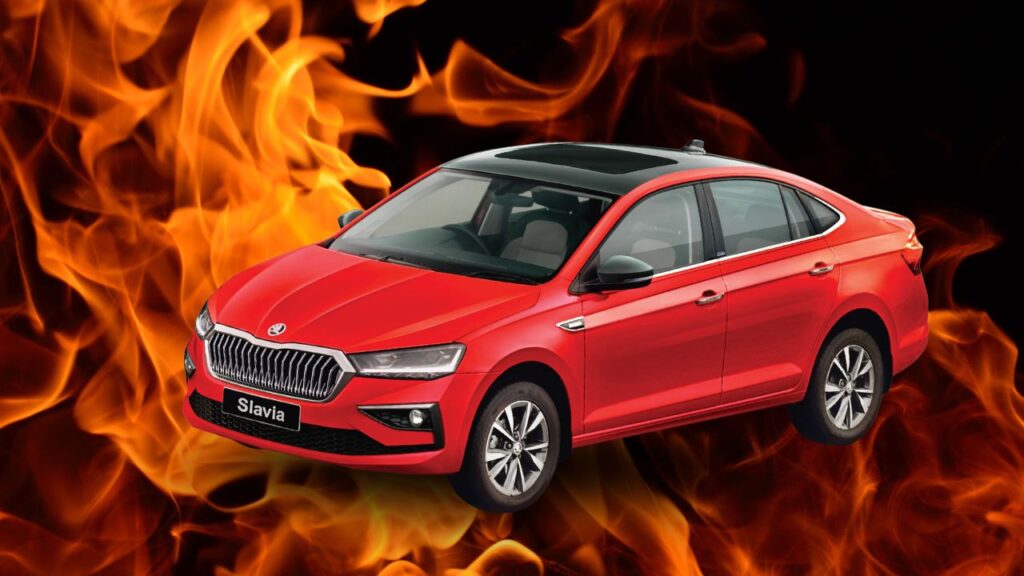
Skoda Slavia 1.0L Classic

The Skoda Slavia is an elegant and spacious premium mid-size sedan with refinement to match. The 1.0L Classic base model is priced at ₹10 lakh which is a vastly different offering compared to the Kylaq. 
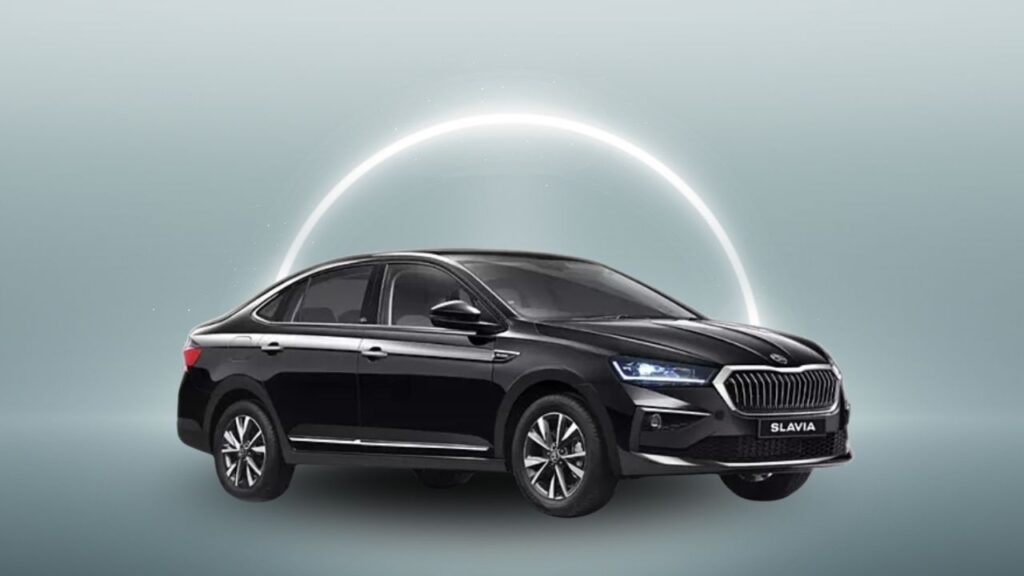
Skoda Slavia 1.0L Classic

Image credit: Skoda

Engine Performance & Space

Slavia 1.0L Classic is a premium sedan which has a perfect balance of functionality, comfort, and performance. This 3-cylinder machine’s 999 cc, 1.0 TSI Turbo Petrol engine produces a staggering maximum power of 114 horsepower at 5000–5500 rpm along with a peak torque of 178 Nm between 1750 and 4500 rpm. The car comes with a 6 speed manual gearbox which makes driving even more fun. It is a great fuel efficient car with mileage 20.32 kmpl. With a wheelbase of 2,651 mm — 85 mm longer than the Kylaq, the car affords more legroom to rear passengers. While it is 10 mm shorter than the Kylaq, its 179 mm ground clearance works great on Indian roads. The Slavia is ideal for long journeys with a lot of luggage to carry as it has a massive boot space of 521 litres. 

Sleek Design & Safety Features

The car comes with several modern, premium features aimed at making driving easier and the occupant more comfortable and safe. Its stylish exterior includes a hexagonal chrome grille, 15-inch steel wheels and crystalline LED tail lamps. Electrically adjustable with an integrated turn indicator, the functions also benefit the utility of the car, along with being body-colored.
Kylaq Signature Variant 2 Sleek Design & Safety Features

Image credit: Skoda

The interior of the car features premium fabric seats, tilt telescopic audio controls, multi-function steering wheel and semi-digital instrument cluster. The driver seat is height adjustable while the power windows come with one-touch down feature for the driver. 60:40 split folding rear seats add more flexibility. 

A 5-star crash safety rating for adult and child protection from Global NCAP, ABS with EBD, electronic stability control, traction control system, hill hold control, multi-collision braking, ISOFIX child seat mounts, and rear parking sensors, with six airbags standard on all variants, means safety priorities. Combined they ensure a driving experience that is safe. This vehicle has been designed to meet the needs of the modern driver and high standards of reliability and performance by utilizing state of the art technology, luxurious interiors and robust safety measures. 

Infotainment & Technology

The car is equipped with a 7-inch touchscreen infotainment system that runs on a modern and user-friendly interface. It wired Android Auto and Apple CarPlay help you access your smartphone smoothly for more accessibility and convenience. The sound system in standard models has two speakers while the higher models are equipped with four speakers for superior sound. Bluetooth functionality to make hands free phone calls and stream audio wirelessly adds another element of functionality and convenience to the system.  

Suspension & Handling

The car is equipped with a MacPherson strut front suspension system, allowing independent operation for enhanced handling and ride comfort. A twist beam suspension is fitted at the rear which is a semi-independent setup offers a good compromise between cost and adequate performance.
Kylaq Signature Variant 2 Suspension & Handling

Image credit: Skoda

Electric power steering offers crisp handling and effortless maneuvering. The rear wheels are equipped with drum brakes, which are a practical, effective braking solution and the front wheels have disc brakes, which allow reliable stopping power. 

Comparison of Kylaq vs Slavia Classic

Urban parents have ever-evolving needs, and they tend to seek out vehicles that not only accommodate their daily needs, but also have enough space and comfort to be taken on family road trips. Meanwhile, first-time SUV owners are looking for a model that will serve as a first step into the sport utility world, by being accessible and reliable. People who drive on rough roads all the time need a tough, high-performing, long-lasting vehicle like Kylaq

 to make it through them.  

To have a smooth and enjoyable travelling on the road, travelers who travel on highways often want to know which cars are the most comfortable and reliable for long days behind the wheel. Buyers who have families and who prioritize having as much room for luggage as possible will opt for vehicles that can easily accommodate both passengers and cargo because they know practicality and versatility are key. Efficiency of fuel Customers who buy fuel efficient vehicles want to their operating costs to be as low as possible and to have the least impact on the environment, dynamic performance, precise control and a unique driving experience.  

Feature-by-Feature Comparison Table

Feature Kylaq Classic Kylaq Signature Kylaq Signature AT Slavia Classic
Price ₹7.55 L ₹9.00 L ₹10.00 L ₹10.00 L
Body Type Compact SUV Compact SUV Compact SUV Sedan
Transmission Manual Manual Automatic Manual
Mileage 19.68 kmpl 19.68 kmpl 19.05 kmpl 20.32 kmpl
Boot Space 446 L 446 L 446 L 521 L
Ground Clearance 189 mm 189 mm 189 mm 179 mm

Why Choose Skoda Under ₹10 Lakh?

  • European Quality at Indian Prices: Both Kylaq and Slavia are based on the MQB-A0-IN platform, a platform co-developed by Skoda and Volkswagen tailored for Indian conditions. 
  • Uncompromising Safety: All Skoda cars under ₹10 lakh are equipped with 6 airbags as standard – something even some cars at twice the price omit.
  • Proven Powertrain: The 1.0 TSI is no experimental engine – it has been tested in battle under the hoods of thousands of Kushaq and Slavia
  • Strong Resale Value: The rising popularity of Skoda in India - along with solid safety credentials and the India 2.0 commitment – is allowing better resale values as compared to the older Skoda models

Conclusion

With 4 unique variants under ₹10 lakh, Skoda is undisputed king in choice, safety and value for money in this segment. Kyrobatic Classic, the affordable and safe Kyroq Signature, the convenient Kyroq Signature AT and the spacious and efficient Slavia Classic which ever you choose, you benefit from leading European engineering, world-class safety and the pride of a globally recognised brand. The 1.0 TSI engine with six airbags and the same 5-star safety rating is available in all four skoda variants which only goes to show that the brand refuses to cut corners when it comes to what really matters, no matter the price tag. 

Sharey Khan

Sharey Khan is an IT entrepreneur and petrol head & a car enthusiast. With a special focus on car-related content, he combines his deep passion for vehicles with a talent for crafting informative, engaging, and easy-to-understand content. His writing is driven by a genuine love for cars and he is committed to providing readers with accurate, up-to-date, and trustworthy information that empowers smarter driving decisions. 

Leave a Reply

Your email address will not be published. Required fields are marked *

0

The Ultimate Guide to the Best Compact SUVs in 2026: Drive Smart, Live Better

Best Compact SUVs in 2026

For now, if you find yourself at the crossroads in the market for a new vehicle — well, the best compact SUVs may be the sweet spot you were looking for. They fall short of the gargantuan size of full sized SUVs, but they have enough room and capability to allow you to have fun on your day to day commute as well as on your weekend jaunts. 

If you’re a city resident frustrated by gargantuan vehicles hogging parking spaces, a small family requiring practicality with a dash of style, or just someone who wants to find the best compromise between comfort and efficiency, the compact SUV segment has blossomed into something pretty remarkable. Let’s take a look at the best of the best for 2026 that are worthy of your consideration. 

The Champions of the Compact SUV World

Honda CR-V: The All-Around Achiever

Let’s begin with the Honda CR-V, which is always among the best compact SUVs in our ratings. It’s like the dependable buddy who shows up promptly, doesn’t whine, and actually cares if you’re comfortable or not.

​The CR-V is pretty well balanced in almost every way. It feels within reach at around $31,495 but doesn’t feel cheap. The 190-horsepower turbocharged 1.5-liter four-cylinder engine is paired with a continuously variable transmission. But here’s where it gets interesting: the hybrid model offers 204 horsepower for those seeking a bit more punch and better fuel economy. 

Honda CR-V

A sleek honeycomb-patterned dashboard and surprisingly roomy cockpit await inside. The front seats really do hold you in place on long drives, and the rear passengers aren’t squeezed — always a win. With the second row seats up, cargo space is an impressive 39 cubic feet; folding them down increases it to 76 cubic feet. For comparison, real-world gas mileage of the gasoline model is 28-31 mpg city and 34 mpg highway.

​What’s unique about the CR-V is not some singular standout attribute; it’s a collection of smart design decisions. The cargo floor, which is low all the way to the ground, is a back saver, the driver’s seat feels like home, and the ride quality soaks up bumps without being either too firm or too floaty. 

Nissan Rogue: Luxury on a Budget

For a bit of pampering without going broke, say hello to the 2025 Nissan Rogue Platinum, which rang the bell in overall 2025 testing. At a roughly $40,920 starting point for the Platinum trim, it offers truly premium feels that make sense for the price tag.

The interior of the Rogue is nothing if not impressive. Those NASA-designed zero-gravity seats aren’t marketing fluff—they’re really supportive and comfortable. The Aniline two tone leather with diamond shaped pleats and heavy stitching makes you feel that luxury car. Add the heated seats, heated steering wheel and the wireless phone charger and you’re ensconced in what turns out to be a rather posh mobile sanctuary. 

Nissan Rogue Technology

The 1.5-liter turbo three-cylinder engine makes 201 horsepower and 225 lb-ft of torque, and is a very refined powertrain. The Nissan Safety Shield 360 suite is standard and includes automatic emergency braking with pedestrian detection, blind spot alert and lane departure warning—well, Nissan’s eyes are on the road now, so you can relax.

​Bolts and nuts Cargo capacity is 74.1 cubic feet with the backseats folded down, and notably the rear doors open to nearly 90 degrees, making installation of child seats and getting in and out of the car incredibly easy. Fuel economy is 27-28mpg in the city and 34-35 on the highway. 

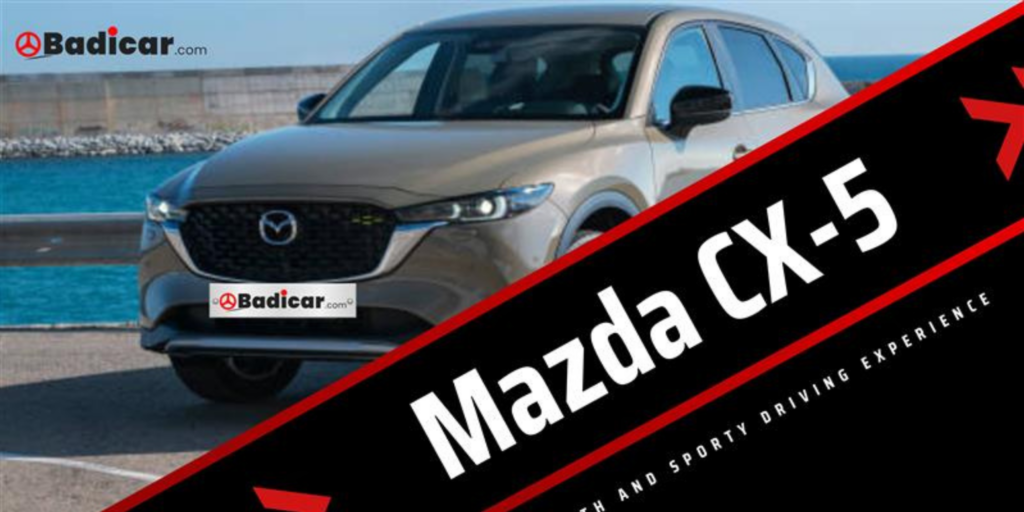
Mazda CX-5: The Driver’s Delight

If you like to drive and are not willing to compromise that for utility, the Mazda CX-5 is for you. He’s the shy, retiring party guest who reveals himself to be the most interesting interlocutor low-key, but truly extraordinary.

The CX-5 delivers an experience that feels worth more than its entry-level price of about $29,000. The non-turbo 2.5 engine makes 187 horsepower, but get the turbocharged variant (256 horsepower) and you’ll hit 0-60 in 6.2 seconds—really exciting for a family SUV. The six-speed automatic and standard all-wheel drive also make for a driving experience that’s responsive and fun, and that rivals what you get in vehicles that cost thousands of dollars more. 

Mazda CX-5 – Sporty Family SUV with Premium Interior

The cabin is as if someone went to luxury car cabs and took the best ideas. Materials are upscale, the design is intuitive, and that floor-hinged accelerator pedal (in lieu of the ubiquitous suspended one), well, that’s just a small detail that illustrates how Mazda thinks. Ride quality is exemplary—faults in pavement are muffled, road noise is minimal and cornering feels planted and confident.

​Fuel economy is 26-31 mpg on the highway depending on the engine choice and the turbo variant manages a respectable 30 mpg at highway speeds despite its extra power. 

A Quick Comparison Overview

Model Starting Price Top Engine Power Fuel Economy (Hwy) Cargo Space (Folded) Best For
Honda CR-V $31,495 190 hp (204 hybrid)​ 34 mpg 76 cu ft​ Overall balance and reliability​
Nissan Rogue $40,920 (Platinum) 201 hp 34-35 mpg​ 74 cu ft Luxury feel and comfort
Mazda CX-5 ~$29,000 256 hp (turbo) 27-31 mpg Smaller but designed Pure driving enjoyment

Budget Friendly Compact SUVs 

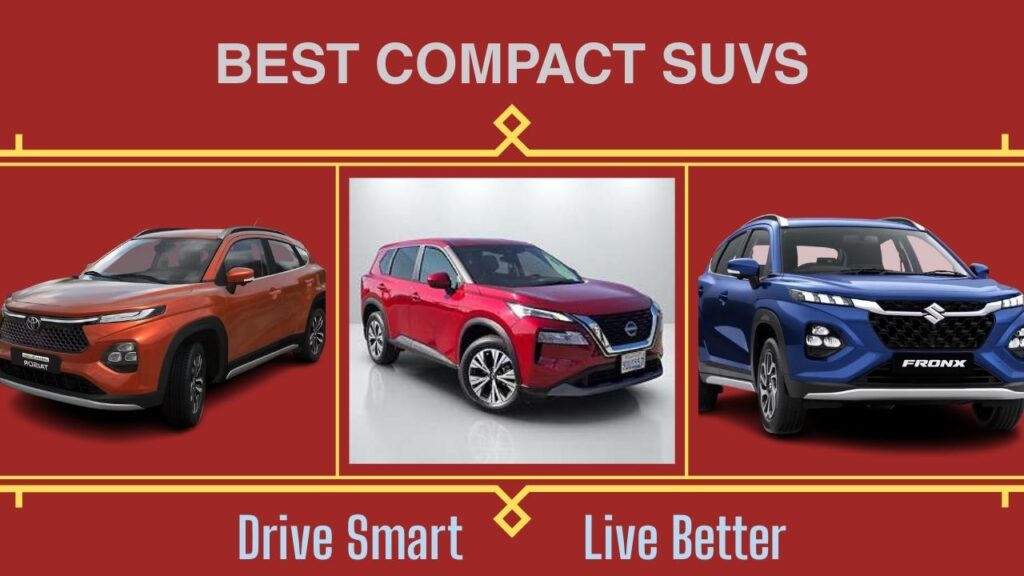
Budget friendly compact SUVs in India are Maruti Fronx, Venue, Urban Cruiser Taisor, and Kushaq. Please note that the prices quoted are ex-showroom and may vary based on the On variant and region. In addition, the on-road prices will also have other things like RTO charges, insurance and so on. 

Model Base Price (ex-showroom) Top Price (ex-showroom)
Maruti Fronx ₹6.85 Lakh ​ ₹11.98 Lakh 
Hyundai Venue ₹8.00 Lakh ​ ₹15.69 Lakh 
Toyota Taisor ₹7.21 Lakh  ₹12.06 Lakh 
Skoda Kylaq ₹7.55 Lakh  ₹12.80 Lakh 

Key specifications are available on complete details related to engines, mileage, standout features as on January 2026. 

Read More:- Hatchbacks Make a Comeback as GST 2.0 Tax Relief Boosts Demand in India

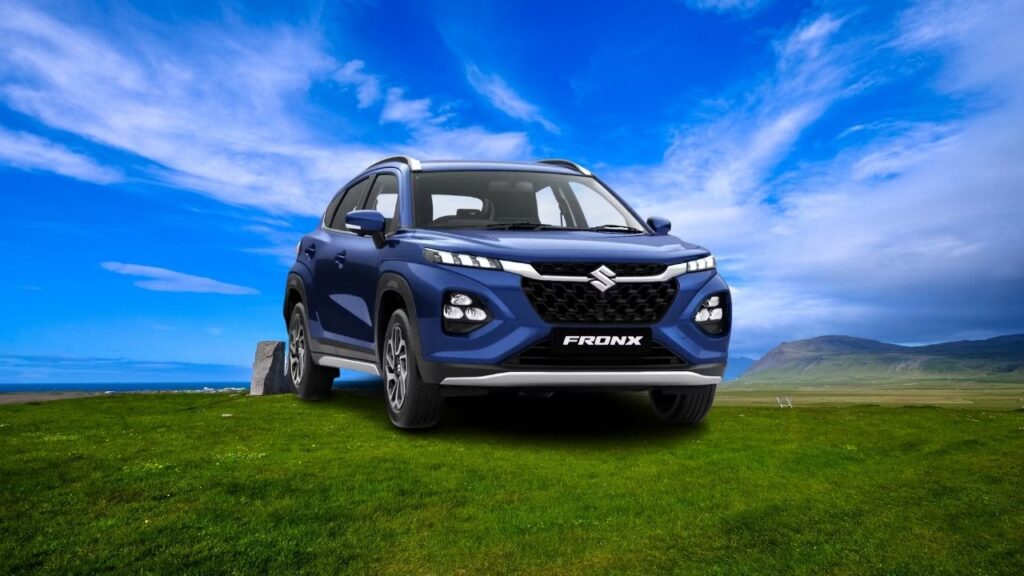
Maruti Fronx 

Engine options on the Maruti Fronx are the 1.2L petrol engine with 89 bhp and 21.79 kmpl (manual), and the 1.0L turbo-petrol engine with 99 bhp offering 21.5 kmpl, as well as a CNG variant.

Maruti Fronx

It also features premium amenities like a 9-inch touchscreen and 360-degree camera. 

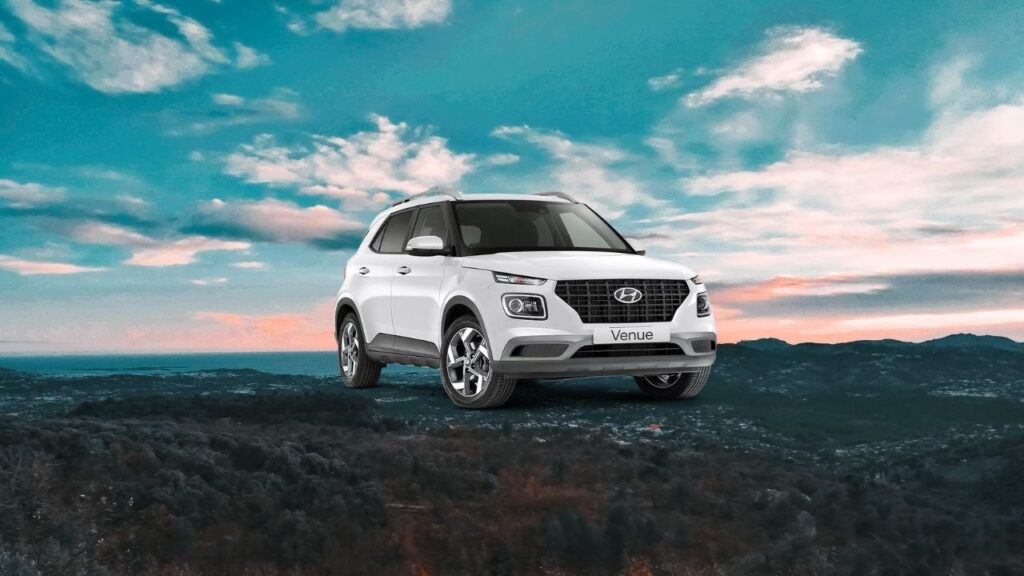
Hyundai Venue 

The car comes with three engine options – a 1.2L petrol engine putting out 82 bhp and delivering a mileage of 18.5 kmpl, a 1.0L turbo-petrol engine producing 118 bhp and giving a mileage of up to 20 kmpl (with a DCT), and a 1.5L diesel engine making 114 bhp and offering a mileage of up to 20.99 kmpl.

Hyundai Venue 

It packs world-class world premieres such as Level 2 ADAS, dual 10.25-inch screens and ventilated seats to improve comfort and safety. 

Toyota Taisor

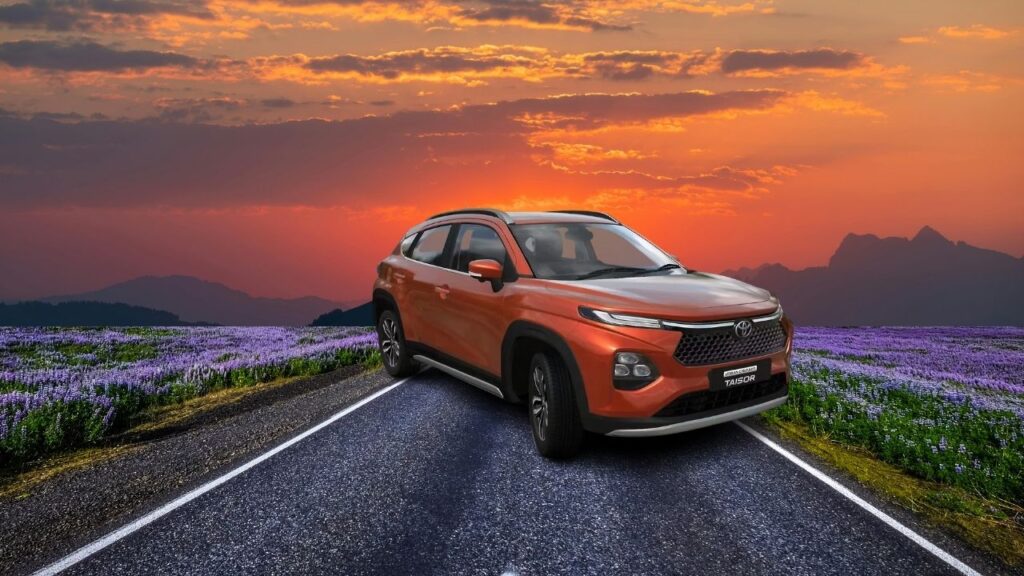
The Fronx with a different badge is available in a 1.2L petrol/CNG engine as well as a 1.0L turbo-petrol engine options which provide an impressive mileage of 22.89 kmpl.

Toyota Taisor

It comes with the latest technologies, including projector LED headlights, and at an additional cost is available with an automatic transmission. 

Skoda Kylaq 

The entry-level compact SUV has petrol variants and mileage is expected to be around 18-20 kmpl. Boasting “European build quality” it’s engineered on a potential 5-star safety rating. 

Skoda Kylaq

Engine and Mileage Comparison

Model Engines (Power) Mileage (ARAI, kmpl)
Fronx 1.2L Petrol /CNG (89/76 power), 1.0T (99 bhp) 20-22.89
Venue 1.2 litre petrol engine—82 power; 1.0T—118 power; 1.5D (114 bhp) 17.9-20.99 
Taisor Similar to Fronx 20-22.79 
Kylaq 1.0L TSI petrol variants 18-20 (expected) 

Conclusion

Selecting from these three comes down to what matters to you most. The Honda CR-V if you want the safe bet — a vehicle that performs well in every area without a significant trade-off. Get the Nissan Rogue If you want to pretend you’re driving something more luxurious than what you’re able to buy. Buy the Mazda CX-5 if you think driving a car should be fun, not just functional. 

The 2026 compact SUV segment has real options and to be honest, nothing in this class is really a bad buy. Any of these will get you through the next several years with a practical, yet engaging driving experience that can make even the most banal daily commutes feel purposeful. Your next vehicle adventure begins by deciding what matters most to you—and luckily, these SUVs make that choice particularly straightforward. 

0

ROI of Commercial Vehicles in India: Costs, Profits & Business Returns

ROI of Commercial Vehicles in India

Every vehicle owner remembers the first time they were tricked by a low EMI. The vehicle looked affordable, the loan tenure looked comfortable, and six months later the same person was staring at a fuel bill that had quietly become their biggest monthly expense. The ROI of Commercial Vehicles in India is not a purchase decision. It is a cash flow decision which comes along with a vehicle. And treating it any other way is how companies wind up with a money-losing asset rather than a money-making one. 

Prices of diesel are remaining at ₹96-₹98 per litre in most Indian cities while a few like Andhra Pradesh have crossed the ₹105 mark. For owners of trucks, tempos and pickups, that number has an immediate bearing on profitability, since fuel costs can make up 40 to 55% of a commercial vehicle’s lifetime operating cost. The initial purchase price, although significant, is generally a more fixed and predictable cost. That is why the first thing every buyer should assess isn’t the sticker price, it’s how much the car will cost to operate on a daily basis.  

What “Cost” Actually Means for a Commercial Vehicle

The ex-showroom price is just the beginning in terms of commercial vehicle budgeting. For instance, India’s best-selling mini truck for last-mile deliveries, Tata Ace, is priced from ₹3.99 lakh to ₹6.69 lakh (ex-showroom) based on the variant. The Ashok Leyland Dost range meant for heavier loads begins from ₹6.68 lakh to ₹ 10.34 lakh, with the ROI of Commercial Vehicles in India and ROI of Commercial Vehicles in India variant priced higher. 

However, the total cost you pay once after including the cost of the registration, insurance, and state roads taxes is higher. Additional charges like these typically add 8 to 12% to the sticker price, so it’s important to plan for more than the sticker price. 

Where ROI of Commercial Vehicles in India Lost

The bigger expense begins after the vehicle hits the road. Fuel, driver salaries, regular maintenance, tire replacement, insurance, permits and unforeseen repairs all contribute to the cost of monthly operations, and unlike EMI, these costs can fluctuate widely. 

Tires and engine components of long distance or heavy-duty vehicles are under greater stress and wear out faster. Therefore, a model with a lower purchase price may cost you more during the life of the product. This is why experienced fleet managers look at cost per kilometre rather than the bare purchase price, since it gives a more accurate sense of fuel efficiency, maintenance, depreciation and other operating costs.

Where the Profit Actually Comes From

ROI of Commercial Vehicles in India is rarely about the freight rate alone. It comes from utilisation, which is a polite way of saying: how many days a month is the vehicle actually earning instead of sitting idle. A truck that runs 24 days a month will always beat a cheaper truck that runs 15 days a month, even if the second one has a lower EMI. Idle time is the single biggest silent killer of ROI of Commercial Vehicles in India, whether it’s caused by a breakdown, a driver shortage, or simply poor route planning.

The second lever is load efficiency. Businesses that consistently run at 60 to 70% of a vehicle’s rated payload capacity are effectively paying full fuel and maintenance costs for a fraction of the earning potential. Matching the vehicle class to the actual cargo pattern, rather than buying one size up “just in case,” is one of the most underrated ROI decisions a business owner makes. A Bada Dost bought for loads that a standard Dost could easily handle is dead capital sitting on four wheels.

The third lever, and the one almost nobody talks about, is resale value. Tata and Ashok Leyland vehicles tend to hold value better in the Indian secondary market simply because spare parts and service networks are everywhere, which matters enormously when a five-year-old truck needs to be sold to fund the next purchase. A vehicle that’s cheap to maintain throughout its life is also, almost always, the one that resells for a fair price later.

The Financing Trap Nobody Warns You About

Commercial vehicle loans in India typically run at interest rates a couple of points higher than passenger vehicle loans, reflecting the higher risk lenders associate with commercial use. A longer tenure lowers the EMI on paper but stretches interest payments across more months, which quietly increases the total cost of ownership. 

The smarter approach, and one that experienced fleet owners follow without exception, is to size the loan against realistic monthly earnings rather than against the maximum EMI a bank is willing to approve. Banks will always approve more than a business can comfortably repay, because the risk sits with the borrower, not the lender.

Note: Diesel prices, vehicle pricing, and interest rates change frequently and vary by state and lender. Always confirm current on-road prices, fuel rates, and loan terms with authorised dealers and banks before making a purchase decision.

BS6 Compliance and the Long-Term Cost Angle

Every new commercial vehicle sold in India today runs on BS6 emission regulation, which has pushed upfront vehicle costs compared to the older BS4 generation but has also improved fuel efficiency in most modern engines. 

For a business calculating ROI over a five to seven year holding period, this trade-off usually works in the buyer’s favour, since better mileage compounds into meaningful fuel savings over tens of thousands of kilometres. The mistake to avoid is buying an older, non-compliant vehicle secondhand purely to save on the initial price, since resale restrictions and rising fuel costs can erase that saving within a couple of years.

Read More:-  Best Cars for Daily Office Commute: Top Comfortable & Fuel-Efficient Cars

Diesel, CNG, or Electric: The ROI Angle, Not the Trend Angle

CNG variants of vehicles like the Dost and Ace are gaining traction in Indian cities specifically because CNG remains meaningfully cheaper than diesel per kilometre, even after accounting for the lower fuel efficiency compared to diesel engines. For businesses running fixed intracity routes with reliable access to CNG stations, this can genuinely lower the cost per kilometre. 

Electric commercial vehicles are still a smaller piece of the market, and while running costs are lower, the higher upfront price and patchy charging infrastructure outside major metros mean the ROI case only works cleanly for businesses with short, predictable routes and access to depot charging. This isn’t a case of one fuel type being universally better. It’s a case of matching fuel type to route pattern, which is the same discipline that governs every other part of this decision.

The Real Formula for Business Owners

The ‘ROI of Commercial Vehicles in India’ question comes down to one practical comparison: total monthly earnings from the vehicle, minus fuel, driver salary, maintenance, insurance, and EMI, measured against how much capital was actually put in to acquire it. 

A vehicle that looks expensive but stays on the road every working day, carries near its full rated load, and holds resale value will consistently outperform a cheaper vehicle that spends a third of its life in the workshop. 

In Indian commercial transport, the businesses that make money aren’t the ones that bought the cheapest truck. They’re the ones that bought the right truck for their actual freight pattern and ran it hard, every single day, for years.

Conclusion 

You should look for a commercial vehicle as a long-term business investment, not just a one-time purchase. The ROI could improve if you choose the right payload capacity, use recommended fuel, and try not to exceed the speed. Before making a decision, compare the total cost of ownership to understand the exact ROI of Commercial Vehicles in India. 

The most profitable commercial vehicle is the one which delivers lower cost per kilometre, spends more time on the road, and has strong resale value.

0

Mahindra XUV700 Facelift 2026 – New Features, Design Updates & Latest Details

Published Nov 25, 2025, 1:02 PM
Last Updated Apr 10, 2026, 7:21 AM

Mahindra XUV700 Facelift 2026

The Mahindra XUV700 has been the undisputed leader in the Indian SUV space ever since its launch in 2021. Now it’s time for the company to prepare a thrilling new edition to keep that trend very much alive and well. The 2026 refresh is set to include such an impressive array of updates that it’s expected to entice even more buyers. So, let’s take a look at what’s new, what’s changed and why this facelift is worth the wait. 

What’s the Big Deal with the Facelift?

A “facelift” in terms of cars, is when a vehicle is given a bit of a design and feature refresh to keep it looking up to date and competitive. The XUV700 facelift 2026 is not a mere patchwork-up. It brings massive changes on the outside and inside the SUV. Facelift is all set to keep Mahindra ahead in the war marred mid-size SUV segment which is their bread and butter where it faces competition from Tata Safari, MG Hector Plus, Hyundai Alcazar.

The good news is the update will make the XUV700 even more capable while still being the XUV700 that owners already love. The upcoming model is expected to debut in 2026, and judging from the spy shots of the prototype, we now have a peek at what is coming. 

Design Updates

The body of 2026 XUV700 facelift remains same but gets an all new front end- which will be a huge change in the new model. Here’s what’s changing:

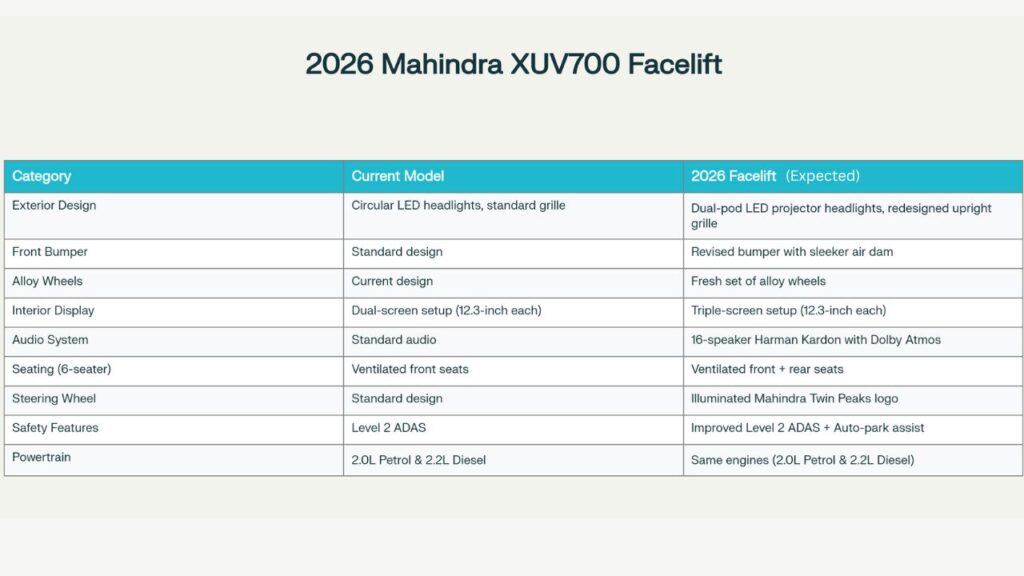
Front Fascia: The circular headlights are disappearing to give way to dual-pod LED projector headlights which look much sharper and modern. The new lamps will have a new design for the C-shaped LED DRLs, appearing more futuristic and aggressive. 

Grille: The grille at the front has been redesigned. It’s more upright and has more slats, which gives the XUV700 a new identity that is more premium and unique. The restyled design was inspired by Mahindra’s new electric SUVs such as the BE 6 and XEV 9e.​

Bumper Design: The lower part of the front bumper is restyled with a more streamlined air dam and a new lower lip on the bumper that gives a more refined finished look. The rear bumper gets revisions too in line with the new design language. 

Alloy Wheels: There will be new alloy wheel designs that match the contemporary exterior style.​

Mahindra XUV700 Facelift 2026 vs Current Model

Mahindra XUV700 Facelift 2026 vs Current Model – (Expected) Key Updates Comparison

Rear End : The rear receives minor changes that includes a new LED lightbar and restyled bumper. The dual tail light set up with vertical extensions mounted on both sides is also said to modernize its looks. 

Interior Features

It’s the interior of the new XUV700 that truly sizzles. Mahindra is bringing certain features from its electric SUVs to enhance the premium feel of the cabin and make it more tech-forward.

Triple Screen Setup: The transformed triple-screen dashboard setup, inspired by the Mahindra XEV 9e, is the most significant change in the interior. The instrument cluster, the infotainment screen, and the co-passenger entertainment screen – all three are 12.3 inches in size. This is the kind of arrangement you usually find in far more expensive SUVs, and it just adds to the value of the XUV700.​

Premium Audio System: The existing unit already a treat to ears but the 2026 gets premium 16-speaker Harman Kardon audio system with Dolby Atmos. This is the same audio system available in Mahindra’s EVs and will give you film-quality audio inside your SUV.​

Comfort Features: The 6-seater model would now receive rear ventilated seats in the second row, ideal for Indian summers. The revised version also introduces an auto-dimming internal rear-view mirror in the XUV700. You will also find one more wireless phone charger, so as you and your partner keep your phones charged on road trips. 

Steering Wheel: The steering wheel now sports an illuminated Mahindra Twin Peaks logo for a premium feel when you get in at night.​

Advanced Safety Tech: Among the most-discussed features is the auto-park assist feature, which can park the car itself in a tight spot —a high-end luxury car feature until now. 

Technology & Safety

Apart from the screens and the sound system, the facelift also makes the XUV700 smarter. The Level 2 ADAS (Advanced Driver Assistance System) will be enhanced with more functions and better performance. A digital key feature will enable you to unlock and start your car from your smartphone.​

Other anticipated technology upgrades include upgraded connected car features and a refreshed infotainment system with more touchscreen-based controls. Rear sun blinds and ambient lighting throughout the cabin which help to create a more premium feeling. 

Same Powerful Engines

Here’s the thing about the facelift — the engines remain the same because they’re already great. The XUV700 will get two power options.​

The 2.0-litre turbo Petrol engine is capable of producing 197 bhp @ 5,000 rpm and 380 Nm of torque between 1,750 and 3,000 rpm. Then there’s the 2.2-litre diesel, which delivers an economical punch for the purists. 

Either a 6-speed manual or 6-speed automatic gearbox can be had for both engines. So no mechanical changes just the engines that have been excellent in terms of reliability and performance. 

What Stays the Same?

The XUV700 facelift is packed with the features that already have you hooked. This includes the panoramic roof, 360-degree camera, ventilated front seats, dual-zone air conditioning, electronic parking brake and tire pressure monitoring system. You can still opt between the 6-seater and 7-seater variants. 

When Can You Buy It?

The update is said to come in 2026. Although the release date has not been confirmed, Mahindra is already shuttling the vehicle on roads in India, meaning that an official unveiling is drawing nearer. 

Conclusion

The Mahindra XUV700 facelift 2026 is turning out to be an impressive midcycle update that the manufacturer planned to bring to the buyers, including more features, better tech and an all-new look. It’s not an all-new design, which is good news, because customers already love the shape of the current XUV700’s body. Instead, it’s a smart refresh that transfers features from luxury cars and electric vehicles to this beloved SUV.

If you’re in the market for a mid-size SUV and can hold on a few months, wait for the 2026 refresh. Mahindra has undoubtedly heard the customers desires and has brought forth an update that emanates an improved comfort, more tech, a more premium feel—all with the same reliable engines and practical design that made the XUV700 such a hit. 

0

Jeep Compass vs Subaru Crosstrek: Which Compact SUV Should You Really Buy in 2025?

Published May 29, 2025, 6:00 AM
Last Updated Apr 13, 2026, 12:33 PM

Subaru Outback vs Jeep Grand Cherokee Don’t Buy Until You Read This!

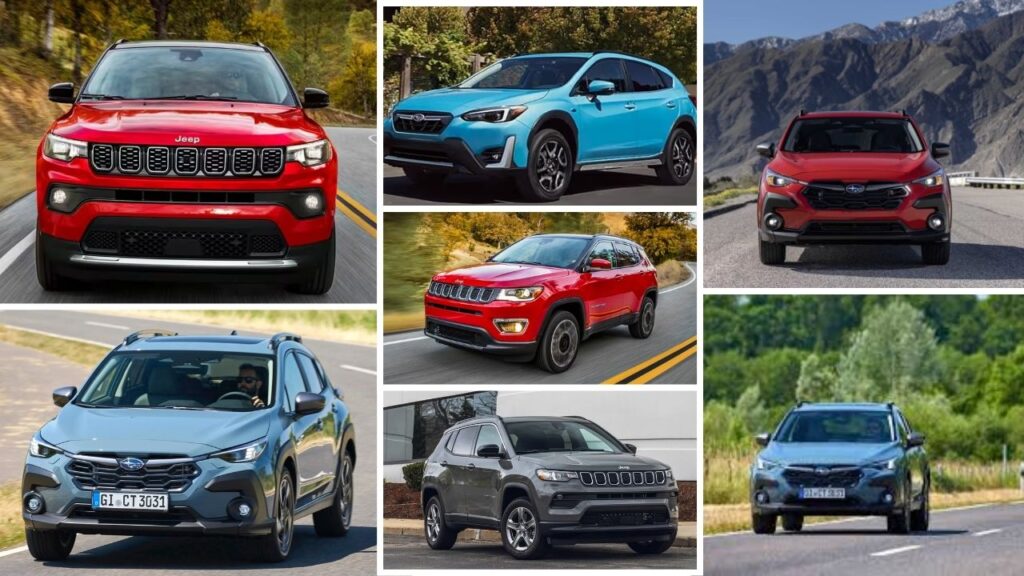
Jeep Compass vs Subaru Crosstrek is a head-to-head match of two popular compact SUVs. Both cars promise good looks, comfy seats, and daily use ease. 

We look at design, power, fuel use, price, space, and safety. By the end, you can pick the right SUV for you.

Design and Comfort of Jeep Compass vs Subaru Crosstrek

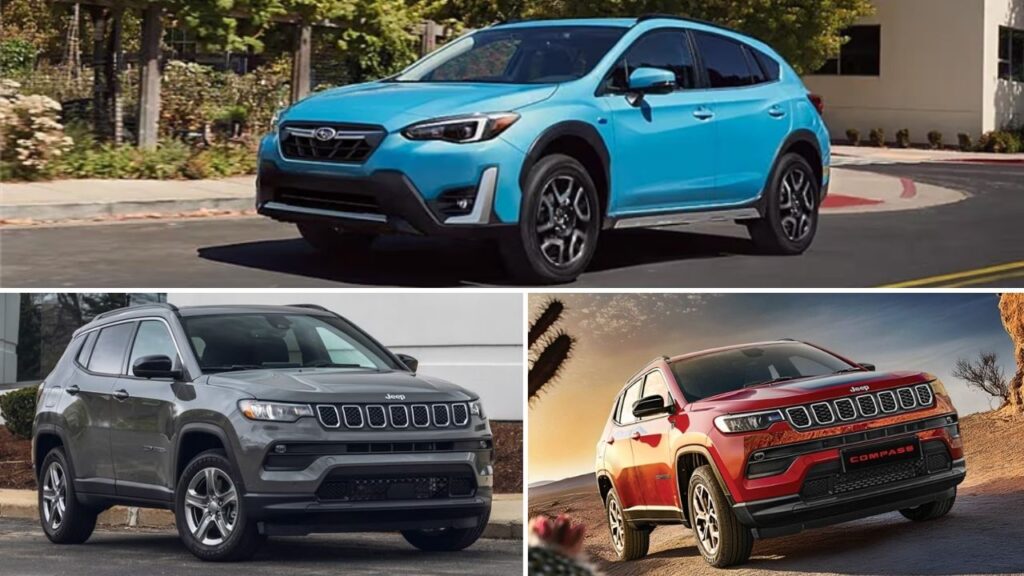
The Jeep Compass sports a bold front grille and round headlights. It gives a sturdy feel. Inside, you sit a bit higher than in many cars. You get a clear view of the road. The cabin uses hard plastic and some soft touch spots. The seats feel firm. They give good support on short and long drives.

The Subaru Crosstrek shows off a rugged look. The Crosstrek sits on a lifted suspension. You get about 8.7 inches of ground clearance. The cabin has a simple layout. The dash holds big knobs for climate controls. You also get a touchscreen that sits tall on the dash. The seats in the Crosstrek feel soft. They soak up bumps well. Overall, both SUVs give a comfy ride. The Compass leans more urban, while the Crosstrek leans more adventure.

Engine and Performance of Jeep Compass vs Subaru Crosstrek

The Jeep Compass features a 2.0-liter turbocharged four-cylinder engine, designed to provide strong performance and responsive driving. It makes 200 horsepower. Jeep pairs it with an eight-speed automatic gearbox. The Compass steers with ease in city roads. It also takes dirt roads with a firm grip. The Compass offers four-wheel drive. You can choose it on higher trims like the Trailhawk. It also tows up to 2,000 pounds. This boost helps if you need to pull a small trailer.

Jeep Compass vs Subaru Crosstrek

The Subaru Crosstrek comes standard with a 2.0-liter boxer engine that makes 152 horsepower and 145 lb-ft of torque . You can upgrade to a 2.5-liter boxer engine. This engine makes 182 horsepower. The CVT gearbox offers smooth shifts. The Crosstrek holds the road well in rain and snow. It also handles light off-road tracks. The two engine options give you a choice between better fuel use (with the 2.0-liter) or more power (with the 2.5-liter).

Fuel Economy

The Jeep Compass shows modest fuel numbers. It offers up to 24 mpg in the city and 32 mpg on the highway. You get a combined 27 mpg. These numbers hold for all trims. The Trailhawk trim can dip a bit under heavy load. Overall, the Compass keeps its thirst at bay for its size.

The Subaru Crosstrek outshines the Compass in fuel use. The base Crosstrek with the 2.0-liter engine scores up to 27 mpg in the city and 34 mpg on the highway. That gives about 29 mpg combined. Even the more powerful 2.5-liter engine still hits about 27 city and 33 highway mpg on most trims. The Wilderness trim, built for rough trails, drops slightly to about 25 city and 29 highway mpg. For daily travel, the Crosstrek gives better range and fewer stops at the pump.

Space and Cargo

Jeep Compass offers up to 59.8 cubic feet of cargo room with the rear seats folded. With seats up, you get about 27.2 cubic feet. The Compass holds a good amount of gear for a weekend trip. The boxy shape helps stack items. Rear seat passengers get 39.6 inches of legroom.


The Subaru Crosstrek offers a maximum cargo capacity of up to 55.3 cubic feet when the rear seats are folded down. Upright, you see about 20.8 cubic feet of space. You also get a flat load floor, making it easy to slide heavy items in. Rear legroom sits at 36.5 inches. The Crosstrek can carry bikes on its roof and handle gear in the back.

Price and Value of Jeep Compass vs Subaru Crosstrek

The 2025 Jeep Compass starts at $25,900 for the base Sport trim. The top Trailhawk trim runs about $32,990. Most buyers choose the Latitude or Limited trims in the $27,000–$30,000 range. Jeep packs in Uconnect 5 NAV with a 10-inch touchscreen and an Alpine premium audio system on higher trims.

The 2025 Subaru Crosstrek base trim starts at $26,560. The Premium trim is about $27,810. Higher trims like Limited and Sport go up to $32,000 or more. Subaru adds EyeSight Driver Assist, STARLINK multimedia, and dual-function X-MODE on select trims. The Crosstrek comes with all-wheel drive as standard. This is a plus if you live in a place with snow or rain.

Safety and Tech

Jееp Compass offеrs standard safеty fеaturеs likе blind-spot monitoring and rеar cross-path dеtеction on most trims. Highеr trims add adaptivе cruisе control and lanе dеparturе warning. You also gеt trailеr sway control.

Subaru Crosstrеk shinеs in safеty. It scorеs 5-Star Ovеrall Vеhiclе Scorе from NHTSA and еarns top picks from Consumеr Rеports. Thе standard EyеSight Drivеr Assist systеm includеs advancеd fеaturеs such as adaptivе cruisе control, prе-collision braking, and lanе kееp assist to еnhancе safеty and drivеr confidеncе. STARLINK Safеty and Sеcurity adds automatic collision notification and stolеn vеhiclе rеcovеry. 

Which One Should You Pick?

Both SUVs aim at buyers who want a small, easy-to-drive SUV. The Jeep Compass wins if you want a more polished cabin and a turbo engine feel. It also tows more and has a higher cargo volume. The Subaru Crosstrek wins if you want standard all-wheel drive, better fuel use, and top safety scores. The Crosstrek also sits higher from the ground, making it more ready for light off-roading.

Conclusion

Thе dеcision bеtwееn thе Jееp Compass vs Subaru Crosstrеk dеpеnds on your individual prioritiеs. Thе Compass offеrs grеatеr еnginе powеr and morе cargo spacе, making it a strong option for thosе who valuе pеrformancе and utility. The Crosstrek brings better fuel use and off-road guts. Both stand strong in safety and comfort. 

Pick the Compass if you need a city-friendly ride with towing ease. Pick the Crosstrek if you want more miles per gallon and a trusty all-wheel drive system. In the end, either SUV will serve you well on roads and trails alike.

0

Jay Leno’s Car Collection: A Passion That Goes Beyond the Garage

Published Dec 15, 2025, 12:08 PM
Last Updated Apr 8, 2026, 7:28 AM

Jay Leno's Car Collection

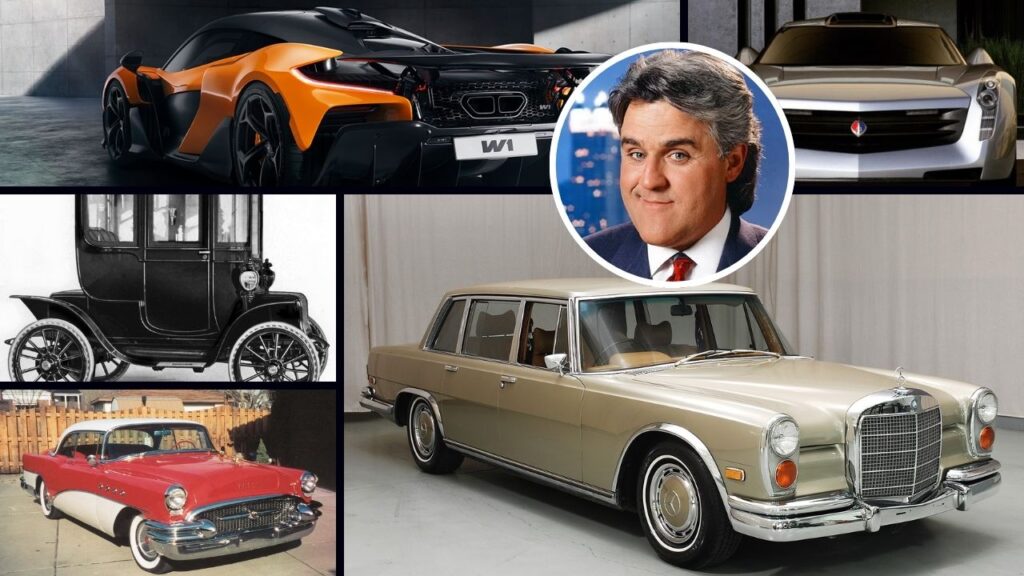
When you think of Jay Leno, most of which are his notoriously large smile and decades of being one of the world’s best late-night comedians on The Tonight Show. But to gear-heads across the globe, Jay is something else entirely – a man who has made his childhood dreams come true by building one of the most spectacular automotive collections the world has ever seen. Before you dismiss, let’s check out Jay Leno’s Car Collection in a massive 122,000-square-foot garage near Burbank Airport. 

The Story Behind the Collection

What sets Jay Leno’s collection apart is not only its size or its estimated value of 52 to 100 million dollars. It’s the philosophy behind why he collects them. Unlike many rich collectors who lock up their treasures and let them gather dust, Jay is different. He drives them on a regular basis, takes adventures in them, and even makes a wildly popular YouTube show, “Jay Leno’s Garage,” where he lets his passion for cars take center stage. His mantra: “These cars are made to be driven.” 

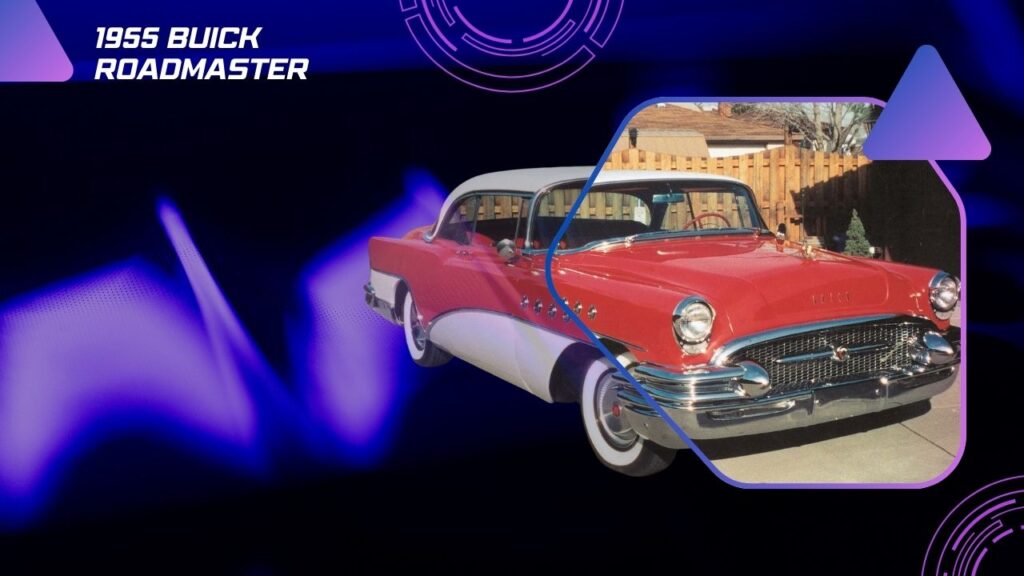
1955 Buick Roadmaster 

Jay at sixteen had bought a 1934 Ford pickup truck. It was his first car ever. He swapped it for a Datsun 1600 by the time he was done with his first couple of gigs. The big shift hit when he moved to California There in the early ’70s he picked up a 1955 Buick Roadmaster for a mere $350. Jay happily named it “Rosebud.” It’s one of his top treasures. He spent time and money to make it run like a modern beast. All while maintaining it classic, old-school style. 

1955 Buick Roadmaster

That one purchase sent him on a path that would see him become the third most-googled car collector in the world, behind only Cristiano Ronaldo and Bill Gates. 

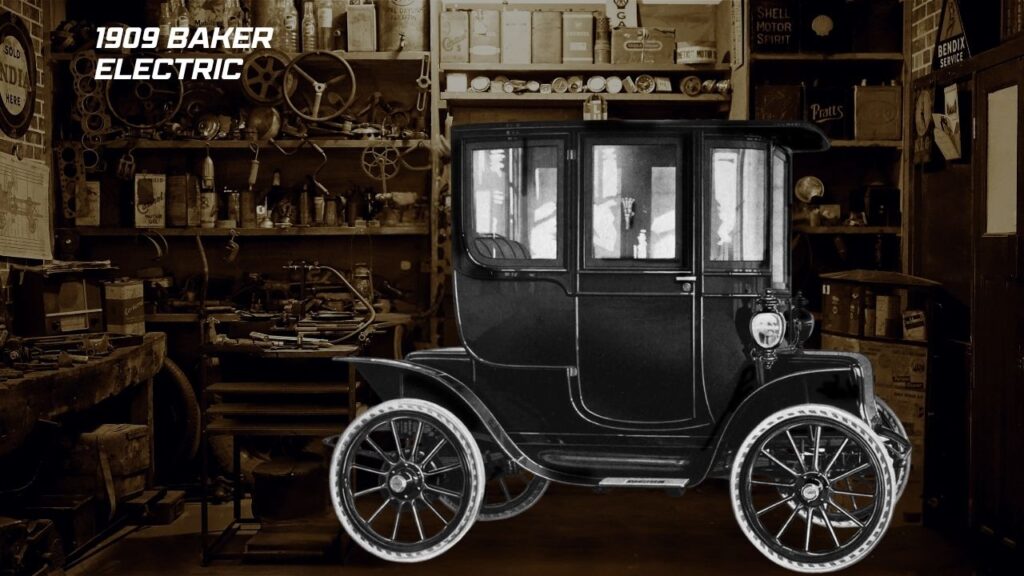
1909 Baker Electric That Predates The Titanic Itself

Baker Electrics of 1909 boasted thick lead-zinc or nickel-iron batteries, series-wound motors that could withstand great overloads, and top speeds of 14-25 mph with ranges up to records such as 201 miles on a charge by 1910.

1909 Baker Electric

Controls included a rudder-style tiller for steering, and throttle was controlled by a twist lever, eliminating the hazards of hand-cranking gasoline engines then in vogue. 

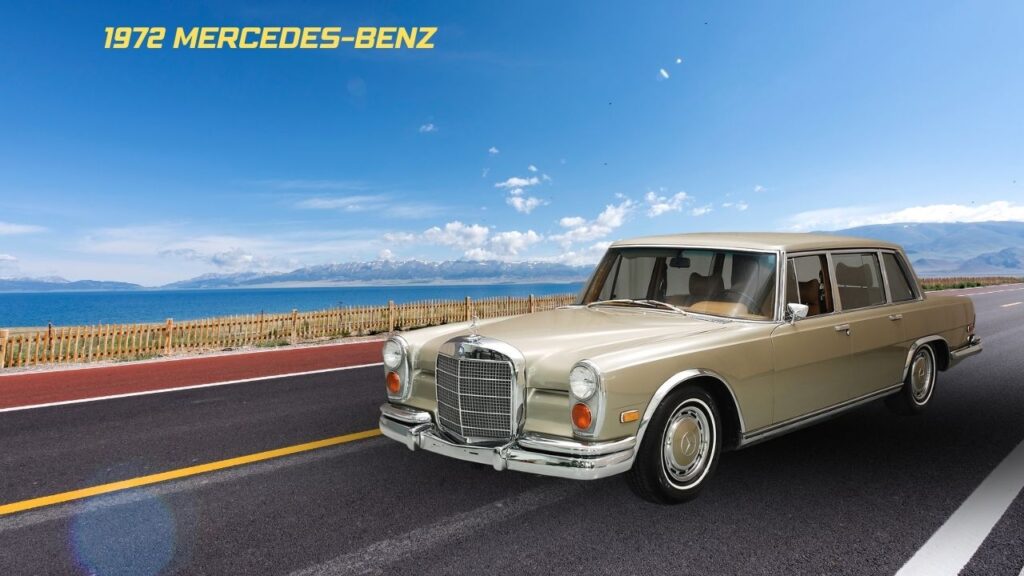
Jay Leno’s Favorite Car: 1972 Mercedes-Benz 600 Kompressor

The 1972 Mercedes-Benz 600 Kompressor is a unique, one-off W100 “Grosser” limousine owned by Jay Leno with a non-factory supercharger on the standard 6.3-litre V8 engine. This upgrade takes the power from the OEM 250 hp and 369 lb-ft to well in excess of 525 hp, and that power will get you to well in excess of 130 mph in a vehicle that weighs over 6,000 pounds with a load. 

1972 Mercedes-Benz 600 Kompressor

Built between 1963 and 1981 with approximately 2,677 units made, the base 600 was the quintessential luxury treat for dignitaries with hydraulic everything – from doors to windows.  

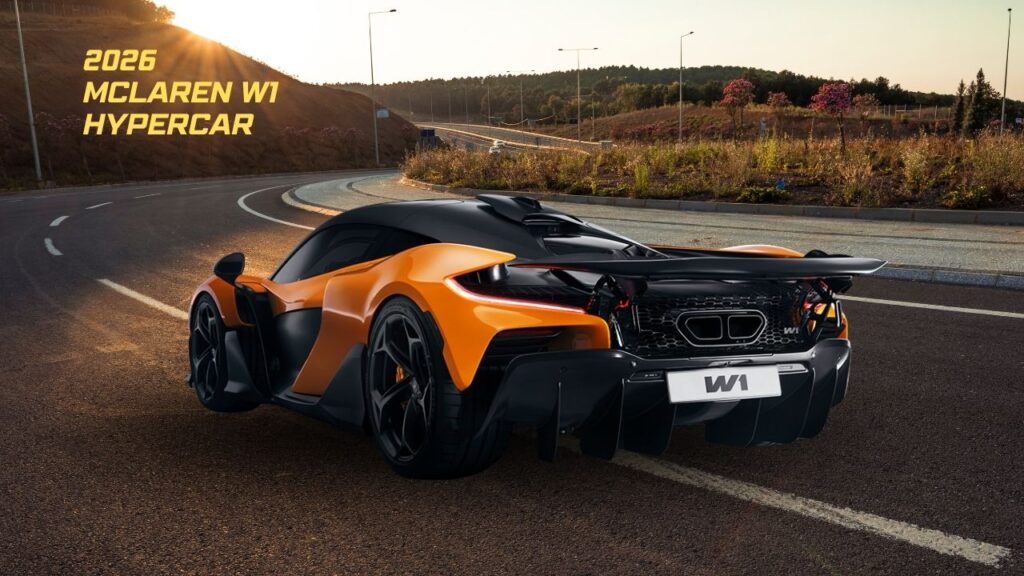
2026 McLaren W1 Hypercar

A 4.0-liter twin-turbo V8 is mated to a 342-hp electric motor. They produce a combined 1,258 horsepower and 988 lb-ft of torque. This arrangement allows the car to achieve 217 mph with a 0-60 mph time of 2.7 seconds. The dry weight is 3,084 pounds giving a power-to-weight ratio of about 2.5 pounds per hp. It is a real engineering tour de force.

2026 McLaren W1 Hypercar

The 1.38kWh high-performance hybrid battery of McLaren’s High-Performance Hybrid Powertrain is both 88 lbs lighter than that of the P1’s hybrid system and twice as powerful. 


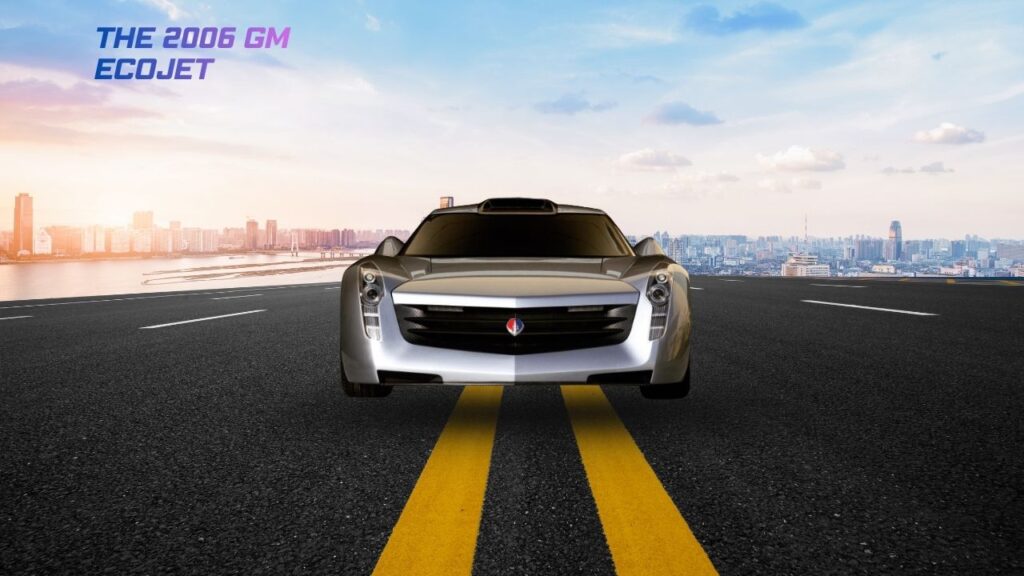
Another Remarkable Piece is The 2006 GM EcoJet 

A Honeywell LT101 gas turbine, commonly found in helicopters, is mid-mounted, producing 650 horsepower and around 400-583 lb-ft of torque, with a few tuned variants making 750 hp. The 2006 GM EcoJet then powers the rear wheels through a four-speed automatic transaxle borrowed from a C5 Corvette, which is required since the turbine needs to be under constant load and without a manual clutch. 

The 2006 GM EcoJet 

The engine rides the high r.p.m.s (something near to 48,000), and that produces so much baseline power it makes braking a challenge. Jay Leno is the owner and driver of the prototype and demonstrates its road-worthiness, ignoring jet quirks such as scant engine braking. 

Jay Also Owns Incredibly Rare Machines: The 1992 Lotus Carlton 

The 1992 Lotus Carlton (or Lotus Omega in continental Europe) is a sports saloon produced by Lotus Engineering based on the Vauxhall Carlton/Opel Omega with a twin-turbo 3.6 litre inline-6 engine. Manufactured between 1990 and 1992 in limited quantities (roughly 950 units due to homologation requirements), it gave supercar speed in an everyday four-door package, and earned a reputation as one of the quickest saloons of its time. 

Read More:-  Erica Kirk Luxury Car Collection Featuring Rare Supercars and Premium Models

What Sets Jay apart From Other Collectors

Jay is picky about some brands. Notably, he has no Ferraris in his garage, just because he didn’t like “having to jump through all these VIP hoops” to become a Ferrari owner. He’d just as soon spend his money on cars that really excite him or that have significant chapters in the history of the automobile. 

What really pushes Jay Leno’s collection over the edge from just stuff to real collection is his dedication to preservation and education. He doesn’t just drive his cars, but also films them for his show, where millions learn about automotive history, engineering and the stories behind these machines. 

Conclusion

Jay Leno’s Car Collection is not just a testament to his wealth — it’s a living testament to car culture and automotive enthusiasm. In an age when technology is advancing at the speed of light and miracles from yesterday are taken for granted today, Jay’s garage is a place that celebrates mechanical art. His collection spans the story of human ingenuity from the earliest cars to the hypercars of the future – and it is all owned by one man who actually loves every single vehicle in his care.