0

Ken Griffin Car Collection: The Man Behind the Hypercar Obsession 

Published Jan 6, 2026, 1:13 PM
Last Updated Jan 8, 2026, 7:25 AM

Ken Griffin Car Collection

When you think billionaire hedge fund executives such as Ken Griffin, you probably think of sprawling office buildings, high-stakes business transactions, and the $43.2 billion he oversees through his Citadel empire. Ken Griffin Car Collection is something else, perhaps just as exhilarating: a garage that reads like a love letter to automotive creativity and raw, unadulterated speed.

Ken Griffin isn’t just buying cars: he’s automotive royalty. And in stark contrast to scores of billionaires who appear to consider supercars nothing more than taxis to park and admire, Griffin drives these machines. He is a unique collector in that he thinks a hypercar’s real purpose in life is to drive it, to feel it under your wheels, to listen to that symphony of a screaming motor and racing wind, and to take it as far as you possibly can mechanically. 

The Crown Jewels Of Ken Griffin

LaFerrari 

LaFerrari is the crowning glory of Griffin’s collection

The LaFerrari is the crowning glory of Griffin’s collection—and its name says it all. LaFerrari is written in Italian and means “the Ferrari”, a designation used because there is simply nothing else like it. It’s not an overstatement. The hypercar provides a 6.3-litre V12 with a Formula 1–inspired electric motor, producing an astonishing 950bhp. The end result is more explosive performance, sprinting from 0 to 62 mph in less than three seconds, which helped it become one of the most amazing Ferraris ever produced.  

Category Specification Details
Engine 6.3L F140 V12 + Electric Motor 800 PS (V12) + 163 PS (KERS); 6,262 cc
Power/Torque Combined Output 963 PS; >900 Nm
Transmission 7-speed Dual-Clutch Automatic
Dimensions Length/Width/Height/Wheelbase 4702 / 1992 / 1116/ 2650 (all in mm)
Weight (Dry) Kerb Weight 1,585 kg
Performance 0-100 km/h / Top Speed <2.6s / >350 km/h
Production Units (Coupé) 499 (2013-2016)
Price (Original) Base MSRP ~€1-1.5 million / $1.5M


The LaFerrari represents the ultimate expression in engineering at the moment of its creation. Combined with its KERS hybrid system, active aerodynamics and carbon-fibre skin, it seems less a car and more a racecar in a suit for the road. Now the cleanest examples can easily fetch $4 to $5 million or more, but for Griffin the value isn’t just financial. It’s about having something that fewer than 500 people in the entire world will get to experience. 

McLaren P1

McLaren P1

Then there is the McLaren P1 —McLaren’s audacious retort to Ferrari’s hypercar dominance. Boasting 903 horsepower and state-of-the-art F1-derived technologies such as an adjustable rear wing and active suspension, the P1 is McLaren’s love letter to innovation. Only 375 were manufactured. Griffin’s take comes in glossy black, a choice that allows the car to do the talking instead of shouting with color. At about $2 million in the collector’s market, it is a tour de force that captures the very moment when hybrid hypercars were redefining what was possible in the automotive world. 

Category Specification Details 
Engine 3.8L Twin-Turbo V8 + Electric Motor 727 PS (V8) + 179 PS (electric); 3,799 cc
Power/Torque Combined Output 916 PS; 900 Nm
Transmission 7-speed Dual-Clutch Rear-Wheel Drive
Dimensions Length/Width/Height/Wheelbase 4,595 / 2160 / 1199 / 2674 (all in mm)
Weight (Dry/Kerb) Dry Weight 1,395 kg / 1,547 kg
Performance 0-100 km/h  2.8s 
Production Units 375 (2013-2015)
Price (Original) Base MSRP Starts at $1.15 million 


Lamborghini Huracán

Lamborghini Huracán Performante – the adrenaline-fueled monster in an eye-watering shade of yellow that just wants you to stare at it. With its active aerodynamics system that adapts on the fly, 631 horsepower and sub-3-second 0-62 time, this is the ultimate animal in Griffin’s collection. Its stablemates at his garage are all about sophistication, technological refinement, but the Performante is pure aggression in a Lamborghini wedge. 

Category Specification Details
Engine 5.2L V10 Naturally Aspirated 640 PS, 600 Nm 
Transmission 7-Speed Dual-Clutch (LDF) AWD or RWD options
Dimensions Length/Width/Height/Wheelbase 4458 / 1924 / 1181 / 2620 (all in mm)
Weight (Dry/Kerb) Kerb Weight ~1,422-1,550 kg
Performance 0-100 km/h / Top Speed 2.9s / >325 km/h
Fuel Economy ARAI Combined 11.24 kmpl
Production Era Variants Overview 2014-present; EVO (2019+)
Price (India Ex.) Approximate Base ₹3-4.5 crore 


Beyond the Holy Trinity

Bugatti Chiron

Bugatti Chiron

Griffin also has a Bugatti Chiron, it gives an insane 1,500 horsepower. With an electronically limited top speed of 261 mph, it is more than just a car. It’s not just fast—it’s rolling, pure insanity on wheels, this thing is.  

Category Specification Details
Engine 8.0L W16 Quad-Turbo 1,500 PS, 1,600 Nm, 7993 cc
Transmission 7-Speed Dual-Clutch All-Wheel Drive
Dimensions Length/Width/Height/Wheelbase 4,544 / 2038 / 1212 / 2711 (all in mm)
Weight (Kerb) Curb Weight 1,995 kg
Performance 0-100 km/h / Top Speed 2.5s / 420 km/h (electronically limited)
Fuel Capacity Tank 100 liters
Production Units 500 (2016-2022)
Price (Original) Base MSRP Starts at €2.5-3 million 


Pagani Huayra

There is also a Pagani Huayra among his collection, a $3.4 million sculpture of aluminum and carbon fiber that looks like it should be hanging in a museum. 

Category Specification Details​
Engine 6.0L V12 Twin-Turbo 720-791 PS; 1,000 Nm; 5,980 cc
Transmission 7-Speed Automated Sequential Manual RWD
Dimensions Length/Width/Height/Wheelbase 4,630/ 2036 / 1169/ 2795 (all in mm)
Weight (Dry) Dry Weight 1,350 kg
Performance 0-100 km/h / Top Speed 3.2s / >370 km/h
Production Units (Base) 100 (2012-2018); various limited editions
Price (Original) Base MSRP ~€2.5 million / ₹15-30 crore est.

The use of four flaps in active aerodynamics can generate as much as 700kg of downforce, as well as the carbo-titanium chassis providing the strength to weight ratio suitable for the hypercar classification. Editions like the BC (40 units, 791 PS), Imola (Codalunga), and track-only R accentuate bespoke customization and F1-inspired technology. The Cabin welcomes guests to unparalleled luxury with artisanal leather, carbon fiber and digital screens. 

The Griffin Philosophy

The way Ken Griffin goes about collecting cars is the way he goes about business: find the best, know how it works inside and out, and never settle for second place. Every one of the cars in his collection is the best of its time—be that time in cutting edge hybrid technology, earth-shattering horsepower, or engineering creativity that smash traditional norms. 

Griffin Car Collection Value

The ballpark value of his known collection sits in the $15-20 million range, pocket change relative to Griffin’s net worth. But the hours, research and emotional labor it takes to assemble a collection like that says as much about what he cares about beyond the hedge fund. 

Conclusion

The Ken Griffin Car Collection isn’t to flaunt that he’s rich — he just likes really well made cars. From the F1-derived hybrid powerplant of the Ferrari, LaFerrari to the active aerodynamics of the Lamborghini Performante, every car is a moment in time where human ingenuity reached new heights. For Griffin, driving is more than just transportation; it’s a look at the future, one hypercar at a time. 

Bipin Sharma

Bipin Sharma is a seasoned automotive content writer with over 10 years of hands-on experience in the world of cars. From the latest car news and reviews to in-depth maintenance tips and expert buying guides, Bipin covers everything that drives the automotive world. Writing about cars isn’t just his profession — it’s his passion. His deep industry knowledge and love for automobiles fuel every blog he creates, helping readers make informed decisions and stay updated on the fast-evolving auto landscape.

Leave a Reply

Your email address will not be published. Required fields are marked *

0

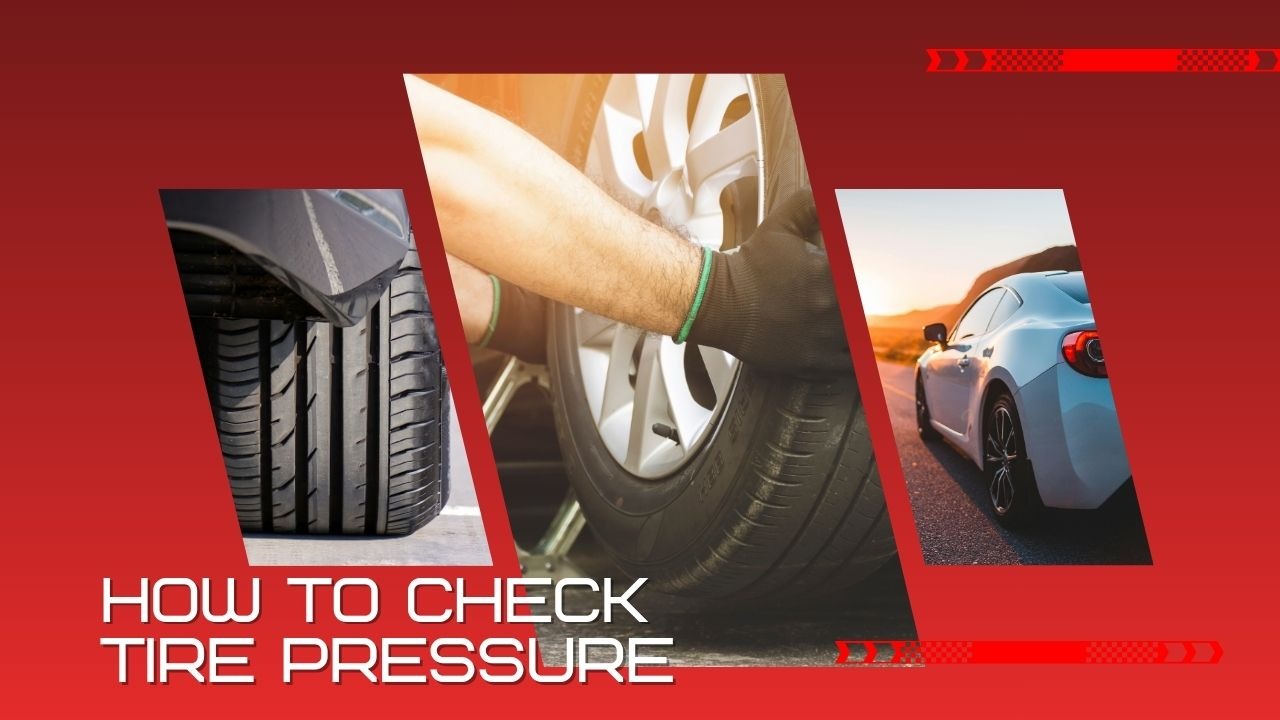
How to Check Tire Pressure Correctly: Guide For Car Owners

  How to Check Tire Pressure

Most drivers check tire pressure only when a tire already looks flat — which is exactly the wrong time to check it. By then you’ve likely been driving on underinflated rubber for weeks, burning extra fuel and wearing the edges of your tread down faster than the center. Understanding how to check tire pressure correctly can save your fuel.

What makes it tricky is that you can’t tell if a tire is under-inflated by simply looking at it. It changes with temperature and must be measured with a gauge. It’s a quick check that only takes a few minutes, and it can increase your gas mileage and tire life. 

Why Correct Tire Pressure Is Essential for Better Mileage 

A tire that is only 15% underinflated can reduce its life by thousands of kilometers and increase fuel consumption by 3 to 4%, the U.S. The Department of Transportation’s NHTSA quotes this data. Overinflated tires aren’t better as they shrink the contact patch with the road, which reduces grip and makes the ride harsher when you run over potholes. 

There’s a tight range that’s actually correct for your car and that size isn’t the number that’s printed on the sidewall of the tire. That figure is the tire’s maximum pressure rating, not the recommended one for your vehicle. 

The correct number resides in two places: a label inside the driver’s door jamb and the owner’s manual. Splitting the number is often given as two numbers – one for the front axle and one for the rear, as the rear often carries a different load. A normal Sedan tyre is inflated to around 30-35 PSI (approx. 2.1-2.4 bar) and for SUV/4X4 or heavier vehicles are usually recommended to be inflated 2-4 PSI more. 

When to Check Tire Pressure for the Best Results 

Tire pressure needs to be measured when they are “cold” — when the car has been stationary for at least three hours or if you haven’t driven more than two miles. Driving causes the air in the tire to heat up, and heat causes air to expand, which reads higher by 4-5 PSI or more depending on how long you’ve been driving. Check pressure immediately after a long drive and you’ll get a number that looks fine but isn’t — the tire will read low again once it cools overnight. 

The best time is early morning, before the car has moved, and before the sun has had a chance to warm the tires either.

Read More :-  How to Improve Gas Mileage: 15 Proven Tips That Actually Save Fuel

Accuracy Starts With the Right Gauge

Gas station pressure gauges on the air pump are well known for being inaccurate — they can be off by 3-5 PSI or more in either direction. A simple digital tire pressure gauge is very inexpensive and well worth having on hand; it eliminates guesswork and provides a consistent reading every time. Pencil-style gauges work too and are cheap and pocket-sized, but they’re harder to read precisely and tend to drift out of calibration faster than digital ones.

If your vehicle comes equipped with a Tire Pressure Monitoring System (TPMS), don’t use it as your sole check. In fact, the warning levels for TPMS are set to announce a single drop of approximately 25% from the recommended tire pressure – meaning that a tire can already be very under-inflated when the dashboard says something. 

Checking Tire Pressure Step by Step

  1. Take off the tire valve cap and place it in a safe place where you won’t lose it. 
  2. Press the gauge down on the valve stem until the hissing stops and you get a steady reading — a brief, uneven press results in an inaccurate reading. 
  3. Compare the reading with the number on the door jamb label for that particular axle (front and rear boots can be different). 
  4. If it’s low, pump in air in short bursts, checking between each — it’s easy to go too far. 
  5. If the pressure is too high, briefly press the small pin inside the valve stem to let some air out, then check again.
  6. Replace the valve cap. It’s not just cosmetic — it keeps out dirt and moisture that can lead to slow leaks, over time. 

Do this for all of the regular tires, and the spare if you have one. The spare is perpetually neglected and often the flattest tire in the vehicle when you actually require it. 

Temperature Changes Pressure More Than People Expect

Tire pressure drops roughly 1 PSI for every 10°F (about 5.5°C) drop in outside temperature. This matters a lot for drivers in North India or anywhere with a real winter — a tire set correctly in October can be noticeably underinflated by December without a single leak involved. 

The reverse happens in peak summer heat, especially in places like Dubai, where tires can run several PSI higher on hot asphalt purely from ambient heat, not overinflation. Checking pressure with the seasons, not just when something feels off, catches both problems before they become a blowout risk or an uneven wear pattern.

Signs You’ve Been Ignoring the Problem

Uneven wear on the outer edges of the tread usually points to underinflation; wear concentrated in the center strip points to overinflation. A car that pulls slightly to one side, feels softer than usual in corners, or seems to be drinking more fuel than it used to are all pressure symptoms before they’re anything else. None of these show up overnight — the build slowly enough that most drivers adjust to the change without noticing it.

The Habit That Actually Works

Checking tire pressure once a month, and always before a long highway trip, catches almost every problem before it becomes expensive. It takes less time than filling a fuel tank and costs nothing beyond the gauge sitting in your glovebox. 

The number on the door jamb is correct for a reason — trust that over the sidewall, over the gas station gauge, and over how the tire happens to look.

Read More :- How to Transfer Car Ownership in India: A Step-by-Step RTO Guide (2026)

Conclusion 

Properly checking tire pressure is one of the simplest and most beneficial maintenance routines. Among other things, it improves gas mileage, prolongs tire life, increases braking and handling, and minimizes the chance of an unplanned tire failure on the road. 

The trick is to measure the pressure when the tires are cold; use a good-quality gauge; and go by the PSI value on your car’s door jamb , not the number on the sidewall of the tire. 

Three minutes once a month can save your money on gas, extend the life of your tires and make every trip safer. For the typical car owner, it’s a small habit that can prevent a lot of bigger expenses down the road, not just something to think about when a warning light comes on. 

Keep a tire-pressure gauge in your glovebox, check all four tires and the spare on the reg, and make correcting tire pressure a normal step in your car-care routine. 

0

Hatchbacks Make a Comeback as GST 2.0 Tax Relief Boosts Demand in India

Hatchbacks Make a Comeback

Hatchbacks Make a Comeback due to drastic policy change in late 2025 which turned around the Indian auto industry. With the changed GST rules alleviating the tax on small cars, affordability once again took centre stage, especially for middle class buyers. With the prices settling and the value for money improving, these small, functional cars again became the go-to cars for first time car lovers and city commuters in the whole nation. 

A Major Tax Reform

The industry’s moment of truth came on September 22, 2025. The Indian GST Council announced a big tax slash to make small cars more affordable to middle class. 

Key Changes in Taxation

Earlier, small cars were weighed down by a complicated tax regime. The new regime simplified this to a great extent:

  • Old Tax Rate: Shipment of goods was 28% GST and additional 1% to 2% cess which took the total tax burden to about 30%. 
  • New Tax Rate: 18% GST fixed rate with no additional cess.
  • The car should be under 4 metres in length and must have an engine capacity of not more than 1200cc in the case of petrol models or 1500cc for the diesel variants. 

Direct Impact on Car Prices

The cut in tax resulted in a nearly instantaneous fall in prices at the showroom. For a lot of families, that just made owning a car went from a distant dream to something they could really afford.

Hatchbacks Make a Comeback

Price Comparison of Popular Models

The tabulation below shows how some of India’s favourite hatchbacks were impacted on-road by the tax reduction: 

Car Model Previous Price (Approx.) New Price (Approx.) Total Savings
Maruti Suzuki Swift ₹8.44 Lakh ₹7.66 Lakh ₹78,000
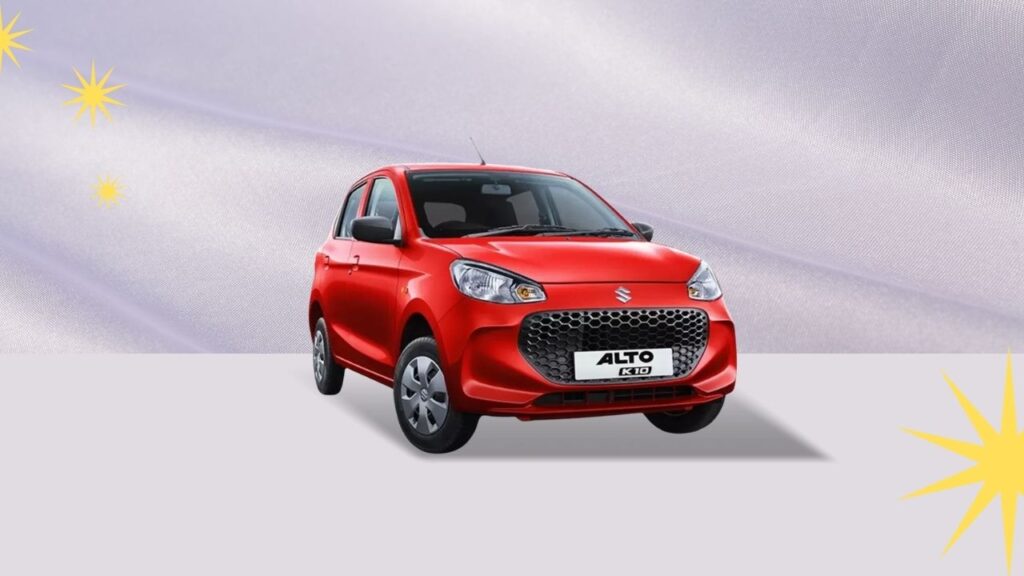
Maruti Alto 25-30% Reduction ₹3.70 Lakh Significant
Maruti S-Presso 25-30% Reduction  ₹3.50 Lakh Significant

Market Performance and Sales Growth

The post-reform numbers tell of a swift turnaround. Fourth Quarter (oz 2025 Nail Hatch) Hatchbacks recorded a significant rise in market share.

  • Market Share Gain: Hatchbacks accounted for 24.4% of total vehicle sales, up from 23.5% earlier this year.
  • Growth on the year-over-year basis remained robust with the top-selling models Hyundai i20 and Tata Altroz witnessing sales growth of 20% over the same period last year. 
  • New Buyers: First-time buyers have risen by 5% at Maruti Suzuki, indicating that the tax relief was well targeted at those graduating from two-wheels. 

The Maruti Suzuki Success Story

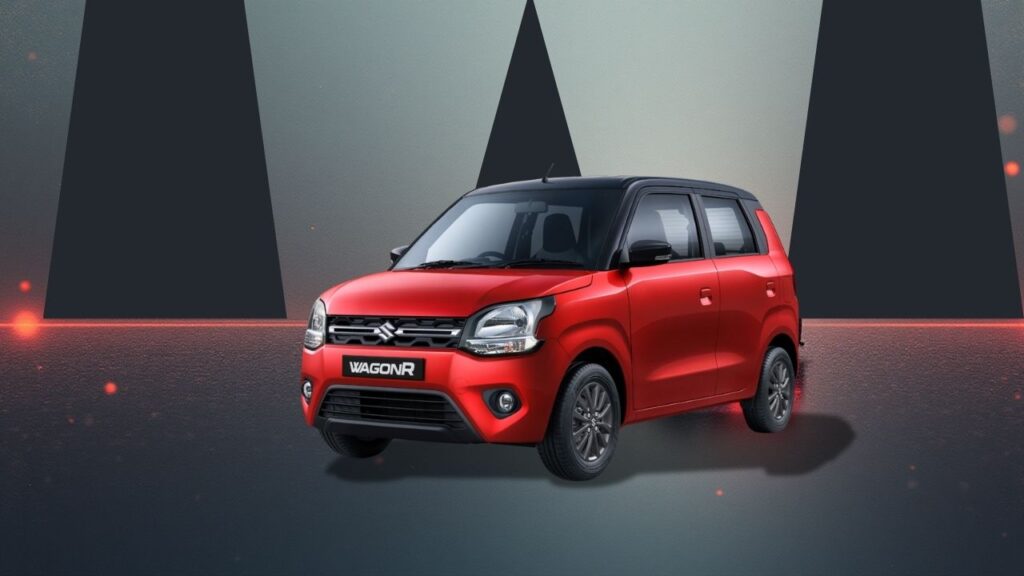
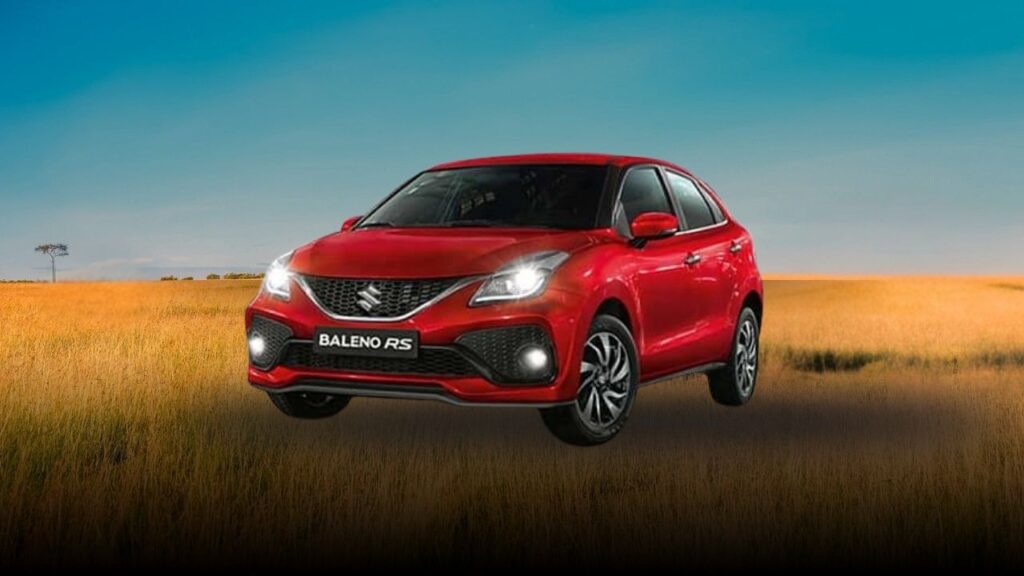
Maruti Suzuki which is the undisputed leader in the small car segment witnessed the most dramatic results. In December 2025, these entry level models alone saw a growth of 91.8% year-on-year. The surge was so high that the waiting period for new cars reached up to six weeks in a few cities. 

The Maruti Suzuki Success Story

Why the Resurgence Matters

It is a retaliation that is more than just about slashing prices and it is in fact addressing the basic Indian consumer psyche. With stringent safety and emission norms pushing up car prices, the middle class had started worrying if it would be able to afford one, and the tax relief significantly brought back these and other consumers. 

At the same time, removing the cascading tax—tax on tax—allowed the entire production line to become more efficient and less costly. But more than anything, it revived the long-nurtured “first car” dream since hatchbacks are the most viable and easiest means to become a four-wheeler owner for lakhs of two-wheeler users across the country. 

Is the Comeback Sustainable?

Although the pace of growth is impressive now, experts are cautiously optimistic. The biggest challenge continues to be the long-term change in consumer taste away from cars and towards SUVs, which a large number of customers consider to be safer or more upscale. 

Outlook for 2026:

  • Tata Motors anticipates its hatchback portfolio to grow in the range of high-teens to 20% in the next few months.
  • Market Correction: analysts are keenly eyeing the January–March 2026 quarter to determine whether this represents the start of a permanent correction in the market or just an over-reaction to the price declines. 

Read More:-  Sultan Hassanal Bolkiah Car Collection: Inside the World’s Largest Garage

Conclusion

The GST 2.0 clarification has breathed new life into the hatchback segment. After killing the small car segment in the navy, the government has stimulated the engine of the Indian car industry by making small cars accessible once again. Can hatchbacks make a full comeback and retake the title from SUVs is yet to be seen, but they are definitely back in the race, for now. 

0

New Tata Safari EV Triple Screen Dashboard Spied – Launch Soon

Published Sep 22, 2026, 9:58 AM
Last Updated Sep 26, 2026, 8:43 AM

Tata Safari EV

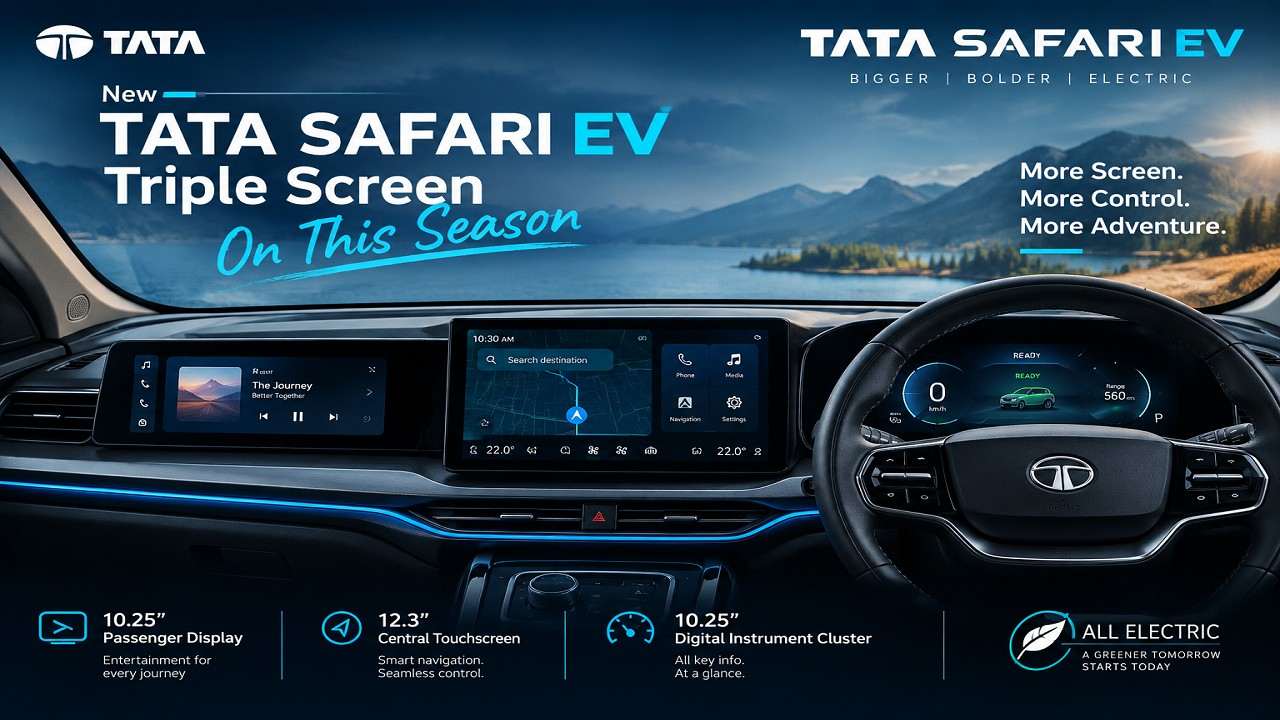
The new Tata Safari EV soon enters the market with three rows and three screens. Since Tata always comes with specific functionality, this time Safari makes an exceptional presence in a seven-seat family SUV segment. Tata hasn’t confirmed the dashboard, the launch date or the price. The outlet speculated that the Safari EV could end up better equipped than the Harrier EV.

What the Spy Shots Show About the Triple Screen Dashboard

Photos credited to Rushlane that show a Tata Safari test mule with a triple-screen layout in the cabin. Nobody at Tata has said which Safari that is. The mule could just as easily preview an update to the petrol and diesel Safari, which has no such setup today. Only the Sierra and Sierra EV carry three screens in Tata’s line-up.

If Tata reuses the Sierra EV hardware, expect a 10.25-inch driver display, a 12.3-inch central touchscreen and a 12.3-inch passenger screen. The last one is the party piece. The co-driver can stream shows or play games, using a phone as a controller or a paired Bluetooth gamepad. It would also give the Safari something the Harrier, which stops at two displays, doesn’t have — a feature that feels fitting for Tata’s flagship SUV. 

The Safari EV spotted with no tailpipe, a side step that the petrol and diesel Safari don’t offer, and the independent multi-link rear suspension borrowed from the Harrier EV. It is an ICE-to-EV conversion on Tata’s Acti.ev+ platform. Software should follow the Harrier EV too. Along with a 540-degree camera, auto park assist, and vehicle-to-load charging are all expected.

BMW i5 LWB On Road Price In Lower Than What Buyers Expected 

New Tata Safari EV Launch Date and Price

The official launch date for the new Tata Safari EV is yet to be announced. It is expected to arrive in a festive-season 2026 so people will pick the new model at the time of diwali at a discounted price. 

Prices of Safari EV are expected around Harrier EV price which runs ₹21.79–30.54 lakh as of September 2026. Now the Safari EV is positioned above it so the starting price could be around ₹22.5 lakh ex-showroom, which can also raise up to ₹26—₹32 lakh.

A ₹22.5 lakh start would leave the Safari EV under ₹1 lakh above the Harrier EV’s base price. That’s thin for a longer three-row flagship, so read ₹22.5 lakh as a floor, not a forecast.

The Harrier EV as Blueprint of Battery, Range and Drivetrain

Expect the Safari EV to carry over the Harrier EV’s 65kWh and 75kWh batteries. On the Harrier EV, the single-motor rear-drive versions make 235bhp, while the 75kWh dual-motor version makes 390bhp and 504Nm. It is unconfirmed on AWD output, so check Tata’s own launch specs sheet when it arrives. 

MIDC-certified range on the Harrier EV is 538km for the 65kWh RWD, 622km for the 75kWh AWD and 627km for the 75kWh RWD. The larger, heavier Safari EV is likely to land slightly lower. Harrier EV’s real-world range is 400–500km, which is the more honest planning figure.

The bigger question is how Tata has packaged everything. The battery placement could affect under-thigh support and seating posture in the third row, so buyers shouldn’t expect the same level of comfort back there. 

Safety is another unknown for now. The Harrier EV scored five stars in Bharat NCAP, including full marks for adult occupant protection, but there’s no crash-test result for the Safari EV yet. 

JLR Landing A Land Rover Defender Pickup Truck In Us

New Tata Safari EV vs Mahindra XEV 9S

The XEV 9S is the direct rival, and it’s already on sale. It launched at an introductory ₹19.95 lakh with bookings opening in January 2026. Prices now run ₹20.65–30.90 lakh as of September 2026. 

Battery options are 59kWh, 70kWh and 79kWh, with claimed ranges of 521km, 600km and 679km. The 79kWh version makes 282bhp, and every version is rear-wheel drive.

New Tata Safari EV (expected) Mahindra XEV 9S
Price (ex-showroom) Unconfirmed; ~₹22.5 lakh floor estimate ₹20.65–30.90 lakh
Battery 65 / 75kWh 59 / 70 / 79kWh
Claimed range Slightly below Harrier EV’s 538–627km MIDC 521 / 600 / 679km
Drivetrain RWD and AWD RWD only
Triple screens Spied, unconfirmed Three 12.3-inch screens
Availability Festive season 2026, unconfirmed On sale now

The XEV 9S has real compromises. Its third row suits children or shorter adults, and the boot is very small with all three rows in use. The real-world mileage delivered at 510km, about 75% of the claim. Mahindra also went after the entry price: from 28 August the XEV 9S starts at ₹12.65 lakh ex-showroom under a battery-subscription scheme, plus a battery rental fee.

The triple screen, then, is a catch-up move. Mahindra’s XEV 9S offers three screens from the base variant. Tata’s better card is the Harrier EV’s dual-motor hardware. If the Safari EV inherits it, it would be the only three-row electric SUV here with all-wheel drive.

What Maruti Suzuki Three-Row SUVs Offers in India

The e Vitara is the only Maruti Suzuki EV which is on sale in India, and it’s a five-seater. It costs ₹16.19–20.21 lakh as of September 2026. It comes with 49kWh and 61kWh batteries, ARAI-rated at 440km and 543km, and earned five stars from Bharat NCAP. A Maruti EV buyer who needs seven seats has nothing to buy, and we found no confirmed launch date for a three-row Maruti EV.

So the cross-shopping happens with Maruti’s petrol and hybrid seven-seaters, which sit at very different price points:

  • Ertiga: ₹8.9–13.04 lakh. Claimed mileage is 20.3–20.51kmpl. The third row is cramped for taller passengers and the boot shrinks with all rows up.
  • XL6: From ₹11.62 lakh. It is a strict six-seater with second-row captain seats.
  • Invicto: ₹24.97–28.61 lakh, a hybrid available in 7- and 8-seat layouts. It’s a rebadged Toyota Innova Hycross.

The Ertiga comparison is a money question. Against a ₹22.5 lakh Safari EV, the gap is about ₹13.6 lakh before insurance and registration. Whether the EV recovers depends on your daily distance and your electricity tariff, and few families drive enough to close a gap that size. The Invicto is the real cross-shop. It lands squarely inside the Safari EV’s likely price band and asks you to plug in nothing.

Conclusion

If you want three rows and a plug before the festive season, the XEV 9S is the only one you can actually buy today, and its subscription pricing lowers the entry cost if you accept a per-kilometre battery fee. 

If all-wheel drive matters to you, or you’re already committed to Tata, waiting is reasonable. The Harrier EV’s dual-motor setup suggests Tata can offer AWD here, but no Safari EV variant list exists yet.

If your ceiling is around ₹15 lakh, none of this applies. The Ertiga and XL6 fit your budget and the Safari EV won’t. If you’re spending ₹25 lakh and don’t want an EV, the Invicto is your comparison, not the Safari.

One thing the triple screen should not decide: the Mahindra already has one, so it doesn’t separate the two cars. What separates them is price, the third row and range in the real world, and Tata has published none of those.

So there is not a fixed answer on which car you should buy or waiting for the new Tata Safari EV is the last option. List out your priorities and then decide.

The new Tata Safari EV brings a triple screen dashboard on a Harrier EV’s dual-motor setup that marks it as Tata’s SUV flagship model. But any specifications and prices are not listed by Tata, the inside reports and spied photo is clearer to know what’s coming into the market under the most trusted brand tag.

0

Tata Avinya EV Specs and Features: Range, Technology, Design, Safety, Performance Details

Published Dec 24, 2025, 10:13 AM
Last Updated Apr 7, 2026, 11:05 AM

Tata Avinya EV Specs and Features

Electric cars aren’t just about saving on gas or reducing emissions—they’re about making a bold statement. Try to imagine driving on the crowded city streets in India and turning heads not because of the sound of a roaring engine but the bold, futuristic form that looks like it came out of a sci-fi movie. That’s the kind of impact Tata Avinya EV wants to make.

The Avinya is more than just Tata Motors’ next electric vehicle – it is a bold vision for the future. The vehicle, which is expected to be released sometime in 2026 or 2027, will be a giant leap for electric mobility in India. Tata’s next-generation electric vehicle platform, the Gen 3 EV platform, serves as the foundation for the Avinya, which brings together cutting-edge technology, sustainable luxury, long-distance performance, and a human-centric design philosophy. From screen-free cabin innovation to its remarkable driving range and next-gen safety features, the Tata Avinya is not just another electric car — it is Tata’s vision for how the future of mobility could be. 

Range That Actually Goes the Distance

A big concern when purchasing an EV is range anxiety—the fear of being stranded on the road with a dead battery. Tata has eliminated that worry with the Avinya. This high-end electric car has a stated minimum range of 500 kilometers on one full charge. Whether you’re planning a weekend getaway to Agra or a long drive to the hills, the Avinya’s range won’t disappoint.​

Range That Actually Goes the Distance

Extreme fast charging performance is a real game changer. Avinya can be charged to 80% in under 30 minutes enabled by next-generation battery technology.  Imagine pulling off the highway for a brief coffee break at a charging station, and coming back to a car charged for another 500 kilometers. That’s the kind of convenience that could make electric vehicles genuinely here to stay on Indian roads. 

Amazing & Beautiful Design 

The Avinya has a signature look and is genuinely stunning. Drawing on the clean profile of a catamaran, this machine epitomizes agility, equilibrium, and futuristic technology. Now the genius of Tata is how it combines several vehicle types in a single package.​

It’s essentially the best of three worlds: the nimble handling of a premium hatchback, the utility of an SUV, and the generous space of an MPV. Tata dubs this “mixology,” and it’s a neat way of developing a vehicle that doesn’t sit comfortably within traditional segments—it breaks them. 

Amazing & Beautiful Design 

The bodywork has a futuristic shape that looks amazing and is aerodynamically efficient, having a direct effect on improving the range and the performance. Inside, the design ethos is flashy to functional. The Panoramic Sky Dome roof brings natural light into the cabin enhancing the sense of space. Standard on all models, the signature butterfly doors open wide, welcoming you into an authentically luxurious lounge-like cabin that delivers comfort for every journey. 

Eye-Catching Technology

Here is where Avinya defies conventional wisdom — it has virtually no screens. In an era where car makers are competing to fill dashboards with massive displays, Tata has gone in the opposite direction, and it’s surprisingly innovative.

Instead of distracting displays, the Avinya favors intuitive voice-based commands for major functions. This design for a screenless cabin is based on true human-centered principles. Less time looking at screens means less distraction, less motion sickness on long rides and a more relaxing driving experience. It’s technology that works silently behind the scenes as you keep your eyes on the road.​

The Avinya is powered by the Gen 3 platform, which delivers high-level connectivity and advanced driver assistance systems (ADAS) as well as artificial intelligence (AI) features that can enhance — but never overwhelm — your driving experience. Vehicle-to-Load (V2L) and Vehicle-to-Vehicle (V2V) technology are now inbuilt, ensuring that you remain connected and safe while on the road. 

Read More:-  Shubman Gill Car Collection: Inside the Luxury Garage of India’s Cricket Star

Safety That Puts Your Mind at Ease

Safety was obviously the key focus in the Avinya’s design. Based on Tata’s Gen 3 electric platform, the car boasts of high structural safety and features advanced waterproofing and dust proofing based on global standards. This is very important for Indian roads where you can run into anything from flooding monsoons to arid dirt tracks.​

The active safety system also comprises a 360-degree camera, dual airbags (six in the range-topping variants), overspeed warnings and seat belt reminders. They’re not just glitzy add-ons – they’re actual safety nets that shield you and your family every time you take a drive. 

Performance That Doesn’t Compromise

Based on the newly developed Gen 3 electric platform tailor-made for battery electric vehicles, the Avinya offers exhilarating performance without the noise and emissions of standard powertrains. The architecture is made of lightweight materials with optimized structure for delivering efficient power with minimum mass.

Range That Actually Goes the Distance

Tata has designed this EV for all-wheel-drive availability on select variants, providing you with the assurance on multiple terrains – smooth city highways to rough country trails. Each component is finely tuned under the “Minimize-Maximize-Optimize” concept to deliver the best ranges and performance. 

Premium Comfort with Sustainability

Go in and you’ll see something immediately different—everything is tailored to your wellbeing. The interiors are embellished with sustainable material which reflects the environmental responsibility of Tata. Introducing an integrated aroma diffuser for a multi-sensory experience that is truly calming, every drive feels like a retreat for well-being and not just a commute.​

With its clean lines and the unencumbered minimalist design, the flat floor creates a huge amount of space. The two spokes in the steering wheel are home to touch controls that allow you to keep your hands on the wheel. 

Conclusion

The Tata Avinya EV signals a real shift in what is possible when designing and engineering electric vehicles. With more than 500 km range, ultra-fast charging, revolutionary design, intelligent technology and a real emphasis on human well-being, it ticks all the boxes that Indian car buyers have been looking for.

With a starting price of ₹ 30 lakh and going all the way up to ₹ 60 lakh, the Avinya will bring high-end electric motoring to the masses. This is not just a car – it’s a statement of how Tata Motors defines the future of mobility in India and globally. If you’re been longing for a electric vehicle that’s practical, luxurious, innovative in design and green in the environmental sense, well your wait is almost over. 

0

Toyota RAV4 vs Honda CR-V: The Ultimate SUV Battle of 2025

Published Aug 30, 2025, 7:33 AM
Last Updated Apr 13, 2026, 12:24 PM

2025 Toyota RAV4 and Honda CR-V parked side by side, front angle view, comparing SUV designs

These two exciting models of SUVs have come with outstanding features and an impressive look from exterior to interior. Toyota RAV4 vs Honda CR-V offer a powerful performance at nearly the same price. Both SUVs are a defined segment of practicality, reliability and fuel efficiency. They both offer multiple variants for the buyers to assess the full potential of automotive engineering.

Deciding the vehicle which aligns with your priorities is hard but these two titans SUVs are offering an impressive performance. They offer more advanced features and powerful driving experience with their hybrid models, so dive deep into their features before buying one.

Both vehicles are delivering more about fine-tuning rather than big overhauls. The RAV4 is focusing on substantial interior and tech upgrades where it falls behind the rivals. Now buyers can have modern and premium experience as it provides tech and updated interior. Honda CR-V had already launched a redesign model in 2023 but it is giving a refinement in 2025 with a spacious and comfortable interior.

Read More:  How to Protеct Car from Sun? Simplе Tricks to Bеat thе Hеat

Performance and Engine

The 2025 Toyota RAV4 and Honda CR-V comes with both diesel and hybrid engines that deliver powerful performance.

A 2.5-litre engine of 2025 Toyota RAV4 offers a powerful speed of 203 hp and 8-speed automatic transmission delivers outstanding performance on the road. The. RAV4 hybrid offers 2.5-litre engine with electric motors to produce a combined 219 horsepower. The RAV4 prime model comes with  an impressive combined 302 horsepower for robust speedy performance. It becomes more attractive than other variants. 

Close-up of the 2025 Toyota RAV4 2.5L engine under the hood

Image credit: Toyota

A 1.5-litre turbo engine of 2025 Honda CR-V delivers 190 horsepower and 179 lb-ft of torque. It has an impressive engine and turbo drivetrain to give you a better experience on the road. Honda’s hybrid system produces 204 horsepower which make it more reliable and well-functioned to deliver a seamless experience. 

Fuel Economy

Gasoline Models: The RAV4’s base model delivered an estimated EPA of 27 city / 35 highways MPG. The CR-V comes with EPA-estimated 28 city / 34 highway MPG. so it shows that CR-V is ideal for city driving. 

MPG comparison chart for 2025 Toyota RAV4 and Honda CR-V gasoline models

Image credit: Automobiles Honda

Hybrid Models: The RAV4 Hybrid model gets 41 city / 38 highways MPG with its EPA-estimated. The CR-V Hybrid also has an impressive mileage of EPA-estimated 40 city / 34 highway for its AWD model. 

Both deliver outstanding fuel efficient models. The RAV4 prime ability to drive on pure electricity for a long distance is a unique approach.

Interior and Technology

The Honda CR-V is defined with its modern and minimalist interior design for years. It offers 41 inches space for its rear-seat passengers while RAV4’s has slightly less space of 37.8 inches. The same difference with their cargo spaces, CR-V has 76 cubic feet with folded and RAV4 has 69 cubic feet with folded seats.

Spacious rear seating of 2025 Honda CR-V with legroom

Image credit: Automobiles Honda

Both offer advanced functions and larger infotainment systems. Wireless connectivity across multiple devices and a high quality sound system which makes your journey fun.

Safety and Features 

The RAV4 comes with driver-assistance features including pedestrian detection, alert for lane departure, and dynamic cruise control.

Driver using Toyota RAV4 with lane departure alert and adaptive cruise control

Image credit: Toyota

The CR-V is equipped with similar functions including emergency brake system, alert for lane departure, adaptive cruise control, and monitoring rear cross traffic on most trims.

Price of Toyota RAV4 and Honda CR-V

Both models’ pricing value is depending on the region and trim but you can check their approximate value in 2025.

Toyota RAV price is around $31,000 for the base model and it can go up around $39,305 for hybrid models.

Hybrid CR-V starting price is around $31,550 and it can go up to $36,450 for a hybrid model.

Feature 2025 Toyota RAV4 2025 Honda CR-V
Starting MSRP (Gasoline) ~$30,645 ~$31,550
Starting MSRP (Hybrid) ~$32,600 ~$34,650
Standard Engine 2.5L 4-Cylinder 1.5L Turbocharged 4-Cylinder
Horsepower (Gasoline) 203 hp 190 hp
Horsepower (Hybrid) 219 hp (Total System) 204 hp (Total System)
Torque (Gasoline) 184 lb-ft 179 lb-ft
Torque (Hybrid) 149 lb-ft (engine) + 89 lb-ft (electric) 247 lb-ft (electric motor)
Transmission 8-Speed Automatic Continuously Variable Transmission (CVT)
Fuel Economy (Gasoline FWD) 27 city / 35 hwy MPG 28 city / 34 hwy MPG
Fuel Economy (Hybrid AWD) 41 city / 38 hwy MPG 40 city / 34 hwy MPG
Drivetrain FWD / AWD (Gas), AWD (Hybrid) FWD / AWD (Gas and Hybrid)
Max. Cargo Space 69.8 cu-ft 76.5 cu-ft
Max. Cargo (Behind Rear Seat) 37.6 cu-ft 39.3 cu-ft
Rear Legroom 37.8 inches 41.0 inches
Standard Infotainment Screen 8-inch (Gas), 10.5-inch (Hybrid/select trims) 7-inch
Available Infotainment Screen 10.5-inch or larger 9-inch
Standard Safety Suite Toyota Safety Sense 3.0 Honda Sensing
Notable Features RAV4 Prime (PHEV), Larger hybrid display, JBL Audio (optional) More rear space, refined hybrid, Bose Audio (optional)
Max. Towing Capacity 1,500 lbs (Gas), 1,750 lbs (Hybrid) 1,500 lbs (Gas), 1,000 lbs (Hybrid)

Conclusion

Both cars are offering incredible features with comfortable interior spaces, making an exceptional compact SUVs that holds a great value. Toyota RAV4 vs Honda CR-V is not a debate but your journey partner, so choose which you prefer the most. The best way to decide is to take a test drive before buying it.