0

Mahindra Car Discount Price February 2026: Up to ₹2 Lakh Off on Thar, Scorpio N & XUV 3XO

Published Feb 16, 2026, 1:00 PM
Last Updated Apr 7, 2026, 6:22 AM

Mahindra Car

If you have been walking around in the cities of India then you must have felt the changing times with Mahindra Car Discount Price. It’s not the traffic, it’s the metal that’s driving through the traffic. By February 2026, Mahindra & Mahindra isn’t merely peddling “rugged Jeeps,” it is topping the Indian SUV charts with a dazzling cocktail of hi-tech safety and raw brawn.

But here’s the real kicker: If you happen to be in the market for a new car this month, you are poised at a monumental financial crossroad. With “Model Year 2025” (MY25) clearances and shinier new 2026 models on the way, it’s a fortune literally to be saved, or lost, based on how you play your cards.

Let’s take a look at the current Mahindra Car Discount Price stable and see which one is worth your time. 

Why the Big Discounts on Mahindra Now?

February serves as a kind of a “bridge” month in the automobile industry for the “vintage” 2025 models and the new 2026 models.

To make way for the new models, Mahindra is rolling out an Inventory Correction drive. They are offering steep discounts on 2025 stock—up to as high as ₹2.00 Lakh to shield the premium pricing of their 2026 models.

The Golden Rule for Feb 2026: If you’re a 5+ year+ driver, buy MY25 Stock. Those huge upfront savings more than make up for the slight dip in resale value you’ll take down the road.

The February 2026 Discount Landscape at a Glance

Vehicle Platform Primary MY25 Incentive Primary MY26 Incentive Strategic Implication
Thar Roxx (5-Door) Up to ₹2.00 Lakh (Diesel) ₹25,000 – ₹75,000 Aggressive push to clear high-value diesel inventory; protecting petrol margins.
Thar (3-Door) Up to ₹1.25 Lakh (AWD) ~₹30,000 (Accessories) High incentives on AWD to counter cannibalization by the 5-door Roxx.
XUV 3XO Up to ₹80,000 (AX7L) ₹20,000 – ₹40,000 Targeted discounts on top-spec variants to compete with Nexon/Brezza pricing.
Scorpio N Up to ₹1.00 Lakh (Petrol) ₹20,000 – ₹30,000 Heavy incentives on low-mileage petrol variants; diesel demand remains organic.

Thar 3-Door vs. Thar Roxx

The thar isn’t just for the weekend off-roader anymore, it’s a family statement. But with the arrival of the 5-door Thar Roxx, the range is now divided between two strikingly different vibes.

5-Door The Thar Roxx (5-Door)

This is the champion of the “Safe Lifestyle.” It recently clinched a 5-star Bharat NCAP rating, which makes it one the safest SUVs you can own on Indian roads.

Mahindra is going full diesel, the deal. Get up to ₹2.00 lakh in benefits on MY25 Diesel 4WD models.

Reality Check: A top-end Roxx will cost you anywhere around ₹26–27 Lakh on-road, 10–20% RTO. 

The Thar 3-Door

The OG is now being overshadowed by its larger brother. To get it going, Mahindra is providing a discount of up to ₹1.25 Lakh on the AWD variants.

Insider Tip: Big mid 2026 facelift coming. If you want the latest tech (LED projectors and digital clusters), wait. If you want a legendary mechanical beast at a bargain buy the present 4WD and go. 

The “Over-Spec” Overachiever: XUV 3XO

If you want a compact SUV that’s punching way above its weight class, the 3XO is your best bet. It is taking on the Nexon and Brezza, but is doing so with “big car” pretensions.

  • The “Skyroof”: It enjoys the biggest panoramic sunroof in its class – a major selling point for Indian buyers.
  • Performance: Most of the rivals are left behind by the 130 PS 1.2L mStallion engine.
  • The Sweet Spot: The AX7L Petrol is being offered with discounts packages worth up to ₹80,000 for the much-awaited MY25 units. At about Rs 16 Lakhs onroad price approximately, it brings you Level 2 ADAS and luxury-tier technology typically available for Rs 10 Lakhs more. 

Read More:- Maruti Suzuki Discount Feb 2026: Swift, Fronx & Brezza Offers Explained

The “Big Daddy” Presence: Scorpio N

The Scorpio N holds strong as the undisputed heavyweight champion in ₹15–25 Lakh category. But there’s a particular pattern emerging here: The Petrol Paradox.

While the mHawk Diesel gets all the attention for its torque (280 Nm to 450 Nm) and fuel efficiency (~10-17 kmpl), the 200 bhp Petrol mStallion is a speed demon and a thirsty one. Hence, to compensate for the costlier running expenses, Mahindra is providing a huge discount of ₹1 Lakh .

Pro Tip: For those who drive less than 10,000 km a year, that ₹1 Lakh discount on the Petrol Scorpio N more or less covers your fuel for the next two years. It is a “hidden” value play that nobody really notices and most people don’t understand. 

Which One Should You Buy?

Buy what is best for you and don’t make your wallet exhausted. Check out the recommendation models with specific quality that are worth your money.

Buyer Profile Recommended Model Why?
The Value Hunter MY25 Thar Roxx Diesel Peak discounts (₹2L) on a 5-star safety rated flagship.
The Tech Geek XUV 3XO AX7L Segment-first ADAS L2 and Panoramic “Skyroof.”
The Highway Cruiser Scorpio N Diesel Unmatched road presence and long-term resale value.
The Purist Thar 3-Door AWD High incentives now before the 2026 facelift resets prices.

Conclusion

The February 2026 options market is focused on timing, especially with Mahindra Car Discount Price. With BNCAP safety ratings as standard across the majority of the range, you are not just buying a rugged vehicle, you are buying peace of mind. Whether you’re looking at the Carbon Edition Scorpio, or just a base 3XO, the window to grab a MY25 deal is closing fast. 

Sharey Khan

Sharey Khan is an IT entrepreneur and petrol head & a car enthusiast. With a special focus on car-related content, he combines his deep passion for vehicles with a talent for crafting informative, engaging, and easy-to-understand content. His writing is driven by a genuine love for cars and he is committed to providing readers with accurate, up-to-date, and trustworthy information that empowers smarter driving decisions. 

Leave a Reply

Your email address will not be published. Required fields are marked *

0

Kia Carnival Hybrid Price In India And Additional Cost For Accessories

Kia Carnival Hybrid

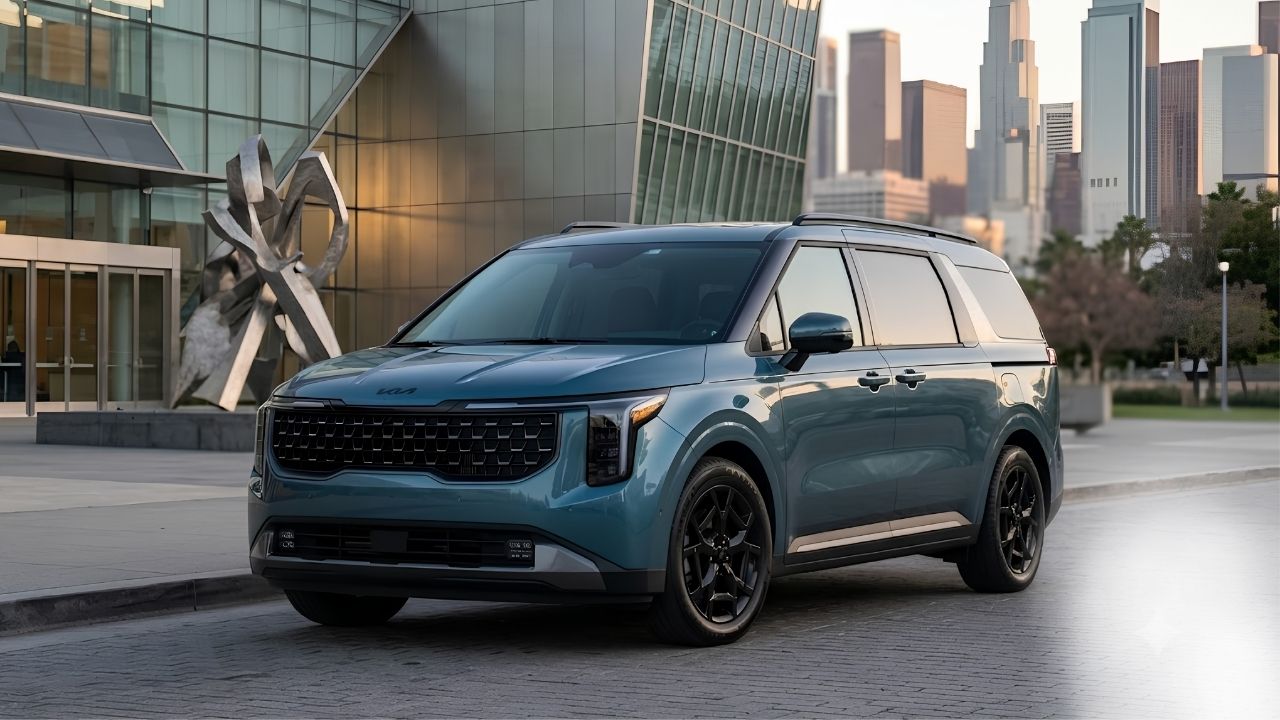
Waiting for two days more for the hybrid is worth it if you are buying for city errands. Kia Carnival Hybrid price in India is not officially announced yet, you will know at the time of launch on September 4, 2026. Expected to arrive with more high-end features, better mileage, and comfortable seating along with smart driving assistance.

Other than that, there are essential accessories that keep the interior manageable. Additional cost for accessories mostly added on-road price but check whether you need it or not. In this segment, it could be expensive but some of them are non-negotiable so let’s see the important accessories cost and Kia Carnival Hybrid expected price.

Will Carnival Hybrid be More Expensive Than Its Diesel Model?

Kia hasn’t published pricing for the Carnival Hybrid. The car will sit alongside the existing diesel model rather than replace it on September 4. We now know today is diesel Carnival’s ex-showroom price of ₹59.65 lakh, sold in a single fully-loaded Limousine Plus trim. The on-road price will sum up to around ₹70-75 lakh depending on your city’s registration and insurance costs.

Automotive industry reporters suggest that hybrid models put at an accessible entry point into Carnival lineup rather than premium over diesel and this positively makes sense because parallel-hybrid systems are usually cheaper to build at scale than a big turbo-diesel and 8-speed gearbox. 

A working estimate of roughly ₹55-65 lakh ex-showroom is a reasonable range since it’s a hybrid model but it’s not a quote so treat this range as a guess point. Wait for Kia’s confirmed range on the 4th before making a decision to buy.

Read More 👉 New Kia Niro EV Price 2025 – Full Details, Features & Latest Updates

Features And Performance

Most of the features and specifications of hybrids are similar from diesel Carnival including body size but we can expect powerful powertrains that gives you new experience.

Powertrain

The Carnival Hybrid swaps the current 2.2-litre diesel (193 PS, 441 Nm, paired with an 8-speed automatic) for a 1.6-litre turbo-petrol engine working with a 54kW electric motor through a 6-speed automatic. 

Combined output is expected to land around 242 HP and 367 Nm, matching the figures Kia quotes for this powertrain in international markets. 

Kia Carnival Hybrid Features And Performance

Fuel Economy

The system also gets three levels of regenerative braking, which is what’s expected to close the efficiency gap with the diesel — global specs suggest fuel economy near 14.5 km/l for the hybrid, close to the diesel’s ARAI-rated 14.85 kmpl, but with petrol running costs and none of the diesel’s low-end clatter.

Body Size & Exterior

Dimensions carry over largely unchanged: 5,156mm long, 1,994mm wide, 1,740mm tall, on a 3,091mm wheelbase — so the hybrid isn’t a smaller, more city-friendly Carnival. It’s the same big MPV with a different heart.

Carnival Hybrid Rival in The Indian Car Market

If you’re cross-shopping, the decision splits pretty cleanly along how you actually drive. The diesel Carnival’s 441 Nm of torque and proven 8-speed gearbox still make sense if you’re doing long, loaded highway runs regularly — that’s where diesel torque earns its keep. The hybrid makes more sense if your driving is a city-highway mix, since the electric motor and regen braking do their best work in stop-start traffic where the diesel is least efficient.

In this segment, one more name is sitting on the top: Toyota Vellfire, pricing starts at ₹1.20 crore and runs to ₹1.30 crore ex-showroom so it’s not a really competitor of Carnival in price. In functions, it comes with a 2.5-litre hybrid engine that makes 190 HP of power with 240 Nm torque which is less than what Kia offers, but Vellfire claimed 19.28 kmpl with a more opulent cabin in higher trim.

If your budget tops out anywhere near ₹60-75 lakh, the real comparison is Carnival diesel vs. Carnival hybrid, not Carnival vs. Vellfire.

What’s Different to Look At, Not Just Drive

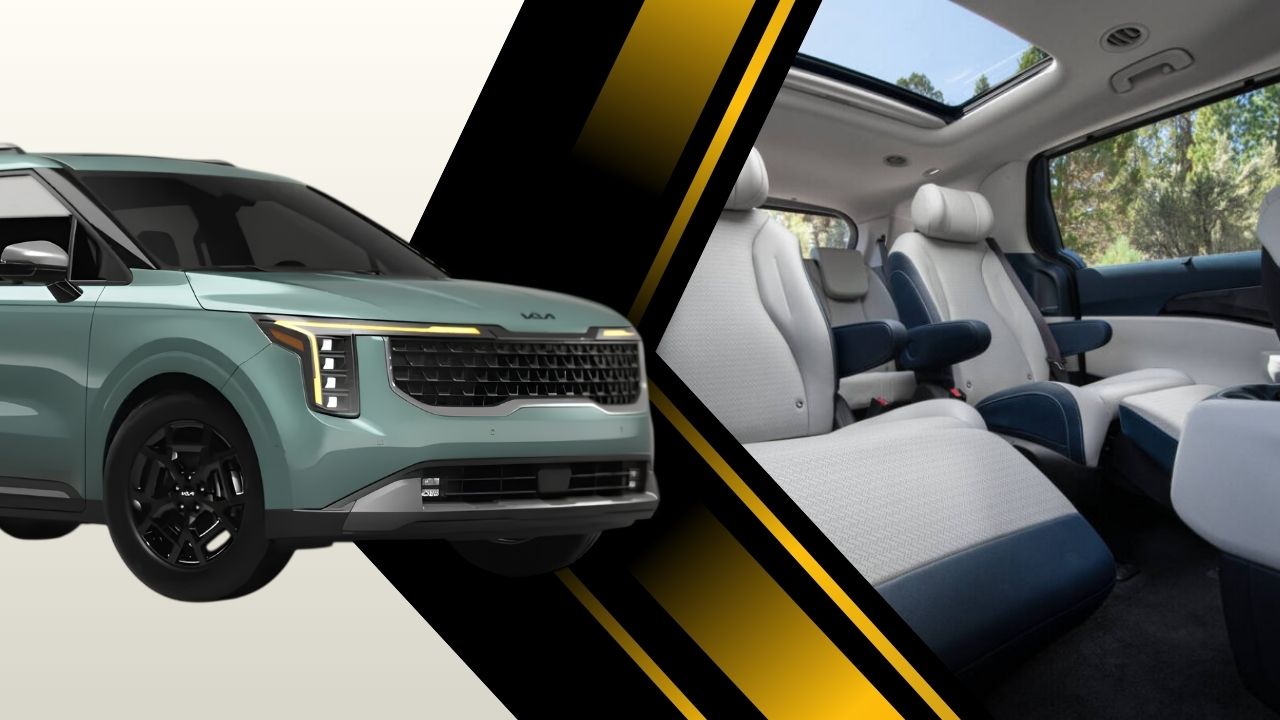
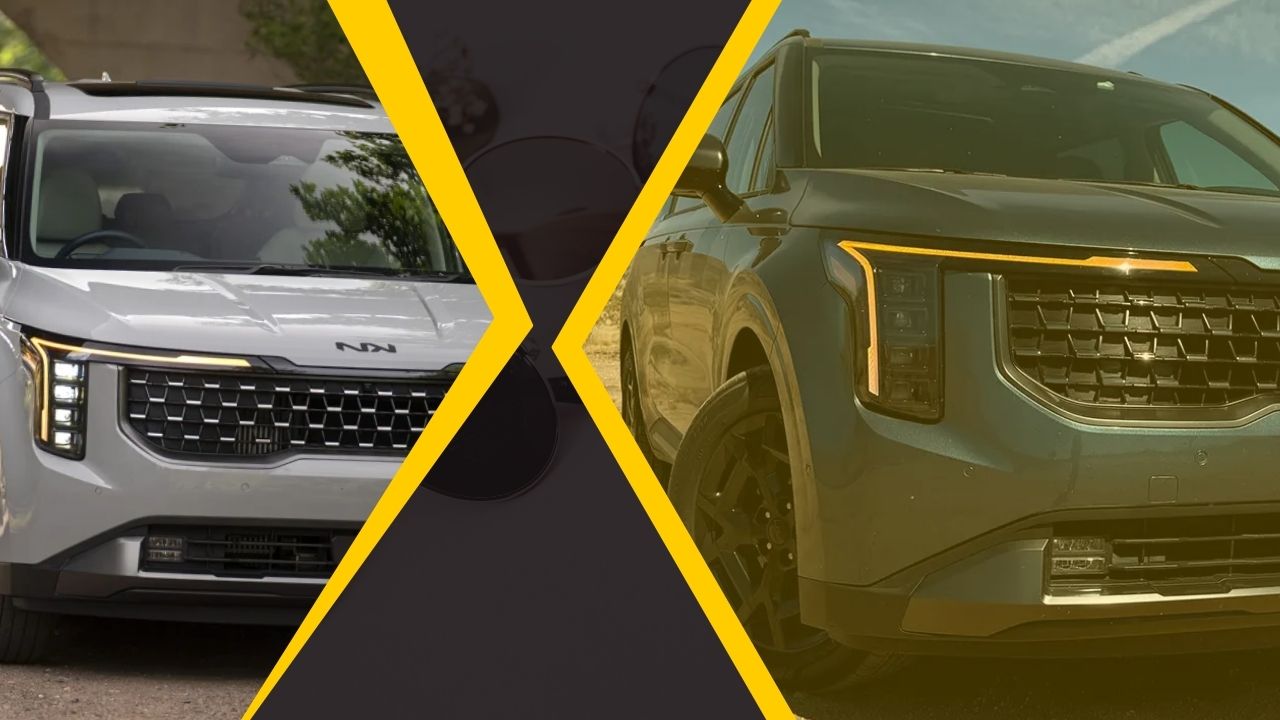
The hybrid isn’t just a badge change. It will be a more futuristic and sleek-packed design with 19-inch glossy black alloys and a Dark Edition trim option. Front and rear full LED lighting is making a presence remarkably extinguish. For higher trims, relaxed second-row seating with power adjustment, recline, and ottomans, plus heating and ventilation is a peak comfort. Kia is leaning into chauffeur-driven appeal rather than turning it into a conventional family MPV.

Read More 👉 EMI vs Lease: Which Is Better If You Plan to Upgrade Your Car Every 3 Years 

Additional Cost For Kia Carnival Hybrid Accessories

Accessories are a separate line item worth buying along with a new car to secure it from daily dirt and keep it refreshed. It’s mostly added in an on-road price quote but Kia hasn’t published a hybrid-specific accessory catalogue yet. So we should look into the Kia-authorized accessory for the current Carnival which is a reasonable stand-in given the hybrid shares the same body and cabin.

Essential Accessories to keep the car clean and refreshed while finishing city errands or going on a longer trip, comfort and styling comes from little care and small things. If you are buying a Kia Carnival Hybrid. Keeping the add-ons in the list will increase a little money but it will be worth it.

Accessory Price Range (₹)
Lifelong 7D floor mats (full set) 8,000 – 10,000
Leather-look seat covers (full set) 8,000 – 10,000
Car garbage bin 760 – 900
Tissue box holder 410 – 480
Microfiber cloths (set) 200 – 420

If you want more styling and make it look like a premium car then adding a few more things like a genuine chrome accessory kit, door visors, or a body cover is enough to make your car attractive. There is no fixed mention price because it is quoted per-order rather than listed at a fixed price. So ask your dealer for an itemized accessory bundle rather than guessing.

One outlier worth a premium aftermarket horn upgrade with relay was priced around ₹2,600 — a small but common add-on for MPV owners who find the stock horn underwhelming.

Kia Carnival Hybrid Accessories

None of this is optional-optional if you’re buying a car in this price bracket — dealers routinely bundle ₹40,000-60,000 worth of mats, covers, and styling extras into the on-road price quote, and it’s easy to miss that this is negotiable.

Should You Book Now or Wait Two Days?

If you’re not in a hurry, waiting until September 4 costs you nothing and gets you a real number instead of a range. If you’re already leaning diesel because you need the towing torque or you’re not interested in a wait, there’s no reason the hybrid launch should change your plans — you’re not cross-shopping the same use case anyway. 

Either way, treat every “Carnival Hybrid price” you see published before the 4th, including the estimates in this piece, as a placeholder until Kia says otherwise.

Read More 👉  Ceramic Coating vs PPF For Kia Carnival Hybrid 2026 

Conclusion

The Kia Carnival Hybrid is worth waiting for if most of your driving happens in the city, especially if you want a quieter, smoother MPV without giving up the Carnival’s space and premium features. But don’t book it based on the ₹55-65 lakh estimate yet — Kia’s September 4 pricing will determine whether the hybrid is genuinely better value than the ₹59.65 lakh diesel.

If your priority is highway touring, full-load performance and maximum torque, buy the diesel. For a mixed city-highway lifestyle, the hybrid is the version to watch. For additional cost for the accessories to buy along with a new car can be around ₹40,000-60,000 other than the cost of the car.

So wait for the hybrid’s official price point from Kia then compare it with the final on-road price of diesel, if Kia manages to keep the hybrid near the ₹60 lakh mark, that’s a win-win for urban buyers.

0

How to Improve Gas Mileage: 15 Proven Tips That Actually Save Fuel

How to Improve Gas Mileage

Petrol in Delhi is holding at ₹105 a litre this week, and Mumbai drivers are paying past ₹111 — rates that haven’t moved much since the last OMC revision in May 2026. You are probably wondering about how to improve gas mileage of your car. Because it actually helps you save money. It’s the difference between a ₹2,000 tank lasting your commute eight days or eleven. 

Most of what kills mileage in Indian driving conditions has nothing to do with the engine under the hood and everything to do with habits you can fix by this weekend. Let’s understand the 15 proven tips that genuinely move the needle on gas mileage, ranked roughly by how much difference they make.

1. Ease Off the Gas Pedal

Road rage was one of quickest means to empty a gas tank without actually going any faster. Quick brakes and acceleration with tight force can actually let your engine work harder than it has to. That extra effort means more fuel consumption, more wear on your brakes and tires

Research shows that aggressive driving can lower your gas mileage by up to 30% on the highway and more than 30% in city traffic.

2. Keep Your Tires Properly Inflated

When tires are underinflated, if they don’t have enough air roll easily they require more push and for that engine has to burn more fuel to keep the same speed. Flat tires mostly cause lower fuel economy, uneven wear of tires and affect braking and handling.

It’s recommended to check your car’s tire pressure every month and before going on a long trip. The little maintenance habit can increase your mileage and tire life. 

3. Don’t Ignore Your Air Filter

Your engine requires a constant flow of clean air to burn fuel properly. The air filter restricts the flow of air to the engine as it gets clogged by dust, dirt, leaves and other debris, hence the engine has to work harder to make the same power. 

On a lot of cars, it’s a quick job that doesn’t require any special tools. Most manufacturers advise to check the air filter at every service and change it at the intervals. 

Read More:-  How to Transfer Car Ownership in India: A Step-by-Step RTO Guide (2026)

4. Lighten Your Load

When your trunk becomes just a holding space for stuff, your fuel economy could be suffering without you knowing it. If there are any heavy objects like games equipment, boxes, and tools that are unnecessary, remove them.

If weight increases more than standard capacity like 45 kg (100 lbs) can decrease fuel efficiency by about 1-2%, and it impacts mostly in city driving and stop-start traffic.

5. Use Cruise Control on the Highway

Cruise control can be used to increase the fuel efficiency while driving on open highways by avoiding speed fluctuations. Speed changes, small ones included consume extra fuel as the engine needs to accelerate and decelerate the vehicle repeatedly. 

Long drives go smoothly with the help of Cruise Control as it prevents needless changes. It may not be good for busy traffic roads but best for fairly flat interstates, where steady speeds can help squeeze the most from every liter of gas. 

6. Avoid Excessive Idling

Idling your car wastes gas, and it doesn’t even get you anywhere. Waiting to meet someone, waiting outside a store or driving with your engine running while you’re parked your wasting fuel for no distance covered. 

New cars already have automatic start-stop systems for this very reason. Quick start and stop can make everything so easy and saves fuel on idling. 

How to Improve Gas Mileage

7. Combine Your Errands

When you start your car, the engine will take time to warm up and it uses more fuel to make it completely warm. If your engine gets cold and you try to warm up 5 times a day then your fuel burns more than it burns at one go. 

So combine all your errands and try to complete it once you start your engine. Do not let yourself be drawn to a lot of shorter trips in a day. It can also help you avoid extra miles and time on the road.

8. Watch Your Speed

To reach faster at your destination will consume more fuel from the tank. So avoid leaving your home late and take a ride at steady speed so it saves your fuel as aerodynamics normally.

With most cars, fuel economy starts suffering fairly rapidly once you’re driving faster than about 90–100 km/h. Even dropping your cruising speed by 10–15 km/h on long road trips on the highway can help you save a little gas. 

Read More :- Zero Depreciation Car Insurance: Benefits, Coverage & Cost

9. Keep Your Windows Up at High Speeds

How you cool your vehicle can also impact gas mileage especially on the highway. On the highways, you probably drive fast and leaving your window open creates drag which forces the engine to work harder to move the vehicle through the air. 

You can open windows at short and slow speeds in a city. Turning on the AC is more fuel efficient on highways or running at high speed.

10. Get Regular Tune-Ups

If you want to drive a car which can be fuel efficient then take care of it regularly. Regular maintenance including checking engine oil, plugs, sparks, tires are required to increase fuel efficiency. When these are not fixed, your engine works harder and consumes more fuel and gives poor performance.

Read a manual to keep following the manufacturer’s recommended service which lets your car at its best condition, improves fuel economy and can save you from costly repairs. 

11. Use the Manufacturer-Recommended Motor Oil

Using the wrong grade of oil can actually reduce your fuel economy. Check your owner’s manual and stick to what’s recommended — it’s a small detail that makes a real difference.

12. Don’t Overuse the AC in Stop-and-Go Traffic

Air conditioning puts extra load on your engine. In heavy city traffic, cracking a window instead of blasting AC can help — though on the highway, the reverse is often true (see tip #9).

13. Plan Your Routes to Avoid Traffic

Sitting in traffic means idling, braking, and accelerating over and over — the worst combination for fuel economy. A slightly longer route with steady flow can actually save more fuel than the “shortest” route full of stop-and-go.

14. Check Your Wheel Alignment

If the car wheel is misaligned then your engine puts more force to move your car forward. It silently eats your mileage and if the car pulls to one side then get an alignment check quickly because your tires wear out. 

15. Consider Your Driving Environment

Temperature also affects your engine and batteries because cold weather can cause your engine to get cold easily and it sometimes hard to start the engine. So it takes time and more fuel to warm up the engine which is not good for short trips. This helps you set realistic expectations and adjust your habits rather than assuming something’s wrong with your car.

A Real Comparison: Habits vs Hardware

How to Improve Gas Mileage

Parameter Maruti Suzuki Swift Hyundai Grand i10 Nios
ARAI-rated mileage (petrol) ~22–24 kmpl (actual: 24.8 kmpl manual, 25.75 kmpl AMT)  ~20–22 kmpl (actual: 18 kmpl manual, 16 kmpl AMT) 
Real-world mileage (aggressive city driving, poor habits) 14–15 kmpl (as per your input) Not specified, but likely lower than ARAI if driven poorly
Real-world mileage (steady driving, good maintenance) Can approach ARAI figures with correct habits Can out-mileage a poorly driven Swift with steady acceleration, correct tyre pressure, minimal idling (as per your input)
Key takeaway ARAI figure is not a guarantee; aggressive driving can drop mileage to 14–15 kmpl A lower-rated car can deliver better real-world efficiency if driven and maintained well
Primary reason for gap Driver behaviour and maintenance (not just engine design) Same – driver and maintenance habits dominate real-world results

The gap between ARAI figures and real-world mileage is almost always driver-and-maintenance driven, not just engine architecture.

Should You Spend Money to Fix Mileage, or Just Change Habits?

If your mileage complaint is a gradual, creeping drop over months, the fix is almost always maintenance — tyre pressure, air filter, spark plugs, alignment and costs under ₹2,000 in most cases. If it’s a sudden, sharp drop, get the OBD scanned for fault codes before assuming anything about driving style. 

Only if you’re consistently doing long highway stints and your current car lacks cruise control or an eco mode should hardware or a car upgrade — even enter the conversation. For most Indian owners, the ₹0 fixes (driving style, tyre pressure, timely servicing) recover more mileage than any accessory or fuel additive on the market.

Read More :-  How to Renewal Car Insurance: Step-by-Step Guide (2026)

Conclusion

Once you understand all the points on how to improve gas mileage, there’s nothing hard to adapt to changes. Little habits can save your money and time, so proper tire pressure, regular maintenance, and a bit of trip planning can genuinely add up to real savings over a year. You don’t need an electric vehicle or a full engine rebuild to save at the gas pump. Sometimes it really is the simple stuff that works best. 

Try picking just three or four of these tips to start with. Once they become second nature, add a few more. Your fuel gauge and your wallet will notice the difference.

0

Fortuner vs Gloster: Which Full-Size SUV is Much Better

Published Feb 24, 2026, 5:40 AM
Last Updated Feb 24, 2026, 10:21 AM

Fortuner vs Gloster

So, dominating the Indian roads, full-size SUVs like Fortuner vs Gloster have few equals when it comes to road presence in many segments. While the Toyota Fortuner has always been the undisputed leader in this segment, the MG Gloster made a confident entry by infusing luxury and technology into the segment. Let us get down and dirty with these two behemoths and find out which is better in Fortuner vs Gloster ! 

Design and Road Presence

Toyota Fortuner’s exterior remained a rugged and robust SUV over the years. The reborn 2024 model bears much sharper LED headlamps, more aggressive grille and flowing moulded lines that gives a modern strong posture. It has everything that the fortuner is, road ready, and Impervious. 

But the MG Gloster isn’t that. Alto immediately enhances the overall street presence being bigger than the Fortuner in length, width and height. Its premium looks, LED DRLs and chrome-infested grille enable it to attract richer and more mature buyers. The Gloster is a rolling luxury lounge, and the Fortuner is a rugged trail machine. 

Interior Comfort and Space

Step inside the Fortuner, you will find quality fabrics and finished designs that don’t let your eyes off. The third row is reasonably comfortable for adult passengers on shorter rides, and the room overall is sufficient for a family of seven. But it is a bit on the cramped side as compared to the third row in the Gloster.

Fortuner vs Gloster

The MG Gloster is a whole new ball game in terms of size. The cabin is enormous, with real room for seven adults. The second-row captain seats (optional on higher variants) are truly opulent, featuring ventilation, massage functions and powered adjustments. The third row isn’t an afterthought – it’s actually usable. Panoramic sunroof, ambient lighting and premium leather trimmed make an environment that comes close to that of luxury sedans with two times higher price tag. 

Technology and Features

Here the Gloster races ahead by a good margin. MG Gloster is so feature-packed that the Fortuner feels like it is a generation behind. We’re talking about a huge 12.3-inch touchscreen with connected car technology, a 12-speaker Bose sound system, wireless charging and a digital instrument cluster.

But the real wow-factor is the Level 1 ADAS suite – adaptive cruise control, lane departure warning, automatic emergency braking, and a 360-degree camera system. The Gloster is practically on auto-drive on highways. 

But the Fortuner isn’t exactly a bare bones vehicle. The new model gets an 8-inch touchscreen, Apple CarPlay and Android Auto, powered front seats and good audio system. But it doesn’t have the advanced driver assistance tools, or the wow factor, that you get with the Gloster’s technology offerings. Toyota has always prized reliability and simplicity, but that approach is beginning to appear a little old-fashioned in the feature-hungry world now of today.

Performance & Driving Experience

The Fortuner comes with two powertrains that supports city driving with its 2.7-liter engine’s 245 Nm of torque, but with 2.8-liter diesel which produces 201 hp and 500 Nm is the clear star and perfect for the highways. Its powerful engine makes cruising and the 4×4 model has a low-range transfer case that makes it a real off-road machine. 

Fortuner vs Gloster Performance & Driving Experience

The Gloster felt quieter and smoother with 2.0-liter twin-turbo diesel engine that delivers 215 hp and 480 Nm of torque and also 8-speed automatic transmission is better than the one in the Fortuner, and the adaptive suspension (in higher variants) can’t be beaten when it comes to ride quality.

But the Fortuner has more tricks up its sleeve as you get greater driver involvement. The Gloster’s soft suspension is comfortable but creates a bit of body roll in bends. The Fortuner has a better planted and more confidence inspiring feel on pushing and its lighter kerb weight (Although it is a body on frame SUV) lends it better agility. 

Off-Road Capability

This is where the Fortuner really shows its character. Toyota’s renowned reliability with a true 4×4 system, ample ground clearance and solid build makes it almost unstoppable off road. It has a story of conquering the Himalayas, deserts and everything in between.

Gloster boasts smart 4×4 and a host of terrain modes, and it’s surprisingly able for its size. Still, jumped in the gang of cars where size and weight is good enough to handle tight trails but Toyota’s rock-solid reputation is run over its long-term dependability. 

Read More:-  Adar Poonawalla Car Collection Full Details on Features and Price

Pricing Verdict

Toyota Fortuner ex-showroom cost lies in the range of ₹30.60 lakh – ₹36.59 lakh and the 4×4 diesel auto variant is available at a premium. It holds the resale value like gold – a deciding factor in the Indian market.

Fortuner vs Gloster Pricing Verdict

The MG Gloster price starts at about ₹32 lakh and goes up to a maximum of ₹43 lakh for the top-end variant, it is cheaper than the high-spec Fortuner while it does offer more features. But MG’s service support, and brand value, still growing, is nothing compared to Toyota’s.  

Conclusion

Buyer who wants reliability with wonderful off-road experience plus strong resale value can go wilder on the Toyota Fortuner. It’s the ethical option that simply won’t let you down. If you want luxury, space, technology and a good value, pick the MG Gloster. Gloster is a premium offering that is way above anything that you can get in this price bracket for a couple of more bucks. 

When it comes to Fortuner vs Gloster, they’re both terrific vehicles, but they appeal to different sensibilities: The Fortuner is the rugged off-road adventurer, while the Gloster is the urbane cruiser. Ultimately, in Fortuner vs Gloster — your choice depends on what means more to you, the badge and the trail, or the features and the comfort. 

1

How Electric Cars Are Changing the Future of Transportation

Published Jun 13, 2026, 12:16 PM
Last Updated Nov 2, 2026, 5:04 PM

Electric Cars

For years petrol or diesel cars have dominated on the road, but now the future of transportation is shifting to Electric Cars. They are already in the market and become a practical choice for millions of people worldwide. People prefer EVs to buy in 2026 as they offer low running cost, advanced technology, and less expensive maintenance.

However, car makers are still working on the batteries to provide more range. That future is near when average people can also afford Electric Cars. Governments and automakers invest heavily in electrification for making charging accessible easily.

The Transportation Shift is Already Happening

The smarter, faster, comfortable transport will become Electric Cars in the future. So choose wisely before you’re going to buy a new car. The resale value also dropped of petrol and diesel cars and EVs offer excellent technology with good range of driving. 

Global electric vehicle sales crossed 17 million units in 2024. China alone put more EVs on the road last year than the entire world did in 2021. India’s EV two-wheeler and three-wheeler market is exploding, with four-wheelers catching up fast. Tata Nexon EV is no longer a novelty on Indian roads — it’s traffic.

The question isn’t whether Electric Cars will change transportation. They already are. So are you going to be ahead of that change, or scrambling to catch up?

Read More:- The Future of Electric Vehicles: What Drivers Need to Know

What Actually Changes When a Car Runs on Electricity

The engine disappears. Not just physically — the entire relationship between a driver and maintenance changes. No oil changes. No coolant flushes. No timing belt anxiety. An electric motor has roughly 20 moving parts. A combustion engine has over 2,000. That’s not a small difference — that’s a different category of machine.

Refuelling becomes recharging — and that changes your whole routine. You stop thinking about fuel the way you think about groceries. Instead, you plug in at home overnight. Your car is full every morning. The “range anxiety” people talk about? It’s mostly psychological — the average Indian commuter travels under 40 km a day. Even entry-level EVs handle that with room to spare.

The car becomes a software device. This is the part that surprises people most. EVs aren’t just cars with batteries — they’re computers on wheels. They get over-the-air software updates. Their performance can literally improve after you buy them. Tesla has pushed updates that added features and improved range on cars already sitting in someone’s garage. That’s unprecedented in automotive history.

What This Means for Roads, Cities, and Air

If your city’s electricity is primarily coal-generated, an EV charged there is still indirectly burning fossil fuel — just upstream. India is working to fix this. Renewable energy capacity is growing rapidly, and as the grid gets cleaner, every EV on that grid gets cleaner automatically, without any change from the owner. That’s a compounding advantage no petrol car can ever have.

But air quality? That improvement is immediate and local. No tailpipe means no exhaust in city traffic. Anyone who’s sat in Delhi or Lucknow traffic in summer knows exactly how much that matters at street level.

Urban noise also drops. Electric motors are nearly silent. A city with predominantly electric vehicles would be a fundamentally quieter place — and that has real mental health implications that researchers are only beginning to document.

You Know That:- Which Car Is Best: Petrol or Diesel?

Pricing Structure For Electric Cars

Transportation isn’t just about getting from home to office or one city to another. It’s an enormous economic engine and Electric Cars are rewiring it.

The fuel economy argument alone is stark. Running an EV in India typically costs around ₹1–1.5 per km in electricity. A petrol car costs ₹6–8 per km at current fuel prices. For someone driving 15,000 km a year, that’s a saving of ₹67,500 to ₹1.05 lakh annually — every year. The higher upfront cost of an EV starts looking very different when you do that math over five years.

Then there’s what this does to jobs. Petrol stations, engine mechanics, spare parts manufacturers — entire ecosystems built around combustion are under slow pressure. New ecosystems are being built: charging infrastructure, battery manufacturing, software engineers for automotive systems. The jobs aren’t disappearing, they’re migrating. But migration is uncomfortable for the people in the middle of it.

EV Batteries Are Still a Problem

Batteries are still a big problem for EV cars and people hesitate while buying an electric car because of this.

Recent reporting of child labor in Africa raises concern as this happened in Cobalt mines. The material is used in batteries along with lithium and manganese. Recycling infrastructure isn’t completed properly yet. This doesn’t mean that EVs are harmful for our environment, instead it pushed manufacturers for stronger policies on battery sourcing.

The technology is improving. Solid-state batteries, sodium-ion alternatives, and better recycling processes are all in active development. But “it’ll be better later” isn’t the same as “it’s fully solved now.”

Where The Future of Transportation is Going?

The trajectory is clear, even if the timeline isn’t perfectly predictable.

Several countries have set deadlines to phase out new petrol and diesel car sales — Norway by 2025 (already there), UK by 2035, India pushing hard toward electrification targets under its FAME scheme. Automakers globally are retooling factories. Maruti Suzuki, which long resisted full electrification, is now accelerating its EV lineup. When the most conservative, mass-market carmaker in India pivots, the direction of travel is settled.

What remains uncertain is speed and equity. If charging infrastructure will expand fast to reach Tier 2 and Tier 3 cities and cut the manufacturing costs with time to make a car affordable for middle-income buyers. 

Read More:- Car Maintenance Tips That Save Money And Valuable Time

Conclusion 

In a changing world, people are choosing cars with batteries rather than petrol or diesel. Electric Cars support sustainability and reshaping transportation, cities, and the global automotive industry. Adaptation of EVs are growing faster, despite facing challenges like battery production, recycling, and charging infrastructure.

The future of transportation is not a petrol or diesel car anymore. But Electric Cars are leading that transformation to a greener world. Although, it’s not limited to it, it offers advanced tech in a car, speed and comfort too.

0

Pagani Huayra: The Perfect Fusion of Luxury, Power and Performance

Published Mar 18, 2026, 12:10 PM
Last Updated Apr 6, 2026, 5:00 AM

Pagani Huayra

There is a moment that every car lover dreams that they’d see so fast, so fulfillingly it will be the breathless moment in which what they are looking at is Pagani Huayra — stunningly beautiful on the first glance. Not in a bland showroom, but grazing the warmth of a spring afternoon along an highway, its active aerodynamic flaps moving in unison like the wings of a mechanical bird. It wasn’t just rolling. It was alive. 

The Wind that Whisper in Ears

There is something more than the new Zonda that was launched in 2011. Name is Huayra which opt after Huayra Tata, the ancient Incan god of wind, this hypercar came onto the scene with a presence that was almost mythical. From the rolling hills of Modena, Italy, a car was born that solidified what it truly means to pair art with engineering. 

The track made by Horacio from a tiny garage in Argentina to the heart of supercar manufacturing sounds like a fairy tale. While playing outside, other kids could see his obsession as he crafted tiny cars as a boy that would eventually bring him to the workshops of Lamborghini, and ultimately to his own atelier. 

The Huayra is the apex of that obsession – a car crafted by the ideas of the Renaissance master that “Art and Science are two disciplines that must walk together hand in hand.

A Design That Breathes

Stand in front of a Huayra and you’re caught between wanting to drive it and wanting to photograph it. All the different elements have a function, and none feels pre-meditated. The gullwing doors don’t simply open, they dance to uncover a cabin more akin to the inside of a luxury watch than a car. 

The active aerodynamics—four movable flaps that can move independently make the car look like it is alive, as if it is breathing, reacting to the air flowing along its carbon-fiber skin 

Built on Premium Materials

What hits you right away is the detail that borders on obsessive. The titanium exhaust system is under 10 kg, hand crafted with hydroformed joints that reduce back pressure while producing a sound that automotive journalists have described as operatic.

Built on Premium Materials

The Carbo-Titanium monocoque — a material so advanced, Pagani had to invent it — delivers the stiffness of steel for a fraction of the weight. This is not just engineering, it’s metallurgy art. 

Powerful Engine 

Pagani Huayra is built on Mercedes-AMG powerful engine of 6.0-litre twin-turbo V12 with alteration to fit in. Now it gives 864 hp of power to run without interruption in its latest iterations and it also provides 840 Nm of torque that can be reached already at 2,800 rpm. 

But here’s more to the story that Horacio wants. It later became naturally aspirated despite its forced induction because of a genius mind that suggested minimizing the turbo lag and sharpening the throttle response.

Speed

The Huayra became the answer to the jet-like speed question with a top speed of 238 mph means you can end up racing up to 383 km/h. The fastest speed it can give is 0-60 mph (97 km/h) in 2.8 seconds and lateral acceleration of up to 1.66 g on Pirelli tires. 

Despite many hypercars, the Huayra is amazing and smooth, it talks like a living cell in our body tries to run as fast as it can. It’s in the steering wheel, it sings through the chassis, and it makes 700-plus horsepower seem tame, perhaps even a little kind.  

Transmission

What’s particularly intriguing, is that Pagani purposely opted for a single-clutch sequential transmission rather than a dual-clutch transaxle. The reason? Weight. If Horacio adds dual-clutch then the weight of the vehicle will increase to 70 kilos, this adamant that he felt would more than offset any gain from faster shifts. 

Pagani Huayra is entirely built from aluminium to keep on the minimum weight, at 96 kilograms that’s something understandable with marvel package efficiency of transmission. 

An Interior That Transcends Time

The interior is tremendous once you experience it behind the wheel then there’s no going back. It offers stuff that carmakers never dreamed of using. Machined aluminum, leather that’s made by the same artisans who supply haute couture, and using carbon fiber with refinement is so exquisitely finished that you’d love to watch it. 

An Interior That Transcends Time

The steering wheel is not made to be confused with buttons and distractions, it’s so simple that you will hit the road with raw immediacy. Each and every lever is crafted to the same exacting standard as a luxury watch. Pagani produces approximately one car per week, and Each is bespoke to its buyer. 

Personalization of Huayra 

The “Grandi Complicazioni” division caters to unique demands that would scare other makers such as the Huayra Epitome, the first and only Huayra ever to feature a manual gear shift, for the ones who live for the most mechanical connection between human and machine. 

With this degree of personalization, no two Huayras are alike; each is a moving autobiography of the tastes and wishes of the owner. 

The Evolution Continues

The Huayra story is not frozen in time in the past. The Huayra BC, named for Benny Caiola, Pagani’s first customer and a man who saw Horacio’s vision well before anybody else took the boundaries up even further with 1.8 G of lateral acceleration, the most that has ever been recorded for a road car on street tires.

The Evolution Continues

The Huayra Roadster did the unthinkable by being lighter than the coupe which it was made from advanced Carbo-Triax HP52 composite materials that increased stiffness by 52% while reducing weight by 80 kilograms. 

New Gen Huayra 

In the latest generation, the Huayra R Evo Roadster is the ultimate track-focused expression of this lineage.With a naturally aspirated 900-horsepower V12 engine that screams to 9,200 rpm, “codalunga” long-tail aerodynamics that adds 45% more downforce, and a weight of only 1,060 kilograms, it’s essentially a Le Mans prototype donning Pagani’s signature styling. 

But even this extreme machine carries Horacio’s philosophy that “the customer is the only real employer”—each is built up as a result of direct dialogue with its future owner. 

See:- Best Self Driving Car in India

Conclusion

The Pagani Huayra is emblematic of a very rare thing in today’s world: an object designed and built with no compromise, by human hands and by human eyesight. It’s proof that when art and science actually do go hand-in-hand, what you get isn’t just transportation, it’s transcendence. From the moment those gull-wing doors lift like a raptor taking flight, to the instant the V12 clears its throat and roars, the Huayra shows us why we fell in love with cars to begin with. 

Amid an industry racing toward electric and self-driving cars, the Huayra is a love song to the combustion engine, to hand craftsmanship, to the concept that driving ought to be an emotional experience. It’s not the world’s fastest hypercar, or even the most technologically advanced. 

But it may be the most soulful — the perfect combination of luxury, power and performance that pays homage to the wind god from which it takes its name, lifting you up and taking you to the realm of automotive dreams.